Category: News
Editorial: Illinois’ universities graduate a workforce that still sets the state apart
Even if you didn’t go to college in Illinois, odds are you’ve benefited from someone who got a degree from one of our universities.
Maybe your Northwestern cardiologist helped you get back on your feet. Or a University of Illinois-trained engineer built the bridge you cross every day to get to work. Or a union electrician who got your lights back on after an outage.
From Champaign to Carbondale to right here in Chicago, Illinois is home to some of the finest universities in the country, which produce an educated and highly qualified workforce. We were pleased to see Illinois receive national recognition on that front. Site Selection magazine recently named Illinois No. 1 in the Midwest and No. 3 nationwide for workforce development, citing the strength of its education, training and talent pipeline.
That ranking only reaffirms what we and many others in Illinois long have known. There are many reasons in recent history for Illinois’ economic struggles, but the quality of our workforce hasn’t been and isn’t one of them.
This recognition points to Illinois as one of the nation’s strongest states for producing job-ready workers. As regions across the country struggle to align education with workforce needs, Chicago’s higher-education institutions continue to anchor growth, attract employers and give the city a durable competitive advantage worth recognizing — and protecting.
The state performs well because it combines world-class research universities with a large network of community colleges and training programs that prepare people for real jobs. Illinois’ universities don’t just educate talent, they help generate the industries that hire it. And while talent may not solve every challenge Illinois faces, it remains one of the state’s most durable and renewable assets.
Still, talent alone cannot produce growth if the broader economic environment discourages investment or drives workers elsewhere.
That workforce advantage cannot be cultivated and fully leveraged without an economic climate that drives investment and creates the kinds of job opportunities that entice highly educated and trained people to stay for the long haul. Illinois has shown modest signs of recent job growth, and the state’s economy also posted solid growth in 2025 — a welcome change after years in which Illinois lagged behind neighboring states and the nation.
That historic record reflects, in large part, the state’s long-running fiscal struggles and debt burden.
“Illinois’ fiscal policies significantly influence economic growth and employment in the state,” as the Civic Federation wrote in a January 2025 report. Meaning, as long as Illinois lawmakers fail to address the state’s ongoing financial troubles and the uncertainty surrounding potential future tax hikes remains, it’s hard for businesses to feel comfortable investing here.
That’s a disservice to our well-trained workforce. Politicians in Springfield would do well to preserve and nurture an economy worthy of the talent Illinois’ universities continue to produce.
Submit a letter, of no more than 400 words, to the editor here or email letters@chicagotribune.com.
https://www.chicagotribune.com/2026/01/27/site-selection-illinois-higher-education-workforce/

Armin Pazooki: Patients still face unexpected ambulance bills 4 years after the No Surprises Act took effect
Across the country, people facing medical emergencies are increasingly opening the Uber app instead of calling 911. That choice isn’t about convenience. It reflects a health care system that leaves Americans weighing medical emergencies against the fear of a devastating medical bill.
That fear is not misplaced.
Last January, ABC affiliate WLS-Ch. 7 reported on a mother who brought her daughter to a local emergency department for abdominal pain and was told she needed to be transferred by ambulance to Silver Cross Hospital in New Lenox. Fearing something serious, such as appendicitis, the mother complied — only to be left with a $7,000 bill for an 11-mile ride.
As a volunteer in Silver Cross Hospital’s emergency department, I watched dozens of patients arrive by ambulance every shift with severe injuries and life-threatening illnesses. That TV report, set at the very same hospital, forced an uncomfortable realization: Patients I saw faced the same reality, even if I never knew it.
It happens more often than many may be aware. Each year, more than 3 million Americans are brought into the emergency room by ground ambulance, and roughly half of these rides end with a surprise medical bill.
The reason this keeps happening is not because Washington is ignorant of the problem. When Congress passed the bipartisan No Surprises Act in 2020, it proudly ended surprise medical bills for out-of-network emergency care and even included air ambulances. But ironically, four years after the law took effect in January 2022, patients who dial 911 can still be hit with surprise out-of-network bills for ground ambulances — a gap that reflects unfinished policy more than partisan disagreement.
Critics of reform argue that out-of-network billing is reasonable because patients “choose” their providers. That logic may apply to routine care, but in an emergency, patients do not have the option to pick which ambulance company responds. Instead, dispatch decisions are driven by proximity and availability, not insurance networks. While emergency medical services face significant financial and operational pressures, state reforms have shown that patient protections and system sustainability can go hand in hand.
In the year since that ABC story aired, Illinois lawmakers have begun to recognize this reality. Last summer, the state adopted new protections requiring insurers to treat out-of-network ground ambulances as in-network for cost-sharing purposes. In practice, this means patients pay only standard in-network copays and deductibles, even when the responding ambulance is out of network.
But Illinois lawmakers have acknowledged that insurance rules alone may not fully protect patients. A proposal introduced last summer and currently under consideration in the Illinois Senate would build on those reforms by treating surprise ground ambulance bills as a consumer protection issue, rather than a routine billing dispute, and by closing enforcement gaps that still leave patients exposed.
Even so, state-level fixes can go only so far. Today, whether families are protected largely depends on where they live. Recently, a mother in Nevada who called 911 when her 11-month-old son started seizing was later charged $1,600 for the ambulance. In Virginia, a man was hit with a nearly $5,000 bill for a 7-mile ride. Neither state has adopted billing protections for ground ambulances.
At the same time, adopted state protections often apply only to state-regulated insurance plans, leaving many patients with employer-sponsored coverage unprotected. Efforts to expand those protections are often politically fragile. That fragility was on display last month when New York Gov. Kathy Hochul vetoed two bipartisan measures aimed at lowering costs for emergency medical services, raising concerns about longer response times and higher transport costs.
Americans deserve one clear national standard.
Congress knows what to do. Under the original No Surprises Act, a federal advisory committee of physicians, EMS providers, insurers and consumer advocates was established to develop recommendations on billing practices for ground ambulance services. Its recommendation was unambiguous: Extend surprise-billing protections to ground ambulances.
This raises an obvious question. Why hasn’t Congress acted? What’s missing is not direction, but urgency.
Federal lawmakers have a clear opportunity to act. The recently introduced No Surprises Enforcement Act, which aims to strengthen enforcement of the original statute, demonstrates that bipartisan support for billing reform is still strong. But even widely supported reforms can stall without constituents’ sustained pressure on lawmakers to prioritize this fix.
At a time of deep political division, legislative action on this issue offers a rare chance for lawmakers from both parties to deliver tangible relief to patients. It’s time for Congress to finish the job.
At some point, each one of us may need an ambulance. In that moment, the only thing that should matter is getting help, not the cost of the ride.
Armin Pazooki is a medical student at the University of Chicago Pritzker School of Medicine and co-editor-in-chief of the Pritzker Health Policy Review.
Submit a letter, of no more than 400 words, to the editor here or email letters@chicagotribune.com.
https://www.chicagotribune.com/2026/01/27/opinion-no-surprises-act-ambulance-bills/
“Communism Is A Sh*tty Deal”: Cuba’s Power Grid Descends Further Into Blackout Nightmare
“Communism Is A Sh*tty Deal”: Cuba’s Power Grid Descends Further Into Blackout Nightmare
Cuba is facing a severe and worsening energy crisis driven by a tightening U.S. blockade, part of President Trump’s gunboat diplomacy across the Caribbean region, as reported Sunday, with conditions now deteriorating further as the island’s power grid appears to be imploding under strain, resulting in blackouts lasting up to 20 hours per day.
“Cuba’s electrical system has completely collapsed in Havana after more than 20 hours of blackouts,” Venezuelan-born political commentator Eduardo Menoni wrote on X.
Menoni said this widespread blackout for most of the day could last for weeks, as there is no known timeframe for when the grid will be fixed.
He added, “Cuba’s electrical system has completely collapsed in Havana after. Communism is A SHITTY DEAL.”
🇨🇺🚨| URGENTE: El Sistema eléctrico de Cuba, colapsó por completo en La Habana tras más de 20 horas de apagones, dejando a la capital sin luz y con previsiones de hasta 2 semanas sin energía en toda la isla. El comunismo es UNA MIERDA. Dale ME GUSTA Y RT para que todos lo vean. pic.twitter.com/VQl0StH67p
— Eduardo Menoni (@eduardomenoni) January 25, 2026
Following the U.S. intervention in Venezuela and the capture of President Nicolás Maduro, crude oil shipments from Cuba’s main supplier have been halted, leaving the island with a massive energy deficit.
Mexico has emerged as a major supplier of about 17,200 barrels per day to Cuba in late 2025, with President Claudia Sheinbaum defending these shipments as “solidarity” despite U.S. pressure. However, Sheinbaum’s administration is now reviewing those shipments amid the risk of reprisals from Trump.
“Cuba is facing more powerful US threats than it has in the 67 years since the revolution,” Carlos de Céspedes, Cuba’s ambassador to Colombia, told Al Jazeera on Saturday.
Earlier this month, Trump unveiled the pressure campaign: “Cuba is ready to fall. Cuba now has no income. They got all of their income from Venezuela, from the Venezuelan oil. They’re not getting any of it. Cuba literally is ready to fall.”
Tyler Durden
Tue, 01/27/2026 – 05:45
Today in Chicago History: Donald Trump signs executive order banning refugees from entering US
Here’s a look back at what happened in the Chicago area on Jan. 27, according to the Tribune’s archives.
Is an important event missing from this date? Email us.
Front page flashback: Jan. 28, 2017
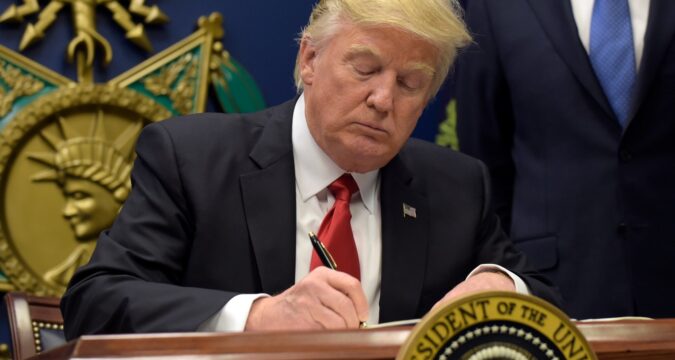
President Donald Trump signed an executive order on Jan. 27, 2017, banning refugees from entering the United States for 120 days and indefinitely suspended refugees from Syria. (Chicago Tribune)
2017: Chicago immigration reform advocates and Muslim leaders denounced President Donald Trump’s executive order to temporarily block refugees coming to the U.S. while the government reviewed screening processes, calling it an effective ban on Muslims in America.
In issuing the order, which called for a four-month halt on all refugee admissions, an indefinite ban on Syrian refugees and a temporary moratorium on immigrants from seven Muslim-majority countries with terrorism concerns, Trump said he sought to protect the nation from terrorist attacks. He called for a review of all screening procedures for those seeking immigrant visas to the U.S.
Weather records (from the National Weather Service, Chicago)
High temperature: 62 degrees (1916)
Low temperature: Minus 10 degrees (1955)
Precipitation: 0.74 inches (1967)
Snowfall: 6.6 inches (1967)
Businessman and former Northwestern University basketball player Dick Klein became the first general manager for Chicago’s NBA franchise — the Bulls — when the team was announced on Jan. 27, 1966. (Chicago Tribune)
1966: The city was granted an NBA franchise — the Chicago Bulls.
The Rev. Martin Luther King Jr., left, and O.W. Wilson, superintendent of police, have a coffee break during their conference at police headquarters, 1121 S. State St., on Jan. 27, 1966, in Chicago. (Joe Mastruzzo/Chicago Tribune)
Also in 1966: In a meeting with Chicago police Superintendent O.W. Wilson, the Rev. Martin Luther King Jr. lays out his plan — 1. educating people about slum conditions; 2. organizing slum dwellers into a union to force landlords to comply with demands or face the risk of rent strikes; and 3. mobilizing tenants of rundown homes into an army of nonviolent demonstrations — and says he is willing to risk a jail sentence, but would aim to “persuade rather than to create bitterness.”
From George Halas to Ben Johnson: What was said about every Chicago Bears coach when they were hired
1972: Abe Gibron was introduced as Chicago Bears head coach. He went 11-30-1 (.268) during the 1972-74 seasons.
Cubs rookie second baseman Ryne Sandberg gloves catcher Butch Benton’s throw after the Mets’ Ron Gardenhire steals second in September 1982 at Wrigley Field. (Phil Mascione/Chicago Tribune)
1982: The Chicago Cubs traded Ivan DeJesus to the Philadelphia Phillies for “aging but feisty veteran” Larry Bowa and “an untested minor leaguer” Ryne Sandberg.
Tshey and Lisa Gebre feed their son, Samson, 4, during an 82nd birthday ice cream social for Emmett Till on July 23, 2023, at the Till-Mobley House in the West Woodlawn neighborhood of Chicago. (Brian Cassella/Chicago Tribune)
2021: Chicago City Council votes to give landmark status to the Emmett Till and Mamie Till-Mobley House in the West Woodlawn neighborhood, honoring the slain 14-year-old whose murder would help spark the Civil Rights Movement.
New Bears coach Matt Eberflus, left, and general manager Ryan Poles pose with a helmet after being introduced at a news conference on Jan. 31, 2022, at Halas Hall. (Brian Cassella/Chicago Tribune)
2022: The Bears named former Indianapolis Colts defensive coordinator Matt Eberflus coach. His record was 14-32 (.304).
Want more vintage Chicago?
Subscribe to the free Vintage Chicago Tribune newsletter, join our Chicagoland history Facebook group, stay current with Today in Chicago History and follow us on Instagram for more from Chicago’s past.
Have an idea for Vintage Chicago Tribune? Share it with Kori Rumore and Marianne Mather at krumore@chicagotribune.com and mmather@chicagotribune.com
https://www.chicagotribune.com/2026/01/27/january-27-chicago-history/
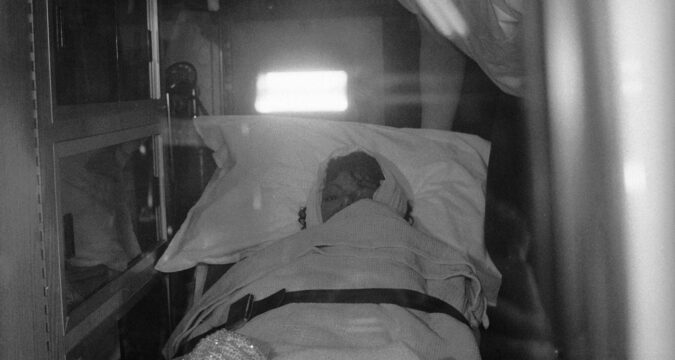
Today in History: Michael Jackson suffers serious burns
Today is Tuesday, Jan. 27, the 27th day of 2026. There are 338 days left in the year.
Today in history:
On Jan. 27, 1984, singer Michael Jackson suffered serious burns to his scalp when pyrotechnics set his hair on fire during the filming of a Pepsi-Cola TV commercial at the Shrine Auditorium in Los Angeles.
Also on this date:
In 1756, composer Wolfgang Amadeus Mozart was born in Salzburg, Austria.
In 1880, Thomas Edison received a patent for his incandescent electric lamp.
In 1945, during World War II, Soviet troops liberated the Auschwitz and Birkenau Nazi concentration camps in Poland.
In 1967, astronauts Virgil I. “Gus” Grissom, Edward H. White and Roger B. Chaffee died in a flash fire during a test aboard their Apollo 1 spacecraft at Cape Canaveral, Florida.
In 1973, the Vietnam peace accords were signed in Paris, ending direct U.S. involvement in the Vietnam War.
In 2002, a series of explosions rocked an armory in Lagos, Nigeria, starting fires in nearby neighborhoods and killing hundreds of people. Many of those who died were area residents who drowned in a canal in darkness while fleeing the blasts.
In 2013, a fire started by pyrotechnics in the Kiss nightclub in Santa Maria, Rio Grande do Sul state, Brazil, killed 242 people and injured over 600.
In 2017, President Donald Trump barred all refugees from entering the United States for four months, declaring the ban necessary to prevent “radical Islamic terrorists” from entering the country.
Related Articles
Scientists recover the oldest wooden tools from a site in Greece
Chicago weather: How our 2025-26 seasonal snowfall compares with previous years
Today in History: Cullinan Diamond found
Today in Chicago History: Bears beat New England Patriots to win Super Bowl XX
Today in History: Fluoride added to city public water supply
In 2023, a Palestinian gunman opened fire outside an east Jerusalem synagogue during Jewish observances of the Sabbath, killing seven people and wounded three others before he was shot and killed by police.
Today’s birthdays: Actor James Cromwell is 86. Rock musician Nick Mason (Pink Floyd) is 82. Ballet star Mikhail Baryshnikov is 78. U.S. Supreme Court Chief Justice John Roberts is 71. Political and sports commentator Keith Olbermann is 67. Actor Bridget Fonda is 62. Actor Alan Cumming is 61. Country singer Tracy Lawrence is 58. Rock singer Mike Patton is 58. Rapper Tricky is 58. Actor-comedian Patton Oswalt is 57. Actor Freddy Carter is 33. Musician and actor Braeden Lemasters is 30. Country singer Bailey Zimmerman is 26.
https://www.chicagotribune.com/2026/01/27/today-in-history-michael-jackson-burns/
How German Media Cast Trump As Evil, And Davos Elites As Moral Saviors
How German Media Cast Trump As Evil, And Davos Elites As Moral Saviors
Submitted by Thomas Kolbe
Donald Trump’s appearance at the World Economic Forum was portrayed by the German media as the very embodiment of evil against the pristine white backdrop of Davos’ snow. To cast politicians like von der Leyen, Merz, and Macron as the “good” counterparts only exposes this media spectacle for what it is: farce.
A love-hate relationship has developed between U.S. President Donald Trump and the German press. Almost every time he appears in public—which, in fact, happens daily—the bureaucrats in newsrooms react with a Pavlovian reflex. Even his Davos speech on Wednesday at the World Economic Forum, delivered without rancor despite Europe’s noticeably skeptical stance toward the U.S., provoked a maximal defensive reaction.
Establishing the Contrast
Der Stern portrays Trump as the West’s isolator, a power politician who “ate humble pie” in Davos, and labels his speech simultaneously as a declaration of NATO’s bankruptcy. As if to keep the German fight against Trump alive at all costs, the Frankfurter Rundschau warned not to be lulled by the U.S. President’s moderate tone. The headline reads martial—Trump reliably sells well.
It also irritates the German media that Trump regularly exposes European leaders like Emmanuel Macron to public ridicule. Naturally, even Tagesschau dispatches its fact-checkers against him. His speech was reportedly riddled with inaccuracies and falsehoods.
If only they were as precise and attentive when Macron, Merz, and von der Leyen stack lie upon lie—whether regarding their domestic policies, the state of the economy, the Ukraine conflict, or the failed energy transition now driving Europe into a spiral of poverty.
Even the fact that an Orwellian surveillance state is rising before our eyes, heavily supported by Germany, does not trouble German journalists. In short: we are the good, the evil sits in the White House. And we, the good, are merely protecting Europe’s docile lambs from the toxic poison of patriotic spirit that Americans are eager to inject with their virile obsession with “can-do” governance.
They despise healthy patriotism, a lean state, the ostentatious fight for free speech, and the dismantling of the NGO behemoth—all these achievements of a mature civilization that Brussels-style centralism seeks to dissolve in the European hyper- and control-state for the “common good.”
Together with politics, the German media has established a Manichaean worldview. Every over-the-top appearance by the U.S. President, perhaps difficult for European tastes to digest, only eases the camouflage. The Americans’ power-political interests—shaped by domestic pressure, externally funded protest waves, the fentanyl crisis, and the costly Pax Americana quietly accepted by Europe—play no role in the German media’s strategic considerations.
They side with the presumed good—those exploiting climate apocalypse, Euro-protectionism, and the systematic dismantling of civil liberties. Simply emphasize it long enough, project the public’s anger at the country’s growing crises onto a figure of hate, and the media can distract from its own failures. That figure is Donald Trump.
Growing Distance
Must one not, in view of Europe’s migration crisis and disastrous energy transition, concede Trump is right on the issues? The German commentary’s arrogant condescension only reflects the detachment of its political caste. From the perspective of a German-driven Euro-socialism, the American spirit, the supposed cowboy mentality, and spontaneity are ridiculed. Listening to each other is no longer desired; the American stance is deemed antagonistic, and within the woke zeitgeist, morally reprehensible.
A reflex so foolish it is almost physically painful to follow such journalism. Shouldn’t the media’s task be to explain Europe’s true geopolitical situation and the challenges arising from energy scarcity and resource constraints?
European nations would do well to align with the Americans, make peace with Russia, and return to political reason. For the Westdeutsche Zeitung, however, Trump’s Davos speech was merely self-praise. He reportedly spread lies and slanders about the old continent.
Hovering above all is the hope that in three years a pro-European, globalist president will succeed Trump—a figure in the style of Barack Obama, picking up the red thread of climate socialism and protecting Europeans from their peculiar isolationism and its consequences.
If the EU’s climate-socialist project collapses in the foreseeable future, a strong, autonomous U.S. would be the destination for a panicked flight of capital—a potential end to the Brussels central apparatus. Returning to the climate-socialist fold would only succeed via digital currency controls and capital movement restrictions, which explains Europe’s attacks on Trump’s presidency. The fact that former Bank of England Governor Mark Carney, now a Canadian Prime Minister, has devoted himself to European politics adds particular gravity to the U.S. attempt to politically control its hemisphere.
Trump’s patriotic project’s failure is precisely in the Euro-socialists’ interest. German media have, for a decade, cultivated the image of an erratic, irrational, intellectually limited chauvinist with great success. The constant repetition of identical interpretations of his actions, their moral appraisal, and the dramatic escalation under the mantra of a rules-based world order have created a narrative leaving no room for ambiguity—purely Manichaean.
On one side: Trump, the personification of evil, pushing European humanists into a corner with his tariffs, now even flirting with an aggressive land grab in Greenland. He is Lucifer in the White House. On the other: light, good—the EU, the great peace project, originally just a bulwark against the Soviet Union, now reimagined over decades as the climate savior and moral last instance of the West.
False Game
It is precisely this power that has for four years kept the disastrous war of attrition in Donbass alive. And it is not Trump, but European politicians who instill the specter of an imminent Russian invasion into the minds and souls of citizens via increasingly shrill tones across all media. Day by day, week by week, a scenario of maximum threat is conjured, morally discrediting any deviation and painting negotiation readiness as weakness—or even betrayal.
The mass deaths in Ukraine reveal Europe’s ethical decay without mercy. Beyond that, escalation against a nuclear power is militarily hopeless, economically a suicide mission, and ethically reprehensible. Macron, Merz, and von der Leyen have long known this war is unwinnable—regardless of funds sent to Ukraine.
It is now only about delaying Ukraine’s bankruptcy in hopes of a military miracle—one only the Americans could force. And that requires, as mentioned, a new pro-European U.S. president.
States and European banks are heavily invested in Ukraine. An uncontrolled collapse could shake Europe’s financial system so violently that even the great debt crisis 15 years ago would appear as mere prelude.
Trump still seeks a negotiated solution in this conflict, which would end Europe’s dream of regime change in Moscow and a controlled exploitation of Russian resources, crucial to recapitalizing European states and banks.
The manichean media effect against American policy becomes even more dangerous amid Europe’s growing censorship apparatus. Many fail to realize that Trump’s failure would politically eliminate the last influential advocate for free speech, free markets, and rational deregulation.
It was Americans—Vice President J. D. Vance and Secretary of State Marco Rubio—who repeatedly intervened in Brussels in recent months when digital freedom on platforms like X, Telegram, and Meta was acutely threatened.
The list of European defenders of freedom has, by contrast, become alarmingly short.
Tyler Durden
Tue, 01/27/2026 – 05:00
https://www.zerohedge.com/markets/how-german-media-cast-trump-evil-and-davos-elites-moral-saviors
NATO Secretary General Admits EU Incapable Of Defense Without US Help
NATO Secretary General Admits EU Incapable Of Defense Without US Help
The globalist frenzy of the Davos Summit is subsiding and the geopolitical world is left to ponder (and question) some of the more “optimistic” comments made by world leaders. One such claim was made by Finnish President Alexander Stubb, who argued that Europe ‘unequivocally’ has the ability to defend itself without US support.
The claim coincided with the Finnish leader’s assertion that a ” new world order” is rising with the UN at the helm.
NOW – Finland’s President, Alexander Stubb, says Europe can “unequivocally” defend itself, without the Americans. pic.twitter.com/AeHFshxBr5
— Disclose.tv (@disclosetv) January 21, 2026
The suggestion has, of course, drawn scrutiny as being overly optimistic. Stubb tried to qualify his argument with the assertion that Finland has the best cold weather troops in the world and the future of warfare is focused on the Arctic Circle.
An army accustomed to cold weather warfare is certainly useful, but that does not mean they are accustomed to attrition warfare – A strategic method which is serving the Russians well in Ukraine and a method western armies have not trained for since the conflict in Korea in 1950.
Finland claims to be able to field an army of 1 million through mandated conscription, but unwilling conscripts and trained soldiers are two very different things. Currently, the country’s army consists of only 24,000 active duty personnel. Russia has 1.32 million, many of them battle tested after years in Ukraine. Furthermore, the Russians have now adapted to the demands of drone warfare. This is something European armies are still integrating, and with no real world experience.
Stubb’s assertions are absurd, but it is this kind of fantasy mentality that is driving Europe to rattle their sabers against Russia at a time when they can’t even fill basic recruitment quotas and the average citizen with the ability to fight has no interest in dying for the existing progressive governments.
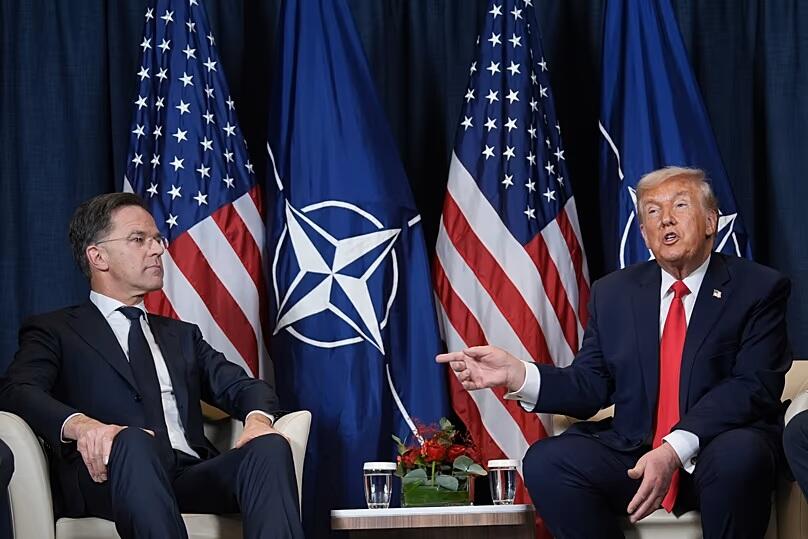
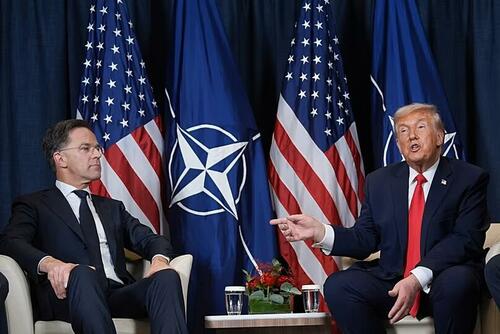
NATO Secretary General Mark Rutte dumped some cold water on the Davos delusion this week during a Brussels press conference covering heightened tensions over Greenland. He stated clearly that Europe has no chance of defending itself without US support.
Rutte also suggested that the US needs NATO, which is debatable. Russia does not have the naval capacity to engage with the US or the western hemisphere in a non-nuclear confrontation, even if the Kremlin wanted to. It’s also unlikely that Europe would ever enter into a direct conflict with China when EU nations continually pander to the CCP as a “replacement” for US trade. In other words, Europe is useless and NATO is useless without US involvement.
However, Rutte’s comments do emphasize the reality that Europeans have lived comfortably for generations in their socialist havens because they don’t have to shell out the cash needed to maintain their own security. As the Secretary General warns, they still don’t understand what this entails, but they’re about to learn.
Tyler Durden
Tue, 01/27/2026 – 04:15

Shakespeare Was A Black Jewish Woman – Claims Feminist Historian
Shakespeare Was A Black Jewish Woman – Claims Feminist Historian
Authored by ‘Sallust’ via DailySceptic.org,
Let it alone, thou fool; it is but trash.
The Tempest IV.1
One of the positive sides to radical feminist historical scholarship is the opportunity to learn about revelations that might otherwise have gone unnoticed. The latest is that William Shakespeare was a “black Jewish woman” according to a new book covered in the Telegraph.
Who knew? The book, The Real Shakespeare, is by Irene Coslet. She expounds her theory on a blog page of the London School of Economics:
A new piece of research evidence that I outline in my upcoming book shows that Shakespeare was not a man, but a woman: a black woman, Anglo-Venetian, of Moroccan descent, and covertly Jewish, named Emilia Bassano (London, 1569-1645). She was the daughter of a Venetian Court musician. Following the passing of her father when she was seven, Bassano was fostered into a noble household in England, where she received a high level of education. She spent her youth at the English Court as a favourite of Queen Elizabeth I before she was banished and forced into an unwanted marriage in 1592. She published a feminist theology poem, Salve Deus Rex Judaeorum, in 1611. She has been associated with Shakespeare since the 1970s, when the historian Alfred Leslie Rowse of Oxford found evidence that Bassano was the mistress of the patron of Shakespeare’s acting company.
The reason for why Emilia Bassano’s contribution has been overlooked, says Coslet, is that “substantial scientific or literary contributions made by women are constantly overlooked. … The pattern is so common that it could be regarded more as the rule than an exception.”
Of course!
Back to the Telegraph which summarises some of the book’s key content:
Bassano, it is claimed, used the pen-name “Shakespeare” and wrote the Shakespearean canon of plays, only for her work to be stolen by an uneducated interloper from Stratford-upon-Avon.
This interloper, whom we now know as William Shakespeare, was then revered by posterity because the idea of a “white” genius was preferred to a black female playwright, the book argues.
Of course, Occam’s Razor would argue that the simplest explanation is always likely to be the correct one, in this case that William Shakespeare was the William Shakespeare who wrote the plays.
One slight problem is that a portrait of Emilia Bassano, on the book’s cover, shows a white woman. But that is easily explained – her skin was deliberately lightened by painters.
Coslet told the Telegraph:
“If Shakespeare was a female of colour, this would draw attention to issues of peace and justice in society.”
She added: “What if women had a pivotal role and a civilising impact in history, but they have been silenced, belittled and erased from the dominant narrative?
“What would a paradigm shift reveal about ourselves? Such a reflection challenges us to reconsider our understanding of society.”
Coslet’s publisher Pen & Sword, well-known for publishing literally anything submitted to it, has no doubts about the credibility of the hypothesis, says the Telegraph:
It claims that scholars have been “unable to explain why” Shakespeare was able to incorporate influences of various cultures in his work, as a humble man from Warwickshire.
On the other hand, the book argues, the Jewish and multi-racial Bassano embodied a “diverse identity” that would give her the necessary expertise.
The book claims that she was a Jew and a Moor – a person of north African origin – with family ties to the cosmopolitan Venice of the 16th century.
This argument concludes that “English-speaking world has a mother with a multi-cultural identity”, and that Bassano was the “mother of a civilisation”.
The Telegraph reminds us of the conventional thinking about the Bard.
Shakespeare, in the consensus view of scholars, was born in Stratford in 1564 to a glove-maker. He attended the local grammar school, and at the age of 18 married the 26 year-old Anne Hathaway.
By 1592 he was being mentioned as part of the London theatre scene. Shakespeare died in 1616, well before Bassano, who died in 1645.
Interesting then that Bassano managed to write no more plays in the 29 years after the thief who stole her pen name died.
The Telegraph has another piece, by Philip Womack, refuting Coslet’s theory, called ‘No, Shakespeare wasn’t a black woman‘, linking to a longstanding tradition of coming up with different candidates for Shakespeare:
We know, with certainty, that William Shakespeare wasn’t even slightly a woman, or black. He was a white bloke from [Warwickshire], of yeoman stock. You might as well try to argue that the sun was, in fact, cold. Why does this madness continue?
In short:
What rubbish and what offal, when it serves for the base matter to illuminate.
Julius Caesar I.3
The Telegraph’s coverage of Coslet’s book is worth reading in full.
Tyler Durden
Tue, 01/27/2026 – 03:30
https://www.zerohedge.com/political/shakespeare-was-black-jewish-woman-claims-feminist-historian

Seven-layer dip is a game-day classic for a reason
As far as classic party dips go, seven-layer dip ranks among the very best. Carefully composed and colorfully striped, it’s no wonder this dip is a key player on the tailgate snack table. It is everything you love about a taco, from the refried beans and guacamole to sour cream and pico de gallo, served dip-style — meaning it’s hearty enough for dinner, but just as appropriate to eat as a snack with friends.
Why you’ll love it
It’s the best game-day appetizer. This classic layered dip is always the first to go!
It’s one of the easiest dips to make. You can make it even easier with smart grocery shortcuts, like canned refried beans and store-bought salsa.
Key Ingredients in seven-layer dip
The key to the best dip is knowing which layers to focus on and which to shortcut. Here’s my advice.
Refried beans: Choose the best-tasting can of refried beans at the grocery store and spread it in the bottom of the dish. Since they’re about to be covered in guacamole, don’t overthink this layer. My top choice is the Rosarita brand of refried beans. They don’t get as much real estate on the grocer’s taco aisle as the big brands; look for them on the bottom shelf.
Guacamole: This guacamole comes straight from our Cooking Lesson. The key is making a garlic paste, which gives the guac a gentler garlic flavor and incorporates more seamlessly than minced garlic. Mash the guac to a smoother consistency than you would if serving it straight up, making it easier to scoop.
Taco-seasoned sour cream: Mix half a block of very soft cream cheese (you may need to microwave the unwrapped block for a few seconds) with sour cream and a package of reduced-sodium taco seasoning. The cream cheese adds richness and body to the sour cream. Be sure to cover the guacamole completely to seal it in, ensuring it doesn’t dull or brown. When prepping for a party, I make the dip up to this point and refrigerate until serving time.
Salsa: Spread your favorite salsa over the sour cream. Choose any variety you like: chunky or restaurant-style, mild or hot, salsa verde or fire roasted.
Cheese: Use a blend of shredded Mexican cheeses. A thicker, off-the-block-style looks and tastes more like you grated it yourself.
Pico de gallo: Technically, this layer doesn’t contain any chile peppers or lime juice like a classic pico does, but this version is easier: You just need chopped tomatoes, finely diced red onion (leftover from making the guacamole), cilantro, and a pinch of salt. This layer adds freshness and texture — a welcome contrast to the creamy and rich layers below. If you’d like, substitute a store-bought pico de gallo.
Black olives: This feels like an odd choice for a final layer (is there a subculture of taco-lovers who put olives on top?), but it’s classic. Scatter one small can of drained, sliced black olives over top, and the dip is finished. If olives aren’t your thing, sliced scallions are a good substitute.
Helpful tip
Use a clear, shallow casserole dish. Trifle dishes and deep glass bowls are often used for this dip because they illustrate the layers, but they make it almost impossible to get all the layers with just one dip of your chip. The better choice is a clear, shallow casserole dish, so the layers are still visible but dipping is much easier.
7-Layer Dip
Serves 10 to 12
1 (16-ounce) can refried beans
2 large cloves garlic
1 teaspoon kosher salt, plus more for the tomatoes
4 medium avocados
1/4 cup freshly squeezed lime juice (from about 2 limes)
1/2 cup finely chopped red onion (from 1 small red onion), divided
2 tablespoons finely chopped unseeded jalapeño (from 1 small jalapeno, optional)
16 ounces sour cream
4 ounces cream cheese, softened
1 (1-ounce) package 25% less-sodium taco seasoning mix
2 cups salsa
2 cups shredded Mexican-blend cheese (8 ounces)
2 plum or Roma tomatoes, diced
1 tablespoon chopped fresh cilantro
1 (2.25-ounce) can sliced black olives, drained
Tortilla chips, for serving
1. Spread one (16-ounce) can refried beans into an even layer in a 9-by-13-inch or 7-by-11-inch baking dish.
2. Make garlic paste by first mincing two large garlic cloves, then sprinkling with 1 teaspoon kosher salt. Then hold the blunt side of the knife with both hands, and scrape the sharp end of a knife against the pile of garlic at an angle to flatten the garlic. Work the garlic back into a tidy pile and repeat, pressing and scraping the knife through the pile for 2 to 3 minutes until you have a smooth paste. Transfer the garlic paste to a large bowl.
3. Slice four medium avocados in half lengthwise and remove and discard the pits. Scoop the avocado flesh into the bowl of garlic. Add 1/4 cup lime juice and 1/4 cup of the finely chopped red onion, then use a fork or potato masher to mash to desired consistency. Stir in 2 tablespoons finely chopped unseeded jalapeno, if using. Spread the guacamole into an even layer on top of the refried beans.
4. Mix 16 ounces sour cream, 4 ounces softened cream cheese, and one (1-ounce) package 25% less-sodium taco seasoning mix together in a large mixing bowl with a hand mixer until smooth. Then spread the sour cream mixture over the guacamole into an even layer, covering the guacamole completely.
5. Spread 2 cups salsa over the sour cream layer, spreading into an even layer and top with 2 cups shredded Mexican-blend cheese.
6. Stir 2 diced plum tomatoes, 1 tablespoon chopped fresh cilantro, remaining 1/4 cup finely chopped red onion, and a pinch of kosher salt together in a small bowl. Scatter evenly over the cheese. Sprinkle one (2.25-ounce) can drained sliced black olives on top. Serve with tortilla chips.
Related Articles
The secret to impossibly fluffy Southern biscuits
My entire family devours these chicken bites in minutes
This Ritz cracker hack is so good
Old-fashioned sticky toffee pudding is the dessert I swear by
This French beef casserole is the best thing you’ll make all winter
Recipe notes
The dip can be made one day in advance. Cover and refrigerate until ready to serve.
Refrigerate leftovers in an airtight container for up to two days.
(Patty Catalano is a food editor for TheKitchn.com, a nationally known blog for people who love food and home cooking. Submit any comments or questions to editorial@thekitchn.com.)
https://www.chicagotribune.com/2026/01/27/seven-layer-dip-recipe/

IDF Recovers Final Slain Hostage From Gaza, All 251 Returned To Israel
IDF Recovers Final Slain Hostage From Gaza, All 251 Returned To Israel
Israel is calling it “painful moment of closure” – as the Israeli military (IDF) has confirmed the return of the final captive’s remains from Gaza.
“There are officially no more hostages in captivity in Gaza,” the IDF announced on X Monday. Finally, all of the 251 people taken during the Hamas-led October 7, 2023 attack on Israel have been returned, whether living or dead.
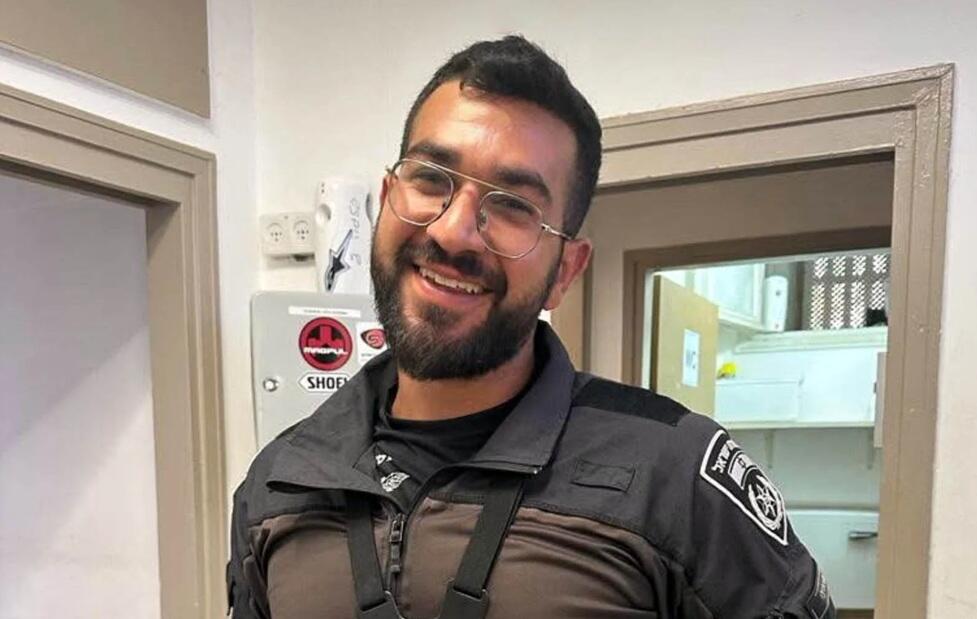
The Israeli army launched an operation beginning Sunday to search a cemetery in the Gaza Strip for the remains of the last captive, Ran Gvili. It involved the cooperation of Hamas and local Palestinians.
Gvili’s body has now been brought back to Israel 843 days after being kidnapped in the October 7 Hamas/Islamic Jihad attacks, which overwhelmed southern IDF posts as well as several Jewish settlements during the large assault.
The office of Defense Minister Israel Katz said of the recovery of the remains of police Master Sgt. Gvili: “It is a moment that underscores the State of Israel’s commitment to its soldiers and citizens: to bring every single one home, as we promised the families and the Israeli public.”
According to details of how his remains were positively identified:
The IDF began exhuming hundreds of bodies at a Muslim cemetery in eastern Gaza City over the weekend, and until today, had tested around 250 of them for a potential match to Gvili.
A few hours ago, dentists deployed to the cemetery were able to confirm that the dental structure of one body matched Gvili’s. In addition, fingerprints and other tests were carried out to confirm his identity, according to the military.
The Gaza war that ensued after Oct.7 lasted over two years, and killed over 71,000 Palestinians, according to Gaza sources, which doesn’t categorize combatants vs. civilian deaths.
Israel has long maintained that tens of thousands of these included armed Hamas and Islamic Jihad fighters, disputing the death figures put out by the Gaza health office. But even the Trump administration has acknowledged Israeli forces and aerial bombardments have slain an appalling amount of Palestinian civilians.
According to Israeli media, “Gvili served as a combat fighter in the Negev Border Police in the Southern District. On October 7, despite being injured with a broken shoulder from a motorcycle accident and scheduled for surgery, he went into combat.”
The report notes that “He succeeded in saving the lives of dozens of revelers at the Re’im music festival before being killed and abducted.”
Hamas says that in allowing the IDF recovery mission, this demonstrates the group’s commitment to observing the ceasefire. “We will continue to adhere to all aspects of the agreement, including facilitating the work of the National Committee for the Administration of Gaza and ensuring its success,” the Hamas statement indicated.
“We call on the mediators and the United States to compel the [Israeli] occupation to cease its violations of the agreement and implement its required obligations,” the group added. Israel has agreed to reopen the vital Rafah crossing upon conclusion of this hostage recovery mission, another milestone in the truce process.
Tyler Durden
Tue, 01/27/2026 – 02:45