Category: News
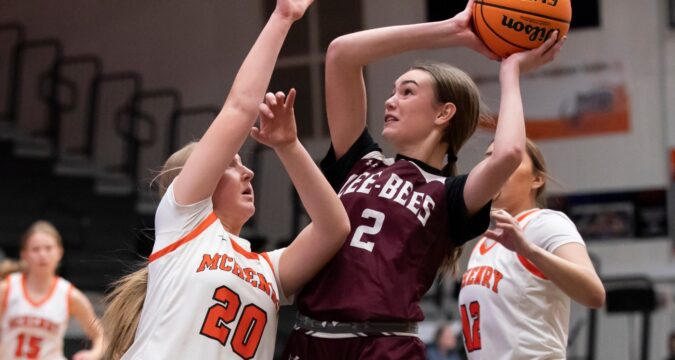
Freshman Keeley McNabb-Buckley’s debut hints at Zion-Benton’s future. ‘Watch out. The Zee-Bees are coming.’
Zion-Benton freshman Keeley McNabb-Buckley didn’t expect to be a varsity starter this season.
So the 5-foot-10 forward was quite surprised when Zee-Bees coach Cliff McKenzie revealed she would start in the third game.
“I thought our head coach made a mistake when he put the starters on the board,” McNabb-Buckley said. “I was nervous and excited at the same time.
“I was nervous, but once the flow of the game got going, I got relaxed.”
McNabb-Buckley has been playing like it ever since. She’s averaging 5.1 points, 3.9 rebounds, 1.0 assists and 1.6 blocks for Zion-Benton (3-17, 0-10), whose record in and out of the North Suburban Conference reflects the fact that three freshmen often start. Center London Davis, a team captain and the only senior starter, called McNabb-Buckley a “leader for the future of the Zee-Bees.”
“She has a good head on her shoulders, and nothing rattles her,” McKenzie said of McNabb-Buckley. “We give her all the confidence she needs to keep going even if she makes a mistake. Sometimes she becomes too team-oriented and passes up shots when we want her to shoot the ball. We’re working on that.
“She has a really good understanding of the game. Her practice ethics are really good. She probably is our best shooter on the team.”
McKenzie said he got his first glimpse of McNabb-Buckley’s athleticism during a volleyball practice.
“She was spiking the ball like crazy,” McKenzie said. “I was amazed. I saw the potential was there.
“It has been a new learning experience for her. I don’t believe she thought she would be a starter, but she does have all the tools to play at the varsity level. She has to be consistent and gain more confidence.”
Zion-Benton’s Keeley McNabb-Buckley (2) leads a fast break as McHenry’s Angie Rehm (12) pursues her during a nonconference game in McHenry on Monday, Jan. 26, 2026. (Ryan Rayburn / News-Sun)
Zion-Benton assistant Titus Redmond, who is also the director of the feeder program, has watched McNabb-Buckley play for several years. So he isn’t too surprised.
“Defining the modern era of positionless basketball, Keeley brings rare versatility to both ends on the floor,” Redmond said. “She has the ability to guard quick point guards and the strength to guard post players. She’s our Swiss Army knife and is capable of executing any role from the 1 to the 5 on both ends on the floor.”
McNabb-Buckley has established herself as an aggressive defender and takes pride in that.
“I really like the joy of stopping somebody scoring and helping my team,” she said.
Zion-Benton junior forward Charisma Spruill, a team captain, likes what she has seen from McNabb-Buckley.
“Keeley has great athleticism and is very coachable when we are on the court together,” Spruill said. “She is very competitive, and her confidence is very high for a freshman.”
Zion-Benton’s Keeley McNabb-Buckley waits for a substitution during a nonconference game at McHenry on Monday, Jan. 26, 2026. (Ryan Rayburn / News-Sun)
But Buckley-McNabb understands the Zee-Bees, like herself, are a work in progress.
“I feel the season is going pretty well,” she said. “The wins may not show it, but I’m having fun with my teammates and getting the experience playing against older players. As a freshman, I feel I’m holding my own.
“I’m really excited. We’re a young team now. But in a few years, watch out. The Zee-Bees are coming.”
Bobby Narang is a freelance reporter.
https://www.chicagotribune.com/2026/01/27/basketball-zion-benton-keeley-mcnabb-buckley/

Meta, TikTok and YouTube face landmark trial over youth addiction claims
Three of the world’s biggest tech companies face a landmark trial in Los Angeles starting this week over claims that their platforms — Meta’s Instagram, ByteDance’s TikTok and Google’s YouTube — deliberately addict and harm children.
Jury selection starts this week in the Los Angeles County Superior Court. It’s the first time the companies will argue their case before a jury, and the outcome could have profound effects on their businesses and how they will handle children using their platforms. The selection process is expected to take at least a few days, with 75 potential jurors questioned each day through at least Thursday. A fourth company named in the lawsuit, Snapchat parent company Snap Inc., settled the case last week for an undisclosed sum.
At the core of the case is a 19-year-old identified only by the initials “KGM,” whose case could determine how thousands of other, similar lawsuits against social media companies will play out. She and two other plaintiffs have been selected for bellwether trials — essentially test cases for both sides to see how their arguments play out before a jury and what damages, if any, may be awarded, said Clay Calvert, a nonresident senior fellow of technology policy studies at the American Enterprise Institute.
KGM claims that her use of social media from an early age addicted her to the technology and exacerbated depression and suicidal thoughts. Importantly, the lawsuit claims that this was done through deliberate design choices made by companies that sought to make their platforms more addictive to children to boost profits. This argument, if successful, could sidestep the companies’ First Amendment shield and Section 230, which protects tech companies from liability for material posted on their platforms.
“Borrowing heavily from the behavioral and neurobiological techniques used by slot machines and exploited by the cigarette industry, Defendants deliberately embedded in their products an array of design features aimed at maximizing youth engagement to drive advertising revenue,” the lawsuit says.
Executives, including Meta CEO Mark Zuckerberg, are expected to testify at the trial, which will last six to eight weeks. Experts have drawn similarities to the Big Tobacco trials that led to a 1998 settlement requiring cigarette companies to pay billions in healthcare costs and restrict marketing targeting minors.
“Plaintiffs are not merely the collateral damage of Defendants’ products,” the lawsuit says. “They are the direct victims of the intentional product design choices made by each Defendant. They are the intended targets of the harmful features that pushed them into self-destructive feedback loops.”
The tech companies dispute the claims that their products deliberately harm children, citing a bevy of safeguards they have added over the years and arguing that they are not liable for content posted on their sites by third parties.
“Recently, a number of lawsuits have attempted to place the blame for teen mental health struggles squarely on social media companies,” Meta said in a recent blog post. “But this oversimplifies a serious issue. Clinicians and researchers find that mental health is a deeply complex and multifaceted issue, and trends regarding teens’ well-being aren’t clear-cut or universal. Narrowing the challenges faced by teens to a single factor ignores the scientific research and the many stressors impacting young people today, like academic pressure, school safety, socio-economic challenges and substance abuse.”
Meta, YouTube and TikTok did not immediately respond to requests for comment Monday.
The case will be the first in a slew of cases beginning this year that seek to hold social media companies responsible for harming children’s mental well-being. A federal bellwether trial beginning in June in Oakland, California, will be the first to represent school districts that have sued social media platforms over harms to children.
In addition, more than 40 state attorneys general have filed lawsuits against Meta, claiming it is harming young people and contributing to the youth mental health crisis by deliberately designing features on Instagram and Facebook that addict children to its platforms. The majority of cases filed their lawsuits in federal court, but some sued in their respective states.
TikTok also faces similar lawsuits in more than a dozen states.
https://www.chicagotribune.com/2026/01/27/meta-tiktok-youtube-trial-youth-addiction-claims/

De-Dollarization? Gold Over Debt – The End Of The Keynesian Paper Promise Mirage
De-Dollarization? Gold Over Debt – The End Of The Keynesian Paper Promise Mirage
Despite the consensus narrative, what we are currently experiencing globally is not “de‑dollarization,” but a broad loss of confidence in developed economies’ fiat currencies and sovereign debt as a reserve asset for central banks and institutions. This fundamental loss of confidence in the solvency of developed economies’ sovereign issuers is boosting demand for gold.
However, the latest data shows no crossover or fiat alternative substitution. The US dollar’s central role in the fiat system remains intact.
Gold over debt: the key shift
MMT supporters state that monetary sovereign nations can issue all the debt they want without inflationary and confidence risk. However, monetary sovereignty is not a given; it is not perennial and governments face three limitations when it comes to issuing debt. Domestic and global confidence in sovereign issuers begins to decline once they surpass those limits.
The three limits for governments are:
the economic limit, when more government debt leads to stagnation and productivity growth decline;
the fiscal limit, when interest expenses and debt burdens soar despite central bank easing and rising tax receipts;
and the inflationary limit, when the loss of the purchasing power of currencies becomes large and persistent, eroding citizens’ standards of living.
Over the last few years, the most important trend in global reserves has been the rotation from government bonds of advanced economies toward gold, not “out of dollars,” as some media highlights, and even less so into other fiat currencies.
Many analysts blame the recent sanctions against Russia as a factor that has triggered the move to other forms of reserve. However, this does not seem like a plausible cause when most of the gold reserves that have been added globally are stored in countries that enforce those sanctions. The evidence is more complex and different: Central banks globally stopped trusting in developed nations’ debt as their core asset in 2021 when inflationism and lack of fiscal responsibility started generating losses at major central banks. Sovereign debt stopped being the quality, stable, and income-generating asset that provided real economic returns to institutions all over the world.
Despite the media and social media comments, the slump of euro and yen assets as reserves has been more aggressive than that of the US dollar. Bloomberg and the World Gold Council data show central banks and sovereign funds have doubled the pace of gold purchases in roughly three years, accumulating around 80 metric tons a month and driving record demand and record prices. This buying comes on top of strong private-sector investment demand, turning gold into the main beneficiary of rising concerns about debt sustainability and currency debasement in the US, Europe, Japan, and the UK. At the same time, analysts at JP Morgan highlight that much of this official gold buying is opaque, with significant “unreported” flows via hubs such as Switzerland, which reinforces the idea of a stealth shift into a real asset outside the fiat system.
The real underlying driver is the deterioration in the fiscal and monetary credibility of developed economies. Government debt is close to peacetime record levels, while long‑term spending commitments, unfinanced liabilities, weak growth, and aging populations make future fiscal consolidation politically challenging. Since the pandemic, major central banks have combined ultra‑loose policy, large balance sheets, and implicit financial repression to maintain the illusion of solvency of sovereign issuers, which has strengthened the view that fiat currencies will be used to manage debt through inflation and negative real rates for a long time. The freezing of Russian reserves in 2022 and the weaponization of sanctions only served as a confirmation of the debasement risk and convinced many emerging‑market central banks that holding large stocks of G7 sovereign debt and deposits entails growing political and legal risk. Faced with a mix of fiscal excess, financial repression, and geopolitical risk, reserve managers have finally returned to the strategy of adding reserves in an asset with no counterparty risk. The famous “gold is money, everything else is debt” sentence becomes more relevant than ever.
Dedollarization requires a fiat alternative crossover.
The same sources that show soaring gold demand also show that there is no true “dedollarization” in the sense of a fiat‑to‑fiat substitution. This also makes sense. The US dollar is the world’s strongest weak currency because it has a higher level of liquidity, more independent institutions, and better legal and investor security than any alternative. The US dollar is losing its place as a global reserve to gold but not losing its position relative to the euro, yen, pound, or yuan.
IMF COFER figures show that the US dollar’s share of allocated FX reserves remains at 59.6%, and when adjusted for exchange‑rate moves, the IMF itself concludes that the dollar’s share has been broadly stable, with recent declines explained mostly by valuation effects, not active selling. The euro, at 20.3%, is not even close to being a contender. The euro, yen, sterling, and even the Chinese renminbi have not captured the supposed “lost” dollar share. Their combined importance in reserves is flat or declining, while the rising share belongs to gold and “other assets,” including silver, oil, or domestic equities in the case of Japan.
BIS FX turnover and SWIFT payment data allow us to reach the same conclusion. The dollar is on almost 90% of all FX transactions and roughly half of global SWIFT payments, with the euro a distant second and the renminbi still only a low‑single‑digit share. There is no crossover where another fiat currency replaces the dollar’s role in trade, finance, or reserves. The real story is that all major fiat currencies are losing relative trust to an asset outside the system, like gold.
Institutions all over the world have suffered losses with sovereign debt since 2021 and see no end to the inflationary currency debasement policy, while solvency is under question as governments reject any form of spending control.
Calling this “de‑dollarization” is misleading, because it suggests a transition from a dollar‑centric order to a euro‑, yuan‑ or BRICS‑centric fiat order, something the data clearly do not show. What is actually happening is better described as “de‑fiatization at the margin,” a shift away from all heavily indebted, policy‑managed fiat currencies towards real assets that do not depend on governments. The dollar remains the least‑imperfect fiat currency, with unmatched liquidity, legal and investor security, and support in trade and finance, so there is no scalable alternative that reserve managers can move into without assuming even greater risk. That is why central banks diversify some of the marginal flow into gold but keep the bulk of their liquid reserves, payment systems, and FX operations in US dollars.
The world is penalizing the fiscal and monetary excesses of developed economies by demanding less of their debt and more gold, not by building a new fiat‑currency alternative. The record highs of gold and the constant purchases by central banks indicate a lack of confidence in the long-term purchasing power and credit quality of sovereign issuers, not in a competing fiat currency. Meanwhile, the dollar’s share in reserves, trade invoicing, FX turnover, and payments remains dominant and broadly stable, with no evidence of a large‑scale substitution into euros, renminbi, or any other fiat unit.
The global system is therefore not moving from “dollar hegemony” to “yuan hegemony” or a multipolar fiat regime; it is moving from unchallenged trust in developed‑market paper to a world where gold re‑emerges as the ultimate reserve asset, and the dollar stays at the declining fiat center because nothing else can replace its security, infrastructure, and depth.
While investors legitimately worry about America’s credit credibility and the US dollar’s purchasing power, no one is naive enough to consider the euro area, Japan, China, or a basket of serial devaluators like the BRICS as viable alternatives to the US dollar.
The solution is to go back to sound money policies. However, no fiat currency issuer seems to want that shift. No government desires a strong currency because it undermines their illusion of paper promises.
Tyler Durden
Tue, 01/27/2026 – 07:20
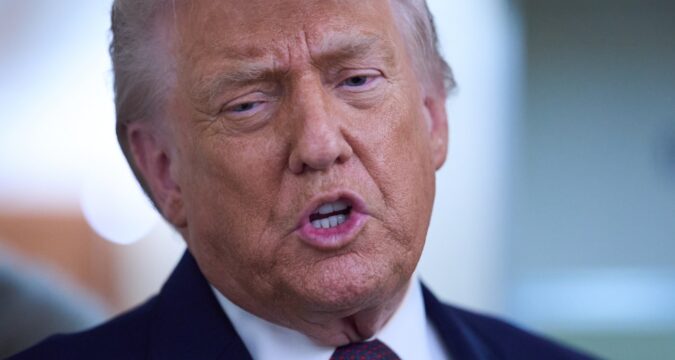
President Donald Trump will visit Iowa in a bid to focus on affordability during fallout from Minneapolis shooting
DES MOINES, Iowa — President Donald Trump is headed to Iowa on Tuesday as part of the White House’s midterm year pivot toward affordability, even as his administration remains mired in the fallout in Minneapolis over a second fatal shooting by federal immigration officers this month.
While in Iowa, the Republican president will make a stop at a local business and then deliver a speech on affordability, White House press secretary Karoline Leavitt said. The remarks will be at the Horizon Events Center in Clive, a suburb of Des Moines.
The trip will also highlight energy policy, White House chief of staff Susie Wiles said last week. It’s part of the White House’s strategy to have Trump travel out of Washington once a week ahead of the midterm elections to focus on affordability issues facing everyday Americans — an effort that keeps getting diverted by crisis.
The latest comes as the Trump administration is grappling with the weekend shooting death of Alex Pretti, an ICU nurse killed by federal agents in the neighboring state of Minnesota. Even as some top administration officials moved quickly to malign Pretti, the White House said Monday that Trump was waiting until an investigation into the shooting was complete.
Trump was last in Iowa ahead of the July 4 holiday to kick off the United States’ upcoming 250th anniversary, which morphed largely into a celebration of his major spending and tax cut package hours after Congress had approved it.
Republicans are hoping that Trump’s visit to the state on Tuesday draws focus back to that tax bill, which will be a key part of their pitch as they ask voters to keep them in power in November.
“I invited President Trump back to Iowa to highlight the real progress we’ve made: delivering tax relief for working families, securing the border, and growing our economy,” Rep. Zach Nunn, R-Iowa, said in a statement in advance of his trip. “Now we’ve got to keep that momentum going and pass my affordable housing bill, deliver for Iowa’s energy producers, and bring down costs for working families.”
Trump’s affordability tour has taken him to Michigan, Pennsylvania and North Carolina as the White House tries to marshal the president’s political power to appeal to voters in key swing states.
But Trump’s penchant for going off-script has sometimes taken the focus off cost-of-living issues and his administration’s plans for how to combat it. In Mount Pocono, Pennsylvania, Trump insisted that inflation was no longer a problem and that Democrats were using the term affordability as a “hoax” to hurt him. At that event, Trump also griped that immigrants arriving to the U.S. from “filthy” countries got more attention than his pledges to fight inflation.
Although it was a swing state just a little more than a decade ago, Iowa in recent years has been reliably Republican in national and statewide elections. Trump won Iowa by 13 percentage points in 2024 against Democrat Kamala Harris.
Still, two of Iowa’s four congressional districts have been among the most competitive in the country and are expected to be again in this year’s midterm elections. Trump already has endorsed Republican Reps. Nunn and Mariannette Miller-Meeks. Democrats, who landed three of Iowa’s four House seats in the 2018 midterm elections during Trump’s first term, see a prime opportunity to unseat Iowa incumbents.
This election will be the first since 1968 with open seats for both governor and U.S. senator at the top of the ticket after Republican Gov. Kim Reynolds and Republican U.S. Sen. Joni Ernst opted out of reelection bids. The political shake-ups have rippled throughout the state, with Republican Reps. Randy Feenstra and Ashley Hinson seeking new offices for governor and for U.S. senator, respectively.
Democrats hope Rob Sand, the lone Democrat in statewide office who is running for governor, will make the entire state more competitive with his appeal to moderate and conservative voters and his $13 million in cash on hand.
Kim reported from Washington.
https://www.chicagotribune.com/2026/01/27/donald-trump-iowa-iaffordability-minneapolis-shooting/

ICE agents to have security role at Milan Cortina Olympics
MILAN — U.S. Immigration and Customs Enforcement agents will have a security role during the upcoming Milan Cortina Winter Games, according to information shared with local media by sources at the U.S. Embassy in Rome. The Associated Press independently confirmed the information with two sources at the embassy.
The sources who confirmed ICE participation on Tuesday said that federal ICE agents would support diplomatic security details and would not run any immigration enforcement operations.
During previous Olympics, several federal agencies have supported security for U.S. diplomats, including the investigative component of ICE called Homeland Security Investigations, the sources said. They could not be named because they are not authorized to speak publicly.
Milan Mayor Giuseppe Sala said that ICE would not be welcome in his city, which is hosting most ice sports during the Feb. 6-22 Winter Games.
“This is a militia that kills, a militia that enters into the homes of people, signing their own permission slips. It is clear they are not welcome in Milan, without a doubt,” Sala told RTL Radio 102 before ICE’s deployment to the Games was confirmed.
ICE’s role had been reported over the weekend by the Italian daily il Fatto Quotidiano, prompting conflicting statements from Italian authorities who did not want to appear to confirm the agency’s role.
Italian Interior Minister Matteo Piantedosi said Saturday he had not received confirmation of ICE’s deployment, but added that “I don’t see what the problem would be,” the news agency ANSA reported.
The Interior Ministry on Tuesday repeated that the U.S. has not confirmed the makeup of its security detail but insisted that “at the moment there are no indications that ICE USA will act as an escort to the American delegation.”
U.S. Vice President JD Vance will lead a delegation attending the Feb. 6 opening ceremony. The delegation will also include second lady Usha Vance and Secretary of State Marco Rubio, the White House announced earlier this month.
The confirmation of ICE’s role in Olympic security comes after RAI state TV aired video Sunday of ICE agents threatening to break the glass on the vehicle of a RAI crew reporting in Minneapolis, where ICE operations have sparked mass demonstrations. In the past three weeks, federal officers in Minneapolis have shot and killed two protesters against deportations and immigration enforcement.
AP writer Colleen Barry in Milan contributed.
https://www.chicagotribune.com/2026/01/27/ice-agents-security-role-milan-cortina-olympics/

United Airlines, in competition with American over market share, announces new flights out of O’Hare
United and American Airlines are doubling down on flights out of O’Hare International Airport, which has become the stage setting of a market-share competition between its two largest airlines.
On Tuesday, United announced it would add new daily routes to five smaller midwestern cities: Champaign/Urbana; Bloomington/Normal; Kalamazoo, Mich.; Lansing, Mich. and La Crosse, Wis.
The announcement came after American said last week it would add flights from Chicago to Allentown, Penn., Columbia, S.C. and Maui.
Last year, the two airlines were involved in a legal battle over gates at O’Hare, which led to United emerging with five new gates. American lost four, but has since picked up two via Spirit Airlines’ bankruptcy proceedings.
Under the city’s gate reallocation process, gates at O’Hare are allocated based on an airline’s flying frequency the previous year. The city has touted that policy as one that keeps competition active at O’Hare, which is in the early stages of a massive $8.2 billion revamp.
Indeed, both American and United have indicated they’re keen on upping their presence at Chicago’s largest airport, which overtook Atlanta’s Hartsfield-Jackson to become the busiest airfield in the country last year, according to preliminary federal data. Atlanta’s airport still had the lead on passenger totals.
At the end of last year, American said it was beefing up its spring 2026 schedule at O’Hare by 30% over last year’s, with plans to double service to popular spring break destinations like Las Vegas.
And on Tuesday, United also said it would add flights to existing O’Hare-based routes, including to Boston, Los Angeles and San Francisco. The airline, O’Hare’s largest, will reach about 750 flights per day this summer, it said.
https://www.chicagotribune.com/2026/01/27/united-american-ohare-gates/
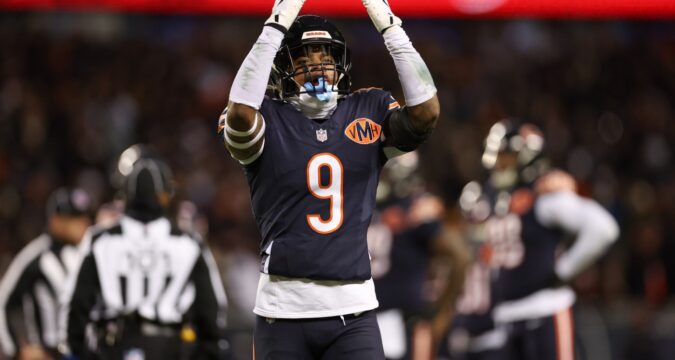
Chicago Bears roster breakdown: How the defensive players fared in 2025 — and their contract statuses for 2026
Six of the top 10 salary-cap figures for 2026 will be dedicated to defensive players, but Chicago Bears general manager Ryan Poles will be looking for a way to squeeze more production from that side of the ball.
The Bears had the sixth-worst quarterback pressure rate (31.6%) this season and gave up 5 rushing yards per play — fourth-worst, according to NFL Pro’s Next Gen Stats.
Asked about the pass rush shortly after the season, Poles said: “There’s a lot going on there just in terms of we had some injuries going on that you have to overcome. That’s an area we’re going to continue to press and get better. I look forward to Shemar (Turner) getting back and Dayo (Odeyingbo) getting back. I thought (Montez) Sweat did a good job this year.”
Before the NFL scouting combine in February and the start of free agency March 11, let’s look at how the Bears defensive players fared in 2025, what their contract status is for 2026 and what options are available to the front office.
Contract numbers according to Spotrac and Over The Cap. Stats according to NFL and Bears media sites.
Want the latest Bears news? Subscribe to the Chicago Tribune to read it all — and sign up for our free Bears Insider newsletter.
Defensive end
Montez Sweat
Bears defensive end Montez Sweat knocks Packers quarterback Jordan Love to the turf in the fourth quarter of a NFC wild-card game at Soldier Field on Jan. 10, 2026. (Chris Sweda/Chicago Tribune)
Contract status: Entering third year of four-year, $98 million extension.
What to know: Sweat finished with 53 tackles while leading the team with 17 quarterback hits, 13 tackles for a loss and 10 sacks — up from last season’s 5½ and tied for 15th in the league. Poles said Sweat performed well overall this season: “I think sometimes we get hung up on sacks, and sacks are important — he did get into double digits — but I think his all-around game was good. The way he defended the run, defended the perimeter as well as applied pressure was good. But we need him to continue to get better too.”
Austin Booker
Bears defensive end Austin Booker (94) tackles Packers quarterback Jordan Love during an NFC wild-card game Jan. 10, 2026, at Soldier Field. (Armando L. Sanchez/Chicago Tribune)
Contract status: Entering third year of rookie contract.
What to know: Booker missed the first seven games while on injured reserve with a knee injury, and he produced 4½ sacks in the remaining 10 regular-season games — a bump from his 1½ sacks as a rookie. He also sacked Jordan Love in the wild-card game against the Green Bay Packers. He’ll be eligible for an extension after next season.
Dayo Odeyingbo
Bears defensive end Dayo Odeyingbo disrupts the throw of Vikings quarterback J.J. McCarthy in the second quarter Monday, Sept. 8, 2025, at Soldier Field. (Chris Sweda/Chicago Tribune)
Contract status: Entering second year of three-year, $48 million contract.
What to know: Odeyingbo’s season ended in Week 9 when he suffered a torn right Achilles tendon against the Cincinnati Bengals. Coach Ben Johnson called him “a force in the run game” and coaches hoped to see if he would be a long-term fit inside, but he didn’t get many snaps to test that theory. He had one sack and four quarterback hits in eight games.
Dominique Robinson
Bears defensive end Dominique Robinson (90) sacks Rams quarterback Matthew Stafford and forces a fumble that Stafford recovered in an NFC divisional-round playoff game Jan. 18, 2026, at Soldier Field. (Brian Cassella/Chicago Tribune)
Contract status: Unrestricted free agent.
What to know: The 2022 fifth-round draft pick played 20% of the Bears’ defensive snaps and 35% of the special teams snaps.
Daniel Hardy
Bears defensive end Daniel Hardy (92) celebrates after making a tackle on a kickoff return against the Packers at Lambeau Field on Dec. 7, 2025, in Green Bay. (Eileen T. Meslar/Chicago Tribune)
Contract status: Restricted free agent.
What to know: He’s primarily a special teamer, playing 78% of the unit’s snaps. Special teams coordinator Richard Hightower called him an “unbelievable competitor.” Hardy played fullback on a D’Andre Swift touchdown run against the San Francisco 49ers, and he played a key role in helping recover an onside kick in a 22-16 overtime rally against the Packers in Week 16.
Joe Tryon-Shoyinka
Bears defensive end Joe Tryon-Shoyinka (93) celebrates pressure on Browns quarterback Shedeur Sanders in the first quarter Sunday, Dec. 14, 2025, at Soldier Field. (Brian Cassella/Chicago Tribune)
Contract status: Unrestricted free agent.
What to know: Tryon-Shoyinka told the Tribune, “I’d love to end up back here, this is a great place to be,” but his contract makes him a “void free agent” — essentially a short-term rental. The Bears traded with the Cleveland Browns for the 2021 first-round pick as a stopgap when Odeyingbo suffered a torn Achilles.
Defensive tackle
Grady Jarrett
Bears defensive end Grady Jarrett celebrates after he and teammate Montez Sweat sacked Lions quarterback Jared Goff on Jan. 4, 2026, at Soldier Field. (Chris Sweda/Chicago Tribune)
Contract status: Entering second year of three-year, $42.75 million contract.
What to know: The Bears brought in the veteran as much for his influence in the locker room as his production. Jarrett played in 14 games (four starts) and was slowed by a knee injury. He finished with 39 tackles, 1½ sacks and eight quarterback hits. He has $13 million guaranteed in 2026.
Gervon Dexter Sr.
Bears defensive tackle Gervon Dexter Sr. (99) tackles Packers running back Josh Jacobs on Dec. 7, 2025, at Lambeau Field in Green Bay. (Eileen T. Meslar/Chicago Tribune)
Contract status: Entering fourth year of rookie contract.
What to know: The 2023 second-round draft pick is eligible for an extension. He had 44 tackles — down from 51 last season — but racked up a career-high six sacks, second on the team to Sweat. According to NFL Pro’s Next Gen Stats, Dexter generated a career-high 11.8% pressure rate, sixth-highest among defensive tackles (minimum 200 pass rushes).
Andrew Billings
Bears defensive tackle Andrew Billings rushes Commanders quarterback Jayden Daniels in the first quarter on Oct. 27, 2024, at Northwest Stadium in Landover, Md. (Brian Cassella/Chicago Tribune)
Contract status: Unrestricted free agent.
What to know: The two-year extension has run out for the veteran nose tackle. Though Billings played in 17 games with 14 starts after a torn pectoral muscle limited him to eight games in 2024, his snap share dipped to 47.7% and his pressure rate from 9.6% to 5.3%, according to NFL Pro.
Shemar Turner
Bears defensive tackle Shemar Turner raises his fist as he leaves the field after a 31-14 win over the Cowboys on Sept. 21, 2025, at Soldier Field. (Stacey Wescott/Chicago Tribune)
Contract status: Entering second year of rookie contract.
What to know: The second-round pick missed all but five games, suffering a torn ACL on Oct. 26 against the Baltimore Ravens. Turner split his limited time between inside and the edge, and coaches thought he showed some potential as an edge rusher.
Chris Williams
Bears defensive tackle Chris Williams chases 49ers quarterback Brock Purdy during the second quarter Dec. 28, 2025, in Santa Clara, Calif. (Armando L. Sanchez/Chicago Tribune)
Contract status: Unrestricted free agent.
What to know: He signed a one-year deal in April and played about 20% of the Bears’ defensive snaps.
Linebacker
Tremaine Edmunds
Bears middle linebacker Tremaine Edmunds celebrates a defensive stop against the Rams in an NFC divisional-round playoff game Jan. 18, 2026, at Soldier Field. (Brian Cassella/Chicago Tribune)
Contract status: Entering final year of four-year, $72 million contract.
What to know: A groin injury landed him on injured reserve for four games, but he returned in late December and played in both playoff games. He had four interceptions and led the Bears with 112 tackles. For the cap-strapped Bears, shedding Edmunds’ contract could generate $15 million in savings while costing just $2.43 million in dead money.
T.J. Edwards
Bears linebacker T.J. Edwards tackles 49ers tight end Jake Tonges at Levi’s Stadium on Dec. 28, 2025, in Santa Clara, Calif. (John J. Kim/Chicago Tribune)
Contract status: Entering first year of two-year, $20 million extension signed in April.
What to know: Edwards had a challenging season, injury-wise. He played in just 10 regular-season games, then suffered a broken fibula in his left leg in the wild-card game against the Packers and was placed on injured reserve and missed the divisional game against the Rams. Edwards has $8.25 million in guaranteed salary next season and carries a $10.8 million cap number.
Noah Sewell
Bears linebacker Noah Sewell (44) takes down Giants tight end Daniel Bellinger on Nov. 9, 2025, at Soldier Field. (Dominic Di Palermo/Chicago Tribune)
Contract status: Entering fourth year of rookie contract.
What to know: The 2023 fifth-round pick was sixth on the Bears with 54 tackles and played 38% of the defensive snaps. The Bears could cut him before or after June 1 and save more than $1.14 million against the cap.
D’Marco Jackson
Bears linebacker D’Marco Jackson (48) pressures Lions quarterback Jared Goff on Jan. 4, 2026, at Soldier Field. (Armando L. Sanchez/Chicago Tribune)
Contract status: Unrestricted free agent.
What to know: He filled in admirably when his unit was hit by injuries, but he primarily played on special teams. He had a $1.1 million cap number this season and played 24.3% of the defensive snaps.
Amen Ogbongbemiga
Bears linebacker Amen Ogbongbemiga (45) defends a pass against Eagles receiver DeVonta Smith on Nov. 28, 2025, at Lincoln Financial Field in Philadelphia. (Brian Cassella/Chicago Tribune)
Contract status: Entering second year of two-year, $5 million extension.
What to know: Like Jackson, he stepped in on defense when needed because of injuries, but he had his own injury problems as well. He’s due a $250,000 roster bonus March 16, though the Bears could save $2 million by releasing him (with $375,000 in dead money).
Ruben Hyppolite II
Bears linebacker Ruben Hyppolite II gets a kiss on the cheek from his mother, Laquinta Hyppolite, before a game against the Steelers on Nov. 23, 2025, at Soldier Field. (Eileen T. Meslar/Chicago Tribune)
Contract status: Entering second year of rookie contract.
What to know: Hyppolite didn’t get many looks in the defensive rotation (2.9% of snaps) or on special teams (18%), despite being a fourth-round draft pick in April. He was inactive for 12 games, including the playoffs.
Cornerback
Jaylon Johnson
Bears cornerback Jaylon Johnson intercepts a pass against Browns receiver Jerry Jeudy on Dec. 14, 2025, at Soldier Field. (Dominic Di Palermo/Chicago Tribune)
Contract status: Entering third year of four-year, $76 million extension.
What to know: Johnson had core muscle surgery after aggravating a groin injury in Week 2, and coaches credited him for working hard to recover in time to return in late November. He has a $7.6 million salary guarantee that vests on March 13.
Nahshon Wright
Bears cornerback Nahshon Wright intercepts a pass intended for Vikings receiver Jordan Addison on Nov. 16, 2025, at U.S. Bank Stadium in Minneapolis. (Stacey Wescott/Chicago Tribune)
Contract status: Unrestricted free agent.
What to know: Wright picked a good time for a career year, leading the NFL with eight takeaways (five interceptions, three fumble recoveries) and forcing two fumbles. He was named to the Pro Bowl on Monday as an injury replacement. Wright was the most targeted Bears defensive back but allowed the lowest passer rating (77.7) among those with at least one start. The question is, was he a one-year wonder, or is the 27-year-old just a late bloomer? It could cost the Bears a pretty penny to find out.
Tyrique Stevenson
Bears cornerback Tyrique Stevenson tackles Vikings receiver Justin Jefferson at U.S. Bank Stadium on Nov. 16, 2025, in Minneapolis. (Stacey Wescott/Chicago Tribune)
Contract status: Entering fourth year of rookie contract.
What to know: Stevenson entered camp as the presumed starter opposite Jaylon Johnson, but he gave way to Wright, which clouds his future. Teams targeted him at the highest rate (16.7%) among Bears defensive backs who made at least five starts, and he allowed the second-highest average yards after catch at 6.3.
Kyler Gordon
Bears cornerback Kyler Gordon (6) celebrates after sacking Saints quarterback Spencer Rattler on Oct. 19, 2025, at Soldier Field. (Armando L. Sanchez/Chicago Tribune)
Contract status: Entering first year of three-year, $40 million extension signed in April.
What to know: “Spider-Man” is the league’s highest-paid nickel corner, but too often he was waylaid by the injury goblin. He played in three regular-season and both playoff games but missed 14 games with groin, calf and hip injuries. He has a $12.9 million cap number for 2026 and $10 million in guaranteed salary.
C.J. Gardner-Johnson
Bears nickel back C.J. Gardner-Johnson celebrates after sacking Giants quarterback Russell Wilson on Nov. 9, 2025, at Soldier Field. (Eileen T. Meslar/Chicago Tribune)
Contract status: Unrestricted free agent.
What to know: The Bears were in dire straits for a nickel corner when they signed the former Philadelphia Eagle, and he made an immediate impact with his on-field energy and blitzing ability. But he trailed off a bit and had rough outings in coverage against the Bengals, Packers (both regular-season games) and Lions.
Nick McCloud
Bears cornerback Nick McCloud (24) heads to the locker room after a 31-28 win over the Steelers on Nov. 23, 2025, at Soldier Field. (John J. Kim/Chicago Tribune)
Contract status: Unrestricted free agent.
What to know: He provided depth at cornerback but allowed a team-high plus-14.6 expected points added (EPA) in coverage, per NFL Pro’s Next Gen Stats.
Jaylon Jones
Bears cornerback Jaylon Jones (33) tackles Steelers receiver Ke’Shawn Williams on a punt return on Nov. 23, 2025, at Soldier Field. (John J. Kim/Chicago Tribune)
Contract status: Unrestricted free agent.
What to know: He played in 15 games, including 48% of special teams snaps, but was used sparingly on defense (36 snaps).
Josh Blackwell
Cornerback Josh Blackwell (39) blocks a field-goal attempt by Raiders kicker Daniel Carlson to give the Bears a 25-24 win Sept. 28, 2025, in Las Vegas. (Armando L. Sanchez/Chicago Tribune)
Contract status: Entering second year of two-year, $5 million extension.
What to know: He was arguably the MVP of special teams (62% of snaps). In addition to sharing kickoff-return duties with Devin Duvernay, he was named NFC Special Teams Player of the Week after blocking a potential game-winning field goal by the Las Vegas Raiders in Week 4, and he recovered a critical onside kick against the Packers in Week 16.
Terell Smith
Bears cornerback Terell Smith (32) tackles Packers wide receiver Jayden Reed (11) at Lambeau Field on Jan. 5, 2025, in Green Bay. (Eileen T. Meslar/Chicago Tribune)
Contract status: Entering fourth year of rookie contract.
What to know: The 2023 fifth-round pick was carted off the field during a preseason game against the Buffalo Bills with a season-ending knee injury.
Zah Frazier
Defensive back Zah Frazier (20) warms up during Bears rookie camp at Halas Hall on May 9, 2025, in Lake Forest. (Stacey Wescott/Chicago Tribune)
Contract status: Entering second year of rookie contract.
What to know: The Bears drafted Frazier in the fifth round last year, and he spent the entire season on the non-football injury list for personal reasons. “I had a good conversation with him. He’s back,” Poles said last week.
Safety
Kevin Byard III
Bears free safety Kevin Byard III (31) celebrates after his interception against the Eagles on Nov. 28, 2025, at Lincoln Financial Field in Philadelphia. (Chris Sweda/Chicago Tribune)
Contract status: Unrestricted free agent.
What to know: Could the season have gone any better for the 32-year-old playing for a new contract? He led the league with seven interceptions, earned Pro Bowl and All-Pro nods and topped the team with a minus-12.7 coverage EPA allowed. All four Bears safeties are on expiring contracts, and Poles said he’d like to make Byard a priority. “I definitely think there’s mutual interest for me to be back,” Byard said. “I want to win. The same way the organization is always going to do what’s best for the team, I think I owe that to my family as well.”
Jaquan Brisker
Safety Jaquan Brisker celebrates after Bears special teams stopped the Rams on a return during an NFC divisional-round playoff game on Jan. 18, 2026, at Soldier Field. (Eileen T. Meslar/Chicago Tribune)
Contract status: Unrestricted free agent.
What to know: Brisker played in all 19 games (including playoffs) after appearing in only five last season. He tied Byard with 93 tackles (second on the Bears) and eight passes defended (tied with Byard for fourth). But can the Bears afford to keep both safeties? When Ben Johnson talks about “physicality,” that includes Brisker, who led the divisional game against the Rams with 14 tackles and had a sack. He said during exit interviews that “it brings a lot of pain” knowing the roster might look different next year — possibly without him.
Elijah Hicks
Bears safety Elijah Hicks makes a tackle against the Browns on Dec. 14, 2025, at Soldier Field. (Brian Cassella/Chicago Tribune)
Contract status: Unrestricted free agent.
What to know: Hicks told the Tribune he embraced a new role in which he saw sparse defensive snaps and played a career-high 67.8% of special teams snaps. The Bears drafted him in the seventh round in 2022, but that will mean little if they don’t see him as depth in an offseason in which all four safeties are UFAs.
Jonathan Owens
Bears safety Jonathan Owens tackles Packers running back Emanuel Wilson on Dec. 7, 2025, at Lambeau Field in Green Bay. (Eileen T. Meslar/Chicago Tribune)
Contract status: Unrestricted free agent.
What to know: He played primarily on special teams, but he received 33 coverage snaps and allowed a team-high 29.4% catch rate over expected.
Specialists
Cairo Santos, kicker
Bears kicker Cairo Santos celebrates after making a field goal during an NFC wild-card game against the Packers on Jan. 10, 2026, at Soldier Field. (Armando L. Sanchez/Chicago Tribune)
Contract status: Entering third year of a four-year, $15.6 million extension.
What to know: Santos’ 51-yarder against the Packers and his 48-yarder versus the Rams were the longest and third-longest field goals in franchise postseason history. However, his 83.3% field-goal percentage ranked 34th in the regular season, though he was perfect on 39 extra-point tries. It seems likely the Bears will keep their career leader in field-goal percentage (88.3%, minimum 50 attempts).
Tory Taylor, punter
Tory Taylor punts the ball against the Browns on Dec. 14, 2025, at Soldier Field. (Dominic Di Palermo/Chicago Tribune)
Contract status: Entering third year of rookie contract.
What to know: His net average of 40.4 yards ranked 22nd in the NFL. The Bears drafted him in the fourth round in 2024.
Scott Daly, long snapper
Bears long snapper Scott Daly warms up before a game against the Lions on Nov. 28, 2024, at Ford Field in Detroit. (Tess Crowley/Chicago Tribune)
Contract status: Unrestricted free agent.
What to know: The 32-year-old hails from Downers Grove and has history with Ben Johnson.
https://www.chicagotribune.com/2026/01/27/chicago-bears-roster-breakdown-defense/
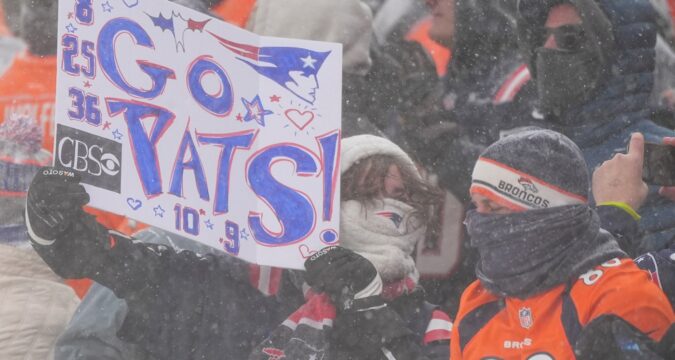
Column: An undesirable Super Bowl matchup comes at the end of a super NFL season
After a great NFL season, it’s not a stretch to predict that Super Bowl LX will be the worst ever.
Everything is falling into place after Sunday’s conference championship games gave us another New England Patriots-Seattle Seahawks matchup, assuring America of the return of Bill Belichick, Tom Brady, Pete Carroll and Malcolm Butler to rehash the wild ending of their matchup in Super Bowl XLIX in Glendale, Ariz.
In case you’ve forgotten, that was the one in which Russell Wilson had the Seahawks on the Patriots 1-yard line with a chance to win on the final play, only to have Butler intercept his pass to Ricardo Lockette and seal a 28-24 New England victory. Carroll never lived down his decision to have Wilson throw instead of handing off to Marshawn Lynch, arguably the worst call in Super Bowl history.
Reminders of that play are unavoidable with two weeks to fill before kickoff on Feb. 8, not to mention several hours of pregame programming that afternoon on NBC. I’d advise fans to turn off their TVs now and tune back in when Carrie Underwood starts singing that night, but even then it promises to be a yawner.
The Chicago Bears could’ve saved us from this matchup and made it a Super Bowl to remember, but there’s no sense in dredging up the gory details of why they lost in overtime to the Los Angeles Rams in the divisional playoff game at Soldier Field. Suffice to say communication is a learned skill.
The Denver Broncos could’ve spared us from seeing and hearing obnoxious Boston sports fans, most of whom have podcasts and call themselves Barstool Tony. But the Broncos didn’t have a decent backup to quarterback Bo Nix, who was injured on the final drive of the divisional playoff win over the Buffalo Bills, and were forced to use someone who seemingly never had played the game before in Sunday’s 10-7 loss to the Patriots in the AFC title game.
So here we are with the Patriots and Seahawks, a matchup that begs you to go clean out the garage or spend the evening bowling. All the Cris Collinsworth-created hype in the world can’t make this one interesting to fans outside of Seattle and New England.
Seahawks fans cheer near the start of the NFC championship game against the Rams on Sunday, Jan. 25, 2026, in Seattle. (AP Photo/John Froschauer)
Of course, the game itself is only part of Super Sunday, and many will tune in for the commercials, the halftime show and the chance to see celebrities.
Alas, they are doomed to be disappointed, judging from the early previews.
Budweiser on Monday unveiled its Super Bowl LX commercial, and it’s everything you hate in a Super Bowl ad — and in a beer. The ad debuted on ABC’s “Good Morning America,” which is two hours of product placement for Disney Co. movies, TV shows and theme parks, interspersed with 10 minutes of real news and a half-hour of shopping tips.
The Budweiser ad features a Clydesdale nurturing a baby bird that eventually grows into a bald eagle that takes flight off the horse’s back to the soundtrack of Lynyrd Skynyrd’s classic, “Free Bird.” A farmer watches and asks another farmer, “You crying?” The other farmer responds, “Sun’s in my eyes.” It’s not too subtle: Bud loves freedom and America!
The ad is meant to celebrate Budweiser’s 150th birthday and the country’s 250th birthday, making us feel patriotic and thirsty. It didn’t work here, and considering the national mood these days, they probably should’ve used Skynyrd’s “Saturday Night Special” instead of “Free Bird.”
Several other Super Bowl ads were teased during Sunday’s games, including Ben Stiller and Benson Boone as brothers faking Italian accents and singing off key for Instacart, and Matthew McConaughey repeating the tired Uber Eats joke about football being a conspiracy to sell food. Lame and lamer.
Every year the big stars come out to create new Super Bowl ads, and every year they’re less and less funny. When was the last time you laughed out loud at a Super Bowl ad?
Bad Bunny performs at the iHeartRadio Music Awards on March 17, 2025, at the Dolby Theatre in Los Angeles. (Monica Schipper/Getty Images)
At least we have the halftime show to look forward to, as long as you like Bad Bunny and/or Green Day. I’m not too familiar with Mr. Bunny’s songs, but he seems to be an annoyance to many people my age, so I’m willing to give him a listen. M-m-m-m-my generation had our turn with The Who playing in Super Bowl XLIV, and Prince killed it in XLI, so we have no reason to complain about Mr. Bunny’s generation getting its turn.
Green Day has been playing the same hits since the ’90s and is the equivalence of comfort food for Generation X. But they’ll take a back seat to Mr. Bunny, whose appearance has been controversial since it was announced last year.
“There’s a lot of people right now who don’t like Bad Bunny being in the Super Bowl halftime show,” NFL chief marketing officer Tim Ellis said in October. “Well, not everyone has to like everything we do. Bad Bunny is f−−−ing awesome.”
Not everyone agrees.
“I’m anti-them,” President Donald Trump said of Bad Bunny and Green Day while informing us he won’t be attending the game because “it’s too far away.”
They are anti-him, so look for some political messages that are certain to further divide the nation. Maybe the patriotic Budweiser ad with the Lynyrd Skynyrd song will run in the second half and unite us again, making it a wash.
Eventually we’ll be able to turn our attention from the Patriots, Seahawks and Mr. Bunny to the 2026 season, starting with the NFL scouting combine.
Hopefully the Bears can save America next year.
They’re our last chance.
https://www.chicagotribune.com/2026/01/27/patriots-seahawks-worst-super-bowl/
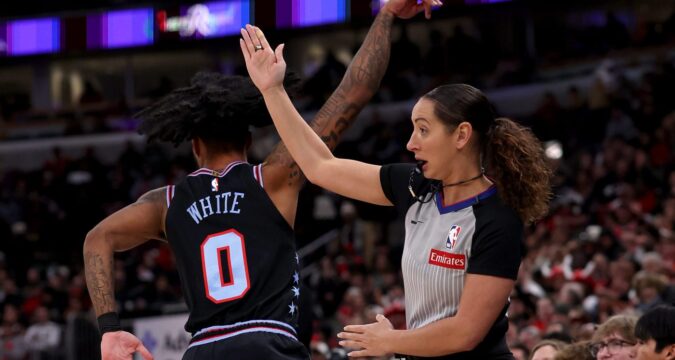
Chicago basketball report: Triple Heat week for the Bulls — and reasons to celebrate around the Big Ten
The WNBA has a 2026 schedule, but will it happen as planned? And the Chicago Bulls will face the Miami Heat three times this weekend.
Every Tuesday, Tribune writers will provide an update on what happened — and what’s ahead — for the Bulls, Sky and local college basketball teams. Want more? Sign up for our Tribune sports newsletter.
Will the Sky season actually start on May 9?
The Chicago Sky and the Indiana Fever battle for the opening tip at the United Center in Chicago on June 7, 2025. (Chris Sweda/Chicago Tribune)
The Chicago Sky are set to tip off the 2026 WNBA season on May 9 after announcing a 44-game schedule earlier this week.
This season will feature two new opponents as the WNBA welcomes expansion teams in Portland and Toronto. The Sky will open their season on the road against the Portland Fire and host the Toronto Tempo for the first time on May 27.
The Sky will play the Indiana Fever three times this season, normalizing from last year’s packed schedule that featured five games between the two Midwestern teams. The Aug. 8 game against the Fever will be held at the United Center, as will the June 28 game against the Las Vegas Aces.
The entire league is set to pause from Aug. 30 to Sept. 16 to allow players to participate in the FIBA World Cup, hosted by Germany. Sky forward Angel Reese will be vying for a spot on the Team USA roster for this tournament, while Sky center Kamilla Cardoso is expected to anchor the Brazilian roster.
One question looms oppressively over this schedule: will any of this actually happen as planned?
The WNBA is currently out of contract with the players’ association, which has authorized a strike but not yet moved to trigger a work stoppage. As a result, the league is currently operating under a limited status quo, which means some mechanisms of the offseason — such as the schedule construction and release — can still proceed as normal. However, free agency has been suspended due to the number of player compensation rules under debate in collective bargaining.
The league expects to undergo a work stoppage at some point in this bargaining process, but it’s unclear when that will start — and even less certain when it will end. Several league sources expect a delay that will at least reduce the length of preseason training camp; however, extensive negotiating could affect the start date of the regular season.
WNBA players have never undergone a work stoppage before, but the concept is familiar in American sports labor history. The longest work stoppage occurred in the NHL from September 2004 to July 2005, when CBA negotiations dragged on for a 310-day lockout. Most strikes or lockouts end on a significantly briefer timeline; the shortest was the NHL strike in 1992, which lasted only 10 days. Other notable work stoppages include the 1994 MLB strike (232 days) and the 1998-99 NBA lockout (204 days).
Brad Underwood hits 100
Illinois head coach Brad Underwood gestures during a game against Purdue in West Lafayette, Ind., Saturday, Jan. 24, 2026. (AP Photo/Michael Conroy)
Illinois coach Brad Underwood had a milestone win to remember Saturday at Purdue.
The Illini’s 88-82 upset of then-No. 4 Purdue gave Underwood his 100th Big Ten win in his ninth season. Illinois went 4-14 and 7-13 in Big Ten play in Underwood’s first two seasons in Champaign, but the Illini have won at least 11 games in conference play every season since, including 16 in the 2020-21 season.
Illinois improved to 17-3 and 8-1 in the Big Ten on Saturday with its ninth-straight win, the longest winning streak of the Underwood era.
“Good players, great coaches all help that,” Underwood said. “I’m sorry it took nine years to do that. We had a couple of hiccups the first couple of years. It will be something I’m obviously proud of. I guess as we move down the road a little bit, I reflect on where it started, and to me it’s a tribute to having a lot of really good people around me. And then to do it in the best league in the country, with the best coaches and the best players.
“Now I’ve only got 300 more to go to catch Izzo.”
Michigan State coach Tom Izzo has a record 368 Big Ten wins in his 31st season.
Underwood was especially appreciative after the game of the moment for his team, which celebrated freshman Keaton Wagler’s Mackey Arena opponent record 46 points in a raucous locker room.
“It’s so awesome,” he said. “It’s why you do this. … When they’re 45 years old, they’re all going to remember that locker room. There are special moments that happen over the course of a career, and that will be one. Our secret sauce is our connective mentality, how close this group is, how dialed in they are, how much love they have for each other.”
Hannah Hidalgo steals mark
UConn forward Serah Williams, left, is pressured by Notre Dame guard Hannah Hidalgo, right, on Monday, Jan. 19, 2026, in Storrs, Conn. (AP Photo/Jessica Hill)
Notre Dame junior guard Hannah Hidalgo became the Irish all-time steals leader in a 74-66 win over Miami on Thursday. Hidalgo had 10 steals to bring her career total to 388 — surpassing Skylar Diggins’ 381. She added eight steals in a loss to Clemson on Sunday.
Hidalgo, who had an NCAA record 16 steals in a game earlier this season, also scored 57 points in the two games last week as she became the seventh Irish player to top 2,000 career points.
She’s averaging 24.9 points per game, but her big numbers haven’t stopped the Irish from hitting some bumps. Notre Dame has lost three of its last four games.
“I think it really starts from our care factor,” Hidalgo said at a news conference after the loss to Clemson. “I think we have to have a different level of toughness that I don’t think we’re having consistently.”
Number of the week: 17
Michigan State guard Jeremy Fears Jr. goes up for a shot against Maryland forward Elijah Saunders on Saturday, Jan. 24, 2026, in East Lansing, Mich. (AP Photo/Al Goldis)
Assists by Michigan State redshirt sophomore guard Jeremy Fears Jr. in a win over Maryland on Saturday. Fears, who played in high school at Joliet West, tied Gary Ganakas for the second-most assists in a game in Spartans program history behind Mateen Cleaves’ 20 in 2000.
Fears is second in the Big Ten with an average of 8.9 assists per game, behind only Purdue’s Braden Smith, who has 9.3 per game.
“Credit to the guys. They were scoring,” Fears said after the game in which he also scored 17 points. “They made my life easy. I just made the passes, and they had to do the hard work, whether it was executing the lob or making the shot.”
Week ahead: Bulls
Chicago Bulls guard Coby White and forward/guard Isaac Okoro stand on the floor as a United Center worker uses a towel to dry the floor due to condensation before a scheduled start between the Bulls and the Miami Heat on Jan. 8, 2026. (Chris Sweda/Chicago Tribune)
Wednesday: @ Pacers, 6 p.m., CHSN
Thursday: Heat, 7 p.m., CHSN
Saturday: @ Heat, 7 p.m., CHSN
Sunday: @ Heat, 5 p.m., CHSN
No, that’s not a typo — the Bulls really do play the Heat three times in four days this weekend. Thursday’s home matchup is the rescheduled date for the Jan. 8 game that was postponed due to excessive condensation on the court. The league opted to move one of the games slated in Miami to create a road back-to-back, resulting in a rare three-game series between the Bulls and the Heat.
Week ahead: Best college basketball games
Wednesday: No. 2 UCLA women at Illinois, 6 p.m., BTN Plus
Thursday: Washington men at No. 9 Illinois, 8 p.m., FS1
Saturday: DePaul men at Xavier, noon, FS1
Saturday: Washington men at Northwestern, 7 p.m., BTN
Sunday: No. 9 Illinois men at No. 5 Nebraska, 3 p.m., FS1
Sunday: Notre Dame women at Stanford, 4 p.m., CW
Sunday: Illinois women at No. 25 Washington, 5 p.m., FS1
After beating Purdue in West Lafayette, Illinois has another big road test ahead this weekend — at No. 5 Nebraska, which, entering the week, hadn’t lost a game. Meanwhile, the Illini women have two ranked opponents on tap, most notably No. 2 UCLA coming to Champaign on Wednesday.
After getting their first Big Ten win last week, the Northwestern men have a shot at adding to their conference win total when they host Penn State and Washington this week.
What we’re reading
Freshman Keaton Wagler’s record 46-point game has No. 11 Illinois thinking big after upset of No. 4 Purdue
Bulls’ Tre Jones, a Minnesota native, saddened by ICE crackdown in home state: ‘It’s tough to watch’
Column: Derrick Rose celebration gives Chicago sports fans what they love most — a reason to remember
Photos: Chicago Bulls retire Derrick Rose’s No. 1 jersey
Derrick Rose celebrates his Chicago legacy as Bulls retire his No. 1 jersey: ‘It was always meant to be’
Northwestern drops to 1-8 in the Big Ten with a 71-64 loss to UCLA
Hannah Hidalgo dominating on both ends of the court for Notre Dame — and in the record book
Coby White, Ayo Dosunmu or Tre Jones: Which Bulls guard makes the most sense for a Minnesota trade?
Josh Giddey’s return sparks Bulls to win. Can he revive a disrupted season?
Quote of the week
Tom Thibodeau and Derrick Rose hug after Thibodeau gave a speech honoring Rose as the Bulls held a ceremony to retire Rose’s #1 jersey at the United Center in Chicago on Jan. 24, 2026. (Chris Sweda/Chicago Tribune)
“Thibs, you may have gone to Harvard, you may have done physics, but I showed you physics.” — Derrick Rose, teasing former Bulls head coach Tom Thibodeau during his jersey retirement speech on Saturday
https://www.chicagotribune.com/2026/01/27/chicago-basketball-report-bulls-heat-illinois-notre-dame/

Getting high at concerts now an option as THC beverages soon to be sold at the United Center concerts
Would you like a buzz with that hot dog?
Concertgoers at the United Center will for the first time be able to buy legal drinks infused with THC, the part of marijuana that gets users high — despite a looming federal ban.
Senorita and Rythm brands will begin selling hemp-derived THC-infused beverages Feb. 4 at the Boys II Men, New Edition and Toni Braxton show. The drinks will be offered to those 21 and over at concerts and other shows, but not at sporting events or children-themed activities.
While THC drinks have been sold at smaller music venues such as the Salt Shed, Riviera, Ramova Theater and Thalia Hall, sponsors believe this is the largest arena to sell the products.
“It’s a category consumers want,” said Rick Schepp,such as Rythm’s general manager of beverages. “We see this as continued normalization.”
The drinks come with 5 milligrams of THC, considered a moderate dose, similar to a glass of beer or wine in the degree of intoxicating effect. They come in flavors such as lime jalapeno and mango margaritas, and a mandarin orange drink with caffeine.
The sales come despite President Donald Trump in November signing into law a prohibition on the sale of intoxicating hemp products that is set to take effect in November. The law would ban any product that contains more than .4 milligrams of THC.
It remains unclear if and how federal officials will enforce the new prohibitions, according to the Congressional Research Service.
“If intoxicating hemp products persist on the market after the change to their legal status, it is possible they could be subject to the same criminal and collateral issues as marijuana,” the CRS stated. “It also remains to be seen whether FDA will pursue additional options to remove these items from the market.”
The hemp industry arose from the 2018 Farm Bill that legalized non-intoxicating hemp, but also allowed intoxicating derivative cannabinoids such as delta-8-, delta-9 and delta-10 THC. Experts warn their health effects are largely unknown.
Retailers began selling those products at smoke shops, convenience stores and gas stations across the country, with no age limit for consumers. Some high school students ended up getting medical treatment after using the products.
The Chicago City Council also voted recently to ban intoxicating hemp products, but to allow the continued sale of beverages and lotions. Mayor Brandon Johnson said he has serious concerns about the proposed ban, but had not decided last week whether to veto the measure.
Hemp product sales curtailed in Chicago with City Council vote
Kevin Sabet, president and CEO of Smart Approaches to Marijuana, a nonprofit which opposes cannabis commercialization, criticized the decision to sell the THC drinks.
“It’s a reckless decision, especially now, after we know so much about how dangerous these drinks are,” he told the Tribune. “Bipartisan lawmakers have decided to shut the door on these businesses — and for good reason. This smells of trying to make a quick buck at the expense of public health.”