Category: News

World pauses to commemorate International Holocaust Remembrance Day
WARSAW, Poland — Holocaust survivors, politicians and regular people commemorated International Holocaust Remembrance Day on Tuesday, gathering at events held across Europe to reflect on Nazi Germany’s murder of millions of people and its attempt to annihilate European Jewry.
International Holocaust Remembrance Day is observed across the world on Jan. 27, the anniversary of the liberation of Auschwitz-Birkenau, the most notorious of the Nazi German death camps. The U.N. General Assembly adopted a resolution in 2005 establishing the day as an annual commemoration.
At the memorial site of Auschwitz, located in an area of southern Poland which was under German occupation during World War II, former prisoners laid flowers and wreaths at a wall where German forces executed thousands of prisoners. Poland’s President Karol Nawrocki was scheduled to join survivors for a remembrance ceremony at Birkenau, the vast site nearby where Jews from across Europe were exterminated in gas chambers.
Candles burned and white roses were placed at the Memorial to the Murdered Jews of Europe, a field of 2,700 gray concrete slabs near the Brandenburg Gate in the heart of Berlin, which honors the 6 million victims and stands as a powerful symbol of Germany’s remorse.
In the Czech Republic, a candlelight march is planned for the evening in Terezin at the site of the former Nazi concentration camp Theresienstadt. Thousands of Jews died there or were sent from there to Auschwitz and other death camps.
Nazi German forces murdered some 1.1 million people at Auschwitz, most of them Jews, but also Poles, Roma and others. The camp was liberated by the Soviet army on Jan. 27, 1945. In all, some 6 million Jews were killed in the Holocaust — in ghettos, concentration camps and often shot at close range in the fields and forests of Eastern Europe.
Israel — home to more Holocaust survivors than any other country — marks its remembrance day, Yom HaShoah, on the anniversary of the April 1943 Warsaw Ghetto Uprising, emphasizing the heroism of the Jewish insurgents who resisted the Nazi terror.
A shrinking community of Holocaust survivors
An annual gathering took place at the upper house of the Czech Parliament with Holocaust survivors. Pavel Jelinek, a 90-year-old survivor from the city of Liberec — a Czech city with a prewar Jewish population of 1,350 — told those gathered that he was now the last living of the 37 Jews who returned to the city after the war.
There are an estimated 196,600 Jewish Holocaust survivors still alive globally, down from 220,000 a year earlier, according to information published last week by the New York-based Conference on Jewish Material Claims Against Germany. Their median age is 87, and nearly all — some 97% — are “child survivors” who were born 1928 and later, the group said.
Though the world’s community of survivors is shrinking, some are still telling their stories for the first time after all these years.
In London, a Holocaust survivor addressed the British Cabinet in what Prime Minister Keir Starmer described as a first. Government members wiped away tears as 95-year-old Mala Tribich described how Germany’s invasion of Poland in 1939 destroyed her childhood.
She recalled being forced into hard labor at the age of 12 as the first Nazi ghetto was established in her hometown of Piotrkow Trybunalski, and spoke of the hunger, disease and suffering there. The Nazis murdered her mother, father and sister. She was sent to Ravensbrück and then to Bergen-Belsen, where she was liberated by the British Army in April 1945.
She urged the Cabinet members to fight antisemitism — and to remember.
“Soon, there will be no eyewitnesses left,” she told them. “That is why I ask you today not just to listen, but to become my witness.”
‘Unity that saves lives is needed’
Many leaders also reflected on the upheaval in today’s world.
Kaja Kallas, the European Union’s foreign policy chief, warned about rising antisemitism and new threats. She noted that AI-generated content is now being used “to blur the line between fact and fiction, distort historical truth, and undermine our collective memory.”
Ukraine’s President Volodymyr Zelenskyy, whose country has been under attack from Russia for four years, said that just as the world united to defeat the Nazis in 1945, it “must act the same way now.”
“Whenever hatred and war threaten nations, unity that saves lives is needed,” Zelenskyy said.
Associated Press writers Karel Janicek in Prague, Kamila Hrabchuk in Kyiv, Danica Kirka in London, Lorne Cook in Brussels and Mike Corder in Amsterdam contributed to this report.
https://www.chicagotribune.com/2026/01/27/international-holocaust-remembrance-day/

Minnesota judge orders ICE chief to appear in court to explain why detainees have been denied due process
MINNEAPOLIS, Minn. — The chief federal judge in Minnesota says the Trump administration has failed to comply with orders to hold hearings for detained immigrants and ordered the head of Immigration and Customs Enforcement to appear before him Friday to explain why he shouldn’t be held in contempt.
In an order dated Monday, Chief Judge Patrick J. Schiltz said Todd Lyons, the acting director of ICE, must appear personally in court. Schlitz took the administration to task over its handling of bond hearings for immigrants it has detained.
“This Court has been extremely patient with respondents, even though respondents decided to send thousands of agents to Minnesota to detain aliens without making any provision for dealing with the hundreds of habeas petitions and other lawsuits that were sure to result,” the judge wrote.
The order comes a day after President Donald Trump order border czar Tom Homan to take over his administration’s immigration crackdown in Minnesota following the second death this month of person at the hands of an immigration law enforcement officer.
Messages were sent Tuesday to ICE and a DHS spokesperson seeking a response.
“Respondents have continually assured the Court that they recognize their obligation to comply with Court orders, and that they have taken steps to ensure that those orders will be honored going forward,” Schlitz continued in the order. “Unfortunately, though, the violations continue.”
ICE agents to have security role at Milan Cortina Olympics
The judge said he recognizes that ordering the head of a federal agency to appear personally was extraordinary. “But the extent of ICE’s violation of court orders is likewise extraordinary, and lesser measures have been tried and failed,” Schlitz wrote.
Schlitz’s order lists the petitioner by first name and last initials: Juan T.R. It says the court granted a petition on Jan. 14 from the person to provide him with a bond hearing within seven days. On Jan. 23, the person’s lawyers told the court the petitioner remained detained.
The order says Schlitz will cancel Lyons’ appearance if the petitioner is released from custody.
Catalini reported from Trenton, New Jersey.
https://www.chicagotribune.com/2026/01/27/minnesota-judge-ice-chief-court/

Sophomore Cameron Katz is already a leader for Highland. He learns ‘how I can be that role model that I saw.’
Highland sophomore Cameron Katz is learning and leading at the same time.
The 5-foot-9 point guard is among the most experienced and influential players on a roster without a senior.
“Last year, I was a freshman on varsity, I had seniors to look up to and lean on,” Katz said. “Coming in sophomore year, I was like, ‘Oh, I have to be a leader.’ You think about it, it’s really like, ‘Wow, I’m going to be a leader on the team at such a young age.’
“I have to take care of people. We’re bonding. We’re all learning at the same time. It’s great.”
Katz has been flourishing in his central role, averaging 11.3 points, 1.9 rebounds, a team-high 3.1 assists and 1.5 steals as the Trojans (7-9, 1-2) prepare for a Northwest Crossroads Conference game against Kankakee Valley on Friday. Three juniors and two sophomores have been starting since junior guard Danijel Zekavica suffered a torn ACL at the beginning of the season.
Highland relied heavily upon seniors such as Justin Pack and Walter Glover Jr. last season, when Katz averaged 3.9 points, 1.4 rebounds, 1.2 assists and 1.0 steals.
“We had a good group of seniors,” Katz said. “I had so many role models. I shared two lockers with seniors. They were right next to me. I just made a bond with the seniors. They made me feel good about myself, and it just really helped me as a freshman.
“Seeing these guys, it just makes you think about myself and how I can be that role model that I saw, how I can be one to them.”
Katz is making that kind of an impact.
“He’s a great teammate,” Highland sophomore guard Brady Boyd said. “I love playing with him. He’s had two years — one year and a half — under his belt, and he knows what he’s doing. This is my first year on varsity — I was a crossover last year — and he’s been coaching me and being right here with me.”
Katz said he absorbed as much as he could as a freshman.
“It’s an honor,” he said. “It’s great to see your hard work pay off. It’s always the best feeling.”
Katz suffered a dislocated left shoulder during AAU basketball in late May, and he was sidelined for a month. But aside from that bump in the road, his work has been consistent. During the fall, it wasn’t uncommon for Katz to ask coaches to let him into the gym early in the morning.
“I was getting shots up on the machine, things like that,” he said. “I feel like I’m dedicated to the sport more. I’m dedicating my life to the sport more. I love it. Ball is love, ball is life. It’s a great thing.
“My confidence is higher this year. It’s just great. I’m not saying the game is easy, but it’s easier. I see the court better. I know where I am. I already know the plays from last year. It’s like I know what to do on this, I know what to do on that. You master the plays, you master the defense, and the bond we have with each other really helps.”
Highland coach JD Fabian recognized Katz’s skills and potential from the outset.
“He’s a great kid, great family,” Fabian said. “He always has a smile on his face. He works hard. He definitely has a passion for the game.
“We knew when he came in last year, when we saw his ability as a freshman, he could be somebody special for his four years. He contributed last year, and we knew he’d be a starter this year. We knew his ability and basketball IQ was something that was really going to help us for four years. He can shoot it. He can pass it. He can do a little bit of everything.”
Fabian likes the direction the Trojans are heading in his fifth season as coach.
“This is probably the highest-IQ team that I’ve coached since I’ve been here,” he said. “They have good instincts. We have guys that have good court vision, can make passes, guys that can shoot. This is the best shooting team we’ve had all around as a whole. We battle.
“Next year, if we’re healthy, we’ll be really solid. Everything that we’re going through this year with the ups and downs and competing, it’s going to pay off in the long run.”
Katz agreed. The Trojans haven’t finished above .500 since they went 12-11 in 2020-21, and they haven’t posted more than 12 victories since they went 17-7 in 2011-12, which is also the last time they won a sectional game. But Katz sees a bright future.
“I really have no complaints about our team,” he said. “We’re really young. If we lose, we get right back to work next practice, next game. We work really hard as such a young team.
“A lot of these guys, it’s the first time even playing JV, varsity-level basketball. As much as we’re young and inexperienced, we handle it well.”
https://www.chicagotribune.com/2026/01/27/basketball-highland-cameron-katz/
Futures Rise Ahead Of Tech Earnings As Gold, Silver Resume Surge
Futures Rise Ahead Of Tech Earnings As Gold, Silver Resume Surge
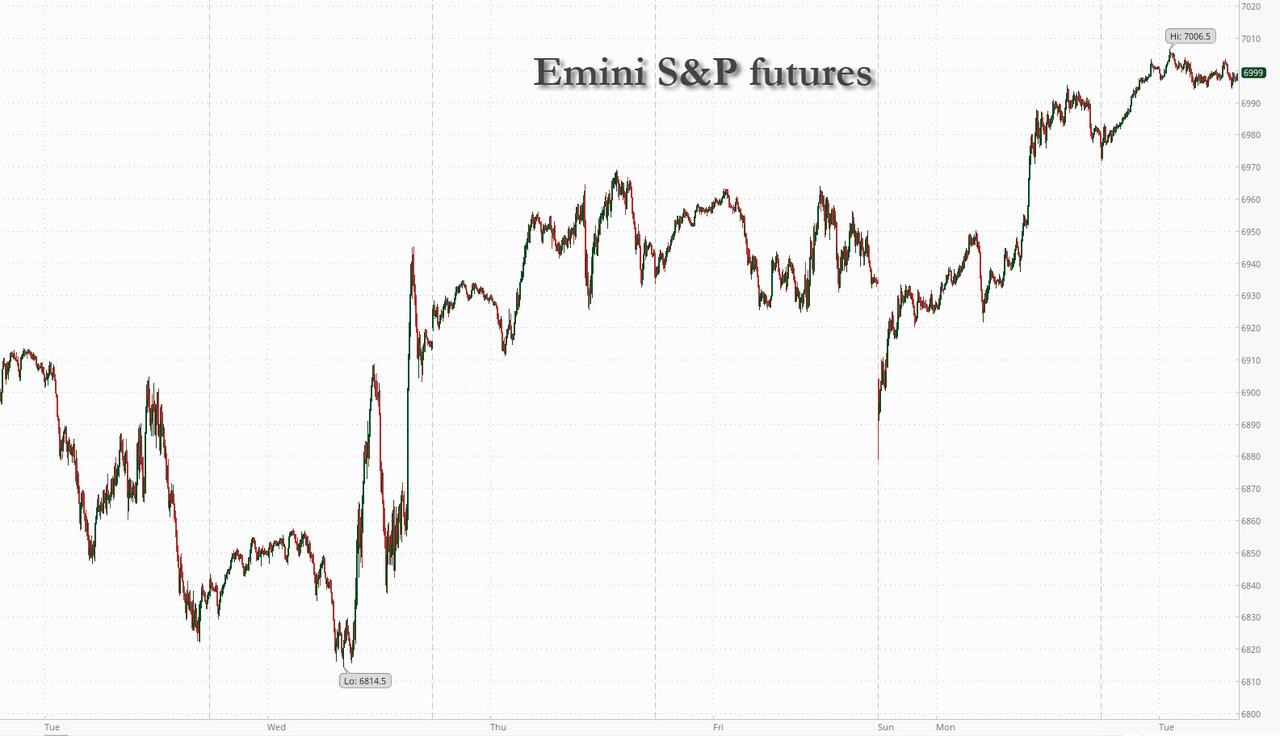
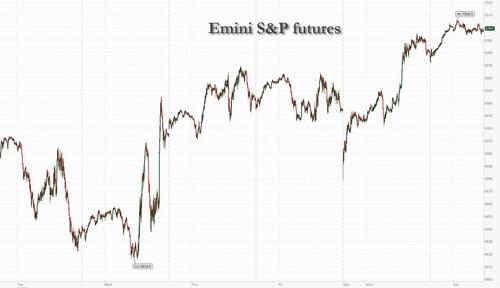
US futures are higher, led by Tech, and approaching record levels from earlier this month as geopolitical and headline risk subsides while the market focuses on looming Mag 7 earnings and Wednesday’s Fed decision is expected to be a non-event. Equities are poised for another attempt at 7k. As of 8:00am ET, S&P futures are up 0.2% and set for a fifth day of gains; Nasdaq futures lead gains, up 0.6% with all Mag7 members higher while Healthcare stocks hammered on headlines related to Medicare pricing. Micron jumped 5% in premarket trading on plans to expand its memory-chip capacity. Big tech has started to wake up, with Apple having its best day in three months yesterday and Meta also strong. Both are due to report later this week. So far, the earnings season has been good but not great, according to strategists at BofA. The dollar hit the lowest level since March 2022, while the yen fluctuated as jitters over intervention lingered, before rising to session highs. The yield curve is twisting steeper as JGB-induced vol subsides; In commodities, precious metals continue to move vertically with gold +1.5% and silver +8%, though PGMs are being sold. Today’s macro focus is on the weekly ADP print, home price data, Consumer Confidence, and regional Fed activity indicators.
In premarket trading, Mag 7 stocks are all higher (Microsoft +0.6%, Apple +1.2%, Tesla +0.4%, Nvidia +0.4%, Alphabet +1.1%, Amazon +0.5%, Meta +0.3%).
Health insurers including Humana (HUM), UnitedHealth (UNH) and CVS (CVS) slide after the US proposed holding payments to private
Medicare plans flat next year. Analyst note that investors are disappointed as they expected mid-single digit-percentage rises. Humana -15%, UnitedHealth -16%, CVS -13%.
UnitedHealth also forecast a decline in 2026 revenue, the first annual contraction in more than three decades
Agilysys Inc. (AGYS) falls 12% after the hospitality software firm posted fiscal third quarter adjusted earnings per share that fell short of expectations.
American Airlines Group Inc. (AAL) rises 3% after reporting fourth-quarter results.
CoreWeave (CRWV) gains 4%, set to extend Monday’s 5.7% rally, after Nvidia invested an additional $2 billion in the cloud computing firm. Following the latest investment announcement, Deutsche Bank raised the recommendation on the stock to buy.
General Motors Co. (GM) climbs 4% as the company expects profits to grow as much as $2 billion this year and plans to return more of that to shareholders with a higher dividend and buybacks.
JetBlue Airways Corp. (JBLU) falls 3% after reporting a wider loss than expected last quarter, highlighting challenges in its strategy to win over higher-paying customers.
Northrop Grumman (NOC) slips 1% after the military contractor gave a forecast for full-year adjusted earnings per share below what analysts had expected.
Redwire Corp. (RDW) climbs 15% after being awarded a contract for the Missile Defense Agency Scalable Homeland Innovative Enterprise Layered Defense contract.
RTX Corp. (RTX) gains 3% after the maker of aircraft engines and missiles reported fourth-quarter adjusted earnings per share above what analysts expected.
Sanmina (SANM) falls 8% after the electronics manufacturing services provider gave a revenue outlook for the second quarter that fell short of the consensus estimate.
United Parcel Service Inc. (UPS) gains 3% as the courier forecast full-year sales above Wall Street’s expectations as it forges ahead with plans to cut less-profitable package volume out of its network.
Even as stocks are set to make new record highs, there are still numerous reasons to be cautious: Trump and Senate Democrats are hurtling toward another government shutdown, while North Korea fired what appeared to be ballistic missiles off its east coast days after the US released a new defense strategy for the region. While the Greenland drama has died down, there are still some tariff headlines. The EU and India concluded a free-trade agreement after almost two decades of negotiations, part of an effort to deepen economic ties amid Trump’s aggressive trade policies. And Trump threatened to hike tariffs on South Korea to 25%.
Citigroup said that short-covering dominated the latest weekly US large-cap futures flows, while new long risk was added to the Russell 2000. Goldman Sachs strategists, meanwhile, said that a proprietary measure of risk appetite hit the highest level since 2021 last week despite elevated policy and geopolitical uncertainty.
“In the US, while very elevated valuations and the dollar weakness make us more cautious than in Europe, there’s possibly still one or two interest-rate cuts lined up for this year,” said Laurent Chaudeurge, an investment committee member at BDL Capital Management in Paris. “Investors are still chasing the AI trade, and at the moment this is done through semiconductors.”
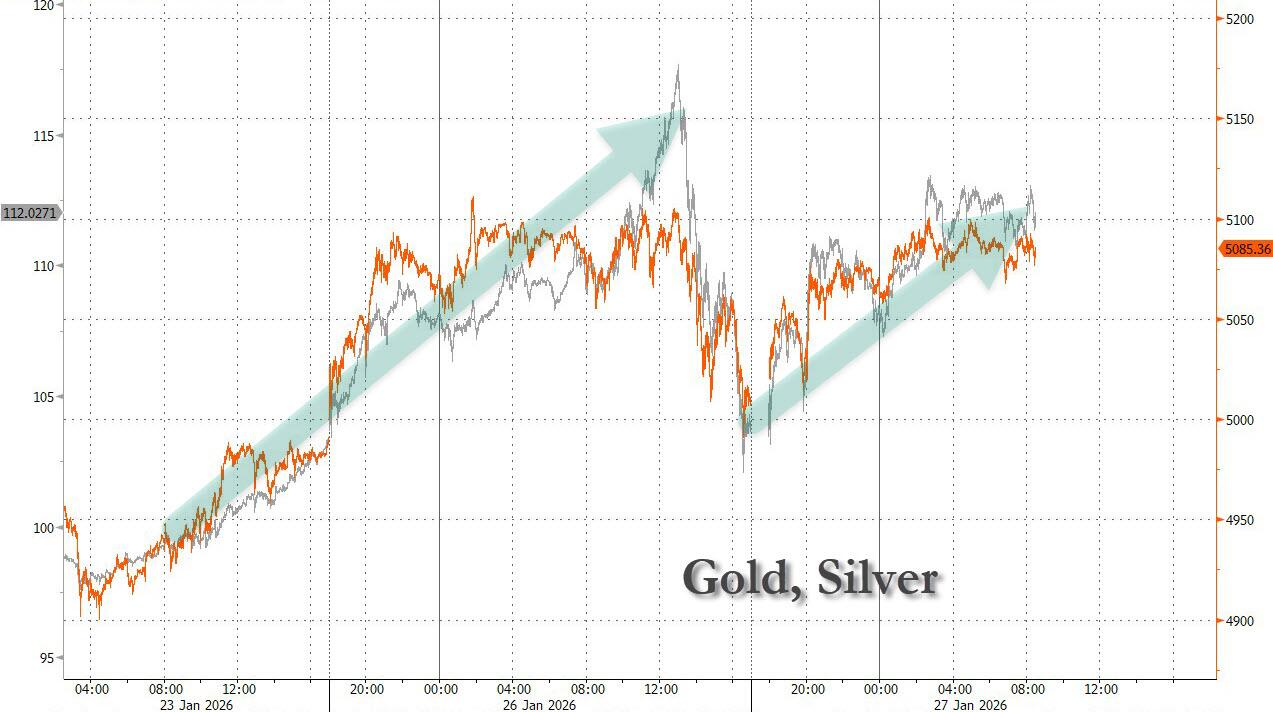
Precious metals rallied again after gold and silver erased much of their advance in the previous session, with bullion trading near $5,080 an ounce.
“Gold prices could potentially exceed $7,000 by the end of the year,” said Frederique Carrier, head of investment strategy for RBC Wealth Management in the British Isles and Asia. “The main drivers that were there last year — trade tensions, geopolitical instabilities — are still very much there.”
In earnings, of the 69 S&P 500 companies to have reported so far this earnings season, about 77% have beaten analysts’ forecasts, while nearly 15% have missed. American Airlines, Boeing, General Motors and UPS are among companies scheduled to report before the market open. Texas Instruments is among those due after the close.
In Europe, the Stoxx 600 is up 0.4%, with banks and insurance names leading gains after India and the European Union reached a free trade agreement, with a raft of upbeat earnings also lifting sentiment. Banks and telecoms outperform, while miners and carmakers are the biggest laggards. Here are the biggest movers Tuesday:
Puma shares rise as much as 21%, before quickly paring gains, after China’s Anta Sports Products agreed to buy a ~29% stake for €1.5 billion, becoming the biggest shareholder in the German company
Siegfried shares rise as much as 15%, the most in over three years, after the contract development and manufacturing organization serving the pharmaceutical industry bought two new sites in the US and one in Australia
HSBC shares gain as much as 3.1% in London, to the highest on record, taking the bank’s market capitalization above $300 billion for the first time, as Citigroup (buy) lifts its price target
Comet shares rise as much as 7.7% to the highest since October 2024 after ZKB said the Swiss technology firm’s share price doesn’t reflect the benefits it will likely see from the upcoming investment cycle in memory chips
HMS Networks surges as much as 14% after releasing its fourth-quarter results, which DNB Carnegie says came in “better-than-feared”
Spirax rises as much as 3.7% after analysts at Barclays raised their price target on the maker of pumps and steam management systems. Analysts say the stock has lagged the broader capital goods sector and is now trading at a discount
Getinge shares drop as much as 7.2%, the most in more than six months, after the Swedish health-care equipment firm reported weaker-than-expected sales and earnings for the fourth quarter
Amplifon shares drop as much as 3.7%, second-worst performer in the Stoxx 600 Health Care Index on Tuesday morning, after Kepler Cheuvreux cut its earning estimates for the hearing-aid retailer and decreased its price target
Demant shares slip as much as 3.4%, among the worst performers in the Stoxx 600 Health Care Index on Tuesday morning, after Bank of America decreased its price target on the stock to the lowest among analysts tracked by Bloomberg
Capgemini shares fall as much as 3.3%, with traders citing a TV report that highlighted a contract between the IT group and the US’s Immigration and Customs Enforcement
Aker BP shares fall as much as 3.2% after Danske Bank cut its recommendation on the Norwegian oil and gas exploration firm to sell from hold on high valuation and the outlook for commodity prices
Earlier in the session, Asian equities extended gains, lifted by a continued rally in technology stocks in Taiwan and South Korea. The MSCI Asia Pacific Index gained as much as 0.9%, with Samsung, SK Hynix and TSMC offering the biggest boost. South Korea’s Kospi led advances in the region with a nearly 3% gain, as investors bought the dip spurred by President Donald Trump’s latest tariff threat. Markets were mostly in the green, with benchmarks in Hong Kong, Singapore, Malaysia and Thailand rising more than 1%. Traders are awaiting mega-cap tech earnings, which will shape expectations for the sustainability of the AI-driven rally. The Federal Reserve’s rate decision on Wednesday will also hold sway over rate-sensitive stocks.
In FX,the Bloomberg Dollar Spot Index drops to the lowest level since March 2022 as the greenback loses ground against almost all its G-10 peers. USD/JPY is down 0.6% near 153.35 after another bout of choppy price action. The pair dropped ~130 pips in relatively short order before recovering, a move that looked similar to price action observed during the European morning session on Friday. There did not appear to be a obvious catalyst for the move.
In rates, treasuries dip following limited price action during Asia session and London morning, similar to European bonds.10-year yields are 4.23%, about 2bps higher on the day and slightly outperforming bunds and gilts in the sector. Focal points of US include consumer confidence data and a 5-year note auction.
In commodities, spot silver rises 8% and is closing in on Monday’s record high. US crude futures rise 0.5% to around $61 a barrel.
US economic calendar includes weekly ADP employment change (8:15am), November FHFA house price index and S&P Cotality home prices (9am), January Richmond Fed manufacturing index and consumer confidence (10am) and Dallas Fed services activity (10:30am)
Market Snapshot
S&P 500 mini +0.3%
Nasdaq 100 mini +0.6%
Russell 2000 mini +0.4%
Stoxx Europe 600 +0.3%
DAX little changed, CAC 40 little changed
10-year Treasury yield +1 basis point at 4.22%
VIX -0.2 points at 16
Bloomberg Dollar Index little changed at 1187.28
euro unchanged at $1.188
WTI crude +0.3% at $60.83/barrel
Top Overnight News
President Trump has received multiple U.S. intelligence reports indicating that the Iranian government’s position is weakening, according to several people familiar with the information. The reports signal that the Iranian government’s hold on power is at its weakest point since the shah was overthrown in the 1979 revolution. WSJ
South Korea scrambled on Tuesday to assure the U.S. it remained committed to implementing a trade deal after U.S. President Donald Trump said he would hike tariffs on autos and other imports from its ally, blaming a delay in enacting the pact agreed last year. RTRS
India and the European Union said Tuesday they have reached a free-trade agreement that will open a new market for European cars and other products, showing how the world’s middle powers are expanding alliances in response to President Trump’s tariffs. WSJ
The Trump administration has indicated to Ukraine that US security guarantees are contingent on Kyiv first agreeing a peace deal that would likely involve ceding the Donbas region to Russia. FT
China’s industrial enterprises had their first annual gain in profits since 2021, as producer deflation showed signs of easing in the wake of government efforts to curb excess competition and cut capacity. Profits climbed 5.3% in December from a year earlier, rising for the first time in three months and recovering from a plunge of more than 13% in November. BBG
Japan’s bond meltdown sparked speculation that the $1.8 trillion GPIF might shift its portfolio allocation to JGBs while reducing foreign bond holdings, particularly Treasuries. BBG
Trump said he will increase the tariff rate on South Korean imports from 15% to 25% unless the South Korean National Assembly approved the trade deal struck back in July. NYT
US natural gas fell, with traders taking profits after prices shot up almost 30% on Monday amid freezing temperatures that pushed up heating demand. BBG
Republicans and President Trump designed their tax cuts for this moment, creating a refund bonanza that will land in Americans’ bank accounts well ahead of the midterm elections. The annual tax-filing season that opened Monday will produce a cash surge estimated at $100 billion beyond last year’s $329 billion total. WSJ
Philippines said they conducted joint military exercises with the US in the South China Sea: Al Arabiya.
US ambassador to China Perdue said in Bloomberg TV interview that China and the US completed most agreements made in Busan, South Korea.
Trade/Tariffs
US President Trump announces he is “increasing South Korean TARIFFS on Autos, Lumber, Pharma, and all other Reciprocal TARIFFS, from 15% to 25%”.
South Korea Legislature Trade Committee head said that passages of such trade bills usually take six to seven months.
South Korea’s ruling party said it aims to pass special act on US trade deal by end of February, according to Yonhap Infomax.
South Korean ruling party official said bills to enact US investment have been introduced and will soon be reviewed.
South Korean Industry Ministry said Minister is to visit the US soon and meet with Commerce Secretary Lutnick.
EU Commission begins 2 set of proceeding on Google under the DMA; Google is designated as a core platform service, requiring interoperability with third-party services.
China reportedly signs deals to buy at least 8 cargoes or approximately 520k tonnes of Canadian Canola following PM Carney’s visit, according to sources.
Chinese Foreign Minister said UK PM Starmer will visit China between January 28-31st.
European Commission President von der Leyen said EU and India finalised a trade deal, and called it “the mother of all deals”.
Japan and the US are reportedly to announce several projects in a first batch under the USD 550bln scheme.
A more detailed look at global markets courtesy of Newsquawk
APAC stocks were mostly higher following on from the rebound on Wall Street, but with some of the gains capped ahead of key events and big tech earnings stateside, while participants also digested Trump’s latest tariff salvo against South Korea. ASX 200 rallied on return from the long weekend, with risk appetite also facilitated by M&A-related headlines and improved business sentiment. Nikkei 225 gained despite the initial indecision following recent currency moves and after Services PPI cooled but remained above the BoJ’s price target. KOSPI sold off at the open following US President Trump’s announcement to raise tariffs on South Korean autos, lumber, pharma, and all other reciprocal tariffs to 25% from 15% due to its legislature not yet enacting the US-Korea trade deal. However, the index then clawed back its losses and more, with the TACO trade likely in play and with South Korean officials attempting to appease Trump. Hang Seng and Shanghai Comp traded somewhat mixed with firm gains in Hong Kong led by Zijin Mining, which is to buy Canada’s Allied Gold for USD 4bln, while the mainland index lagged despite an acceleration in Chinese Industrial Profits and the PBoC’s liquidity efforts.
Top Asian News
China is to roll out policy document on boosting jobs amid AI impact, according to Xinhua. China will roll out policies to support employment amid AI shift and will boost support for employment among key groups.
European bourses (STOXX 600 +0.3%) are broadly in the green this morning, following a similar theme seen in the APAC session. The DAX 40 (-0.2%) is mildly pressured whilst the FTSE 100 (+0.4%) outperforms slightly, benefitting from strength in Banking names. European sectors are mixed; Banks lead followed closely by Insurance names whilst Basic Resources lags given the broader losses seen in underlying metal prices. In terms of key movers, Puma (+4%) opened higher by 20%, but has since pared much of that move – Jefferies highlighted that ANTA may find it hard to boost Puma’s brand in China, given it already has high presence in the region.
Top European News
China’s Industry Ministry announces that they have renewed the cooperation MOU regarding green maritime tech and shipbuilding with Denmark.
India to sign a security and defence partnership with EU today in addition to advancing the free trade agreement at the 16th India-EU Summit, according to The Print.
UK government plans to tighten scrutiny of Chinese influence in the UK, with PM Starmer seeking to bolster the registration scheme while still deepening Sino-British ties, according to FT.
FX
G10s were initially broadly lower against the USD, but following recent JPY strength, G10s are now broadly higher. JPY leads the pile (vs initially underperforming), whilst the NZD and CAD hold around the unchanged mark. EUR/USD is mildly lower, and ultimately within a narrow 1.1850-1.1899 range. Earlier, the EU and India announced an FTA, which cut circa EUR 4bln of tariffs on the bloc’s exports.
Delving into USD/JPY, the pair fell from 154.49 to a session low of 153.16 within a few minutes, but has since pared back towards 153.90. This drove the pair below the prior day’s low, and also below its 100 DMA at 153.61. A move that also weighed on the Dollar index, which fell from 97.10 to a session low of 96.90. Nothing fresh behind that move, with participants ultimately mindful of potential intervention risks, or further rate checks being carried out by the US and/or Japan. Note, the JPY move occurred alongside reports of an explosion near Iran’s Parchin site, a development that potentially influenced the JPY; however, the lack of follow-through to other assets, particularly crude, diminishes this narrative.
DXY is flat this morning and trades within a 96.90 to 97.28 range, and currently holding within the prior day’s ranges. On the trade front, US President Trump said South Korea had delayed its trade agreement with the US and imposed a 25% tariffs on various Korean sectors – the Korean Industry Minister is to visit the US, and aims to pass a special act on the deal by end-February. The Korean Won was initially pressured at the reopen of trading, but has pared about half of the move. Back to the US, markets await ADP Weekly Average figures, Richmond Fed and Consumer Confidence. Participants also count down to the FOMC tomorrow. Barring any surprises in the data, the DXY may find itself relatively rangebound into the confab.
Fixed Income
A modestly bearish start for fixed income. Action driven by the mostly constructive risk tone, though there are some pockets of weakness in Equities.
USTs a tick or two softer in a 111-23 to 111-26+ band, within Monday’s 111-22+ to 111-30 parameters. Aside from supply, which follows a solid 2yr auction last night, the US docket is headlined by ADP.
Bunds are also lower, with magnitudes slightly larger to losses of 15 ticks at most. No follow through to Bunds or EGBs generally from the morning’s German and Italian supply, taps that were unremarkable but robust enough.
Gilts gapped lower by 15 ticks, acknowledging the pressure seen in peers overnight from the constructive risk tone. Since, the benchmark has stabilised slightly off lows and trades broadly in line with European benchmarks. The morning’s 2033 UK auction was well received, with a b/c above the 3x mark, though this did not spur any move in Gilts.
Italy sold EUR 3bln vs exp. EUR 2.5–3bln 2.20% 2028 BTP & EUR 2bln vs exp. EUR 1.5–2bln 1.10% 2031, 2.55% 2056 BTPei.
UK sold GBP 3.25bln 4.125% 2033 Gilt: b/c 3.18x (prev. 3.04x), average yield 4.296% (prev. 4.191%), tail 0.2bps (prev. 0.3bps).
Germany sells EUR 4.633bln vs exp. EUR 6bln 2.10% 2028 Schatz: b/c 2.1x, average yield 2.14%, retention 22.8%.
Germany opens books to sell EUR-denominated 20-year Bund via syndicate; guidance seen +3bps to DBR.
EIB to sell EUR-denominated 5-year bonds, guidance seen +9bps vs mid-swaps.
Australia sold AUD 1bln 1.50% June 2031 bonds, b/c 3.46, avg. yield 4.4382%.
Commodities
Crude benchmarks softened in the earlier hours of the Asia-Pac session. WTI futures fell from USD 60.85/bbl to a trough of USD 60.17/bbl following the report, but have since rebounded slightly as the European session gets underway, but remains just shy of the USD 61/bbl figure. It was recently reported that explosions were heard near Iran’s Parchin nuclear site, but no damage was reported. Some reports suggest it could have been a routine missile test – no move in crude benchmarks on the initial or subsequent reports.
Nat Gas prices remain elevated, Dutch TTF holds above EUR 40/MWh while Henry Hub futures hover near USD 7/MMBtu, as the Arctic storm provides a short-term shock to gas production.
Precious metals continue to rise, despite selling off late in the US session, which was seemingly led by profit-taking in silver. Spot XAU found support at USD 5,000/oz and is currently trading just shy of USD 5,100/oz. Spot silver returns above USD 112/oz after a USD 15/oz selloff from its ATH of USD 117.70/oz on Monday.
3M LME Copper re-opened lower, as it reacted from the selloff in the precious metals space, but found support at USD 13k/t before oscillating in a USD 13k-13.15k/t band.
Explosions have reportedly been heard near Iran’s Parchin nuclear site, no damage has been reported – details light, awaiting verification.
Largest US power grid PJM Interconnection has issued alerts amid storm bolstering energy demand.
Deutsche Bank expects a quarterly peak of USD 13k/t in Q2, with price moderation onwards as production recovers at several major mines. Threat of US tariffs on refined copper should lead to continued metal flows to the US in H1’26. On aluminium, they assume some moderation from current levels in H2 (2026 Avg. of USD 2.9k/t, peak of USD 3.1k/t in Q2).
German’s Economic Minister said they will move forward with the wind power tenders to expand capacity.
Deutsche Bank thinks USD 6,000/oz for spot gold is achievable this year due to a weaker dollar; in alternative scenarios, USD 6,900/oz would be in line with the past 2-year outperformance. An eventual moderation of XAU/XAG ratio may result in higher absolute silver prices.
ADNOC Gas (ADNOC) CEO said they’re investing more than USD 20bln to increase processing capacity by approximately 30% by 2029.
DTEK Power Company said the Russian attack damaged an energy facility in Ukraine’s Odesa region.
UAE’s ADNOC chief revises forecast and sees oil demand above 100mln barrels per day until 2040.
US President Trump is said to be mulling a cap on California state fuel tax and vowed to drive down the state’s gas prices, according to NY Post.
Geopolitics: Ukraine
DTEK Power Company said the Russian attack damaged an energy facility in Ukraine’s Odesa region.
Infrastructure facilities in the Lviv region of western Ukraine were hit by a Russian strike, according to the regional governor.
US President Trump’s administration has signalled to Ukraine that US security guarantees are contingent on Kyiv first agreeing a peace deal that would likely involve ceding the Donbas region to Russia, according to sources cited by FT.
Geopolitics: Middle East
Intensive diplomatic efforts are currently underway between Iran and the US across multiple channels, Kann news reported; efforts aimed at reducing the level of “escalation” between parties. However, no significant breakthrough reported at this stage.
Explosions have reportedly been heard near Iran’s Parchin nuclear site, no damage has been reported – details light, awaiting verification.
Palestinian media reported Israeli artillery shelling targeting areas in Khan Yunis in the southern Gaza Strip, according to Sky News Arabia.
The Rafah crossing is estimated to be opened on Wednesday or Thursday, Israeli media reported.
The explosions heard on the outskirts of Tehran are a routine missile test, Al Hadath reported citing Iranian TV.
Geopolitics: Other
South Korea’s National Security Office reportedly urges North Korea to immediately stop its launches of ballistic missiles.
North Korea reportedly fired several ballistic missiles, according to the South Korea military.
North Korean missile appears to have landed outside of Japan’s Exclusive Economic Zone (EEZ), according to NTV.
Japan’s Coast Guard sends second notice that a possible North Korean ballistic missile has already fallen.
Projectile believed to be North Korean-fired ballistic missile has already fallen, according to the Japanese Coast Guard.
Japanese Coast Guard issues second notice regarding North Korean projectile.
North Korea fires projectile towards sea, according to Yonhap; details light.
China said US-Philippines patrol in South China Sea undermines regional peace, while China’s military vows to safeguard sovereignty and maritime rights, uphold regional peace amid US-Philippines patrol.
US President Trump said he is pleased to report that Venezuela is releasing its political prisoners at a rapid rate, which rate will be increasing over the coming short period of time. Full post: “I am pleased to report that Venezuela is releasing its Political Prisoners at a rapid rate, which rate will be increasing over the coming short period of time. I’d like to thank the leadership of Venezuela for agreeing to this powerful humanitarian gesture! PRESIDENT DONALD J. TRUMP”.
US Event Calendar
9:00 am: Nov FHFA House Price Index MoM, est. 0.26%, prior 0.4%
9:00 am: Nov S&P Cotality CS 20-City YoY NSA, est. 1.2%, prior 1.31%
9:00 am: Nov S&P Cotality CS U.S. HPI YoY NSA, est. 1.3%, prior 1.36%
10:00 am: Jan Richmond Fed Manufact. Index, est. -5, prior -7
10:00 am: Jan Conf. Board Consumer Confidence, est. 91, prior 89.1
DB’s Jim Reid concludes the overnight wrap
The post-Greenland rally has continued over the last 24 hours, with the S&P 500 (+0.50%) posting a fourth consecutive advance that left the index within half a per cent of its record high. For 2026 standards it was a quiet but solid day for bonds and equities ahead of the FOMC tomorrow and four out of the Mag-7 reporting tomorrow and Thursday. However, we did see some extreme moves in precious metals, with gold prices (+0.43%) closing above $5,000/oz for the first time ever, while silver (+0.57%) gave up almost all of its +14% intra-day gain before rallying again this morning in the Asia session.
That precious metal pullback began shortly after the European close yesterday but it’s proving short-lived, with gold back up +1.23% to $5,070oz as I type, with silver up +5.39% to $109.38/oz. And even though it’s still January, gold had already seen a YTD return of +16% as of yesterday’s close, whilst silver has surged +45% since the start of the year. Silver prices are up over +260% since the start of 2025, although unlike gold they still haven’t exceeded their real terms peak back in 1980. My CoTD yesterday (link here) showed the 235 year history for both gold and silver in real terms. The fascinating thing is that on January 9th this year (ie 2.5 weeks ago) silver in real terms was no higher than it was at the start of 1790! So while I’ve generally been a precious metal bug in recent years given my belief that fiat money is inherently inflationary, over the medium to longer-term precious metals are unlikely to compete with equities, especially from this starting point. It doesn’t mean you shouldn’t hold in a diversified portfolio but some realism of future long-term returns should be factored at these levels.
The volatility in precious metals came as the US dollar lost further ground, with the dollar index (-0.55%) closing less than half a percent from the post-2022 lows it reached back in September. In part, that was driven by the Japanese Yen’s strength, which moved up +0.99% against the US Dollar yesterday, making it the strongest-performing G10 currency. That followed the weekend comments from PM Takaichi that the government was prepared to “take all necessary measures to address speculative and highly abnormal movements”. But on top of that, investors also had to grapple with the prospect of a fresh government shutdown this week, which is now considered a 79% probability on Polymarket, not long after the longest-ever government shutdown back in Q4. Those odds did decline a couple of percent age points from earlier yesterday as we saw some de-escalation of the tensions between the White House and local officials over the recent events in Minnesota. Our economists note that a shutdown could delay the big refund cheques about to go out so there are incentives to compromise and avoid any lasting disruption.
Looking at the equity moves in more detail, as mentioned at the top, the S&P 500 (+0.50%) posted a 4th consecutive advance. The NASDAQ (+0.43%) and Mag-7 (+0.46%) saw similar gains, while blue chip names helped a slight outperformance for the Dow Jones (+0.64%). By contrast, the small cap Russell 2000 (-0.36%) lost ground for a second session running. The index is still up +7.16% YTD compared to a +1.53% gain for the S&P 500, having outperformed the S&P for fourteen consecutive sessions at the start of the year prior to Friday.
Those equity gains were bolstered by another batch of stronger-than-expected US data which added to the buoyancy of risk assets there. For instance, the Dallas Fed’s manufacturing activity hit a six-month high of -1.2 in January (vs. -8.5 expected). And the durable goods orders for November were up +5.3% (vs. +4.0% expected). So that cemented the optimistic view around Q4 growth, with the Atlanta Fed’s GDPNow estimate remaining at an annualised pace of +5.4%.
Earlier in Europe, the performance was a bit more subdued by comparison to the US, with the STOXX 600 only up +0.20%. That followed an underwhelming set of data, with the Ifo’s business climate indicator in Germany remaining at 87.6 in January (vs. 88.2 expected). Plus the expectations component unexpectedly fell to an 8-month low of 89.5 (vs. 90.3 expected). So that dampened sentiment a bit, with investors dialling up the probability of an ECB rate cut this year. And in turn, sovereign bonds rallied across Europe, with yields on 10yr bunds (-3.9bps), OATs (-5.8bps) and BTPs (-4.7bps) all falling back. US Treasuries also rallied a bit, with the 10yr yield (-1.3bps) falling to 4.21%.
Elsewhere, the Canadian dollar was the worst performing of the G10 currencies yesterday after Trump’s weekend threat of 100% tariffs against Canada if it strikes a trade deal with China. In response, Canada’s trade minister LeBlanc said he had reassured US Trade Representative Greer that the recent pact with China was a “narrow arrangement”. We saw further tariff headlines just after the US close, as Trump posted that he was raising tariffs on South Korea from 15% to 25% in response to South Korea’s legislature not yet enacting the trade agreement reached last year. So tariff threats remain an active policy tool for the White House, even if last week’s episode over Greenland shows that the resulting tensions can also decline quickly.
Asian equities are mostly higher this morning. The KOSPI (+2.43%) is higher after dipping at the open following the tariff news. However, sentiment improved when South Korea’s presidential office clarified that it had not received prior notification of any tariff increase plans. Additionally, it was noted that Trade Minister Kim Jung-kwan, who is currently in Canada, would travel to Washington for discussions with US Commerce Secretary Howard Lutnick. In other markets, the CSI (+0.34%), Shanghai Composite (+0.25%), the Nikkei (+0.69%), the ASX (+0.92%) and the Hang Seng (+1.01%) are all higher. S&P 500 (+0.28%) and NASDAQ 100 (+0.55%) futures are both higher. Meanwhile, 10yr USTs are +1.6bps higher standing at 4.23% as we go to print.
The Japanese yen (-0.18%) is experiencing a small decline after two days of gains, with 10 and 30yr JGB yields back up +5.3bps and +4.8bps respectively. In terms of data, China’s industrial profits have returned to growth, ending a two-month contraction with a rise of +5.3% year-on-year in December, significantly surpassing expectations of a -13.1% decline.
Looking at the day ahead, US data releases include the Conference Board’s consumer confidence for January and the Richmond Fed’s manufacturing index for January. Otherwise, central bank speakers include the ECB’s Nagel, and earnings releases include Boeing, UnitedHealth, UPS and General Motors.
Tyler Durden
Tue, 01/27/2026 – 08:33
https://www.zerohedge.com/markets/futures-rise-ahead-tech-earnings-gold-silver-resume-surge

‘Emotional’ Coco Gauff smashes racket in frustration after her Australian Open quarterfinal loss
MELBOURNE, Australia — Coco Gauff smashed her racket into the concrete floor once for every time she dropped serve, and another one for good measure, after her Australian Open quarterfinal loss to Elina Svitolina on Tuesday.
The third-seeded Gauff, a two-time major winner, struggled with her serve and recorded five double-faults in the first set, when she was broken four times.
There were two more service breaks in the second set and, once the match was over — in 59 minutes — Gauff stayed composed as she left the center court and tried to find somewhere quiet to vent her frustrations.
Turns out, there’s pretty much no place in Rod Laver Arena except for the locker rooms that is beyond the scope of the cameras. So, the seven times she pounded her racket into a concrete ramp were far from a private moment following her 6-1, 6-2 defeat.
“Certain moments — the same thing happened to Aryna (Sabalenka) after I played her in the final of the U.S. Open — I feel like they don’t need to broadcast,” Gauff said in her post-match news conference. “I tried to go somewhere where I thought there wasn’t a camera because I don’t necessarily like breaking rackets.
“I broke one racket (at the) French Open, I think, and I said I would never do it again on court because I don’t feel like that’s a good representation. So, yeah, maybe some conversations can be had.”
Gauff hit just three clean winners across 15 games, made 26 unforced errors and won 2 of 11 points on her second serve. She got 74% of her first serves into play, but only won 41% of those points.
It was an usually bad day for a player who made her Grand Slam debut at 15 and won her first major, the 2023 U.S. Open, at 19. She’s still only 21.
Gauff said she felt it was better to shatter a racket than to take out any frustrations on her support team.
“They’re good people. They don’t deserve that, and I know I’m emotional,” Gauff said. “So, yeah, I just took the minute to go and do that.
“I don’t think it’s a bad thing. Like I said, I don’t try to do it on court in front of kids and things like that, but I do know I need to let out that emotion.”
https://www.chicagotribune.com/2026/01/27/coco-gauff-australian-open-loss/

President Donald Trump’s about-face in Minnesota after Alex Pretti’s death is latest in pattern of sudden shifts
WASHINGTON — President Donald Trump shifted toward a more conciliatory approach with Democratic leaders in Minnesota on Monday, a sudden change in tack following an outcry over the second fatal shooting by federal agents in the state this month during the administration’s nationwide crackdown on undocumented immigrants.
The about-face comes after Saturday’s shooting death of Alex Pretti by federal agents raised doubts — including from some Republicans — over how the Trump administration has gone about aggressively deporting migrants and confronting protesters opposed to the policy.
But it’s just the latest in a string of moments where Trump has first taken a maximalist position only to appear to later retreat.
Earlier this month, Trump repeatedly threatened Iran with military action if his administration found the Islamic Republic was using deadly force to squelch recent antigovernment protests. Human rights groups said thousands were killed, but Trump says he’s holding off on acting after he received assurances Tehran was suspending hundreds of planned executions.
Last week, Trump first announced plans to impose new tariffs on European allies that refused to go along with his calls for the U.S. to take control of the Arctic territory of Greenland — only to abruptly cancel the tariffs after saying he’d come to terms of the “framework” of an agreement. The White House offered scant details about the deal, which Trump announced the day after the stock market saw one of its worst days in months in response to his tariff threat.
Then on Monday, Trump’s administration changed up oversight of his immigration operation in Minnesota, and the typically bombastic Trump offered a warmer tone toward Gov. Tim Walz after speaking with the Democrat, saying he and Walz were now on a “similar wavelength.”
Some Republicans took issue with what happened in Minneapolis
It was a particularly jarring turnabout for Trump, who had promised to be uncompromising on carrying out mass deportations of undocumented migrants during his 2024 campaign — and because Trump has repeatedly scorched Walz and other Minnesota Democrats in personal terms for resisting his policies.
Trump said he had dispatched border czar Tom Homan to take charge. Meanwhile, senior Border Patrol commander Greg Bovino and some agents were expected to leave Minneapolis as early as Tuesday, according to a person familiar with the matter.
Trump declared on social media that Walz “was happy that Tom Homan was going to Minnesota, and so am I!” Later, Minneapolis Mayor Jacob Frey confirmed that some agents would be leaving the city after he spoke with Trump — and suggested that the president seemed to be coming to the conclusion that the current state of federal operations was unsustainable. Homan and Frey were expected to meet Tuesday.
Trump’s change-up in Minnesota came after some Republicans questioned federal agents’ tactics in Saturday’s shooting as well as the White House’s response. Some high-ranking administration officials had branded Pretti a domestic terrorist even as videos of the encounter contradicted their narrative.
Minnesota gubernatorial candidate Chris Madel, a Minneapolis attorney, ended his GOP campaign in a surprise video announcement Monday, calling the recent immigration enforcement operation in the Twin Cities an “unmitigated disaster” and saying he no longer wanted to be a member of the party because of it.
Meanwhile, Texas Republican Gov. Greg Abbott, who has been a strong supporter of Trump’s crackdown on immigration, offered measured criticism in an interview with conservative radio host Mark Davis, saying the White House needs to “recalibrate” what it was doing in Minnesota. Vermont’s Republican Gov. Phil Scott called on Trump to reset and de-escalate.
“At best, these federal immigration operations are a complete failure of coordination of acceptable public safety and law enforcement practices training, and leadership,” Scott said. “At worst, it’s a deliberate federal intimidation and incitement of American citizens that’s resulting in the murder of Americans.”
Trump had scorched Walz. Now, they’re on a ‘similar wavelength’
The president’s approach toward Walz, who served as Democratic presidential nominee Kamala Harris’ running mate in 2024, amounted to a sharp U-turn.
Just a day earlier, Trump’s deputy chief of staff, Stephen Miller, had derided Walz on social media as trying to “incite attacks on” U.S. Immigration and Customs Enforcement agents. The White House social media team in a series of posts called the governor “a truly disturbed, unstable individual” and an “unhinged lunatic” who “rants and raves and lies.”
Miller also referred to Pretti, a nurse who worked at a Veterans Affairs hospital, as a “would-be assassin” while Homeland Security Kristi Noem labeled the ICU nurse as committing an act of domestic terrorism.
The White House sidestepped whether Trump agreed with his senior aides’ rhetoric or whether the administration would apologize for it.
“This incident remains under investigation,” press secretary Karoline Leavitt told reporters. “And nobody here at the White House, including the president of the United States, wants to see Americans hurt or killed and losing their lives.”
His response has been muted compared to other recent deaths
Trump’s response to the deaths of the two U.S. citizens in Minneapolis has been much more muted than reactions to political violence that he’s portrayed as targeting his own political movement.
After conservative activist Charlie Kirk was assassinated in September, the president spoke to the nation from the Oval Office and called Kirk’s death “a dark moment for America.”
In November, Trump gave a national address after two National Guard members were shot in Washington by an Afghan national, one fatally. The guard members had been deployed to the nation’s capital as part of a federal mission to assist with local policing, and the president called the shooting “an act of evil, an act of hatred and an act of terror.”
But the president has yet to speak directly to the nation about the deaths of Pretti and Renee Good, another U.S. citizen who was killed by federal agents in Minneapolis earlier this month. Trump has so far largely chosen to keep the public informed in the wake of Pretti’s death with social media posts.
Even as his comments Monday appeared to be aimed at turning down the rhetoric, Trump’s chief spokesperson, Leavitt, continued to blame Walz and other Minnesota Democrats for encouraging “left-wing agitators to stop, record, confront and obstruct federal officers who are just trying to lawfully perform their duties.”
“This is precisely what unfolded in Minneapolis on Saturday morning,” Leavitt added.
AP writers Josh Boak and Joey Cappelletti in Washington, Jim Vertuno in Austin, Texas, and Scott Bauer in Madison, Wisconsin, contributed reporting. Karnowski reported from Minneapolis.
https://www.chicagotribune.com/2026/01/27/donald-trump-minnesota-alex-pretti-death/

‘One Battle After Another’ leads the pack in nominations for UK’s BAFTA film awards
LONDON — Paul Thomas Anderson’s politically charged action thriller “One Battle After Another” leads the race for the British Academy Film Awards, securing 14 nominations Tuesday including acting nods for five of its cast.
Ryan Coogler’s blues-steeped vampire epic “Sinners” is close behind with 13 nominations, while Chloé Zhao’s Shakespearean family tragedy “Hamnet” and Josh Safdie’s ping-pong odyssey “Marty Supreme” have 11 apiece.
The best film nominees are “One Battle After Another,” “Hamnet,” “Marty Supreme,” “Sinners” and Norwegian family drama “Sentimental Value.”
Best leading actor contenders are Robert Aramayo for playing a man with Tourette’s syndrome in biographical drama “I Swear,” Timothée Chalamet for “Marty Supreme,” Leonardo DiCaprio for “One Battle After Another,” Ethan Hawke for “Blue Moon,” Michael B. Jordan for “Sinners” and Jesse Plemons for “Bugonia.”
The leading actress race pits favorite Jessie Buckley for “Hamnet” against Rose Byrne for “If I Had Legs I’d Kick You,” Kate Hudson for “Song Sung Blue,” Chase Infiniti for “One Battle After Another,” Renate Reinsve for “Sentimental Value” and Emma Stone for “Bugonia.”
“One Battle” actors Teyana Taylor, Benicio del Toro and Sean Penn are all nominated for supporting performances.
Read our reviews:
‘Sinners’ review: In Ryan Coogler’s juicy mashup, a pair of Michael B. Jordans dance with the devil
Review: ‘One Battle After Another’ is a searing indictment of this American moment
Review: ‘Bugonia,’ starring Emma Stone, is often uncomfortable and darkly funny
‘F1’ review: With Brad Pitt as the seasoned old-timer, it’s ‘Top Gun: Maverick’ on wheels
Review: ‘Hamnet’ is a deeply sad, utterly beautiful Shakespeare story
Review: Timothée Chalamet is truly great in the kenetic ‘Marty Supreme’
Review: Brazil’s ‘The Secret Agent’ is an intoxicating political thriller
Review: ‘Song Sung Blue’ hits a winning note, based on a real story
‘Weapons’ review: The kids aren’t all right, but the movie works like a fiendish charm
The Associated Press was recognized in the best documentary category with a nomination for Mstyslav Chernov’s harrowing Ukraine war portrait “2000 Meters to Andriivka,” co-produced by the AP and PBS Frontline.
The winners will be announced at a Feb. 22 ceremony in London hosted by actor Alan Cumming. The U.K. prizes — officially called the EE BAFTA Film Awards — often provide clues about who will triumph at Hollywood’s Academy Awards, held this year on March 15.
This year, unusually, Oscar nominations were announced first, with “Sinners” securing a record 16 nominations, followed by 13 for “One Battle After Another.”
The British academy has recognized several performers overlooked by the Oscars, including supporting actor nominees Paul Mescal for “Hamnet” and Odessa A’zion for “Marty Supreme.”
‘Sinners’ makes history, setting Oscars nomination record
The BAFTAs also have a distinctly British accent, with a separate category of best British film. Its 10 nominees include “The Ballad of Wallis Island,” “Pillion,” “I Swear” and “Bridget Jones: Mad About the Boy.”
Most BAFTA winners are chosen by 8,500 members of the U.K. academy of industry professionals, with one – the Rising Star Award – selected by public vote from a shortlist of nominees. This year’s rising star contenders are Infiniti, Aramayo, “Sinners” star Miles Caton and British actors Archie Madekwe and Posy Sterling.
Like other major movie awards, Britain’s film academy has introduced changes in recent years to increase diversity. In 2020, no women were nominated as best director for the seventh year running, and all 20 nominees in the lead and supporting performer categories were white. The voting process was changed to add a longlist round before the final nominees are selected.
Zhao is the only female nominee in the best director category, alongside Anderson, Safdie, Cooger, Yorgos Lanthimos for “Bugonia” and Joachim Trier for “Sentimental Value.” Across all categories including documentaries and shorts, 25% of the directing nominees are women.
https://www.chicagotribune.com/2026/01/27/nominations-uk-bafta-film-awards/

The Bullish And Bearish Case For 2026
The Bullish And Bearish Case For 2026
Authored by Lance Roberts via RealInvestmentAdvice.com,
The year ahead presents both a bullish and bearish case for investors. Will 2026 be another year of above-average returns, or will it be a year of disappointment? The bulls argue that the key ingredients for a sustained rally are in place. A powerful technology cycle, aggressive corporate spending, and supportive policy measures all point to further gains. Conversely, the bears argue that key drivers are weakening, market leadership is dangerously narrow, and signs of economic strain are becoming increasingly visible beneath the surface.
Following a strong 2025, many investors are now facing a different market regime. Liquidity remains ample, but concerns around valuation, employment pressure, and consumer health are rising. The outcome depends on how long optimism can prevail over reality, and whether the hoped-for gains from artificial intelligence and capital expenditures materialize in time to offset the economic drag from debt, interest rates, and inequality.
Sentiment indeed remains positive, although not universally so. Equity strategists are divided, and bond markets are pricing in both rate cuts and the risk of a recession. Furthermore, while fiscal stimulus could delay any downturn, it also adds to long-term imbalances. The challenge for investors is staying objective. While both the bull and bear cases have merit, the timing of outcomes will be critical, and the reality is that in 2026, both the bullish and bearish cases could be correct. Therefore, the right strategy will be the one that adapts.
Let’s break down both the bullish and bearish scenarios for 2026 and examine the arguments on each side. By assessing the macro and market drivers that shape each outlook, we can lay out clear, practical tactics to prepare your portfolio for either path. Whether the bullish or bearish case prevails in 2026, your edge will come from disciplined risk management, not from guessing the future.
The Bullish Case
The bullish case thesis is built on a few key pillars: a new wave of tech-driven investment, supportive fiscal policy, renewed liquidity, and the resilience of corporate and retail behavior. Combined, these forces have helped push markets higher, and bulls believe they will continue to do so well into 2026.
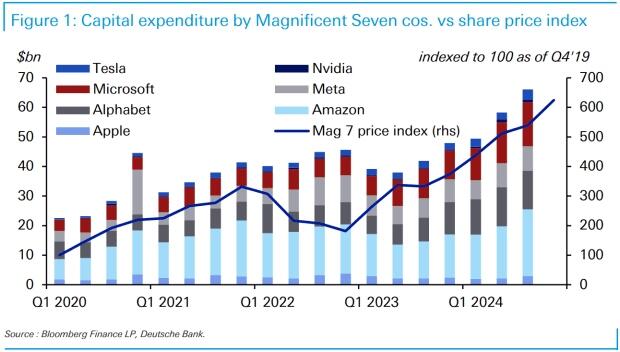
At the heart of the bull case is the emergence of a transformational technology cycle, anchored by artificial intelligence and infrastructure upgrades. Unlike past hype-driven tech cycles, this one is already producing real capital expenditure. The “Magnificent Seven” mega-cap firms have committed more than $600 billion toward data centers, semiconductors, and AI services. This spending has knock-on effects through software, energy, and industrial supply chains. If productivity gains follow, as many expect, earnings will expand and justify higher valuations.
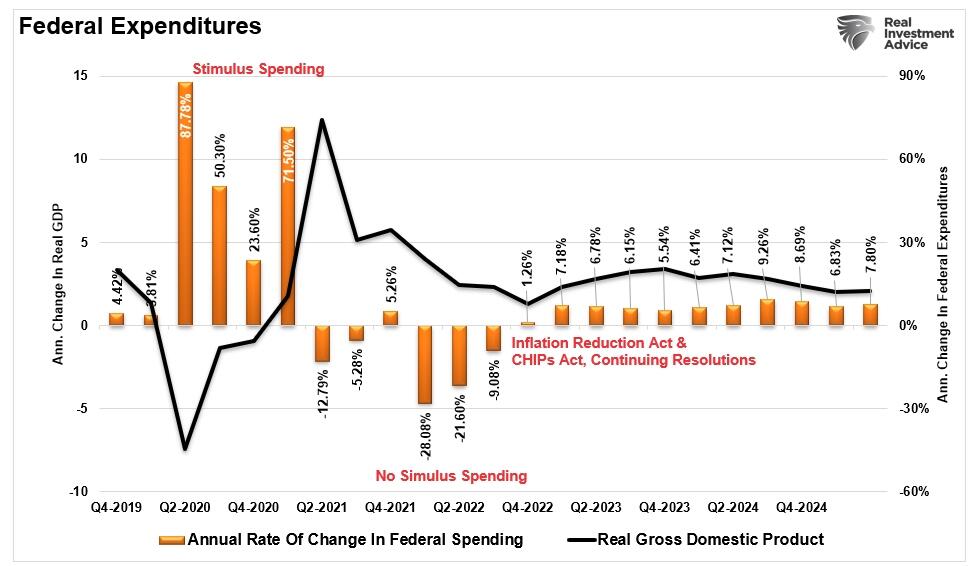
Fiscal policy is also aligned with growth. Under a Trump-led government, tax cuts and direct payments are expected to stimulate both corporate and consumer sectors. The promise of $2,000 stimulus checks may not sound radical, but it boosts near-term consumption and supports small business revenues. Combined with income tax reductions, these measures provide a tailwind for GDP and investor sentiment. As shown, since the 2022 market correction and recession calls, fiscal stimulus has continued to provide steady support for economic growth.
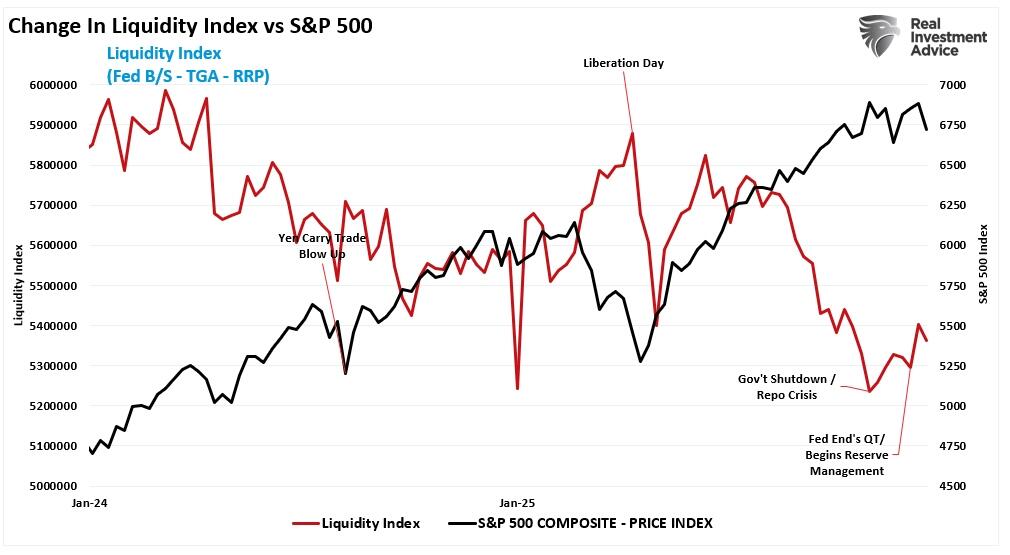
The monetary backdrop is also shifting in favor of the bulls. Quantitative tightening ended in December 2025, and the Federal Reserve is now engaging in “Quantitative Easing Lite” as they continue to cut interest rates and buy $40 billion in short-dated Treasuries. The stated goal is “reserve management,” which is Fed-speak for ensuring there is ample liquidity in the financial system. As the Federal Reserve cuts rates, credit markets should ease, providing risk assets with a tailwind, and liquidity is expected to increase. This dynamic has historically driven higher equity multiples, particularly in technology and growth names.
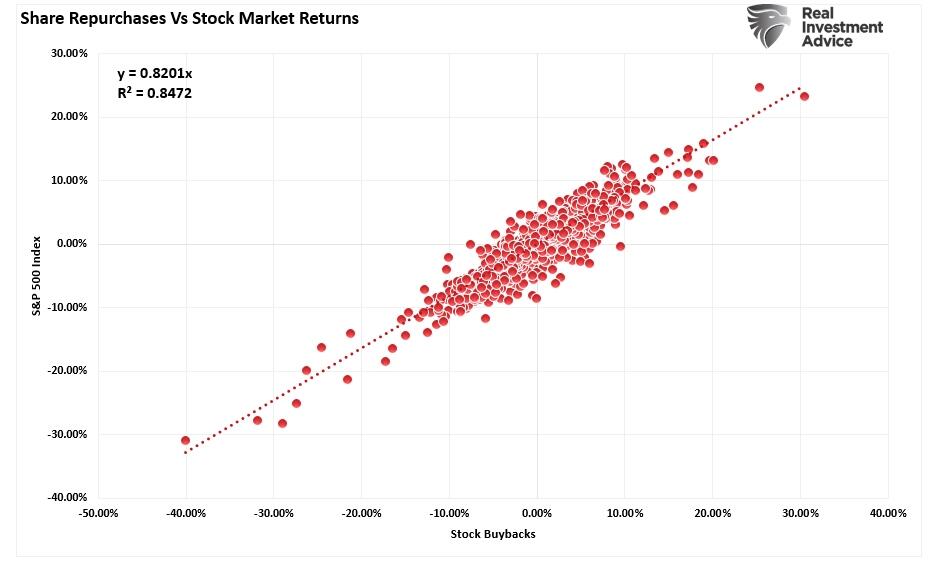
Corporate behavior reinforces the trend. Share buyback authorizations are set to hit a new record of more than $1.2 trillion in 2026. While often quoted as a “capital return strategy,” which it isn’t, there is a clear correlation between buybacks and stock market performance. Particularly, since 2000, corporate buybacks have comprised nearly 100% of all net equity purchases.
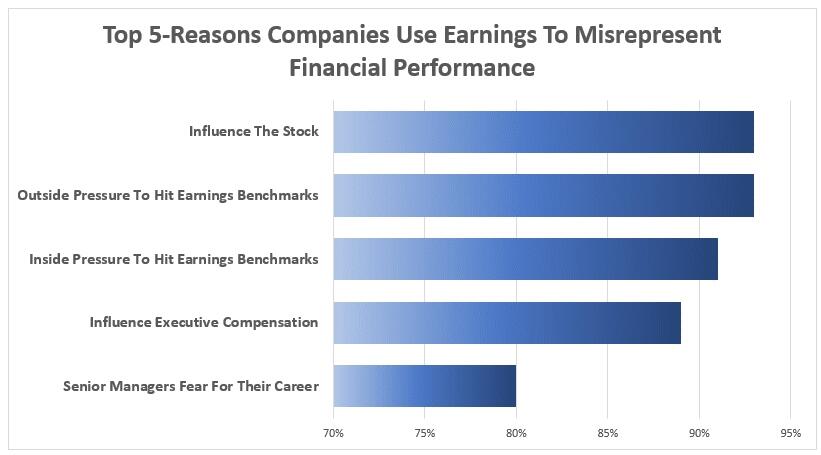
Notably, the narrative that buybacks represent a confidence in future earnings is false; buybacks are being aggressively used to manipulate earnings to exceed Wall Street estimates. Financial engineering is set to expand further in 2026, providing additional support to operating earnings growth and the bullish case.
Lastly, there’s deregulation coming from the “Big Beautiful Bill,” which will ease capital rules on banks, allowing them to hold more collateral. While this provides a tailwind for the Treasury bond market, it also means more lending capacity will be available. Such lending capacity will find its way into leverage for hedge funds and Wall Street trading desks, as looser constraints will translate into an expansion of risk-taking.
The bullish case hinges on a tight feedback loop: innovation drives capital expenditures, which in turn boost earnings, policy injects liquidity, and investors respond with increased risk exposure. So long as each part holds, the trend can continue.
The Bearish Case
The bearish case begins with a critical point: many of the forces that drove 2025’s rally are either fading or already fully priced in. Notably, whether it is valuations, weakening economic indicators, or building speculative risks, the current market momentum may be blinding market participants to deeper structural cracks. However, let’s dig into a few of the issues.
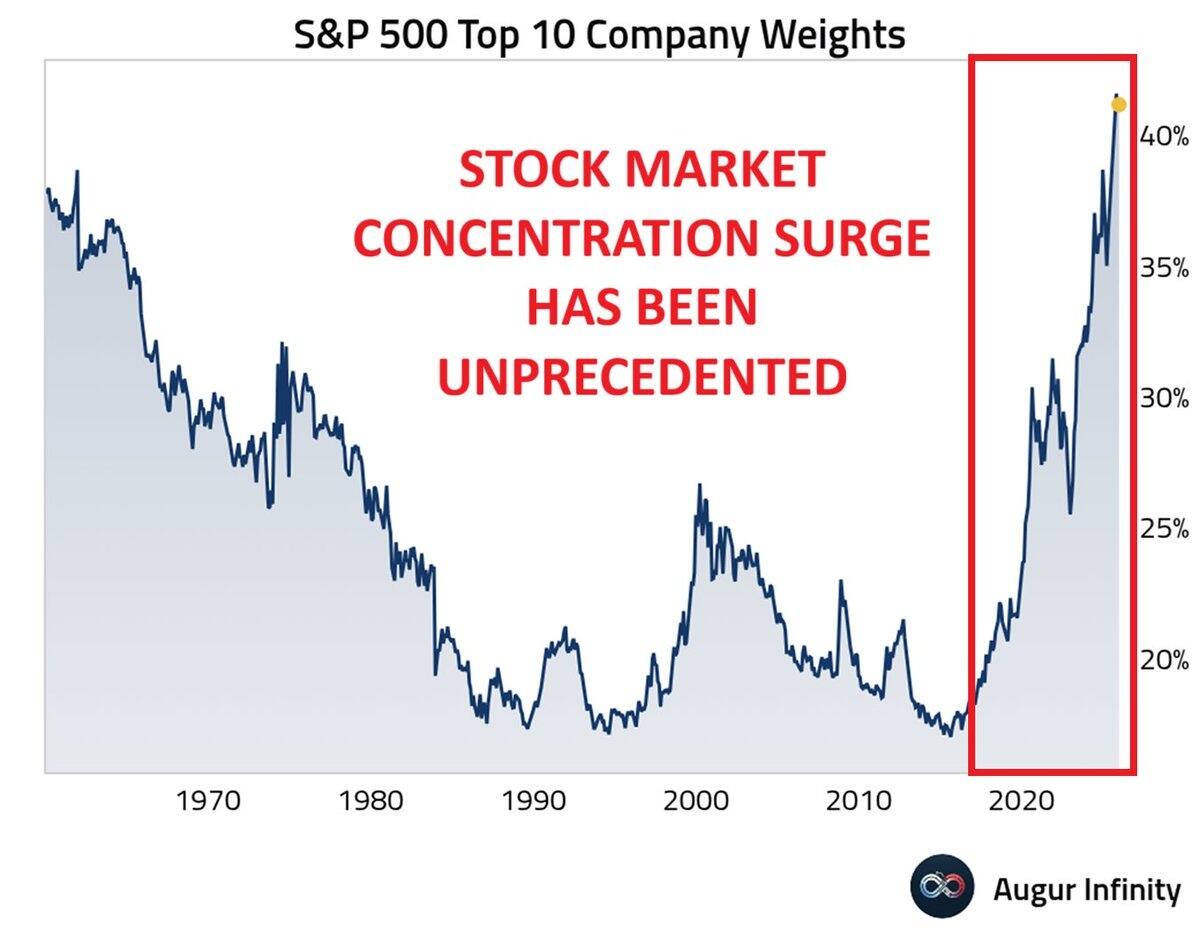
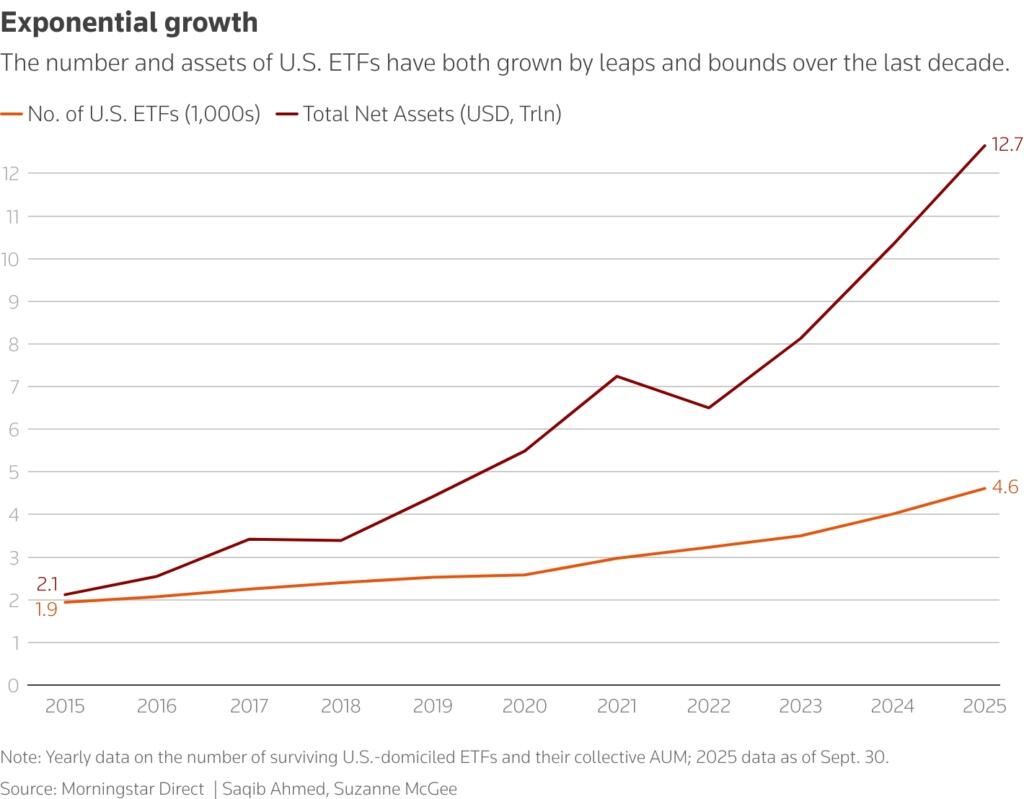
Yes, one of the most obvious concerns is market concentration. Most of the gains in 2025 came from just 10 companies, on a market capitalization-weighted basis, which the massive shift into passive ETF investing fuels.
“Passive investing has grown from a niche strategy into the dominant force in equity markets. Index funds and ETFs now account for over half of U.S. equity ownership. These vehicles allocate capital based on market capitalization, not valuation, fundamentals, or business quality. As more money flows into these funds, the largest companies receive the lion’s share of new capital. That’s created a powerful feedback loop, where price drives flows, and flows drive price.“
This narrow leadership is inherently unsustainable. If something occurs that causes investor flows into ETFs to reverse, every dollar sold will pull 40% out of those same 10 companies. History shows that when markets rely on a few names for returns, volatility rises, and drawdowns can be severe.
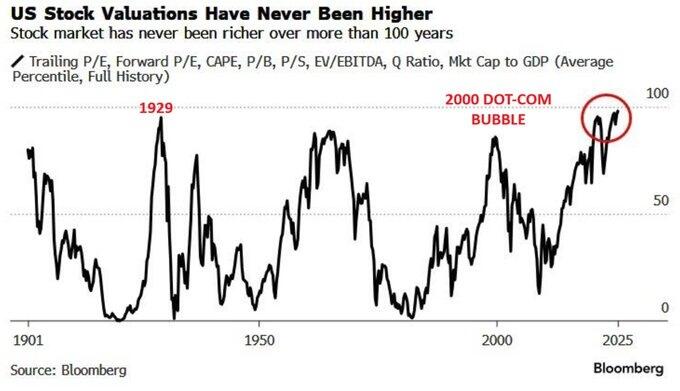
Valuations are another warning sign. Price-to-earnings ratios on the S&P 500 remain near cycle highs. Growth expectations are lofty, and any disappointment could lead to repricing. AI enthusiasm has fueled a massive wave of investment, but much of it is circular, meaning that firms are spending on AI tools to sell AI products. That feedback loop may eventually hit limits, especially if demand softens or costs outpace returns.
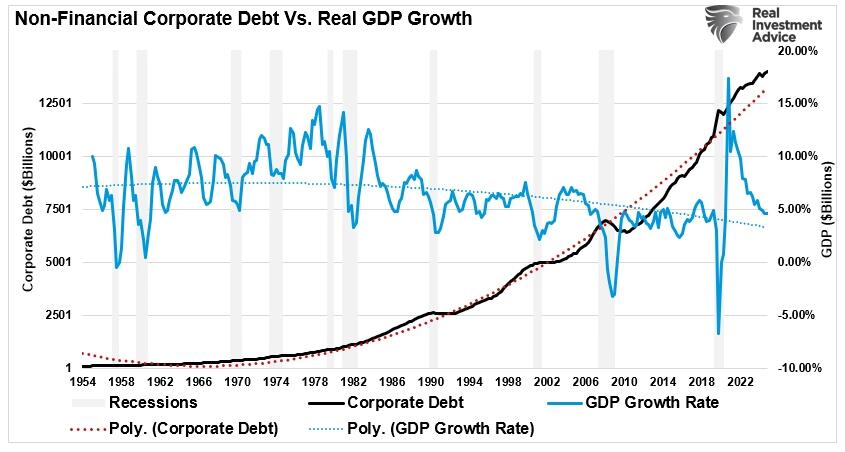
Much of the current investment cycle is also debt-funded as companies borrow to invest, buy back shares, and maintain dividend levels. If rates stay elevated or credit conditions tighten, the cost of that debt could overwhelm earnings gains.
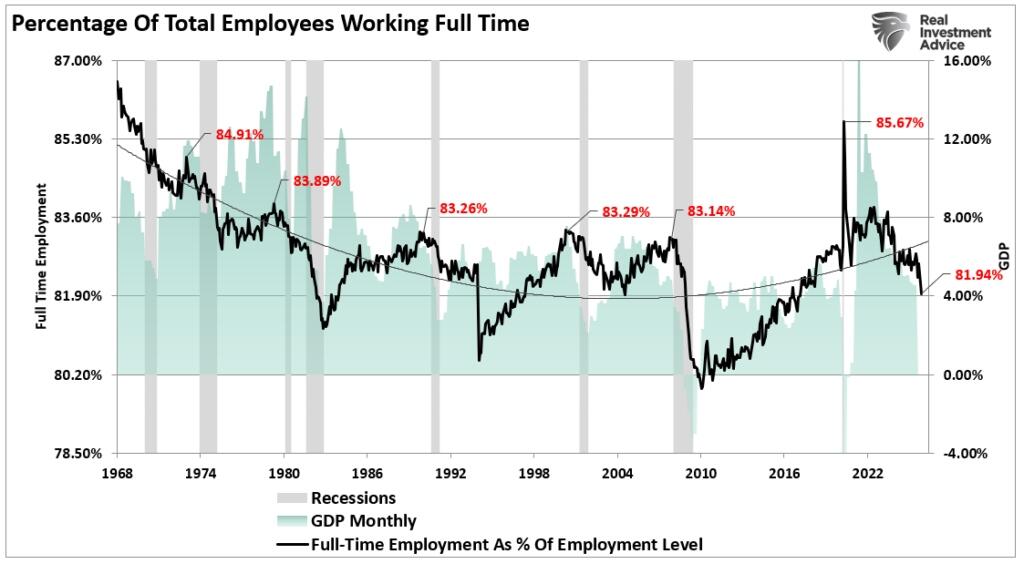
The larger economic concern is that the shift in capital allocation toward tech and automation may leave significant portions of the labor force behind. Yes, during the construction of “data centers,” we may see 5000 people employed, but only 500 are needed post-construction to operate the center. The long-term drag on employment growth will exert upward pressure on demand destruction, and we may already be seeing early signs of that.
Of course, this is the entire basis of the “K-shaped economy.“ In the current economy, high-income consumers and asset owners are doing well, but lower-income households are under pressure. As a result, consumption patterns are diverging, as lower-tier consumers reduce their spending. That leaves the top 20% of income earners to drive nearly 50% of current consumption. Already, defaults on auto loans and credit cards are rising, and real wages for many workers remain stagnant, even as housing and essential goods continue to be expensive.
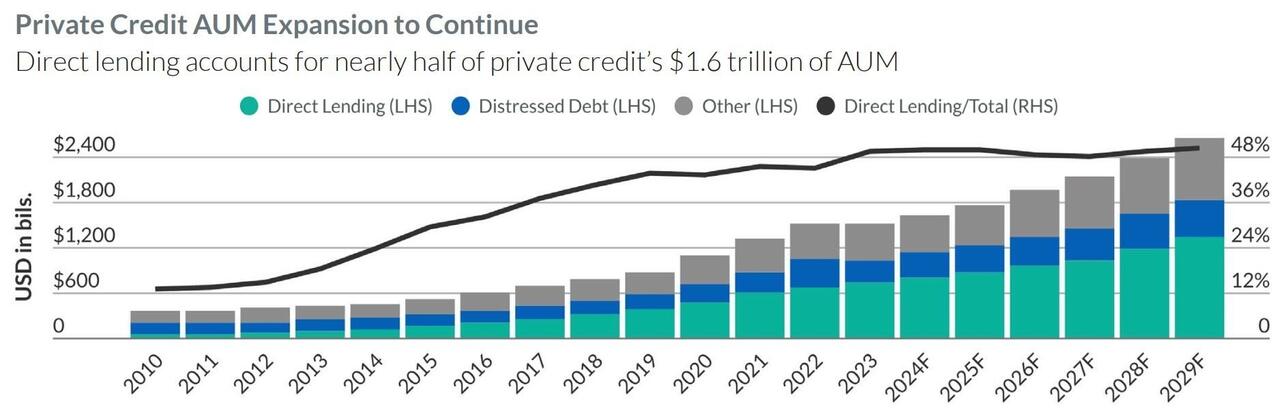
Finally, there’s a growing risk in the credit system, especially in the private markets. Private credit has experienced significant growth in recent years, but the lack of transparency hinders its assessment of systemic risk. Regulators have begun to scrutinize this segment, and default rates in middle-market lending are rising. If defaults spread, the ripple effects could hit banks, hedge funds, and pension portfolios alike.
The bear case is not about imminent collapse. It’s about fragility. Beneath the headline gains lies a market vulnerable to earnings misses, credit tightening, and consumer weakness.
Here is the real catch: in 2026, we could see both the bullish and bearish cases. So, being prepared will be key.
Navigating Whatever Comes Our Way
Investors should approach 2026 as a year where both the bullish and bearish cases are proven correct. In the first half, bullish momentum is likely to continue driving gains. Sentiment remains strong, liquidity is ample, and corporate spending continues to ramp up. AI optimism, fiscal stimulus, and a potential pause in tightening may push indexes higher. However, by the second half, cracks could emerge. Valuation pressures are a concern as the risk of an earnings disappointment increases. Economic inequality puts pressure on future outlooks, particularly for corporate revenues. If that happens, sentiment could shift quickly.
To navigate a split-year effectively, investors need to be tactical. The focus will be on capturing early-year upside without overexposing ourselves to potential second-half risks.
Early 2026: Ride Momentum, but Watch Position Size
Tilt toward sectors benefiting from capex and liquidity, such as technology, industrials, and energy.
Focus on high-quality growth stocks with strong earnings and cash flows, not hype.
Use trailing stop-losses to lock in gains if sentiment reverses.
Take advantage of short-term dislocations by adding during volatility, but reduce sizing as valuations expand.
Avoid overconcentration in AI names, even during rallies — dispersion risk rises with crowding.
Mid-to-Late 2026: Shift Toward Defense and Cash Flow Stability
Gradually rotate into value-oriented sectors such as healthcare, consumer staples, and utilities.
Increase exposure to dividend-paying companies with strong balance sheets.
Raise cash levels or short-duration Treasuries to maintain flexibility.
Allocate selectively to high-quality credit, while reducing exposure to private or high-yield debt.
Monitor consumer credit, employment trends, and bank earnings for early signs of stress.
Throughout the Year: Stay Disciplined and Objective
Stick to valuation rules regardless of narrative shifts.
Maintain a diversified portfolio that can absorb both volatility and rotation.
Use data, not headlines, to guide allocations.
Rebalance regularly, primarily if the first half produces substantial gains that overweight specific sectors.
Tactical flexibility, risk awareness, and discipline will matter more in 2026 than simple bullish or bearish positioning. It is a year where potentially both bulls and bears could be wrong. Historically, markets may not follow a straight line, but your management process should.
2026 will test investors in terms of increased volatility as both the bullish and bearish cases have substance. Yes, a new technology cycle creates real economic momentum, but it also brings risks associated with overstretched valuations, debt-driven growth, and growing social inequality. Markets are pricing in perfection, and historically speaking, such rarely ends as expected.
Whether the year brings another rally or a sharp correction, your results will depend on how well you manage risk. Don’t anchor to either narrative; watch the data, follow your signals, and adjust as needed.
Remember, your investment goal isn’t to chase market returns, but rather to survive and prosper over the range of market cycles.
Trade accordingly.
Tyler Durden
Tue, 01/27/2026 – 08:05
https://www.zerohedge.com/markets/bullish-and-bearish-case-2026

Power Diverted From Data Centers To Households Across PJM Network Amid Historic Freeze
Power Diverted From Data Centers To Households Across PJM Network Amid Historic Freeze
The massive winter storm that disrupted US energy production, sparked the most flight cancellations since Covid, and paralyzed much of the eastern half of the country for days is finally over. BofA chief economist Aditya Bhave has warned that the winter blast could deliver a meaningful hit to first-quarter GDP. However, the eastern half of the US is not in the clear yet. At least another week of brutally cold weather is forecast, which could keep pushing power grids to the brink.
As heating demand surged to record levels, fossil fuel power generation proved critical in preventing widespread rolling blackouts. James Bevan of Criterion Research made that clear in an exclusive note for ZeroHedge:
To further stabilize the power grid this week, Energy Secretary Chris Wright instructed PJM Interconnection on Monday to divert power intended for data centers and other energy-intensive facilities to residential customers and hospitals. Those data centers and facilities were able to switch on their on-site diesel and natural gas generators, reducing power demand during peak hours.
Bloomberg notes:
PJM, which serves more than 67 million people from Chicago to Virginia, sought federal approval to stave off the potential need to impose rolling blackouts. Wright also gave the same authorization to two units of Duke Energy Corp.
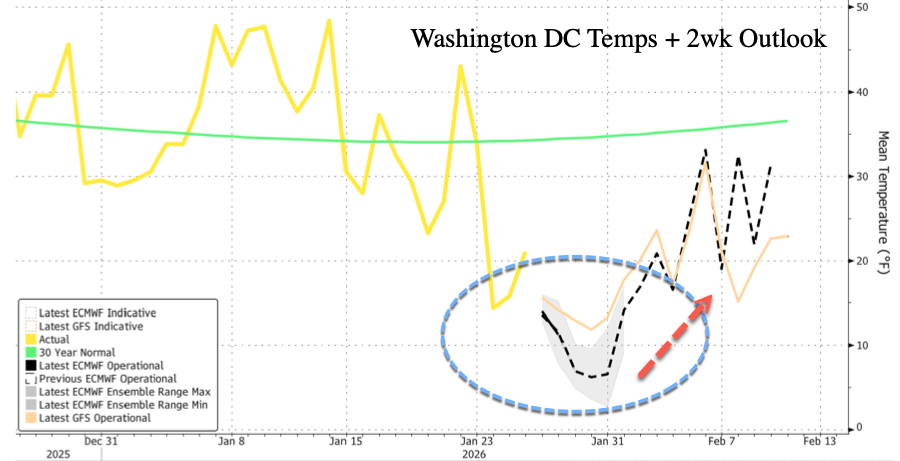
The move by Wright to divert power intended for data centers to residential customers and hospitals comes as average temperatures in Washington, DC, at the heart of the PJM grid in the energy crisis-stricken Mid-Atlantic, are in the low teens this week. The two-week forecast is not expected to rise above the 30-year average.
This period also coincides with peak winter in the Northern Hemisphere. Historically, the 30-year seasonal average temperature for the Lower 48 does not begin to trend higher until next month.
As of this morning, wholesale electricity prices in the PJM grid soared 241% to more than $2,300 per megawatt-hour.
Largest US grid operator was authorized to divert power destined for data centers to households to prevent rolling blackouts. An order by Energy Secretary Chris Wright authorized PJM Interconnection to direct data centers to switch on back-up generators to reduce their burden on…
— zerohedge (@zerohedge) January 27, 2026
Meanwhile, residents across Central Maryland are being financially crushed by a worsening power bill crisis, the result of green energy policies that have backfired in the one-party ruled state ruled by Democratic Party kings and queens. The grid mismanagement stems from a failed climate alarmism framework that collided head-on with the rapid buildout of energy-hungry data centers.
Read:
Insurmountable household power bill debt is sparking public anxiety aimed squarely at Annapolis lawmakers. It’s not just Maryland, the power bill crisis has erupted across the Northeast states.
Tyler Durden
Tue, 01/27/2026 – 07:45

Daywatch: Lawyer for woman shot by immigration agent in Chicago seeks protective order
Good morning, Chicago.
Citing the recent “executions” of two U.S. citizens by immigration agents in Minneapolis, a lawyer for a Chicago woman shot by a Border Patrol agent in October asked a judge to allow bodycam footage and other evidence from the incident to be made public.
In his eight-page motion, attorney Christopher Parente wrote that despite all charges being dropped against his client, Marimar Martinez, in November, the government “continues to prosecute her character in the court of public opinion,” with labels of “domestic terrorist” and other falsehoods still visible on official government websites and social media.
Parente also said two U.S. citizens by immigration officers this month in Minnesota — Renee Good and Alex Pretti — were “engaged in similar peaceful protests as Ms. Martinez at the time of their killings.”
Read the full story from the Tribune’s Jason Meisner.
Here are the top stories you need to know to start your day, including new flights announced by United Airlines out of O’Hare, what new SNAP work requirements mean for Illinois residents and the “Ted Lasso” writer and actor bringing a pre-Broadway show to Steppenwolf.
Today’s eNewspaper edition | Subscribe to more newsletters | Asking Eric | Horoscopes | Puzzles & Games | Today in History
People gather at the site where a federal officer shot and killed 37-year-old Alex Pretti in Minneapolis on Jan. 24, 2026. (Ben Hovland/Minnesota Public Radio via AP)
Gregory Bovino to leave Minneapolis as President Trump reshuffles leadership of his immigration crackdown
Border Patrol commander Gregory Bovino is expected to leave Minneapolis today, according to a person familiar with the matter, as the Trump administration reshuffles leadership of its immigration enforcement operation and scales back the federal presence after a second fatal shooting by federal officers.
President Donald Trump said he was placing his border czar, Tom Homan, in charge of the mission, with Homan reporting directly to the White House, after Bovino drew condemnation for claiming the man who was killed, Alex Pretti, had been planning to “massacre” law enforcement officers, a characterization that authorities had not substantiated.
President Donald Trump will visit Iowa in a bid to focus on affordability during fallout from Minneapolis shooting
ICE agents to have security role at Milan Cortina Olympics
U.S. Senate contenders in the Democratic primary, U.S. Reps. Robin Kelly, from left, Raja Krishnamoorthi and Lt. Gov. Juliana Stratton, begin their debate on Jan. 26, 2026, at the University of Chicago. The debate was sponsored by WBEZ-FM 91.5 and the Chicago Sun-Times. (Terrence Antonio James/Chicago Tribune)
Juliana Stratton takes progressive lane, only one who calls for abolishing ICE in Democratic US Senate debate
The three major Democratic candidates vying to succeed retiring U.S. Sen. Dick Durbin clashed Monday night over who would be the strongest opponent to President Donald Trump and his aggressive deportation enforcement operations, each vowing to varying degrees to end the current tactics of his federal immigration agents.
Cook County Board President Toni Preckwinkle, left, on Aug. 22, 2024, and Ald. Brendan Reilly, 42nd, right, on Dec. 10, 2025. (Antonio Perez and Eileen T. Meslar/Chicago Tribune)
Cook County Board president candidates tussle over costly tech upgrade
If elected Cook County Board president, downtown Ald. Brendan Reilly said he would launch a “full review” of Tyler Technologies — the Texas firm that has been working for more than a decade on upgrading the county’s property tax systems — “to put a stop to the total mismanagement of its tax system under the leadership of Toni Preckwinkle.”
Reilly and Preckwinkle are set to face off in the March Democratic primary to lead the Cook County Board, the county’s $10 billion budget, and its health system and Forest Preserve District. Reilly has made one of his core criticisms of Preckwinkle’s four terms as board president the long-standing, ongoing problems with upgrading the county’s property tax system, which have led to significant delays and lots of finger-pointing among elected officials seeking to avoid blame.
Mayra Miranda collects her children and their schoolmates after they get out of St. Stanislaus Kostka Academy in West Town on Jan. 26, 2026. The school plans to close at the end of the school year after 151 years. (Eileen T. Meslar/Chicago Tribune)
Chicago Archdiocese to close 5 additional schools in Illinois due to enrollment and financial concerns
The schools will close at the end of the 2025-26 school year, the archdiocese confirmed. Catholic Schools Week, the celebration of Catholic education across the U.S., began Sunday.
Antonio Porter smiles during an interview at Stateville Correctional Center in Crest Hill on Feb. 27, 2018. Porter was convicted of a 2002 murder at a dice game. (Zbigniew Bzdak/Chicago Tribune)
Judge overturns conviction in 2002 murder, orders release of imprisoned man
Antonio Porter will get another day in court.
The 50-year old Chicagoan has been in prison since 2003, convicted in the July 2002 death of Laymond Harrison, 28, who was fatally shot during a dice game in apparent retaliation for an earlier shooting.
A United Airlines plane takes off from O’Hare International Airport in Chicago on Oct. 4, 2025. (Dominic Di Palermo/Chicago Tribune)
United Airlines, in competition with American over market share, announces new flights out of O’Hare
United and American Airlines are doubling down on flights out of O’Hare International Airport, which has become the stage setting of a market-share competition between its two largest airlines.
What travelers can expect as Southwest Airlines introduces assigned seats
Kenneth Robinson, 61, a SNAP (Supplemental Nutrition Assistance Program) recipient, volunteers at the Chosen Tabernacle Bread of Life food pantry packing food into boxes for later distribution to a senior home on Jan. 26, 2026. (Antonio Perez/Chicago Tribune)
‘Not sustainable’: New SNAP work requirements could leave up to 340,000 Illinois residents without enough food
Adults ages 55 to 64, and parents without children younger than 14, will be required to prove they’re working, volunteering or participating in job training for at least 80 hours a month to keep their SNAP benefits, according to IDHS.
Chicago Bears safety Jaquan Brisker (9) gestures after the referees threw a flag on Green Bay Packers quarterback Jordan Love (10) for intentional grounding during the third quarter of a NFC wild-card game at Soldier Field on Jan. 10, 2026 in Chicago. (Armando L. Sanchez/Chicago Tribune)
Chicago Bears roster breakdown: How the defensive players fared in 2025 — and their contract statuses for 2026
Before the NFL scouting combine in February and the start of free agency March 11, let’s look at how the Bears defensive players fared in 2025, what their contract status is for 2026 and what options are available to the front office.
NFL coaching and GM tracker: Declan Doyle to remain Chicago Bears OC after withdrawing from Eagles search
Column: An undesirable Super Bowl matchup comes at the end of a super NFL season
Chef and owner Jake Potashnick, center, goes over the evening’s details with his staff before dinner service at Feld, 2018 W. Chicago Ave., Nov. 20, 2025, in Chicago. (John J. Kim/Chicago Tribune)
Jean Banchet awards 2026: Immigration and community top of mind for winners at Chicago’s top local food awards
Many of Chicago’s top chefs and restaurateurs gathered Sunday night in the Loop for the annual Banchet Awards to celebrate the excellence, depth and diversity of the city’s food community.
During the ceremony, the politics of the moment were not ignored, with several award winners using the stage to speak out against the aggressive immigration enforcement that’s gripping the country.
From left: Sara Sevigny (Gabby) and Jennifer Estlin (Brenda) star as estranged childhood friends who reunited in the indie film “Everything Fun You Could Possibly Do in Aledo, Illinois.” (Julia Hunter)
In an indie comedy about estranged friends, reuniting in rural Illinois takes center stage
In the ultra low-budget indie comedy “Everything Fun You Could Possibly Do in Aledo, Illinois,” Chicago theater actors Jennifer Estlin and Sara Sevigny star as estranged friends who reunite in middle age.
Brenda and Gabby were once childhood besties in the small town of Aledo. When their lives diverged after high school, they lost touch. Brenda stayed put after getting pregnant and subsequently got married. Now, three decades later, she’s a widow and a bored empty-nester. This is how Gabby, a world-traveler with three divorces under her belt who left town in search of adventure, finds her old friend when she returns home, hiding a few secrets that boil down to money troubles and a dissatisfaction with the way her supposedly glamorous life has turned out.
Brendan Hunt during the photocall for “Ted Lasso” Season 3 at Battersea Power Station on April 28, 2023, in London, England. (Gareth Cattermole/Getty)
‘Ted Lasso’ writer and actor brings pre-Broadway show to Steppenwolf
Brendan Hunt, the Chicago improvisor who became the co-creator of “Ted Lasso” and plays the popular character of Coach Beard on that hit, soccer-themed Apple TV show, will stage a solo show at Steppenwolf Theatre with Broadway as his ultimate aim.