Category: News

Column: A spark is kindled at SoxFest, and Chicago White Sox players agree it’s time to believe
After newly signed free agent slugger Albert Belle was introduced during the 1997 SoxFest ceremonies at the downtown Hyatt Regency, then-Chicago White Sox general manager Ron Schueler was asked how he convinced Chairman Jerry Reinsdorf to shell out $50 million.
“I beat him over the head with a baseball bat and stole his checkbook,” Schueler replied.
Time flies, but SoxFest lives on, albeit in a much smaller venue now at the Ramova Theatre in Bridgeport, with less than a dozen current players and a corporate-style GM in Chris Getz who would never poke fun at the chairman.
Anticipation grows for new Chicago White Sox slugger Munetaka Murakami: ‘He’s going to fit right in’
The only thing that remains the same is Sox fans, whose resiliency in the face of another long rebuild is something to behold.
Friday’s opening day of Soxfest Live — which also goes by its unofficial title, “SoxFest Lite” — was a chance for fans to get excited about the offseason moves that should help the Sox avoid a fourth straight 100-or-more-loss season. Unfortunately, only one of the newly signed players, starter Anthony Kay, was at the event.
But the up-and-coming core of Colson Montgomery, Shane Smith and Kyle Teel were on hand, and the biggest Sox free agent in years, Japanese slugger Munetaka Murakami, sent a video saying in Japanese that he’d see them in spring training.
“Go White Sox,” he said in English to a big cheer.
The narration in the video referred to him as “the Japanese Babe Ruth.” One fan standing in the back of the theater cracked: “As long as he’s not the Japanese Adam Dunn.”
No one asked Getz how he convinced Reinsdorf to shell out $34 million over two years for Murekami, which is splurging in the current era of Sox spending. But it was seemingly a bargain for a player who should single-handedly double the fireworks budget at White Sox Park, and gives fans something to look forward to besides the food and giveaways.
One fan did manage to congratulate Getz on getting the top pick in the 2026 draft and asked him when he could buy a Roch Cholowsky jersey, referring to the UCLA shortstop considered the consensus No. 1 pick in July. Getz followed with a long-winded answer about how exciting it was to win the top pick in the draft lottery but didn’t say anything about drafting Cholowsky.
When SoxFest host Connor McKnight of the Chicago Sports Network politely reminded Getz he didn’t answer the question, Getz blushed and said it was awkward. Of course the Sox don’t want to give away their plans, even as it’s as obvious as it was when Conner Bedard or Cooper Flagg became the top picks of the NHL and NBA drafts, respectively.
White Sox general manager Chris Getz, left, and manager Will Venable have a laugh on stage during SoxFest Live at the Ramova Theatre on Friday, Jan. 30, 2026, in Bridgeport. (Chris Sweda/Chicago Tribune)
Getz and Venable answered questions for a while on the theater stage, but it was difficult to hear them over the din of Sox fans talking among themselves on subjects near and dear to them, like when the Sox would build their stadium in the South Loop, when Justin Ishbia would take control of the team, and when they would announce the giveaways. That announcement came later in the evening, so get ready for Los White Sox poncho night, Irish Quarter Zip Day and an A.J. Pierzynski-Bobby Jenks bobblehead commemorating the final out of the 2005 World Series.
Friday’s event was exclusively reserved for season ticket holders, and the beer was free. It was the least Reinsdorf could do for die-hard fans who renewed their season tickets after the disastrous end of the Tony La Russa era, followed by the Pedro Grifol nightmare, which included the losingest season in major-league history in 2024.
Getz’s mantra in 2026 is that the Sox will take “a meaningful step forward.” But everyone has a different definition of “meaningful,” and he has stopped short of saying whether they could actually contend for an American League wild-card spot.
It’s still a young team and coming off an American League-worst 102-loss season, but the players feel as though the momentum of the second half will carry over.
“I think guys are excited,” Smith said. “I think we might downplay it a little here because it’s hard to put that into a feeling or words. But once we get out to spring training, once we start winning games, that’s when that feeling of momentum might start coming back.”
White Sox fans have some fun in the crowd during SoxFest Live at the Ramova Theatre on Friday, Jan. 30, 2026, in Bridgeport. (Chris Sweda/Chicago Tribune)
Spring training begins Feb. 10 in Glendale, Ariz., and opening day is March 26 in Milwaukee. The Sox normally don’t start drawing much until the weather warms, and last year drew a little more than 1.4 million fans, the fourth-worst in baseball and ahead of only the Miami Marlins, Tampa Bay Rays and Athletics. The Rays and Athletics both played in minor-league stadiums.
This team is full of likeable players who don’t give off an aura of entitlement, unlike recent Sox players like Lance Lynn, Joe Kelly and Yasmani Grandal. With the trade of Luis Robert Jr. to the New York Mets, there is no “face of the franchise” type of player, though Montgomery and Murekami will get an opportunity to fill the void.
Marketing the 2026 White Sox won’t be easy, but if they start winning the marketing should happen organically.
“To be honest, White Sox fans, I don’t think they like marketing anyways,” starter Davis Martin told me. “I think they just want us to go out there and be gritty, be a baseball team that plays all nine innings for 162 games.
“That’s what we want to be. We’re not marketing ourselves as anybody. We’re going to be ourselves and try to win games and play nine innings as hard as we can.”
Related Articles
Photos: 2026 SoxFest Live at the Ramova Theatre
Chicago White Sox boost their outfield by signing Austin Hays to a 1-year deal
Anticipation grows for new Chicago White Sox slugger Munetaka Murakami: ‘He’s going to fit right in’
3 takeaways as Chicago White Sox spring training nears, including options to replace Luis Robert Jr. in center
‘He’s going to be finishing a lot of games for us’: Chicago White Sox finalize deal with Seranthony Domínguez
Smith agreed, saying Sox fans don’t need to be told to get excited about the coming season.
“Not from the people I’ve spoken to,” he said. “They feel it’s coming as much as we do, so I don’t think it’s going to take much convincing. People love to see wins. There’s only so many things you can say without wins. That’s what we want.”
Montgomery, an Indiana native, pointed to the words of IU football coach Curt Cignetti after the perennially bottom-feeding Hoosiers won the CFP title game.
“Cignetti kind of summed it up,” Montgomery said. “He said ‘Indiana University just won the national championship. It can be done.’ All that matters (is believing). You see everyone playing in the postseason, and it just depends on us playing good ball. We’re all good players. If we weren’t, we wouldn’t be here. It’s just a collaboration of putting it all together.”
Sox fans I spoke with on Friday at the Ramova seemed to agree that better days are at hand.
Hopefully it wasn’t the free beer talking.
https://www.chicagotribune.com/2026/02/01/chicago-white-sox-soxfest-rebuild/
Column: New book about iconic founder of Aurora Sundowners track club soon to be released
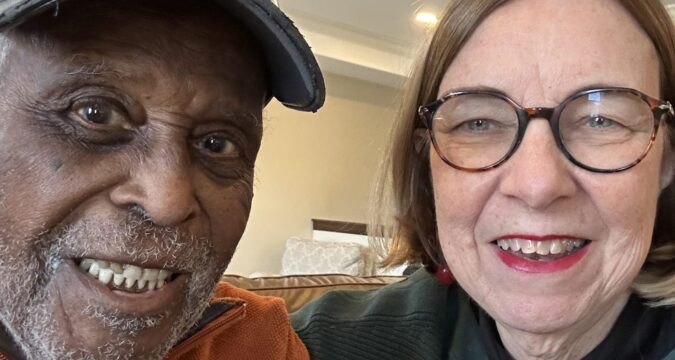
After retiring from a long and successful career as a Fox Valley psychotherapist, Maureen McKane was looking for that next chapter in her life when she met Wilbert Walters.
The event was a 2021 gathering at the Aurora Public Library of people interested in restarting Study Circles, a nonprofit to promote interracial community dialogue that she helped lead back in the mid-1990s.
Among the 30-some attendees at that meeting was Walters, now 97 years old, who founded the Aurora Sundowners track and field club nearly a half century ago as a competitive and developmental program for area youth that, even after his retirement, is still is going strong.
Sitting beside this “elderly, frail” man, McKane recalls him suddenly standing up to declare that, while it was admirable “we all showed up” for this push for a Study Circles reboot, why did those who were there not speak up in the past and call out overt racism.
Intrigued by this intense passion, McKane invited Walters to lunch, which led to many more noon meals – once a week for four years, in fact – that culminated in a strong friendship and the publishing of her first book: “Walters Way: A Coach, his Runners and his Race.”
“His is a story that just takes hold of you,” she said. “And I knew it was too important not to put my all into it.”
“Walters Way,” which will be released by Koehler Books Feb. 9, is more than a biography of Aurora’s iconic African American coach and educator, who took his love for kids and sports and not only built a nationally-competitive track and field club but provided valuable life lessons for hundreds of minority youth, many from disadvantaged situations.
That in itself is a tale worth telling. But what McKane also realized as this project came together were the valuable lessons to be learned from her own experience as a white female authoring a book about a Black trailblazer who had to navigate between a world where he was esteemed and rewarded and another world where he was invisible and at times sidelined by racial bias.
McKane describes the book as written “in Walters’ voice,” as well as “the voices of his now-grown athletes,” and “where appropriate, my voice as a white female retired psychotherapist.” There is, she said, much to ponder about the actual experience of a bright educated Black man negotiating 20th century Aurora.
“It is an uplifting story about every man who persists and wins.” But it’s also about what it is like to “manage the world that is Jim Crow,” McKane continued, “a concept many young people today don’t even understand.”
Walters’ early childhood – at the side of his mother, a young nanny and housekeeper for the wealthy Lawrence DuPont household – was unique in that he became so absorbed into this rich and privileged family, he “did not even know racism existed,” Walters told me, until he was much older.
With a couple of college semesters under his belt, he dropped out to join the Air Force in 1948, the year after it was formed and the same year President Harry Truman ordered desegregation of all U.S. armed forces.
Walters served four years in the military before returning to school to earn a degree in education at Southern University in Baton Rouge, Louisiana. He became part of the Great Migration — Black Americans from the South moving to Northern cities. But when he arrived in this state to work for the Illinois Youth Center in St. Charles, he was surprised to find racism to be less overt but “more painful.”
McKane described Walters as becoming part of an Aurora group of successful educated Blacks – beloved community activist Marie Wilkinson among them – who were determined to change that environment without causing a backlash. He worked at Waldo Middle School for a few years and coached the East Aurora High School girls track team, which won conference in his third year.
According to Walters, it was after his daughter, a standout cheerleader at Franklin Middle School, was denied a spot on the West Aurora High School team that he decided to change the Sundowners drama club he had formed in 1968 for marginalized Black girls into a track and field club. After a few years it went coed and eventually went national, with the Sundowners frequently taking home medals at the National Junior Olympics.
But the most valuable lesson he taught those hundreds of kids was “to be honest, to work hard and to respect authority,” Walters insisted, even when those in power did not always respect you back.
Eventually he went to work as a coach and teacher for West Chicago Community High School, retiring after 13 years with plenty of good memories, he noted, but also with deeply hurtful experiences. The book, which McKane describes as a regional story about an “unsung Everyman Hero in Middle America,” brings to life some of those good and bad memories.
McKane recalls that, even when she was a child, “understanding the injustices surrounding racism was always an itch to scratch.” In 1997 she headed the nonprofit board of the Aurora Community Study Circles and is currently a member of the Aurora Human Rights Commission, which was founded by Wilkinson, a local civil rights legend and Walters’ friend.
One thing McKane said she took away from writing this book is “how if you really come to know the other person’s or other group’s experience, you can be you and they can be them. When you get to really know who people are, any awkwardness or a feeling of discomfort goes away.”
McKane, who is also a leader at New England Congregational Church, will have a presentation and book signing at 7 p.m. Feb. 25 at the Aurora Public Library, at Yellow Bird Books in downtown Aurora at 3 p.m. Feb. 21 and at the GAR Museum downtown at 5 p.m. March 14.
The more than two dozen former Sundowners McKane interviewed for this book referred to their coach as a legend, with the females noting how he always made them feel protected and challenged and the males, many of whom had absent fathers, noting how he taught them the right way to become a man, including respect for women.
Walters is proud of how accomplished many of his former athletes became. Still, he has a few regrets: Among them, the fact he never got a master’s degree because, “I was too busy working in the parks and playgrounds.”
But that advanced degree, McKane is quick to note, can’t “hold a candle to what he did succeed in doing.
“He changed the lives of hundreds of people in the Fox Valley,” she said. “Mine included.”
dcrosby@tribpub.com

Brussels Versus Washington
Brussels Versus Washington
Authored by Cláudia Ascensão Nunes via the Foundation for Economic Education (FEE),
For years, Europe has tried to convince itself that it could regulate its way to technological greatness.
Instead of becoming a technological powerhouse, it produced rules, many rules, with effects now extending far beyond its own borders.
In 2026, those rules are colliding head on with an American president who refuses to accept that U.S. innovation could be governed from Brussels.
Two regulations sit at the center of this escalating tension. The Digital Markets Act, or DMA, applies to the world’s largest digital platforms, the so-called gatekeepers, and forces them to open their ecosystems, share data, and abandon business practices that are central to their models.
The Digital Services Act, or DSA, regulates platform content and algorithms, requiring the removal of information deemed illegal or harmful, with all the subjectivity this entails.
This risks granting a supranational authority direct power over online speech by compelling platforms to remove content that fails to comply with regulatory guidelines.
These laws, which entered into force in 2022 for the DSA and 2024 for the DMA, appear designed with America’s largest technology firms in mind. Five of the six companies designated as DMA gatekeepers are U.S.-based, as are the overwhelming majority of platforms subject to the DSA.
This has placed companies such as Apple, Google, and Meta under constant supervision by Brussels, forcing them to modify products in order to operate in the European market, with consequences not only for firms themselves but also for consumers and innovation more broadly.
In 2025, under the DMA alone, Apple was fined 500 million euros and forced to open iOS to rival app stores and payment systems. Meta was fined 200 million euros and required to alter how it uses user data.
Under EU competition law, Google also received a historic 2.95 billion euro fine for alleged abuse of market dominance in the digital sector and was forced to redesign key aspects of its search engine and advertising business.
Upon taking office, Donald Trump identified this European interventionism as disguised tariffs that artificially raise costs for American firms and strip them of competitive advantages.
He threatened to invoke Section 301 of U.S. trade law, the same tool used against China, to retaliate, significantly intensifying tensions between Brussels and Washington.
In December 2025, that tension took on a face: X. The European Commission fined Elon Musk’s platform 120 million euros under the DSA, accusing it of failing to manage so-called systemic risks linked to the circulation of political information. For Musk, this amounted to an assault on free speech. The episode appears to have triggered a broader transatlantic diplomatic and commercial escalation. Washington responded by imposing visa bans on five European officials and experts associated with the DSA and threatened tariffs and restrictions against European firms such as SAP, Capgemini, and Mistral AI should Brussels fail to retreat.
The conflict has now spread beyond the European Union. The United Kingdom and Australia have begun discussing restrictions on X, citing risks related to misinformation and online safety, reinforcing the perception that Brussels is asserting itself as a global digital regulator.
Despite pressure from the Trump administration, the European Union shows no signs of slowing down. In 2026, another regulation enters fully into force, the AI Act, which appears once again tailored to American firms. It subjects artificial intelligence systems deemed high-risk, including AI used in hiring, credit, healthcare, public security, content moderation, and high impact generative tools, to mandatory risk assessments, human oversight, and constraints that exist in no other major market. These requirements will delay product launches, raise costs, and force companies to design technologies according to political criteria defined outside the United States.
As a result, 2026 is shaping up to be a particularly challenging year. From a geopolitical perspective, the most immediate risk is the erosion of the transatlantic relationship in a strategic sector. Technology today is an instrument of power, and this escalation among allies is likely to generate incompatible regulatory blocs, fragmenting the digital economy, weakening the West, and opening space for alternative models, particularly China’s state-controlled approach.
Consumers stand to lose most from this conflict, along two pillars central to any classical liberal order: first, the free market, as rising compliance costs will inevitably translate into higher prices; second, online free expression, increasingly constrained by incentives for excessive moderation and the preventive removal of lawful but controversial content.
At a moment when the world is rapidly advancing in artificial intelligence, automation, and the technologies that will define the next decade, the European Union is moving in the opposite direction, deepening an interventionism that exceeds the role a state should play.
The European Union must lower barriers, simplify rules, promote competition, and allow innovation to flourish without permanent political oversight.
In today’s world, as always, market liberalization is not a threat to consumers. It is their strongest protection and the true engine of progress.
Tyler Durden
Sun, 02/01/2026 – 07:00
https://www.zerohedge.com/geopolitical/brussels-versus-washington

Zelenskyy afirma que se programaron más conversaciones Rusia-Ucrania para la próxima semana
Associated Press
KIEV, Ucrania (AP) — La próxima ronda de conversaciones de paz entre las delegaciones rusas y ucranianas tendrá lugar el miércoles y jueves, anunció el presidente ucraniano Volodymyr Zelenskyy el domingo.
Se esperaba que enviados de Rusia, Ucrania y Estados Unidos se reunieran ese día en Abu Dabi para continuar las negociaciones destinadas a poner fin a la invasión de plena escala de Moscú a su vecino.
“Acabamos de recibir un informe de nuestro equipo negociador”, dijo Zelenskyy en una publicación de Telegram. “Las fechas para las próximas reuniones trilaterales se han fijado: 4y 5 de febrero en Abu Dabi. Ucrania está lista para conversaciones sustanciales, y estamos interesados en un resultado que nos acerque a un final real y digno de la guerra”.
No hubo comentarios inmediatos de funcionarios estadounidenses o rusos.
El sábado por la tarde, el principal enviado ruso, Kirill Dmitriev, dijo que había mantenido una “reunión constructiva con la delegación pacificadora de Estados Unidos” en Florida.
Hasta ahora, los funcionarios han revelado pocos detalles de las conversaciones en Abu Dabi, que forman parte de un esfuerzo de un año por parte del gobierno de Donald Trump para guiar a las partes hacia un acuerdo de paz y poner fin a casi cuatro años de guerra abierta.
Aunque los funcionarios ucranianos y rusos han acordado en principio con los llamados de Washington a un compromiso, Moscú y Kiev difieren profundamente sobre cómo debería ser un acuerdo.
Un tema central es si Rusia debería mantener o retirarse de las áreas de Ucrania que sus fuerzas han ocupado, especialmente la región industrial oriental de Ucrania conocida como el Donbás, y si debería obtener terrenos allí que aún no ha capturado.
___
Esta historia fue traducida del inglés por un editor de AP con la ayuda de una herramienta de inteligencia artificial generativa.
Carlos Alcaraz completa su Grand Slam con victoria sobre Novak Djokovic en el Abierto de Australia
Associated Press
MELBOURNE, Australia (AP) — Carlos Alcaraz completa su Grand Slam con victoria sobre Novak Djokovic en el Abierto de Australia.

Hometown author’s labor of love showcases community spirit of Flossmoor via book and film
“Volunteerism is a superpower here,” Flossmoor Mayor Michelle Nelson declares in Tom Dobrez’s documentary film, “Flossmoor: A More Perfect Place.”
Commitment to volunteering and community service is a dominant theme of the film, so what better way to celebrate a town known for volunteerism than to further drive that spirit.
To that end, people at a recent screening of the 26-minute film were encouraged to bring non-perishable food items to support The Center for Food Equity in Medicine in exchange for the chance to see the documentary at the Homewood Science Center.
“The screenings have been joyous occasions,” said Dobrez, who moved to Flossmoor in 1967 as a first-grader and has concurrently released a book that dives even more deeply into the village’s rich history. “I’ve showed it a dozen times, and every time, people respond to something different.”
That was reflected in the comments of some of the roughly two dozen people who attended the Jan. 17 screening, with community spirit a key factor in embracing the film. Dobrez is treating his documentary as a theatrical release, with exclusive screenings designed to engage community members and drive support for local organizations.
“There’s so much I didn’t know,” said Kelly Philbin, a longtime Flossmoor resident who attended the screening with her father, John Stevens, a member of the first graduating class of Homewood-Flossmoor High School, which opened in 1959. “I love how it was intertwined with the Gem.”
Homewood-Flossmoor High School band members perform during the Hidden Gem Half-Marathon in 2024 in Flossmoor. (Homewood-Flossmoor High School)
The film uses Flossmoor’s Hidden Gem Half Marathon as a narrative arc, following runners through the village along a route that essentially winds through more than a century of history – from the Wagner House (the town’s oldest building) to Coyote Run Golf Course, to H-F High School, Heather Hill and Sterling Avenue.
Viewers learn Flossmoor history at every point along the way as the story unfolds about the community and the people who made it what it has become, since its humble beginnings as a stop on the Illinois Central Railroad in 1899, and incorporation as a village 25 years later.
“The enthusiasm and volunteerism are great,” said Anita Glencoe of Flossmoor, who came to learn more about her town and support the food drive.
Jennifer Loew Litwin of Chicago, who grew up in Flossmoor, said she was “blown away” by how the movie reflected the evolution of volunteerism in the village. “I think it’s amazing,” she said of the film. “I hope there’s a Part 2!”
Litwin attended the screening with her brother, Josh Loew. “It was great,” the H-F graduate and current Glencoe resident said. “History and footage from the past balanced with today, the best of what was great then and what is great now.”
Dobrez said he was inspired to make the movie after seeing the drone show that was part of Flossmoor’s centennial celebration in 2024. “There were all these symbols of Flossmoor. … People were crying,” he recalled. “I thought we needed a movie to celebrate this town.”
At first envisioning the film as a “talking heads” documentary, Dobrez started conducting research and filming interviews before the original director backed out of the project. So, he changed course and started writing a book, “A More Perfect Place: The Story of Flossmoor.”
The book was mostly complete when he finally wrote what became its first chapter, about the Hidden Gem Half Marathon. Around that time, Flossmoor native and filmmaker Joe McGrath contacted Dobrez about producing a promo for the Gem. Instead, Dobrez pitched the documentary.
“I talked him through my vision, and he said we could crush this,” Dobrez said. A team that included former H-F classmates and current students worked on the movie, narrated by Flossmoor resident and voice actor Michael Goldberg.
“The day was perfect,” Dobrez said of the bright, sunny day his crew filmed scenes of the Gem that established the framework for the documentary, recalling, “This is going to be something special.”
It had to be, especially since that day stood in stark contrast to the day of the film’s premiere – last Nov. 29, when a post-Thanksgiving snowstorm hit the Chicago area.
Still, Dobrez noted, “We had very few no-shows,” even for the scheduled trolley tour that followed the Gems route. Despite the inclement weather, 200 people came out to see the film’s premiere.
Since then, dozens more have seen the film and Dobrez has been working to keep up with demand for his book. “It’s been terrific – people see it and say, ‘I didn’t know that,’” he said. “It’s nostalgic and educational. I’ve been here 60 years and I learned things I didn’t know.”
Such as?
For starters, the identity of the winner of the Illinois Central Railroad contest that gave Flossmoor its name. Also, the date of the founding of Flossmoor Baseball and Softball, of which Dobrez was an early member and past president.
To discover these and other details, Dobrez directs folks to his book. Additionally, he has started a podcast, “Flossmoor in 15,” a quarter-hour “weekly dose of Flossmoor history” released every Friday.
But Dobrez has no plans to stream his documentary, preferring that screenings remain community events.
It’s a stance befitting the spirit of the project, one that Dobrez describes as “both a love letter to (my) hometown and a critical examination of its evolution, revealing how a small suburb’s journey can mirror the broader American quest for community, diversity and shared purpose … presenting Flossmoor as a microcosm of the American experiment — a place constantly striving, imperfectly, for a more perfect community.”
More information on Dobrez’s film and book are at www.flossmoorhistorybook.com.
Jim Dudlicek is a freelance reporter for the Daily Southtown.
https://www.chicagotribune.com/2026/02/01/flossmoor-history-book-film/
Letters: Illinois families can’t keep paying the bill for climate change damages
Across Illinois, people are making hard decisions about what they can afford and what they cannot. A public works director weighs whether to repave a street or replace a storm drain after another heavy rain. A homeowner opens the mail and braces for an insurance premium increase that pushes a family budget over the edge. These moments are becoming more common, and they point to a system in which families and local governments carry most of the cost of a changing climate, while the companies that helped drive this damage continue to post profits.
That is why I am introducing the Climate Change Superfund Act in the Illinois Senate.
Illinois already spends heavily to maintain infrastructure that was never built to handle the extreme weather we see today. Roads, bridges and sewer systems now need constant repair, and school districts are facing the cost of keeping classrooms safe and usable during long stretches of extreme heat. Every dollar that goes to emergency fixes is a dollar that cannot go to teachers, classroom materials or basic upkeep.
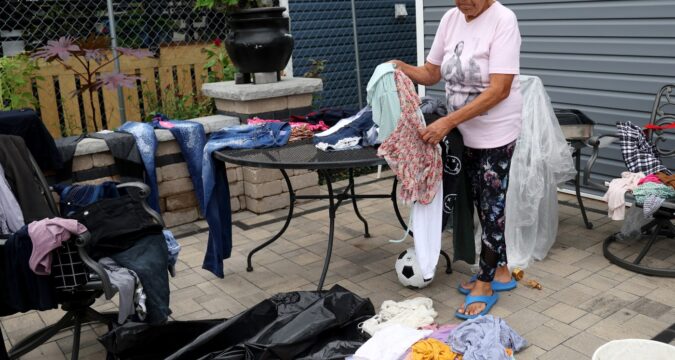
Flooding adds another layer of strain. Illinois averages hundreds of millions of dollars in flood losses annually. In the summer of 2023, parts of Chicago saw nearly 9 inches of rain in a single afternoon, and 1,400 homes reported basement flooding. For many, that meant months of repairs, drained savings and insurance changes that affect property values and local tax bases.
Right now, the costs of climate damage are spread across taxpayers and local budgets alone.
The Climate Superfund proposal would change that. Major fossil fuel producers would contribute to a state fund based on how much pollution they produced in the past. Those dollars would go directly to work that communities can see and use, including stronger stormwater systems, a more reliable power grid, cooling in schools and public buildings, and protection for infrastructure along Lake Michigan’s shoreline.
Because the contributions are tied to past production, not current sales, they cannot simply be tacked onto families’ utility bills. Energy prices are set in global markets, not by what one state decides to do.
Illinois would not be alone. Vermont passed a climate superfund law in May 2024, and New York followed later that year. Dozens of other states are now weighing similar steps.
This comes down to who pays when damage is done. Families and local governments have been covering the cost for years. The Climate Change Superfund Act asks the companies that helped create this problem to take on their share, giving communities something they rarely get — the chance to plan, not just recover.
Illinois has taken on hard problems before, and this is another moment to do it again.
— State Sen. Graciela Guzmán, D-Chicago
Unplugged oil wells’ legacy
Thank you to the Tribune for its investigative reporting on unplugged oil and gas wells in Illinois (“Illinois’ oil crisis,” Jan. 18) and to ClientEarth USA and Northwestern University’s Environmental Advocacy Center for their recent report on the same issue. Together, they have brought long-overdue attention to a crisis that has remained out of sight, out of mind and dangerously out of order.
The Tribune’s enlightening article reminds us that Illinois was once the nation’s third-largest oil producer. Today, thousands of unplugged wells remain scattered across rural Illinois, quietly leaking methane and threatening soil and water. Because they are largely invisible and concentrated in southeastern Illinois, they’ve also been largely ignored — by regulators, lawmakers and even much of the environmental community.
I work for Prairie Rivers Network (PRN), an Illinois environmental nonprofit, where I address legacy coal pollution and help communities navigate the energy transition. Oil and gas rarely come up in conversations about our state’s energy past, present or future. Yet as Illinois charts a path to 100% clean energy, guided by two landmark climate bills passed over the past five years, we must also confront the liabilities left behind by past energy industries. PRN has long advocated for coal ash and abandoned coal mine cleanup, and now, with problems and solutions laid out by the Tribune and the EAC’s report, we can help do the same for oil and gas wells.
The new EAC report “Illinois’ Billion-Dollar Blind Spot” finds that Illinois does not collect individual well production data, cannot reliably identify when wells become inactive, allows operators to delay plugging indefinitely and requires inadequate financial bonding. This “regulatory blindness” makes existing laws unenforceable and burdens taxpayers and rural communities with cleanup costs.
President Joe Biden’s infrastructure law funding provided a temporary infusion of resources to address some abandoned wells. But it is nowhere near enough to clean up the full scope of the problem, and it will not prevent the possible billion-dollar crisis the report warns of.
The Illinois Department of Natural Resources and the legislature should act on the report’s recommendations with actions to strengthen reporting, enforce existing laws, prevent further abandonment of wells and ensure polluters pay for cleanup. Illinois’ oil legacy may be out of sight, but solutions are not out of reach.
— Amanda Pankau, director of energy and community resiliency, Prairie Rivers Network, Champaign
Well-researched reporting
The story about the abandoned oil wells in the Jan. 18 paper by Jonathan Bullington and Adriana Perez was excellent. This is the type of well-researched story that keeps me a subscriber while living far from Chicago and Cook County.
— Dave Hubert, Yorkville
Clarity in wetland regulations
The Jan. 15 editorial “A Supreme Court ruling has put Illinois’ wetlands at risk. Springfield should respond” omits an important perspective from Illinois’ transportation builders.
I write on behalf of the 300 member companies of the Illinois Road & Transportation Builders Association (IRTBA), which design and build the roads, bridges, transit systems, ports and aviation facilities Illinois residents rely on. We work daily under the Clean Water Act and have long complied with environmental requirements while delivering critical infrastructure.
Protecting wetlands and improving transportation are not competing goals. Our industry supports clear, science‑based regulations applied as intended. What concerns us is adding new state‑level uncertainty to an already-evolving federal process in ways that risk regulating features never meant to fall under wetlands law.
For decades, the definition of “Waters of the United States” has shifted across administrations, creating real‑world consequences: features deemed regulated mid-construction, redesigns, delays and cost increases that waste taxpayer dollars. Inconsistent interpretations make it difficult to plan work, price bids or schedule crews.
The U.S. Supreme Court’s ruling in Sackett v. EPA clarified — rather than eliminated — federal jurisdiction, reaffirming that Clean Water Act permitting applies to waters with relatively permanent flow and a continuous surface connection to navigable waters. That clarity benefits regulators, environmental specialists, landowners and builders alike. EPA is now updating its rules accordingly.
There has long been agreement that transportation features such as roadside ditches and stormwater controls are engineered systems. Treating them as wetlands would not improve water quality but would slow emergency repairs, delay safety projects and increase taxpayer costs — especially after storms when mobility matters most.
When projects affect regulated waters or wetlands, our members obtain permits and follow mitigation requirements. They are active in their communities and want clean water and healthy ecosystems, along with the ability to deliver transportation improvements that keep people and commerce moving.
Predictability and clarity in our laws are not anti-environment. They are essential to deliver safe, affordable infrastructure for the people of Illinois. Lawmakers should allow the federal process now underway to work and avoid disrupting long-standing, well-understood permitting frameworks that balance environmental protection with the state’s transportation needs.
— Michael Sturino, president and CEO, Illinois Road & Transportation Builders Association
Submit a letter, of no more than 400 words, to the editor here or email letters@chicagotribune.com.
https://www.chicagotribune.com/2026/02/01/letters-020126-illinois-climate-change-superfund/

Stricter ballast rules on freighters demanded to protect Great Lakes from invasive species
To prevent further spread of potentially catastrophic invasive species in the Great Lakes, the Canadian government is moving forward with tighter restrictions on all freighters. But standards finalized by the U.S. Environmental Protection Agency in 2024, meanwhile, apply only to a fraction of the lake-going vessels.
Environmentalists say the U.S. standards are flawed because existing lakers — or ships that stay within the Great Lakes — are exempted, and new lakers are rarely built.
“They suck all those zebra mussels up in them, along with the lake water from one location when they’re doing that uptake, and then they’re going to a new location, and they let them out,” said Wendy Bloom, a lawyer with the Environmental Law and Policy Center. “They’ve now created a new location infested with those species.”
While ballast discharge regulations have been in place since 2008 for ocean-going freighters, known as salties, few such rules exist for lakers.
In December, the law and policy center and three other environmental groups filed a petition in D.C.’s U.S. Circuit Court of Appeals calling on the EPA to include existing freighters in all of the new standards, arguing that lax regulations have contributed to the spread of invasive species nationwide.
“Why exempt ships when we know that there is technology that they can put on that will at least try to reduce the spread of invasive species,” said Marc Smith, the policy director for National Wildlife Federation, one of the groups filing the petition.
The same month, the attorneys general of Illinois, Michigan and Vermont also filed an amicus brief in support of the resolution.
“The Great Lakes are a critical resource to Illinois and surrounding states, which is why we need to defend the protections we have in place to avoid invasive species that create long-term environmental harm,” Illinois Attorney General Kwame Raoul said in a statement.
The Canadian government will require all Great Lakes vessels to install ballast water treatment systems by 2030, and some shipowners there have begun to install the technology.
In the United States, however, the EPA’s regulations only require lakers built in the future and ocean-going freighters to install treatment systems that will remove and kill foreign organisms in ballast water. The standards will take effect once the U.S. Coast Guard has finalized rules for implementation of the EPA standards, which may take up to two years.
According to the law and policy center, 90% of existing lakers were built before 2009.
Bloom called the EPA’s new ballast standards a “free pass.”
In a 2022 report by Great Lakes Now, the Lake Carriers’ Association, a trade group that represents U.S. shipping fleets on the Great Lakes, touted the first new freighter built in 35 years.
“The beauty of our environment is these are freshwater ships, and they last a long time. They don’t corrode like saltwater ships do and we maintain them,” said Jim Weakley, president of the Lake Carriers’ Association, in the report.
Quagga and zebra mussels shells, along with other shells and debris, clutter the dunes area at Montrose Beach on April 13, 2021, in Chicago. Both types of mussels are considered invasive species. (Erin Hooley/Chicago Tribune)
A representative with the Lake Carriers’ declined to comment.
The EPA’s final rule, however, said retrofitting lakers would pose sky-high costs and other technical challenges. An EPA spokesperson declined to comment on the final standards.
In a November report from Wisconsin Public Radio, Weakley also said current ballast water treatment systems are costly and ineffective. One 2017 estimate from the shipping industry found it could cost as much as $36 million per vessel to install.
Around 63 lakers operate exclusively on the Great Lakes today, according to the law and policy center. These ships, which range from 600 to 1,000 feet in length, transport bulk cargo, including iron ore, grain, coal and limestone. Lakers make 50 to 100 trips annually and handle about half of the billions of dollars’ worth of cargo that moves around the Great Lakes each year.
To balance their weight during loading and unloading of cargo, ships pump millions of gallons of water into their ballast tanks often at one port and then release it later at another port.
Freighters have enabled the spread of zebra and quagga mussels, the round goby, a small, invasive, bottom-dwelling fish, as well as harmful pathogens from algal blooms and viral diseases in fish through their ballast waters.
“The impacts of invasive species go beyond economics. They collapse food webs, harm fisheries and affect the quality of life for everyone who uses the Great Lakes,” Smith said.
Mussel crisis
In the late 1980s, zebra mussels, native to the Caspian and Black seas, arrived in Lake St. Clair brought in by an ocean-going freighter. Quagga mussels arrived soon after. Within a decade, the mollusks could be found in all the Great Lakes.
They have cost the region billions of dollars — from clogging industrial plant pipes to damaging boats and harming fisheries — according to the U.S. Fish and Wildlife Service.
National Oceanic and Atmospheric Administration scientists estimated there were about 300 trillion invasive mussels in Lake Michigan alone from a 2015 count.
Quagga and zebra mussels shells, along with other shells and debris, clutter the dunes area at Montrose Beach on April 13, 2021, in Chicago. Both types of mussels are considered invasive species. (Erin Hooley/Chicago Tribune)
Today, damages from invasive mussels in the Great Lakes cost over $500 million annually, the National Invasive Species Information Center found.
“These mussels build up huge masses, thousands and thousands of pounds of these things on water intake pipes. They can plug and damage infrastructure,” said Greg McClinchey, director of policy and legislative affairs of the Great Lakes Fishery Commission. “It costs huge amounts of money for the cities to keep our water structures working.”
Related Articles
An estimated 300 trillion invasive mussels blanket Lake Michigan. Eradication may be impossible, but small-scale removal efforts could be the answer.
In Lake Michigan’s first national sanctuary, nearly 100 possible shipwrecks could reveal tales of the superhighways of the Great Lakes
Scientists race to save Lake Michigan whitefish as invasive mussels, warming waters are wiping out population
According to Clear Seas, an independent, nonprofit marine shipping research center, 30% of the estimated 185 aquatic nonnative species in the Great Lakes were introduced by ballast water. Humans are another source.
Between 2006 and 2008, both the U.S. and Canada issued mandatory regulations requiring salties to exchange and flush their ballast water in the open ocean before entering the Great Lakes.
Since then, scientists have observed major changes. A Canadian study by Anthony Ricciardi, a biology professor at McGill University in Montreal, and Hugh MacIsaac, a professor at the University of Windsor, discovered that these measures have significantly reduced invasive species in the ecosystem.
After 2006, the rate of discovery of new nonnative species in the Great Lakes declined by 85%, the lowest level in the last two centuries, the study found.
“The overall rate of invasion for the Great Lakes has dropped precipitously,” Ricciardi said. However, he noted that the Great Lakes today remain vulnerable to other sources of invasion, such as these species spreading through canals or human trade and farming activities.
The other concern is existing invasive species in the Great Lakes spreading throughout the region on vessels, a threat that environmentalists are highlighting in their December petition.
The Illinois International Port District facility on the Calumet River at Lake Michigan on July 18, 2023, in Chicago. In the United States, the EPA’s regulations only require “lakers” built in the future and ocean-going freighters to install treatment systems that will remove and kill foreign organisms in ballast water. (E. Jason Wambsgans/Chicago Tribune)
After years of stalled efforts on the federal level, Congress in 2018 passed the Vessel Incidental Discharge Act, requiring the EPA to set performance standards for ballast water discharges around the country. Another six years later, the EPA issued its final standards, exempting existing lakers from ballast water treatment systems and overwriting stricter state regulations.
“We’re dealing with this issue of these aquatic species that are not indigenous to this area, being moved around and brought into the Great Lakes system, where they are also being moved around,” said Matthew TenEyck, director of the Lake Superior Research Institute at the University of Wisconsin-Superior.
Ballast water experiments
At the Lake Superior Research Institute in Superior, Wisconsin, TenEyck and his team experiment with a mix of technologies to attach to lakers to limit the spread of invasive species.
They have tried UV lights, ozone disinfection and filter methods. TenEyck said one system, which combines some of those elements, has entered testing trials, and is installed and collecting data on a group of lakers.
Although the team is still finalizing the technology, the design features a filter that removes most of the organisms and debris in the water that enters the ballast tank before UV light adds another layer of disinfection, TenEyck said.
Because many lakers were built in the 20th century, TenEyck said, one system likely will not fit all the molds.
“Our job is to collect the data and see the problems and the challenges shipping companies may experience,” said TenEyck, whose research is partially financed by the shipping industry. “We want the technology to work to protect the lakes, but we also don’t want to put the shipping companies out in any way, shape or form.”
Quagga and zebra mussels shells, along with other shells and debris, clutter the dunes area at Montrose Beach on April 13, 2021, in Chicago. (Erin Hooley/Chicago Tribune)
According to its website, the Lake Carriers’ Association supports measures to reduce the transfer of invasive species into the Great Lakes by salties.
But the association argues that its member vessels, which operate exclusively in the Great Lakes, should not be subject to treatment requirements to address species they did not introduce.
“Lakers welcome any measures to protect the Great Lakes without significant impact on vessel operation and trading patterns, but should not be held accountable for the spread of species, pathogens, or other waterborne pollutants that they did not bring to the Great Lakes,” the website says.
EPA regulators and the Lake Carriers’ Association also say the cost to retrofit lakers is too high, with the association estimating in the 2017 report that the entire process could total $639 million. But environmental groups argue these estimates are inflated.
“What I can tell you is that we were really disappointed in the EPA analysis of the viability of treatment systems, and that those costs have been dramatically overblown,” said Joel Brammeier, president and CEO of the Alliance for the Great Lakes, another group on the December petition.
A future goal
After decades of infighting and legal litigation, environmentalists say they want to see the EPA set a universal standard for all vessels in the U.S. Although the technology is still new and much of it still developing, Smith said, it’s urgent to set a clear future goal for the laker industry to adjust to and work toward.
“So why not set the standard and let technology catch up,” Smith said. “We just want all vessels regulated. We want the Great Lakes to be protected.”
As the legal challenge winds its way through the court of appeals, there may not be an immediate resolution to the case, Bloom said.
No other freshwater system on the planet has been invaded as frequently, experts say, and the future of the Great Lakes is at stake.
Jerry Wu is a freelancer.
https://www.chicagotribune.com/2026/02/01/great-lakes-freighters-ballast-invasive-specieskers/

Katie Hill and Jens Ludwig: Why are we seeing a drop in violence in Chicago?
Chicago just turned the page on a great year for public safety. But no one is really sure why. That means no one can guarantee this current progress will continue. That’s to say, with respect to our efforts to improve public safety, this is no time to take our foot off the gas.
Let’s start with the good news. Homicides were down 29% in 2025 compared with 2024. That’s 171 fewer families getting a 2 a.m. phone call that no parent should ever get, and it continues the drop in gun violence we’ve seen since the pandemic-related peak in 2021.
Why is this happening? The honest answer is: No one knows. What we do know mostly serves to rule out different candidate explanations, rather than help us pinpoint a clear cause.
For example, some wonder if the drop in homicides is actually the result of some gaming of the numbers — that homicides are, for example, being classified as something else. If true, that explanation would predict we’d see a surge in other causes of death such as suicides or accidents. But that’s not what we see in the medical examiner data.
The fact that the declines in violence we’re seeing are so sweeping also helps rule out other possible explanations. For example, we see big declines for almost every type of violent crime, which rules out explanations specific to a given crime such as a new interagency task force on carjackings or some such. We see big drops in most neighborhoods, which rules out explanations specific to any part of the city. And we see big declines in cities across the country, suggesting that what’s going on here may not be due to anything specific or unique that Chicago’s doing.
These patterns have three important implications.
First, the fact that no one knows why violence is dropping so dramatically across Chicago and the country means we can’t guarantee things won’t regress. In fact, Chicago’s homicide rate seems to show increased volatility over the last decade: Big declines are frequently followed by equally big increases. Of particular concern is the end this year of federal pandemic relief funding, which for several years has helped prop up the budgets of all American cities — the evaporation of those funds will make the task of sustaining progress only more difficult.
Second, as the city decides how to spend its increasingly scarce dollars, we need to remember that public safety is an issue that sits upstream of every other challenge Chicago is facing. Gun violence is a terrible headwind for improving education, reducing poverty, developing communities or recruiting businesses to the city. When making tough budget calls, this is not the area to cut back.
Third, we also need to work even harder to get more public safety benefit from each increasingly scarce dollar of city spending, as we argued in a series of Tribune op-eds this fall. The encouraging recent crime trends do not at all diminish the importance of that.
When we look around the country, there are large differences in crime rates, even across cities with similar levels of criminal justice spending and similar social conditions. One thing that differentiates the best-performing cities is relentless use of data, to make sure that police are focusing on the times and places where crime and gun violence are most likely to occur, to prioritize prosecutorial attention on the people driving gun violence and to make sure cases progress through the court system as quickly as possible. Cases that take forever don’t just drain public dollars; justice delayed is justice denied for both defendants and victims.
As we also argued, most cities devote too little attention to improving neighborhood vibrancy. The data shows that neighborhoods with stores and restaurants that people want to walk to have much less crime than ones filled with vacant lots and abandoned buildings. But government bureaucracy is often a barrier to such changes. Anything Chicago can do to accelerate the progress of the “Cut the Tape” initiative would have surprisingly important (and low-cost) benefits for public safety.
2025 saw important and promising progress in violence for Chicago. We should celebrate that — but we cannot take our eye off the ball.
Even after last year’s progress, Chicago’s homicide rate is nearly 13 times London’s; our “success” would be an unprecedented emergency in the United Kingdom. Put another way, today’s homicide rate in Chicago remains higher than it was in 1930; surely no one thinks “only slightly more dangerous than the Al Capone era” should be our goal.
It is far too soon to declare mission accomplished.
Katie Hill is former executive director of the Crime Lab and founder of Next Hill Strategies. Jens Ludwig is the Edwin A. and Betty L. Bergman distinguished service professor at the University of Chicago, Pritzker faculty director of the University of Chicago Crime Lab and author of “Unforgiving Places: The Unexpected Origins of American Gun Violence.”
Submit a letter, of no more than 400 words, to the editor here or email letters@chicagotribune.com.
https://www.chicagotribune.com/2026/02/01/opinion-chicago-gun-violence-crime/

Condo Adviser: Board members’ reelection at meeting without unit owners is not valid
Q. I am a unit owner in a Chicago condominium association where two board members were reelected during a board meeting. Our association’s governing documents require annual elections to be held at a meeting of the unit owners. Minutes of the last board meeting reflect the purported reelection. Are the board members’ reelections valid?
A. Annual meetings to elect board directors cannot be held at a board meeting. The election of directors must occur at a unit owner meeting with proper notice. Therefore, the purported election of the two directors at a board meeting is invalid. Notice of an annual meeting must be sent to all unit owners with no less than 10 days’ and no more than 30 days’ notice to hold a proper annual meeting.
Q. A longtime owner lives in a unit much larger than others, but that unit’s monthly assessments are only slightly more than smaller units. Many owners in the association want to increase the unit percentage of the large unit so as to see a more equitable allocation of assessments. How can the association reset unit percentages, which is the basis of how assessments are charged?
A. Section 4(e) of the Condominium Act states that the unit percentages shall be computed by taking as a basis the value of each unit in relation to the value of the property as a whole when the unit percentages were initially set by the developer. The size of a unit is not the determining factor even though square footage does play a part in the value of the unit. Section 4(e) also states that unit percentages shall remain constant as set forth in the declaration unless changed by agreement of all unit owners.
To revise the unit percentages, 100% of the unit owners must agree to a declaration amendment. As a practical matter, the owner being targeted to pay higher monthly assessments will likely oppose paying more, thus derailing the initiative to revise its unit percentage.
Q. My townhome association’s bank accounts contain over $135,000 in value. Is a townhome association with assets of over $100,000 required to be audited by the state of Illinois?
A. There is no requirement for a common interest community association such as a townhome association, or even a condominium association, to be audited by the state of Illinois if the association possesses assets over $100,000.
The only reference in the Common Interest Community Association Act, or CICAA, to $100,000 relates to the exemption standard for small common interest communities from applicability of CICAA. Section 1-75 CICAA states that a common interest community association having either 10 units or fewer, or an annual budget of $100,000 or less, shall be exempt from CICAA.
Got a question for the Condo Adviser? Email ctc-realestate@chicagotribune.com.
https://www.chicagotribune.com/2026/02/01/board-members-election-not-valid/