Category: News
ICE Buys Warehouse Network To Support Ramped Up Deportation Operations
ICE Buys Warehouse Network To Support Ramped Up Deportation Operations
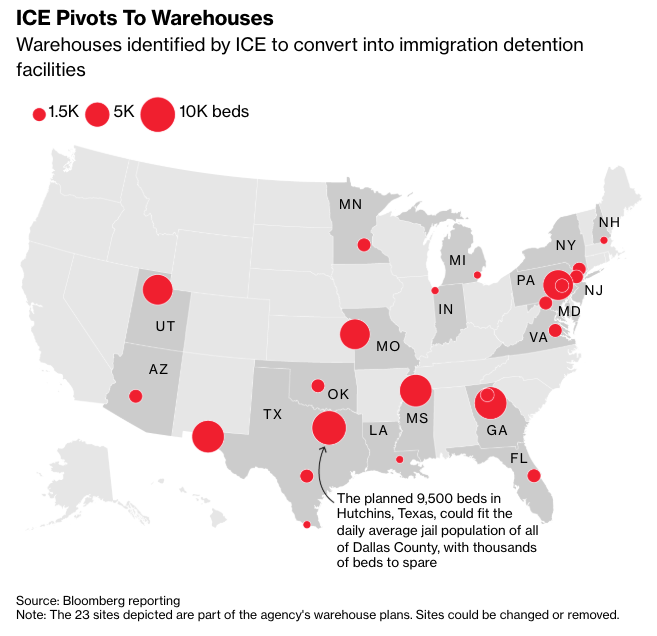
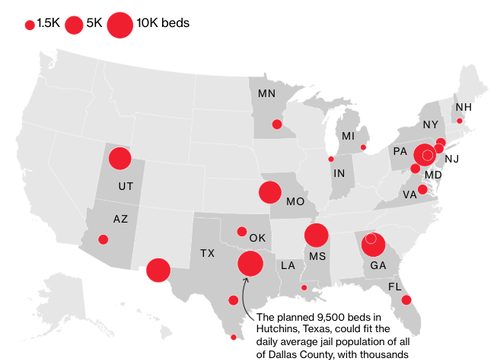
The Trump administration is moving ahead with plans to convert 23 e-commerce warehouses across the country, primarily in the eastern U.S., into a large-scale network of immigration detention centers aimed at expanding capacity to fulfill the mandate the American people gave President Trump to deport more than one million illegal aliens per year and restore national security. This comes after the Biden-Harris globalist regime collapsed borders and allowed a nation-killing invasion of ten million or more third-worlders.
Bloomberg reports that Immigration and Customs Enforcement’s rapid move to build out a network of warehouses is being fueled by $45 billion from the signature “One Big Beautiful Bill Act.” This includes the most recent purchases of a warehouse in Hagerstown, Maryland, and another in Surprise, Arizona, totaling $172 million. A third in El Paso, Texas, will be one of the largest of its kind, with 8,500 beds.
The ICE detention system is only growing larger and larger, with ever-greater numbers of illegals who invaded the nation being deported. The current level of illegals held in detention is at a record of 73,000. To reach a million deportations per year, ICE must have 100,000 detention beds.
Emma Winger, deputy legal director at the American Immigration Council, told the outlet that the Trump administration must expand its deportation infrastructure to meet its goal of 1 million per year.
“To reach these kinds of numbers, they’d need to go out into the communities and find people who’ve been living their lives and been here a long time,” Winger said. “They’d have to dramatically increase their presence in communities across the country.”
Unhinged leftist Maryland Senator Chris Van Hollen called Trump’s deportation operations “one of the most obscene, one of the most inhumane, and one of the most illegal operations being carried out by this Trump administration at the Department of Homeland Security and ICE.”
“We do not want an ICE facility here in the state of Maryland,” Van Hollen told the outlet.
Why is that Van Hollen? Is it the fear that a future voting bloc of illegals will be deported from the Mid-Atlantic region?
However, what Van Hollen doesn’t mention is that mass migration policies supported by his own party fuel smuggling networks run by cartels and aided by dark-money funded NGOs. These smuggling networks put migrants at risk of robbery, extortion, kidnapping, human trafficking, assault, and exploitation along the way. Thousands have died along the way, but rarely do you hear Democrats raising concern about US-bound smuggling networks, only Trump’s deportation program is worse than literal ‘Nazis’…
ICE expects to hold between 1,500 and 10,000 detainees in each of these 23 warehouses at a time.
The question that should be asked is why Democrats jeopardized national security by allowing the illegal alien invasion. The answer is political, with the goal of creating a new voting bloc and entrenching long-term one-party dominance under Democratic Party kings and queens.
Tyler Durden
Sun, 02/01/2026 – 09:55
https://www.zerohedge.com/markets/ice-buys-warehouse-network-support-ramped-deportation-operations

Fierce debate erupts on Indiana National Guard military police bill
A bill allowing the Indiana governor to deploy a “military police force” of the Indiana National Guard throughout the state advanced out of the House Wednesday amid heated debate, but legal experts are worried that, if signed into law, it could put the Guard into situations they’re not trained to handle.
House Bill 1343, authored by State Rep. Steve Bartels, allows the Indiana National Guard’s leader, the adjutant general, to establish a “military police force” that could make arrests, conduct searches and seizures, carry firearms and exercise other police powers. All members must have security clearance and no felony convictions. Anyone appointed to the military police force has to complete army or air military police occupational training, according to the bill.
The governor would be able to deploy the military police force “to exercise police powers throughout Indiana” during times of war, disaster or “at any other time the governor considers necessary.” The governor would have to provide reasonable notice to local law enforcement agencies in the area, according to the bill.
Bartels, R-Eckerty, said the military police force will merge six different units that exist within the Indiana National Guard.
If a governor chose to send the military police force into a community, the mayor there wouldn’t have a way to stop the action, Bartels said. The bill also doesn’t give a timeframe for how long the military police force could be deployed, he said.
“I think this is very proactive. I think it helps us deal with situations that are unpredictable. It’s probably past due, in my opinion,” Bartels said.
The bill’s supporters said Wednesday that the National Guard would help local law enforcement, Indiana University law professor Jody Madeira said, but National Guard members don’t receive the same training as law enforcement because they are military members and not police. National Guard members are also people who have other jobs and responsibilities in the community, she added.
“They are not full-time soldiers,” Madeira said. “They might get limited law enforcement training, and then these people will be given guns and put in law enforcement situations and not given real, robust de-escalation training. Then they might be put into some of the same situations that these immigration authorities are in, like what we’re seeing in Minneapolis.”
An amendment was introduced to give more local control with the military police force, but it failed, Madeira said. She worries about the consequences of the governor having unchecked power to call on the National Guard.
Legislators who supported the bill claimed it’s needed for situations like the Boston Marathon bombing of 2013 where the Massachusetts National Guard was deployed but couldn’t play a law enforcement role in the investigation.
State Rep. Matt Lehman, R-Berne, said the bill models what Massachusetts did with its national guard authority following the Boston Marathon bombing.
“This is crisis mode,” Lehman said.
State Rep. Matt Pierce, D-Bloomington, countered that the Boston Marathon was 13 years ago, and no governor in that time has mentioned that the state should update its national guard protocols.
“And now suddenly it shows up in this short session buried in a bill about veterans affairs,” Pierce said.
Madeira said she agrees that .anguage of a military police force is hidden in the bill.
“One of the things that’s unique about this bill is that it has a whole lot of stuff in it,” she said. “It starts out by talking about watercraft, and it also ends by saying you can’t bring an imitation firearm on a school bus.”
Madeira doesn’t understand why representatives used the 2013 Boston Marathon bombing as an example on the House floor.
“Why now?” Madeira said. “That situation has been studied. If those were the lessons that were meant to be applied, why are we doing so virtually decades later? … We would not always need a state paramilitary police force for that purpose.”
Legislators opposed to the bill voiced concern about a governor misusing the military police force without requests from local officials to limit Hoosier free speech.
“Granting a governor, any governor, power over military police in this way at this moment in our country’s history feels foolish at best and dangerous at worst,” said State Rep. Carey Hamilton, D-Indianapolis, pointing to the recent shooting of Alex Pretti by federal agents in Minneapolis.
State Rep. Vernon Smith, D-Gary, said he had concerns about the bill giving one person authority over deploying a paramilitary police force in Indiana.
“As a Black man, I understand firsthand the tragedies that can occur when interacting with law enforcement. But I am not just concerned about myself with this provision, I’m worried about all Hoosiers. I do not want our state to become a military state where fear spreads throughout,” Smith said.
State Rep. Earl Harris, D-East Chicago, said he has a lot of “discomfort” around the bill because it takes away local control.
“The mayor, council, town, whatever, were elected by the people that live there to make those decisions. And to take that ability away, and to give it to a governor who could then decide, “I’m going to have them stay for as long as I want,” Harris said. “We don’t need to bring this into Indiana.”
Lehman denied that the bill changes local control when it comes to the Indiana National Guard.
“The governor today could send in the national guard without talking to the mayor,” Lehman said. “This enhances trust because now the people coming to defend this are going to be trained and have the authority to do what they’re going to do.”
State Rep. Chuck Moseley, D-Portage, said he has “very serious concerns” about deploying a military police force under the circumstances outlined in the bill.
“I really would wish and hope that we could be cautious and move very carefully on this moving forward,” Moseley said.
The bill passed the House 67-29, with State Rep. Danny Lopez, R-Carmel, voting with all Democrats present against the bill. It moves forward for consideration by the Senate.
Currently, Louisiana, California and Nebraska each allow the governor to call on the National Guard to act as military police, but the states have different provisions, Madeira said. According to Louisiana law, when the governor calls up members of the National Guard and Louisiana Military Police, they have the power and authority of peace officers, including arrests, searches, seizures, and executing warrants, unless limited by orders.
In California, members of the National Guard have peace officer powers when called into active service by the governor and are assisting authorities in an area where military assistance is required, according to state law.
Nebraska law says that while in active service of the state, or at the direction of the governor, National Guard members are peace officers with power to prevent crime, arrest suspects, and execute the process of law. The governor can limit that authority in writing, according to Nebraska law.
“What’s kind of interesting is that Indiana is much more forthright,” Madeira said. “Basically, this means Indiana is sort of the only state that would create this military police force. Other states just say they have these powers, but Indiana would create a military police force.”
As House Bill 1343 moves into the Senate, Madeira believes that legislators need to consider adding a check to the governor’s powers.
It would be a good idea for General Assembly to consider how increased local input could help the state make the best decisions in potentially dangerous situations, she added.
“Local police know the community, they know the people, and in many cases, they have the trust of the people,” Madeira said. “If we just come riding in with a cavalry from out of town, we risk more danger. … These lessons are very expensive, not only in terms of dollars but also in terms of lives lost.”
Bifurcation Nation & The TINA Economy’s Freefall
Bifurcation Nation & The TINA Economy’s Freefall
Authored by Charles Hugh Smith via Substack,
The term “The K-Shaped Economy” has entered the lexicon to describe the divergence of the top tier of earners and owners of capital from the lower tiers, as the trajectory of the first is up and that of the second is down.
While the “The K-Shaped Economy” offers visual clarity, it’s ultimately an abstraction. Longtime correspondent Harvey D. recently offered a more accurate term, The Bifurcation Economy, which describes (as he put it) the reality that 50 miles outside major US cities, the precarity and quality of life is Third World. I modified his term to Bifurcation Nation, to express that the widening divide isn’t just financial, it describes everything from healthcare to social / political power.
I’ve assembled a few charts to illustrate the range of this Bifurcation between the top tier and the rest.
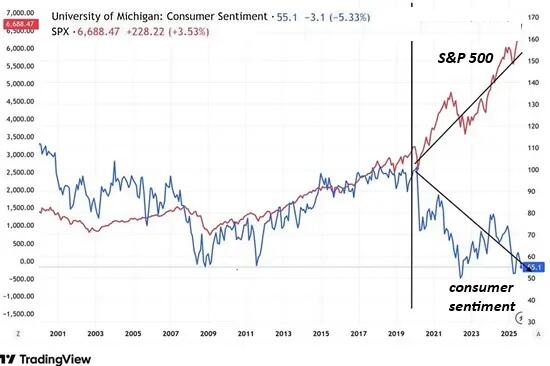
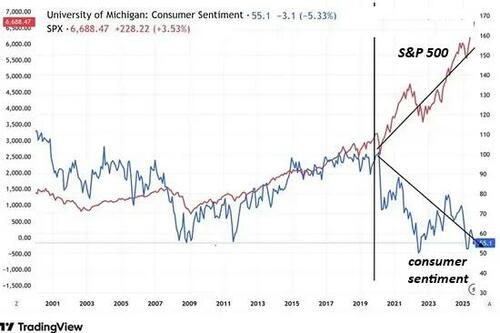
Here is the S&P 500 (SPX) stock market index, representing the wealth of corporations and the top 10% who own their shares, rising at a 45-degree angle, and consumer sentiment, representing the real-world economy, sliding down a 45-degree angle.
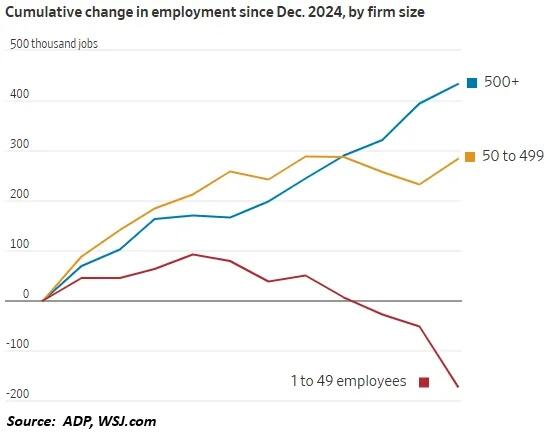
Here is employment hiring by large corporations–up–and small business employment–down.
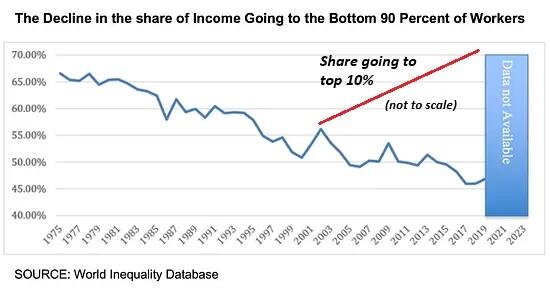
Here is the share of income going to the top 10%–up (for illustrative purposes, not to scale)–and the share going to the bottom 90%: down.
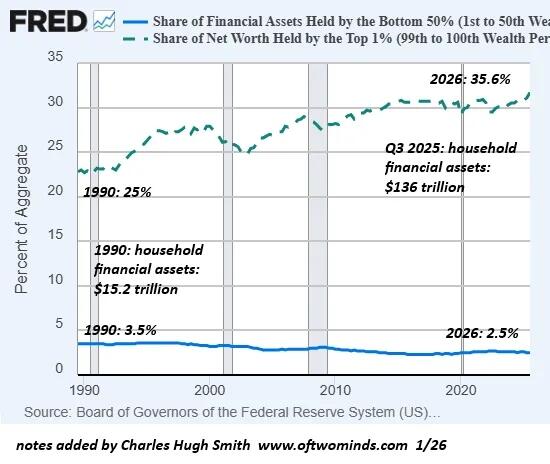
As the total financial wealth of US households has soared, the share owned by the bottom 50% has fallen by 28.6% since 1990 while the share owned by the top 1% has risen 42%. As the pie got bigger, the percentage going to the top 1% got bigger, too. The rising tide didn’t raise all boats equally, it widened the gap between the top 1% and the rest.
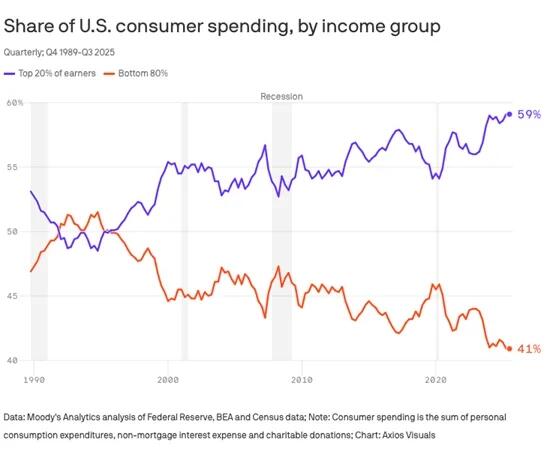
Here is the share of consumer spending of the top 20%–up–and the bottom 80%–down.
One causal force that receives little attention is what I’m calling “The TINA Economy”: there is no alternative when it comes to paying higher prices for essentials and taxes, and so the share of income left to spend on what’s still a choice shrinks.
Everything that is necessary to participate in the economy at a level above abject poverty is concentrated in monopolies and cartels who use their control of production, supply chain and the politically geared regulatory structure to set what’s available on the market and what isn’t, and to raise prices and degrade quality and quantity to increase profits not by offering competitive advantages but by TINA coercion.
As the essentials go up in price, the sum of household income left to spend elsewhere (discretionary income) declines. The sectors of the economy that depend on discretionary spending are the only parts of the economy with any real competition: dining out, entertainment, leisure and travel, aspirational / status-enhancing spending, etc.
Many of these sectors are dominated by a handful of corporations: pizza chains, travel sites, airlines, short-term vacation rentals, rideshare services, hotels and resorts, and so on.
The sectors of the economy that aren’t yet dominated by cartels and quasi-monopolies–the small businesses that depend on discretionary spending–are the bricks and mortar enterprises that give towns, neighborhoods and cities their character and desirable quality of life.
As discretionary income is squeezed by relentless increases in rent, healthcare, auto and home insurance, food, childcare, vehicle repairs, subscriptions for digital services and software, all required to earn a living and maintain an abode better than a cardboard box on the sidewalk, there is less income available to spend on non-essentials, which are generally provided by local small businesses.
Households that have maintained discretionary spending by borrowing money are being eaten alive by rising debt service--the interest and principal due on credit cards, auto loans, student loans, installment payments, etc. Eventually their discretionary income is consumed by debt service.
Small businesses have shared interests, but they’re diffuse and distributed over numerous sectors and physical locations. There is no way they can match the billions of dollars a corporation can devote to lobbying, campaign contributions, PR campaigns, etc. Small businesses don’t have the advantages of scale, or the ability to leverage their market power to get better deals on taxes, rent and other expenses.
A corporate pizza chain, for example, can draw upon corporate deep pockets to offer discounts that no local pizza shop can match. So the local pizza shops all close and the residents are left with a choice of corporate pizza outlets–ultimately not much of a choice at all.
Left unsaid in the corporate/financial media’s coverage of the K-Shaped Economy is what happens to towns, neighborhoods and cities when shrinking discretionary income and soaring costs sink the bricks and mortar small businesses, leaving only sanitized, homogenized corporate outposts: the empty storefronts gut the local economy and strip the character from everything that was once unique or interesting.
Corporate coffee shop, empty storefronts, corporate pizza shop, empty storefronts, and a new luxury apartment complex developed and owned by corporations with zero interest in the locale other than harvesting soaring rents and then selling the property to global investors.
Left unsaid is the interest of monopolies and cartels begins and ends with extracting the maximum possible from all who have no alternative in an economy in which a handful of corporations control the majority of essentials, from healthcare insurance to banking to beef distribution to digital services. As for government, regardless of who you vote for, property taxes and fees go up.
Monopolies and cartels have zero interest in the quality of our lives; they only care about friction that reduces their net income and obstacles to their expanding extraction. They have no interest in how the bottom 90% are faring, and only marginal interest in the top 10% who generate 50% of consumer spending.
This is the problem with financializing an economy and society: the logic of maximizing profits by any means available inevitably leads to capital corrupting politics to protect monopolies and cartels, as these are the ideal platforms for maximizing extraction / coercion and thus profits.
In a financialized economy, there is no alternative to the eventual domination of monopolies and cartels, because in the logic of financialization, these are the only logical outcomes.
The quality of life in the TINA Economy is one of erosion, as the foundations of a high quality of life are hollowed out, either homogenized and commoditized (what I call Ultra-Processed Life) or left to decay.
Note that this decay is in a “booming economy” of soaring corporate profits and rising GDP. When the inevitable recession slashes profits, spending, employment and income, the small businesses struggling to survive in the competitive discretionary sectors will slide into oblivion, as the costs of essentials will continue rising while their revenues collapse.
Discretionary spending is now dependent on the top 10% drawing on the temporary wealth of credit-asset bubbles. Once these bubbles pop (and all bubbles pop), the top 10% spending will collapse along with the bubble’s phantom wealth.
Corporate monopolies and cartels won’t care until their corralled customers stop paying en masse. But then it will be too late to change the outcome. The same can be said of local governments that can’t print / borrow money to sustain their spending: as tax revenues plummet, there will be no way to reverse the endgame.
The endgame of a fully financialized, coercive TINA economy and society is Bifurcation Nation stumbling into the abyss of Depression with an economic profession and leadership class that are themselves homogenized and commoditized, unable to recognize Model Collapse, much less admit their failure, which is the first step in successful adaptation.
Tyler Durden
Sun, 02/01/2026 – 09:20
https://www.zerohedge.com/economics/bifurcation-nation-tina-economys-freefall
Joe Rogan Defines Chaos In Minneapolis As “Color Revolution”
Joe Rogan Defines Chaos In Minneapolis As “Color Revolution”
Left-wing unrest in Minneapolis and elsewhere across the country – whether protests or riots over the past few weeks or over the last decade targeting President Trump and the America First agenda – is being framed as a color revolution operation fueled by dark-money-funded NGOs, and that narrative is now reaching a wider audience.
Democrats are uneasy that this framing is gaining traction after the left-wing revolution was most recently discussed on The Joe Rogan Experience, where host Joe Rogan and guest Andrew Wilson, a conservative podcaster, discussed it.
Rogan discussed how, shortly after Nick Shirley’s investigation into alleged large-scale Somali-linked daycare and autism fraud, there was an immediate “narrative shift” that appeared to coincide with what he described as a coordinated pressure campaign on the ground against federal agents – something Rogan characterized as a “color revolution.”
“For people that don’t, it’s a coordinated effort to cause chaos, and this is a very coordinated thing,” Rogan said.
He continued, “The idea that this is an organic protest, these riots are organic, is nonsense. It’s probably nonsense because now they have access to the Signal chats.”
From the beginning, we have framed much of the left-wing pressure campaigns as far from organic, pointing instead to dark-money-funded NGOs supporting activist groups on the ground opposing federal deportation operations. It was not until “Signal Gate,” however, that the nation could see how heavily coordinated these efforts allegedly were…
Now these left-wing NGOs are seeking spring protests, as they have riled up young people to carry out their anti-ICE agenda.
They also plan to launch campaigns nationwide:
NYC Socialists Prepare Mass Mobilization Of 4,000 Anti-ICE Army
As well as targeting critical economic chokepoints.
Left-Wing NGOs Transition To Targeting ‘Critical Economic Chokepoints’ In Minneapolis
The chaos in Minneapolis is part of the left-wing’s protest industrial complex that moves from one high-profile news event to another – from George Floyd protests to pro-Palestinian demonstrations – mobilizing activists with aims at revolution.
There is good news: Treasury Secretary Scott Bessent sat down with journalist Christopher Rufo earlier this month to discuss plans to investigate dark-money-funded NGOs sowing chaos nationwide.
EXCLUSIVE: Treasury @SecScottBessent tells me that the Trump Administration will launch investigations into left-wing nonprofits that serve as a front for violent protests and criminal obstruction of ICE operations. It’s time to stop left-wing terrorism in America. pic.twitter.com/roorsk4XLA
— Christopher F. Rufo ⚔️ (@christopherrufo) January 9, 2026
Let’s remind readers about retired Lt. Gen. Michael Flynn’s comments in late November:
General Flynn Calls For National Address From Trump On Color Revolution Threat
As warmer weather approaches, the protest industrial complex will be operating at full steam. Rogan’s characterization of the chaos in Minneapolis as resembling a color revolution presents optically displeasing headlines for Democrats, as that framing increasingly circulates to wider and wider audiences.
Tyler Durden
Sun, 02/01/2026 – 08:45
https://www.zerohedge.com/markets/joe-rogan-defines-chaos-minneapolis-color-revolution

ESPN closes deal for NFL Network and rights for RedZone which gives the NFL a stake in the network
ESPN’s purchase of NFL Network and other league digital assets has been finalized after government regulators approved the transaction.
The league and ESPN officially announced the closing of the deal Saturday night after the Justice Department and other non-US antitrust authorities completed their reviews.
ESPN acquired NFL Network, NFL Fantasy and the rights to distribute the RedZone channel to cable and satellite operators and the league will get a 10% equity stake in ESPN.
What to know about ESPN’s new streaming service — and its deals with the NFL and WWE
“With the closing, we will begin integrating NFL employees into ESPN in the months ahead,” ESPN and the NFL said in a joint statement. “As we look to the future, NFL fans can look forward to expanded NFL programming, greater access to NFL Network, innovative Fantasy experiences and unparalleled coverage of America’s most popular sport.”
The approval by government regulators was first reported by The Athletic.
Viewers are not expected to notice changes on NFL Network until April, when those employed by NFL Media become part of ESPN.
NFL Network — which has nearly 50 million subscribers — will be included in ESPN’s direct-to-consumer product, which launched last August, shortly after the deal was first announced.
The NFL RedZone channel will be distributed by ESPN to cable and satellite operators. However, the NFL will continue to own, operate and produce the channel as well as retain the rights to distribute the channel digitally. ESPN would also get rights to the RedZone brand, meaning RedZone channels for college football and basketball or other sports could be coming in the future.
NFL Fantasy Football will merge with ESPN Fantasy Football, giving ESPN the official fantasy football game of the league.
NFL Network will still air seven games per season. Four of ESPN’s games, including some that are in overlapping windows on Monday nights, will move to NFL Network. ESPN will license three additional games that will be carried on NFL Network.
The NFL has taken back the rights to four international games, which it is expected to put up for bid. The league has discussed each of its 32 teams playing at least one international game per season if the schedule expands to 18 regular-season games.
The league will continue to own and operate NFL Films, NFL+, NFL.com, the official websites of the 32 teams, the NFL Podcast Network and the NFL FAST Channel (a free ad-supported streaming channel).
With the sale, ESPN is 72% owned by ABC Inc. — an indirect subsidiary of The Walt Disney Company — 18% Hearst and 10% NFL.
https://www.chicagotribune.com/2026/02/01/espn-nfl-network-redzone/
Carlos Alcaraz becomes youngest man ever to complete a career Grand Slam after winning Australian Open
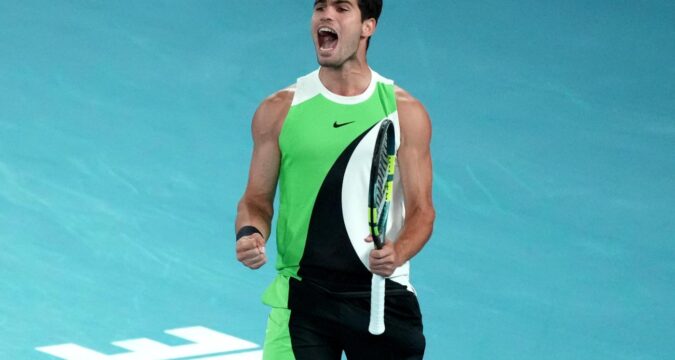
MELBOURNE, Australia — Carlos Alcaraz is the youngest man ever to complete a career Grand Slam after securing the Australian Open title against Novak Djokovic, who had never lost in his 10 previous finals at Melbourne Park.
The top-ranked Alcaraz dropped the first set Sunday as Djokovic went out hard in pursuit of a record 25th major title, but he dug deep to win 2-6, 6-2, 6-3, 7-5.
As he was leaving the court, he signed the lens of the TV camera with a note of recognition: “Job finished. 4/4 Complete.”
The 22-year-old Spaniard scrambled to retrieve shots that usually would be winners for Djokovic, and he kept up intense pressure on his 38-year-old rival. There were extended rallies where each player hit enough brilliant shots to usually win a game, with neither player willing to give an inch or concede.
Once he secured victory, Alcaraz let his racket slip out of his hand and fell to the ground on his back, putting his hands to his head.
He stayed there for a few seconds before going to the net to shake hands with Djokovic. Both players exchanged a few words and Djokovic smiled as he congratulated Alcaraz. The new champion then ran to hug his coaches in the courtside chairs and later his dad and other team members in the stands.
After paying tribute to Djokovic for being an inspiration, Alcaraz turned to his support team. He parted ways with longtime coach Juan Carlos Ferrero at the end of last season and Samuel Lopez stepped up to head the team.
“Nobody knows how hard I’ve been working to get this trophy. I just chased this moment so much,” Alcaraz said. The pre-season was a bit of a rollercoaster emotionally.
“We just did the right work, you were pushing me every day to do all the right things,” he added. “I’m just really grateful for everyone I have in my corner right now.”
Djokovic joked about this showdown setting up a rivalry over the next 10 years with Alcaraz, but then said it was only right to hand the floor over to the new champion.
“First and foremost, congratulations to an amazing tournament and amazing couple of weeks,” Djokovic said at the trophy presentation. “What you’ve been doing, the best word to describe is historic, legendary, so congratulations. I wish the best of luck in the rest of your career.”
Both players were coming off grueling five-set semifinal wins and showed phenomenal fitness, athleticism and stamina for just over three hours in pursuit of their own historic achievements.
Neither player was willing to relent on the big points — and there were many of them. In the end, Alcaraz was able to convert 5 of the 16 breakpoints he set up. Djokovic converted two of his six.
Djokovic’s push for an unprecedented 25th Grand Slam singles title has now been blocked by Alcaraz or Jannik Sinner for nine majors.
Djokovic edged Sinner in the semifinals and was aiming to be the oldest man to win a Grand Slam title in the Open era, but didn’t quite make it against Alcaraz.
Rafa in the house
Djokovic and Rafael Nadal played some epic matches, including the longest match ever at the Australian Open in a five-set final that lasted almost six hours in 2012.
Nadal was watching from the stands on Sunday night, and both players addressed the 22-time major winner.
“I want to speak to the legendary Rafa, who is on the stands,” Djokovic said. “Obviously, it feels very weird to see you there and not here, you know?
“But thank you for being present. It’s too many Spanish legends… It felt like it was two against one tonight, you know, it wasn’t fair, but OK.”
Alcaraz said it was a privilege: “I know you were watching me when I was like 15, 14 years old, so it’s been a long time. But, yeah, for me, it’s such an honor playing in front of you.”
One for the ages
At 22 years and 272 days, Alcaraz is the youngest man to complete a set of all four major singles titles. He broke the mark set by Don Budge in the 1938 French championships, when he was 22 years and 363 days.
Alcaraz now has seven major titles — his first in Australia along with two each at Wimbledon and the French and U.S. Opens.
He’s the ninth man to achieve the career Grand Slam, a list that also includes Djokovic, Nadal and Roger Federer.
https://www.chicagotribune.com/2026/02/01/carlos-alcaraz-wins-australian-open/

Costa Rica sale a votar el domingo con el oficialismo como favorito
Por JAVIER CÓRDOBA
SAN JOSÉ (AP) — Costa Rica inició el domingo las elecciones presidenciales y legislativas en que el proyecto político del actual mandatario, Rodrigo Chaves, parte como favorito para ganar la contienda.
Cerca de 3,7 millones de costarricenses están convocados para votar en las 7.154 juntas receptoras de votos habilitadas en todo el país, las cuales recibirán al electorado de las 6:00 de la mañana a las 6:00 de la tarde.
La politóloga Laura Fernández, de 39 años, es la candidata elegida por el Partido Pueblo Soberano (PPSO) como la carta para darle continuidad al actual gobierno, que ha disfrutado de una alta popularidad desde el inicio.
Las últimas encuestas que se divulgaron previo al inicio de la veda electoral, a cinco días de la elección, dan a Fernández una amplia ventaja sobre los partidos de oposición en esta votación.
Según el Centro de Investigaciones en Estudios Políticos de la Universidad de Costa Rica (CIEP-UCR), Fernández gozaba de un apoyo del 44% entre las personas decididas a votar, cifra que, de hacerse realidad en las urnas, le garantizará ganar la presidencia en la primera ronda.
Más atrás aparecen el candidato del tradicional Partido Liberación Nacional (PLN), Álvaro Ramos, con un 9%; y la ex primera dama y candidata de la Coalición Agenda Ciudadana (CAC), Claudia Dobles, sumó un 8% de apoyo.
Sin embargo, al registrar más de un 25% de indecisos, el panorama queda abierto sobre si Fernández logrará sumar más del 40% de los votos que exige la ley para evitar un balotaje el próximo 5 de febrero.
El fuerte apoyo a Fernández parece ser reflejo de la aceptación de la que ha gozado el gobierno de Chaves durante prácticamente todo su periodo, que inició en 2022, pese a que el país enfrenta una de sus peores crisis de inseguridad, con una alta tasa de homicidios.
Durante el mandato de Chaves, el país ha vivido su época más violenta, tras tener la cifra récord de 907 homicidios en 2023, que posteriormente bajó a 880 en 2024 y para el año pasado cerró con tres muertes menos —la mayoría de ellas relacionada con disputas entre narcotraficantes y sicariato.
En contraste, los seguidores del oficialismo adjudican al actual gobierno —del que Fernández formó parte como ministra de la Presidencia y de Planificación— los beneficios de un buen momento económico, baja inflación y principalmente el estilo confrontativo del presidente con los representantes de los partidos políticos que ya han gobernado al país.
El oficialismo ha sostenido un discurso constante sobre la necesidad de que su partido logre en esta elección una mayoría de 40 diputados en la Asamblea Legislativa, lo que les permitirá realizar sin oposición las reformas que, en su criterio, no se pudieron lograr en el actual gobierno.
Ronald Loaiza, ingeniero electromecánico, fue uno de los primeros votantes en la escuela Julian Volio, en el distrito El Carmen de Cartago, pase al intenso frío y la lluvia de la mañana
“Espero que sea una fiesta democrática, que la gente se acerque a votar. Es muy importante que ejerzamos el derecho que se nos da en este país. Que seamos conscientes de nuestra democracia”, dijo Loaiza a The Associated Press.
Hace cuatro años, Chaves realizó una campaña desde el exterior del país que lo llevó a la victoria sobre los partidos tradicionales costarricenses, a pesar de haber sido brevemente ministro de Economía en una de sus administraciones. Su descripción de los partidos tradicionales como corruptos y egoístas tuvo eco en un país con un alto desempleo y un déficit presupuestario vertiginoso.
Constantino Urcuyo, profesor de Ciencias Políticas de la Universidad de Costa Rica, explicó que la agitación social en el país que llevó a Chaves al poder no es única, y mencionó ejemplos similares de populistas conservadores que ganaron presidencias en Argentina, Ecuador y Estados Unidos.
Señaló que el partido de Chaves ha atacado las instituciones del país y pretende cambiar todo el marco constitucional. Chaves ha criticado implacablemente al poder judicial y al legislativo por desafiar sus iniciativas.
“La elección es crucial, es entre la gente que quiere un cambio radical del sistema y los que quieren una reforma del sistema”, destacó
Junto a la votación en Costa Rica, el Tribunal Supremo de Elecciones ha habilitado 91 juntas receptoras de sufragios en consulados ubicados en 42 países, para que 67.270 costarricenses puedan emitir su voto desde el extranjero.
Convicted Terrorist Who Plotted To Bomb British Consulate Now Standing For Election In UK
Convicted Terrorist Who Plotted To Bomb British Consulate Now Standing For Election In UK
Authored by Steve Watson via Modernity.news,
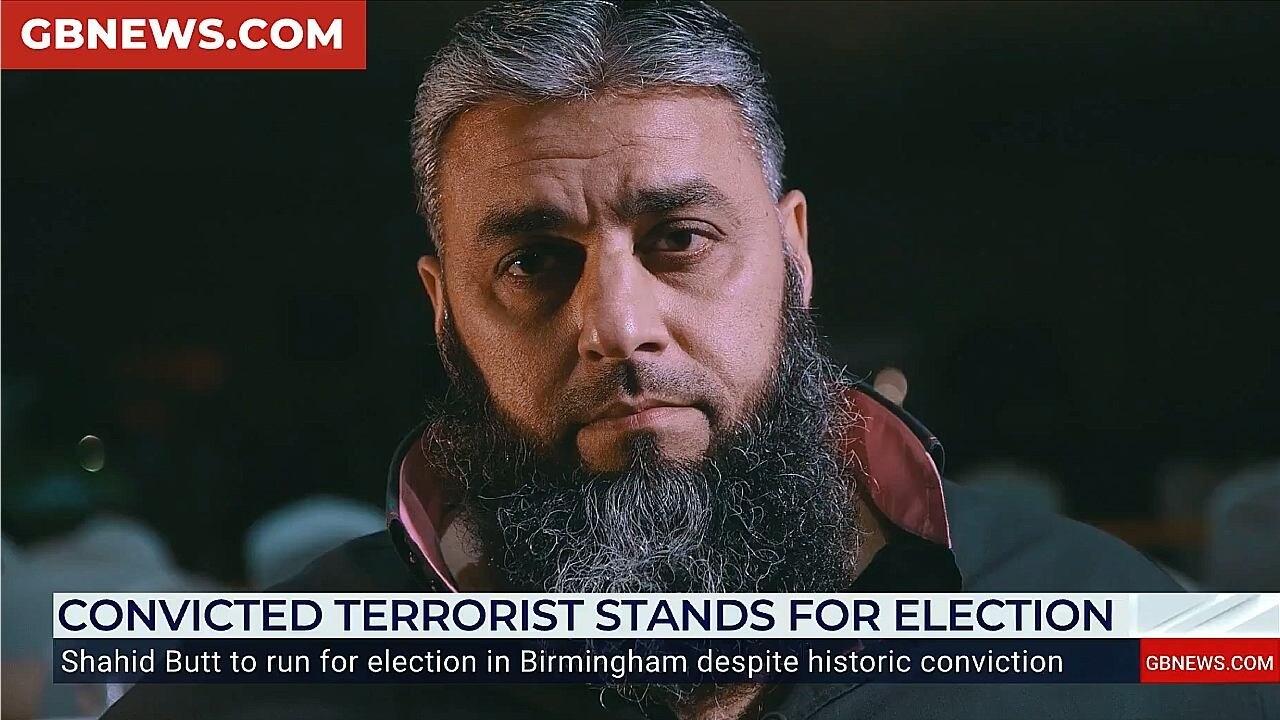
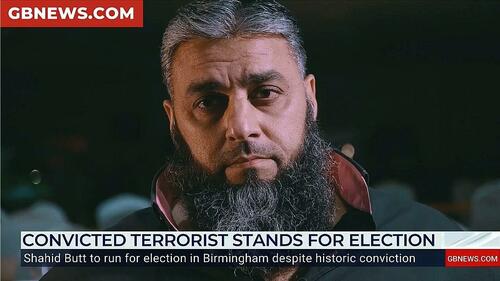
Shahid Butt, a 60-year-old Muslim activist with a conviction for conspiring to bomb the British consulate in Yemen, is now gunning for a seat on Birmingham City Council.
Yes, really.
Convicted in 1999 and sentenced to five years in a Yemeni prison, Butt was found guilty of forming an armed gang to target the consulate, an Anglican church, and a Swiss-owned hotel.
‘Can you see what’s happening to our country!’@PatrickChristys reacts to Shahid Butt, an activist running for election in Birmingham, who’s been convicted of terrorism.
Go to https://t.co/CVTl2Q2qvb to get 75% off ExpressVPN. #ad
ExpressVPN terms and conditions apply. pic.twitter.com/PZYRo0lqRz
— GB News (@GBNEWS) January 28, 2026
Butt claims the charges were bogus, insisting he was forced to confess and that they weren’t terrorism-related. Yet reports link him to an armed Islamist jihadi group that kidnapped 16 Westerners in 1998. In the early 1990s, he headed to Bosnia as an “aid worker” before joining a foreign fighters brigade in the Bosnian army. Back in Birmingham during the 1980s, he racked up trouble with a notorious gang and even served prison time for violence.
Now, as a pro-Gaza independent candidate in the Sparkhill ward—where around 80% of residents are Muslim—Butt is openly urging the city’s Muslim youth to “work out at the gym and learn to fight” in preparation for potential attacks. He calls for Muslims to “stand together and hold their ground” against “disbelievers” of other faiths.
‘It should disqualify you from standing for election.’
Reform UK Councillor Russell Quirk believes that Shahid Butt should not be allowed to stand in the Birmingham council elections due to his previous terrorism conviction. pic.twitter.com/P6ClldcqCQ
— GB News (@GBNEWS) January 28, 2026
Victims of Islamist attacks aren’t buying the redemption story. Groups representing terror survivors slammed the candidacy as making “a mockery of our political system,” according to The Telegraph.
One source told the paper: “Allowing someone with this history to run for office undermines everything we stand for in fighting extremism.”
Convicted terrorist Shahid Butt is standing for election in the UK
He’s a convicted terrorist and hates non-muslims
“Don’t take Christians and Jews as your friends; non-believers cannot be trusted. Stick with the Muslims.”
Welcome to the UK ???? pic.twitter.com/DQzk6FS2PE
— Basil the Great (@BasilTheGreat) January 30, 2026
GB News host Patrick Christys tore into the development, asking: “Are you mental?!” in a blistering monologue. He highlighted Butt’s past, from the Yemen plots to his calls for Muslims to arm up against non-believers.
‘Under UK law, there is no disqualification for an individual who holds any kind of past terrorism-related conviction.’
Emma Schubart explains how convicted terrorist Shahid Butt can legally stand for election in England. pic.twitter.com/FfoIK6FYrv
— GB News (@GBNEWS) January 29, 2026
This isn’t an isolated case of the UK rolling out the red carpet for radicals. Just last month, Prime Minister Keir Starmer personally celebrated the release and return of British-Egyptian extremist Alaa Abd el-Fattah, who has a track record of praising Osama bin Laden, denying the Holocaust, and calling for violence against Jews and police. Starmer called it a “top priority” for his government.
Meanwhile, ordinary Brits face the full force of the law for far less. Take Lucy Connolly, who served time for a heated tweet about immigration after the Southport attacks and now faces re-imprisonment for sharing a satirical joke about Starmer.
The contrast couldn’t be starker: extremists with bomb plots and hate-filled rhetoric get platforms and welcomes, while native Brits get jail cells for memes and jokes.
Birmingham’s council elections in May could mark another win for sectarian politics, fueled by unchecked migration and a government more interested in appeasing radicals than protecting its own citizens.
As communal tensions rise, with anti-Israel protests turning violent and Jewish groups raising alarms, allowing figures like Butt to run exposes the rot in Britain’s system.
Your support is crucial in helping us defeat mass censorship. Please consider donating via Locals or check out our unique merch. Follow us on X @ModernityNews.
Tyler Durden
Sun, 02/01/2026 – 08:10
UBS CIO Americas: AI Remains “Underhyped And Underappreciated”
UBS CIO Americas: AI Remains “Underhyped And Underappreciated”
Building on Goldman analyst Brian Singer’s comparison of the AI data-center buildout to the U.S. shale boom, where AI remains in the early “appraisal phase” of the innovation cycle, a stage historically most bullish for infrastructure spending and equity multiple expansion, fresh commentary earlier this week from UBS CIO Americas reinforces the view that bubble conditions have not yet been met.
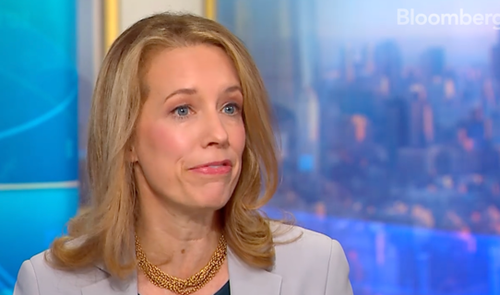
Ulrike Hoffmann-Burchardi, CIO of Global Equities at UBS Global Wealth Management, spoke at the Latin America Investment Conference, where she said AI remains underhyped in the near term.
Ulrike continued:
AI is underhyped and underappreciated in the short term, and it is one of the biggest investing opportunities in human history, Ulrike Hoffman Burchardi, UBS CIO Americas, said at the Latin America Investment Conference.
She said there are three things needed to be successful in AI:
1) AI algorithmic talent – it is very important to have strong AI researchers;
2) energy to power computers; and
3) chips.
Previously, she was focused on the picks and shovels, or what she calls the AI 7 (three chip companies and four hyperscalers), but now it’s time to move into the application layer of AI – the companies using AI to their benefit.
She said that for AI to be in a bubble, three conditions would need to be met:
loose financial conditions,
a transformational narrative, and
prices becoming reflexive.
She doesn’t think the third box is checked yet, especially not in public markets.
Ulrike noted that valuations are extended, but this is not the key thing to focus on.
On the other hand, she said private markets are bubblier, and that investors need to do a lot of due diligence there.
Circling back to Singer’s note on the shale innovation cycle, that cycle lasted from 2003 to 2020, roughly 17 years.
Read the note here.
Tyler Durden
Sun, 02/01/2026 – 07:35
https://www.zerohedge.com/markets/ubs-cio-americas-ai-remains-underhyped-and-underappreciated
Carlos Alcaraz vence a Novak Djokovic y se convierte en el hombre más joven en lograr un Grand Slam
Associated Press
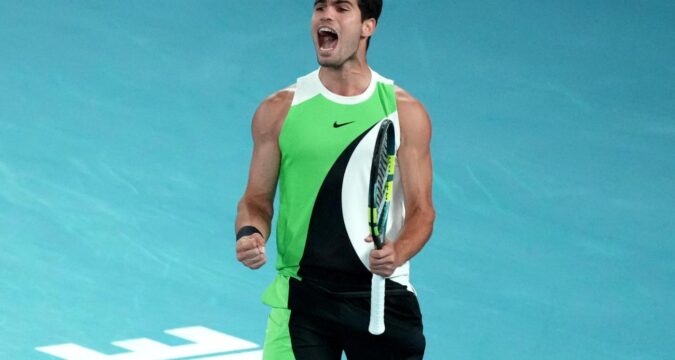
MELBOURNE, Australia (AP) — Carlos Alcaraz es el hombre más joven en completar un Grand Slam de carrera tras asegurar el título del Abierto de Australia contra Novak Djokovic, quien nunca había perdido en sus diez finales anteriores en Melbourne Park.
El número uno del mundo, Alcaraz, perdió el primer set el domingo mientras Djokovic salía con fuerza en busca de un récord de 25 títulos importantes, pero se recuperó para ganar 2-6, 6-2, 6-3, 7-5.
El español de 22 años se esforzó por recuperar tiros que normalmente serían ganadores para Djokovic, y mantuvo una intensa presión sobre su rival de 38 años.
Ambos jugadores venían de agotadoras victorias en semifinales a cinco sets y mostraron una forma física, atletismo y resistencia de alto nivel durante poco más de tres horas en busca de sus propios logros históricos.
El intento de Djokovic por un inédito 25º título de Grand Slam en individuales ha sido bloqueado ahora por Alcaraz o Jannik Sinner en nueve torneos importantes.
Djokovic superó a Sinner en las semifinales y aspiraba a ser el hombre de mayor edad en ganar un título de Grand Slam en la era Open, pero no lo logró contra Alcaraz.
Con 22 años y 272 días, Alcaraz es el hombre más joven en completar un conjunto de los cuatro títulos principales en individuales. Rompió la marca establecida por Don Budge en el campeonato francés de 1938, cuando tenía 22 años y 363 días.
Alcaraz ahora tiene siete títulos importantes: su primero en Australia junto con dos en Wimbledon y en los abiertos de Francia y Estados Unidos.
___
Esta historia fue traducida del inglés por un editor de AP con la ayuda de una herramienta de inteligencia artificial generativa.