Category: News
DHS spokesperson Tricia McLaughlin is leaving the agency
Top Department of Homeland Security spokeswoman Tricia McLaughlin is leaving the Trump administration after a tumultuous year marked by rancorous public commentary and accusations that she often misled the public.
In a post on X, Homeland Security Secretary Kristi Noem praised McLaughlin’s performance on the job, which she’s held since the beginning of the Trump administration.
“Tricia McLaughlin has served with exceptional dedication, tenacity, and professionalism,” Noem said.
During her time as spokesperson, McLaughlin took on a high-profile public role defending the administration’s immigration policies on television and social media.
Noem did not say why McLaughlin was leaving but said the department was sad to see her leave and wished her well.
The change comes at a tumultuous time for Noem and the department after the shooting deaths of Renee Good and Alex Pretti in Minneapolis led to calls for Noem to step down.
McLaughlin said Pretti approached Customs and Border Protection officers with a handgun and he “violently resisted” when they tried to disarm him — a claim that was contradicted by bystander videos.
Homeland Security’s public statements repeatedly unraveled under scrutiny during the Trump administration’s enforcement efforts in the Chicago area and McLaughlin herself faced critical attention for her role disseminating false information.
In one example, the federal government claimed agents shot a Chicago resident after their vehicles were rammed and boxed in by “10 cars.” Subsequent video appeared to show agents actually initiated contact with Marimar Martinez’s vehicle before shooting her five times. The agents were not boxed in by a convoy.
In September, a federal agent shot and killed Silverio Villegas-González shooting during a traffic stop. Officials alleged that Villegas-González was fleeing from Immigration and Customs Enforcement in west suburban Franklin Park and had “refused to follow law enforcement commands and drove his car” at officers, striking one of the ICE agents and dragging him “a significant distance.”
“Fearing for his life, the officer discharged his firearm and struck the subject,” the statement continued.
But body camera footage from the Franklin Park Police Department shows that the agents, one of whom was originally described as critically injured, described their bloody hands and knees to responding police officers as “nothing major” just minutes after the shooting.
Illinois Gov. JB Pritzker called her a “known liar” in a December interview with the Tribune.
“It’s one thing if she’s getting false things from people on the ground, which is terrible, but it’s another thing when she’s just putting out statements with no information to back it up, just, you know, a lie, a flat out lie,” Pritzker said, citing the Villegas-Gonzalez and Martinez incidents in particular.
Christopher Parente, an attorney for Martinez, celebrated McLaughlin’s departure.
”We are pleased with this resignation,” Parente said. “Unless Pinocchio is applying for the position we believe her replacement will be a great improvement and hopefully work to start repairing the credibility of DHS.”
ProPublica reported in November that Homeland Security spent more than $200 million on a taxpayer-funded ad campaign it defended as a crucial tool to stem illegal immigration. McLaughlin’s husband, Ben Yoho, is CEO of a firm that’s a subcontractor on the deal, according to ProPublica.
Homeland Security told ProPublica it “has no involvement with the selection of subcontractors” and “cannot and does not determine, control, or weigh in on who contractors hire.”
The Associated Press contributed.
https://www.chicagotribune.com/2026/02/17/dhs-spokesperson-tricia-mclaughlin/
China’s Unprecedented Oil Stockpiling Sparks Questions If Beijing Is Preparing For War
China’s Unprecedented Oil Stockpiling Sparks Questions If Beijing Is Preparing For War
Almost four years ago we pointed out something striking: while the world was still busy recovering from the covid Pandemic and suffering under soaring inflation – as seemingly everything was suddenly in short supply and prices were soaring – China was busy stockpiling pretty much everything at an unprecedented pace. Quoting a JPM report from March 2022 we noted that “while the world is short on commodities, China is not given they have started stockpiling commodities since 2019 and currently hold 80% of global copper inventories, 70% of corn, 51% of wheat, 46% of soybeans, 70% of crude oil, and over 20% of global aluminum inventories.”
JPM: “While the world is short on commodities, China is not given they have started stockpiling commodities since 2019 and currently hold 80% of global copper inventories, 70% of corn, 51% of wheat, 46% of soybeans, 70% of crude oil, and over 20% of global aluminum inventories.”
— zerohedge (@zerohedge) March 25, 2022
Almost as if China was preparing for its inevitable invasion of Taiwan.
But if anyone expected China to ease off the hoarding pedal after its massive stockpiling spree, they would be very disappointed and nowhere more so than oil. As John Kemp of JKemp Energy notes, China has been accumulating crude oil inventories to take advantage of relatively low prices and act as an emergency reserve in any future conflict with the United States and its allies.
China’s stocks of crude oil apparently increased by 54 million tonnes (about 400 million barrels or 1.1 million barrels per day) during 2025 after a similar increase in 2024. China’s massive inventory build-up has helped avert the accumulation of stocks in other areas and limited the fall in prices even as Saudi Arabia and its OPEC partners have boosted production.
Inventory accumulation, Kemp writes echoing what we said years ago, has also been described as a “strategic warning indicator” that could indicate the country’s leaders are preparing for a future conflict with the United States over Taiwan.
“Energy production and stockpile buildups often precede great power industrial wars,” one analyst told the U.S.-China Economic and Security Review Commission established by the U.S. Congress.
In building strategic reserves to enable its economy to keep functioning and armed forces to keep fighting during a future conflict, the country is following long-standing precedent.
China, of course, is not alone: policymakers and military planners in the United States, Britain, France and other countries in Western Europe as well as Japan have all focused on building oil reserves in readiness for a conflict for almost a century. Yet nobody has taken stockpiling as religiously as Beijing has in recent years.
SECRETIVE STOCKS
China’s government considers stocks of crude and refined products stored by importers, refiners and distributors as well as its own strategic reserves a state secret. Total inventories are not disclosed which has led to a guessing game about how much oil is stored and its distribution between commercial stocks (held for operational and speculative purposes) and strategic reserves.
But it is possible to obtain some indication about the magnitude and direction of changes from data the government does publish on domestic crude production, imports and processing by refineries.
Crude oil exports and the direct use of crude by industry have fallen to negligible levels in recent years so they can be safely ignored.
In 2025, China’s domestic crude output climbed to 216 million tonnes and the country imported a further 578 million, according to data published by National Bureau of Statistics and the General Administration of Customs.
But the country’s refineries processed only 738 million tonnes, leaving 56 million unaccounted for, of which perhaps 2 million were probably exported with other small volumes used directly in industry.
Meanwhile, since the start of the century, China has apparently increased its crude inventories in 24 of the 25 years, according to an analysis of government data. The exception was 2021, after an unprecedented increase the previous year, during the first wave of the coronavirus pandemic, which caused crude prices to slump to multi-decade lows.
The persistent rise can be explained in part by operational requirements stemming from the growing consumption of gasoline, diesel and other petroleum products. But consumption has grown more slowly in recent years as deployment of electric vehicles and gas-powered trucks has cut into fuel use.
The apparent increase in stocks during 2024 and again in 2025 is too large to be attributed to operational needs and commercial incentives alone.
The massive accumulation appears to be “a precautionary measure in case imports are disrupted by sanctions or an embargo during any future conflict with the United States and its allies,” Kemp writes.
ENERGY SECURITY
China imports more than 70% of the crude processed in its refineries and the government has identified this foreign dependence a critical issue for national security. The Communist Party’s Central Committee recently issued a call for “Building a Strong Energy Nation” as part of its formal input into drafting the Fifteenth Five-Year Plan covering the years from 2026 to 2030:
“[E]nergy security and stability are of paramount importance to the national economy and people’s livelihoods, and are a matter of utmost national importance that cannot be ignored.”
“Currently, the world is undergoing profound changes unseen in a century, with technological revolutions and great power competition intertwined, deeply reshaping the global energy supply and demand landscape.”
There is “an urgent requirement for enhancing energy security and gaining the initiative in great power competition. Currently, frequent regional conflicts exacerbate geopolitical risks, and the United States continues to contain and suppress China, making the politicization and weaponization of energy issues more prominent.”
“To prevent shocks in the energy sector and effectively guarantee domestic development, my country’s energy system must improve its own development level and security capabilities.”
“Building a strong energy nation … is the only way for my country to achieve fundamental energy security,” the Central Committee concluded.
OIL IN WARTIME
Throughout history, governments have accumulated stocks of critical materials as well as armaments in preparation for conflicts. Strategic stockpiling is arguably one of the core functions of the state. From antiquity to the medieval period, walled cities and fortresses stockpiled water, food and fuel to help withstand a prolonged siege; defensive walls without stocks of critical supplies were an invitation to famine.
Since the First World War, which saw the first widespread use of oil for battleships and other transport, the preoccupation with stockpiling has applied to oil as well.
Modern governments have accumulated strategic reserves as well as encouraging domestic oil production and incentivising alternative fuels as to protect their economies and warfighting ability in the event of conflict.
“Petroleum will continue to be the most essential fuel of industry in both peace and war,” the U.S. Senate’s Special Committee Investigating Petroleum Resources concluded in 1947. “No nation which lacks a sure supply of liquid fuel can hope to maintain a position of leadership among the peoples of the world.”
“In time of peace a nation, to maintain a first-class rating in the trade and commerce of the modern world, must have access to an abundant supply of oil because mechanized industry and transportation depend upon it. Oil is also of basic importance for purposes other than the provision of energy. Petroleum lubricates the fleets, airplanes, and machines of the world. It is a raw material in the whole field of chemicals. It is used in the manufacture of pharmaceutical products, paints, solvents, plastics, and synthetic rubber.”
“In time of war, as twice demonstrated on a large scale in the present century, a nation, to remain a first-class Power, must have petroleum resources immediately and continuously available in virtually unlimited volume. Oil is the sine qua non of military victory.
For countries with limited production on their own territory, relying on imports, ensuring uninterrupted supplies has usually meant accumulating strategic stocks to be drawn down in the event imports are disrupted.
PRE-WAR PLANNING
Since 1928, French law has required the permanent availability of three months of oil stocks with the aim of being “energy independent in case of crisis”.
In Britain, the Royal Commission on Fuel and Engines stressed the importance of holding large stocks in reserve as early as 1913 as the Royal Navy shifted its fuel from domestically produced coal to imported petroleum.
In 1934, the Oil Board, a subcommittee of the Committee of Imperial Defence, Britain’s top military planning body, was instructed to prepare plans for a war against a European enemy with a target date of 1 January 1940.
The Oil Board recommended the Royal Navy, the Army and the Royal Air Force should each lay in stocks equivalent to six months of wartime consumption (later raised to as much as one year in the case of the Air Force).
The Oil Board also recommended Britain’s oil companies should raise their own stocks to the equivalent of three months of peacetime consumption, a recommendation subsequently accepted by the industry.
In 1938, Britain’s Parliament approved the Essential Commodities Reserves Act, which gave the government power to obtain information about commodities vital in the event of war and make provisions for reserves.
In agreement with the Treasury, the act authorized the Board of Trade to make payments or loans to traders to encourage them to hold increased stocks of essential commodities, or acquire and own them its own right.
IEA EMERGENCY STOCKS
The idea of holding oil reserves equivalent to three months of consumption or net imports has remained a benchmark incorporated into subsequent iterations of strategic reserves. In 1974, following the Arab oil embargo the previous year, the governments of the United States, Japan and Western Europe concluded an Agreement on an International Energy Program.
Each participating country committed to maintain “emergency reserves sufficient to sustain consumption for at least 60 days with no net oil imports” (later raised to 90 days or three months).
The emergency reserve requirement could be satisfied by oil stocks, fuel switching capacity, or stand-by oil production.
The agreement also created a Standing Group on Emergency Questions and an International Energy Agency (IEA) to oversee and implement the programme.
In the United States, the agreement was given effect by the 1975 Energy Policy and Conservation Act, which established the government-owned and run Strategic Petroleum Reserve.
In the United Kingdom, it was given effect by the 1976 Energy Act, which gave the government powers to order oil suppliers or users to maintain stocks at a minimum specified level.
Similar legislation was enacted in the other participating countries – in most cases requiring oil producers, importers, distributors or users to maintain stocks at minimum levels, either themselves or by agreement with third parties.
CHINA’S ESTIMATED STOCKS
Between 2023 and 2025, China imported between 4.1 billion and 4.2 billion barrels of crude each year, according to data from the General Administration of Customs. China’s supplies are extremely vulnerable given it relies on imports mostly along sea lanes in the Middle East, Indian Ocean and South China Sea patrolled by the U.S. Navy and allies.
Policymakers have followed their western counterparts in trying to lessen the risks by building commercial and strategic reserves at tank farms near ports and refineries as well as below ground to protect them from air attack. By mid-2024, China’s total crude storage capacity at tank farms was estimated at more than 1.8 billion barrels by consultants Kayrros and shared in prepared testimony to the U.S.-China Economic and Security Review Commission.
Between 2016 and 2024, China’s observed stocks above ground had ranged between 850 million and a little over 1 billion barrels, according to Kayrros, using geospatial analysis on the roofs of floating roofs at tank farms. Above ground inventories included approximately 200 million barrels of strategic reserves at various sites. There was also below ground storage in at least four locations with the capacity to store another 100 million barrels.
China’s observed and estimated oil inventories are a combination of commercial stocks (held for operational and speculative purposes) and strategic stocks (held in readiness for any future disruption of imports). More recently, in March 2025, the country’s commercial stocks were estimated at around 670 million barrels, with a further 400 million held as strategic reserves, according to Kayrros.
The country also had underground facilities capable of holding a further 130 million barrels with an unknown fill rate.
Total inventories were estimated at between 1.1 billion and 1.2 billion barrels – equivalent to around 100 days or just over three months of imports. But the country’s above ground storage facilities were less than 60% full at the time, implying there was scope to increase stocks further.
China continued to import crude in excess of its refinery requirements throughout the rest of 2025 implying inventories had been raised even higher by the end of the year.
LACK OF TRANSPARENCY
Stockpiling can contribute to strategic stability or instability depending on point of view: it may make governments feel more secure and less prone to strike first, or embolden them to engage in more aggressive and risky behavior.
China’s policymakers have always considered the exact amount of oil held in commercial and strategic storage to be a matter of national security and a state secret. Secrecy is understandable given the country’s extreme vulnerability to any interruption of imports; there is no benefit sharing inventory levels with potential adversaries.
But the lack of transparency has fueled suspicions about the country’s intentions and whether stockpiling is defensive in nature or indicates a more aggressive preparation for war.
“China’s outsized oil storage expansion … has profound strategic implications,” one analyst testified to the Economic and Strategic Review Commission, because it can “dramatically enhance China’s ability to weather an oil blockade.”
There is also ambiguity about the distribution and management of commercial compared with strategic stocks. China’s oil inventories are much less transparent than those of the United States and other IEA members, but the stockholding arrangements themselves are not that unusual.
“Nine clearly demarcated SPR bases exist, but often sit adjacent to far larger commercial tank capacity. The stocks share access to common pipeline infrastructure and refineries.”
The somewhat ambiguous relationship between commercial and strategic inventories is not that unusual. Nor is co-location and sharing pipelines and refineries. Crude oil is not useful without access to refineries and pipelines for long-distance transmission and distribution so sharing infrastructure makes sense.
IEA members themselves employ a variety of models for maintaining strategic reserves – owned and run by the government itself, by industry, or by specialised stockholding agencies and third parties. The purpose of strategic stocks has always been somewhat ambiguous and has become more so over time as policymakers have sought to use them more actively.
Most IEA members hold stocks to deal with military and economic emergencies – outright supply interruptions as well as sudden spikes in prices. It is not always easy to distinguish between them.
GLOBAL MARKET IMPACT
China is the world’s second-largest oil consumer (after the United States) and by far the world’s largest crude importer, so the country’s consumption and inventories have a significant impact on global balances. Lack of transparency about the size of inventories, their purpose, and future trends has become a major source of uncertainty for the oil industry.
There is some evidence purchases by China’s refiners and possibly its stockpile managers have been sensitive to prices – with imports accelerating when prices have been relatively low. But this has been based on empirical observations of the rate of imports rather than a firm understanding of inventory management policies.
China’s rapid imports in 2025 absorbed some of the surplus oil production as Saudi Arabia and its OPEC⁺ partners boosted output rapidly in the face of tepid global consumption.
China’s inventory building has been described as “a secondary source of oil demand” by the U.S. Energy Information Administration (EIA). By absorbing some excess production and removing it from the open market, at least for now, stockpiling probably prevented a much faster and deeper decline in prices, especially in the spot market.
China’s inventory accumulation may have helped stabilize prices, informally and unintentionally making the country a market adjuster or buffer stock manager. But the scale and timing of future changes in both commercial and strategic inventories remain unknown and difficult to forecast.
If purchases for inventory are sensitive to prices, China might accelerate them if prices decline further (subject to logistics constraints) or taper them if prices rise. Price-sensitive purchasing policies would help dampen volatility again.
The EIA has said that: “We assume that China will continue building strategic stockpiles at nearly the same rate of about 1.0 million b/d in 2026, before reducing strategic builds in 2027.”
But given the lack of transparency around the stockpiles, it is impossible to forecast purchasing behaviour with a high degree of confidence.
Other than in time of war, the conditions under which China might release oil from commercial and especially strategic stocks are also obscure.
China has a long tradition of actively employing state-owned reserves of food to manage prices and dampen fluctuations as well as relieving outright shortages. More recently, strategic reserve managers have purchased materials including aluminium and copper to support domestic producers and prices in periods of excess supply, before releasing them later when prices have risen.
But the conditions (if any) under which China would release oil from strategic stocks in response to high prices and shortages other than in a conflict remain unknown.
CONCLUDING OBSERVATIONS
China’s reliance on imported crude most of it arriving along sea lanes patrolled by the U.S. Navy and its allies has been identified by the government as one of the top threats to national security. China’s economy and its warfighting ability would both be vulnerable to sanctions or an embargo in the event of a future conflict with the United States over Taiwan.
Like other import-dependent countries, China’s government has responded by accumulating strategic inventories, as well as encouraging greater fuel efficiency, oil substitutes and more domestic production.
China’s inventories are still rising, but are currently equivalent to slightly more than three months of net imports, which is comparable to stocks planned by other import-dependent countries over the last century.
China treats inventory levels as a national security matter and a state secret, which is understandable given the country’s extreme vulnerability. But the lack of transparency encourages suspicion and speculation about the country’s military planning for future conflicts.
Lack of transparency has also become the single most important source of uncertainty in forecasting future production, consumption, inventory and price balances in the global oil market.
Tyler Durden
Tue, 02/17/2026 – 17:25

Doug Moe, the rumpled, irreverent coach of the high-scoring 1980s Denver Nuggets, dies at 87
DENVER — Doug Moe, an ABA original who gained fame over a rumpled, irreverent and sometimes R-rated decade as coach of the Denver Nuggets in the 1980s, died Tuesday. He was 87.
Moe’s son, David, notified several of the coach’s friends that his father had died after a long bout with cancer, Ron Zappolo, a longtime Denver TV personality and good friend of Moe’s, told The Associated Press.
The Nuggets, in a social media post, called Moe “a one-of-a-kind leader and person who spearheaded one of the most successful and exciting decades in Nuggets history.”
Moe went 628-529 over 15 seasons as a head coach, including stints with the San Antonio Spurs and Philadelphia 76ers. He never won a title — his most memorable run coming in 1985, when his best Denver team fell to the Los Angeles Lakers in the Western Conference finals. He was the NBA Coach of the Year in 1988.
More than for wins and losses, Moe will be remembered for his motion offense and for the equally entertaining shows he put on while prowling the bench during his coaching days.
His Denver teams led the league in scoring over five straight seasons in the early ‘80s, and he rarely ran a set play.
He called the people he liked the most “stiffs” (or worse) and used more colorful language to drive points home to some of his favorite foils — Kiki VanDeWeghe, Danny Schayes and Bill Hanzlik stood out.
The coach stalked the sidelines in one of his well-worn sports coats, usually without a tie (he had a small stash of “emergency suits” in his closet for bigger events), his hair a mess and his overtaxed voice barely a croak by the end of most games.
The Nuggets bench, along with the 10 rows behind it, was no place for children, but within hours Moe would be at the bar or coffee shop hanging with many of those same players he’d excoriated, often wondering himself where that foul-mouthed man on the sideline had come from.
“Sometimes I think I have a Jekyll-and-Hyde personality. I clown around a lot before and after a game, but once a game starts, my emotions just take over,” Moe said in a 1983 interview with The New York Times.
Years before John Elway arrived, Moe was Denver’s biggest sports personality. Zappolo said there was a sweet teddy bear behind the game-day bluster.
“I don’t know if there’s ever been a more important sports figure in Denver, not only because of how successful he was, but how colorful he was and how kind he was,” Zappolo said. “There are a lot of people walking around today who feel like they were Doug’s best friend.”
Douglas Edwin Moe was born Sept. 21, 1938, in Brooklyn. As a teen he became well-known in New York basketball circles, where he sometimes would head to gyms using fake names to play on teams he wouldn’t otherwise be eligible for.
He paired with good friend Larry Brown at North Carolina, where as a 6-foot-5 small forward he twice earned All-America honors. But Moe’s college career was terminated early because of a point-shaving scandal for which he received $75 to fly to a meeting; he refused to throw games.
After a few years in Europe, Moe again became a package deal with Brown as they winded their way through the fledgling ABA. Moe was a three-time All-Star over a five-year career that ended early because of his perpetually ailing knees.
His playing days done, he teamed again with Brown, working as his assistant with the Carolina Cougars and then with the Nuggets toward the end of the franchise’s ABA days.
Moe insisted he never wanted a head coaching job — didn’t want to work that hard — but Brown coaxed him into taking a job in San Antonio. With the help of George Gervin, Moe won the division twice and made one conference finals in four seasons with the Spurs.
Moe’s next stop was Denver, where he took over after another of his North Carolina buddies, Donnie Walsh, got fired in 1980. The ensuing 10 seasons marked a golden era for the Nuggets, who played in rainbow uniforms and rewrote record books but never climbed out from the shadows of the Lakers and Boston Celtics dynasties of the era.
Alex English and VanDeWeghe finished 1-2 in scoring in the 1982-83 season, a feat no teammates have accomplished since. The Nuggets lost a 186-184 game to the Detroit Pistons in 1983 that remains the highest-scoring game in NBA history. Moe won 432 games with the Nuggets, and the franchise retired that number with Moe’s name attached.
It took more than 30 years after Moe retired and moved back to San Antonio for the Nuggets to break through and become NBA champions.
Oddly enough, one of Moe’s most colorful coaching coups came at the expense of the Nuggets on the last day of the 1977-78 season when he was with the Spurs. In an early game, Denver, coached by Brown at the time, fed David Thompson on the way to a 73-point outburst against the Pistons that briefly put Thompson ahead of Gervin in a neck-and-neck battle for the scoring title.
So that night, Moe told the Spurs to get out of “Ice’s” way. Gervin scored 63 against the Utah Jazz to win the title by .07.
Moe’s coaching peak, however, came with the Nuggets. His teams got considerably better when Fat Lever and Calvin Natt came via a trade in 1984. But both were injured during that 1985 conference finals against the Lakers. The Nuggets dropped the last three games in a 4-1 series loss, and Moe never got closer.
Though the focus of the Nuggets was offense, Moe spent ample time preaching defense — insisting it, not the team’s scoring ability, would make the difference between winning and losing.
Once, incensed at the lack of effort during a blowout loss in Portland, he commanded his team to stop trying on defense and to let the Trail Blazers make layups at will over the final minutes to set the franchise scoring record for a single game. That earned him a fine and suspension, only weeks after he was fined for throwing water on an official.
For the most part, though, Moe made a career out of not taking himself too seriously — a wryly wrinkled counterbalance to the slicked-down Pat Riley and the Laker Showtime teams that dominated the NBA’s Western Conference over the decade.
Moe even punctuated one of his lowest moments — his firing by the Nuggets in 1990 — by wearing a Hawaiian shirt and popping open champagne at the news conference while his wife, whom he called “Big Jane,” looked on. A day to celebrate, he insisted, because he now would be getting paid to do nothing.
Moe finished his head coaching career with an unsuccessful stint in Philadelphia that lasted less than a season before returning to Denver in supporting roles, including a return to the bench as George Karl’s assistant.
“Because I’m stupid, or something like that,” Moe said when asked to explain why he was coaching again.
Far from it.
And despite his insistence that he did little more than throw a ball out there, there was a well-honed, much-practiced method behind what looked like the madness of his always-in-overdrive passing game.
“There will never be another sports figure like Doug Moe,” Zappolo said. “He really was one of a kind.”
https://www.chicagotribune.com/2026/02/17/doug-moe-denver-nuggets-coach-dies/
Memory-Holed? Western Digital Dumps $3 Billion Sandisk Stock Stake
Memory-Holed? Western Digital Dumps $3 Billion Sandisk Stock Stake
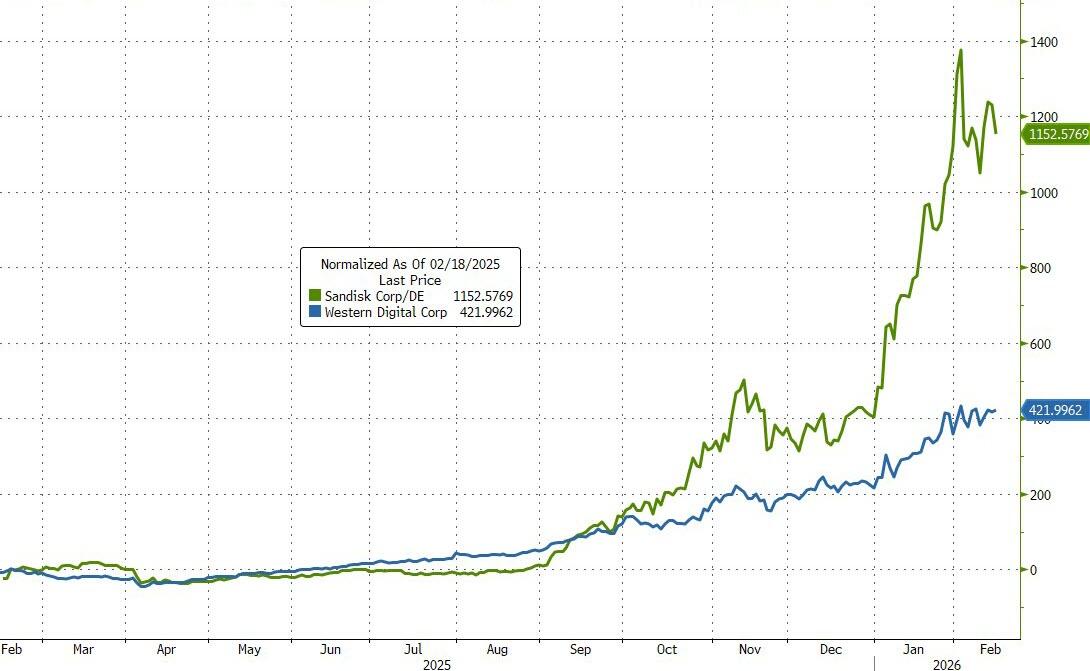
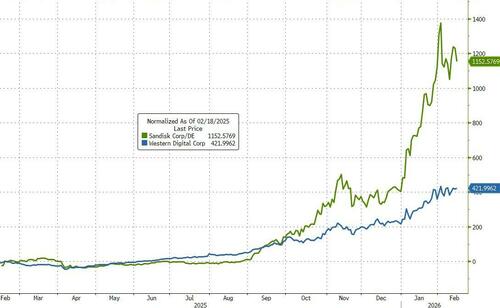
Almost exactly a year after the spinoff officially closed on Feb. 24 last year, Western Digital is seeking to raise $3.09 billion from the sale of its remaining equity stake in Sandisk.
While WDC has risen dramatically, SNDK has been on quite a tear since the spin-off…
Chief Financial Officer Kris Sennesael said on Western Digital’s quarterly earnings call Jan. 29. that the company planned to sell its remaining 7.5 million Sandisk shares before the one-year anniversary of the separation.
And so, according to a statement Sandisk launched the sale on behalf of its former parent in a statement Tuesday that didn’t disclose how many shares it would sell.
According to the statement, Western Digital is expected to exchange the SanDisk shares for debt held by affiliates of JPMorgan and Bank of America.
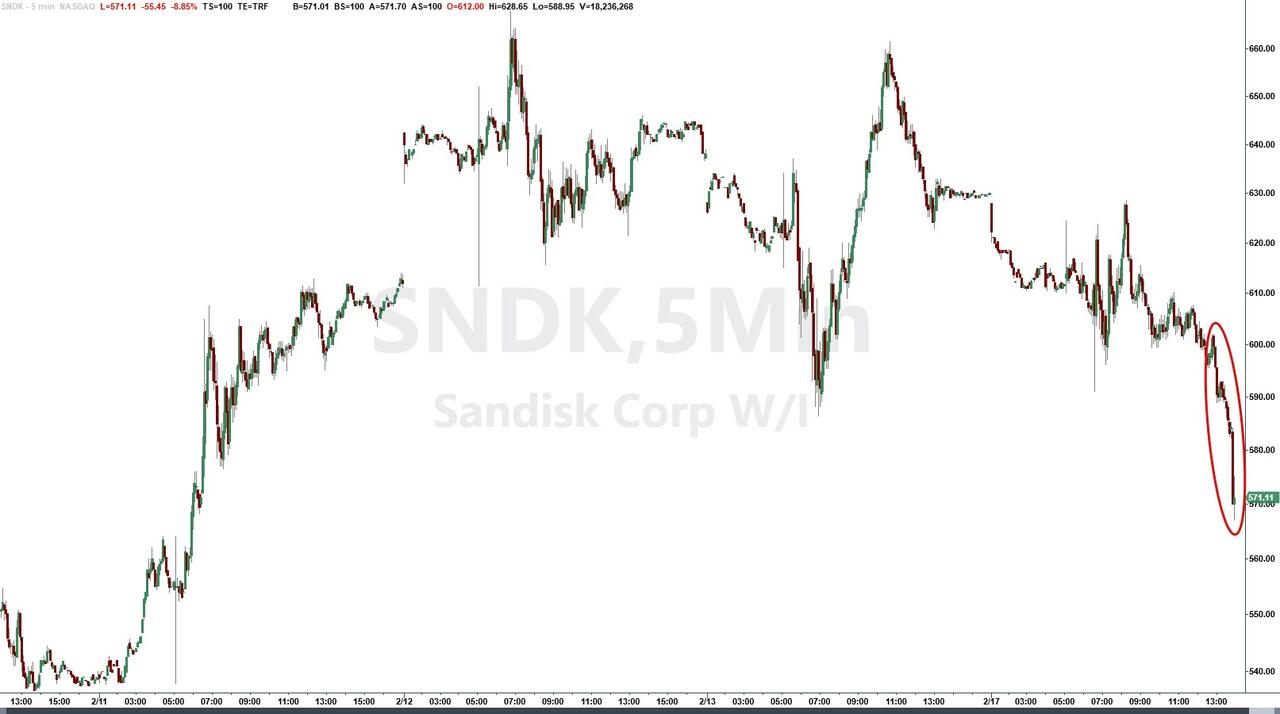
For now, WDC is flat in the after-hours trade but SNDK is down around 8%, extending the losses during the day…
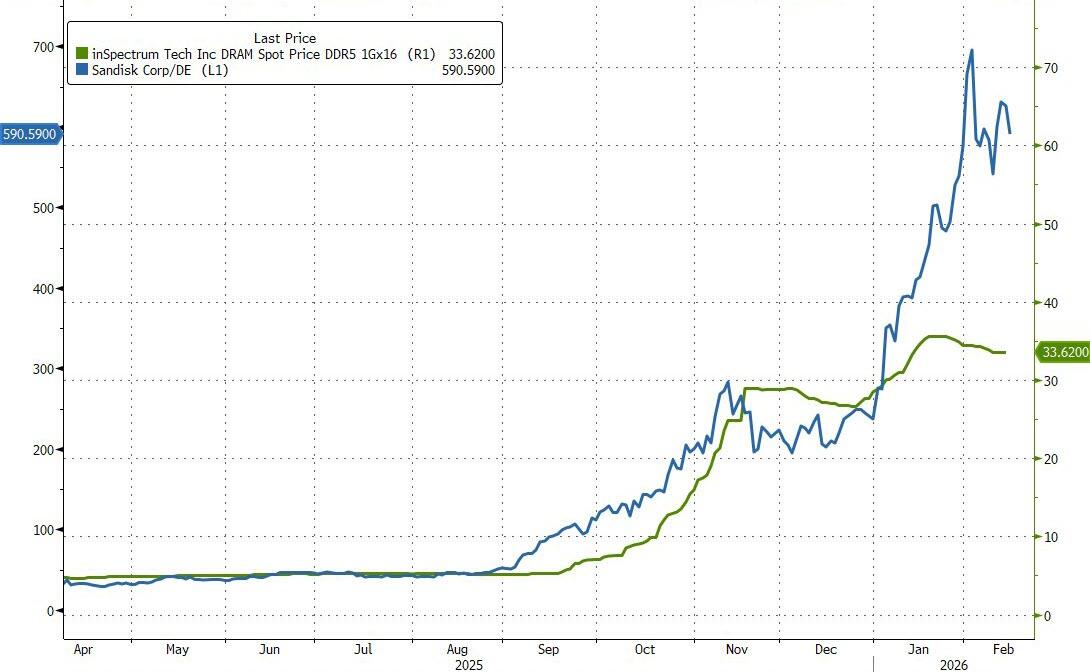
Amid a global shortage of flash memory, that has sent DRAM prices soaring since September, demand for Sandisk’s products, which are used in computers and mobile phones, has, as Bloomberg reports, been linked to the tech industry’s characteristic boom and bust cycles, keeping valuations in check.
The banks will sell the stock to the underwriters of the offering, whom they represent.
Did WDC’s decision just mark the top in the memory melt-up?
Tyler Durden
Tue, 02/17/2026 – 17:17

Cook County leaders say spring property tax bills, revenues will go out on time
Cook County Board President Toni Preckwinkle and Treasurer Maria Pappas promised Tuesday that homeowners and other property owners will receive tax bills on time this spring, and that property tax revenues will go out to local governments when they are supposed to.
The head of the county board and the official tasked with sending out tax bills made the announcement in a news release hours before Preckwinkle was set to face Democratic primary opponent Ald. Brendan Reilly in their first televised debate, where Reilly was sure to continue trying to use the county’s recent tax mess as a cudgel to criticize Preckwinkle’s leadership.
Second installment bills were months late last year. On top if it, the revenues collected from those bills took extra weeks to hit the bank accounts of the county’s thousands of taxing bodies. That cash crunch cost schools millions in lost investments and borrowing costs, officials estimated, and damaged local leaders’ trust in Pappas and Preckwinkle.
Their joint news release said “first installment” bills will be mailed out this year on March 2 and will be due April 1. Property owners will be able to start paying their bills as soon as Feb. 20 on the Treasurer’s website, according to the release.
The two pledged more certainty for those those local government agencies, offering assurances that the 2000 local agencies across the county will get their money within 30 days of bill payment.
Last year’s delay stemmed from the decade-long property tax system upgrade with Tyler Technologies, a project that has taken years longer and cost more than early projections. County taxpayers have had to shoulder tens of millions in ancillary costs for consultants and to keep older computer systems running while the upgrade continues.
This spring’s due date is a month later than usual. County leaders asked the state to give taxpayers a reprieve after the last bills, which were due December 15. Those who can’t afford the upcoming bills can pay in installments to cut down on interest costs for late payment.
The first installment bill is 55% of last year’s amount.
“No one ever looks forward to receiving a tax bill, but timely billing reflects responsible government,” their joint statement said.
https://www.chicagotribune.com/2026/02/17/cook-county-leaders-spring-property-tax-bills-on-time/

Jonathan Cannon and Sean Burke, after demotions in 2025, adjust mindset in bids for Chicago White Sox rotation
GLENDALE, Ariz. — Sean Burke and Jonathan Cannon started the first two games of the 2025 season for the Chicago White Sox.
It was the beginning of a season filled with ups and downs for the pitchers, who both were optioned to Triple-A Charlotte at different points in August before returning to the Sox in September.
The two right-handers are eager to show what they took away from all of their experiences.
“It’s how you respond,” Cannon said last week at Camelback Ranch. “Everyone in this clubhouse — everyone in any clubhouse at some point — has run into some kind of adversity, some kind of struggles on the mound.
“And you just can’t be defined by that. You’ve got to bounce back stronger. I’m looking forward to going out there and responding this year and showing everyone what I know I’m capable of.”
Photos: An inside look at Chicago White Sox spring training
Cannon went 4-10 with a 5.82 ERA in 22 appearances (17 starts) in 2025. He had 86 strikeouts and 38 walks in 103 2/3 innings.
The Sox optioned him to Charlotte on Aug. 8. He returned Sept. 4, then was optioned again the next day before rejoining the Sox on Sept. 24.
Manager Will Venable said Monday that Cannon has worked on retiring left-handed batters.
“There’s a lot of different ways that he’s able to get guys out,” Venable said. “Just want to make sure he understands what those things are. That was part of the calculus of sending him down, and he did a great job of adding, or at least rearranging, his arsenal to be able to do that.
“He had a really good offseason where he was working hard, put himself in a spot to come out here and compete for a job.”
Cannon used a portion of the offseason as a mental reset while formulating “a good plan to attack the offseason.”
“A lot of it was in the weight room,” he said. “Putting on a little bit of weight, putting on some muscle. And working on some consistency with some things on the mound.
“Ever since (Zach) Bove got hired (as the pitching coach), we’ve been in contact, going through some stuff we think can improve this year. Just pitch shapes, consistency. I’m really excited with where I’m at.”
Burke went 4-11 with a 4.22 ERA in 28 outings (22 starts) last season. He had 133 strikeouts and 63 walks in 134 1/3 innings.
The Sox optioned him to Charlotte on Aug. 18, and he returned Sept. 10.
White Sox pitcher Sean Burke speaks to catcher Korey Lee during spring training at Camelback Ranch on Tuesday, Feb. 17, 2026, in Glendale, Ariz. (Eileen T. Meslar/Chicago Tribune)
“It was a really good year for Sean, and I know the trip down to Triple A was not something that he wanted to do,” Venable said last week. “When you have the opportunity to go do those things and embrace that opportunity like Sean did, you come back with a different mindset. You come back with a skill set that’s been improved.
“You go down there, you have to really look yourself in the mirror and make some adjustments. And he did that, and to be able to go through that adversity last year and learn those tools just positioned himself to be able to fight through stuff this year, which is going to happen for every player.”
Burke has the mindset this spring of always being on the attack.
Related Articles
Cubs and White Sox players tout unity after MLBPA leader Tony Clark’s abrupt resignation
Tony Clark resigning as head of MLB players union as possible cap fight — and work stoppage — looms
What drew assistant GM Carlos Rodriguez to Chicago White Sox? ‘A lot of momentum’ heading into 2026.
Photos: An inside look at Chicago White Sox spring training
Cactus League report: Full-squad workouts begin in Arizona before Cubs and White Sox face off on Friday
“Me and (bullpen coach Matt) Wise talked about it this week, certain mindset stuff going into the game, understand who I am as a pitcher and what makes me successful,” Burke said last week. “And if I’m able to have my foot on the gas from pitch one and prepare myself mentally and physically.
“He said you want to be exhausted at the end of your outings. Having that mindset going into it this year.”
Burke and Cannon are options for the rotation in what is shaping up to be a competitive camp.
“We’ve got a lot of talent in the starting rotation, kind of throughout camp — whether it be guys who haven’t debuted yet or guys that have some major-league time,” Burke said. “It will push all of us to be better.”
Cannon also is embracing the challenge.
“All that competition is good, it brings out the best in all of us,” Cannon said. “Obviously we’re all friends, we all enjoy the competition. We all try to one-up each other on the mound, and that kind of stuff breeds a lot of success. So I’m super excited for the spring.”
https://www.chicagotribune.com/2026/02/17/chicago-white-sox-sean-burke-jonathan-cannon/

Rev. Jesse Jackson remembered as one of the ‘last great leaders’ by Chicago friends and neighbors
While Bradley Akubuiro was in a late-night meeting with Rwanda’s president and the Rev. Jesse Jackson, his phone died.
Akubuiro, then a policy advisor for Jackson’s Rainbow/PUSH Coalition, said they discussed progress made in the African country since the genocide. But, as the 2011 meeting in downtown Chicago dragged on for hours, he couldn’t reach his girlfriend, eventually missing their date.
Noticing that Akubuiro was distraught, Jackson lent him his phone and said “Well, give her a call.” When Akubuiro’s girlfriend didn’t pick up, he dialed his mom instead to give her an update.
“Rev. Jackson snatched the phone from me as soon as she had said hello and — thinking it was my girlfriend still — he said, ‘Please forgive Bradley. This is my fault,’” Akubuiro said. “He gave me back the phone and gave me this big wink and his winning smile that he always has. And he was so sure he’d solved the problem.”
“He was talking to my mother,” Akubuiro laughed.
The civil rights icon and founder of the Kenwood-based Rainbow/PUSH coalition died Tuesday morning at 84, “peacefully” and “surrounded by his family.” Jackson’s health has been in decline for years, and he recently spent weeks in the hospital for progressive supranuclear palsy, a rare neurological disorder.
Tributes from across the city and country poured in Tuesday, from across all walks of life. He was remembered for his commitment to civil rights and “generous” personality. His family, meanwhile, called Jackson in a news release a “servant leader” who championed the oppressed, voiceless and overlooked around the world.
A Baptist minister born in South Carolina, Jackson was a protege of the Rev. Martin Luther King Jr., who participated in the Selma to Montgomery marches. He continued the fight for social justice and civil rights through the coalition, and campaigned twice unsuccessfully for president. He stepped down as the president of Rainbow/PUSH in 2023.
Tribune columnist Steve Daley called him in 1990 a “political force of nature” who is both an “eloquent voice for the dispossessed and a relentless manipulator of events and issues, hopscotching from coal strike to South Africa to statehood for the District of Columbia.”
‘Very personable’
But for Junelle Speller, 51, he was her next-door neighbor on South Constance Avenue in South Shore for about a decade. Her family hosted him for barbecues and he was supportive of her three daughters. He felt like an extension of her family, Speller said.
Speller recalled how Jackson shared stories about the Civil Rights movement and his presidential campaign. She said it was surreal to live next door to someone who made such an impact and felt like Jackson was an extension of her family.
“He was absolutely wonderful,” Speller said. “Very personable, genuine, generous with his time.”
Akubuiro said he’ll remember that his “hero” made the time to care about “small things” — like a missed date — in between all the “big things” he was juggling.
“He cared about me as an individual, and I always found that to be just so moving and a model for what leadership really looks like,” the 36-year-old West Town resident said.
Akubuiro first met Jackson when he was a college student at Northwestern University, protesting in support of Roxana Saberi, a journalist who was jailed in Iran at the time, a cause Jackson also championed. He got a job at the Rainbow/PUSH coalition, where he stayed for about two years, focusing on a campaign to reduce interest rates on federal student loans.
Akubuiro, who now works in corporate communications, spent time with Jackson while he was hospitalized in November. While he did most of the talking because of Jackson’s condition, he shared how much his mentor meant to him and the confidence he instilled in him. Akubuiro thanked him for taking a chance on him when he was just 19.
“America needs his voice right now,” Akubuiro said. “We are losing a leader at a time when it’s unclear who’s going to pick up that mantle.”
Mourners gather at Jackson’s home
Outside Jackson’s home and the Rainbow/PUSH Coalition office on the South Side, mourners left cards, flowers and balloons. Carolyn Dunbar said she’d been awake since 4 a.m., processing the news of Jackson’s death. The 70-year-old University Park resident drove to the office first thing this morning, carrying flowers she picked up from Jewel-Osco.
“Once I stepped out of the car, something overcame me, like I was at a funeral,” Dunbar said.
Growing up in her mom’s home, there were three portraits hanging in the living room — King, John F. Kennedy, and Jackson, Dunbar said. Her mom was one of Jackson’s “number one fans,” Dunbar said.
“One of the last great leaders of the modern 20th century — gone. For me, it hurts like he was just in my living room, part of my family. He touched so many people,” Dunbar said, adding that it’s fitting that such an important Black figure died during Black History Month.
Dunbar said she helped out with the Southern Christian Leadership Conference’s Operation Breadbasket, a group focused on promoting economic growth for Black people that Jackson briefly led. She said young people need to understand what Jackson and others of her generation went through to push for progress.
She remembers going to a gas station as a child and not being able to use the restroom because she was Black. She had to pee behind a car or a bush.
“Our young people don’t understand what we went through just to get the vote, just to live in decent housing, just to get a decent job, a decent car,” she said. “These young people today don’t realize the shoulders that they aren’t even standing on, they’re kind of turning their backs.”
Harold Hall said he’s known Jackson since the 1960s from “picketing people who didn’t want to treat us the right way in terms of sharing the pie.” Hall said he, Jackson and others worked to keep Kenwood safe during that time.
Hall also remembered Jackson playing basketball in the neighborhood in the late ’60s to try to reach young people. He used to live a few blocks away from the Jackson home.
“I’m so hurt this morning,” Hall said. “This is hard for many of us. He was a trailblazer, and he will be missed.”
Joy Jones, a 66-year-old nurse from Roseland, also came to Jackson’s house to say thank you. Although she didn’t know him personally, she said he impacted the lives of all Americans. She stood in front of the house for a few minutes, looking up at its white walls.
Jones added that she feels confident Jackson would have been a vocal voice against President Donald Trump if he was well enough to do so. She said his activism leaves big shoes to fill.
“But they can still be filled,” Jones said. “Dr. King left big shoes, but Jesse stepped in there. He took his place, and he didn’t go down. Even to the last, he didn’t go down without fighting.”
Jackson was also known for capturing the media’s attention. Darrell Green, the owner of Pearl’s Place in the Grand Boulevard neighborhood, said Jackson loved to shake hands and smile for the cameras after sitting down for a meal in the restaurant. Green said he especially enjoyed Pearl’s fried chicken, collard greens and mac and cheese — which also happened to be a favorite of King.
Green pointed Tuesday morning to a framed black and white picture of Jackson and King side by side. Green said Jackson had personally given him that image.
“We loved him, he was a friend of ours,” Green said.
Pam Morris-Walton, a WVON radio host who has known Jackson for decades, was also working Tuesday morning at Pearl’s. In between showing off images on her phone of her with Jackson, she crafted her broadcast for Sunday.
“We’ve had a great loss,” she wrote. “We have to move on and not forget what he stood for. We got to keep living and be kind.
Freelance reporter Bob Goldsborough contributed reporting.
https://www.chicagotribune.com/2026/02/17/rev-jesse-jackson-remembered/
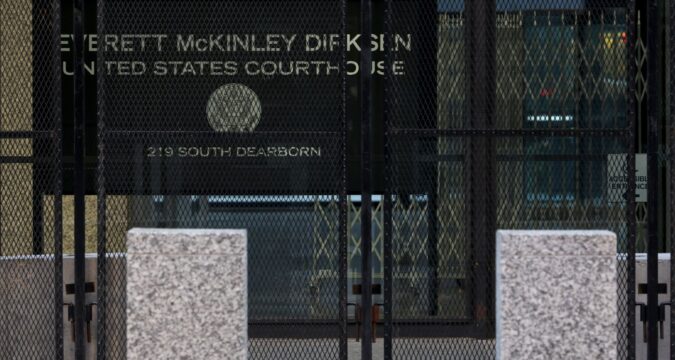
Contractor admits to bribing McCook mayor, acting as bag man for other extortion payments
A suburban contractor swept up in the corruption investigation of then-McCook Mayor Jeff Tobolski admitted in federal court Tuesday he paid bribes in exchange for contracts with the village and also acted as the mayor’s bag man for other illicit payments.
Simo “Sam” Krneta, 68, a former La Grange Park contractor who now lives in Albany, New York, pleaded guilty to a single count of filing a false tax return in 2017. Federal guidelines call for 10 to 16 months in prison, though he’s also eligible for probation.
U.S. District Judge April Perry set sentencing for Aug. 13.
The case against Krneta stemmed from a sprawling probe into corruption in Chicago’s western suburbs that brought down more than a dozen people, including Tobolski and several other suburban mayors, state legislators, political operatives and businessmen.
Krneta, formerly of Western Springs, was a friend of Tobolski’s, and his company, Renovation Associates, did many projects for the village of McCook while Tobolski was mayor.
According to his 18-page plea agreement with prosecutors, Krneta agreed to kick back 5% of any work billed to McCook to Tobolski in 2011 in exchange for the mayor’s help landing new business. Over a period of about eight years, Krneta paid Tobolski about $17,500 as part of the agreement, the plea stated.
During the same time period, Krneta also collected about $40,000 in bribe and extortion payments on Tobolski’s behalf from others doing business with McCook. Krneta kept about $16,000 of those payments for himself, the plea agreement stated.
In his 2017 tax return, Krneta reported $321,000 in net income, even though his total income, which included about $4,000 derived from criminal activity, exceeded $400,000, the plea stated.
Krneta also underreported his income on tax returns for three other years, omitting bribe payments he received for his work as a construction manager for the neighboring village of Summit, the plea stated.
As part of his plea, Krneta agreed to pay about $59,000 in restitution to the IRS and the state.
Krneta’s name first surfaced in a search warrant executed by the FBI in 2019 at village hall in McCook as part of the Tobolski investigation.
At the time, Krneta had just completed a major renovation of the Alta Grill restaurant inside the McCook Athletic & Exposition Center facility, also known as The Max. The FBI search warrant sought checks and other evidence regarding The Max project, as well as information about a “Latino Nights” event held there, records showed.
Krneta was not charged at the time.
Tobolski, meanwhile, pleaded guilty in September 2020 to conspiring with McCook’s then-police chief, Mario DePasquale, to extort a restaurant owner at The Max who needed permission to host events serving alcohol on village-owned property. At the time, Tobolski doubled as McCook’s liquor commissioner.
In all, Tobolski, who was also a Cook County commissioner, admitted to accepting more than a quarter of a million dollars in bribes or extortion payments over the years. He also was showered with a variety of other benefits, including cash, cigars, dinners, holiday gifts, sporting event tickets and free air-conditioning units, which an unidentified developer installed at Tobolski’s home at a cost of $18,000.
Tobolski was sentenced earlier this year to four years in prison and had been set to report in January. He fell ill in October, however, and died in November, two days after the charges against Krneta were brought.
jmeisner@chicagotribune.com
https://www.chicagotribune.com/2026/02/17/mccook-mayor-bribes-sam-krneta/

Coguionista nominado al Oscar de “Un simple accidente” sale de prisión en Irán
Por JAKE COYLE
Mehdi Mahmoudian, el coguionista nominado al Óscar de “Yek tasadef sadeh” (“Un simple accidente”), ha sido liberado de una prisión iraní 17 días después de su detención, según informes de medios locales.
Mahmoudian fue arrestado en Teherán poco después de firmar una declaración en la que se condenaba al líder de la República Islámica, el ayatolá Ali Jamenei, y la violenta represión del régimen contra los manifestantes. Fue liberado el martes de la prisión de Nowshahr, junto con otros dos firmantes de la declaración, Vida Rabbani y Abdollah Momeni.
No se conocían de inmediato más detalles sobre los cargos contra Mahmoudian. Los tres fueron liberados bajo fianza.
Mahmoudian está nominado a mejor guion original en los Premios de la Academia, junto con Nader Saeivar, Shadmehr Rastin y el director Jafar Panahi. La película, un drama de venganza inspirado en el propio tiempo de Panahi en la cárcel, también está nominada a mejor largometraje internacional, como candidatura presentada por Francia.
Panahi afirmó en un comunicado el martes: “Mehdi Mahmoudian, Vida Rabbani y Abdollah Momeni ejercieron pacíficamente su derecho a expresar sus opiniones, pero el régimen respondió acusándolos de ‘insultar al Líder Supremo’ y de ‘propaganda contra la República Islámica’”. “Durante años, este tipo de cargos se han utilizado como herramientas para criminalizar el pensamiento, silenciar las críticas e infundir miedo en la sociedad. Convertir un acto civil y pacífico en un caso de seguridad nacional es una señal clara de intolerancia hacia las voces independientes de los ciudadanos”.
Mahmoudian, escritor y activista político, ya había sido encarcelado en múltiples ocasiones, incluida una condena de cinco años que terminó en 2014 por cargos de “motín contra el régimen”. Panahi, quien también ha sido encarcelado y sometido a arresto domiciliario por el régimen de la República Islámica, lo conoció por primera vez en prisión.
Miles de personas murieron en las protestas nacionales del mes pasado en Irán. La presión internacional ha aumentado por la represión del régimen contra los manifestantes, incluida una protesta masiva celebrada el fin de semana en Múnich. El presidente de Estados Unidos, Donald Trump, dijo el viernes que un cambio de régimen en Irán “sería lo mejor que podría pasar”.
Obama Says Aliens Exist But Are Not Kept In Area 51
Obama Says Aliens Exist But Are Not Kept In Area 51
Authored by Rachel Roberts via The Epoch Times,
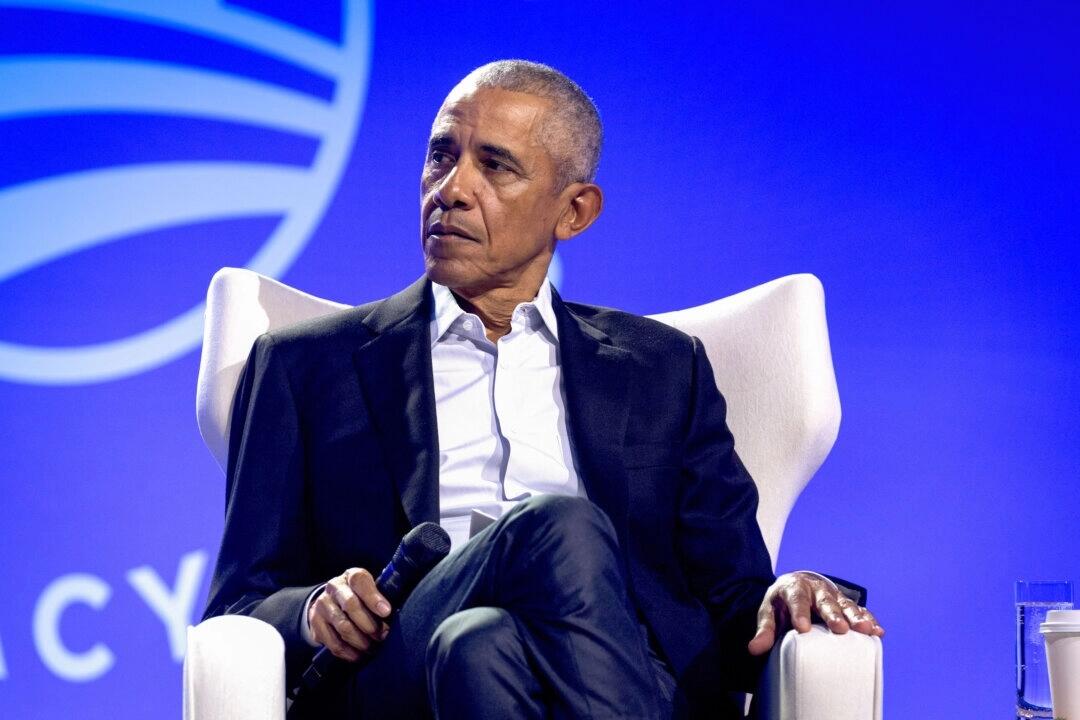
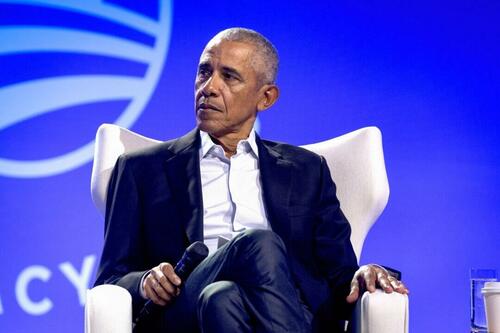
Former U.S. President Barack Obama said in a Feb. 14 podcast interview that aliens are real but that none are kept at the secretive Area 51 military base in the Nevada desert, later adding that he didn’t see any evidence indicating that extraterrestrials have contacted Earth during his presidency.
In the interview, when asked, “Are aliens real?” Obama replied, “They’re real, but I haven’t seen them—and they’re not being kept in [Area 51]. There’s no underground facility, unless there’s this enormous conspiracy and they hid it from the president of the United States.”
Obama became the first leader of the United States to affirm the existence of extraterrestrial life when questioned by progressive podcaster Brian Tyler Cohen in a video posted on YouTube.
After the interview went viral, Obama said on Instagram that he wanted to “clarify” his comments to Cohen, writing that he was “trying to stick with the spirit of the speed round” while speaking on the podcast.
“Statistically, the universe is so vast that the odds are good there’s life out there,” he wrote. “But the distances between solar systems are so great that the chances we’ve been visited by aliens is low, and I saw no evidence during my presidency that extraterrestrials have made contact with us. Really!”
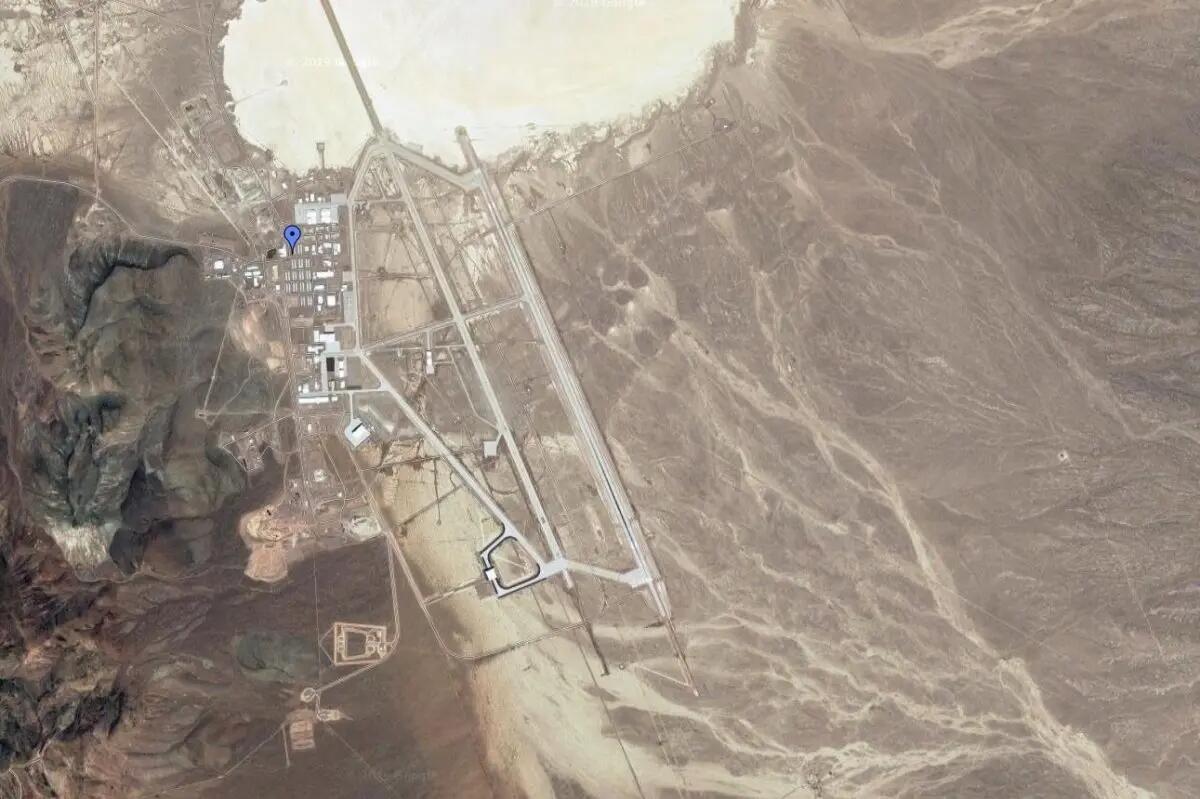
In 2013, Obama was possibly the first U.S. leader to acknowledge the existence of Area 51, an Air Force base built during the Cold War, which has long been rumored to house extraterrestrials and unidentified flying objects (UFOs).
Cohen did not ask Obama a follow-up question on the issue. Instead, he asked the former president what his first question had been upon entering the White House. “Where are the aliens?” Obama joked in response.
Some critics, including British political commentator Calvin Robinson, said Cohen should have asked Obama for more information about aliens.
“When a former President of the United States says on the record there are aliens, YOU FOLLOW UP WITH RELEVANT QUESTIONS. You do not continue reading from your script,” he wrote on X.
The U.S. government first acknowledged Area 51’s existence in 2013 through a Freedom of Information request and has declassified documents detailing its history and purpose. The base has been a testing ground for a host of top-secret aircraft, including the U-2 in the 1950s and later the F-117 stealth fighter.
Trump Admin on Aliens
President Donald Trump has expressed skepticism about the existence of aliens, while acknowledging that “anything is possible.”
Trump addressed the subject in several media appearances during the 2024 presidential campaign. On a podcast with Lex Fridman, Trump said he would consider pushing the Pentagon to release additional UFO footage that many believe is classified.
“Oh yeah, sure, I’ll do that. I would do that. I’d love to do that,” Trump said, noting that public pressure to disclose records relating to UFOs is similar to that surrounding the John F. Kennedy assassination.
On Logan Paul’s “Impaulsive” podcast in June 2025, Trump said, “Am I a believer? No, I can’t say I am.”
“But I have met with people, serious people, that say there’s some really strange things flying around out there.”
Trump added that given the size of the universe, “Why wouldn’t there be something, somebody?”
Vice President JD Vance has expressed his personal enthusiasm, telling the “Ruthless” podcast in August 2025 that he is “obsessed with the whole UFO thing.”
“What’s actually going on? What were those videos all about? What’s actually happening?” Vance probed.
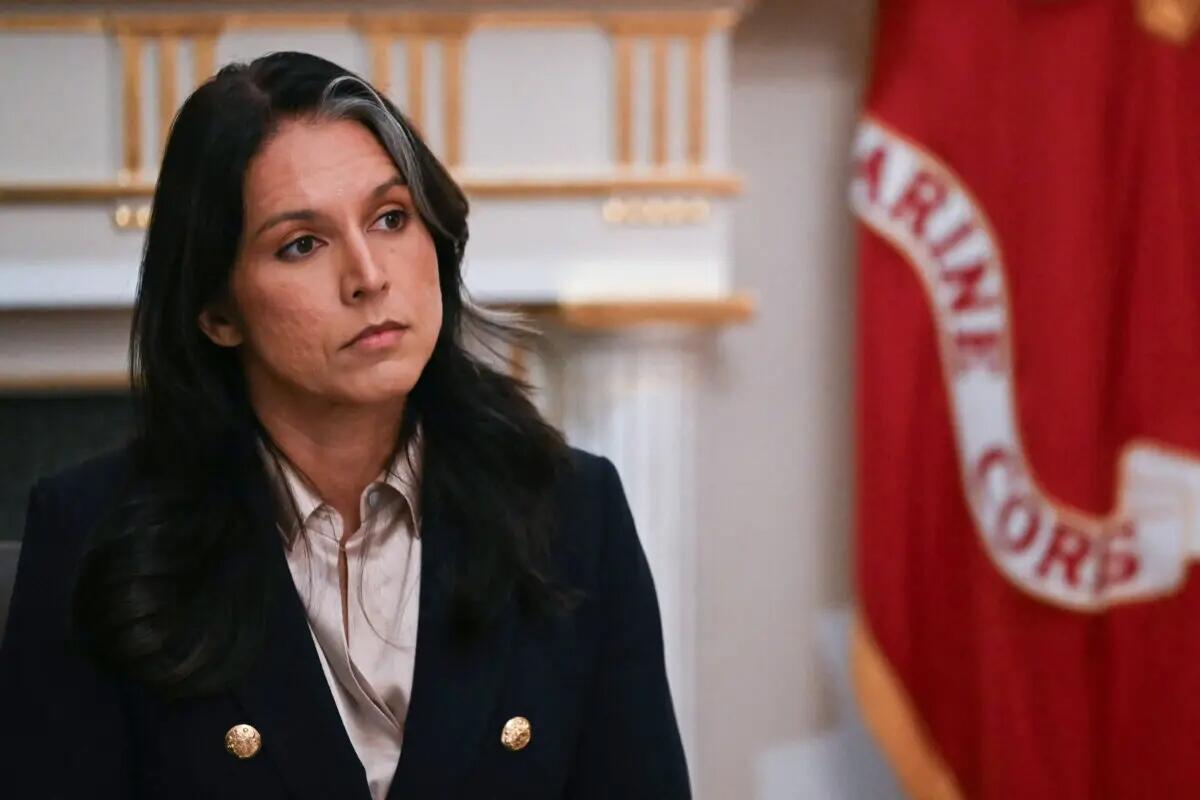
Director of National Intelligence Tulsi Gabbard said last August that she believes aliens may exist and that the U.S. government holds classified information on the subject.
Director of National Intelligence Tulsi Gabbard in Washington on Dec. 2, 2025. Andrew Caballero-Reynolds/AFP via Getty Images
Gabbard pledged to share disclosures from ongoing investigations into UFOs amid growing discussion of the phenomena at the highest levels of government.
Pentagon Cases Unresolved
The Pentagon’s All-domain Anomaly Resolution Office (AARO) continues to investigate more than 1,600 reports of “unidentified aerial phenomena,” an official term that has largely replaced “UFOs.”
At a Senate Armed Services Committee hearing in November 2024, AARO’s director, Jon T. Kosloski, detailed cases the military believes it has solved—such as the widely circulated 2016 “GOFAST” video, now thought to show an object flying at 13,000 feet rather than right above the water—as well as other incidents which have so far defied explanation.
Previous presidents, including Bill Clinton and Jimmy Carter, have discussed their curiosity about alien life without confirming a belief in it.
Carter reported that he saw an unidentified bright object in the sky when he was governor of Georgia in 1969, although he later said it was likely a natural phenomenon.
A view of Area 51. Google Maps/Screenshot via The Epoch Times
Clinton said that he was curious about the possibility of extraterrestrial life and that he had asked aides to look into both Area 51 and the Roswell incident of 1947, which gave rise to much speculation about a government cover-up. After Air Force personnel recovered metallic and rubber debris near Roswell, New Mexico, the U.S. Army Air Forces announced that they were in possession of a “flying disc” before retracting the statement within a day.
Clinton said he was told there was no evidence of alien life in connection with the incident. In 1995, he joked about the Roswell incident, saying, “If the U.S. Air Force did recover any alien bodies, they didn’t tell me about it.”
The American public is increasingly convinced that aliens exist and have visited Earth, according to recent polls. More than half (56 percent) of Americans believe extraterrestrials definitely or probably exist, according to a 2025 YouGov poll.
Democrat (61 percent) and Independent (59 percent) voters are more likely than Republicans (46 percent) to believe aliens exist, with 73 percent of Americans believing the government would hide evidence of UFOs if it had any, and just 13 percent thinking it would be transparent, according to the same survey.
Tyler Durden
Tue, 02/17/2026 – 17:00
https://www.zerohedge.com/technology/obama-says-aliens-exist-are-not-kept-area-51