Category: News

Judge Orders ICE Not To Re-Detain Abrego Garcia
Judge Orders ICE Not To Re-Detain Abrego Garcia
Authored by Matthew Vadum via The Epoch Times,
A federal judge has blocked U.S. Customs and Immigration Enforcement (ICE) from re-arresting Kilmar Abrego Garcia, one of the men at the center of the Trump administration’s deportation battles.
The Salvadoran national’s case attracted attention across the country, including widespread protests, after the federal government detained him in March 2025 and shipped him to El Salvador’s maximum security prison, the Terrorism Confinement Center, along with an airplane full of other deportees.
He was later returned to the United States, where he has had long-running legal battles with the administration.
U.S. District Judge Paula Xinis, who ordered the administration to facilitate Abrego Garcia’s return last year, ruled on Feb. 17 that he cannot be deported again because the federal government has not presented a feasible plan for removing him from the country.
The judge said that despite releasing Abrego Garcia, the government appeared to be making plans to re-detain him, so Abrego Garcia filed an emergency motion for a temporary restraining order to prevent being re-detained.
The court previously granted the requested order.
In the new order, the court granted Abrego Garcia’s request to upgrade the temporary restraining order to an injunction to prevent him from being re-detained.
Abrego Garcia, who entered the United States illegally more than a decade ago, had been living in Maryland when federal agents arrested him.
The U.S. Department of Homeland Security takes the position that Abrego Garcia is a “violent criminal illegal alien, and MS-13 gang member,” who “belongs behind bars and off American soil.”
Abrego Garcia, who is facing separate criminal charges, denies being a member of MS-13, which has been designated a terrorist organization.
Xinis previously ordered his release on Dec. 11, 2025, finding that because the federal government had never issued a final order of removal against him, it could not detain him in order to force him from the country.
The government said in a brief last month that Abrego Garcia may be detained because an immigration judge issued an order of removal on Dec. 11, 2025, that became final on Jan. 13 of this year.
Detention after that order “does not require that the country of removal be certain in order for detention to be lawful,” the brief said.
The judge suggested the federal government is not serious about removing Abrego Garcia from the United States.
Since he secured release from criminal custody in August 2025, the government has “made one empty threat after another to remove him to countries in Africa with no real chance of success,” she said.
The judge said that, given the federal government’s maneuvering in the case, it was doubtful that Abrego Garcia would be deported in the “reasonably foreseeable future,” so he may not be re-arrested or put into immigration detention.
“Respondents have done nothing to show that Abrego Garcia’s continued detention in ICE custody is consistent with due process,” Xinis said.
In April 2025, Xinis had ordered that Abrego Garcia be returned to the United States from the prison in El Salvador.
The same month, the Supreme Court ordered that the federal government take steps to bring him back to the United States.
The government of El Salvador cooperated, and Abrego Garcia was returned to the United States in June 2025.
At the same time, Abrego Garcia is currently facing federal criminal charges in Tennessee related to the alleged unlawful transportation of undocumented aliens.
He has entered not guilty pleas to the charges.
The May 2025 indictment brought against Abrego Garcia alleges that he “conspired to bring undocumented aliens to the United States from countries such as Guatemala, El Salvador, Honduras, Ecuador, and elsewhere, ultimately passing through Mexico before crossing into Texas.”
It alleges that Abrego Garcia and his co-conspirators obtained financial payments from the undocumented individuals for unlawfully transporting them into and around the United States.
The indictment also alleges Abrego Garcia was “a member and associate of the transnational criminal organization … [known as] MS-13,” which it describes as “a criminal enterprise engaged in … acts and threats involving murder, extortion, narcotics trafficking, firearms trafficking, alien smuggling, and money laundering.”
Abrego Garcia “used his status in MS-13 to further his criminal activity” over the life of the criminal conspiracy during which he and co-conspirators “knowingly and unlawfully transported thousands of undocumented aliens … many of whom were MS-13 members and associates,” according to the indictment.
Abrego Garcia’s attorneys have called the case “baseless.”
“There’s no way a jury is going to see the evidence and agree that this sheet metal worker is the leader of an international MS-13 smuggling conspiracy,” attorney Simon Sandoval-Moshenberg said.
The Epoch Times reached out for comment to the U.S. Department of Justice, which represents federal agencies in court. No reply had been received as of publication time.
Tyler Durden
Tue, 02/17/2026 – 20:55
https://www.zerohedge.com/political/judge-orders-ice-not-re-detain-abrego-garcia

Trump administration’s latest funding threat: $128 million withheld in highway dollars
President Donald Trump’s administration — which within the last year has frozen or rescinded more than $2 billion in funds for Illinois infrastructure projects — is threatening to withhold even more money from the Land of Lincoln, this time in federal highway dollars.
The U.S. Department of Transportation said Tuesday that it was threatening to withhold $128 million in highway funds because a federal audit had revealed illegally issued commercial drivers licenses in Illinois.
The Illinois Secretary of State’s office, however, said in a statement it “believes its CDL issuance policies and practices are substantially compliant” with federal requirements “and will not justify cutting federal highway funding.”
In a letter to Gov. JB Pritzker and Kevin Duesterhaus, the Secretary of State’s director of driver services, the Trump administration said its CDL audit had revealed the state had issued CDLs that extended beyond the expiration of the drivers’ permission to remain in the country. The feds also accused Illinois of issuing nondomiciled CDLs without providing evidence it had verified the drivers’ permission to be in the U.S.
The feds have previously threatened to withhold federal dollars from other states, including New York and Minnesota, over similar alleged issues.
Nondomiciled commercial drivers licenses are issued to people with permission to be in the U.S., but who are not citizens or permanent residents, according to the Illinois Secretary of State’s office.
The Transportation Department’s Federal Motor Carrier Safety Administration is giving Illinois 30 days to respond by either demonstrating that it’s taking “corrective action” — including by pausing issuing new nondomiciled commercial drivers licenses and voiding all noncompliant CDLs — or by arguing that the federal agency’s findings are incorrect.
On Tuesday, the Secretary of State’s office said it had already paused issuing nondomiciled CDLs, as have other states, following an FMCSA rule change regarding those licenses in September.
When defending its compliance with federal regulations, the Secretary of State’s office said it believed that the FMCSA was not recognizing that nondomiciled CDL holders in its audit had been granted extensions of their work authorizations.
If the federal agency ultimately determines the state to be out of compliance, it could withhold the federal highway funds or even decertify the state’s CDL program, the letter from FMCSA Administrator Derek Barrs threatens.
“The last administration looked the other way as states blatantly defied federal laws when unlawfully issuing licenses to foreign drivers,” Barrs said in a statement Tuesday. “(Transportation) Secretary (Sean) Duffy and I will be relentless in our agenda to reinstate commonsense safety standards that protect our truckers and American families.”
The Trump administration has repeatedly rescinded, frozen or threatened to withhold transportation dollars in Illinois, giving a variety of stated rationales, including diversity practices in contracting, safety issues on the CTA and unspecified “fraud.”
Within the last six months, the feds have frozen almost $2 billion in federal grant money for the Chicago Transit Authority’s long-planned Red Line Extension. The Federal Transit Administration has threatened to withhold another $50 million from the CTA over safety concerns and most recently rescinded a $100 million grant for electric vehicle chargers that was set to go to the Illinois Environmental Protection Agency.
It’s not the first time the feds have targeted dollars related to commercial drivers licenses specifically; earlier this month, the White House said it was rescinding a $3.6 million grant that the secretary of state’s office said was meant to fund various priorities related to CDLs, including studying the prevention of traffic crashes and fatalities related to large trucks and buses; implementing a new test proctoring program that would mitigate fraud on the written CDL exam; and translating the written CDL exam into Spanish.
Secretary of State Alexi Giannoulias slammed those cuts in a news release Tuesday, calling them illegal.
“The Trump administration is trying to cut funding for improving road safety, preventing crashes and saving lives in Illinois,” Giannoulias said in a statement. “Attempts to cut this critical funding for political purposes is not only vindictive and irresponsible, but illegal.”
Giannoulias also criticized the FMCSA’s September rule change — which has been challenged in court — that limited those eligible for nondomiciled CDLs, citing concerns from Illinois farmers and truckers regarding the pause on new nondomicile CDLs.
“The funding cuts come at a time when the actions of FMCSA have already wreaked havoc on state CDL programs throughout the country,” Giannoulias said.
A representative for the governor’s office did not immediately comment Tuesday.

Buehler firma con Padres tras larga carrera con Dodgers, su rival del Oeste de la Nacional
Associated Press
PEORIA, Arizona, EE.UU. (AP) — El lanzador derecho Walker Buehler ha firmado con los Padres de San Diego después de pasar las primeras ocho temporadas de su carrera en las Grandes Ligas con sus archirrivales, los Dodgers de Los Ángeles.
Buehler estuvo en el clubhouse de los Padres la mañana del martes después de suscribir un contrato de ligas menores con invitación al campamento de Grandes Ligas.
“Sí, se siente un poco raro”, reconoció Buehler al hablar con los reporteros en Arizona, tras ponerse un uniforme marrón y dorado: “Me imagino que hace cinco años se habría sentido mucho más raro, pero este es un deporte loco y esta es una gran oportunidad para mí”.
Buehler, de 31 años, dijo que intentará llegar al primer equipo y contribuir de cualquier manera que pueda.
“Soy abridor, y quiero abrir, así que estoy aquí para intentar ganarme un lugar en la rotación”.
Buehler pasó la temporada pasada con Boston y Filadelfia, que lo firmó a finales de agosto después de que los Medias Rojas lo dejaron en libertad. Tuvo dificultades en Boston, pero se vio lo suficientemente bien durante su breve etapa con los Filis como para generar interés de los Padres y de otros equipos.
“Allá lancé bien, y recuperar la velocidad, así como la mecánica, ha sido lo más importante. La segunda mitad del año pasado fue relativamente exitosa en comparación con la primera mitad, y hay cosas sobre las que queremos seguir construyendo”, explicó Buehler.
Buehler fue seleccionado dos veces al Juego de Estrellas y ganó dos anillos de la Serie Mundial durante sus 10 años en la organización de los Dodgers, siendo un pilar de su rotación cuando estuvo sano y, a menudo, luciendo como uno de los mejores abridores de las mayores. En particular, ha sido muy bueno contra los Padres a lo largo de su carrera, con marca de 7-1, efectividad de 1,67 y 83 ponches en 13 aperturas.
Ganó el tercer juego de la Serie Mundial de 2024 antes de apuntarse el salvamento en la victoria de los Dodgers en el quinto y decisivo encuentro en el Yankee Stadium, coronando su regreso con un desempeño aguerrido en el Clásico de Otoño. Se había perdido toda la temporada 2023 y grandes tramos de 2024 mientras se recuperaba de su segunda cirugía Tommy John.
Pero esa memorable entrada como relevista en el quinto juego para preservar una victoria de 7-6 sobre los Yankees fue su última aparición con los Dodgers, que permitieron que Buehler se marchara como agente libre para firmar un lucrativo contrato con Boston. Tras un año turbulento en la Costa Este, está ansioso por volver a la División Oeste de la Liga Nacional con los Padres, que tienen dos vacantes en su rotación.
“Obviamente hay cierta familiaridad con la división, y vivir en el sur de California es algo a lo que mi familia y yo estamos acostumbrados. Es una buena oportunidad para ser parte de un club con mucho talento. Tengo ganas de ver qué podemos hacer con esto”, señaló Buehler.
Nick Pivetta, Joe Musgrove y Michael King ya tienen puestos en la rotación de San Diego. Buehler competirá por los dos últimos lugares con el dominicano Randy Vásquez y JP Sears, quienes vuelven, y con los recién firmados Griffin Canning y el venezolano Germán Márquez.
Buehler dijo que se mudó al Oeste tras la campaña anterior a fin de prepararse para otro intento de volver a las Grandes Ligas.
“Puse mi cuerpo en un lugar un poco mejor”, aseveró
Buehler indicó que su mecánica está volviendo al nivel y a la forma que tuvo durante sus primeras seis temporadas en las Grandes Ligas con los Dodgers antes de la cirugía de codo.
“Mi codo y mi cuerpo han pasado por algunas cosas”, manifestó.
Los Padres han estado notablemente activos durante la última semana después de hacer poco en el invierno para reforzar el roster de un equipo que ganó 90 juegos y llegó a la postemporada por cuarta vez en seis años.
El gerente general A.J. Preller firmó al bateador de poder Nick Castellanos, junto con Canning y Márquez, durante el fin de semana, después de incorporar al dominicano Miguel Andújar una semana antes.
Preller también acordó una extensión de contrato, manteniendo al segundo jefe de operaciones de béisbol con más antigüedad en las mayores con San Diego durante el probable proceso de venta del club.
Buehler tiene marca de 57-29, efectividad de 3,52 y un WHIP de 1,15 a lo largo de su década en las Grandes Ligas. Ha superado los 150 ponches en tres ocasiones.
___
Deportes en español AP: https://apnews.com/hub/deportes
Steam Deck Handheld Gaming PC “May Be Out-Of-Stock” As Great Memory Crunch Deepens
Steam Deck Handheld Gaming PC “May Be Out-Of-Stock” As Great Memory Crunch Deepens
The high-bandwidth memory (HBM) crunch is finally being noticed by mainstream consumers. It’s not just soaring HBM prices; the availability of certain consumer electronics is now being affected.
Valve’s popular handheld gaming PC is reportedly out of stock in some regions – an early warning that other consumer electronics may soon face similar disruptions.
“Note: Steam Deck OLED may be out-of-stock intermittently in some regions due to memory and storage shortages. Steam Deck LCD 256GB is no longer in production, and once sold out will no longer be available,” a new note Valve added to their sales page, according to tech blog Rock Paper Shotgun’s Mark Warren.
Valve added a note to clarify that all Steam Decks are currently out of stock due to shortages of memory and storage. It doesn’t look good for Steam Machines… pic.twitter.com/7JiW4qtNzf
— Gabe Follower (@gabefollower) February 17, 2026
The Steam Deck OLED has become one of the first consumer electronic devices to feel the effects of the memory crunch, driven by surging demand for AI data centers. We have warned for months that this moment was coming and recently cited industry insiders urging consumers to bring forward purchases: “If you want to buy any consumer goods, PCs, or smartphones, do it now,” because memory chips are becoming scarce.
Related:
Memory Shortage Fears Spread, Raising Alarm At Qualcomm And Arm
Goldman’s Allen Chang recently revised his global PC shipment forecast lower for 2026-2028 due to the HBM crunch.
Chang warned clients, “The memory shortage is real and accelerating due to AI infrastructure demand, leaving a significant shortage for the conventional side of the industry. Think smartphones, PCs, and other consumer electronics that require high-bandwidth memory…”
Earlier this month, Goldman analyst Katherine Murphy told clients the memory crunch will likely persist for roughly two years and is “reminiscent of the Covid-19 era” shortages.
Murphy warned it’s not just memory chips; she said the entire data center buildout supply chain is becoming increasingly snarled. Read her full note here for a rundown of what’s already running tight.
Tyler Durden
Tue, 02/17/2026 – 20:30
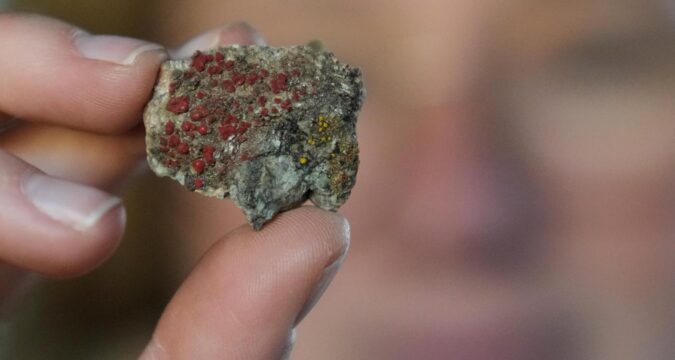
Aficionados del estudio de los hongos ayudan a científicos a conocerlos mejor
Por DORANY PINEDA
ANGWIN, California, EE.UU. (AP) — Jessica Allen caminaba entre las hojas caídas de los árboles de manzanita en busca de algo que pocos han visto: un cúmulo amarillento de hongos manzanita —un hongo amarillo raro y poco conocido que, hasta ahora, sólo ha sido encontrado en las costas occidentales de América del Norte—.
Fue visto por última vez aquí, en el condado de Napa, California, hace dos años, y Allen, una micóloga —científica especializada en hongos—, estaba ansiosa por encontrarlo. Pero en cuestión de minutos, otra cosa llamó su atención. Se arrodilló, miró a través de una lupa y observó de cerca una roca: líquenes —que son un tipo de hongo— rebosantes de formas, texturas y colores deslumbrantes.
“¡Es tan fácil distraerse, pero (es que) hay tantos líquenes!”, dijo emocionada.
“Esa fue una buena roca”, dijo la ecologista Jesse Miller, presidenta de la Sociedad de Líquenes de California.
“OK, ¡vamos a buscar hongos!”, exclamó.
Allen y Miller están fascinadas por lo que describen como el maravilloso y místico mundo del reino Fungi —el de los hongos—, y forman parte de una creciente comunidad que trabaja para protegerlos.
Casi todas las formas de vida dependen de los aproximadamente 2,5 millones de especies de hongos que existen en la Tierra, y estos contribuyen con aproximadamente 54 billones de dólares anuales a la economía mundial en forma de alimento, medicina y más, según un estudio publicado en la revista científica Springer Nature. A pesar de su papel esencial, los esfuerzos de conservación los han ignorado en gran medida aunque enfrentan crecientes amenazas debido a la contaminación, la pérdida de hábitat y el cambio climático. Esto ha cambiado en la última década gracias, en parte, a la ciencia ciudadana y a una mayor comprensión de la diversidad de los hongos.
“Es un momento muy emocionante para la conservación de los hongos”, expresó Allen, micóloga de NatureServe, un centro de datos sobre biodiversidad a lo largo de buena parte de América del Norte. En esa capacidad, Allen ayuda a acelerar y apoyar la conservación de los hongos en Estados Unidos y Canadá.
Investigadores aficionados desempeñan un papel clave en la conservación
Los hongos no son plantas ni animales. Son un enorme reino de formas de vida que incluye las levaduras (esenciales para los panes, los quesos y el alcohol), los mohos (la sustancia vellosa de las frutas olvidadas), los líquenes (una simbiosis de hongos y algas o cianobacterias) y las setas (que van desde las comestibles hasta las psicodélicas y las que resultan mortales). Se encuentran entre los principales agentes de conexión y descomposición del planeta. Los bosques los necesitan, y muchos animales dependen de ellos para alimentarse y anidar.
Los humanos hemos obtenido medicamentos —como la penicilina— a partir de los hongos. Algunos se utilizan como material de construcción o pueden almacenar carbono, un factor en el calentamiento global. Pero los científicos sólo han documentado unas 155.000 especies —alrededor del 6% de los millones que creen que existen—.
La conservación comienza por saber qué especies hay, dónde están, cómo se encuentran y cuáles son sus amenazas, lo cual requiere presencia sobre el terreno para que los conservacionistas evalúen las especies en peligro y dónde destinar recursos.
Ahí es donde grupos como la Sociedad de Líquenes de California entran en juego.
“Suelen ser las personas que hacen los descubrimientos más importantes, y son quienes vigilarán esas especies raras a lo largo del tiempo”, comentó Allen.
En un día frío reciente, decenas de botánicos especialistas en líquenes y aficionados a los líquenes se dispersaron por una reserva para observar de cerca rocas y árboles. Estas incursiones anuales son en parte búsqueda del tesoro, en parte excursión para recopilar datos y en parte senderismo por la naturaleza —aunque los exploradores no suelen llegar muy lejos—.
Cada liquen polvoriento, frondoso o ramificado es una invitación a un mundo en miniatura donde abundan los “¡Wow!”, “¡¿Qué demonios?!” y “¡Dios mío!”.
Como lo expresó el químico Larry Cool: “Los liquenólogos son pésimos compañeros de senderismo” porque todo el tiempo se detienen a observar.
El interés de Cool por los líquenes se remonta 53 años atrás, al día en que descubrió que se pueden usar como pigmentos naturales. “Los líquenes son más que la suma de sus partes y son misteriosamente impredecibles”, dijo. “Disfruto mucho viendo la increíble variedad de la creación”.
Ken Kellman también es un liquenólogo amateur, pero uno no se daría cuenta de ello debido a su inmenso conocimiento. Siendo un reparador de aire acondicionado y calefacción ya jubilado, se ha apasionado por ellos desde hace 10 años y ha aprendido tanto por su cuenta como de sus amigos. Esa obsesión ha ayudado a los científicos a descubrir la biodiversidad en Santa Cruz, California, su ciudad natal.
“Simplemente mantiene tu cerebro en ese estado en el que dices: ‘¡Wow!’ todo el tiempo. ’¡Qué genial!’. Y ese es el lugar que más me gusta para mi mente”, agregó.
Conservación de hongos en EEUU “todavía está muy rezagada”
Gregory Mueller ha dedicado gran parte de su carrera a la conservación de hongos. Como copresidente del comité de conservación de hongos de la Unión Internacional para la Conservación de la Naturaleza (UICN), coordina todas las actividades para la protección de hongos a lo largo de su red global.
Según la Lista Roja de la UICN de Especies Amenazadas, 411 de las 1.300 especies de hongos evaluados en todo el mundo están en peligro de extinción. Algunas partes de Europa y otros lugares se han centrado en la conservación de hongos desde hace décadas, pero en Estados Unidos “todavía está muy rezagada”, dijo Mueller. Sólo dos especies de hongos —ambas líquenes— están protegidas por la Ley de Especies en Peligro de Extinción —que es federal—, mientras que algunos estados como California cuentan con protecciones legales, y otros, como Nueva Jersey, las han incluido en sus planes de conservación.
Esto ya cambia, aunque lentamente, en parte gracias al aumento de las iniciativas de ciencia comunitaria en Estados Unidos y en el extranjero.
“Hay muchos micólogos aficionados… que documentan (hongos) con fotografías, publican sus imágenes en iNaturalist y en nuestro Mushroom Observer. Y hemos podido utilizar esos datos para documentar mejor la diversidad fúngica”, señaló. “Estamos empezando a tener una idea de qué especies podrían estar en problemas”.
Científicos aún están aprendiendo sobre los hongos y las amenazas que enfrentan
La mayoría de los hongos pasan desapercibidos: viven casi toda su vida ocultos como una vasta red filamentosa llamada micelio, y producen la parte visible —el llamado cuerpo fructífero— sólo cuando las condiciones son las adecuadas.
Esa es una de las principales razones por las que sabemos tan poco sobre ellos, manifestó Nora Dunkirk, botánica y micóloga del Instituto de Recursos Naturales de la Universidad Estatal de Portland, quien trabaja para documentar especies vulnerables de plantas y de hongos para contribuir a los esfuerzos de conservación.
Entre sus mayores amenazas se encuentra el cambio climático. Los cambios en los patrones de lluvia, el aumento de las temperaturas y el agravamiento de los incendios forestales pueden arrasar con ellos o perturbar la delicada relación entre los bosques y los hongos beneficiosos. Los periodos prolongados de inundaciones los privan del oxígeno que necesitan. La tala, el desarrollo urbano, los insectos invasores y la contaminación también amenazan a las especies.
Además, está la sobreexplotación. Por ejemplo, el hongo de la quinina o agárico blanco, que tiene el tamaño de una toronja y es muy longevo, ha sido incluido en la lista de especies de hongos en peligro de extinción en Europa desde la década de 1980, en parte porque las personas los han recolectado en exceso por sus propiedades medicinales.
“Este organismo crece en alerces por toda Europa, así que la gente lo considera un recurso valioso y lo aprovecha”, añadió Dunkirk. “Pero esta especie en particular ha sido explotada hasta su detrimento”.
Quizás la historia de conservación más conocida relacionada indirectamente con hongos en Estados Unidos ocurrió en la década de 1990. La lechuza moteada del norte estaba en peligro, y las autoridades se dieron cuenta de que, para salvarla, debían gestionar todos los ecosistemas de los bosques primarios de los que dependía, incluidos los hongos.
Con el Plan Forestal del Noroeste de 1994, el gobierno federal estableció normas para proteger unas 400 especies raras y poco conocidas en tres estados.
De regreso en California, Allen y sus amigos amantes de los hongos continuaban su búsqueda del esquivo cúmulo amarillento de hongos manzanita. Lo buscaron por empinadas laderas y junto a un arroyo, siempre muy cerca de sus pies.
Nunca lo encontraron.
Pero eso pasa cuando usted busca algo tan efímero e impredecible como los hongos.
“¿Cuántos de mis días han terminado así? Muchos”, dijo Allen. “Aun así, fue un gran día”.
___
The Associated Press recibe apoyo de la Walton Family Foundation para su cobertura de políticas ambientales y del agua. La AP es la única responsable de todo el contenido.

FBI y la policía de St. Paul investigan arresto del ICE de mexicano que sufrió fracturas de cráneo
Por JIM MUSTIAN, MICHAEL BIESECKER y JACK BROOK
MINNEAPOLIS, Minnesota, EE.UU. (AP) — Las autoridades federales y del estado de Minnesota investigan la presunta golpiza que sufrió un ciudadano mexicano a manos de agentes de inmigración el mes pasado con el fin de identificar la causa de las ocho fracturas de cráneo que llevaron al hombre a la unidad de cuidados intensivos de un hospital de Minneapolis.
Investigadores del Departamento de Policía de St. Paul y del FBI recorrieron la semana pasada el estacionamiento del centro comercial en donde Alberto Castañeda Mondragón asegura que los agentes del Servicio de Inmigración y Control de Aduanas (ICE por sus iniciales en inglés) lo sacaron por la fuerza de un vehículo, lo arrojaron al suelo y lo golpearon repetidamente en la cabeza con una vara de acero.
El ICE ha responsabilizado a Castañeda Mondragón de sus propias lesiones, asegurando que trató de escapar mientras se encontraba esposado, “se cayó y se golpeó la cabeza contra un muro de concreto”.
Pero personal del hospital que atendió a Castañeda contó The Associated Press que una caída de ese tipo no podría explicar de manera verosímil la hemorragia cerebral ni la memoria fragmentada de la víctima. Una tomografía reveló la presencia de fracturas en la parte frontal, posterior y en ambos lados del cráneo; lesiones que, según un médico, no encajan con las de una caída.
La AP publicó días atrás una entrevista con Castañeda Mondragón en la que afirmó que los agentes fueron “racistas” y “comenzaron a golpearme de inmediato cuando me arrestaron”. Sus abogados sostienen que su cliente fue objeto de discriminación racial por parte del ICE.
En respectivas visitas al estacionamiento del centro comercial la semana pasada, investigadores locales y federales solicitaron grabaciones de las cámaras de vigilancia de por lo menos dos negocios, cuyos empleados indicaron a la AP que sus cámaras no captaron el arresto del 8 de enero o que las imágenes se sobrescribieron debido a que ya pasó más de un mes del incidente.
Johnny Ratana, propietario de una tienda de comestibles que da al estacionamiento, señaló que investigadores de la policía de St. Paul lo visitaron dos veces en los últimos días. La segunda vez, precisó, un técnico de datos intentó recuperar las imágenes que se sobrescriben automáticamente después de 30 días.
Agregó que también recibió la visita de agentes del FBI interesados en el mismo material.
El Departamento de Policía de St. Paul no respondió a solicitudes de comentarios. El FBI se negó a comentar.
Las investigaciones se producen en medio de otra pesquisa federal sobre si dos agentes del ICE mintieron bajo juramento acerca de un tiroteo en Minneapolis. La fiscalía federal retiró cargos contra dos venezolanos –a quienes había acusado de atacar a uno de los agentes con una pala y el mango de una escoba— después de que la evidencia en video contradijo la declaración jurada de los agentes.
El FBI, por su parte, notificó la semana pasada a las autoridades de Minnesota que no compartirá ninguna información ni evidencia sobre el tiroteo del 24 de enero en el que agentes federales de inmigración abatieron a Alex Pretti. El incidente es objeto de una investigación de derechos civiles del Departamento de Justicia.
El Departamento de Seguridad Nacional de Estados Unidos (DHS por sus iniciales en inglés) se ha negado a discutir cualquier aspecto de las lesiones de Castañeda Mondragón. No ha respondido a preguntas detalladas de la AP, incluida si las cámaras corporales de los agentes captaron el arresto.
DHS insiste en que Castañeda es culpable de sus propias lesiones
Pero la agencia ratificó la semana pasada su afirmación de que Castañeda Mondragón se lesionó a sí mismo.
“El 8 de enero de 2026, el ICE llevó a cabo una operación selectiva para arrestar a Alberto Castañeda Mondragón, un extranjero ilegal de 31 años originario de México que permaneció en el país después de que expiró su visa”, afirmó Tricia McLaughlin, subsecretaria de asuntos públicos del departamento. “Mientras se encontraba esposado, Castañeda intentó escapar de la custodia y corrió hacia una autopista principal. Mientras corría, Castañeda se cayó y se golpeó la cabeza contra un muro de concreto”.
La afirmación de McLaughlin contradice a un escrito judicial del 20 de enero en el que el ICE indicó que sus agentes únicamente determinaron que Castañeda había excedido el tiempo de su visa de trabajo una vez que fue puesto bajo custodia. McLaughlin no respondió a preguntas sobre cuál versión era la correcta.
Los abogados de Castañeda Mondragón se negaron a comentar sobre la declaración del ICE.
La demora podría afectar las investigaciones
Las investigaciones penales podrían complicarse por el tiempo que las autoridades tardaron en indagar el arresto, incluso cuando varios funcionarios exigían respuestas.
La policía de St. Paul declaró a la AP el 5 de febrero que estaba al tanto de “las graves acusaciones” en torno al arresto, pero que no podía comenzar una investigación sobre las lesiones de Castañeda Mondragón hasta que él presentara una denuncia policial; un paso que se retrasó varias semanas debido a que el hombre se encontraba hospitalizado y a la incertidumbre sobre su estatus migratorio. La policía finalmente tomó su declaración hace una semana en el consulado de México.
Para entonces, las imágenes en las cámara de vigilancia de por lo menos un negocio cercano ya habían quedado sobreescritas.
“Espero que investiguemos acusaciones pasadas y futuras de conducta criminal por parte de agentes federales para buscar la verdad y exigir responsabilidades a cualquiera que haya violado la ley de Minnesota”, subrayó John Choi, el principal fiscal del condado de Ramsey.
Castañeda Mondragón tiene una citación para presentarse el 23 de febrero al principal centro de detención del ICE en Minneapolis, lo que abre la posibilidad de que sea detenido nuevamente con fines de deportación.
___
Biesecker informó desde Washington y Brook desde Nueva Orleans. El periodista de Associated Press Cedar Attanasio, en Seattle, contribuyó con este despacho.
___
Esta historia fue traducida del inglés por un editor de AP con la ayuda de una herramienta de inteligencia artificial generativa.

“Game On!”: High Schoolers To Be Tested On Nation’s Founding In National Competition Marking America’s 250th
“Game On!”: High Schoolers To Be Tested On Nation’s Founding In National Competition Marking America’s 250th
Authored by Aaron Gifford via The Epoch Times (emphasis ours),
High school students across the nation this month will test their knowledge of America’s founding in a contest that ultimately rewards the top three finishers with college scholarships.
The first round of the Presidential 1776 Award takes place online the week of Feb. 22–28, according to the program website. In the second round, winners from each state advance to one of five regional semifinals in May. Round three, the national finals, are planned for late June in Washington, just ahead of America’s semi-quincentennial.
“What better way to get our students excited about learning more of our nation’s deep and rich history than a friendly competition meant to challenge high schoolers to show off their knowledge of our great nation’s founding ideals?” Education Secretary Linda McMahon said in a news release.
“As we prepare to celebrate America’s 250th birthday, this competition is an opportunity for young people to push themselves, learn our history, and take pride in the principles that unite us. Game on!”
The James Madison Memorial Fellowship Foundation will provide the scholarship money.
The foundation’s Executive Secretary and CEO Julie Adams said the aim of this program extends far beyond just recognizing and awarding three top students.
“The knowledge of American civics and history is vital to the survival of the Republic,” she said in a news release. “We agree with our namesake James Madison, who wrote in 1822, ‘Knowledge will forever govern ignorance.’”
Teacher-scholars from the foundation wrote “challenging but fair questions” for the young competitors, Adams said.
The upcoming qualifying round, the “Impossible Civics Test,” is an electronically proctored multiple-choice online exam. Students will have 90 minutes to answer up to 4,000 questions on U.S. history across three 30-minute sections of increasing difficulty.
Top-performing students from every state who advance to the second round will engage in a short-answer verbal competition held in five regional locations simultaneously across the country. The top four students from each region will advance to the finals.
The championship in the nation’s capital is a short-answer verbal competition. The finalists get one point for each correct answer. The three winners will receive scholarships totaling $250,000.
The program website notes that the window to register for the qualifying online test, which is free to take, is still open.
Its study library page provides digital access to the Magna Carta, the Mayflower Compact, the U.S. Constitution and Bill of Rights, a summary of battles from the Revolutionary War, papers from 18th-century American leaders, and many other documents from the critical period and pre-colonial, colonial, and Revolutionary eras.
Its study tips page provides a roadmap to required readings, suggested practice, and test-taking strategies, along with several tips for parents and teachers.
“Parents and teachers for the support system that helps students thrive,” the page says. “With your guidance, they can deepen their knowledge, strengthen their skills, and step into this competition ready to perform at their best.”
While the James Madison foundation has worked for several decades to improve the teaching of the U.S. Constitution in high schools, the federal government’s push for civics education is very recent. It includes McMahon’s “History Rocks” tour across several states so far, and the America 250 Civics Education Coalition, a partnership of more than 50 state and national organizations dedicated to providing instruction about the ideas, individuals, and events that define the American story.
K-12 civics education is gaining ground across the nation. The National Conference of State Legislatures reported that, since 2023, at least 23 states and the District of Columbia passed laws requiring the curricula. This was, in part, a response to a 2022 report from the National Center for Education Statistics revealing that one in six Americans could not name any branches of the U.S. government. On Sept. 15, McMahon announced that $160 million in competitive grants will be available for U.S. history and civics instruction as the federal government shifts money away from education programs based on racial and ethnic quotas.
Education policy experts say that, given the nation’s deep political divisions and lack of confidence in the U.S. education system, civics lessons are needed now more than ever.
“America’s faith in institutions is at a low ebb,” Jenna Robinson, president of the James G. Martin Center for Academic Renewal, previously told The Epoch Times.
“Increased education on our constitutional history and traditions can help public knowledge and public trust.”
Tyler Durden
Tue, 02/17/2026 – 20:05

Photos: The best images from Day 11 of the 2026 Winter Olympics
Norway’s Martin Sesaker, Bendik Ramsfjell and Gaute Nepstad in action during the men’s curling round robin session against Sweden at the 2026 Winter Olympics, in Cortina d’Ampezzo, Italy, Feb.17, 2026. (AP Photo/Fatima Shbair)
Germany’s Emma Weiss practices before the women’s freestyle skiing aerials qualifications at the 2026 Winter Olympics, in Livigno, Italy, Feb. 17, 2026. (AP Photo/Gregory Bull)
Team Canada’s Ivanie Blondin, from left, Isabelle Weidemann and Valerie Maltais celebrate winning the gold medal in the final of the women’s team pursuit speedskating race at the 2026 Winter Olympics, in Milan, Italy, Feb. 17, 2026. (AP Photo/Ben Curtis)
A drone follows Einar Luraas Oftebro, of Norway, soaring through the air during his trial jump of the nordic combined individual Gundersen large hill/10km at the 2026 Winter Olympics, in Predazzo, Italy, Feb. 17, 2026. (AP Photo/Matthias Schrader)
Shin Jia, of South Korea, competes during the women’s short program figure skating at the 2026 Winter Olympics, in Milan, Italy, Feb. 17, 2026. (AP Photo/Bernat Armangue)
Adeliia Petrosian, of Individual Neutral Athletes, competes during the women’s short program figure skating at the 2026 Winter Olympics, in Milan, Italy, Feb. 17, 2026. (AP Photo/Natacha Pisarenko)
United States’s Casey Dawson, from right, Emery Lehman and Ethan Cepuran compete during the speedskating men’s team pursuit final at the 2026 Winter Olympics, in Milan, Italy, Feb. 17, 2026. (AP Photo/Christophe Ena)
Silver medalist United States’ Mac Forehand competes during the men’s freestyle skiing big air finals at the 2026 Winter Olympics, in Livigno, Italy, Feb. 17, 2026. (AP Photo/Gregory Bull)
Isabeau Levito of the United States competes during the women’s short program figure skating at the 2026 Winter Olympics, in Milan, Italy, Feb. 17, 2026. (AP Photo/Francisco Seco)
Athletes compete in the men’s 4×7.5-kilometer relay biathlon race at the 2026 Winter Olympics in Anterselva, Italy, Feb. 17, 2026. (AP Photo/Andrew Medichini)
United States’ Mac Forehand celebrates his score during the men’s freestyle skiing big air finals at the 2026 Winter Olympics, in Livigno, Italy, Feb. 17, 2026. (AP Photo/Abbie Parr)
Japan’s Ryota Yamamoto competes in the ski jumping event of the nordic combined individual Gundersen large hill/10km at Predazzo Ski Jumping Stadium in Predazzo during the Milano Cortina 2026 Winter Olympic Games on Feb. 17, 2026. (Anne-Christine Poujoulat/Getty-AFP)
Isabelle Weidemann, Valerie Maltais and Ivanie Blondin, of Canada, compete in the semifinal of the speedskating women’s team pursuit at the Winter Olympic Games at Milano Speed Skating Stadium on Feb. 17, 2026 in Milan, Italy. (Jamie Squire/Getty)
Alysa Liu, of the U.S., competes during the short program of the women’s single skating event during the 2026 Milan Cortina Winter Olympics in Milan, Italy, Feb. 17, 2026. (Doug Mills/The New York Times)

US Military Blows Up 3 Alleged Drug Boats, Killing 11, After Lull Since January
US Military Blows Up 3 Alleged Drug Boats, Killing 11, After Lull Since January
The Pentagon’s whole anti-narco boat operations fell relatively silent for the past more than a month in the wake of the January 3rd US military raid on Venezuela to overthrow the Maduro government. Surely there was still drug trafficking off Latin America, but with ‘mission accomplished’ in Caracas the public PR ‘anti-drug’ pretext was no longer needed, apparently.
But suddenly, this week, the US military has begun its strikes on alleged drug boats again, with US Southern Command (SOUTHCOM) on Tuesday having announced its forces launched drone assaults on three alleged drug smuggling boats in the eastern Pacific and the Caribbean on Monday.
In total eleven people were killed in the renewed operation. “Intelligence confirmed the vessels were transiting along known narco-trafficking routes and were engaged in narco-trafficking operations,” SOUTHCOM said Tuesday in a post to X.
Illustrative narco-boats file, via X.
The military statements said the three boats were allegedly “operated by Designated Terrorist Organizations.” The post further referred to those killed as “male narco-terrorists,” detailing that eight were killed on two boats in the eastern Pacific – or the Western side of Latin America – and three were killed on a boat in the Caribbean.
No American forces were harmed, the post said, in the assault conducted at the direction of Marine Corps Gen. Francis Donovan, who serves as the commander of Southern Command.
War (Defense) Secretary Pete Hegseth celebrated the fresh strikes in a post on X, writing, “Turns out President’s Day — under President Trump — is not a good day to run drugs.”
For all the momentary celebrations at the Pentagon, the supposed ‘war on drugs’ will be circular and never-ending, as it’s been over the past many decades, spanning presidencies.
But this is really about American influence and ‘ownership’ of the region and total dominance of the Western hemisphere.
From Vietnam to Iraq to Libya to Syria to Iran, Washington is always looking for some kind of casus belli – even if it has to be manufactured – to sell war to the American people.
Turns out President’s Day — under President Trump — is not a good day to run drugs. https://t.co/8c5wMmQbQ2
— Pete Hegseth (@PeteHegseth) February 17, 2026
Going back several years, the single biggest sources of the world’s fentanyl trade have been consistently identified as China and Mexico.
At this point it’s impossible to know, and hasn’t been disclosed, whether any of the well over 25 boats blown up by US military action off Latin America since September were actually loaded with fentanyl, or in what quantities.
Tyler Durden
Tue, 02/17/2026 – 19:40

Seiya Suzuki embracing his World Baseball Classic opportunity as springboard to a big season for Chicago Cubs
MESA, Ariz. — The friendly trash talk has already started at Cubs camp.
Eight players on the Cubs’ 40-man roster will depart next week for the World Baseball Classic to represent their respective countries. Should two of the favorites, Japan and the United States, meet in the WBC final, it would pit Seiya Suzuki against Pete Crow-Armstrong, Alex Bregman and Matthew Boyd.
“I want to see Pete throw a helmet,” a grinning Suzuki said through interpreter Edwin Stanberry.
And if Suzuki, who is expected to play center field for Japan, catches a fly ball off Crow-Armstrong’s bat, he’s already manifesting how it will play out.
“I want to catch it and dance on it,” added a giddy Suzuki.
An oblique strain forced Suzuki to pull out of the last WBC in 2023. Getting to play in the tournament next month has been a long time coming for Suzuki. The 31-year-old slugger is a key piece for Japan as they look to repeat as WBC champions.
Seiya Suzuki carries a medicine ball during the first day of the Cubs full-squad workout at spring training at Sloan Park on Monday, Feb. 16, 2026, in Mesa, Ariz. (Armando L. Sanchez/Chicago Tribune)
“For me, as a kid, that’s something I’ve always wanted, to play for Team Japan and it is something special,” Suzuki said. “It’s something that I’m looking forward to and that I can keep that experience going through, and learn a lot from that experience.”
Suzuki came into spring training not feeling satisfied with his performance last year. He experienced two extremes with his consistency. Going from a first-half All-Star Game snub after putting up a .263 average and .867 OPS with 24 doubles, 25 home runs and 77 RBIs to a .213 average, .688 OPS, 26 RBIs, seven doubles and seven home runs — five of which came in the final four regular-season games — shows how dangerous Suzuki can be when he’s locked in.
The Cubs need that version more frequently without such significant slumps in between. Despite the second-half struggles, Suzuki shined in his first MLB postseason, slugging three doubles and three home runs in eight games.
“It came with some really high highs and some really low lows,” president of baseball operations Jed Hoyer said of Suzuki’s 2025 at the start of this year’s camp. “I was really happy for him in the way it ended. He was so dangerous for us at the end of the season and so dangerous in the postseason. That was something that was really important to him. He’s a really, really good middle of the order hitter.”
Suzuki isn’t dwelling on how this could be his last season with the Cubs after signing a five-year, $85 million contract before the 2022 season.
“Signing with the team, people expect something from me, I felt like haven’t really reached those yet,” Suzuki said. “So I think I just need to continue to work on myself and make sure I can repay the team and the fans and just go out and have a good season.”
Suzuki’s underlying metrics, even through the prolonged slump, highlight why the Cubs are excited to see what 2026 brings. He produced the best Barrel%, a measure of the number of balls in play, of his career, featuring a 5.1 percentage point increase to 16.6%. He had a higher average launch angle (17.9), which yielded more home runs with this typical line-drive swing path. Suzuki, though, wants to see his 78.1% contact rate increase — tied for 71st among 145 qualified MLB hitters in 2025 — while making sure he maintains a strong slugging percentage.
Seiya Suzuki hits during batting practice during the first day of the Cubs full-squad workout at spring training at Sloan Park on Monday, Feb. 16, 2026, in Mesa, Ariz. (Armando L. Sanchez/Chicago Tribune)
“The way the swing felt versus what I saw felt different, so just kind of making sure those two match up,” Suzuki said.
Suzuki will gain familiarity, shifting back to right field following one season as the Cubs’ primary designated hitter when Kyle Tucker took his spot in the field. At his best, Suzuki gives the Cubs a threat in the middle of their lineup capable of putting up 35-plus home runs and over 100 RBIs this year.
“The first year, despite enormous success in another league, you’re new and then people are like ‘show me’ and you can’t help but have ‘show me’ on written all over you, that’s just how it’s going to work, but I think Seiya would probably look at (2025) like I did — some things probably better than I’ve ever done in the league and a really bad stretch too,” manager Craig Counsell said. “It’s kind of all a learning experience in my eyes and a road to improvement that you use in Seiya’s mind, ‘I had the best season ever,’ because he continues to improve.”
https://www.chicagotribune.com/2026/02/17/chicago-cubs-seiya-suzuki-world-baseball-classic/