Category: News
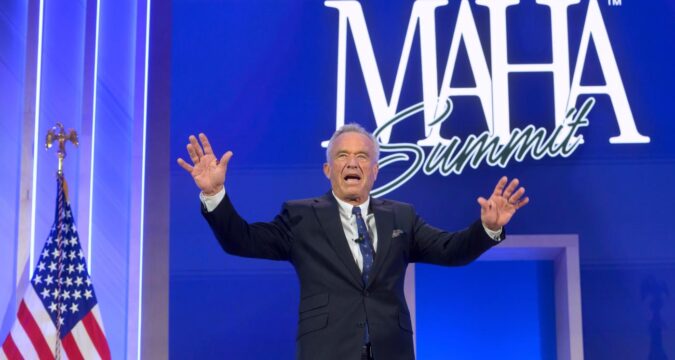
MAHA idealism meets political reality as RFK Jr. attempts to wrangle a growing movement
NEW YORK — Robert F. Kennedy Jr. spent a recent Wednesday showered in praise from the vice president and health technology CEOs at a glitzy “Make America Healthy Again” event in Washington, designed to celebrate the health secretary’s successes and the movement he has built.
Yet online, a different narrative of his tenure was playing out as a small but vocal group of Kennedy’s supporters and former employees assailed top Trump administration advisers, claiming they were sabotaging him and redirecting MAHA away from its original goals.
“MAHA is not MAHA anymore,” Gray Delany, a former Department of Health and Human Services official ousted in August, said in a podcast interview that day. “I’m not there, but what I’ve heard of what’s happening today is not the MAHA that we signed up for.”
The criticisms, which grew loud enough that the health secretary took to social media to defend his colleagues two days later, exposed the cracks that are beginning to form within his coalition as it amasses power and broadens in scope.
Several of the environmental advocates and vaccine skeptics who helped propel Kennedy into politics have become impatient with what they view as inadequate action on their priorities. They’re also wary that the Health Department appears willing to collaborate with pharmaceutical companies, tech firms and other big corporations whose motives they don’t trust.
The fissures pose a threat to the cohesion of a movement that has given President Donald Trump an important ally and Republicans access to a new group of voters. They come as cracks have developed in Trump’s own Make America Great Again movement over issues like the Epstein files and the White House’s focus on global diplomacy.
In the wider public, MAHA has enjoyed soaring popularity. About two-thirds of Americans said they supported the “Make America Healthy Again” initiative from the federal government, according to an Ipsos poll from June.
“MAHA’s growth is a sign of its success,” said HHS spokesperson Andrew Nixon. “Secretary Kennedy is leading a broad coalition to make Americans healthier, guided by transparency, accountability and measurable results. The movement’s meaning hasn’t changed and it’s stronger than ever.”
Public health researchers say the genius that fuels Kennedy’s movement — the universal appeal of making Americans healthier — can also cause conflicts by inviting competing interests.
“This is a tale as old as time in politics,” said Matt Motta, a professor at Boston University School of Public Health. “The bigger your tent is, the harder it can be to make everyone happy.”
Frustration rises from within
Kennedy, a longtime environmental lawyer and anti-vaccine activist who helped lead the crusade against COVID-19 shots during the pandemic, has taken many steps to curtail vaccines this year. He pulled $500 million for their development, ousted and replaced every member of a federal vaccine advisory committee and pledged to overhaul a federal program for compensating Americans injured by shots. He also has repeatedly spread false and misleading information about vaccines while in office.
As recently as this week, in a move that thrilled Kennedy’s anti-vaccine base, the Centers for Disease Control and Prevention changed its website to contradict the longtime scientific conclusion that vaccines do not cause autism.
But many of Kennedy’s supporters in what they call the “health freedom” movement say it’s not enough. Some want punishments for companies that profited from vaccine and mask requirements during the pandemic. Others want mRNA-based COVID-19 shots pulled from the shelves, despite scientific consensus that they have saved millions of lives.
In their attacks on the administration last week, a few MAHA influencers and two fired HHS employees suggested White House chief of staff Susie Wiles and Kennedy’s close adviser, Stefanie Spear, were conspiring to limit Kennedy’s ability to restrict vaccines and crack down on pharmaceutical companies.
Some Kennedy supporters latched on to the claims and pointed to Wiles’ career history at a lobbying firm that has worked with Pfizer as evidence she’s trying to undermine him. They also shared years-old social media posts from Spear criticizing Trump.
Kennedy defended his colleagues in two posts on X, saying the MAHA movement has “no better friend in Washington” than Wiles and that Spear has become a Trump loyalist.
“Let’s focus on our extraordinary achievements to date and the monumental work that still needs to be done,” Kennedy wrote. “Let’s build our coalition instead of splintering it.”
The meaning of MAHA now depends on whom you ask
Since the “Make America Healthy Again” slogan debuted on the campaign trail last year, Kennedy and Trump have widened the MAHA tent considerably by inviting anyone into the fold who has concerns about Americans’ health, nutrition and chronic disease.
That’s attracted a diverse crowd, including moneyed interests — among them health data startups, artificial intelligence firms, drug manufacturers and even fast-food companies. Steak ’n Shake recently promoted its fries cooked in beef tallow, saying it was “proud to be part of the MAHA movement.”
At the recent MAHA event in Washington, hosted by the pro-Kennedy group MAHA Action, Kennedy and other federal health officials appeared on a stage that was occupied throughout the day by biotech companies like CRISPR Therapeutics and Regeneron, the brain-computer interface company Neuralink and various AI companies and health startups. The invitation list raised flags for some longtime Kennedy supporters.
“I was not thrilled about some of the people who were there,” said Leslie Manookian, president and founder of the Health Freedom Defense Fund, a nonprofit that promotes bodily autonomy. “I don’t think that we make America healthy again through pills, creams, injections, pharmaceuticals, chips, monitors, devices.”
Tony Lyons, president of MAHA Action, told The Associated Press that the MAHA movement’s strength “comes from its openness to ideas, from its dedication to including all voices, all perspectives, more dialogue, more fierce debate.”
“We don’t want to exclude anyone,” he said. “We don’t want to censor anyone.”
Ethan Augreen, who led Colorado’s volunteer effort for Kennedy’s presidential campaign last year, said he was concerned both by speakers at the event and by a recent Kennedy social media post about meeting with tech leaders to talk about personal health data.
He said he hoped Kennedy would fight corruption in America’s health care system and remove mRNA COVID-19 vaccines from the market.
“There’s definitely some alarm bells going,” Augreen said. “Grassroots MAHA people definitely don’t trust these corporations, and it’s not really apparent whether the administration is just getting in bed with them or really holding their feet to the fire.”
Kennedy and his team thread a needle on the MAHA message
At a recent Oval Office meeting, Kennedy stood with Trump and other administration leaders as they touted a deal with drugmakers Eli Lilly and Novo Nordisk to expand coverage and reduce the prices of weight-loss drugs.
Kennedy had previously expressed skepticism about GLP-1 weight-loss medications and has said he wants to focus on the root causes of disease instead of medicating the public. But he praised the deal, even as he was careful to add it wasn’t a “silver bullet.”
Dr. Mehmet Oz, the administrator of the Centers for Medicare and Medicaid Services, said during the MAHA event that scrutiny of it from Kennedy’s base was “understandable.” He defended the administration as using Trump’s negotiation playbook instead of going “head-to-head with adversaries.”
Several of Kennedy’s core supporters said they see the government as a deeply entrenched bureaucracy that won’t be easy to reform, even as they hope he’ll be able to remove toxins from food and the environment and further restrict vaccines. Kennedy, at an appearance with western governors Thursday, said he doesn’t intend to take away people’s access to vaccines.
Jeffrey Tucker, founder of the nonprofit Brownstone Institute who has rallied support behind Kennedy, said MAHA activists are idealistic but at times naive about the difficulty of government reform.
“It’s very important to hold on to your ideals,” he said. “But if you’re doing nothing but throwing rocks, then you can become a problem.”
Motta, the professor, said regardless of where MAHA goes next, it’s already bigger than any singular policy position.
“Identities do not go away easily,” he said. “They are deeply held; they are deeply integrated into our sense of self. And I would be shocked if this was a movement that faded.”
https://www.chicagotribune.com/2025/11/21/maha-idealism-robert-kennedy/

US futures quickly pivot to gains, but Wall Street may still suffer after rollicking week
Wall Street futures quickly reversed course and turned positive early Friday in very volatile markets, particularly when it comes to artificial intelligence.
Futures for the S&P 500 rose 0.3%, while futures for the Dow Jones Industrial Average climbed 0.6%. Nasdaq futures edged up 0.2% after being down overnight. Yet technology-heavy Nasdaq may be on its way to its worst week since President Donald Trump rolled out his tariff policy in April.
Nvidia erased a 1.4% overnight loss, getting back to Thursday’s closing price as its shares continued to ping-pong. Worries persist about a possible bubble in artificial intelligence -related shares, even after the chipmaker posted a big profit for the summer and forecast strong revenue that easily cleared analysts’ expectations.
Bitcoin continued its slide, nearly falling under the $80,000 threshold before turning around. The original cryptocurrency is down 34% since reaching an all-time high around $126,000 on Oct. 6. It was at $83,700 early Friday morning.
Bright spots included mall-based clothing retailers Ross Stores and The Gap, which both beat Wall Street’s sales and profit expectations. The Gap jumped more than 6% before the bell, while Ross gained 2.8%.
At midday in Europe, Germany’s DAX declined 0.4%, while Britain’s FTSE 100 and the CAC 40 were both unchanged.
In Asian trading, Japan’s Nikkei 225 fell 2.4% to 48,625.88 as the government approved a $135 billion stimulus package that Prime Minister Sanae Takaichi promised as part of efforts to revive the sluggish economy. However, the plans for higher government spending that would delay progress toward trimming down the national debt have put the yen and Japanese government bonds under pressure.
The yield on the 30-year government bond has been touching record levels on heavy selling, hitting 3.37% on Friday.
Meanwhile, data released Friday showed the country’s core inflation rate excluding volatile food prices rose to 3.0% in October from 2.9% in September.
Japan reported Friday that its exports to the rest of the world rose in October, while those to the U.S. fell. Higher shipments to elsewhere in Asia helped offset the drop in exports to the U.S due to President Donald Trump’s higher tariffs.
In the stock market, selling of tech shares dominated, with computer chip test equipment maker Advantest sinking 12.1%, while chip maker Tokyo Electron lost 7.1%.
South Korea’s KOSPI tumbled 3.8% to 3,853.26, reversing Thursday’s gains. Samsung Electronics sank 5.8%, while SK Hynix plunged 8.8%.
In Chinese markets, Hong Kong’s Hang Seng index skidded 2.4 % to 25,220.02 while the Shanghai Composite index slid nearly 2.5% to 3,834.89, with pressure also coming from escalating friction between China and Japan over Taiwan.
Taiwan’s Taiex shed 3.6%, with market heavyweight TSMC, the world’s biggest contract maker of semiconductors, falling 4.8%.
Australia’s S&P/ASX 200 fell 1.6% to 8,416.50. while India’s BSE Sensex declined 0.5%.
“What began as a textbook “Nvidia bounce” flipped into one of the most violent intraday reversals since the April dump, and Asia — ever the obedient understudy — marched directly into the same plunge tank on the open,” Stephen Innes of SPI Asset Management said in a commentary.
In energy trading, U.S. benchmark crude oil slid 45 cents to $58.45 per barrel. Brent crude, the international standard, lost 33 cents to $63.05 per barrel.
https://www.chicagotribune.com/2025/11/21/us-futures-wall-street/

NDSU commit Colin Stack already towers over Benet’s opponents. Can the 7-foot-1 center reach new heights?
Benet senior Colin Stack enjoys the view from the top.
The 7-foot-1 center has been the tallest player on the court in every game he has played for the Redwings over the past two seasons, and he and his teammates reached the top of the mountain last season when they won the first state championship in program history.
Stack’s body and game continue to grow, and the North Dakota State recruit is far from reaching his ceiling, people around him say.
“He’ll definitely play professionally,” Benet coach Gene Heidkamp said. “It’s just a question of where.
“He has professional potential because he’s got the size, he’s got the skill, he’s going to get stronger physically. He’s going to look different at 22 or 23 than he looks at 18. He gets better all the time.”
Senior guard Jayden Wright, an Eastern Illinois recruit, has seen that improvement up close. He and Stack joined the varsity team together when they were sophomores.
“He definitely can (play professionally) if he wants to,” Wright said. “He’s gotten better every single year. Now he’s obviously the best he’s been.”
Benet’s Colin Stack (42) puts up a shot against Evanston during a Class 4A state semifinal at the State Farm Center in Champaign on Friday, March 14, 2025. (Vincent D. Johnson / Naperville Sun)
Stack, who averaged 12.2 points, 8.2 rebounds and 1.8 blocks for the Redwings (33-5) to earn All-East Suburban Catholic Conference honors last season, has always been tall. But he figures to make an even bigger impact at both ends of the court.
“He’s a great rim protector,” Wright said. “When you have a 7-footer behind you, it really makes your job easier when you’re a guard.
“If you get blown by, he’s there to help you, so he changes things for the opposing team on the defensive end. And then on the offensive end, he’s a great rebounder. He’s really active, and then he can shoot it really well, not just for his size but in general. He’s definitely in for a big senior year.”
Stack’s future is bright, but he’s focused on the present and is relaxed now that his recruiting process has ended.
“It’s such a relief because now you don’t have to worry about overperforming or numbers or anything,” he said. “You just go out and play.
“Now I get to focus on my season and winning. Obviously, we want to go back to back.”
That’s not an unrealistic goal for the Redwings, who have one of the best guard-center combos in the state with Wright and Stack. But both will be taking on greater responsibilities.
“Obviously, it’s more of a leadership role,” Stack said. “You have to hold people accountable, and I feel like I have to do a little bit better of a job with that.
“There’s kids looking up to me and Jay. So it’s a lot more expectations in terms of figuring stuff out, doing things the right way, make sure the team acts the way they’re supposed to act.”
Benet’s Colin Stack grabs a rebound during a game against Rich Township in the When Sides Collide shootout in Lisle on Saturday, Jan. 25, 2025. (Jon Cunningham / Naperville Sun)
The leadership role is just the latest act in a play in which Stack seemed fated to star. More than a dozen of his relatives have played college sports, most at the Division I level in basketball or volleyball.
Stack’s father, David, played basketball at Purdue and won a Big Ten title, and his mother, Suzette, played basketball at Augustana. Stack’s older sisters Lauren, Erin and Katrina followed suit at American, Western Carolina and Quincy, respectively.
Several of Stack’s aunts, uncles and cousins were Division I players, most notably his cousin Frank Kaminsky, a retired NBA player who works as a broadcast analyst for the Phoenix Suns’ G League affiliate.
“That’s what I want to do,” Stack said of broadcasting. “I’m not great with numbers, but I know how to explain why they’re shooting that number.”
For Heidkamp, it’s not hard to explain why Stack’s numbers could be on the rise this season.
“He’s been through a lot in the last couple years,” Heidkamp said. “He’s played in every game you can play in, and he’s played at a high level.
“He was a huge part of the state championship team last year. So we expect big things from him this year, and we think he’s just going to get better and better and he’s going to have a big year. We need him to have a big year, and he’s certainly capable of that.”
But Stack knows there are no shortcuts.
“We have a lot to improve on, so it’s going to be a day-to-day kind of thing,” he said. “We have to grind every single day if we want to go where we want to be.”
Matt Le Cren is a freelance reporter.
https://www.chicagotribune.com/2025/11/21/north-dakota-state-basketball-commit-colin-stack-benet/

Supreme Court meets to weigh Trump’s birthright citizenship restrictions, blocked by lower courts
WASHINGTON — The Supreme Court is to meet in private Friday with a high-profile issue on its agenda — President Donald Trump ’s birthright citizenship order declaring that children born to parents who are in the United States illegally or temporarily are not American citizens.
The justices could say as soon as Monday whether they will hear Trump’s appeal of lower court rulings that have uniformly struck down the citizenship restrictions. They have not taken effect anywhere in the United States.
If the court steps in now, the case would be argued in the spring, with a definitive ruling expected by early summer.
The birthright citizenship order, which Trump signed on the first day of his second term in the White House, is part of his administration’s broad immigration crackdown. Other actions include immigration enforcement surges in several cities and the first peacetime invocation of the 18th century Alien Enemies Act.
The administration is facing multiple court challenges, and the high court has sent mixed signals in emergency orders it has issued. The justices effectively stopped the use of the Alien Enemies Act to rapidly deport alleged Venezuelan gang members without court hearings, while they allowed the resumption of sweeping immigration stops in the Los Angeles area after a lower court blocked the practice of stopping people solely based on their race, language, job or location.
The justices also are weighing the administration’s emergency appeal to be allowed to deploy National Guard troops in the Chicago area for immigration enforcement actions. A lower court has indefinitely prevented the deployment.
Birthright citizenship is the first Trump immigration-related policy to reach the court for a final ruling. Trump’s order would upend more than 125 years of understanding that the Constitution’s 14th Amendment confers citizenship on everyone born on American soil, with narrow exceptions for the children of foreign diplomats and those born to a foreign occupying force.
In a series of decisions, lower courts have struck down the executive order as unconstitutional, or likely so, even after a Supreme Court ruling in late June that limited judges’ use of nationwide injunctions.
While the Supreme Court curbed the use of nationwide injunctions, it did not rule out other court orders that could have nationwide effects, including in class-action lawsuits and those brought by states. The justices did not decide at that time whether the underlying citizenship order is constitutional.
But every lower court that has looked at the issue has concluded that Trump’s order violates or most likely violates the 14th Amendment, which was intended to ensure that Black people, including former slaves, had citizenship.
The administration is appealing two cases.
The U.S. Court of Appeals for the 9th Circuit in San Francisco ruled in July that a group of states that sued over the order needed a nationwide injunction to prevent the problems that would be caused by birthright citizenship being in effect in some states and not others.
Also in July, a federal judge in New Hampshire blocked the citizenship order in a class-action lawsuit including all children who would be affected.
The American Civil Liberties Union, leading the legal team in the New Hampshire case, urged the court to reject the appeal because the administration’s “arguments are so flimsy,” ACLU lawyer Cody Wofsy said. “But if the court decides to hear the case, we’re more than ready to take Trump on and win.”
Birthright citizenship automatically makes anyone born in the United States an American citizen, including children born to mothers who are in the country illegally, under long-standing rules. The right was enshrined soon after the Civil War in the first sentence of the 14th Amendment.
The administration has asserted that children of noncitizens are not “subject to the jurisdiction” of the United States and therefore not entitled to citizenship.
“The lower court’s decisions invalidated a policy of prime importance to the president and his administration in a manner that undermines our border security,” Solicitor General D. John Sauer wrote in urging the high court’s review. “Those decisions confer, without lawful justification, the privilege of American citizenship on hundreds of thousands of unqualified people.”
https://www.chicagotribune.com/2025/11/21/supreme-court-birthright-citizenship-2/
Cierra servicio húngaro de Radio Free Europe tras recortes de fondos de Trump
Por JUSTIN SPIKE
BUDAPEST (AP) — El servicio húngaro de Radio Free Europe, Szabad Európa, cesó sus operaciones el viernes luego que el gobierno del presidente de Estados Unidos, Donald Trump, anunciara que ya no financiará el medio de noticias prodemocracia.
Radio Free Europe/Radio Liberty, que es financiada por el gobierno estadounidense, se estableció por primera vez durante la Guerra Fría para proporcionar noticias e información a la población dentro de la Unión Soviética y detrás de la Cortina de Hierro. Sus programas se emiten en 27 idiomas en 23 países de Europa del Este, Asia Central y el Oriente Medio.
El servicio húngaro fue suspendido en 1993 pero reiniciado en 2020 después que la Agencia de Estados Unidos para los Medios Globales, una agencia federal independiente, y el Congreso de Estados Unidos aprobaran su relanzamiento en respuesta al fuerte declive de la libertad de prensa en Hungría bajo el gobierno del primer ministro Viktor Orbán.
En un comunicado el jueves anunciando el fin de sus operaciones, Szabad Európa escribió que había “trabajado con dedicación para proporcionar lo mejor del periodismo e información objetiva a los lectores húngaros”.
“Agradecemos la confianza, el interés y el apoyo que hemos recibido de nuestra audiencia”, se lee en el comunicado, añadiendo que sus artículos seguirán estando disponibles en línea.
El cierre de Szabad Európa se registra al tiempo que el gobierno de Trump ha realizado importantes recortes a emisoras internacionales como Radio Free Europe/Radio Liberty y Voice of America, así como a emisoras públicas nacionales como PBS y NPR.
Kari Lake, la fallida candidata a gobernadora de Arizona y al Senado de Estados Unidos, a quien Trump nombró asesora principal de la Agencia de Estados Unidos para los Medios Globales, informó al Congreso en una carta a principios de este mes que la agencia ya no financiará Szabad Európa, escribiendo que sus operaciones en Hungría “no estaban alineadas con los intereses nacionales de Estados Unidos” y que “socavaban” la política exterior de Trump.
En una publicación en X dos días después —el día en que Trump recibió a Orbán para conversaciones en la Casa Blanca— Lake escribió que “los globalistas son más que bienvenidos a odiar a nuestro aliado Viktor Orbán”.
“Lo que no tienen derecho es a usar SU dinero para desestabilizar el régimen húngaro a través de programación financiada por los contribuyentes en Szabad Európa. Vamos a poner fin a eso”, escribió. Orbán respondió a su publicación con gratitud, escribiendo, “¡Gracias!”
Desde que regresó al poder en 2010, Orbán, un aliado de Trump, ha supervisado la construcción de una enorme maquinaria mediática progobierno en Hungría y numerosos periódicos y medios independientes han sido cerrados o puestos bajo el control de figuras con estrechos vínculos gubernamentales.
Según el observatorio de prensa Reporteros Sin Fronteras, Orbán ha utilizado adquisiciones de medios por parte de oligarcas conectados al gobierno para construir “un verdadero imperio mediático sujeto a las órdenes de su partido”.
El grupo estima que tales adquisiciones han dado al partido de Orbán el control de aproximadamente el 80% de los recursos del mercado mediático de Hungría. En 2021, lo incluyó en su lista de “depredadores” de los medios, siendo el primer mandatario de la Unión Europea en obtener esa distinción.
A principios de este año, el partido de Orbán introdujo una ley que pondrá en una lista negra y multará a los medios críticos que reciban financiación o subvenciones del extranjero.
___
Esta historia fue traducida del inglés por un editor de AP con la ayuda de una herramienta de inteligencia artificial generativa.

Regime Change In Kyiv? US Peace Plan Demands Ukraine Hold Rapid Elections After Signing
Regime Change In Kyiv? US Peace Plan Demands Ukraine Hold Rapid Elections After Signing
Russia says it has yet to receive anything official from the United States regarding the new draft Trump-backed plan for ending the war in Ukraine. And already several media headlines say Ukraine and European leaders are signaling their rejection of it, as it presents too much of a compromise.
We’ve examined the widely leaked US plan for peace and its 28 points here, but one particular part of it which really stands out as objectionable from the Zelensky government’s point of view is the demand for Kiev to hold elections within 100 days of the truce being signed.
Point number 25 of the 28 stipulates as follows: Ukraine will hold elections in 100 days. This is of course something Zelensky has resisted for years, arguing that martial law under the Ukrainian constitutions allows for the indefinite suspension of national elections.
His term expired in May 2024, but earlier this year he responded to allegations of simply wanting to hold on to power by asserting, “I’m focusing on the survival of our country, and I am doing it really all my term.”
“I’m ready to speak about elections if you want,” he had said, claiming that “Ukrainians don’t want, totally don’t want, because they are afraid, because otherwise we will lose the military loan, the war loan, our soldiers will come back home, and Putin will occupy all our territory.”
However, public confidence in his government has been waning, especially as top leaders have been embroiled in an embarrassing corruption scandal, leading to the dismissal of several ministers and aides.
Last February, Zelensky actually floated the possibility of stepping down if it would lead to peace, but appeared to attach it to NATO membership. “I am ready to leave my post if it brings peace. Or exchange it for NATO,” Zelensky had said in response to journalists’ questions at security summit.
Interestingly, the draft peace document does provide ‘Article 5-style’ security guarantees for Ukraine, but also requires the country pledge to never join NATO. Below are a few of the points taken from the document which relate to no more NATO expansion – something which Moscow has long demanded as a precondition to ending the conflict:
It is expected that Russia will not invade neighboring countries and NATO will not expand further.
Ukraine agrees to enshrine in its constitution that it will not join NATO, and NATO agrees to include in its statutes a provision that Ukraine will not be admitted in the future.
NATO agrees not to station troops in Ukraine.
The above points are also interesting as they represent a tacit admission that NATO expansion was indeed a key cause of the war. This is something which prior Biden officials, as well as an array of mainstream pundits, have long sought to deny, calling it a ‘pro-Russian’ talking point.
As for the call for quick elections after the document’s signing, one geopolitical analysts notes this would be in keeping with Putin’s aims in the ‘special military operation’ – and that it would constitute the “regime change” the Kremlin has been seeking in Kiev.
The analyst writes:
Russia’s unstated goal of regime change in Ukraine would likely be fulfilled through these means since Zelensky’s popularity was already plummeting even before the latest corruption scandal dealt a deathblow to it. Given the knowledge of this point in the Russian-Ukrainian peace deal that Russia and the US have reportedly been working on in secret, the timing of this latest scandal initiated by the US-backed “National Anti-Corruption Bureau” can be seen in retrospect as a de facto coup against Zelensky.
While Europe too might agree to a ‘new face’ in Kiev, especially given the embarrassing levels of graft still ongoing in Ukraine’s government, others in the EU and NATO are likely to rally behind Zelensky.
❗️Without Donbas and a strong army. The US and russia “plan” promotes Ukraine’s capitulation, — FT journalist
This plan includes:
▪️halving Ukraine’s army
▪️giving up certain weapons
▪️giving up Donbas pic.twitter.com/truGxgY2D0
— Angelica Shalagina🇺🇦 (@angelshalagina) November 19, 2025
Meanwhile Ukrainians are already chafing under the immense pressure being brought to bear on Zelensky to accept the deal, with US military leaders (unusually) in Kiev discussing the plan with the president and his top aides.
Tyler Durden
Fri, 11/21/2025 – 09:20

YMCA urges Naperville Park District to halt referendum plans
The YMCA of Metropolitan Chicago and Naperville’s Fry Family YMCA are urging the Naperville Park District to not pursue a referendum for the March 2026 ballot, citing possible duplication of services and affordability concerns for residents.
As part of its efforts, the YMCA sent a letter asking the park district to pause its referendum plans. The YMCA has also created a website to help communicate its stance with others, which includes a section where residents can send a letter opposing the referendum.
“The Y Naperville hasn’t been in a position like this before,” said Erika Wood, executive director of the Fry Family YMCA. “The reason for us to do this is we feel like it’s important that we shared that we want to collaborate, that we want to be a good partner in the community.”
Currently, the Naperville Park District is in the process of assessing community feedback on a potential $135 million bond sale referendum to help fund a number of capital improvement projects.
As of right now, park district officials believe the total price tag for all of the work proposed is about $139 million. If $135 million is funded with bond sale money, the rest would come from budget reserves, officials said.
One of the most notable proposed projects is a new activity center at the Frontier Sports Complex, located on the city’s south side. If built, it would cost an estimated $119 million and could include gyms, group exercise rooms and three types of swimming pools, among other features.
The YMCA, however, indicated it believes that the Frontier Sports Complex may be too similar to other facilities in the area, including the Fry Family YMCA off of 95th Street. According to a letter in opposition to the referendum, the proposed activity center would be about 3,800 feet from the Fry Family YMCA and about 4,100 feet from a new private facility under construction.
The Fry Family YMCA offers a swimming pool, health and wellness programs and fitness training, among other features.
“This potential development would impact the community in a way financially, but also is a duplication of services in one concentrated area,” said Erika Wood, executive director of the Fry Family YMCA. “So for us, standing up and asking publicly for the park district to pause it is something that is unique to what we’re doing, but we also think it’s important.”
Naperville Park District proposed the referendum as a response to growing demands from the community for more services and facilities. Prior research conducted by the park district indicated that residents want to see more indoor recreation spaces, particularly more aquatic facilities.
On top of that, membership and use continues to climb at the park district’s Fort Hill Activity Center. Compared to last year, fitness center use is up at the facility by 19%, park district officials said at a Nov. 13 board meeting. Personal training at Fort Hill is also up by 28% while group exercise is up by 13% and track use up by 23%.
That demand also comes after the closure of the over 100-year-old Kroehler YMCA in Naperville in 2020, citing financial stress due to the pandemic.
“The Fry Family YMCA agrees Naperville needs more indoor recreation space—but not through a plan like this,” the YMCA letter said.
In a statement to the Naperville Sun, the park district said that their own research indicates that there is “a need for both the YMCA’s services and also additional facilities and services in south Naperville.”
“Residents and program participants have repeatedly communicated their desire for more indoor recreation space, including indoor aquatics, with a priority to expand indoor recreation in south Naperville,” according to the statement.
Other concerns surrounding the referendum highlighted by the YMCA include potential affordability challenges posed to Naperville residents.
“A $135 million bond, at 5.0% interest for 20 years, will carry significant expenses to homeowners and taxpayers,” the letter said, arguing that the total cost to Naperville residents will exceed $215 million over the next twenty years, depending on how the bond is structured.
Should the referendum be approved, 0.0876 cents per $100 of Equalized Assessed Value would be added to the tax rate, per previous reporting. The owner of a home with a fair market value of $500,000 would pay about $139 more a year in taxes, or about $12 a month, for the next 20 years, according to district estimates.
Proposed membership fees for the Frontier Sports Complex activity center only add to those concerns for the YMCA, with such proposed fees higher than the Fort Hill Activity Center.
On top of that, the YMCA also cited potential for the aquatics facility to not do as well as expected, pointing to financial statements of facilities in the region that have aquatics components. While those facilities – located in Waukegan, Romeoville and Aurora – all have their own features, they are all aquatics facilities that are operating at a loss and requiring “substantial intergovernmental transfers from property taxes to stay open,” the letter said.
When asked what the YMCA would like to see instead from the park district in addressing resident needs, Wood said the YMCA does not have a perfect solution, but would like to collaborate more with the park district on alternative options.
“We want to be good stewards,” Wood said. “This is a large expense on the community, and so we want to have a dialogue about how we can work together that maybe isn’t quite a financial burden that this potentially could be on the community.”
The park district issued a statement in response to the YMCA’s letter, saying it will consider the YMCA’s request as it sorts through the feedback from the open houses and surveys it held this past fall.
“All of this information will lead to a decision by the Board of Commissioners as to whether to place the actual development of the concept before the voters through a referendum question on the ballot,” the park district statement said. “The concept can only move forward if the voters approve.”
cstein@chicagotribune.com
https://www.chicagotribune.com/2025/11/21/ymca-naperville-park-district-halt-referendum/

Naperville police blotter: Man arrested for aggravated unlawful use of a weapon
The following items were taken from Naperville police reports and press releases. An arrest does not constitute a finding of guilt:
A 50-year-old man from Chicago was arrested on a charge of phone harassment/abuse, threaten or harass/threaten to kill at 10:23 p.m. Nov. 11 in the 3000 block of South Sacramento Avenue in Chicago.
A 21-year-old man from Plano was arrested on two counts of aggravated unlawful use of a weapon and one count of carry/possession of a firearm in a vehicle or concealed on person at 12:49 a.m. Nov. 12 in the 1600 block of Country Lakes Drive.
A 19-year-old woman from Aurora was arrested on charges of improper U-turn on a roadway, driving on a suspended license, driving without insurance, unlawful possession of cannabis by a driver and two counts of resisting or obstructing a peace officer at 12:49 a.m. Nov. 12 in the 1600 block of Country Lakes Drive.
A 44-year-old man from Schaumburg was arrested on charges of aggravated unlawful restraint, home invasion/firearm, residential burglary, interfering with the reporting of domestic violence and felon possession or use of a weapon/firearm at 3:02 p.m. Nov 12 in the 0 to 100 block of Meacham Road in Schaumburg.
A 34-year-old man from Moline was arrested on charges of driving under the influence of alcohol and transportation or possession of open alcohol by a driver at 10:14 p.m. Nov. 12 in the 900 block of South Route 59.
A 39-year-old man from Aurora was arrested on a warrant at 11:48 p.m. Nov. 12 at West Ogden Avenue and North River Road.

Amazon Sending $1.5 Billion In Automatic Refunds To Customers: 4 Things To Know
Amazon Sending $1.5 Billion In Automatic Refunds To Customers: 4 Things To Know
Authored by Jack Phillips via The Epoch Times (emphasis ours),
Amazon has started sending emails and paying out up to $1.5 billion in automatic refunds to Prime customers who may be impacted by a recent settlement, according to an update from the Federal Trade Commission (FTC) on Monday.
In late September, the FTC secured a $2.5 billion settlement with Amazon to resolve the agency’s claims that the online retail giant had enrolled millions of customers into Prime subscriptions without their consent. The settlement also resolved charges that Amazon intentionally made it more difficult for people to cancel their Prime subscriptions.
1. When and How Much?
Amazon began providing automatic refunds to its Prime customers on Nov. 12 and will continue doing so until Dec. 24 of this year, the FTC said. People who are eligible to get an automatic refund should receive an email between those two dates.
“You can get your refund by PayPal or Venmo,” the FTC’s website also said, directing people to “please accept” the refund within 15 days of getting the email.
Eligible Prime customers will get a refund up to a maximum of $51 under the settlement for their Amazon Prime subscription fees, the FTC also said.
People who want a check are advised to ignore the Amazon email, the agency said. Once they don’t claim a Venmo or PayPal payment through the email, Amazon will send a check to their default Amazon Prime shipping address.
Customers who opt for a check are advised to “please cash it within 60 days,” according to the website.
2. Who Is Eligible?
People may get an automatic refund from the company if they meet three requirements: They are an Amazon Prime customer inside the United States; they signed up for a Prime subscription via one of its enrollment processes that were the subject of the FTC’s allegations between June 23, 2019, and June 23, 2025; and they used no more than three Prime benefits such as Prime Video or Prime Music in a 12-month period after they signed up for the Amazon service.
The applicable enrollment processes include “the universal Prime decision page, shipping selection page, single page checkout, or the Prime Video enrollment flow,” according to the FTC site.
3. What Happens If No Refund Is Sent?
Starting next year, Amazon will start a separate claims process for Prime customers who did not receive the automatic refund between Nov. 12 and Dec. 24 of this year. The FTC and Amazon will issue an update on the FTC enforcement page with updated details.
The FTC also suggested that customers should be wary of possible scams, noting that it won’t ask people to pay to receive their refund.
“Don’t pay anyone who promises you a refund in exchange for a fee. And don’t give personal information to anyone who contacts you promising a refund,” the site said.
The FTC website containing the message did not include a date but an Epoch Times review of page metadata shows it was last updated on Monday, Nov. 17.
4. What Did the Settlement Entail?
Amazon in September agreed to pay $2.5 billion in fines and reimbursements to Prime subscribers, while roughly 35 million Prime customers are eligible for payouts from a $1.5 billion fund, according to the FTC. Amazon will separately pay $1 billion in fines and civil penalties to the FTC.
The company did not admit wrongdoing as part of the settlement.
“We work incredibly hard to make it clear and simple for customers to both sign up or cancel their Prime membership, and to offer substantial value for our many millions of loyal Prime members around the world,” Amazon said in a statement.
As part of the settlement, Amazon also agreed to create a “clear and conspicuous” button to allow customers to decline a Prime subscription, and to make it easier to cancel a membership. Amazon has also agreed to more clearly disclose the terms of a subscription during enrollment and to pay an independent supervisor to monitor compliance.
Reuters contributed to this report.
Tyler Durden
Fri, 11/21/2025 – 09:05
Separatistas de Nigeria se comprometen a autodeterminación y rechazan sentencia contra su líder
Por DYEPKAZAH SHIBAYAN
ABUYA, Nigeria (AP) — El Pueblo Indígena de Biafra, un grupo separatista en el sureste de Nigeria, afirmó el viernes que sigue comprometido con la autodeterminación pacífica luego que un tribunal sentenció a su líder a cadena perpetua por terrorismo.
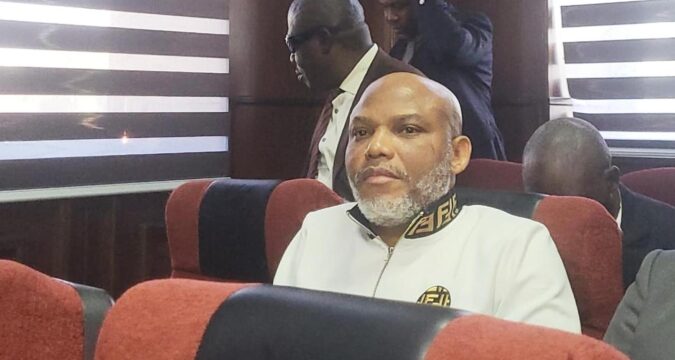
Nnamdi Kanu, fundador de Pueblo Indígena de Biafra, fue condenado y sentenciado el jueves.
El grupo ha sido acusado de terrorismo y asesinatos extrajudiciales en la región sureste del país, donde ha exigido la creación de un Estado independiente.
El grupo separatista condenó la sentencia, afirmando que nunca se encontraron armas ni “ningún plan de ataque” en Kanu y que su líder no cometió ningún delito bajo la ley nigeriana o internacional.
“Reafirmamos nuestro compromiso con la defensa pacífica, el derecho internacional y la búsqueda de un referéndum supervisado por Naciones Unidas”, indicó Emma Powerful, portavoz de Pueblo Indígena de Biafra, en un comunicado.
Los cargos contra Kanu, quien ha rechazado la autoridad del tribunal, incluían llevar a cabo actos de terrorismo, emitir y hacer cumplir violentamente órdenes de quedarse en casa que paralizan la región sureste cada lunes, dar instrucciones sobre cómo fabricar bombas para ser usadas en instalaciones gubernamentales e incitación.
El juez James Omotosho dijo en el tribunal el jueves que el “derecho a la autodeterminación es un derecho político”, pero añadió que “cualquier autodeterminación que no se realice de acuerdo con la constitución de Nigeria es ilegal”.
Powerful aseveró que la violencia en el sureste “es fabricada políticamente” y no tiene nada que ver con Kanu, quien ha estado detenido.
Otro líder separatista nigeriano, Simon Ekpa, fue condenado en Finlandia en septiembre por cargos que incluyen terrorismo.
Ekpa, quien también es ciudadano finlandés, fue sentenciado a seis años de prisión por participar en las actividades de un grupo terrorista, incitación pública para cometer un delito con fines terroristas y fraude fiscal agravado.
___
Esta historia fue traducida del inglés por un editor de AP con la ayuda de una herramienta de inteligencia artificial generativa.