Category: News
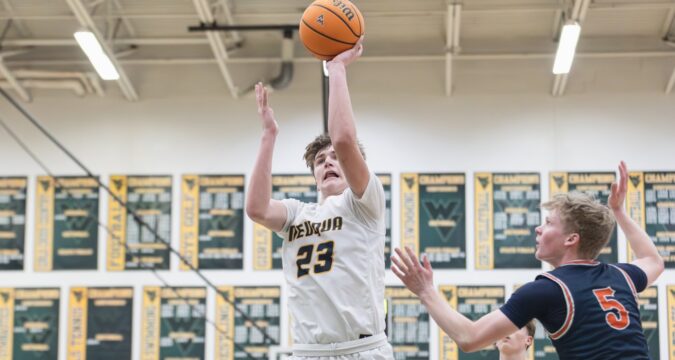
Naperville boys basketball preview: Matt Le Cren scouts the teams for the 2025-26 season
Naperville North has all five starters back, and Benet has several players returning from the state championship team, while Neuqua Valley has a major Division I prospect.
BENET
The defending Class 4A state champion Redwings (33-5) welcome back senior guard Jayden Wright (Eastern Illinois), senior center Colin Stack (North Dakota State) and junior forward Edvardas Stasys.
Senior guards Aidan Renicker (Rhodes), Ryan Walsh, Grant Bergmann and Ethan MacDermot, a move-in from Australia, and junior guards Perry Tchienge, Tyler Cibulka and Blair Fagbemi will vie for opportunities to play significant roles in Benet’s bid to repeat.
METEA VALLEY
Senior guard Tre Watkins (Illinois-Springfield), who averaged 17 points last season, is the only starter back for the Mustangs (20-13). Coach Isaiah Davis likes the team’s depth, especially at guard, but chemistry is a work in progress since most of the players have not competed together.
Junior guards Manny Miller, Marcus Brewell and Collin Booker and sophomore forward Sincere Williams are top newcomers.
NAPERVILLE CENTRAL
The Redhawks (8-21) return four starters, including senior point guard TJ Hillman, a third-year varsity player of whom a big season is expected. Also back are senior forwards Nate Abrahamson and Casey Cooperkawa and senior guard Cooper Page.
Coach Mike Wilson said the team lacks the talent of most other DuPage Valley Conference teams but will make up for it with attention to detail and a fast-paced style.
Naperville North’s Max Steele (5) drives to the basket against Prairie Ridge during a nonconference game in Naperville on Friday, Jan. 3, 2025. (Troy Stolt / Naperville Sun)
NAPERVILLE NORTH
The Huskies (17-15) are the only area team to return all five starters. Four are seniors: guards Max Steele, Carson Loughlin and Miles Okyne and forward Will Harvey. The other is junior guard Jack Zitko. Together, they provide balanced shooting and scoring, but defense and rebounding will be crucial.
Senior guards Antonio Brown Jr. and Jack Victor, senior forward Jake Ryan, and junior forwards Reid Montanari and Nolan Scarbrough add depth.
NEUQUA VALLEY
What will 6-foot-7 sophomore forward Cole Kelly, who has offers from DePaul and Illinois, do for an encore after averaging 18.6 points and 9.6 rebounds? Will the Wildcats (20-13) improve along with him?
Senior forward Andrew Hoffmann is healthy after shoulder surgery, and 6-5 junior guard Mason Martin has starting experience and a Division I offer. Veteran coach Todd Sutton said defense and rebounding will be the keys to winning and are also their biggest concern.
Waubonsie Valley’s Kris Mporokoso (22) takes the ball to the basket against Neuqua Valley during a DuPage Valley Conference game in Aurora on Friday, Feb. 7, 2025. (Mike Mantucca / Naperville Sun)
WAUBONSIE VALLEY
There will be a lot of new faces on the floor for the Warriors (31-3), who lost six of their top seven players to graduation after winning the DVC title and reaching the sectional semifinals. Kris Mporokoso, a 6-4 junior swingman who was an all-conference honorable mention, is the lone returning starter.
But 6-6 sophomore forward Kyler Payne has great potential, and senior guards Aidan Lee, Tate Bartzen and TJ Horton are capable shooters.
Matt Le Cren is a freelance reporter.
https://www.chicagotribune.com/2025/11/21/naperville-boys-basketball-preview-2025-2026-season/
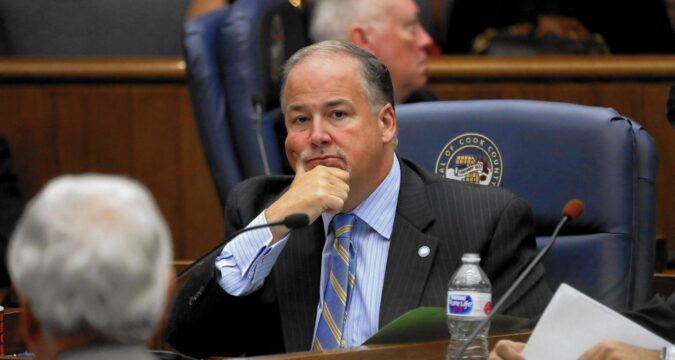
Cook County Commissioner Sean Morrison ends reelection bid, leaving Republican primary uncontested
Cook County Commissioner Sean Morrison, a Republican, announced Thursday he will not run for reelection next year, leaving former Commissioner Elizabeth Doody Gorman as the only Republican candidate for his seat.
Morrison has represented the 17th District, which includes a wide swath of the southwest suburbs including Orland Park, Palos Heights and Lemont, since 2015. He was appointed to replace Gorman, who held the position from 2002 to 2015 before resigning to accept a job at an accounting firm in the private sector. Gorman supported Morrison as her successor.
In a statement announcing his decision, Morrison said the choice was driven partly by his belief in the importance of term limits.
“The responsibility of the office and the trust placed in me made it difficult to step away, but in the end, staying true to my principles of term limits mattered most,” Morrison said. “I firmly believe that public service should be a season of contribution, not a lifetime occupation, and it is important that I lead by example.”
Morrison’s statement made clear that his choice was also a product of frustration with Democratic control on the city, state and county level. Of the 17 Cook County commissioners, Morrison is the only Republican.
“Cook County, the City of Chicago, and the State of Illinois are now firmly governed by a one-party supermajority whose policy direction and ideological priorities diverge sharply from my own deeply held personal, ethical, and spiritual convictions,” Morrison said in the statement. “Remaining true to the values and principles that guided me into public service, I have chosen to make a clean and honorable break.”
Morrison was reelected in 2018 and 2022. Gorman ran to unseat Morrison once before in 2022, but lost in the primary. With Morrison dropping out and the filing deadline past, she will run uncontested in the primary.
Gorman has been on the Regional Transportation Authority board since 2021, and was formerly executive director of the Illinois State Toll Highway Authority.
One Democrat, Elyse Hoffenberg, is also running for the seat. The district has only had Republican commissioners since its inception in 1994.
elewis@chicagotribune.com
https://www.chicagotribune.com/2025/11/21/cook-county-sean-morrison-drops-out/

Analyzing All 28 Points Of The Leaked Russian-Ukrainian Peace Deal Framework
Analyzing All 28 Points Of The Leaked Russian-Ukrainian Peace Deal Framework
Authored by Andrew Korybko via Substack,
The overarching theme connecting the substance and timing of this agreement is therefore the US’ eagerness to resolve the Russian-US dimension of the New Cold War in order to prioritize the Sino-US dimension thereof as the next phase of its systemic competition with China over the future world order.
The New York Post, which Trump once called his “favorite newspaper”, just published what it claims to be all 28 points of Russian-Ukrainian peace deal framework that Russia and the US have reportedly been working on in secret over the past few weeks. What follows is the text of each individual point as detailed in the infographic shared in their article on this subject, which will then be concisely analyzed, with some observations about the substance of the agreement and its timing rounding out the analysis:
1. Ukraine’s sovereignty will be confirmed.
This relates to Russia respecting Ukraine’s right to manage its affairs, both internal and foreign and each in accordance with the terms specified in this agreement. It’s pretty much symbolic and aimed at spinning the outcome of this conflict as a (faux) victory for Ukraine amidst the narrative that was pushed by it and the West that Russia wants to conquer all of the country. Some state-adjacent “Non-Russian Pro-Russians” (NRPR) also inadvertently lent credence to this through their sensationalist commentary.
2. A comprehensive non-aggression agreement will be concluded between Russia, Ukraine and Europe. All ambiguities of the last 30 years will be considered settled.
This relates to reforming the European security architecture and could thus likely be a protracted process due to the issues involved. Some of them include Russia’s access to Kaliningrad, navigation across the Baltic Sea, and its opposition to nukes in Poland, while Poland, whose lost Great Power status is being revived with US support, wants Russian tactical nukes and Oreshniks out of Belarus. The “EU Defense Line” that’s being built between NATO and Russia-Belarus will likely also become a “new Iron Curtain”.
3. It is expected that Russia will not invade neighboring countries and NATO will not expand further.
This quid pro quo, which might include verification and enforcement mechanisms regarding the status of forces along the “new Iron Curtain”, is meant to alleviate their security dilemma and thus facilitate some of the aforesaid compromises. The US would also have a pretext for redeploying of some of its EU-based forces to the Asia-Pacific for more robustly containing China while Russia would have the same for refocusing its strategic attention southward in response to the expansion of Turkish influence there.
4. A dialogue will be held between Russia and NATO, mediated by the United States, to resolve all security issues and create conditions for de-escalation in order to ensure global security and increase opportunities for cooperation and future economic development.
This reinforces what was written with respect to reaching a series of mutual compromises for alleviating their security dilemma with the intent of freeing up US and Russian forces to refocus on the Asia-Pacific and the South Caucasus-Central Asia respectively for balancing China and Turkiye. There’s also the speculative chance that the US could limit the expansion of NATO member Turkiye’s influence there in exchange for Russia limiting its military-technical and possibly energy cooperation with China.
5. Ukraine will receive reliable security guarantees.
It was assessed last March that “Ukraine Already Kinda Has Article 5 Guarantees From Some NATO Countries” due to the raft of “security guarantees” that it agreed to with the bloc’s members over the prior year, all of which are hyperlinked to in the preceding analysis. This point is therefore redundant but might also suggest an openness among those states – the US, Poland, the UK, Germany, France, and Italy – to renegotiate some of the terms to make them even more favorable for Ukraine.
6. The size of the Ukrainian Armed Forces will be limited to 600,000 personnel.
The special operation’s demilitarization goal would be achieved in spirit through these means, though the loophole might be that Ukraine could still employ mercenaries to get around this limit. Nevertheless, with credible verification and enforcement mechanisms in place, the spirit of this point would be respected. Russia should therefore consider proposing this without delay in order to avert the scenario of Ukraine slyly undermining the peace (perhaps in collusion with the subversive and warmongering UK).
7. Ukraine agrees to enshrine in its constitution that it will not join NATO, and NATO agrees to include in its statutes a provision that Ukraine will not be admitted in the future.
Russia’s goal of restoring Ukraine’s constitutional neutrality would be achieved in spirit through these means too, though the “security guarantees” that Ukraine would receive (or rather be grandfathered into a peace deal and possibly expanded upon before it’s signed) make it a shadow member of the bloc. In any case, by not becoming a full member, Russia’s long-running concerns about Ukraine provoking World War III would be alleviated and this could then lay the basis for repairing Russian-NATO relations.
8. NATO agrees not to station troops in Ukraine.
The “career military personnel from France and the United Kingdom” that Russia’s Foreign Intelligence Service reported in late September had “already arrived in Odessa” would be quietly withdrawn, but the bloc might greatly build up its capabilities in regional leader Poland as a contingency measure. The purpose would be to deter Russia, albeit within the terms of the new European security architecture that they’ll negotiate, by having NATO forces at the ready to intervene if “Round 2” ever kicks off.
9. European fighter jets will be stationed in Poland.
This point confirms that Poland will lead Russia’s regional containment after the Ukrainian Conflict ends, the role of which arguably evaded Russia’s attention due to it hitherto underestimating Poland as “just another US puppet”. That said, awareness of its role appears to have finally dawned on some influential folks in recent weeks as suggested by the surge in anti-Polish content by state-adjacent NRPRs, which could be meant to precondition the public for expecting a revival of the historical Russian-Polish rivalry.
10. US guarantee:
* The US will receive compensation for the guarantee;
* If Ukraine invades Russia, it will lose the guarantee;
* If Russia invades Ukraine, in addition to a decisive coordinated military response, all global sanctions will be reinstated, recognition of the new territory and all other benefits of this deal will be revoked;
* If Ukraine launches a missile at Moscow or St. Petersburg without cause, the security guarantee will be deemed invalid.
The US will profit from its “security guarantees” to Ukraine just like it now profits from selling weapons to it via NATO; any cross-border movement of troops will provoke the US’ wrath on the side that does so; the US will presumably coerce those with whom it negotiates new trade deals (China, India) to comply with its sanctions against others per the Cambodian and Malaysian precedents as a deterrent to Russia; and Ukraine will presumably be allowed to obtain long-range missile capabilities as another deterrent.
11. Ukraine is eligible for EU membership and will receive short-term preferential access to the European market while this issue is being considered.
The problem is that “Poland Might Impede The EU’s Push To Speedily Grant Ukraine Membership” as was assessed in early November and explained in the preceding hyperlinked analysis. In short, Poland still unilaterally refuses to allow cheap (and low-quality) Ukrainian grain into its domestic market, which would ruin its farmers’ livelihoods and subsequently crash its agricultural industry. An exception for Poland will therefore likely have to be included in this arrangement in order for it to be approved.
12. A powerful global package of measures to rebuild Ukraine, including but not limited to:
a. The creation of a Ukraine Development Fund to invest in fast-growing industries, including technology, data centers, and artificial intelligence;
b. The United States will cooperate with Ukraine to jointly rebuild, develop, modernize, and operate Ukraine’s gas infrastructure, including pipelines and storage facilities;
c. Joint efforts to rehabilitate war-affected areas for the restoration, reconstruction and modernization of cities and residential areas;
d. Infrastructure development;
e. Extraction of minerals and natural resources.
f. The World Bank will develop a special financing package to accelerate these efforts.
The gist is to create global stakes in Ukrainian infrastructure as a deterrent against Russia targeting them in “Round 2” on pain of most stakeholders (likely including China and India) imposing sanctions against it. NATO stakeholders would also at the very least resume their ongoing military-strategic cooperation with Ukraine and at most intervene in the conflict from their Polish bases even if only to race to the Dnieper to de facto partition Ukraine by bringing the west under their umbrella to stop Russia’s advance.
13. Russia will be reintegrated into the global economy:
a. The lifting of sanctions will be discussed and agreed upon in stages on a case-by-case basis;
b. The United States will enter into a long-term economic cooperation agreement in the areas of energy, natural resources, infrastructure, artificial intelligence, data centers, rare earth metal extraction projects in the Arctic, and other mutually beneficial corporate opportunities;
c. Russia will be invited to rejoin the G8.
This point complements the preceding one by giving Russia concrete economic reasons to restrain its hardliners/hawks and aligns with the spirit of the “creative energy diplomacy” proposals that were shared here in January. The tech cooperation aspects will lead to complex interdependence between Russia and the US within the “Fourth Industrial Revolution”/“Great Reset” (4IR/GR) at the possible expense of Putin’s sovereignty plans in this sphere and Russia’s potential cooperation with China therein.
14. Frozen funds will be used as follows:
* $100 billion in frozen Russian assets will be invested in US-led efforts to rebuild and invest in Ukraine. The US will receive 50% of the profits from this venture;
* Europe will add $100 billion to increase the amount of investment available for Ukraine’s reconstruction. Frozen European funds will be unfrozen;
* The remainder of the frozen Russian funds will be invested in a separate US-Russian investment vehicle that will implement joint projects in specific areas. The fund will be aimed at strengthening relations and increasing common interests to create a strong incentive not to return to conflict.
The first part continues the trend of the US profiting from this conflict, first from selling arms to Ukraine via NATO and then receiving compensation for its security guarantees to that country, while the second aligns with the multidimensional deterrence policies suggested in the preceding two points. It’ll also further strengthen complex interdependence between Russia and the US in the spirit of what was suggested here in April with regard to how Russia’s frozen assets could fund big-ticket US deals.
15. A joint American-Russian working group on security issues will be established to promote and ensure compliance with all provisions of this agreement.
This point partially satisfies what was earlier proposed in this analysis regarding the creation of credible verification and enforcement mechanisms but still needs to be fleshed out to be effective. Russia could also importantly employ this channel for preemptively averting joint British-Ukrainian false flag provocations of the sort that its spies have occasionally warned about by getting the US to stop them first. This working group could also help manage the status of forces along the “new Iron Curtain”.
16. Russia will enshrine in law its policy of non-aggression towards Europe and Ukraine.
This will be just as symbolic as confirming Ukraine’s sovereignty and also aimed at spinning the outcome of this conflict as a (faux) victory for Ukraine as was explained in point 1. It remains to be seen whether this will influence the public statements of Russian officials and/or the content produced by publicly financed Russian media (both domestic and international) and state-adjacent NRPRs. Another question is what consequences could follow if Europe and/or Ukraine object to any of their statements or content.
17. The United States and Russia will agree to extend the validity of the treaties on the non-proliferation and control of nuclear weapons, including the START Treaty.
This aligns with Putin’s proposal for extending the New START for another year following its expiry next February, which would give Russia and the US enough time to negotiate its modernization in line with the newest security challenges. Some of the most significant include Trump’s “Golden Dome” megaproject, Russia’s latest missile advancements that were developed in response to the US’ withdrawal from other arms control pacts, drone proliferation, and the militarization of space.
18. Ukraine agrees to be a non-nuclear state in accordance with the Treaty on the Non-Proliferation of Nuclear Weapons.
Ukraine’s flirtation with developing nuclear weapons in the immediate run-up to the special operation was one of the reasons why Putin ultimately authorized it in order to prevent this from happening. It would therefore be a victory for Russia if Ukraine agreed with this provision, but as with many of the other points in this agreement, credible verification and enforcement mechanisms must be implemented too. These could be negotiated through the joint security working groups stipulated in point 15.
19. The Zaporizhzhya Nuclear Power Plant will be launched under the supervision of the IAEA and the electricity produced will be distributed equally between Russia and Ukraine – 50:50.
Russia had hitherto opposed conceding any element of its sovereignty over this power plant so this point represents an indisputable compromise on its part, though it’s a reasonable one when considering the compromises that Ukraine, the EU, NATO, and the US are making as proposed in this agreement. It’ll also importantly help lay the basis for restoring Russian-Ukrainian economic ties after the conflict ends, which could serve as another mutual deterrent against the “Round 2” scenario.
20. Both countries undertake to implement educational programmes in schools and society aimed at promoting understanding and tolerance of different cultures and eliminating racism and prejudice:
a. Ukraine will adopt EU rules on religious tolerance and the protection of linguistic minorities;
b. Both countries will agree to abolish all discriminatory measures and guarantee the rights of Ukrainian and Russian media and education;
c. All Nazi ideology and activities must be rejected and prohibited;
This point would satisfy the special operation’s denazification goal and lay the legal basis for restoring Russian-Ukrainian socio-cultural ties after the conflict ends. It’s also implied that Russian officials, its publicly financed media, and state-adjacent NRPRs can no longer deny the present separateness of the Ukrainian people despite their historical unity with Russians that Putin elaborated on in his magnum opus in July 2021. He himself also importantly wrote therein that this must be treated “with respect!”
21. Territories:
a. Crimea, Luhansk and Donetsk will be recognized as de facto Russian, including by the United States;
b. Kherson and Zaporizhzhia will be frozen along the line of contact, which will mean de facto recognition along the line of contact;
c. Russia will relinquish other agreed territories it controls outside the five regions;
d. Ukrainian forces will withdraw from the part of Donetsk Oblast that they currently control, and this withdrawal zone will be considered a neutral demilitarized buffer zone, internationally recognized as territory belonging to the Russian Federation. Russian forces will not enter this demilitarized zone.
This represents a significant compromise since Russia considers the entirety of the disputed regions to be its own. Point 2 also mandates resolving “all ambiguities of the last 30 years” so Russia couldn’t retain these claims after freezing the front, yet the constitution prohibits the cession of territory. Nevertheless, the legal workaround proposed here in August could be employed, by which the Constitutional Court could rule that there’s no “cession” since the abandoned claims wouldn’t concern land under its control.
22. After agreeing on future territorial arrangements, both the Russian Federation and Ukraine undertake not to change these arrangements by force. Any security guarantees will not apply in the event of a breach of this commitment.
This point reinforces the deterrence policies that were already proposed thus far in the agreement by encouraging political-diplomatic means for settling any future territorial disputes. Explicitly withdrawing the “security guarantees” extended to whichever side uses force against the other, which suggests even drone attacks and shelling (thus including sub-“invasion” hostilities after “invasions” are already prohibited by point 10), is meant to get them to maximally restraint their hardliners/hawks/revisionists.
23. Russia will not prevent Ukraine from using the Dnieper River for commercial activities, and agreements will be reached on the free transport of grain across the Black Sea.
State-adjacent and many casual NRPRs insisted that Russia will liberate Odessa before the conflict ends, yet that most definitely won’t happen if this agreement’s terms are agreed to, which essentially ensure that the lower Dnieper becomes the new border between Russia and Ukraine. Russia never set its sights on this goal, however, as explained here in December 2023. Formalizing Ukraine’s use of the Dnieper River and continued use of the Black Sea after the conflict ends therefore further discredits those figures.
24. A humanitarian committee will be established to resolve outstanding issues:
a. All remaining prisoners and bodies will be exchanged on an ‘all for all’ basis;
b. All civilian detainees and hostages will be returned, including children;
c. A family reunification programme will be implemented;
d. Measures will be taken to alleviate the suffering of the victims of the conflict.
This point complements point 20 in the sense of establishing the basis for restoring Russian-Ukrainian socio-cultural ties after the conflict ends by helping each side overcome the trauma of the last nearly four years as much as is realistically possible. No festering wounds would remain in the humanitarian sense since each would have done everything that they could to make amends in this way. This series of grand gestures would importantly help repair each society’s perceptions of the other with time.
25. Ukraine will hold elections in 100 days.
Russia’s unstated goal of regime change in Ukraine would likely be fulfilled through these means since Zelensky’s popularity was already plummeting even before the latest corruption scandal dealt a deathblow to it. Given the knowledge of this point in the Russian-Ukrainian peace deal that Russia and the US have reportedly been working on in secret, the timing of this latest scandal initiated by the US-backed “National Anti-Corruption Bureau” can be seen in retrospect as a de facto coup against Zelensky.
26. All parties involved in this conflict will receive full amnesty for their actions during the war and agree not to make any claims or consider any complaints in the future.
Full amnesty incentivizes Zelensky, his corrupt clique, and Ukraine’s Neo-Nazi war criminals to go along with this deal and for the first two to agree to the “phased leadership transition” from the prior point. Russia would abandon its plans for a Nuremburg 2.0, but Putin would be free to travel wherever he wants in exchange since the ICC’s warrant would be rescinded. Some among their societies might be enraged that justice won’t be served as they perceive it to be but it’s arguably a pragmatic compromise.
27. This agreement will be legally binding. Its implementation will be monitored by and guaranteed by the Peace Council, headed by President Donald J. Trump. Sanctions will be imposed for violations.
It’s unclear who’ll all comprise the Peace Council and what its responsibilities will be, such as exactly how it’ll guarantee implementation of the agreement’s stipulated terms, but it’ll assumedly have a symbiotic relationship with the joint American-Russian working groups. Another uncertainty is who’ll head the Peace Council after Trump leaves the White House. These details are very important for ensuring lasting peace and will thus certainly be the subject of very intense future negotiations.
28. Once all parties agree to this memorandum, the ceasefire will take effect immediately after both sides retreat to agreed points to begin implementation of the agreement.
In other words, Russia, Ukraine, the US, NATO, the EU, and Poland (where European fighter jets are proposed to be hosted) must agree with these terms (which might be amended) as the prerequisite for a ceasefire (but Russian-Ukrainian agreement is the most important), while the “retreat” relates to Russia withdrawing from Sumy, Kharkov, and Dnipropetrovsk (possibly also the sliver of Nikoalev that it controls in the Kinburn Spit) and Ukraine from the rest of Donbass (leaving that ceded part a demilitarized zone).
———-
Some observations about the substance of this agreement and its timing are that:
* Russia achieves almost all of its goals in the special operation through Ukraine’s partial demilitarization, its denazification, the restoration of its constitutional neutrality, its abandonment of any nuclear weapons plans, reforming the European security architecture, and Zelensky’s removal (an unstated goal).
* “Round 2” is meant to be averted through “security guarantees” for Ukraine, the build-up of NATO forces in Poland for a direct intervention in that event, global investments in Ukrainian infrastructure as a tripwire for sanctions if Russia strikes them, and the US dumping Ukraine if it violates the agreement.
* Russia’s phased reintegration into the global (Western) economy and the partial use of its frozen funds for financing joint projects with the US, including those pertaining to strategic resources and the 4IR/GR, could complicate its ambitious (but far from fulfilled) plans with BRICS and economic ties with China.
* The preceding observation suggests that the US wants to prevent Russia from becoming China’s raw materials appendage for turbocharging its superpower trajectory and thenceforth more robustly competing with the US in shaping the contours of the emerging Multipolar World Order.
* Likewise, Russia’s agreement with the spirit of those associated proposals (even if their substance is amended through negotiations) would suggest that it fears becoming disproportionately dependent on China, ergo why it would radically recalibrate its geo-economic and tech ties through these means.
* The timing coincides with the US’ significant energy sanctions on Russia, which could backfire by making it more dependent on China to the US’ concern and possibly Russia’s too, and the US-facilitated expansion of NATO member Turkiye’s influence along Russia’s southern periphery via the TRIPP corridor.
* Accordingly, the US is incentivizing Russia to accept this deal by satisfying most of its goals in the conflict while also helping to avert “Round 2” through the previously mentioned means, while Russia must urgently refocus its strategic attention on the South Caucasus-Central Asia in response to Turkiye.
* Ukraine’s latest corruption scandal has also dealt a deathblow to Zelensky’s popularity and could lead to his loss of control over parliament if members of the ruling party defect in protest, thus pressuring him to accept the deal and the “phased leadership transition” therein in exchange for amnesty.
* Objectively speaking, the mutual compromises and deterrents against “Round 2” contained in the agreement are impressively pragmatic, so much so that each side could convincingly claim “victory” and thus make their respective leaders less worried about “losing face” if they were to agree to these terms.
* The successful implementation of the agreement would free up the US and Russia to each “Pivot to Asia”, the first in the sense of more robustly containing China in the Asia-Pacific and the second with regard to creatively counteracting the expansion of Turkiye’s influence along its southern periphery.
* Given that Turkiye is a NATO member under the US’ influence, a quid pro quo might be reached whereby the US limits the expansion of its ally’s influence there in exchange for Russia limiting its military-technical and possibly energy cooperation with China, thus giving the US an edge in their rivalry.
* The overarching theme connecting the substance and timing of this agreement is therefore the US’ eagerness to resolve the Russian-US dimension of the New Cold War in order to prioritize the Sino-US dimension thereof as the next phase of its systemic competition with China over the future world order.
Tyler Durden
Fri, 11/21/2025 – 11:05

Feld, Ever and Kasama react to Chicago Michelin awards: ‘I don’t think we ever cooked with a star in mind’
On the heels of a newly coveted Michelin star, chef Jake Potashnick of Feld is still just processing the fact that his Ukrainian Village restaurant lives to see another winter.
He’s chuffed — completely. Creating his own restaurant has been a dream since he was 7 years old. But a star within 16 months of being open is unmistakably impressive, and something he struggles to wrap his head around.
Potashnick, a 32-year-old Chicago native who cooked in the highest-caliber kitchens of Japan, Sweden, France and Germany before returning home in 2022, knows Feld’s farm-focused menu that evolves each day is worthy of the accolade. The surprising bit is that the Michelin inspectors recognized a kitchen that does things so differently, Potashnick told the Tribune Thursday, a day after he flew back from the Michelin Guide Northeast Cities ceremony.
“I don’t think we ever cooked with a star in mind,” he said. “I think there’s a certain formula to get a certain type of recognition in this type of restaurant. And I’m really proud of the fact that I think we got this recognition by breaking that formula.”
At Feld, the extremely seasonal menu is driven by the ingredients for a 30-course tasting. But the term “courses” sends the wrong idea, Potashnick said, as it’s more like “30 different flavor combinations” than 30 entire plated dishes.
Potashnick noted that there’s a history to the latter style of menu in Chicago, such as at Alinea, which had a menu with dozens of courses when it first opened. Announced last week, Alinea, the modernist tasting menu restaurant in Chicago by chef and owner Grant Achatz, was demoted from three stars, the highest rating, to two stars. It had held three stars since the guide first came to Chicago in 2010.
For Thursday’s dinner service, Potashnick was preparing gilfeather rutabaga — an heirloom root vegetable — sunchokes, and several varieties of squash (honey nut, acorn and butternut). They also had just sourced their first ducks of the year.
Related Articles
Michelin announces 2025 awards, and Chicago has new one-star and two-star restaurants
Alinea by chef Grant Achatz demoted from three Michelin stars in Chicago
Restaurant review: Alinea turns 20 in Chicago, and our critic says it’s time to let go of the balloon
Feld also received a Michelin Green Star award, which “highlights restaurants at the forefront of the industry when it comes to their sustainable practices.” (Daisies in Logan Square retained its Green Star for another year.)
The build-up to Feld’s star was also teased in a recently released Apple TV+ show called “Knife Edge: Chasing Michelin Stars.” The documentary followed chefs in various cities as they vied for Michelin Stars last year.
Potashnick said the show’s creators reached out to him after social media buzz around Feld’s opening. But his team quickly realized that they were pushing the limits while a camera crew followed them. A mere 24 weeks before the Michelin ceremony in 2024, Feld didn’t have a working oven, gas or a water filtration system. Potashnick hadn’t even cooked with his kitchen staff yet.
“They filmed a year too early!” Potashnick said, laughing at how the real-life hustle of hammering walls and chasing city permits was made-for-TV chaos. “Honestly, my mindset those first few months was just ‘let’s make this place the best it can be,’ and I know that sounds cheesy, but it’s really true. To be recognized (with a star) is truly such an honor… and for my amazing team to be recognized. It means so much to me that they are getting this.”
Not far from Feld, also in Chicago’s East Ukrainian Village neighborhood, Kasama, was bumped up to two stars at Tuesday’s Michelin Guide ceremony.
The Filipino bakery and restaurant owned by chefs Tim Flores and Genie Kwon first joined the guide in the Bib Gourmand list and then achieved one star in 2022, when it became the first Filipino restaurant in the world to receive a Michelin star.
“Flores’ background provides inspiration for this modern interpretation of Filipino cuisine, while Kwon’s pastry training elevates the sweet side of things,” the guide said. “In a simple space, the two cook with striking originality. Homey traditional preparations are reimagined in elegant, inventive ways, as in an ‘adobo’ of mussels and wild mushrooms that balances tangy, sweet and savory.”
On Tuesday night, Flores was not at the ceremony, but Kwon had comically brought along a cutout of his head while she accepted the star.
“You know, we never thought we would open a tasting menu restaurant,” Kwon said. “We wanted to open a neighborhood place. And we opened it in July of 2020 and every decision that we’ve made has been to protect our team and ensure their job security. And looking back, I can’t even believe we’re here.”
The recognition for the Filipino restaurant comes the same year as the Michelin guide’s launch in the Philippines.
For most restaurants that take home a star, the day-to-day dance of service takes precedence over all things.
Amy Cordell, Ever’s chief operating officer, stands inside of the restaurant on Nov. 20, 2025, in Chicago. Cordell received a Michelin star for outstanding management for Ever’s front-of-house staff. It was one of five service awards given out at Tuesday night’s Michelin Guide Northeast cities ceremony. (Stacey Wescott/Chicago Tribune)
After Ever retained its two stars Tuesday night, it was back to the flow of things for Amy Cordell, the chief operating officer of chef Curtis Duffy’s fine-dining restaurant. Cordell was given a special Michelin service award for her front-of-house management and hospitality.
“It was a very surreal and humbling experience,” Cordell said Wednesday, hours after flying back to Chicago from Philadelphia, where the ceremony took place. “Things like this are never expected — I probably didn’t hear my name. I probably saw it first — I think (the team) had to pick me up at some point to stand up.”
In its guide, Michelin raves about Cordell, offering that the service at Ever is so striking that it’s been immortalized in the TV phenomenon “The Bear.” Cordell said the episode “Forks,” filmed at Ever, accurately captures what a typical service looks like.
“It’s such a cool thing to see, and when that episode was filmed, besides the main actors, everyone else was our actual kitchen staff,” Cordell said. “So we were essentially executing service as we would in real life, just in slow motion and a couple takes.”
(And yes, Cordell confirmed that forks and all silverware are polished daily as intricately as it is by Ebon Moss-Bachrach’s character Richie.)
Cordell said there is a high level of detail and emotional investment that goes into creating a seamless and memorable guest experience every single night.
Related Articles
Review: Kasama was supposed to be a neighborhood cafe. It’s become one of the best restaurants in the world.
Restaurant review: Feld goes beyond farm to table in Chicago
Review: Can a $285, 10-course tasting menu succeed during the coronavirus pandemic? Ever, the latest from chef Curtis Duffy, rises to the challenge
“We listen and observe tables from afar. Our guests spend three hours with us. We want to get to know every single one of our guests, what brings them in and find different little things that we can do to enhance their experience and specialize it for them,” she said.
Ever’s service director, Hannah, goes above and beyond, said Cordell, often surprising guests with little touch points after learning about them during tours. Ever offers diners a tour of the entire restaurant, Cordell said, noting that fans of “The Bear” get particularly delighted over the bit.
Cordell said she started working in restaurants when she was 14 and landed a kitchen internship. But she said she never returned to the kitchen after moving to the front of the house as a senior in high school.
“I just loved the instant satisfaction of seeing a guest enjoying themselves, getting to talk to them and hearing their stories,” she said.
Cordell previously worked at two-Michelin-starred Charlie Trotter’s and three-Michelin-starred Grace. Cordell met Duffy at Avenues in The Peninsula Chicago hotel. The restaurant had received two Michelin stars before closing in 2011.
The Michelin service award cements the precision and incomparable hospitality of her front-of-house team, Cordell noted, but the work never stops.
“You’re always wanting to learn and grow every single day, so it’s not about the accolades. They’re much appreciated and it’s a humbling experience every time where we’re able to hear about it and experience it,” Cordell said. “It’s also just as humbling to have guest feedback that they were blown away and had an amazing experience, and that’s what keeps us going and drives us forward.”
In addition to the new stars and special awards, the Michelin guide also announced new Bib Gourmands — Mirra, Nadu and Taqueria Chingón — and recommended restaurants — Astor Club: Chef’s Table, Creepies, Oliver’s and Tama.
Ever, 1340 W. Fulton St., ever-restaurant.com
Feld, 2018 W. Chicago Ave., feldrestaurant.com
Kasama, 1001 N. Winchester Ave., kasamachicago.com
Chicago restaurants with Michelin stars:
Three stars: Smyth
Two stars: Alinea, Ever, Kasama, Oriole
One star: Atelier, Boka, Cariño, El Ideas, Elske, Esmé, Feld, Galit, Indienne, Mako, Moody Tongue, Next, Schwa, Sepia, Topolobampo
The full Michelin guide for Chicago, including Bib Gourmand and selected restaurants, is available at guide.michelin.com
Big screen or home stream, takeout or dine-in, Tribune writers are here to steer you toward your next great experience. Sign up for your free weekly Eat. Watch. Do. newsletter here.
https://www.chicagotribune.com/2025/11/21/michelin-feld-ever-kasama-interviews/

Looking to retain substitute teachers, East Aurora school board OKs rate hike for district retirees
In an effort to retain retired district educators as substitutes amid an ongoing teacher shortage, East Aurora School District 131 is increasing retiree substitutes’ daily pay.
Now, educators who retire from working for the district but return to substitute teach will earn $180 per day, up from $150, following unanimous approval from the district’s school board on Nov. 17.
After 20 consecutive days in the same assignment at a school, that daily rate increases to $271.78, per a memo from the district. Subs also receive a $300 bonus after 90 days of service in any combination of assignments.
At a district Finance Committee meeting in early November, East Aurora’s Associate Superintendent of Staff and Student Services David Ballard indicated that the increase in pay for retirees is meant to retain and increase the district’s substitute pool.
“As we know, we’ve got a teacher shortage,” Ballard said. “We also have a substitute shortage.”
East Aurora has been facing a persistent shortage of teaching staff, as have districts across the state.
With several dozen teacher vacancies as of 2024, East Aurora has temporarily filled the gaps through alternative measures like offering paid extra assignments for existing staff and paying for contractual staff. Hiring long-term substitutes is another way it has addressed the shortage in the district.
The district has said that it hopes the rate increase approved Nov. 17 will help it “maintain continuity of instruction” and retain substitutes “with deep knowledge of our schools and students.”
The district currently has about 21 retirees working as substitute teachers, according to Ballard.
“We certainly want to honor their service, and we also want to attract future retirees and also increase our … substitute pool,” he said.
Ballard clarified that the new rate would only apply to retirees who worked in the district.
This type of pay scale is not unique to East Aurora, and the district has indicated that the change will help it remain competitive with other districts.
Long-term subs and district retiree substitute teachers at nearby Indian Prairie 204, for example, earn $310 per day, more than double its standard daily substitute rate. St. Charles 303 similarly pays retiree substitutes $200 daily, compared to $145 for non-retirees, per the district’s most recent substitute handbook.
And the rate hike will likely have long-term benefits in terms of attracting subs, according to East Aurora Superintendent Bob Halverson, since the district has about 60 teachers set to retire this coming year.
“We’re going to lose a lot of our institutional knowledge that goes with that,” Halverson said. “So the more we can do to keep those individuals working with us and continuing to come back to benefit our students, it’s definitely going to be helpful for us in the future as well.”
mmorrow@chicagotribune.com
https://www.chicagotribune.com/2025/11/21/east-aurora-increases-retiree-substitute-teacher-pay/

Review: ‘Sister Act’ at Drury Lane Theatre lets the nuns boogie
All over town, Chicago actors are re-inventing themselves as directors. E. Faye Butler, who has starred in many a holiday show over the years, has made that switch for the Drury Lane Theatre’s new staging of “Sister Act,” the much-produced 2011 Broadway musical based on the 1992 caper movie that starred Whoopi Goldberg as a lounge singer who hangs around with the wrong crowd, witnesses a shooting and finds herself hidden by the police in an inner-city covent.
Therein, the newly christened Sister Mary Clarence amps up the choir and persuades all the nuns that self-actualization is not a sin.
“Sister Act” holds few surprises for me; it shows up around town every couple of years. In 2021, there was an especially clever production at the Mercury Theater in Chicago, now sadly dark. But I usually enjoy myself because I like the Alan Menken score so much: it’s a fast-paced and often under-rated homage to the disco era, albeit with a few nods to R&B, and it’s stocked with especially rich ensemble numbers that invariably please an audience: “Take Me to Heaven,” “Spread the Love Around,” even “Sunday Morning Fever.” The show just bops along, and since it was written in an era when book writer Douglas Carter Beane (hired to amp up the gags for the stage) did not have to worry about the PC police, it comes with an edgy, witty book along with a big, ecumenical heart.
In fact, I was struck on Wednesday when I saw the show that “Sister Act” really is ripe for a Broadway revival. With the right star. And a few more nuns.
How is this production? When I was there, on the final day before opening, it was afflicted with some sound problems, meaning that the vocals were not well balanced with the small band. But I imagine that got fixed by now and Drury Lane otherwise has a fun if familiar production of modest scale and stakes, but nonetheless eager to please.
Lawrence Flowers in “Sister Act” at Drury Lane Theatre in Oakbrook Terrace. (Justin Barbin)
Rae Davenport, who plays the lead, looked like she still was finding her way (this is Chicago, where ensemble actors do not mess around), although she sure has all the talent to do so. The best performance here is from the terrific Lawrence Flowers, who plays the well-meaning cop “Sweaty” Eddie, and the bemused-looking Kelvin Rolston Jr. is fun as bad dude Curtis Jackson. Amanda Walker, meanwhile, is just delightful as Sister Mary Robert, the show’s self-actualizing ingenue. Two other longtime stars of Chicago theater can be found acting holy here: Kelly Anne Clark, who plays Sister Mary Theresa, and Lorenzo Rush Jr., who plays the priest.
Butler has roped in the great Kenny Ingram, a veteran performer himself, as her choreographer and he gets those sisters swishing.
Nuns who know how to boogie just always bring a smile to your face.
Chris Jones is a Tribune critic.
cjones5@chicagotribune.com
Review: “Sister Act” (3 stars)
When: Through Jan. 11, 2026
Where: Drury Lane Theatre, 100 Drury Lane, Oakbrook Terrace
Running time: 2 hours, 30 minutes
Tickets: $75-$150 at 630-530-0111 and drurylanetheatre.com
https://www.chicagotribune.com/2025/11/21/review-sister-act-drury-lane/

State rests case against New Lenox business owners, defense may begin Monday
The state’s case in a trial of two New Lenox business owners ended Thursday after a Will County judge denied prosecutor’s request to present a witness, citing he was not an expert.
The trial, which began Tuesday and continues Monday, involves charges of fraud against Jeffery Regnier, owner of Kee Firearms and Training, and Greta Keranen, of Kee Construction, that the Will County state’s attorney’s office first filed in 2023.
Will County prosecutors attempted to call Paul Yaras from the Illinois Department of Revenue to interpret the business owners’ 2023 tax returns, but Bertani-Tomczak dismissed the witness, saying he did not qualify as an expert in interpreting tax returns.
Prosecutors have said Yaras could describe the tax returns without being an expert and said it would help shed light on whether the business owners lied about their gross monthly profits and their ability to pay bills in loan applications to purchase motor vehicles.
The defendants’ attorneys argued they did not receive the 2023 tax return documents, which included hundreds of pages, until less than a week before the trial, not giving them enough time to review them.
Bertani-Tomczak ruled Monday the tax returns could only be used in a limited way.
Prosecutors said in opening statements that Regnier initiated a claim that Kee Construction earned $400,000 a month on forms used to buy two Ford Broncos in 2023, and that Keranen as the company’s owner later reinforced that statement by signing the paperwork.
Regnier and Keranen are charged with forgery, and Keranen is also charged with loan fraud and wire fraud. The charges were dropped over the summer and refiled by the state in August.
The defense asked Judge Amy Bertani-Tomczak Thursday to dismiss the case, arguing the state did not prove its case and there was no need for a defense. Bertani-Tomczak will rule on that motion Monday.
Defense attorney Lawrence Beaumont said Keranen did not know about the gross monthly profit number stated on the documents, as he said they were prepared by the auto shop and bank before she signed them. He said no one suggested that she examine the documents line by line before signing them.
Regnier said Thursday the prosecutors’ arguments cause concern for car buyers in Illinois.
“It’s insinuating in general that if the state doesn’t like somebody that purchases a car … they can arrest him for loan fraud and try to civil forfeit the car he just bought based on confidential documents that nobody’s ever looked at,” Regnier said. “If that’s allowed to happen, it can happen to anybody in the state of Illinois.”
Regnier said he and Keranen have bought more than 25 cars for their businesses and have paid them in full and never considered that this could happen.
If Bertani-Tomczak does not dismiss the case, the defendants will begin presenting their case Monday. The trial would pause for the rest of the week due to the Thanksgiving holiday and then continue the following week.
awright@chicagotribune.com
https://www.chicagotribune.com/2025/11/21/new-lenox-kee-firearms-trial/
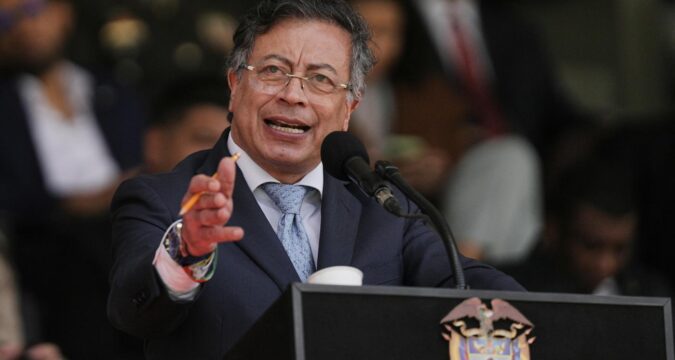
Petro propone un gobierno de “transición compartido” para Venezuela en medio de tensión con EEUU
Associated Press
BOGOTÁ (AP) — El presidente colombiano Gustavo Petro propuso un gobierno de transición en Venezuela que implique un acuerdo político entre el gobierno de Nicolás Maduro y los sectores opositores, en medio de la tensión generada por la presencia militar estadounidense en el Caribe.
Petro planteó para Venezuela un “gobierno de transición compartido para convocar una voluntad popular amplia que decida sobre acuerdos y puede abrir caminos de democracia, sin presiones indebidas”, según indicó al filo de la medianoche del jueves en la red social X.
The Associated Press consultó al gobierno venezolano sobre la propuesta de Petro sin obtener una respuesta de inmediato.
La propuesta llega luego de que la canciller colombiana Rosa Villaviencio dijera en una entrevista con Bloomberg que creía que Maduro ha considerado la posibilidad de una transición para salir del poder en la que “pueda irse sin que tenga que pasar por la cárcel”. Horas después, la Cancillería negó en un comunicado que Colombia diese su apoyo a un supuesto plan para la salida negociada de Maduro.
Petro, quien mantiene relaciones diplomáticas con Maduro sin reconocerlo como ganador de las cuestionadas elecciones presidenciales de 2024, recordó el fallido esfuerzo diplomático que lideró junto a México y Brasil para mediar e intentar frenar la crisis política en Venezuela el año pasado.
“La idea era lograr un desmonte de sanciones a Venezuela y a Maduro, abrir un clima de descalamiento (desescalamiento) del conflicto político rápido y lograr elecciones libres cuánto antes”, explicó Petro.
Maduro siguió en el poder y se posesionó como presidente para un tercer periodo consecutivo, pese a las evidencias creíbles presentadas por la oposición de que perdió las últimas elecciones frente a su rival Edmundo González.
Dentro de la facción dominante de la oposición, que lidera María Corina Machado, no han apoyado hasta ahora propuestas para alternarse el poder ni compartirlo porque alegan que fueron los ganadores de las elecciones y han exigido la salida del poder de Maduro.
Petro explicó que el “gobierno compartido” sería una nueva versión de un modelo de alternancia en el poder que funcionó en Colombia entre los dos partidos tradicionales en el siglo pasado, una idea en la que ya había insistido tras las elecciones venezolanas.
“Tanto al gobierno de (Joe) Biden, como a los miembros de la oposición venezolana en reunión hecha en Bogotá, como a Maduro, les expuse la posibilidad de un gobierno compartido al estilo del Frente Nacional de Colombia, durante un tiempo que permitiera la construcción de confianza y la realización ahí sí de elecciones libres”, indicó Petro.
El mandatario colombiano indicó que las condiciones actuales son diferentes por el despliegue militar de Estados Unidos en el mar Caribe, que ha aumentado la presión sobre Maduro, indicando que un “desmantelamiento violento del Estado venezolano actual” fortalecerá a los grupos armados ilegales.
El presidente de Estados Unidos, Donald Trump, se negó el lunes a descartar acciones militares contra Venezuela a pesar de mencionar la posibilidad de una apertura diplomática con Maduro, quien ha insistido en que el aumento de la presencia militar tiene como objetivo sacarlo del poder.

Steve Reaven’s top 10 boys basketball teams and 25 players to watch in Lake County for the 2025-26 season
Warren, which reached the Class 4A state championship game last season, and North Suburban Conference rival Waukegan top the list.
TOP 10 TEAMS
1. Warren (27-11): Junior guard Jaxson Davis, one of the nation’s top players with offers from some of the top college teams, will be the North Suburban Conference contender’s catalyst again after leading the team to the Class 4A state championship game last season. Well-rounded senior guard Braylon Walker also returns to the Blue Devils’ starting lineup. Senior forward Avonn King and senior guard Javin Griffin played valuable minutes last season, and senior wing Joel Paasch and junior forward Cashius Collins are poised to contribute.
2. Waukegan (24-8): Stopped by Warren in the sectional semifinals in 2024 and the sectional final in 2025, the NSC co-champion Bulldogs bring back three starters and two key reserves for another shot. Senior guard Carter Newsome, who is clutch in big moments, and senior wing Simereon Carter are fourth-year starters, and 6-foot-7 senior forward Jaali Love has an inside-outside skill set.
3. Deerfield (24-8): Also sectional finalists last season, the Warriors pose a big problem for opponents with 6-8 senior forward Jake Pollack (Dartmouth), who averaged 18.5 points and 7.5 rebounds. Senior guard Evan Nagler (Case Western Reserve) also is a third-year starter. They will be joined in the rotation by junior guard Tommy Donahue and senior guards Chase Arenberg, Max Garland and Ethan Weiner.
4. Stevenson (22-11): Backcourt production won’t be a problem for the NSC co-champion Patriots with soon-to-be 1,000-point scorer Rocco Pagliocca and returning starter Donny Williams leading the charge as seniors. Senior guard Aidan Albrecht will be a factor as well, and the frontcourt will be anchored by 6-5 junior Quinton Frakes and 6-7 sophomore Max Dabbs. The rotation will also feature junior guard Cohen Ottaviano and sophomore guard Bilguun Ankhbayar.
5. Wauconda (11-22): The Bulldogs took their lumps but have their entire nucleus back, making them the Northern Lake County Conference favorites. Senior guard Tony Salemi made a splash last season, and senior guard Alex Ortega is the team’s spark plug. With size and versatility, 6-6 junior forward Austin Carlsen is a matchup problem. Junior guard Leo Brinias and senior guard Cole Plucinski round out the starting five, and junior forward Cooper Karaszewski adds versatility at both ends.
Libertyville’s Bryce Wegrzyn (32) puts up a shot as Waukegan’s Jaali Love (3) defends during the Class 4A Libertyville Regional championship game on Friday, Feb. 28, 2025. (Rob Dicker / News-Sun)
6. Libertyville (16-14): The inside-outside combination of 6-8 senior forward Bryce Wegrzyn, who averaged 19.2 points and 9.3 rebounds last season, and sophomore guard Terrence Davis Jr. gives the Wildcats a formidable duo to try to climb in the NSC standings. Senior guard Ben Kristopher was a summer standout, and two other key contributors, senior guards Trevor Wallace and Jack Cenar, also are back. Two sophomores, guard Nick Baker and forward Logan Boggs, will likely find spots in the rotation.
7. Lake Zurich (13-18): Three starters — senior guard Kain Kretschmar, senior forward Adrian Riep and senior guard Evan Peterson — return for the Bears, who are always tough on defense. Senior guards Tyler Reed, Reid Pfeifer and Zach Bonelli-Schultz will figure prominently, and 6-4 junior Caleb Strauss adds length. Freshman point guard Javian Blanco will be given an opportunity to prove his mettle early.
8. Grant (16-12): The Bulldogs led the NLCC in scoring last season and have the personnel to be just as potent offensively. Leading the way are senior guard Damarrion Smith and junior guard Charles Schlicht. Noah McMath’s injury-marred junior season is behind him, and he’ll make an impact. Junior guards Darnell “DJ” Stitts III and Joshua Gamboa are also slated to play big roles.
9. Vernon Hills (17-15): Three returning starters headline a deep senior class for the Cougars. Guard Jeremy Zamost is the energetic floor leader, guard Brady Larsen led the team in 3-point shooting last season and 6-5 center Daniel Odhiambo holds the team’s single-game record for blocked shots with eight. Senior forward Nolan Brettner and senior guards Graham Lis and Nico Robles complement them, and senior guard Tripp Davis and senior forward Hudson Self are expected to contribute off the bench.
10. Grayslake Central (21-10): With two starters back and a deep roster, the defending NLCC champion Rams won’t relinquish their crown easily. Senior guard Alex Granville is a stellar off-ball defender, and the other returning starter, senior wing Cole Halverson, should flourish in an expanded role. Senior guards Carson Woods and senior Aidan Bechard move up in the rotation, and two football players, senior guard Bryce Carlson and senior forward Cordell Johnson, will also play key roles. Keep an eye on freshman guard Verton Freeman.
25 PLAYERS TO WATCH
Simereon Carter, Waukegan, senior, forward
Jaxson Davis, Warren, junior, guard
Terrence Davis Jr., Libertyville, sophomore, guard
Alex Granville, Grayslake Central, senior, guard
David Isaacson, Highland Park, senior, guard
Jaquan Jamerson, Round Lake, junior, guard
Jaali Love, Waukegan, senior, forward
Kain Kretschmar, Lake Zurich, senior, guard
Ethan Matz, Carmel, senior, guard
Uros Mitrovic, Grayslake North, senior, forward
Dominic Mordini, Lake Forest, senior, guard
Evan Nagler, Deerfield, senior, guard
Ben Newcomb, Lakes, junior, forward
Carter Newsome, Waukegan, senior, guard
Daniel Odhiambo, Vernon Hills, senior, center
Alex Ortega, Wauconda, senior, guard
Rocco Pagliocca, Stevenson, senior, guard
Jake Pollack, Deerfield, senior, forward
Tony Salemi, Wauconda, senior, guard
Charles Schlicht, Grant, junior, guard
Damarrion Smith, Grant, senior, guard
Maurice Thompson, Zion-Benton, junior, guard
Braylon Walker, Warren, senior, guard
Bryce Wegrzyn, Libertyville, senior, forward
Donny Williams, Stevenson, senior, guard
Steve Reaven is a freelance reporter.
https://www.chicagotribune.com/2025/11/21/lake-county-boys-basketball-preview-2025-2026-season/
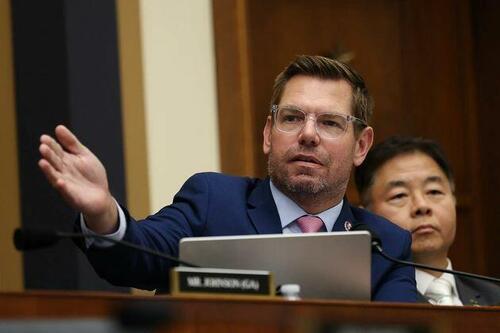
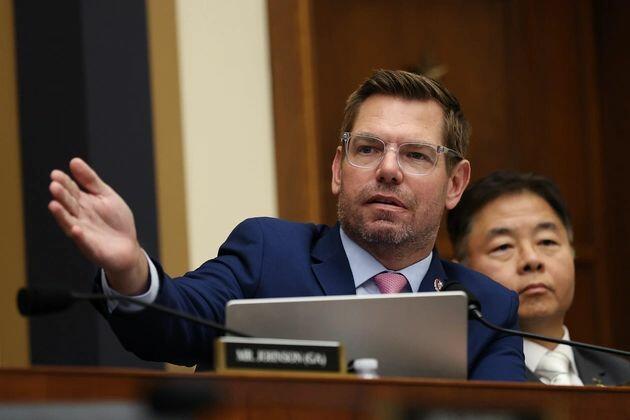
Swalwell Announces Run For California Governor Amid Probe Into Alleged Mortgage Fraud
Swalwell Announces Run For California Governor Amid Probe Into Alleged Mortgage Fraud
Rep. Eric Swalwell (D-CA) announced Thursday night that he will run for California governor in 2026, joining an already-packed field of Democratic candidates vying to replace Gov. Gavin Newsom when his term ends.
Appearing on “Jimmy Kimmel Live!”, Swalwell – a seven-term member of Congress and key figure behind the congressional push to impeach President Donald Trump during his first term, said that Trump is “not going to like this show,” before slamming the president and his administration for several minutes.
“What are we going to do? How do you stop this?” asked Kimmel.
“I’ll tell you what I’m going to do. I love California … that’s why it pisses me off to see Californians running through the fields where they work from ICE agents, or troops in our streets. It’s horrifying. Or cancer research being cut,” Swalwell replied.
“Our state, this great state, needs a fighter and a protector, someone who will bring prices down, lift wages up. I came here tonight, Jimmy, to tell you and your audience that I’m running to be the next governor of California.”
Swalwell said in a statement that he’s running for governor because “prices are too high and people are scared,” adding that the state is “under attack” from federal actions ranging from law enforcement deployments to funding cuts and – of course, immigration actions.
As Politico frames it, “His decision to enter the race late in the year — when other candidates have had as much as a year’s head start — is the latest sign of an unsettled Democratic field in the race to succeed Gavin Newsom, with no decisive frontrunner.”
The leading Democrat, Katie Porter, has been hobbled by unflattering viral videos, while former Health Secretary Xavier Becerra and former Los Angeles mayor Antonio Villaraigosa have struggled to break into double-digits in the polls. The other contenders — state schools chief Tony Thurmond, former state controller Betty Yee, entrepreneur Stephen J. Cloobeck and former assemblymember Ian Calderon — have failed to break out from the bottom of the pack.
Other potential entrants to the race include a pair of billionaire entrepreneurs — Tom Steyer and Rick Caruso — while some Sacramento players have encouraged Attorney General Rob Bonta to take another look at the race.
The outlet also notes that “Swalwell has also become an object of derision on the right, where his detractors are quick to point out his previous ties to a Chinese spy who sought to influence American politicians. Swalwell has said he cooperated with the FBI when he was alerted to her work for the Chinese government and that he immediately cut off contact.”
Ongoing Investigation
Swalwell’s announcement comes roughly a week after Federal Housing Finance Agency (FHFA) Director Bill Pulte referred him to the DOJ for criminal prosecution over alleged mortgage fraud – becoming the fourth Democratic official to face mortgage fraud allegations in recent months.
In a letter to AG Pam Bondi earlier this month, FHFA director Bill Pulte said that Swalwell may have made false or misleading statements in loan documents.
Pulte alleges that Swalwell has several million dollars worth of loans and refinancing based on him declaring his primary residence as Washington, and has called for an investigation into mortgage fraud, state and local tax fraud, insurance fraud, and any related crimes.
The next day, Swalwell lashed out – saying in a statement “As the most vocal critic of Donald Trump over the last decade and as the only person who still has a surviving lawsuit against him, the only thing I am surprised about is that it took him this long to come after me,” adding “Like James Comey and John Bolton, Adam Schiff and Lisa Cook, Letitia James and the dozens more to come — I refuse to live in fear in what was once the freest country in the world.“
Tyler Durden
Fri, 11/21/2025 – 10:45