Category: News

Tribunal japonés ordena a Norcorea a pagar a víctimas de repatriación forzada
Por MARI YAMAGUCHI
Un tribunal japonés responsabilizó el lunes a Corea del Norte por la violación de los derechos humanos de cuatro demandantes que llegaron al país con la falsa promesa de Pyongyang de vivir en un “paraíso en la Tierra” después de la guerra, ordenando al gobierno norcoreano a pagarles 22 millones de yenes (143.000 dólares) a cada uno, una decisión que los sobrevivientes y sus partidarios consideraron sin precedentes.
Kenji Fukuda, abogado de los demandantes, afirmó que era significativo ganar una decisión judicial que reconociera las violaciones de derechos humanos de Corea del Norte. Sin embargo, “el fallo es solo un papel y obtener el dinero de la compensación es un desafío”, expresó.
El Tribunal de Distrito de Tokio dictaminó que los demandantes, tanto coreanos étnicos como japoneses, fueron forzados a vivir durante décadas en condiciones duras sin libertad para regresar a casa después de mudarse a Corea del Norte junto con decenas de miles de personas bajo un programa de repatriación de 1959 a 1984, en el cual el Norte les dio falsas promesas de atención médica gratuita, educación, empleos y otros beneficios.
El juez Taiichi Kamino dijo que los demandantes vivieron bajo condiciones severas y sin libertad para elegir residencia, escuela o empleos, durante décadas.
“No es una exageración decir que la mayor parte de sus vidas fueron arruinadas por Corea del Norte”, manifestó, ordenando al gobierno de dicho país a pagar daños por un total de 88 millones de yenes (572.000 dólares) a los demandantes.
Originalmente, cinco demandantes presentaron una demanda en 2018 ante el Tribunal de Distrito de Tokio buscando 100 millones de yenes (650.000 dólares) cada uno en compensación por “solicitud y detención ilegal”. Desde entonces, dos de ellos han fallecido, pero el caso de uno lo asumió su hijo, por lo que ahora hay cuatro demandantes.
En un fallo de 2022, el tribunal reconoció que los demandantes se mudaron a Corea del Norte debido a la información falsa proporcionada por el Norte y una organización pro-norcoreana en Japón llamada Chongryon, pero rechazó sus reclamos de compensación por falta de jurisdicción japonesa y expiración del plazo para demandar.
En apelación, el Tribunal Superior de Tokio dictaminó en 2023 que el gobierno de Corea del Norte violó los derechos fundamentales de los demandantes y reconoció la jurisdicción de Japón sobre el caso, devolviéndolo al tribunal inferior y ordenando revisar los daños.
Japón y Corea del Norte no tienen relaciones diplomáticas y el Norte no ha respondido a la demanda ni enviado representantes al tribunal.
Una demandante, Eiko Kawasaki, de 83 años, una coreana de segunda generación nacida en Kioto, abordó un barco hacia Corea del Norte en 1960 tras la repetida promoción de Chongryon del “paraíso en la Tierra”. Estuvo atrapada en ese país durante 43 años hasta 2003, cuando desertó a Japón a través de China, dejando atrás a sus hijos adultos.
Kawasaki dijo que el “fallo es solo un comienzo”.
“Creo que Corea del Norte ignorará el fallo… No creo que Kim Jong Un reaccione o comente”, manifestó Kawasaki.
Fukuda, el abogado, dijo que la incautación de posibles activos norcoreanos en Japón podría ser una forma de obtener compensación por los daños, aunque no dio más detalles.
Kawasaki también quisiera responsabilizar a Chongryon y obtener una disculpa del gobierno japonés por el acuerdo de repatriación firmado entre las sociedades de la Cruz Roja japonesa y norcoreana, aunque Japón no estaba promoviendo activamente el programa.
Instó al gobierno japonés a brindar apoyo a las víctimas de repatriación atrapadas en el Norte, diciendo que han sufrido al igual que los japoneses secuestrados a Corea del Norte en las décadas de 1970 y 1980.
Kane Doi, director de Japón en Human Rights Watch, instó a Tokio a aprovechar el fallo y presionar a Pyongyang para que asuma la responsabilidad, de modo que otras víctimas y sus familias puedan reasentarse en Japón.
Aproximadamente medio millón de coreanos étnicos viven en Japón y aún enfrentan discriminación con frecuencia. Muchos son descendientes de coreanos obligados a trabajar en minas y fábricas durante la colonización japonesa de la península de Corea de 1910 a 1945, un pasado que ha tensado repetidamente las relaciones entre Japón y las Coreas.
En 1959, Corea del Norte inició un programa de reasentamiento para atraer a coreanos en el extranjero para compensar a los trabajadores muertos durante la Guerra de las Coreas. El gobierno japonés veía a los coreanos étnicos como forasteros y acogió el programa, ayudando a organizar el viaje de personas al Norte. Más de 93.000 residentes coreanos étnicos de Japón, sus cónyuges japoneses y familiares se mudaron.
Aproximadamente 150 han logrado regresar a Japón, según un grupo que apoya a los desertores de Corea del Norte.
________
Esta historia fue traducida del inglés por un editor de AP con la ayuda de una herramienta de inteligencia artificial generativa.

EU Launches New Probe Into Musk’s AI Chatbot Grok
EU Launches New Probe Into Musk’s AI Chatbot Grok
The European Commission has opened a new formal investigation into Elon Musk’s X under the Digital Services Act (DSA) and expanded a separate probe launched in December 2023.
“The new investigation will assess whether the company properly assessed and mitigated risks associated with the deployment of Grok’s functionalities into X in the EU,” the European Commission wrote in a press release, adding, “This includes risks related to the dissemination of illegal content in the EU, such as manipulated sexually explicit images, including content that may amount to child sexual abuse material.”
The Commission is examining whether X:
Diligently assess and mitigate systemic risks, including of the dissemination of illegal content, negative effects in relation to gender-based violence, and serious negative consequences to physical and mental well-being stemming from deployments of Grok’s functionalities into its platform.
Conduct and transmit to the Commission an ad hoc risk assessment report for Grok’s functionalities in the X service with a critical impact on X’s risk profile prior to their deployment.
“Non-consensual sexual deepfakes of women and children are a violent, unacceptable form of degradation,” EU tech commissioner Henna Virkkunen said, who was quoted by Bloomberg. This case falls under the DSA, which places strict guardrails on harmful and illegal material on the web. And it’s up to Brussels to define what is illegal material…
X, a subsidiary of xAI, pointed Bloomberg to a previous statement that it actively removes illegal content where necessary: “We remain committed to making X a safe platform for everyone and continue to have zero tolerance for any forms of child sexual exploitation, non-consensual nudity, and unwanted sexual content.”
The EU’s Grok investigation comes shortly after a separate 120 million euro fine imposed on X under the DSA.
In that earlier case, EU regulators found that X’s paid blue check system misled users, the company obstructed researchers’ access to platform data, and it failed to properly establish an advertising transparency repository.
Vice President JD Vance criticized Brussels in an X post last month, saying, “The EU should be supporting free speech, not attacking American companies over garbage.”
Our assessment is that the EU’s move against Grok has little to do with safety. If it did, regulators would be scrutinizing every major social media platform and chatbot operating on the continent. Instead, Brussels appears unwilling to tolerate free speech or anything associated with Elon Musk.
Forcing xAI out of the EU would only confirm that the DSA functions less as a safety framework and more as a censorship weapon designed to crush free speech. If Europe chooses stagnation over freedom, the outcome here is very clear: the US becomes an even more attractive space for innovation and freedom.
We must note that the EU’s Grok investigation comes shortly after Europe plans to launch its own X-like social media platform called “W,” a subsidiary of Swedish climate media firm We Don’t Have Time.
Tyler Durden
Mon, 01/26/2026 – 07:45
https://www.zerohedge.com/technology/eu-launches-new-probe-musks-ai-chatbot-grok

Daywatch: American Academy of Pediatrics releases own vaccination schedule
Good morning, Chicago.
As an alternative to new federal vaccine recommendations, the Itasca-based American Academy of Pediatrics released its own childhood vaccine schedule today with the backing of a dozen of the nation’s most prominent medical groups and associations.
The American Academy of Pediatrics’ vaccine schedule differs from the new federal one in a number of ways, largely sticking to previous recommendations. For example, it continues to recommend routine flu vaccinations, hepatitis B vaccinations for all infants and COVID-19 vaccines for all children from the ages of 6 to 23 months, whereas the new federal schedule does not, instead leaving it up to parents and doctors whether to vaccinate individual children, in most cases.
“The recommendations from the CDC, I think, are confusing for parents and for pediatricians,” said Dr. Adam Ratner, a pediatric infectious disease specialist and a member of the Academy’s committee on infectious diseases. “These recommendations … are very different from what CDC recommended a year ago or two years ago or five years ago. It’s not that the science has changed. It’s that the people running CDC have changed.”
Read the full story from the Tribune’s Lisa Schencker.
Here are the top stories you need to know to start your day, including: what’s in the weather forecast this week, how a church community sustained a Chicago-area family through ICE detention and celebrating Derrick Rose’s Chicago legacy as the Bulls retire his No. 1 jersey.
Today’s eNewspaper edition | Subscribe to more newsletters | Asking Eric | Horoscopes | Puzzles & Games | Today in History
Attorney General Keith Ellison, right, and Minnesota Gov. Tim Walz give a news conference in Blaine, Minn., Jan. 25, 2026. (AP Photo/Abbie Parr)
Judge set to hear arguments on Minnesota’s immigration crackdown after fatal shootings
A federal judge will hear arguments today on whether she should at least temporarily halt the immigration crackdown in Minnesota that has led to the fatal shootings of two people by government officers.
The state of Minnesota and the cities of Minneapolis and St. Paul sued the Department of Homeland Security earlier this month, five days after Renee Good was shot by an Immigration and Customs officer. Saturday’s shooting by a Border Patrol officer of Alex Pretti has only added urgency to the case.
Donald Trump, unbowed by backlash to Minneapolis shooting, blames Democrats for ‘chaos’
Republican calls are growing for a deeper investigation into the fatal Minneapolis shooting
Tracy Curran holds a photo of Alex Pretti, a man killed in Minneapolis by federal immigration agents, as she attends a rally in the Loop on Jan. 25, 2026, to protest the Department of Homeland Security and Immigration and Customs Enforcement. (Eileen T. Meslar/Chicago Tribune)
Activists and politicians call for abolition of ICE at downtown protest following fatal shooting of Alex Pretti
Thousands of protesters faced snow and below-freezing temperatures in the Loop yesterday afternoon to protest ongoing violence in the Trump administration’s immigration crackdown in Minnesota.
A delivery driver waits to cross East Wacker Drive in Chicago’s Loop while snow falls and a CTA “L” train passes, Jan. 25, 2026, as cold weather continues. (Brian Cassella/Chicago Tribune)
After snowstorm, bitter cold will grip Chicago again, weather officials warn
On the tail end of a polar blast followed by a massive winter storm that has hit over 200 million people across the country and covered the Chicago area with several inches of snow, officials warn that the extreme weather won’t let up, even if the snowflakes stop falling as forecast by early yesterday evening.
Between midnight and noon today, Cook County will again experience “dangerously cold” windchills as low as minus 20 degrees, and even colder away from the lake.
More than 11,400 flights canceled as massive winter storm sweeps across US
Chalmers STEAM Elementary School Principal Romian Crockett greets arriving students on Jan. 22, 2026, in Chicago. Chalmers has one of the highest attendance rates in the district, and is also one of the few schools to dramatically reduce chronic absenteeism post-pandemic. (Antonio Perez/Chicago Tribune)
Can school climate solve chronic absenteeism? Ask these principals.
Attendance at Chalmers STEAM Elementary rebounded after the pandemic, even as other schools struggled across Chicago and Illinois. During the 2021-22 school year, nearly half of Chalmers students were chronically absent, missing at least two days of class per month. Last year, that figure had fallen to fewer than 1 in 6 students, or about 17%.
It’s a rare bright spot for CPS: The districtwide chronic absenteeism rate was 40% last year. That’s a significant jump from 2019, when the rate was 24%. Experts warn that the stubborn metric has long-term implications for learning.
Work continues on the Obama Presidential Center in Chicago on Jan. 13, 2026. (E. Jason Wambsgans/Chicago Tribune)
As Obama center opening approaches, foundation is touting short-term rentals
As former President Barack Obama’s namesake foundation prepares to roll out the welcome mat to huge crowds of tourists flocking to the South Side when the Obama Presidential Center opens its doors in a few months, it is promoting Airbnb, a company with close ties to the Obama family that has faced international protests for its impact on local rents and housing supply.
Marina Lopez helps her children get ready for church at their home on Jan. 18, 2026. (Stacey Wescott/Chicago Tribune)
A mother’s way home: How a church community sustained a Chicago-area family through ICE detention
Before choir practice on a Saturday morning, Marina Lopez rushed her three children to get ready. They were running late.
“Andenles, ya apaguen la tele y ponganse la chamarra. Hurry, turn off the TV, put on your jacket,” she told them.
Her youngest daughter, Sofia, ran toward her mother so that she could tie her hair into a braid. Lopez smiled. She had dreamed of mornings like this. There was a time she worried she would never be able to braid her daughter’s long, brown hair again. Or even see her again.
Ice fishermen access Lake Michigan at Little Bay de Noc in Gladstone, Michigan, on Jan. 15, 2026. (Zbigniew Bzdak/for the Chicago Tribune)
Great Lakes ice resurges this winter, but unpredictable shifts threaten businesses and ecosystem
On a brisk January day with windchills plunging to minus 25 degrees, Paul “Blade” Bloedorn stood out on nearly 2 feet of ice on Lake Michigan’s Little Bay de Noc.
Last weekend, more than 400 shacks speckled the frozen bay, Bloedorn recalled, as ice anglers flocked to the Upper Peninsula to take advantage of perfect ice conditions.
This winter, Bloedorn and Great Lakes experts say lake conditions are shaping up well for ice fishing, a welcome shift for coastal communities that have endured recent winters with little ice.
Heavy equipment operator Michael Grace sits in the Michigan City Public Library on Jan. 21, 2026. Grace, 54, was injured Dec. 16, 2025, while working on a new data center in Michigan City after two weeks on the job. (Andy Lavalley/for the Post-Tribune)
‘In extreme pain’: Workers injured at Michigan City’s Project Maize data center site
For about five weeks, Michael Grace has been without an income source. He’s watched his funds deplete as his needs continue to grow, struggling to pay for cat food, laundry detergent and his phone bill.
Grace can’t work, and he doesn’t know when he will work next.
Chicago Bears quarterback Caleb Williams (18) throws the ball in the first quarter of the NFC divisional playoff game against the Los Angeles Rams at Soldier Field on Jan. 18, 2026. (Eileen T. Meslar/Chicago Tribune)
Chicago Bears roster breakdown: How the offensive players fared in 2025 — and their contract statuses for 2026
Bears general manager Ryan Poles and coach Ben Johnson have some big decisions to make this offseason.
Year 1 with Johnson at the helm was an overwhelming success. But as the coach said himself, it’s a new year and the Bears are “back to square one.” They will have plenty to discuss in the coming weeks and months.
Derrick Rose gives a speech during a ceremony to retire his No. 1 jersey by the Chicago Bulls at the United Center in Chicago on Jan. 24, 2026. (Chris Sweda/Chicago Tribune)
Derrick Rose celebrates his Chicago legacy as Bulls retire his No. 1 jersey: ‘It was always meant to be’
Derrick Rose knew he was going to cry.
It took two minutes for Rose to take off his glasses, bowing his head at center court of the United Center, pressing his hand to his eyes as tears leaked out onto the hardwood. Former teammate Taj Gibson was forced to pause as well, voice cracking as he attempted to articulate what Rose meant to him, to the Bulls, to Chicago.
Derrick Rose jersey retirement: 9 dates that define the Bulls great’s iconic career
Photos: Bulls retire Derrick Rose’s No. 1 jersey
Cassidy Slaughter-Mason and John Judd in “Birds of North America” at A Red Orchid Theatre. (Evan Hanover)
Review: ‘Birds of North America’ at A Red Orchid Theatre offers autumnal balm for a cold winter night
As inviting theatrical titles go, “Birds of North America” is one only an ornithologist could love. But Tribune critic Chris Jones writes that the new show at Red Orchid Theatre turns out to be a gorgeous little 90-minute two-hander, a beautifully acted and directed father-daughter play capable of transporting you away from the frozen tundra and back to when leaves were just beginning to fall and birds still sang from the trees.

Perry Tchiegne wins Benet fans’ favor in varsity debut as anticipation builds: ‘He’s getting better every day’
Benet junior guard Perry Tchiegne checked back into the game and slapped hands with teammate Ethan MacDermot.
Tchiegne also heard the cheers from the raucous home fans.
“It feels great because it shows that my team loves me, the school loves me, and I love them back,” he said.
Three minutes earlier, the 6-foot-5 Tchiegne had to be helped off the court with what looked like a serious leg injury. The Redwings, who are ranked No. 1 in Class 4A in the poll by The Associated Press, had a seven-point lead over No. 5 Warren with 5:53 left in the fourth quarter Saturday night, and the crowd in the packed gym in Lisle went silent for a moment.
But there was no cause for worry.
“It was just a little cramp, so I just got water, did some stretching,” Tchiegne said. “I’m all good.”
So were the Redwings, who defeated Warren 67-60 in the marquee game of the When Sides Collide shootout. It was a rematch of the 2025 4A state championship game, which Benet won 55-54.
Tchiegne was not on the varsity team last season. But he played a huge role in this victory, contributing 10 points, nine rebounds and two assists, as the Redwings (23-1) extended their winning streak to 20 games.
“We were frazzled early,” Benet coach Gene Heidkamp said. “I think our kids were so excited to play that we came out a little wild and a little out of control, and I think Perry stabilized that with a couple big plays in the first quarter.
“So I give him a lot of credit. He was a huge part of the win on both sides of the floor.”
Indeed, Tchiegne scored on two consecutive powerful drives in the first quarter that set the tone. After returning from his injury, he scored Benet’s final basket of the game to give the Redwings a 65-56 cushion with 2:05 left.
In between, Tchiegne was a force at both ends. He made 5 of 7 shots and also spelled senior guard Jayden Wright, an Eastern Illinois commit who scored 21 points, to defend Warren star junior guard Jaxson Davis at times.
Davis, the state’s consensus best player, scored a game-high 28 points, but he made only three baskets after halftime even though the Blue Devils (17-2) trailed for the entire second half. That happened after Heidkamp switched Tchiegne onto Davis.
“We had to,” Heidkamp said. “Perry is a little bit longer than Jayden, and (Davis) is so strong, and he creates so much space for himself that we were just hoping we could do a better job to contest those 3-point shots.”
Benet’s Perry Tchiegne (5) looks to shoot as Warren’s Joel Paasch defends during a game in the When Sides Collide shootout in Lisle on Saturday, Jan. 24, 2026. (James C. Svehla / Naperville Sun)
The strategy worked. Davis attempted only three 3-pointers in the second half, making one. Tchiegne blocked one of the other two.
“He’s a pretty tough matchup,” Tchiegne said.” He can shoot, he can drive, so you’ve got to respect all he does, really kind of force him to our bigs and not let him shoot the ball.”
Tchiegne has made the most of his first shot at playing varsity basketball. He has started every game alongside Wright, senior guard MacDermot, North Dakota State-bound senior center Colin Stack and junior forward Edvardas Stasys.
MacDermot speaks highly of Tchiegne’s efforts.
“I feel like on defense, he’s the main player,” MacDermot said. “He had to guard Jaxson Davis, the best player on the court, and I feel like he did a great job on him.
“I also feel like he’s a secure player on the court. So when I give him the ball, I know something good is going to happen with it.”
Which is why Wright was relieved that Tchiegne avoided a major injury.
“It was awesome to have him back,” Wright said. “He was a very important piece of this win.”
Wright suggested more is to come from Tchiegne.
“Coach is on him pretty hard,” Wright said. “He’s getting better every day, and we all have confidence in him. It’s awesome playing with him. I love that he’s a great teammate.”
Benet’s Perry Tchiegne (5) drives to the basket against Warren’s Joel Paasch during a game in the When Sides Collide shootout in Lisle on Saturday, Jan. 24, 2026. (James C. Svehla / Naperville Sun)
Tchiegne loves playing in front of big crowds.
“It was a great environment,” he said. “I love the crowd, love the fans. I think I play better in tougher games.”
Heidkamp said this is only the beginning for Tchiegne.
“He’s a very good slasher,” Heidkamp said. “He can get to the rim, and he’s a good passer, so his potential is in front of him. He’s just scratching the surface of how good he can be.”
Matt Le Cren is a freelance reporter.
https://www.chicagotribune.com/2026/01/26/basketball-warren-benet-perry-tchiegne/
Erosion Of Freedom In The EU: From Censorship To Centralized Power
Erosion Of Freedom In The EU: From Censorship To Centralized Power
Submitted by Thomas Kolbe
The European Union has increasingly fallen on the defensive in foreign policy. Domestically, the Green Deal has significantly damaged the economic foundation. Together with its main pillars Berlin and Paris, the Brussels-based EU Commission is pushing forward the systematic construction of a censorship apparatus to suppress its own failures from public debate.
The heated discussion in recent days over the censorship of unpopular platforms like Nius is far more than just a warning sign. Schleswig-Holstein’s Minister-President Daniel Günther offered a deep insight into the strategic toolbox of current politics during Markus Lanz’s ZDF show. The politician’s subsequent, at times desperate, attempts—alongside the host and state-affiliated media—to retract his openly stated censorship demands toward critical platforms and media such as Nius illustrate the seriousness of the situation: Germany is slowly but steadily sliding toward a surveillance state.
The Vulgar Side of Censorship
The debate over controlling public opinion, particularly in the digital space, also has a vulgar, unrestrained side—as Apollo News experienced a few months ago. At that time, the local branch of the Left Party openly called for, if necessary, violent action against the newsroom to drive it out of its neighborhood. The statement was phrased as: one should “kick the journalists on their keys.” This is far more than a verbal lapse by radicalized ideologues. It marks a rupture in the political culture of the Federal Republic, in which repressive elements, faced with a simmering economic crisis and growing criticism of the political course, emerge plainly and unapologetically.
We are witnessing an attempt to delegitimize what is visible: the democratic right to freedom of speech and open discourse. The very nature of new digital media—their ability to create fragmented opinion clusters—makes them dangerous for a political system increasingly focused on control. Media like Apollo News contribute to genuine public discourse and thereby evade the interpretive authority of established apparatuses, making them a threat to the censor.
A Pattern at the EU Level
On the EU level, a media-tactical pattern emerges. Representatives in Brussels and their national proponents pursue a clear goal: when externally pressured—such as in the Greenland conflict with the United States—they present themselves in public discourse as victims. Domestically, however, they adopt precisely the position they accuse U.S. President Donald Trump of: acting with elbows, showing no regard for fair negotiation.
The narrative created in this mode is largely carried by a media apparatus closely aligned with Brussels’ political lines. We have seen this in climate policy (Apollo News reported): first, the narrative of existential emergency is established, the story of a burning planet woven into public discourse over years. This is followed by the construction of a centrally planned, strictly regulated transformation economy. Criticism of this strategy has so far been marginalized through a form of soft censorship, placing critics near conspiracy theories in public media. The critic is ridiculed, publicly humiliated.
A similar pattern is evident in the EU’s treatment of countries like Hungary. Because Budapest has resisted open borders and mass migration for years, it is sanctioned in the style of a known bully: sometimes through funding cuts, sometimes via openly threatened penalties. It is always about money. The EU sanctions rather than negotiates. In essence, the EU applies Trump’s “dealmaker” strategy with precision domestically, against its own citizens.
Romania experienced similar treatment last year. During the presidential election, significant pressure was applied to the judicial apparatus to annul the unwanted election of a right-wing conservative president. The aim was not political competition over the country’s future, but institutional and legal intervention to control the outcome.
The explicit goal of EU policy is to centralize power within the Brussels Commission apparatus permanently. This can only succeed if dissenting forces—such as the strengthening right-wing opposition in Eastern Europe—are kept in check and growing criticism of the disastrous economic course of the Green Deal is systematically excluded from public debate.
The Decline of Germany
Since 2018, Germans have witnessed the gradual decline of their industry—and with it the erosion of the foundation of their prosperity. The idea of “Net Zero,” the forced restructuring of the economy toward a fully CO₂-free order, has so far led to a roughly 14% decline in industrial production in Germany, according to the Kiel Institute for the World Economy. The German Chamber of Commerce and Industry (DIHK) reports that over 400,000 industrial jobs were lost in this period.
While industrial value creation and productivity shrink, the state apparatus expands. Bureaucracy and administration boom, creating hundreds of thousands of new positions where no market value is generated. At the same time, a stagnating or shrinking GDP—exacerbated by ongoing mass migration—is spread across a growing population. The result is a large-scale poverty program, which the government prefers not to discuss openly.
The Digital Services Act as a Censorship Tool
The debate over this process increasingly shifts to digital platforms. Leading the way are Elon Musk’s company X, as well as secondary arenas like Telegram or Reddit, offering forums for exchange, research, and counter-speech—places where information circulates that Brussels or Berlin will not accept unchallenged. This is exactly where the problem lies from the policymakers’ perspective: they want to buy time, convinced of the success of their social and economic transformation strategy, while reversal would mean a loss of power.
With the Digital Services Act (DSA), a comprehensive regulatory framework has come into force EU-wide. In simple terms, it obliges large online platforms to remove, restrict, or flag content classified under EU law as illegal, hateful, or socially harmful, including disinformation. Companies must also report on these actions in detail.
In practice, the DSA forces corporations like Meta, X, or TikTok—under threat of heavy fines—to systematically act against content deemed problematic, for example on climate policy, pandemic consequences, migration, or the Ukraine war. Measures include deletions, shadowbanning, warning labels, and deep interventions in recommendation algorithms.
Critics argue that the underlying criteria are often vague, placing political speech under preventive moderation pressure—even before open societal debate can occur.
The Perfidy of the DSA
The DSA’s perfidy lies in creating deliberately vague pseudo-legal grounds under terms like hate, incitement, and disinformation. Platform operators are pushed by economic incentives into preemptive censorship. Legal clarity is not the controlling factor; economic pressure via threat of fines is.
Combined with a growing network of so-called “trusted flaggers”—NGOs and private actors reporting potentially critical content to national authorities—a more constrained public discourse emerges. Brussels’ compliance rules are thus effectively enforced without formally naming a censorship regime.
In this context, it is understandable why a politician like Daniel Günther casually offers a glimpse behind the scenes in the safe space of public broadcasting. Where one believes oneself unobserved, one speaks what elsewhere is carefully concealed: unable or unwilling to make substantive course corrections in economic, climate, or migration policy—or in dealings with Moscow—critics are removed via the censorship stick.
The deliberately provoked dispute with the United States over the future of freedom of speech in Europe, and the threats toward American tech companies, are accepted. Political costs are externalized. Ultimately, the citizen pays the price—both as taxpayer, user, and censored participant in an increasingly narrow public discourse.
* * *
About the author: Thomas Kolbe, born in 1978 in Neuss/ Germany, is a graduate economist. For over 25 years, he has worked as a journalist and media producer for clients from various industries and business associations. As a publicist, he focuses on economic processes and observes geopolitical events from the perspective of the capital markets. His publications follow a philosophy that focuses on the individual and their right to self-determination.
Tyler Durden
Mon, 01/26/2026 – 07:20
https://www.zerohedge.com/markets/erosion-freedom-eu-censorship-centralized-power

Israel busca restos del último rehén en cementerio de Gaza mientras el cruce de Rafah sigue cerrado
Por JULIA FRANKEL y SAMY MAGDY
JERUSALÉN (AP) — Equipos israelíes peinaban el lunes un cementerio en Gaza en busca de los restos del último rehén en Gaza, dijo el ejército, después de que Hamás afirmara que había cumplido con todo lo requerido bajo el acuerdo de alto el fuego para buscar en el lado del territorio no controlado por las tropas.
La búsqueda marcó un dramático esfuerzo de último momento por parte de Israel para encontrar el cuerpo de Ran Gvili mientras Washington y otros mediadores presionan para avanzar con el acuerdo de alto el fuego mediado por Estados Unidos.
La señal más clara de progreso sería que Israel abriera el cruce de Rafah entre Gaza y Egipto para que los palestinos puedan entrar y salir del territorio. La oficina del primer ministro, Benjamin Netanyahu, dice que Israel abrirá el cruce una vez que la búsqueda de Gvili haya terminado.
Mientras tanto, dos palestinos murieron por fuego israelí en Gaza, dijeron las autoridades de salud, y la Corte Suprema de Israel consideró una petición para permitir que la prensa extranjera tenga acceso independiente a Gaza.
Israel dice que la búsqueda de los restos de Gvili podría durar días
Un funcionario militar dijo que la búsqueda de los restos de Gvili comenzó durante el fin de semana en las áreas de Shuja’iyya, Daraj y Tuffah, basándose en información de inteligencia. El funcionario dijo que las tropas estaban acompañadas por rabinos y expertos en odontología para ayudar a identificar a Gvili. El funcionario habló bajo condición de anonimato para comentar una operación aún en curso.
Según dos residentes de Ciudad de Gaza, la búsqueda tuvo lugar en un cementerio en el barrio de Tuffah, donde hay cientos de cuerpos. Los residentes, que pidieron no ser identificados por temor a represalias, dijeron que las fuerzas israelíes estaban cavando tumbas en el cementerio Batsh, sacando cuerpos antes de dejarlos al aire libre.
Funcionarios militares israelíes fueron citados en medios locales diciendo que la operación podría tardar días en completarse.
Hamás había buscado el cuerpo de Gvili en el otro lado de la línea de alto el fuego, actualmente ocupado por la mayoría de los palestinos de Gaza.
Las tropas israelíes controlan la porción oriental de Gaza, según el acuerdo. El grupo armado dijo el domingo que había dado a los mediadores toda la información que tenía sobre la ubicación de Gvili y afirmó que Israel estaba buscando en uno de los sitios que había especificado, al otro lado de la línea de alto el fuego donde el grupo miliciano no tiene permitido estar.
El retorno de todos los rehenes restantes, vivos o muertos, ha sido una parte central de la primera fase del alto el fuego que entró en vigor el 10 de octubre. Antes del lunes, el rehén anterior fue recuperado a principios de diciembre.
También es clave para el acuerdo la apertura del cruce de Rafah, que los palestinos ven como su salvavidas hacia el mundo. El cruce permaneció cerrado el lunes. Ha estado mayormente cerrado para la entrada y salida de Gaza desde mayo de 2024, salvo por un pequeño período a principios de 2025.
La familia de Gvili ha instado al gobierno de Netanyahu a no iniciar la segunda fase del alto el fuego hasta que sus restos sean devueltos. Pero la presión ha ido en aumento, y el gobierno de Trump ya ha declarado en los últimos días que la segunda fase está en marcha.
Palestinos muertos en Gaza
Fuerzas israelíes dispararon de muerte a un hombre el lunes en el barrio de Tuffah de la Ciudad de Gaza, según el Hospital Shifa, que recibió el cuerpo. El hombre estaba cerca de un área donde el ejército ha emprendido la operación de búsqueda de Gvili, dijo el hospital.
Otro hombre fue asesinado en el lado oriental del campo de refugiados de Bureij en el centro de Gaza, según el hospital Mártires de Al-Aqsa, que recibió su cuerpo. Las circunstancias de su muerte no estaban claras de inmediato.
Más de 480 palestinos han sido asesinados por fuego israelí desde el 10 de octubre, según el Ministerio de Salud de Gaza. El ministerio, que forma parte del gobierno liderado por Hamás, mantiene registros detallados de bajas que son considerados generalmente confiables por agencias de la ONU y expertos independientes.
La corte suprema de Israel sopesa abrir Gaza a periodistas internacionales
La Asociación de Prensa Extranjera pidió el lunes a la Corte Suprema de Israel que permita a los periodistas entrar a Gaza de manera libre e independiente.
La FPA, que representa a docenas de organizaciones de noticias globales, lleva más de dos años luchando por el acceso independiente de los medios a Gaza. Israel ha prohibido a los reporteros entrar a Gaza de manera independiente desde los ataques del de octubre de 2023 por parte de Hamás, que desencadenaron la guerra, diciendo que la entrada podría poner en riesgo tanto a periodistas como a soldados.
El ejército ha ofrecido a los periodistas visitas breves y ocasionales bajo estricta supervisión militar.
Los abogados de la FPA dijeron al panel de tres jueces que las restricciones no están justificadas y que con los trabajadores de ayuda entrando y saliendo de Gaza, los periodistas también deberían poder entrar. También dijeron que las visitas controladas estrictamente con el ejército no son un sustituto para el acceso independiente. Se espera que los jueces emitan un fallo en los próximos días.
___
Magdy informó desde El Cairo.
___
Esta historia fue traducida del inglés por un editor de AP con la ayuda de una herramienta de inteligencia artificial generativa.

Judge set to hear arguments on Minnesota’s immigration crackdown after fatal shootings
MINNEAPOLIS — A federal judge will hear arguments Monday on whether she should at least temporarily halt the immigration crackdown in Minnesota that has led to the fatal shootings of two people by government officers.
The state of Minnesota and the cities of Minneapolis and St. Paul sued the Department of Homeland Security earlier this month, five days after Renee Good was shot by an Immigration and Customs officer. Saturday’s shooting by a Border Patrol officer of Alex Pretti has only added urgency to the case.
Since the original filing, the state and cities have substantially added to their original request. They’re trying to restore the state of affairs that existed before the Trump administration launched Operation Metro Surge on Dec. 1.
The hearing is set for Monday morning in federal court in Minneapolis. Democratic Minnesota Attorney General Keith Ellison said he plans to personally attend.
They’re asking that U.S. District Judge Kathleen Menendez order federal law enforcement agencies to reduce the numbers of officers and agents in Minnesota to levels before the surge, while allowing them to continue to enforce immigration laws within a long list of proposed limits.
Justice Department attorneys have called the lawsuit “legally frivolous” and said “Minnesota wants a veto over federal law enforcement.” They asked the judge to reject the request or or at least stay her order pending an anticipated appeal.
Ellison said at a news conference Sunday that he and the cities filed their lawsuit because of “the unprecedented nature of this of this surge. It is a novel abuse of the Constitution that we’re looking at right now. No one can remember a time when we’ve seen something like this.”
It wasn’t clear ahead of the hearing when the judge might rule.
The case also has implications for other states that have been or could be targets of intensive federal immigration enforcement operations. Attorneys general from 19 states plus the District of Columbia, led by California, filed a friend-of-the-court brief supporting Minnesota.
“If left unchecked, the federal government will no doubt be emboldened to continue its unlawful conduct in Minnesota and to repeat it elsewhere,” the attorneys general wrote.
Menendez is the same judge who ruled in a separate case on Jan. 16 that federal officers in Minnesota can’t detain or tear gas peaceful protesters who aren’t obstructing authorities, including people who are following and observing agents.
An appeals court temporarily suspended that ruling three days before Saturday’s shooting. But the plaintiffs in that case, represented by the American Civil Liberties Union of Minnesota, asked the appeals court late Saturday for an emergency order lifting the stay in light of Pretti’s killing. The Justice Department argued in a reply filed Sunday that the stay should remain in place, calling the injunction unworkable and overly broad.
Related Articles
A man shot and killed by federal officers in Minnesota worked as an ICU nurse, his parents say
Donald Trump, unbowed by backlash to Minneapolis shooting, blames Democrats for ‘chaos’
Republican calls are growing for a deeper investigation into the fatal Minneapolis shooting
Minneapolis mourns ICU nurse killed by a Border Patrol agent as a warmhearted neighbor and caregiver
In yet another case, a different federal judge, Eric Tostrud, late Saturday issued an order blocking the Trump administration from “destroying or altering evidence” related to Saturday’s shooting. Ellison and Hennepin County Attorney Mary Moriarty asked for the order to try to preserve evidence collected by federal officials that state authorities have not yet been able to inspect. A hearing in that case is scheduled for Monday afternoon in federal court in St. Paul.
“The fact that anyone would ever think that an agent of the federal government might even think about doing such a thing was completely unforeseeable only a few weeks ago,” Ellison told reporters. “But now, this is what we have to do.”
https://www.chicagotribune.com/2026/01/26/minnesota-immigration-crackdown-court/

Chicago Bears roster breakdown: How the offensive players fared in 2025 — and their contract statuses for 2026
Chicago Bears general manager Ryan Poles and coach Ben Johnson have some big decisions to make this offseason.
Year 1 with Johnson at the helm was an overwhelming success. But as the coach said himself, it’s a new year and the Bears are “back to square one.” They will have plenty to discuss in the coming weeks and months.
With the NFL scouting combine and free agency on the horizon, here’s a look at how the most significant Bears offensive players fared in 2025, what their contract statuses are and how Poles might evaluate each position.
Contract numbers according to Spotrac and Over The Cap. Stats according to Pro Football Reference.
Want the latest Bears news? Subscribe to the Chicago Tribune to read it all — and sign up for our free Bears Insider newsletter.
Quarterback
Caleb Williams
Chicago Bears quarterback Caleb Williams (18) throws a pass during the fourth quarter against the Detroit Lions at Soldier Field Sunday Jan. 4, 2026 in Chicago. (Armando L. Sanchez/Chicago Tribune)
Contract status: Entering third year of rookie contract.
What to know: A year from now, the Bears will have to decide whether to pick up the fifth-year option in Williams’ contract for the 2028 season. After throwing for a franchise-record 3,942 yards in 2025 and guiding the team to the playoffs for the first time since 2020, Williams appears to be on pace for a huge payday down the line. His entire four-year rookie contract is worth $39.5 million. These days, top quarterbacks earn north of $50 million per year. But the Bears don’t have to worry about that quite yet.
Tyson Bagent
Bears quarterback Tyson Bagent warms up before a game against the Giants on Nov. 9, 2025, at Soldier Field. (Eileen T. Meslar/Chicago Tribune)
Contract status: Entering first year of two-year extension signed last summer.
What to know: Bagent, a former undrafted free agent from Division II Shepherd, signed a two-year, $10 million extension over the summer that keeps him under team control through 2027. He played out the final year of his rookie contract in 2025, with the new money hitting the books next season. With Williams again healthy for every game, Bagent played just 14 snaps this season and just 27 over the last two years.
Case Keenum
Bears quarterback Case Keenum walks the sideline in the third quarter against the Bengals on Nov. 2, 2025, in Cincinnati. (John J. Kim/Chicago Tribune)
Contract status: Unrestricted free agent.
What to know: Keenum joined the team on a one-year deal last spring. The Bears brought him to Chicago primarily to serve as a veteran voice and mentor for Williams and Bagent. Keenum will be 38 next season and hasn’t appeared in a regular-season game since 2023.
Running back
D’Andre Swift
Bears running back D’Andre Swift scores a touchdown ahead of Browns cornerback Myles Harden in the first quarter Dec. 14, 2025, at Soldier Field. (Brian Cassella/Chicago Tribune)
Contract status: Entering final year of three-year, $24 million contract.
What to know: The Bears signed Swift as a free agent in March 2024. He was a relative bargain in the same free-agent class that saw Saquon Barkley and Derrick Henry sign big contracts. Swift ran for a career-high 1,087 yards and nine touchdowns in 2025 in his reunion with Johnson, who was his offensive coordinator in Detroit. If the Bears want to move on from Swift, releasing or trading him would save about $7.5 million against the salary cap.
Kyle Monangai
Bears running back Kyle Monangai celebrates a run against the Rams in the first quarter Jan. 18, 2026, in an NFC divisional playoff game at Soldier Field. (Brian Cassella/Chicago Tribune)
Contract status: Entering second year of rookie contract.
What to know: Monangai, a seventh-round pick, was the 22nd running back selected in the 2025 draft — yet he finished fifth among rookies with 783 rushing yards. After being used sparingly to start the season, Monangai carved out a role as the No. 2 back behind Swift.
Travis Homer
Bears running back Travis Homer (21) celebrates with teammates after a special teams play against the Bengals on Nov. 2, 2025, in Cincinnati. (John J. Kim/Chicago Tribune)
Contract status: Unrestricted free agent.
What to know: Homer has been a core special teams player for the Bears for three seasons. He missed seven games because of injuries this season, but in the 10 games in which he did appear, he played 61.5% of special teams snaps.
Wide receiver
DJ Moore
Bears wide receiver DJ Moore makes the game-winning touchdown catch in overtime against the Packers on Dec. 20, 2025, at Soldier Field. (Chris Sweda/Chicago Tribune)
Contract status: Entering first year of four-year, $110 million extension signed in 2024.
What to know: Moore signed his four-year extension in July 2024 when he had two years remaining on his current deal. That new money still hasn’t hit the books. The extension keeps him under team control through 2029. Per Over The Cap, the Bears are about $4 million over the projected salary cap for 2026. Poles will need to create cap space, and Moore’s contract is a prime candidate for adjustment — either by a restructure or potentially a trade.
Trading Moore could free up $16.5 million in cap space in 2026, plus get his salary off the books for 2027-29. Additionally, $15.5 million of Moore’s 2027 salary becomes guaranteed if he remains on the roster March 13, two days after the new league year begins. If the Bears were to consider moving on from Moore — a big if — they almost certainly would do so before March 13. Moore totaled 50 catches for 682 yards and six touchdowns, including an iconic walk-off TD to beat the Green Bay Packers in overtime.
Rome Odunze
Bears wide receiver Rome Odunze celebrates after gaining a first down in the first quarter against the Ravens on Oct. 26, 2025, in Baltimore. (Chris Sweda/Chicago Tribune)
Contract status: Entering third year of rookie contract.
What to know: Odunze caught 44 passes for 661 yards and six touchdowns in the first 12 games before a foot injury sidelined him for the remainder of the regular season. Like with Williams, the Bears will have to decide a year from now whether to pick up the fifth-year option in Odunze’s rookie contract. But that’s a concern for next year. Odunze remains under contract for at least two more seasons.
Luther Burden III
Bears wide receiver Luther Burden III (10) celebrates with tight end Colston Loveland (84) after a touchdown reception in the first quarter against the 49ers on Dec. 28, 2025, at Levi’s Stadium in Santa Clara, Calif. (John J. Kim/Chicago Tribune)
Contract status: Entering second year of rookie contract.
What to know: The Bears drafted Burden with the 39th pick last spring. As a rookie, he caught 47 passes for 652 yards and two touchdowns. His usage in Johnson’s offense increased significantly during the second half of the season, peaking with an eight-catch, 138-yard performance against the San Francisco 49ers in Week 17.
Olamide Zaccheaus
Bears wide receiver Olamide Zaccheaus gains a first down on a catch in the fourth quarter against the Eagles on Nov. 28, 2025, in Philadelphia. (Chris Sweda/Chicago Tribune)
Contract status: Unrestricted free agent.
What to know: Zaccheaus signed a one-year free-agent contract in March. He caught 39 passes for 313 yards and two touchdowns this season, but his playing time dipped as Burden saw more action late in the year.
Devin Duvernay
Bears wide receiver Devin Duvernay returns a kickoff against the Bengals on Nov. 2, 2025, in Cincinnati. (Eileen T. Meslar/Chicago Tribune)
Contract status: Unrestricted free agent.
What to know: Duvernay served as the primary kickoff and punt returner. Among players with at least 20 kickoff returns, he finished 11th in the league with 26.7 yards per return. He also finished 11th with 11 yards per punt return. He rarely played on offense, totaling 40 snaps for the season.
Jahdae Walker
Bears wide receiver Jahdae Walker catches a touchdown pass against the Packers in the fourth quarter Dec. 20, 2025, at Soldier Field. (Brian Cassella/Chicago Tribune)
Contract status: Entering second year of rookie contract.
What to know: Walker signed a three-year contract as an undrafted free agent last spring and made the 53-man roster coming out of training camp. Not until late in the season did he get much of a chance to prove himself on offense. He caught six passes for 87 yards and two touchdowns, including the game-tying touchdown in the Dec. 20 comeback against the Packers.
Tight end
Cole Kmet
Bears tight end Cole Kmet catches the tying touchdown on fourth down in the final seconds of the fourth quarter in front of Rams safety Quentin Lake (37) in an NFC divisional playoff game Jan. 18, 2026, at Soldier Field. (Brian Cassella/Chicago Tribune)
Contract status: Entering third year of four-year extension signed in 2023.
What to know: Statistically speaking, Kmet had his least productive season in 2025 with 30 catches for 347 yards and two touchdowns. But having multiple threats at tight end is a huge part of what Johnson wants to do on offense, and it’s hard to feed everybody. Kmet still led Bears tight ends in snaps and was second behind Moore in snaps among all pass catchers. He was on the receiving end of one of the most improbable touchdowns of the season in the divisional-round loss to the Los Angeles Rams.
Colston Loveland
Contract status: Entering second year of rookie contract.
What to know: With a strong finish to the season, Loveland led the Bears with 58 receptions and 713 receiving yards. The No. 10 draft pick finished ninth among NFL tight ends in receiving yards. If he goes into next season playing like he did during the final month of this season, he could emerge as one of the league’s biggest threats at tight end.
Durham Smythe
Bears tight end Durham Smythe runs after a catch in the first quarter against the Packers on Dec. 7, 2025, at Lambeau Field in Green Bay. (John J. Kim/Chicago Tribune)
Contract status: Unrestricted free agent.
What to know: Smythe signed a one-year deal in free agency last year. Primarily used as a blocker, he played 25% of the Bears offensive snaps and caught four passes for 25 yards.
Offensive line
Darnell Wright
Bears offensive tackle Darnell Wright blocks Eagles linebacker Jaelan Phillips on a first-quarter running play Nov. 28, 2025, in Philadelphia. (Chris Sweda/Chicago Tribune)
Contract status: Entering fourth year of rookie contract; fifth-year option decision due May 1.
What to know: Wright started 16 games at right tackle and earned second-team All-Pro honors. Poles said he saw “steady” improvement out of Wright this season. Wright is under contract for one more season, but the Bears will have to decide this spring whether to pick up the fifth-year option for 2027, which is expected to be just shy of $20 million. In three seasons, Wright has missed just two games because of injuries.
Jonah Jackson
Bears guards Jonah Jackson (73) and Jordan McFadden (74) smile as they walk off the field after defeating the Steelers 31-28 on Nov. 23, 2025, at Soldier Field. (Eileen T. Meslar/Chicago Tribune)
Contract status: Entering second year of three-year contract.
What to know: The Bears traded for Jackson in March and extended his contract through 2027. After an injury-shortened season with the Rams in 2024, Jackson played in all 17 games in 2025 and was a rock-solid presence at right guard. With a $19.5 million salary-cap hit next season, Jackson will be the third-highest paid player on the offense behind Moore and Joe Thuney.
Drew Dalman
Bears center Drew Dalman waits to snap the ball in the first quarter against the 49ers on Dec. 28, 2025, in Santa Clara, Calif. (John J. Kim/Chicago Tribune)
Contract status: Entering second year of three-year contract.
What to know: The Bears signed Dalman in free agency in March, days after trading for Jackson and Thuney. Dalman was the only player who played every snap for the Bears offense. The Bears had been searching for a reliable center pretty much since Olin Kreutz left the team after the 2010 season. Playing every snap and earning a Pro Bowl nod certainly qualifies Dalman.
Joe Thuney
Bears guard Joe Thuney blocks in the fourth quarter against the Lions on Jan. 4, 2026, at Soldier Field. (Chris Sweda/Chicago Tribune)
Contract status: Entering second year of three-year contract.
What to know: The Bears traded for Thuney in March and a few months later extended his contract through 2027. They slotted him in at left guard and he played 99.6% of the offensive snaps, missing only five all season. He even moved out to left tackle in the divisional playoff game against the Rams. Thuney, 33, earned first-team All-Pro and Pro Bowl honors. He has missed just two regular-season games in his 10-year NFL career.
Ozzy Trapilo
Bears offensive tackle Ozzy Trapilo works to protect quarterback Caleb Williams in the second quarter against the Steelers on Nov. 23, 2025, at Soldier Field. (John J. Kim/Chicago Tribune)
Contract status: Entering second year of rookie contract.
What to know: The 56th pick in the draft, Trapilo began the year on the bench, working as the sixth lineman in jumbo packages. But by the end of the season he had emerged as a possible solution at left tackle. Trapilo started six games late in the year and appeared in 14 games total. But he required knee surgery after tearing his left patellar tendon during the wild-card win over the Packers. Poles said an injury so late in the season could sideline Trapilo “deep into next year.”
Theo Benedet
Bears left tackle Theo Benedet (79) and the offensive line work to protect quarterback Caleb Williams (18) in the third quarter against the Commanders on Monday, Oct. 13, 2025, at Northwest Stadium in Landover, Md. (John J. Kim/Chicago Tribune)
Contract status: Exclusive-rights free agent.
What to know: Benedet started eight games in 2025, seven at left tackle and one at right tackle. Midway through training camp he emerged as a surprise contender for the left tackle job — a job he wound up taking over four games into the season. A quadriceps injury in November opened the door for Trapilo to take the job. The Bears can tender Benedet a one-year contract as an exclusive-rights free agent. If they don’t, he would become an unrestricted free agent.
Braxton Jones
Bears quarterback Caleb Williams runs behind the block of offensive tackle Braxton Jones in the third quarter against the Vikings on Sept. 8, 2025, at Soldier Field. (Chris Sweda/Chicago Tribune)
Contract status: Unrestricted free agent.
What to know: Jones returned from offseason ankle surgery and began the season as the starting left tackle, but Johnson soon moved to Benedet and then Trapilo. Jones, a fifth-round draft pick in 2022, will be a free agent in March after starting 44 games over four seasons. He appeared in six games this season, starting the first four.
Kiran Amegadjie
Bears offensive tackles Ozzy Trapilo, left, and Kiran Amegadjie during training camp July 28, 2025, in Lake Forest. (Stacey Wescott/Chicago Tribune)
Contract status: Entering third year of rookie contract.
What to know: Amegadjie made the 53-man roster coming out of training camp but went on injured reserve in September with an elbow injury and did not appear in a game. The 2024 third-round draft pick has two years remaining on his rookie contract.
Jordan McFadden
Bears guard Jordan McFadden takes the field to face the Rams on Jan. 18, 2026, in an NFC divisional playoff game at Soldier Field. (Brian Cassella/Chicago Tribune)
Contract status: Restricted free agent.
What to know: McFadden played only two snaps in the regular season, but the Bears asked him to start at left guard in the divisional round against the Rams after moving Thuney to left tackle. With a restricted free agent, the Bears have the right to match any offer McFadden might receive from another team.
Ryan Bates
Bears center Ryan Bates (71) and teammates wait in the tunnel before taking the field for a game against the Bengals on Nov. 2, 2025, in Cincinnati. (Eileen T. Meslar/Chicago Tribune)
Contract status: Unrestricted free agent.
What to know: Bates played in 16 games on special teams but did not play a snap on offense. He was healthy after missing 14 games because of injuries in 2024.
Luke Newman
Bears tackle Theo Benedet (79), running back Kyle Monangai (25), guard Luke Newman (65) and quarterback Tyson Bagent (17) head to the line of scrimmage during a preseason game against the Dolphins on Aug. 10, 2025, at Soldier Field. (Stacey Wescott/Chicago Tribune)
Contract status: Entering second year of rookie contract.
What to know: A sixth-round draft pick, Newman appeared in nine games this season, with the majority of his snaps coming on special teams. The Bears like his potential at both guard and center.
https://www.chicagotribune.com/2026/01/26/chicago-bears-roster-breakdown-offense/

Geneva, other suburban communities joining forces to represent interests in potential Union Pacific merger
Geneva and six other municipalities along the Union Pacific West Line are forming an alliance so that they can jointly represent their interests as Union Pacific seeks to merge with Norfolk Southern.
The potential rail merger aims to create a coast-to-coast railroad to carry nearly half of all U.S. rail freight, according to reports.
Union Pacific has said the $85 billion merger would serve the public interest and secure federal approval by unclogging Chicago, a notorious bottleneck. Critics have cited the possibility that the combined railroad would drive up shipping costs and hinder America’s global competitiveness, and concerns about things like noise, traffic tie-ups and environmental damage in neighborhoods located around tracks and terminals where the railroad may look to expand.
Union Pacific has to file a merger application with the federal Surface Transportation Board that will run into the thousands of pages. That will trigger an 18-month STB evaluation and, potentially, negotiations between Union Pacific and affected communities and industries.
The STB could reject the merger or place limits on things like route changes, price increases and how many trains the combined railroad could run and how long each train would be.
On Jan. 16, the STB ordered the railroad to revise its application, saying it lacked key information. This could delay the board’s final decision until the second half of 2027, according to reports.
Along with a number of other suburban municipalities, Geneva sits along Union Pacific’s West Line. In addition to freight, the line serves the Metra route that connects Geneva with Chicago.
Included in the planned Western Chicagoland Merger Oversight Alliance are Berkeley, Elmhurst, Lombard, Glen Ellyn, Wheaton, Winfield and Geneva, city documents show. Winfield is slated to serve as the lead agency.
At Geneva’s City Council meeting on Jan. 20 — at which the council OK’d Geneva participating in the group — City Administrator Alex Voigt explained that the purpose of it is to “protect all of (the) communities’ interests in the merger process.”
The alliance is securing legal representation to manage filings and review and update its members, according to a memo from the city. The anticipated costs are around $7,200 per community.
The resolution in Geneva authorizing a memorandum of understanding with the other communities cites potential benefits of the merger like “enhanced railroad efficiencies, reduced impact on America’s roadways, reduced emissions and enhanced safety,” as well as possible concerns related to service levels, safety and increased freight traffic.
The purpose of the alliance, however, is “not to attempt to stop the merger,” according to the city memo, but to “ensure (the) respective municipalities are represented in the process.”
“We believe that, by investing this resource into this coalition will guarantee us not only a seat at the table, but also ensure that our continued relationship moves forward in a positive way,” Geneva Mayor Kevin Burns told The Beacon-News.
He said it “makes no sense” to “burden one community” with reviewing the entire merger application, and said Geneva had no specific concerns regarding the merger, referring to the West Line as an “economic engine” for the area.
A spokesperson for Union Pacific said on Thursday that the railroad company “has a longstanding history of working closely with communities along (its) railroad line” and that it “look(s) forward to engaging with this group of municipalities and other key stakeholders to listen to their concerns and answer their questions,” reiterating its belief that the merger will provide “safer and more efficient service for customers, while enhancing the U.S. supply chain.”
And a spokesperson for Metra — which runs on several Union Pacific lines in the Chicago area, including the West Line that serves Geneva — said in an email that the agency “will be closely following the process and assessing potential impacts to Metra’s passenger service.”
“We have grown up alongside the railroad,” Burns said about Geneva. “We’ve had a positive symbiotic relationship with the railroad … we anticipate that to continue.”
The Chicago Tribune contributed to this article.
mmorrow@chicagotribune.com
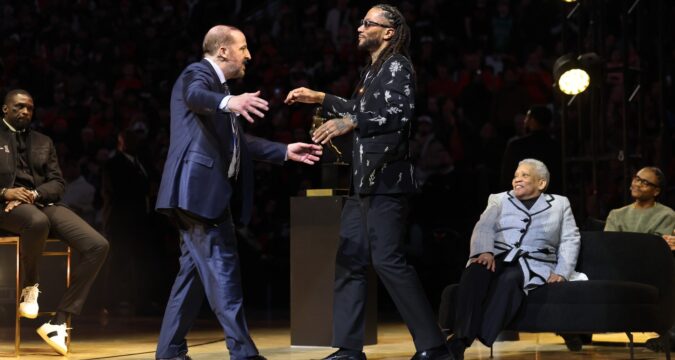
Column: Derrick Rose celebration gives Chicago sports fans what they love most — a reason to remember
While we’re less than a month into 2026, Chicago has already exceeded its allotment of sports reunions.
Derrick Rose’s moving number retirement ceremony Saturday at the United Center was the latest in a series of reunions of former athletes and coaches, following celebrations for the 2016 Cubs, the Blackhawks’ Cup-winning teams of 2010, ’13 and ’15, and the return of former Hawks captain Jonathan Toews to the U.C. with the Winnipeg Jets.
Last summer we saw the reunion of the 2005 White Sox champions, revolving around the ceremony for the dedication of the Mark Buehrle statue, and of course the 40-year reunion of the 1985 Bears at Soldier Field last fall.
Reunions are us.
Some of them are the product of the calendar, and others are the byproduct of brainstorming from teams’ marketing departments and their never-ending quest to keep fans interested during rebuilding seasons.
But in the end, it’s all good. We like to reminisce about the good old days, to rewatch the highlight videos and to hear the stories of camaraderie, the bonding and even the in-fighting. Brothers will be brothers, no matter the sport.
It’s cathartic for Chicago fans, especially after such a dismal decade that only now seems to be turning around with the Cubs’ 2025 playoff run and the Bears’ miracle season that ended in the heartbreaking overtime loss to the Los Angeles Rams in the divisional playoff game at Soldier Field.
The rebuilding Bulls and Blackhawks are both hanging around the .500 mark with outside shots at the postseason, and the White Sox at least have a young core worth paying attention to in ’26. Perhaps the final four years of the ’20s will be the renaissance we’ve all been waiting for.
But until that happens we have the past, and so we honor it with long and loud ovations for Rose, for Toews, for Buehrle and for all the Cubs players who contributed to the end of the curse.
Tom Thibodeau and Derrick Rose hug after Thibodeau gave a speech honoring Rose as the Bulls held a ceremony to retire Rose’s #1 jersey at the United Center in Chicago on Jan. 24, 2026. (Chris Sweda/Chicago Tribune)
My favorite part of Rose’s long, loving and sometimes meandering speech was when he mentioned coach Tom Thibodeau and said a lot of Bulls fans didn’t like the coach, blaming him for Rose’s career-altering knee injury.
“But I’m here to say f−−− that,” the honoree said as the crowd cheered him on.
Rose then alluded to Thibodeau’s four years as an assistant coach at Harvard.
“Thibs, you may have went to Harvard, you may have been physics,” he said. “But I showed you physics.”
The normally stoic Thibs let out a laugh. It was a full-circle moment for a coach who was disrespected by the organization at the end of his run for being himself. When the Bulls fired Thibodeau in 2015 with two years and around $9 million left on his contract, Chairman Jerry Reinsdorf felt the need to put out a statement ripping his communication skills.
“While the head of each department of the organization must be free to make final decisions regarding his department, there must be free and open interdepartmental discussion and consideration of everyone’s ideas and opinions,” Reinsdorf wrote. “These internal discussions must not be considered an invasion of turf, and must remain private.
”Teams that consistently perform at the highest levels are able to come together and be unified across the organization — staff, players, coaches, management and ownership. When everyone is on the same page, trust develops and teams can grow and succeed together. Unfortunately, there has been a departure from this culture.”
It was simply corporate gobbledygook, and an unnecessary way to end the relationship. A simple “thanks for your contributions” would’ve sufficed. But Thibodeau was never interested in being Tony La Russa and kowtowing to Reinsdorf or the management team of Gar Forman and John Paxson. His players loved and respected him, and that’s what mattered most. You could see that love on the floor of the United Center on Saturday with Rose, Luol Dang, Taj Gibson and Joakim Noah. They didn’t win it all together, but they battled together and made Bulls fans proud.
Despite that unceremonious ending, Thibodeau returned because of Rose, and the warm reception he received from Bulls fans on Saturday must have been gratifying. It made me wish that the Cubs had involved David Ross more in their remembrances of the 2016 season at the team’s fan convention. The Cubs eschewed individual introductions during the opening ceremonies, bringing everyone from the 2016 club out together for reasons that made no sense.
Former Chicago Cubs first baseman Anthony Rizzo and former catcher and manager David Ross share a moment with the World Series trophy as the 2016 championship team is honored during day 1 of the Cubs Convention at the Sheraton Grand Chicago on Friday, Jan. 16, 2026. (Chris Sweda/Chicago Tribune)
Ross, a player on the 2016 roster who was fired as manager after the 2023 season — and “stabbed” by management, in the words of first baseman Anthony Rizzo — wasn’t part of the five-player panel discussion where fans asked questions about the World Series team. Maybe Ross didn’t want to be front and center after the way it all ended. But it would’ve been nice if he had been afforded the same gift as Thibodeau — an opportunity to hear the fans say thanks for what you brought to Chicago. Hopefully he’ll be back in July when the Cubs have another 10-year reunion ceremony at Wrigley Field.
Happy endings aren’t guaranteed in sports, which makes these reunions complicated. Players are traded or released. Managers and coaches are fired. It’s hard to forget the ending when you’re invited to return to celebrate the good times.
Theo Epstein left the Boston Red Sox for the Cubs in 2011 after his relationship with owner John Henry soured. In 2014 he went to a dinner reunion of the 2004 Red Sox team that broke the curse, but didn’t take part in the on-field ceremony the next day at Fenway Park. Epstein told me afterward he skipped the ceremony because it was really for the Red Sox players, manager and coaches, not for management.
“I kind of don’t spend any time thinking about those days,” he said. “I’ve kind of totally moved on, and then it was kind of like a great high school reunion, bringing it all back. I enjoyed it.”
Epstein is now back with Boston as a part-owner, so relationships have been patched up. And once again he attended the 2016 reunion dinner at Wrigley Field while skipping the opening ceremonies of the convention. At least he’s consistent.
Someday down the road, we might have a reunion of Caleb Williams and these Bears players who took the city on a wild ride from start to finish in 2025. Of course, a Super Bowl win would help, and the reunion might have to be in Gary, Ind., if the McCaskeys can’t squeeze the state to provide help for their Arlington Heights stadium.
Either way, we’ll remember the good old days, because that’s what we love to do best.
https://www.chicagotribune.com/2026/01/26/derrick-rose-chicago-sports-fans/