Category: News
Core Durable Goods Orders Rise For 8th Straight Month
Core Durable Goods Orders Rise For 8th Straight Month
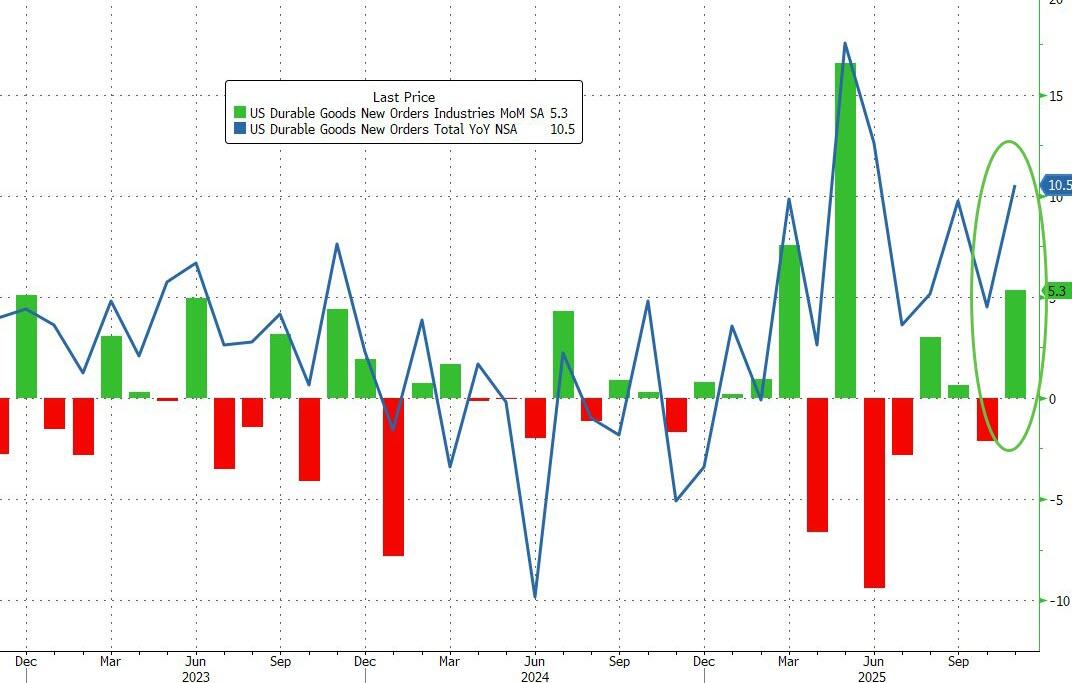
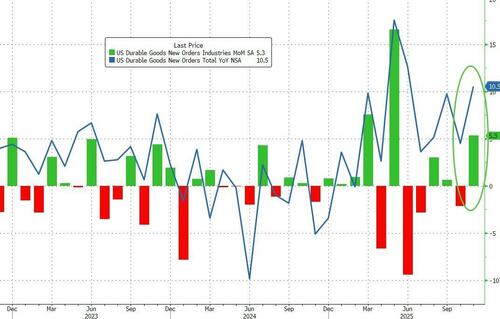
US Durable Goods Orders soared 5.3% MoM in (admittedly very lagged due to the shutdown) preliminary November data (significantly exceeding the 4.0% MoM expected and a major rebound from October’s 2.1% MoM decline), boosted by bookings for commercial aircraft and other capital equipment.
Source: Bloomberg
That big jump (the biggest in six months) pushed durable goods orders up 10.5% YoY – the 3rd biggest increase since June 2022.
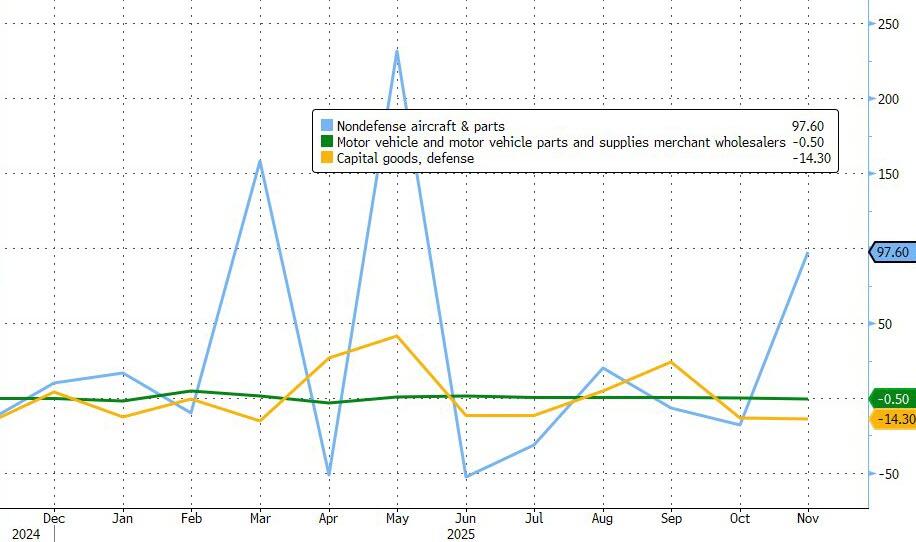
Under the hood, non-defense aircraft spend soared, defense spending dipped and motor vehicle orders were flatish…
Source: Bloomberg
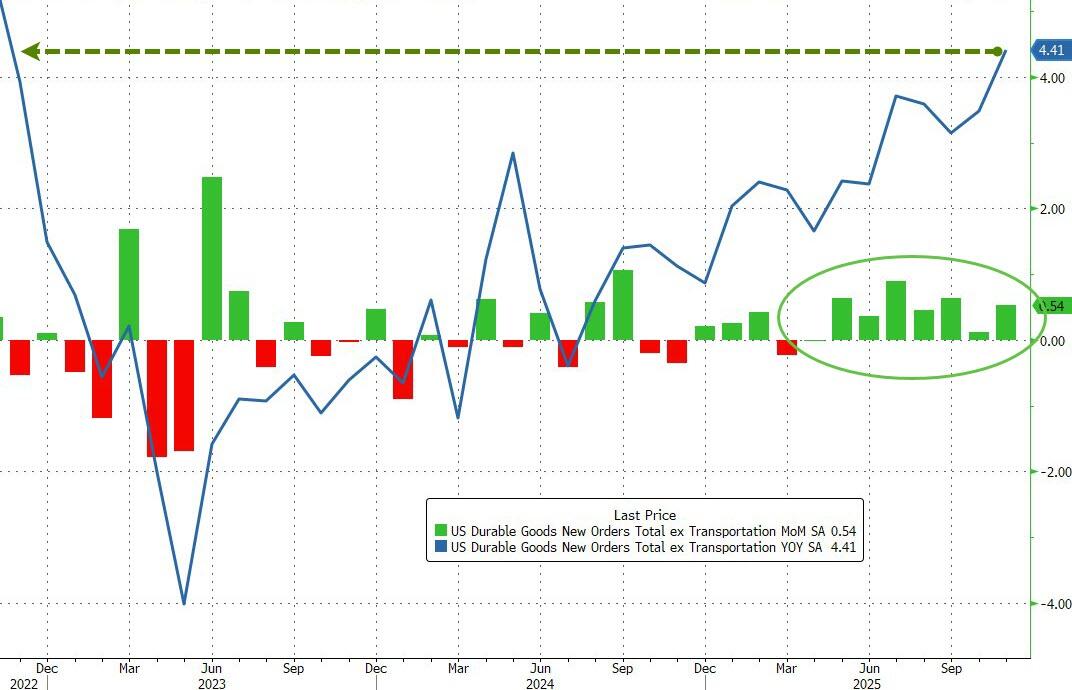
Meanwhile, Core Orders (ex Transportation) rose 0.5% MoM (also better than expected)…
Source: Bloomberg
This was the 8th straight month of increases, leading to a 4.4% YoY rise in orders – the best since October 2022.
The data out Monday also showed the value of core capital goods orders, a proxy for investment in equipment that excludes aircraft and military hardware, increased a larger-than-forecast 0.7%.
Tyler Durden
Mon, 01/26/2026 – 08:42
https://www.zerohedge.com/economics/core-durable-goods-orders-rise-8th-straight-month

Dominic Mordini puts Lake Forest on his shoulders: ‘Unstoppable even when teams try to shut him down’
Lake Forest senior guard Dominic Mordini knew this season would be different.
Gone was a strong cast of older teammates who helped produce 47 wins and two regional titles in his first two varsity seasons, leaving Mordini to lead a team with several largely untested players.
“Those two teams were senior-heavy, and I was the one younger guy who played significant minutes,” Mordini said. “This is the complete opposite, so it’s been a little bit of an adjustment.
“It takes time to adjust to the varsity level, so I’m trying to do my best to keep the team afloat. Now it’s my turn to lead.”
The 6-foot-4 Mordini has obviously embraced that idea, taking his game to a new level this season. He’s averaging 16.0 points on 53% shooting, 6.0 rebounds, 4.0 assists and 2.0 steals and essentially never leaves the court, a necessity for the Scouts (7-13, 1-6) in the North Suburban Conference.
“His leadership has been integral to our growth,” first-year Lake Forest coach Joe Pettinger said. “He has the ball in his hands all the time, and the numbers he’s putting up are with the other team putting their best defender on him, face-guarding him. He’s been unstoppable even when teams try to shut him down.”
Lake Forest’s Dominic Mordini (4) calls a play during a North Suburban Conference game at Mundelein on Saturday, Jan. 17, 2026. (Rob Dicker / News-Sun)
Mordini, who averaged 10.5 points on 51% shooting, 3.5 rebounds and 2.5 assists last season, scored 24 points against conference rival Stevenson on Jan. 6 and 22 points against conference leader Warren on Thursday.
A fifth straight 20-win season likely isn’t in the cards for the Scouts, but there has been positive momentum recently. They had won four of six games before the loss to Warren.
Leading the way, Mordini harks back to former teammates Bolurin Taiwo, Tommie Aberle and Hudson Scroggins.
“Those guys taught me how to compete, and that definitely brushed off on me,” Mordini said. “The way they did things inspired me to do the same. My goal for this year basketball-wise was to be the best leader I could be.”
That even extends to Mortini’s support of Pettinger. Last week, Mordini took the initiative to spearhead the program’s representation at the annual Scout Experience, when middle schoolers come to campus.
“It’s great that we have the kind of relationship where he’s willing to help me out,” Pettinger said. “On the court, he’s like a lead assistant coach who’s constantly telling us what he sees out there.”
On the court, Mordini also sees multiple ways to score. He can drive to the rim off the dribble, post up smaller defenders and shoot from long distance. He also has a knack for making the right pass in the flow of the offense.
“I try to keep things pretty simple and focus on fundamentals,” Mordini said. “I know I’m not the fastest guy around, but with my size, I can have success inside, and I’m working on my pull-up jumper and also extending my range from outside.”
Lake Forest’s Dominic Mordini (4) looks to shoot as Mundelein’s Ryan Bellito defends during a North Suburban Conference game in Mundelein on Saturday, Jan. 17, 2026. (Rob Dicker / News-Sun)
Mordini understands he’s the focal point of opposing teams’ scouting reports.
“It’s always an honor when an opposing coach values trying to stop you,” he said. “There’s pressure because there’s a lot on your shoulders. But it’s also a privilege.”
College coaches have taken notice too. Numerous teams in Division III are expressing interest in Mordini.
“It’s a blessing to have the opportunity to play at the next level,” he said. “I’m super excited to find a place that wants me and that is a good fit not only basketball-wise but academically.”
In the meantime, Mordini wants to finish with as many wins as possible and prepare the Scouts for next season.
“There are three hallmarks we talk about every day to help define the Lake Forest culture: accountability, attitude and action,” he said. “You learn a lot of life lessons as well.
“That’s one of the things I love about basketball. It’s important that I leave my mark on the program to help set others up for the future.”
Steve Reaven is a freelance reporter.
https://www.chicagotribune.com/2026/01/26/basketball-lake-forest-dominic-mordini/

Wall Street retreats modestly ahead of earnings and Federal Reserve meeting
U.S. markets were on track to open with modest losses Monday, while Japan’s benchmark took a tumble after the yen rebounded against the U.S. dollar on rumors of possible government intervention.
Futures for the S&P 500 edged back 0.1%, while Dow Jones Industrial futures were largely unchanged. Futures for the Nasdaq retreated 0.2%.
Most major airlines were down more than 1% in early trading as thousands of flights were canceled due to a massive winter storm that affected travel from the Rockies all the way to the East Coast.
Natural gas futures climbed another 4.5% as cold weather set in across the country following the winter storm that dumped more than a foot of snow in places and left many without power.
In Asia, Japan’s benchmark Nikkei 225 dropped 1.8% to finish at 52,885.25 on selling of big exporters like Toyota Motor Corp., whose shares fell 4.1%.
A weak currency is generally favorable for Japanese exporters because it helps elevate the value of their overseas earnings. In recent months, the dollar has gained against the yen but has fallen sharply in the past few days after officials in both Japan and the U.S. indicated they were prepared to intervene to support the yen.
Although finance officials did not directly confirm such intervention was in the works, they acknowledged being in close coordination with the U.S. on currency fluctuations.
“Intervention chatter did the trick,” said Ipek Ozkardeskaya, a senior analyst at Swissquote. “Since Friday, the yen has staged a sharp rebound on expectations that Japanese authorities — possibly with U.S. coordination — would step in.”
The Japanese yen has been weakening against the U.S. dollar — and many other major currencies — since 2021. So Japanese consumers and companies pay more now for imported food, fuel and other items needed to keep the world’s fourth largest economy running.
The dollar slipped to 154.14 Japanese yen from 155.01 yen. It had been trading around 158 yen last week.
Gold gained another 2%, briefly breaching $5,100 an ounce, while silver jumped 8.5% to $110.04 per ounce. The value of precious metals has surged in recent months as investors sought relatively safe places to invest amid rising geopolitical uncertainty.
Markets this week will be focused on corporate earnings, some of which might show the negative effects from recent U.S. tariff policies.
In the latest such development, a threat by U.S. President Donald Trump to impose a 100% tariff on goods from Canada was countered by Canadian Prime Minister Mark Carney. Trump had warned he might hike tariffs if Canada signed a free trade deal with China. Carney said Canada had no plans for such a deal.
In 2024, Canada mirrored the United States by putting a 100% tariff on electric vehicles from Beijing and a 25% tariff on steel and aluminum. China had responded by imposing 100% import taxes on Canadian canola oil and meal and 25% on pork and seafood.
Breaking with the United States this month during a visit to China, Carney cut its 100% tariff on Chinese electric cars in return for lower tariffs on those Canadian products.
Earnings reports this week include the latest financial results from United Airlines, Boeing, General Motors, Meta, Microsoft and Apple.
Markets will also be paying close attention to the latest developments at the U.S. Federal Reserve, where officials meet this week to decide where to take interest rates. Most expect central bank officials to stand pat after they cut rates at the final three meetings of 2025.
Elsewhere in Asia, South Korea’s Kospi dipped 0.8% to 4,949.59.
Hong Kong’s Hang Seng inched up less than 0.1% to 26,765.52, after vacillating earlier in the day, while the Shanghai Composite fell nearly 0.1% to 4,132.60.
Markets were closed in Australia, New Zealand, India and Indonesia.
France’s CAC 40 dipped nearly 0.2% at midday, while Britain’s FTSE 100 picked up 0.2%. The German DAX was unchanged.
In energy trading Monday, benchmark U.S. crude fell 14 cents to $60.93 a barrel. Brent crude, the international standard, lost 8 cents to $64.99 a barrel.
https://www.chicagotribune.com/2026/01/26/wall-street-earnings-federal-reserve/
Private jet with 8 aboard crashes on takeoff in Maine, FAA says
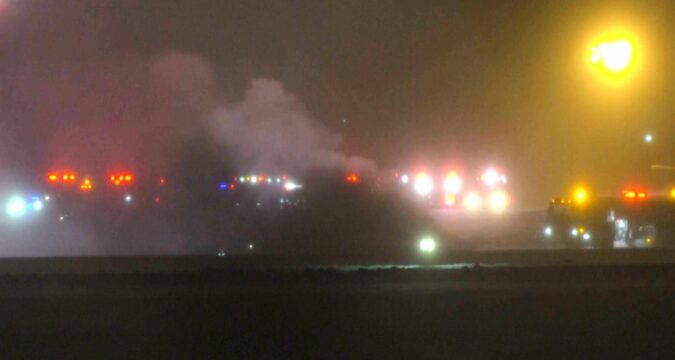
BANGOR, Maine — A private aircraft carrying eight people crashed on takeoff Sunday night at Maine’s Bangor International Airport, the Federal Aviation Administration said.
The Bombardier Challenger 600 crashed around 7:45 p.m., and there was no immediate word on the conditions of those aboard. The FAA and the National Transportation Safety Board are investigating.
The crash occurred as New England and much of the country grappled with a massive winter storm. Bangor had undergone steady snowfall Sunday along with many other parts of the country.
The airport issued a statement that emergency crews were on the scene at the airport, which was closed after what it described as an incident involving a single aircraft departing the airport.
Bangor International Airport offers direct flights to cities like Orlando, Florida, Washington, D.C., and Charlotte, North Carolina, and is located about 200 miles (320 kilometers) north of Boston.
Throughout the weekend, the vast storm dumped sleet, freezing rain and snow across much of the eastern half of the U.S., halting much air and road traffic and knocking out power to hundreds of thousands of homes and businesses in the Southeast.
Commercial air traffic was also heavily disrupted around much of the U.S.
Some 12,000 flights were canceled Sunday and nearly 20,000 were delayed, according to the flight tracker flightaware.com. Airports in Philadelphia, Washington, Baltimore, North Carolina, New York and New Jersey were among those impacted.
The Bombardier Challenger 600 is a wide-bodied business jet configured for nine to 11 passengers. It was launched in 1980 as the first private jet with a “walk-about cabin” and remains a popular charter option, according to aircharterservice.com
https://www.chicagotribune.com/2026/01/26/private-jet-crash-maine/

Timberwolves and Warriors return to play in ‘bizarre, sad’ game with grieving Minneapolis on their minds
MINNEAPOLIS — The Minnesota Timberwolves returned to the court after the postponement of their game against the Golden State Warriors the day before, the focus clearly distracted by a community in crisis.
“Their group was suffering. The vibe in the stands, it was one of the most bizarre, sad games I’ve ever been a part of,” Warriors coach Steve Kerr said after the 111-85 victory on Sunday. “You could feel the somber atmosphere. Their team, you could tell they were struggling with everything that’s been going on and what the city has been through.”
Before the game, Timberwolves coach Chris Finch’s voice cracked and faltered as the he expressed on behalf of the team a heartbreak for the community’s collective fear and pain from the ongoing immigration crackdown, following the fatal shooting of 37-year-old Alex Pretti by a federal officer.
Minneapolis mourns ICU nurse killed by a Border Patrol agent as a warmhearted neighbor and caregiver
Finch presents a straightforward, no-nonsense approach in his public statements and rarely reveals much emotion, but he was clearly moved by the situation in Minneapolis. The game between the Timberwolves and Warriors was postponed by 24 hours, after Pretti was killed on Saturday.
“I’m more than a resident. This is my home. I love living here. I love being a part of this community. I’ve been embraced from day one. People have been amazing. It’s sad to watch what is happening,” said Finch, who was hired by the Timberwolves five years ago. “On the human level, certainly as somebody who takes great pride in being here, I know a lot of our players feel the same. They all love being here, and it’s just hard to watch what we’re going through.”
Afterward, Finch called it a “ghost of a performance” after his team’s lowest final score in more than four years. Kerr said he thought it was impossible for the fans and players to focus on the court.
“They came to the game to try to forget about stuff, I guess, but I don’t think anything went away from the city and for their team,” Kerr said.
The Timberwolves held a moment of silence for Pretti prior to the national anthem, just as they did for Renee Good before their game on Jan. 8, the day after she was fatally shot by a federal officer. The Trump administration in December launched what the Department of Homeland Security declared the largest immigration enforcement operation in history and earlier this month announced a surge of more officers to push their force past 2,000.
The NBA announced Saturday that the rescheduling decision was made to “prioritize the safety and security of the Minneapolis community” after Pretti was killed during a confrontation in a commercial district less than 2 miles south of Target Center. Finch said on Sunday that the Timberwolves pushed for the postponement to respect the public grieving process.
“Playing basketball just didn’t feel like the right thing to do,” Finch said, thanking the NBA and the Warriors for their support.
Warriors coach Steve Kerr, long one of the league’s most outspoken coaches, was measured but clearly moved as he expressed his own sympathy.
“This has always been a great stop on the NBA tour. I love the city of Minneapolis. People here are wonderful, and it’s very sad what’s happening. I feel for the city. There’s a pall that’s been cast over the city. You can feel it. A lot of people are suffering, and obviously a loss of life is the No. 1 concern. Those families will never get their family members back,” Kerr said.
Tens of thousands of people swarmed downtown Minneapolis on Friday in protest of the tactics and presence of immigration officers, a crowd the Warriors could see from their hotel as it moved toward Target Center. A smaller protest march took place downtown before the game Sunday.
Golden State Warriors head coach Steve Kerr, left, and Minnesota Timberwolves head coach Chris Finch, right, talk after the game on Jan. 25, 2026, in Minneapolis. (AP Photo/Matt Krohn)
Plenty of other voices were raised around the sports world on Sunday.
Women’s basketball star Breanna Stewart held a sign with “abolish ICE” printed on it during introductions at her Unrivaled league game. Minnesota Frost fans during a PWHL game chanted “Ice out now!” The NBA Players Association issued a statement in support of the protests in Minnesota and urged its members to speak up. Former Timberwolves standout Karl-Anthony Towns posted on social media his condolences for the families of Good and Pretti and said, “This moment demands that we reflect honestly on what our values truly are.”
The Timberwolves joined the region’s four other major league men’s sports teams in signing a letter with the CEOs of more than 60 companies based in Minnesota, calling for “immediate deescalation of tensions and for state, local and federal officials to work together to find real solutions.”
Perspectives in a polarized country vary wildly on what constitutes constitutionally protected protesting and what becomes violent political disruption, and Kerr seemed to sense that tension as he spoke before the game on Sunday.
“People are so angry. There should be an appeal to our better angels to look after one another and to recognize what’s happening. We’re being divided by media for profit, by misinformation. There’s so much out there that is really difficult for all of us to sort of reconcile,” Kerr said. “And so in times like these you have to lean on values and who you are and who you want to be, either as an individual or a country.”
After the game, Timberwolves star Anthony Edwards acknowledged the heaviness of the situation even though he’s not closely attuned to the details.
“I just love Minnesota, all the love and support that they show me. So I’m behind whatever they’re with,” Edwards said. “Me and my family are definitely praying for everybody.”
Teammate Julius Randle echoed a similar sentiment.
“I’m not political at all. I don’t get into any of that stuff, but it’s tough, regardless of whatever is going on. Somebody loses their life, you never want to see that,” Randle said, adding: “Been nothing but a joy living here, so things like this happening in the community, it’s tough.”
After the PWHL game, Frost assistant captain Kelly Pannek, a Plymouth, Minnesota, native, said she was proud of the protests.
“I think it’s just really important for us to acknowledge what’s happening in our community, but also the amount of hope and strength the people of Minnesota are showing in standing up for what’s right among the unnecessary and just horrifying things that are happening,” she said.
https://www.chicagotribune.com/2026/01/26/minnesota-timberwolves-bizzare-sad-game/

European Union opens investigation into Elon Musk’s AI chatbot Grok over sexual deepfakes
LONDON — The European Union opened a formal investigation into Elon Musk’s social media platform X on Monday after his artificial intelligence chatbot Grok started spewing nonconsensual sexualized deepfake images on the platform.
European regulators also widened a separate, ongoing investigation into X’s recommendation systems after the platform said it would switch to Grok’s AI system to choose which posts users see.
The scrutiny from Brussels comes after Grok sparked a global backlash by allowing users through its AI image generation and editing capabilities to undress people, putting females in transparent bikinis or revealing clothing. Researchers said some images appeared to include children. Some governments banned the service or issued warnings.
The 27-nation EU’s executive said it was looking into whether X has done enough as required by the bloc’s digital regulations to contain the risks of spreading illegal content such as “manipulated sexually explicit images.”
That includes content that “may amount to child sexual abuse material,” the European Commission said. These risks have now “materialized,” the commission said, exposing the bloc’s citizens to “serious harm.”
Regulators will examine whether Grok is living up to its obligations under the Digital Services Act, the bloc’s wide-ranging rulebook for keeping internet users safe from harmful content and products.
In response to a request for comment, an X spokeswoman directed The Associated Press to an earlier statement that the company remains “committed to making X a safe platform for everyone” and that it has “zero tolerance” for child sexual exploitation, nonconsensual nudity, and unwanted sexual content.
The X statement from Jan. 14 also said it would stop allowing users to depict people in “bikinis, underwear or other revealing attire,” but only in places where it has been deemed illegal.
“Non-consensual sexual deepfakes of women and children are a violent, unacceptable form of degradation,” Henna Virkkunen, an executive vice-president at the commission, said in a statement.
“With this investigation, we will determine whether X has met its legal obligations under the DSA, or whether it treated rights of European citizens — including those of women and children – as collateral damage of its service,” said Virkkunen, who oversees tech sovereignty, security and democracy.
Musk’s artificial intelligence company xAI launched Grok’s image tool last summer. But the problem began snowballing only late last month when Grok seemingly granted a large number of user requests to modify images posted by others. The problem was amplified both because Musk pitches his chatbot as an edgier alternative with fewer safeguards than rivals, and because Grok’s images are publicly visible, and can therefore be easily spread.
The EU investigation covers only Grok’s service on X, and not Grok’s website and standalone app. That’s because the DSA applies only to the biggest online platforms.
There’s no deadline for the bloc to resolve the case, which could end in either X pledging to change its behavior or a hefty fine.
In December Brussels issued X with a 120-million euro (then-$140 million) fine as part of the earlier ongoing DSA investigation, for shortcomings including blue checkmarks that broke the rules on “deceptive design practices” that risked exposing users to scams and manipulation.
The bloc has also been scrutinizing X over allegations that Grok generated anti-Semitic material and has asked the site for more information.
https://www.chicagotribune.com/2026/01/26/european-union-elon-musk-grok/

Pentagon Releases New Defense Strategy: 4 Things To Know
Pentagon Releases New Defense Strategy: 4 Things To Know
Authored by Ryan Morgan via The Epoch Times (emphasis ours),
The Pentagon released its new National Defense Strategy late on Jan. 23, placing the homeland and a surrounding sphere of influence as the top priority for the U.S. military.
Nearly two months after the White House released President Donald Trump’s National Security Strategy, the new 34-page Pentagon document provides specifics regarding how the U.S. military will support the president’s strategy. In particular, it describes four specific lines of effort for military planners going forward.
“No longer will the Department be distracted by interventionism, endless wars, regime change, and nation building. Instead, we will put our people’s practical, concrete interests first,” Secretary of War Pete Hegseth wrote in a memorandum accompanying the new strategy document.
Here are the four key lines of effort outlined in the new National Defense Strategy and how they fit into Trump’s security and foreign policy framework.
1. Sphere of Influence
The Pentagon describes defending the U.S. homeland as the “foremost priority” Trump has given the military.
“The Department will therefore prioritize doing just that, including by defending America’s interests throughout the Western Hemisphere,” the document states.
As part of this first priority, the Pentagon noted U.S. military efforts to secure the United States’ borders and to combat drug trafficking throughout the Western Hemisphere.
U.S. forces began amassing near Latin America in August 2025 and carried out strikes on drug boats in the Caribbean Sea and eastern Pacific for months. They also seized sanctioned oil tankers sailing to and from Venezuela.
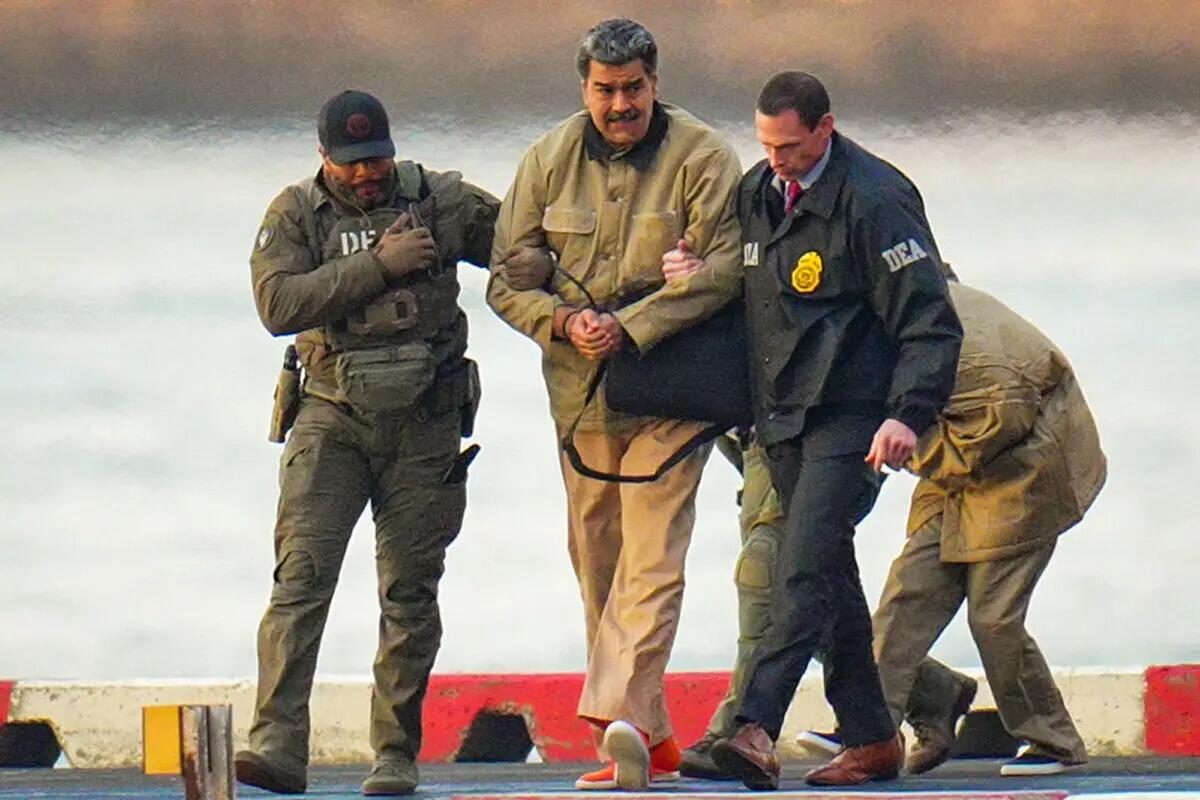
Those moves preceded an operation into Venezuela, during which U.S. forces apprehended the country’s wanted leader, Nicolás Maduro, to face federal charges for an alleged drug trafficking conspiracy.
President James Monroe articulated a U.S. pledge to oppose European colonial efforts in the Western Hemisphere in an address to Congress in December 1823 that later came to be known as the Monroe Doctrine.
In the weeks leading up to Maduro’s capture, the Trump administration began increasingly referring to a “Trump Corollary” to the Monroe Doctrine.
In a press conference following Maduro’s capture, Trump explicitly referenced Monroe’s 1823 doctrine and said, “Under our new national security strategy, American dominance in the Western Hemisphere will never be questioned again.”
Since ordering Maduro’s capture, Trump has also ramped up talk of a U.S. acquisition of Greenland, which is currently a semiautonomous territory of Denmark. Trump has said the island territory is key to U.S. national security.
The new strategy document states that the Pentagon will “provide the President with credible options to guarantee U.S. military and commercial access to key terrain from the Arctic to South America, especially Greenland, the Gulf of America, and the Panama Canal.”
The document further declared the Pentagon’s intent to support Trump’s Golden Dome missile defense initiative.
U.S. nuclear force modernization and cybersecurity are also listed under the first line of effort, as is countering Islamic terrorism.
“The Department will maintain a resource-sustainable approach to countering Islamic terrorists, focused on organizations that possess the capability and intent to strike the U.S. Homeland,” the document states.
2. China and Indo-Pacific Deterrence
As the U.S. military adjusts its global strategy, the Pentagon is charged with finding ways to deter China while seeking to avoid confrontation with the nuclear-armed power.
The Pentagon said it will follow Trump’s lead in engaging with Chinese counterparts and supporting deconfliction efforts.
The strategy document does not mention any intent to be in direct conflict with China, but it states that the responsibility of the military is “to ensure that President Trump is always able to negotiate from a position of strength in order to sustain peace in the Indo-Pacific.”
Under this priority, the U.S. military “will build, posture, and sustain a strong denial defense” along what’s known as the first island chain.
The first island chain includes mainland Japan, the Ryukyu Islands, Taiwan, the Philippines, and Borneo.
“We will also work closely with our allies and partners in the region to incentivize and enable them to do more for our collective defense, especially in ways that are relevant to an effective denial defense,” the new National Defense Strategy states.
One effort to bolster regional allies involves a trilateral security partnership among Australia, the UK, and the United States, known as AUKUS. The partnership began in 2021 during President Joe Biden’s administration.
In June 2025, the Pentagon placed the AUKUS partnership under review. In October, Trump suggested the partnership might be unnecessary.
The Trump administration has since expressed support for the group, and in December 2025, Hegseth said, “We are strengthening AUKUS so that it works for America, for Australia, and for the UK.”
3. Burden-Sharing
As with the alliance-building in the Indo-Pacific, the new National Defense Strategy emphasizes a need for allies and partners across the globe.
The strategy document describes a “simultaneity problem” wherein multiple adversaries of the United States might act in concert to stretch U.S. military resources.
“Such a scenario would be less of a concern if our allies and partners had spent recent decades investing adequately in their defenses. But they did not,” the document states.
“Instead, with rare exceptions, they were too often content to allow the United States to defend them, while they cut defense spending and invested instead in things like public welfare and other domestic programs.”
The document states that the United States will push for partners in Europe, the Middle East, and the Korean Peninsula to take primary responsibility for their defenses, “with critical but limited support from U.S. forces.”
According to the strategy document, Mexico and Canada will have a role to play in the Western Hemisphere, helping prevent drug trafficking and illegal immigration into the United States.
“Canada also has a vital role to play in helping to defend North America against other threats, including by strengthening defenses against air, missile, and undersea threats,” the document adds.
In Europe, North Atlantic Treaty Organization (NATO) members are expected to “take primary responsibility for Europe’s conventional defense.”
Trump has already championed a pledge for the NATO members to each commit 5 percent of their annual gross domestic product to defense and national security spending, up from a goal of 2 percent in 2014.
4. Arms Manufacturing
The fourth area of focus detailed in the Pentagon’s new strategy document is to bolster the United States’ arms industry.
The document states that this reindustrialization effort “is vital to ensuring that U.S. forces have the weapons, equipment, and transportation and distribution capability needed” to implement the strategy.
“It is also critical to ensuring that the United States can help arm allies and partners as they take on a greater share of the burden of our collective defense, including by leading efforts to deter or defend against other, lesser threats,” it reads.
This month, Hegseth began touring U.S. arms manufacturing facilities in what he’s dubbed the “Arsenal of Freedom” tour.
Hegseth and Trump have taken other recent steps to reform the military’s arms acquisition process.
“We’re leaving the old failed process behind, and we’ll instead embrace a new agile and results-oriented approach,” Hegseth said in a speech to industry leaders at the National War College in Washington on Nov. 7, 2025.
In a series of social media posts on Jan. 7, Trump criticized Raytheon and other arms manufacturers for the compensation packages they are giving to corporate executives and for offering stock buybacks and paying out dividends to shareholders.
Along with working with established traditional vendors, the National Defense Strategy states that the Pentagon will also seek to bolster organic manufacturing capabilities and grow nontraditional vendors to grow the U.S. arms industry.
Tyler Durden
Mon, 01/26/2026 – 08:25
https://www.zerohedge.com/political/pentagon-releases-new-defense-strategy-4-things-know

Myanmar utiliza “barcos fantasma” para importar combustible aéreo usado en ataques, dice Amnistía
Por GRANT PECK
Por GRANT PECK (AP) — La junta militar de Myanmar parece haber adoptado las tácticas de naciones que eluden sanciones como Rusia, Irán y Corea del Norte, utilizando rutas de navegación evasivas y barcos sin insignia para disfrazar las fuentes de combustible de aviación que utiliza para ataques aéreos en la guerra civil del país, afirmó el lunes el grupo de derechos humanos Amnistía Internacional.
La investigación del grupo con sede en Londres indica que su análisis de datos comerciales, de envío, satelitales y de autoridades portuarias sugiere que el ejército de Myanmar está importando el combustible para aviones en “barcos fantasmas” que apagan su Sistema de Identificación Automática —AIS—, radios de seguimiento de ubicación, para evitar ser detectados.
Myanmar importó más de 109.000 toneladas de combustible de aviación en 2025, un aumento del 69% respecto al año anterior y el volumen más alto desde que el ejército derrocó al gobierno electo de Aung San Suu Kyi en 2021, dice el informe de Amnistía.
“Cinco años después del golpe, nuestro análisis muestra que la junta de Myanmar continúa evadiendo sanciones y encontrando nuevas formas de importar el combustible para aviones que utiliza para bombardear a sus propios civiles, siendo 2025 el año más mortífero registrado para ataques aéreos desde la toma de poder de la junta en 2021”, declaró Montse Ferrer, directora de investigación regional de Amnistía.
Los opositores al gobierno militar de Myanmar han pedido cortar su suministro de combustible de aviación como método para frenar su capacidad bélica, que ha resultado en muchas bajas civiles.
El número de civiles muertos en ataques aéreos no está claro, pero desde que la toma del ejército provocó resistencia a nivel nacional, más de 7.700 civiles han sido asesinados por las fuerzas de seguridad, según la Asociación de Asistencia para Presos Políticos, un grupo de vigilancia que rastrea arrestos políticos, ataques y bajas.
Las sanciones internacionales lideradas por Estados Unidos y Gran Bretaña no han logrado detener los ataques aéreos, cuyas víctimas no tienen defensa efectiva, según Amnistía.
Las acciones militares también son apoyadas por armas, en gran parte de Rusia y China, principales aliados de los generales gobernantes.
Amnistía dijo que su investigación había confirmado la entrega de al menos nueve envíos separados de combustible de aviación a Myanmar por cuatro embarcaciones entre mediados de 2024 y finales de 2025, mientras también descubría cambios significativos en cómo el combustible de aviación ha ingresado a Myanmar durante este período.
Estos incluyen el uso de barcos fantasmas cuyos radios AIS están apagados o transmiten posiciones falsas, y embarcaciones que cambian repetidamente de nombre, bandera o propiedad, y a menudo cargan combustible a través de transferencias de barco a barco en aguas abiertas, en lugar de en puertos y terminales, dice Amnistía.
El gobierno militar de Myanmar no respondió de inmediato a las preguntas sobre el informe de Amnistía.
Tales tácticas han sido utilizadas durante varios años por exportadores de petróleo, incluidos Irán, Venezuela y especialmente Rusia, después de enfrentar una avalancha de sanciones en respuesta a su invasión de Ucrania en 2022. Corea del Norte, un importador de petróleo, también al parecer utiliza barcos fantasmas.
Amnistía reconoció que no pudo confirmar los proveedores o el origen del combustible de aviación, pero dijo que las tácticas de evasión “reflejan métodos comúnmente utilizados por los petroleros que mueven combustible sancionado desde Irán”.
Amnistía ha pedido una prohibición del envío de combustible de aviación a Myanmar y la retirada de todas las empresas involucradas en la cadena de suministro para prevenir más daños a civiles.
Un informe emitido en 2022 reveló que empresas multinacionales con sede en Singapur y Tailandia formaban parte de una cadena de suministro que entregaba combustible de aviación a Myanmar.
Dijo que después de que se introdujeron sanciones en partes de la cadena de suministro, “el combustible fue comprado y revendido múltiples veces para ocultar su origen. Al menos nueve envíos llegaron a Myanmar en 2023 y principios de 2024, muchos de ellos a través de una unidad de almacenamiento en Vietnam, revelando tácticas deliberadas de evasión de sanciones”.
___________________________________
Esta historia fue traducida del inglés por un editor de AP con ayuda de una herramienta de inteligencia artificial generativa.
Investigators will detail causes of the midair collision over Washington and recommend changes
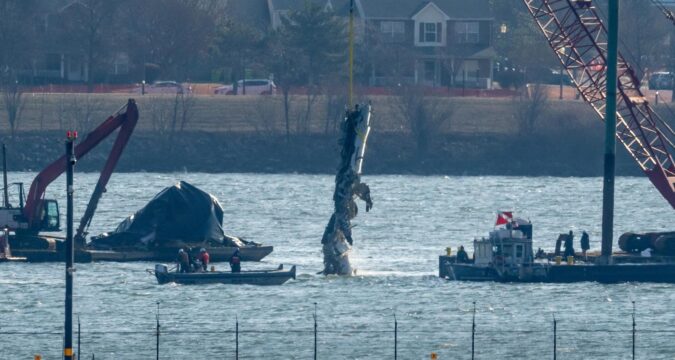
So many things went wrong last Jan. 29 to contribute to the deadliest plane crash on American soil since 2001 that the National Transportation Safety Board isn’t likely to identify a single cause of the collision between an airliner and an Army helicopter near Washington, D.C., that killed 67 people at its hearing Tuesday.
Instead, their investigators will detail what they found that played a role in the crash, and the board will recommend changes to help prevent a similar tragedy. Last week, the Federal Aviation Administration already took the temporary restrictions it imposed after the crash and made them permanent to ensure planes and helicopters won’t share the same airspace again around Reagan National Airport.
Family members of victims hope those suggestions won’t be ignored the same way many past NTSB recommendations have been. Tim Lilley, whose son Sam was the first officer on the American Airlines plane, said he hopes officials in Congress and the administration will make changes now instead of waiting until for another disaster.
“Instead of writing aviation regulation in blood, let’s start writing it in data,” said Lilley, who is a pilot himself and earlier in his career flew Black Hawk helicopters in the Washington area. “Because all the data was there to show this accident was going to happen. This accident was completely preventable.”
Over the past year, the NTSB has already highlighted a number of the factors that contributed to the crash including a poorly designed helicopter route past Reagan Airport, the fact that the Black Hawk was flying 78 feet (23.7 meters) higher than it should have been, the warnings that the FAA ignored in the years beforehand and the Army’s move to turn off a key system that would have broadcast the helicopter’s location more clearly.
The D.C. plane crash was the first in a number of high-profile crashes and close calls throughout 2025 that alarmed the public, but the total number of crashes last year was actually the lowest since the COVID-19 pandemic hit in 2020 with 1,405 crashes nationwide.
Experts say flying remains the safest way to travel because of all the overlapping layers of precautions built into the system, but too many of those safety measures failed at the same time last Jan. 29.
Here is some of what we have learned about the crash:
The helicopter route didn’t ensure enough separation
The route along the Potomac River the Black Hawk was following that night allowed for helicopters and planes to come within 75 feet (23 meters) of each other when a plane was landing on the airport’s secondary runway that typically handles less than 5% of the flights landing at Reagan. And that distance was only ensured when the helicopter stuck to flying along the bank of the river, but the official route didn’t require that.
Normally, air traffic controllers work to keep aircraft at least 500 feet (152 meters) apart to keep them safe, so the scant separation on Route 4 posed what NTSB Chairwoman Jennifer Homendy called “an intolerable risk to flight safety.”
The controllers at Reagan also had been in the habit of asking pilots to watch out for other aircraft themselves and maintain visual separation as they tried to squeeze in more planes to land on what the Metropolitan Washington Airport Authority has called the busiest runway in the country. The FAA halted that practice after the crash.
That night a controller twice asked the helicopter pilots whether they had the jet in sight, and the pilots said they did and asked for visual separation approval so they could use their own eyes to maintain distance. But at the investigative hearings last summer, board members questioned how well the crew could spot the plane while wearing night vision goggles and whether the pilots were even looking in the right spot.
The Black Hawk was flying too high
The American Airlines plane flying from Wichita, Kansas, collided with the helicopter 278 feet (85 meters) above the river, but the Black Hawk was never supposed to fly above 200 feet (61 meters) as it passed by the airport, according to the official route.
Before investigators revealed how high the helicopter was flying, Tim Lilley was asking tough questions about it at some of the first meetings NTSB officials had with the families. His background as a pilot gave him detailed knowledge of the issues.
“We had a moral mandate because we had such an in-depth insight into what happened. We didn’t want to become advocates, but we could not shirk the responsibility,” said Lilley, who started meeting with top lawmakers in Congress, Transportation Secretary Sean Duffy and Army officials not long after the crash to push for changes.
The NTSB has said the Black Hawk pilots may not have realized how high the helicopter was because the barometric altimeter they were relying on was reading 80 to 100 feet (24 to 30 meters) lower than the altitude registered by the flight data recorder.
Investigators tested out the altimeters of three other Black Hawks of the same model from the same Army unit and found similar discrepancies.
Past warnings and alarming data were ignored
FAA controllers were warning about the risks all the helicopter traffic around Reagan airport created at least since 2022.
And the NTSB found there had been 85 near misses between planes and helicopters around the airport in the three years before the crash along with more than 15,000 close proximity events. Pilots reported collision alarms going off in their cockpits at least once a month.
Officials refused to add a warning to helicopter charts urging pilots to use caution when they used the secondary runway at Reagan the jet was trying to use before the collision.
Rachel Feres said it was hard to hear about all the known concerns that were never addressed before the crash that killed her cousin Peter Livingston and his wife Donna and two young daughters, Everly and Alydia, who were both promising figure skaters.
“It became very quickly clear that this crash should never have happened,” Feres said. “And as someone who is not particularly familiar with aviation and how our aviation system works, we were just hearing things over and over again that I think really, really shocked people, really surprised people.”
https://www.chicagotribune.com/2026/01/26/ntsb-investigators-midair-collision-washington-dc/

Post-Winter Storm, Deep-Freeze Pushes Power-Grids To Brink As Feds Move To Avert Blackouts
Post-Winter Storm, Deep-Freeze Pushes Power-Grids To Brink As Feds Move To Avert Blackouts
The major winter storm that dumped heavy snow and ice across much of the eastern US is finally over, but the cold-weather danger is far from over.
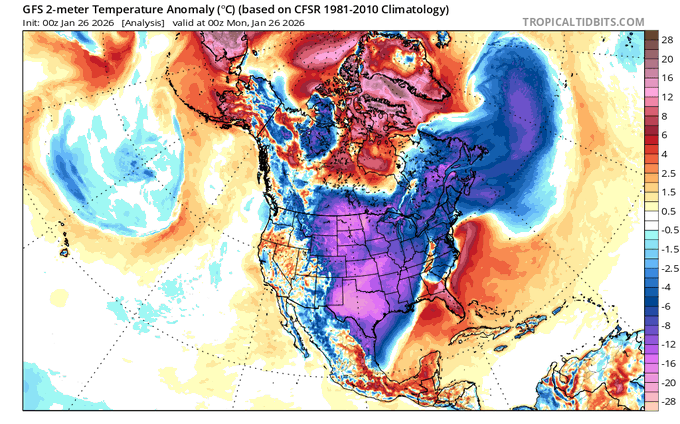
Roughly 185 million Americans remain under winter alerts today as Arctic air continues to pour deep into the central and eastern states. Wind chills are dropping into the minus 20s and minus 30s in some areas, with temperatures running 10 to 40 degrees below seasonal averages.
This prolonged cold – expected through the week – will continue to pressure major natural gas production hubs with freeze-offs, send pipeline volumes sliding, and push already-strained power grids to the brink.
The latest on grids:
The Electric Reliability Council of Texas projected a record demand of 86 GW on Monday, above its prior summer peak.
PJM Interconnection warned it faces days of extreme winter demand, an unprecedented stretch for the grid spanning the Midwest to the Mid-Atlantic.
Grid operators are paying large customers to curb usage to avoid widespread rolling blackouts.
Power prices spiked to crisis levels, with PJM on peak prices averaging about $639 per MWh and ERCOT North hub prices jumping more than 1,200% day over day.
On Sunday, the Energy Department issued emergency orders authorizing PJM to operate power plants at maximum capacity, including those fueled by coal and oil, regardless of limits set by environmental rules or state law. Similar orders were issued for ERCOT and ISO New England.
Golf clap for fossil fuels saving the grid from collapse. It wasn’t solar or wind. It was oil and natural gas.
Meantime in New England and Boston oil – yes OIL – is a stunning 39% of electricity production.
Never, ever seen this high.
Next day power costs (on the left) are super high as well.
300 miles from one of the largest nat gas fields in the world and burning … oil.… pic.twitter.com/HuMqxmkqMd
— Brian Sullivan (@SullyCNBC) January 25, 2026
UBS analyst David Robinson told clients, “Natural gas futures have surged nearly 20% Monday Asia morning as the worst winter storm in recent years in the US has seen surging demand for heating, with plunging temperatures knocking off nearly 10% of production.”
Lower 48 U.S. Dry Gas Production today: 99.6 Bcfd, Freeze-off: 10.1 Bcfd, Cumulative: 48.9 Bcf. Be mindful revisions are certain; each post is based on latest pipeline nominations data. #NaturalGas #NatGas #GasProduction #FreezeOffs pic.twitter.com/JWL3yddOL7
— GasFundies (@RealGasFundies) January 26, 2026
US LNG feed gas nominations opened this week at a limited 14,209 MMcf/d, declining by -4,910 MMcf/d since Friday as every operator actively scaled back inflows leading into the winter storm.
That total drop also now includes reductions from Venture Global’s assets, as Calcasieu… pic.twitter.com/QU2uf299g0
— Criterion Research (@PipelineFlows) January 26, 2026
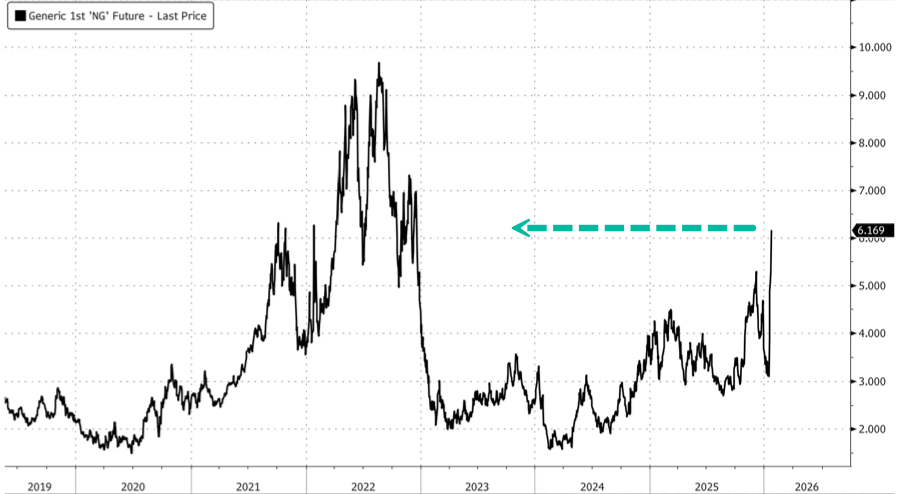
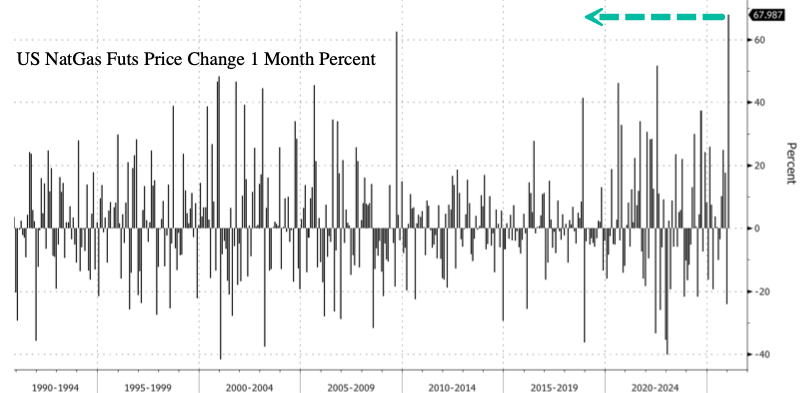
US natural gas futures in New York jumped nearly 20% to more than $6 per million British thermal units when trading opened up on Sunday (read here). Gains have largely held into early Monday, with prices still up about 17% as of 0715 ET.
Highest since 2022.
January could be the largest NatGas futures spike on record.
With 10% of US natural gas production knocked offline just as heating demand surges, this week shapes up as a major stress test for the nation’s power grids. Stack the firewood high and make sure the whole house generator is fueled up.
Tyler Durden
Mon, 01/26/2026 – 08:05