Category: News

Detienen a hombre por presunta agresión al congresista Maxwell Frost en el Festival de Sundance
Por LINDSEY BAHR
PARK CITY, Utah, EE.UU. (AP) — Un hombre fue arrestado el viernes por la noche en una fiesta durante el Festival de Cine de Sundance en Park City, Utah, por presuntamente agredir a un congresista de Florida.
El representante demócrata, Maxwell Frost, escribió el sábado en X que un hombre le dio un puñetazo en la cara y le dijo que el presidente Donald Trump lo iba a deportar. El altercado ocurrió en una fiesta privada organizada por la agencia de talentos CAA en la destilería High West, un lugar popular para eventos relacionados con el festival.
“Se le escuchó gritar comentarios racistas mientras huía borracho”, escribió Frost. “El individuo fue arrestado y yo estoy bien”.
Frost, el primer miembro de la Generación Z en el Congreso, agradeció a la seguridad del lugar y al Departamento de Policía de Park City por su ayuda. Un representante del Departamento de Policía de Park City dijo que los oficiales llegaron al lugar poco después de la medianoche.
Christian Joel Young, de 28 años, fue arrestado bajo cargos de robo agravado, agresión a un funcionario electo y agresión, y fue trasladado a la cárcel del condado de Summit, según los registros judiciales.
Young parecía haber irrumpido en la fiesta saltando una cerca y tenía un pase del Festival de Cine de Sundance que no estaba emitido a su nombre, según la declaración jurada de la policía.
No estaba claro si Young tenía un abogado que pudiera hacer declaraciones a su nombre. The Associated Press dejó mensajes con la oficina del Sheriff del condado de Summit y los tribunales de Utah en un intento por solicitar comentarios de Young o un abogado.
Los representantes del Festival de Cine de Sundance emitieron un comunicado diciendo que “condenan enérgicamente” el incidente, señalando que, aunque ocurrió en un evento no afiliado, el comportamiento es “contrario a nuestros valores de mantener un ambiente acogedor e inspirador para todos nuestros asistentes”.
“La seguridad de nuestros asistentes al festival siempre es nuestra principal preocupación, nuestra simpatía está con el congresista Frost y su continuo bienestar”, decía el comunicado. “Animamos a cualquiera que tenga información adicional sobre este asunto a contactar al Departamento de Policía de Park City”.
El juez del condado Richard Mrazik ordenó que Young fuera retenido sin fianza, basándose en que constituiría “un peligro sustancial para cualquier otra persona o para la comunidad, o es probable que huya de la jurisdicción del tribunal si se le libera bajo fianza”. Young tiene una condena previa por un delito menor, según los registros judiciales.
El gobernador de Utah, Spencer Cox, un republicano, denunció el presunto ataque y dijo que no permitirá que las tensiones sobre la aplicación de la ley de inmigración en lugares como Minneapolis se extiendan a Utah.
“La violencia política o racial de cualquier tipo es inaceptable en Utah”, dijo Cox en un comunicado. “Estoy agradecido con las fuerzas del orden locales por detener rápidamente al agresor y buscar justicia para el representante Maxwell Frost”.
Los esfuerzos federales de aplicación de la ley de inmigración son “bienvenidos y necesarios”, agregó.
El líder de la minoría de la Cámara de Representantes, Hakeem Jeffries, escribió en X que estaba horrorizado por lo que había sucedido y que “el perpetrador debe ser procesado enérgicamente”.
“El odio y la violencia política no tienen lugar en nuestro país”, continuó Jeffries.
Se enviaron mensajes solicitando comentarios a los representantes de CAA.
___
La periodista de The Associated Press, Hannah Schoenbaum, contribuyó a este despacho.
___
Para más cobertura del Festival de Cine de Sundance 2026, visite: https://apnews.com/hub/sundance-film-festival
___
Esta historia fue traducida del inglés por un editor de AP con la ayuda de una herramienta de inteligencia artificial generativa.

Minnesota Business Owner Claims ICE Will Start ‘Putting People In Ovens’
Minnesota Business Owner Claims ICE Will Start ‘Putting People In Ovens’
Authored by Steve Watson via Modernity.news,
An unhinged leftist business owner from Minnesota told CNN’s Jake Tapper that there is no question ICE is running “concentration camps” and that federal officers could start “putting people in ovens” soon.
Tapper was platforming the deranged lunatic as a smattering of leftist-leaning shops in the city have shuttered their doors in “solidarity” against basic immigration enforcement, painting law-abiding agents as invaders while conveniently ignoring the chaos of open borders.
Jamie Schwesnedl, co-owner of Moon Palace Books in Minneapolis was there to explain why his business had closed for the day in protest against ICE operations, yet Tapper was provided a peak under that veneer and into the world of TDS radicalism.
“We can’t do business as usual right now, anyway, because our city has been invaded by masked gunmen kidnapping family members and friends and neighbors of ours to send them to concentration camps,” Schwesnedl proclaimed.
He added, “Additionally, there’s a lot of businesses in our area that have staff or customers or owners who are afraid to come to work, afraid to come in and shop. People are closing down today, and we felt like it wouldn’t be kind or fair for us to stay open, so we’re closing in solidarity to help send a message.”
This over-the-top rhetoric frames ICE agents – who are simply doing their job to enforce laws passed by Congress – as some kind of Nazi militia. It’s a classic leftist tactic: demonize border control to keep the floodgates open, even as communities suffer from the fallout of Biden-era lax policies that invited millions across unchecked.
Things escalated when Schwesnedl doubled down on his terminology, prompting Tapper to interject.
The CNN host, known for his establishment leanings, surprisingly pushed back, stating “Just one note, I’m not here to defend ICE, but I’m not a big fan of people using the term ‘concentration camp’ to describe detention camps. That has a very specific meaning.”
Schwesnedl wasn’t deterred. He fired back with historical references twisted to fit his narrative.
“I understand that, but they take people to Fort Snelling here, which literally was built as a concentration camp, and Alligator Alcatraz, which I think we can all agree is a concentration camp,” he replied.
Then came the kicker.
“I’m not saying they’re Dachau. I’m not saying they’re putting people in ovens — yet — but these are concentration camps. I don’t need to argue with you about that.”
That “— yet —” slips in like a Freudian admission, hinting at the wild conspiracy theories bubbling under the surface of anti-ICE activism. It’s not just exaggeration; it’s a deliberate smear against efforts to secure the nation, echoing the same hysteria that labeled Trump-era policies as “fascist” while ignoring the human trafficking and fentanyl crises fueled by porous borders.
For context, ICE detention facilities are civil holding centers for noncitizens caught illegally in the U.S., awaiting due process or deportation. They’re a far cry from the historical concentration camps Schwesnedl invokes, like those under Nazi Germany, which were instruments of genocide. Fort Snelling, a 19th-century military site in Minnesota, has a complex history including internment of Native Americans, but equating it to modern ICE ops is a stretch designed to inflame rather than inform.
The remarks underscore how these protests rely on emotional hyperbole over facts. In addition, the store closures involved only a “handful” of businesses, hardly a mass uprising, hardly worth even mentioning, yet CNN amplifies it as if it’s a national crisis.
Tapper’s stunned reaction highlights a rare crack in the media facade: even CNN hosts balk at rhetoric that veers into Holocaust trivialization. But Schwesnedl’s refusal to back down shows the depths of progressive entitlement, where enforcing borders is akin to invasion, and detaining lawbreakers is oppression.
It’s the perfect snapshot of leftist media propagandists and TDS activists spiraling as America First policies finally bite back against unchecked migration. Instead of addressing real community threats like crime waves tied to illegal entries, they’re equating detentions to historical atrocities – all to stir fear and undermine border security.
Your support is crucial in helping us defeat mass censorship. Please consider donating via Locals or check out our unique merch. Follow us on X @ModernityNews.
Tyler Durden
Mon, 01/26/2026 – 09:25

Paul Allen, the radio voice of the NFL’s Vikings, mocks protesters in Minnesota
Before tens of thousands of protesters marched in Minneapolis on Friday to demand Immigration and Customs Enforcement agents leave Minnesota, they were mocked by the voice of the Minnesota Vikings.
The protestors marched from Commons Park at the edge of downtown to a rally at Target Center in temperatures that hovered around 10 degrees below zero.
While discussing the cold with former Vikings linebacker Chad Greenway, Allen said, “In conditions like this, do paid protesters get hazard pay? Those are the things that I’ve been thinking about this morning.”
The moment was saved by the web site awfulannouncing.com and can be heard here.
“Probably not gonna touch that one,” Greenway said, according to an audio clip posted by awfulannouncing.com.
Allen continued. “Everyone’s catching strays this week,” he said, citing NFL quarterback Baker Mayfield and former NFL QB Charlie Batch. “They’re just all over. Protesters caught one this morning.”
The remark, which pushes a baseless narrative that protesters are paid by left-wing groups, is commonly made to undermine the importance of social protest. It drew immediate ire on social media.
Minnesotans have been protesting an immigration enforcement campaign in the Twin Cities that the Department of Homeland Security is calling “Operation Metro Surge.” Since it began in December, federal agents have shot and killed two Minneapolis residents, Renee Macklin Good on Jan. 7 and Alex Pretti on Saturday. Both were 37 and U.S. citizens.
On the department’s website, DHS director Kristi Noem said, “In the last 6 weeks, our brave DHS law enforcement have arrested 3,000 criminal illegal aliens.”
A message left on Allen’s phone went unanswered on Saturday, and the show’s producer, Eric Nordquist, declined to comment.
An email to the Vikings received no response.
At 1:30 p.m. Saturday, Allen made a post on X.com that seemed to be a response to many posts — some angry, some supportive — tagging his account.
“I have to stop watching all this for a little bit. I’m so sad this terror is happening all around us here in MN,” he wrote. “I just prayed to God’s will for it to somehow stop and now and (sic) started crying.
“I truly am sorry for all hurting like me through this, and I just want us to be a Love Covenant again. Truly. Let’s all pray this stops somehow because it’s awful. And no more cheap one-liners from me.”
https://www.chicagotribune.com/2026/01/26/paul-allen-vikings-minnesota-protestors/

Se fue de EEUU por una pasantía; prohibición de Trump le impide regresar
Por MAKIYA SEMINERA
La primera vez que Patrick Thaw vio a sus amigos de la Universidad de Michigan juntos desde que terminó el segundo año fue agridulce. Ellos estaban comenzando un nuevo semestre en Ann Arbor, mientras él participaba por FaceTime desde Singapur, varado a medio mundo de distancia.
Un día de junio pasado estaba entrevistándose para renovar su visa de estudiante de Estados Unidos, y al siguiente su mundo se vino abajo por la decisión del presidente Donald Trump de prohibirle la entrada a personas de 12 países, incluido Myanmar, el país natal de Thaw.
“Si hubiera sabido que iba a salir tan mal, no habría dejado Estados Unidos”, declaró Thaw sobre su decisión de dejar Michigan para una pasantía de verano en Singapur.
La prohibición fue una de las varias formas en que la administración Trump dificultó la vida de los estudiantes internacionales durante su primer año de regreso en la Casa Blanca, incluyendo una pausa en las citas para visas y capas adicionales de verificación que contribuyeron a una disminución en la inscripción de estudiantes extranjeros por primera vez. Los nuevos estudiantes tuvieron que buscar en otros lugares, pero los obstáculos hicieron la vida particularmente complicada para aquellos como Thaw que ya estaban avanzados en sus carreras universitarias en Estados Unidos.
Las universidades han tenido que idear soluciones cada vez más flexibles, como retomar los arreglos de aprendizaje remoto de la era de la pandemia u ofrecer admisión a campus internacionales con los que están asociados, indicó Sarah Spreitzer, vicepresidenta asistente de relaciones gubernamentales en el Consejo de Educación Estadounidense.
En el caso de Thaw, un administrador de Michigan destacó el estudio en el extranjero como una opción. Mientras la prohibición de viaje estuviera en vigor, un programa en Australia parecía viable, al menos inicialmente.
Mientras tanto, Thaw no tenía mucho que hacer en Singapur más que esperar. Hizo amigos, pero estaban ocupados con la escuela o el trabajo. Después de que terminó su pasantía, mataba el tiempo revisando correos electrónicos, dando paseos y comiendo fuera.
“Mentalmente, estoy de vuelta en Ann Arbor”, dijo el joven de 21 años. “Pero físicamente, estoy atrapado en Singapur”.
Estaba en Michigan “para pensar y tomar riesgos”
Cuando Thaw llegó a Ann Arbor en 2023, se lanzó de lleno a la vida universitaria. Inmediatamente se integró con el grupo de amigos de su compañero de cuarto quienes habían ido juntos a la escuela secundaria a una hora de distancia. Estudiante de neurociencia, también se unió a una fraternidad de biología y a un laboratorio de investigación sobre el Alzheimer.
Su curiosidad lo impulsó a explorar una amplia gama de cursos, incluyendo una clase de estudios judíos. La profesora, Cara Rock-Singer, apuntó que Thaw le comentó que su interés surgía de leer las obras de Philip Roth.
“Realmente trabajo para hacer de esto un lugar donde todos se sientan no solo cómodos, sino comprometidos en contribuir”, señaló Rock-Singer. “Pero con Patrick no fue difícil, siempre estaba allí para pensar y tomar riesgos”.
Cuando Thaw consiguió su pasantía de investigación clínica en una escuela de medicina de Singapur, se sintió como un paso más hacia el éxito.
Escuchó que la administración Trump podría imponer restricciones de viaje, pero apenas fue una idea secundaria, algo sobre lo que incluso bromeó con amigos antes de partir.
Luego se anunció la prohibición de viaje.
Estados Unidos ofrecía una escapatoria y una educación de primera
El sueño universitario de Thaw en Estados Unidos había sido una meta de toda la vida, pero fue deshecho, al menos por ahora, por un viaje al extranjero. Atrapado en Singapur, no podía dormir y su mente se fijaba en una pregunta: “¿Por qué viniste aquí?”
De niño, Thaw se propuso asistir a una universidad estadounidense. Ese deseo se volvió más urgente a medida que las oportunidades de educación superior disminuían tras el estallido de una guerra civil en Myanmar.
Durante un tiempo, las tensiones eran tan altas que Thaw y su madre se turnaban para vigilar que el bambú en su patio delantero no estallara en llamas por cócteles Molotov. Una vez, llegó tarde a un examen de álgebra porque una bomba explotó frente a su casa, dijo.
Así que cuando fue aceptado en la Universidad de Michigan después de postularse a universidades “a todas horas”, Thaw estaba eufórico.
“El momento en que aterricé en Estados Unidos pensé: ‘Aquí pertenezco’”, sostuvo Thaw. “Aquí es donde comienzo mi nueva vida”.
Cuando Thaw hablaba sobre la vida en Myanmar, a menudo llevaba a conversaciones profundas, relató Allison Voto, una de sus amigas. Fue una de las primeras personas que conoció cuyo pasado era muy diferente al suyo, lo que la hizo “más comprensiva con el mundo”, dijo.
Durante el año escolar 2024-25, Estados Unidos albergó a casi 1,2 millones de estudiantes internacionales. A partir del verano de 2024, más de 1.400 personas de Myanmar tenían visas de estudiante estadounidenses, lo que lo convierte en uno de los países más representados entre los afectados por la prohibición de viaje.
Un esfuerzo de último recurso para seguir inscrito
Un funcionario de Michigan expresó que la escuela reconoce los desafíos que enfrentan algunos estudiantes internacionales y está comprometida a garantizar que tengan todo el apoyo y las opciones que pueda proporcionar. La universidad se negó a comentar específicamente sobre la situación de Thaw.
Si bien el programa de estudios en Australia generó cierta esperanza de que Thaw pudiera seguir inscrito en Michigan, la incertidumbre en torno a la prohibición de viaje y los obstáculos de visa finalmente lo llevaron a decidir en contra.
Había dejado Myanmar para obtener una educación y era hora de terminar lo que había comenzado, lo que significaba seguir adelante.
“No puedo simplemente esperar a que la prohibición de viaje termine porque eso va a ser un tiempo indefinido”, aseguró.
Comenzó a postularse a universidades fuera de Estados Unidos, recibiendo cartas de aceptación de escuelas en Australia y Canadá. Tiene la esperanza de asistir a la Universidad de Toronto, lo que pondría a sus amigos en Ann Arbor a solo cuatro horas en coche de visitarlo.
“Si él viene a cualquier lugar cerca de mí, básicamente en el continente de América del Norte, voy a ir a verlo”, afirmó Voto, cuya amistad con Thaw últimamente se define por conversaciones de texto. “Quiero decir, es Patrick, ¿sabes? Eso vale absolutamente la pena”.
___________________________________
La cobertura educativa de The Associated Press recibe el apoyo de varias fundaciones privadas. La AP es la única responsable del contenido. Encuentra los estándares de la AP para trabajar con organizaciones filantrópicas, una lista de las fundaciones y las áreas de cobertura que financian en AP.org.
___________________________________
Esta historia fue traducida del inglés por un editor de AP con ayuda de una herramienta de inteligencia artificial generativa.
Nvidia Ramps Up CoreWeave Investment, Another $2 Billion To Accelerate AI Factories Buildout
Nvidia Ramps Up CoreWeave Investment, Another $2 Billion To Accelerate AI Factories Buildout
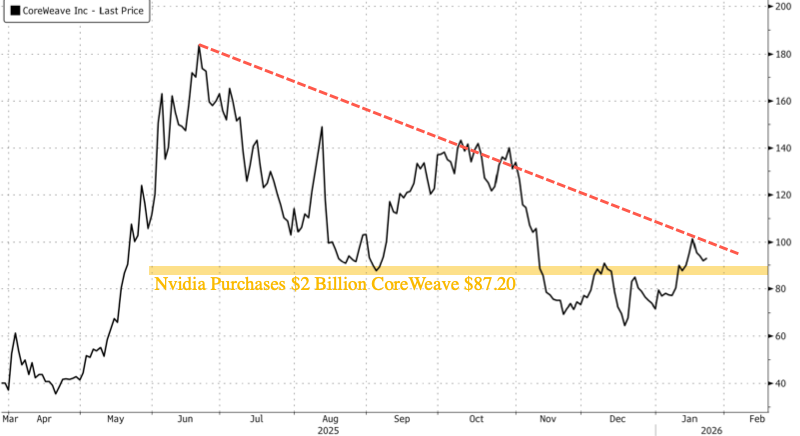
Nvidia increased its investment in CoreWeave to accelerate the buildout of AI factories, adding more than 5 gigawatts of AI computing capacity by 2030. This builds on an existing agreement under which Nvidia has committed to buy more than $6 billion in services from the firm through 2032.
“Demand for AI continues to grow exponentially and the need for compute has never been greater. To help meet this demand, NVIDIA and CoreWeave are deepening their infrastructure, software, and platform alignment,” CoreWeave wrote in a press release.
The new deal involves Nvidia purchasing $2 billion of CoreWeave Class A common stock at $87.20 per share.
Here’s what the expanded Nvidia-CoreWeave collaboration means:
Build AI factories developed and operated by CoreWeave using NVIDIA’s leading accelerated computing platform technology to meet customer demand.
Leverage NVIDIA’s financial strength to accelerate CoreWeave’s procurement of land, power and shell to build AI factories.
Test and validate CoreWeave’s AI-native software and reference architecture, including SUNK and CoreWeave Mission Control, to unlock deeper interoperability and work towards including those offerings within NVIDIA’s reference architectures for NVIDIA’s cloud partners and enterprise customers.
Deploy multiple generations of NVIDIA infrastructure across CoreWeave’s platform through early adoption of NVIDIA computing architectures, including the Rubin platform, Vera CPUs and Bluefield storage systems
Nvidia CEO Jensen Huang commented, “AI is entering its next frontier and driving the largest infrastructure buildout in human history.”
Jensen added, “CoreWeave’s deep AI factory expertise, platform software, and unmatched execution velocity are recognized across the industry. Together, we’re racing to meet extraordinary demand for NVIDIA AI factories – the foundation of the AI industrial revolution.”
The collaboration builds on CoreWeave’s purpose-built cloud, which enables customers to run AI workloads more efficiently and at scale.
CoreWeave CEO Mike Intrator said in a Bloomberg interview that Nvidia funding accounts for about 2% of what his company plans to spend on new infrastructure. “This year, we’re going to deliver an enormous amount of infrastructure, and that’s just going to accelerate over the next three years,” he said.
CoreWeave shares in premarket trading were up nearly 10%, while Nvidia shares were marginally lower.
All of this echoes the circular AI “circle jerk” deals that we pointed out last fall and has only helped propel the AI bubble.
Tyler Durden
Mon, 01/26/2026 – 09:10
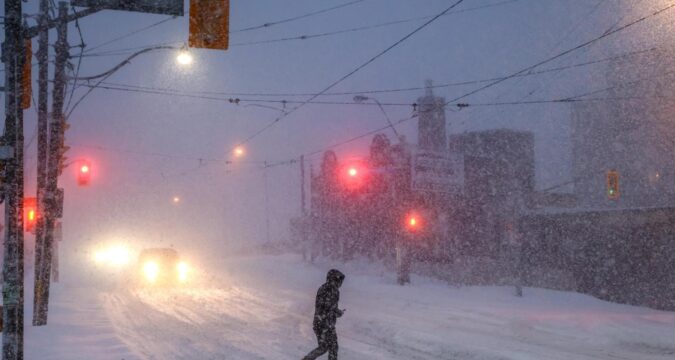
Northeast sees more snow from the tail end of a colossal winter storm, at least 13 deaths reported
The U.S. workweek opened with yet more snow dumping on the Northeast under the tail end of a colossal winter storm that brought ice and power outages, impassable roads, canceled flights and frigid cold to much of the southern and eastern United States. At least 13 weather-related deaths have been reported.
Deep snow — over a foot (30 centimeters) extending in a 1,300-mile (2,100-kilometer) swath from Arkansas to New England — halted traffic, canceled flights and triggered wide school cancellations Monday. Up to two feet (60 centimeters) were forecast in some of the harder-hit places.
After snowstorm, bitter cold will grip Chicago again, weather officials warn
There were more than 800,000 power outages in the nation on Monday morning, most of them in the South, according to poweroutage.com. The region got its share of sleet and freezing rain during the storm. There also were more than 4,400 flight delays and cancellations nationwide, according to flight tracker flightaware.com.
More light to moderate snow was forecast in New England through Monday evening.
In Falmouth, Massachusetts, about an hour’s drive south of Boston, snow came down in sheets and closed down the town.
Nell Fields said she had to shovel just to be able to let her dog outside Sunday. Seven inches (18 centimeters) had fallen, with up to that much more still on the way.
“I feel that the universe just put a big, huge pause on us with all the snow,” Fields said.
On Manhattan’s Upper East Side, January Cotrel enjoyed the fresh snow on a block that always closes during snowstorms for residents to sled, throw snowballs and make snowmen.
“I pray for two feet every time we get a snowstorm. I want as much as we can get,” she said. “Let the city just shut down for a day and it’s beautiful, and then we can get back to life.”
Bitter cold grips much of the nation
Meanwhile, bitter cold followed in the storm’s wake. It got down to minus 40 degrees Fahrenheit (minus 40 Celsius) in parts of Minnesota on Sunday. Many communities across the Midwest, South, and Northeast awakened Monday to subzero weather. The entire Lower 48 states were forecast to have their coldest average low temperature of minus 9.8 F (minus 12.3 C) — since January 2014.
Record warmth in Florida was the only thing keeping that average from going even colder, said former National Oceanic and Atmospheric Administration chief scientist Ryan Maue, who calculates national averages based on National Weather Service data.
From Montana to the Florida Panhandle, the weather service posted cold weather advisories and extreme cold warnings as temperatures in many places dipped to zero (minus-18 degrees Celsius) and even colder. Wind made conditions even chillier and the overnight cold refreezed roads early Monday in a cruel reprise of the weekend’s lousy travel weather.
Even with precipitation ending in Mississippi, “that doesn’t mean the danger is behind us,” Gov. Tate Reeves said in a news conference Sunday.
Freezing rain that slickened roads and brought trees and branches down on roads and power lines were the main peril in the South over the weekend. In Corinth, Mississippi, heavy machinery manufacturer Caterpillar told employees at its remanufacturing site to stay home Monday and Tuesday.
It already was Mississippi’s worst ice storm since 1994 with its biggest-ever deployment of ice-melting chemicals — 200,000 gallons (750,000 liters) — plus salt and sand to treat icy roads, Reeves said. He urged people not to drive anywhere unless absolutely necessary. “Do please reach out to friends and family,” Reeves added.
At one point Sunday morning, about 213 million people were under some sort of winter weather warning, authorities said.
Some 12,000 flights also were canceled Sunday and nearly 20,000 were delayed.
Storm leads to deaths in a number of states
In New York City, Mayor Zohran Mamdani said at least five people who died were found outside as temperatures plunged Saturday, though the cause of their deaths remained under investigation. Two men died of hypothermia related to the storm in Caddo Parish in Louisiana, according to the state health department.
In Massachusetts, police said a snowplow backed into a couple walking in a Massachusetts Bay Transportation Authority parking lot in Norwood on Sunday. A 51-year-old woman was killed and her 47-year-old husband was hospitalized.
Two teenagers died in sledding accidents, a 17-year-old boy in Arkansas, and a 16-year-old girl in Texas, authorities said.
Three weather-related deaths were announced in Tennessee, authorities said. Further details were not immediately available.
Brumback reported from Atlanta. Walker reported from New York. Kristin Hall and Jonathan Mattise in Nashville, Tennessee, Philip Marcelo in New York, Ed White in Detroit, Jeff Martin in Kennesaw, Georgia, Mead Gruver in Fort Collins, Colorado, Jessica Hill in Las Vegas and Seth Borenstein in Houston contributed reporting.
https://www.chicagotribune.com/2026/01/26/northeast-snow-winter-storm/

Sinner amplía a 18 su racha de victorias en el Abierto de Australia y avanza a cuartos de final
Por JOHN PYE
MELBOURNE, Australia (AP) — Jannik Sinner no sufrió ni tuvo suerte para sobrevivir esta vez, y lo único realmente caliente el lunes fue su racha, que ahora se sitúa en 18 victorias consecutivas en el Abierto de Australia.
El bicampeón vigente se apuntó una victoria 6-1, 6-3, 7-6 (2) sobre su compatriota italiano Luciano Darderi para alcanzar los cuartos de final por noveno evento consecutivo de Grand Slam.
Dos días antes, en un partido vespertino, Sinner luchó con el calor extremo y los calambres para doblegar a Eliot Spizzirri, el número 85 del ranking, tomando el control después de que se cerrara el techo.
En un partido nocturno en condiciones más frescas, Sinner dominaba sin sobresaltos hasta que Darderi levantó su nivel en el tercer set. Sinner desperdició match points en el décimo juego con el servicio de Darderi, pero acabó dominante en el desempate.
“Me sentí bastante bien físicamente. Todo estaba bien hoy”, dijo Sinner, quien tuvo una práctica limitada en su día libre entre sus partidos de tercera y cuarta ronda. “Veamos qué viene en la próxima ronda”.
Será un rival familiar. El octavo sembrado Ben Shelton venció al número 12 Casper Ruud por 3-6, 6-4, 6-3, 6-4 en un partido nocturno en la Rod Laver Arena.
Sinner ha ganado sus últimos ocho encuentros contraa el estadounidense de 23 años, incluyendo su semifinal aquí el año pasado.
“Tengo mucho más que quiero hacer aquí, y tengo mucho que demostrar”, dijo Shelton. “Estaré listo para ir”.
Sinner, en primer enfrentamiento oficial con Darderi, supo contrarrestar los cambios de ritmo de Darderi con su derecha.
Darderi salvó dos puntos de partido con su servicio en el décimo juego del tercer set y tomó los dos primeros puntos del desempate. Tuvo que hacer una pausa por unos momentos antes de servir debido al llanto de un bebé en la multitud en la arena Margaret Court.
No ganó otro punto. Sinner se llevó los siguientes siete para triunfar en 2 horas y 9 minutos.
Esto extendió a 18 la racha invicta de Sinner contra otros italianos en el circuito.
“Fue muy, muy difícil. Somos buenos amigos fuera de la cancha”, dijo Sinner. “En el tercer set tuve algunas oportunidades de quiebre, no pude usarlas. Me puse tenso, así que muy feliz de haberlo cerrado en tres sets”.
Sinner totalizó 19 aces, un récord personal, y ninguna doble falta. También quiso enfatizar algunos cambios menores en su juego, incluyendo ir a la red e intentar variar su juego.
En en el tercer set, Sinner salvó un punto de quiebre cambiando la dirección del rally con un drop shot de derecha, doblando sus rodillas y ganando un punto crucial. Con un saque y volea, mantuvo el juego.
“Todavía hay espacio para mejorar, pero muy feliz con cómo he regresado”, dijo. “Ahora, seguro, (el saque) es un poco más estable. Intento ir más a la red y ser más impredecible”.
El zurdo Shelton intentará todo lo que pueda a Sinner, quien apunta a convertirse en el quinto hombre en la era Open en ganar tres títulos consecutivos en Australia.
Shelton está en los cuartos de final por tercera vez en cuatro años.
“Definitivamente soy un competidor. Soy ruidoso en la cancha. Espero con ansias las multitudes ruidosas”, dijo. “Y aquí en Australia, no faltan”.
Shelton dijo que es un jugador más “concentrado” de lo que era hace 12 meses y está creciendo en confianza.
“Es lo que más esperas en este deporte”, dijo. “Es donde quería estar. Quería darme otra oportunidad. Dejarlo todo en la cancha”.
___
Deportes AP: https://apnews.com/hub/deportes
Futures Rebound From Session Low Amid FX Mayhem As Earning Avalanche, Govt Shutdown Loom
Futures Rebound From Session Low Amid FX Mayhem As Earning Avalanche, Govt Shutdown Loom
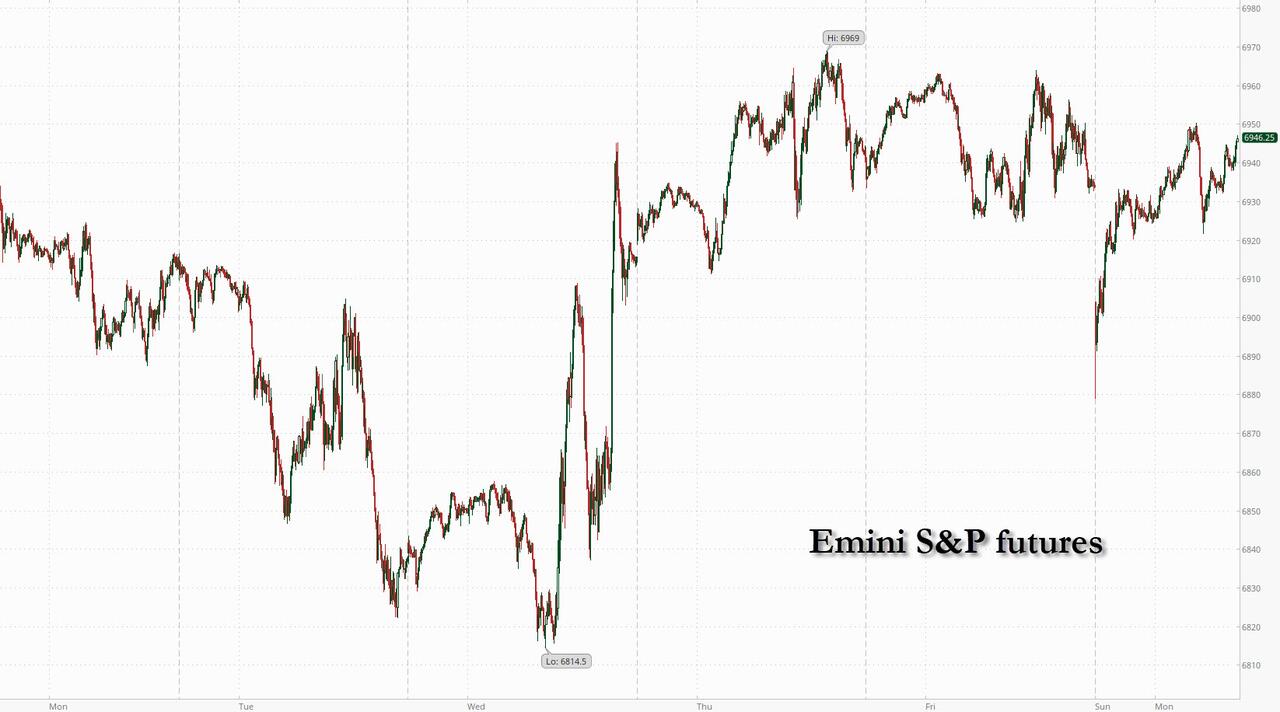
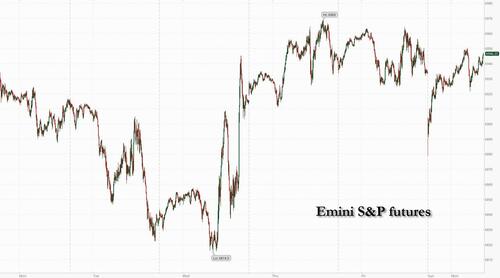
US equity futures are weaker but have retraced much of their overnight lows as geopolitics and USD/JPY roil markets ahead of a significant earnings week, as Mag7 earnings reports kick off this week.As of 8:15am, S&P futures are down 0.1% while Nasdaq futures are 0.2% lower; Mag 7 stocks are mostly lower in premarket trading while both Cyclicals and Defensives are weaker. The dollar extended its selloff on Monday as speculation, first reported here, swirled that the US could coordinate intervention with Japanese authorities to support the yen.USDJPY sees another significant decline on mounting intervention risk following Friday’s NY Fed rate check at the request of the BOJ. Bond yields are lower by 1-2bp as the yield curve bull steepens with JGB crash risk out of the picture for the time being. The FX moves are triggering a surge in gold and silver, which are up 2% and 6% to $5100 and $110 respectively, even as PGMs outperform gold. Ags are higher and natgas remains the story within Energy. In Eqy pre-mkt, Mag7 names are mixed, Semis are weaker, but Energy / Materials are higher with their underlying commodities. Today’s macro data focus is on Cap Goods / Durables and regional Fed activity indicators.
In premarket trading, Mag 7 stocks are mostly lower (Meta +0.4%, Microsoft +0.1%, Apple +1%, Amazon -0.2%, Alphabet -0.3%, Nvidia (NVDA) -0.7%, Tesla (TSLA) -0.6%
USA Rare Earth (USAR) soared as much as 50% after the Trump administration invested $1.6 billion into the mining company.
Precious metals stocks rise after gold surged past $5,000 an ounce for the first time.
Allied Gold (AAUC) rises 4% after Zijin Gold International agreed to acquire the miner for C$44 per share.
BlackRock TCP Capital Corp. (TCPC), a publicly traded middle-market lending fund, falls 12% as it expects to mark down the net value of its assets 19% after a string of troubled loans weighed on results.
Mannkind (MNKD) rises 2% after the FDA approved an update to the company’s inhaled insulin, revising recommendations for the starting mealtime dosage.
Revolution Medicines (RVMD) slides 21% after the Wall Street Journal reported that Merck ended talks to acquire the biotech firm, citing people familiar with the matter.
Sarepta Therapeutics (SRPT) rises 6% after the firm said it will report three-year topline data from its study of its gene therapy to treat patients with Duchenne muscular dystrophy on Monday.
SkyWater Technology (SKYT) rises 7% after IonQ Inc. agreed to buy the company in a cash-and-stock deal that values the chipmaker at about $1.8 billion.
In corporate news, SoftBank is said to have halted talks about an acquisition of US data center operator Switch, while the WSJ reported that Merck is no longer in talks to buy biotech firm Revolution Medicines after the pair failed to agree on a price. Samsung is getting close to securing certification from Nvidia for the latest version of its AI memory chip, narrowing the gap with rival SK Hynix.
Futures dropped but then rebounded, tracking moves in the Nikkei which slumped as the yen surged on signs that Tokyo and Washington coordinated on rate checks. This fueled volatility in foreign-exchange markets, as traders viewed the steps as preparation for direct intervention. Joint US-Japan action would give authorities greater power to deter speculators after the yen fell to an 18-month low earlier this month.
“The bigger signal is policy coordination,” said Daniel Baeza, senior vice president at Frontclear. “If markets interpret coordination as a willingness to tolerate easier global dollar conditions, especially alongside a dovish Fed reaction function, that could reinforce short-term dollar downside.”
Traders are also monitoring the possibility of a partial government shutdown. Senate Democrats have insisted that funding for the Department of Homeland Security be split off until Congress can agree on new guardrails for immigration enforcement, after agents killed two US citizens this year in Minnesota. Senate Republican leaders plan to reject the demands.
“A potential shutdown would clearly represent some downside risks for the market mood as we just recover form the last one,” said BNP’s Kemper.
Besides a govt shutdown, earnings will be in the spotlight as the busiest week of the season gets underway, with four of the Magnificent Seven tech giants due to report. The group has driven market gains for much of the past three years, but that leadership faltered in late 2025 as Wall Street grew skeptical of whether massive AI spending will deliver returns. Results from Meta, Apple, Tesla and Microsoft will be dissected to see how their massive spending on AI is translating into profits. Earnings from RTX, Lockheed Martin and Northrop Grumman will likely reflect increased demand for weapons amid geopolitical tensions.
“The main focus from investors will likely be comments around AI-capex,” said Stephan Kemper, chief investment strategist at BNP Paribas Wealth Management. “Any sign of a slowdown could be seen as hyperscalers losing trust in the possibility to monetize those investments in a timely manner.”
Some of Wall Street’s top strategists are beginning to see early evidence that US profit growth is spreading beyond tech megacaps. An analysis by JPMorgan shows that forward guidance has topped expectations at roughly half of the S&P 500 companies that have provided an outlook for 2026. Goldman Sachs Group Inc. also expects earnings to support an expansion. “Since most of the companies that have reported are outside the tech sector, this trend suggests a broadening of growth across other industries this year,” JPMorgan strategist Dubravko Lakos-Bujas wrote in a note.
In Europe, the Stoxx 600 is down 0.1%, opened on either side of the unchanged mark, before moving a little lower to now display a mixed/mostly negative picture. European sectors have opened mixed to slightly negative. Leading sectors are Basic Resources (+1.0%), Banks (+0.8%) and Energy (+0.6%). Basic Resources continues to be underpinned by strength in metal prices as gold and silver continue to gain strength as havens, whilst the energy sector has gained on the back of firmer crude prices. At the bottom of sectors reside, Travel & Leisure (-1.0%), Food Beverage & Tobacco (-0.9%) and Technology (-0.6%).
Asian stocks advanced amid choppy trading as gains in technology and material shares offset a slump in Japanese equities. The MSCI Asia Pacific Index rose as much as 1.1% early on Monday before halving its advance. MediaTek and Tencent provided the biggest boost. The Asian benchmark — which rose in each of the past five weeks — was also buoyed on Monday by gains in mining shares. The cohort climbed alongside metal prices as investors rotated into hard assets such as gold. Investors are awaiting earnings from some of the world’s top technology firms this week for further cues after the sector’s relentless rally. Stocks in Japan underperformed the region as exporters tumbled amid a yen rally sparked by increased speculation that authorities may intervene to support the currency’s slide. Gains in Asian stocks Monday also came amid broad weakness in the dollar as investors debated how potential US involvement in foreign-exchange intervention in Japan might worsen sentiment toward the world’s reserve currency.
In rates, treasuries hold small gains led by long-end tenors, with 20- and 30-year yields down 1bp-2bp from Friday’s closing levels as traders added to bets for 2026 interest-rate cuts after BlackRock Inc. executive Rick Rieder’s candidacy to helm the Federal Reserve gained momentum. With an announcement on the next Fed chair possible as soon as this week, rate expectations will be in focus as current Chair Jerome Powell delivers the latest decision on Wednesday. US front-end yields are little changed, leaving 2s10s and 5s30s spreads about 1bp flatter; 10-year near 4.21% is about 1bp lower vs 3bp decline for German counterpart, 5bp for French 10-year. European bonds outperform led by France following continued progress on budget plans. Dollar extends slide amid speculation the US could coordinate intervention with Japanese authorities to support the yen. This week’s Treasury coupon auctions begin a day early with 2-year notes; Treasury coupon auctions this week include 2-, 5- and 7-year notes on Monday, Tuesday and Thursday respectively, with FOMC rate decision Wednesday. WI 2-year yield near 3.59% is about 9bp cheaper than last month’s, which tailed by 0.3bp.
In FX, the yen surges on speculation of intervention, with the dollar sinking against most major currencies on deteriorating sentiment toward the greenback. However, Bank of Japan data offered no clear signal on whether the country intervened on Friday. Bloomberg Dollar Spot Index falls to lowest since September, while USDJPY dropped as low as 154 before rebounding.
In commodities, gold rallies to a new record well above $5,100/ounce, and silver surges to around $109/ounce as investors seek out havens. Treasuries are higher and European bonds are rising. Oil prices wavering, with Brent hovering around $66/barrel.
US economic calendar includes November Chicago Fed national activity index and durable goods orders (8:30am) and January Dallas Fed manufacturing activity (10:30am)
Market snapshot
S&P 500 mini -0.2%
Nasdaq 100 mini -0.4%
Russell 2000 mini -0.2%
Stoxx Europe 600 little changed
DAX -0.2%
CAC 40 -0.3%
10-year Treasury yield -2 basis points at 4.21%
VIX +1.1 points at 17.14
Bloomberg Dollar Index -0.5% at 1187.53
euro +0.3% at $1.1862
WTI crude +0.2% at $61.17/barrel
Top Overnight News
US President Trump said administration is reviewing everything about the Minneapolis shooting and that immigration enforcement officers will at some point leave the area, according to WSJ.
The dollar extended its selloff and hit a four-month low on speculation the US may help Japan support the yen after a warning from PM Sanae Takaichi and comments from other top Japanese officials. BBG
Gold stormed beyond $5,000 for the first time and silver hit a record as traders revived the debasement trade. BBG
China launched a corruption investigation into top general Zhang Youxia. The surprising probe has implications for Taiwan, succession, and further turmoil in the Communist Party ranks, and raises questions about who Xi Jinping can trust within his inner ranks. BBG
US power grids face unprecedented demand as a massive storm left brutal cold in its wake. More than 800,000 homes and businesses are without electricity, and around 3,500 flights have been cancelled today. US natural gas soared almost 20%. BBG
Europe formally adopted a proposal that would ban Russian LNG imports starting in 2027, with pipeline gas imports halted by the fall of 2027. EU
The US is in talks with crude producers and oilfield service providers about a plan to quickly revive output in Venezuela at a fraction of the estimated $100 billion cost for a complete rebuild. BBG
Canada has “no intention” of pursuing a free trade deal with China, Prime Minister Mark Carney said, after U.S. President Donald Trump threatened to slap punitive tariffs on Ottawa. CNBC
Senate Democrats angered by the deadly shooting in Minneapolis said they wouldn’t vote for a government funding package without major changes to its homeland security provisions, raising the possibility of a partial government shutdown this coming weekend. WSJ
The American Academy of Pediatrics recommends children be vaccinated against 18 diseases, more than the U.S. government directs after it overhauled its schedule. The doctors group kept its guidance largely unchanged from its previous version from last year and said it doesn’t endorse the Centers for Disease Control and Prevention’s childhood-vaccine schedule. WSJ
Trade/Tariffs
India is to reduce tariffs on cars to 40% in a trade deal with EU, according to sources cited by Reuters.
EU and India are reportedly to explore possibilities for India’s participation in European defence initiatives.
Central Banks
BoJ accounts provided no clear signal of intervention in the JPY on Friday.
PBoC Deputy Governor Zou affirms will continue efforts to enhance market connectivity between mainland and Hong Kong. Pledges continued backing and steady development of Hong Kong’s offshore RMB market. To coordinate with authorities to increase yearly offshore RMB government bond issuance.
SNB has lowered the threshold factor for the remuneration of sight deposits of account holders subject to minimum reserve requirements from 16.5 to 15, as of 1st March.
A more detailed look at global markets courtesy of Newsquawk
APAC stocks were mostly subdued amid Japanese intervention concerns and US President Trump’s latest tariff threat against Canada, in which he threatened to impose 100% tariffs if it makes a deal with China. Risk sentiment was also not helped by the Democrats threatening a partial government shutdown in revolt against the fatal shooting of an ICE protester in Minneapolis, while market conditions were somewhat quieter owing to the holiday closures in Australia and India. Nikkei 225 underperformed with the index pressured by a firmer currency amid US-Japan joint intervention concerns after Japanese PM Takaichi said the government is ready to take action against speculative moves, and with reports last Friday that the New York Fed conducted rate checks on USD/JPY. Hang Seng and Shanghai Comp were indecisive with demand contained amid reports that China is likely to target growth of 4.5% to 5% in 2026, while stocks also failed to benefit from news late last week that China told the biggest tech firms they can prep NVIDIA H200 orders.
Top Asian News
Japanese PM Takaichi rules out combining BoJ ETF holdings, pension funds, and reserves to form a sovereign wealth fund.
Japanese Chief Cabinet Secretary Kihara said the government will prepare a tentative budget if the FY26 Budget is unlikely to pass the Diet by the end of March.
Japan’s PM Takaichi said would like to achieve two-year suspension of 8% tax on food at the earliest date possible and submit relevant legislation in the fiscal 2026 Diet.
China’s Guangdong province targets 2026 GDP growth of 4.5%-5.0%.
European bourses (STOXX 600 -0.1%) opened on either side of the unchanged mark, before moving a little lower to now display a mixed/mostly negative picture. European sectors have opened mixed to slightly negative. Leading sectors are Basic Resources (+1.0%), Banks (+0.8%) and Energy (+0.6%). Basic Resources continues to be underpinned by strength in metal prices as gold and silver continue to gain strength as havens, whilst the energy sector has gained on the back of firmer crude prices. At the bottom of sectors reside, Travel & Leisure (-1.0%), Food Beverage & Tobacco (-0.9%) and Technology (-0.6%).
Top European News
French Finance Ministry announces that France will hold a G-7 finance call on Tuesday.
EU Commission to open proceedings against X’s AI chatbot grok on Monday under the Digital Services Act, via Handelsblatt report, citing EU officials.
FX
DXY gapped lower at the open from Friday’s 97.456 close, with the index off its worst and best levels at the time of writing, towards the middle of a 96.949-97.333 band. The index remains suppressed by the aforementioned JPY strength, alongside risks of a US government shutdown also increasing after Democrats said they will not support a funding package without changes to homeland security provisions.
JPY is the standout gainer, bolstered by double intervention risk after Japanese PM Takaichi warned that the government is ready to take action against speculative moves amid a weakening currency and surge in bond yields, while it was reported on Friday that the New York Fed had conducted rate checks on USD/JPY. Analysts at ING succinctly highlight two reasons for Washington’s involvement: “a) the weak yen was adding to last week’s JGB sell-off and indirectly driving US Treasury yields higher. If there is any financial instrument more important than the stock market to the White House right now, it is US Treasuries. And b) the strong USD/JPY was potentially unwinding the work of US tariffs on Japan and giving Japanese manufacturers a competitive advantage.” USD/JPY slumped from Friday’s 155.74 close to a Monday trough at 153.40, slightly under the 100 DMA (153.54).
EUR benefits from the USD weakness but trades off best levels after hitting resistance at 1.1898 (vs 1.1837 low) shortly after the resumption of trade. Little action was seen on the sub-par German Ifo report, and with the EZ docket also light ahead.
CHF mildly gains due to its haven status amid the looming US government shutdown, alongside President Trump’s 100% tariff threat on Canada if it makes a trade deal with China. On that note, USD/CAD trades on a softer footing amidst the aforementioned USD weakness, with the pair also dipping under the psychological 1.3700 mark to a 1.3675 low at the time of writing.
Antipodeans trade on a firmer footing with AUD underpinned as spot gold briefly topped USD 5,100/oz earlier in the session. AUD reached a high of 0.6934 from a 0.6896 close on Friday.
Fixed Income
Fixed income benchmarks are in the green. USTs firmer by a handful of ticks, at the top-end of a 111-25 to 111-29+ band. The US session is relatively quiet, aside from 2yr supply ahead. Strength for fixed is perhaps a function of the slight equity pressure, which in turn can be explained at least in part by ongoing/renewed trade tensions relating to the US, Canada and China, after Trump’s rhetoric. One other point of support might be the US conducting a rate check in the JPY on Friday, as this could be interpreted as a precursor to joint intervention; given the moves in long-end Japanese yields seen last week, and the global influence that had, any such action could target JGBs in addition to the Yen.
Bunds are firmer, with gains of just over 20 ticks at best. Specifics for the bloc are a little light, with no move seen to German Ifo, which came in softer-than-expected for the climate figure, while the other components were mixed vs prev. For the EZ, the week is mainly waiting to see how the trade situation develops, with the EU meeting today to discuss unfreezing EU-US talks.
Gilts outperform, gains of c. 30 ticks at a 91.56 high. Upside that is, primarily, being driven by the news that Greater Manchester Mayor Burnham will not be able to run for the vacant Labour MP seat. This blocks Burnham from launching a leadership challenge against PM Starmer, as some have speculated he might, despite Burnham himself suggesting Starmer is the best person to be PM currently. While welcomed by Gilts, the block has prompted significant backlash against PM Starmer from within the Labour Party, and as such, this narrative may return.
Gulf Cooperation Council nations have issued c. USD 32.3bln of international bonds YTD, +25% Y/Y, Bloomberg reported.
Japan sold JPY 299.9bln in 5yr Climate Transition Bonds b/c 3.49 (prev. 3.98), price at highest accepted yield 99.61 (prev. 99.53), highest accepted yield 1.684% (prev. 1.098%). Allotment for Bids at the Highest Accepted Yield 24.2857% (prev. 35.6363%).
Commodities
WTI Mar’26 continues to oscillate beyond USD 61/bbl while Brent Apr’26 rotates around USD 65/bbl, seemingly unaffected by the day’s rise in Nat Gas prices, despite the gradual rise in crude prices in recent sessions due to concerns of supply disruptions.
Henry Hub futures gapped beyond USD 6/MMBtu, its highest level since the start of the Ukraine war, while the Dutch TTF future nears EUR 42/MWh, following the Arctic storm in the US that has shut around 10% of production in the US. Prices of natural gas have been rising in recent days due to poor weather across Europe, Asia and now the US, freezing oil and natural gas wells, in addition to geopolitical concerns and accompanying supply concerns.
Precious metals continue their historic bid higher, with spot gold trading beyond USD 5,000/oz and briefly extended above USD 5,100/oz, while spot silver trades just shy of USD 110/oz.
3M LME Copper is currently trading in the middle of the USD 12.52k-13.41k/t band that has been forming since the start of 2026 as supply/demand dynamics support the red metal. Supply disruptions were the main driver throughout 2025 but as the worries wane, demand has continued to grow due to AI demand.
Ukraine’s military said it struck a Russian oil refinery in Krasnodar region.
China’s Shanghai Futures Exchange to adjust price limits, margin ratios for copper and aluminium futures contracts from the 28th January closing settlement.
Kazakhstan’s Energy Ministry said that production is to be relaunched for the Tengiz oil field in the near future.
EU has given final approval to the Russian gas ban; will entirely ban Russian LNG imports by 1st January 2027, and pipeline gas by 30th September 2027.
Kazakhstan’s Tengizchevroil is reportedly gradually restarting its Tengiz production.
OPEC+ is likely to maintain its supply pause in March, Bloomberg reported citing delegates; adds that there is no need to respond to the events in Venezuela and Iran but a significant supply disruption would warrant a boost in output.
PBoC Deputy Governor supports the development of Hong Kong’s gold market, strengthening its offshore RMB market functions.
Geopolitics: Ukraine
Ukraine’s military said it struck a Russian oil refinery in Krasnodar region.
EU has given final approval to the Russian gas ban. Will entirely ban Russian LNG imports by 1st January 2027, and pipeline gas by 30th September 2027.
Russian Presidential Envoy said Ukrainian President Zelensky is hindering peace by postponing the issue of land settlement, Al Arabiya reported.
Russia’s Kremlin said that constructive talks with Ukraine are underway, according to RIA.
Geopolitics: Middle East
“Commander of Iran’s Naval Forces: Armed Forces Fully Prepared to Protect the Country”, Sky News Arabia reported.
OPEC+ is likely to maintain its supply pause in March, Bloomberg reported citing delegates; adds that there is no need to respond to the events in Venezuela and Iran but a significant supply disruption would warrant a boost in output.
Iranian Foreign Ministry Spokesperson said that Iran is stronger and more capable than ever before, and will certainly respond to any aggression with a broad and deterrent response.
Geopolitics: Other
Chinese Commerce Ministry Official said China and the US maintained communication at various levels following the leaders’ summit in South Korea. China and the US are to manage differences and promote stable trade ties.
US Event Calendar
8:30 am: United States Nov Chicago Fed Nat Activity Index, est. -0.2, prior -0.21
8:30 am: United States Nov P Durable Goods Orders, est. 3.75%, prior -2.2%
8:30 am: United States Nov P Durables Ex Transportation, est. 0.3%, prior 0.1%
10:30 am: United States Jan Dallas Fed Manf. Activity, est. -8.6, prior -10.9
DB’s Jim Reid concludes the overnight wrap
With the year still not yet four weeks old, it’s already been a tour de force of news volatility, even as market volatility has remained relatively contained. We’ve moved from Venezuela to Japan, via Iran and Greenland, with a range of other themes running in the background. These now include President Trump on Saturday threatening 100% tariffs on Canada if China strikes a trade deal with them, and the odds of another US government shutdown after January 30th (Friday) jumping on Polymarket from 8% on Friday to 78% this morning. This followed Senate Democratic leader Schumer warning that they will block the spending package unless Republicans defund Homeland Security after a Border Patrol shooting at a protest in Minnesota on Saturday linked to the immigration crackdown.
If that weren’t enough to be getting on with, Rick Rieder’s odds of becoming the next Fed Chair surged from around 33% as Europe closed on Friday to over 60% at one point over the weekend, before settling at 47% this morning. The perception in markets is that he would be more market friendly than the previous front runner, Kevin Warsh, who is now trading at 29% on Polymarket. He was at 65% last Monday.
Finally in the UK, Andy Burnham was yesterday blocked by the ruling Labour Party from contesting an imminent by-election. Burnham is seen as a potential challenger to PM Starmer with lots of party support. Gilts may see some relative relief this morning as Burnham had said last September that the UK needs to “get beyond being in hock to the bond markets”. However this story is unlikely to completely go away. With all this going on it’s perhaps no wonder that Gold (+8.52%) was within two-tenths of a percent of its best week since 2008, marginally behind one week in 2020. It’s up another +1.7% this morning and has flown past $5000 for the first time. However the Dollar has just had its worst week for 8 months, falling against all its peers, and has continued to weaken this morning.
So there are plenty of balls in the air right now, but the one perhaps most urgently needing careful handling is Japan. On Friday afternoon in Europe, news broke that the New York Fed had conducted a “rate check” on USD/JPY on behalf of the US Treasury.
This morning, the Japanese yen is around +1.1%, trading at 154.05 against the dollar, marking its strongest position since November. Various official have refused to confirm or deny overnight any intervention so far. 2yr JGBs are around +3bps higher with 10yr and 30yr yields -1bps and flat respectively while the Nikkei is -1.90% due to the strong Yen since Friday.
Elsewhere in Asia, the KOSPI (-0.90%) is lower with some looking at the weak KRW as a potential for intervention risk. The Korean Wong is up +1.7% this morning. Chinese equities are up a little with S&P 500 (-0.28%) and NASDAQ 100 (-0.41%) futures both lower.
The main event this week will be the Fed’s decision on Wednesday with the main focus not on the likely unchanged Fed Funds rate but on what Powell says about a variety of things in the presser (more below). The Bank of Canada meet the same day with Sweden’s Riksbank meeting on Thursday, with both also expected to be on hold. Finally, the ECB will publish its monthly consumer expectations survey on Friday. In terms of data, the US sees durable goods (today), consumer confidence (tomorrow) and PPI (Friday). In Europe preliminary January CPI for countries including German and Spain are released, alongside Q4 GDP for the main economies all on Friday. The German Ifo is out today.
Over in Asia, a likely busy week of news flow for Japan is bookended with a big data dump on Friday featuring the Tokyo CPI, consumer confidence, retail sales and industrial production. The Lower House election campaign begins tomorrow ahead of the 8 February vote. Other notable indicators due in the region include December industrial profits in China tomorrow and Q4 CPI in Australia on Wednesday (our economists expect the quarterly trimmed mean print at 0.9% QoQ / 3.3% YoY).
Rounding out with corporate earnings, an important week is ahead featuring results from four Magnificent 7 stocks – Microsoft, Meta and Tesla on Wednesday and Apple on Thursday. The four make up 16% of the S&P 500 by market cap, with the overall list of firms reporting next week totalling 32% of aggregate capitalisation. Other tech highlights include ASML, Samsung, IBM and SAP. The focus will also be on defence firms RTX, Northrop Grumman and Lockheed Martin. On Friday, big oil firms Exxon and Chevron will also report. In Europe, highlights also include LVMH, Roche and Sanofi.
Previewing Wednesday’s FOMC meeting, our economists expect the Federal Reserve to leave policy unchanged while striking a slightly firmer tone on the underlying economic backdrop. Although the usual focus would be on the policy outlook, circumstances this time mean that Chair Powell’s press conference is likely to dwell heavily on non-economic matters. Questions will inevitably surface around the recent DoJ subpoena, the situation involving Governor Cook, and the broader issue of future Fed leadership. Powell will probably lean on the themes of his recorded statement from 11 January, emphasising the importance of institutional independence and resisting political pressure — a message he is unlikely to dilute given the current environment.
On the policy statement itself, our economists expect the Fed to upgrade its description of growth from the previous “moderate pace” to something closer to a “solid pace,” consistent with Vice Chair Jefferson’s comments on 16 January. They also expect the Committee to acknowledge a somewhat steadier labour market, reflecting the more recent data flow available since the November meeting. Inflation is trickier: with core PCE still running at 2.8% year on year into November, progress has been limited, and the Committee may simply reiterate that inflation remains “somewhat elevated,” echoing Jefferson’s framing of recent developments.
Where the statement may shift most meaningfully is the second paragraph. Over the past several meetings, the Fed has justified its easing bias by pointing to rising labour market risks. Given the more balanced labour picture and the lack of discernible improvement on inflation, our economists believe the Committee may drop its explicit reference to labour market deterioration and revert to the more neutral line that it remains attentive to risks on both sides of the mandate — while stopping short of last year’s language that risks were “roughly balanced.”
Taken together, Wednesday’s decision and press conference should reinforce the idea that policy is now within the Fed’s estimated range of neutral and that the Committee is well placed to respond in either direction if incoming data justify a move. Nearly all voters are likely to endorse that message, though Governor Miran will likely dissent in favour of additional easing.
Recapping last week, markets endured another round of whipsaw action amid lingering questions over Greenland. As a reminder, over the previous weekend Trump announced 10% tariffs on several European countries by February 1 and until the US obtained control of Greenland. That sent the STOXX 600 (-1.19%) to its worst performance in two months on Monday, while the S&P 500 (-2.06%) posted its worst day in three months when US markets returned on Tuesday. Sentiment improved on Wednesday after Trump said the US would not use force to acquire Greenland and dropped the tariff threat after agreeing to “a framework of a future deal” with NATO’s Mark Rutte. Equities recovered somewhat, but the STOXX 600 (-0.98%, -0.09% on Friday) and the S&P 500 (-0.35%, +0.03% on Friday) still ended the week lower. This was the first time since June that the S&P had seen two consecutive weekly declines.
It wasn’t all negative: a tech rebound pushed the Mag 7 +1.10% higher (+1.04% Friday). And although the VIX closed above the 20 level for the first time since November on Tuesday, it finished the week little changed at 16.09 (+0.23 bps). Meanwhile, geopolitical concerns helped gold rise to within sight of the $5,000 level, with its best week since the early months of Covid in 2020 (+8.52% to $4,987/oz). Silver also surged +14.50% to $103.19/oz (+7.22% Friday), extending its YTD gain to +44%.
Bond markets saw similarly turbulent moves. The most dramatic shifts came in JGBs, where the 30yr yield spiked +26.6bps on Tuesday to 3.84%, its biggest daily increase since 1999. The moves later moderated, with 30yr JGB yields ending the week +14.6bps higher and 10yr yields +6.7bps higher. In Europe, 10yr bunds (+7.1bps) and gilts (+11.2bps) also sold off as geopolitical volatility heightened concerns about increased European defence spending and the resulting fiscal pressure.
US Treasuries initially slumped on geopolitical noise and firm data, but ended the week little changed. The 2yr yield rose +0.7bps to 3.95% (-1.2bps Friday), while the 10yr yield edged up +0.2bps to 4.23% (-2.0bps Friday). The stronger US data included initial jobless claims falling to 200k (vs 209k expected), which pushed the 4 week moving average to a 2 year low of 201.5k, and Friday’s stronger than expected University of Michigan final consumer sentiment reading (56.4 vs 54.0 expected). Despite that, yields rallied late on Friday, supported by rising expectations that Rick Rieder would be chosen as the next Fed Chair.
The dollar index fell -1.80%, its worst week in eight months (-0.77% on Friday). By contrast, the Japanese yen — which had been drifting toward its weakest levels since 2024 — sharply rebounded on Friday (+1.74% to 155.70 against the dollar) amid renewed speculation about FX intervention. That followed a relatively uneventful BoJ decision earlier on Friday, which left rates unchanged at 0.75%, with one dissent (8–1) in favour of another 25bp hike.
Let’s see what this week brings as an eventful January draws to a close!!
Tyler Durden
Mon, 01/26/2026 – 08:53
Israel afirma que restos del último rehén en Gaza han sido recuperados
JERUSALÉN (AP) — Israel afirma que restos del último rehén en Gaza han sido recuperados.

Rusia dice que las conversaciones con EEUU y Ucrania en Abu Dabi son constructivas
Por The Associated Press
Las negociaciones destinadas a poner fin a la guerra en Ucrania están mostrando aparentes signos de progreso, pero aún quedan grandes desafíos en el camino hacia un acuerdo final, dijo el lunes un alto funcionario ruso.
Las conversaciones entre enviados de Ucrania, Rusia y Estados Unidos en los últimos días en Abu Dabi fueron constructivas y se planea otra ronda para la próxima semana, informó a los periodistas el portavoz del Kremlin, Dmitry Peskov.
Sin embargo, no informó de ningún avance importante hasta ahora y agregó: “El mero hecho de que estos contactos hayan comenzado de manera constructiva puede evaluarse positivamente, pero aún queda un trabajo serio por delante”.
Los funcionarios revelaron pocos detalles de las conversaciones celebradas el viernes y sábado, que fueron parte de un esfuerzo de un año por parte de la administración Trump para guiar a las partes hacia un acuerdo de paz y poner fin a casi cuatro años de guerra total.
Aunque los funcionarios ucranianos y rusos han acordado en principio con los llamados de Washington a un compromiso, Moscú y Kiev difieren profundamente sobre cómo debería ser un acuerdo.
Mientras tanto, continúa la agotadora guerra de desgaste a lo largo de la línea del frente de aproximadamente 1.000 kilómetros (600 millas) que serpentea por el este y sur de Ucrania, y los civiles ucranianos están soportando otro invierno de penurias tras el bombardeo ruso de ciudades en la retaguardia.
El presidente de Estados Unidos, Donald Trump, ha establecido plazos para un acuerdo y ha amenazado con sanciones adicionales a Moscú, pero el presidente ruso Vladímir Putin aparentemente no ha cedido en sus demandas públicas.
El presidente ucraniano Volodymyr Zelenskyy también describió las conversaciones de Abu Dabi como constructivas. Agregó el domingo que un documento que establece garantías de seguridad de Estados Unidos para Ucrania en un escenario de posguerra está “100% listo”, aunque aún necesita ser firmado formalmente.
Kiev ha insistido en compromisos de seguridad estadounidenses de posguerra como parte de cualquier acuerdo de paz más amplio con Moscú después de la anexión ilegal de Crimea por parte de Rusia en 2014 y su apoyo a los rebeldes separatistas en el este de Ucrania, seguido de su invasión a gran escala en febrero de 2022.
Zelenskyy ha reconocido que existen diferencias fundamentales entre las posiciones ucranianas y rusas, aunque la semana pasada dijo que las propuestas de paz están “casi listas”.
Un tema central es si Rusia debería mantener o retirarse de las áreas de Ucrania que sus fuerzas han ocupado, especialmente la región industrial oriental de Ucrania llamada Donbás, y si debería obtener tierras allí que aún no ha capturado.
Los negociadores regresarán a Emiratos Árabes Unidos el 1 de febrero para otra ronda de conversaciones, según un funcionario estadounidense, que habló bajo condición de anonimato porque no estaba autorizado para hablar con los medios. Las conversaciones del fin de semana abarcaron una amplia gama de asuntos militares y económicos e incluyeron la posibilidad de un alto el fuego antes de un acuerdo integral, dijo el funcionario.
El Ministerio de Defensa de Rusia dijo el lunes que las defensas aéreas derribaron 40 drones ucranianos el domingo por la noche y el lunes temprano, incluidos 34 sobre la región de Krasnodar y cuatro sobre el mar de Azov.
Los funcionarios de Krasnodar dijeron que fragmentos de drones cayeron sobre dos plantas industriales en la ciudad de Slavyansk, provocando incendios que fueron extinguidos. Una persona resultó herida, dijeron.
Por el contrario, el Estado Mayor de Ucrania dijo que una refinería en la región de Krasnodar fue atacada por fuerzas ucranianas. La instalación suministraba al ejército ruso, agregó.
Las fuerzas rusas lanzaron 138 drones contra Ucrania durante la noche, de los cuales 110 fueron derribados o suprimidos, dijo la fuerza aérea de Ucrania, y 21 de ellos alcanzaron objetivos en 11 sitios.
_______
Esta historia fue traducida del inglés por un editor de AP con la ayuda de una herramienta de inteligencia artificial generativa.