Category: News
Mueren al menos 4 trabajadoras tras una explosión en una fábrica de galletas en Grecia
Associated Press
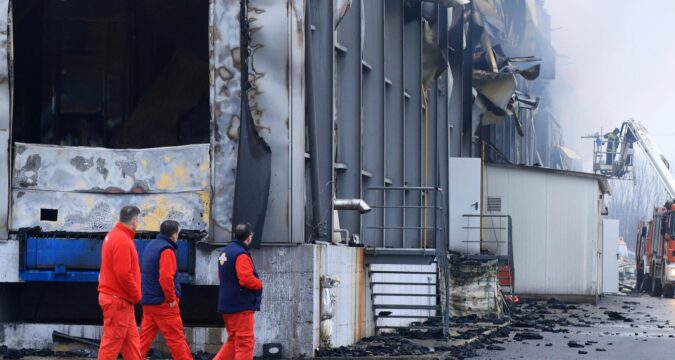
TRIKALA, Grecia (AP) — Al menos cuatro trabajadoras murieron y una persona estaba desaparecida tras una explosión y uun incendio en una fábrica de galletas en el centro de Grecia, informaron las autoridades el lunes.
Siete personas más, incluido un bombero, fueron hospitalizadas tras la explosión en la planta de galletas Violanta, cerca de la ciudad de Trikala, unos 320 kilómetros al norte de Atenas.
La explosión ocurrió durante el turno de noche y el incendio resultante destruyó la planta. Los equipos de bomberos lucharon contra las llamas durante horas antes de recuperar cuatro cuerpos —todas mujeres— del edificio destruido.
La policía indicó que los investigadores sospechan que la explosión pudo haberse originado cerca de los hornos, que operan las 24 horas del día. Seis trabajadores y un bombero estaban siendo tratados en un hospital en Trikala, ninguno en estado grave.
Investigadores de incendios provocados y equipos de emergencia permanecieron en el lugar mientras las autoridades trabajaban para determinar qué causó la explosión.
___
Esta historia fue traducida del inglés por un editor de AP con la ayuda de una herramienta de inteligencia artificial generativa.
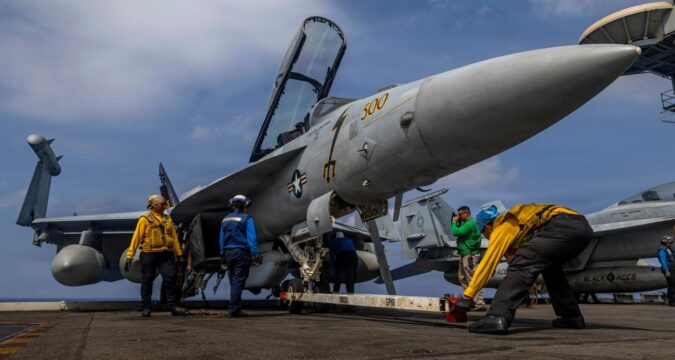
Rebeldes de Yemen amenazan con ataques en el mar Rojo mientras portaviones de EEUU se dirige a Irán
Por JON GAMBRELL
DUBÁI, Emiratos Árabes Unidos (AP) — Los rebeldes hutíes de Yemen, respaldados por Irán, amenazaron con nuevos ataques a barcos que transitan por el corredor del mar Rojo, probablemente en un intento de respaldar a Irán, que el lunes seguía con preocupación el acercamiento de un portaaviones estadounidense después de que el presidente Donald Trump amenazara con una acción militar debido a su represión de las protestas nacionales.
Un breve video de los hutíes incluía imágenes publicadas previamente de un barco en llamas, con el subtítulo “pronto”. Los rebeldes no dieron más detalles, pero durante su campaña en el mar Rojo atacaron más de 100 barcos dentro de una operación que describieron como presión a Israel por su guerra contra Hamás en la Franja de Gaza. Los hutíes detuvieron sus ataques después de un alto el fuego en el conflicto, aunque han reiterado que podrían reanudar el fuego si fuera necesario.
La amenaza de los hutíes se produce mientras el portaviones USS Abraham Lincoln y varios destructores de misiles guiados se mueven hacia la región. Trump ha dicho que los barcos se están moviendo “por si acaso” decide tomar medidas contra Irán. Trump ya ha marcado dos líneas rojas para el ataque: el asesinato de manifestantes pacíficos y que Teherán lleve a cabo ejecuciones masivas de los detenidos en la represión masiva de las manifestaciones.
Irán renueva amenazas y limita vuelos
El portavoz del Ministerio de Defensa de Irán, el general Reza Talaei-Nik, renovó el lunes las advertencias tanto a Israel como a Estados Unidos sobre cualquier posible ataque, diciendo que “sería respondido con una respuesta más dolorosa y más decisiva que en el pasado”. La televisión estatal iraní citó a Talaei-Nik agregando que las amenazas de los dos países requerían que Irán “mantuviera una preparación completa y exhaustiva”.
Durante el fin de semana, Irán desveló un nuevo cartel en la plaza Enghelab amenazando al Lincoln, que mostraba un portaaviones cubierto de cuerpos y manchado de sangre con la advertencia: “Si siembras vientos, cosecharás tempestades”. Sin embargo, Irán todavía se está recuperando de una guerra de 12 días lanzada por Israel en junio en la que sus sistemas de defensa antiaérea sufrieron una destrucción importante, sus principales líderes militares fueron asesinados y varias instalaciones de enriquecimiento nuclear fueron bombardeados por Estados Unidos.
En una muestra de preocupación por su espacio aéreo, Irán emitió el domingo un aviso a los pilotos que prohibía a las pequeñas aeronaves privadas volar en el país, con excepciones para la industria petrolera y vuelos médicos de emergencia.
Muchas aerolíneas occidentales han comenzado a evitar por completo el espacio aéreo iraní debido a las tensiones, aunque las aerolíneas árabes del Golfo que vuelan a Moscú todavía utilizan la ruta. Las tropas de defensa antiaérea iraníes derribaron en 2020 un avión comercial ucraniano, matando a 176 personas a bordo.
Aumenta el número de muertos por la represión de las protestas
Las protestas en Irán comenzaron el 28 de diciembre, provocadas por la caída de la moneda iraní, el rial, y rápidamente se extendieron por todo el país. Fueron recibidas con una violenta represión por parte de la teocracia de Irán, cuya magnitud apenas comienza a conocerse ya que el país ha enfrentado un apagón de internet de más de dos semanas, el más completo en la historia de la nación.
La Agencia de Noticias de Activistas de Derechos Humanos con sede en Estados Unidos informó el domingo que el número de muertos es de 5.848, y se espera que la cifra suba. Dice que más de 41.280 personas han sido arrestadas.
Las cifras del grupo han sido precisas en disturbios anteriores y se basan en una red de activistas en Irán para verificar las muertes. Ese número de muertos supera al de cualquier otra ronda de protestas o disturbios allí en décadas, y recuerda el caos que rodeó la Revolución Islámica de Irán de 1979. La Associated Press no ha podido verificar de manera independiente el número de muertos.
El gobierno de Irán ha dado una cifra mucho menor de 3.117 muertos, diciendo que 2.427 eran civiles y fuerzas de seguridad, y designó al resto como “terroristas”. En el pasado, la teocracia de Irán ha subestimado o no ha informado sobre las muertes por disturbios.
___
Esta historia fue traducida del inglés por un editor de AP con la ayuda de una herramienta de inteligencia artificial generativa.
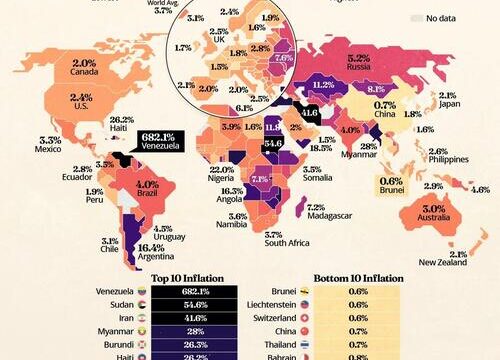
Venezuela Continues To Top Global Inflation Forecasts In 2026
Venezuela Continues To Top Global Inflation Forecasts In 2026
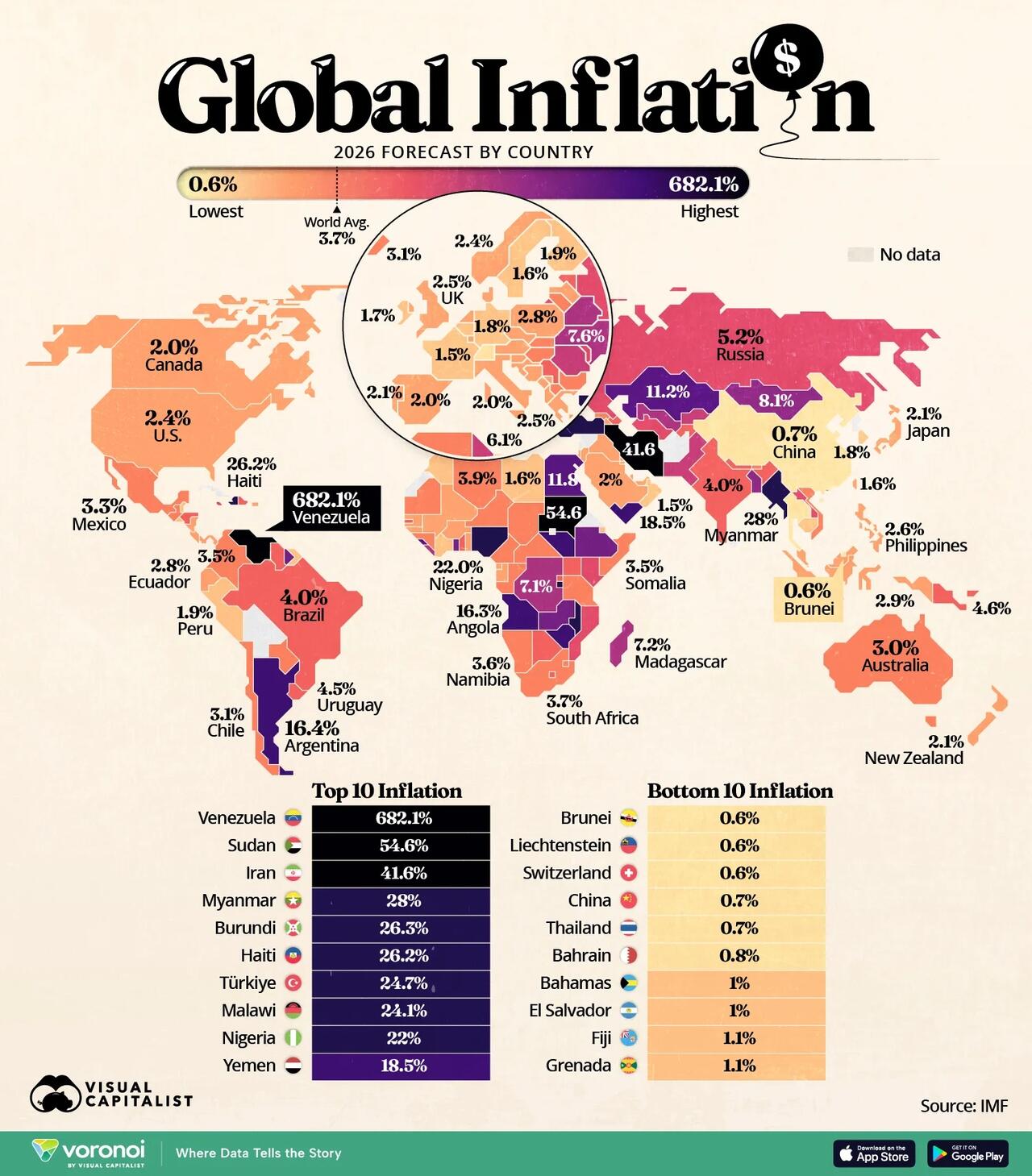
In 2026, U.S. inflation is projected to decline to 2.4%, ultimately remaining above the Fed’s target. Many European and Asian countries, meanwhile, are expected to see sub-2% increases in prices. Countries facing instability, like Venezuela and Sudan, will brace for significantly higher price pressures.
This graphic, via Visual Capitalist’s Dorothy Neufeld, shows the 2026 inflation forecast for global economies, based on data from the International Monetary Fund.
Ranked: The 2026 Inflation Forecast
Below, we show inflation projections for 2026 across 190 economies:
Rank
Country
Inflation Rate Forecast 2026 (%)
Region
1
🇻🇪 Venezuela
682.1
South America
2
🇸🇩 Sudan
54.6
Africa
3
🇮🇷 Iran
41.6
Middle East
4
🇲🇲 Myanmar
28.0
Asia
5
🇧🇮 Burundi
26.3
Africa
6
🇭🇹 Haiti
26.2
North America
7
🇹🇷 Türkiye
24.7
Asia
8
🇲🇼 Malawi
24.1
Africa
9
🇳🇬 Nigeria
22.0
Africa
10
🇾🇪 Yemen
18.5
Middle East
11
🇿🇼 Zimbabwe
18.2
Africa
12
🇦🇷 Argentina
16.4
South America
13
🇦🇴 Angola
16.3
Africa
14
🇸🇸 South Sudan
15.8
Africa
15
🇪🇬 Egypt
11.8
Africa
16
🇰🇿 Kazakhstan
11.2
Asia
17
🇸🇱 Sierra Leone
10.5
Africa
18
🇬🇭 Ghana
9.9
Africa
19
🇸🇷 Suriname
9.6
South America
20
🇪🇹 Ethiopia
9.4
Africa
21
🇿🇲 Zambia
9.2
Africa
22
🇧🇩 Bangladesh
8.7
Asia
23
🇲🇳 Mongolia
8.1
Asia
24
🇱🇷 Liberia
7.7
Africa
25
🇺🇦 Ukraine
7.6
Europe
26
🇧🇾 Belarus
7.5
Europe
27
🇺🇿 Uzbekistan
7.3
Asia
28
🇲🇬 Madagascar
7.2
Africa
29
🇨🇩 DR Congo
7.1
Africa
30
🇸🇹 São Tomé and Príncipe
7.0
Africa
31
🇰🇬 Kyrgyz Republic
6.9
Asia
32
🇷🇴 Romania
6.7
Europe
33
🇹🇳 Tunisia
6.1
Africa
34
🇵🇰 Pakistan
6.0
Asia
35
🇲🇭 Marshall Islands
5.9
Oceania
36
🇱🇦 Lao P.D.R.
5.5
Asia
37
🇲🇩 Moldova
5.5
Europe
38
🇲🇿 Mozambique
5.4
Africa
39
🇰🇪 Kenya
5.2
Africa
40
🇷🇺 Russian Federation
5.2
Asia
41
🇹🇲 Turkmenistan
5.0
Asia
42
🇯🇲 Jamaica
5.0
North America
43
🇬🇲 Gambia
4.9
Africa
44
🇱🇸 Lesotho
4.8
Africa
45
🇧🇼 Botswana
4.7
Africa
46
🇷🇼 Rwanda
4.7
Africa
47
🇵🇬 Papua New Guinea
4.6
Oceania
48
🇹🇬 Togo
4.5
Africa
49
🇦🇿 Azerbaijan
4.5
Asia
50
🇹🇯 Tajikistan
4.5
Asia
51
🇳🇷 Nauru
4.5
Oceania
52
🇺🇾 Uruguay
4.5
South America
53
🇬🇾 Guyana
4.4
South America
54
🇺🇬 Uganda
4.3
Africa
55
🇪🇪 Estonia
4.3
Europe
56
🇳🇵 Nepal
4.2
Asia
57
🇩🇴 Dominican Republic
4.2
North America
58
🇭🇳 Honduras
4.2
North America
59
🇸🇿 Eswatini
4.0
Africa
60
🇮🇳 India
4.0
Asia
61
🇷🇸 Serbia
4.0
Europe
62
🇧🇷 Brazil
4.0
South America
63
🇩🇿 Algeria
3.9
Africa
64
🇿🇦 South Africa
3.7
Africa
65
🇸🇧 Solomon Islands
3.7
Oceania
66
🇵🇾 Paraguay
3.7
South America
67
🇹🇩 Chad
3.6
Africa
68
🇲🇺 Mauritius
3.6
Africa
69
🇳🇦 Namibia
3.6
Africa
70
🇲🇷 Mauritania
3.5
Africa
71
🇸🇴 Somalia
3.5
Africa
72
🇹🇿 Tanzania
3.5
Africa
73
🇭🇺 Hungary
3.5
Europe
74
🇰🇮 Kiribati
3.5
Oceania
75
🇨🇴 Colombia
3.5
South America
76
🇧🇹 Bhutan
3.4
Asia
77
🇬🇪 Georgia
3.4
Asia
78
🇧🇬 Bulgaria
3.4
Europe
79
🇫🇲 Micronesia
3.4
Oceania
80
🇨🇲 Cameroon
3.3
Africa
81
🇨🇫 Central African Republic
3.3
Africa
82
🇸🇰 Slovak Republic
3.3
Europe
83
🇬🇹 Guatemala
3.3
North America
84
🇲🇽 Mexico
3.3
North America
85
🇨🇬 Congo
3.2
Africa
86
🇳🇪 Niger
3.2
Africa
87
🇻🇳 Vietnam
3.2
Asia
88
🇼🇸 Samoa
3.2
Oceania
89
🇮🇸 Iceland
3.1
Europe
90
🇱🇹 Lithuania
3.1
Europe
91
🇨🇱 Chile
3.1
South America
92
🇬🇳 Guinea
3.0
Africa
93
🇲🇰 North Macedonia
3.0
Europe
94
🇦🇺 Australia
3.0
Oceania
95
🇬🇶 Equatorial Guinea
2.9
Africa
96
🇮🇩 Indonesia
2.9
Asia
97
🇵🇼 Palau
2.9
Oceania
98
🇦🇲 Armenia
2.8
Asia
99
🇦🇱 Albania
2.8
Europe
100
🇭🇷 Croatia
2.8
Europe
101
🇵🇱 Poland
2.8
Europe
102
🇪🇨 Ecuador
2.8
South America
103
🇽🇰 Kosovo
2.7
Europe
104
🇳🇮 Nicaragua
2.7
North America
105
🇵🇭 Philippines
2.6
Asia
106
🇧🇦 Bosnia and Herzegovina
2.6
Europe
107
🇱🇻 Latvia
2.6
Europe
108
🇯🇴 Jordan
2.6
Middle East
109
🇶🇦 Qatar
2.6
Middle East
110
🇬🇦 Gabon
2.5
Africa
111
🇲🇻 Maldives
2.5
Asia
112
🇬🇷 Greece
2.5
Europe
113
🇬🇧 United Kingdom
2.5
Europe
114
🇮🇶 Iraq
2.5
Middle East
115
🇧🇧 Barbados
2.5
North America
116
🇧🇫 Burkina Faso
2.4
Africa
117
🇳🇱 Netherlands
2.4
Europe
118
🇳🇴 Norway
2.4
Europe
119
🇸🇮 Slovenia
2.4
Europe
120
🇦🇬 Antigua and Barbuda
2.4
North America
121
🇺🇸 United States
2.4
North America
122
🇦🇹 Austria
2.3
Europe
123
🇨🇿 Czech Republic
2.3
Europe
124
🇲🇪 Montenegro
2.3
Europe
125
🇩🇲 Dominica
2.3
North America
126
🇹🇻 Tuvalu
2.3
Oceania
127
🇲🇾 Malaysia
2.2
Asia
128
🇱🇺 Luxembourg
2.2
Europe
129
🇮🇱 Israel
2.2
Middle East
130
🇰🇼 Kuwait
2.2
Middle East
131
🇵🇷 Puerto Rico
2.2
North America
132
🇹🇹 Trinidad and Tobago
2.2
North America
133
🇹🇴 Tonga
2.2
Oceania
134
🇻🇺 Vanuatu
2.2
Oceania
135
🇭🇰 Hong Kong SAR
2.1
Asia
136
🇯🇵 Japan
2.1
Asia
137
🇩🇰 Denmark
2.1
Europe
138
🇵🇹 Portugal
2.1
Europe
139
🇰🇳 Saint Kitts and Nevis
2.1
North America
140
🇻🇨 Saint Vincent and the Grenadines
2.1
North America
141
🇳🇿 New Zealand
2.1
Oceania
142
🇦🇼 Aruba
2.1
South America
143
🇧🇯 Benin
2
Africa
144
🇨🇻 Cabo Verde
2.0
Africa
145
🇬🇼 Guinea-Bissau
2.0
Africa
146
🇲🇱 Mali
2.0
Africa
147
🇸🇳 Senegal
2.0
Africa
148
🇮🇹 Italy
2.0
Europe
149
🇲🇹 Malta
2.0
Europe
150
🇸🇲 San Marino
2.0
Europe
151
🇪🇸 Spain
2.0
Europe
152
🇸🇦 Saudi Arabia
2.0
Middle East
153
🇦🇪 United Arab Emirates
2.0
Middle East
154
🇨🇦 Canada
2.0
North America
155
🇨🇷 Costa Rica
2.0
North America
156
🇵🇦 Panama
2.0
North America
157
🇰🇲 Comoros
1.9
Africa
158
🇫🇮 Finland
1.9
Europe
159
🇧🇿 Belize
1.9
North America
160
🇵🇪 Peru
1.9
South America
161
🇲🇦 Morocco
1.8
Africa
162
🇰🇭 Cambodia
1.8
Asia
163
🇰🇷 South Korea
1.8
Asia
164
🇹🇱 Timor-Leste
1.8
Asia
165
🇦🇩 Andorra
1.8
Europe
166
🇩🇪 Germany
1.8
Europe
167
🇮🇪 Ireland
1.7
Europe
168
🇱🇾 Libya
1.6
Africa
169
🇹🇼 Taiwan
1.6
Asia
170
🇸🇪 Sweden
1.6
Europe
171
🇨🇮 Côte d’Ivoire
1.5
Africa
172
🇫🇷 France
1.5
Europe
173
🇴🇲 Oman
1.5
Middle East
174
🇱🇨 Saint Lucia
1.5
North America
175
🇩🇯 Djibouti
1.4
Africa
176
🇸🇬 Singapore
1.3
Asia
177
🇧🇪 Belgium
1.3
Europe
178
🇨🇾 Cyprus
1.3
Europe
179
🇲🇴 Macao SAR
1.2
Asia
180
🇸🇨 Seychelles
1.1
Africa
181
🇬🇩 Grenada
1.1
North America
182
🇫🇯 Fiji
1.1
Oceania
183
🇧🇸 Bahamas
1.0
North America
184
🇸🇻 El Salvador
1.0
North America
185
🇧🇭 Bahrain
0.8
Middle East
186
🇨🇳 China
0.7
Asia
187
🇹🇭 Thailand
0.7
Asia
188
🇧🇳 Brunei Darussalam
0.6
Asia
189
🇱🇮 Liechtenstein
0.6
Europe
190
🇨🇭 Switzerland
0.6
Europe
Venezuela continues to face the highest inflation worldwide by a huge margin, with inflation set to increase 682.1% in 2026. (Note these forecasts were released before President Nicolas Maduro’s capture and U.S. plans to take over Venezuelan oil production).
Moreover, conflict-ridden countries including Sudan, Iran, and Myanmar, face inflation rates exceeding 25%.
In the U.S., inflation is expected to trend lower, though several risks could influence the outlook. While tariff front-loading muted inflationary effects in 2025, pass-through effects could meaningfully affect consumer prices in 2026.
Meanwhile, several economies, from Italy and Spain to Senegal and Saudi Arabia are expected to see inflation reach a 2% target.
In contrast, Switzerland and Liechtenstein are projected to see the lowest inflation globally, at 0.6%. For Switzerland, a strong Swiss franc has led import prices to drop, mirroring a trend seen in the past two years.
Additionally, consumer prices in Thailand and China are set to rise just 0.7% amid deflationary pressures.
To learn more about this topic, check out this graphic on interest rate projections across advanced economies.
Tyler Durden
Mon, 01/26/2026 – 04:15
https://www.zerohedge.com/personal-finance/venezuela-continues-top-global-inflation-forecasts-2026

Ethereum Prepares For Quantum Era With New Security Team And Funding
Ethereum Prepares For Quantum Era With New Security Team And Funding
Authored by Amin Haqshanas via CoinTelegraph.com,
The Ethereum Foundation has made post-quantum security a central focus of the network’s long-term roadmap, announcing the formation of a dedicated Post Quantum (PQ) team.
The new team will be led by Thomas Coratger, a cryptographic engineer at the Ethereum Foundation, with support from Emile, a cryptographer closely associated with leanVM, according to crypto researcher Justin Drake.
“After years of quiet R&D, EF management has officially declared PQ security a top strategic priority,” Drake said in a Saturday post on X. “It’s now 2026, timelines are accelerating. Time to go full PQ.”
The researcher described leanVM, a specialized, minimalist zero-knowledge proof virtual machine (zkVM), as a potential building block of Ethereum’s post-quantum strategy.
EF backs post-quantum push with developer sessions, funding
Drake outlined several near-term steps aimed at preparing the ecosystem. A biweekly developer session focused on post-quantum transactions is set to begin next month, led by Ethereum researcher Antonio Sanso. The sessions will concentrate on user-facing protections, including protocol-level cryptographic tools, account abstraction pathways and longer-term work on aggregating transaction signatures using leanVM.
The Ethereum Foundation is also backing its push with new funding. Drake announced a $1 million Poseidon Prize to strengthen the Poseidon hash function, alongside another $1 million initiative known as the Proximity Prize, both aimed at advancing post-quantum cryptography.
Ethereum prepares for quantum era. Source: Justin Drake
On the engineering front, Drake said multi-client post-quantum consensus development networks are already live, with multiple teams participating and coordinating through weekly interoperability calls.
Furthermore, the foundation will host a dedicated post-quantum event in October, followed by a post-quantum day in late March ahead of EthCC. Educational efforts, including video content and materials aimed at enterprises, are also underway.
Coinbase forms board to assess quantum risks
The announcement comes amid growing sensitivity in crypto markets to quantum risk. On Wednesday, Coinbase revealed that it has established an independent advisory board to evaluate how advances in quantum computing could impact the cryptography securing major blockchain networks, including Bitcoin and Ethereum.
The board brings together experts from academia and industry in quantum computing, cryptography, and blockchain security, and will publish public research and guidance for developers, organizations, and users. Its first position paper is expected in early 2027.
Tyler Durden
Mon, 01/26/2026 – 03:30
https://www.zerohedge.com/crypto/ethereum-prepares-quantum-era-new-security-team-and-funding

The secret to impossibly fluffy Southern biscuits
Southern biscuits are the perfect fictional device for telling the narratives of Southern families. One cook makes his biscuits with White Lily flour only because that’s how his Maw Mae did it. Another swears by lard, as her family never had the funds for high-dollar butter or shortening. Most Southern cooks bake biscuits at least once a week — a ritual and rite of passage as the recipe is handed down through the generations.
My biscuit recipe is much the same. As a transplant to the South, and married into a Southern family, I felt a steep sense of duty in making the perfect Southern biscuit. Truth be told, I don’t think I’ll ever truly master it, but 10 years after taking biscuits to task, I’ve landed on a reliable recipe that I can replicate here in the South or anywhere else in the country with ease. My biggest piece of advice: Don’t take biscuit-making too seriously, but try to make them regularly. The ingredients are relatively inexpensive and the results are always edible, despite any mishandling.
Why you’ll love it
They’re tender and flaky. When the dough is folded onto itself into a smooth dough, this is where the magic happens. By striking a balance between folding and patting the dough, you can turn a tender dough into a flaky biscuit.
They’re light, yet sturdy. The biscuits are tender, but also sturdy enough for breakfast sandwiches or for dunking into soup.
What are southern biscuits?
The terms “tender” and “flaky” are often used together to describe baked goods like pie dough and biscuits (although very few biscuits are both). Here are the key differences.
Tender biscuits: Tender describes a small tight crumb, similar to a muffin. A tender biscuit requires a relatively wet dough that can be hard to knead, so much so that tender biscuits are almost exclusively drop biscuits.
Flaky biscuits: Flaky biscuits, on the other hand, bring to mind the biscuits from a can that can be peeled apart into distinct layers. Homemade flaky biscuits are folded onto themselves repeatedly until the layers are developed, making them decidedly tougher than tender biscuits.
The best Southern biscuits are both tender AND flaky, using a combination of techniques and ingredients like buttermilk. Buttermilk is commonly used in Southern biscuits for its tangy flavor, plus buttermilk helps biscuits rise when paired with baking soda.
What type of flour should I use for Southern biscuits?
In the past, I relied on the recipe on the back of the bag of White Lily self-rising flour. It felt like a cheat at first, but I started to learn that biscuit-making was much less a recipe than a technique, and a practice in balancing being both gentle with the dough, yet working it enough to get a high rise and a few flaky layers.
Now that I’ve got the technique down, I’ve moved away from using White Lily self-rising flour and mostly keep King Arthur all-purpose flour on hand for baking. I think my biscuits are better with an everyday all-purpose flour plus leavening agents like baking powder and baking soda.
Key ingredients in Southern buttermilk biscuits
All-purpose flour: Use the all-purpose flour you have on hand.
Baking powder and baking soda: These are the leavening agents that make the biscuits light.
Unsalted butter: Freeze the butter beforehand so that you can grate it easily.
Buttermilk: The baking soda reacts with the acid in buttermilk to help the biscuits rise.
Helpful tips
Keep the butter as cold as possible. This is why I call for frozen butter to be grated on a box grater. Room temperature varies widely in the South, but I can count on frozen butter to be cold and stay cold while I make the biscuits.
Use whatever flour you have on hand. I’ve moved away from using White Lily and mostly keep King Arthur on hand for baking. I think my biscuits are better with an everyday all-purpose flour than any special flours.
Work quickly. Biscuits are a quick everyday bread. If it takes you longer than 20 minutes to get your biscuits in the oven, you’re probably doing something extra that you don’t have to do.
The following recipe gives a nod to each of the people who taught me about biscuit-making and shared their stories with me.
Southern Buttermilk Biscuits
Makes 6 large biscuits
2 cups (10 ounces) all-purpose flour, plus 1/4 cup more for dusting
2 teaspoons baking powder
1/2 teaspoon baking soda
1/2 teaspoon kosher salt
1 stick (4 ounces) unsalted butter, frozen
1 cup buttermilk
1. Arrange a rack in the middle of the oven and heat to 450 F.
2. Whisk 2 cups (10 ounces) all-purpose flour, 2 teaspoons baking powder, 1/2 teaspoon baking soda, and 1/2 teaspoon kosher salt together in a medium bowl; set aside.
3. Place a box grater over a small piece of parchment paper. Grate one stick (4 ounces) frozen unsalted butter on the large holes of a box grater. When you get down to a small nub of butter, chop that nub into 5 to 6 small pieces.
4. Use the piece of parchment paper to transfer the butter to the dry ingredients. Use your fingers to sift the butter into the flour and break up any clumps of grated butter.
5. Pour in 1 cup buttermilk and beat it in with a wooden spoon until the dough comes together and pulls away from the sides of the bowl.
6. Transfer the dough to a lightly floured cutting board. Pat the dough into a 1-inch-thick rough rectangle. Sprinkle the dough with a little more flour, if needed.
7. Fold the dough in half from top to bottom, then pat it back down into its original shape.
8. Repeat with the folding and patting, alternating folding from each side, the bottom, and the top until you have completed a total of eight folds. At the end, the dough should be a little springy to the touch.
9. Pat the dough into a 1-inch thickness. Use a 3-inch round cutter to cut the dough into six biscuits. If you don’t get six the first time around, refold and pat down the excess dough and cut more as needed. Discard the scraps of leftover dough.
10. Arrange the biscuits in a 10-inch cast iron skillet so that the biscuits touch each other, but not the sides of the pan. Put the skillet in the oven and increase the oven temperature to 500 F. Bake until the biscuits are golden-brown, 15 to 18 minutes.
11. Remove the skillet from the oven and immediately remove the biscuits from the pan to a clean tea towel.
Related Articles
My entire family devours these chicken bites in minutes
This Ritz cracker hack is so good
Old-fashioned sticky toffee pudding is the dessert I swear by
This French beef casserole is the best thing you’ll make all winter
This spinach apple salad is perfect with everything
Recipe notes: Leftover biscuits can be stored in an airtight container at room temperature for up to three days. Warm in a low oven or toast in a toaster oven.
(Meghan Splawn was the food editor for skills content and Jan Valdez is an associate recipe producer for TheKitchn.com, a nationally known blog for people who love food and home cooking. Submit any comments or questions to editorial@thekitchn.com.)
https://www.chicagotribune.com/2026/01/26/southern-biscuits/

Visualizing Life Expectancy In The World’s Largest Economies
Visualizing Life Expectancy In The World’s Largest Economies
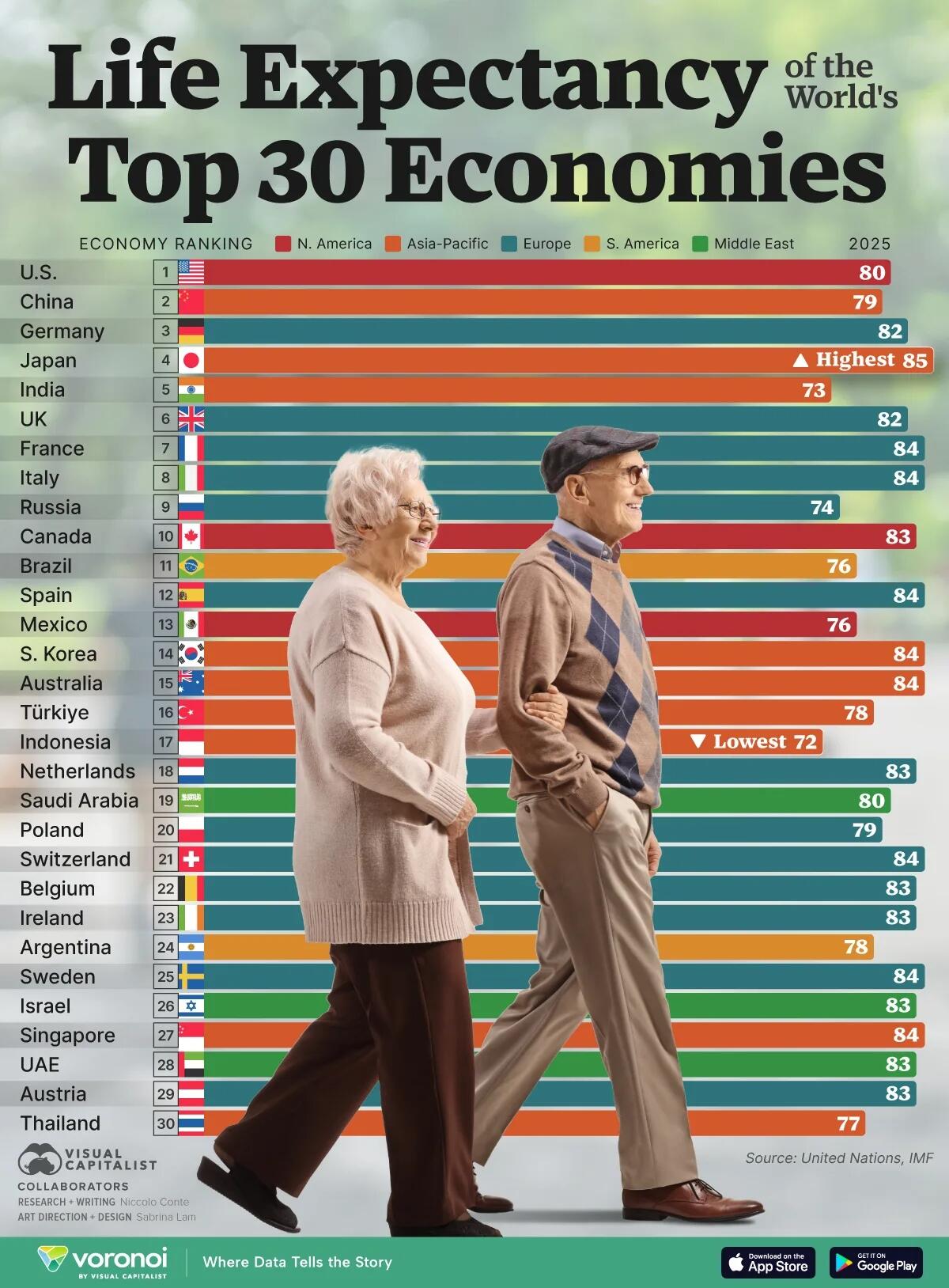
Despite living in the world’s largest economy, Americans have shorter life expectancies than residents of many other wealthy nations.
People in Japan – the world’s fourth-largest economy – live about five years longer on average.
Meanwhile, residents in countries like France and Italy outlive Americans by roughly four years.
This graphic, via Visual Capitalist’s Dorothy Neufeld, shows life expectancy by country across the world’s 30 largest economies, based on data from the United Nations.
GDP data was drawn from the International Monetary Fund.
A Closer Look at Life Expectancy by Country
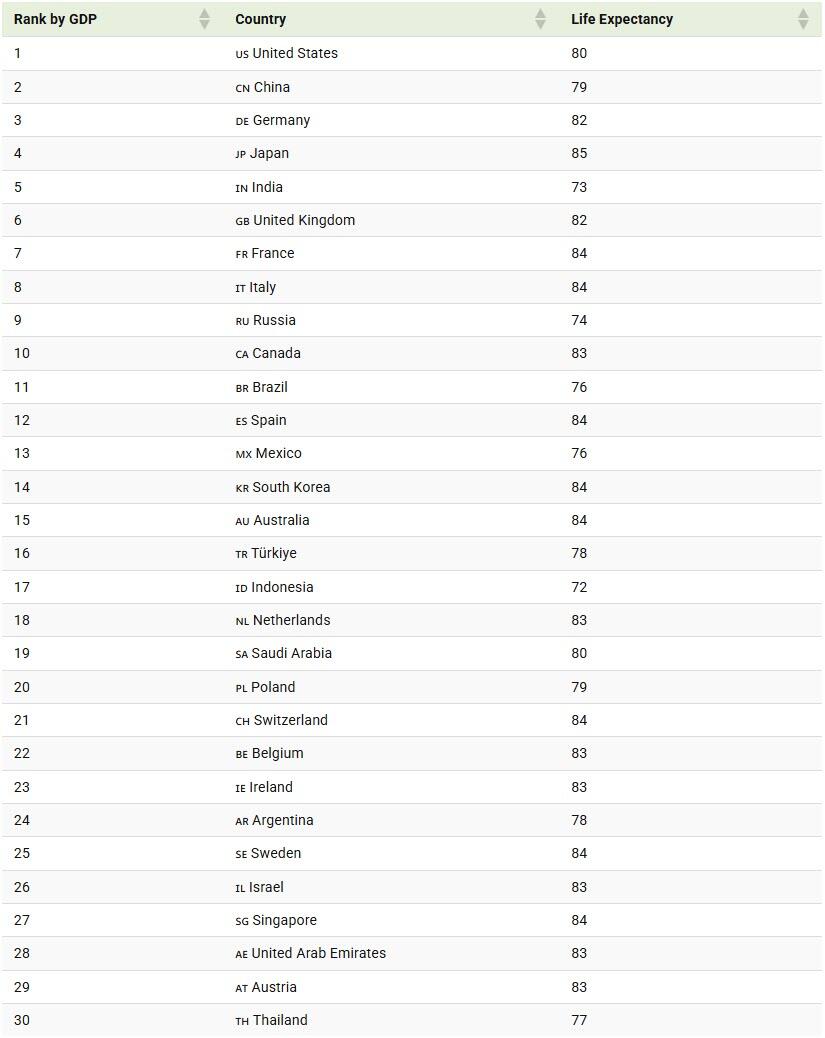
Below, we rank countries based on GDP in 2025, including their life expectancies at birth:
With an average life expectancy of 80 years, Americans live shorter lives than those in many other major economies. This gap is driven by several factors, including limited access to healthcare, high obesity rates, and elevated homicide rates.
Notably, the U.S. is the only G10 country without universal healthcare. It also has some of the highest healthcare costs among wealthy nations, at $14,885 per person, roughly double the OECD average.
China, the world’s second-largest economy, has an average life expectancy of 79 years, up from 68 in 1990. In recent years, national policies have focused on improving disease prevention and expanding medical insurance coverage.
India’s life expectancy stands at 73 years, among the lowest of the top 30 economies by GDP. Life expectancy also varies significantly by caste, with lower-caste individuals shown to live about four years fewer on average than those in higher castes.
However, India has recorded some of the largest gains in life expectancy globally over the past six decades. Since 1965, the average lifespan has increased by 27 years. In particular, this reflects growing advancements in healthcare, child mortality, and enhanced nutrition, further aided by strong economic growth.
To learn more about this topic, check out this graphic on the countries with the longest life expectancies.
Tyler Durden
Mon, 01/26/2026 – 02:45
https://www.zerohedge.com/medical/visualizing-life-expectancy-worlds-largest-economies

The EU’s Green Crackdown Threatens European Industry Amid Deindustrialization
The EU’s Green Crackdown Threatens European Industry Amid Deindustrialization
Submitted by Thomas Kolbe
Brussels and Berlin are increasing regulatory pressure on European industry. With the tightening of the EU Industrial Emissions Directive, agriculture is now moving even further into the crosshairs of climate regulation. That the EU is increasingly isolating itself on the international stage seems to concern no one.
If this year’s World Economic Forum in Davos delivered one clear message, it was this: the U.S. delegation led by President Donald Trump gave Europe’s climate-socialist economic transformation a red card. In stark terms, the U.S. President made it clear that the European path—the regulatory attempt at a net-zero economy with zero CO₂ emissions—has already failed in American eyes, and they have hit the brakes.
Now that the German cabinet is transposing the EU-mandated tightening of the Industrial Emissions Directive into national law, extending it to agricultural operations after parliamentary approval (Apollo News reported), the impression solidifies: the politically induced crisis of European industry—the slow deindustrialization of Europe’s key industrial hubs—is still treated in the political leadership’s economic models as a minor issue, a collateral damage on the road to the green utopia.
Artificial state demand is now being used to try to refill freed industrial capacities—whether through military production or subsidized eco-projects, which fail under cost pressures or simply go unrequested.
Regulatory Pressure by Design
Specifically, the new EU directive will place roughly 30 percent of poultry and pig farms under industrial emissions regulation. As if the sector were not already on the brink of collapse under existing regulatory pressure, the next attack on these operations is now being orchestrated.
Across the EU, about 50,000 operations will be required to implement binding environmental management systems, audited on cycles of one to three years. In Germany alone, 13,000 facilities are subject to EU compliance. Farms with at least 1,200 fattening pigs or 700 breeding sows, as well as poultry operations with around 40,000 broilers or 21,400 laying hens, will now be direct targets of the tightened rules.
Under the threat of heavy fines of at least three percent of EU-generated annual revenue for violations, the European Union is attempting to enforce the Green Deal by brute force. The goal is to ensure the reduction of harmful emissions in air, water, and soil, while promoting resource efficiency and a decarbonized circular economy by 2050.
For German Environment Minister Carsten Schneider (SPD), the directive’s tightening is a cause for celebration. He cited the policy’s successes over the past decade, which have already led to significant CO₂ reductions and fostered greener production in Europe. That technological progress primarily arises from competition and market-driven dynamics hardly factors into today’s political central planning.
High ideological fortresses have been erected, completely obscuring the view of economic reality.
For affected farms, the implementation means one thing above all: a massive increase in documentation, approval, and compliance obligations. They will now be subject to regular emission measurements and detailed reporting, which will be submitted to state environmental authorities and fed into EU-wide registers and public portals—suddenly, transparency matters. This transparency requirement creates intense public pressure on farms to comply swiftly and fully, regardless of how the additional costs will be financed.
Industry experts estimate compliance costs—for example, ammonia emission reductions—between €100,000 and €500,000 per barn, depending on size and technology. If BAT requirements (“Best Available Techniques”) must be retrofitted annually, these burdens can quickly escalate into millions.
Previously, the EU directive applied mainly to sectors such as chemicals, steel, cement, refineries, and energy facilities, targeting primarily large installations with high emissions and throughput. Government officials repeatedly stress that the tightened regulatory pressure applies only to large operations. In reality, both the Supply Chain Act and the new directive create significant pressure along entire supply chains. Large companies are forced to pass their environmental obligations onto smaller suppliers, extending inspection and compliance mechanisms across the entire value chain.
Political Paralysis
Remarkably, European politics remains unfazed by the ongoing deindustrialization of its economic base, stubbornly defending its course. As the industrial foundation erodes, so too does the EU’s geopolitical influence. Every industrial operation that succumbs to regulatory pressure and rising energy costs and relocates takes valuable know-how with it. Value chains destabilize, high factor incomes vanish, and the state faces growing fiscal pressure.
The response to this visible disaster—which led to around 24,000 corporate insolvencies last year—remains predictable: a transparent media performance delivered by government representatives. The Chancellor’s well-meaning calls for bureaucracy reduction are repeated with increasing emphasis, not least in view of five upcoming state elections this year. Bureaucracy reduction has become a standard political phrase with no real consequences.
The underlying strategy becomes clear: publicly, the government positions itself as problem-solver, buying time while steadfastly pursuing the set goal of green transformation.
German policymakers could easily reverse this destructive course. Germany is the EU’s largest net contributor, and key levers of power are held by Christian Democrats in Berlin, Brussels, and the European Parliament.
The only way out of this self-imposed trap would be a return to a fully deregulated free market economy—combined with a political rapprochement with Russian energy flows. Yet the spirit of central planning and presumed industrial control continues to dominate.
Ever-Increasing Bureaucracy
Growing regulation inevitably demands an expanding administrative apparatus. Over the past five years, public sector employment has risen by about two percent annually—roughly 100,000 additional positions. Against this backdrop, the Chancellor’s repeated calls for bureaucracy reduction appear a media tactic farce.
Documentation, proof, and auditing obligations in German industry have taken on Kafkaesque dimensions. In the past three years alone, some 325,000 additional positions had to be created in companies to handle the growing administrative burden flowing from Brussels and Berlin. In effect, the state is outsourcing its own bureaucracy to the private sector.
These political decisions exert tangible pressure on companies. Berlin and Brussels are responding to international competition and U.S. deregulation with policies that intensify existing industrial challenges rather than solving them.
* * *
About the author: Thomas Kolbe, born in 1978 in Neuss/ Germany, is a graduate economist. For over 25 years, he has worked as a journalist and media producer for clients from various industries and business associations. As a publicist, he focuses on economic processes and observes geopolitical events from the perspective of the capital markets. His publications follow a philosophy that focuses on the individual and their right to self-determination.
Tyler Durden
Mon, 01/26/2026 – 02:00

Videos de tiroteo mortal en Minneapolis contradicen declaraciones del gobierno
Por JIM MUSTIAN y MICHAEL BIESECKER
Líderes de organizaciones de seguridad y justicia expresaron su alarma el domingo por el último tiroteo mortal por parte de agentes federales en Minneapolis, mientras que expertos en el uso de la fuerza criticaron la justificación del gobierno de Trump del asesinato, diciendo que las imágenes de los testigos contradecían su relato sobre lo que provocó los disparos.
El gobierno federal también enfrentó críticas por la falta de una investigación de derechos civiles por parte del Departamento de Justicia de Estados Unidos y sus esfuerzos por impedir que las autoridades de Minnesota lleven a cabo su propia pesquisa en torno a la muerte de Alex Pretti, de 37 años.
En un intento por aliviar las tensiones, la Asociación Internacional de Jefes de Policía instó a la Casa Blanca a convocar conversaciones “tan pronto como sea posible” entre las fuerzas del orden federales, estatales y locales.
“Cada jefe de policía del país está observando Minneapolis con mucha atención”, afirmó Chuck Wexler, director ejecutivo del Police Executive Research Forum, una organización de investigación y políticas policiales. “Si un jefe de policía tuviera tres tiroteos involucrando a agentes en tres semanas, estarían dando un paso atrás y preguntándose: ‘¿Cómo es nuestra capacitación? ¿Cómo es nuestra política?’”.
La muerte de Pretti ocurrió tras el tiroteo mortal de Renee Good el 7 de enero y otro incidente una semana después en Minneapolis, cuando un agente federal disparó a un hombre en la pierna después de ser atacado con una pala y un mango de escoba cuando intentaba arrestar a un venezolano que estaba en el país sin permiso de residencia.
“Estamos tratando con una agencia federal aquí”, comentó Wexler, refiriéndose al Departamento de Seguridad Nacional, “pero sus acciones pueden tener un efecto dominó en todo el país”.
Expertos dicen que el video del tiroteo socava las afirmaciones federales
Mientras persistían las preguntas sobre el último enfrentamiento, expertos en el uso de la fuerza dijeron a Associated Press que el video de los testigos socavaba la afirmación de las autoridades federales de que Pretti “se acercó” a un grupo de agentes con un arma de fuego y que un agente de la Patrulla Fronteriza abrió fuego “de forma defensiva”. No se ha hecho pública ninguna evidencia, dijeron, que respalde la afirmación del oficial de alto rango de la Patrulla Fronteriza Greg Bovino, sobree que Pretti, quien tenía un permiso para portar un arma de fuego oculta, tenía la intención de “masacrar a las fuerzas del orden”.
“Está muy arraigado en la cultura de la policía estadounidense no criticar a otras agencias de aplicación de la ley”, señaló Seth Stoughton, un exagente de policía y experto en el uso de la fuerza que testificó para la fiscalía en el juicio del policía de Minneapolis condenado por asesinar a George Floyd.
“Pero entre bambalinas, no hay más que desprecio profesional por la forma en que el DHS está manejando las consecuencias de estos incidentes”, agregó Stoughton, empleando las siglas para el Departamento de Seguridad Nacional.
Varios funcionarios del gobierno habían condenado prácticamente a Pretti en las redes sociales antes de que se procesara la escena del crimen.
El subjefe de personal de la Casa Blanca, Stephen Miller, generó indignación al describir a Pretti como “un aspirante a asesino” en una publicación, mientras que un alto fiscal federal en Los Ángeles, Bill Essayli, provocó la ira de la Asociación Nacional del Rifle al publicar que “si te acercas a las fuerzas del orden con un arma, hay una alta probabilidad de que tengan justificación legal para dispararte”.
Stoughton comentó: “En un país que tiene más armas que personas, la mera posesión de un arma no establece una amenaza inminente para los agentes, y tampoco lo hace tener un arma y acercarse a los agentes. No creo que haya ninguna evidencia para confirmar el relato oficial en absoluto. No es ilegal que alguien porte un arma en Minnesota”.
Funcionario de Minnesota dice que se impidió el acceso de investigadores estatales a la escena del tiroteo
En las horas posteriores al tiroteo de Pretti, las autoridades de Minnesota obtuvieron una orden de registro que les daba acceso a la escena del tiroteo. Drew Evans, superintendente de la Oficina de Aprehensión Criminal de Minnesota, dijo que se impidió a su equipo acceder a la escena.
Las autoridades de Minnesota también recibieron una orden judicial de emergencia de un juez federal que prohibía a los funcionarios “destruir o alterar evidencia relacionada con el tiroteo fatal que involucraba a agentes federales”.
Bovino adoptó un tono menos estridente en una conferencia de prensa el domingo, calificando el tiroteo de Pretti como una “tragedia que era prevenible”, incluso mientras instaba a la gente a no “interferir, obstruir, retrasar o agredir a las fuerzas del orden”. Se negó a comentar sobre lo que llamó el “concepto de la imagen congelada”, refiriéndose a los videos que circulan en las redes sociales que plantean dudas sobre el peligro que representaba Pretti para los agentes.
“Por eso, amigos, tenemos algo llamado investigación. Yo no estaba allí peleando con él. Así que no voy a especular. Voy a esperar esa investigación”, afirmó Bovino.
Expertos en policía dijeron que las irregularidades en la respuesta federal iban más allá de la defensa inmediata del gobierno. Antes de que los padres de Pretti fueran informados de su muerte, el DHS publicó una fotografía en X de una pistola semiautomática Sig Sauer de 9 mm incautada durante la pelea, presentando el arma como justificación para el asesinato.
La publicación decía: “El sospechoso también tenía dos cargadores y ninguna identificación. Esto parece una situación donde un individuo quería causar el máximo daño”.
Sin embargo, la foto mostraba sólo un cargador cargado junto a la pistola, que aparentemente había sido vaciada y expuesta en el asiento de un vehículo. Funcionarios estatales de Minnesota dijeron que, al retirar el arma de la escena, los agentes de la Patrulla Fronteriza probablemente manejaron mal evidencia clave.
Los videos muestran a Pretti sosteniendo un celular
Ninguno de los videos de transeúntes muestra a Pretti blandiendo su arma. Más bien, los videos mostraban que las manos de Pretti sólo sostenían su celular cuando un agente enmascarado de la Patrulla Fronteriza abrió fuego.
En los videos de la pelea se oye “arma, arma”, y un agente parece sacar una pistola del área de la cintura de Pretti y comienza a alejarse. Mientras eso sucede, un agente de la Patrulla Fronteriza hace un primer disparo. Hay una ligera pausa, y luego el mismo agente dispara varias veces más en la espalda de Pretti.
Varios expertos en el uso de la fuerza dijeron que los clips de video por sí solos no exonerarían ni apoyarían la acusación de los agentes, subrayando la necesidad de una investigación exhaustiva. Una pieza clave de evidencia probablemente será el video del celular que Pretti sostenía cuando fue asesinado. Los funcionarios federales aún no han publicado ese metraje ni lo han compartido con los investigadores estatales.
“La evaluación de la razonabilidad de este tiroteo dependerá completamente de cuándo se hizo visible la pistola y cómo, si es que se mostró o usó de alguna manera”, comentó Charles “Joe” Key, un exteniente de policía y experto en el uso de la fuerza desde hace mucho tiempo.
Ian Adams, profesor asistente de justicia penal en la Universidad de Carolina del Sur, describió la respuesta del gobierno federal como “de aficionados”.
“Saltar al resultado final de esta investigación, o lo que se supone que es una investigación, es algo embarazoso para los profesionales de la policía en todo el país. Está claro que los profesionales en la policía están observando lo que está sucediendo y no les gusta lo que están viendo”, dijo Adams.
__
La reportera de Associated Press Hannah Fingerhut contribuyó con el reportaje desde Des Moines, Iowa.

Asking Eric: Should I just back off?
Dear Eric: My youngest son is in his mid-40s. He had some heavy mental issues a few years ago and moved back home to our basement.
Prior to the breakdown his wife left him, he lost a job he loved and soon he started dating Leslie. She became pregnant and our beautiful granddaughter was born but passed at two months and two days from SIDS. Our hearts were and are still broken.
After our granddaughter was born they kept her in the hospital NICU because she was going through withdrawals from Adderall.
When he moved in Leslie was not part of the deal, but she is now and I’m not sure what to do. She loves our son and he seems to love her, but she is very arrogant and argumentative toward me and my husband. I do blame her for my grandchild suffering from withdrawals, but not for her death.
I have never spoken those words to her, and I do try to be pleasant when she is present. We are non-smokers and so is my son, but Leslie smokes and that has been a great point of contention. I have no qualms speaking my mind when it comes to not smoking in my house or even in my yard, I do not want to smell or see cigarette butts all over the place.
She said I was being unreasonable to expect her to leave the yard to smoke. I told her my yard, my rules and that she was free to leave and smoke until she couldn’t see if that was what she wanted.
My son does not get involved in anything I say, he is very grateful to us, because he knows he would be out on the street if not for us. Am I wrong in the way I deal with Leslie?
– At a Loss for Directions
Dear Directions: You’re not wrong. You’re asking Leslie to respect your home and property, which you’re graciously opening up to her. I don’t see any mention of rent here, but even if she is paying rent, you have every right to communicate your needs and expectations.
If she was renting from a stranger, they very well might put the same restrictions on smoking in their place. It’s not uncommon.
I suspect that the whole family unit is feeling the stress of grieving, recovering and cohabitating. There’s probably also some anger there, on your part and maybe on hers. There’s nothing wrong with having these emotions. It’ll help everyone to have conversations about the logistics of living together and the feelings underneath. I’d suggest, if possible, doing so with a family therapist or a grief counselor. None of you has to go through this alone. Processing what’s happened and what’s happening, will make these smaller issues more manageable.
Dear Eric: My niece is bright, successful and an incredibly hard worker. Her father died unexpectedly when she was in her teens, and she has never really recovered, in my opinion. My sister-in-law, her mother, never remarried, worked three jobs and took care of her mother. Frankly, her devotion to her own mother bordered on obsessiveness.
My sister-in-law is 79 and has had enough health issues that her kids (she has a son, too) are now helping her financially to move her into a “senior living” facility, though it’s really for assisted living/Alzheimer’s patients.
She feels she’s been dumped there. She’s still sharp, although she is prone to pneumonia. She claims she’s “being funny” when asking her daughter and son-in-law if they’re going away on weekends to avoid her. It ends up in a huge blowout, with my niece blasting her for not appreciating all they’ve done for her. The mom then says, “I don’t think you like me,” and the daughter responds, “I don’t!”
I’ve asked my sister-in-law why she’ll ask her daughter questions like that, knowing how volatile she can be. Her answer is “I knew you’d say that.”
It seems such an obvious solution. But should I just back off?
– Witnessing the Car Crash
Dear Witnessing: Backing off is absolutely your best bet for now. This dynamic between mother and daughter seems rooted in personality mismatches, unprocessed grief and probably some valid grievances. Somebody has got to move out of their defensive crouch, whether it’s the mother asking a question in a different way, or the daughter choosing empathy over frustration. You can, of course, suggest it to your sister-in-law, but it seems she’s not yet open to it.
Related Articles
Asking Eric: We can’t afford to tip
Asking Eric: Am I so easily forgettable
Asking Eric: He prefers to see me in small doses
Asking Eric: He’s so fidgety
Asking Eric: I feel so alone
And why would she be? Yes, her daughter has done a lot for her, but she’s still hurt right now and feeling a loss of connection to her life and her own autonomy. I wish your niece would give her a little more grace. Actually, I wish there was more grace all-around.
(Send questions to R. Eric Thomas at eric@askingeric.com or P.O. Box 22474, Philadelphia, PA 19110. Follow him on Instagram and sign up for his weekly newsletter at rericthomas.com.)
https://www.chicagotribune.com/2026/01/26/asking-eric-should-i-just-back-off/
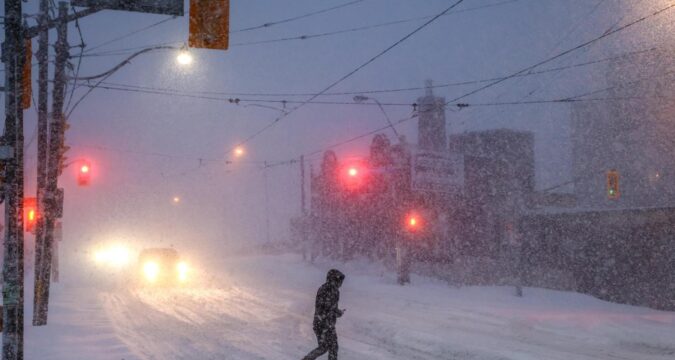
El noreste enfrenta el último embate de una tormenta que llevó hielo, nieve y frío a EEUU
Por KATE BRUMBACK y JULIE WALKER
La semana laboral en Estados Unidos comenzó con más nevadas en el noreste hacia el final de una colosal tormenta invernal que llevó hielo y cortes de energía, carreteras intransitables, vuelos cancelados y un frío gélido a gran parte del sur y este de Estados Unidos.
Las intensas nevadas —se registraron más de 30 centímetros (un pie) a lo largo de una franja de 1.300 millas (2.100 kilómetros) desde Arkansas hasta Nueva Inglaterra— detuvieron el tráfico, cancelaron vuelos y provocaron la cancelación masiva de clases el lunes.
Se pronosticaron hasta 60 centímetros (dos pies) de nieve acumulada en algunos de los lugares más afectados.
En Falmouth, Massachusetts, a aproximadamente una hora en coche al sur de Boston, la nieve caía en grandes cantidades y cerraba la ciudad.
La ministra local Nell Fields tuvo que palear sólo para poder dejar salir a su perro. Habían caído 18 cm (siete pulgadas), y aún podría caer otro tanto.
“Siento que el universo simplemente nos puso una gran pausa con toda la nieve”, indicó Fields.
En el Upper East Side de Manhattan, January Cotrel disfrutó de la nieve fresca en una cuadra que siempre se cierra durante las tormentas de nieve para que los residentes puedan deslizarse, lanzar bolas de nieve y hacer muñecos de nieve.
“Rezo por dos pies cada vez que tenemos una tormenta de nieve. Quiero tanto como podamos tener”, dijo. “Dejen que la ciudad se cierre por un día y es hermoso, y luego podemos volver a la vida”.
Mientras tanto, un frío desolador siguió a la tormenta. Durante la noche del domingo se pronosticó que los 48 estados contiguos tendrían su temperatura mínima promedio más fría, -12,3 grados Celsius (9,8 grados Fahrenheit)— desde enero de 2014.
El calor récord en Florida fue lo único que impidió que ese promedio fuera aún más frío, dijo Ryan Maue, excientífico jefe de la Administración Nacional Oceánica y Atmosférica, quien calcula los promedios nacionales basándose en datos del Servicio Meteorológico Nacional.
Desde Montana hasta la franja nororiental de Florida, el servicio meteorológico emitió avisos de clima frío y advertencias de frío extremo, ya que las temperaturas en muchos lugares cayeron a -18 ºC (0 ºF) e incluso más. El viento hizo que la sensación térmica fuera aún más baja y el frío nocturno amenazó con volver a congelar las carreteras temprano el lunes en una cruel repetición del mal tiempo para los desplazamientos del fin de semana.
Aunque las precipitaciones estaban remitiendo en Mississippi, “eso no significa que el peligro haya pasado”, dijo el gobernador Tate Reeves en una conferencia de prensa el domingo.
La lluvia helada que dejó las carreteras resbaladizas y derribó árboles y ramas en caminos y tendidos eléctricos fue el principal peligro en el sur durante el fin de semana. En Corinth, Mississippi, el fabricante de maquinaria pesada Caterpillar dijo a los empleados de su planta de reacondicionamiento que se quedaran en casa el lunes y martes.
Ya era la peor tormenta de hielo de Mississippi desde 1994, donde se hizo el mayor despliegue de productos químicos para derretir el hielo —750.000 litros (200.000 galones)— además de sal y arena para tratar las carreteras heladas, dijo Reeves. Instó a la gente a no conducir a menos que fuera absolutamente necesario. “Por favor, comuníquense con amigos y familiares”, agregó Reeves.
En un momento el domingo por la mañana, alrededor de 213 millones de personas estaban bajo algún tipo de advertencia de clima invernal, dijeron las autoridades. Cientos de miles de clientes estaban sin electricidad, según poweroutage.us, con Tennessee y Mississippi especialmente afectados.
Unos 12.000 vuelos también fueron cancelados el domingo y casi 20.000 fueron retrasados, según el rastreador de vuelos flightaware.com. Los aeropuertos en Filadelfia, Washington, Baltimore, Carolina del Norte, Nueva York y Nueva Jersey estaban entre los que sentían el impacto de la tormenta con efectos que se esperaban que perduraran hasta el lunes.
En la ciudad de Nueva York, el alcalde Zohran Mamdani dijo que al menos cinco personas que murieron fueron encontradas afuera mientras las temperaturas caían el sábado, aunque la causa de sus muertes seguía bajo investigación. Dos hombres murieron de hipotermia relacionada con la tormenta en la parroquia de Caddo en Luisiana, según el departamento de salud del estado.
En Massachusetts, Fields, la ministra, realizó servicios religiosos a pesar de la tormenta, diciendo que en cierto modo el clima era un regalo.
“Lo siento por la interrupción, pero nos ha dado algo de silencio, y tal vez estamos usando este tiempo para pensar en lo que realmente es importante, y eso es la comunidad y cuidarnos unos a otros”, dijo Fields.
___
Brumback informó desde Atlanta. Walker informó desde Nueva York. Kristin Hall y Jonathan Mattise en Nashville, Tennessee, Philip Marcelo en Nueva York, Ed White en Detroit, Jeff Martin en Kennesaw, Georgia, Mead Gruver en Fort Collins, Colorado, Jessica Hill en Las Vegas y Seth Borenstein en Houston contribuyeron con la información.
___
Esta historia fue traducida del inglés por un editor de AP con la ayuda de una herramienta de inteligencia artificial generativa.