
Category: News

Jack Markowski: Adding tax abatements on top of Broadway’s upzoning is fiscally irresponsible
As we’ve seen in the recent budget battles, Chicago is facing profound fiscal challenges. At such a moment, city policy should be guided by a simple principle: Public resources should be used only where they are demonstrably necessary and where they deliver clear public benefit.
Unfortunately, recent City Council actions affecting the 48th Ward — particularly the designation of the entire 48th Ward as a low affordability community (LAC) layered on top of the recent upzoning of Broadway — violate that principle.
The LAC designation unlocks substantial property tax abatements, lasting up to 30 years, for residential developers. These incentives are courtesy of the Affordable Housing Special Assessment Program, which the Illinois General Assembly created in 2021 for a specific purpose: to encourage construction of affordable housing in areas where it would not otherwise be built, most notably downtown Chicago. They are not intended to be a wasteful subsidy for development that is already financially feasible or already required to include affordable units.
Yet that is precisely what has been done in the 48th Ward.
Take the development at 4920 N. Sheridan Road. In October 2024, the City Council passed an ordinance sponsored by Ald. Leni Manaa-Hoppenworth, 48th, to increase the zoning in order to build 31 units of housing on this vacant lot in Uptown. In return, under Chicago’s Affordable Requirements Ordinance (ARO), the developer was required to provide 20% affordable units. By itself, this is good public policy: a valid quid pro quo between the city and a private developer. The city allows more density, and the developer provides new affordable housing that otherwise would not be built, at no direct cost to taxpayers.
Nothing in the City Council approval process for the upzoning of 4920 N. Sheridan suggested that the project was financially infeasible under these terms.
But in April, the City Council passed another ordinance sponsored by Manaa-Hoppenworth designating 4920 N. Sheridan as an LAC, thereby giving the same developer 30-year tax abatements for providing 20% affordable units — the same affordable units that were already required under the previously approved zoning change.
So what changed? Why was this major tax abatement necessary when 20% affordable housing was already required as part of the zoning change?
Providing tax relief where it is not needed is not an incentive; it is a giveaway. It means the city is forgoing badly needed revenue without receiving any additional public benefit in return. Gratuitously providing unnecessary public subsidies to private development violates a basic principle of public finance — that public resources should only be used to the extent necessary to ensure that a desired project gets built. Yet no such analysis apparently was applied to 4920 N. Sheridan.
It turns out that 4920 N. Sheridan is not alone. As of November, the city has used the LAC designation for 18 sites outside of downtown. Was any city financial review performed to support these 30-year tax abatements? The costs to the public are real and long-lasting.
Ald. Leni Manaa-Hoppenworth, 48th, from left, Chris Jessup and Danielle Crider walk down Broadway to speak with business owners about an upzoning proposal on July 9, 2025. (Stacey Wescott/Chicago Tribune)
But that’s not the end of the bad news for Chicago taxpayers. In June, the City Council passed legislation again sponsored by Manaa-Hoppenworth, designating the entire 48th Ward as an LAC, the first such designation of a whole ward in Chicago.
Then, this past October, the City Council passed a massive upzoning that increased the density of 2 miles of Broadway in the 48th Ward. Because of this upzoning, every future residential development on Broadway will be required to include 20% affordable units under the ARO. But because of the simultaneous LAC designation, each development will also receive a 30-year property tax abatement for providing the affordable housing that will already be required under the ARO.
Why should developers along this 2-mile stretch of Broadway receive sweeping property tax abatements for doing exactly what the law already requires?
And if Edgewater and Uptown developers in the 48th Ward receive major tax breaks for doing what they are already legally required to do, why stop there? Why not extend the tax breaks to Lakeview, Lincoln Park, Lincoln Square, Bronzeville or any other neighborhood? This certainly undermines the premise that new development provides badly needed tax revenue for the city.
At a time when Chicago struggles to fund basic services, shifting the tax burden away from new development does not make it disappear. It simply transfers that burden onto other taxpayers, including longtime residents and small businesses that are already struggling to pay rising property tax bills. Being an advocate for neighborhood investment and affordable housing should not mean needlessly waiving city revenue with no analysis of need and no measurable public gain.
Chicago can and should pursue affordable housing development throughout the city. But Chicago’s limited resources require discipline, evidence and honesty about tradeoffs. Incentives should be targeted, justified and tied to clear public benefit — not layered on top of existing requirements simply because they are available.
When incentives are granted without necessity, they stop being tools for public good and become costly mistakes. Squandering public dollars is a mistake Chicago cannot afford.
Jack Markowski is former commissioner of the Chicago Department of Housing and former president and CEO of Community Investment Corp. In 2007, he authored Chicago’s original Affordable Requirements Ordinance.
Submit a letter, of no more than 400 words, to the editor here or email letters@chicagotribune.com.
https://www.chicagotribune.com/2026/01/26/opinion-broadway-upzoning-tax-abatements/

Brookfield Zoo leads effort to protect polar bears as Trump opens Arctic refuge to oil drilling
Shortly after her arrival last fall, Amelia Gray met Hudson, and the pair hit it off immediately. They touched their noses together in greeting and chuffed — a soft, breathy, snorting sound that signals affection or reassurance. Amelia Gray rolled on her back, gently pawing at her counterpart. Later that same day, they played in the pool together.
The connection has fueled hopes at the Brookfield Zoo Chicago that the two polar bears will soon breed, offering scientists a glimpse into how mothers care for newborns inside their maternal dens — and, in the Arctic wilderness, where climate change already threatens their survival.
The usual challenges to studying polar bears in their natural habitat — a harsh climate, a vast, isolated territory and the dangers the massive predators pose to humans — have been further complicated after President Donald Trump in October announced plans to open 1.6 million pristine acres of the Arctic National Wildlife Refuge coastal plain in northeastern Alaska to leasing for oil and gas drilling.
The Trump administration’s move has rekindled a sense of urgency among conservationists, eliciting legal challenges from activists and advocates, as well as prompting a coalition of institutions, including Brookfield Zoo, to accelerate research efforts, especially because so much about the species’ reproduction remains unknown.
“That’s where zoos really have such a unique opportunity to really understand what takes place within that neonatal period with the cub,” said Mike Adkesson, president and CEO of the suburban zoo, “to understand what the bears need in terms of ideal terrain for the construction of that den, to understand breeding interactions and how a natural range space may be impacted by changes to wild landscapes.”
Climate change from fossil fuel extraction and burning has already significantly affected polar bears in the wild; their populations have rapidly declined as rising global temperatures melt polar caps and reduce the sea ice they need to hunt seals. Photos of bedraggled, emaciated polar bears floating on slabs of ice have become emblematic of the far-reaching impacts of climate change on wildlife. Since 2006, the species has been classified as vulnerable by the International Union for the Conservation of Nature.
But experts worry that drilling in the species’ natural habitat would accelerate their decline even more by further downsizing where they can roam and den, adding physiological stress on the mammals and altering their behavior. Currently, polar bears from the Arctic Ocean’s Beaufort Sea den at high densities in the stretch of coastal plain that is being opened to drilling.
“The frightening part is, they are a species that we’re seeing such dramatic declines in,” Adkesson said, “and it’s a species that we could conceivably lose from the face of the Earth in the next 100 years.”
Rita Stacey Vondra, senior vice president of programs and impact at Brookfield Zoo, stands outside the bear exhibit on Jan. 8, 2026, in Brookfield. (Stacey Wescott/Chicago Tribune)
Rita Stacey Vondra, who leads Brookfield Zoo’s animal care and community engagement teams, added, “And I’ll throw in there: Extinction is forever, and we’ll never get this species back if we don’t do something.”
‘Hope is now’
Spanning roughly 19 million acres in the northeastern corner of Alaska, the Arctic National Wildlife Refuge is one of the world’s last intact ecosystems. Located on the traditional homelands of the Iñupiat and Gwich’in peoples, the refuge is critical habitat for many migratory birds, caribou and polar bears.
The U.S. Geological Survey has estimated that its coastal plain contains between 4.3 billion and 11.8 billion barrels of recoverable oil. The low end of the estimate is less than the total crude oil production in 2024 in the United States, which was 4.6 billion barrels.
Institutions from the newly formed Polar Bear Population Alliance hope their collaborative efforts — to understand the repercussions of habitat disturbances on wild populations from drilling before they occur — can be used to inform policy around timing and siting for drilling, Adkesson said. How would the polar bears’ diets and their metabolism change in a smaller range? Would that, in turn, affect their reproductive success if they don’t have enough fat reserves to nurse their cubs?
The goal is to offer science-backed guidelines for rules and regulations, including time periods related to breeding and reproduction during which disturbances should be kept at a minimum, as well as areas where it is critical that drilling be avoided. Whether or not the government and fossil fuel companies would heed the advice is hard to predict.
“That would be the hope,” Adkesson said.
Amelia Gray, a 9-year-old polar bear, left, and Hudson, a 19 year-old polar bear, walk along the rocks at Brookfield Zoo on Jan. 8, 2026. (Stacey Wescott/Chicago Tribune)
Collecting samples from even just a few bears in wild, remote areas, however, can be a painstaking, yearslong process. Research with captive polar bears can fill in that gap, supplying additional samples, Adkesson said.
At Brookfield Zoo, the polar bears — with some enticement — voluntarily take part in the research, offering their paws for blood draws and opening their massive jaws up for a mouth swab. They are trained multiple times a day to practice participating in their own care and medical evaluations. Specifically, researchers at the zoo are focused on the animal’s welfare and reproduction, such as figuring out smart pairings for breeding, as well as understanding what den designs best support successful births.
On a chilly January morning, senior animal care specialist Erin Hennessy stood in front of a grate door looking into Hudson‘s habitat. The male bear, having been summoned with a bell, approached at a lumbering pace.
“Paw,” Hennessy said, putting her hand against the metal. Hudson raised a large, furry front paw to meet her hand, earning a tasty spoonful of smooth peanut butter that he happily licked across the grating.
“That’s currently his favorite,” said Brianna Pohl, lead animal care specialist. “They need a reason to want to participate.”
Since 1948, the zoo has cared for generations of polar bears, with many born on-site like Hudson, 19 years ago. Besides him, the zoo’s polar bear population currently includes his potential mate, 9-year-old Amelia Gray, the female newcomer from the Oregon Zoo in Portland, and Hope, a 10-year-old female who made her local debut in 2021. The latter mated with Hudson last year, but despite spending October through December in a cozy den, no embryo implanted.
“She did sleep an awful lot, but unfortunately, she did not have any cubs born this year,” Vondra said. It prompted the search for another adult female to create a breeding group and let Hudson choose his mate.
Erin Hennessy trains Hudson, a 19-year-old polar bear, using gobs of peanut butter as an incentive at Brookfield Zoo on Jan. 8, 2026. (Stacey Wescott/Chicago Tribune)
Scientists at the zoo have also been studying polar bears that were at Brookfield years ago but have since left. In a recently published study, researchers carefully examined seven video recordings spanning almost four hours of mother Arki and her male cub, Kinapak, during the first month after he was born in December 2000, to understand denning behavior. Arki had mated with Aussie, who at one point was the oldest male polar bear in an accredited North American zoo, until he was euthanized at 32 in 2017. Two European zoos also provided more recent video footage used in the study.
“In the wild, this is the one time in a polar bear’s life that you can’t study and document their behavior,” said Lance Miller, one of the study authors and Brookfield Zoo’s vice president of animal welfare science. “This is impossible. And so the ability to have these amazing dens with the cameras right there, and be able to document and evaluate it — it’s pretty phenomenal.”
During the first three months of their lives, a critical period for development, polar bear cubs are entirely dependent on their mothers for thermal regulation and nursing, which happens inside the den. A frame grab from video footage out of Zoo Hannover in Germany shows a tiny newborn cub nuzzled against its mother’s neck as they slept.
Related Articles
How Chicago’s zoo animals stay warm during cold, snowy winters
Illinois has its latest list of endangered species — the end result of many difficult choices
Overwhelmed by election incivility? Check out a rare comet or the year’s brightest moon this week
“It’s just amazing to think about these 1,000-pound animals in the harshest climate you can imagine,” Adkesson said, “giving birth to a baby that, I always joke, is like the size of two sticks of butter —”
“I call it a Twinkie,” Vondra chimed in.
“— that it survives, that they have such intent maternal care that they’re able to nurse this helpless little life,” Adkesson said.
Scientists don’t know how climate change could shift denning locations and habitats, if at all, though declining sea ice may have adverse effects on females reaching traditionally preferred areas for the species. And, as winters shorten, female polar bears could be coming out of their dens earlier during their cubs’ development period, possibly affecting the offspring’s potential for survival, Miller said.
Amelia Gray, a 9-year-old polar bear, swims at Brookfield Zoo on Jan. 8, 2026. There are three polar bears at the zoo. (Stacey Wescott/Chicago Tribune)
It’s important to understand how climate change affects polar bears, he added, to understand how it affects an entire ecosystem. As top predators in the food web, their removal would have “detrimental, ripple effects” on the biodiversity and health of their environments, Vondra said. And threats to polar bears, such as human encroachment and loss of sea ice, also threaten other species along the way.
“By the time you’re impacting that top tier, you’ve also had huge impacts and disturbances on everything else that falls into that ecosystem,” Adkesson said.
“And we don’t want to get to the point where there’s no hope,” Vondra added. “So, hope is now.”
Emotional connections
The average person in Chicago won’t ever get to see a polar bear in their natural habitat, Adkesson said.
“So we, as an organization, play such a key role in making that connection,” he added, “and helping people to see and appreciate and understand an animal that’s thousands of miles away and the conservation threats that are facing it.”
Joanne Moore, a zoo member and animal lover who houses old dogs, cats and horses in her DeKalb County farmhouse, visits every week and walks around the grounds for hours as a form of therapy.
Even though she has seen the polar bears plenty of times before, that cold January morning Moore witnessed something new. From a distance, she watched in awe as animal care staffers trained Hudson.
“This is very special, to see this,” she said. “You don’t often have the opportunity.”
Kristen Boyer and her 3-year-old son, George Boyer, watch as Amelia Gray, a 9-year-old polar bear, swims at Brookfield Zoo on Jan. 8, 2026. (Stacey Wescott/Chicago Tribune)
Inside the other enclosure, Amelia Gray swam loops in the water, her fur rippling in gentle and mesmerizing movements. A mother and her young child approached the glass as the massive bear treaded water on the other side. The little boy put his hand up and offered a quiet “Hi.”
Miller recalled a study he did at Brookfield Zoo in 2019 to evaluate the emotional experience of visitors during a polar bear training. There were three groups: one that saw the session in person, another that saw it on video and a third that listened only to an audio recording from the training.
“What we found is that being able to see a polar bear up close and in person … you have that positive emotional experience, you actually retain information better,” Miller said. “You have more empathy toward wild polar bears, and you’re also more excited about getting involved in conservation.”
Adkesson said those connections are at the core of the zoo’s mission: “To help (people) appreciate the majesty of nature, to help them appreciate these incredible species that we share this world with.”

Cory Franklin: Larry Summers, Jeffrey Epstein and the old story of brilliance undone
It’s funny how art so often imitates life. Unless you’re Larry Summers.
As I considered the former Harvard University president and treasury secretary’s fall from grace, I couldn’t help but be reminded of “The Blue Angel.” This 1930 film tells the story of a stern but respectable teacher at a boys school. He is confronted with a problem: Many of his students forsake their studies to frequent a nightclub called the Blue Angel, which features an alluring cabaret performer played by Marlene Dietrich.
The professor visits the club and becomes infatuated with the much younger Dietrich. Eventually, he falls in love and marries her. She is unfaithful, and the sordid nature of their relationship ruins his teaching career, as well as his once impeccable standing in the community. Depending on your point of view, the professor becomes either a figure of derision or a tragic victim.
Which echoes elements of the real-life story of Summers, a wunderkind who began attending the Massachusetts Institute of Technology at age 16 to pursue economics. In his late 20s, he became one of the youngest tenured professors in Harvard’s history. His career ranged beyond the academic: During the Bill Clinton administration, he was selected to be treasury secretary, and he was also a major financial adviser to Wall Street.
In 2001, Harvard selected him as its president. His tenure was controversial, but his reputation emerged relatively unscathed. Following his presidency, he was named to a distinguished teaching post at Harvard. He became director of the National Economic Council and was one of the most respected counselors to the Democratic Party.
Then came Jeffrey Epstein. A full accounting of the late Epstein’s malevolence and contraventions of the law is not possible here. Suffice it to say, he was poison for any public figure found to be associating with him.
In 2003, a Harvard Crimson article described a “special connection” between Summers and Epstein that predated Summers’ Harvard presidency. Flight records indicate that Summers flew on Epstein’s plane multiple times. Epstein had exceptional access to Harvard, but the relationship between the two did not draw much public attention until late last year, when documents released by Congress revealed frequent emails between the two men before Epstein’s 2019 arrest.
This undated photo released by Democrats on the House Oversight Committee shows Larry Summers, left, his wife, Elisa New, center, and Woody Allen on an airplane. (House Oversight Committee)
The details of the emails are particularly damning. An ongoing theme is Summers’ request for Epstein’s advice in pursuing a possible tryst with a younger woman outside his marriage. At one point, Epstein calls himself Summers’ “wing man.” He continued to have ties with Epstein even after the latter’s first guilty plea in court. There are other embarrassing exchanges between the two, and Summers has since characterized his relationship with Epstein as “a major error in judgment.”
But the damage is done, as Summers’ career is beginning to resemble that of the professor in “The Blue Angel.” In fact, Summers would have been much better off falling in love with Dietrich’s nightclub chanteuse.
In addition to whatever harm Summers has done to his family through his Epstein association, his career and his public persona have been irrevocably damaged. He is no longer a contributor to Bloomberg News, and the American Economic Association has barred him for life, prohibiting him from membership or speaking at any events. He has stepped away from a string of roles — including at OpenAI and Yale University’s Budget Lab — and has taken leave from teaching and leadership duties at Harvard.
The tragedy of “The Blue Angel” is not that the professor falls, but that he never believes he will. Summers’ story carries the same lesson. Intelligence does not excuse judgment. Status does not suspend consequence.
And reputations, once broken, do not return to their former shape.
Dr. Cory Franklin is a retired intensive care physician and the author of “The COVID Diaries 2020-2024: Anatomy of a Contagion as It Happened.”
Submit a letter, of no more than 400 words, to the editor here or email letters@chicagotribune.com.

Can school climate solve chronic absenteeism? Ask these principals.
Even in the freezing air, Romian Crockett stood outside Chalmers STEAM Elementary with a boombox blaring ’90s music. Swaying to the beat, the principal hugged or high-fived each student who walked through the door. He knows all 218 by name.
“Terrence, good morning,” Crockett told a young boy bundled in layers.
“Wow, I got all of them today,” he said, as four students tumbled out of a carpool.
Crockett notices who isn’t there, too. “Yo, where’s your sister?” he asked a boy with a navy backpack. (She was down the block with her dad.)
By the time the last stragglers walk in at 9 a.m., Crockett already knows that just a handful will be marked absent.
Attendance at Chalmers rebounded after the pandemic, even as other schools struggled across Chicago and Illinois. During the 2021-22 school year, nearly half of Chalmers students were chronically absent, missing at least two days of class per month. Last year, that figure had fallen to fewer than 1 in 6 students, or about 17%.
It’s a rare bright spot for CPS: The districtwide chronic absenteeism rate was 40% last year. That’s a significant jump from 2019, when the rate was 24%. Experts warn that the stubborn metric has long-term implications for learning.
A new report from the University of Chicago Consortium on School Research offers a road map for recovery. School climate, researchers found, is perhaps the most powerful predictor of how many students show up to class.
It’s not a surprise to staff at Chalmers. Crockett attributes their success to an “attendance culture,” steadily built up over time through parental engagement and consistent expectations.
“The school is very welcoming, very warm, where kids can be kids,” said Crockett, who has been principal for a decade. “So naturally, our kids actually want to come to school.”
Two girls in matching pink jackets raced down the sidewalk to Crockett, grinning before giving him a hug.
‘I don’t make excuses’
The U. of C. consortium report found that even among schools serving similar students, absentee rates varied widely. But attendance was higher in schools with greater levels of perceived student safety, parental involvement and stronger student-teacher relationships.
Less than 2 miles west of Chalmers, for example, is another North Lawndale elementary school enrolling about 200 mostly low-income students. Yet its chronic absenteeism rate was about four times higher.
The report used data from the Illinois State Board of Education’s 5Essentials Survey, which polls students, families and teachers across the state on school climate.
“I think the big takeaway is that schools can and do influence attendance, and focusing on changing the experiences of students in schools can go a long way,” said Marisa de la Torre, a senior research associate at the Consortium.
For Crockett, boosting attendance is both holistic and practical. When students are absent, he calls their families that same morning. At drop-off, he focuses on building relationships with parents, and if a student was absent the day before, he’ll ask where they were.
“I don’t make excuses for kids not coming to school,” Crockett said simply.
Chalmers is also sporting a new look. It’s one of three North Lawndale schools benefiting from a $40 million investment in STEAM programming, meaning science, technology, engineering, arts and math. After a major second-floor renovation last summer, staff are unveiling the latest addition next month: a student-tended chicken coop.
Chalmers STEAM Elementary School second graders participate in Jyesha Bingham’s classroom on Jan. 22, 2026, in Chicago. Attendance at Chalmers rebounded after the pandemic, even as other schools struggled across Illinois. (Antonio Perez/Chicago Tribune)
But Crockett puts equal value on the small gestures.
On National Cereal Day, for instance, teachers handed little cereal boxes to students. That environment helped bring back kids amid the pandemic-era attendance slump, he said.
“I stress to my staff, ‘Don’t skip out on doing the little things,’” Crockett said. “The little things have the biggest impact on whether or not kids come to school.”
It may matter now more than ever: Not only are more students chronically absent, a larger share are missing significant portions of school, according to the consortium report. Roughly 1 in 10 sixth graders missed at least 36 days of the 2023-24 school year — a level of absenteeism that was rare before the pandemic.
Meanwhile, consistent attendance is less common: Two-thirds of sixth graders missed fewer than nine days of school pre-pandemic. But during the 2023-24 school year, that was the case for just under half.
A CPS spokesperson said in a statement that the district is continuing to implement targeted strategies to increase attendance, including school-level work like early intervention, family outreach and other school climate initiatives.
The report’s findings “validate the district’s focus on building systems of relational trust with the goal that every student has a meaningful connection with a trusted adult in their learning community,” the statement said.
‘A regular part of what we do’
At Cesar Chávez Multicultural Academic Center in Back of the Yards, Principal Barton Dassinger created a formal attendance team as part of the school’s improvement plan.
It has paid off: While the school’s chronic absenteeism rate rose to 39% after the pandemic, that figure plummeted to just 9% last year — outperforming the vast majority of CPS schools and bucking districtwide trends.
Mornings at Chávez have become a choreographed routine of spreadsheets, phone calls and home visits. Around nine staff members, including Dassinger, begin calling and messaging families at 8:15 a.m. If they don’t pick up, administrators may go door-to-door.
Before the pandemic, a dedicated attendance team might have seemed excessive. But today, staff at Chávez view it as the backdrop to student success. “It’s a regular part of what we do, knocking on doors, letting parents know, ‘Hey, come on, let’s go. What’s the problem? How can we help you?’” Dassinger said.
Chávez is also part of the CPS Sustainable Community Program, offering after-school programs, parent outreach and other wraparound services to families. That cultivates community on campus, Dassinger added.
“We realized that it doesn’t matter what your curriculum is, what your instruction is, what kind of great lessons you’re planning. If the students are not in school, they’re not going to learn,” he said.
Students arrive for classes at Chalmers STEAM Elementary School in Chicago on Jan. 22, 2026. (Antonio Perez/Chicago Tribune)
The consortium report charted the direct relationship between students’ attendance, GPA and test scores. The verdict? Attendance matters just as much as it did before.
For example, there was an average 0.4 GPA difference between sixth graders who missed 10 days of school and sixth graders who missed no school. That was the case in both pre- and post-pandemic years.
It’s not necessarily a new finding. But the research underscores how school matters across achievement levels — and each day makes a difference. “Post-pandemic, right, people are wondering, ‘Do young people still need to go to school every day?’” said de la Torre. “This study shows that, yes … attendance still matters.”
‘I enjoy being here’
The consortium report focused on middle and high schoolers, who have higher rates of chronic absenteeism. Some research shows that may be due to factors like increased independence and mental health challenges.
But that doesn’t mean the results at Chalmers and Chávez can’t be replicated at larger high schools. At Chicago High School for Agricultural Sciences in Mount Greenwood, about 36% of students were chronically absent last year. It’s a slight rise from the year prior, but it still puts CHSAS among the top district schools.
Principal William Hook said the courses and activities at CHSAS are designed around engagement and retention. Students travel all across the city to experience the school’s 80-acre operational farm, greenhouse and welding stations.
“Every pathway is built for academic instruction, but also for hands-on learning,” Hook said. “The teachers enjoy doing that, and I know the students do.”
Teacher retention is also high, he added, in part because they instruct such specialized courses. Hook himself has been principal for 19 years. “I’m here because I enjoy being here, and I think the teachers would probably say the same thing,” he said. “And most of the students would say the same thing.”
This year, chronic absenteeism is trending slightly upward, district officials told the Chicago Board of Education last month. The pattern comes amid the Trump administration’s intensified immigration enforcement, dubbed Operation Midway Blitz. Many parents reported keeping their children home from class as federal agents stormed the city.
And while the district’s five-year strategic plan sets a goal to reduce chronic absenteeism by 15%, CPS has made slow progress. Chronic absenteeism hit a high of 46% during the 2021-22 school year, and has since only dropped roughly 6 percentage points. Schools, though, aren’t helpless.
Back at Chalmers, Mckinley Morris watched his kindergartner bound toward Crockett, hugging him before racing through the colorful entryway. Morris shook Crockett’s hand before turning back down the sidewalk.
“He’s a great principal, he’s out here every morning, supporting the kids. It’s awesome,” said Morris, 35, as a Beyoncé song blared from the speaker.
Even in 20-degree weather, Morris wouldn’t dare keep his son home. “They’re gonna call everyone,” he said. “And it’s irritating, but it’s protocol. I’m glad.”
https://www.chicagotribune.com/2026/01/26/cps-chronic-absenteeism-chalmers/
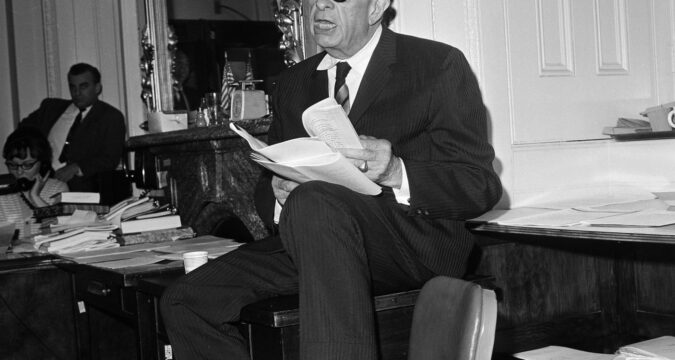
John T. Shaw: Two iconic US senators from Illinois demonstrated different dimensions of statesmanship
For the class that I teach on American statesmanship, we study the Civil Rights Act of 1964 and consider the consequential, but very different, contributions of two iconic U.S. senators from Illinois, Democrat Paul Douglas and Republican Everett Dirksen.
Douglas and Dirksen were nearly complete opposites — in background, education, temperament, cast of mind, political philosophy and legislative style. Examining them in tandem provides important insights into statesmanship, which is essential for confronting the challenges facing our communities, country and world.
The senatorial careers of these two statesmen illustrate — and clarify — the distinct contributions of intellectuals, purists and thought leaders on one hand and pragmatists, consensus builders and dealmakers on the other.
Douglas was born in Massachusetts and raised in Maine. Chicago, however, became his personal, professional and political home. He taught economics at the University of Chicago and was active in the city’s progressive politics, serving on the City Council from 1939 to 1942.
Serious, even stern, Douglas was highly principled, fiercely uncompromising and personally brave. At the age of 50 and as the father of four children, Douglas joined the Marines shortly after Pearl Harbor. He was badly injured in the war in the South Pacific and returned home with two Purple Hearts, a Bronze Star and a shattered left arm.
U.S. senators seeking to change Senate rules and make it easier to curb filibusters meet Jan. 2, 1957, in Washington to plan strategy. Seated, from left, are Sens. Clinton Anderson, D-N.M., Irving Ives, R-N.Y., Paul Douglas, D-Ill., and H. Alexander Smith, R-N.J.; standing, Clifford Case, R-N.J., Frederick G. Payne, R-Maine, Prescott Bush, R-Conn., Hubert Humphrey, D-Minn., and Thomas Kuchel, R-Calif. (John Rooney/AP)
First elected to the U.S. Senate in 1948, Douglas was ahead of his time on consumer rights, health care for the elderly, environmental protections, governmental ethics and civil rights — which was his enduring passion. He began pushing for reform in this area from the day he entered the upper chamber, giving frequent speeches, introducing comprehensive legislation and trying to change Senate filibuster rules that were preventing movement on civil rights.
Douglas was often a loner and had tense relationships, even with like-minded colleagues. He embraced the role of the legislator as teacher, arguing in his memoirs that “long periods of public education are needed” before contentious issues are ready for constructive action. He suffered frequent failures and could be intensely self-critical. “Let’s pretend I’m a senator,” he muttered to an aide after he had been outmaneuvered on a civil rights bill.
But Douglas never quit fighting. “Even if every battle was unsuccessful,” he declared, “constant but peaceful struggle would hasten the ultimate coming of needed reforms.”
Dirksen was a conservative Republican from downstate Illinois. He loved politics, sports, theater and his hometown of Pekin. As a young man, he volunteered to fight in World War I and served as an artillery spotter in a hydrogen-filled balloon tethered 3,500 feet above the French battlefield. He self-deprecatingly called himself a “gas-bag man.”
Dirksen made it back to earth and returned home. He joined the family’s bakery business with his brothers and won a seat on Pekin’s City Council. Elected to the U.S. House in 1932, he served for eight terms. Dirksen was elected to the Senate in 1950, defeating Scott Lucas, the incumbent Democrat and Senate majority leader. Dirksen rose steadily up the Senate Republican leadership ranks, becoming the GOP leader in 1959.
Flamboyant and fun, Dirksen was also shrewd, hardworking and tough-minded. A New York Times correspondent described him as a “remarkable political phenomenon.” He was a strikingly creative and resourceful legislator with a lacerating wit. During a testy exchange with Democratic Sen. Thomas Dodd of Connecticut, Dirksen referred to Dodd as “the great crusader from the Nutmeg State” who suffered from “cerebral incoherence.”
Douglas and Dirksen both played significant roles in the passage of the landmark 1964 Civil Rights Act. Douglas’ greatest contribution was keeping the issue alive through the 1950s and early ’60s, educating the public, and framing civil rights as an urgent moral imperative. The Rev. Martin Luther King Jr. called him “the greatest of senators.”
Dirksen was the central congressional figure in enacting the legislation. He spent months drafting the bill and crafting amendments to break the 60-working-day filibuster led by conservative Southern Democrats.
He closed the Senate debate with a sentiment borrowed from French writer Victor Hugo: “There is one thing stronger than all the armies in the world; and that is an idea whose time has come.”
Dirksen ultimately assembled a bill that ended the filibuster by a vote of 71 to 29. He garnered the support of 44 Democrats and 27 of the 33 Republicans, demonstrating uncommon legislative skill. The final package was referred to as Dirksen’s bill.
“It was truly ironic,” historian Edward Schapsmeier wrote, “that whereas Douglas was one of the most vocal and courageous advocates for civil rights in the postwar period, it was Dirksen who played the vital, if not key, role in breaking the southern filibusters that threatened the passage of the 1964 and 1968 Civil Rights Acts.”
Both the principled zealotry of Douglas and the compromise-forging acumen of Dirksen are urgently needed if our communities and country will successfully tackle the formidable challenges that confront us.
Let’s honor the statesmanship of these two senators, appreciate their differences, and allow them to inspire and guide us.
John T. Shaw is director of the Paul Simon Public Policy Institute. Shaw’s columns, exclusive to the Tribune, appear the last Monday of each month. His most recent book is “The Education of a Statesman: How Global Leaders Can Repair a Fractured World.”
Submit a letter, of no more than 400 words, to the editor here or email letters@chicagotribune.com.
https://www.chicagotribune.com/2026/01/26/opinion-everett-dirksen-paul-douglas-statesmanship/

Editorial: A baby at 1 Observatory Circle
As global leaders met in Davos last week and the world speculated about what would come next, Americans got a bit of happy news. This summer, a baby is coming to one of Washington’s most visible families.
Second lady Usha Vance and her husband, Vice President JD Vance, announced Tuesday that they’re expecting their fourth child, a son, in July.
“We’re very happy to share some exciting news. Our family is growing!” the second lady wrote on X.
You don’t need to share the Vances’ political views to be happy for them.
A new child born while a parent serves in the second-highest office in the nation is exceedingly rare, making the Vances’ announcement all the more interesting.
A handful of first ladies have given birth while their husbands were in office, including Frances Cleveland, wife of President Grover Cleveland. At least one second lady, President Ulysses S. Grant’s Vice President Schuyler Colfax’s wife, Ellen, gave birth while her husband was serving as vice president, according to Time magazine. That was in 1870. Vance’s pregnancy marks the first time in modern history we’ll witness a new child born to a sitting vice president.
Carrying a child is incredibly taxing — physically, mentally and emotionally — especially for someone with three young children. We imagine the stress compounds for someone also navigating extraordinary scrutiny and public attention. Usha Vance also strikes us as someone who can carry heavy burdens with grace and strength. She is an accomplished lawyer and thinker in her own right, with a law degree from Yale and clerkships under Brett Kavanaugh and John Roberts.
At 40 years old, Vance’s story will feel familiar to many millennial women who poured themselves into education and careers, then found joy in motherhood later than their own mothers did. In that sense, she reflects the range of choices open to women in modern life, rather than any single prescribed path. One of the youngest second ladies in modern history, she brings to the role a resume and life circumstances shaped by both ambition and a desire to build a family, an experience many Americans will recognize.
Now she is preparing to welcome a child at the vice president’s residence at 1 Observatory Circle.
The Vances’ three children — a daughter and two sons — are all under the age of 10. The Vance children have made appearances at campaign and official events, but their parents understandably do their best to keep their children’s lives private. Their fourth child will be born in the spotlight.
Still, a new life always invites optimism about the future.
Submit a letter, of no more than 400 words, to the editor here or email letters@chicagotribune.com.
https://www.chicagotribune.com/2026/01/26/usha-vance-second-lady-pregnancy-baby-vice-president/

Today in History: Cullinan Diamond found
Today is Monday, Jan. 26, the 26th day of 2026. There are 339 days left in the year.
Today in history:
On Jan. 26, 1905, the Cullinan Diamond, at 3,106 carats the largest diamond ever found, was discovered in South Africa.
Also on this date:
In 1887, groundbreaking began for the construction of the Eiffel Tower; the tower would be completed just over two years later.
In 1915, President Woodrow Wilson signed the act establishing Rocky Mountain National Park.
In 1950, the Constitution of India took effect, making the country the world’s largest democratic republic.
In 1993, Václav Havel was elected president of the newly formed Czech Republic.
In 1998, President Bill Clinton forcefully denied having an affair with a former White House intern, telling reporters, “I did not have sexual relations with that woman, Miss Lewinsky.”
In 2020, NBA legend Kobe Bryant, his 13-year-old daughter Gianna and seven others were killed when their helicopter plunged into a steep hillside in dense fog in Southern California; the former Lakers star was 41.
Related Articles
Today in Chicago History: Bears beat New England Patriots to win Super Bowl XX
Today in History: Fluoride added to city public water supply
Today in Chicago History: Former Outfit boss Al Capone dies in Florida
Today in History: Ted Bundy executed
Today in Chicago History: First COVID-19 case confirmed in Illinois
In 2023, Israeli forces killed at least nine Palestinians and wounded several others in a large-scale raid on the Jenin refugee camp in the occupied West Bank, the deadliest single operation in the territory in two decades.
Today’s birthdays: Actor David Strathairn is 77. Football Hall of Famer Jack Youngblood is 76. Singer-songwriter Lucinda Williams is 73. Singer Anita Baker is 68. Hockey Hall of Famer Wayne Gretzky is 65. Musician Andrew Ridgeley (Wham!) is 63. Gospel singer Kirk Franklin is 56. Actor Gilles Marini is 50. Basketball Hall of Famer Vince Carter is 49. Actor Sara Rue is 47. Race car driver Sergio Pérez is 36. Pro wrestler Mercedes Moné is 34. Actor Joseph Quinn is 32.
https://www.chicagotribune.com/2026/01/26/today-in-history-cullinan-diamond-found/
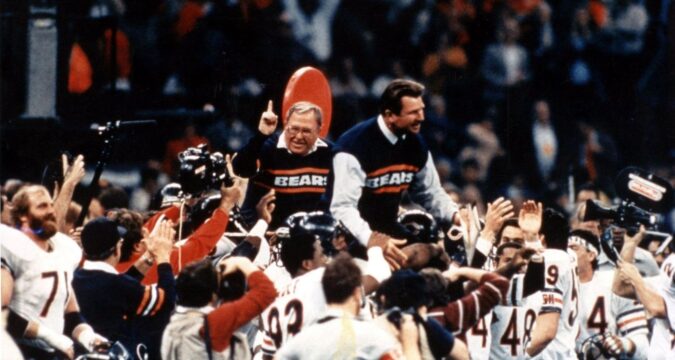
Today in Chicago History: Bears beat New England Patriots to win Super Bowl XX
Here’s a look back at what happened in the Chicago area on Jan. 26, according to the Tribune’s archives.
Is an important event missing from this date? Email us.
Front page flashback: Jan. 27, 1967
Snow began falling at 5:02 a.m. on Jan. 26, 1967, and didn’t stop until a record-breaking 23 inches had accumulated the next day, according to the National Weather Service, making it the worst snowstorm recorded in Chicago history. (Chicago Tribune)
1967: The “Blizzard of ‘67” dropped 23 inches of snow on Chicago — the largest amount on record for the city. Mountains of snow accumulated in drifts, whipped by winds of 50 mph or more.
Remarkably, the storm was preceded by unseasonable warmth — it was 65 degrees just two days before the snow appeared.
Weather records (from the National Weather Service, Chicago)
High temperature: 62 degrees (1944)
Low temperature: Minus 16 degrees (1897)
Precipitation: 1.66 inches (1967)
Snowfall: 16.4 inches (1967)
The Rev. Martin Luther King Jr. and his wife Coretta with neighborhood children in their new apartment at 1550 S. Hamlin Ave. in Chicago on Jan. 26, 1966. King and his family moved into the poor neighborhood to shed light on the living conditions of Blacks in Chicago in 1966. (Tom Kinahan/Chicago Tribune)
1966: Almost three weeks after announcing his intention to lead “the first significant freedom movement in the North,” the Rev. Martin Luther King Jr. and his family moved into a third-floor apartment in the North Lawndale neighborhood.
William Perry plows into the end zone on a 1-yard touchdown run during Super Bowl XX on Jan. 26, 1986, during the rout of the Patriots. (Ed Wagner Jr./Chicago Tribune)
1986: The Chicago Bears won Super Bowl XX in New Orleans with a 46-10 victory over the New England Patriots.
The Bears entered the game as the only team ever to record two straight playoff shutouts. With the circus invading New Orleans, there were more stories than the 26 Tribune reporters on site could wish for, Tribune reporter Don Pierson remembered.
The Bears had seven sacks and held the Patriots to seven yards rushing. But it was Bears quarterback Jim McMahon who plunged for two touchdowns and directed an offense to the 46 points that cemented Buddy Ryan’s “46” defense into football immortality. McMahon’s only regret was not defying Mike Ditka again and letting Walter Payton score the final touchdown instead of William Perry, a mistake also regretted by Ditka and lamented by Payton more than he let on at the time.
“Yes, I was surprised,” said Payton of not getting the ball in close. “Yes, I was disappointed.”
Also disappointed? The Honey Bears. The cheerleaders performed their last routine as part of the Bears organization at halftime of Super Bowl XX.
A touchdown would have helped ease the memory of Payton’s fumble on the second play of the game that set up a Patriots field goal and prompted Patriots fans to march through the New Orleans airport the next day chanting, “We scored first! We scored first!”
On the eve for the Super Bowl, Ryan had strongly hinted he would soon be named head coach of the Philadelphia Eagles, prompting Steve McMichael to throw a chair that stuck into the blackboard of their meeting room. The defense responded by terrorizing quarterback Tony Eason, who was replaced after completing none of his six passes.
The Bears had just completed what Pierson believes remains the most memorable season in NFL history. The game drew a television audience of 127 million, replacing the final episode of “M*A*S*H” as the largest in TV history. But the day after the freezing celebration parade in Chicago, the space shuttle Challenger exploded after takeoff in Florida, putting an abrupt end to national merriment.
Sears published advertisements in the Tribune on Jan. 26, 1986, and bought time for “kick-off commercials” to run during Super Bowl XX to announce the launch of its Discover Card credit card. (Chicago Tribune)
Also in 1986: The Discover Card, created by Sears, debuted during the broadcast of Super Bowl XX. It became a challenger to MasterCard, Visa and American Express.
Want more vintage Chicago?
Subscribe to the free Vintage Chicago Tribune newsletter, join our Chicagoland history Facebook group, stay current with Today in Chicago History and follow us on Instagram for more from Chicago’s past.
Have an idea for Vintage Chicago Tribune? Share it with Kori Rumore and Marianne Mather at krumore@chicagotribune.com and mmather@chicagotribune.com
https://www.chicagotribune.com/2026/01/26/january-26-chicago-history/
Brussels Discipline Machine: How von der Leyen Survived, And Parliament Paid The Price
Brussels Discipline Machine: How von der Leyen Survived, And Parliament Paid The Price
Submitted by Thomas Kolbe
Ursula von der Leyen survived her fourth vote of no confidence in the European Parliament on Thursday. In the process, the EPP Group has increasingly resorted to drastic measures to enforce internal discipline and ensure a uniform voting outcome within its ranks.
EU Commission President Ursula von der Leyen once again survived a no-confidence vote in the European Parliament on Thursday at noon. In Strasbourg, 165 members voted in favor of the motion, 390 voted against it, and 10 abstained.
The latest initiative from within the Parliament was introduced by Patriots for Europe (PfE), the right-conservative parliamentary group. The main point of criticism that led to the motion of no confidence was the free trade agreement between the EU and the Mercosur states of South America. More broadly, the group expressed dissatisfaction with the Commission’s trade policy, which it claims systematically ignores national interests—particularly those of European agriculture.
This marks the fourth no-confidence motion against von der Leyen within six months. The initiators have alternated between the right-wing groups Patriots for Europe and the European Conservatives and Reformists (ECR), as well as the left-wing parliamentary group “The Left.”
Von der Leyen continues to face accusations of a lack of transparency during the COVID period. She has also repeatedly been criticized for the absence of democratic legitimacy in conducting trade negotiations with the United States on behalf of EU member states, as well as for her strong focus on supporting Ukraine—an emphasis that critics argue comes at the expense of the interests of EU member countries.
Parliamentary Discipline in the European Parliament
In light of the steadily growing conservative right in Parliament, von der Leyen has increasingly become a projection surface for criticism of the centralization of political power in Brussels. The core factions supporting the Commission President—primarily the EPP (European People’s Party) under the leadership of CSU politician Manfred Weber, along with the Progressive Alliance of Socialists and Democrats (S&D), Renew Europe, and parts of the liberal and Green groups—are finding it increasingly difficult to shield her from public criticism.
With each publicly staged no-confidence motion, another piece of Ursula von der Leyen’s political substance erodes. She has been weakened since the scandal surrounding her deleted text messages in the Pfizer affair.
For this reason, EPP Group leader Manfred Weber resorted in advance of the no-confidence vote to “disciplinary” measures, significantly restricting the rights of members of his parliamentary group in the event of dissenting votes (as previously reported by Tichy’s Einblick).
In addition to explicit threats of sanctions against dissenters, reports from Brussels indicate that an internal communications strategy was deployed to reinforce group discipline. Weber repeatedly made clear that he expects “closed majorities” and branded dissenting votes as “destructive to the political center.”
Weber also once again emphasized that dissenters were doing the business of Vladimir Putin—a familiar political talking point that has by now largely lost its effectiveness.
With his leadership style, the Union politician has positioned himself as one of the standard-bearers of an increasingly unrestrained party bloc, one that appears unable to counter the growing competition from the national-conservative camp with substantive arguments. Whether in the case of Schleswig-Holstein’s Minister President Daniel Günther and the associated threats of censorship, or—as now with Weber—in the Union’s handling of a political credibility crisis and economic recession, opposition voices are increasingly suppressed. Step by step, the party is conforming to a repressive system of political control.
The catalogue of sanctions established by Weber to enforce group discipline included, among other measures, the withdrawal of rapporteur positions. In addition, members were internally threatened with disadvantages such as the loss of group support in committee work and reduced influence over delegation decisions, in order to eliminate any incentive for dissenting votes.
Absence from votes—or even support for the no-confidence motion against von der Leyen—was also set to result in exclusion from delegation trips and internal working groups. Absenteeism was viewed as particularly critical by the EPP leadership, as it can be interpreted as a political statement—an implicit rejection of the group leadership and its strategic line.
Ostracizing Freedom of Conscience
Through this approach, Weber promotes the political ostracization of dissenters—freely elected representatives who vote according to their conscience. Critics see this practice not merely as an instrumental push toward party conformity, but as a structural undermining of the principle of the free mandate in the European Parliament, especially given that Parliament already possesses few independent legislative initiative rights.
Formally, the mandate remains free; in practice, however, Weber’s actions significantly devalue it. Members deemed “undesirable” risk not only political isolation, but also the loss of real opportunities to shape policy within the EU legislature. This weakens their mandate far beyond symbolic sanctions.
This approach follows a pattern that Weber has progressively intensified in past votes. Even during earlier no-confidence motions, he threatened dissenters with post-hoc sanctions in a disciplinary tone. Previous votes—such as those in October or July—already showed that EPP members who adopted more cautious or critical positions toward key Commission decisions were placed under scrutiny. In line with his strategy, Weber moved aggressively against any deviation in order to preserve a unified political image of the EPP.
This behavior is not only unethical and, from a parliamentary perspective, dishonest; it also inflicts significant damage on the European Parliament itself. The Parliament—already a representative body without its own right of legislative initiative—loses further prestige as a result of Weber’s measures. It increasingly appears as a democratic fig leaf for a technocratically operating Commission, drifting ever further away from democratic principles under the banner of internal party discipline.
* * *
About the author: Thomas Kolbe, a German graduate economist, has worked for 25 years as a journalist and media producer for clients from various industries and business associations. As a publicist, he focuses on economic processes and observes geopolitical events from the perspective of the capital markets. His publications follow a philosophy that focuses on the individual and their right to self-determination.
Tyler Durden
Mon, 01/26/2026 – 05:00

Egipto restringirá el acceso de los menores a redes para combatir el “caos digital”
Por SAMY MAGDY
EL CAIRO (AP) — El Parlamento de Egipto está estudiando formas de regular el acceso de menores a redes sociales para combatir lo que los legisladores llamaron “caos digital”, siguiendo el ejemplo de algunos países occidentales que están considerando prohibir a los adolescentes jóvenes el uso de las redes sociales.
La Cámara de Representantes dijo en un comunicado el domingo por la noche que trabajará en una legislación para regular el uso de las redes sociales por parte de niños y “poner fin al caos digital al que nuestros niños se enfrentan, y que impacta negativamente en su futuro”.
Los legisladores consultarán con el gobierno y organismos expertos para redactar una ley que “proteja a los niños egipcios de cualquier riesgo que amenace sus pensamientos y comportamiento”, según el comunicado.
El comunicado se produjo después de que el presidente Abdul Fatá el Sisi instara el sábado a su gobierno y a los legisladores a considerar una legislación que restrinja el uso de las redes sociales por parte de los niños, “hasta que alcancen una edad en la que puedan manejarlas adecuadamente”.
Los comentarios televisados del presidente instaron a su gobierno a observar a otros países, incluidos Australia y Reino Unido, que están trabajando en legislaciones para “restringir o prohibir” a los niños el uso de las redes sociales.
Aproximadamente el 50% de los niños menores de 18 años en Egipto utilizan plataformas de redes sociales donde es probable que estén expuestos a contenido dañino, ciberacoso y abuso, según un informe de 2024 del Centro Nacional de Investigación Social y Criminológica, un grupo de expertos vinculado al gobierno.
En diciembre, Australia se convirtió en el primer país en prohibir las redes sociales para niños menores de 16 años. La medida desencadenó intensos debates sobre el uso de la tecnología, la privacidad, la seguridad infantil y la salud mental, y ha llevado a otros países a considerar medidas similares.
El gobierno británico dijo que considerará prohibir a los adolescentes jóvenes el uso de las redes sociales mientras endurece las leyes diseñadas para proteger a los niños de contenido dañino y del tiempo excesivo frente a la pantalla.
El presidente francés, Emmanuel Macron, instó a su gobierno a acelerar la tramitación para asegurar que una prohibición de las redes sociales para niños menores de 15 años pueda ser aplicada al inicio del próximo año escolar en septiembre.
___
Esta historia fue traducida del inglés por un editor de AP con la ayuda de una herramienta de inteligencia artificial generativa.


