Category: News
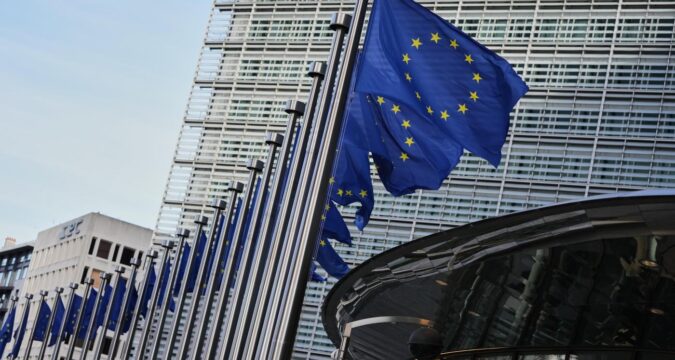
Ciudadanos de la Unión Europea piden un liderazgo más unido y audaz, según un sondeo
Por SAM McNEIL
BRUSELAS (AP) — Ciudadanos de toda la Unión Europea desean un liderazgo más unificado, fuerte y ambicioso para el bloque de 27 naciones mientras enfrenta amenazas militares, presiones económicas e inestabilidad climática, según una encuesta oficial de la UE.
La encuesta del Eurobarómetro se realizó antes de que el presidente de Estados Unidos, Donald Trump, ordenara una operación militar que capturó al expresidente venezolano y remeciera a las naciones europeas al amenazar con apoderarse de Groenlandia, un territorio semiautónomo de Dinamarca. No se preguntó específicamente sobre Washington, la OTAN o China.
A más de 2.600 ciudadanos de la UE se les hicieron preguntas, principalmente en reuniones cara a cara en noviembre. Apoyaron abrumadoramente una UE más robusta: el 69% dijo que quería un papel de seguridad ampliado en crisis globales, el 87% deseaba una Bruselas más agresiva diplomáticamente en temas como la paz y el cambio climático, y el 90% pidió un bloque más unificado para abordar cuestiones clave. El margen de error fue de dos puntos porcentuales.
La encuesta encontró que la mayoría de los ciudadanos de la UE están “muy preocupados” por los conflictos cerca del bloque, los desastres naturales alimentados por el cambio climático y la guerra cibernética.
Los resultados se alinean en gran medida con los objetivos y ambiciones declarados de la presidenta de la Comisión Europea, Ursula von der Leyen, quien ha sido firme en comercio y defensa y ha pedido solidificar el poder de la UE en Bruselas. Ha firmado acuerdos comerciales en todo el mundo tras las amenazas arancelarias de Trump y las restricciones de China a las exportaciones de minerales críticos.
Los resultados de la encuesta sugirieron que los encuestados creen que los intentos de Rusia, Estados Unidos y la extrema derecha de dividir a la UE no han funcionado hasta ahora.
Los ciudadanos de la UE estaban cada vez más enfocados en la defensa, que surgió como la principal prioridad en 18 de las 27 naciones de la UE, según la encuesta.
Las preocupaciones identificadas en la encuesta incluyeron ataques híbridos rusos, como incursiones de drones en aeropuertos europeos, campañas de desinformación, el uso de la IA, la polarización social, la injerencia extranjera en elecciones y la dependencia de la UE de las importaciones para su industria de defensa.
El pesimismo sobre la situación de los asuntos mundiales era común entre los encuestados, quienes eran más optimistas sobre la UE como bloque que sobre sus propias naciones y su situación personal.
“El contraste entre la confianza personal y la incertidumbre más amplia tiene importantes implicaciones, moldeando las prioridades de los ciudadanos, las actitudes hacia la gobernanza y las expectativas de cooperación a nivel nacional, europeo y global”, según la encuesta.
___
Esta historia fue traducida del inglés por un editor de AP con la ayuda de una herramienta de inteligencia artificial generativa.

Annelise Riles: The Fed can beat populist demagogues by educating the public
The Donald Trump administration’s criminal investigation of Federal Reserve Chair Jerome Powell has engaged allies in Congress. Yet the real threat to the Fed isn’t Trump’s investigation — it’s the erosion of public support. The Fed’s only real strategy to successfully pushing back against attacks on its independence is to engage the public directly. But this will require real change.
Public confidence in the Fed is weak and deeply polarized. An Economist/YouGov poll found 45% of the respondents trusted the Fed over Trump. This is a far cry from the Alan Greenspan era, when members of both parties largely trusted the institution. That confidence has never recovered since the 2008 bailout, when the government rescued Wall Street while ordinary Americans lost their homes.
Many within the Fed assume that Trump in the end will not dare contradict financial market insiders and the politicians who support them in Congress. But central bank independence is newer and more fragile than it appears. It rests not on law but on political convention. Calls to constrain or eliminate Fed independence have come from political strategist Steve Bannon on the right and U.S. Sen. Bernie Sanders on the left — a sign of how vulnerable the institution actually is. The Fed’s only real defense in this new environment is to make the case, to a changed nation, that it is acting in the interest of ordinary Americans and that it is a constructive and accountable partner in the national project.
The first step is a massive public engagement campaign. Here, the Fed actually has a very good story to tell. Its current stance on interest rates protects ordinary Americans in two ways. Higher interest rates mean savers earn better returns on bank accounts and certificates of deposit — a lifeline for retirees. Lower rates advocated by the president would funnel cheap borrowing to corporations and wealthy investors at the expense of ordinary savers. Moreover, by resisting rate cuts, Powell guards against inflation, which disproportionately affects working people who spend most of their income on necessities such as groceries and rent.
After 2008, loose monetary policy inflated asset prices for those holding stocks while workers’ wages stagnated. This time, the Fed is on the side of ordinary Americans.
Yet Powell rarely explains this to the public. In a video statement last month, he spoke of whether the Fed can set rates “based on evidence and economic conditions” or will be “directed by political pressure.” This is stale institutional language, not the language of groceries and rent.
But a communication strategy alone won’t solve this crisis. Because what has changed is that the public has rejected the myth that the Fed operates in a purely technical realm. When then-Chair Janet Yellen insisted in 2016 that “partisan politics plays no role in our decisions,” she was technically correct — the Fed doesn’t favor one candidate over another. But what she didn’t say is what every insider knows: Every policy decision involves choices about who wins and who loses. Those choices are political, in a more general sense, and deserve public deliberation, not technocratic decree.
Trump’s attacks on Powell are crude, but they resonate because millions of Americans already sense that the Fed makes decisions based on a mix of value choices and technical calculations. And that fuels suspicions of bias.
The only way forward is something that will not come easily to Fed insiders — to treat the public as stakeholders whose input matters, not subjects whose behavior needs managing. Legitimacy comes from collaboration with citizens, not autonomy from them. People need straightforward talk about trade-offs — between price stability and employment, between protecting savers and stimulating growth. These choices reflect competing values, and they deserve public deliberation. This means acknowledging what insiders already know: Central banks don’t act alone but are embedded in politics, markets and culture.
Other central banks have succeeded at this. Danish central bank governors built legitimacy not through technical explanations but by speaking to what citizens actually value: consensus and social solidarity. Rather than defending their independence, they framed monetary policy as a shared national commitment. The result: Support for the central bank became inseparable from support for the nation itself.
Powell doesn’t need to become a populist or abandon expertise. But he does need to speak honestly about hard choices, acknowledge the values embedded in them and invite Americans to deliberate with the Fed about what economy we want to build.
What this looks like in practice: regular forums where Fed officials hear from workers, small-business owners and consumer advocates, of the kind they regularly hold with market participants. Statements that speak to citizens and acknowledge the shades of gray. Broadening the skill set and diversifying the backgrounds of Fed insiders so that they are more attuned to the perspectives of citizens that Trump is channeling.
Without a robust legitimacy narrative, demagogues fill the vacuum. Powell needs to address underlying causes, not just symptoms. This is important not just to survive the political knife fight of the present but to plan for the future. The next crisis will be far more politically complex than 2008. If the public doesn’t feel heard now, they won’t accept backroom bailouts then.
Annelise Riles is a professor of law at Northwestern University.
Submit a letter, of no more than 400 words, to the editor here or email letters@chicagotribune.com.
https://www.chicagotribune.com/2026/02/04/opinion-federal-reserve-jerome-powell-public-perception/
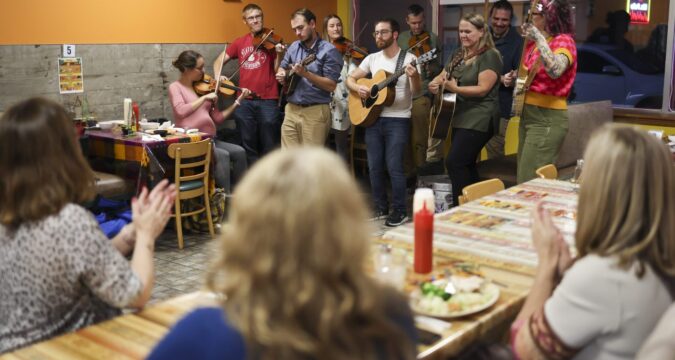
Chicago restaurateurs and cafe owners on 2026 dining trends: Community-driven recovery, global flavors, more craft mocktails
While it’s increasingly difficult to predict which flavors, concepts and topics will define how diners eat and drink each year, a handful of chefs, restaurateurs and cafe owners who spoke to the Tribune said there are a few inescapable truths for 2026.
For one, many restaurants — especially those in immigrant-heavy neighborhoods — are hoping to patch up some of the economic woes of last year by making adjustments, while others are expanding their space to host community events as “third places” become even more desirable. Other industry insiders think 2026 will be a year for global flavors and smaller menus.
Restaurants expanding reach
Marcos Carbajal, owner of Carnitas Uruapan in the Little Village, Pilsen and Gage Park neighborhoods, has been vocal about the financial struggles plaguing his restaurant since federal immigration enforcement rippled through the city starting in September. Carbajal said he’s likely not the only restaurant owner in the area whose strategies for 2026 emphasize catering opportunities and community outreach to attract customers beyond their ZIP codes.
“I think for a lot of Latino-owned restaurants like ours, we’re really looking to the outside, far beyond the borders of our neighborhoods this year,” Carbajal said.
Considering that, Carbajal said many restaurants across the city will likely try to expand their catering capabilities and promote those offerings on social media. That will not only reach customers where they are, but it’ll also bring in more revenue with big orders, he noted.
Marcos Carbajal, center, owner of Carnitas Uruapan, talks with other restaurant industry workers at a luncheon at Carnitas Uruapan in Little Village on Dec. 17, 2025. The gathering announced Todos Ponen, a citywide culinary fundraiser to help immigrant families. (Eileen T. Meslar/Chicago Tribune)
Restaurants and bars doubling as community-driven safe spaces
Carbajal said restaurants in general tend to be driven by social inequality issues and wanting to do good things, but that desire will ramp up even more in 2026, as the industry adjusts to dealing with the continued impact of immigration enforcement. Carbajal also said he’d love to do more initiatives like Todos Ponen, which in January raised money that provided direct grocery support for 125 Latino families in the Little Village, McKinley Park, Pilsen, Logan Square, Hermosa, Avondale and Belmont Cragin neighborhoods.
“Things that do good on both sides — from a social perspective, help the most vulnerable people and in our communities, but then also help expose our business to other consumers,” Carbajal said.
And it isn’t just restaurants doubling as community-driven hubs. Julia Momose, a mixologist and partner at Kumiko in the West Loop, which won a 2025 James Beard Award for Outstanding Bar, said she thinks the biggest changes this year will also be seen in the beverage industry.
“People are looking for experiences that feel grounding and sincere. Cocktails are becoming quieter — less about spectacle and more about precision, balance and care. But what matters most right now is what bars represent,” Momose said. “Bars are increasingly becoming ‘third places,’ spaces where people can gather outside of home and work. With that comes responsibility. Hospitality is not neutral. These spaces can be places of refuge, organizing and community. They are where conversations about justice happen, where resources get raised, where people show up for one another.”
Smaller, more curated menus and cross-utilization of ingredients
With more than 40 years of experience in the hospitality industry, sisters Amy Lawless and Clodagh Lawless, owners of The Dearborn in the Loop, offered a few seasoned takes on what menus might look like this year, or at least, what direction they might go in.
“With constant stimulation from social media and the pressure to discover the next big thing, I think smaller, more curated menus or experiences that focus on extra attention to detail can make things feel more inviting and interesting,” Amy Lawless said. “The goal is to elevate experiences to the point where they’re memorable or at least engage guests in a way that encourages them to try things they wouldn’t normally consider.”
People eat and drink at The Dearborn, 145 N Dearborn St., in Chicago on Feb. 2, 2026. (E. Jason Wambsgans/Chicago Tribune)
Clodagh Lawless said that with the rising costs of goods and groceries, she expects to see restaurants trim down their menus and cross-utilize ingredients.
“I read recently that the 100 ridges in a chef’s hat symbolize the 100 ways to cook an egg. Using ingredients in new and interesting ways will be paramount,” she said.
Tariffs could have a significant impact on the dining and beverage scene
Chef Sujan Sarkar of Michelin-starred Indienne in Chicago’s River North neighborhood said sweeping global tariffs could continue to have a negative effect on the industry. Depending on the goods, restaurants might find themselves unable to afford certain key menu ingredients, while others might start looking at domestic alternatives that require entire menu items to change.
Sarkar, who opened his regional Indian-focused restaurant Nadu last April to much acclaim, said the menu there relies heavily on ingredients imported from India.
The benne masala dosa is served at Nadu, 2518 N. Lincoln Ave., on Jan. 2, 2026. (Terrence Antonio James/Chicago Tribune)
“At Nadu, sometimes we are a little bit concerned about the ingredients — the invariance is also something to look into (with tariffs). Can you really sell (a dish) consistently for a month or two?” Sarkar said. “That’s the challenge with these tariffs and import/export problems.”
Tariffs will also affect the cost of alcohol.
“I know this may push U.S. consumers to consider our own wine regions more, purely because of cost,” said Clodagh Lawless. “Oregon, Washington and California are wonderfully established markets, but also upstate New York and some East Coast growing regions are producing great juice. This year may see a large drop in purchases of wine from foreign markets and some push for wine produced in the U.S.”
Spirit-free pairings at more fine dining restaurants
Momose, who is largely credited with popularizing the term “spirit-free” to describe thoughtful and sophisticated nonalcoholic drinks to advocate for more positive, high-quality alternatives to the term “mocktail,” said she expects spirit-free pairings will continue to climb in popularity, as they already are far more common now than they were even a few years ago.
The Dearborn’s spirit-free White Peach & Razz, from left, Cucumber Piña-Serrano “Limeade” and Blood Orange Strawberry drinks, Feb. 2, 2026. (E. Jason Wambsgans/Chicago Tribune)
“Not as an afterthought, but as a true parallel experience,” Momose said. “Guests increasingly want options that feel just as intentional and celebratory as an alcoholic pairing, whether they’re not drinking that night, pacing themselves, or simply curious.”
What’s most exciting to Momose is that spirit-free beverages have moved beyond “substitutes.”
“The best ones aren’t trying to imitate cocktails exactly — they’re built with the same level of structure and care: balance, texture, acidity, aroma and length on the palate,” she noted.
In terms of ingredients, Momose expects to see more use of teas, roasted grains, botanicals, fermentation and culinary techniques that create depth without alcohol. Diners interested in spirit-free drinks should look out for ingredients such as koji, verjus, vinegars, herbal distillates, clarified juices and other components that bring umami, texture and depth.
“Spirit-free drinks are becoming their own language on menus, and the trend is toward seriousness — pairing-driven, ingredient-driven and fully integrated into the dining experience rather than separated from it,” Momose added.
Meagan Appleman, right, holds up a bag of tacos as Reggi Williams takes a photo at Magos Tacos and Tamales during a mini Taste of Belmont Cragin restaurant crawl on Oct. 28, 2025. The pair decided to support multiple Latino businesses by picking up a variety of food for a dinner with friends. (Eileen T. Meslar/Chicago Tribune)
Global food influences
Aaron Cuschieri, executive chef of The Dearborn, believes the concept of Spanish tapas will make its way back onto mainstream menus, with shared small plates becoming popular again.
He also thinks the industry will see the continuation of the “French food revolution” — not just the brasseries, but more French fine dining restaurants popping up in 2026-27.
“And here’s a hot take — a personal opinion: One item we are going to start to see on menus everywhere is Japanese soufflé pancakes,” Cushieri offered.
Amy Lawless added: “For adventurous restaurateurs, I love the idea of featuring food and wine from places you might not expect, like Serbia or the Middle East or Africa. These underrepresented cuisines could see a spark in 2026 and beyond.”
Big screen or home stream, takeout or dine-in, Tribune writers are here to steer you toward your next great experience. Sign up for your free weekly Eat. Watch. Do. newsletter here.
https://www.chicagotribune.com/2026/02/04/chicago-restaurant-dining-trends-2026/
Column: ‘I Bid You Peace’ documentary explores the accusations that ended the Frugal Gourmet
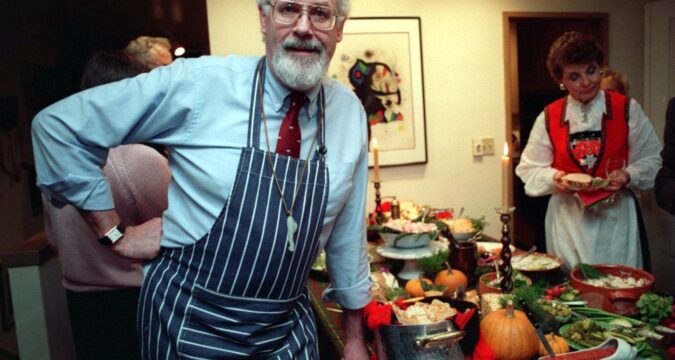
Jeff Smith was a frequent and influential TV star. Better known as the Frugal Gourmet, he pioneered the food-on-television stream that is now a raging video river. He was also a husband and father of two sons. He was also accused of being a heavy drinker and monster.
In a five-hour independent documentary series more than five years and 150-some interviews in the making, “I Bid You Peace,” named for Smith’s signature sign-off, gives us a detailed, fascinating and, yes, disturbing portrait of a complicated and reportedly damaged and dangerous man.
He has been dead for two decades, forgotten even longer, but he returns courtesy of writer, director and producer Chris Johnson, a diligent and deep researcher with a fine sense of narrative storytelling who has been working on this series since 2019.
He tells me, “I started this project because I was surprised no one else had. I grew up in Seattle, where Smith was a local celebrity, and remember seeing his show on PBS. I forgot about him for 30 years until coming across fan-uploaded episodes of ‘The Frugal Gourmet’ on YouTube. That sent me down the rabbit hole and started the ball rolling.”
Smith was never my taste in TV. When I was this newspaper’s TV critic in the late 1980s, I wrote, “I’ve never found much to like about Jeff Smith, the self-proclaimed Frugal Gourmet. He always strains for the clever, shares his knowledge with pretension and appears too smug and self-satisfied for my tastes.”
But I was in a minority. Having started a cooking show in the 1970s in Tacoma, Washington, by the mid-1990s, his “Frugal Gourmet” was carried on 300-some PBS stations across the country, attracting 7 million to 15 million weekly viewers. His dozen or so books sold more than 12 million copies.
The son of an emotionally remote father and penny-pinching mom, Smith was born the eldest of two boys in Tacoma. He attended college, where he met and married Patty, another student, with whom he would have two sons, Channing and Jason. He became an ordained minister, was a street preacher in Manhattan for a short time and, as a chaplain at the University of Puget Sound, taught a course called “Food as Sacrament and Celebration.”
Around this time, he opened a cafe and catering operation in Tacoma called Chaplain’s Pantry and created a work-study program that attracted teenagers from a nearby high school. And at a community college TV station, he began a cooking show called “Cooking Fish Creatively.” Despite that lame title, the show was a hit and, after he made an appearance on “The Phil Donahue Show,” he was lured here by WTTW-Ch. 11.
What was by then called “The Frugal Gourmet,” a title coined by Smith’s wife, the show was based here in 1983 and began national syndication the next year. An image may be forming in some of your minds now: that goateed balding fellow, a high-spirited presence in a striped apron, spouting such familiar phrases as “keep your fingers bent under,” “hot pan, cold oil, food won’t stick,” and “frugal doesn’t mean cheap; frugal means that you don’t waste anything.” He touted “family cooking traditions” and traveled the globe to show and share other cuisines. His aim, he would say in the many interviews he gave, was to make food interesting and cooking less intimidating.
He left WTTW and began production in San Francisco in the early 1990s. And then his world was shattered in late January 1997, when he was sued by seven men who said he sexually abused them as teenagers, most as teenagers working at his cafe.
While the recent #MeToo years have been peppered with accusations of sexual misconduct by celebrity chefs and many in other professions, the Smith scandal came before the explosion of social media.
But those reading newspapers would have learned that Smith denied the allegations and vowed to fight them, his confidence bolstered by the fact that he had not been formally charged with a crime, since Washington’s statutes of limitations on sexual assault had run out by the time of the lawsuit. These were civil charges.
But days before a trial was to begin in 1998, a deal was made. Smith would pay the plaintiffs a total of $5.5 million in a settlement in which he acknowledged no wrongdoing. But the damage was done, and the price was high and swift. PBS pulled all of his shows. Endorsement deals with various products were canceled. His cookbook contracts were voided, his books pulled from bookstore shelves.
He lived his final years in low profile in Tacoma. He just faded away, dying in Seattle in his sleep in 2004 at 65.
This series, wisely, does not attempt to psychoanalyze Smith or make excuses for the reports of his behavior. His ability to hide his failings was not as successful as he might have imagined. A reporter who covered the case says, “In Tacoma, everyone from the waitresses at Denny’s … knew.”
There were hints of potential trouble — he was often said to be drunk on camera — but few dared to mess with their meal tickets, so to speak. One person says that Smith’s accusers “were coming after his money.” Another of his defenders says that people just “misunderstood Jeff’s warmth.”
The series is available for purchase online at ibidyoupeace.com. As for offering it for streaming this way, Johnson says, “It was my only option. I felt the product was of high enough quality and I was proud of it, but no distributor was interested. I reached out to so many people, calling in personal favors and connections for people to look at what I had done.”
The trouble was that many people had never heard of Jeff Smith.
“So, I went out on my own with it,” says Johnson. “I hope that people see value in what I’ve spent all this time working on and want to purchase it.”
Sad and often painful as it is, it is worth it.
rkogan@chicagotribune.com
https://www.chicagotribune.com/2026/02/04/frugal-gourmet-jeff-smith-documentary/

Brian Kolp: What power do ordinary citizens have to keep federal agents accountable?
When I first sat down to write this piece last month, this was the opening paragraph:
Renee Good was not the first person to be shot and killed by a federal immigration agent, and she likely will not be the last. My quiet block in the Old Irving Park neighborhood in Chicago was not the first to be tear-gassed, and it will not be the last. As abhorrent as these events were, what makes the situation worse — and what people are only now starting to talk about — is that Immigration and Customs Enforcement and Customs and Border Protection agents are almost entirely immune from criminal and civil accountability.
Now, in the wake of the death of Alex Pretti, it’s more important than ever to raise the level of public awareness and discourse about the significant barriers that exist to holding ICE and CBP accountable for their actions.
To be sure, there is no reason to believe any federal prosecutor under the administration of President Donald Trump will ever bring criminal charges against an ICE or CBP/Border Patrol agent, and, so far, no state or local prosecutor has dared. One reason is the Supremacy Clause of the United States Constitution, which provides a strong legal defense to federal agents in state-based prosecutions. Another is the probability that an agent so charged would be successful in arguing to a judge they acted reasonably under the circumstances, particularly in cases involving the use of deadly force. But perhaps the most significant barrier to a state-based criminal prosecution of an ICE or CBP agent is the fact that the Trump administration can use the FBI to take over the investigation and prevent state and local authorities from accessing critical evidence, as they did following Good’s killing and are doing with the investigation into Pretti’s.
Worse still, unlike the way someone whose rights were violated by a state or local police officer can sue for money damages in federal court, federal law does not provide the same relief to victims of ICE and CBP’s brutality. This is because the Constitution does not provide a civil remedy for the violation of the Bill of Rights. Instead, Congress had to pass a law to allow for state and local government officials, such as police officers, to be sued in federal court for money damages. Congress passed this law — Section 1983 — six years after the end of the Civil War as part of the Civil Rights Act of 1871, also known as the Ku Klux Klan Act.
But Congress has never passed a Section 1983 equivalent for federal officials. In other words, there is no federal law that allows you to sue a federal officer for the violation of your federal civil rights. The only way to sue a federal agent for the violation of your constitutional rights is via a judicially created cause of action commonly referred to as a Bivens action. In short, the Supreme Court allowed Webster Bivens to sue six unknown agents of the Federal Bureau of Narcotics in 1971 for the violation of his rights under the Fourth Amendment. Since then, however, the Supreme Court has significantly limited its decision that relates to Bivens, so much so that unless your name is Webster Bivens and you’re suing six unknown agents, your odds of prevailing are incredibly low.
While most Americans will be surprised to learn this, the people calling the shots in the Trump administration and at the Departments of Homeland Security and Justice — Stephen Miller, Pam Bondi, Kristi Noem, Tom Homan — are well aware of these barriers to accountability for ICE and the CBP and are intentionally exploiting them. Miller has suggested on more than one occasion that ICE and CBP agents are “absolutely immune” from prosecution. While that’s not legally correct, he’s not far off in practical terms. The result is a federal immigration force that believes it can behave however it wants without fear of facing any real consequence for agents’ actions.
So where do we go from here? How do we change the landscape of the hellish dystopian nightmare we’re currently living in? The answer is simple: ICE and CBP agents should face the same criminal and civil liability under state and federal law as would a Chicago police officer. But that accountability will never come unless Congress and state and local leaders act, which is not as simple. Congress is as feckless and fractured as ever, and any state or local prosecutor who has the temerity to bring a criminal case against an ICE or Border Patrol agent for their lawless behavior will no doubt be on the receiving end of Trump’s weaponized Department of Justice.
Bleak as this reality may be, we as American citizens have an obligation to do all that we can to challenge the Trump administration’s lawlessness. We cannot be cowed into quiescence. We must loudly and publicly protest its abuses at every opportunity. We have to put maximal pressure on our elected leaders at the federal, state and local level to do everything in their power to bring accountability to the Trump administration. Imagine what could happen if every person reading this called their member of Congress and demanded the lawmaker refuse to fund DHS any further unless and until Congress passes a Section 1983 equivalent for federal officials.
Don’t wait until another American citizen is killed by their own government. Act now.
Brian Kolp is a former attorney for the city of Chicago’s Law Department and the Illinois attorney general’s office and a former prosecutor with the Cook County state’s attorney’s office.
Submit a letter, of no more than 400 words, to the editor here or email letters@chicagotribune.com.
https://www.chicagotribune.com/2026/02/04/opinion-federal-agents-immigration-raids-accountability/

Cook County court clerk piloting electronic traffic tickets
Drivers pulled over for traffic violations in a growing number of Cook County suburbs will be able to pay tickets online for the first time under a new pilot from Circuit Court Clerk Mariyana Spyropoulos.
The clerk’s office, long buried in paper, historically relied on a wholly manual process where officers that wrote drivers up on patrol would take a batch of handwritten tickets back to the station and mail it to the clerk’s office. Once they arrived at the clerk, they were typed up to be entered into the court’s system.
That process meant it took sometimes a week or more for that information to make it into the system. Drivers anxious to pay their tickets right away were unable to because clerks couldn’t yet match their payment with violations. At times, violators would mail in checks and clerks would have to try to track down their citation later, Spyropoulos said.
Under the new e-citation pilot, citation information is directly submitted on a tablet or computer in an officer’s car and that can be auto-populated with information from their driver’s license or registration. That information is sent electronically back to the police station for review, then sent on to the court clerk. That auto-population can halve the time it takes officers to write a ticket and cut transfer time from officers to the clerk down to a day or two.
The accuracy is an added bonus, Spyropoulos told the Tribune in an interview at the Daley Center, “because then our clerks don’t need to look at handwriting, try to decipher what’s on there, oftentimes there’s not an opportunity to verify, ‘Is this an R? Is this a P? You know, what is this handwriting?”
She said the effort had been talked about for at least a decade and she was happy they could make it happen within a year of her taking office. The change required the clerk’s internal system to link up with each municipality’s software, and for beat officers to be able to print tickets instead of tearing them off a handheld sheet. They’ve been working out kinks since early December.
Circuit Court Clerk Mariyana Spyropoulos talks about the new system for creating and printing electronic citations for moving traffic violations on Feb. 2, 2026. (Eileen T. Meslar/Chicago Tribune)
About 40 municipalities and the Cook County sheriff’s office have taken e-citation up, and the office expects to add another 20 by the end of March. The list doesn’t include the Chicago Police Department yet, but Spyropoulos said talks have started.
The court clerk is already receiving about 1,200 e-citations a day for minor moving violations like failure to stop at a stop sign, wear a seat belt, have a valid license or registration, speeding (over the limit but under 25 mph) and speeding in school or construction zones.
Ticket payment options won’t change: They can still be submitted online, by mail or in person. As for future modernization efforts, Spyropoulos said she hopes to make online payment smoother. She’s also hoping to let violators sign up for traffic school, make pleas and submit certification documents online.
“People deal with family, school, work obligations every day. It shouldn’t be the lack of modernization of this office that causes any kind of aggravation on their part. We should just be able to streamline it. An maybe the fact that they got a ticket should be the aggravation, sure, but not the way that we handle it in the office,” Spyropoulos said.
https://www.chicagotribune.com/2026/02/04/cook-county-court-clerk-electronic-traffic-tickets/
Letters: The Blue Line exposes the city’s shortage of 24-hour shelters for the unhoused
Op-ed writer Yunus Emre Tozal’s critique of the Blue Line (“Blue Line is failing in its mission to be a vital link between O’Hare and the city,” Feb. 2) is quite valid in many respects. Compared to the smooth-sailing, clean, quiet mass transit trains in many other cities, the Blue Line falls short. Much can and should be done to bring the train line up to par with other cities.
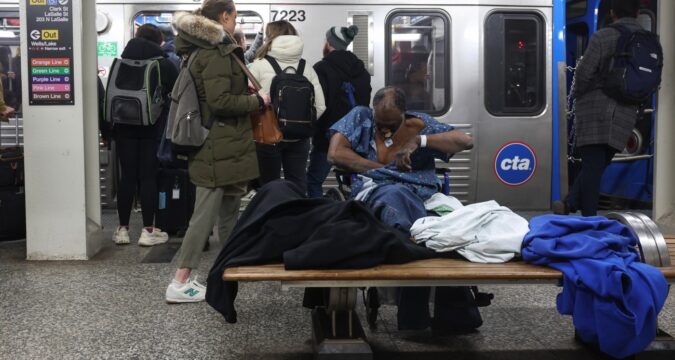
But the some of the conditions on the Blue Line, or any CTA method of transportation, reflect a systemic problem — and that is the city’s shortage of 24-hour shelters that would bring many unhoused people off of the trains and into a more comfortable, secure setting.
I work at the Harold Washington Library Center and take the Blue Line regularly. As HWLC also offers the city’s unhoused population temporary refuge from the weather, I see many of these folks as they leave the library with their belongings and then meet up with them again as they walk to the train. I have the luxury of a home at the end of my commute; many others remain on the train for the entire night.
At HWLC, we also see many tourists occupying time in the library before they can check into their hotels or catch later flights. They’re appreciative of the direct route the Blue Line provides from the Loop to O’Hare International Airport. But they also take note of the presence of unhoused people. This is what makes the biggest impact on people visiting our city, and it’s generally followed by a question: Why do people have to sleep on the train?
The answer should not be because a city the size of Chicago, with all it has to offer its visitors, is ill-equipped to address its homeless population. Remedying the situation would at least address that “unsafe feeling” for riders.
— Teresa Groat, Chicago
How it’s interconnected
In her discussion with the Tribune (“Putting public transit on track,” Feb. 2), Nora Leerhsen, acting director of the CTA, mentioned that the CTA was involved in some funding of homeless shelter beds. This makes sense. It also points to another issue that is impacting the CTA even though it is completely outside its ostensible mandate — mental health services.
On a recent “L” trip, my nonclinical assessment was that two people sharing my car were wrestling with difficulties, one of whom was making other riders uncomfortable.
It’s another reminder that cities are complex collections of people and interconnected systems. Unless they are all functioning together, there will be ancillary fallout.
— Mike Koetting, Chicago
NYC’s airport-rail link
Yunus Emre Tozal’s op-ed trashing the Blue Line’s service between O’Hare International Airport and the Loop lacks specificity and credibility. He claims that Chicago should emulate the “comfortable, reliable” rail connection in cities such as New York. Really? Has he flown to New York?
To use the subway from LaGuardia Airport, one must squeeze into a bus with insufficient luggage storage and likely stand, crammed in, for the 15-minute ride to the Jackson Heights station where, as of three weeks ago, there is not an operational elevator to the platform. Then hope you understand which line you’re supposed to take to get to the right location.
John F. Kennedy and Newark Liberty airports offer a tram service to public transit options, but taking the train from either location will require yet another transfer at Penn Station, a confusing and crowded welcome to the city.
Contrast this with the Blue Line from O’Hare to the Loop. No transfers. One fare. Almost always a seat when you leave the O’Hare CTA station. Typically, a frequent and reliable departure. And the Rosemont station is only one stop away, where there are many transfer options if you are not traveling to the Loop. And the cost? It’s $2.50 for the full fare. Try to do that in New York! The same can be said regarding the Orange Line to Midway Airport.
It’s hard to tell from Tozal’s piece what exactly he thinks should be “modernized” with the Blue Line. But he is wrong to accuse the state and region of doing nothing to coordinate and improve mass transit. Illinois just passed a measure that will fund substantial improvements to the reginal system, including the CTA.
Is the CTA’s Blue Line service world-class? Perhaps that is up for debate. Personally, if the CTA would maintain clean cars on a more consistent basis and do something about the tobacco and cannabis odors that are too frequently encountered, I would say yes.
It certainly beats New York City hands down.
— John S. Brennan, Chicago
CTA’s accessibility gap
I am very disappointed that the range of the Tribune’s “wide-ranging interview” with acting CTA President Nora Leerhsen didn’t include any discussion of the rail system’s woeful accessibility for people with disabilities.
If the CTA’s website is to be believed, 37 rail stations still need to be made accessible. The system’s “All Stations Accessibility Program” (“ASAP” — such punsters at the CTA) calls for this to happen by 2038. All the system needs is hundreds of millions of dollars. Why no question about the status of this plan, its priority at the CTA and its funding?
As if reinforcing the point that accessibility is not a topic much worth exploring, the Tribune photojournalist photographed Leerhsen in front of steps at the Damen Avenue Green Line station.
The Tribune and the CTA have many steps to climb to show they care about making accessibility a priority issue for our alleged world-class city.
— Michael Solomon, Chicago
Public safety on trains
I am writing to express my concern about the safety issues in Chicago’s public transit system, specifically its trains.
The data indicates that crime rate on CTA trains has increased, even with ridership decreasing compared to pre-pandemic times; it has become more dangerous per ride.
Many of Chicago’s youths use the CTA regularly to commute to and from school. Children and young adults are already vulnerable due to their age. The trains are often imperative in helping them get an education when their schools are distant.
I live on Roosevelt Road, regularly board the train at the State/Lake stop and have taken CTA trains and buses my whole life. In the past month, I’ve encountered more intrusiveness and discomfort between individuals riding the trains. I and others I know have experienced threatening and inappropriate behavior at stations and on trains. It’s not explicit violence, and the issue is possibly overlooked and needs to be addressed.
I have yet to see many public transportation police officers at stations and on trains when they are most needed. More security must be implemented at high-crime CTA train stations to increase youth ridership and prevent individuals engaging in inappropriate behavior from using the trains.
— Lily Shah, student, Latin School of Chicago
Submit a letter, of no more than 400 words, to the editor here or email letters@chicagotribune.com.
https://www.chicagotribune.com/2026/02/04/letters-020426-blue-line-unhoused-mental-health-care/
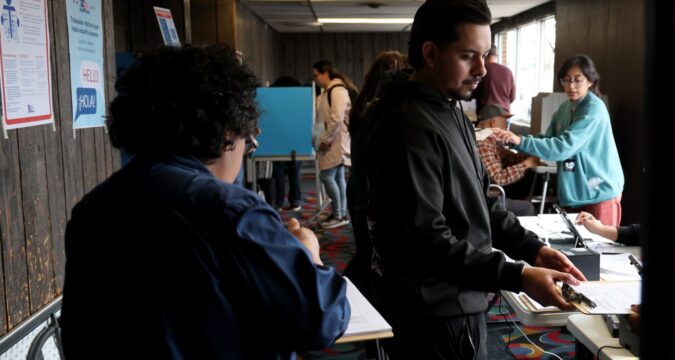
Editorial: In the 4th Congressional District, the endorsement that should have been right here
In a gerrymandered state like Illinois, primary battles for congressional seats typically are more dispositive than the general election in the fall. At least voters have plenty of choices.
Consider: In the 7th Congressional District, there are 13 candidates on the Democratic side of the ticket. In the 9th Congressional District, there are 15. As we go through our statewide endorsement process we’ve been meeting with candidates and found many to admire.
In the 7th, for example, we endorsed Thomas Fisher but have high regard for both Jason Friedman and Richard Boykin. In the 9th, we endorsed Laura Fine but also thought long and hard about Phil Andrew and Daniel Biss. Among others.
Moreover, the slate of candidates did not just appeal to the likes of us, at least in part.
We noted that many different flavors of Democrat have an adequate primary selection. As one example, we don’t agree with many of the positions of Bushra Amiwala, a candidate in the 9th, but we can see how she will be the informed choice of many progressives, given that she has the service to back up her ambition.
Today, we were scheduled to make an endorsement in the 4th District, a truly tortured portion of the congressional map that includes the Chicago neighborhoods of Brighton Park, West Elsdon, South Lawndale and much of Pilsen, among others, and such suburban Cook County communities as Brookfield, Berwyn, Cicero, Lyons, Melrose Park, Riverside, Stickney and Summit.
That heavily Latino district became vacant following the decision of U.S. Rep. Jesús “Chuy” García not to run for reelection and move into retirement. That decision was fair enough, of course. We’ve written admiringly of long-serving political leaders who know when it is time for them to go, and outside observers do not always know what personal or familial factors lie behind a candidate’s decision; nor should they know, necessarily.
But what was not fine was García’s decision to announce his exit at the last possible moment, thus clearing the way, so to speak, for his chief of staff, Patty García. The fix was in.
Chuy Garcia first said he was running for reelection and then changed his mind. But before he made that decision public, he’d clearly told his chief of staff, who then set about collecting the necessary signatures but only submitted them at the last minute. By the time the eleventh-hour announcement came, there was zero opportunity for other Democrats to mount a campaign in the 4th District. And thus Patty García stands alone on the Democratic primary ballot.
Media reports used phrases like “old-school” or “machine-style” to describe what Chuy García did. Even though he cited his changed personal circumstances as justification for his “last-minute” decision, none of his explanations were sufficiently explicative of a situation designed to prevent other Democrats from being able to get on the ballot.
Thus we agree with Rep. Marie Gluesenkamp Perez, the Democratic lawmaker from Washington state, who used stronger terminology during a subsequent House debate of a resolution admonishing García: “The consequences of subverting an election and choosing your successor are a slide toward a very ugly future for our country.”
Democrats rightly note President Donald Trump’s numerous actions that subvert our democracy and, for sure, the scale and scope thereof is different from the manipulations of one retiring congressman, who was hardly the first Chicago-area pol to exert his influence on the future. But the principle is not different: Free and fair elections are a cornerstone of the Republic and must be protected.
We complained about this action at the time. But we return to it today within the context of having explored the congressional candidates in those surrounding districts.
Related Articles
Editorial: Laura Fine for Democratic nomination in 9th Congressional District
Tribune Editorial Board endorsements for 2026 Illinois primary election
Editorial: Dr. Thomas Fisher for 7th Congressional District
Editorial: Brendan Reilly for Cook County Board president
We don’t doubt for a moment that voters in the 4th would have had a healthy slate of candidates from which to choose, given how much the current moment has motivated Democrats of all stripes to run for office. We think we would have seen a group of a dozen or more, probably including many ambitious young Latinos from the district looking to make their mark on the nation. Instead, it’s Patty García for the Democrats, folks, like it or not. Chuy García made your choice for you.
There’s another chief of staff for a former congressman in the race: Richard Boykin worked for Danny Davis. Davis could have pulled a similar stunt, which would have been to Boykin’s advantage. That didn’t happen. Boykin is having to compete among many talented rivals for the Democratic nomination. Those opponents include state Rep. La Shawn Ford, who Davis endorsed upon announcing his retirement. This is to the credit of all these men.
We don’t make endorsements in primary races that are uncontested on one or another side of a ticket, so we are stuck here. In the fall, García likely will be running against Republican Lupe Castillo, so we will look at that contest at that time. And thanks to Chuy Garcia’s end-run on democracy, progressive Chicago Ald. Byron Sigcho-Lopez has said he is running as an independent. Ditto for Mayra Macías, who was executive director of the Latino Victory Fund and of Building Back Together, a nonprofit focused on advancing progressive policies. Macías already has a website and an endorsement from U.S. Rep. Nydia Velázquez, the first Puerto Rican woman elected to Congress.
But neither Sigcho-Lopez nor Macías will be on the March ballot, which was of course the whole point of Chuy García’s scheme. Notwithstanding her impressive qualifications, Patty García will have a lot of questions to answer in the fall.
Submit a letter, of no more than 400 words, to the editor here or email letters@chicagotribune.com.
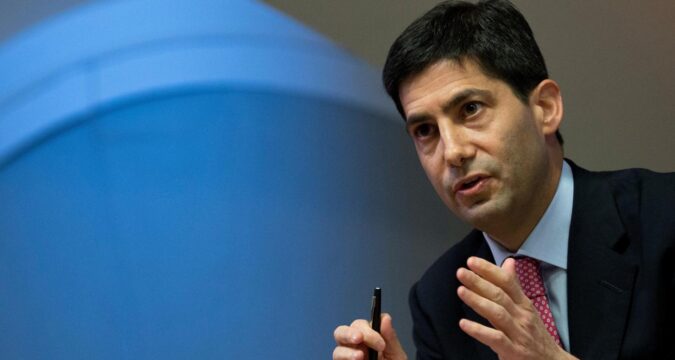
Steve Chapman: Will Fed pick Kevin Warsh show obeisance to Donald Trump or incur his wrath?
Paul Volcker was probably the greatest Federal Reserve chair ever. But when he got the job in 1979, it came as a surprise to him.
As head of the New York Fed, he was summoned to an interview with President Jimmy Carter. Volcker informed the president that he believed in curbing inflation and preserving the Fed’s independence, according to Alan Blinder’s book “A Monetary and Fiscal History of the United States, 1961-2021.” Afterward, he told friends, “I just blew a chance of becoming Fed chair.”
But Carter appointed him anyway, knowing that Volcker had the right goals and that they could doom Carter’s reelection campaign — which they did. Volcker went down in history as the man who conquered inflation, laying the foundation for decades of American prosperity.
Kevin Warsh clearly did not blow his chance to become Fed chair by telling Donald Trump anything he didn’t want to hear. “He certainly wants to cut rates,” Trump said, which also happens to be Trump’s strong preference. Assuming Warsh can win Senate confirmation, the second most important office in Washington will be his.
Why he wants it, though, is a mystery. The nomination brings to mind what Abraham Lincoln said about the presidency: “I feel like the man who was tarred and feathered and ridden out of town on a rail. To the man who asked him how he liked it, he said: ‘If it wasn’t for the honor of the thing, I’d rather walk.’”
Once at the helm, Warsh will have two options, neither of them appealing. The first is to carry out Trump’s wishes by rushing to slash rates — in which case he would be forever branded as the compliant servant who took the Fed’s legacy of independence and lit it on fire.
The second is to resist the president’s demands — in which case Warsh would be ceaselessly vilified by Trump and his followers for the next three years, if not longer, at a cost that could be ruinous.
But Warsh clearly did want the job, to the point of overcoming his inflation-fighting instincts and echoing Trump’s call for the Fed to cut interest rates more than it already has. Or maybe his inflation-fighting instincts never really existed.
During and after the Great Recession of 2008-09, Warsh questioned the Fed’s loosening of monetary policy, fearing it would cause a surge in inflation. The Fed loosened anyway — a rational response to the severe downturn — and inflation remained low for years to come.
In 2015, with inflation hovering near zero, he called for tighter money, which might have caused harmful deflation if the Fed had taken his advice. Yet today, with price increases exceeding the Fed’s target, Warsh argues that interest rates must come down.
What changed? Oh, right — the party in control of the White House. Under Barack Obama, Warsh rejected measures to stimulate growth. Under Trump, he supports them. No need to overthink this.
Even if Warsh wants to cater to Trump, though, he may not succeed. The chair is only one of the 12 members of the committee that sets interest rates, and it just voted to leave them unchanged. In pushing for cuts, he could be outvoted, rendering himself the functional equivalent of a potted plant.
Or he could strong-arm a majority to go along. In that case, inflation would be likely to creep upward, subjecting Americans to a painful relapse of what they suffered in 2021 and 2022.
Jerome Powell, the Fed’s current chair, made a choice to avert a catastrophic economic crash during the COVID-19 pandemic, accepting the risk of a bout of inflation. Warsh would be doing it for a far less noble reason: to appease a president bent on advancing his interests in an election year.
Inflation is not the only peril such deference would invite, or even the worst. Making the Fed the servant of the White House would hobble one of the few institutions capable of limiting the overreach of a power-mad president. It would compromise the health of our democracy as well as our economy.
But Warsh has to know that if he chooses to focus on taming inflation, he will incur the fearsome wrath of his patron. Trump appointed Powell but has repeatedly denounced him as a “jerk,” a “bonehead” and an enemy of America.
Worse yet, his Justice Department launched a criminal investigation of the Fed chair. “He’s either corrupt or incompetent,” Trump insisted. If Warsh were to defy him, Trump would use every possible weapon to make him pay.
But defying Trump and preserving the central bank’s independence is the only responsible course. A 19th century Protestant hymn declares, “Once to every man and nation, comes the moment to decide, in the strife of truth with falsehood, for the good or evil side.”
For Warsh, that moment is coming.
Steve Chapman was a member of the Tribune Editorial Board from 1981 to 2021. His columns, exclusive to the Tribune, now appear the first week of every month. He can be reached at stephenjchapman@icloud.com.
Submit a letter, of no more than 400 words, to the editor here or email letters@chicagotribune.com.
https://www.chicagotribune.com/2026/02/04/column-kevin-warsh-federal-reserve-donald-trump-chapman/
Review: ‘Confederates’ at Redtwist Theatre asks, can trust survive racism?
John C. Calhoun, a powerful South Carolinian politician and one of the most outspoken defenders of slavery in the first half of the 19th century, popularized the phrase “peculiar institution” as a euphemism for the brutal practice then thriving throughout the southern United States. In Dominique Morisseau’s 2022 play “Confederates,” now onstage at Redtwist Theatre, one enslaved woman’s experiences of this peculiar institution are juxtaposed with those of a modern-day Black woman navigating another institution, less overtly insidious but still thorny: higher education.
A Haitian American playwright and MacArthur Genius Grant recipient, Morisseau is primarily known for her three-play “Detroit Project,” which highlights key moments in her hometown’s history, and as the Tony-nominated book writer of the jukebox musical “Ain’t Too Proud — The Life and Times of The Temptations.” In “Confederates,” she examines how institutionalized racism and misogyny undermine trust on many fronts, both within and across boundaries of ethnicity, gender and class.
Directed by Aaron Reese Boseman, Redtwist’s cast deftly manages the play’s ambitious structure, hopping between two timelines as several actors play dual roles. Although this format prevents deeper character development for the two protagonists, the connections between past and present — clearly the intended emphasis here — largely come through with clarity.
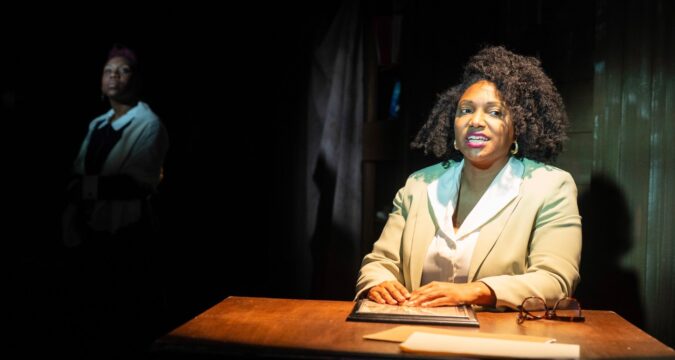
Monique Marshaun plays Sandra, a tenured political science professor with an elite academic pedigree. In the opening scene, we meet her in a distressed state after discovering a graphic image that was anonymously posted on her office door: her own face edited onto a historic photo of an enslaved woman, who is breastfeeding a white baby. As her present-day timeline progresses, Sandra tries to identify the culprit while also facing interpersonal tensions with two of her students, Malik (Makari Robinson-McNeese) and Candice (Madelyn Loehr), and Jade (Toccara Castleman), the only other Black woman who teaches in her department.
Jumping back some 150 years, Sara (Shenise Danyél) tends to her brother Abner (Robinson-McNeese) as he prepares to flee the plantation and join the Union Army. Longing to join the fight for freedom herself, Sara is susceptible to suggestion when her enslaver’s daughter, Missy Sue (Loehr), returns from the north with a newfound fervor for abolition and asks Sara to spy on her father and his confederates. With an inherent power imbalance also factoring in, Sara agrees to this plan, though she doubts Missy Sue’s motives (which are portrayed as obviously dubious). When Sara transfers from agricultural to domestic labor to better engage in espionage, she clashes with fellow enslaved woman LuAnne (Castleman) over their different approaches to maintaining their own safety and some sense of autonomy.
As they take turns inhabiting a set (designed by Kevin M. Rolfs) that bridges the antebellum and academic environments, Marshaun and Danyél convey both the strength and vulnerability of their characters, separated by generations but sharing certain experiences such as infertility. The majority of the play consists of two-hander scenes between either Sandra or Sara and a succession of supporting characters, with just a few larger ensemble moments toward the end. This structure hampers the development of the individual relationships within their storylines but keeps the focus on the parallels between the two women.
In each one-on-one scenario, Morisseau exposes the limits of solidarity within oppressive systems, especially between people who have much to gain from standing together. When they share their respective scenes with Abner and Malik, who are both Black men, the protagonists bump up against gender-based inequities and mistrust. Missy Sue and Candice are white women whose blundering attempts to connect with Sandra and Sara, woman to woman, are mostly played to comedic effect with a hint of underlying danger. In the cases of LuAnne and Jade, Black women who would seem to have the most potential for kinship with Sandra and Sara, barriers include class differences and their disparate positions within rigid hierarchies.
Makari Robinson-McNeese as Abner and Shenise Brown as Sara in “Confederates” at Redtwist Theatre. (Aaron Reese Boseman)
The play’s inciting incident — an altered photo of a Black woman — seems especially prescient considering that “Confederates” premiered in the year when the floodgates of generative AI opened to the public. With the resultant rise in misinformation threatening any remaining sense of shared reality, Morisseau asks excruciating questions about whether trust is even possible in such circumstances. Her conclusions may be understood as empowering, even hopeful, but there’s enough ambiguity that audience members will likely come away with a range of interpretations. Best to see and decide for yourself.
Emily McClanathan is a freelance critic.
Review: “Confederates” (3 stars)
When: Through March 8
Where: Redtwist Theatre, 1044 W Bryn Mawr Ave
Running time: 1 hour, 45 minutes
Tickets: $10-$60 at redtwisttheatre.org
https://www.chicagotribune.com/2026/02/04/review-confederates-redtwist/


