Category: News
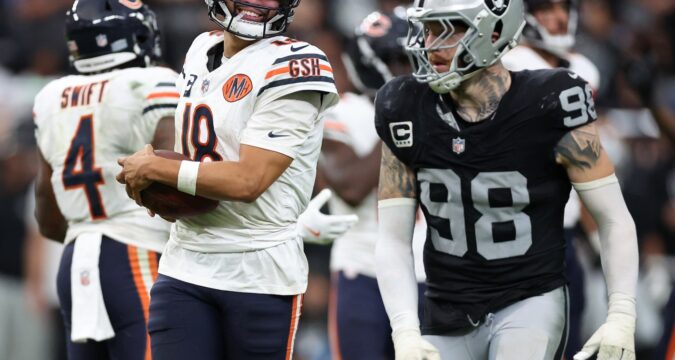
Chicago Bears Q&A: Is a game in Spain in the works? How about a trade for Maxx Crosby?
The New England Patriots and Seattle Seahawks are preparing for Sunday’s Super Bowl. For the 30 other NFL teams — including the Chicago Bears — the focus has moved on to the offseason, potential roster moves and the 2026 season.
Not surprisingly, those are the themes of Brad Biggs’ Bears mailbag this week, beginning with the possibility of an overseas game next season.
Do you think the Bears will play an international game in 2026? — Murray P., North Side
This is a topic I poked around on early in the season, and the answer I got at the time was that the Bears were not expected to be the home team for an international game in 2026. That, of course, didn’t rule out the possibility they could be deemed the visiting team for an international game. This was all subject to change.
With the announcement Monday that the NFL will return to Spain in 2026, my antenna is up again that it’s possible the Bears could be headed abroad next season. The league announced it will return to Madrid to play at Bernabéu Stadium — home of Real Madrid — as part of a multiyear commitment to playing regular-season games in Spain.
The NFL played its first game in Spain this season when the Miami Dolphins defeated the Washington Commanders 16-13 in overtime in front of 78,610 fans at Bernabéu Stadium.
Here are seven factors to consider:
Three teams have international marketing rights in Spain to grow brand awareness as part of the league’s Global Markets Program: the Bears, Dolphins and Kansas City Chiefs.
NFC teams will play nine home games and eight road games in 2026. AFC teams will have eight home games and nine road games. On the surface, I’d guess it’s unlikely the Dolphins or Chiefs would play a home game in Spain (or anywhere else overseas) in 2026. But never say never. The Chiefs were the designated visitor this season for a Week 1 game against the Los Angeles Chargers in São Paulo.
The game in Spain doesn’t necessarily have to include teams with home marketing rights in that country.
The Bears probably are amenable to league requests as they want to remain in good graces while seeking support in their bid to build a new stadium. Does that mean the league has asked the Bears or is planning to? I don’t know.
There will be nine international games in 2026. If you don’t like this, well, you best get used to it because the ultimate goal that Commissioner Roger Goodell reiterated Monday is to get to 16 international games each season, meaning eventually every team would play abroad once per season. The NFL views international markets as vital revenue streams.
The other eight games include the Los Angeles Rams playing in Melbourne, Australia, and the New Orleans Saints playing at Stade de France in Paris. There also will be games in Rio de Janeiro, Munich, Mexico City and three in London. With nine international games — provided no teams play two (the Minnesota Vikings played in Dublin and London in consecutive weeks this season) — 18 of the 32 teams will be involved.
The Bears have been active in Spain the last couple of years working to establish a fan base. They’ve conducted flag football clinics, sent former offensive lineman Roberto Garza to Spain multiple times and done other work to grow their brand in that country.
Cap question about signing bonuses and actual cash flow. When a portion of a contract is converted to a signing bonus, are those hard dollars that are paid out to the player? Those are some big checks to write if so. Or is it just a reallocation of guaranteed money? — @halfadrink
The dollars converted to a signing bonus are real, and it’s a mechanism to spread out a cap hit into future seasons. Let’s use center Drew Dalman, who is signed for two more seasons, as a potential example. (I’m not saying Dalman’s contract will be restructured.)
Dalman currently has an $11 million base salary in 2026 and 2027 with a cap hit of $14 million each season. If the Bears converted $6 million of his 2026 base salary into a bonus this year, they would reduce his base salary to $5 million and his cap hit for 2026 to $11 million. That would raise his cap hit for 2027 to $17 million. The upshot would be an additional $3 million in cap space for next season and then a larger hit in 2027.
The Bears restructured cornerback Jaylon Johnson’s contract in September to create $8 million in cap space. The more years a player has remaining on his contract, the more space can be created. Maybe cornerback Kyler Gordon would be a candidate for a restructure to create space this year. Teams generally want to choose players they are confident will be part of their future when restructuring deals to avoid having a big hit if they part ways after a year or two.
I fully expect the Bears to do some combination of releasing veterans and restructuring contracts to create cap space before the new league year starts March 11.
I believe Maxx Crosby is too much risk for the Bears — injuries, cost to get him and age. Do you agree there are better moves the Bears could make for a pass rusher? — @tellus32
Raiders edge rusher Maxx Crosby eyes Chargers quarterback Justin Herbert on Sept. 15, 2025, in Las Vegas. (Rick Scuteri/AP)
Crosby, who turns 29 in August, is an elite, disruptive player who has one of the most incredible motors you’ll ever see on a man who is 6-foot-5, 255 pounds. He’s tremendous theater for the NFL, and while, from a distance, he looks like the kind of guy who should spend his entire career in a Raiders uniform, Crosby’s potential availability via trade will be a huge story this offseason. Does Las Vegas, with a new coach and the No. 1 draft pick, go full teardown and ship off the face of the franchise to the highest bidder?
Last week at the Senior Bowl, I chatted with a handful of veteran personnel men about the possibility that Crosby could be available. They said what you’d expect: Nothing would surprise them. They also were in agreement that, given the choice between Crosby and Cincinnati Bengals free-agent defensive end Trey Hendrickson, they would choose Crosby. It’s not an apples-to-apples comparison, though, because Crosby would require trade compensation.
Would Las Vegas consider moving Crosby? One thing the Raiders do not need this offseason is cap space. They’re No. 2 in the league right now in available space with close to $90 million. A trade would be to add draft capital (or players), and I’d imagine they would have to be blown away by an offer.
The feeling I got was people aren’t concerned that the knee surgery Crosby had at the end of this season will negatively affect his production moving forward. But these people haven’t had their team doctors examine medical records or Crosby himself. He’ll be entering his eighth season, so any team acquiring Crosby objectively would be getting a guy who’s probably a tick below his prime.
Saying that, he’s still an elite, disruptive player. One thing Crosby probably has to do is reduce his playing time. He hates coming off the field, and in games he was active this season, he played 94% of the defensive snaps. He was at 97% in 2024 and 95% in 2023. In order to remain effective, especially late in games, that figure probably needs to dip into the low to mid 80s.
The Bears would need to have legitimate internal conversations about any player of Crosby’s ability who is available — if any are available. But my intuition is that general manager Ryan Poles would have a hard time bundling two first-round draft picks or something close to that to acquire Crosby. If the price is lower, then it would be an intriguing option.
Please don’t think current Bears players who might not be great salary-cap fits could be valuable trade pieces in a bid to acquire Crosby. I firmly believe if the Raiders shop Crosby, they’ll be looking for a big-time return in draft capital.
How are they under water on the cap considering Caleb Williams is on a rookie deal and the overall roster is fairly marginal? — @unisourceg
I have news for you. There’s not necessarily a correlation between cap health and a team’s record. The Bears have been a regular player in free agency over the last few years, which, gauging by regular mailbag questions, is something readers fully support. Right now, they project to be about $10 million over the cap.
The league informed teams that the 2026 salary cap is expected to fall somewhere between $301.2 million and $305.7 million. The higher it is, the better for the Bears. Business is booming in the NFL, as the cap was $279.2 million in 2025 and $208.2 million in 2022. It will have risen nearly $100 million in just four seasons.
While the Bears have more “constraints” this year, as GM Ryan Poles said, they’ll be able to create the room they need to rework the roster this offseason, and the books will be in pretty good shape when they get to 2027. A lot of the contracts they’ve handed out are relatively flat in terms of cap hits, and they can make a series of moves after next season to create additional space.
While free agency is the next big event in the NFL offseason, the draft will be more important, in my opinion. The Bears have a handful of exciting young players on offense: Williams, tight end Colston Loveland, wide receivers Rome Odunze and Luther Burden III, running back Kyle Monangai and maybe left tackle Ozzy Trapilo, depending largely on how he recovers from a torn patellar tendon in his left knee. That’s as many as six core players on rookie contracts.
If the 2026 draft produces some prospects for the defense, the Bears will have a nucleus of young talent that can help sustain the roster and provide contributors on controlled rookie salaries.
Who, in your opinion, are a few priority re-signings for the Bears this offseason? — @justinhamelin86
Bears cornerback Nahshon Wright (26) and safety Kevin Byard III (31) celebrate after Wright recovered a fumble by Giants quarterback Jaxson Dart on Nov. 9, 2025, at Soldier Field. (Eileen T. Meslar/Chicago Tribune)
A handful of players coming out of contract are worth keeping an eye on. Free safety Kevin Byard III and cornerback Nahshon Wright are the two biggest names that jump out. The Bears’ ability to re-sign one or both likely depends on what kind of market those players believe they can generate in free agency. Sometimes teams encourage players to gauge their value on the open market as part of the negotiation. There’s a risk of losing the player by going that route, but it also makes the player feel like he’s getting what he’s worth.
In terms of other pending free agents to keep an eye on, I’d list tight end Durham Smythe, left tackle Braxton Jones (more on him in a little bit), guard Jordan McFadden, receiver/returner Devin Duvernay, defensive end Daniel Hardy, linebacker D’Marco Jackson and long snapper Scott Daly. Maybe the team wants to run it back with third quarterback Case Keenum, too, so throw his name in the mix as well.
What are the best options at left tackle? Theo Benedet and Kiran Amegadjie are on the roster and Ozzy Trapilo is out until late 2026 at least. Braxton Jones is a free agent. This seems critical to me. Free agents like Trent Brown, Rob Havenstein and others do little for me and are right tackles. No, I won’t be asking about moving Darnell Wright to left tackle. Draft one? — @themaxconnor1
It will be really interesting to see what shakes out here because there is a hole on the depth chart right now. Whatever move the Bears make likely will give us a glimpse at how they feel about Trapilo’s tape from his rookie season. If they use a first-round draft pick on a left tackle, that would signal they’re looking for a new future at the position. While I think that’s a little unlikely, we can’t rule it out. If they do believe Trapilo is a viable option at left tackle — when healthy — then they probably will be in the market for a bridge option.
That’s where it gets a little tricky — and where I believe Jones could be an option at least worth considering. I wrote about that last week after my trip to the Senior Bowl (item No. 6). Jones’ market value isn’t real hot right now after he played in basically 3½ games. So a one-year deal could give him a chance to boost his profile and give the Bears someone they’re familiar with at the position.
The coaching staff never has seen Jones completely healthy. Finding a decent, experienced left tackle who is healthy won’t be cheap, and, as we know, the Bears won’t have a ton of cap space. This is an important piece of business for the offseason and one to monitor for sure.
Is there a path for the Bears to challenge the NFL’s ruling on compensatory picks for the Falcons’ hiring of Ian Cunningham? If so, will they? — @dominicpelc
Falcons general manager Ian Cunningham speaks during his introductory news conference Tuesday, Feb. 3, 2026, in Atlanta. (Jason Getz/Atlanta Journal-Constitution via AP)
I suppose anything is possible. I can tell you, without equivocation, that after Atlanta hired Matt Ryan as president of football and before it launched its search for a general manager, the league deemed Ryan to be the franchise’s “primary football executive.”
Not every team has the same organizational flow chart. The Falcons created a new position for Ryan. Like the Bears, the Falcons also have a president/CEO. In New England, Eliot Wolf is considered the Patriots’ primary football executive and has the title of executive vice president of player personnel. In Cincinnati, Duke Tobin is the Bengals’ primary football executive and is listed as director of player personnel.
For the vast majority of teams, including the Bears, the general manager is considered the primary football executive. In essence, the league considers the GM job in Atlanta to be a secondary football executive, akin to the assistant GM position with the Bears. Therefore, the Bears could have blocked Cunningham from taking the Falcons GM job.
The Bears were aware of this before Cunningham interviewed for the GM job in Atlanta. If Ryan wasn’t going to be in a role in which he was over the football operation, the Falcons might have come up with some other type of title, such as an adviser to owner Arthur Blank. This isn’t the Falcons trying to work the system. It’s not like they would have lost draft picks. The compensatory picks are added to the end of the round.
In the spirit of the Rooney Rule — and this goes way beyond two third-round compensatory picks for the Bears — it’s a curious and confusing situation because you can make a case Cunningham received a promotion from his role at Halas Hall. The Rooney Rule was a big topic for Commissioner Roger Goodell on Monday in Santa Clara, Calif. The focus was on this year’s hiring cycle for head coaches. Ten teams changed coaches, and no Black coaches were hired with only one minority candidate — the Tennessee Titans’ Robert Saleh, who’s of Lebanese descent) — getting a job. Goodell stressed that the NFL always is evaluating hiring protocols.
It’s my understanding that the league, in consultation with the team, determines which title is considered the primary football executive. Unless we hear differently, that role belongs to Ryan in Atlanta. Would the league take a second look at the Falcons situation in an evaluation of the Rooney Rule? Maybe that’s possible, but my hunch is the NFL will be more forward-looking.
What do you think Ryan Poles is prioritizing in Round 1? Left tackle, defensive tackle, defensive end? — @joe_vizo
I’d bet Poles is hunting for an impact player at No. 25, and that could come from a lot of positions. I don’t think anyone viewed tight end as the Bears’ top need before they drafted Colston Loveland in the first round last year. Similarly, they weren’t in need of a wide receiver when they selected Luther Burden III in Round 2. Both will be core building blocks for the future.
You probably can cross off a few positions, but I’d add safety, linebacker and cornerback. Heck, if there’s a running back the Bears believe is electric, that wouldn’t be a stunner. It’s more important to get impact players, especially early in the draft, than it is to draft for need.
When teams get hyperfocused on a position on Day 1 or Day 2 of the draft and force a pick at a position when better players at other positions are available, you know what happens? They generally are staring at the same need two or three years later and they don’t have impact players. My advice is to have an open mind and hope the Bears do likewise with their draft board.
What’s up with Ruben Hyppolite II? He was a fourth-rounder yet hardly played even when the defense was totally depleted. Was it a wasted pick? He was supposed to be speedy but Ryan Poles overreached badly per most analysts. — @blueridge3
Bears linebacker Ruben Hyppolite II (47) keeps his eyes on Steelers running back Jaylen Warren (30) on Nov. 23, 2025, at Soldier Field. (John J. Kim/Chicago Tribune)
Hyppolite was one of the few draft picks who didn’t make an impact in 2025. It’s fair to say his rookie season didn’t go as planned. He appeared in seven games with one start against the Pittsburgh Steelers in Week 12 and played 31 snaps on defense and 82 on special teams. He was inactive 10 times.
He suffered an AC joint sprain in his right shoulder against the Steelers when tight end Darnell Washington — who is generously listed at 6-foot-7, 264 pounds but said this season he was playing at 311 — came in motion to kick Hyppolite out on a running play.
“It starts with getting my body right,” Hyppolite said last month on locker-room cleanout day. “It’s been a long season. Really for me, it’s been longer than I’ve ever experienced. It’s just about getting my body back right, feeling good so you can put the work in and get the gains, whether it’s getting stronger, faster, whatever the case may be.
“It’s been great being in the room with the guys I was with — Tremaine (Edmunds), T.J. (Edwards) and Noah (Sewell) — learning from those guys. Experiencing how the league works in terms of personnel, preparation, things of that nature. I feel like I learned a lot as far as how to be a pro. Just knowing what to expect.”
Hyppolite called the play against Washington a good “welcome-to-the-NFL moment.”
“That was a lot of weight to one shoulder,” he said.
He hoped to be more active on special teams, but the Bears were playing well in that phase and used players with more experience such as Amen Ogbongbemiga.
“It definitely motivates me,” Hyppolite said about the string of inactives. “I’ve gotten to this point and I want to play. I want to contribute. That’s what it’s about for me. I am blessed to be in this position. I want to play football. I want to help the team win.
“Definitely was upset about that, but all I can do now is go back to the drawing board. I can only control what I can. That was to show up every day, and I was ready to go if needed. I performed in practice well.”
Hyppolite should have a clean slate in his second season, and if he can build off the things he learned as a rookie, he at least should challenge for a core role on special teams. If he can’t achieve that in Year 2, the Bears will have to consider moving on.
What are the chances D’Andre Swift is back? — @nflchikennugget
Bears running back D’Andre Swift celebrates a victory over the Packers in an NFC wild-card game Jan. 10, 2026, at Soldier Field. (Chris Sweda/Chicago Tribune)
Swift is in decent position to return to the Bears for the final year of his contract. He’s on the books to earn a $6.39 million base salary with a $500,000 roster bonus due March 15 and as much as $510,000 available in per-game roster bonuses plus a $100,000 workout bonus. Considering Swift’s value to the offense, I’d say the Bears feel confident he would provide value at that price. He rushed for a career-high 1,087 yards and nine touchdowns this season and caught 34 passes for 299 yards and another score.
Swift, 27, will be motivated to have another strong season in a contract year. Releasing him would create $7.47 million in cap space. It also would create a need in the backfield after Swift played 621 snaps (58%) in 2025. The Bears did well with their pairing of Swift and Kyle Monangai.
The Bears will require conversations about all of their veterans under contract who are making solid money, especially the ones who no longer have guaranteed money in their deals. Swift is in that group. I would guess they will lean toward running it back with him in 2026, but a lot needs to be discussed internally.
https://www.chicagotribune.com/2026/02/04/chicago-bears-mailbag-spain-maxx-crosby/

Milan Cortina are the most spread-out Olympics ever. Here’s what that means for athletes — and fans.
MILAN — The Milan Cortina Winter Games are the most spread-out in Olympic history.
For the organizers of the Feb. 6-22 Games, it was a choice to use existing infrastructure as much as possible, but this means no central hub and strategic choices for spectators. The Games will span over 22,000 square kilometers (8,500 square miles).
Here is what it means in practical terms.
Choices and strategies
For any visitor to the Games, it would be extraordinarily difficult to see ice sports in Milan, men’s Alpine skiing in Bormio, snowboarding in Livigno, cross-country skiing in Predazzo, biathlon in Anterselva and women’s Alpine skiing in Cortina, before heading to the closing ceremony in Verona.
It’s a circuit that covers over 850 kilometers (530 miles) and would amount to nearly 13 hours of non-stop driving.
Organizers sought to take advantage of existing infrastructure but there still been hiccups getting the Cortina sliding venue and the Santagiulia ice hockey arena in the city of Milan finished on time.
Spreading out the Games reduced the number of new structures, and allowed more areas in northern Italy to benefit from the investments and tourim that come with such big events.
But it also deprives the Games of one emotional center, meaning spectators must make hard choices about which events to attend, and athletes will have difficulty cheering on teammates in far-flung disciplines.
A complex itinerary
Mona Patel, a Los Angeles-based lawyer, and her partner worked out an itinerary months in advance to attend men’s downhill skiing and snowboarding in the Valtellina cluster near the Swiss border, as well as bobsled and luge in Cortina d’Ampezzo.
Related Articles
Speedskater Erin Jackson and bobsledder Frank Del Duca picked as US flagbearers for Winter Olympics
Freeskier Eileen Gu takes another wild ride to the Olympics — and invites the world to tag along
Chloe Kim rediscovers love for Olympics. But will an injury derail quest for a 3rd straight gold medal?
They hope to catch skating events in Milan on the way in and out of Italy. If they pull it all off, they will have hit three of the four Olympic clusters.
To make it work, they booked one accommodation in Valtellina and another in South Tyrol, putting them in range for their selected mountain events and allowing them to hit the slopes themselves.
Patel said the complex itinerary was made affordable through HomeExchange — she used points she had built up by putting her own real estate in California on the exchange platform, and spending them for places in Italy.
“Our priority is to see Olympic events,” Patel said. “If there is going to be a powder day, we would love to get out. Sometimes if there is an event in the afternoon or evening, we can do both. We are not daunted by the distances.”
Making it a family experience
Jordan Stolz of Team United States trains at Milano Speed Skating Stadium on Feb. 3, 2026, in Milan, Italy. (Photo by Joosep Martinson/Getty Images)
This will be Lars Thorn’s sixth Olympics, but the first for his wife and two young children. Coming from southern California, he ruled out outdoor competitions because of the cold weather and decided to focus on ice sports in Milan. Distance was another factor — though he is sorry to miss Lindsey Vonn, who is still hoping to compete in Cortina despite a weekend knee injury.
“With two little kids, being outside in the elements doesn’t lend itself to a family experience,” Thorn said.
He’s planning to take his 5-year-old son to long track speed skating and men’s and women’s hockey — all reachable by public transport in Milan — while his wife and daughter take in Milan’s sights.
His next Olympics will be close to home in Los Angeles, where he will be able to walk to four venues from home and reach another seven by a quick ferry ride — a logistical contrast from Milan Cortina.
The first Olympics with 2 hub cities
The headliners of Friday’s opening ceremony, like Mariah Carey and Andrea Bocelli, will perform in Milan’s San Siro Stadium. But to ensure that all competitors from the far-flung venues can participate in the Parade of Athletes, elements of the ceremony will be broadcast from Livigno, Predazzo and Cortina.
With these also being the first Olympics with two hub cities and with events clustered in four areas, organizers also had to find housing not only in Milan and Cortina, but in four other sites: Anterselva near the Austrian border, Bormio and Livigno near the Swiss border, and the Val di Fiemme in the Trentino autonomous province.
Milan is the only city getting a legacy Olympic Village, which will become housing for 1,700 students after the Games. A temporary village was built in Cortina; existing hotels and facilities were adapted in the other locations.
The last time Italy hosted the Winter Games, in Turin 2006, spectators buzzed about the medals ceremony each day in the center of the city, which became a focal point of the Olympic spirit. Because of the distances, medal ceremonies in Milan Cortina will be held at the venues immediately after the competitions.
“If you have tickets to an event, it’s nice to see the crowning of the champion,” Thorn said. But he added that the Olympic Plaza in Salt Lake City, as in Turin, created a unique atmosphere.
“That, I think, is one of the highlights, for the city to feel like they are part of it,” Thorn said.
https://www.chicagotribune.com/2026/02/04/olympics-milan-cortina-venues/
Milan Cortina are the most spread-out Olympics ever. Here’s what that means for athletes — and fans.
MILAN — The Milan Cortina Winter Games are the most spread-out in Olympic history.
For the organizers of the Feb. 6-22 Games, it was a choice to use existing infrastructure as much as possible, but this means no central hub and strategic choices for spectators. The Games will span over 22,000 square kilometers (8,500 square miles).
Here is what it means in practical terms.
Choices and strategies
For any visitor to the Games, it would be extraordinarily difficult to see ice sports in Milan, men’s Alpine skiing in Bormio, snowboarding in Livigno, cross-country skiing in Predazzo, biathlon in Anterselva and women’s Alpine skiing in Cortina, before heading to the closing ceremony in Verona.
It’s a circuit that covers over 850 kilometers (530 miles) and would amount to nearly 13 hours of non-stop driving.
Organizers sought to take advantage of existing infrastructure but there still been hiccups getting the Cortina sliding venue and the Santagiulia ice hockey arena in the city of Milan finished on time.
Spreading out the Games reduced the number of new structures, and allowed more areas in northern Italy to benefit from the investments and tourim that come with such big events.
But it also deprives the Games of one emotional center, meaning spectators must make hard choices about which events to attend, and athletes will have difficulty cheering on teammates in far-flung disciplines.
A complex itinerary
Mona Patel, a Los Angeles-based lawyer, and her partner worked out an itinerary months in advance to attend men’s downhill skiing and snowboarding in the Valtellina cluster near the Swiss border, as well as bobsled and luge in Cortina d’Ampezzo.
Related Articles
Speedskater Erin Jackson and bobsledder Frank Del Duca picked as US flagbearers for Winter Olympics
Freeskier Eileen Gu takes another wild ride to the Olympics — and invites the world to tag along
Chloe Kim rediscovers love for Olympics. But will an injury derail quest for a 3rd straight gold medal?
They hope to catch skating events in Milan on the way in and out of Italy. If they pull it all off, they will have hit three of the four Olympic clusters.
To make it work, they booked one accommodation in Valtellina and another in South Tyrol, putting them in range for their selected mountain events and allowing them to hit the slopes themselves.
Patel said the complex itinerary was made affordable through HomeExchange — she used points she had built up by putting her own real estate in California on the exchange platform, and spending them for places in Italy.
“Our priority is to see Olympic events,” Patel said. “If there is going to be a powder day, we would love to get out. Sometimes if there is an event in the afternoon or evening, we can do both. We are not daunted by the distances.”
Making it a family experience
Jordan Stolz of Team United States trains at Milano Speed Skating Stadium on Feb. 3, 2026, in Milan, Italy. (Photo by Joosep Martinson/Getty Images)
This will be Lars Thorn’s sixth Olympics, but the first for his wife and two young children. Coming from southern California, he ruled out outdoor competitions because of the cold weather and decided to focus on ice sports in Milan. Distance was another factor — though he is sorry to miss Lindsey Vonn, who is still hoping to compete in Cortina despite a weekend knee injury.
“With two little kids, being outside in the elements doesn’t lend itself to a family experience,” Thorn said.
He’s planning to take his 5-year-old son to long track speed skating and men’s and women’s hockey — all reachable by public transport in Milan — while his wife and daughter take in Milan’s sights.
His next Olympics will be close to home in Los Angeles, where he will be able to walk to four venues from home and reach another seven by a quick ferry ride — a logistical contrast from Milan Cortina.
The first Olympics with 2 hub cities
The headliners of Friday’s opening ceremony, like Mariah Carey and Andrea Bocelli, will perform in Milan’s San Siro Stadium. But to ensure that all competitors from the far-flung venues can participate in the Parade of Athletes, elements of the ceremony will be broadcast from Livigno, Predazzo and Cortina.
With these also being the first Olympics with two hub cities and with events clustered in four areas, organizers also had to find housing not only in Milan and Cortina, but in four other sites: Anterselva near the Austrian border, Bormio and Livigno near the Swiss border, and the Val di Fiemme in the Trentino autonomous province.
Milan is the only city getting a legacy Olympic Village, which will become housing for 1,700 students after the Games. A temporary village was built in Cortina; existing hotels and facilities were adapted in the other locations.
The last time Italy hosted the Winter Games, in Turin 2006, spectators buzzed about the medals ceremony each day in the center of the city, which became a focal point of the Olympic spirit. Because of the distances, medal ceremonies in Milan Cortina will be held at the venues immediately after the competitions.
“If you have tickets to an event, it’s nice to see the crowning of the champion,” Thorn said. But he added that the Olympic Plaza in Salt Lake City, as in Turin, created a unique atmosphere.
“That, I think, is one of the highlights, for the city to feel like they are part of it,” Thorn said.
https://www.chicagotribune.com/2026/02/04/olympics-milan-cortina-venues/
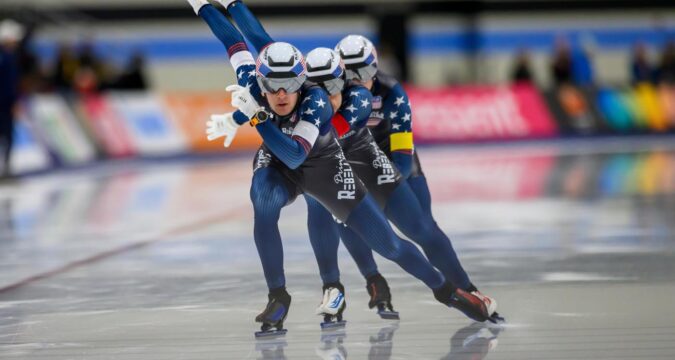
What is Slippery Fish? A secret project to win Olympic speedskating medals with help from an app.
MILWAUKEE — All it took was the mere mention of the words “Slippery Fish” for U.S. Speedskating national team coach Ryan Shimabukuro to purse his lips and shake his head.
Related Articles
After torn ACLs and 10 surgeries, Chicago’s Sarah Warren makes the US Olympic speedskating team
Entering his 4th Olympics, Oak Park speedskater Emery Lehman nears the finish line
There wasn’t even a full question asked about the secret project using computer technology aimed at shaving fractions of a second off speedskating times to help the Americans bring home gold medals from the Milan Cortina Olympics. Just those four syllables were enough to catch Shimabukuro off-guard a little more than a month ahead of the Feb. 6-22 Winter Games.
“No comment. I don’t know how you even know about that,” said the genial Shimabukuro, who otherwise was forthcoming about all manner of topics during an interview with The Associated Press about his team and his sport while sitting in the stands at Milwaukee’s Pettit National Ice Center, site of the Olympic trials for long track in January.
“No comment. Nope. Nope,” Shimabukuro said. “Respectfully, no comment.”
So what, exactly, is Slippery Fish? And why would Shimabukuro — and some other folks connected to the American team — be so tight-lipped about it?
Using an app to make U.S. speedskaters faster
According to Shane Domer, U.S. Speedskating’s chief of sport performance, the idea behind the program was to increase athletes’ aerodynamic efficiency by reducing the amount of drag they create pushing against the air during a race.
For years, speedskaters, like cyclists, trained in wind tunnels to study that phenomenon.
Now, Domer explained, it happens virtually: An app lets skaters scan their bodies, creating a “digital twin.” The software simulates wind passing over the avatar, computational fluid dynamics calculate how much resistance there is — and how tweaking a skater’s form alters that.
U.S. speedskating national coach Ryan Shimabukuro is seen at the U.S. Olympic trials for long track speed skating at the Pettit National Ice Center, Jan. 4, 2026, in Milwaukee. (AP Photo/Morry Gash)
“We can basically say, ‘How much faster will the avatar be in this position vs. that position at a certain speed?’ You’re trying to make someone a little bit slippery through the air,” Domer said about the work that began in 2023 at a cost approaching $100,000.
“Significant performance benefits from small changes: changing the head position slightly, changing the way your shoulders are positioned, elbow positions,” he said. “You’re talking about tenths of a second per lap in a sport where we look at hundredths or thousandths.”
U.S. long distance coach Gabe Girard said they’ve seen improvements from raising both arms in corners instead of only in straightaways.
“We’re always hoping to bring something a bit out of left field to catch people off-guard,” Girard said. “There’s also ‘mental warfare’ about it and makes people guess if they should (do) it.”
Speedskating secrets at the Olympics
As with other sports, successful speedskating innovations get copied.
At Beijing in 2022, the U.S. men won their first Olympic speedskating medal since 2010, a bronze in team pursuit. That was thanks to a revolutionary change developed by the not-so-creatively-named Project Push: The team’s three racers remained in the same order and pushed the leader of the trio, instead of rotating who led.
But the Americans debuted that two years earlier, and other countries soon adopted the same strategy. “We unveiled it too early,” Domer lamented.
Nearly everyone now pushes in team pursuit, but Domer said not everyone is doing it well.
“I don’t think they understand the mechanics and the math behind it,” he said. “We have made small changes to the way we’re executing it, based on what we have learned from Slippery Fish.”
Indeed, the U.S. holds the world record and Casey Dawson, Ethan Cepuran and Emery Lehman are favored for gold on Feb. 17.
Lehman said the 3-D modeling fostered better understanding of the ideal spacing between the three racers.
“We’re thinking about things analytically,” Lehman said. “We definitely have some niche things that we do that we try not to share with other people.”
Does Jordan Stolz use Slippery Fish?
Slippery Fish mostly is being used for team pursuit and long-distance events like the 5,000 or 10,000 meters.
“We were going to work on a program for more of the sprint side, but I had a little too much on my plate to kind of spearhead that project,” said Erin Jackson, who defends her Olympic 500 gold Feb. 15. “Hopefully that’s something we can get more into” before the 2030 Games.
Domer said “a lot” of U.S. skaters and coaches have been shown what Slippery Fish can do. “Some have made changes,” he said. “Some have not.”
The world’s best speedskater at the moment, Jordan Stolz, who excels at shorter distances, hasn’t taken advantage.
“It’s not something that I really got into — changing your technique to be more ‘aero,’” Stolz said. “Everybody skates so differently. If somebody is more ‘aero’ … I don’t know if I would be changing my technique to try and match them.”
Tech will fuel future speedskating changes
U.S. Speedskating has redesigned helmets — including one revealed at the 2022 Games — and employs technology to improve performance in other ways.
Cutting Edge is for skate blades. Iron Fist focuses on weighted gloves. New uniforms will arrive, eventually.
“It’s really hard to change someone who has been training a certain way their entire life, and then you ask them to do something that makes skating feel different. That’s a tough sell,” Domer said. “But I do think we’ll see crazy new things at the next Olympic Games.”
https://www.chicagotribune.com/2026/02/04/slippery-fish-us-speedskating-app/
What is Slippery Fish? A secret project to win Olympic speedskating medals with help from an app.
MILWAUKEE — All it took was the mere mention of the words “Slippery Fish” for U.S. Speedskating national team coach Ryan Shimabukuro to purse his lips and shake his head.
Related Articles
After torn ACLs and 10 surgeries, Chicago’s Sarah Warren makes the US Olympic speedskating team
Entering his 4th Olympics, Oak Park speedskater Emery Lehman nears the finish line
There wasn’t even a full question asked about the secret project using computer technology aimed at shaving fractions of a second off speedskating times to help the Americans bring home gold medals from the Milan Cortina Olympics. Just those four syllables were enough to catch Shimabukuro off-guard a little more than a month ahead of the Feb. 6-22 Winter Games.
“No comment. I don’t know how you even know about that,” said the genial Shimabukuro, who otherwise was forthcoming about all manner of topics during an interview with The Associated Press about his team and his sport while sitting in the stands at Milwaukee’s Pettit National Ice Center, site of the Olympic trials for long track in January.
“No comment. Nope. Nope,” Shimabukuro said. “Respectfully, no comment.”
So what, exactly, is Slippery Fish? And why would Shimabukuro — and some other folks connected to the American team — be so tight-lipped about it?
Using an app to make U.S. speedskaters faster
According to Shane Domer, U.S. Speedskating’s chief of sport performance, the idea behind the program was to increase athletes’ aerodynamic efficiency by reducing the amount of drag they create pushing against the air during a race.
For years, speedskaters, like cyclists, trained in wind tunnels to study that phenomenon.
Now, Domer explained, it happens virtually: An app lets skaters scan their bodies, creating a “digital twin.” The software simulates wind passing over the avatar, computational fluid dynamics calculate how much resistance there is — and how tweaking a skater’s form alters that.
U.S. speedskating national coach Ryan Shimabukuro is seen at the U.S. Olympic trials for long track speed skating at the Pettit National Ice Center, Jan. 4, 2026, in Milwaukee. (AP Photo/Morry Gash)
“We can basically say, ‘How much faster will the avatar be in this position vs. that position at a certain speed?’ You’re trying to make someone a little bit slippery through the air,” Domer said about the work that began in 2023 at a cost approaching $100,000.
“Significant performance benefits from small changes: changing the head position slightly, changing the way your shoulders are positioned, elbow positions,” he said. “You’re talking about tenths of a second per lap in a sport where we look at hundredths or thousandths.”
U.S. long distance coach Gabe Girard said they’ve seen improvements from raising both arms in corners instead of only in straightaways.
“We’re always hoping to bring something a bit out of left field to catch people off-guard,” Girard said. “There’s also ‘mental warfare’ about it and makes people guess if they should (do) it.”
Speedskating secrets at the Olympics
As with other sports, successful speedskating innovations get copied.
At Beijing in 2022, the U.S. men won their first Olympic speedskating medal since 2010, a bronze in team pursuit. That was thanks to a revolutionary change developed by the not-so-creatively-named Project Push: The team’s three racers remained in the same order and pushed the leader of the trio, instead of rotating who led.
But the Americans debuted that two years earlier, and other countries soon adopted the same strategy. “We unveiled it too early,” Domer lamented.
Nearly everyone now pushes in team pursuit, but Domer said not everyone is doing it well.
“I don’t think they understand the mechanics and the math behind it,” he said. “We have made small changes to the way we’re executing it, based on what we have learned from Slippery Fish.”
Indeed, the U.S. holds the world record and Casey Dawson, Ethan Cepuran and Emery Lehman are favored for gold on Feb. 17.
Lehman said the 3-D modeling fostered better understanding of the ideal spacing between the three racers.
“We’re thinking about things analytically,” Lehman said. “We definitely have some niche things that we do that we try not to share with other people.”
Does Jordan Stolz use Slippery Fish?
Slippery Fish mostly is being used for team pursuit and long-distance events like the 5,000 or 10,000 meters.
“We were going to work on a program for more of the sprint side, but I had a little too much on my plate to kind of spearhead that project,” said Erin Jackson, who defends her Olympic 500 gold Feb. 15. “Hopefully that’s something we can get more into” before the 2030 Games.
Domer said “a lot” of U.S. skaters and coaches have been shown what Slippery Fish can do. “Some have made changes,” he said. “Some have not.”
The world’s best speedskater at the moment, Jordan Stolz, who excels at shorter distances, hasn’t taken advantage.
“It’s not something that I really got into — changing your technique to be more ‘aero,’” Stolz said. “Everybody skates so differently. If somebody is more ‘aero’ … I don’t know if I would be changing my technique to try and match them.”
Tech will fuel future speedskating changes
U.S. Speedskating has redesigned helmets — including one revealed at the 2022 Games — and employs technology to improve performance in other ways.
Cutting Edge is for skate blades. Iron Fist focuses on weighted gloves. New uniforms will arrive, eventually.
“It’s really hard to change someone who has been training a certain way their entire life, and then you ask them to do something that makes skating feel different. That’s a tough sell,” Domer said. “But I do think we’ll see crazy new things at the next Olympic Games.”
https://www.chicagotribune.com/2026/02/04/slippery-fish-us-speedskating-app/

EV Bloodbath: Carmakers Suffer Face-Melting Losses As Buyers Flee, Credits End
EV Bloodbath: Carmakers Suffer Face-Melting Losses As Buyers Flee, Credits End
The push into electric vehicles was always bullshit, sold by the left as the move that would future-proof America’s and Europe’s legacy automakers and save the planet – and anyone not buying it was subject to a guilt trip from smug, private-jet-owning elitists. Instead, EVs are now looking like one of the costliest strategic blunders in modern automotive history. Major U.S. and European brands – including Ford, General Motors, Stellantis, Mercedes-Benz, and Volkswagen – have collectively burned through nearly a staggering $114 billion on EV ventures between 2022 and late 2025, according to an analysis by Robert Bryce in the The New York Post.
Thomas Edison with a Detroit Electric car in 1913. Credit: Wikimedia. Via RobertBryce.substack.com
Ford, Lucid, and Rivian report EV losses directly in their SEC filings, while GM, Stellantis, Mercedes, and Volkswagen do not break out EV performance, forcing analysts to rely on conservative estimates drawn from earnings results, write-downs, and public guidance. Among traditional automakers, Ford stands alone in providing clear EV-specific financial reporting, Bryce reports.
Between 2022 and the third quarter of 2025, legacy automakers alone are estimated to have lost roughly $83.6 billion on EV programs, including major write-downs at Ford and GM. EV-only startups Lucid and Rivian account for another $30.2 billion in red ink, with total losses across seven automakers approach $114 billion. The newspaper said it excluded Tesla from their analysis because a significant portion of its profits comes from regulatory credit sales and non-auto businesses.
Legacy automakers poured tens of billions into new factories, battery deals, and all-electric lineups, often under intense regulatory pressure and incentive schemes under the Biden administration that were premised on rapid, mass adoption that never fully materialized.
From 2015 through early 2024, automakers announced more than $188 billion in U.S. EV and battery investments, with spending accelerating after passage of the so-called Inflation Reduction Act in 2022, according to an Environmental Defense Fund report. GM pledged $35 billion through 2025, Ford committed $50 billion through 2026, and Volkswagen launched a $131 billion global electrification and digital push over five years.
But consumers didn’t follow Washington’s timetable.
In the U.S., EV sales briefly spiked in Q3 2025 as buyers rushed to capture the $7,500 federal tax credit before it expired on September 30. That incentive-driven surge pushed quarterly sales above 437,000 units and lifted EV market share to 10.5%, according to Cox Automotive. Once the subsidy disappeared, demand collapsed. Q4 sales fell to roughly 234,000 vehicles—a 46% drop from Q3—cutting market share nearly in half. Full-year EV sales for 2025 slipped to about 1.28 million units, marking the first year-over-year decline since 2019, Kelley Blue Book reported at the time.
Meanwhile, high-priced EVs piled up on dealer lots as average transaction prices hovered around $59,000, far above gas-powered alternatives. Range anxiety, uneven charging infrastructure, and cheaper gasoline pushed buyers back toward hybrids, trucks, and SUVs.
European automakers faced a similar reckoning.
Aggressive emissions mandates rammed through by climate-obsessed eurocrats collided with weakening demand and an onslaught of lower-cost Chinese competitors. In 2025, China’s BYD overtook Tesla as the world’s largest EV seller, underscoring how state-backed Chinese firms now dominate global EV volume, BBC reports. As pressure mounted, Volkswagen canceled or delayed multiple EV projects, Mercedes paused or scrapped several U.S.-bound EQ models, and others quietly extended the life of internal-combustion and hybrid platforms while lobbying for regulatory relief.
Tyler Durden
Wed, 02/04/2026 – 07:00
Enviados de Rusia y Ucrania se reunirán en Abu Dabi para conversaciones mediadas por EEUU
Por KAMILA HRABCHUK
KIEV, Ucrania (AP) — Está previsto que los enviados de Rusia y Ucrania se reúnan en Abu Dabi el miércoles para otra ronda de conversaciones mediadas por Estados Unidos para poner fin a una guerra que dura ya casi cuatro años.
Se espera que las delegaciones de Moscú y Kiev estén acompañadas en Emiratos Árabes Unidos por el enviado especial de Estados Unidos, Steve Witkoff, y el yerno del presidente Donald Trump, Jared Kushner, quien también asistió a la reunión del mes pasado, según funcionarios.
Ese encuentro en la capital emiratí, dentro del esfuerzo de la Casa Blanca para acabar con el conflicto, lograron algunos avances, pero nada crucial en cuestiones clave, agregaron.
Los últimos contactos coinciden con el malestar en Ucrania por los importantes ataques de las fuerzas del Kremlin contra su sistema energético, habituales cada invierno desde que Rusia lanzó su invasión total de su vecino el 24 de febrero de 2022.
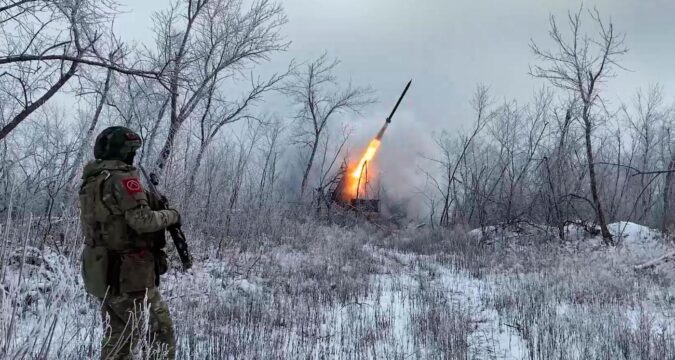
En la madrugada del lunes al martes, un enorme bombardeo ruso que incluyó cientos de drones y un récord de 32 misiles balísticos, dejó al menos 10 heridos. El ataque se produjo a pesar de que Ucrania entendía que el presidente de Rusia, Vladímir Putin, le había dicho a Trump que suspendería temporalmente sus operaciones contra la red eléctrica enemiga..
La población civil ucraniana enfrenta uno de los inviernos más fríos en años, con temperaturas que rondan los 20º Celsius negativos (-4º Fahrenheit).
No había quedado claro por cuánto tiempo prometió Putin cumplir una moratoria en sus ataques a la red eléctrica, y Moscú no ha frenado sus ofensivas aéreas contra otros objetivos en Ucrania, aunque un funcionario del Kremlin dijo la semana pasada que Rusia había acordado detener los ataques a Kiev durante una semana hasta el 1 de febrero.
El presidente de Ucrania, Volodymyr Zelenskyy, indicó el martes por la noche que apenas habían pasado cuatro días y que ya había una nueva oleada de ataques rivales contra la red eléctrica, y acusó a Putin de duplicidad.
Trump afirmó el martes que Putin “cumplió su palabra” sobre la pausa temporal. Por su parte, la secretaria de prensa de la Casa Blanca, Karoline Leavitt, dijo que Trump estaba “desafortunadamente, no sorprendido” por la reanudación de los ataques de Moscú.
El Instituto para el Estudio de la Guerra, un centro de estudios en Washington, señaló que los avances formaban parte de la estrategia de negociación de Moscú.
“Es probable que el Kremlin intente presentar su adhesión a esta moratoria de ataques energéticos a corto plazo como una concesión significativa para tener ventaja en las próximas conversaciones de paz, aunque el Kremlin utilizó estos días para acumular misiles para un paquete de ataques más amplios”, apuntó el martes por la noche.
Las conversaciones en Abu Dabi coinciden también con la caducidad del último pacto de armas nucleares restante entre Rusia y Estados Unidos el jueves. Trump y Putin podrían prorrogar los términos del tratado o renegociar sus condiciones en un esfuerzo por evitar una nueva carrera armamentista nuclear.
Rusia lanzó 105 drones a Ucrania durante la noche, de los cuales las defensas antiaéreas derribaron 88, explicó la Fuerza Aérea de Kiev el miércoles. Se registraron ataques con 17 aviones no tripulados en 14 ubicaciones, así como caída de escombros en cinco sitios, apuntó.
En la región central de Dnipropetrovsk, un ataque ruso en un área residencial mató a una mujer de 68 años y a un hombre de 38, afirmó el jefe del gobierno militar local, Oleksandr Hancha.
Odesa, una ciudad del sur del país, también fue objeto de un ataque a gran escala, de acuerdo con el jefe de la administración militar regional, Oleh Kiper. Alrededor de 20 edificios residenciales sufrieron daños y otras cuatro personas fueron rescatadas de entre los escombros, añadió.
___
Siga la cobertura de AP sobre la guerra en Ucrania en https://apnews.com/hub/russia-ukraine
___
Esta historia fue traducida del inglés por un editor de AP con la ayuda de una herramienta de inteligencia artificial generativa.
Enviados de Rusia y Ucrania se reunirán en Abu Dabi para conversaciones mediadas por EEUU
Por KAMILA HRABCHUK
KIEV, Ucrania (AP) — Está previsto que los enviados de Rusia y Ucrania se reúnan en Abu Dabi el miércoles para otra ronda de conversaciones mediadas por Estados Unidos para poner fin a una guerra que dura ya casi cuatro años.
Se espera que las delegaciones de Moscú y Kiev estén acompañadas en Emiratos Árabes Unidos por el enviado especial de Estados Unidos, Steve Witkoff, y el yerno del presidente Donald Trump, Jared Kushner, quien también asistió a la reunión del mes pasado, según funcionarios.
Ese encuentro en la capital emiratí, dentro del esfuerzo de la Casa Blanca para acabar con el conflicto, lograron algunos avances, pero nada crucial en cuestiones clave, agregaron.
Los últimos contactos coinciden con el malestar en Ucrania por los importantes ataques de las fuerzas del Kremlin contra su sistema energético, habituales cada invierno desde que Rusia lanzó su invasión total de su vecino el 24 de febrero de 2022.
En la madrugada del lunes al martes, un enorme bombardeo ruso que incluyó cientos de drones y un récord de 32 misiles balísticos, dejó al menos 10 heridos. El ataque se produjo a pesar de que Ucrania entendía que el presidente de Rusia, Vladímir Putin, le había dicho a Trump que suspendería temporalmente sus operaciones contra la red eléctrica enemiga..
La población civil ucraniana enfrenta uno de los inviernos más fríos en años, con temperaturas que rondan los 20º Celsius negativos (-4º Fahrenheit).
No había quedado claro por cuánto tiempo prometió Putin cumplir una moratoria en sus ataques a la red eléctrica, y Moscú no ha frenado sus ofensivas aéreas contra otros objetivos en Ucrania, aunque un funcionario del Kremlin dijo la semana pasada que Rusia había acordado detener los ataques a Kiev durante una semana hasta el 1 de febrero.
El presidente de Ucrania, Volodymyr Zelenskyy, indicó el martes por la noche que apenas habían pasado cuatro días y que ya había una nueva oleada de ataques rivales contra la red eléctrica, y acusó a Putin de duplicidad.
Trump afirmó el martes que Putin “cumplió su palabra” sobre la pausa temporal. Por su parte, la secretaria de prensa de la Casa Blanca, Karoline Leavitt, dijo que Trump estaba “desafortunadamente, no sorprendido” por la reanudación de los ataques de Moscú.
El Instituto para el Estudio de la Guerra, un centro de estudios en Washington, señaló que los avances formaban parte de la estrategia de negociación de Moscú.
“Es probable que el Kremlin intente presentar su adhesión a esta moratoria de ataques energéticos a corto plazo como una concesión significativa para tener ventaja en las próximas conversaciones de paz, aunque el Kremlin utilizó estos días para acumular misiles para un paquete de ataques más amplios”, apuntó el martes por la noche.
Las conversaciones en Abu Dabi coinciden también con la caducidad del último pacto de armas nucleares restante entre Rusia y Estados Unidos el jueves. Trump y Putin podrían prorrogar los términos del tratado o renegociar sus condiciones en un esfuerzo por evitar una nueva carrera armamentista nuclear.
Rusia lanzó 105 drones a Ucrania durante la noche, de los cuales las defensas antiaéreas derribaron 88, explicó la Fuerza Aérea de Kiev el miércoles. Se registraron ataques con 17 aviones no tripulados en 14 ubicaciones, así como caída de escombros en cinco sitios, apuntó.
En la región central de Dnipropetrovsk, un ataque ruso en un área residencial mató a una mujer de 68 años y a un hombre de 38, afirmó el jefe del gobierno militar local, Oleksandr Hancha.
Odesa, una ciudad del sur del país, también fue objeto de un ataque a gran escala, de acuerdo con el jefe de la administración militar regional, Oleh Kiper. Alrededor de 20 edificios residenciales sufrieron daños y otras cuatro personas fueron rescatadas de entre los escombros, añadió.
___
Siga la cobertura de AP sobre la guerra en Ucrania en https://apnews.com/hub/russia-ukraine
___
Esta historia fue traducida del inglés por un editor de AP con la ayuda de una herramienta de inteligencia artificial generativa.

The Two Levels Of EU-Sanctions Illegality
The Two Levels Of EU-Sanctions Illegality
Submitted by Pascal Lottaz
Pascal’s Note: A previous guest on my YouTube Channel, Luis Roberto Zamora Bolaños—the international lawyer who, back in the 2000s, forced his native Costa Rica to withdraw from George W. Bush’s Coalition of the Willing—sent me a short assessment of the legality of EU sanctions. He argues that the Eurocrats are, in fact, grossly overstepping their competencies under international law. Not only are the sanctions in breach of the law between nations, but they are also a heavy infringement on the Human Rights of the targeted people. Here is his verdict.
Unilateral Sanctions against States are Illegal.
Can states do whatever they want within their own borders and jurisdictions? On the one hand, under the Lotus Principle, states (and more generally, subjects of international law) are indeed allowed to act freely as long as they don’t contravene other rules of international law, customary rules, or peremptory norms. Nonetheless, the freedom of action of a subject of international law (IL) is limited by the rights of other States, most notably the principle of sovereignty.
While unilateral acts like sanctions are not explicitly codified in IL, that doesn’t mean they are unrecognized or exempt from scrutiny. The International Court of Justice (ICJ) has dealt with them in several cases, most notably the Nuclear Tests case (also in the UK-NOR Fisheries Case). Moreover, in 2006, the United Nations International Law Commission (ILC) issued its “Guiding Principles applicable to unilateral declarations of States capable of creating legal obligations,” which should be fully applicable to other subjects of international law. Principle 9 establishes that:
No obligation may result for other States from the unilateral declaration of a State. However, the other State or States concerned may incur obligations in relation to such a unilateral declaration to the extent that they clearly accepted such a declaration.
In its commentaries about this principle, the ILC indicated that: “It is well established in international law that obligations cannot be imposed by a State upon another State without its consent.”
The same idea applies to sanctions, which is precisely the reason State consent in the form of jurisdiction acceptance is needed to be subject to a ruling by the ICJ. The UN Charter is less clear about the limits of the United Nations Security Council (UNSC) to impose sanctions. However, it has been widely accepted that the Council has that capacity. The European Union, on the other hand, as a normal subject of international law, shouldn’t have the capacity to create obligations on other subjects of international law.
The issue is further complicated if the sanctions are imposed following a proposal from a member State. Unless the proposing State abstains from voting, the principle of impartiality would be grossly violated.
Additionally, it can be said that the EU, by imposing sanctions against non-member States, would be confiscating functions reserved for international adjudicatory bodies, such as the ICJ or the Permanent Court of Arbitration. It would be highly contradictory, even immoral, if the EU justified its action by pointing to the lack of jurisdiction acceptance by the sanctioned non-member States, since several EU members have not accepted compulsory universal jurisdiction before the ICJ.
Unilateral Sanctions against Individuals are Contrary to International Law
A second level is the human rights question of the people targeted by sanctions. Article 6 of the European Convention for the Protection of Human Rights and Fundamental Freedoms establishes that:
1. In the determination of his civil rights and obligations or of any criminal charge against him, everyone is entitled to a fair and public hearing within a reasonable time by an independent and impartial tribunal established by law.
Although it has been recognized that administrative bodies can impose certain types of sanctions, the right to be heard and to exercise a defense is absolute. No one can be subject to a sanction without an opportunity to exercise a defense or challenge the sanction—before the measures take effect—which doesn’t happen with EU Council sanctions.
Moreover, Article 7 of the European Convention established the principle of nulla pena sine lege previa, meaning that the conduct and its sanction must be clearly established in a law before its imposition. The EU doesn’t have a “criminal code” or anything like that.
Furthermore, EU States (or any State) can create a subject of international law to avoid obligations that they would otherwise bear. This would be fraud on law.
To illustrate with a case, EU member states cannot authorize the EU Council to impose the death penalty, even when the EU itself is not a party to the EU Human Rights regime.
Substantively, depending on the content of the sanctions, they could violate the freedoms of thought and conscience, the right to private property, privacy, movement, and family. It could further be claimed that the conditions imposed by certain sanctions are equivalent to torture.
There is a fundamental distinction to highlight here: between rights and freedoms. Unlike rights, which require positive action by the States for their fulfillment, freedoms demand negative action. States should refrain from intervening in the enjoyment of freedoms unless a lawfully established excess has been committed. Thought and expression are freedoms, not rights, meaning that States (and the EU) should minimize their intervention and limitation, especially sine lege previa.
I think that the issue can be tackled from several fronts. Internationally, in addition to EU internal mechanisms, complaints should be submitted to the High Commissioner on Freedom of Expression and the Committee against Torture. I think this could be a particularly interesting scenario.
Tyler Durden
Wed, 02/04/2026 – 06:30
https://www.zerohedge.com/political/two-levels-eu-sanctions-illegality

Ciudadanos de la Unión Europea piden un liderazgo más unido y audaz, según un sondeo
Por SAM McNEIL
BRUSELAS (AP) — Ciudadanos de toda la Unión Europea desean un liderazgo más unificado, fuerte y ambicioso para el bloque de 27 naciones mientras enfrenta amenazas militares, presiones económicas e inestabilidad climática, según una encuesta oficial de la UE.
La encuesta del Eurobarómetro se realizó antes de que el presidente de Estados Unidos, Donald Trump, ordenara una operación militar que capturó al expresidente venezolano y remeciera a las naciones europeas al amenazar con apoderarse de Groenlandia, un territorio semiautónomo de Dinamarca. No se preguntó específicamente sobre Washington, la OTAN o China.
A más de 2.600 ciudadanos de la UE se les hicieron preguntas, principalmente en reuniones cara a cara en noviembre. Apoyaron abrumadoramente una UE más robusta: el 69% dijo que quería un papel de seguridad ampliado en crisis globales, el 87% deseaba una Bruselas más agresiva diplomáticamente en temas como la paz y el cambio climático, y el 90% pidió un bloque más unificado para abordar cuestiones clave. El margen de error fue de dos puntos porcentuales.
La encuesta encontró que la mayoría de los ciudadanos de la UE están “muy preocupados” por los conflictos cerca del bloque, los desastres naturales alimentados por el cambio climático y la guerra cibernética.
Los resultados se alinean en gran medida con los objetivos y ambiciones declarados de la presidenta de la Comisión Europea, Ursula von der Leyen, quien ha sido firme en comercio y defensa y ha pedido solidificar el poder de la UE en Bruselas. Ha firmado acuerdos comerciales en todo el mundo tras las amenazas arancelarias de Trump y las restricciones de China a las exportaciones de minerales críticos.
Los resultados de la encuesta sugirieron que los encuestados creen que los intentos de Rusia, Estados Unidos y la extrema derecha de dividir a la UE no han funcionado hasta ahora.
Los ciudadanos de la UE estaban cada vez más enfocados en la defensa, que surgió como la principal prioridad en 18 de las 27 naciones de la UE, según la encuesta.
Las preocupaciones identificadas en la encuesta incluyeron ataques híbridos rusos, como incursiones de drones en aeropuertos europeos, campañas de desinformación, el uso de la IA, la polarización social, la injerencia extranjera en elecciones y la dependencia de la UE de las importaciones para su industria de defensa.
El pesimismo sobre la situación de los asuntos mundiales era común entre los encuestados, quienes eran más optimistas sobre la UE como bloque que sobre sus propias naciones y su situación personal.
“El contraste entre la confianza personal y la incertidumbre más amplia tiene importantes implicaciones, moldeando las prioridades de los ciudadanos, las actitudes hacia la gobernanza y las expectativas de cooperación a nivel nacional, europeo y global”, según la encuesta.
___
Esta historia fue traducida del inglés por un editor de AP con la ayuda de una herramienta de inteligencia artificial generativa.