Category: News
Russia Outraged At Its Ally Armenia For Hosting Zelensky: ‘Whose Side Of History Are You On?’
Russia Outraged At Its Ally Armenia For Hosting Zelensky: ‘Whose Side Of History Are You On?’
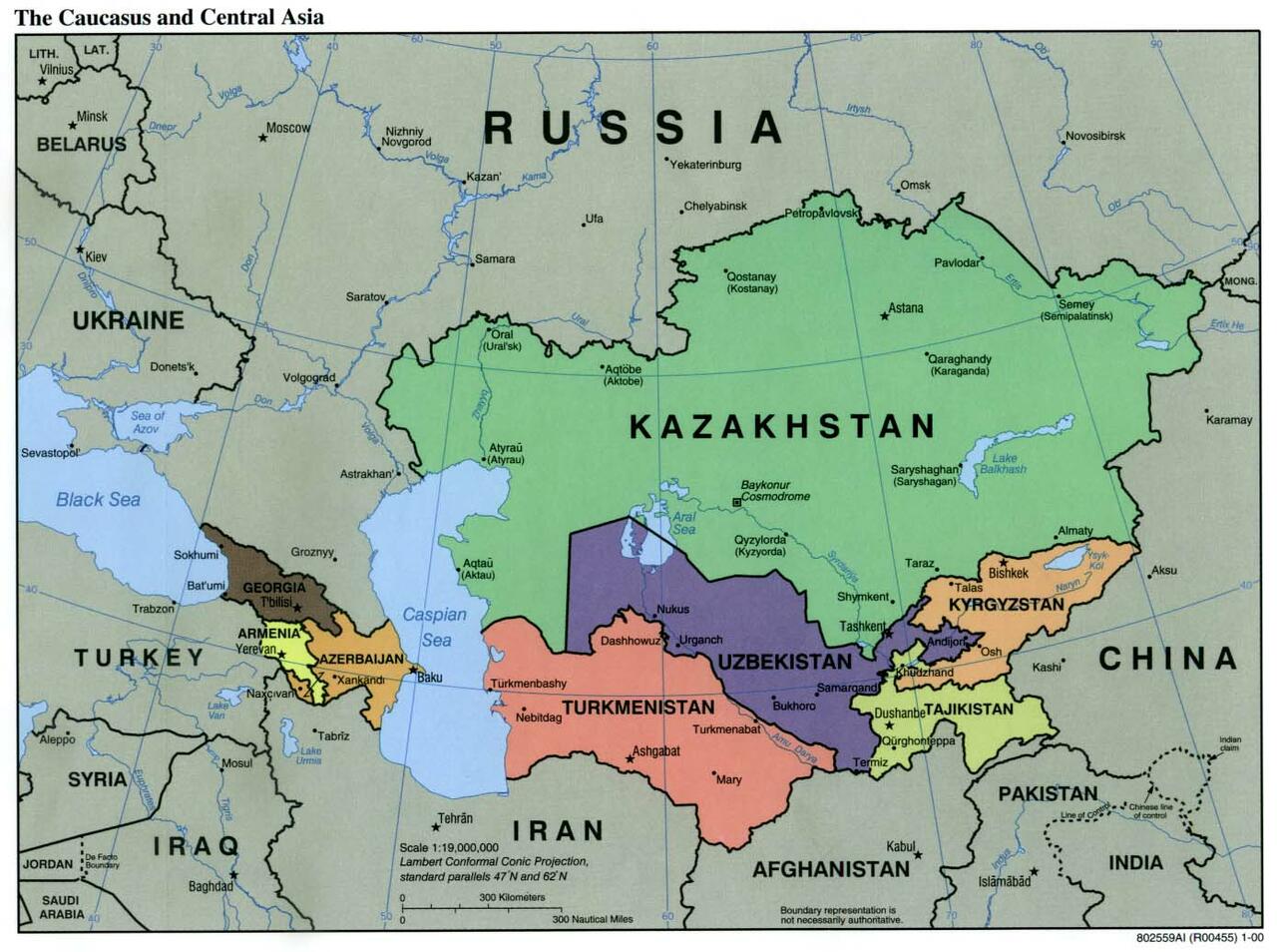
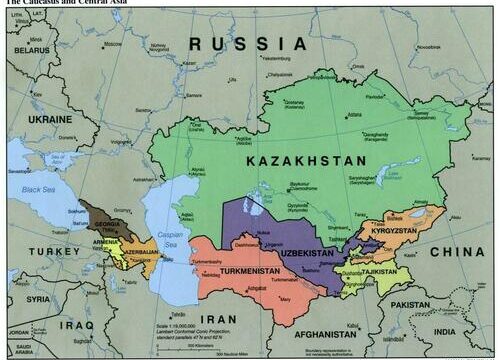
Russia is seething after its Caucasus regional ally Armenia decided to host Ukrainian President Volodymyr Zelensky for a European summit earlier this week.
Moscow is further warning against Yerevan pursuing closer relations with the European Union as well. The Kremlin slammed Zelensky being hosted there, right in Russia’s own backward, as “incomprehensible”.
Source: Perry-Castañeda Library
“Russian society, with deep indignation and bewilderment, not only saw but remembered that Armenia, which we are used to considering a friendly, brotherly country, served as a platform. For whom? For a terrorist,” Foreign Ministry spokeswoman Maria Zakharova said Thursday.
“The current, illegitimate Kyiv regime has been issuing threats to strike Moscow during the annual parade on May 9, a day sacred to our peoples… And no one in Armenia’s current leadership rebuked Zelensky. So whose side of history are you on?” she posed.
“Such a course by the Armenian authorities will sooner or later lead to Yerevan’s irreversible involvement in Brussels’ anti-Russian line, with all the ensuing political and economic consequences for Armenia,” she said.
However, Armenian Prime Minister Nikol Pashinyan has responded to the pressure, stating: “Back in 2022-2023 I already stated that, on the issue of Ukraine, we are not an ally of Russia.”
He is also reportedly refusing to attend Moscow’s Victory Day parade on Saturday, saying he needs to stay in his country in order to prepare for parliamentary elections scheduled for June 7.
Armenia has long been a key member of the regional Russian-led bloc, the Collective Security Treaty Organization (CSTO). However, Armenia froze its participation since 2024, outraged over Russia’s failure to protect ethnic Armenians during Azerbaijan’s 2023 takeover of Nagorno-Karabakh.
Russia since played a ‘peacekeeping’ role with some limited troop deployments, however, Armenian Christians had already been booted from the ancient enclave.
Russian MFA tells Armenian ambassador: UNACCEPTABLE to provide platform for Zelensky to voice TERRORIST threats against Russia
VIDEO: Zelensky meeting Armenia’s Pashinyan in Yerevan on Monday pic.twitter.com/AfyL0J8bqO
— RT (@RT_com) May 7, 2026
So relations have been fraying, to say the least. PM Pashinyan made clear Thursday: “We have sent humanitarian aid to Ukraine, and I have said that we are not allies of Russia on the issue of Ukraine.”
Tyler Durden
Fri, 05/08/2026 – 02:45

The EU Is Pushing “Driver-Monitoring Cameras” – Here’s Why…
The EU Is Pushing “Driver-Monitoring Cameras” – Here’s Why…
Authored by Kit Knightly via Off-Guardian.org,
From July of this year, every vehicle registered in the European Union will be required to have driver-monitoring cameras in place. That’s not every new car manufactured, but every car registered.
The “Advanced Driver Distraction Warning” (ADDW) cameras are designed to monitor driver behaviour for signs of potential distraction, and then set off a warning if those signs are detected.
It was first announced in 2024 as part of the EU’s “Vision Zero” plan to eliminate car-related deaths by 2050.
But it’s not really about that.
It’s never about what they say it’s about.
Here’s where this goes…
Firstly, kiss successful insurance claims goodbye.
Any accident will be blamed on “sub-optimal driver performance”, and that time you checked your phone while stopped at a light, or your hands moved briefly from the 10-and-2 or your eyeline wasn’t correctly picked up by the mirror sensor, will be used to blame your fender-bender on you.
This will create a change in accident reporting statistics, spiking “driver error” as the cause for anything and everything that goes wrong on the road.
This, in turn, will kick off a big “people drive dangerously” propaganda push.
Headlines like “ADDW data harvesting has shown up 80% of us might be driving more recklessly than we think”, or “most veteran drivers slip in to bad habits, reports show” will appear.
Then comes the new legislation to act on this totally fabricated problem.
What is it? It’s re-certification.
That’s not speculation; it already happened. Under new EU rules, passed just a few months ago, every driver has to be re-certified and issued a new driver’s license after 15 years. It would be the smallest of tweaks to add “or after Y number of distraction warnings are recorded” to that legislation.
The new driver’s licenses will be digital, with biometrics included. It’s possible new cars will be undrivable without a scan of your biometric license.
Your car’s data will be uploaded to a database, of course. That’s going to happen.
…in fact, it already is.
It’s not at all far-fetched to imagine your driver monitoring data getting scanned for errors by an AI, and any detected errors putting points on your license. If you go over a certain number of points, your ability to drive is taken away…pending recertification.
You can appeal, and drive while the appeal takes place. But the appeal fee will be greater than the recertification fee, and if you lose, you have to pay extra legal costs, and you’re subject to an extended driving ban.
This will be covered in the press as a universally Good Thing.
Headlines will celebrate the (almost entirely fictional) decrease in traffic fatalities, whilst baselessly claiming that the smaller number of private vehicles on the road has “improved pollution levels in the inner cities”.
An opinion piece from an anonymous “former driver” will appear in the Guardian, “I lost my driver’s license, and it’s the best thing that ever happened to me”.
It will talk up how much money they’re saving on petrol and road tax, and how much fitter they get walking and cycling everywhere and how they know their neighbours so well now.
Not forgetting all sorts of cozy anecdotes about the charming characters you meet and life-affirming tableaux you witness using public transport.
Meanwhile, American “journalists” will wax poetic about the EU’s “forward-thinking system”, and the UK press and punditry will talk of “lagging behind the EU”, and blame every road accident on Brexit.
Some academics will publish a paper finding that “private car ownership has decreased under EU driver monitoring regulations”, and this “unintended upside” will be widely applauded.
Cue Buzzfeed: “New license rules have taken cars off the road, and it’s a good thing.”
And Vox: “The EU’s driver’s license law has given us a glimpse of what a car-less future could look like, and it’s beautiful”.
While all this is going on, there will be persistent white noise on the safety of “robot drivers” vs human drivers, talking up automatic driving software in Chinese electric cars and so on.
Public transport will be increasingly automated too – whether really automated, or just remotely driven doesn’t matter. The point will be to remove images of people driving from the public sphere.
The important part is you don’t get to decide where you’re going or how you’re getting there.
The end goal will be to inculcate a generally anti-car atmosphere, where even knowing how to drive will be considered somewhat old-fashioned.
Middle-class parents will boast to social media echo chambers that “I never wanted my Jacinda to learn!”, and receive bot-fueled applause as a reward. Implausible self-congratulatory anecdotes detailing how “My eight-year-old just told me he doesn’t want to drive because it’s bad for the planet! Children are so wise!” will go viral.
Because the easiest way to trap people is to make freedom uncool.
That might seem like a lot of speculation based on a little information, and in some ways it is, but pattern recognition is important. It’s much easier to put out a fire that hasn’t started yet, and we know they want to burn it all down.
We know they want to end private vehicle ownership; they have repeatedly said so.
Well, this is how they do that. A little at a time, creating atmospheres and environments. Seemingly arbitrary rules and regulations with “unforeseen consequences”. That’s how they work now, they come at us sideways with slow-developing long-cons, because they can’t afford to work in straight lines, not since Covid.
Stuff like this might seem a small – a throwaway issue vs war or the price of oil – but the powers-that-shouldn’t-be have an eye on the far horizon when they take small steps, and we should pay attention to where they want to take us.
Tyler Durden
Fri, 05/08/2026 – 02:00
https://www.zerohedge.com/geopolitical/eu-pushing-driver-monitoring-cameras-heres-why
Farage’s Reform UK Storms To Historic Gains In Local Elections As Labour Collapses
Farage’s Reform UK Storms To Historic Gains In Local Elections As Labour Collapses
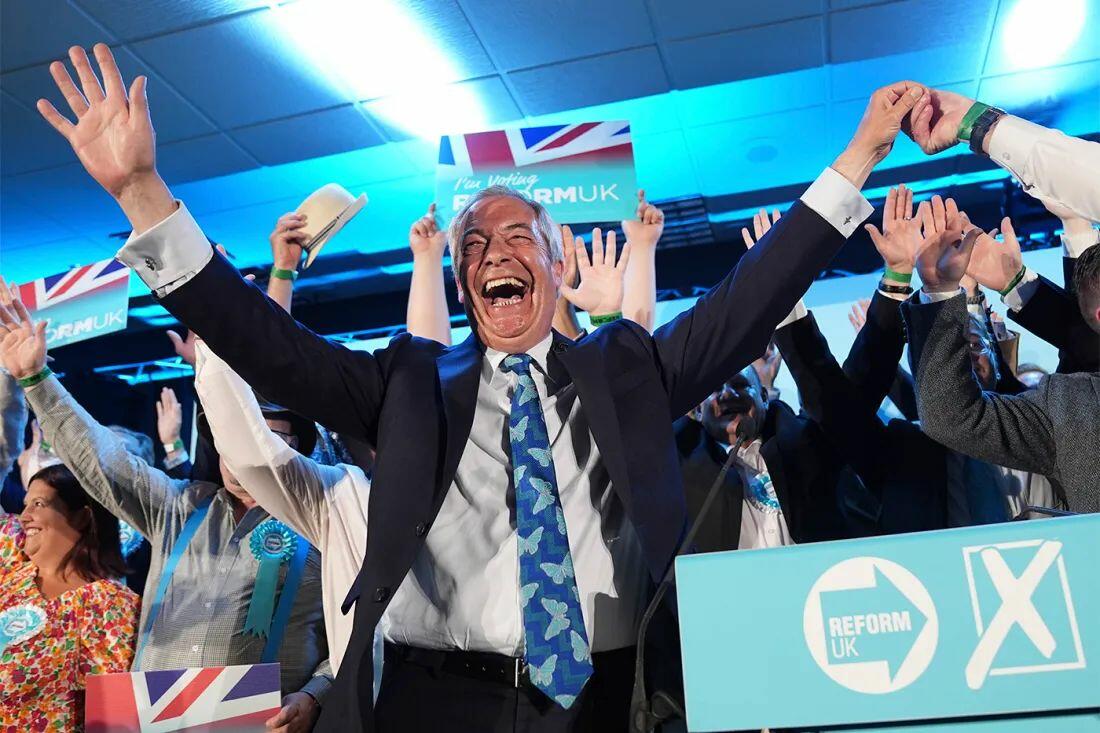
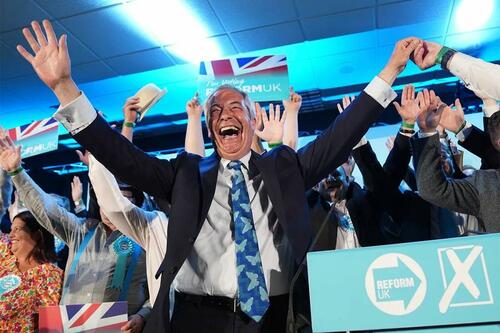
Reform UK is on track for historic gains in the 2026 UK local elections – seizing hundreds of seats in the early counts while Labour and the Conservatives suffer heavy defeats across England.
With results from 39 of 136 councils declared overnight (roughly 28% of the vote counted), Reform UK has already gained over 300 seats – a remarkable surge for a party that had almost no local presence just a few years ago.
Now more than 300 seats won for Reform UK.
Absolutely brilliant. 🤩🔥
— Dr David Bull (@drdavidbull) May 8, 2026
Labour has lost 220 seats, the Conservatives 107, while the Liberal Democrats gained 35 and the Greens 22.
Will Reform UK win the most council seat elections in the 2026 United Kingdom local elections?
Yes 99% · No 1%
View full market & trade on Polymarket
Labour on the Brink in Traditional Strongholds
The scale of Labour’s collapse is stark. In areas where the party was defending seats, it has retained only 23% so far. One senior Conservative commentator noted on X that Labour is “currently losing 84% of the seats they are defending.”
Labour has already lost control of at least five councils, including long-held northern strongholds. Tameside fell after 47 years of Labour rule. Heavy losses were also recorded in Halton, Hartlepool, Redditch and Tamworth, with Reform UK making major inroads in former Labour heartlands across the North and Midlands.
Birmingham on the Brink of a Reform Takeover?
Nowhere is the drama more intense than in Birmingham, where all 101 council seats are up for election. Pre-poll surveys had Reform UK as the largest party or very close to it, with some projections putting them on 47 seats – just short of an outright majority.
A widely shared post on X claimed Reform UK is “tipped to take control of Birmingham City Council in what could become one of the biggest political upsets in modern British politics.” Local issues including a prolonged bin strike and council finances have dominated the campaign. Results from Britain’s second city are expected later today.
If these projections are even close to accurate, today will go down as a historic moment in modern British politics.
Reform UK potentially gaining nearly 1,600 council seats would represent one of the most dramatic political shifts in recent local election history.
Labour and… https://t.co/P94MVzMTrP pic.twitter.com/tA8bAVkUUQ
— Ben Graham (@BenGrahamUK) May 7, 2026
Across the declared councils, Reform UK is winning approximately 48% of the seats contested so far. Many authorities are heading for no overall control, creating a fragmented political map.
The Liberal Democrats enjoyed a standout result in Richmond upon Thames, taking every seat. The Greens also made solid gains.
In Scotland, counting for the Scottish Parliament election begins this morning, with first results expected around lunchtime. Polls had suggested the SNP would fall short of a majority while Reform UK was on course for a significant breakthrough. Wales is also counting today.
Political Earthquake for Starmer
These are the first major elections since Labour’s 2024 landslide victory and represent a serious test for Prime Minister Keir Starmer. Reform UK leader Nigel Farage has hailed the results as evidence of a “historic change in British politics.”
Conservative leader Kemi Badenoch faces questions about her party’s ability to stem the flow of votes to Reform on the right.
This is a developing story. More councils – including several major metropolitan boroughs – will declare throughout Friday, with the full national picture expected by Saturday.
The last word goes to @higgyboson
CV.
Completely ruined a major 126 year old political party in less than 2 years.
Became the most hated UK Prime Minister in history.
Unilaterally gave away billions of £’s of taxpayers money with no accountability required from the recipients.
Wrecked the economy.
Failed to control mass immigration, both legal and illegal.
Failed to address the problem of muslim rape gangs.
Increased welfare payments to a point where benefits now cost more than the entire income tax take.
Allowed weekly pro-Palestinian hate marches on our streets.
Consistently referred to people with concerns about the proliferation of migrant violence as “Far Right”.
Promoted one of his friends to high office despite knowing he was a buddy of one of the most prolific paedophiles on the planet.
Consistently worked to reverse the result of the biggest democratic vote in British history by stealth.
Placed tax dodgers, fraudsters and CV fantasists in Ministerial posts.
Invited a known islamist terrorist to No.10 while simultaneously banning foreign commentators from the UK for merely reporting on the border fiasco.
Took two weeks to find a Royal Navy ship that actually worked.
Introduced legislation that will destroy the private rental market and create hundreds of thousands of homeless families.
Promised to build 1.5 million homes in five years despite everyone telling him it would be impossible.
Failed to help motorists and hauliers after the rise in the price of fuel caused by the war in Iran.
Continues to allow Ed Milliband to wreck the UK’s energy industry with his insane Net Zero policies.
Raised the minimum wage and employers National Insurance contributions leading to thousands of job losses and businesses folding.
Introduced VAT to private school fees leading to many excellent seats of learning closing their doors.
Consistently refused to answer questions during the session in the parliamentary week set aside for this specific purpose.
Consistently failed to accept responsibility for any wrong doing, preferring to sack others instead.
Alienated “working people” while claiming to be on their side.
And the lies. The constant lies.
Failure. Failure. And more Failure.
Time to go.
Tyler Durden
Fri, 05/08/2026 – 01:40
BlackRock Private Credit Fund Cuts Asset Values By 5%, As Golub Gates After 8.5% Redemptions
BlackRock Private Credit Fund Cuts Asset Values By 5%, As Golub Gates After 8.5% Redemptions
Just another day in private credit paradise… er, hell.
One day after Gundlach repeated his warning that the private credit crisis will end in tears for bagholders, Blackrock cut the value of its publicly-traded private credit fund by about 5%, as it – like most of its peers – struggled under the weight of troubled loans, markdowns and lower returns.
BlackRock TCP Capital Corp., a publicly traded middle-market lending fund, said markdowns totaled $35 million in the quarter ended March 31, according to a statement on Thursday. Amusingly, and in hopes of redirecting attention, the $1.5 billion fund highlighted “improving credit quality,” and said it invested more in senior debt and strengthened its balance sheet. The fund said its dividend, which was cut to 17 cents a share last quarter, would remain flat.
The fund has been a challenge for BlackRock, the world’s largest asset manager with about $14 trillion in assets, which is expanding aggressively into private credit. BlackRock acquired specialist manager HPS Investment Partners last year for about $12 billion, aiming to significantly expand its existing capabilities and legacy funds, including TCPC.
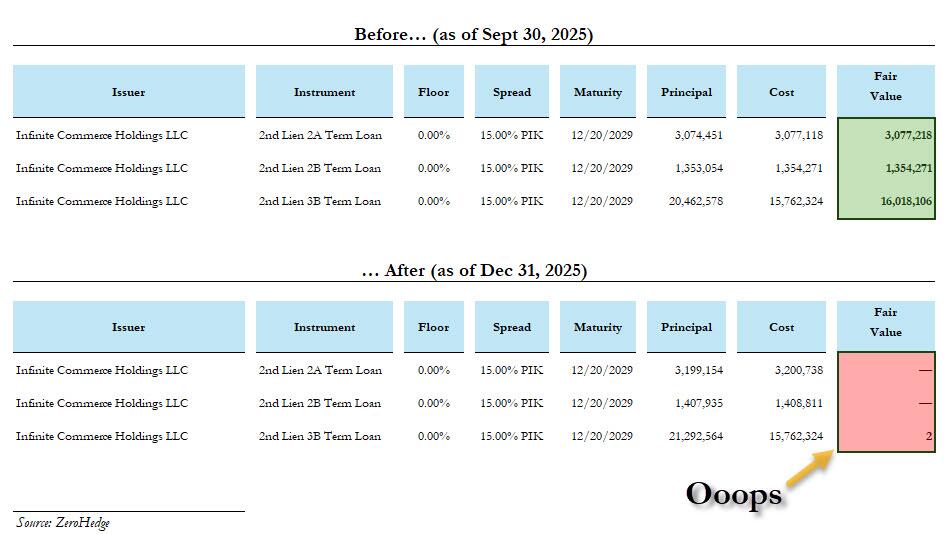
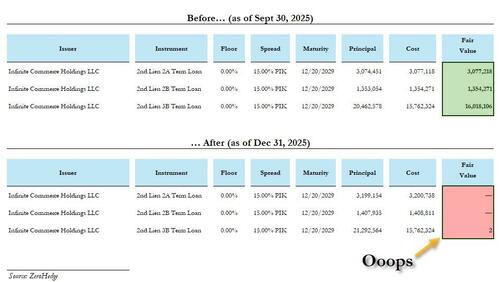
The TCPC fund said in January that it cut the net asset value of its assets by 19%, which sent shares tumbling. The fund has struggled in part due to exposure to e-commerce aggregators – companies that buy and manage Amazon.com Inc. sellers – as well as troubled home improvement company Renovo Home Partners, which filed for bankruptcy. Back in March, we reported that Blackrock slashed the value of one of its private loans from par to 0 in just months, Infinite Commerce Holdings, sparking a selloff in the shares as the market was stunned by how quickly a loan from the world’s most iconic asset manager can go from par to 0 in just days.
“While we have made meaningful progress, we recognize there is more work to do and we remain focused on disciplined execution,” Chief Executive Officer Phil Tseng said on a call with analysts.
Loans on non-accrual status – typically meaning borrowers have missed their debt payments – declined to 7.6% on a cost basis, compared with 9.7% in the prior quarter. That’s because one of its portfolio loans was sold, and two were restructured. Investments in 13 portfolio companies were on non-accrual status.
Tseng said the largest driver of the markdowns was an investment in Job and Talent, a staffing and recruitment company that suffered from weak performance in the quarter. Almost a third of the markdowns came from software-related investments, he said.
Lenders in the $1.8 trillion private credit market have been under scrutiny as advancements in artificial intelligence threaten to upend their bets on software, an industry that makes up a significant portion of lenders’ portfolios.
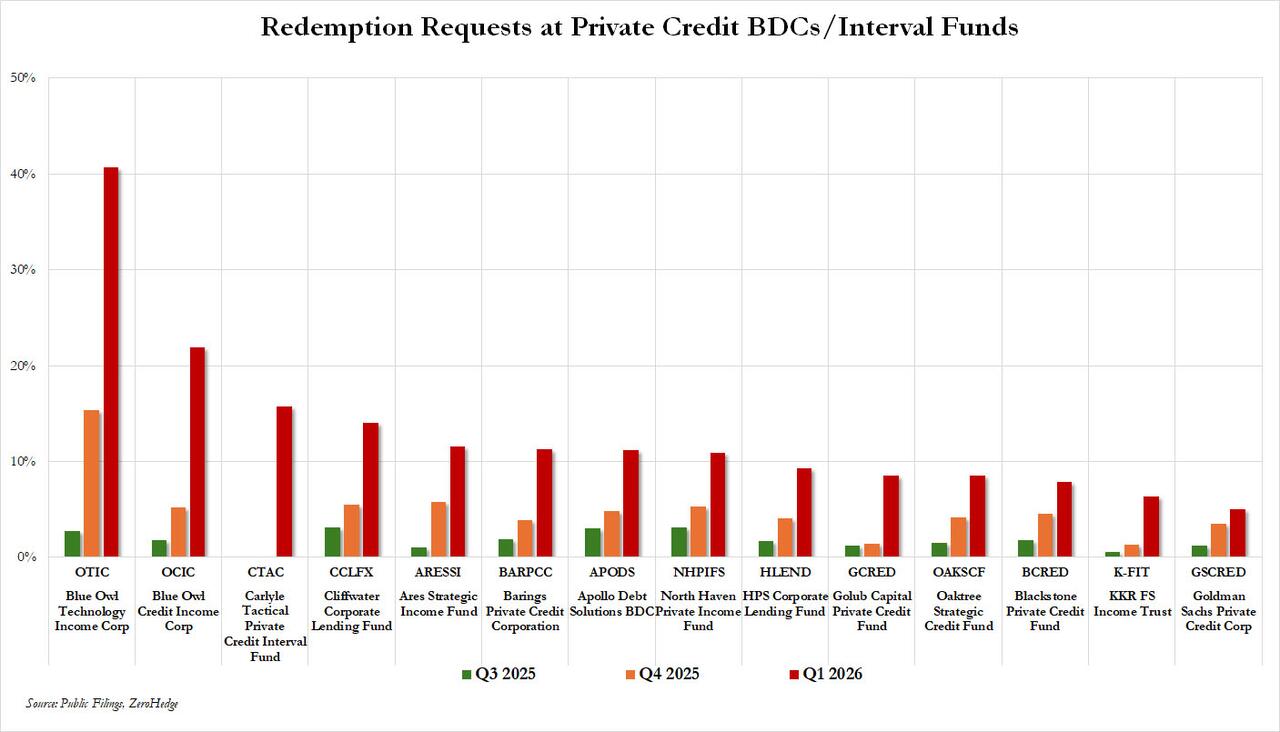
Elsewhere, the last big private credit fund we were waiting to report its redemption gates, did just that: Golub Capital announced it was capping withdrawals from its private credit fund after investors sought to pull 8.5% of shares, the latest instance of a money manager restricting outflows amid a wave of redemption requests.
Golub Capital Private Credit Fund, or GCRED, plans to enforce the quarterly withdrawal limit of 5% of common shares outstanding, according to a letter to shareholders on Thursday. The roughly $9.9 billion fund intends to fulfill repurchase requests for 8,891,200 shares.
The credit manager told investors that the redemption requests “were concentrated in a small subset representing approximately 5% of GCRED’s more than 12,000 shareholders.” Golub also cited roughly 14 million in new share subscriptions this year through the end of April.
GCRED has a liquidity cushion of approximately $4.1 billion and its portfolio consists of nearly $10 billion in total investments at fair value, the firm said. As of the end of the first quarter, less than 0.1% of GCRED’s investment portfolio was on non-accrual status.
None of that mattered in the, and Golub has now joined every single one of its BDC peers in gating its investors. The silver lining, unlike such disasters as the two big Blue Owl BDCs (OTIC and OCIC), which saw investors try to pull 41% and 22% of their capital respectively – and were obviously gated – Golub’s tally was only 8.5%, which in this age where double digit redemptions requests are the normal, is downright respectable.
d
Tyler Durden
Fri, 05/08/2026 – 00:08

Court Strikes Down Trump’s Replacement Tariffs; A Minor, Temporary Setback, With Sec 301 Tariffs Coming
Court Strikes Down Trump’s Replacement Tariffs; A Minor, Temporary Setback, With Sec 301 Tariffs Coming
After the close on Thursday, the Court of International Trade (CIT) ruled to invalidate Trump’s latest set of universal 10% tariff imposed two months ago under Sec. 122. The administration will quickly appeal this decision before it takes effect May 12. If the case follows the same pattern as the challenge to the IEEPA tariffs last year, a higher court might soon stay this ruling and leave the tariffs in place pending a longer review.
As the tariffs are due to expire July 24, even if the Supreme Court (SCOTUS) eventually rules against these tariffs, there is a good chance a full judicial review will take long enough that the tariffs will remain in effect until the administration replaces them with new tariffs under Sec. 301 (unfair trade practices) and Sec. 232 (national security).
As a reminder, Section 122 tariffs were always a stopgap: by statute, they can only be in place for 150 days, so they’ll expire on July 24, 2026. Investigations by the US Trade Representative under Section 301 are widely expected to wrap up before then, clearing the way for permanent replacement tariffs.
That said, if the ruling survives appeal, the government will likely have to refund unlawfully collected duties, adding to the nearly $170 billion already owed as a result of the Feb. 20 decision.
Key Points:
1. The CIT ruling was a split decision, with two Democratic-appointed judges granting summary judgment against the administration’s position and one Republican-appointed judge dissenting, favoring a full review of the case instead. This is in contrast to the CIT’s earlier ruling last year, in which a panel of one Democratic- and two Republican-appointed judges unanimously granted summary judgment against the IEEPA tariffs.
2. The CIT ruling gives the administration 5 days to rescind the tariffs, and requires that importers be paid refunds plus interest. We expect the administration to immediately appeal the ruling to the Court of Appeals for the Federal Circuit (CAFC), as it did following the CIT’s IEEPA ruling. In that instance, the CAFC stayed the CIT ruling within a day, leaving the tariffs in effect, and then took 3 months to rule on the case. That ruling was then appealed to SCOTUS, which took another 6 months to rule. As the Sec. 122 tariffs expire July 24 and cannot be extended without an act of Congress, an eventual SCOTUS ruling against these tariffs looks unlikely to come before expiration. That said, if courts ultimately rule against the use of Sec. 122 to impose these tariffs after they have expired, importers could collect refunds beyond IEEPA refunds they will start to receive in coming days.
3. The Sec. 122 tariffs are worth slightly more than 4% on the effective tariff rate (this is lower than the 10% headline rate due to exemptions for products and most imports from Canada and Mexico), and account for slightly less than half of the new tariffs since the start of 2025 that remain in effect. They are likely generating customs duty collections of around $11-12bn per month (not annualized), or around $55-60bn total if they remain in effect for the full 5 months.
4. Regardless of how courts ultimately decide this case, the ruling should have no bearing on the administration’s longer-term ability to impose tariffs under Sec. 232 (national security) or Sec. 301 (unfair trade practices), which the White House has signaled will replace the Sec. 122 tariffs. The authority to impose tariffs under those laws is well-tested, unlike the IEEPA and Sec. 122 tariffs, and customs duties have been collected continuously under both authorities since the first Trump administration.
5. The US Trade Representative is currently conducting investigations under the Section 301 trade enforcement authority. These investigations are widely seen as setting the stage for permanent replacement levies that will largely replicate the tariff rates in place before the Feb. 20 court ruling.
6. The court limited relief to three plaintiffs representing a small fraction of total US imports. Other importers may now bring suit, but we expect the administration to quickly appeal and seek a stay of the ruling. The split decision invalidating the tariffs is relatively narrow.
If the ruling stands, relief is limited to the importers who brought suit — two private firms and Washington State. The court dismissed claims from other non-importer parties for lack of standing. Additional importers could — and likely will — seek relief with their own lawsuits.
The court also sidestepped the broader question of whether the US currently faces a “fundamental international payments problem”, the authorized purpose of Section 122. Instead, it found the administration’s stated justification — trade and current account deficits — was not an appropriate stand-in.
Tyler Durden
Thu, 05/07/2026 – 23:31
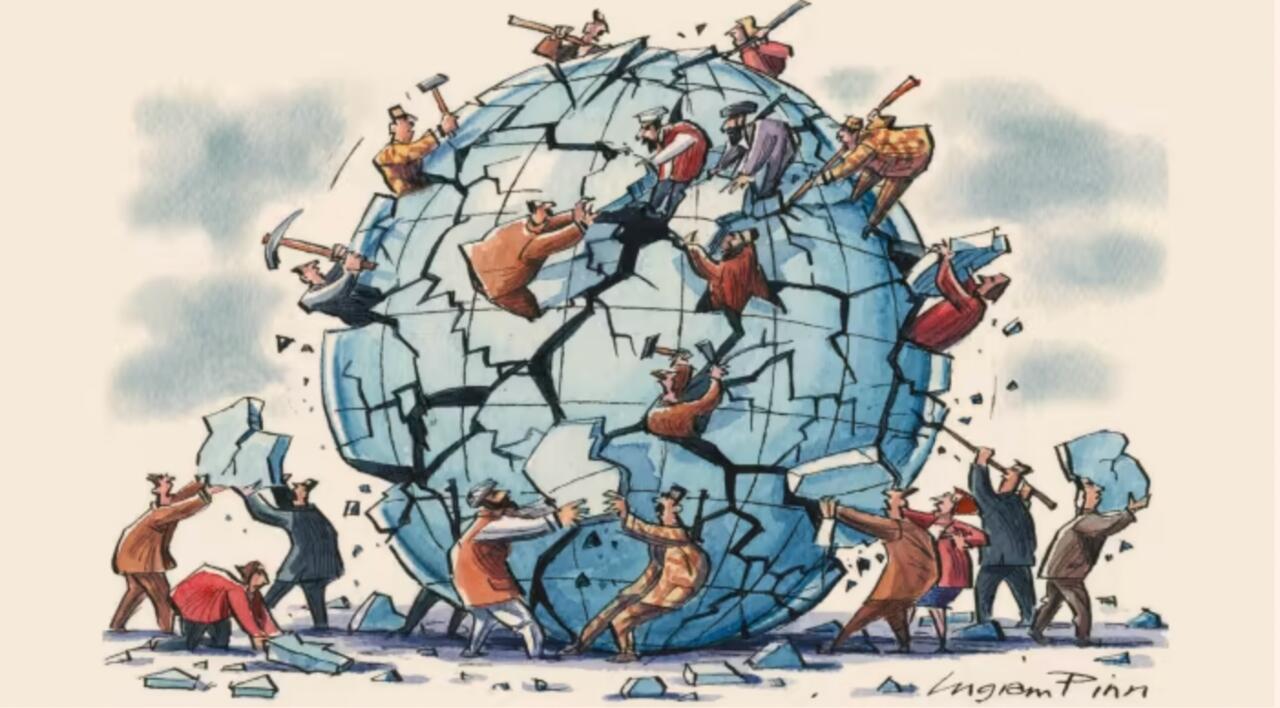
When Global Order Begins To Fracture
When Global Order Begins To Fracture
Authored by Milan Adams via Preppgroup blog,
There are moments in history when the world changes with noise — sirens, speeches, falling statues. And then there are moments when it changes so quietly that almost nobody realizes it is happening. We are living through the second kind. No formal announcement marked the transition. No historic summit collapsed on live television. No leader stepped forward to say: the old rules no longer apply.
And yet, somewhere between the war in Ukraine, the tightening strategic alignment between Russia and China, and the silent expiration of the New START in February 2026, the global system that kept great-power rivalry inside predictable boundaries began to dissolve. Not explode. Dissolve.
For decades, the world’s stability did not come from trust. It came from limits. From inspection regimes. From numbers written into treaties. From the strange comfort of knowing exactly how dangerous your adversary was allowed to be. Military planners in Moscow and Washington worked with ceilings. Diplomats worked with verification schedules. Leaders worked with red lines that had legal meaning. Those ceilings are now gone, and most of the public has not noticed because nothing dramatic happened the day they disappeared.
The Strategic Triangle That No Longer Moves
For years, American strategists believed the triangle between Washington, Moscow, and Beijing could be manipulated. If relations with one deteriorated, the other could be courted. It was the logic behind the Cold War opening to China and the repeated attempts to “reset” relations with Moscow. There was a quiet confidence that Russia, culturally tied to Europe and historically wary of China, would never fully lean toward Beijing.
That confidence now looks misplaced.
Today, the United States faces not two separate rivals but two powers whose interests increasingly overlap:
Both view American sanctions as a weapon of political coercion
Both seek to dilute U.S. influence in global institutions
Both advocate a “multipolar” order where Washington’s dominance fades
Both benefit from closer economic and strategic coordination
This is not a formal alliance, which paradoxically makes it more durable. It is not built on ideology or treaty obligations but on a shared reading of the world. Even a future change in leadership after Vladimir Putin may not reverse this direction. Years of sanctions, NATO expansion, and the war in Ukraine have reshaped Russian political psychology. The turn toward China is no longer tactical. It is structural.
The Day the Guardrails Disappeared
On February 5, 2026, New START expired. There was no emergency summit. No dramatic breakdown in negotiations. It simply ended.
For the first time since the early 1970s, there is no binding agreement limiting how many deployed strategic nuclear weapons the U.S. and Russia can field. Together, they hold the overwhelming majority of the world’s nuclear warheads. During the Cold War, even at moments of extreme tension, both sides maintained arms control agreements because they served a critical purpose: they made the enemy measurable. You could count warheads. You could inspect launchers. You could verify data.
Now, you cannot.
Russia suggested informally that both sides observe the old limits for another year to allow time for talks. Washington did not formally accept. No replacement treaty emerged. No urgent negotiations dominated the news cycle. The expiration passed like a date on a calendar, but inside defense ministries, the conversation shifted. Without legal ceilings, planners no longer ask what are we allowed to deploy? but what can we deploy? That is how arms races begin — quietly, through planning assumptions rather than political declarations.
A Pattern of Pressure in Unlikely Places
While most attention remains on Ukraine and nuclear policy, Moscow has been testing American reactions in places that rarely make front pages.
The Western Hemisphere
Near Venezuela, a U.S. Coast Guard seizure of a Russian-flagged tanker suspected of sanctions violations brought American and Russian forces into unusual proximity. Russian naval assets, reportedly including a submarine, were operating nearby. Moscow denounced the move as piracy. The incident did not escalate, but it revealed a willingness to challenge U.S. authority in its own neighborhood through presence and ambiguity rather than confrontation.
The High North
In the Arctic, melting ice is opening the Northern Sea Route into a viable trade corridor between Europe and Asia. Russia controls much of this passage and positions itself as its gatekeeper. China’s interest in what it calls a Polar Silk Road adds another layer of leverage for Moscow without a single shot being fired.
The Middle East
In crises involving Iran, Russia has condemned Western actions but avoided direct military involvement, constrained by the demands of the war in Ukraine. Even so, Moscow continues to present itself diplomatically as an alternative power center to Washington, choosing its moments carefully.
Multipolarity as a Strategic Weapon
In international forums, Moscow and Beijing repeat the same phrase: multipolar world. It sounds abstract and even reasonable, but strategically it signals a shift away from the system in which the United States could enforce rules through economic and institutional power. In a multipolar system, sanctions lose effectiveness, institutions become arenas of gridlock, and regional powers gain more freedom to challenge established norms without immediate consequences.
There is no secret pact binding Russia and China into a military bloc. But patterns are visible. China purchases discounted Russian energy. Russia benefits from China’s refusal to isolate it diplomatically. Joint exercises occur. Messaging aligns in international institutions. This is not conspiracy. It is convergence, and over time, convergence reshapes the balance of power as effectively as formal alliances.
A World Without Clear Edges
For American policymakers, the problem is new and uncomfortable. Deterring one nuclear peer was the central challenge of the Cold War. Deterring two, at the same time, is a strategic puzzle without historical precedent. How do you prepare for simultaneous crises in Europe and the Pacific? How do you distribute forces without weakening credibility in either theater?
The answers are unclear, and that uncertainty is itself destabilizing. What makes this period unsettling is not the presence of immediate crisis but the absence of clear boundaries. No arms control limits. No clean separation between economic and military rivalry. No reliable assumptions about how far competitors are willing to go.
Speak privately with diplomats or analysts, and you hear the same quiet phrase repeated: this feels different. Not louder. Different. The stabilizing mechanisms built over fifty years are eroding faster than new ones can replace them, and the world is drifting into a phase where miscalculation becomes more likely simply because the rules that once structured rivalry no longer exist.
The Geography of Escalation
What makes the current geopolitical shift so difficult to grasp is that its most consequential developments are not unfolding in spectacular acts of confrontation, but through a slow accumulation of pressure points that, taken together, redraw the strategic map of the world. The new contest for power is no longer concentrated in obvious flashpoints alone; it is spreading across trade routes, technological infrastructure, energy corridors, and regions once treated as peripheral to great-power rivalry.
Its defining characteristics are becoming increasingly clear:
Strategic competition is expanding into spaces once considered neutral, from Arctic maritime corridors and orbital infrastructure to undersea cables and semiconductor supply chains that now carry the weight of national security.
Economic interdependence is no longer viewed primarily as stabilizing, but increasingly as vulnerability — something states seek to weaponize, shield against, or strategically reduce.
Military deterrence is becoming more diffuse and unpredictable, shaped not only by nuclear arsenals, but by cyber capabilities, autonomous systems, and the ability to cripple critical infrastructure without firing a conventional shot.
Political fragmentation inside democracies has become an external strategic variable, as rivals increasingly calculate not only military strength, but institutional resilience, public fatigue, and the ability of societies to sustain prolonged competition.
This is what makes the moment historically unusual: the architecture of confrontation is becoming broader than war itself. Power is now projected through disruption, ambiguity, and exhaustion as much as through force, creating a landscape where crises may emerge not as singular explosions, but as overlapping pressures that slowly weaken the coherence of entire systems.
Where Stability Used to Live
For decades, global order depended on mechanisms that reduced uncertainty even when hostility remained intense. What held rivalry in check was not goodwill, but structure — the confidence that opponents understood thresholds, recognized consequences, and operated within a strategic grammar both sides could read. That grammar is now eroding, and with it disappears the predictability that once made dangerous competition manageable.
Several pillars have quietly weakened at once:
Arms-control architecture is fading faster than replacement frameworks can emerge, removing the legal and psychological ceilings that once constrained escalation.
Diplomatic channels remain open, but increasingly hollow, producing language of cooperation while substantive trust continues to deteriorate beneath the surface.
Alliance systems are strengthening militarily while becoming politically more complex, forcing governments to balance deterrence abroad with growing strain at home.
Strategic planning is increasingly dominated by worst-case assumptions, and once governments begin budgeting, deploying, and preparing around pessimistic scenarios, those scenarios begin shaping reality regardless of original intent.
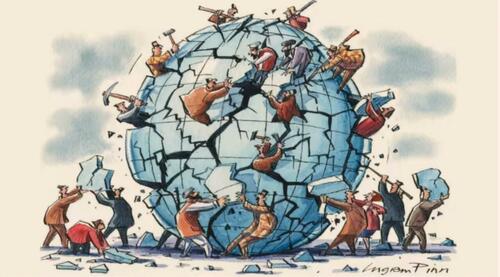
This is how history often changes — not when one pillar falls, but when several begin cracking at once under accumulated weight.
The Century’s Harder Question
The central issue facing the world is no longer whether tension between major powers will define the coming decades; that much is already visible. The deeper question is what kind of competition is now being born, and whether political leadership is capable of understanding its scale before events begin dictating terms on their own.
What increasingly worries strategic analysts is a convergence of destabilizing trends:
Two nuclear peer competitors confronting Washington simultaneously, creating deterrence challenges without modern precedent.
A world economy fragmenting into competing technological and industrial blocs, where efficiency is sacrificed for resilience and security.
Critical infrastructure becoming a battlefield, from ports and power grids to satellite systems and digital finance architecture.
A widening gap between strategic reality and public perception, with governments quietly preparing for long-term confrontation while much of society still assumes the turbulence is temporary.
That disconnect may prove more dangerous than any single military crisis, because nations are often least prepared for transformation when they mistake structural change for passing instability. By the time reality becomes obvious, the balance of power has usually already shifted.
The Illusion of Distance
One of the most persistent misconceptions in periods of strategic transition is the belief that major geopolitical change remains distant until it becomes visible through unmistakable crisis. That assumption is comforting, but history rarely moves according to the emotional timelines societies prefer. By the time structural change becomes obvious to the public, it has usually been unfolding for years beneath the surface — inside defense budgets, industrial policy, intelligence assessments, shipping patterns, alliance planning, and the quiet recalibration of what states believe they may soon be forced to do. What appears sudden is often only the first moment ordinary people notice what governments have already spent years preparing for.
Several developments suggest that this deeper transition is no longer theoretical:
Military-industrial production is being reconsidered as a strategic necessity rather than an economic burden, with governments increasingly prioritizing ammunition stockpiles, shipbuilding capacity, rare-earth access, semiconductor sovereignty, and resilient supply chains that can withstand prolonged confrontation.
Energy has fully returned as an instrument of power, no longer merely a commodity traded on markets but a geopolitical lever capable of rewarding alignment, punishing dependence, and reshaping regional influence through pipelines, shipping routes, and long-term infrastructure partnerships.
Technology is being absorbed into national-security doctrine at unprecedented speed, turning artificial intelligence, quantum computing, satellite networks, cyber offense, and digital infrastructure into strategic assets whose control may define power as decisively as oil fields or naval fleets once did.
Neutral space is shrinking, as regions and states once able to balance relations between competing blocs increasingly face pressure to choose economic, technological, and strategic alignment in a world becoming less tolerant of ambiguity.
The cumulative effect is profound: global competition is no longer being organized around isolated disputes, but around a broader contest over who will shape the operating rules of the twenty-first century. That makes nearly every crisis larger than it first appears, because behind each confrontation sits a wider struggle over influence, leverage, and strategic endurance.
The Pressure That Does Not Break — Until It Does
What makes this era particularly dangerous is that it is not defined by one overwhelming shock, but by the gradual layering of tensions that, individually manageable, collectively create systemic strain. International order does not always fail because of catastrophic singular events; often it weakens because too many pressures build simultaneously until institutions lose the capacity to absorb them. That is the pattern increasingly visible today.
Among the most destabilizing pressures now converging are:
Persistent military confrontation in Europe, where the war in Ukraine has transformed from regional conflict into a long-term strategic contest reshaping NATO posture, Russian doctrine, European defense spending, and the broader military balance on the continent.
Rising strategic friction in the Indo-Pacific, where Taiwan, the South China Sea, maritime chokepoints, and expanding naval competition increasingly place the world’s economic center of gravity inside an active security dilemma.
Intensifying competition over critical resources, including rare earth minerals, industrial metals, advanced chips, and logistical infrastructure that underpin both civilian economies and modern military capability.
Growing vulnerability of interconnected systems, where attacks on communications networks, financial systems, power grids, satellite constellations, or maritime infrastructure could generate cascading disruption without a single formal declaration of war.
This is what gives the current moment its unusual gravity: escalation no longer needs to be deliberate to become real. It can emerge through overlap, accident, misreading, or exhaustion. A cyber disruption during a regional military standoff, an industrial blockade disguised as regulation, a maritime collision in contested waters, a sanctions spiral that unexpectedly fractures global markets — these are no longer improbable scenarios imagined in think-tank exercises. They are increasingly plausible outcomes in a world where strategic friction exists across too many domains at once.
The Cost of Misreading the Moment
Perhaps the greatest strategic danger is not aggression itself, but complacency — the tendency of societies, markets, and political systems to interpret structural instability as temporary turbulence rather than historic transition. The modern world is deeply conditioned to believe that shocks are disruptions to normality, after which normality returns. Yet some periods are not interruptions; they are turning points, moments when the previous equilibrium quietly expires and a harder reality begins taking shape.
The signs of that transition are already visible:
Governments are preparing for resilience rather than efficiency, favoring redundancy, domestic production, and strategic reserves over the economic logic that dominated globalization’s peak decades.
Defense planning horizons are expanding, with states investing not for immediate conflict alone, but for prolonged competition measured in decades rather than election cycles.
Strategic alliances are being reinforced not simply for deterrence, but for endurance, reflecting growing recognition that the defining challenge ahead may be sustained geopolitical pressure rather than singular confrontation.
Public awareness remains significantly behind elite strategic assessment, creating a dangerous disconnect between the scale of transformation underway and the political urgency with which societies respond to it.
History is often shaped not by the crises leaders expect, but by the ones they underestimate because the early warning signs appear too gradual to command attention. That is what makes this moment so consequential. The old order is not collapsing in spectacle, but in slow motion — treaty by treaty, assumption by assumption, safeguard by safeguard — while a more unstable world quietly assembles itself in its place, piece by piece, beneath the comforting appearance of continuity.
Views expressed in this article are opinions of the author and do not necessarily reflect the views of ZeroHedge.
Tyler Durden
Thu, 05/07/2026 – 23:25
https://www.zerohedge.com/geopolitical/when-global-order-begins-fracture

Pastor: U.S. Intel Warned Christian Leaders That Trump’s “Alien Files” Release Could Shatter Beliefs
Pastor: U.S. Intel Warned Christian Leaders That Trump’s “Alien Files” Release Could Shatter Beliefs
Zero-Point energy? Hologram theory? Consciousness is actually remote controlling our bodies via quantum microtubules in our squishy brains? How about all those dead scientists? Whatever reality is, the steady drumbeat of UFO ‘disclosures’ now apparently includes religious leaders, who are being ‘read in’ on some plan for a 2027 disclosure. Maybe project Blue Beam is ready for prime time…
Perry Stone, an influential pastor and author based in Tennessee, claimed that U.S. intelligence officials told Christian leaders to brace their congregations for the federal government’s imminent disclosures regarding extraterrestrial beings, warning that the shocking findings could shake the foundation of their faith.
In a recent video, Stone alleged that the pastors were briefed on unidentified flying objects and so-called “reptilians” in the possession of the government. The claim follows President Trump’s order directing the Pentagon and Secretary of Defense Pete Hegseth to release all information the government possesses on aliens.
“You’re going to have people who are going to say if there are galaxies and there are allegedly other creations in the galaxies, then the whole creation story is a myth, and you’re going to have people that’s going to apostatize and turn from the Christian faith because they have no answer for what they’re about to hear,’ Stone said.
🚨Report: Pastor Perry Stone said a large group of pastors was invited to a secret meeting with individuals from the US government telling them to prepare their churches for UFO disclosure:
“There’s going to be a release concerning aliens. You need to prepare your people.” pic.twitter.com/ctUFpMNc2p
— The Calvin Coolidge Project (@TheCalvinCooli1) May 6, 2026
Stone added that non-believers could be so shaken by the findings that religious leaders will see a flood of people coming to them seeking answers.
“They’re going to freak out and they’re going to come to pastors, ministers, and teachers and say, ‘What is this? Is this really real?”’ he said.
Then there’s this guy:
In a Space today, Alan DiDio (@alandidio) says he attended the UFO disclosure pastor meeting, and the year 2027 was discussed in relation to aliens and UFO disclosure. 😳 pic.twitter.com/BvUbFYFrYY
— Astral🛸 (@The_Astral_) May 5, 2026
Despite Trump’s order to release files on aliens, some of the highest-ranking government officials remain skeptics.
Vice President JD Vance told conservative podcaster Benny Johnson in March that the most likely explanation for aliens is that they are actually “demons.”
“When I hear about extra natural phenomenon, that’s where I go: The Christian understanding that there’s a lot of good out there, but there’s also evil out there,” Vance said. “I think that one of the devil’s great is to convince people that he never existed.”
JD Vance Tells Me That UFOs are DEMONS:
“I Think They’re DEMONS” 🛸
“I don’t think they’re aliens. There are weird things out there that are very difficult to explain.”
The Vice President tells me he’s going to AREA 51 with his Top Secret Security Clearance to FIND OUT.
“I… pic.twitter.com/mDtrafkxB9
— Benny Johnson (@bennyjohnson) March 27, 2026
Still, some in Congress appear to disagree Vance’s dismissed stance towards UFOs, including Rep. Tim Burchet (R-TN)
“I’ve been briefed by just about every alphabet agency there is,” Burchet told Newsmax. And, I’ll just say this, if they were to release the things that I’ve seen, you’d be up at night, worrying about, thinking about this stuff.”
“This country would’ve come unglued, I think, if they [the public] would’ve heard all that I heard. They would demand answers,” the lawmaker added.
And just in case all of this is true – here’s stoned Alex Jones going off…
Tyler Durden
Thu, 05/07/2026 – 23:00

Saudi Arabia’s $1Tn Wealth Fund Opens Shanghai Office As China Ties Deepen
Saudi Arabia’s $1Tn Wealth Fund Opens Shanghai Office As China Ties Deepen
Saudi Arabia’s Public Investment Fund (PIF) opened a second office in mainland China earlier this year, establishing a Shanghai branch to expand dealmaking and attract more Chinese investment into the kingdom, Bloomberg reports.
The office was registered last year, falls under PIF’s Beijing branch, and is led by Lily Cong, a former chief representative of Fidelity International in China’s capital.
The Shanghai outpost was reportedly created to strengthen the $1 trillion fund’s ability to pursue outbound deals in China, while officials are also seeking to bring more Chinese companies into Saudi Arabia.
This move strengthens Riyadh’s investment relationship with Beijing, while the US continues to be a major market for the kingdom. The Shanghai office expands PIF’s global presence, which already features offices in New York, London, Hong Kong, and Paris.
Saudi Arabia and China already maintain strategic and financial links across sectors, including energy and finance, while other Gulf wealth funds are also looking to expand their exposure to China.
Abu Dhabi is also considering placing Chinese assets held by two of its wealth funds into a new entity, according to earlier reports, a move that could pave the way for a broader shift in its investment strategy.
The Gulf investment push comes amid major shifts in West Asian markets following the US war on Iran, triggering regional disruptions that have put pressure on Gulf economies and accelerated moves away from dollar-dominated energy trade.
Saudi Arabia, Qatar, and other Gulf states have deepened yuan-based financial links with China, while disruptions in the Strait of Hormuz have further exposed the fragility of the “petrodollar order”.
According to a report by Fortune, Riyadh did not formally renew its 2024 commitment to price oil exclusively in US dollars, a year after signing a $7 billion currency swap agreement with Beijing.
The Saudi central bank is also a key participant in the mBridge digital payment platform, which enables direct currency exchanges via blockchain technology.
Economists cited by Fortune say the shift reflects China’s growing weight in Saudi trade, as Beijing has displaced the US as the kingdom’s largest oil customer.
“The economic gravity pointed toward yuan while the currency arrangement pointed toward dollars,” EBC Financial Group analyst Michael Harris wrote.
Saudi Arabia still conducts most deals in US dollars, but expanding financial ties with Beijing signal a broader effort to diversify trade and investment channels as China positions the yuan as a possible alternative in global energy markets.
Tyler Durden
Thu, 05/07/2026 – 22:35
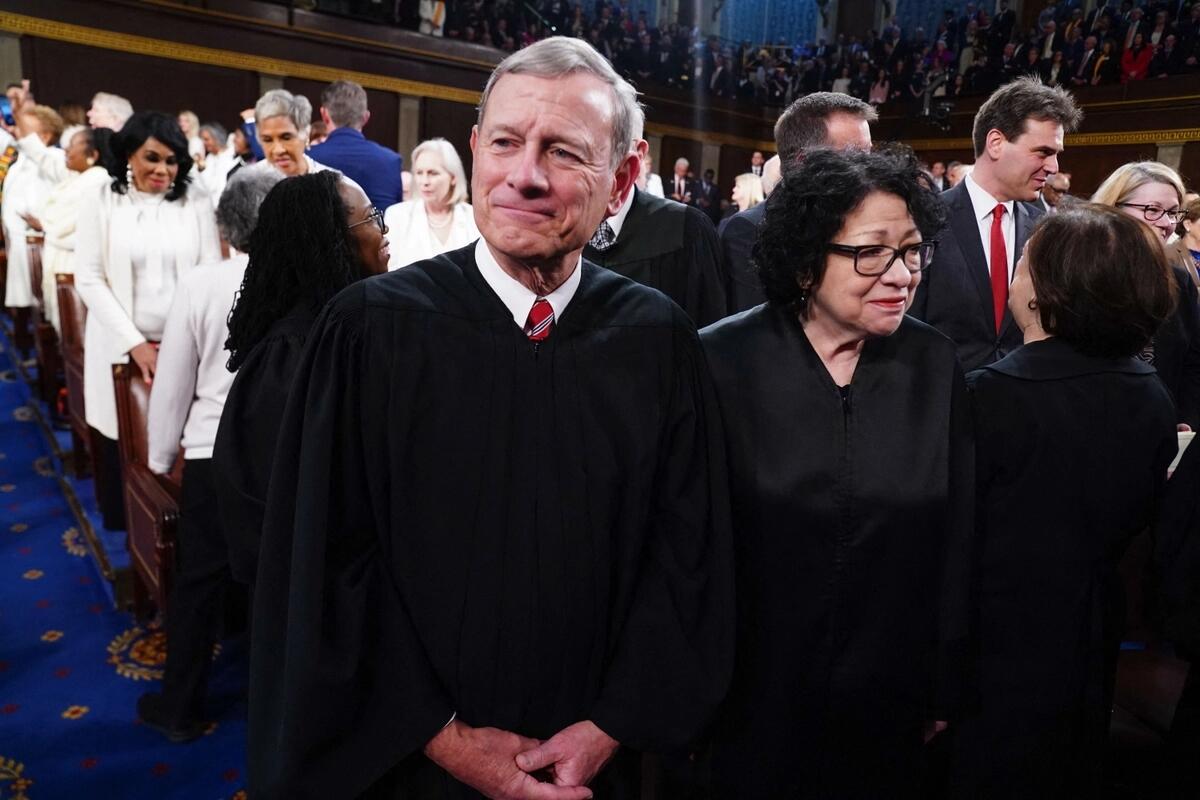
Chief Justice Roberts Says US Supreme Court Is Not Political
Chief Justice Roberts Says US Supreme Court Is Not Political
Authored by Matthew Vadum via The Epoch Times,
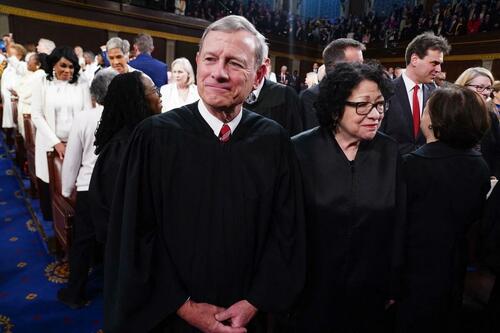
Chief Justice John Roberts said on May 6 that U.S. Supreme Court justices are not “political actors.”
Roberts’s comments came at a conference in Hershey, Pennsylvania, attended by judges and attorneys from the jurisdictions covered by the U.S. Court of Appeals for the Third Circuit. That circuit encompasses Pennsylvania, New Jersey, Delaware, and the U.S. Virgin Islands.
Although some of the high court’s decisions may be unpopular, they are based exclusively on the law, he said at the gathering.
“I think, at a very basic level, people think we’re making policy decisions, we’re saying we think this is how things should be, as opposed to what the law provides,” said the jurist, who was appointed by President George W. Bush in 2005.
“I think they view us as purely political actors, which I don’t think is an accurate understanding of what we do.”
Roberts’s speech came at a time when public confidence in the Supreme Court is at a low ebb, and a week after the court issued a ruling that changed how the federal Voting Rights Act is interpreted.
Roberts was part of the court’s majority on April 29 when it ruled 6–3 in Louisiana v. Callais that race may only be a minor factor in redistricting rationales, and may not be the predominant, overriding reason for how congressional district lines are drawn.
The justices struck down a federal district judge’s decision that created a second black-majority congressional district in Louisiana. The judge had ruled the electoral district was needed to comply with anti-discrimination provisions of the Voting Rights Act.
The ruling has spurred a new round of mid-decade redistricting efforts, largely in Republican-dominated state legislatures around the country.
In the past few years, the Supreme Court has also issued rulings striking down the constitutional right to abortion, strengthening gun rights, weakening the powers of federal agencies, and getting rid of affirmative action in higher education admissions.
Roberts avoided mentioning any specific rulings in his presentation, but stressed that the court is “simply not part of the political process.”
He said the court’s formal, written opinions are based on the Constitution.
“One thing we have to do is make decisions that are unpopular,” Roberts said.
The chief justice said criticism should be aimed at rulings, instead of individuals in the form of personal attacks.
He denounced the rhetorical targeting of lower court judges.
“That’s not appropriate, and it can lead to very serious problems,” Roberts said.
Weeks ago, Roberts said that personal criticism of federal judges imperils the judiciary.
Although criticism of judicial opinions “comes with the territory” and can be healthy, “personally directed hostility is dangerous and it’s got to stop,” he told an audience at Rice University in Houston, Texas, on March 17.
As the chief justice of the United States, Roberts presides over Supreme Court oral arguments and oversees the entire federal judiciary.
Tyler Durden
Thu, 05/07/2026 – 21:45
https://www.zerohedge.com/political/chief-justice-roberts-says-us-supreme-court-not-political

Uber Says AI Is Writing More Code and Slowing Hiring Growth
Uber Says AI Is Writing More Code and Slowing Hiring Growth
Uber Technologies, Inc. is expanding its use of AI tools and using some of those efficiency gains to slow the pace of hiring, according to Business Insider.
Speaking on the company’s first quarter earnings call, CEO Dara Khosrowshahi said autonomous coding agents now account for about 10% of Uber’s code updates. Engineers still review that output before it is committed to internal repositories, but he said the shift offers an early glimpse of how AI can accelerate software development.
Business Insider writes that Uber has long relied on machine learning for customer facing functions such as setting ride prices and pairing drivers with riders. Now the company is rolling out similar tools across internal teams. “We’re seeing uptake of these tools, whether it’s our legal team or marketing team or developers,” Khosrowshahi said. “We think it’s creating kind of employees with superpowers.”
That broader adoption is influencing hiring plans. CFO Balaji Krishnamurthy said executives did not fully anticipate how quickly AI tools would improve productivity when they mapped out their 2026 budget.
He said on the call, per Goldman: “One last comment on AI. I would say, candidly, when we set up budgets for 2026 in November, we underestimated the amount of impact the AI tools could have,” he said. After a new wave of models arrived in December, Uber “re-upped our investment here,” while also reducing “incremental headcount growth.”
The spending ramp has been significant. Last month, CTO Praveen Neppalli Naga said Uber had already used its entire 2026 budget for Anthropic’s Claude Code, underscoring how quickly demand for AI tools is growing inside the company.
Khosrowshahi said the strategy makes sense if those tools continue improving employee output. “If every person at this company can increase their throughput by 20%, 30%, 50%, 100%, then I think metering headcount growth and leaning in on AI investment is going to be well worth it,” he said.
Tyler Durden
Thu, 05/07/2026 – 21:20
https://www.zerohedge.com/markets/uber-says-ai-writing-more-code-and-slowing-hiring-growth