Category: News
The Democratic Party Is Dead, Long Live The Jacobins!
The Democratic Party Is Dead, Long Live The Jacobins!
Authored by Victor Davis Hanson via American Greatness,
For the past century, the agendas of the Democratic Party were predictable. They professed concern for working Americans and supported blue-collar unions.
Unemployment insurance, a 40-hour work week, disability insurance, and Social Security were their trademarks—often rapidly achieved by growing government bureaucracies and continually raising taxes. Still, many Democrats were socially conservative.
By the 1970s, Democrats still deplored antisemitism. Party officials had rejected their own segregationists to champion civil rights.
Presidents like Franklin Roosevelt, Harry Truman, and John F. Kennedy all supported strong defense and military deterrence.
All that is now passé.
The only vestigial Democrat left in Congress is Pennsylvania Senator John Fetterman, himself roundly despised by Democrat leaders.
Today, supporting Israel and calling for campuses to stop their institutionalized antisemitism is Democratic political suicide.
Forty years ago, any Democrat with a Nazi tattoo was political toast; today, he can become the party’s nominee for the Maine Senate race.
So, the current Democrat Party is no longer truly democratic at all. Its new spirit and methods resemble the radical Jacobin Party of the French Revolution. Today, Democrats claim that if any opponent gives a Roman salute, he is a Nazi—while insisting that one of their own with a Nazi tattoo is not.
Jacobinism rejects Martin Luther King Jr.’s emphasis on the “content of . . . character.” It instead prefers fixating on “the color of . . . skin.”
It aims to divide the nation arbitrarily between the noble oppressed and the toxic oppressors.
So these new Jacobins have institutionalized racially separate college dorms and graduation ceremonies, along with hiring and promoting on the basis of race.
The new Jacobins destroyed the southern border and welcomed in 10–12 million illegal aliens, seen as a future proletariat constituency. Today’s Jacobins would now ridicule Bill Clinton’s 1990s calls for secure borders and an end to illegal immigration as “fascist” and “racist.”
The most recent nihilist developments in American society can be attributed to these Jacobin “Democrats”: biological men competing in women’s sports; critical legal theory that normalizes cashless bail; race-based reparations; violent felons arrested and back on the street hours later; radical abortion on demand until birth; attacks on the concept of the cultural “melting pot”; and opposition to organized Christianity.
These agendas lack broad majority support. So street theater and violence focus on Tesla dealerships, ICE officers, conservative campus speakers, and, at times, any journalists covering the unrest.
Jacobins make excuses for pro-Hamas campus violence, which often targets Jewish students. The often violent and corrupt Black Lives Matter movement was a Jacobin ancillary.
Free speech is labeled “disinformation” and “misinformation”—synonyms for not toeing the Jacobin Party line. Until recent pushbacks, near-religious radical green agendas warred against fossil fuels and cost the working classes billions of dollars for sky-high fuel and electricity costs.
Like the Robespierre brothers of old, the most radical Jacobins are so often to be found among the wealthiest and most privileged Americans. Radical New York mayor Zohran Mamdani grew up as a rich Ugandan. Radical, self-described communist Maine senatorial candidate Graham Platner attended one of the most elite and expensive prep schools in the United States.
When avowed socialists Rep. Alexandria Ocasio-Cortez and Sen. Bernie Sanders barnstormed the country, they did so via private jets.
Radical “Squad” member Rep. Ilhan Omar cannot decide whether she is worth $30 million or nothing. Hard-left California billionaire, gubernatorial candidate, and radical environmentalist Tom Steyer is a billionaire who jump-started his fortune by investing in coal plants overseas and offshoring profits to avoid taxes.
At least 10 states are drafting laws to tax the net worth, as well as the income, of “billionaires and millionaires,” apparently for their “social” crimes. Mayor Mamdani taps on the window of philanthropist Ken Griffin as a warning to get out of town. The mayor of Seattle scoffs at the rich leaving her state with their billions due to new punitive taxes, offering a sarcastic “bye.”
In the old days, Democrats were embarrassed by their radicals and distanced themselves from the Weather Underground, Students for a Democratic Society, and the Black Panthers. Today, left-wing bomb throwers are the Democrat Party.
Hasan Piker, another multimillionaire, $200,000 Porsche-driving communist, has openly supported “social murder.”
So Piker praised Luigi Mangione’s targeted murder of UnitedHealthcare CEO Brian Thompson.
Meanwhile, Jacobins on social media expressed disappointment that all three assassination attempts on Donald Trump failed. The arsonist who burned down Pacific Palisades was a Mangione acolyte and saw his destruction as a revolutionary act, perhaps a form of mass “social murder.”
Jacobin politicians call for Trump to be “eliminated,” label him as a “fascist,” and call for “any means necessary” to end his presidency.
The aim is to lower the social and psychological barrier to violence.
The Jacobin Democrats of today are systematically destroying the legacy of the Democratic Party. And why not?
Their model is not the American Founding, but the radical mandated equality—and violence—of the French Revolution.
Tyler Durden
Thu, 05/07/2026 – 16:20
https://www.zerohedge.com/political/democratic-party-dead-long-live-jacobins

30 House Dems Demand US Confirmation That Israel Has Nuclear Arsenal
30 House Dems Demand US Confirmation That Israel Has Nuclear Arsenal
In the latest indication that Israel’s position in American politics is growing increasingly shaky, a group of 30 House Democrats have co-signed a letter to Secretary of State Marco Rubio, demanding that the US government finally acknowledge the existence of Israel’s nuclear arsenal. It’s a milestone event: For decades, both parties have diligently co-conspired in avoiding such a confirmation, typically claiming ignorance on the rare occasions when journalists or citizens asked them about it.
MUST SEE: For many years, journalist @samhusseini has tracked down high-level politicos in Washington, D.C. and asked them variations of the same question:
“Do you know that Israel has nuclear weapons?”
Watch as he presses John Negroponte, Mike Pence, John Kerry, the Biden and… pic.twitter.com/kDtFyZhA4i
— Decensored News (@decensorednews) April 7, 2026
Now we have dozens of House representatives asking the question. “This is something that people did not dare do before,” Avner Cohen, a historian of Israel’s nuclear program, told the Washington Post. “Even raising these questions publicly is a departure from a bipartisan norm.”
The letter puts the need for transparency in the context of the ongoing US-Israel-initiated war with Iran — which was launched over the claim that Iran was on the brink of developing a nuclear weapon, a claim that clashes with the repeated conclusions of the US intelligence community. The letter emphasizes that many of the countries with stakes in the conflict — including the United States, the UK, Russia, China and Pakistan — are nuclear-weapon states.
“The risks of miscalculation, escalation, and nuclear use in this environment are not theoretical…Congress has a constitutional responsibility to be fully informed about the nuclear balance in the Middle East, the risk of escalation by any party to this conflict, and the administration’s planning and contingencies for such scenarios.”
Further violating the long-running bipartisan commitment to ignoring Israel’s doomsday arsenal, the four-page letter points to many indications of that arsenal’s existence, including revelations and photographs provided in 1986 by Israeli nuclear technician Mordechai Vanunu, the contents of a formerly classified 1974 National Intelligence Estimate, and a statement-under-oath by then-Secretary of Defense nominee Robert Gates casually including Israel in a list of nuclear powers operating in the Middle East.
The letter culminates in a pointed list of questions. Among other things, the Democratic representatives demand to know what nuclear weapons capability Israel has, the country’s enrichment capabilities, and its doctrine guiding the use of nuclear weapons.
The Post reports that the Trump administration has been assessing Israel’s potential to go nuclear in its joint war on Iran with the United States. “There is a low boil of unease about Israel’s nuclear program and what could compel them to use nuclear weapons short of facing a WMD attack,” a Trump administration official told the Post. One such scenario that US officials are said to “frequently” wring their hands over: An overwhelming barrage that causes an extraordinarily higher pace of Israeli civilian casualties.
The letter to Rubio was organized by Texas Democratic Rep. Joaquin Castro. As we reported in March, Castro used a House hearing to put America’s top arms control official on the spot, pointedly asking him, “Does Israel have nuclear weapons?” Under Secretary of State for Arms Control Thomas G. DiNanno repeatedly dodged and obfuscated, even claiming that “it would be outside of my purview as the arms control and arms proliferation under secretary to discuss that specific question.”
We are four weeks into a war where both sides have targeted each other’s nuclear facilities.
We risk nuclear disaster. Yet the main Trump official on arms control refused to answer my question on Israel’s nuclear capabilities and told me to ask the Israeli government. pic.twitter.com/Sxnru3EIrl
— Joaquin Castro (@JoaquinCastrotx) March 25, 2026
The letter recounts DiNanno’s refusal to answer question posed by Castro, and three of the questions for Rubio directly probe the veil of secrecy surrounding Israel’s nuclear weapons:
“What are the specific restrictions on Undersecretary DiNanno answering such a question?
What is the Department’s guidance to its employees on the discussion of any Israeli nuclear weapons capability?
Please provide any documentation or information regarding the administration’s policy on discussing any potential Israeli nuclear weapons capability, including who has issued any such policies, what such restrictions cover, and who is bound by those restrictions.”
Those questions are doubly awkward, because it may be illegal for Rubio to answer them. A secret classification directive issued by the Obama administration seemingly makes explicit the prohibition on talking about Israeli nuclear weapons. It was released in 2015 pursuant to a Freedom of Information Act inquiry. Though its contents are almost entirely redacted, the un-redacted title speaks volumes: “Guidance on Release of Information Relating to the Potential for an Israeli Nuclear Capability.”
One driver of Washington’s practice of feigning ignorance about Israel’s nuclear arsenal is the fact that — combined with Israel’s refusal to join the nuclear Non-Proliferation Treaty — Israel’s arsenal makes every dollar of US aid to Israel illegal, thanks to legislation enacted in the 1970s. While not addressing that inconvenient truth explicitly, the House Dems’ letter to Rubio made an implicit reference to it: “If any such disclosure of any Israeli nuclear weapons capability would implicate U.S. laws concerning nonproliferation, we are ready to work with you to address those concerns through legislative action.”
That language suggests that the Dems would cooperate in explicitly granting Israel an exception to the ban on aid to non-NPT nuclear states. Israel and its supporters often claim indignation when the country is, in their words, “singled out” for criticism. We don’t expect they’ll complain if Israel is singled out for an explicit exception to US nuclear non-proliferation law.
Tyler Durden
Thu, 05/07/2026 – 15:45

The Complicated Reality Behind High Gas Prices
The Complicated Reality Behind High Gas Prices
Authored by Petr Svab via The Epoch Times,
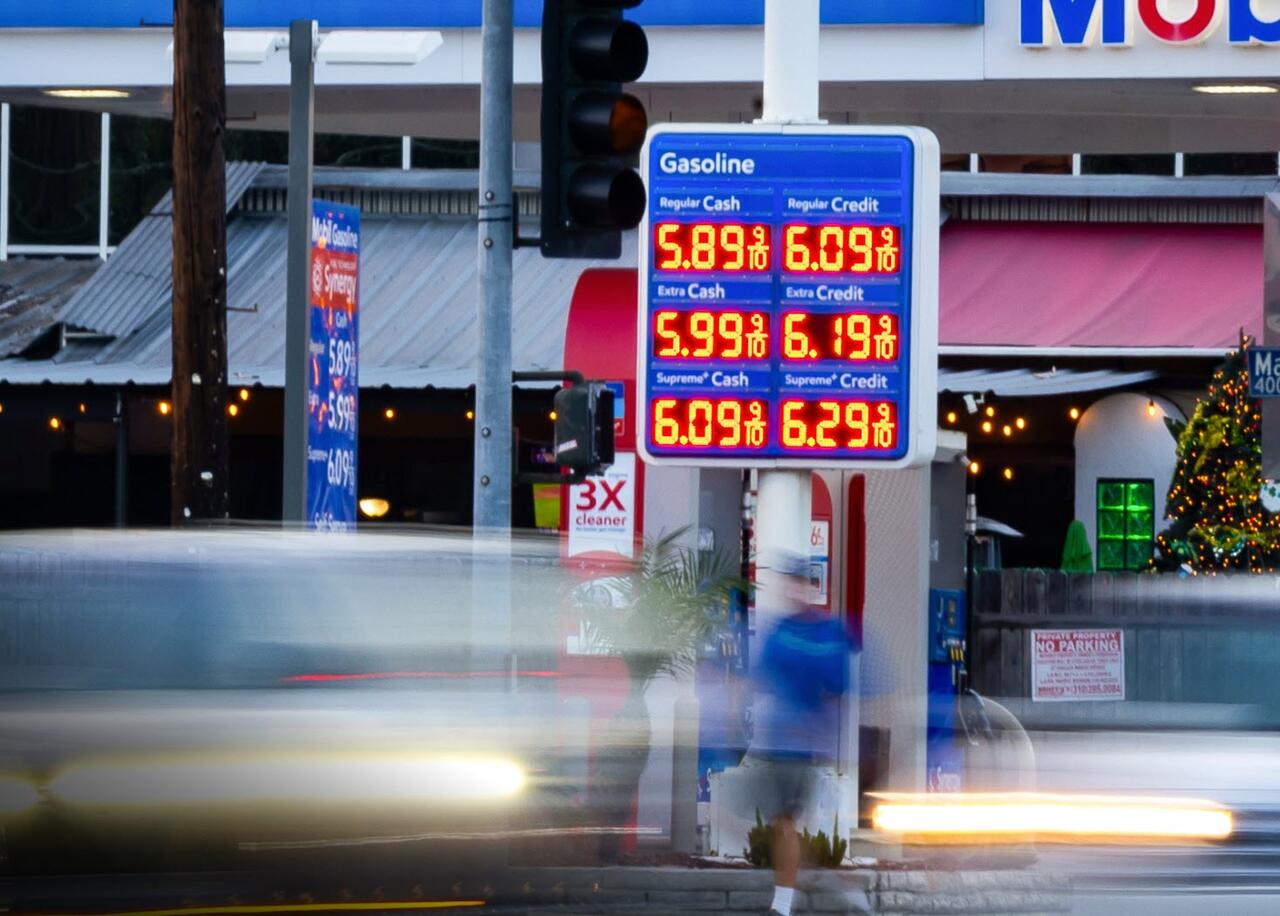
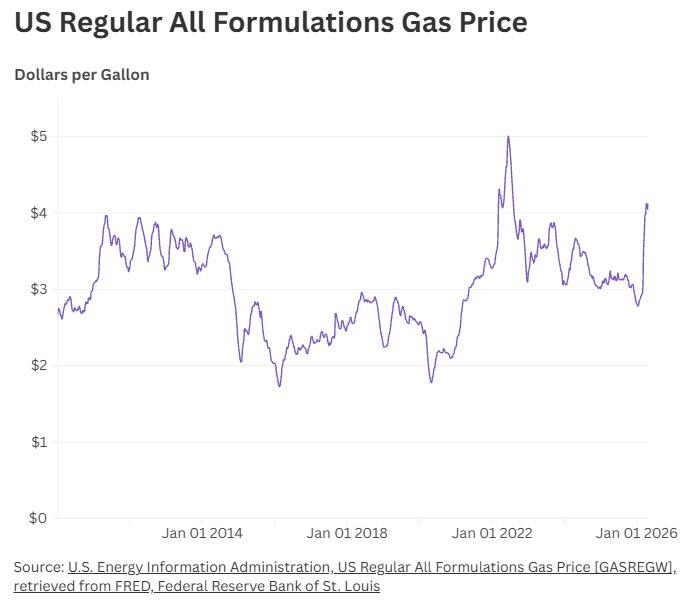
Average gas prices in the United States have gone up by almost 40 percent since March 1.
The reason appears straightforward: Iran has blocked the Strait of Hormuz in response to the U.S. military operation that decapitated its regime and degraded its military. Hundreds of tankers trapped behind the strait cannot deliver their oil, depriving the world of 7 percent to 10 percent of its supply.
Although that explains drastic price increases and even shortages in Europe and Asia, the United States gets almost no oil through the strait. In theory, the country should be energy-independent, as it is a net petroleum exporter.
But in reality, the United States is highly intertwined with the global oil market, and there is little chance it could disentangle itself from it, according to experts who spoke to The Epoch Times.
“Oil is a fungible commodity that can be shipped anywhere in the world, and that is why everyone is impacted by the events,” said Patrick De Haan, petroleum analyst with gas price tracker GasBuddy.
Countries facing shortages are willing to pay top dollar for U.S. oil.
“There’s huge demand to export the product,“ said Paul Sankey, an oil market analyst and president of Sankey Research.
”So that draws the prices up.”
If the U.S. government were to impose limits on oil exports, it would likely cause more problems than it would solve, the experts said.
Light Sweet Versus Heavy Sour
Not all crude oil is made the same. The oil produced in the United States through fracking is called “light sweet.” It is the easiest to refine and contains few impurities such as sulphur.
Much of Middle Eastern oil is categorized as “medium.” It is still fairly easy to process, but it is thicker and contains more sulphur. Canada largely produces “heavy sour” oil. It is even thicker and more sulphurous. Venezuela, despite its gigantic reserves, produces mostly very heavy, sour oil that few refineries can process.
U.S. refineries are generally geared toward heavier oil.
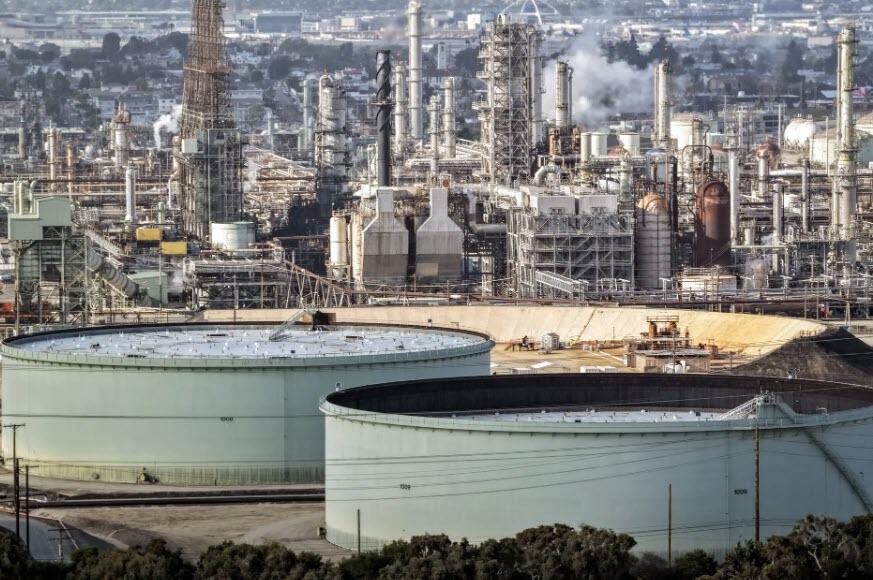
An aerial view shows the Chevron El Segundo refinery, one of California’s largest petroleum processing facilities, in Manhattan Beach, Calif., on April 8, 2026. Average gas prices in the United States have gone up by almost 40 percent since March 1 amid the war in Iran. Mario Tama/Getty Images
“Most of our refineries were built at least half a century ago now,“ said David Blackmon, an energy policy analyst and adviser. ”They were set up to refine heavier grades of crude oil coming in from the Middle East and Mexico, the big producing countries at that time, because we were heavily dependent on foreign oil during those days.”
Refineries have been adjusting to processing lighter grades, Sankey noted.
But switching from one grade to another remains difficult, said Keming Ma, former process engineer at a major refinery in Asia. It is easier to change the oil than the refinery.
“They blend the oil with a different grade to accommodate the refinery,” he said.
In fact, refineries have an incentive to maintain their setup for heavier oil, according to Robert Dauffenbach, an energy expert and professor emeritus at the University of Oklahoma’s Price College of Business.
“These companies have invested billions of dollars into being able to take advantage of the price spread between heavier sour crude, which, quite frankly, can’t be run at every single refinery, so it tends to be cheaper,” he said.
And so the United States exports about 5 million barrels of largely light oil daily, while importing more than 6 million barrels of largely heavy oil.
“We’re kind of maxed out on the amount of light, sweet crude we can run out of refineries,” Dauffenbach said.
And there is another reason why heavier oil is desirable.
Refineries separate crude oil through distillation into fractions, from the lightest such as methane and propane, through petrol (gasoline), and then into heavier oils such as kerosene, diesel, and heating oil until only asphalt is left. The lighter the crude, the less of the heavier fractions it yields.
An aerial photo shows the Nave Photon crude oil tanker carrying Venezuelan oil docked in Freeport, Texas, on Jan. 16, 2026. Venezuela’s crude is largely heavy and sour—thicker and more sulphurous—making it difficult for most refineries to process. Mark Felix/AFP via Getty Images
“We import heavy sour … because we need it for our refineries to make heavier products like diesel and jet fuel,” said Tracy Shuchart, a senior economist at NinjaTrader Group.
Export Ban Repercussions
“[Limiting exports] would likely push prices down here temporarily, but it would negatively impact many of our major allies that are now relying on us,” De Haan said.
The United States produces about 13 million barrels of crude per day, but its refineries, now running virtually at maximum capacity, guzzle about 16 million barrels per day, Dauffenbach said. The refineries produce more than Americans consume.
“America is a big winner from the exports,“ Sankey said.
”So you’d be shooting yourself in the foot if you banned exports.”
A ban would also throw a wrench into the supply chain.
“Our domestic storage would fill up with this light grade of crude coming out of the shale place, and we’d have to stop importing that heavier crude that we need to manufacture diesel,” Blackmon said.
A farmer prepares a blend of minerals, biologicals, and fertilizers to be sprayed onto fields during seeding in Hickory, N.C., on April 10, 2026. Experts say demand for fuels such as diesel and jet fuel is one reason U.S. refineries favor heavier crude. Grant Baldwin/AFP via Getty Images
It is the heavier fractions “that are very highly desirable right now,” De Haan said.
“Right now, the price of diesel is up even more significantly than gasoline,“ he said. ”So if anything, refiners would like more heavy oil right now.”
An export ban would also have a chilling effect on the industry.
“You’re going to disincentivize more export infrastructure,” Sankey said.
There is not much risk that exports would dent domestic supply too much, he added.
“There’s a limit on how much we can export as well,“ he said. ”So that’s probably not going to be a huge pull above a certain level of exports, which will be the capacity maximization of the existing export infrastructure.”
The Trump administration has already made clear that an export ban is not on the table.
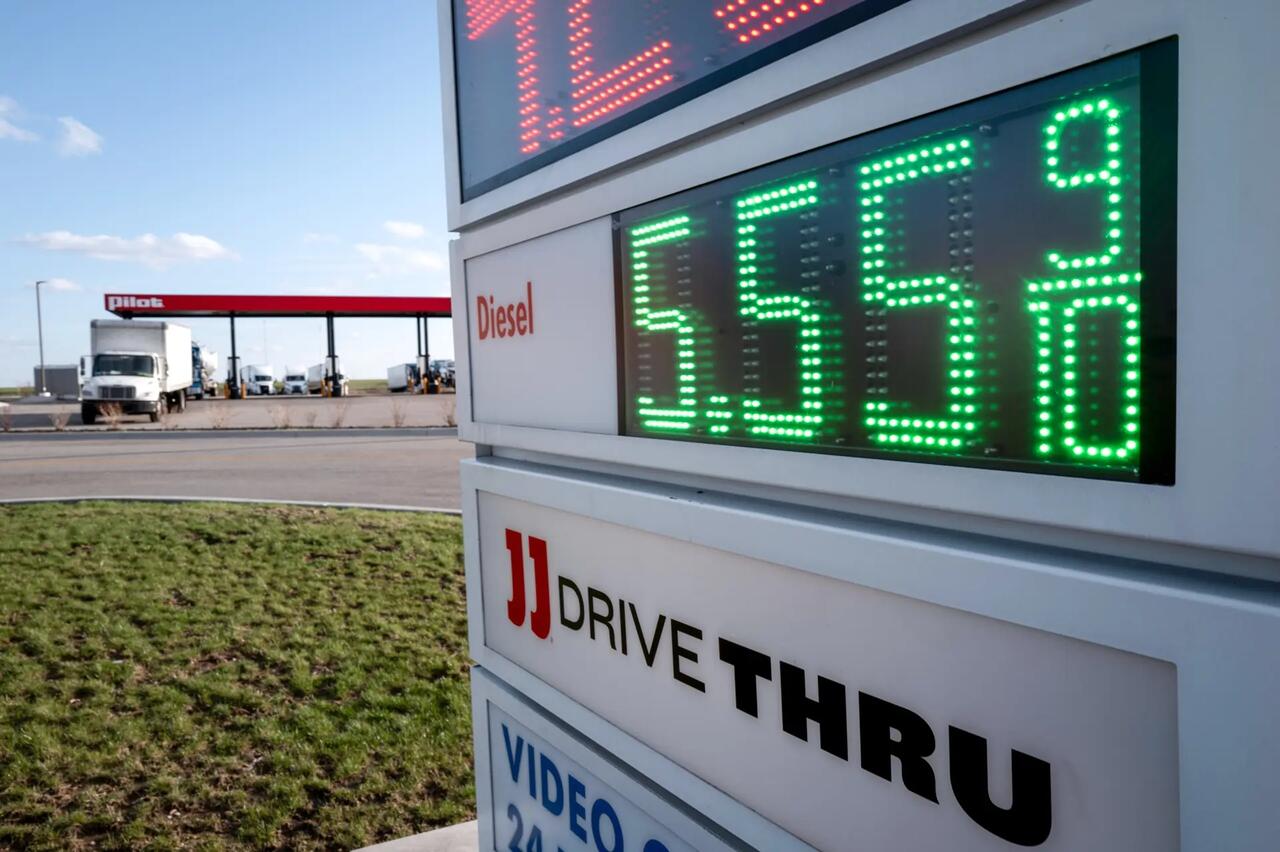
Fuel prices are displayed at a truck stop in Belvidere, Ill., on April 6, 2026. With diesel prices rising faster than gasoline, refiners are turning to import heavier crude needed to produce diesel, experts said. Scott Olson/Getty Images
What Is Next?
The most obvious way out of the current conundrum is to open the Strait of Hormuz. Yet it is not clear how and when that will happen.
Iran does not have the capacity to block the strait outright. Yet it can still issue a credible threat to attack passing vessels. In response, insurance companies are not willing to insure ships, hence shipping companies are not willing to risk passage.
The Trump administration is trying to negotiate a deal with Iran amid a rolling ceasefire. Meanwhile, the Islamic Revolutionary Guard Corps, a part of Iran’s military that answers to the clerical regime leadership, continues to threaten the crucial shipping lane.
The uncertainty leaves traders scrambling for clues about where oil prices are heading.
Boats navigate the sea in the Strait of Hormuz near Qeshm Island, Iran, on April 28, 2026. The Trump administration is trying to negotiate a deal with Iran amid a rolling ceasefire, but it rejected Iran’s last offer and continues to blockade Iran’s ports. Asghar Besharati/Getty Images
“The market is trying to figure this out,” Dauffenbach said.
It seems, though, that the general tendency is for prices to rise.
“It’s pretty clear in my mind that oil prices are going to continue to slowly rise until there’s a resolution here,” De Haan said.
“That’s what we’re starting to see again. The ceasefire and the peace talks only temporarily pushed the oil prices lower.”
The initial price shock was not as drastic as some expected, in part because of the supply chain lag.
“Going into this conflict, we had some cushions against the supply shock,” Blackmon said.
“We had [about] 400 million barrels of oil already in tankers on the water that provided a cushion. That’s about four days of global supply.”
In addition, the United States, Japan, and China have substantial oil reserves.
“But those are now being depleted on a daily basis,“ he said. ”And, last I saw, about two-thirds of that cushion on the water has been delivered now.”
Still, the United States is much better off than many other countries, particularly in Asia and Europe.
Cars queue at an entry gate to the PCK Schwedt refinery in Schwedt, Germany, on April 30, 2026. Fuel prices in Germany have surged to more than $9 per gallon amid a global energy crisis tied to the Iran conflict. Tobias Schwarz/AFP via Getty Images
Americans experienced “a sticker shock” when gasoline went from $3 to $4, but “the gasoline price is already low here in global terms,” Sankey said, noting that in Germany, gas is now more than $9 per gallon.
The United States benefits not only from domestic supply, but also from substantial imports from Canada.
“About 95 percent of what we consume is here in North America,” Blackmon said.
“We get a little from Mexico, but their industry has really gone downhill in recent years. And then we get some from Venezuela, and some from Brazil and Guyana.”
Canadian oil is generally cheaper “because it has limited means to flow out to the global marketplace,” De Haan said, although he noted that Canada recently opened a pipeline to the West Coast, which will allow it to access other markets in the future.
Thus, Americans are seeing higher prices, but at least no shortages.
“We’re insulated from the big supply shock, because we have such a high degree of energy security,” Blackmon said.
Policy Fixes
Even without export restrictions, the U.S. federal government has some policy options for easing the situation. One thing it has already done is suspend the Jones Act, which states that only American-made and American-flagged ships with American crews can run between American ports. This restriction has previously increased shipping costs between American ports.
Although helpful, it does not move the price much, Dauffenbach said.
“Now they’re getting to the point where there’s not much difference between Jones Act and internationally flagged [ships] because there’s a lack of ships right now,” he said.
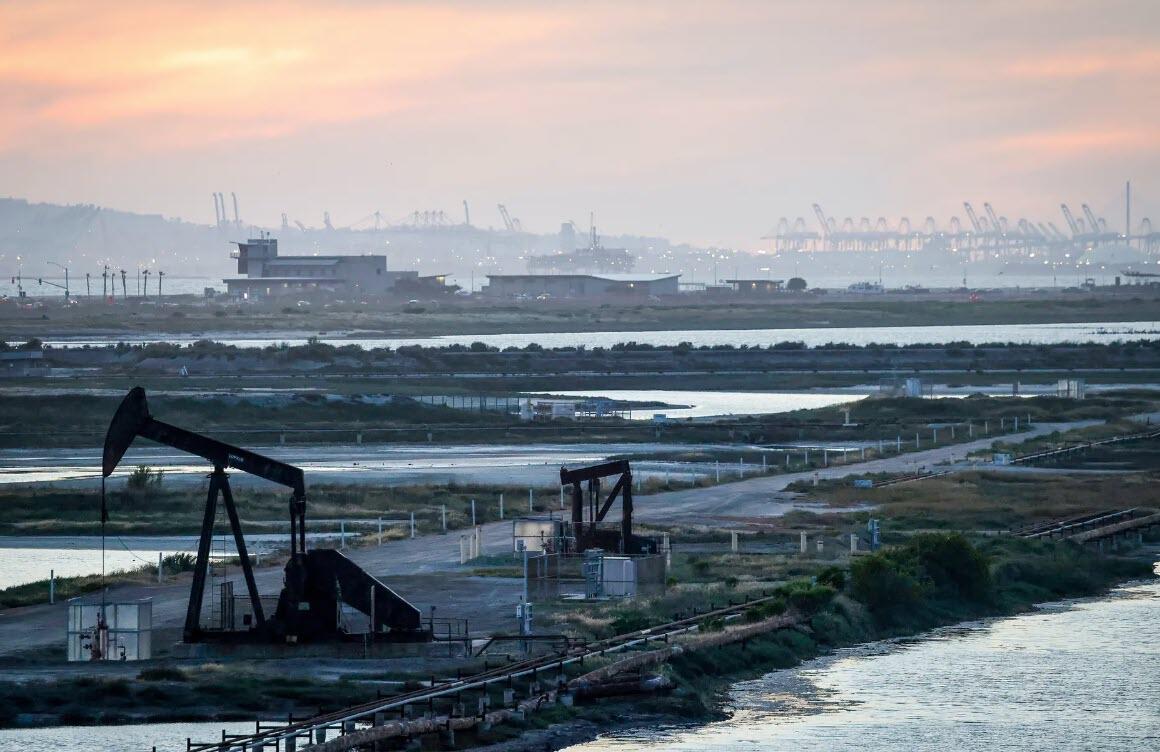
A pumpjack stands idle in the Huntington Beach oil field, with port cranes visible in the distance, in Huntington Beach, Calif., on April 23, 2026. America benefits not only from domestic supply, but also from substantial imports from Canada. Mario Tama/Getty Images
The government could call a gas tax holiday.
“It would bring prices down immediately by 18.4 cents a gallon,” he said.
Individual states could also roll back their gas taxes. Georgia has already done so, he noted.
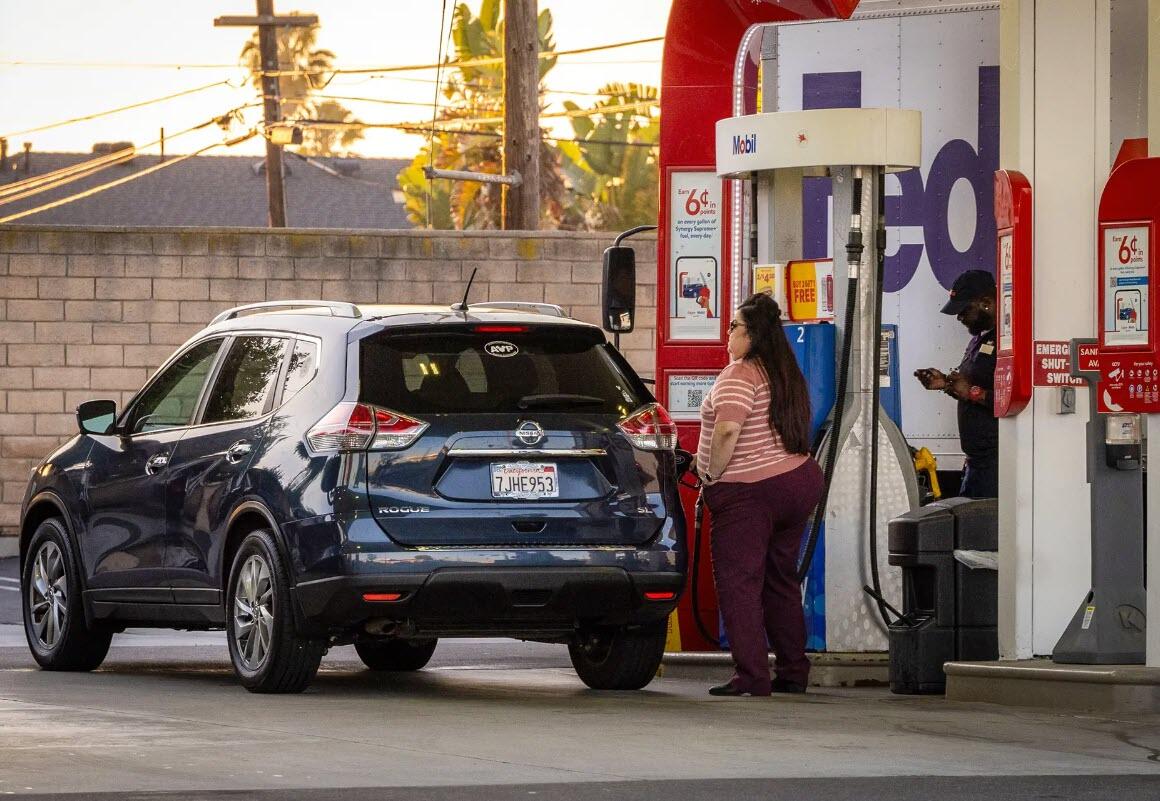
Customers fill up with gas in Los Angeles on March 11, 2026. Despite higher prices, Americans have not faced shortages because of the country’s “high degree of energy security,” analyst David Blackmon said. John Fredricks/The Epoch Times
The federal government could allow year-round sales of E15, a fuel containing more ethanol.
“Ethanol is cheaper than gasoline right now, so that would help bring down prices a little bit,” he said.
For now, Americans are stuck paying more, as demand remains steady.
“It’s very difficult for demand to dissipate in the United States, unless things get really out of control, just because everybody has to drive everywhere here,” Shuchart said.
Tyler Durden
Thu, 05/07/2026 – 15:25
https://www.zerohedge.com/energy/complicated-reality-behind-high-gas-prices
AI Is Causing A Tidal Wave Of Job Cuts At Crypto Firms
AI Is Causing A Tidal Wave Of Job Cuts At Crypto Firms
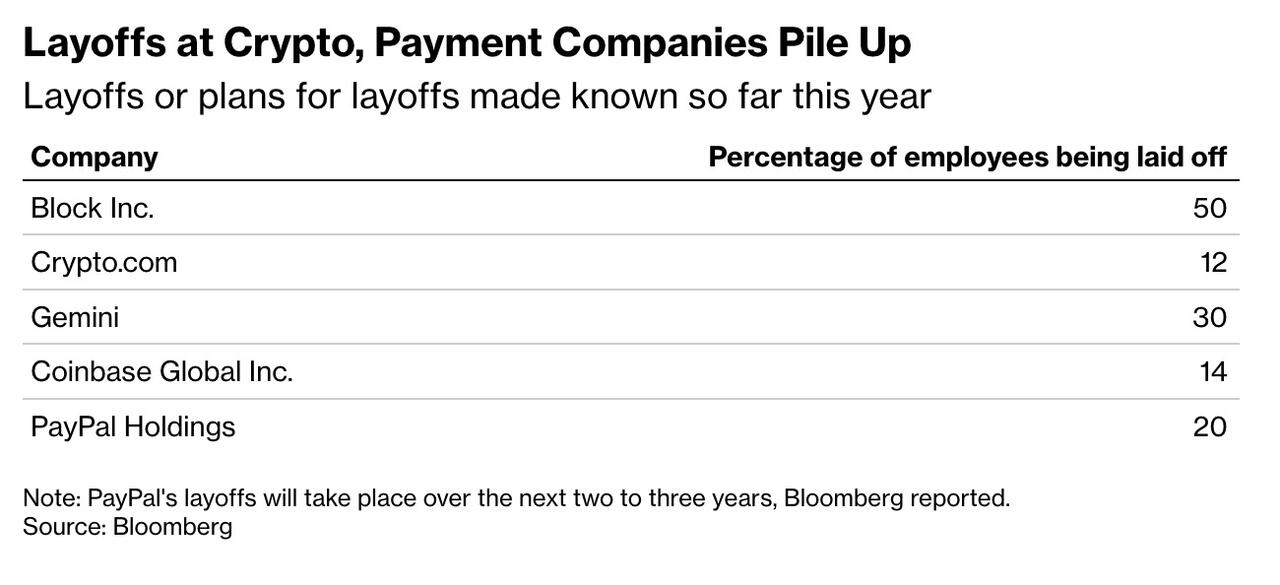
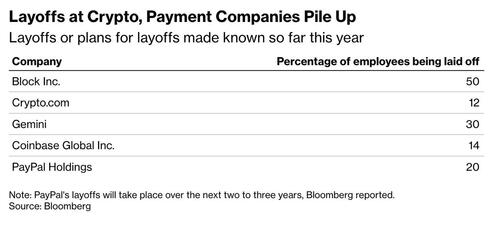
Layoffs are spreading across crypto and fintech — and executives increasingly say AI is part of the reason, according to Bloomberg.
Coinbase, PayPal, Gemini, and Crypto.com have all recently cut jobs while emphasizing efficiency and automation. On Tuesday, Coinbase CEO Brian Armstrong framed the shift in stark terms, warning that “the biggest risk now is not taking action” as the company tries to become “lean, fast, and AI-native.”
Bloomberg writes that the trend gained momentum after Block, Inc. — the parent company of Square, Inc. and Cash App — announced major cuts earlier this year and pointed to AI as part of a broader restructuring effort. Since then, more firms have adopted similar language, pitching layoffs as preparation for an AI-powered future.
Critics aren’t fully convinced. Many of these companies are also facing more immediate business pressures: crypto trading activity has cooled, digital asset prices remain below their recent highs, and payments companies are navigating slower growth and tighter competition. Some firms have additional internal challenges — Block, Inc. expanded aggressively during the pandemic-era boom, while PayPal is still working through a broader turnaround under new leadership.
That has fueled accusations of “AI washing,” where companies use artificial intelligence as a cleaner explanation for layoffs tied to weaker demand or overhiring. John Todaro of Needham & Company questioned how much of the narrative is real: “Whenever I see these layoffs and AI is part of the reason, I step back and ask, do we see this from companies where the market is super hot?” He added: “I am not sure I buy that AI angle.”
Others say both things can be true. Raman Shalupau, founder of CryptoJobsList, estimated that current cuts are “probably an 80/20 split across the industry right now between real AI efficiency gains versus trimming down from the last bull run.”
Even when companies aren’t cutting headcount, they’re reshaping jobs around automation. Coinbase has been flattening management layers and asking leaders to operate more like “player-coaches,” while 0G Labs said it reduced staff by 25% after internal AI tools significantly improved productivity.
The bigger question is whether this marks a permanent shift in how crypto and fintech firms operate — or whether AI has simply become the latest justification for cost-cutting during a tougher market cycle. For now, both explanations appear to be driving decisions.
Tyler Durden
Thu, 05/07/2026 – 15:05
https://www.zerohedge.com/markets/ai-causing-tidal-wave-job-cuts-crypto-firms
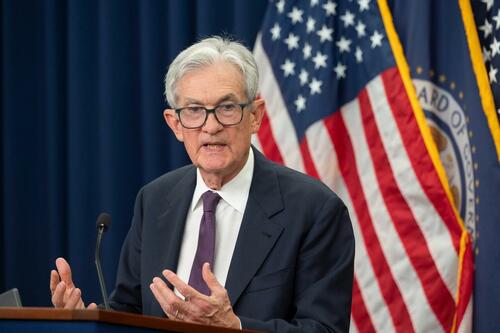
Moore: Time For Jerome Powell To Go Home
Moore: Time For Jerome Powell To Go Home
Authored by Stephen Moore via RealClearPolitics.com,
The man just won’t leave the stage.
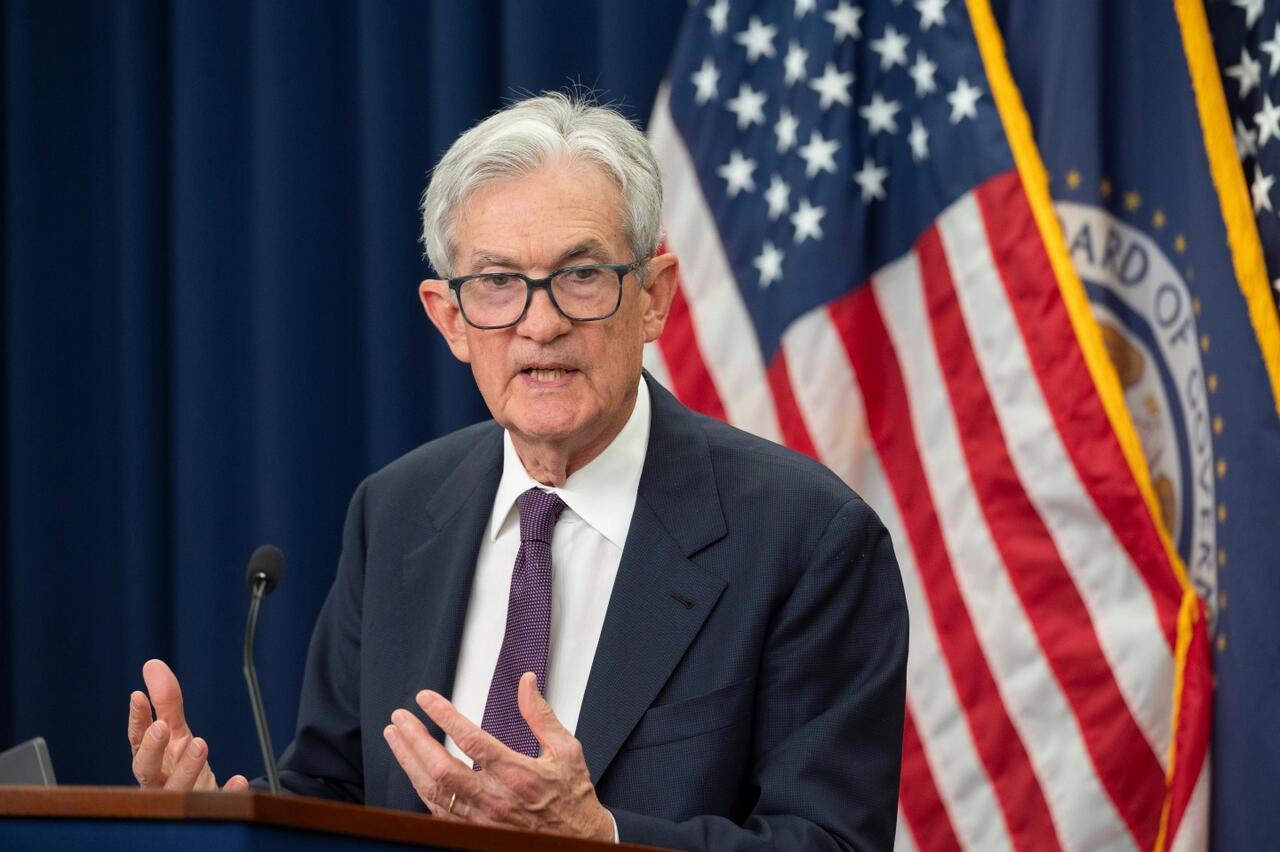
Fed Chairman Jerome Powell announced last week that he’s going to remain on the Federal Reserve Board until 2028 even as he by law surrenders his chairmanship. The announcement came even after President Donald Trump agreed to drop his unwise lawsuit against Powell for funding a $2 billion new Taj Mahal building down the street from the White House.
Powell will be the first Fed chair to stay on the Fed’s Board of Directors in 50 years. This isn’t the way it’s done. It’s bad form.
Only once did he come within spitting distance of his inflation target. February 2021 was the only month in his whole tenure when inflation hit the range of 1.8% to 2.2%. He’s retiring with a batting average of .011.
Powell, in my opinion as a close Fed watcher, was one of Trump’s worst appointments, as his record proves. Trump agrees with me.
Two-thirds of the time, inflation was well above the target. Would you keep someone with that lousy record in your starting lineup?
He almost rammed the economy into recession with inexcusably high rates in 2018, and then during COVID-19’s aftermath he flooded the economy with cheap money.
The inflation rate skyrocketed to 9% — its highest level since the late 1970s. We’re all still paying high grocery prices because of that monetary blunder. The Fed promised “transitory” inflation, but it was very high for two years.
He’s used interest rate policy seemingly as a weapon to bludgeon his enemy Trump.
He slammed Trump’s tariffs publicly but refused to acknowledge the disinflationary effects of Trump’s tax cuts, energy policies and deregulation. He rarely, if ever, spoke out in opposition to the Biden post-COVID-19 $4 trillion debt-financed spending spree.
He finally relented in lowering rates in 2024, but that timing was suspicious coming a few months before the presidential election.
Was he pushing his thumb on the scale to help former Vice President Kamala Harris win the election? You decide.
Powell never learned the supply-side truism that faster growth doesn’t cause inflation, it cures it. When the Fed gets that truism wrong, bad things follow. The Trump tax cuts and “drill, baby, drill” polices expanded economic output. More production means lower, not higher, prices. So why was he squeezing the money supply?
Powell has been emboldened and knighted by the media because of his public spats with Trump. He says he wants to be independent of politics, but no one has played their political cards against Trump more expertly and covertly than Powell.
His announcement to stay on the board can only be explained as pure political retaliation against Trump. It puts Kevin Warsh, Trump’s nominee to replace Powell, in an awkward position as he tries to drive the Fed back in the stable dollar direction. To stay and sit on the bench pouting is what sore losers do.
A CEO doesn’t stick around after they’ve been tossed out as chairman of the board — unless the successor pleads with them to stay. Warsh isn’t doing that. He has Powell’s mess to clean up.
Incidentally, with the news this weeks that the publicly traded debt now exceeds the annual GDP of the nation, perhaps Warsh should, in his inaugural address as Fed chairman, pledge to recommend that Congress live within its means, and that as a first step, he will cut the Fed budget and bureaucratic bloat by 10% to 15%.
What a great way to set a good example for the rest of Washington. We don’t need 300 Ph.D. economists at the Fed to screw things up.
Jerome can and should go home and write his memoir about how he attempted to undermine Trump every step of the way. It’s bound to be a bestseller.
Tyler Durden
Thu, 05/07/2026 – 14:45
https://www.zerohedge.com/political/moore-time-jerome-powell-go-home

French Carrier Traverses Suez Canal For Belated Possible Hormuz Mission
French Carrier Traverses Suez Canal For Belated Possible Hormuz Mission
France and Britain could be poised to very belatedly join the party in Middle East regional waters, according to movements of warships as well as fresh statements.
Egypt and France on Wednesday oversaw the transit of the French aircraft carrier Charles de Gaulle through the Suez Canal as part of a southbound convoy, the Suez Canal Authority announced.
Charles de Gaulle carrier, via National Interest
The French Ministry of the Armed Forces has announced the nuclear-powered carrier is deploying to the Red Sea and Gulf of Aden as part of a multinational effort to restore navigation through the Strait of Hormuz, according to a fresh statement.
So it’s clear the convoy will remain largely in a background support role when compared to the US naval blockade in the Gulf of Oman region. Paris and London have also made clear their ships would only directly join Persian Gulf operations only once the war ended.
On a technical level, the White House has just this week sought to pronounce that Operation Epic Fury has ended, and Project Freedom has begun. It’s unclear whether the European allies buy this designation, however.
The new Franco-British initiative comes amid immense pressure being brought to bear on both NATO allies by Washington. The carrier reached Suez starting Wednesday. “To expedite the implementation of this initiative as soon as circumstances permit, the Charles de Gaulle and its escort vessels will transit the Suez Canal on Wednesday, May 6, 2026, en route to the southern Red Sea,” the French ministry said.
France has described the mission as part of “a defensive posture” in the wake of the start of the Iran war, but has also repeatedly emphasized that France “is not a party to the conflict” and “remains committed to respecting international law and all sovereignties.”
French President Emmanuel has sated on X that the mission “may help restore confidence among shipowners and insurers,” but that “It remains distinct from the parties at war.”
“A return to calm in the Strait will help advance negotiations on nuclear issues, ballistic matters, and the regional situation,” Macron wrote. “Europeans … will play their part.”
Macron has additionally explained to AFP, “What we are proposing is that Iran gains passage for its ships through the strait and in return commits to negotiating with the Americans on issues of nuclear materials, missiles, and the region, and we propose that the Americans, for their part, lift their blockade of the Strait of Hormuz and, in return, obtain Iran’s commitment to negotiations.”
.@EtatMajorFR says 🇫🇷FS Charles de Gaulle Carrier Strike Group are heading through the Suez Canal to Middle East to prepare for possible UK-French led multinational defensive mission to support freedom of navigation in the Strait of Hormuz. pic.twitter.com/7OLh5N7SXs
— Navy Lookout (@NavyLookout) May 6, 2026
The French leader has also belatedly been in contact with Iran’s president, despite largely staying on the sidelines even on a diplomatic level throughout the opening couple months of the war launched by the US and Israel.
Tyler Durden
Thu, 05/07/2026 – 14:30
Worth Every Dollar (Until It Isn’t)
Worth Every Dollar (Until It Isn’t)
Authored by Bryan Lutz via DollarCollapse.com,
Jamie Dimon just gave the trillion-dollar AI capex boom his blessing.
Standing next to Anthropic CEO Dario Amodei in New York on Tuesday, the JPMorgan chief told Wall Street that the buildout is “worth the trillion-dollar investment”… a sentence that would have been a punchline two years ago.
Now it feels like even the mainstream media disagrees with the consensus.
Here’s the problem…
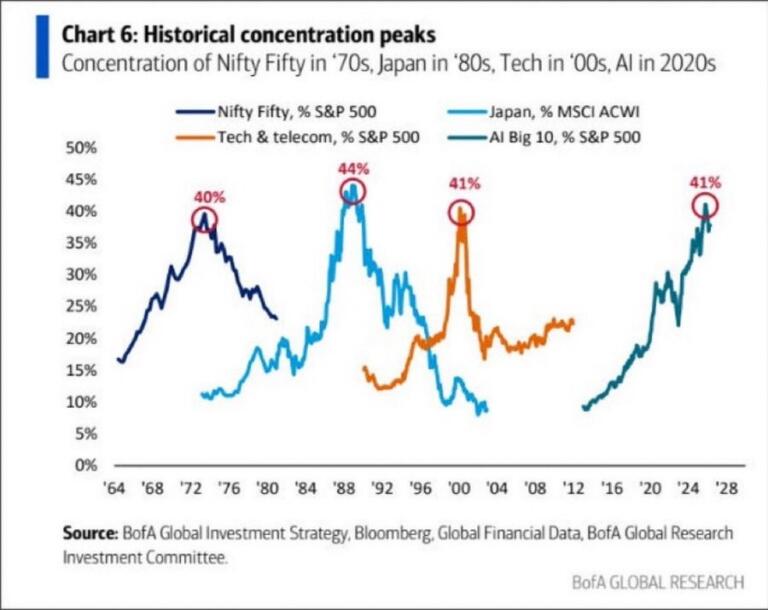
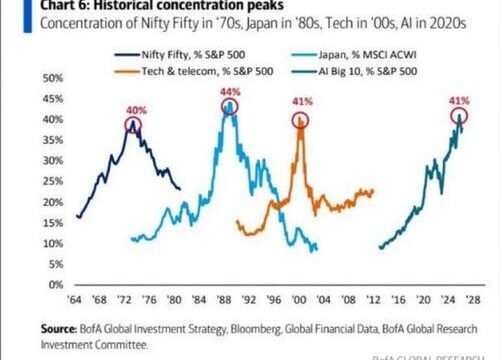
BofA Global Research charted every market concentration peak of the last sixty years on a single line:
Four bubbles. Four peaks. All in roughly the same 40-44% concentration band.
And we just printed the fourth one.
The world’s largest bank cosigned the bet at the exact level the last three manias topped out.
Axios reports:
Jamie Dimon blesses the trillion-dollar AI capex boom
JPMorgan Chase CEO Jamie Dimon stood next to Anthropic CEO Dario Amodei in New York on Tuesday and told Wall Street the AI buildout is worth every dollar.
Why it matters: With investors increasingly anxious about whether AI revenue can keep pace with spending, the head of the world’s largest bank endorsed a capital expenditure wave projected to top $1 trillion next year.
The latest Big Tech earnings reports last week made clear that the massive buildout is propping up not only the stock market, but U.S. economic growth writ large.
“The technology is so powerful, it’s worth the trillion-dollar investment,” Dimon said at an Anthropic event unveiling new partnerships and AI agents tailored to financial services.
Zoom in: Dimon and Amodei also addressed Mythos, Anthropic’s powerful new model whose cyber capabilities prompted Treasury Secretary Scott Bessent and Federal Reserve Chair Jerome Powell to convene an emergency meeting with major bank CEOs last month.
Dimon, who was invited but unable to attend that meeting, said the banks have since gotten together to “triage the issues” — and argued protections should extend to all banks, not just the largest.
“The government can’t do all that,” he said.
Amodei said he had a great conversation with Bessent and pushed back on the suggestion that Mythos’s limited release was driven by compute constraints, calling that a “misconception.”
So a banker blesses a trillion-dollar bet, the regulators panic about a single AI model, and the index rips on the back of seven names doing all the spending.
This is what late-cycle capex manias look like in real time… every cycle has them, and every cycle ends the same way.
Stack accordingly.
Tyler Durden
Thu, 05/07/2026 – 14:10
https://www.zerohedge.com/markets/worth-every-dollar-until-it-isnt
“Stunning Quarter”: Highest Earnings Growth In Over Two Decades
“Stunning Quarter”: Highest Earnings Growth In Over Two Decades
Yesterday, Deutsche Bank’s head of thematic research published his latest chartbook, “The Great 2026 Reset,” which delves into the market and political implications of the Iran conflict (available here to pro subs).
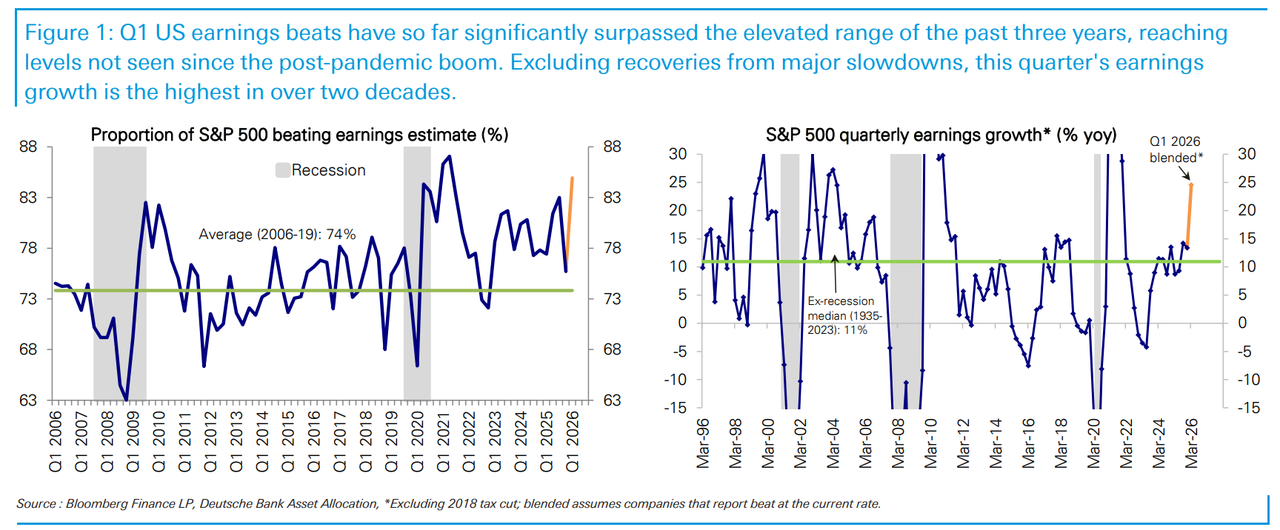
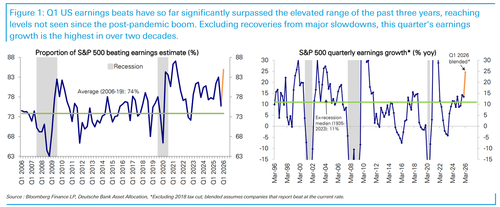
One key topic explored by Reid is the remarkable US Q1 earnings season. As we previewed ahead of the start of reporting seasons, earnings are significantly exceeding consensus estimates across all metrics, despite a high bar.
S&P 500 earnings growth is projected to accelerate sharply from 13.4% in Q4 to 24.6% in Q1 – a four-year high and a level rarely seen outside of post-shock recoveries. Excluding special factors, this represents arguably the strongest earnings growth in two decades.
The AI boom is a clear contributor, but strength is widespread, with double-digit growth seen in average and median companies, and all 11 sectors posting positive growth for the first time in four years. This strong performance has in many places been driven by higher prices amid supply constraints, surging demand within the AI value chain, and other disruptions.
In light of these robust Q1 results, DB has raised its 2026 EPS forecast from $320 to $342, driven by strong Q1 beats, gravity-defying performance in MCG & Tech, and higher oil and commodity prices.
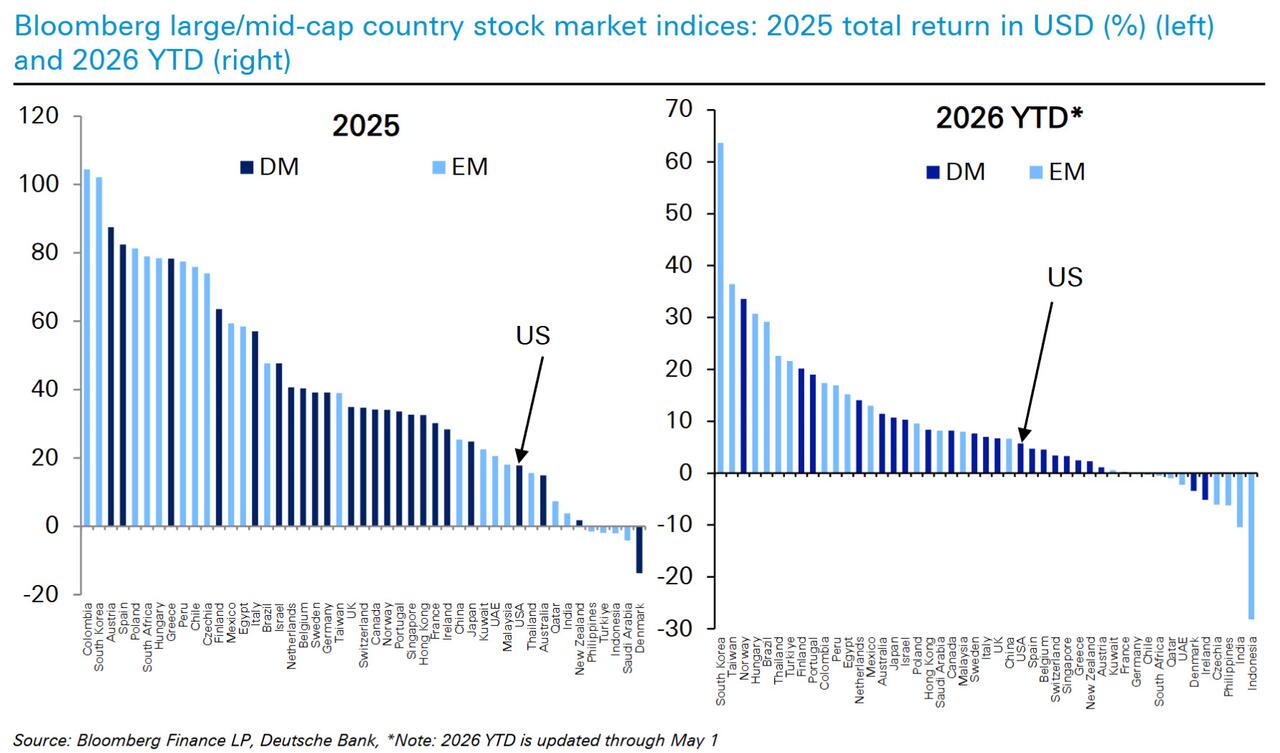
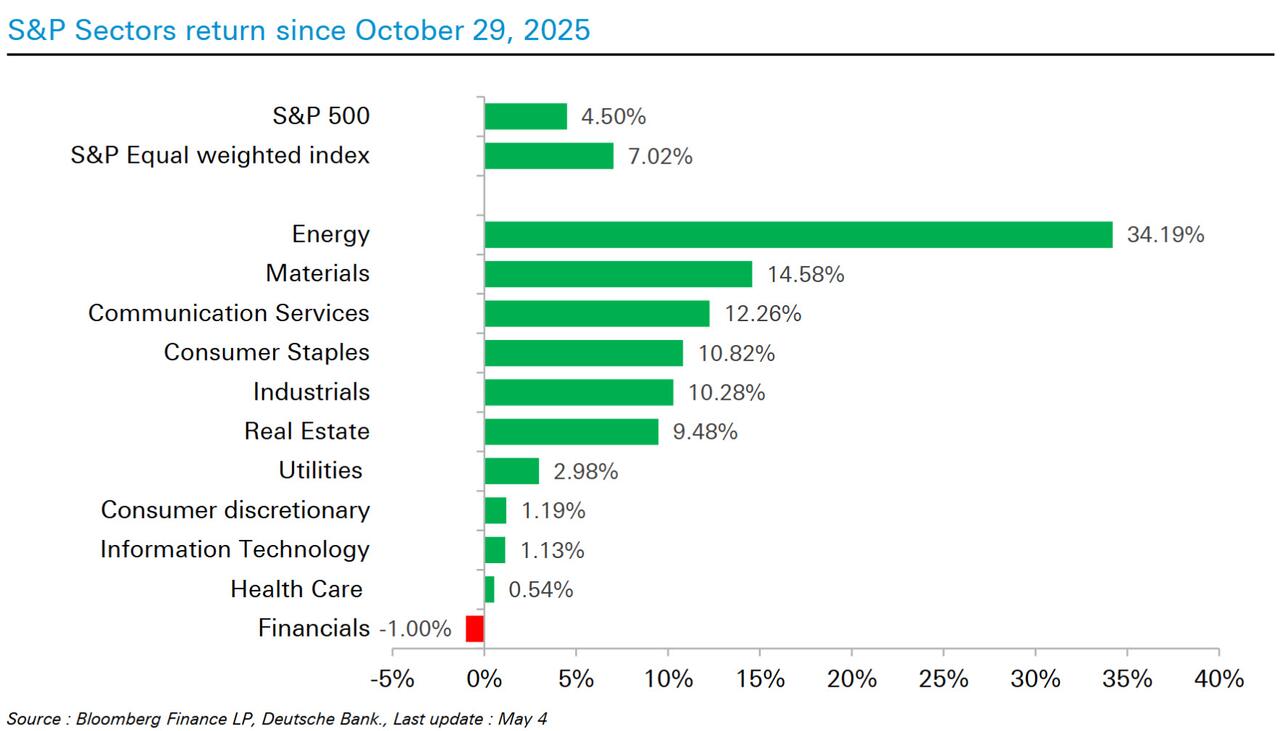
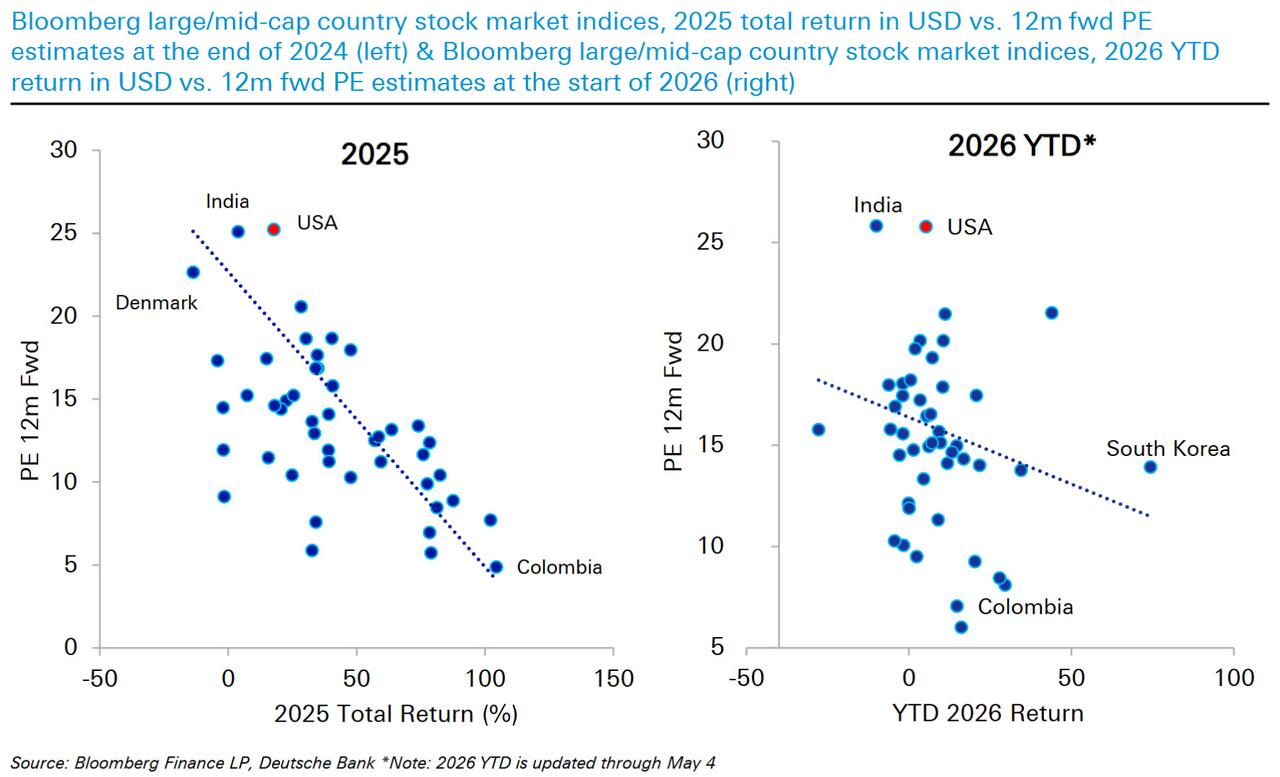
Reid says it’s worth noting that while the US equity market has outperformed many markets since the start of the Iran conflict, this has only moved it from the bottom quartile to the middle of the global pack year-to-date.
Even with a surge since the conflict began, tech performance over the past six months (since the end of October) shows only a modest increase.
Given current high valuations, strong earnings growth is helping the US market “grow into” these valuations, yet other markets have demonstrated notably better performance over the last 18 months.
More in the full DB note available here.
Tyler Durden
Thu, 05/07/2026 – 13:55
https://www.zerohedge.com/markets/stunning-quarter-highest-earnings-growth-over-two-decades

Iranian President Says Iran Willing To Prove Peaceful Nature Of Nuclear Program
Iranian President Says Iran Willing To Prove Peaceful Nature Of Nuclear Program
Iran has told other regional countries that it is ready to ‘prove’ that its nuclear program is peaceful in nature, and that it is willing to meet international standards in that regard, according to the Iranian presidency.
This comes as Iran’s Foreign Ministry has insisted that the nuclear issue be left out of talks related to ending the war with the US, with a statement saying that “at this stage, we do not have nuclear negotiations” – but which remains a key demand by Washington.
Within years after the first Trump administration unilaterally pulling out of the earlier Obama JCPOA nuclear deal, the Iranians had booted IAEA inspectors from the country, citing that the deal was collapsing due to Washington policies, which included the reimposition of far-reaching sanctions.
The appeal for international verification that its program is for peaceful nuclear energy and domestic consumption comes via Turkish media this week:
Iran is fully prepared to meet global standards to demonstrate the peaceful nature of its nuclear program, the presidency said on Tuesday.
The remarks came during a phone call between President Masoud Pezeshkian and Iraqi Prime Minister-designate Ali al-Zaidi, according to a statement from Iran’s presidency.
Pezeshkian said Iran had shown full readiness in all negotiations to offer assurances within the framework of international regulations and global monitoring mechanisms. He criticized what he described as contradictory US policies, saying Washington continues to apply pressure while simultaneously calling for negotiations.
Iraq’s Zaidi in turn said Baghdad is prepared to support de-escalation efforts and could host talks between Iran and the United States, according to the statement. Iraq itself has been deeply impacted by the war, and Iran has even fired ballistic missiles and drones on the north, reportedly targeting US troop installations in or near Erbil in Kurdistan.
Also, earlier this week widely a Reuters report raised eyebrows and serious questions related to the effectiveness of the 38-day aerial campaign which saw US-Israel bombs unleashed in the many thousands (combined: some 20,000+ munitions expended) on the Islamic Republic.
“US intelligence assessments indicate that the time Iran would need to build a nuclear weapon has not changed since last summer, when analysts estimated that a US-Israeli attack had pushed back the timeline to up to a year, according to three sources familiar with the matter,” the report lays out.
“The assessments of Tehran’s nuclear program remain broadly unchanged even after two months of a war that US President Donald Trump launched in part to stop the Islamic Republic from developing a nuclear bomb,” it continued.
New satellite imagery: Iran may have taken fresh “passive defensive measures” near Natanz nuclear facility…
IRAN NUCLEAR UPDATE: Possible NEW Passive Defensive Measures Noted at Pickaxe Mountain
Based upon newly available satellite imagery of the Pickaxe Mountain underground complex, just south of the Natanz Nuclear Complex, it appears that as early as April 22nd, the two eastern… pic.twitter.com/KGAhBkLks8
— Inst for Science (@TheGoodISIS) May 6, 2026
President Trump as well as Israeli leadership have persisted in advancing the narrative than Tehran is bent on achieving a nuclear bomb, something which the Iranians have repeatedly denied. But there’s a concern over deep division between the IRGC and civilian leadership, with ‘hardliners’ in the former camp seen as more ready to seek a nuke.
Tyler Durden
Thu, 05/07/2026 – 13:35

DOJ To Ask Supreme Court To Intervene In E. Jean Carroll’s Lawsuit Against Trump
DOJ To Ask Supreme Court To Intervene In E. Jean Carroll’s Lawsuit Against Trump
Authored by Matthew Vadum via The Epoch Times,
The U.S. Department of Justice (DOJ) said it will ask the U.S. Supreme Court to allow it to intervene in President Donald Trump’s appeal of the $83.3 million jury award E. Jean Carroll won against him in a defamation lawsuit.
The DOJ will ask the Supreme Court to substitute the United States for Trump in the lawsuit, arguing that in 2019, during his first term as president, when Trump denied Carroll’s sexual assault claims against him, he was acting as an employee of the government.
Assistant U.S. Attorney General Brett Shumate said in a filing with the U.S. Court of Appeals for the Second Circuit on May 5 that the DOJ will invoke the federal Westfall Act in a bid to substitute the federal government for Trump as the defendant in the lawsuit. The appeals court previously denied the request to replace Trump as the defendant.
The DOJ argues that Trump is immune from suit because he was acting within the scope of his presidential duties and speaking on matters of public concern when he made the statements about Carroll that led to the $83.3 million verdict.
A federal jury ordered Trump to pay those damages over the statements in which he denied the sexual assault allegations and accused Carroll of lying.
The Westfall Act shields federal employees from common law tort lawsuits arising from their government employment.
Common law refers to the body of law developed over centuries by court rulings, as opposed to statutes passed by legislatures. A tort is a wrongful act or infringement of a right that gives rise to civil liability.
If a federal employee is sued in his individual capacity for a tort that occurred while he was acting within the scope of his employment for the government, the act states that “the United States shall be substituted as the party defendant,” and the court will dismiss the employee from the lawsuit.
Carroll, an author, testified during a 2023 trial that Trump attacked her around 1996 in a dressing room in a department store near Trump Tower in New York City. Trump denied the allegations.
In its May 2023 verdict, a federal jury held Trump liable both for sexually abusing Carroll and defaming her when he made statements in October 2022 denying her allegations. The jury awarded Carroll $5 million in damages.
The Second Circuit upheld both the $5 million verdict and the $83.3 million verdict on appeal.
Shumate urged the Second Circuit to stay the award, noting that the DOJ intends to file a petition with the Supreme Court challenging the circuit’s denial of a request to substitute the government as defendant in the lawsuit.
The Epoch Times reached out to Carroll’s attorney, Roberta A. Kaplan, for comment. No reply was received by publication time.
Separately, on May 5, Trump asked the Second Circuit to stay the award to give him time to prepare an appeal to the Supreme Court over the circuit court’s rulings.
Trump previously filed a petition with the Supreme Court in November 2025 to challenge the $5 million verdict. It is unclear when the high court will act on it.
Tyler Durden
Thu, 05/07/2026 – 13:15