Category: News
Inflation Expectations Jump To 3 Year High As Financial Pessimism Surges: NY Fed Survey
Inflation Expectations Jump To 3 Year High As Financial Pessimism Surges: NY Fed Survey
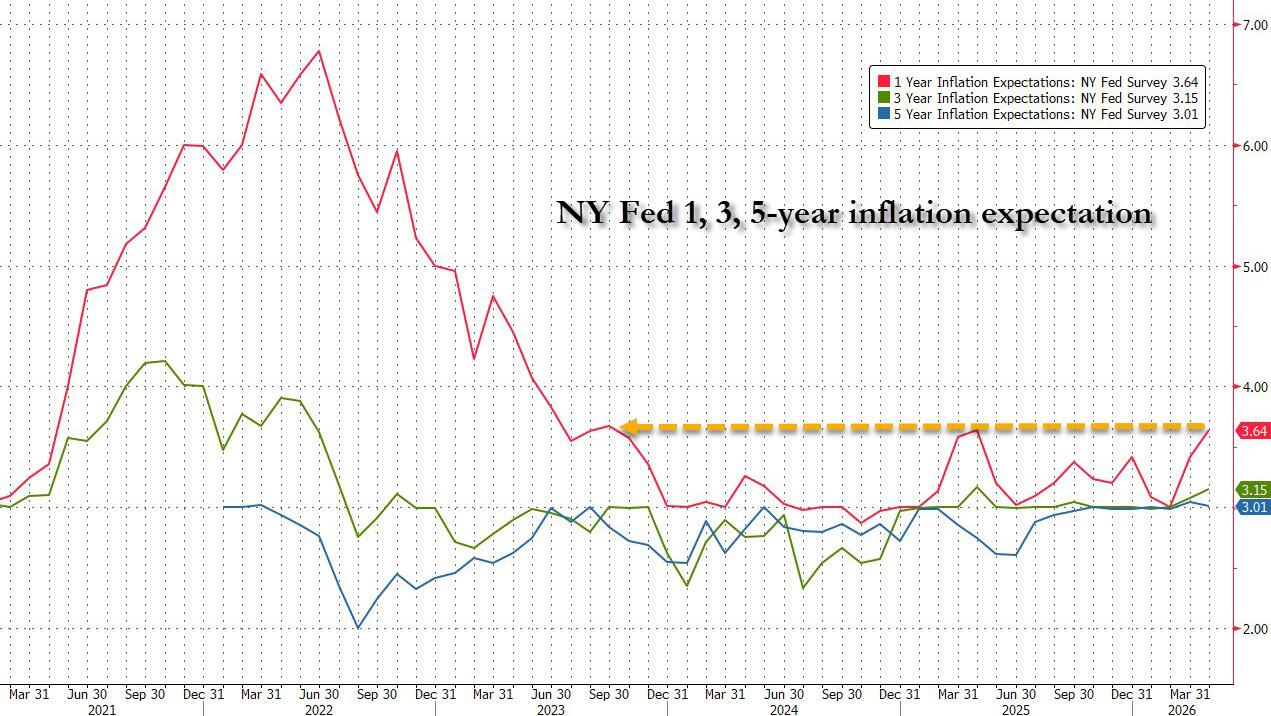
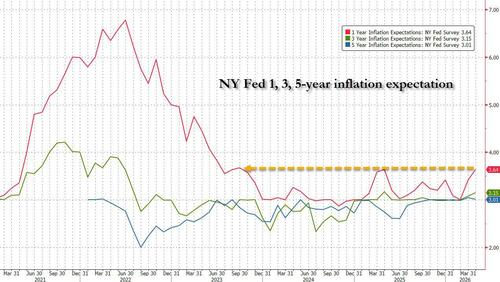
Ahead of tomorrow’s jobs report which is expected to show a substantial slowdown from last month’s 178K surge, moments ago we got another reminder that the stagflationary iceberg remains front and center ahead of the US, after the NY Fed’s latest monthly survey of consumer expectations reported that Inflation expectations at the one-year horizon rose again to 3.64% in April from the previous month’s 3.42%, the highest since September 2023. Inflation expectations were unchanged at 3.15% for the three-year-ahead horizon and also unchanged at 3.01% at the five-year-ahead horizon in April.
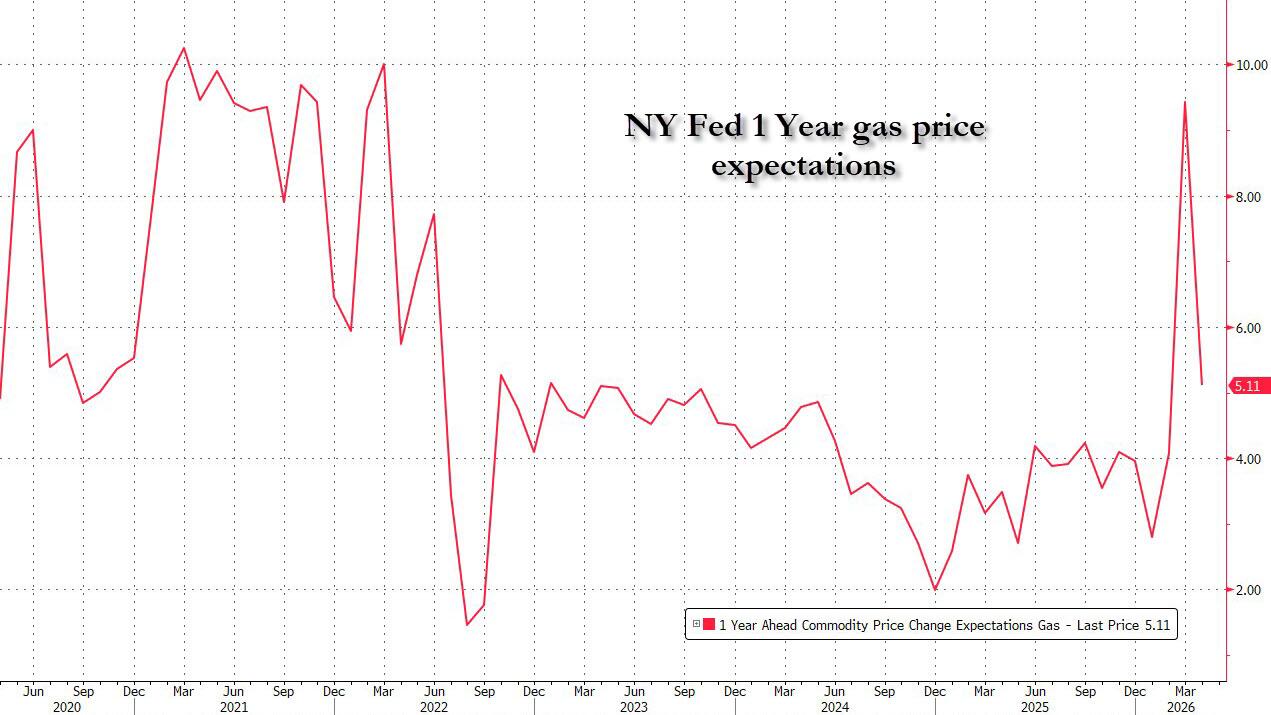
The jump in year-ahead expectations took place even though 1 year gas inflation expectations tumbled sharply in April to 5.11% from 9.42% in April, which had been the highest reading since March 2022.
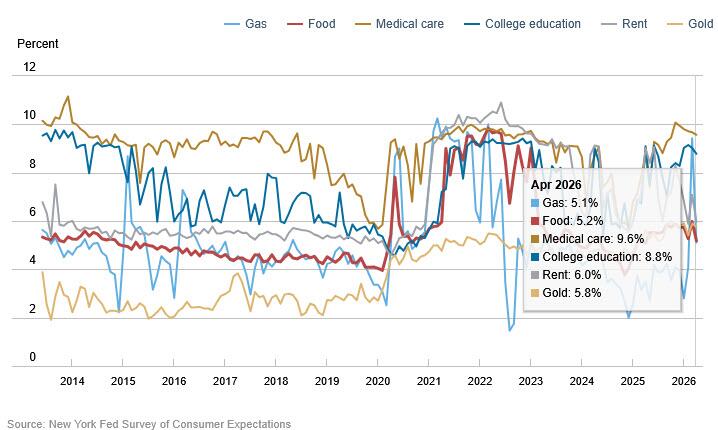
Other commodity price change expectations also rose, but to a more limited degree: food prices are now expected to rise 5.2%, down from 6%; medical costs to rise 9.6%, also a bit lower than the 9.7% in March; the price of a college education to rise 8.8% (down from 9%); and rent prices should drop from 7.1% to 6.0%.
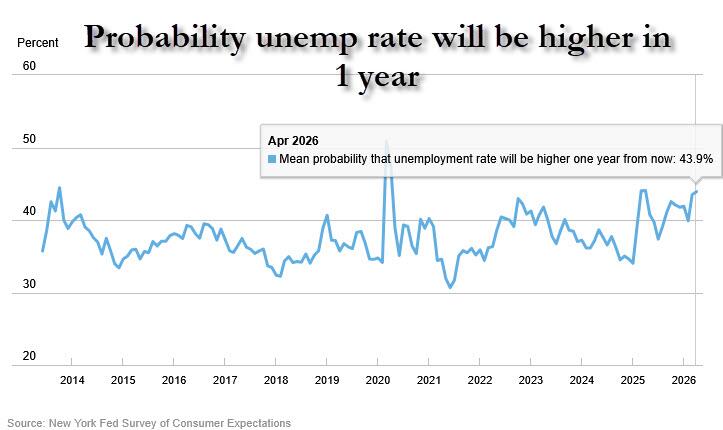
Turning to the labor market, sentiment has continued to deteriorate fast with respondents saying that the mean probability the US unemployment rate will be higher next year rose another 0.4% (after the 3.6% jump a month ago) to 43.9%; highest reading since April 2025
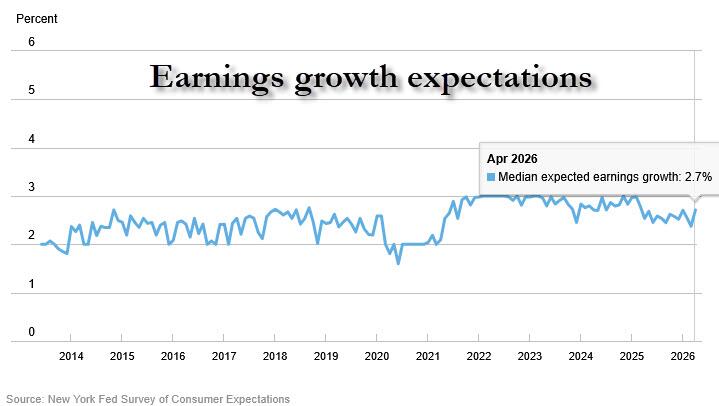
On the other end, median one-year-ahead earnings growth expectations rose by 0.3% to 2.7% in March, tied for the highest since April 2025.
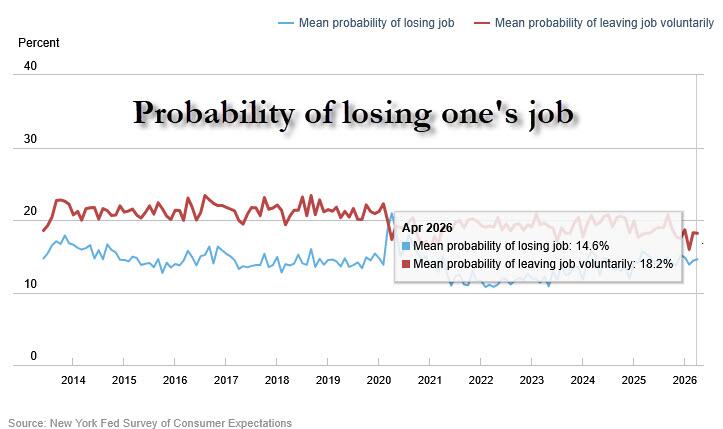
More bad news: the mean perceived probability of losing one’s job in the next 12 months increased again, this time by 0.2% to 14.6%, tied with the series’ 12-month trailing average of 14.6%. The mean probability of leaving one’s job voluntarily, or the expected quit rate, in the next 12 months declined by 0.1% to 18.2%.
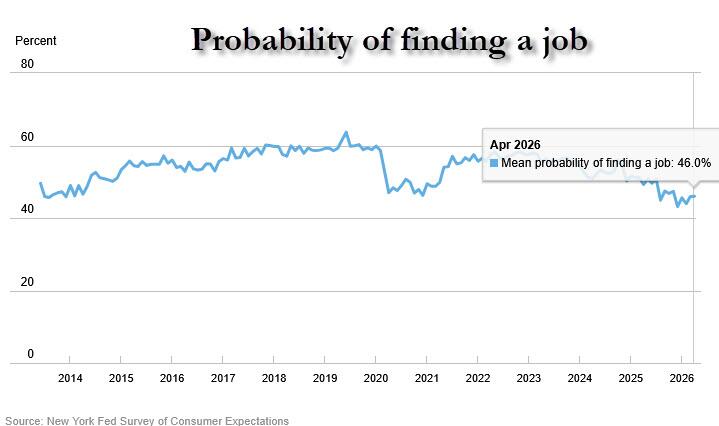
A silver lining: the mean perceived probability of finding a job if one’s current job was increased modestly by 0.1% to 46.0%, while remaining below its 12-month trailing average of 47.5%. The increase was broad-based across age, education, and income groups.
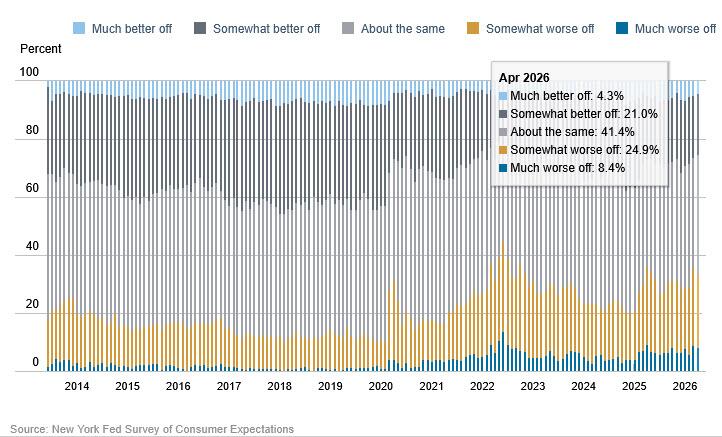
Perceptions about households’ current financial situations also deteriorated compared to a year ago, with a larger share of households reporting a worse financial situation and a smaller share reporting a better financial situation. Year-ahead expectations about households’ financial situations also worsened, with the share of households expecting a worse financial situation at its highest level since April 2025, and a smaller share of households expecting a better financial situation in one year from now.
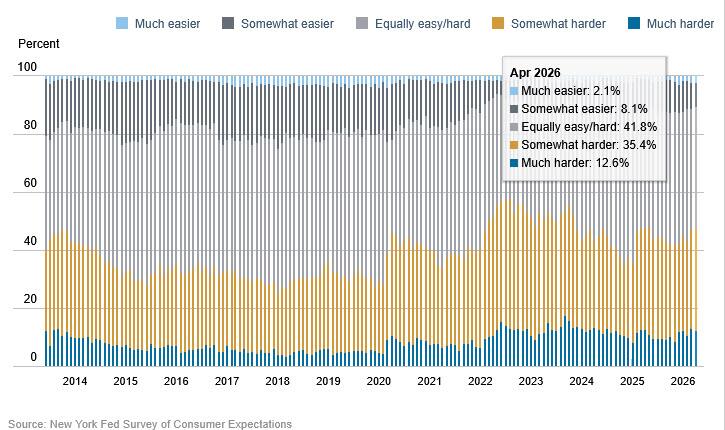
Perceptions of credit access compared to a year ago also deteriorated, with a higher share of households reporting it is harder to get credit and a smaller share of households reporting it is easier to get credit. Expectations for future credit availability deteriorated, with the net share of respondents expecting it will be harder to obtain credit in the year ahead increasing.
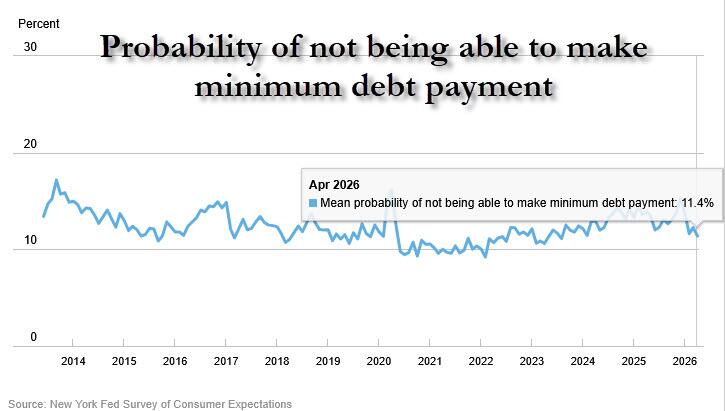
There was a glimmer of good news when it comes to household debt: the average perceived probability of missing a minimum debt payment over the next three months decreased by 0.9% to 11.4% the lowest reading in more than two years and below the 12-month trailing average of 13.2%.
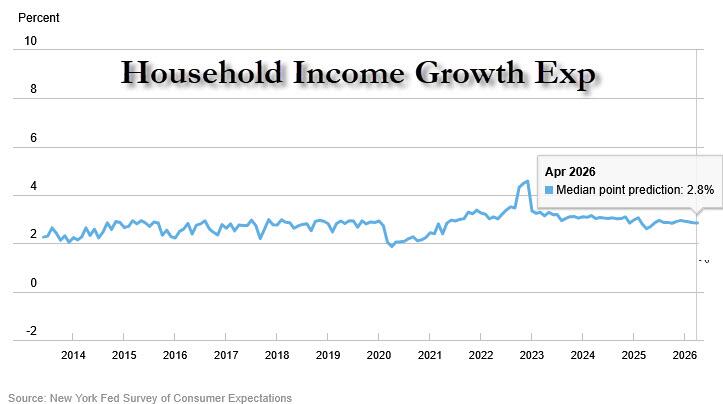
But the most concerning data was that expectations for household income dropped again, for a 5th straight months, sliding to just 2.8%, the lowest since Oct 2025…
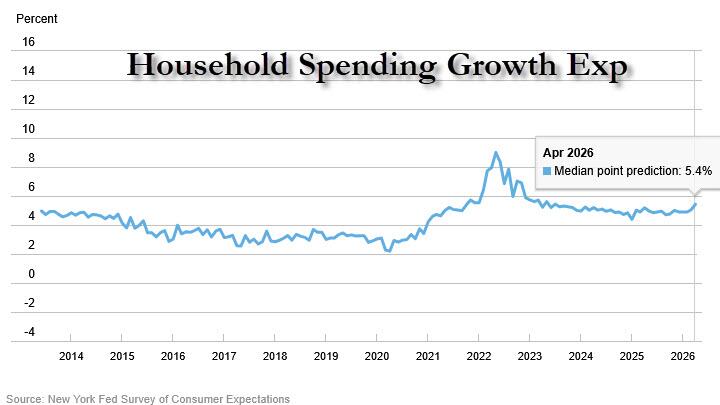
… while spending growth expectations jumped to 5.4% – after all those inflation-adjusted prices aren’t going down without a recession – the highest since July 2023.
And some more Household Finance observations:
The median expectation regarding a year-ahead change in taxes at current income level increased by 0.3 percentage point to 3.4%.
Median year-ahead expected growth in government debt increased by 0.2 percentage point to 10.0%, its highest reading since June 2023.
The mean perceived probability that the average interest rate on saving accounts will be higher in 12 months increased to 26.7%, its highest reading since November 2024.
The mean perceived probability that U.S. stock prices will be higher 12 months from now increased by 2.1 percentage points to 38.4%
More in the full report from the NY Fed.
Tyler Durden
Thu, 05/07/2026 – 12:44

Boeing Shares Rise As CEO Set To Join Trump On China Trip, Fueling Aircraft Order Speculation
Boeing Shares Rise As CEO Set To Join Trump On China Trip, Fueling Aircraft Order Speculation
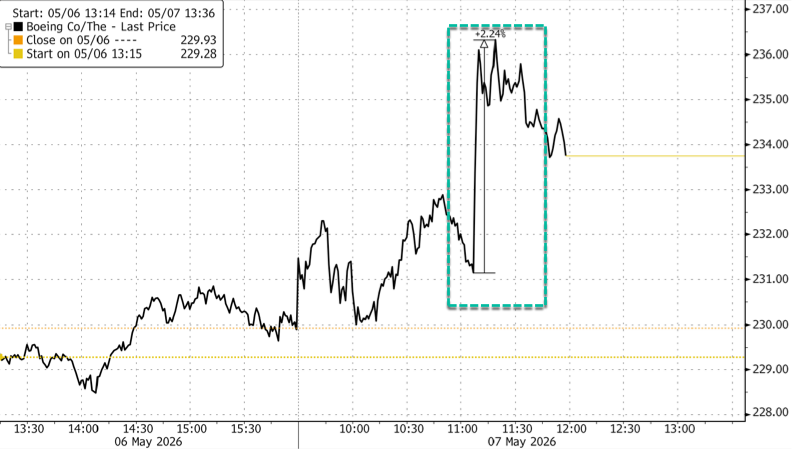
Boeing shares rose in late-morning trading in New York after CNBC reported that CEO Kelly Ortberg will join President Trump on his trip to Beijing next week for talks with President Xi Jinping.
Boeing shares climbed a little more than 2% on the news as traders began to price in the possibility of a Chinese aircraft order, potentially covering both narrow-body and wide-body jets from the U.S.-based aircraft manufacturer.
Senator Steve Daines, who is leading the bipartisan delegation to China, has called for stability and peaceful cooperation between the U.S. and China.
“I strongly believe that we want to de-escalate, not decouple. We want stability; we want mutual respect,” Daines said in opening remarks at a meeting with Chinese Foreign Minister Wang Yi on Thursday, according to Reuters.
Daines also released a statement:
Readout of Daines’ Congressional Delegation Trip to China
U.S. Senators Steve Daines (R-MT), Maria Cantwell (D-WA), Jerry Moran (R-KS), and Deb Fischer (R-NE) today conducted three official meetings in Beijing with Premier of China Li Qiang, Chairman of the National People’s Congress Zhao Leji, and Director of the Office of the Central Foreign Affairs Commission and Foreign Minister Wang Yi.
The bipartisan delegation discussed the importance of direct and open communication between the leadership of the two countries as well as issues of international and local importance. Topics of discussion included cooperation to stop the flow of fentanyl precursors, Iran and the Strait of Hormuz, and supply chain security. The Senators discussed the importance of reciprocal trade and opening up China’s markets to sustained agriculture trade across beef, wheat, pulse crops, potatoes, apples, cherries, soybeans, grain sorghum, seafood, and other industries. The delegation also discussed the importance of China’s relationship with Boeing and the proposed aircraft purchase currently under consideration. The Senators expressed their hope for an impactful and successful summit between President Trump and President Xi next week.
Readout of Daines’ Congressional Delegation Trip to China pic.twitter.com/0rtj6CZNTj
— Steve Daines (@SteveDaines) May 7, 2026
Related:
Did Trump Force China’s Hand? Beijing Nears 500-Jet Boeing Deal Ahead Of Xi Summit
Semafor speculates that the Trump team will invite “CEOs from Nvidia, Apple, Exxon, Boeing, and other big companies.”
Given Beijing’s history of using large commercial aircraft purchases as goodwill gestures, Ortberg’s inclusion on the trip raises the likelihood that Boeing could benefit and suggests tensions are cooling between the two superpowers, despite ongoing energy and trade turmoil in the Gulf region.
Tyler Durden
Thu, 05/07/2026 – 12:25
Planet Fitness Crashes Most On Record After Membership Slump Hits Outlook
Planet Fitness Crashes Most On Record After Membership Slump Hits Outlook
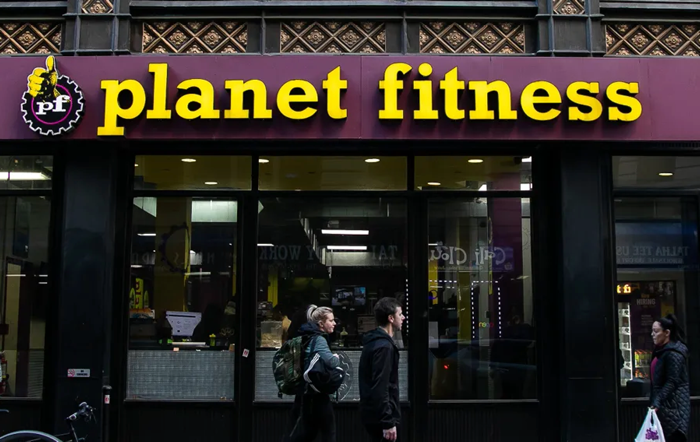
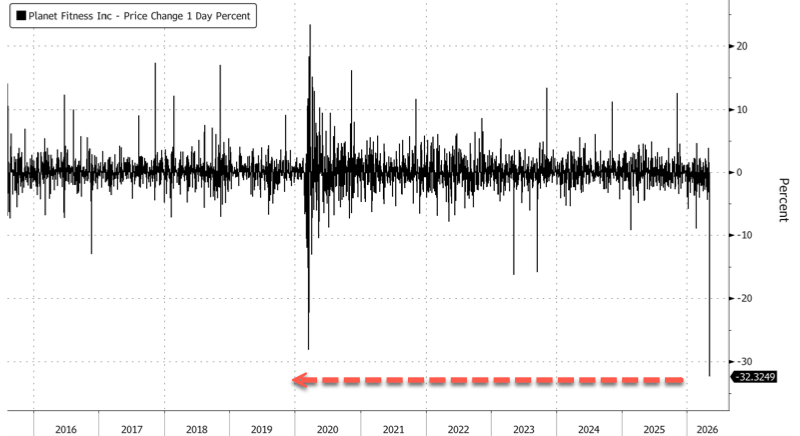
Planet Fitness shares crashed the most on record, according to Bloomberg data going back to 2015, after the budget gym operator slashed its full-year outlook, citing weaker-than-expected new-member sign-ups during the first quarter.
CEO Colleen Keating told analysts, “We faced some internal and external headwinds that impacted our join momentum year-to-date.”
Keating said, “Our overall performance reflects the strength and resiliency of our model. However, the addition of more than 700,000 net new members during the quarter did not meet our expectations.”
She continued, “Severe cold and winter weather in late January and February disrupted joins, especially as several of the storms fell on Mondays, our busiest join day of the week. We anticipated that our March campaign, Black Card first month free, which was very successful during the same time last year, would improve our join momentum over the remainder of Q1 and into Q2,” adding, “Yet as we moved through March and into early April, our join trends remained below our plan.”
Planet Fitness now expects 2026 sales growth of about 7%, down from prior guidance of roughly 9%. It also cut its adjusted EPS growth outlook to about 4%, well below the Bloomberg Consensus of 9.7%.
Here’s a snapshot of the full-year forecast, courtesy of Bloomberg:
Sees club sales growth up about 1%, saw up about 4% to 5%
Sees revenue up about 7%, saw about up 9%
Sees adjusted EBITDA up about 6%, saw about up 10%
Still sees system-wide new club openings of about 180 to 190 locations
While first-quarter sales and profit beat Bloomberg Consensus estimates, traders focused on dismal membership trends. Shares crashed 32% in the early U.S. cash session.
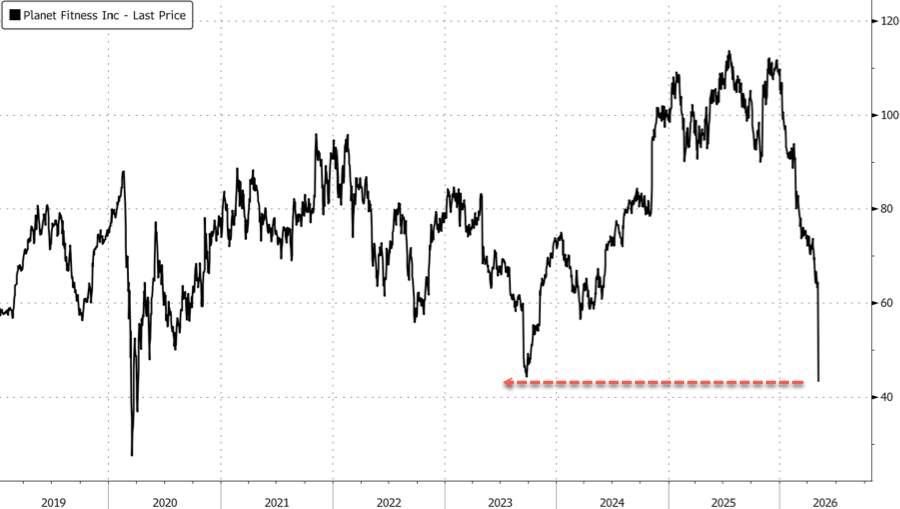
In the year, Planet Fitness shares are down nearly 60%, trading at levels last seen in Covid 2020 lows. Shares have fallen 61% since late 2025.
Not one analyst questioned Planet Fitness executives on whether GLP-1 trends impacted membership.
Tyler Durden
Thu, 05/07/2026 – 11:55
Beijing Flip-Flops, Asks Banks To Pause Loans To Sanctioned Refiners Days After Ordering Them To Ignore Sanctions
Beijing Flip-Flops, Asks Banks To Pause Loans To Sanctioned Refiners Days After Ordering Them To Ignore Sanctions
Over the weekend, we reported that in what some called a “watershed moment”, Beijing ordered Chinese companies not to comply with US sanctions on five domestic refiners linked to the Iranian oil trade, deploying for the first time a blocking measure introduced in 2021 that was aimed at protecting its firms from foreign laws it deemed unjustified. Of note, China’s refiners – including Hengli Petrochemical (Dalian) Refinery which was sanctioned last month and several other privately-owned processors – had been facing asset freezes and transaction bans. Hengli was the most ambitious target to date in China’s refining sector, and underscores US eagerness to push Iran to the negotiating table at all costs, even just weeks before an expected and long-awaited meeting between Trump and his counterpart Xi Jinping.
Well, maybe not. In an apparent reversal of its blocking measure orders, overnight Bloomberg reported that China’s financial regulator advised the country’s largest banks to temporarily suspend new loans to five refiners recently sanctioned by the US over their ties to Iranian oil.
The National Financial Regulatory Administration asked banks to review their exposure and business dealings with firms including the abovementioned Hengli Petrochemical (Dalian) Refinery, one of China’s largest private refiners, while awaiting further guidance. For now, banks have been guided not to extend new yuan-denominated credit, though they have also been told not to call in existing loans, Bloomberg’s sources said.
The verbal directive, which came before China entered a long holiday weekend on May 1 and ahead of the upcoming Trump-Xi summit contrasts with a May 2 notice from China’s Ministry of Commerce, which instructed companies to disregard US sanctions. That was the first time China had deployed a blocking measure introduced in 2021 aimed at protecting its firms from foreign laws it deemed unjustified.
While China has often railed against unilateral sanctions, it has in past instances also quietly allowed its largest companies to comply with them, in order to avoid blowback on its own economy. Its largest state banks have a history of complying with US sanctions against Iran, North Korea, and even top officials in Hong Kong to avoid losing access to the US dollar clearing system. In earlier episodes, Beijing sought to shield its systemically important lenders by channeling Iran-related transactions through China National Petroleum Corp’s subsidiary Bank of Kunlun Co., which is currently sanctioned.
As Bloomberg notes, the moves highlight the balancing act Beijing faces as it tries to project defiance toward the Trump administration while shielding its largest state-owned banks from US secondary sanctions. Tensions are escalating between the superpowers just weeks before a long-awaited meeting between President Donald Trump and his counterpart Xi Jinping in Beijing on May 14–15.
Meanwhile, the White House has been ratcheting up efforts to cut off Iranian oil shipments to starve the Tehran regime for which oil remains the most vital financial lifeline. Late last month, the Treasury Department’s Office of Foreign Assets Control blacklisted Hengli, targeting a significant and well-connected player in the country’s vast crude-processing industry. The US also warned banks they are at risk of secondary sanctions if they support Chinese private refiners that buy Iranian oil.
Treasury Secretary Scott Bessent said the US sent letters to two Chinese banks warning them of the risk of secondary sanctions if they are found to be supporting transactions tied to Iran. Bessent didn’t identify the banks.
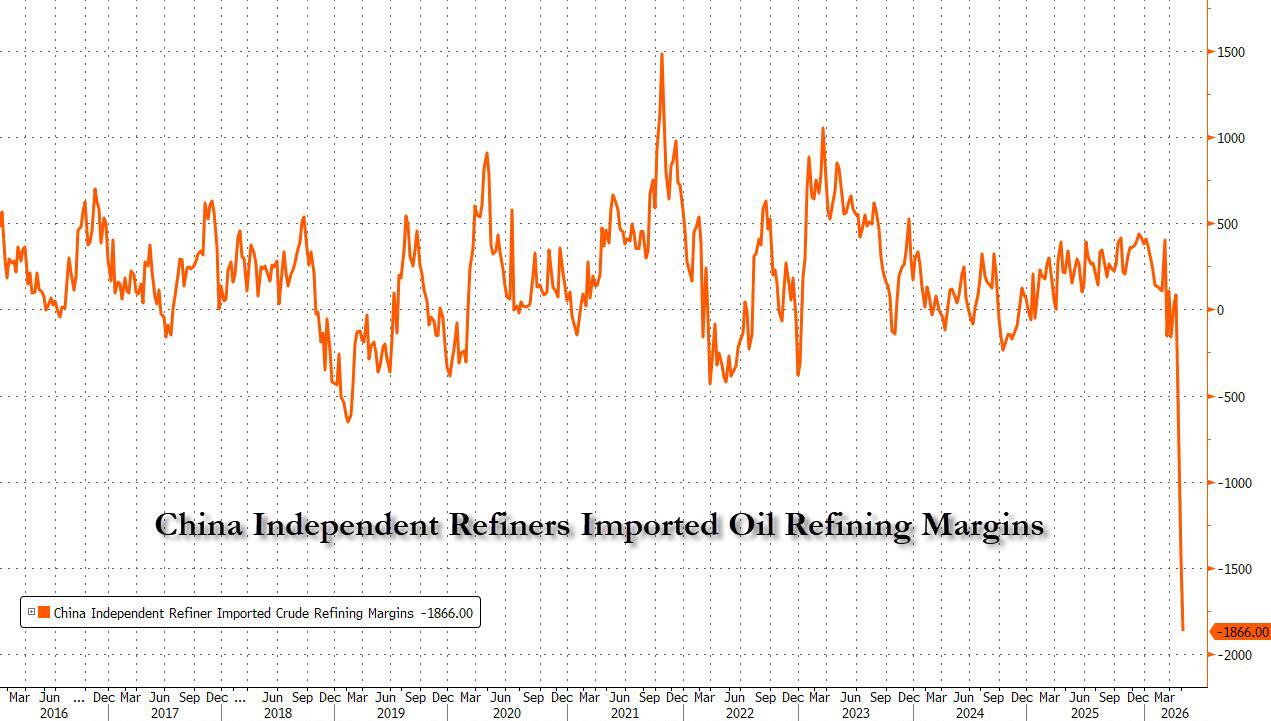
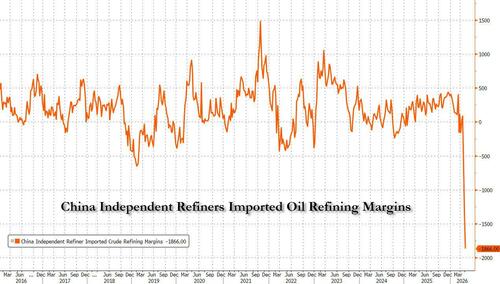
Separately, but perhaps linked to this, China’s independent refiners have slowed purchases of Iranian crude as they seek to manage a government push to make fuel at any cost to ensure energy security while they face collapsing profit margins.
There are about 16 million barrels on ships anchored in the Yellow Sea off the Chinese coast, almost 40% higher than the level prior to a US blockade of Iran’s ports in mid-April, according to data from Kpler. Already razor-thin teapot margins plunged to record negative levels after the cordon began, while Iran’s oil prices have climbed since the war started, compounding the economic stress on independent refiners.
While the cost of Iranian crude is now fetching a slight premium to ICE Brent, compared with discounts prior to the war, China’s domestic fuel policy is also crimping refiners’ profits. Price hikes are often softened to help shield consumers, preventing processors from fully passing on rising costs. Above all, Chna’s “energy security” is the dominant theme, even if it means an entire industry has to suffer huge losses.
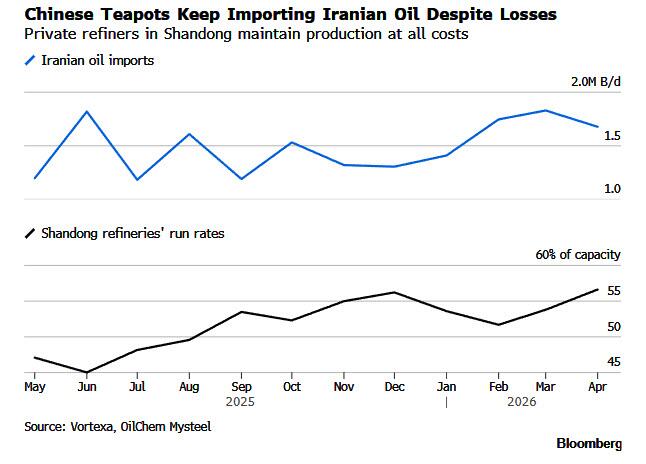
The smaller processors, known as teapots, have little choice but to keep making fuels such as diesel and gasoline. They have been told by Beijing to keep output at 2025 levels, even if they incur losses, or face cuts to their oil import quotas. Refining rates in Shandong province ramped up over April to the highest level in almost two years, even as processing margins sunk deeply into the red.
Chinese purchases of Iranian oil are expected to be above 1.4 million barrels a day this year, down from a March peak of 1.8 million barrels a day, according to Emma Li, lead China market analyst at Vortexa Ltd. “China’s demand for high-risk crude is unlikely to weaken materially,” she said.
“I would not be surprised if the teapots are prioritizing politics over economics with an eye to their long-term survival,” said Erica Downs, a senior research scholar at Columbia University’s Center on Global Energy Policy. “They may be calculating that if they do their part to help China weather the energy crisis, then maybe they will build up some goodwill in Beijing.”
China’s teapots have a checkered history with government authorities. They have resisted efforts by Beijing to consolidate the industry in the past, but proved crucial for China’s fuel security in the 2000s. Iran also relies heavily on the smaller refiners, which buy most of the OPEC producer’s crude.
“In China, during special times like this, it becomes a political mission for private refiners to help secure fuel supplies,” said Liao Na, the founder of GL Consulting, which provides research on the Chinese refining industry.
Tyler Durden
Thu, 05/07/2026 – 11:40

Shake Shack Shares Crash Most On Record; McDonald’s CEO Warns Of Faltering Consumer
Shake Shack Shares Crash Most On Record; McDonald’s CEO Warns Of Faltering Consumer
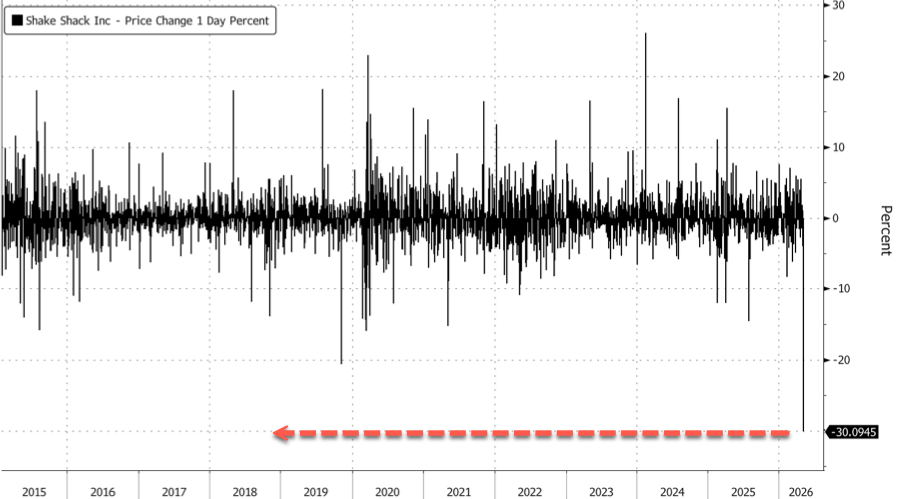
Shake Shack shares crashed the most on record after the burger chain reported weaker-than-expected first-quarter revenue and adjusted EBITDA, with management blaming the miss on “significant weather impacts.”
But the weather excuse may be masking a much larger problem: a weakening consumer increasingly pushing back against premium fast-casual pricing, with the average Shake Shack meal costing around $23.
SHAK reported first-quarter results that missed Bloomberg Consensus estimates, with revenue and adjusted EBITDA coming in light as the burger chain faced margin pressure despite positive comparable sales.
Here’s a snapshot of first-quarter results, courtesy of Bloomberg:
Revenue: $366.7 million, estimate $372.5 million (Bloomberg Consensus)
Shack sales: $354.0 million, estimate $358.7 million
Licensing revenue: $12.7 million
Adjusted EBITDA: $37.0 million, estimate $45.5 million
Comparable sales: +4.6%, estimate +4.65%
Traffic growth: 1.4%
Restaurant-level operating margin: 21.2%, estimate 21.9%
CEO Rob Lynch noted that soaring beef costs rose by a low-teens percentage, while unfavorable weather eroded profit. Underlying sales and traffic momentum remained solid in the quarter.
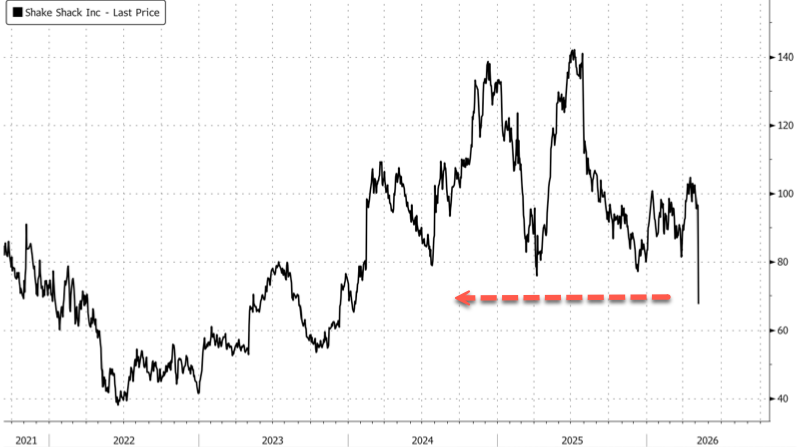
Wall Street analysts were not thrilled with the earnings report. Shares crashed by the most on record, plunging 29% in the early U.S. cash session.
For the year, shares are down 17% and now trading at early-2024 levels.
Separately, Shake Shack announced in a separate release that Michelle Hook will be appointed as the new CFO next Monday.
Earlier, McDonald’s CEO warned that current consumer environment is getting pressured: “Clearly, when you have elevated gas prices, which is the core issue that I think we’re all seeing about in the press right now, gas prices, inflation on that, that is going to disproportionately impact low-income consumers. And so we expect the pressures there are going to continue.”
Tyler Durden
Thu, 05/07/2026 – 11:25
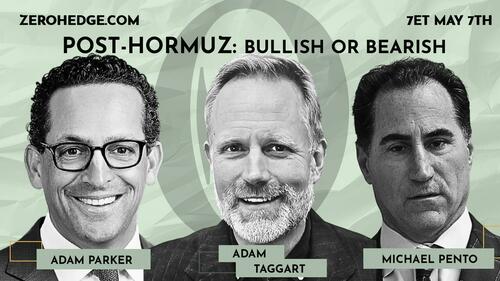
Hormuz To Year-End: Bullish Or Bearish?
Hormuz To Year-End: Bullish Or Bearish?
With hopes of a permanent truce being continually undermined by minor skirmishes and blockade infringements, it remains unclear whether this war is close to ending. And while oil prices gyrate from one Trump Truth post to the next, two weeks of Brent above $100/barrel (only just inching below as of this morning) suggests the market is not buying into the quick resolution narrative.
Though it is worth asking the question, what if the peace talks are truly different this time?
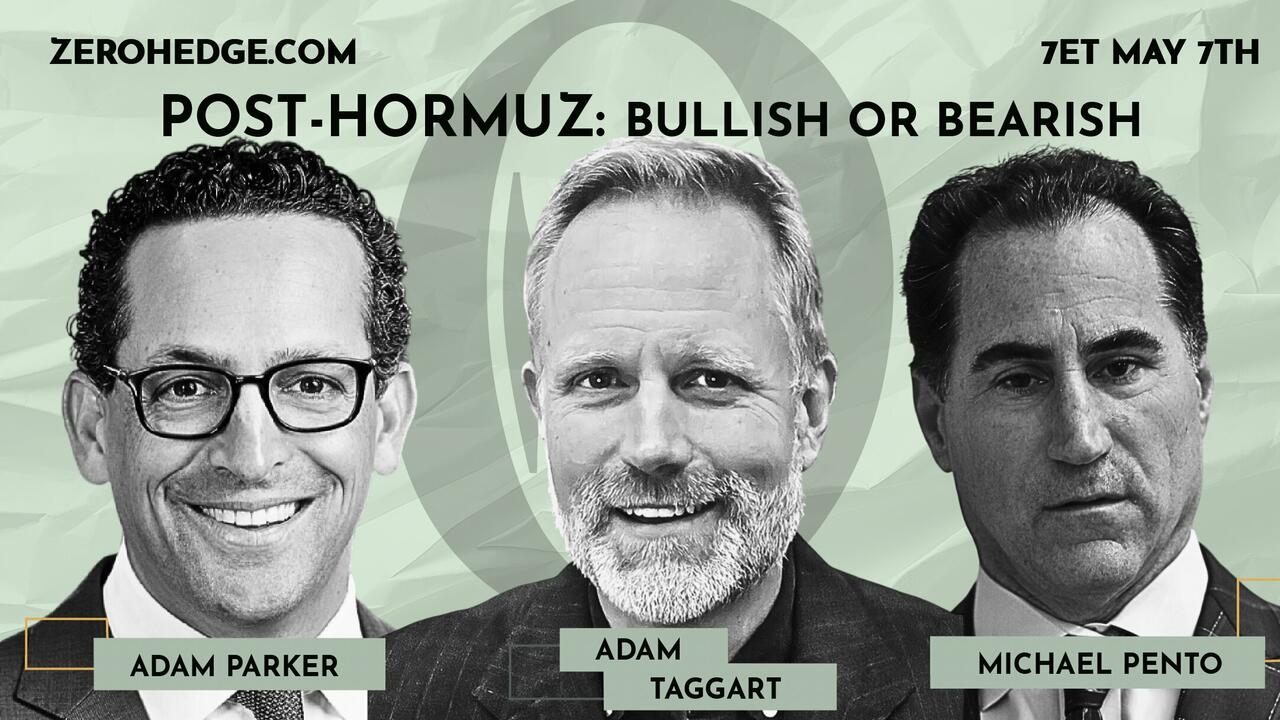
Joining ZeroHedge tonight at 7pm ET to answer what a post-Hormuz reopening means for markets will be former Morgan Stanley chief investment officer Adam Parker, who now runs Trivariate Research, and Michael Pento of Pento Portfolio Strategies. Parker and Pento will be hosted by Adam Taggart, founder of Thoughtful Money and regular ZH moderator.
Context:
The U.S. and Iran are reportedly close to a preliminary peace agreement that would reopen the Strait of Hormuz, ease shipping restrictions, and begin a broader 30-day negotiation process. Reuters and Axios reported the draft framework could be finalized within days.
President Trump paused “Project Freedom,” the U.S. naval operation escorting ships through Hormuz, specifically to give diplomacy room to advance. Officials described the move as a confidence-building step tied directly to ongoing negotiations.
Markets reacted as if a breakthrough is increasingly likely. Oil prices plunged 7%+ yesterday on the reports.
A potential wrench in the works, Israel remains eager to continue striking Tehran and claims it did not know Trump and the Iranians were ‘close’ to a deal. Israel has also continued bombing Lebanon despite President Trump’s April 17 demand that they stop.
Even assuming the best case scenario of an imminent reopening, baked-in supply disruptions may be sufficient to trigger a recession later in the year.
UBS projects US headline CPI will rise to 4.44% in May, driven by a sharp 12% increase in gasoline prices
— zerohedge (@zerohedge) May 6, 2026
Might a post-Hormuz “peace rally” be short-lived upon the realization of a weak real economy, burdened by higher gas, fertilizer, and food prices?
Tonight:
Tune in tonight at 7pm ET to hear from Pento, Parker, and Taggart to see how they are positioned into year-end. Right here on the ZH homepage, X feed, and YouTube channel.
Tyler Durden
Thu, 05/07/2026 – 11:10
https://www.zerohedge.com/markets/hormuz-year-end-bullish-or-bearish
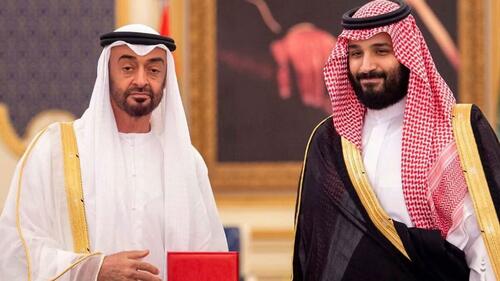
Saudi Arabia Vs UAE
Saudi Arabia Vs UAE
By Benjamin Picton, Senior Market Strategist at Rabobank
The Little Red Hen
Markets are bulled-up this morning on prospects for peace in the Iran war. The S&P500 and NASDAQ closed at fresh all-time highs and Brent crude prices closed 7.8% lower at $101.27/bbl. While some analysts are understandably wary of another Axios report touting progress in Middle East relations (and therefore lower oil prices!), markets are clearly not in a mood to look a gift horse in the mouth.
Iranian foreign ministry spokesman Ismail Baghieri told news sources that Iran is reviewing a 14-point American memo that outlines terms for peace. Axios reports that those terms include Iran giving up the nuclear fuel that it has enriched to near-weapons-grade (though, there is no detail on who they would give it up to), an Iranian commitment to never seek a nuclear weapon, moratoriums on Iranian nuclear enrichment, Iranian agreement to enhanced UN-led nuclear inspections, and a framework to gradually restore navigation through Hormuz and lift US sanctions.
The IRGC Navy announced via X that safe transit through Hormuz would be ensured. This comes just 24 hours after Donald Trump paused Operation Freedom, an initiative to free commercial ships trapped in the Persian Gulf that triggered exchanges of fire between Iran and the US and its allies – most notably the UAE. In a curious case of timing, Iran officially launched a new government agency called the ‘Persian Gulf Strait Authority’, which perhaps raises the probability that transit through Hormuz will not look as it did prior to the war, and that the Iranian tollbooth could be a concession made by the American side to get a deal done.
This has far-reaching implications for the post-war order. At face value, acceding to Iran operating Hormuz as a tollbooth looks like an American strategic defeat since it leaves the GCC and ‘the West’ in a worse position than prior to the war with respect to energy and other commodity flows. It also sets an uncomfortable precedent whereby other countries might get the idea that freedom of navigation through natural maritime chokepoints is no longer sacrosanct, and certainly no longer underwritten by US naval power for free. Regular readers will recall that an Indonesian minister recently did a bit of kite flying on the idea of tolling the Strait of Malacca, which would have sent a chill up the spine of most of East Asia and Oceania and drew quick (but polite) denunciations across the region.
On the plus side for the Americans, leaving Hormuz in nominal Iranian control would only increase the incentive for the GCC to build the infrastructure to send oil West to Israeli ports or Southeast into the Gulf of Oman. It seems awfully coincidental that the UAE announced that it would be leaving OPEC immediately after the US agreed to provide it with dollar swaplines, which are usually reserved for European allies. It seems to be the case that the UAE has answered the call to partner with the US and Israel because the latter two provided it with support versus Iran where others didn’t. This could mean that the UAE supports US ambitions after the war ends by pumping more crude than would have been the case had it remained in OPEC, but the question of where that oil flows and whether it remains part of a mostly fungible world market now looms.
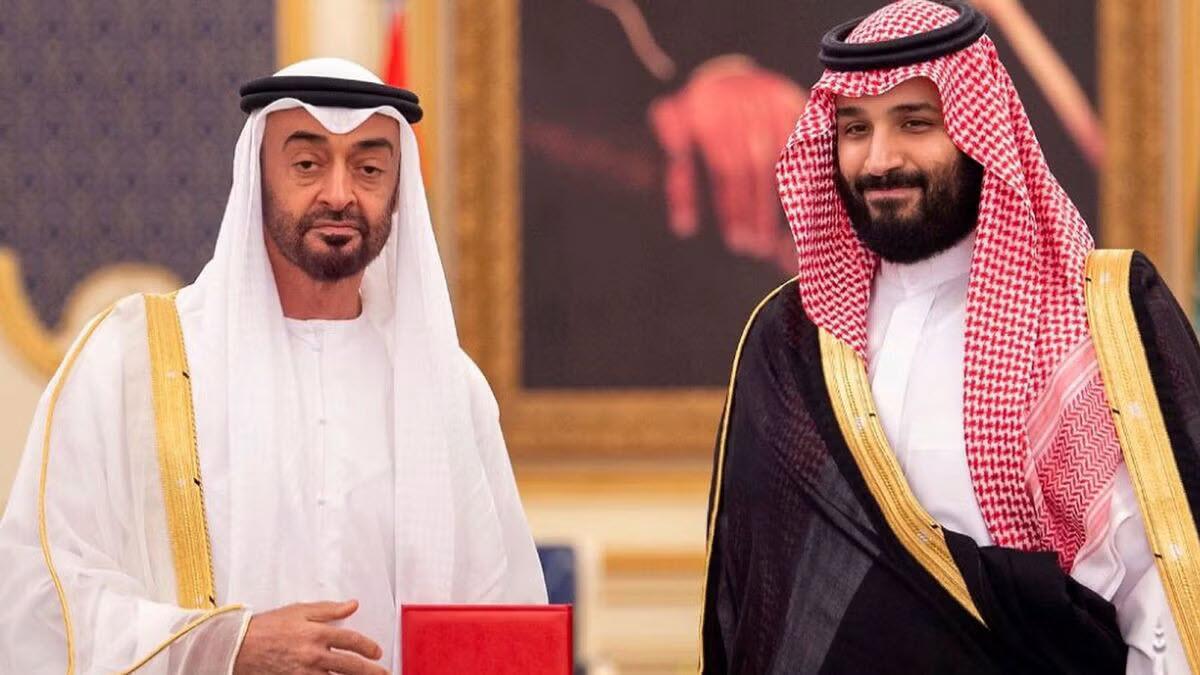
This may rub Saudi Arabia the wrong way given that the Kingdom vies with the UAE for influence in the region and the two have been at odds recently in Yemen. Media reports that Trump’s decision to pause Operation Freedom came after Saudi Arabia suspended permission for the US military to use its bases and airspace to support it. Was this decision by Saudi Arabia informed by deepening US ties with the UAE?
There is also the question of how Europe fits in with a post-war order. France is now moving the Charles de Gaulle aircraft carrier and its escorts towards the Middle East to support a Franco-British led mission to support freedom of movement through Hormuz. British PM Starmer, meanwhile, is in campaign mode for today’s round of UK local government elections, making the pitch that he kept Britain out of the war while his opponents from the Conservative Party and Reform were of a mind to support the Americans.
This reminds me of the story of the little red hen:
US: “Who will help me to ensure that Iran never acquires a nuclear weapon?”
“Not I!” said France. “Not I!” said Britain. “Not I!” said South Korea. “Not I!” said Australia.
US: “Fine. Then I will do it myself.”
US: “Who will help me to re-open the Strait of Hormuz?”
“Not I!” said France. “Not I!” said Britain. “Not I!” said South Korea. “Not I!” said Australia.
US: “Fine. Then I will do it myself.”
US: “Who will help me to consume the cheap energy from Venezuela, the US homeland, and the UAE?”
“I will!” said France. “I will!” said Britain. “I will!” said South Korea. “I will!” said Australia.
US: …you get the picture.
The point here is that the US is now in the business of securing physical supply chains and membership of the supply chain club brings not only privileges, but also responsibilities. Namely: the responsibility to meaningfully contribute to the attainment of common geopolitical goals. It doesn’t bear reminding that the US has been critical of NATO and the EU, and the latest US national security strategy openly questions whether political and demographic changes might mean that Western countries won’t be US allies at all in a few years’ time. One need only look at the political preferences of Gen Zs in those countries to understand the concern.
There are diverging reactions to this across the rest of the West. Canada under Mark Carney and – to a certain extent – France under Emmanuel Macron have taken up the mantle of official leaders of the opposition to Trumpism and the breaking of the liberal world order to remake the global settlement in a way that allows the US to respond to Chinese production and supply chain dominance. Israel, the UAE and Argentina are “all the way with Donald J”, Japan and Australia (who has just announced an 82% tariff against Chinese steel) are increasingly leaning that way as defense and economic ties deepen and geographical realities overrule the luxury of preference.
Which way various countries choose to jump will inform market access, investment decisions, supply chain access, cost of credit and all sorts of other important variables in the future. Choose wisely, dear reader.
Tyler Durden
Thu, 05/07/2026 – 10:55
eBay Nukes GameStop CEO’s Account After Buyout Stunt
eBay Nukes GameStop CEO’s Account After Buyout Stunt
GameStop CEO Ryan Cohen revealed on X that his eBay account was suspended after he listed a pair of “used socks” on the auction website, a publicity stunt that comes as he pursues a $56 billion bid to acquire the online marketplace.
Cohen listed a pair of used socks on his eBay account, but it appears he also listed other items, as the warning notification in the screenshot he posted on X shows: “You’ve reached the amount ($50,000) you can list this month.”
on phone with customer support @eBay . please respond @eBay pic.twitter.com/HuUKxwivqN
— Ryan Cohen (@ryancohen) May 6, 2026
Hours after he shared a screenshot of his used socks eBay listing on X, he posted late Wednesday that his account “has been permanently suspended.”
I have been suspended from eBay pic.twitter.com/0vadYCQ6KE
— Ryan Cohen (@ryancohen) May 7, 2026
Cohen’s eBay ban comes days after he made a $56 billion buyout bid for eBay, funded by “half cash, half stock.”
On Monday, Cohen joined CNBC’s Andrew Sorkin to discuss GameStop’s bid for eBay.
Sorkin asked Cohen, “How does the math work for you?”
That was the moment Cohen provided little information on the basic math, instead referring back to a press release, as well as the $20 billion financing letter from TD. That interview raised more financing questions, with some believing the takeover bid for the auction site was merely a stunt.
“Big Short” investor Michael Burry went from saying “GameStop Makes Its Play $56 Billion for eBay, Makes Perfect Sense” one day, to exiting his long GameStop position the next day, citing: “Wall Street does indeed mistake debt for creativity, and does so constantly. I of all people should have known.”
As we pointed out earlier in the week, Wall Street analysts were widely skeptical of the financing deal, given that eBay’s market cap is 4 times that of GameStop’s.
GameStop’s 13D filing shows Cohen’s eBay position: derivatives, or option calls, represent 99.89% (22,176,000 shares) of its $EBAY position.
Certainly, Cohen is attention-seeking… Was the stunt all about trying to cash in on eBay call options?
Tyler Durden
Thu, 05/07/2026 – 10:40
https://www.zerohedge.com/markets/ebay-nukes-gamestop-ceos-account-after-buyout-stunt

Marijuana Vendors Sued For Allegedly Not Warning Consumers Of Risks
Marijuana Vendors Sued For Allegedly Not Warning Consumers Of Risks
Authored by Matthew Vadum via The Epoch Times,
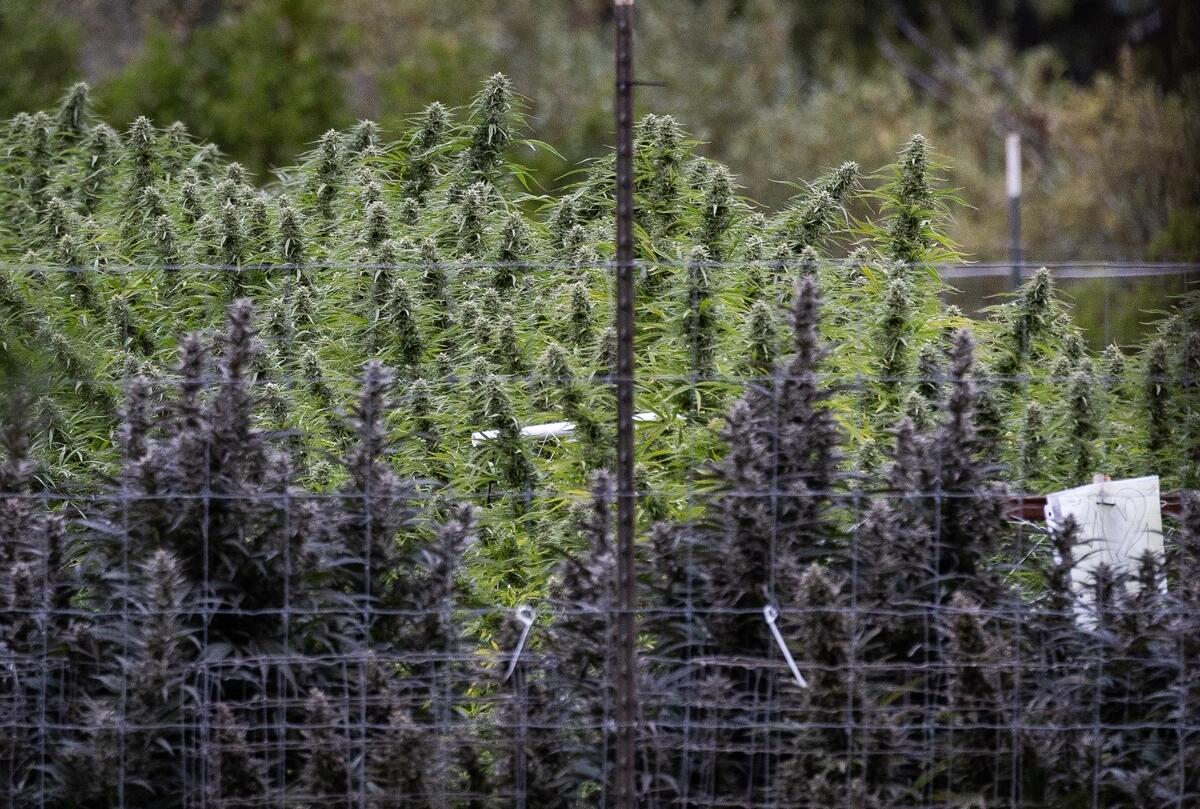
Companies that legally sell recreational marijuana to adults are being sued in Illinois and Connecticut for allegedly not warning customers of the possible health problems caused by the drug.
Attorneys for the plaintiffs say these proposed class actions—four in all—that were filed May 4 in federal and state courts are the first of their kind. Federal and state court rules govern whether a class action gets certified and is allowed to proceed.
The lawsuits come after recent studies reported that marijuana use can change human DNA and cause psychosis, and that the drug increases the risk of death from cardiovascular disease, cancer, and other causes.
The newly filed legal complaints say that cannabis is highly addictive and can contribute to mental health disorders such as schizophrenia, suicidal ideation, and depression.
About 129 million Americans say they have used marijuana at some point in their lives. As more states legalize use of the drug, that figure is expected to rise.
The lawsuits allege that the defendants—Cresco, Curaleaf, Green Thumb Industries, and Verano—marketed recreational marijuana for its supposed medicinal benefits to generate billions of dollars in revenues, while not letting consumers know of health risks.
Attorney Jack Franks in Marengo, Illinois, said the plaintiffs are seeking damages for overpaying or being misled into buying the products.
They are also seeking clear product warnings that spell out the mental and physical health risks, Franks told The Epoch Times.
“It’s a legal product in many states, but it’s not adequately laid out what the risks are,” he said.
“They deliberately marketed highly potent products while concealing the known risks. Our clients deserve the truth.”
Attorney James Bilsborrow of New York City said the case rests upon “decades of gold-standard medical research establishing that cannabis, especially high-potency cannabis, is wreaking havoc on public health.”
“Rather than warn consumers about these well-established dangers, the cannabis industry, following the tobacco and opioid industries’ playbook, has denied the risks and marketed its products as safe or even therapeutic,” he told The Epoch Times.
The plaintiffs in the Illinois lawsuit are 41 consumers who purchased cannabis products, according to the federal class action filed in U.S. District Court for the Northern District of Illinois.
The legal complaint alleges that cannabis purveyors promote their products to “an unsuspecting public through a public relations megaphone as the antidote to ailments of all kinds, including, among others, insomnia, narcolepsy, over-eating, cancer, auto-immune disorders, neuropathy, pain, anger, boredom, sadness, shyness, irritable bowel syndrome, grief, and opioid addiction.”
The similar Connecticut lawsuit names as plaintiffs 18 consumers who bought marijuana products.
The legal complaints for the lawsuits filed in state courts in Illinois and Connecticut were not available at publication time. The plaintiffs’ attorneys said the state lawsuits are largely the same as the federal lawsuits.
A Verano spokesman told The Epoch Times that the company strongly disagrees “with the allegations and [intends] to defend the matter vigorously.”
“This lawsuit is part of a broader litigation campaign that plaintiffs’ counsel has brought against several multi-state cannabis operators, and mirrors claims that have been rejected by courts in similar legal actions against multi-state operators in the industry earlier this year,” the company said.
Verano complies with applicable state laws and regulations, including those related to labeling, testing, and warning requirements, the company said.
“The medical use and benefits of cannabis have also long been recognized by the states themselves, as reflected in the comprehensive medical marijuana programs that state legislatures and regulators have established and overseen for years.”
The Epoch Times reached out for comment to the defendants, Cresco, Curaleaf, and Green Thumb Industries.
No replies were received by publication time.
Tyler Durden
Thu, 05/07/2026 – 10:25
https://www.zerohedge.com/medical/marijuana-vendors-sued-allegedly-not-warning-consumers-risks
UAE Slips Hidden Oil Tankers Through Straits Of Hormuz
UAE Slips Hidden Oil Tankers Through Straits Of Hormuz
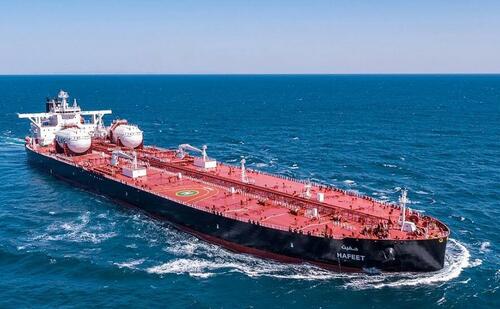
While conventional wisdom, especially after Trump’s counter-blockade of Iran’s blockade, that the Strait of Hormuz is completely blocked, the reality is that the UAE is now running loaded crude tankers through the Iranian-controlled Strait of Hormuz with transponders switched off – just like sanctioned Iranian ghost fleets in the pre-war period – just to pry loose a fraction of the oil bottled up in the Gulf.
According to shipping data reported by Reuters, industry sources, and satellite tracking, Emirati state-owned energy giant ADNOC and willing Asian buyers have moved at least 6 million barrels of Upper Zakum and Das crude out of the Gulf in April alone via four tankers. While that’s a drop in the bucket compared to pre-war exports, it proves participants are willing to roll the dice with Iranian drones and speedboats to unlock trapped supply.
At the same time, other Gulf heavyweights Iraq, Kuwait, and Qatar have largely thrown in the towel. Saudi Arabia is rerouting via the Red Sea where possible. Only the UAE is playing an occasional round of Russian roulette through the world’s most critical oil chokepoint.
Dark Fleet Playbook Comes to Abu Dhabi
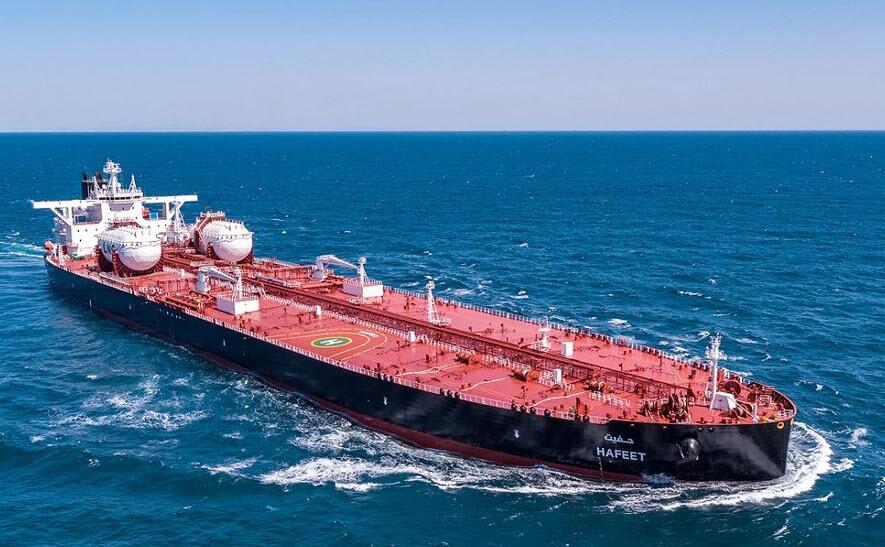
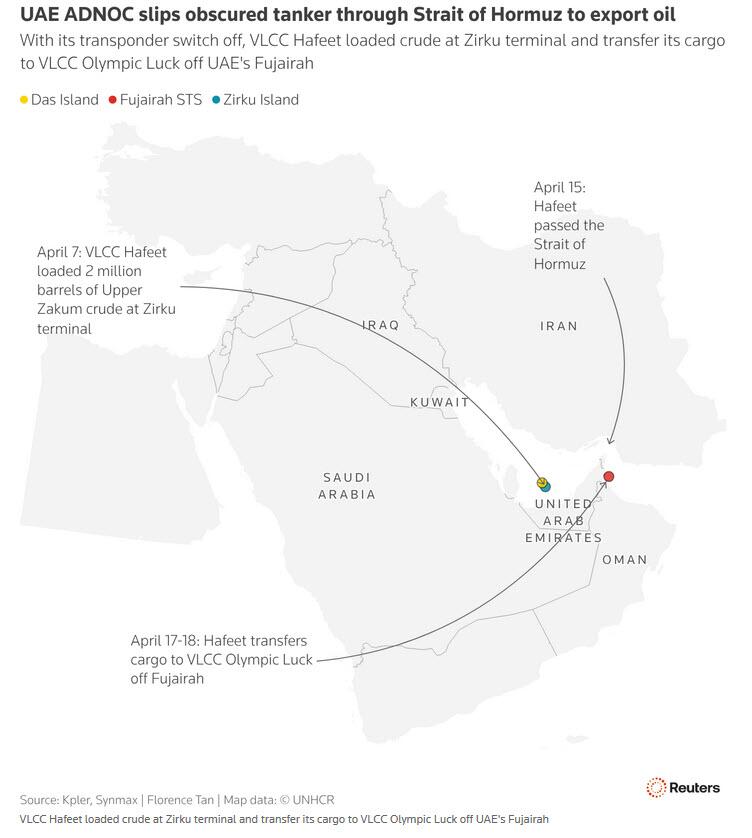
Emirati tankers are sailing with AIS trackers deliberately shut off, the same tactic Tehran has used for years to evade U.S. sanctions. One VLCC, the Hafeet (managed by ADNOC’s own logistics arm), loaded 2 million barrels of Upper Zakum on April 7, slipped through the strait by April 15, then did a ship-to-ship transfer to the Olympic Luck outside, which delivered it to Malaysia’s Pengerang refinery (a Petronas-Aramco JV).
Another, the Aliakmon I, carried 2 million barrels of Das crude out on April 27 and dumped it into Oman’s Ras Markaz storage. Two Suezmax tankers headed straight to South Korean refiners.
One Upper Zakum parcel fetched a record $20 premium over official selling prices which explains why UAE sellers are willing to risk it all just to get it to a desperate buyer.
ADNOC has already slashed exports by over 1 million bpd since the Iran war kicked off February 28, down sharply from 3.1 million bpd last year. Most of its remaining volumes move via the safer Fujairah pipeline route, but the Gulf-side crude is now trapped.
Meanwhile, between the combined Iranian and US blockades on Iranian barrels, roughly one-fifth of global oil and gas supply has been disrupted. Brent and WTI have responded accordingly, trading well north of $100.
Still, the dangers aren’t theoretical. On Monday, the UAE accused Iran of drone-attacking the empty ADNOC tanker Barakah in the strait. Yet the loaded runs continue.
ADNOC is already notifying customers it plans to keep loading Das and Upper Zakum from inside the Gulf in May, with ship-to-ship transfers outside at Fujairah or Oman’s Sohar. Talks with Asian refiners are ongoing.
Not that this needs to be repeated, as we have been doing every day for the past 2+ months, but this episode again exposes the fragility of global physical energy flows. A fifth of supply can be choked off by regional war, yet the system is so tight that buyers in Southeast Asia and Korea are still lining up for whatever dribbles through, even if there is a clear risk it could end up as a flaming fireball somewhere in the Persian Gulf. This, as inventories are draining at a record pace among buyers of oil, storage is filling to the brim at the sellers, prices are bid and the risk premium is only getting fatter.
Meanwhile, the rest of the Gulf sits on barrels it can’t (or won’t) move without bribes to Tehran, massive discounts or outright halts. Worse, this isn’t a temporary disruption: It’s the new normal until someone blinks or the conflict dramatically escalates to de-escalate. With Hormuz still largely blocked, every barrel that makes it out is a reminder of just how thin the ice under the global oil complex really is.
Tyler Durden
Thu, 05/07/2026 – 10:10
https://www.zerohedge.com/markets/uae-slips-hidden-oil-tankers-through-straits-hormuz