Category: News

Taiwan Semiconductor April Sales Grow At Slowest Pace In 6 Months
Taiwan Semiconductor April Sales Grow At Slowest Pace In 6 Months
Taiwan Semiconductor, world’s largest dedicated independent semiconductor foundry, posted its slowest pace of monthly revenue expansion since October, highlighting the challenges of sustaining torrid AI-fueled pace of growth.
Sales in April rose 17.5% to NT$410.7 billion ($13.1 billion), their smallest rise in about six months. While the rise reflects just 30 days of business and its revenue can fluctuate month-to-month, the drop was notable; analysts expect the company’s June-quarter revenue to grow almost twice as fast, or at about 35% which means that May and June sales will have to be gangbusters to compensate for April’s slowness.
Taiwan’s largest company has become an essential player in the global AI industry by making cutting-edge semiconductors for the likes of Nvidia and AMD. That’s as Alphabet, Amazon.com, Meta and Microsoft said they are setting aside $725 billion for AI this year, significantly more than previously anticipated. The question of where all this money will come from will be the next big hurdle for the market (we discussed it here “”Banks Are Choking”: The AI Debt Bubble Has Started To Burst“.)
Offsetting the huge AI orderbook are plateauing smartphone and consumer electronics sales, where soaring memory chip costs are forcing brands to hike prices leading to a big drop in demand. Economic uncertainty is also dampening consumer demand in many parts of the world.
For its part, TSMC has remained bullish on global AI chip demand. In April, the company raised its full-year sales guidance and said its own capital spending should trend toward the upper end of an existing forecast range of as much as $56 billion, conveying confidence in the year’s economic outlook.
Tyler Durden
Fri, 05/08/2026 – 14:40
https://www.zerohedge.com/markets/taiwan-semi-april-sales-grow-slowest-pace-6-months

Chapter 11 Bankruptcy Filings Increase 42%
Chapter 11 Bankruptcy Filings Increase 42%
Authored by Naveen Athrappully via The Epoch Times,
There were 644 commercial Chapter 11 bankruptcy filings in April 2026, a 42 percent yearly increase, according to a May 6 statement from the American Bankruptcy Institute (ABI).
A Chapter 11 bankruptcy seeks to reorganize a company’s debts, with the aim of keeping the business operational and, eventually, becoming solvent. This is the most common type of bankruptcy filing made by businesses.
Within the 644 commercial Chapter 11 filings last month, 301 were made by small businesses, up 46 percent year over year, ABI said.
Overall commercial filings, including Chapter 11 and other types of bankruptcies, rose 21 percent during this period to 3,060 filings this April.
Chapter 12 filings, which concern family farms and fisheries, surged 130 percent to 62 in April 2026, the highest monthly total since February 2020, according to the institute.
“Rising inflation, higher borrowing costs, and geopolitical uncertainty are intensifying the financial strain on families and businesses,” ABI Executive Director Amy Quackenboss said.
ABI “appreciates the momentum building in Congress to permanently expand access” for distressed small businesses looking to file bankruptcies for restructuring under Chapter 11, she said, referring to the Bankruptcy Threshold Adjustment Act of 2026.
The Act, introduced in March, seeks to permanently raise the small-business Chapter 11 bankruptcy debt threshold to $7.5 million, according to a March 5 statement from Rep. Ben Cline’s (R-Va.) office. The threshold is the maximum debt limit a small business owner can have while applying for such bankruptcy.
The higher limit will allow more small businesses to access a “faster, more cost-effective bankruptcy process” while they negotiate with creditors.
“The Bankruptcy Threshold Adjustment Act will give small businesses the certainty they need to reorganize, restructure, and keep operating when challenges arise,” Cline said.
“By permanently raising the eligibility threshold, we’re ensuring more job creators can access a streamlined and affordable bankruptcy process that helps them stay open, protect paychecks, and meet their obligations. Just as importantly, this bipartisan bill maintains the integrity of our bankruptcy system by keeping it self-supporting and fair for all who rely on it.”
Economic Indicators
While bankruptcy numbers are increasing, other economic indicators, such as employment and business sector activity, are giving mixed to positive signals.
For instance, the initial unemployment weekly claims for the week ending May 2 stood at 200,000. While this was an increase of 10,000 claims compared to the previous week, the four-week moving average of the claims fell by 4,500 during this period.
In a May 7 statement, the National Federation of Independent Business (NFIB) said that its April jobs report indicates “softening” in the employment market.
The organization’s Small Business Employment Index declined for the second straight month in April. However, “even in a month with a weaker Employment Index, over half of small business owners reported hiring or trying to hire,” NFIB chief economist Bill Dunkelberg said.
Regarding business activity in the United States, five of seven sectors tracked by S&P Global registered higher activity in April than the previous month, according to a May 5 statement from the company.
In April, the health care, consumer goods, industrials, basic materials, and consumer services sectors grew month over month, while technology and financial sectors posted declines. Health care and consumer goods were the two top-performing sectors.
“The latest increase in Consumer Goods production was the steepest since April 2022,” S&P said. “This partly reflected advanced purchasing and customer stock building in response to expected price hikes, as the rate of new order growth surged to its highest since August 2021.”
As for the country’s overall economic growth, the first quarter 2026 U.S. GDP growth was 2 percent, up from 0.5 percent in the fourth quarter of 2025, according to an April 30 estimate by the Bureau of Economic Analysis.
In late April, Federal Reserve Chairman Jerome Powell said that U.S. growth was “really solid” across the economy.
“Some of that is that consumer spending is hanging in pretty well; the most recent data are good. And some of it is just the apparently insatiable demand for data centers all over the United States,” Powell said.
Tyler Durden
Fri, 05/08/2026 – 14:20
https://www.zerohedge.com/personal-finance/chapter-11-bankruptcy-filings-increase-42
Maryland Blames Data Centers For $1.6 Billion Power Bill Shock, Omits Green Energy Mess
Maryland Blames Data Centers For $1.6 Billion Power Bill Shock, Omits Green Energy Mess
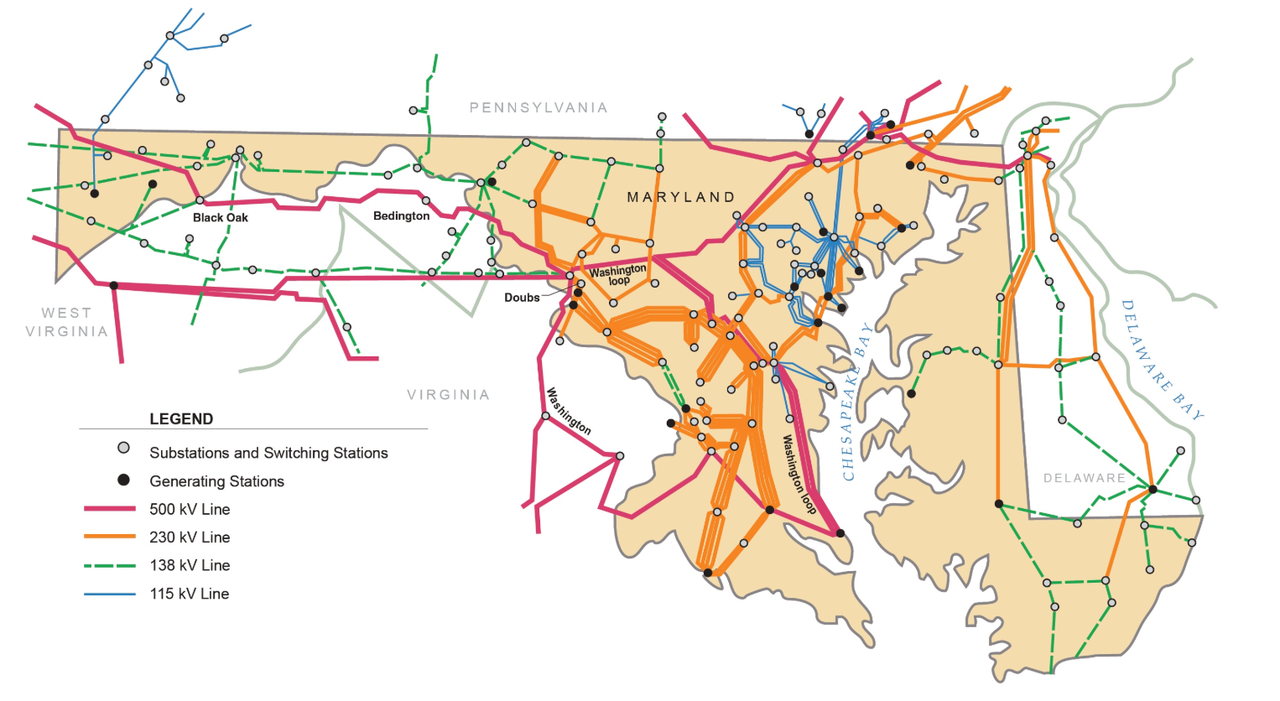
Maryland’s Office of People’s Counsel released a new report warning that homeowners in the state could face $1.6 billion in additional power bill costs over the next decade to subsidize transmission line upgrades, largely due to data center demand outside Maryland, more specifically from data centers in Northern Virginia.
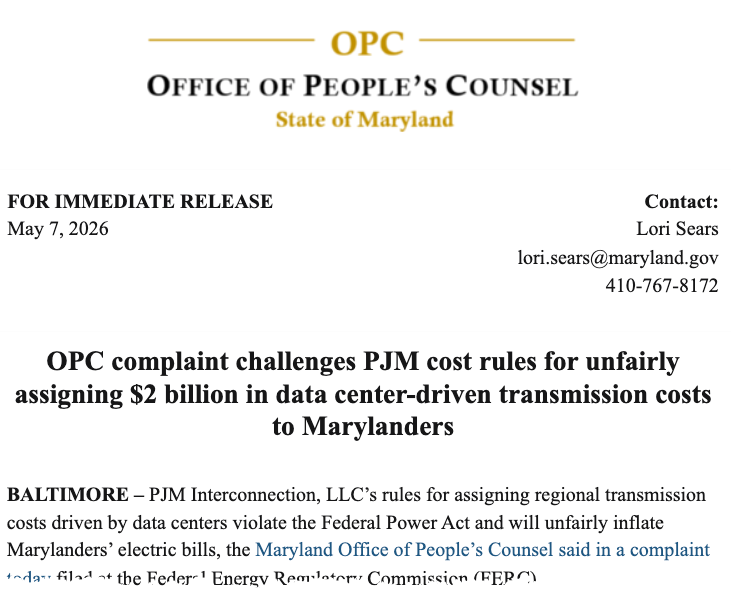
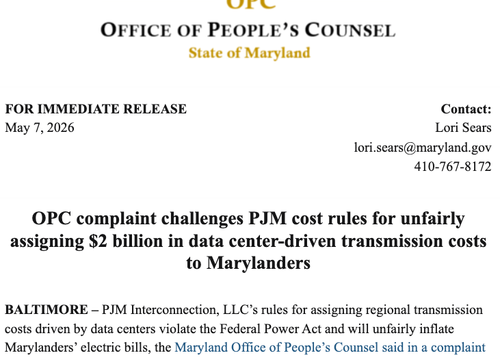
OPC filed a complaint with the Federal Energy Regulatory Commission (FERC) arguing that PJM Interconnection, the largest U.S. grid operator, is forcing Maryland power customers to shoulder costs for grid expansion projects that feed into Northern Virginia. The complaint was titled “OPC complaint challenges PJM cost rules for unfairly assigning $2 billion in data center-driven transmission costs to Marylanders.”
People’s Counsel David Lapp said Maryland residents neither caused the need for the transmission line projects nor will they meaningfully benefit from them:
“Without FERC action, Maryland customers face paying billions for transmission infrastructure that PJM is advancing to benefit data centers. PJM’s cost allocation rules are broken. Maryland customers have neither caused the need for these billions in new transmission projects nor will they meaningfully benefit from them.”
The complaint comes as the Mid-Atlantic region, specifically Maryland, is locked in a power bill crisis, with a confluence of bad “green” energy policies colliding with the AI data center boom.
Not mentioned by the OPC or the one-party-ruled state of Democratic Party kings and queens is that Maryland is structurally dependent on imported power through PJM. It does not produce enough electricity inside the state to cover its own load, which makes power customers more exposed to regional grid costs, transmission upgrades, electricity price spikes, and data-center-driven demand growth outside of Maryland.
How did Maryland get to the point where it has to import roughly 24 million megawatt-hours of electricity a year, using 2024 EIA data, or about 40% of in-state electricity demand?
It is due to poor state-level management by politicians and their ‘green’ energy policies, which led to the early retirements of coal power plants and to a failure to prioritize new, reliable power to increase baseload.
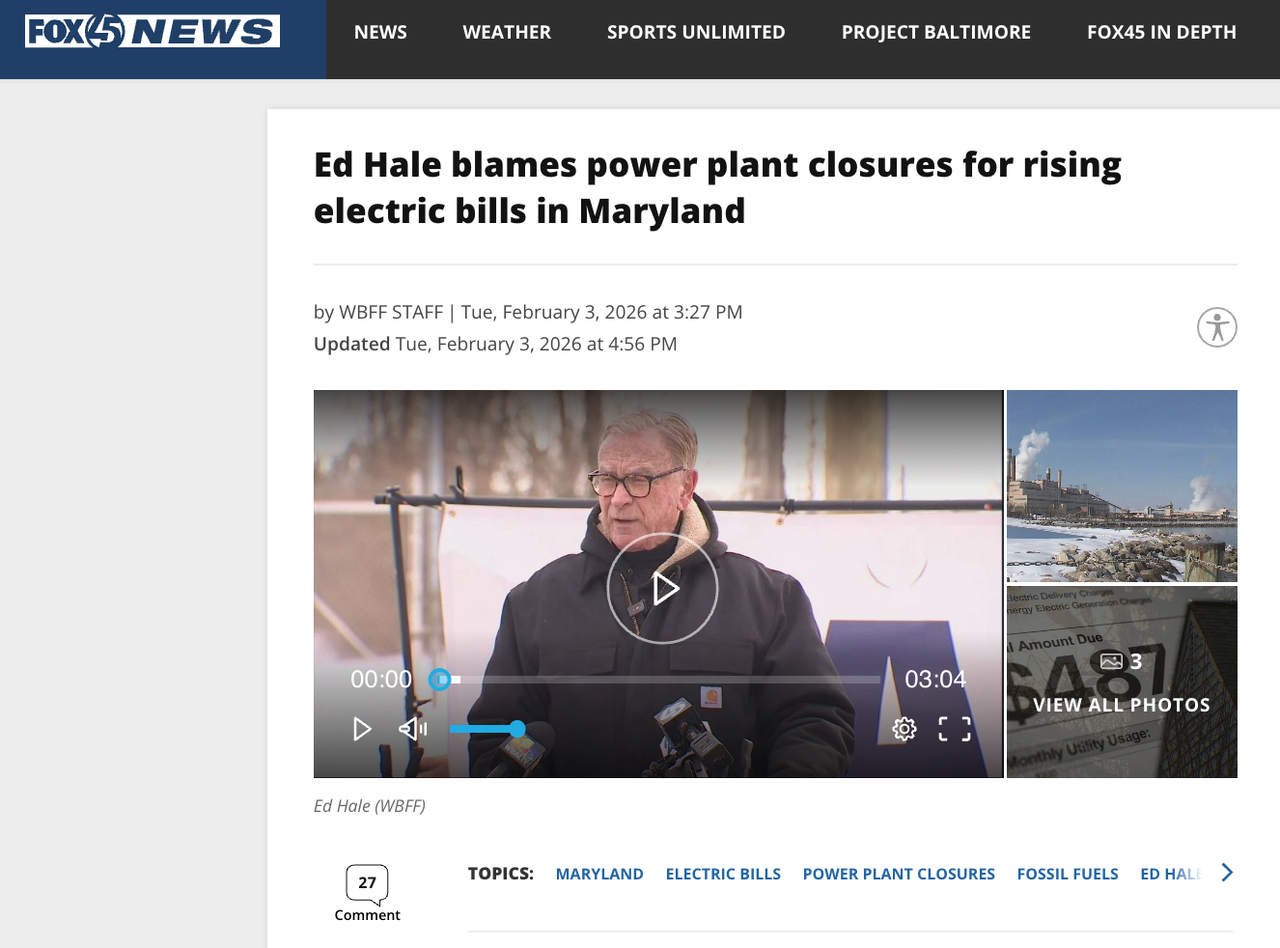
Local outlet Fox Baltimore recently quoted Ed Hale, the Republican candidate for governor, who blamed the state’s green energy policies and the early retirement of fossil-fuel power plants for the power bil mess.
“We have a lot of fossil fuels here that burn a lot easier and cleaner than in the old days,” Hale said earlier this year. “I’m thinking that we have to do better, and we have to reopen the plants that have been not torn down, and just get them open again and reenergize them.”
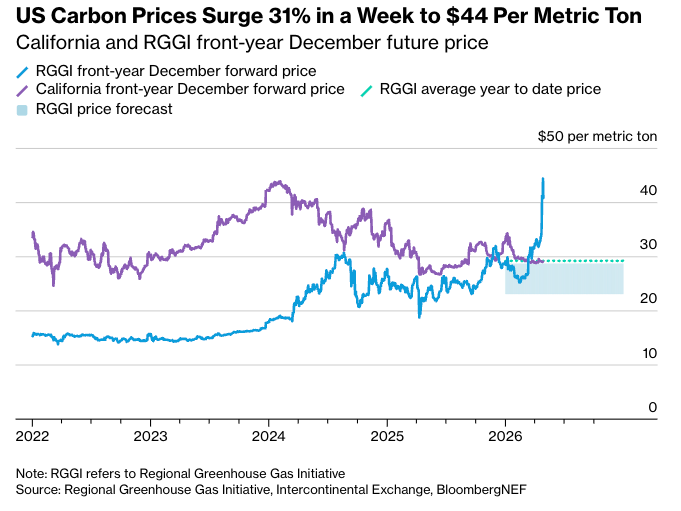
Beyond Maryland, but still in the Mid-Atlantic and Northeast regions, there is a hidden cost to the AI buildout: surging carbon prices are pushing up CO2 costs across the region past California levels, raising the prospect of higher energy costs for consumers, according to Bloomberg.
The price to emit a so-called short ton of CO2 into the atmosphere under the Regional Greenhouse Gas Initiative, a market covering 10 states, including New York, jumped 12% on Monday to $53.50, adding to a 31% gain last week. Traders are betting that Virginia’s planned return to the market in July will boost demand for permits, as the state is the world’s largest hub for data centers.
Whether through misguided green policies at the state level, such as charging companies for CO2 emissions, the prior ‘everything green’ framework has miserably failed consumers.
If the U.S. wants to win the AI race, progressive states like Maryland must build out new power generation and consider reactivating coal plants, while recognizing that becoming ‘greener’ could result in becoming poorer – Europe is finding that out (read here).
Tyler Durden
Fri, 05/08/2026 – 14:00

Ancient Settlement Older Than The Pyramids Discovered; Rewrites North American History
Ancient Settlement Older Than The Pyramids Discovered; Rewrites North American History
Authored by Steve Watson via modernity.news,
An ancient Indigenous settlement unearthed near Sturgeon Lake in Saskatchewan is challenging long-held views about early human presence in North America.
Dating to around 11,000 years ago and predating Egypt’s Great Pyramid by more than 6,000 years, according to the official timeline, the site provides evidence of long-term habitation rather than temporary camps.
Archaeologists working with Sturgeon Lake First Nation uncovered stone tools, fire pits, toolmaking materials, and remains of the extinct Bison antiquus. Charcoal layers point to controlled fire management, aligning with oral traditions. The findings suggest a sophisticated society with advanced hunting strategies, including buffalo jumps.
Experts found a Native American settlement older than the pyramids…
North America’s earliest inhabitants formed stable communities far earlier than previously believed.
Archaeologists working near Sturgeon Lake in Saskatchewan have unearthed evidence of a sophisticated… pic.twitter.com/8kh38Cklrf
— Shining Science (@ShiningScience) May 7, 2026
The site, known as Âsowanânihk (“a place to cross” in Cree), lies about five kilometres north of Prince Albert along the North Saskatchewan River. It was first spotted by avocational archaeologist Dave Rondeau through riverbank erosion exposing artifacts.
Rondeau said: “The moment I saw the layers of history peeking through the soil, I felt the weight of generations staring back at me. Now that the evidence has proven my first instincts, this site is shaking up everything we thought we knew and could change the narrative of early Indigenous civilizations in North America.”
Dr. Glenn Stuart of the University of Saskatchewan added: “This discovery challenges the outdated idea that early Indigenous peoples were solely nomadic. The evidence of long-term settlement and land stewardship suggests a deep-rooted presence. It also raises questions about the Bering Strait Theory, supporting oral histories that Indigenous communities have lived here for countless generations.”
Prehistoric settlement discovery in North America older than Egypt’s Great Pyramid rewrites human history https://t.co/PVQjzCRF63
— Daily Mail US (@Daily_MailUS) May 7, 2026
Excavations indicate the location served as a hub for organized activity shortly after the last Ice Age. Researchers compare its importance to iconic global sites like the Great Pyramids, Stonehenge, and Göbekli Tepe.
The discovery includes evidence of bison pounds and kill sites, with hunters targeting massive Bison antiquus weighing up to 4,400 pounds. This points to coordinated community efforts and deep environmental knowledge.
Chief Christine Longjohn of Sturgeon Lake First Nation stated: “This discovery is a powerful reminder that our ancestors were here, building, thriving and shaping the land long before history books acknowledged us. For too long, our voices have been silenced, but this site speaks for us, proving that our roots run deep and unbroken. It carries the footsteps of our ancestors, their struggles, their triumphs, and their wisdom. Every stone, every artifact is a testament to their strength. We are not just reclaiming history, we are reclaiming our rightful place in it.”
The site, on Treaty 6 territory home to the Plains Cree, faces potential threats from logging and industrial activity. The Âsowanânihk Council, involving Elders, youth, educators, and archaeologists from the University of Saskatchewan and University of Calgary, is leading protection and further study efforts. Plans include a cultural interpretive centre.
Carbon dating of charcoal from a hearth places activity at about 10,700 years ago, roughly 1,000 years earlier than prior estimates for organized settlement in the region.
This find adds physical evidence to oral histories describing the area as a cultural and trade center, highlighting sophisticated land stewardship in post-glacial North America.
The discovery underscores ongoing collaboration between Indigenous communities and researchers to preserve and understand this chapter of human history. Further excavations and funding could yield more insights into early societal organization on the continent.
Your support is crucial in helping us defeat mass censorship. Please consider donating via Locals or check out our unique merch. Follow us on X @ModernityNews.
Tyler Durden
Fri, 05/08/2026 – 13:45
Intel Jumps To Record High On Deal To Make Chips For Apple, Following White House Pressure
Intel Jumps To Record High On Deal To Make Chips For Apple, Following White House Pressure
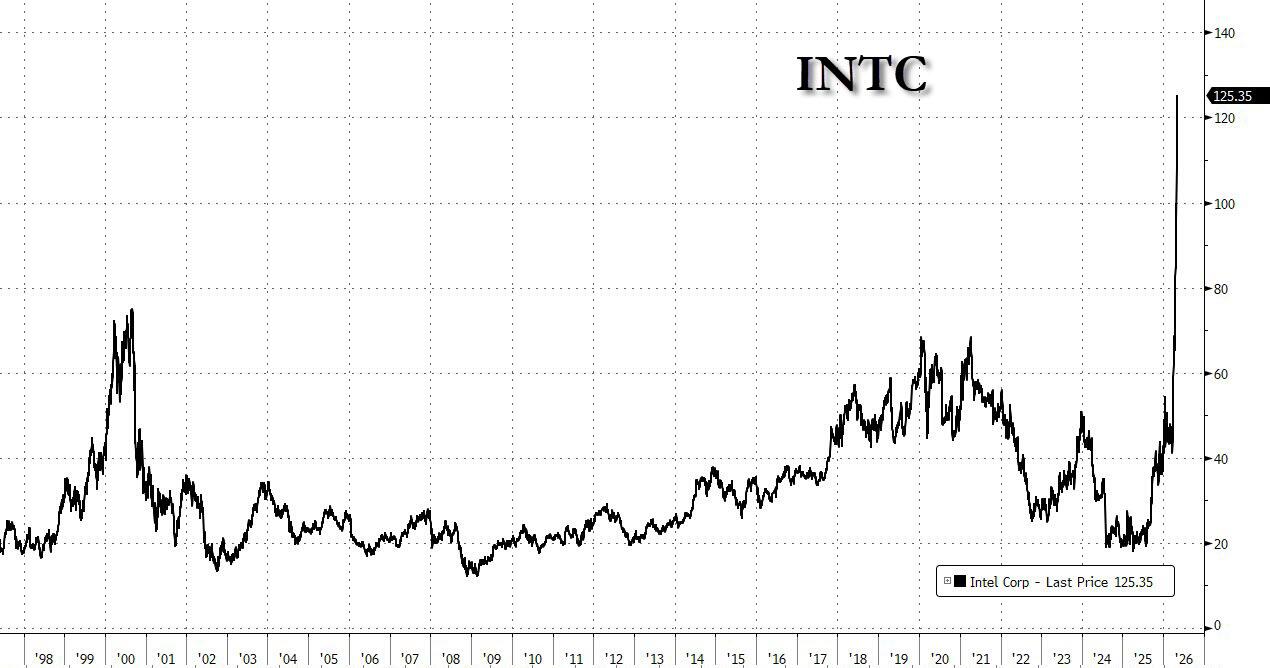
Already looking like something right out of the dot com bubble, Intel stock soared even more moments ago, surging almost 20% and hitting a new all time high over $130 (it was trading at $80 a few days ago), after the WSJ reported that the White House-backed chipmaker has reached a preliminary agreement to manufacture some of the chips that power Apple devices. Which is ironic as just 6 short years ago Apple surprised the market when it announced it was parting ways with Intel, replacing the company’s chips with its own, a move which was dubbed a huge success. Now, following intense White House pressure, it has decided to reverse this decision.
While it is well known that talks between the two companies have been ongoing for more than a year – which has been one of the reasons for Intel’s recent meteoric advance – they hammered out a formal deal in recent months.
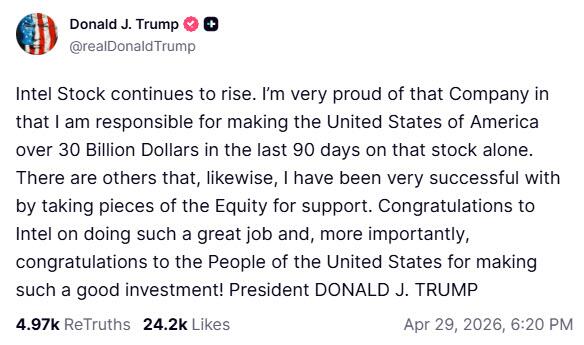
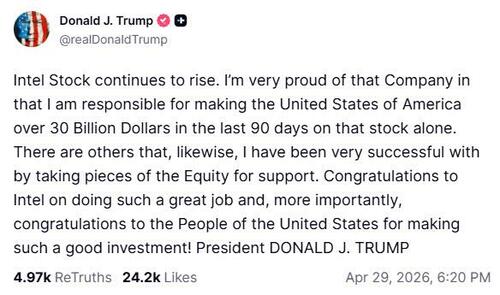
It’s still unclear which Apple products Intel would make chips for, if any, or if today’s PR was just to plant the seeds for the US to sell its Intel stake after Trump was boasting recently how much money he made for US taxpayers since getting a big stake in the company last summer when it was trading below $20.
Intel has two main business lines: designing chips and manufacturing them – both its own designs and external customers’ – in its Intel Foundry unit. Both businesses had been underperforming for years before Lip-Bu Tan took over as chief executive last spring vowing to revitalize them.
Following our advice from August 7, 2025…
The Pentagon took a stake in US rare earth miner MP Materials… when will it do the same with Intel
— zerohedge (@zerohedge) August 7, 2025
… one week later, on August 14, the Trump administration struck a deal to convert nearly $9 billion in federal grants into Intel stock, giving the U.S. government a 10% stake in the chip-maker.
And the key bit from the WSJ report: the White House “played a key role in bringing Apple to the table.”
According to the report, Commerce Secretary Howard Lutnick has met repeatedly over the last year with high-ranking Apple officials, including CEO Tim Cook, as well as SpaceX chief Elon Musk and Nvidia Chief Executive Jensen Huang, to try to convince them to get into business with Intel, some of the people familiar with the matter said.
And with the Apple deal, Intel has now signed partnerships with all three. Now it remains to be seen if any of the three will actually use Intel’s chips for more than just press release bullet points.
Over the last decade, Intel fell badly behind rivals such as Taiwan Semiconductor Manufacturing and Samsung Electronics after a series of technical missteps, leadership changes and failed attempts at consolidation led outside foundry customers to pull or curb their business.
When Intel hired Tan in March 2025 to replace ousted CEO Pat Gelsinger, Trump raised concerns that Tan’s close ties with China would compromise him and called for his ouster. But Tan won Trump over with a charm offensive, and the government announced its 10% investment in Intel shortly after. Following the investment, Intel’s share price rose sharply. On Friday morning it rose 7.5% to an all-time high of nearly $118 per share.
Tan has been reshaping Intel’s top leadership ranks in recent months as well, including hiring former Taiwan Semiconductor Manufacturing executive Wei-Jen Lo, a move that prompted a lawsuit from TSMC.
The Intel CEO also ousted his head of product and hired new executives to lead the company’s data center processor and client computing units, as well as a newly formed custom silicon business. He has also invested heavily in Intel’s most-advanced manufacturing process, known as 14A.
President Trump personally advocated for Intel to Cook in a meeting at the White House, according to people familiar with the matter.
“I like Intel,” President Trump said in January. He said the government had made “tens of billions of dollars” from the Intel deal, and that the government’s backing of the company had attracted important partners to Intel.
“As soon as we went in, Apple went in, Nvidia went in, a lot of smart people went in,” President Trump said.
Nvidia invested $5 billion in Intel in September and the two companies announced a partnership under which Intel would build custom data center CPUs for Nvidia. And last month, Elon Musk and Intel announced an ambitious plan to build a chip manufacturing plant in Texas as part of Musk’s Terafab project to produce chips for Tesla, xAI and SpaceX.
Apple relies on Taiwan Semiconductor Manufacturing to make the chips it designs for iPhones, iPads, Macs and other devices, and is under pressure to find additional chip suppliers. On Apple’s last two earnings conference calls, Cook has blamed a lack of availability of advanced chips for Apple’s inability to meet customer demand for iPhones.
The constraints are expected to continue into the current quarter, affecting several Mac models, Cook said. “We think, looking forward, that the Mac Mini and the Mac Studio may take several months to reach supply-demand balance,” Cook said. Last Friday, the day after the earnings call, Apple raised the Mac Mini’s starting price.
TSMC’s manufacturing capabilities far surpass those of Samsung and Intel. Makers of other kinds of chips, for memory and storage for example, are more competitive with one another, giving Apple multiple sources of supply.
Apple has long been TSMC’s top customer, but skyrocketing demand for its manufacturing capacity from Nvidia and other designers of AI chips means Apple no longer has as much leverage to secure the supplies it needs. Starting in 2006, Apple used Intel-designed CPUs as the main processors for its personal computers, but switched to its own custom CPUs, based on a design architecture from Arm Holding, in 2020.
As for Intel stock, while we have enjoyed the recent meltup, the reversal – when it comes – will be painful.
Tyler Durden
Fri, 05/08/2026 – 13:26
Vaccine Trade Returns? Moderna Working On Hantavirus Shot Sends Shares Higher
Vaccine Trade Returns? Moderna Working On Hantavirus Shot Sends Shares Higher
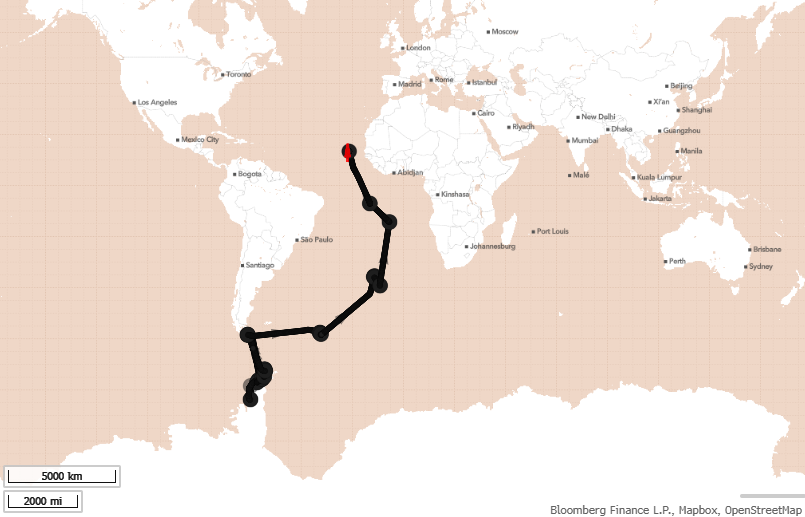
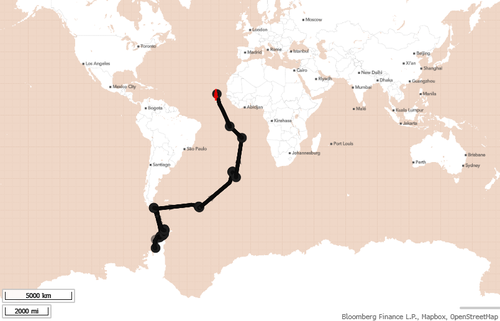
Moderna is out with timely news that it is working on early-stage research on vaccines targeting hantaviruses. The news comes as a Spanish woman has been hospitalized for a suspected infection, while a hantavirus cluster has ravaged a Dutch-flagged cruise ship, with five confirmed and three suspected cases of hantavirus. Three deaths have been reported so far.
Bloomberg reports that Moderna is collaborating with the U.S. Army Medical Research Institute of Infectious Diseases on hantavirus vaccine research and is also working with Korea University College of Medicine’s Vaccine Innovation Center on a potential vaccine.
“These efforts are early-stage and ongoing and reflect Moderna’s broader responsibility to develop countermeasures against emerging infectious diseases,” Moderna said.
Moderna said its work on hantavirus vaccines began before the cruise ship Hondius reported an outbreak while anchored off the coast of Cape Verde, on the west coast of Africa, last week.
Anais Legand, a technical officer at the World Health Organization (WHO), provided an update earlier today stating that all remaining passengers on the Hondius have left the ship without symptoms.
“They will be asked to take their temperature every single day for 42 days. They will be asked to check every day for other symptoms like feeling unwell or a headache,” Legand said, adding, “They will be provided with someone to contact. If they’re not feeling well, it’s up to the national authorities where people will go next.”
WHO Emergencies Communications Lead Nyka Alexander stated in a livestreamed update earlier that “the risk to the public remains low.”
Hantaviruses are zoonotic viruses that naturally infect rodents and can occasionally spread to people.
Here’s what you need to know about #hantavirus: What they are, how they spread, the symptoms, and how to prevent infection pic.twitter.com/pduUjlwl2j
— World Health Organization (WHO) (@WHO) May 8, 2026
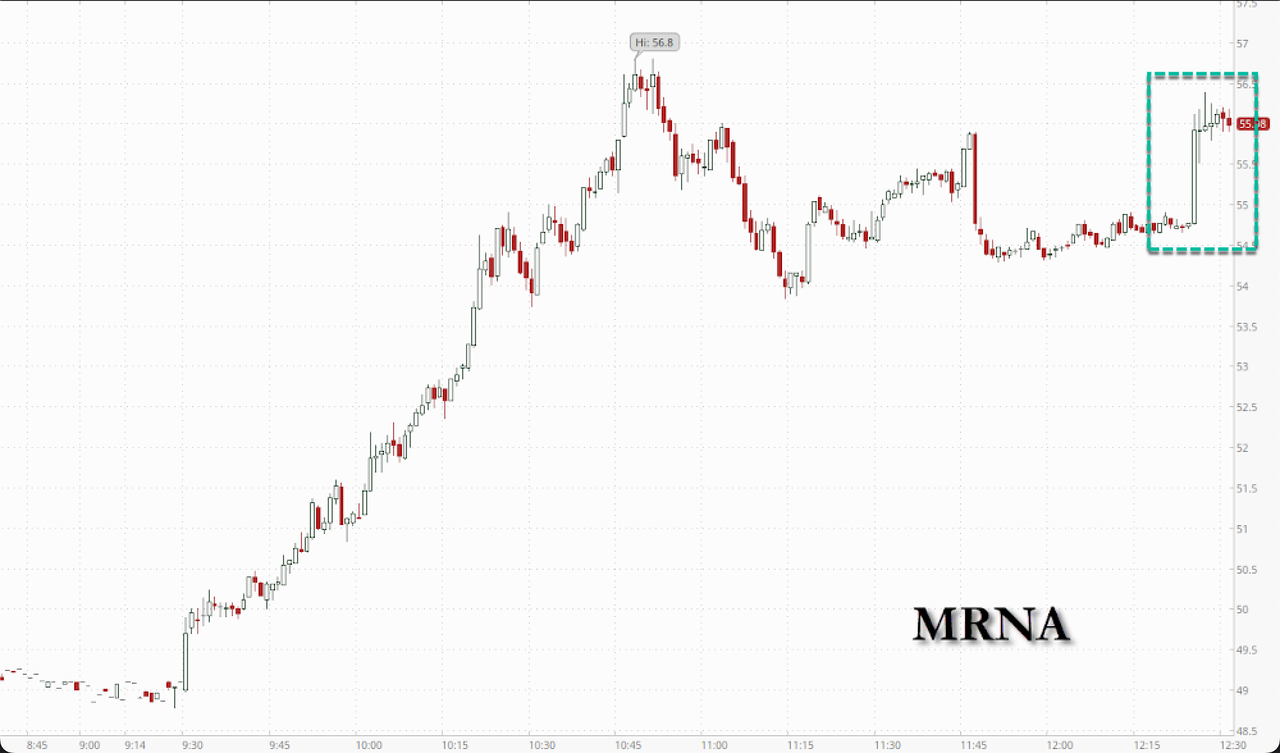
Nevertheless, the news sent Moderna shares higher around noon. Shares had already been rising after the company reported that its mRNA flu vaccine outperformed in a late-stage study, likely driving early market activity. Shares are up 18%.
President Trump told an ABC News reporter on Thursday that “It’s very much, we hope, under control.”
HANTAVIRUS UPDATE: President Trump is monitoring the hantavirus outbreak linked to the cruise ship that has already resulted in three deaths.
Spain is preparing for the vessel’s arrival as officials track about 40 people, including Americans, who left the ship before the… pic.twitter.com/pPoppLn8N8
— Breaking911 (@Breaking911) May 8, 2026
Polymarket:
Hantavirus pandemic in 2026?
Yes 9% · No 91%
View full market & trade on Polymarket
It is only a matter of time before other struggling biotech companies announce that they, too, are developing vaccines to prevent the next potential pandemic. This follows the Covid playbook.
Tyler Durden
Fri, 05/08/2026 – 13:05

OnlyFans Lures Outside Capital As Architect Capital And Billionaire Tag Team Deal
OnlyFans Lures Outside Capital As Architect Capital And Billionaire Tag Team Deal
Nearly seven weeks after OnlyFans owner and billionaire Leonid Radvinsky died, and after months of reports that the sex-worker streaming platform was exploring a stake sale, the Financial Times reported Friday morning that San Francisco-based Architect Capital is preparing to buy a minority stake in the company.
Australian billionaire James Packer, best known as the former head of the Packer family’s media and casino empire, is expected to be among a group of investors lined up to support Architect Capital’s deal to acquire a 15% stake in OnlyFans at a $3.1 billion valuation, according to FT’s sources.
The deal would leave control of OnlyFans with the family trust headed by Katie Chudnovsky, widow of late owner Leonid, who acquired OnlyFans in 2018 via Fenix International.
Leonid died in March at 43. He was apparently battling cancer for several years.
Top OnlyFans creator pornstar Sophie Rain mourned the death of Leonid, saying back in March how he “built something that changed my entire life. Like, I grew up on food stamps and now I can take care of my whole family because of a platform he created. I will never forget that.”
Radvinsky studied economics at Northwestern University and by 2018 had bought a majority stake in OnlyFans and helped transform the video content platform into an adult-content subscription business powerhouse that reshaped how sex workers monetize their bodies.
OnlyFans was founded in 2016 and exploded in popularity during the Covid pandemic. Some of the latest data from 2024 showed the website had 4.6 million creators, 377 million fans, and $1.4 billion in revenue.
As we’ve previously noted, Americans spent an estimated $2.6 billion on OnlyFans subscriptions in 2025.
OnlyFans is bringing in outside capital without giving up control while leaving Radvinsky’s wife in charge. This may suggest the family trust is cashing out some value while simultaneously creating a pathway for broader monetization.
Tyler Durden
Fri, 05/08/2026 – 12:50
“Damage Done Already” – Oil May Take Year To Normalize: Adam Parker
“Damage Done Already” – Oil May Take Year To Normalize: Adam Parker
Last night’s ZeroHedge debate featured the cautiously bullish Adam Parker, former Morgan Stanley chief equity strategist who now runs Trivariate, and bearish money manager Michael Pento, hosted by Adam Taggart of Thoughtful Money.
While Parker is largely optimistic about equities, he put forth a gloomy prediction on gas prices, based on what he is hearing as a consensus on Wall Street. Namely that prices will remain high for at least a year even if Hormuz were to open today.
His full comments below and highlights from last night’s debate. Check out the full discussion to hear how both Pento and Parker are positioned going into year-end:
Best case: More pain at the pump
Parker warned that oil markets may remain structurally elevated even if the Strait of Hormuz reopens immediately, arguing that current pricing still underestimates how long normalization could take.
“The consensus view is it takes much longer to normalize than what’s in the 12-month forward Brent,” Parker said, noting that forward oil pricing in the high-$70 range likely needs to be revised upward.
“Even if we’ve really truly reached some agreement now, it’ll take several months to get back toward where we were already, maybe a year.”
Parker added that economic damage from the energy spike has likely already occurred, particularly for consumer-facing sectors.
“There’s damage done already to consumer discretionary and staples earnings.”
He argued the bigger debate now is whether equity markets continue looking through the near-term pressure on the assumption conditions eventually improve.
— ZeroHedge Debates (@zerohedgeDebate) May 8, 2026
If Hormuz doesn’t open…
Renewed hot Middle East conflict and continued closure of the Strait of Hormuz would quickly mean severe inflation and a likely recession, according to Pento. In other words: stagflation.
“Prolonged conflagration in the Middle East? Well, first of all, that would send CPI up even higher. And that would send interest rates up even higher,” Pento said, warning that much of recent GDP growth has been debt-funded rather than organic cash flow.
“Interest rates are going to go much higher as they follow inflation higher. That could put the kibosh on all this borrowing.”
Pento argued that if oil prices hit $150 per barrel, things go South quickly.
“If oil goes to 150 and stays there or thereabouts, you’ll see stocks drop and you’ll see home prices drop. And that really torpedoes the top 20% purchasing power.”
He added that recession odds rise significantly if oil remains above $100 to $120 “for any kind of duration, a couple of months,” calling it “a big problem for the stock market.”
Meanwhile trading the day-to-day is impossible because “you can get a tweet from Trump telling everybody that things are going great now and we’re about to sign a deal. And then the next thing you know, you turn around, you go to the bathroom, you come back and bombs are being lobbed at ships. It’s that stochastic.”
— ZeroHedge Debates (@zerohedgeDebate) May 8, 2026
Watch the full debate below or listen on Spotify.
Watch Now: the ZeroHedge Big Picture Market debate: Adam Parker vs Michael Pento, moderated by Adam Taggarthttps://t.co/rGqcyox7Jy
— zerohedge (@zerohedge) May 7, 2026
Tyler Durden
Fri, 05/08/2026 – 12:20
https://www.zerohedge.com/markets/damage-done-already-oil-may-take-year-normalize-adam-parker

DOJ Reaches Settlement With Data Firm Over Meat Industry Competition Concerns
DOJ Reaches Settlement With Data Firm Over Meat Industry Competition Concerns
Authored by Kimberley Hayek via The Epoch Times,
The Department of Justice (DOJ) reached a proposed settlement with Agri Stats Inc., requiring the data and consulting company to stop distributing competitively sensitive information among the nation’s major meat processors, officials announced on May 7.
The agreement, which was filed in federal court in Minnesota, seeks to address longstanding government concerns that the firm’s practices allowed processors to coordinate production and pricing, increasing costs for consumers nationwide.
Acting Attorney General Todd Blanche and antitrust division leaders said the proposed settlement was an effort to foster competition and ease pressures on household budgets.
“A stable and affordable food supply is critical to our country’s well-being,” Blanche said in a statement. “This Department of Justice is laser-focused on making everyday life affordable for all Americans.”
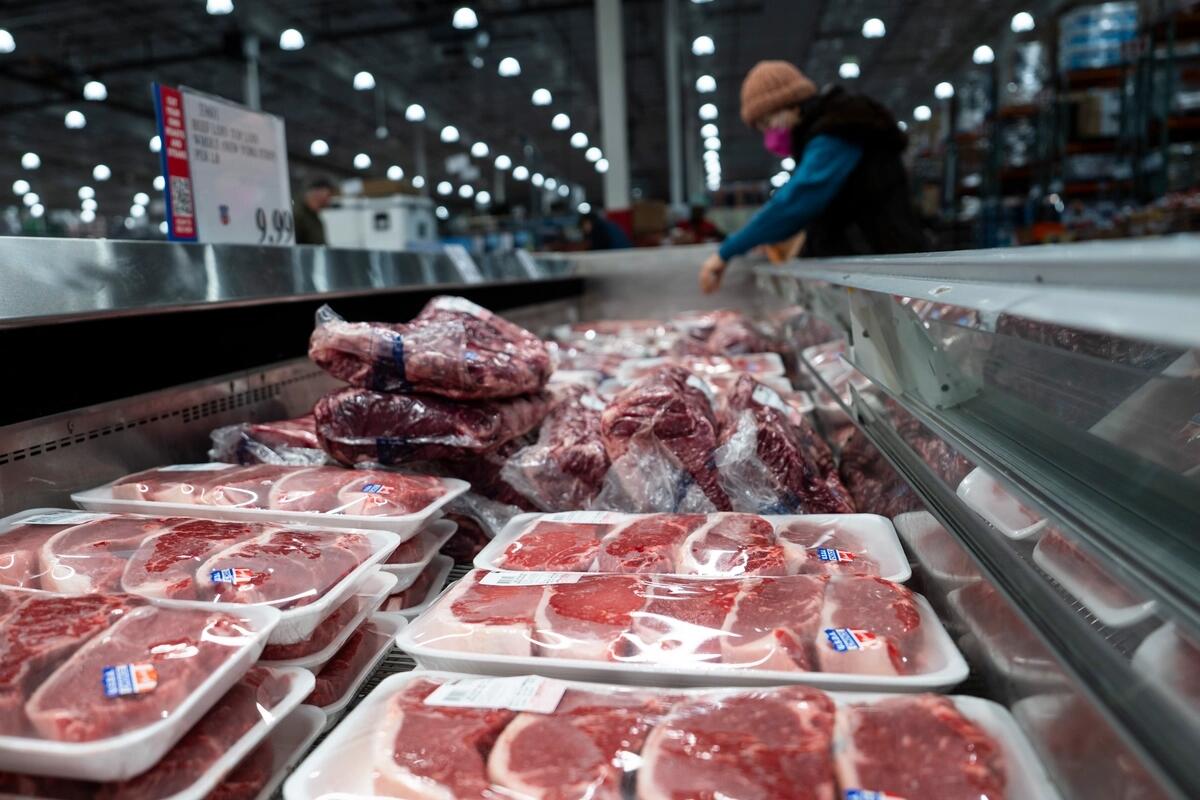
Agri Stats, headquartered in Fort Wayne, Indiana, gathers detailed data on prices, output, costs, and other metrics from processors’ systems. It then standardizes and redistributes the information to participating companies through reports and meetings, according to the DOJ. Meat buyers such as grocers, restaurants, and distributors allegedly had no such access.
Agri Stats Inc. did not immediately respond to a request for comment from The Epoch Times.
Acting Assistant Attorney General Omeed A. Assefi of the DOJ’s Antitrust Division said that the American people do not have to tolerate business models that increase their cost of living.
“The Antitrust Division’s mission is to use the antitrust laws to protect American consumers from inflated prices,” Assefi said.
“This settlement delivers immediate relief in the meat section of grocery stores across our nation.
“When companies decide certain information is too sensitive to share with the broader market, but not too sensitive to share with their closest competitors, that is a significant red flag that competition is being harmed.”
The complaint argued that this one-sided exchange reduced rivalry and supported systematic price hikes and output decisions for decades, particularly in the broiler chicken sector, while also affecting the pork and turkey markets historically.
Under the settlement, Agri Stats must stop providing sales reports or non-public pricing information used by processors to identify opportunities for price increases. It also must cease sharing granular production, cost, and labor figures at the company or facility level. Most data distributed by the firm will now be required to be offered to all interested domestic purchasers on fair, nondiscriminatory terms to reduce information asymmetry.
Additional requirements include limits on the timeliness of the shared data, the appointment of a court-approved monitor to oversee compliance, and the establishment of an antitrust compliance program with data security, whistleblower protections, and mandatory violation reporting.
A subsidiary, Express Markets Inc., may continue its price reports, which are less detailed and available more broadly, according to officials.
The settlement partners with attorneys general from California, Minnesota, North Carolina, Tennessee, Texas, and Utah. It follows broader scrutiny of meat industry practices.
Consumers have grappled with continuing rises in meat and poultry prices amid supply chain strains, regulatory pressures, and other factors affecting American families. For instance, analyses have cited significant increases in the prices of beef, chicken, and other proteins that take a bit out of household budgets. Broader cost-of-living challenges have also driven up grocery prices.
The proposed final judgment and competitive impact statement will be published in the Federal Register as required by the Tunney Act. The companies have 60 days to submit comments ahead of the U.S. District Court in Minnesota deciding whether to approve it as in the public interest.
Officials asked for tips on anticompetitive conduct in agriculture through the Antitrust Division or the joint USDA-DOJ agricultural markets partnership.
Tyler Durden
Fri, 05/08/2026 – 12:00
CIA Leak: Iran Can Survive Blockade Another 3 to 4 Months, Maybe Longer
CIA Leak: Iran Can Survive Blockade Another 3 to 4 Months, Maybe Longer
Belying the Trump administration’s claims that a US blockade on Iran’s use of the Strait of Hormuz has the country on the ropes and its oil infrastructure in near-term peril, a confidential CIA analysis says Iran can persevere another three or four months, if not longer. In a second stark contradiction of White House narratives, US intelligence assesses that the bulk of Iran’s pre-war missile inventory is still intact. The substance of the CIA analysis was first reported by the Washington Post, which attributed the insights to three current officials and one former one who’ve seen it.
Over recent weeks, a particular narrative about the blockade has been gaining traction — namely, that Iran’s inability to freely export oil is putting its energy infrastructure in imminent danger of “shut-in” damage that would commence after Iran’s capacity to store oil ran out. We were among the earliest to start focusing on that critical dimension of the conflict, and the shut-in-crisis scenario gained credibility on Wednesday when an oil-sector expert who serves on Iran’s Chamber of Commerce candidly told the New York Times that “the sea blockade is a much more serious threat than even war, and the current stalemate must be broken because the export of our oil and energy and the fate of our refineries is now at risk.”
The “Team B” counterpoint here is whatever the FDD/Israel lobby says (“just a few more blockade days + a few more bombing sorties and the defeated regime is over”), and though they’re always wrong, presidents have a funny habit of going for the best-massaged Team B intelligence https://t.co/3OqU81ydK0
— Mark Ames (@MarkAmesExiled) May 7, 2026
However, the officials who are familiar with the new CIA analysis told the Post that Iran is using various avenues to maximize storage and forestall shut-in damage, from storing oil on empty tankers to reducing the flow from wells. Summing up the oil infrastructure risks and broader economic impacts, one of them said, “It’s nowhere near as dire as some have claimed.” One of the officials said the CIA estimate of three or four months of runway may even be underselling Iran’s endurance, pointing to the potential for increasing exports via overland routes. “There’s a belief they could begin moving some oil via rail through Central Asia,” said an official.
Meanwhile, the CIA has concluded that Iran’s military is in far better shape than what Trump, Defense secretary Pete Hegseth and others have told the American people. On Wednesday, Trump claimed that Iran’s missile inventory was a small shadow of what it was before the country was attacked by Israel and the United States:
Trump on Iran:
Their missiles are mostly decimated. They have probably 18–19% left, not a lot in comparison to what they had. pic.twitter.com/9r9W5iVd8o
— Clash Report (@clashreport) May 6, 2026
The confidential CIA analysis, however, allegedly paints an entirely different picture:
Iran retains about 75 percent of its prewar inventories of mobile launchers and about 70 percent of its prewar stockpiles of missiles, a U.S. official said. The official said there is evidence that the regime has been able to recover and reopen almost all of its underground storage facilities, repair some damaged missiles and even assemble some new missiles that were nearly complete when the war began. — Washington Post
Iran is likely in even better shape where drones are concerned, given their lower cost and the ease with which they can be assembled in small facilities. That points to Iran’s ability to continue thwarting commerce out of the Persian Gulf. “All it takes is one drone to hit a ship and no one will give insurance” for vessels transiting the Strait of Hormuz, Danny Citrinowicz, a senior researcher at the Tel Aviv-based Institute for National Security Studies, told the Post.
Some observers view this and other leaks as an attempt by Trump administration subordinates to steer America away from re-escalation of a war initiated by the United States and Israel on Feb. 28. “The latest leak from US military and intelligence institutions rebuts the Fox News crowd and shows an American military and intelligence establishment desperate to prevent an American return to war against Iran,” wrote Matthew Hoh, a senior fellow at the Eisenhower Media Network, an organization comprising former military service members, intelligence community alumni and diplomats. “I have never seen such a deliberate and coordinated effort by CIA, Pentagon and others to keep the US out of war in defiance of their political bosses.”
To say that Trump underestimated Iran is an understatement. The Israelis sold him – and he ended up believing – a narrative that portrayed Iran as so weak that the war would be won within 4 days.
60 plus days later, Trump is still stuck in the mess Israel sold him. pic.twitter.com/gv4cLbtxBC
— Trita Parsi (@tparsi) May 6, 2026
Asked for comment on the officials’ leaks, a White House spokeswoman reiterated the administration’s triumphalist rhetoric. “During Operation Epic Fury, Iran was crushed militarily. Now, they are being strangled economically,” said Anna Kelly. “The Iranian regime knows full well their current reality is not sustainable, and President Trump holds all the cards as negotiators work to make a deal.”
Alongside the question of how long Iran can endure the status quo, the same question must be asked about not only the United States, but — staring down a years-long economic catastrophe — the entire world.
Tyler Durden
Fri, 05/08/2026 – 11:40