Category: News
DOE’s NNSA Removes Enriched Uranium From Venezuela And Japan
DOE’s NNSA Removes Enriched Uranium From Venezuela And Japan
The Department of Energy’s National Nuclear Security Administration (NNSA) has coordinated with Japan and Venezuela to remove enriched uranium from both countries.
The U.S. has secured its largest-ever HALEU fuel shipment, working in partnership with Japan. This significant transfer advances President Trump’s strategy to restore America’s energy dominance and power next-generation nuclear reactors. https://t.co/h5Oc6f5kRq pic.twitter.com/EG7kA9Eopg
— NNSA (@NNSANews) May 7, 2026
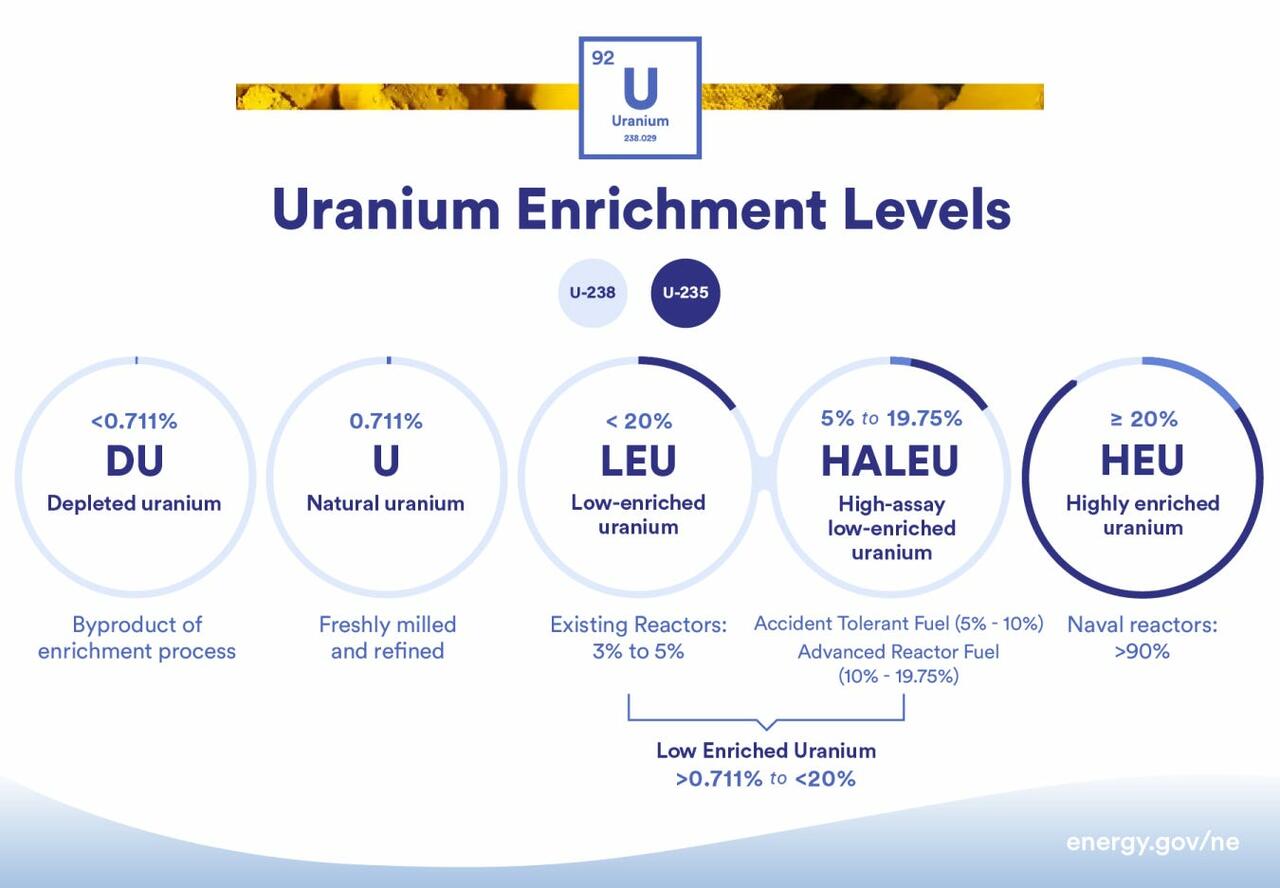
The NNSA coordinated with Japanese government and nuclear agencies to transfer 1.7 metric tons of high-assay low-enriched uranium (HALEU) from Japan to the US. The material comes from excess supplies at the recently shut-down test reactor in Japan.
Japan has not completely ceased research into new reactor technology, and instead will focus on the Joyo research reactor. There is a long-standing coordination between the US and Japan to offload excess quantities of enriched uranium due to proliferation concerns.
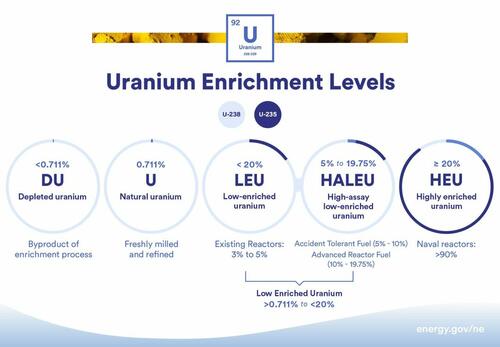
Typical commercial reactors run on low-enriched uranium (LEU) which is typically enriched to 3-5%. The percentage of enrichment indicates how much of the fuel is actually usable for fission; the amount of U-235 isotopes present in the uranium mix.
Some of the advanced reactors and currently operating research reactors across the world use HALEU, enriched up to 20%. Enrichment levels beyond that are considered weapons grade and only used for military reactors and nuclear weapons development.
The HALEU that was imported from Japan will be repurposed and utilized in advanced reactors being developed under the DOE’s Reactor Pilot Program and other research efforts.
For context, the amount of enriched uranium brought over from Japan is likely enough to fuel only one microreactor for one full operating cycle. Centrus Energy also currently produces 900kg/year of HALEU at their Piketon facility, with a massive expansion effort currently underway.
Immediately following the Japan announcement, the NNSA declared all the highly enriched uranium (HEU) was successfully removed from Venezuela. The material was left over from a research reactor program in Venezuela that shut down in 1991.
The HEU has been transported to the Savannah River Site for processing and reuse, potentially to also be included in future DOE programs
Tyler Durden
Fri, 05/08/2026 – 22:10
https://www.zerohedge.com/energy/does-nnsa-removes-enriched-uranium-venezuela-and-japan
Global Jet Fuel Exports Hit 10-Year Seasonal Low in April
Global Jet Fuel Exports Hit 10-Year Seasonal Low in April
Submitted by Tsvetana Paraskova of OilPrice.com
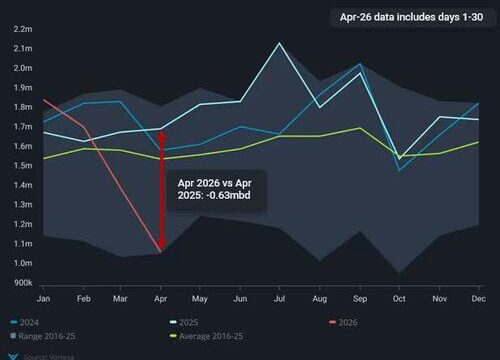
Global seaborne jet fuel exports crashed to a seasonal low in April as supplies remained trapped in the Middle East and Asian refiners slashed run rates amid lower crude availability, energy flows analytics firm Vortexa said in a report on Friday.
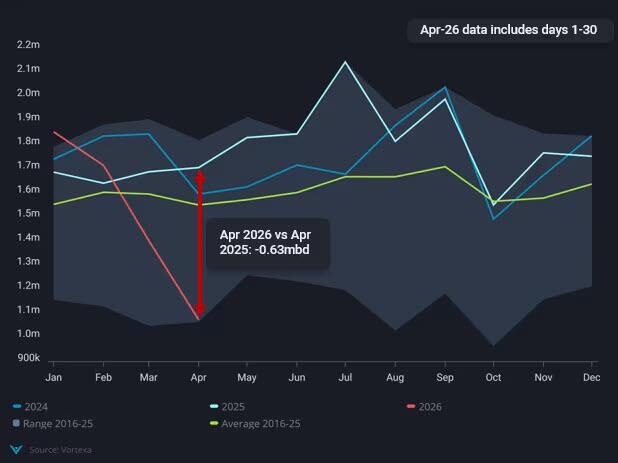
Global seaborne exports of jet/kerosene fuels slumped to as low as 1.1 million barrels per day (bpd) in April, down by 630,000 bpd from the same month last year. That’s also at the lowest end of the ten-year range between 2016 and 2025, Vortexa’s freight tracking data showed.
The crash in exports of jet fuel – which is the most stressed barrel during the ongoing supply shock – was not unexpected. Supplies of the fuel from the Middle East cannot move past the Strait of Hormuz, while Asian refiners slashed exports amid reduced run rates and preference and/or orders to keep more supply for their respective domestic markets.
Jet fuel supplies from Northeast Asia and India West Coast crashed and tightened the global jet fuel market so much that officials and airline executives started talking about fuel shortages in a few weeks’ time.
Fatih Birol, executive director of the International Energy Agency (IEA), warned in mid-April that Europe has “maybe six weeks or so” of remaining jet fuel supply.
Following the slump in global flows in April, exports are set to rebound from May and June as some Asian countries and refiners will be exporting more barrels amid high margins, Ivan Mathews, Head of APAC Analysis at Vortexa, wrote.
A rebound in Northeast Asia’s jet fuel exports would be led by South Korea, which could raise refinery utilization as crude arrivals to the country are expected to recover to about 80% of pre-war levels in May, according to Mathews.
Moreover, the expected rise in jet fuel supplies from Asia in May could lead to arbitrage flows to the U.S. West Coast and Northwest Europe, the analyst said.
While higher Asian supplies would drive a modest recovery in global jet fuel exports in the coming months, incremental exports from Asia are unlikely to fully offset in the near term lost supply from the Middle East, Mathews noted.
“Until seaborne flows normalise, jet/kero cracks are expected to remain elevated relative to other refined products, incentivising refiners to maximise jet fuel yields at the margin.”
Tyler Durden
Fri, 05/08/2026 – 21:45
https://www.zerohedge.com/energy/global-jet-fuel-exports-hit-10-year-seasonal-low-april
Is Marco Rubio The New Heir Apparent To Trump?
Is Marco Rubio The New Heir Apparent To Trump?
For months, the conventional wisdom inside Republican circles has been settled and simple: JD Vance is next. The vice president has led 2028 Republican presidential nomination polling by a country mile, averaging nearly 45.5 points in the RealClearPolitics aggregate — more than 30 points ahead of Donald Trump Jr. at 14.8% and Marco Rubio at 14%.
And yet, something shifted this week. One press briefing, and the betting markets started hedging.
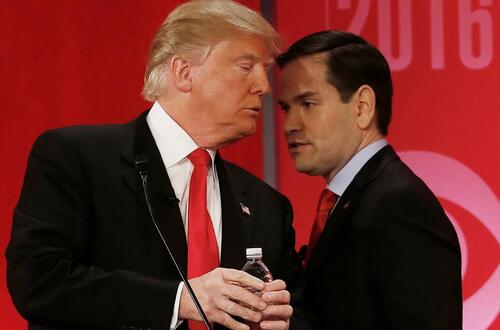
Rubio stepped in as White House press secretary on Tuesday, covering for Karoline Leavitt while she’s on maternity leave, and delivered what even the skeptics had to acknowledge was a polished, commanding performance. He defended the war in Iran before a press corps not exactly known for its generosity toward administration officials — and walked away with his standing improved. The room, by most accounts, was notably less adversarial than it tends to be when Leavitt or Trump takes the podium. Rubio was fluid and measured, giving the journalists little to sharpen their teeth on.
Washington noticed, and Kalshi, one of the leading prediction markets, noticed too.
By Tuesday, Rubio had leapfrogged Vance to become the overall favorite to win the 2028 presidential election, coming in at 18% to Vance’s 17%. Gov. Gavin Newsom sits just behind at 16% – a reminder that the Democrats haven’t entirely vacated the field in the markets’ eyes.
For Rubio, the jump is particularly striking given that he was sitting in the single digits on Kalshi earlier this year.
Polymarket still has Vance in front overall – 19.6% to Newsom’s 16.7% and Rubio’s 15%.
On the GOP nomination question specifically, Vance retains a meaningful edge on Polymarket (though Rubio’s odds are rising). Primary voters and general-election bettors, it turns out, are pricing these things very differently.
None of this, of course, happens in a vacuum. Trump himself has been notably careful — or deliberately noncommittal — about who carries the MAGA torch after January 2029.
Weeks into his second term, Trump sat down with Fox News’s Bret Baier and declined to designate Vance as his heir apparent, saying simply that it was too early for such an endorsement. For a president who has never been shy about anointing winners and losers, that hesitation was conspicuous to say the least. He left the door ajar, and markets being markets, traders are now watching to see who walks through it.
Trump says he does not view JD Vance as his successor and declines to endorse him in 2028, saying it’s too early and that there are “lot of very capable people.”pic.twitter.com/xRtnX1DgZ2
— bryan metzger (@metzgov) February 10, 2025
Vance remains the favorite by most conventional metrics. His polling advantage is enormous, and he’s been the heir apparent since joining the Trump ticket in 2024.
But Rubio’s trajectory is definitely worth watching to see if his stock goes higher or merely plateaus. His rise from the low single digits to within striking distance of Vance on Kalshi over just a few months could be a one-off or the opening act of a longer repositioning.
For now, Vance’s commanding polling lead offers the most grounded picture of where Republican voters actually stand.
But, prediction markets have a knack for capturing things polls don’t. And it will likely take some time to determine if Rubio’s rise will stick.
Tyler Durden
Fri, 05/08/2026 – 21:20
https://www.zerohedge.com/political/marco-rubio-new-heir-apparent-trump
Is There More Risk Than Reward In The US–China Summit?
Is There More Risk Than Reward In The US–China Summit?
Authored by James Gorrie via The Epoch Times (emphasis ours),
Do the advantages of the U.S.–China summit still outweigh the disadvantages?
Perhaps, but the negative risks are high.
The scheduled May 14–15 summit in Beijing between President Donald Trump and Chinese leader Xi Jinping was intended to be a landmark “reset” between the two nations. But as the high-stakes game of chicken unfolds between Washington and Beijing, there may be more reasons not to meet than to carry on with the summit.
Why would that be?
In both principle and practice, the U.S.–China relationship has moved beyond mere trade friction into the realm of indirect military confrontation. In both countries, there are challenges on the internal political, economic, and social fronts, as well as global reputations at stake.
Any one of a number of potentially explosive geopolitical triggers could justify a second delay to the meeting.
The Hormuz Flashpoint: Chinese Weapons Threatening the US Navy?
Of course, the escalating naval war in the Middle East is one of the main reasons for the summit—and for why it may not happen.
Reports indicate that China’s transfer of “carrier-killer” anti-ship missiles to Iran could enable Iranian forces to strike a U.S. Navy vessel. If such an attack were to occur, the political optics for Trump would be disastrous. Not only would American lives and ships be at risk, but Trump’s humiliation in Beijing would be seen by the entire world.
Furthermore, at least one Chinese tanker has passed through the U.S.-led blockade of the Strait of Hormuz in April, to the distaste of the Trump administration.
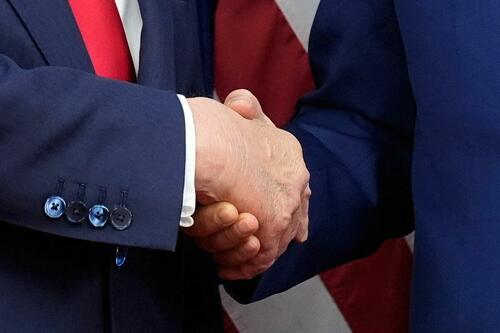
For Trump, who prides himself on “strength,” does it make sense to shake hands with a leader whose technology just “painted a target” on American sailors and violated a U.S. blockade?
At the same time, the U.S. blockade, combined with the Iranian-led security controls, has made the strait a high-risk zone, even for Chinese-flagged or linked vessels. In fact, on May 4, a Chinese-owned tanker was hit by Iran, and according to some reports, several people were wounded, and the vessel was damaged.
Beijing Doubling Down on Iran
The war in Iran is both harming the Chinese regime and deepening its presence in the region. That won’t be bargained away. With fundamental disagreements on the future of Iran, there’s little, if any, prospect for long-term upside, with high risk and low probability of even short-term success.
For instance, from Beijing’s perspective, will China agree to stop buying Iranian oil or stop supplying Tehran with war materiel?
Why would Xi allow himself to be humiliated by hosting the man who kicked China out of Panama and Venezuela, and now potentially Iran?
Trade, of course, is the answer. But Trump has shown that redirecting China’s trade and manufacturing to the United States is a top priority. Therefore, any agreements are unlikely to change those objectives in the long term.
U.S. forces patrol the Arabian Sea near M/V Touska on April 20, 2026. U.S. Navy via Getty Images
Israel and the Overland ‘Silk Road’ Conflict
As the U.S.–Israel coalition continues to attack Iran and the surrounding areas, the Israeli attacks have spilled over into China’s critical supply lines. The Israel Defense Forces has reportedly begun striking China’s overland supply line, its railroad in Iran, viewing it as a lifeline for the Iranian regime.
This action by the Israelis moves the conflict from a proxy war with Iran to a direct assault on Beijing’s Belt and Road Initiative assets and relationships.
Regardless of its diplomatic rhetoric, Beijing will have to respond.
Any response could potentially move China into a deeper role in the war, transitioning from a neutral mediator to an active adversary of the U.S.–Israel axis. That fact alone will make the summit more awkward and confrontational, as Beijing is forced to defend its infrastructure against American-aligned forces.
Xi Faces a Perfect Storm of Multiple Risks
Xi is facing a perfect storm of dissent on multiple fronts.
Financial disruptions and acute shortages in the wake of the Hormuz Strait blockade have triggered multiple, visible public protests against the ruling Chinese Communist Party (CCP). These events are censored, but they are happening with more frequency.
Economically, the structural slowdown in China’s economy has shifted from a “soft landing” to a hard reality, with 30 percent of China’s industrial companies operating at a loss, even as the debt-to-GDP ratio continues to rise to 300 percent.
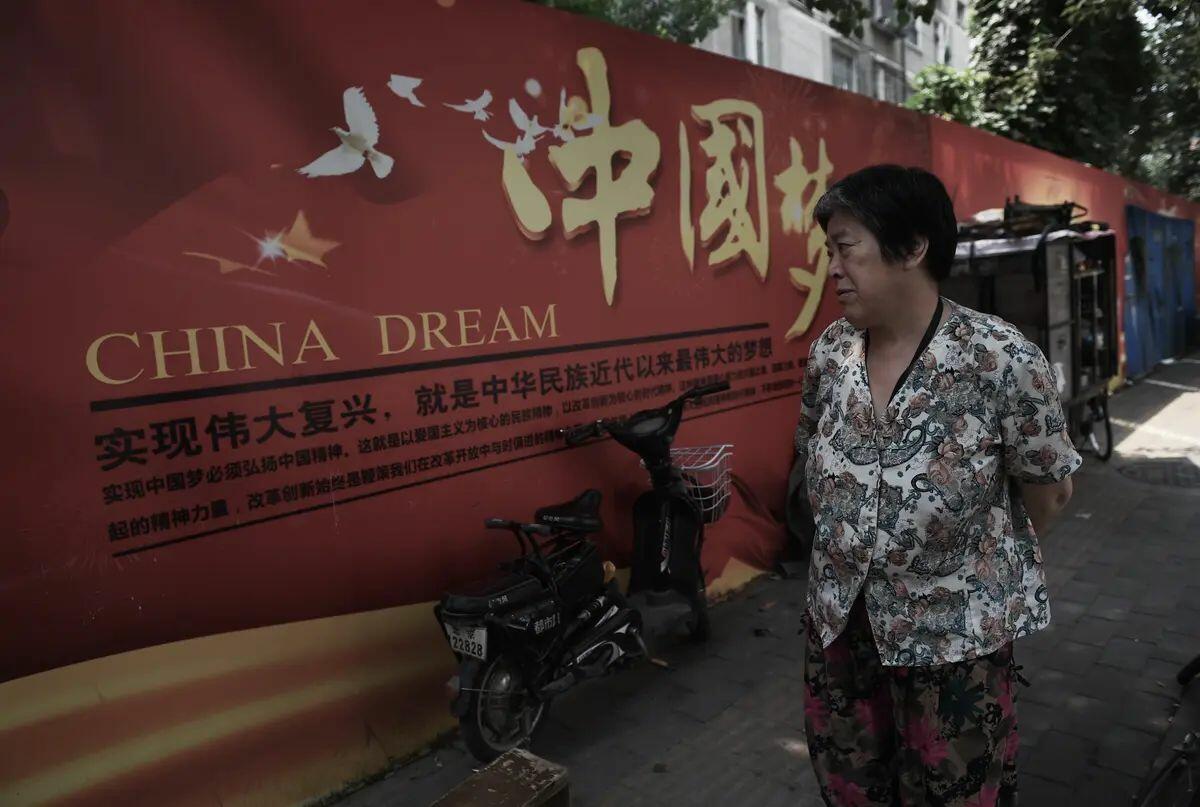
Politically, with the 21st Party Congress approaching in 2027, Xi is in a precarious position, having to consolidate power with a depleted and purged People’s Liberation Army, while his “China Dream” is being undermined by the war in Iran. Every day the war continues, communist China’s geopolitical reputation and its economy grow weaker.
Geopolitically, there is the risk of Iran falling while Trump visits Beijing, or a massive U.S. attack on Iran during the meeting. Either would be a humiliation that Xi may find difficult to politically live down, especially given that confidence in Xi within the CCP has been waning for years.
Why would Xi take the risk of looking weak while the whole world is watching him hosting and toasting Trump? Xi must be planning to avoid this, but how?
Trump’s ‘Art of the Deal’ Versus the ‘Weakness’ Trap
Perhaps the most significant psychological factor is Trump’s own brand. Many global critics and domestic opponents argue that the current global instability was “started” by his administration’s aggressive stance on Iran and trade.
But the instability in the Middle East was arguably expanded and deepened by the Biden administration, enabling the Iranian regime to fund multiple military proxies in the region and greatly enhance its military capabilities, significantly aided by China.
If Trump goes to Beijing now, he risks looking like a supplicant—a leader in need of Xi to “save” him from a widening war—giving him the appearance of needing Xi’s help to clean up the mess he made.
Could Trump use another delay as a negotiating tactic to signal that he is not desperate for a deal, especially if the negative optics of the deal outweigh the benefits?
Might Xi feel similarly?
Both are real possibilities.
Does Either Side Actually Want the Summit?
The reality is that both leaders are caught in a paradox.
For Xi, a summit offers a chance to stabilize trade, but he cannot appear to be yielding to “American hegemony” while he prepares for a fourth term. If he cannot guarantee a “win,” he would do better to cancel the summit and not give CCP critics fuel to further undermine his leadership.
For Trump, he wants the “Grand Deal” that would cement his legacy. But the “Art of the Deal” requires leverage. Right now, with the Iranian regime still in power, Trump’s leverage may be less than he thinks it is.
It’s likely that any real upsides may be short-lived and perhaps temporarily improve public relations with the rest of the world, but is that worth the downside risk for Trump or Xi?
We will soon see.
Views expressed in this article are opinions of the author and do not necessarily reflect the views of The Epoch Times.
Tyler Durden
Fri, 05/08/2026 – 20:55
https://www.zerohedge.com/geopolitical/there-more-risk-reward-us-china-summit
What The Indiana Primaries Tell Us About Trump’s Grip On The GOP
What The Indiana Primaries Tell Us About Trump’s Grip On The GOP
Tuesday night’s primaries in Indiana were not subtle. Five of seven Republican state senators who had blocked a congressional redistricting map favored by President Donald Trump lost their primary races to Trump-backed challengers. The message, delivered cleanly through the ballot box, couldn’t have been clearer.
Twenty-one Republicans in the Indiana Senate voted against a new congressional map that would likely have added two GOP-leaning U.S. House districts. Eight of those dissenters were up for reelection this cycle, and seven drew primary challengers who carried Trump’s explicit endorsement. By Tuesday night, the Associated Press had projected wins for at least five of those challengers. Only state Sen. Greg Goode managed to hold his seat among the targeted incumbents. The rest are heading for the exits.
Trump’s play here was neither complicated nor ambiguous. He targeted members of his own party, not for ideological apostasy or opposition to his signature policies, but for refusing to help the GOP fight back against decades of Democrat gerrymanders. It was a demonstration of leverage and political capital, and it worked.
The incumbents who lost weren’t rogue progressives or even moderate Republicans, either. They were conventional Republicans who had largely supported Trump on major national issues, and didn’t expect to become Trump targets. That calculation turned out to be wrong, and the lesson other incumbents will draw is obvious: the scope of what constitutes a disqualifying defection is wider than many assumed.
And there are likely to be other victims of Trump’s wrath.
In Kentucky’s 4th Congressional District, Trump has endorsed Ed Gallrein against Rep. Thomas Massie, a Republican who has broken with the president on the Iran war, tariffs, and quit a few other things. In Louisiana, Trump is backing Rep. Julia Letlow against incumbent Sen. Bill Cassidy, a physician who has pushed back against the administration’s “Make America Healthy Again” agenda. Both of those incumbents were watching Indiana returns Tuesday night and learning something about their own futures.
CNN’s Scott Jennings made it clear that the elections signaled who controls the Republican Party… It’s Trump all the way.
“He’s the boss of the party. He calls the shots in the Republican Party, and if you go against that, he will pour his wrath out upon you, and it doesn’t typically turn out well.” Jennings said.”If you look at what happened in Indiana tonight, and you’re Thomas Massie tonight, or you’re anybody else in a primary right now where Trump’s on the other side of you, you’ve got to be thinking, this is a bad night for me.”
Trump cleaned up in Indiana State Senate primary tonight. @VanJones68 and I analyze & debate presidents getting involved in state level redistricting matters on @cnn pic.twitter.com/LutBmNpX4h
— Scott Jennings (@ScottJenningsKY) May 6, 2026
The underlying data on Trump’s standing inside the party makes all of this easier to understand, if no less striking. Back in March, an NBC News poll found that Trump had a 100% approval rating among MAGA Republicans – a number that CNN analyst Harry Enten flagged as essentially without precedent. “You don’t have to be a mathematical genius to know you can’t go higher than one hundred percent,” Enten said. He was careful to note the distinction: “Now, there are some Republicans who disapprove of Donald John Trump, but they are not members of the Make America Great Again movement. The bottom line is this: if you are a member of MAGA, you approve of Donald Trump.”
That’s the context in which Tuesday’s results make complete sense. Trump’s grip on the GOP isn’t merely rhetorical or cultural — it is electoral and operational. Indiana showed that the president is willing to spend political capital on state-level races to advance his agenda, even if tangentially. For Republican incumbents nationwide who have crossed him or are contemplating doing so, that combination — willingness and effectiveness — should worry them.
Tyler Durden
Fri, 05/08/2026 – 20:30
https://www.zerohedge.com/political/what-indiana-primaries-tell-us-about-trumps-grip-gop

Nick Shirley Went To Cuba… He Almost Didn’t Make It Home
Nick Shirley Went To Cuba… He Almost Didn’t Make It Home
Authored by Sarah Anderson via PJMedia.com,
Donald Trump and Marco Rubio often accuse the Cuban regime of rolling out the red carpet for our adversaries. They’re not wrong.
It actively welcomes those working against United States interests, and I’m not just talking about China, Russian, and Iran.
If you’ll remember, in March, a group of far-leftist folks from the U.S. and Europe — including members of Code Pink, commie activist Hasan Piker, and Ilhan Omar’s daughter — flew into the crumblingly communist country and stayed in five-star hotels, enjoyed fancy meals, held concerts, and recorded podcasts, all while the Cuban people starve and live without electricity or water much of the time. They took photos with “president” Miguel Díaz-Canel and came back declaring that all was well on the island.
This crew spent some of their time riding around the city and viewing the Cubans as if they were on some sort of poverty safari, and Piker said the people just had an “island mindset” and that’s why they just hung around in the streets all day. They came back reporting that things were just groovy down there and would be even better if Trump and Rubio would stop bullying them.
Well, independent journalist Nick Shirley recently visited Cuba and attempted to do the same thing… but he wanted to tell the real story of what’s happening after decades of failed and corrupt communist rule.
As you can imagine, he didn’t get quite the welcome the others did. Not only that, but according to him, his equipment was seized, “spies” followed him around, and he barely escaped without being “kidnapped.”
“Under communism there is no free speech, and those who show the reality or speak up are imprisoned,” he posted on X on Monday evening.
“Me going without a planned Cuban government guide nearly got me and my security taken hostage or imprisoned. The situation in Cuba is much worse than anyone knows.”
Shirley has put himself in some precarious situations in the past, but this one may have been the most dangerous. Thankfully, he did make it out alive, but here’s exactly what happened, according to him.
“Depending on when this comes out — or if it does — we are currently being held by by Cuban intelligence here in Havana, Cuba,” begins the 13-minute video Shirley released on Monday.
It was recorded from his iPhone in a hotel room in Cuba — that and a tiny microphone are the only pieces of equipment he says the regime didn’t seize.
Shirley goes on to explain that he’s wanted to make a video about how people live under communism for a long time, but one thing he didn’t consider was that under communism, there is no freedom of speech or freedom of the press. With that in mind, the moment he arrived at the airport, despite doing everything right, including documentation, he said they took his cameras, his Meta Glasses, his GoPros, and even his microphones.
He says he wanted to show people what life is like — how there are no cars on the streets and how gasoline is $10 per gallon. He mentioned that the buildings are crumbling, there’s little food, and mass poverty is everywhere. He mentioned visiting a hospital and said there was literally a line of people outside the building waiting for care, and surgeons were performing operations via flashlight.
Shirley wasn’t alone — he did bring his own security guards — and that’s how he knew he was under surveillance. Apparently, they had several run-ins with undercover police and random people recording them. At some point, he claims there were “Cuban intelligence” in his hotel lobby attempting to round him and his security up and “potentially imprison us or make it so we cannot leave Cuba.” That’s when they decided they needed to cut the trip short and leave.
Here’s more in his own words:
So right, right now we’re coming up with a game plan to escape Cuba. Our original flight is to leave on Saturday. Right now, it’s Thursday, so we’re going to be leaving tomorrow morning if we can make it to the airport. We’re about a mile and a half away from the U.S. Embassy right now, which could be our possible way out of this situation by going to the embassy.
However, that does not stop Cubans from stopping us before we get to the embassy. It’s about a mile and a half away, so we have to make it to the embassy. And ight now there’s three Cubans — essentially a Cuban spy is down in the bottom of our hotel right now, and we have to figure out how we’re going to escape. We’re trying to get ahold of the embassy right now and see if we can stay there overnight and then buy our airplane ticket last minute so that doesn’t pull off any red flags to the Cuban government before we arrive to the airport.
Shirley explained that to get out of there, he’d come up with a few options. The first was to hop from taxi to taxi and hope no one trailed them until they reached the airport. The second was to just stay inside the hotel and hope no one came for them in the middle of the night. The problem with that, he said, was that the next day was May 1, which was a major holiday in the country, and a big rally was planned just outside the hotel. The other option was to sneak out and try to make it to the embassy and get a private jet.
“This is probably the most dangerous situation I’ve ever been into,” he said, later adding, “So if I make it out, this video gets seen. If it doesn’t, I’m most likely in a prison cell, which I really hope is not the case.”
Obviously, Shirley did make it out, and he is back home and safe, but if everything he says was true, he could have very well ended up a political prisoner — joining the 1,200 or so that Cuba currently has in its torture centers. However, given what a high-profile situation that would have been, I’m not 100% convinced the regime, which is already currently under almost maximum pressure from Trump and Rubio, would have had the guts to do it. But never underestimate the stupidity of leftists…
I’m sure we’ll learn more about what happened, how Shirley escaped, and what he saw during his short trip (he says more is coming within 24 hours), but in the meantime, here’s what he’s released so far if you’re interested in watching:
🚨 I was almost taken hostage in Cuba…
I went to Cuba to document the humanitarian crisis and show life under 60+ years of communism and now amid the US blockade. Once I landed, they seized all my cameras except my iPhone and had intelligence agents following me all day until… pic.twitter.com/6VFQCOakGZ
— Nick shirley (@nickshirleyy) May 4, 2026
Tyler Durden
Fri, 05/08/2026 – 20:05
https://www.zerohedge.com/geopolitical/nick-shirley-went-cuba-he-almost-didnt-make-it-home
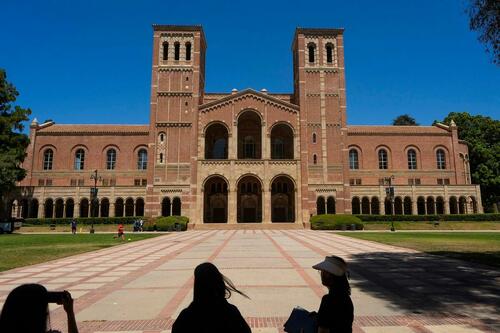
UCLA Med School Illegally Using Race In Admissions: DOJ
UCLA Med School Illegally Using Race In Admissions: DOJ
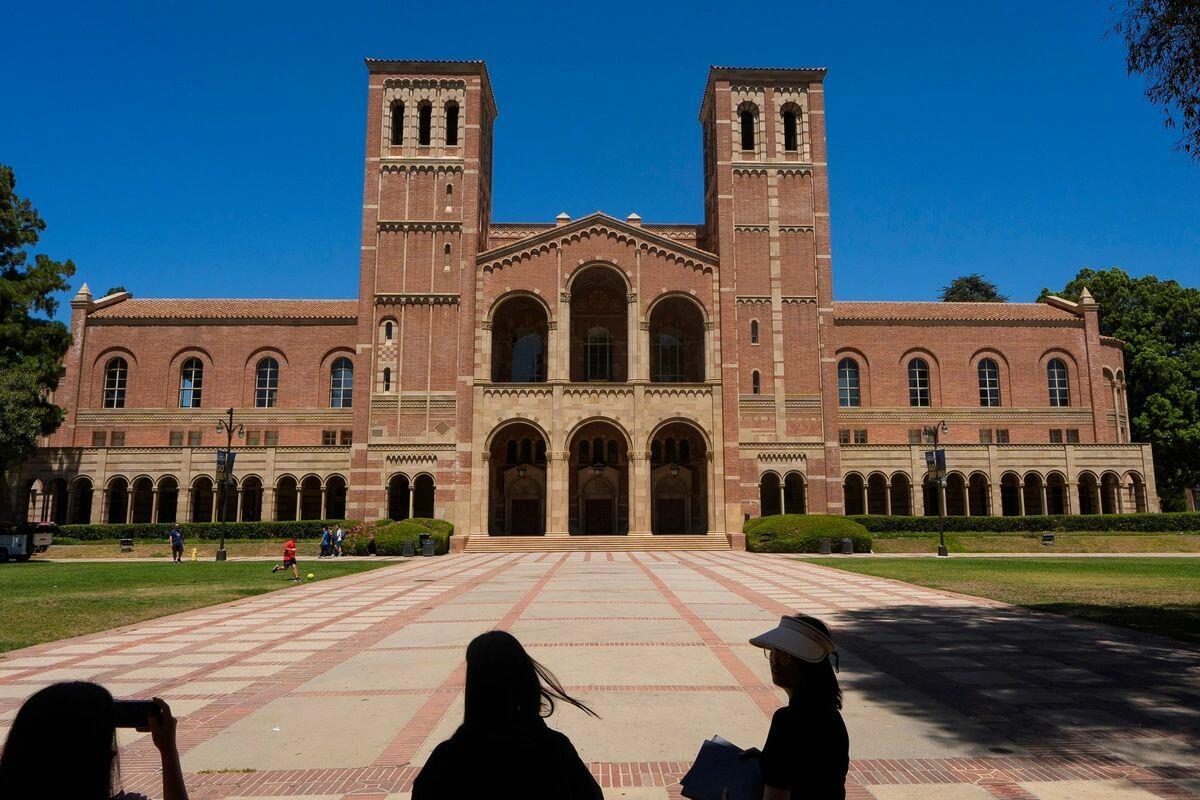
A DOJ investigation into the University of California–Los Angeles (UCLA) found its medial school allegedly used applicants’ race to discriminate against white and asian candidates.
In a seven-page letter released on Wednesday, the agency’s Civil Rights Division wrote that UCLA “continues to intentionally discriminate against applicants based on their race after the Supreme Court’s decision in Harvard by granting and denying admission on the basis of race,” citing a 2023 decision – Students for Fair Admissions vs. Harvard – which barred race-conscious admissions at colleges and universities, but still allowed schools to consider how race affected students if they wrote about their experiences in essays.
The finding is the latest salvo in the clash between the Trump administration and woke institutions since last year, after federal investigators went after DEI initiatives in higher education.
“Racism in admissions is both illegal and anti-American, and this Department will not allow it to continue,” said Assistant Attorney General Harmeet K. Dhillon of the U.S. Department of Justice’s (DOJ) Civil Rights Division.
The David Geffen School of Medicine at UCLA responded – saying its process was “based on merit and grounded in a rigorous, comprehensive review of each applicant.”
“We are confident in our practices and our mission to maintain access to a high-quality education to all qualified students,” a spokesperson told the Epoch Times, which notes further:
The medical school was reviewing the DOJ’s report and was “committed to providing equal opportunity to all applicants and fully complying with federal and state laws,” the spokesperson said.
The DOJ issued a letter to the university’s medical school on May 6 notifying officials of the school’s failure to comply with federal civil rights law for the 2023, 2024, and 2025 classes.
Federal law authorizes the DOJ to conduct periodic compliance reviews and investigations of practices and policies of institutions, such as UCLA, that receive federal funding.
The DOJ found the medical school’s internal policies, literature, and email correspondence to leadership consistently demonstrated its intent to use race as a factor in admissions despite a U.S. Supreme Court ruling in 2023 in Students for Fair Admissions v. Harvard that found race-based admissions programs were unconstitutional.
The medical school allegedly used different academic metrics to discriminate against all racial groups except black and Hispanic applicants to accept more black and Hispanic applicants into its program, according to the DOJ.
If the DOJ determines that the institution can’t voluntarily change its practices to comply with federal law, the DOJ may seek enforcement through the courts, according to the letter.
The school is also facing a class-action lawsuit filed in May 2025 by Do No Harm, a nonprofit organization opposed to “radical, divisive, and discriminatory ideologies” in health care and medical education.
In the lawsuit, the group also claims UCLA’s medical school has ignored federal law by discriminating against applicants based on race.
Tyler Durden
Fri, 05/08/2026 – 19:40
https://www.zerohedge.com/political/ucla-med-school-illegally-using-race-admissions-doj
Clinton-Appointed Federal Judge Rules DOGE’s Terminations Of Humanities Grants Unlawful
Clinton-Appointed Federal Judge Rules DOGE’s Terminations Of Humanities Grants Unlawful
Authored by Guy Birchall via The Epoch Times,
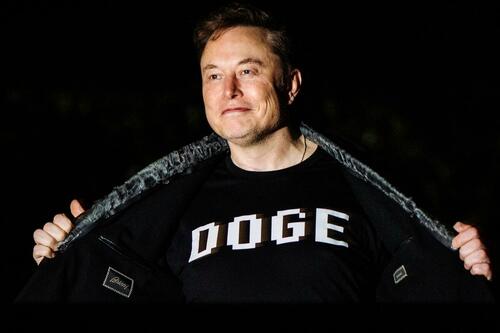
A federal judge ruled on May 7 that the Department of Government Efficiency’s (DOGE’s) termination of hundreds of humanities grants last year was unconstitutional and involved “blatant” discrimination.
In April 2025, the Trump administration axed more than 1,400 grants, amounting to more than $100 million in congressionally appropriated funds awarded to scholars, writers, research institutions, and other humanities organizations.
The move was part of a whirlwind cost-cutting drive that tech billionaire Elon Musk was leading at DOGE as a “special government employee”—a role that is term-limited to 130 days. Musk departed that role after completing his term in May 2025.
However, Bill Clinton-appointed District Judge Colleen McMahon, ruling at the U.S. District Court for the Southern District of New York, said that the administration “engaged in blatant viewpoint discrimination,” ruling in consolidated cases brought by the American Council of Learned Societies, the Authors Guild, and others.
McMahon said the terminations violated the First Amendment right to free speech and the Fifth Amendment, which confers equal protection.
She also ruled that DOGE did not have the legal authority to terminate the grants.
“What mattered to DOGE was not whether a grant lacked scholarly merit, failed to comply with its terms, or fell outside NEH’s [National Endowment for the Humanities] statutory purposes. What mattered was that the grant concerned a ’minority group,’” she ruled.
“DOGE swept in race and ethnicity – including grants concerning Black, Asian, Latino, and Indigenous communities – as well as national origin and immigration status; religion and religious identity (including Jewish, Christian, and Muslim subjects); sex; and sexual orientation, as criteria for grant termination.”
McMahon also said that DOGE staffers using ChatGPT to establish the rationale behind axing some grants would not absolve the government of responsibility for its decisions.
“The government cannot escape liability for DOGE’s work by scapegoating ChatGPT,” she ruled.
Neither DOGE nor the White House has yet responded to the ruling. The Epoch Times has contacted both for comment.
According to DOGE’s website, the department has saved an estimated $215 billion in taxpayers’ money since it was established in January 2025.
That figure amounts to around $1,335.40 per taxpayer, according to DOGE.
The department’s work has been met with other litigation since it began, with the Trump administration in March asking the Supreme Court for a second time to halt lower courts’ attempts to access information about DOGE’s inner workings.
The Supreme Court intervened in the case last year, ruling that lower courts’ orders for the government to turn over information about the department’s activities were overbroad. An appeals court has since asked for less information, but the government told the Supreme Court on March 23 that the requests were still intruding too much on executive branch powers.
“The court of appeals has continued to approve intrusive discovery against a presidential advisory body without adequate consideration for the separation of powers, the FOIA [Freedom of Information Act] statute, and this Court’s previous order,” the government’s filing stated.
The Citizens for Responsibility and Ethics in Washington sued DOGE last year after its FOIA requests were not honored.
The government has argued that DOGE is an advisory arm of the executive branch—not an agency—and is not required to submit to FOIA inquiries. But a district court in Washington ruled differently and ordered DOGE to comply with those inquiries.
The Supreme Court has yet to rule on the administration’s latest request.
Tyler Durden
Fri, 05/08/2026 – 19:15

Thailand Emerges As Possible Hub In Nvidia Chip-Smuggling Channel To Alibaba
Thailand Emerges As Possible Hub In Nvidia Chip-Smuggling Channel To Alibaba
New details have emerged in the alleged AI chip diversion scheme involving the co-founder of Super Micro Computer.
Bloomberg reports that some of the $2.5 billion worth of servers containing advanced AI chips were allegedly routed through a Bangkok-based company before reaching Chinese AI leader Alibaba.
The Bloomberg report noted:
US prosecutors this year outlined a scheme in which Super Micro’s co-founder allegedly worked with an unnamed Southeast Asian company and a “rotating cast” of third-party brokers to divert the AI semiconductors in violation of US trade rules.
The Southeast Asian firm the prosecutors didn’t name, identified only as Company-1, is Bangkok-based OBON Corp., the people said.
Some of the $2.5 billion worth of servers sold to OBON allegedly went to Chinese AI leader Alibaba, according to the people, who requested anonymity to discuss a sensitive legal and geopolitical matter.
It is important to note that OBON is linked to Thailand’s AI infrastructure buildout and the creation of Siam AI, Thailand’s sovereign cloud champion.
Nvidia CEO Jensen Huang even appeared at a Siam AI event in December 2024, focused on sovereign AI. Siam AI’s CEO, Ratanaphon Wongnapachant, said Siam AI was not involved and that he had left OBON when he launched Siam AI.
Washington has restricted exports of advanced Nvidia AI chips to China over national security concerns, leaving Chinese firms to either rent overseas computing resources or obtain chips through smuggling channels.
In mid-March, U.S. federal prosecutors charged three men: senior executive Yih-Shyan “Wally” Liaw, the co-founder; Ruei-Tsang “Steven” Chang; and Ting-Wei “Willy” Sun, with conspiring to divert $2.5 billion worth of Nvidia chips to China.
“OBON’s purported involvement in the smuggling arrangement could deal a blow to Thailand’s fledgling AI ambitions and reignite calls in Washington for restrictions on chip sales to the region,” Bloomberg noted.
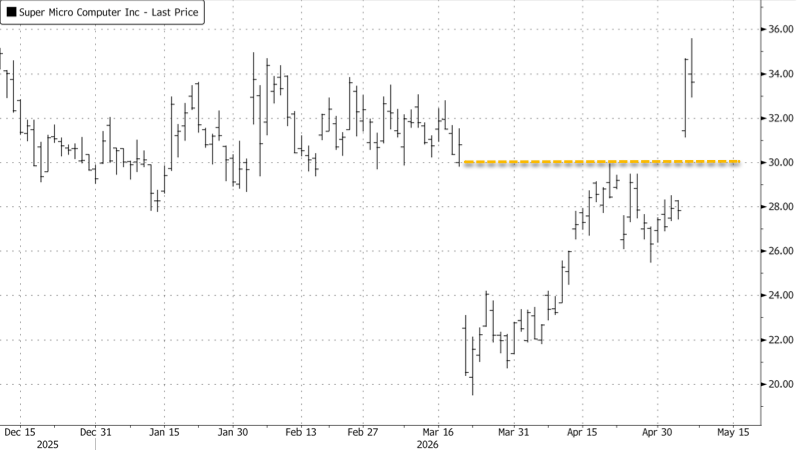
Shares of Super Micro have since recovered from the mid-March plunge that followed the co-founder’s arrest by U.S. authorities.
Today’s report outlines how Thailand’s sovereign AI push may have served as a channel to smuggle advanced Nvidia chips to China.
Tyler Durden
Fri, 05/08/2026 – 18:50
https://www.zerohedge.com/ai/thailand-emerges-possible-hub-nvidia-chip-smuggling-channel-alibaba
We’re “Ending The Days Of Hiding Fraud”: Bessent Goes After Dark Money In Nonprofits
We’re “Ending The Days Of Hiding Fraud”: Bessent Goes After Dark Money In Nonprofits
Authored by Stu Cvrk via American Greatness,
On April 23, the US Treasury Department announced that the IRS plans to revise Form 990—the annual information return filed by tax-exempt organizations—to improve transparency and strengthen oversight, specifically targeting reporting on government contracts, government grants, and fiscal sponsorship arrangements. The stated goals are to detect misconduct and hold wrongdoers accountable.
Treasury Secretary Scott Bessent put the matter bluntly: “We are ending the days of hiding fraud, abuse, and extremist activity behind complicated nonprofit arrangements. When bad actors misuse charitable structures, directors and officers should understand that transparency can lead to scrutiny, accountability, and liability under the law.”
The acting IRS chief counsel added: “If an organization receives public funds or tax-deductible donations, it should be prepared to show who controls the money and where it goes.”
Why is this seemingly innocuous regulatory requirement a really big deal, as most Americans have no idea what Form 990 is used for?
Let us answer that in some detail.
Bottom Line Up Front
Right now, enormous sums of money flow through nonprofit “umbrella” organizations to dozens or hundreds of sub-groups, and the paper trail essentially disappears. The IRS currently has no mechanism on the Form 990 to require disclosure of fiscal sponsorship arrangements. The new rules would force these pass-through organizations to reveal who is getting the money and what it’s being used for.
Think of this in the context of the Southern Poverty Legal Center indictments, which are only the tip of the iceberg of fiscal sponsorship arrangements and transactions.
The Problem: What Is Fiscal Sponsorship and How Is It Exploited?
Fiscal sponsorship is a legitimate and longstanding practice. In a typical fiscal sponsorship relationship, a nonprofit organization’s 501(c)(3) tax-exempt status is extended to groups engaged in activities that serve the fiscal sponsor’s mission, typically for a fee. Donations to the project are directed to the fiscal sponsor and are restricted to supporting activities of the charitable venture. The fiscal sponsor is responsible for assuring the activities of the project fulfill their charitable purpose. Here is how the left-wing Tides Foundation advertises fiscal sponsorships on their website.
The legitimate use case: a new charity that hasn’t yet received IRS 501(c)(3) status can operate under an established nonprofit’s umbrella while it goes through the process. The problem is what happens at scale when the model is weaponized.
Arabella Advisors (see below) and its affiliated entities utilized tax regulations in which groups who use a fiscal sponsorship arrangement do not have to file a Form 990 with the Internal Revenue Service. Using “pass-through” arrangements, funding is passed from one organization to another, making it difficult to trace where a donor’s money ends up.
As noted in the Treasury Department’s press release, recent congressional oversight has raised concerns that some fiscal sponsorship arrangements may be used to obscure who is operating a project, who controls project funds, and how those funds are being used.
The key loophole: because the sponsored “project” is not a standalone legal entity, it files no independent 990. Millions of dollars can be directed to a group that, on paper, barely exists—perhaps just a website—with no public accountability whatsoever.
The Arabella Dark Money Network: Scale and Structure
Arabella Advisors, founded in 2005 by Clinton administration alumnus Eric Kessler, became the most sophisticated example of this model on the American Left. Arabella Advisors is a philanthropic consulting company that oversaw a handful of nonprofits, all of which oversaw a multitude of left-leaning projects and organizations. When accounting for the seven nonprofits in the Arabella Network, they provided nearly $1 billion in grants in 2023 alone. That buys a lot of elections and left-wing activism.
The scale is staggering. In the 2020 election cycle, Arabella’s nonprofits took in $2.4 billion, more than the fundraising of the Democratic and Republican National Committees combined. In the 2022 cycle, Arabella’s fundraising rose to $3 billion.
The Arabella-managed nonprofits collectively paid Arabella over $200 million in consulting fees while creating hundreds of left-wing policy and advocacy organizations through “fiscal sponsorship” agreements that generate “pop-up groups” that operate under the umbrella of an Arabella-managed nonprofit, are not required to file independent financial disclosure forms, and often exist as little more than a website.
The core technique—the “pop-up group”—is essential to understanding how the opacity works. Since the Arabella network’s inception, it sponsored at least 340 such groups. These groups rarely disclose their relationship to Arabella Advisors or its in-house nonprofits; nevertheless, many of them accept donations from the public, funds that go to Arabella’s nonprofits. This system also allows these groups to hide their funders, since it’s virtually impossible to trace individual grants to Arabella’s nonprofits to any particular group.
The flagship funds within the network—the New Venture Fund, Sixteen Thirty Fund, Hopewell Fund, Windward Fund, and North Fund—shuffle money among themselves, compounding the opacity. The five funds sent more than $52 million to Arabella Advisors as payment for operational and management services. On numerous occasions, the funds wired millions of dollars to each other, further obscuring which issues and initiatives individual grants supported.
Foreign money has entered this network as well. Swiss billionaire Hansjörg Wyss was able to move $475 million into various organizations to influence US politics and elections through his nonprofits. The Arabella Network can be linked directly to $265 million from Wyss’s Berger Action Fund and Wyss Foundations. Keep in mind that US election laws bar foreign nationals from contributing to candidates or PACs, but no equivalent restriction applies to nonprofits operating in this manner.
What did Arabella fund specifically? Arabella played a major role in battles over Supreme Court nominations, abortion, women’s sports, school discipline, environmental policies, fake local news outlets, “Zuck Bucks” that manipulate election offices, and more. One particularly notable example: An Arabella-sponsored group funded entirely with Soros money—”Governing for Impact,” started in 2019—worked with Harvard Law School to develop legal strategy memos on how to overturn dozens of federal regulations, including Title IX.
The Sixteen Thirty Fund in particular served as an electoral vehicle. The Sixteen Thirty Fund was behind several groups that ran issue advocacy ads to benefit Democrats during the 2018 midterms. The group also funded Demand Justice, which spent millions of dollars on ads attacking Brett Kavanaugh’s Supreme Court nomination. In 2020 alone, the Sixteen Thirty Fund donated $410 million toward defeating Trump and winning Democratic control of the US.
Arabella’s recent rebrand: Facing sustained scrutiny, Arabella announced it would be shuttering, to be replaced by a trio of successor organizations. The fiscal sponsorship division was acquired by Sunflower Services, a newly formed public benefit corporation. The remaining divisions of Arabella formed a new company called Vital Impact. Sunflower Services is at least majority-owned by the three biggest C3 charities in Arabella’s old empire—New Venture, Hopewell, and Windward Funds. Critics note this is a restructuring, not a shutdown; the same infrastructure continues under friendlier-sounding names.
The Tides Foundation: The Original Model
Tides predates Arabella by three decades and essentially invented the fiscal sponsorship model for the Left. Tides founder Drummond Pike envisioned using fiscal sponsorship for progressive political activism. Fiscal sponsorship uses a tax-exempt charity to provide financial support to a non-exempt project or organization, thereby lending it tax exemption as long as the charity retains control of the way its funds are spent.
Between 1996 and 2010, the Tides Center served as a fiscal sponsor to some 677 separate projects with combined revenues of $522.4 million; in 2010 alone, the Center was actively managing nearly 200 projects.
Tides founder Pike himself acknowledged the core purpose of the model: “Anonymity is very important to most of the people we work with.” The Tides Center has been described as an organization that effectively washes away the paper trail between grants and the original donor.
The combined Tides network is enormous. The six Tides nonprofits saw combined total revenues of $785,605,823 in 2024. The Tides Center offers comprehensive fiscal sponsorship to projects that do not have their own tax-exempt status from the IRS. Again, note that Form 990 has no mechanism for disclosing fiscal sponsorship activities. Some current and past Tides Center projects include Fair and Just Prosecution, Palestine Legal, and the International Corporate Accountability Roundtable.
The Washington Free Beacon reported that in 2023, the Tides Foundation gave $286,000 to the Alliance for Global Justice, a group best known for serving as the fiscal sponsor of Samidoun—subsequently sanctioned by the US Treasury as a “sham charity” for providing material support to a Palestinian terrorist organization that participated in the October 7 Hamas attacks.
Tides has also used its fiscal sponsorship services to explicitly facilitate government grant-seeking. The fee for all funding from government sources is 15 percent, higher than standard rates because government grants entail significantly more paperwork and reporting—meaning Tides actively markets itself as a vehicle for its sponsored projects to access federal funding and takes a cut.
Government Money Flowing to Left-Wing Groups
This is where taxpayer dollars enter the picture directly—distinct from private dark money, but often intertwined with it. Here are some estimates and examples.
USAID awarded more than $800,000 to New Venture Fund—a dark money pass-through nonprofit that cloaks which donors give to which nonprofits—and $27 million to the Tides Center.
The US Committee for Refugees and Immigrants, one of the nonprofits that transported illegal aliens across the country under the Biden administration, reported receiving $284 million of its $289 million in revenue from government grants—98.2 percent government-funded.
The Solidarity Center has received over $86 million from the federal government since 2008; $61 million of that was given under President Biden. Three Solidarity employees joined Biden’s Labor Department. Solidarity receives 99 percent of its total revenue from American taxpayers and serves the AFL-CIO, which gave 86 percent of its 2024 political donations to Democrats.
On the climate front: Inflation Reduction Act funds set aside hundreds of billions for the green agenda. A former staffer from an environmental group called the Coalition for Green Capital joined the Biden EPA specifically to direct $27 billion in green funding. Under his tenure, $5 billion was granted to his former organization. Power Forward Communities received nearly $9 billion despite being only a few months old when it applied—and one recipient was a group affiliated with Stacey Abrams that had only $100 in the bank when it received $2 billion.
The Environmental Law Institute, which ran a “Climate Judiciary Project” to educate federal and state judges in favor of climate tort litigation against energy companies, received millions of dollars in grants and contracts from the EPA, the Departments of Justice, Homeland Security, Agriculture, and State, and the National Science Foundation between 2021 and 2024.
Regarding the SPLC specifically: Despite the SPLC reporting $132.7 million in revenue and nearly $770 million in net assets for 2021, the State Department still granted honorariums and speaker fees to SPLC officials. Additionally, a Biden-era Department of Labor approved a $6 million “employment training” grant for NextGen, a nonprofit that fights for “progressive policy change” through advocacy and civic engagement.
The SPLC itself is in the news for separate reasons: the Justice Department indicted the Southern Poverty Law Center on federal fraud charges, alleging it improperly raised millions of dollars to pay informants to infiltrate the Ku Klux Klan and other extremist groups.
The revolving door between these funded NGOs and Democratic administrations is a key part of the story. Personnel from Open Society Foundations and associated left-wing groups cycled in and out of the Biden White House, Justice Department, and other agencies—the same people who had previously shaped grantmaking priorities then directed government money toward aligned organizations.
In just the first month of the Trump administration, 15 groups that had received federal cash from the previous administration sued the current administration, mostly to protect their funding, which totaled $1.6 billion. This is the feedback loop in miniature: government grants activist groups → activist groups lobby for more government → activist groups litigate against anyone who tries to stop it.
Concluding Thoughts
Several converging factors explain the timing of the Treasury Department’s April announcement:
Congressional pressure has been building. Multiple House hearings over the past year—the DOGE Subcommittee hearing “Public Funds, Private Agendas: NGOs Gone Wild” and the Judiciary Subcommittee hearing “How Leftist Nonprofit Networks Exploit Federal Tax Dollars”—have built an extensive public record and created political momentum for regulatory action.
The rebrand attempt flagged the problem. Arabella’s restructuring into Sunflower Services and Vital Impact in late 2025 was widely seen as an attempt to launder its reputation and escape scrutiny. The Treasury announcement signals that rebranding won’t be sufficient.
Form 990 has a structural blind spot. As noted in the Treasury Department’s press release, Form 990 has no mechanism for disclosing fiscal sponsorship activities. This isn’t a bug in enforcement—it’s a gap in the regulatory framework itself, one that has been known and exploited for decades. Treasury is finally moving to close it through regulatory action rather than waiting for Congress to act legislatively.
The SPLC indictment and related scrutiny. The indictment of the SPLC, combined with sustained focus on the Tides Foundation’s role in funding anti-Israel groups, has elevated the broader question of nonprofit accountability in the current political moment.
The “revolving door” has been documented. The Biden years produced extensive documentation of personnel moving between the dark money network and government agencies, with the explicit effect of directing public funds toward aligned organizations. The Trump administration is using every available tool—executive, regulatory, and prosecutorial—to dismantle these arrangements.
The bottom line is pretty straightforward: for decades, a small number of sophisticated nonprofit aggregators have used fiscal sponsorship to create a system in which billions of dollars—from private megadonors, foreign nationals, and American taxpayers—flow to politically aligned left-wing activist organizations with direct ties to the Democrat Party with essentially no public accountability. The sponsored groups don’t file their own 990s.
The pass-through organizations don’t have to disclose which projects their money supports. And the whole system is perfectly legal under current IRS rules. The Treasury announcement is the first significant regulatory step toward forcing disclosure of these arrangements, and its timing reflects both the political will of the current administration and the groundwork laid by over a year of congressional investigation.
“Sunlight is the best disinfectant” for the body politic!
Tyler Durden
Fri, 05/08/2026 – 18:25