Category: News
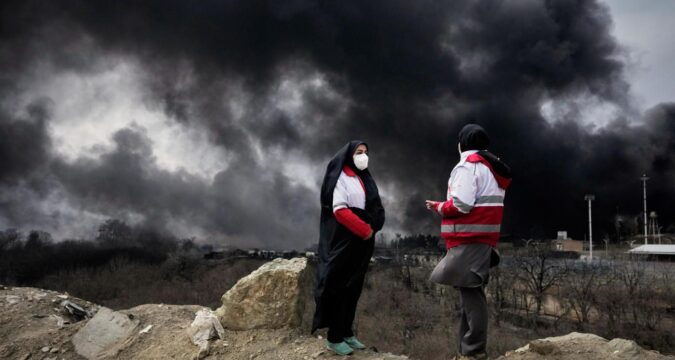
Bahrain says Iran hit a desalination plant, stoking fears of attacks on civilian sites
DUBAI, United Arab Emirates — Bahrain accused Iran of striking a desalination plant on Sunday, raising fears that civilian infrastructure may become fair game in the war, as Iran’s president vowed to expand the country’s attacks on American targets across the region in the face of intense U.S. and Israeli airstrikes.
A late-night Israeli strike on an oil facility engulfed parts of Tehran in smoke on Sunday, while Israel renewed attacks in Lebanon. President Donald Trump and Israeli Prime Minister Benjamin Netanyahu vowed to press ahead with the 9-day-old campaign, which has rippled across the region and appears to have no end in sight.
Iranian President Masoud Pezeshkian threatened Sunday to step up attacks on American targets across the Middle East, backtracking from conciliatory comments a day earlier, in which he apologized for attacks on his Gulf neighbors’ soil. Those were quickly contradicted by Iranian hard-liners.
In Lebanon, intensifying Israeli strikes pushed the death toll higher as hundreds of thousands were displaced and Israel targeted the Iran-backed militant group Hezbollah.
In Israel, the military said two soldiers were killed in fighting in southern Lebanon — the first Israeli military fatalities since the start of the war last week. Three people were also injured in Israel in a Sunday afternoon strike.
The war, which Israel and the United States launched with airstrikes on Feb. 28, has so far killed at least 1,230 people in Iran, at least 397 in Lebanon and at least 11 in Israel, according to officials. Six U.S. troops have also been killed.
The conflict has rattled global markets, disrupted air travel and left Iran’s leadership weakened by several thousand Israeli and American airstrikes.
Iran’s president toughens tone
In video comments Sunday, Pezeshkian said Iran’s military response would only strengthen.
“When we are attacked, we have no choice but to respond. The more pressure they impose on us, the stronger our response will naturally be,” Pezeshkian said. “Our Iran, our country, will not bow easily in the face of bullying, oppression or aggression — and it never has.”
The remarks came a day after Pezeshkian said Iran regretted regional concerns caused by Iranian strikes and urged neighboring states not to take part in U.S. and Israeli attacks against Iran. While multiple Gulf states reported intercepting more incoming missiles and drones from Iran, Pezeshkian said the country wasn’t looking to battle them and accused the U.S. of trying to pit countries against one another.
Iranian hard-liners quickly contradicted those remarks. Judiciary chief Gholam Hossein Mohseni-Ejei wrote on X: “The geography of some countries in the region — both overtly and covertly — is in the hands of the enemy, and those points are used against our country in acts of aggression. Intense attacks on these targets will continue.”
Mohseni-Ejei and Pezeshkian are part of a three-member leadership council that has overseen Supreme Leader Ayatollah Ali Khamenei was killed in a strike at the outset of the war.
Pezeshkian’s remarks Sunday reinforced pledges that Iran would not surrender despite U.S. and Israeli threats, with Trump and Netanyahu saying their aim remains the replacement of Iran’s leaders.
“We’re not looking to settle,” Trump told reporters Saturday aboard Air Force One. “They’d like to settle.”
Desalination and oil facilities attacked
The Gulf nations of Bahrain, Kuwait and the United Arab Emirates, reported additional Iranian missiles launched toward them on Sunday, including several that hit new categories of civilian infrastructure.
The United Arab Emirates said that Iran launched more than 100 missiles and drones in new barrages. Only four drones fell at unnamed locations, the country’s defense ministry said.
Bahrain accused Iran of indiscriminately attacking civilian targets and damaging one of its desalination plants, though its electricity and water authority said supplies remained online. Home to the U.S. Navy’s Fifth Fleet, Bahrain has been among the countries targeted by Iranian drones and missiles. Attacks have hit hotels, ports and residential towers and killed at least one person.
The desalination plant strike came after Iran said a U.S. airstrike damaged an Iranian desalination plant. Abbas Araghchi, the country’s foreign minister, said the strike on Qeshm Island in the Strait of Hormuz had cut into the water supply to 30 villages. He warned that in doing so “the U.S. set this precedent, not Iran.”
Desalination plants supply water to millions of residents in the region, raising new fears of risks in multiple parched desert nations.
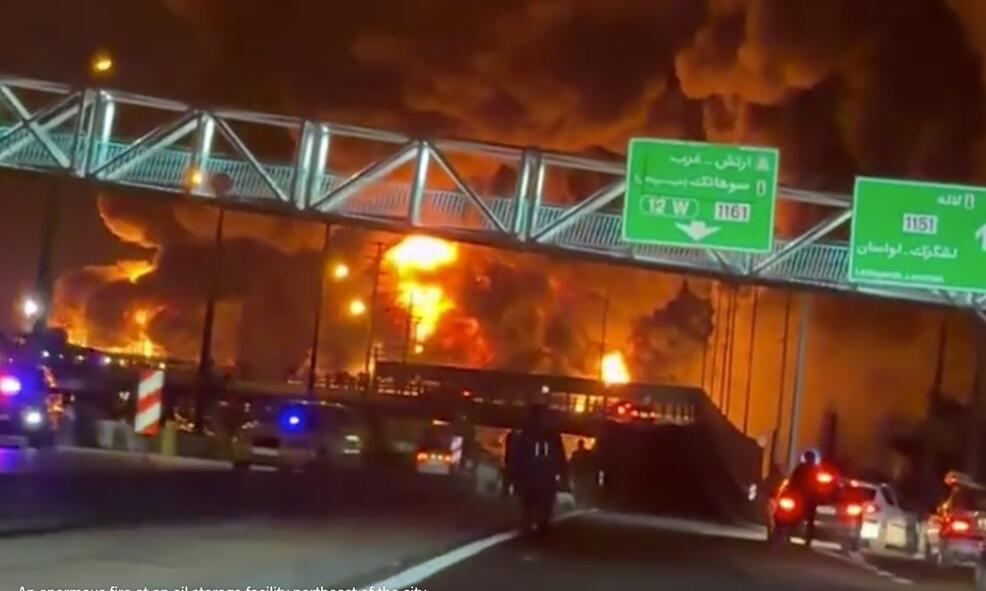
Iran also said Sunday that overnight strikes from Israel hit four oil storage tankers and a petroleum transfer terminal, killing four people. Witnesses in Tehran said the smoke was so thick from a fire that engulfed the north Tehran oil depot that it felt as if the sun had not risen.
The Iranian Red Crescent Society said Sunday that about 10,000 civilian structures across the country had been damaged, including homes, schools and medical facilities. It warned Tehran residents to take precautions against toxic air pollution and the risk of acid rain after Israeli strikes set fires to oil depots in the area.
Mohammad Bagher Qalibaf, the speaker of Iran’s parliament, said the war’s impact on the oil industry would continue to spiral, warning it could soon become harder to produce and sell oil. Some regional producers, including in Iraq, have already curbed output amid dangers in the Strait of Hormuz.
Iran maintains sufficient fuel, Veys Karami, managing director of the National Iranian Oil Products Distribution Company, told Iran’s state-run news agency. Israel’s military said the targeted oil depots were being used by Iran’s military.
More strikes hit Lebanon
Israel renewed its assault early Sunday on parts of Lebanon, where health officials reported at least 394 people have been killed in the conflict between Israel and Hezbollah.
Health Minister Rakan Nassereddine said on Sunday that 83 children and 82 women were among those killed. The Israeli military has ordered large swaths of the country to evacuate, and Lebanese officials reported more than 400,000 have been displaced during an offensive that Israel’s military says is aimed at stamping out Iran-supported forces there.
In Beirut, sheltering families crammed into schools, slept in cars or in open areas near the Mediterranean Sea, where some burned firewood to keep warm while awaiting basic supplies. The government says it would soon open a large sports stadium to shelter thousands more.
Israel’s renewed offensive began last week after Hezbollah launched rockets toward northern Israel during the opening days of the war. The subsequent strikes have been the most intense since a November 2024 ceasefire.
Israel withdrew from most of southern Lebanon at that time but continued near-daily strikes, primarily in southern Lebanon, saying that Hezbollah had been trying to rebuild its positions there. Hezbollah said last week that after more than a year of abiding by a ceasefire as Israel’s strikes continued on Lebanon, its patience has ended, leaving it with no option but to fight.
Metz reported from Ramallah, West Bank, and Chehayeb from Beirut. Associated Press journalists Melanie Lidman in Tel Aviv, Israel, Samy Magdy in Cairo and Aamer Madhani in Doral, Florida, contributed reporting.
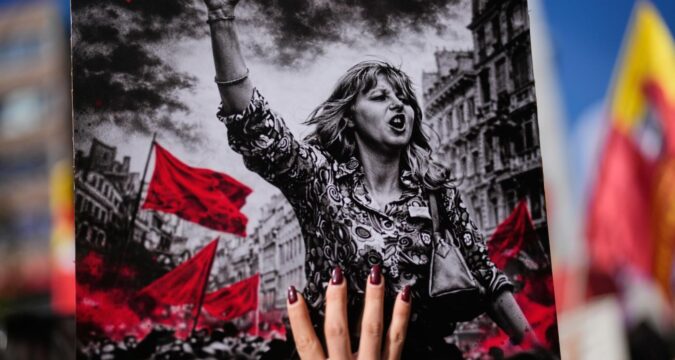
International Women’s Day is a celebration and a call to action. Here are things to know.
Women across the world will call for equal pay, reproductive rights, education, justice and decision-making jobs and celebrate progress toward female empowerment during events and demonstrations marking International Women’s Day on Sunday.
Officially recognized by the United Nations in 1977, International Women’s Day is commemorated in different ways and to varying degrees in places around the world. Protests are often political — and at times violent — rooted in women’s efforts to improve their rights as workers.
2026 will mark the 115th year of International Women’s Day. This years’ theme is “Give to Gain,” with a focus on fundraising for organizations focused on women’s issues and less tangible forms of giving such as teaching peers, celebrating women and “challenging discrimination.” Women worldwide hold 64% of the legal rights that men have, according to United Nations data.
What is International Women’s Day?
International Women’s Day is a global celebration — and a call to action — marked by demonstrations, mostly of women, around the world, ranging from combative protests to charity runs. Some celebrate the economic, social and political achievements of women, while others urge governments to guarantee equal pay, access to health care, justice for victims of gender-based violence and education for girls.
It is an official holiday in more than 20 countries, including Afghanistan, Burkina Faso, Ukraine, Russia and Cuba, the only one in the Americas. In the United States, March is celebrated as Women’s History Month.
As in other aspects of life, social media plays an important role during International Women’s Day, particularly by amplifying attention to demonstrations held in countries with repressive governments toward women and dissent in general.
When did it start and why does it fall on March 8?
While the idea behind a women’s day originated in the U.S. with the American Socialist Party in 1909, it was a German feminist who pushed for a global commemoration during an international conference of socialist women held in 1910 in Copenhagen. The following year, events across Europe marked the day, and during World War I, women used it to protest the armed conflict, which lasted from 1914 to 1918.
International Women’s Day is observed on March 8 after a massive protest in Russia on Feb. 23, 1917, that led to the country’s eventual withdrawal from the war. At the time, Russia had not adopted the Gregorian calendar and still used the Julian calendar.
The U.N. began commemorating the holiday in 1975, which was International Women’s Year, and its General Assembly officially recognized the day two years later.
How is it observed across the world?
Roughly 20,000 people attended a march for International Women’s Day in Berlin. German news agency dpa reported Sunday that the crowd was double the amount police had expected. Speakers at the event decried violence against women in Germany, as well as gender discrimination.
In Brazil, Sunday’s marches for International Women’s Day served as a rallying cry against gender-based violence, fueled by the latest case to outrage the country involving the alleged gang rape of a 17-year-old girl in Copacabana.
The case in Rio de Janeiro’s famed, beachside neighborhood took place in January, but gained national traction this week when four suspects handed themselves over to authorities.
At least 15 protests were planned across the country, with organizers calling for the defense of women’s lives and an end to femicide.
Globally, a woman or girl is killed every 10 minutes by a family member or partner, according to U.N. figures, and the number of women being exposed to conflict has significantly jumped over the past decade.
What does the future hold for March 8?
Some say commemorating International Women’s Day is now more important than ever, as women have lost gains made in the last century, among them the 2022 decision by the U.S. Supreme Court to overturn a nationwide right to abortion, which ended constitutional protections that had been in place nearly 50 years.
The U.S. decision on abortion has reverberated across Europe’s political landscape, forcing the issue back into public debate in some countries at a time when far-right nationalist parties are gaining influence.
https://www.chicagotribune.com/2026/03/08/international-womens-day-2/
Former Members Of Alleged Texas Antifa Cell Shed Light On Ideology During Trial
Former Members Of Alleged Texas Antifa Cell Shed Light On Ideology During Trial
Authored by Darlene McCormick Sanchez via The Epoch Times,
Individuals identified as North Texas Antifa members testified in a landmark domestic terrorism case that social justice and anti-government ideology influenced their involvement with the group.
The trial in the U.S. District Court for the Northern District of Texas follows President Donald Trump’s executive order on Sept. 22, 2025, designating Antifa as a domestic terrorist organization.
The Fort Worth trial completed its second week in what is expected to be a three-week trial.
Members of Antifa, short for “anti-fascist,” have not faced terrorism-related charges until now, although they have been involved in organized protests across the country that have at times turned violent.
In the landmark case, the government alleges that an Antifa cell launched a coordinated attack against the Prairieland Detention Center housing illegal immigrants outside Dallas on July 4, 2025.
The prosecution claims Benjamin Song ambushed law enforcement at the Immigration and Customs Enforcement (ICE) detention facility outside Dallas, firing 11 shots at police and detention officers, wounding one officer in the neck.
‘Charismatic’ Leader
Two cooperating government witnesses, Lynette Sharp and Seth Sikes, both pleaded guilty to one count of providing material support to terrorists and testified against Song.
Sharp alleged Song admitted to shooting someone when she helped him evade law enforcement after the officer was shot.
Likewise, Sikes alleged that Song said, “Get to the rifles,” and testified he heard gunshots coming from behind him where Song was and turned to see a muzzle flash.
Sharp met Song in 2022, and Sikes met him in 2024 while Song was teaching martial arts at a Fort Worth community center.
Both witnesses testified that they became friends with the defendants.
“I love them,” Sharp said on the stand, after wiping tears.
Sikes testified he and others trusted Song, whom he described as a “very charismatic person” that people would follow.
Cameron Arnold (also known as Autumn Hill), Zachary Evetts, Bradford Morris (also known as Meagan Morris), Maricela Rueda, and Song face the most serious charges of attempted murder, discharging a firearm during a crime of violence, and providing material support to terrorists.
Other defendants facing lesser charges include Savanna Batten, Elizabeth Soto, Ines Soto, and Daniel Rolando Sanchez-Estrada.
All have pleaded not guilty.
Protest Culture
Sharp and Sikes said group members considered themselves victims of society or those who wanted to protect “marginalized” people.
This ideology led them to become caught up in protest culture, offering a rare glimpse into the inner workings of protestors known as Antifa.
Antifa is modeled after a group that worked as the violent arm of the Communist Party in Germany in the 1930s. Some symbols from the original group are still used by the movement today, such as the logo and the raised-fist salute.
Song, who received an “other than honorable” discharge from the Army, recruited Sharp and Sikes to train with the Socialist Rifle Association (SRA), often described as a left-wing alternative to counter the National Rifle Association (NRA).
Sharp and Sikes said they learned gun safety and practiced marksmanship. Various defendants in the Antifa case frequently trained with AR-style weapons, they said.
They described practicing shooting together at an outdoor range in Ferris, Texas, before the July 2025 ICE protest, targeting images depicting the Ku Klux Klan.
Sharp labeled herself an anti-fascist.
Under cross-examination, she argued that socialism wasn’t anti-American. Instead, she described it as the belief that some people can be wealthy, but no one should be poor. She distinguished it from communism, in which no one could be wealthy.
She painted anarchy as a benign political ideology where the community took care of itself in the absence of a formal government.
Sharp and Sikes described themselves as gay rights supporters who slowly developed a relationship with Song, also known as “Champaign.”
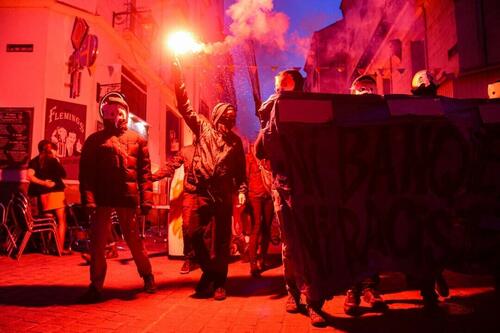
They discussed wearing black bloc, which is all-black clothing, to protests, including face coverings that hide their identities.
Sharp testified that ideological beliefs related to LGBT and minority rights, along with opposition to ICE, fostered friendships among the defendants.
Some participants formed an “affinity group” that she said was organized by Song. She said group members would watch tactical YouTube videos on clearing a building occupied by adversaries.
Sikes, who comes from a military family, testified he attended a Dallas No Kings protest against Trump’s immigration policies with Song. Sikes testified that he and the other defendants thought ICE was too aggressive and strongly disagreed with their tactics.
He said Song was “not entirely friendly to police.”
Sikes told the jury he was uncomfortable with Song’s belief that showing up to demonstrations with assault-style rifles could intimidate police and make them back off.
Sikes described his political beliefs as left-wing, aligning more closely with socialism, while noting that others identified more with anarchists. Other beliefs in the group included democratic socialism, anarchy, and communism.
He referred to Antifa as an umbrella term encompassing various left-wing groups, and that they referred to themselves as Antifa in a “tongue in cheek” fashion.
According to Sharp, the group believed that society was breaking down and that the federal government would eventually fail.
Karaoke and Anti-Capitalism
Group members began inviting Sharp to the “big gay house” where transgender defendants Morris and Hill lived with others.
They would hold karaoke nights and recite poetry on Thursday nights, Sharp said.
Sharp testified that she and other defendants attended Emma Goldman Book Club monthly meetings to discuss articles, book excerpts, and self-published materials known as zines, with an anti-capitalist perspective.
Goldman, the book club’s namesake, was a Russian-born Jew and revolutionary who advanced an anti-capitalist, anarchist ideology in the United States in the early 1900s until she was deported.
At the discussions, minorities and women were given deference when speaking, because white people already “took up too much space,” according to Sharp.
She described herself as anti-fascist, but denied being an Antifa member despite signing a plea deal with the government, which characterized anti-fascists as Antifa.
The group also discussed anarchy during their time together, she testified.
“Some people believed that was a solution,” she said. “Some people didn’t.”
Tyler Durden
Sun, 03/08/2026 – 10:30

Japón remonta al final y vence 4-3 a Australia; Taiwán supera a Corea del Sur
TOKIO (AP) — El campeón defensor Japón remontó un 1-0 en contra para vencer el domingo 4-3 a Australia, impulsado por un jonrón de dos carreras en la séptima entrada y dos outs de Masataka Yoshida en el Clásico Mundial.
Japón añadió dos carreras de seguridad en la octava. Ukyo Shuto anotó con el doble de Teruaki Sato y Sosuke Genda llegó al plato cuando Ky Hampton otorgó una base por bolas con las bases llenas.
Japón necesitó esas carreras.
Alex Hall acercó a Australia con un jonrón en la novena, y Rixon Wingrove conectó otro en el siguiente turno al bate para poner el marcador 4-3.
Japón ya tenía garantizado el pase a los cuartos de final, pero la victoria le aseguró terminar primero del Grupo C antes de que cerrar sus actividades de la primera pase el martes ante la República Checa.
Australia puede asegurar el otro boleto a cuartos de final del grupo si supera el lunes a Corea del Sur.
El pitcheo australiano mantuvo a raya a Japón durante todo el juego hasta que Yoshida castigó con un jonrón al jardín derecho a Jon Kennedy, el quinto lanzador de Australia de la noche.
Kennedy cargó con la derrota. La victoria fue para Chihiro Sumida, con salvamento de Taisei Ota.
Japón había anotado todas sus carreras salvo una en los dos primeros juegos del torneo mediante cuadrangulares.
Australia anotó en la sexta debido al descuidado juego de Japón. Aaron Whitefield conectó un doble antes de robarse la tercera base, y anotar por un error en el tiro del receptor japonés Kenya Wakatsuki.
Japón tuvo su mejor oportunidad en la cuarta, al llenar las bases con dos outs y Shohei Ohtani en el plato. Sin embargo, la amenaza terminó cuando Shugo Maki fue sorprendido fuera de la segunda base por el receptor australiano Robbie Perkins, con Ohtani de pie en la caja de bateo.
Aunque Japón solo conectó cinco hits, recibió 12 bases por bolas del pitcheo australiano.
Taiwán vence 5-4 en la décima a Corea del Sur
Más temprano, Taiwán derrotó 5-4 en la décima a Corea del Sur. Chieh-Hsien Chen —quien comenzó como corredor designado— anotó la carrera de la victoria en la parte alta del inning gracias a un toque de sacrificio de Kun-Yu Chiang.
Taiwán mejoró a 2-2 y ya completó su participación en el Grupo C. Corea del Sur tiene marca de 1-2 y termina su participación el lunes contra Australia, que ya venció a Taiwán.
Taiwán conectó tres vuelaceras en el juego, pero al final fue el juego pequeño el que lo salvó.
Yu Chang pegó un jonrón solitario en la primera entrada y Tsung-Che Cheng conectó otro en la segunda, mientras Stuart Fairchild le dio a Taiwán ventaja de 4-3 con un cuadrangular de dos carreras en la octava. Fue el segundo jonrón de Fairchild en el torneo. El otro fue un grand slam contra la República Checa.
“Ese fue uno de los juegos más divertidos que he jugado en toda mi vida”, exclamó Fairchild, jardinero de los Guardianes de Cleveland que está jugando porque su madre es de Taiwán.
El jonrón de Fairchild parecía que podría ser suficiente, pero no del todo.
Corea del Sur reaccionó, como lo hizo varias veces a lo largo del juego, e igualó 4-4 en la parte baja de la octava con un doble de Do Yeong Kim, con Hyeseong Kim anotando.
Corea del Sur estuvo cerca de anotar la carrera del empate en la parte baja de la décima, pero Ju Won Kim fue eliminado en una jugada apretada en el plato. Una repetición mostró el out.
Yi Chang se llevó la victoria por Taiwán y Jyun-Yue Tseng se acreditó el salvamento. La derrota fue para Woo-Suk-Go.
___
Deportes AP: https://apnews.com/hub/deportes
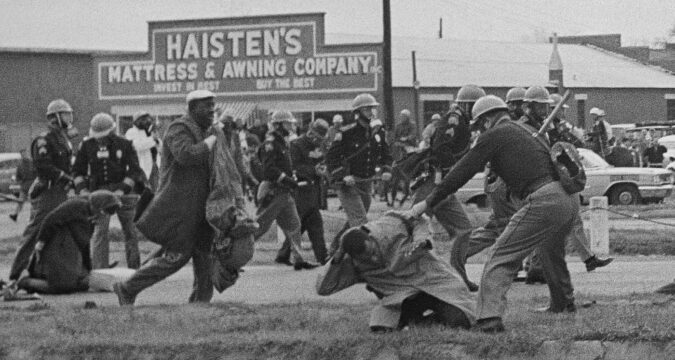
EEUU conmemora aniversario de histórica marcha a favor de derechos civiles en Selma, Alabama
SELMA, Alabama, EE.UU. (AP) — Sesenta y un años después de que la policía reprimió la marcha por los derechos civiles en el puente Edmund Pettus en Selma, miles de personas se reúnen en esa ciudad de Alabama este fin de semana en medio de nuevas preocupaciones sobre el futuro de la Ley de Derecho al Voto.
La violencia del 7 de marzo de 1965, que llegó a conocerse como el Domingo Sangriento, conmocionó a la nación y ayudó a impulsar la aprobación de la histórica legislación que acabó con la segregación racial en las elecciones.
Pero las celebraciones del aniversario de este año —actos que se desarrollan durante todo el fin de semana y concluyen con una marcha conmemorativa por el puente el domingo— llegan mientras la Corte Suprema estudia un caso que podría limitar una disposición de la Ley de Derecho al Voto que ha ayudado a garantizar que algunos distritos del Congreso y locales se tracen de modo que los votantes de minorías tengan la oportunidad de elegir al candidato de su preferencia.
“Me preocupa que todos los avances que logramos durante los últimos 61 años vayan a ser erradicados”, declaró Charles Mauldin, de 78 años, uno de los manifestantes que fue golpeado aquel día.
Se espera que los magistrados fallen pronto sobre un caso de Luisiana relativo al papel de la raza en el trazado de los distritos congresionales. Un fallo que prohíba o limite ese papel podría tener consecuencias de gran alcance, al abrir potencialmente la puerta para que estados controlados por republicanos reduzcan los distritos de mayoría negra y latina que tienden a favorecer a los demócratas.
Funcionarios demócratas, líderes de derechos civiles y otras personas han llegado a la ciudad sureña para rendir homenaje a ese momento crucial del Movimiento por los Derechos Civiles y para lanzar llamados a la acción. Al igual que los manifestantes del Domingo Sangriento, deben seguir presionando hacia adelante, señalaron los organizadores.
El exsenador estatal Hank Sanders, quien ayudó a iniciar la conmemoración anual, manifestó que los hechos de 1965 en Selma marcaron un punto de inflexión en la nación y contribuyeron a mejorar la democracia norteamericana.
“La sensación es de un miedo profundo a que perderemos los avances logrados, un miedo mayor que en cualquier momento desde 1965”, Sanders afirmó.
El representante Shomari Figures ganó las elecciones en 2024 en un distrito de Alabama que fue redibujado por el tribunal federal. Comentó que lo ocurrido en Selma y la posterior aprobación de la Ley de Derecho al Voto “fue monumental para dar forma a cómo se ve Estados Unidos y cómo la población está fielmente representada en el Congreso”.
“Creo que venir a Selma es un recordatorio reconfortante cada año de que el progreso que obtuvimos del Movimiento por los Derechos Civiles no es perpetuo. Ha estado bajo ataques constantes casi desde que conseguimos esos derechos”, añadió Figures.
En 1965, los manifestantes, encabezados por John Lewis y Hosea Williams, caminaron en parejas por el puente de Selma rumbo a Montgomery. Mauldin, que entonces tenía 17 años, formaba parte de la tercera pareja detrás de Williams y Lewis.
En la cima del puente, podían ver el mar de agentes del orden, incluidos algunos a caballo, esperándolos. Pero siguieron avanzando. Mauldin recordó en una entrevista telefónica: “Tener miedo no era una opción. Y no es que no tuviéramos miedo; es que elegimos el valor por encima del miedo”.
“A todos nos golpearon. Nos pisotearon. Nos lanzaron gas lacrimógeno. Y el estado de Alabama nos brutalizó”, relató Mauldin.
___________________________________
Esta historia fue traducida del inglés por un editor de AP con ayuda de una herramienta de inteligencia artificial generativa.
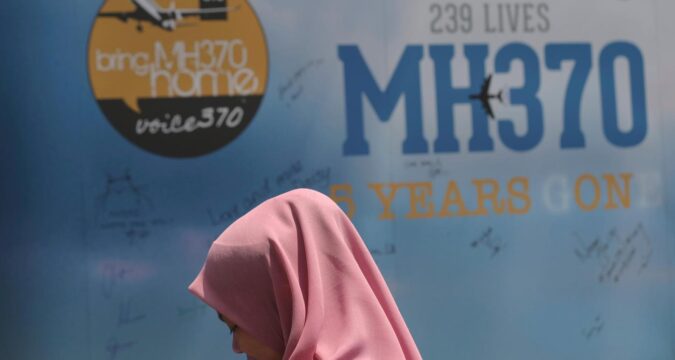
Doce años después, nueva búsqueda del vuelo MH370 no arroja hallazgo; familias piden respuestas
Associated Press
KUALA LUMPUR, Malasia (AP) — Doce años después que el vuelo MH370 de Malaysia Airlines desapareciera con 239 personas a bordo, una nueva búsqueda en aguas profundas en el sur del océano Índico no ha logrado hasta ahora localizar el avión desaparecido, informaron las autoridades malasias el domingo, al tiempo que las familias de los desaparecidos presionaban para que las tareas continúen.
La Oficina de Investigación de Accidentes Aéreos señaló en un comunicado que una búsqueda en el lecho marino realizada por la empresa de robótica marina Ocean Infinity entre marzo de 2025 y enero de 2026 examinó miles de kilómetros cuadrados del fondo oceánico, pero no ha producido ningún hallazgo confirmado de los restos del avión.
Malasia dio luz verde el año pasado a la empresa con sede en Texas para reanudar la búsqueda del vuelo 370 bajo un contrato de “si no se encuentra, no se paga” en un nuevo sitio de 15.000 kilómetros cuadrados (5.800 millas cuadradas) en el sur del océano Índico, donde se creía que se estrelló. Ocean Infinity recibirá 70 millones de dólares sólo si se descubren restos.
La búsqueda se llevó a cabo durante 28 días en dos fases —del 25 al 28 de marzo del año pasado y del 31 de diciembre de 2025 al 23 de enero de este año—, y abarcó unos 7.571 kilómetros cuadrados (2.923 millas cuadradas) del lecho marino, indicó la oficina. La condiciones climatológicas adversas interrumpieron periódicamente las operaciones, agregó.
“Las actividades de búsqueda realizadas no han arrojado ningún hallazgo que confirme la ubicación de los restos del avión”, indicó en un comunicado. No dio detalles sobre cuándo se reanudará la búsqueda.
El avión Boeing 777 desapareció del radar poco después de despegar el 8 de marzo de 2014, con 239 personas, en su mayoría ciudadanos chinos, en un vuelo desde la capital de Malasia, Kuala Lumpur, hacia Beijing. Los datos satelitales mostraron que el avión se desvió de su ruta de vuelo y se dirigió hacia el extremo sur del océano Índico, donde se cree que se estrelló.
Una costosa búsqueda multinacional no logró encontrar pistas sobre su ubicación, aunque restos llegaron a la costa del este de África y a islas del océano Índico. Una búsqueda privada en 2018 realizada por Ocean Infinity tampoco halló nada.
Voice 370, que representa a las familias de algunos de los que iban a bordo del avión desaparecido, instó al gobierno a ampliar el contrato de Ocean Infinity y a considerar acuerdos similares con otras empresas de exploración en aguas profundas.
Aunque el contrato de Ocean Infinity se extiende hasta junio, el grupo afirmó que el buque de la empresa ha sido reasignado a otros trabajos y es poco probable que regrese pronto para completar las áreas de búsqueda restantes debido a la proximidad de los meses de invierno y al deterioro de las condiciones del mar.
“El gobierno no paga nada a menos que se encuentre el avión. Por lo tanto, cualquier solicitud de Ocean Infinity para ampliar el contrato de búsqueda debería concederse sin dudarlo”, sostuvo en un comunicado. “Si la búsqueda actual no tiene éxito, también instaremos a Malasia a que, por favor, considere ampliar oportunidades similares de ‘si no se encuentra, no se paga’ a otras empresas capaces de exploración en aguas profundas”.
El grupo prometió “continuar la lucha por respuestas. ¡Nunca nos rendiremos!”
___
Esta historia fue traducida del inglés por un editor de AP con la ayuda de una herramienta de inteligencia artificial generativa.
Lake County Council to vote on data center decommission ordinance
The Lake County Council will vote on two ordinances Tuesday related to the decommissioning of data centers and battery energy storage systems, as the county begins considering a data center in unincorporated Lake County.
Under the data center ordinance, a data center facility that is inactive for more than 15 consecutive months should be decommissioned and restored to pre-development conditions, unless otherwise approved by the Plan Commission following a public hearing.
The data center owner would notify the Plan Commission of the proposed date of when the center would stop operations and an anticipated timeline for decommissioning.
Under a submitted decommissioning plan, the data center owner would offer a proposal with the physical removal of all structures and equipment; the recycling, reuse, or lawful disposal of solid waste; and site stabilization, according to the ordinance.
The operator will also include a decommissioning cost estimate prepared by an Indiana State Licensed Professional Engineer, and the operator will prove having sufficient funds to cover the costs.
Under the battery energy storage systems ordinance, it has the same 15-month inactive standard for decommissioning, decommissioning plan and cost estimate and coverage. The ordinance includes additional removal language to include removing batteries and testing soils after equipment has been removed to ensure there was no contamination.
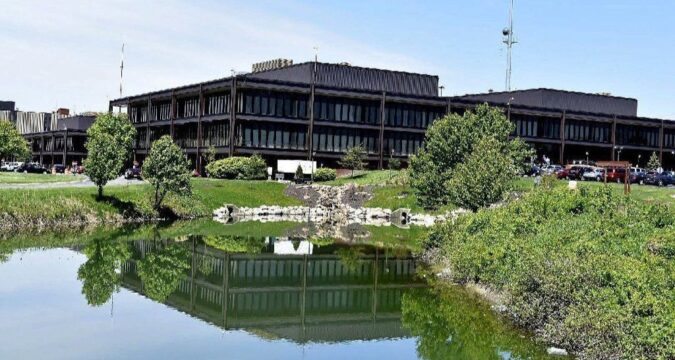
The Plan Commission has held two meetings to discuss a proposed data center in Eagle Creek Township about six miles away from Lowell High School.
Sentinel Data Centers, a New York-based company with established data centers on the East Coast, is proposing to build a data center on 160 acres of land outside of Lowell on the south side of Indiana 2 just east of Clay Street, said project attorney David Westland.
The data center would be near other industrial uses, like a nearby battery storage facility, Westland said. Tensaka, a Nebraska-based renewable energy company, received county zoning approval last year to develop a 300 megawatt battery storage facility on 35 acres of land near the same intersection, according to Post-Tribune archives, and NIPSCO would be interconnected to the grid.
The proposed data center follows the county’s comprehensive plan, Westland said. The due diligence period for the project will last through 2026, Westland said.
Lake County Councilman and Plan Commissioner Randy Niemeyer, R-7th, said data center projects have been known to raise questions and concerns from residents. Niemeyer said that the developer of the data center in unincorporated Lake County has agreed “to slow walk” the project, he said, to answer questions and allow the county to approve necessary ordinances.
“It’s important for everybody, the citizens and the elected officials, to be really educated on this stuff. We’re working to make sure that all that information is developed and made available before it comes to a vote,” Niemeyer said.
New Iran Supreme Leader Chosen, But Identity Concealed, As US-Israeli Strikes Obliterate Tehran’s Energy Resources
New Iran Supreme Leader Chosen, But Identity Concealed, As US-Israeli Strikes Obliterate Tehran’s Energy Resources
Iran officially announced Sunday that it has chosen its next supreme leader, though the identity of the successor remains under wraps for now, given that already the Assembly of Experts had last week paused the selection process amid the ongoing heavy US-Israeli bombing campaign. The other big concern is that the next Ayatollah of the Islamic Republic will have big target on his back while under the bombs.
According to Iran’s ISNA news agency, the Assembly of Experts reached their decision following emergency deliberations triggered by the killing of Ayatollah Ali Khamenei in the opening hours of the war which kicked off early on February 28. “The most suitable candidate, approved by the majority of the Assembly of Experts, has been determined,” Mohsen Heydari, a member of the body, declared Sunday.
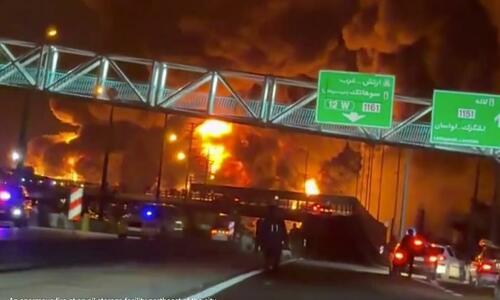
Stillframe of video after overnight strike & fire at oil depot in Tehran, via NYT/@Vahid
Fars News further cited another member, Mohammad Mehdi Mirbagheri, who confirmed that “a firm opinion reflecting the majority view has been reached” – but again, the name has not yet been publicly disclosed.
Israeli officials have made clear they will strike any figure chosen to replace Khamenei, raising the prospect that Iran’s new supreme leader could face assassination almost immediately after going public and assuming power. But presumably there are command bunkers hidden deep underground, and all across the country.
Saturday and overnight saw the war expanding into a new phase, with US and Israeli forces now hitting Iranian oil depots and refining facilities in Tehran for the first time – also what’s said to be fuel storage for the country’s armed forces, which has sent thick clouds of black smoke all over the densely-packed city of Tehran, which is comparable in size and population to New York City.
Oil-soaked rain even came down, and massive oil depot fires have burned through the night into Sunday…
JUST IN 🇮🇷🇺🇸: The fires in Tehran keep burning into the morning after last night’s airstrikes on the oil depots.
Teh air quaility is usually bad in tehran but this is making it much worse. Pray for the people that have to breathe this air. https://t.co/bjWup2DYN6 pic.twitter.com/4OsHeM2TT5
— Ryan Rozbiani (@RyanRozbiani) March 8, 2026
Currently there are reports that the US is contemplating seizing control of Iran’s largest oil export terminal on Kharg Island. Per regional reports:
A senior US official vowed to take control of Iran’s oil on Friday as the devastating regional conflict triggered by the US-Israeli war on Iran neared its second week.
“What we want to do is to get such massive oil reserves in Iran out of the hands of terrorists,” White House advisor Jarrod Agen said in an interview with Fox Business.
Iranian officials are also warning of environmental fallout from the expanding attacks on energy infrastructure. Foad Izadi, a professor at the University of Tehran, claimed in an interview with Al Jazeera that the strikes were timed deliberately ahead of rainfall.
The future of the vital Kharg Island looms large as China is still getting (some of) its oil.
PHOTO OF THE DAY: China is still getting (some of) its oil.
Nine days into the war, Iran continues loading oil supertankers from Kharg Island.
Tehran has sent some of them across the Strait of Hormuz into the high seas wihthout any problem.
Photo @CopernicusEU March 7th 2026 pic.twitter.com/uzSkzntOOB
— Javier Blas (@JavierBlas) March 8, 2026
“And I think they have done it purposely. They wanted to hit these oil facilities so they could create this huge smoke, and with all this contaminated rain, it looks like black ink,” he said.
He warned that runoff from damaged facilities could contaminate drinking water supplies in and around Tehran. “So people are going to get sick if these types of attacks continue, and we don’t have any signs that Trump and Netanyahu are stopping their war against Iran,” Izadi said. “So I think we are facing a serious environmental disaster.”
March 8, 2026 – Tehran at sunrise today. But the sun is hidden behind a sky filled with smoke. After a night of intensive strikes on oil facilities, thick black clouds now hang over the city, turning morning into something that feels like night. pic.twitter.com/7MghBnWRRw
— RKOT (@RKOTOfficial) March 8, 2026
Iran’s retaliation across the region continues, with the Islamic Revolutionary Guard Corps (IRGC) having taken a far harder line as the conflict slides, warning regional governments that Tehran will continue striking if US or Israeli forces operate from bases on their soil – strikes which appear to have continued – though the extent of damage on US bases appears to currently be censored by the Pentagon and some compliant entities like foremost commercial satellite imaging company Planet Labs.
Gulf states including Kuwait, Qatar, Saudi Arabia and the United Arab Emirates reported new missile and drone activity, despite Iranian President Masoud Pezeshkian having earlier ‘apologized’ for strikes hitting neighboring countries and pledging to halt attacks if their territory is not used for operations against Iran. But there’s evidence that the IRGC and military apparatus is overriding any potential ‘olive branch’ offered to the Gulf or US. Israel too appears to still be getting hit by Iranian missiles and drones, and also Hezbollah rockets on the north.
An interesting live coverage moment on NBC News…
Notable contrast between some drooling American “expert” talking about installing a “pragmatic” leader in Tehran and Tehran delivering a missile to its target in Tel Aviv.
Our elites manifestly do not understand this country we’re at war with.pic.twitter.com/1SqJ1I1JoL
— Andrew Day (@AKDay89) March 8, 2026
For example, as we reported previously an Iranian drone strike caused material damage to a desalination plant in Bahrain, according to the country’s interior ministry. The incident follows Iranian accusations that US forces bombed a freshwater desalination facility on Qeshm Island days earlier, which Tehran described as setting a “precedent”.
On the question of finding a diplomatic solution, the sides don’t appear to be talking, and in fresh comments Trump brushed off threats from Iran’s top security leadership, saying, “I couldn’t care less” while signaling that the pace and scale of attacks are only set to continue. This as Pentagon billion-dollar radar systems appear to be getting degraded quick:
Spokesman for the Iranian Armed Forces: we targeted and destroyed 4 radars of the U.S. THAAD system in the past hours.
Currently, even some among Iran’s ‘professional opposition’ in exile in places like London and the United States have expressed horror and concern at the images of whole portions of Tehran on fire, with black oil-infused smoke and rain inundating the capital and sprawling civilian neighborhoods.
Told Wolf Blitzer on @cnn that many Iranian-Americans were happy to see Khamenei killed, but they are turning against the war as it is becoming clear that the country is being destroyed and that hopes that this would lead to a quick collapse of the theocracy are being dashed. pic.twitter.com/0R4SpEI4bu
— Trita Parsi (@tparsi) March 7, 2026
Over in Lebanon, which can be viewed as a second Israeli front, the whole country has been pulled deeper into the fighting as Beirut and countryside regions get bombed. An Israeli airstrike on a hotel in Beirut reportedly killed at least four people over the weekend, after hundreds have already been killed, and IDF troops have also suffered some casualties.
European powers are increasingly reacting to the widening war, with French President Emmanuel Macron scheduled to travel to Cyprus after Iranian-made drones struck the island earlier in the week. Paris has already deployed the aircraft carrier Charles de Gaulle to the Mediterranean along with a frigate and additional air defense units. But it’s anything but clear the degree to which a country like France – which has sought to distance itself politically from Trump’s Operation Epic Fury – will directly support operations. Instead, like Italy, it looks to just be bolstering anti-air defenses of allies.
Macron is meeting wtih Cypriot President Nikos Christodoulides and Greek Prime Minister Kyriakos Mitsotakis to demonstrate “solidarity” and coordinate steps to “strengthen security around Cyprus and in the eastern Mediterranean,” according to the Elysee Palace.
Trump talks of changing the map of Iran, which goes even beyond regime change… hints at dismantling the nation:
Trump now openly speaks about end to Iran’s territorial integrity.
Combined with bombings of national infrastructure tonight, many Iranians will perceive targeting of Iran as a nation-state with a military capability.
That could quickly shift sentiments inside Iran. https://t.co/iWhF74s0C8
— Mohammad Ali Shabani (@mashabani) March 7, 2026
Criticism of the US-Israeli campaign is emerging from other parts of Europe as well, with Switzerland’s defense minister Martin Pfister said the strikes violate international law, while Spain has similarly condemned the bombings as reckless and illegal.
Iran is meanwhile likely looking to impose steep enough pain and a big cost on the attacking powers in order to ensure they never so easily make the decision to bomb the country again. A fresh statement in Tasnim news agency cites the IRGC boasting of new strikes on Tel Aviv and Beersheba, as well as the Muwaffaq al-Salti airbase in Jordan – which it described as “the largest and most active offensive base of the American aggressor fighter jets.”
“The volume and depth of the attacks of the Iranian armed forces on the enemy will expand in the coming hours and days,” the IRGC statement said.
Parts of Tel Aviv increasingly looking like Gaza:
اسرائیل اور اس کے دفاع پر مامور اعلانیہ اور غیر اعلانیہ اتحادیوں پر ایرانی میزائلوں کی 24کھیپیں برسانے کے بعد تل ابیب اب تک ابیب نہ رہا، غزہ بن گیا pic.twitter.com/NUYoJhQD8k
— Shahid Hussain (@ShahidHussainJM) March 7, 2026
At this point, a full week in, the death toll has surpassed that of last June’s 12 day war. According to the US-based Human Rights Activists News Agency (HRANA), at least 1,205 civilians have been killed in Iran since the US and Israel began their attacks, including 194 children. The HRANA has highlighted child deaths despite largely being seen as a Washington-friendly NGO and what might be called part of the anti-Tehran activist opposition, and based in Fairfax, Virginia.
Across the region over 1400 have been killed, including mounting casualties in Israel. As for the Pentagon it has not released a fresh US troop casualty update in several days – and official American servicemembers killed stands at six. There are Sunday reports of two more people killed in Kuwait, also as Saudi Arabia says its air defenses are active in intercepting inbound projectiles.
Tyler Durden
Sun, 03/08/2026 – 09:55
Debido a la guerra, muchos iraníes huyen a través de Turquía
Por SERRA YEDIKARDES
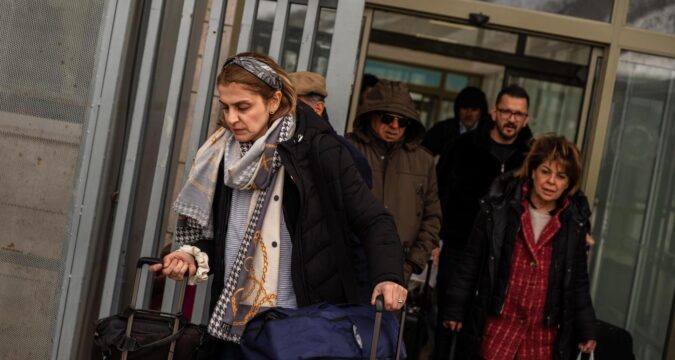
CRUCE FRONTERIZO KAPIKOY, Turquía (AP) — Un paso fronterizo cerca de la provincia turca oriental de Van es una de las pocas rutas que conectan a los iraníes con el resto del mundo en medio del cierre del espacio aéreo en Irán desde que Estados Unidos e Israel lanzaron ataques contra Teherán hace más de una semana.
La mayoría de los viajeros en el puesto fronterizo en los últimos días tenía vínculos con Turquía por trabajo, familia y amigos, y muchos adelantaron visitas planificadas debido a la guerra. Algunos tenían residencia o ciudadanía en un tercer país y estaban en tránsito por Turquía.
Solo un pequeño número de iraníes que habló con The Associated Press en el cruce de Kapikoy afirmó que planeaba quedarse en Turquía por un periodo indefinido.
Reza Gol, un cirujano plástico de 38 años, comentó que la guerra no era la única razón de su viaje. Viajaba desde Urmia, en el oeste de Irán, para ver pacientes en Estambul, donde solía vivir.
“No está claro si dejaremos Irán para siempre, pero mientras tanto puedo despejarme un poco”, expresó. “Se puede ver que no está tan concurrido en la frontera. Todo el mundo se está quedando en sus casas. Por ahora, la gente no está dejando atrás todo lo que tiene y huyendo”.
Pooneh Asghari y su esposo, ciudadanos iraníes-canadienses, se preparaban a regañadientes para volar a Canadá, aunque ya no tienen una casa allí y ambos trabajan en Irán. Asghari señaló que esperan que el viaje sea breve.
“Hemos estado viviendo en Irán durante los últimos cinco años”, indicó. “Toda nuestra vida está allí”.
Fariba, una mujer que pidió ser identificada solo por su nombre de pila por motivos de seguridad, se dirigía a İzmir, en el oeste de Turquía, para esperar a que pase la guerra junto con su hijo.
Afirmó que la mayoría de sus amigos y vecinos no tiene medios para escapar, lo que podría explicar la falta de un éxodo importante a través de la frontera.
“La gente es muy pobre ahora”, manifestó. “Así que se quedan en casa y tienen miedo”.
Restricciones fronterizas y vuelos cancelados
Normalmente, los iraníes entran en Turquía sin visado. El ministro de Comercio de Turquía anunció el lunes la suspensión mutua de los cruces para excursiones de un día, mientras que funcionarios fronterizos iraníes han restringido el paso de algunos ciudadanos iraníes, según viajeros y medios locales.
Sin embargo, desde la mañana del jueves, tanto iraníes como nacionales de terceros países han estado cruzando con normalidad por Kapıköy.
El ministro del Interior de Turquía, Mustafa Çiftçi, indicó en un comunicado que 2.032 viajeros entraron en Turquía desde Irán el miércoles, mientras que 1.966 salieron hacia Irán. No se disponía de cifras más recientes.
La mayoría de quienes cruzaron luego se dirigió al aeropuerto de Van para continuar su viaje. La noche del viernes, unos 20 pasajeros, en su mayoría iraníes, estaban recostados en filas de sillas esperando tomar un vuelo a la mañana siguiente.
Mehregan, de 26 años, que estudia en China, estaba visitando a su familia en Ahvaz por las vacaciones de invierno cuando estalló la guerra. Condujo más de 15 horas a través de Irán para cruzar hacia Turquía. Pidió no ser identificada con su nombre completo por temor a que hablar con los medios le causara problemas con las autoridades iraníes.
La estudiante, con poco dinero, decidió dormir en el aeropuerto mientras esperaba el vuelo del día siguiente a Estambul, desde donde volaría a China. Pero el sábado su vuelo fue cancelado por tormentas de nieve y se preparaba para buscar un hotel en la ciudad en lugar de dormir en el aeropuerto una segunda noche.
“Si no puedo subirme a un vuelo mañana desde aquí, perderé mi vuelo a China” y perderé el costo del pasaje no reembolsable, dijo.
Van, que está a una hora y media de la frontera en carro, ha sido durante mucho tiempo un destino popular para los iraníes por trabajo, viajes y comercio. Los hoteles y tiendas que normalmente hacen un negocio intenso durante las vacaciones de Nowruz en Irán a mediados de marzo ahora esperan verse afectados.
“Aquí se anima muchísimo durante Nowruz. Muchos de nuestros amigos vienen y pasan sus vacaciones aquí con nosotros”, dice Resat Yeşilağaç, propietario de dos hoteles en Van. “Ahora está mayormente tranquilo, aparte de la gente que viene por la guerra. La mayoría tiene doble nacionalidad y para en Van uno o dos días antes de volar”.
Temores en torno a la migración en Turquía
La migración es un tema sensible en Turquía, que en un momento llegó a albergar a casi 4 millones de refugiados sirios.
Turquía ha estado reforzando aún más sus defensas fronterizas para poder responder a una posible afluencia de personas que huyan de la inestabilidad después de que protestas masivas contra el gobierno en Irán fueran respondidas con una represión brutal en enero.
El Ministerio de Defensa de Turquía dijo en enero que el país tenía 380 kilómetros (235 millas) de muros de hormigón, 203 torres ópticas y 43 torres equipadas con ascensores a lo largo de la frontera de 560 kilómetros (350 millas) con Irán.
El ministro del Interior, Mustafa Ciftci, declaró el miércoles que Turquía había elaborado planes de contingencia que incluyen campamentos de tiendas y zonas de amortiguamiento para responder a una posible afluencia de personas que huyan de la guerra desde Irán. Hasta ahora, esa afluencia no se ha materializado.
Harrison Mirtar, un iraní-canadiense de de 53 años, cruzó la frontera en Kapıköy antes de continuar su viaje de regreso a Canadá, tras una visita a sus padres en Teherán. Dijo que estaba enojado por la intervención extranjera en su país, pero que no le preocupaba demasiado dejar atrás a sus padres. Ellos habían vivido la brutal guerra Irán-Irak en la década de 1980.
“Están en su patria”, expresó. “La vida sigue, pero con algunas bombas”.
___________________________________
Esta historia fue traducida del inglés por un editor de AP con ayuda de una herramienta de inteligencia artificial generativa.
https://www.chicagotribune.com/2026/03/08/debido-a-la-guerra-muchos-iranes-huyen-a-travs-de-turqua/
The Bretton Whoops
The Bretton Whoops
Authored by ‘No1’ via Gold and Geopolitics substack,
The bombs make headlines. The economic unraveling happening quietly underneath them don’t. So before we get back to the daily carnage, let’s talk about money. It used to be funny, in a rich man’s world.
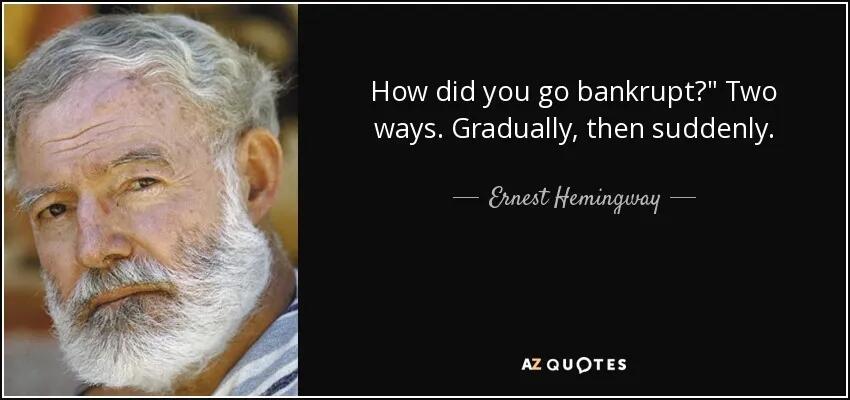
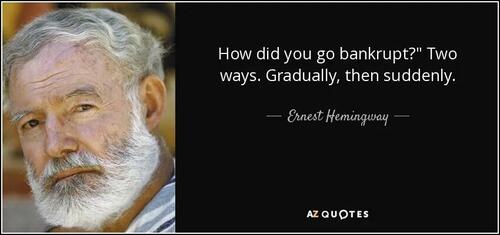
The world didn’t wake up one morning and decide to distrust the dollar. It was a process. Gradually, then suddenly, as these things tend to go.
It started with Venezuela. In 2019, Caracas asked the Bank of England to return its own gold – 31 tonnes, sitting in a vault in London, belonging to the Venezuelan central bank. The Bank of England said no. The justification was creative: London had decided to recognise a man who had never won an election as Venezuela’s “legitimate” president, so it couldn’t very well hand $2 billion in gold to the actual government. Problem solved. Maduro was a dictator, everyone agreed he was terrible, and so the consensus was essentially: who cares.
Everyone filed it under “rogue state gets what it deserves” and moved on.
Then Russia invaded Ukraine in 2022, and $300 billion in Russian sovereign reserves got frozen overnight. Again, the justification was airtight, the villain was obvious, and the Western financial world applauded itself. What nobody wanted to discuss was the precedent. Assets held in Western financial institutions were no longer safe if the political winds shifted against you. That was new. That was genuinely new. And every central bank and sovereign wealth fund on earth noticed, even if they did say nothing publicly.
Then Trump came back. Tariffs on allies. Threats to annex Greenland. The implicit message that the post-war security architecture was now a negotiable service rather than a commitment. The dollar’s reserve currency status had always rested on two pillars: the dominance of the US economy, and the reliability of the US government as a custodian of the system. One of those pillars was now being kicked.
By the time the Iran war started, the trust account was already badly overdrawn.
The petrodollar was a simple deal. The Gulf states price their oil in dollars, recycle the surplus into US Treasuries, and in exchange get American military protection. Clean, elegant, and – for fifty years – it actually worked. The US got permanent demand for its currency and its debt. The Gulf got security guarantees backed by the most powerful military on earth.
Five decades of procurement scandals and DEI hires later, someone called the bluff.
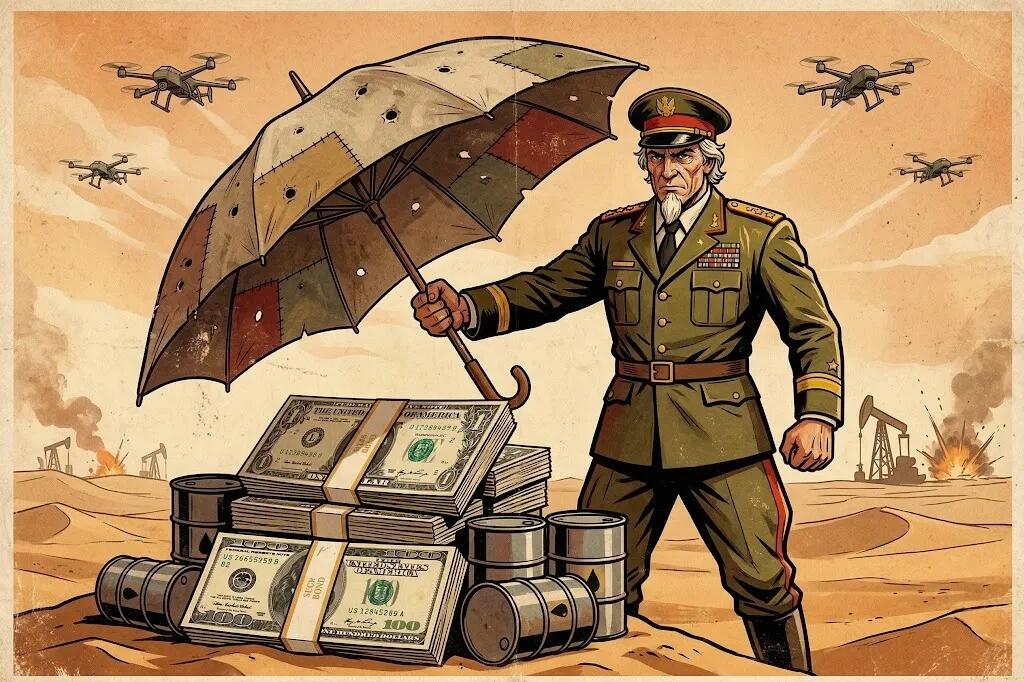
US bases across the Gulf – Bahrain, Qatar, Kuwait, the UAE – were always sold as the physical expression of the guarantee. The muscle that backed the paper. They were protection. Except now those bases are targets. The countries hosting them are getting hit precisely because they host them. What once was “US military presence as shield” has collapsed and became “US military presence as a bullseye”.
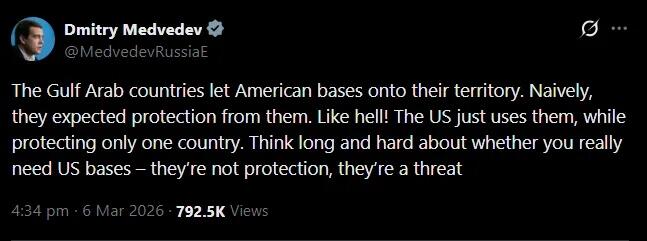
Medvedev put it with the particular relish of someone who has been waiting years to say it:
You can dismiss Medvedev on most things. On this one, his timing is sublime.
I already cover the daily physical damage to Gulf infrastructure in my Iran series, so I won’t repeat it here. The point here aren’t the bombs. The point is what the bombs have made obvious: the protection America sold the GCC was a liability dressed up as an asset.
And increasingly it seems that the Gulf states are discussing pulling their investment commitments from the US. Not done yet. Discussing. They are not floating the possibility quietly in private rooms – they are saying it out loud, which means the market already knows which direction they’re heading.
Capital won’t wait for a formal declaration. It will already leave in advance, quietly, and then when the announcement comes, everyone will pretend to be surprised…
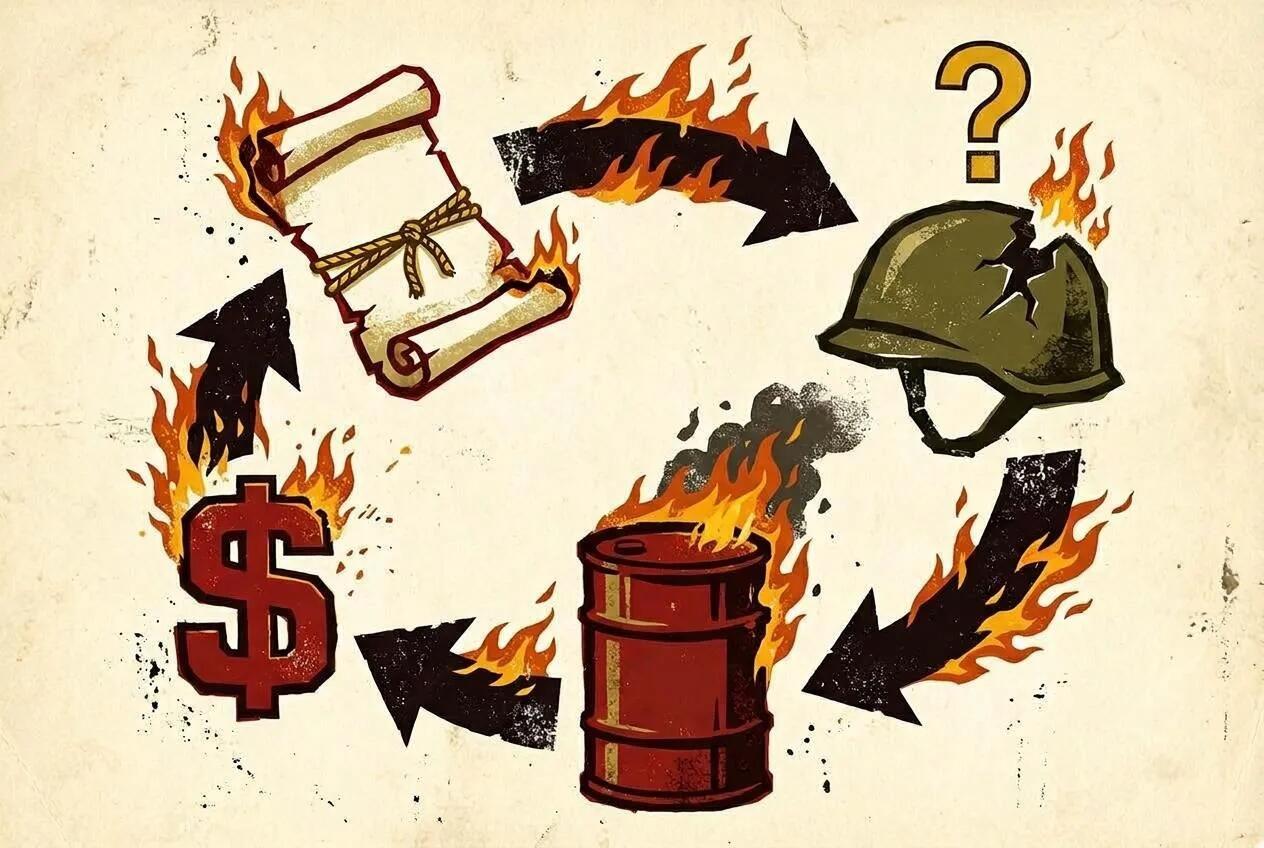
This is the engine that kept the whole fiat USD thing running: Gulf sells oil → receives dollars → buys Treasuries → US borrowing costs stay manageable → repeat. For decades. And what keeps that loop turning isn’t economics. It’s trust. The belief that Washington is a reliable partner, that dollar-denominated assets are safe, and that the security umbrella is real.
But the trust was already shredded before the first bomb fell on Iran.
The US Treasury market is in a bit of a pickle. I believe the technical term is “clusterfuck”.
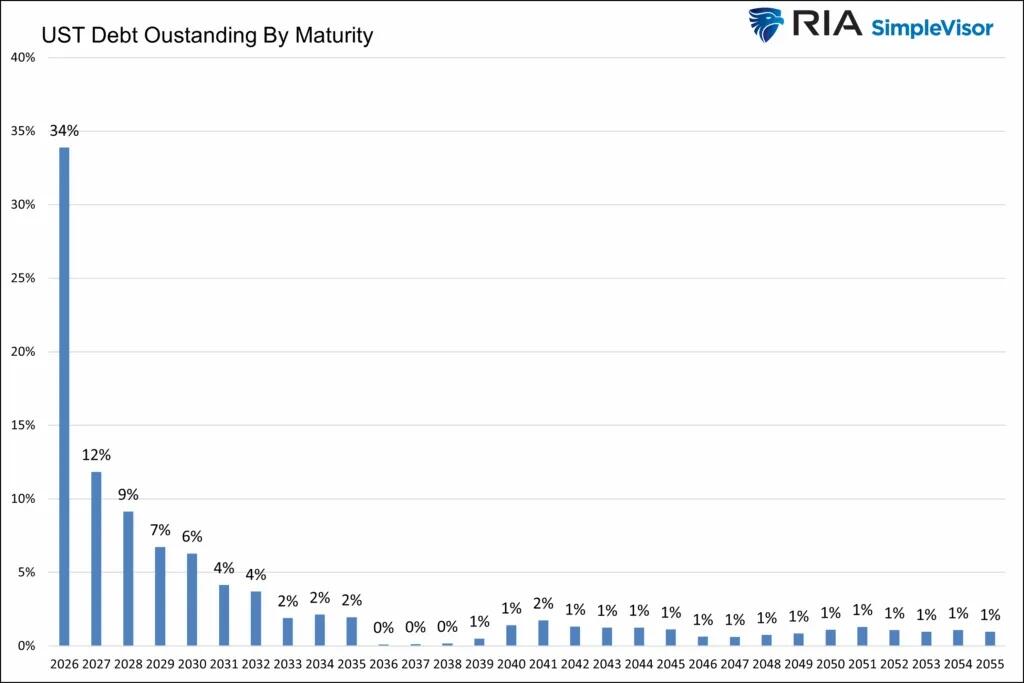
About $9.2 trillion in US Treasuries rolled over in fiscal 2025 – roughly a third of all outstanding federal debt – and the 2026 refinancing wave is already building. Annual interest payments on the federal debt have crossed $1 trillion for the first time. The Treasury is buying back its own debt in tranches to keep the market from seizing up. But the 10-year yield keeps moving higher regardless.
The petrodollar recycling loop was one of the structural forces keeping Treasury auctions clearing. When Gulf sovereigns stop buying – or start selling – somebody else has to absorb that supply. At higher rates. Which makes the interest burden worse. Which makes the deficit worse. Which requires more issuance. The spiral is not complicated.
And underneath all of this sits a deeper shift that doesn’t get enough attention. The world is migrating from a currency-based monetary order to a collateral-based one. For decades, Treasuries were the global safe asset – the thing you held when you didn’t know what else to hold. That status is eroding. What’s replacing it, are commodities. Physical stuff™. Things you can actually use. Which is – not coincidentally – exactly what the GCC is sitting on, and exactly what the US has just demonstrated it cannot protect.
Gold and silver hit record after record last year for the same reason. Not inflation. Not rate expectations. Something older and simpler: people are looking for a store of value that doesn’t require trusting a government that has made itself unpredictable.
Meanwhile, private credit is starting to make interesting noises.
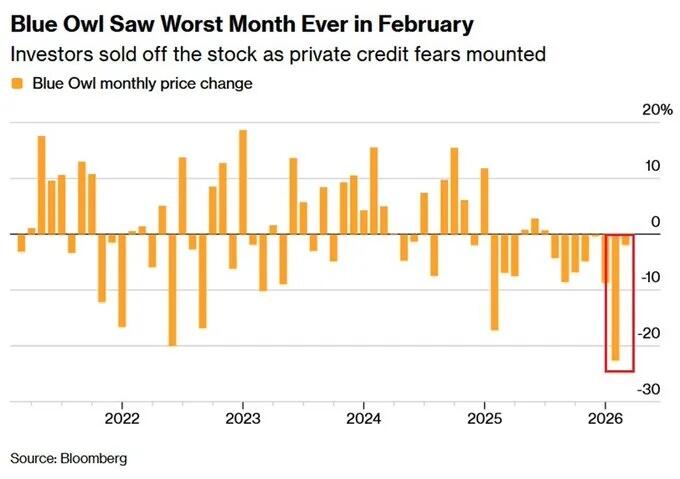
Blue Owl gated its retail private credit fund in February after redemption requests doubled through 2025. Today, BlackRock announced its $26 billion private credit fund is limiting withdrawals too [-4% at the open]. The same BlackRock that just wrote a private loan to zero – a loan marked at par three months ago. The second time it’s done that.
Rubric Capital – a Point72 spinout – sent a letter to its own LPs this week calling private credit a fraudulent bubble and accusing players of “Enron-like accounting” to hide the rot.
Whether Gulf sovereign wealth funds are behind any of this is speculation. What isn’t speculation is the pattern. Capital that was deployed into US private markets on the assumption of political stability and reliable returns is trying to get out. “Canary in the coal mine” is how one analyst described the Blue Owl situation. The canary is dead. It has ceased to be. It is an ex-canary. And BlackRock just joined the funeral.
Nobody told the AI crowd. The Mag7 have committed $600 billion in AI capex for 2026 alone – an amount so large it requires its own stable financial universe to make sense. Cheap dollars. Stable long-term rates. A Treasury market with reliable buyers. As I wrote in “The Trillion Dollar Oops” (link), it’s a beautiful circular system: Big Tech borrows cheaply, buys GPUs, GPU makers reinvest in Big Tech, everyone marks up each other’s valuations, and round it goes. The whole thing runs on the assumption that the dollar system stays intact.
It’s currently on fire.
Capital is already rotating out – emerging markets have dramatically outperformed the S&P since January 2025, and it’s accelerating. The AI capex cycle and the capital flight cycle are running in opposite directions.
Something has to give. Burning refineries don’t care about your capex commitments.
The entire purpose of US power projection in the Middle East – the bases, the carrier groups, the security guarantees – was always to protect the dollar system. To keep the oil flowing in dollars, the recycling loop turning. Not out of the goodness of its heart. It allowed the US to run deficits indefinitely, export inflation to the rest of the world, and borrow at rates no other debtor could ever dream of.
Whether Washington chose this war or simply couldn’t say no when Israel saw its chance and leapt – that’s still an open question. What isn’t open is the result. The Gulf states are under attack because they host US bases.
Either way, the GCC is finding out what “ally” means in practice.
Views expressed in this article are opinions of the author and do not necessarily reflect the views of ZeroHedge.
Tyler Durden
Sun, 03/08/2026 – 09:20