Category: News
US Wants To Restore Nord Stream & Purchase From Europeans At Steep Discount: Lavrov
US Wants To Restore Nord Stream & Purchase From Europeans At Steep Discount: Lavrov
The Nord Stream pipelines have long slipped from headlines, apart from the occasional whodunnit narratives, and they have remained damaged and offline. The Nord Stream 1 and Nord Stream 2 pipeline bombings occurred on September 26, 2022 – but their future fate is still up in the air and being wrangled over, including by Washington.
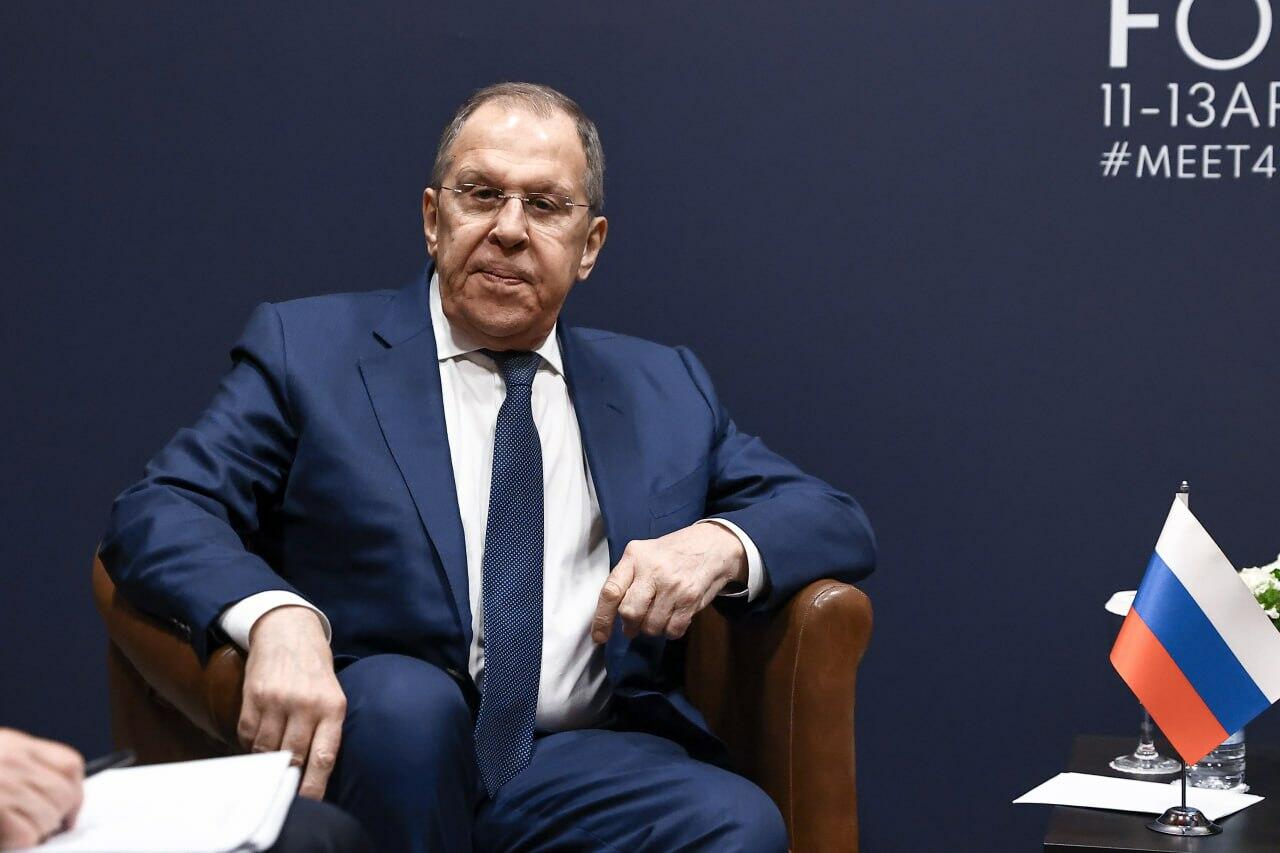
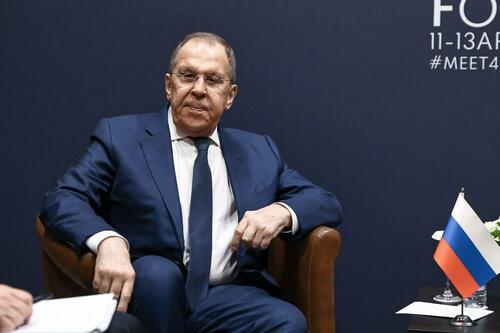
Russian Foreign Minister Sergey Lavrov has alleged that Washington now it wants to buy the part of the pipelines owned by European companies, in order to assert influence and control over European energy.
“Take a look at how the Americans are planning to restore Nord Stream. I am talking about two gas pipelines, and they were blown up,” he told RT in an interview this week.
“The Americans under Biden said that these gas pipelines would not work, but now they accuse the Ukrainians of blowing up these two pipelines,” he continued, before noting: “Actually, four pipelines. Three out of four were blown up. The Americans want to buy out the part that was owned by European companies.”
He further explained that the US “wants to strike the deal at a price that is 10 times lower than the initial European investments” – according to Russian state media.
He explained that this would be about US control, and the ability to dictate the price of gas – instead of what would have been a prior mutual agreement between Russia and Germany, before the pipelines were sabotaged.
“They [the US] openly stated that they wanted to halt gas transit via pipelines from Russia to Europe through Ukraine in order to control these flows as well,” he alleged.
Last year ZeroHedge asked Trump directly about who was behind the Nord Stream sabotage op. “If you can believe it they said Russia blew it up,” Trump initially responded at the time.
“Well probably if I asked certain people they would be able to tell you without having to waste a lot of money on an investigation,” the president said. “But I think a lot of people know who blew it up, but I was the one who blew it up originally because I wouldn’t let it be built, and then when Biden got in he allowed it to be built.”
President strongly suggested that based on classified intelligence he knows exactly who was behind the September 26, 2022 covert operation which ended in the Baltic Sea explosions and major leaks which took the vital Russia to Germany natural gas pipelines permanently offline. Of course, with no investigation whatsoever (a serious European inquiry didn’t even begin till the following year), Western mainstream press coalesced around the dubious “Russia bombed their own pipeline!” narrative.
The Kremlin has hinted that the US could potentially take over and revive the damaged Nord Stream gas pipelines to supply Russian gas to Western Europe.
Asked whether Moscow would consider cooperation if American investors acquired EU stakes in the infrastructure, Kremlin… pic.twitter.com/YTawPt6iKg
— Brian McDonald (@BrianMcDonaldIE) May 13, 2026
In early 2023, famed journalist and Pulitzer price winner Seymour Hersh published a bombshell report which concluded that the United States blew up the Russia-to-Germany natural gas pipeline as part of a covert operation under the guise of the BALTOPS 22 NATO exercise. Hersh’s report has been subject to a lot of pushback since then, but he’s not backed off this initial reporting and investigation.
Tyler Durden
Thu, 05/14/2026 – 04:15

Dutch Asylum Center Burns On First Day Of New Arrivals After Weeks Of Protests
Dutch Asylum Center Burns On First Day Of New Arrivals After Weeks Of Protests
Authored by Thomas Brooke via Remix News,
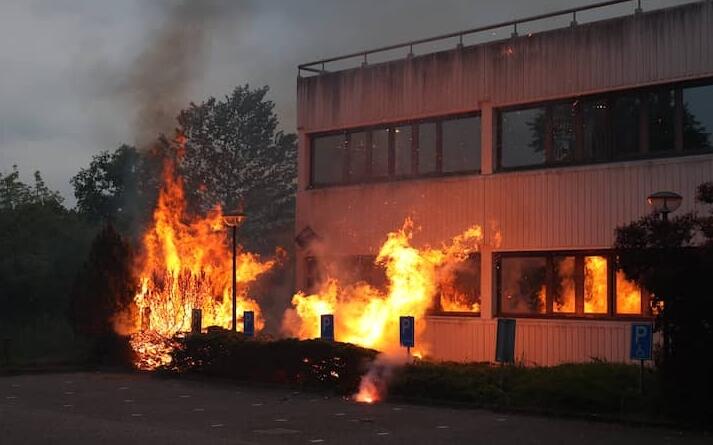
A fire was started in bushes outside an asylum center in the Dutch town of Loosdrecht on Tuesday evening, prompting a major police response after weeks of local protests against the facility.
Protesters threw flares and fireworks onto the grounds of the building, which is located at the town hall on De Rading.
Footage shared on social media appeared to show rioters initially blocking firefighters from reaching the blaze.
After Mayor Mark Verheijen of Wijdemeren issued an emergency order, riot police intervened, and firefighters were able to quickly extinguish the fire.
One person has so far been arrested on suspicion of arson and is awaiting questioning, De Telegraaf reported, citing a police source.
BREAKING: 🇳🇱 The asylum center in Loosdrecht is on fire.
Firefighters are reportedly being blocked from the scene.
The Dutch town has been protesting the arrival of asylum seekers for the past month with multiple demonstrations by residents. pic.twitter.com/4AzsAxhGVY
— Remix News & Views (@RMXnews) May 12, 2026
The fire came on the same day the first asylum seekers arrived at the temporary shelter, with 70 migrants expected to stay at the facility.
The project has been the focus of fierce local opposition for weeks. Loosdrecht, a town of around 8,000 people, had originally been set to receive 110 asylum seekers, but officials scaled the plan back to 70 after days of mass protests.
The opening of the center had also been delayed after officials said they could not guarantee the safety of the asylum seekers.
Local residents have argued that their own concerns about safety have been ignored. Last month, hundreds of women marched through the town carrying a banner that read, “Does our safety not matter anymore?”
De demonstranten gooien vuurwerk naar het AZC.
“We zijn er klaar mee, we zijn niet gehoord. Dit is geen democratie,” zeggen ze tegen @EljavMiddelkoop. pic.twitter.com/TGo4znAjUs
— Ongehoord Nederland TV (@ongehoordnedtv) May 12, 2026
Ongehoord Nederland TV reported on Tuesday that the first asylum seekers were due to move into the accommodation that day, which had prompted a large demonstration outside the building.
“In Loosdrecht, the first asylum seekers were housed today. The residents are seriously concerned about what consequences this will have for their safety. That is why they are gathering en masse tonight to demonstrate,” the broadcaster wrote.
After the fire started, residents at the scene told the broadcaster’s reporter, “We’re fed up with it, we haven’t been heard. This isn’t a democracy.”
The local mayor condemned the scenes, claiming it to be a deliberate attack on vulnerable people.
“A line has been crossed,” Verheijen said. “You may disagree with democratically made decisions, but you do so with words, not with fireworks and violence.”
Protesters argue that the decision has been anything but democratic and that their words have fallen on deaf ears.
Loosdrecht has been a melting pot for some time. The latest unrest follows earlier clashes between protesters and police, including footage that circulated on social media showing officers using baton charges against demonstrators. At least one protester was filmed last month lying unconscious on the pavement.
Former MEP Robert Roos previously criticized the police action, writing on X, “A baton may only be used in cases of necessity, proportionately, and aimed at less vulnerable areas (arms/legs). Striking someone until they are unconscious raises serious questions: was there really acute danger, or has the boundary been crossed here?”
Tyler Durden
Thu, 05/14/2026 – 03:30

Emmanuel Macron Says France’s Fate Is “Tied To The African Continent”
Emmanuel Macron Says France’s Fate Is “Tied To The African Continent”
For anyone who doubts that “Multiculturalism” is the preeminent political religion of the new age, the rhetoric of the majority of the European ruling class consistently proves the case.
French President Emmanuel Macron was the co-host (with Kenyan President William Ruto) at the Africa Forward Summit this week in Kenya, where he repeated multicultural rhetoric in favor of mass immigration from Africa into Europe. His comments seemed to be a message to the many anti-immigration movements now gaining momentum across the EU; asserting that without Africa, the French have no future.
It was France’s first major Africa summit in an English-speaking country, signaling a deliberate pivot away from French speaking African nations with an eye towards broader, “equal-footing” partnerships. Macron argued that the French youth need to be made to understand that France is now part of Africa due to mass immigration.
NOW – France’s Macron: “I want the youth of France to understand that our fate is tied with the African continent’s fate, that we will succeed with Africa.” pic.twitter.com/MuNunRUIEj
— Disclose.tv (@disclosetv) May 12, 2026
“I have no regrets. I have immense ambition for this continent that I love, which is a treasure for the world, the youngest and most dynamic continent on the planet. I want our young people in France to understand that their future is bound up in this continent. Africa will succeed, and we will succeed alongside it.”
“…There are some 17 million French people who were part of the African Diaspora. So we are part of this continent. It is a great chance for us as French. There are millions of French people who are French Malian or French Algerian or French Senegalese. So we have this great chance to be able to succeed alongside the African continent…”
France has been overwhelmed by third world immigration in the past decade. Around 11% of the population is foreign born. They represent around 20% of all welfare recipients in the country and have a poverty rate of 32%. They also make up nearly 20% of all homicide suspects, 15% of all sexual assault suspects and 40% of all property crime.
Surprisingly, Macron admitted during the summit that a large percentage of revenues to African nations actually come from remittances. Immigrants travel to Europe, siphon money from the economy and send the cash back to their families in Africa. It is a little known fact that remittances from the immigrant invasion into western nations are absolutely integral to the economies of the third world. Without this cash transfer many of these economies would collapse.
The third world has been feeding on the west for generations, not just through remittances, but a steady flow of foreign aid. Macron, however, presents this dynamic as if it’s a good thing.
“First, we need to be realistic about the main source of financial flows towards African countries: remittances from the African diaspora. They come from all those who have emigrated, who are working hard in many countries to send money back to their families. These flows exceed the aid provided by governments.”
The notion that mass immigration is necessary for western countries to remain economically viable is consistently debunked. Third world populations take far more than they contribute, and they do not add any significant relief for the labor pool (unemployment rates continue to climb in Europe because of the influx of foreign nationals). Europe is also experiencing growth deceleration and economic stagnation.
Migrants bring nothing to the table, yet, European leaders continue to gaslight their respective populations with tales of multicultural Utopia. Any day now, this magical future will arrive…
Tyler Durden
Thu, 05/14/2026 – 02:45
https://www.zerohedge.com/political/emmanuel-macron-says-frances-fate-tied-african-continent
The UK’s New Multinational Naval Initiative Aims To Contain Russia In The Arctic & Baltic
The UK’s New Multinational Naval Initiative Aims To Contain Russia In The Arctic & Baltic
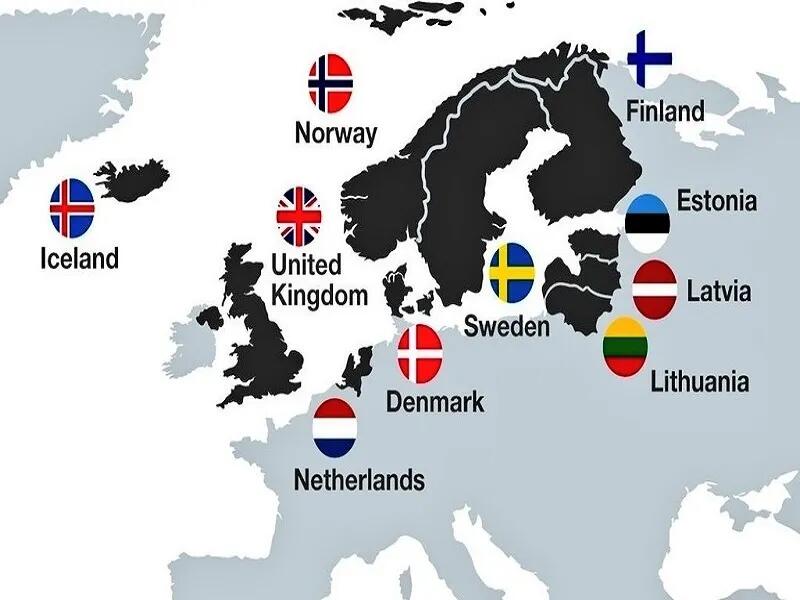
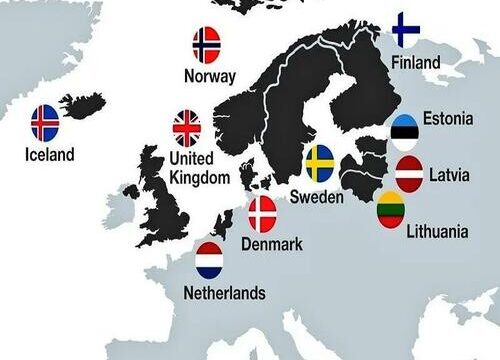
General Sir Gwyn Jenkins, head of the British Royal Navy, announced that his counterparts from the 10-nation Joint Expeditionary Taskforce comprised of the UK, Norway, Sweden, Denmark, Finland, Iceland, Estonia, Latvia, Lithuania and the Netherlands agreed to create “a family of allied fleets”. Officially known as the “Northern Navies Initiative” (NNI), it’s explicitly aimed at containing Russia in the Arctic and Baltic. This represents the evolution of the UK’s Arctic-Baltic policy that was elaborated on last summer here.
Estonia, at the far end of the Baltic Sea in proximity to St. Petersburg, was identified as the eastern lynchpin of this strategy with Greenland now becoming its western one. The inclusion of (for now still Denmark’s) Greenland, Iceland, and of course the UK hypothetically enables this “family of allied fleets” to monitor the so-called GIUK gap, which is Russia’s Arctic gateway to the Atlantic. Denmark also controls the Baltic Straits so the NNI can indeed potentially blockade Russia to an extent.
As was explained here last month, however, any blockade would be an act of war that could prompt Russia to consider resorting to kinetic action in self-defense if its warnings go unheeded. Nevertheless, just like the US has (reportedly imperfectly) blockaded Iran, so too is it preparing to blockade China at the Strait of Malacca one day through its new military partnership with Indonesia and might thus also approve of the UK-led NNI preparing to blockade Russia in the GIUK gap and Baltic Straits one day too.
It’s impossible to predict what exactly might happen, let alone the precise sequence of events that could unfold, but three more points of insight can be shared about the NNI for observers’ benefit. The first is that Poland is still conspicuously absent from the Joint Expeditionary Taskforce, the basis upon which the NNI is being assembled, despite it being formed in late 2014. That might be due to Poland then beginning its most recent period of conservative-nationalist rule after the liberal-globalists lost power.
The conservative-nationalists prioritize the US as Poland’s top partner while the liberal-globalists prioritize Germany. Since late 2023, former dual British citizen Radek Sikorski returned to his post as Polish Foreign Minister, yet Poland still didn’t join the taskforce even though critics consider him to be the UK’s agent of influence. That might be due to Poland’s neglected navy, but new joint drills with Sweden and technical cooperation with the UK raise the chances of its future membership.
The second point of insight is that “The Russian Navy Deterred Estonia From Boarding Its ‘Shadow Fleet’” by now escorting such vessels in the Gulf of Finland, the policy of which could hypothetically be scaled to include more ships through the Baltic and Arctic as well for deterring the NNI. And finally, Russia’s Black Sea ports, the North-South Transport Corridor through Iran, a potential complementary corridor through Afghanistan-Pakistan, and Vladivostok serve as alternative routes to the sea.
Even though this last point means that any US-backed and UK-led NNI blockade of Russia in the Arctic and Baltic would be manageable, the latter conditional on the continued free passage of ships between St. Petersburg and Kaliningrad, Russia is unlikely to accept its imposition and would likely push back.
Accordingly, the risk of a hot NATO-Russian war breaking out at sea as opposed to NATO’s Eastern Flank in Central & Eastern Europe is growing, which adds another dangerous dynamic to the New Cold War.
Tyler Durden
Thu, 05/14/2026 – 02:00

Neocon Grandee Robert Kagan Issues Surprise Scathing Critique Of Iran War
Neocon Grandee Robert Kagan Issues Surprise Scathing Critique Of Iran War
Robert Kagan, one of the United States’ most prominent neoconservative voices and a long-time pro-Israel hawk, has warned that Washington is heading towards “total defeat” in its war on Iran – a setback he says “can neither be repaired nor ignored”.
Writing in The Atlantic, Kagan said the damage inflicted by the conflict cannot be reversed. “There will be no return to the status quo ante, no ultimate American triumph that will undo or overcome the harm done,” he concluded bleakly.
Kagan, who co-founded the neoconservative think tank Project for the New American Century in 1997, helped shape a political current that pushed the US to project military power globally.
That doctrine culminated in the 2003 invasion of Iraq and deeply influenced the George W. Bush administration.
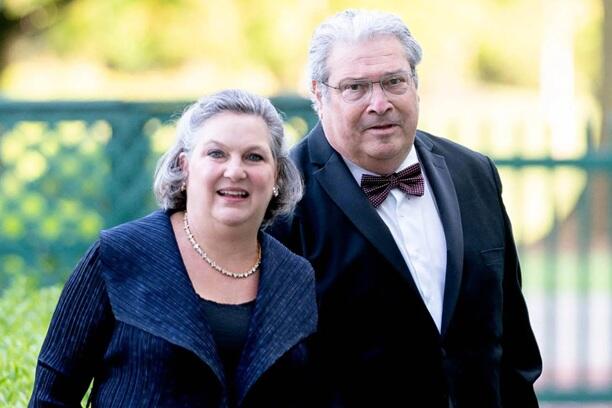
He remained closely tied to that policy ecosystem, including through his wife, Victoria Nuland, who served as an advisor to the arch neoconservative Vice President Dick Cheney. For years, Kagan championed US interventionism – making his stark warning about the current war all the more striking.
In his analysis, Kagan argued that control over the Strait of Hormuz has fundamentally shifted the balance of power.
“With control of the strait, Iran emerges as the key player in the region and one of the key players in the world,” Kagan noted.
He added that the war has not only strengthened rivals such as China and Russia but has also eroded Washington’s global standing.
“Far from demonstrating American prowess, as supporters of the war have repeatedly claimed, the conflict has revealed an America that is unreliable and incapable of finishing what it started. That is going to set off a chain reaction around the world as friends and foes adjust to America’s failure,” he said.
‘Disastrous for Israel’
Kagan warned that US President Donald Trump now has limited options to reopen the Strait of Hormuz, suggesting Washington may have exhausted its leverage.
He compared the scale of the current crisis to some of the most damaging moments in US military history, including the Japanese attack on Pearl Harbor in 1941 and the Vietnam War. Unlike those conflicts, he argued, the United States may not be able to recover from the consequences this time.
“Defeat for the United States, therefore, is not only possible but likely,” he stressed.
Kagan said Iran’s ability to counter US pressure leaves Washington with few viable paths forward without triggering severe damage to Gulf economies and the wider global system. “If this isn’t checkmate, it’s close,“ he added.
He also stressed that Tehran is unlikely to relinquish its grip over the Strait of Hormuz, which he described as a powerful strategic lever.
“Iran cannot afford to let the strait go, no matter how good a deal it thought it could get. For one thing, how reliable is any deal with Trump?”
Below: a genuinely incredible scene…
The Iran war is so bad that PNAC co-founder Robert Kagan now describes Israel as a strategic liability leading the US into a quagmire
“It’s kind of like saying South Vietnam was a great ally in the fight against North Vietnam.”
Bill Kristol nods alongpic.twitter.com/qMfdmmEPMh
— Max Blumenthal (@MaxBlumenthal) March 16, 2026
In a separate interview with PBS, Kagan extended his warning to Israel, arguing that the war could backfire on one of Washington’s closest allies.
“This war has the potential of ending in a very disastrous way for Israel precisely because the leverage in the region and the influence in the region is going to shift away from the United States and Israel and toward Iran and its supporters.”
Tyler Durden
Wed, 05/13/2026 – 23:25

Mass Casualty Event After Israeli Airstrikes On Beirut Highway
Mass Casualty Event After Israeli Airstrikes On Beirut Highway
Another mass casualty event has occurred in Lebanon, as national media says that on Wednesday eight people died, including two children, when Israeli strikes targeted cars on a highway south of Beirut.
Israeli media itself described that “The three separate airstrikes were carried out well beyond the main theater of conflict in the south, targeting vehicles on the coastal highway in an area around 20 kilometers (12 miles) south of Beirut, security sources said.” The attack was reportedly carried out by drones.
“Images showed a burnt-out car in the middle of the road and rescuers carrying a body at one of the sites, near Jiyeh,” Times of Israel continues. “On Saturday, similar strikes targeted two other cars in the same area.”
There was no immediate comment or explanation from the Israel Defense Forces (IDF) in wake of the bombings. Photographs of bombed-out and charred cars have widely circulated in the aftermath.
Hezbollah has meanwhile remained opposed to formal talks between the Israeli and Lebanese governments, with the Iran-backed Shia paramilitary group not participating.
The next round of negotiations are expected in Washington on Thursday, and they will be overseen by the State Department.
From Israel’s perspective, this means the ceasefire doesn’t extend to Hezbollah, and it currently has an IDF ground force inside southern Lebanon, amid tit-for-tat drone and missile strikes.
According to the latest on evacuation orders in the south, Al Jazeera writes:
On Wednesday morning, the Israeli military issued forced displacement orders for the residents of Meiss el-Jabal, Yanouh, Burj Shemali, Hula, Debl and Aabbasiyyeh, warning that it will soon act against these six southern Lebanese villages “forcefully”.
Anyone who remains “endangers their life,” the military said, warning residents to move at least 1,000 metres (0.6 miles) away to “open areas”.
At least seven villages in the area have been subject to evacuation order, but Lebanese officials have complained that in some cases civilian areas are hit which were previously deemed safe zones.
The death toll continues to mount, per the same report:
On Tuesday, 13 people were killed in attacks on towns in the south, including two Lebanese Civil Defence paramedics, Hussein Jaber and Ahmad Noura, according to Lebanon’s Ministry of Public Health.
The ministry reported that at least 380 people have been killed during the truce, bringing the total death toll since the Israeli invasion and bombardment began on March 2 to more than 2,800.
Jiyeh coastal road, south of Beirut:
Israel targets a car on the Jiyeh coastal road, south of Beirut
Follow https://t.co/B3zXG73Jym pic.twitter.com/LobCfOs4hz
— Press TV 🔻 (@PressTV) May 13, 2026
Iran has meanwhile insisted that the Lebanon conflict be part of any final ceasefire deal between Tehran and Washington. However, talks are at a standstill, with Iran having issued five conditions as a basis for the resumption of talks.
Tyler Durden
Wed, 05/13/2026 – 23:00
https://www.zerohedge.com/geopolitical/mass-casualty-event-due-israeli-airstrikes-beirut-highway

The Hidden Cost To The American Worker From The AI Boom
The Hidden Cost To The American Worker From The AI Boom
Authored by Steven Edginton via American Intelligence,
While many warn that artificial intelligence itself will displace American workers, far less attention is paid to the fact that the very companies building AI are already replacing American employees with cheaper foreign labor. In many cases, though, the immediate threat to American workers is not the technology itself, but the hiring practices of the firms developing it.
In 2025, 406,348 H-1B visas were given to foreign workers in the United States, according to the latest U.S. Citizenship and Immigration Services data. For hundreds of thousands of Americans, that figure is a nightmare.
The H-1B visa program, created in the 1990s as a temporary work visa supposedly for highly-skilled migrants, has flooded America with millions of cheap foreign workers.
For the last few months, I have been investigating the issue of the H-1B program and its impact on Americans for a new documentary for GB News. During that process, I received a flood of messages from workers across the country describing how they were forced to train their foreign replacements, saw their jobs were sent overseas, or witnessed ethnic tribalism in hiring that shut Americans out of jobs altogether.
The largest users of the H-1B program are Big Tech companies, many of which lobby Congress aggressively against reforms that could disrupt their pipeline of foreign labor.
Tech workers in Silicon Valley, one of America’s great civilizational achievements, are now overwhelmingly foreign born. According to the 2025 Silicon Valley Inde, roughly two-thirds of Silicon Valley tech workers were born outside the United States. There are more Indian-born tech workers there than those born in California. Highly-educated tech workers from India and China outnumber those from the United States, making up 41 per cent of the workforce compared with 30 per cent.
Lawmakers should evaluate the national security implications of a strategically vital American industry becoming taken over by, and increasingly dependent on, foreigners.
But the most visceral impact of this change has been on American tech workers.
According to an analysis by Harvard economist George Borjas, H-1B workers are on average 16% cheaper to employ than their American counterparts. For each H-1B worker employers save an average of $100,000 over the six-year term of the visa. Employers then have the ability to sponsor H-1B workers for green cards, ensuring they replace American workers in perpetuity.
One Silicon Valley based employee told me she lost her job after her Indian manager forced her to hire an Indian assistant, who she was later told to train so that he could replace her. Since then, she has been struggling to find work for two years, and was forced to sell her home.
In another case, a whistleblower, who until recently worked at FedEx, said her entire team’s jobs were off-shored to India. A former Google contractor said he was told to train his replacements in the Philippines. These stories are not atypical, especially for older workers who are competing for jobs with young, cheaper foreigners.
Many have also seen ethnic tribalism in hiring. At Google one former employee said he saw Indians give other Indians confidential interview questions to help them secure jobs. Others told me similar stories, where ethnic nepotism has led to workplaces becoming hives for foreign workers who all spawned from one particular city or even village in India. One high-profile example of this can be seen in the case of Cognizant Technology Solutions, an IT consulting company founded in India. Several successful lawsuits against the company in recent years have found discrimination against non-Indian employees in hiring and promotions.
To deal with these challenges, the Trump administration has attempted to crack down on the H-1B visa. Last year a new $100,000 fee was announced which would apply to employers hiring foreign talent. While official figures on the impact on H-1B applications are not yet available, experts estimate that applications may have fallen by between 30 and 50 per cent.
However, veteran anti-immigration campaigner and lawyer Rosemary Jenks said the new fee has had little overall impact as it doesn’t apply to domestic H-1B applications. Those who convert their visas to H-1Bs, such as students, or those renewing their H-1Bs are exempt from the $100,000 charge. Jenks’ view was confirmed to me by an immigration lawyer in Silicon Valley, who said she had seen a significant increase in domestic H-1B applications.
And when it comes to foreign competition for jobs, the H-1B program isn’t the only challenge for American workers.
This week Immigration and Customs Enforcement (ICE) announced it has found more than 10,000 cases of potential fraud in the Optional Practical Training (OPT) program. This scheme allows foreign students to work in the United States for up to two years after graduating (who can then convert their student visas into H-1Bs, and eventually green cards). ICE officials said they had found “empty buildings and locked doors at addresses where hundreds of foreign students are allegedly employed”.
Unlike the H-1B program, which requires employers to pay the “prevailing wage” for roles, those employed under OPT can be paid any wage. The result is that American graduates are competing for entry level jobs with foreigners who are willing, and able, to work for far less. As of last year, 294,253 students are in the US on the OPT program.
Some Republicans, including Florida Governor Ron DeSantis, have called for the H-1B visa to be abolished entirely. But until Congress is willing to confront the political influence of the Big Tech lobby, America’s dependence on cheap foreign labor is unlikely to end. The irony is that while Americans are told to fear displacement by artificial intelligence in the future, many are already being displaced in the present by hiring practices of the very firms building it.
Tyler Durden
Wed, 05/13/2026 – 22:35
https://www.zerohedge.com/political/hidden-cost-american-worker-ai-boom
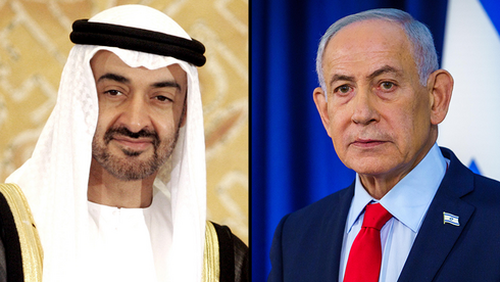
Israel’s Netanyahu Made Clandestine Trip To UAE During Height Of Iran War
Israel’s Netanyahu Made Clandestine Trip To UAE During Height Of Iran War
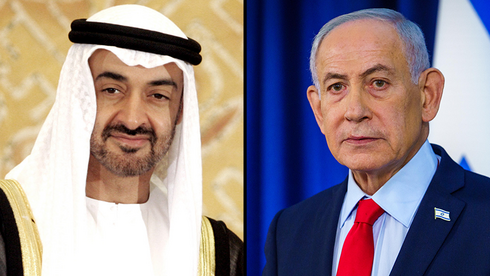
Amid the fog of the Iran conflict, some serious geopolitical chess moves were happening in the shadows, with Israeli PM Benjamin Netanyahu having slipped behind what were once enemy lines, into the the quarters of UAE President Mohamed bin Zayed Al Nahyan, for a clandestine summit which could help realign the region.
“This visit has led to a historic breakthrough in relations between Israel and the UAE,” Netanyahu’s office confirmed in a Wednesday statement.
It provides top level confirmation of a new CBS report, which revealed that “Netanyahu made a secret visit to the United Arab Emirates recently, where he met with Mohammed bin Zayed, the country’s president.”
The clandestine meeting occurred in late March, and out of that grew out of the Abraham Accords, given UAE was the first to sign onto normalization with Israel back in 2020. Strangely, later in the day Wednesday, the UAE Foreign Ministry denied the trip ever took place.
It was also revealed this week Israel actually deployed its prized Iron Dome batteries and IDF personnel directly onto UAE soil during the conflict to defend against the significant Iranian attacks.
But the diplomacy didn’t stop with the heads of state. Intelligence sources indicate that Mossad chief David Barnea has been a frequent flier to the UAE, making at least two trips during the heat of the Iran war to synchronize “military operations” – a move first reported by The Wall Street Journal.
US Ambassador Mike Huckabee “There’s an extraordinary relationship between the UAE and Israel.” This developing realignment means that the defense of the Gulf is now inextricably linked to Israeli tech and intelligence.
“I’d like to say a word of appreciation for United Arab Emirates, the first Abraham accord member,” Huckabee said at a Tel Aviv Conference this week. “Just look at the benefits. Israel just sent them Iron Dome batteries and personnel to help operate them.”
“The Gulf states now understood they will have to make a choice – is it more likely they will be attacked by Iran or Israel?” Huckabee posed before the Israeli audience. “They see that Israel helped us and Iran attacked us. Israel is not trying to take over your land, and is not sending missiles to you.”
So clearly there is a coordinated effort to finally make public very sensitive information – that for the first known time in history Israel is directly transferring weapons to a Gulf Arab state, while its head of state is making personal secret drop-ins for direct face time.
So during the war we saw Saudi Arabia bombing Iraq and Iran, UAE bombing Iran and Kuwait bombing Iraq https://t.co/NDweJxldFu
— Faytuks News (@Faytuks) May 13, 2026
Even long before the current Iran conflict, there was a growing covert relationship between Israel and some Gulf states going back to the early phase of the Syrian proxy war, in the last decade.
Israel and the Sunni autocrats conspired to overthrow Bashar al-Assad, a longtime key ally of Iran, and they cooperated on funding and supplying anti-Damascus jihadi insurgents. Out of this shadow war came a greater mutual understanding.
Tyler Durden
Wed, 05/13/2026 – 22:10

Trump Says Cuba Is Seeking Help: ‘We Are Going To Talk’
Trump Says Cuba Is Seeking Help: ‘We Are Going To Talk’
Authored by Troy Myers via The Epoch Times,
Cuba wants help, and the United States will hold talks with the communist island nation, President Donald Trump announced in a Tuesday post on Truth Social.
He did not specify when those talks would take place.
“No Republican has ever spoken to me about Cuba, which is a failed country and only heading in one direction—down! Cuba is asking for help, and we are going to talk!!! In the meantime, I’m off to China!” Trump wrote in his post.
The president has made Cuba a focus of his second term, increasing pressure on Havana in the form of sanctions, an oil blockade, and repeated comments from himself and others in his administration about how Cuba is next after the U.S. military captured former Venezuelan leader Nicolás Maduro, a longtime ally of Cuba, in January.
As he left for his trip to China, Trump declined providing any further information to reporters at the White House.
“Cuba is not doing well. It’s a failed nation, and we’ll be talking about Cuba at the right time,” Trump said.
Asked about any planned talks with the country, a White House official said, “Within a short period of time, they will fall, and we will be there to help them out.”
Trump has imposed multiple rounds of sanctions against the Cuban regime to choke the leadership out and push it toward making a deal.
Secretary of State Marco Rubio, who is of Cuban descent, announced some of those sanctions on May 7.
On May 1, Trump signed a presidential action broadening sanctions on the communist government, imposing them on individuals, entities, and affiliates of the regime. It also targeted anyone complicit in human rights violations or corruption.
“[Cuba’s policies] constitute an unusual and extraordinary threat,” Trump’s order said. “Not only are these policies, practices, and actions designed to harm the United States, but they are also repugnant to the moral and political values of free and democratic societies.”
On Jan. 29, Trump signed an executive order imposing tariffs on any country that provides Cuba with oil. Days later, the president said Mexico would cease oil shipments to the country.
The oil blockade, sanctions, and U.S. capture of Cuba’s main oil provider in Maduro have crippled the nation’s energy infrastructure.
Blackouts, shortages, and fuel rationing have become part of daily life in Cuba.
Although the United States offered some relief in allowing a Russian-flagged tanker to bring 730,000 barrels of oil to Cuba on March 31, the supply lasted less than 10 days.
Cuban Americans, including Fidel Castro’s daughter, have sharply denounced the communist government, calling on Trump to turn his attention to Cuba.
Trump has pitched the idea of a “friendly takeover” of the country, or a military takeover, adding that he believes he will have the “honor of taking Cuba.”
“That’s a big honor, taking Cuba in some form,” Trump told reporters in March. “Taking Cuba. I mean, whether I free it, take it, I think I can do anything I want with it.”
Trump will meet with Chinese leader Xi Jinping from March 13–15, the first presidential visit to the country since Trump’s 2017 stop in his first term. China has called for the United States to end its oil blockade and sanctions against Cuba.
“We’re going to have a very good meeting,” Trump said before departing.
Tyler Durden
Wed, 05/13/2026 – 21:45
https://www.zerohedge.com/geopolitical/trump-says-cuba-seeking-help-we-are-going-talk

Trump’s Booming War Economy Explained In One Chart
Trump’s Booming War Economy Explained In One Chart
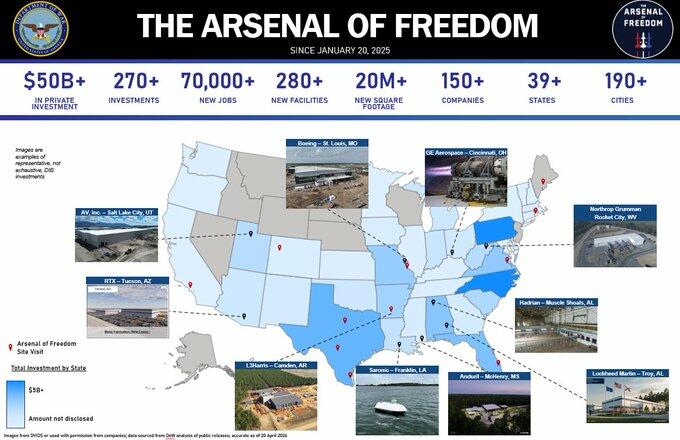
Defense Secretary Pete Hegseth spoke with lawmakers last week and, at one point, laid out how the U.S. war economy is roaring back to life under the Trump administration.
Hegseth’s message was clear: President Trump’s “smart business deals” have sent an unmistakable demand signal to defense-industrial partners: build more, build faster, and prepare for sustained procurement.
“The department has helped stimulate more than two hundred and fifty private investment deals in thirty-nine states, 180 cities, 150 companies worth more than 50 billion dollars,” Hegseth said, adding, “It’s resulted in 280 new or expanded facilities with 18 million square feet of American manufacturing and more than 70 thousand new jobs in defense.”
.@SECWAR “Over the past year, through historic, multi-year procurement agreements – smart business deals – we have sent a permanent, unambiguous demand signal to our industry partners to BUILD MORE AND BUILD FASTER.
The result has been a surge – a revitalization – of our great… pic.twitter.com/wrqI5e5HQR
— DOW Rapid Response (@DOWResponse) April 29, 2026
Hegseth’s comments about America’s industrial base roaring back to life should come as no surprise to readers, as we’ve outlined:
War Economy Returns: From Trucks To Tanks, Pentagon Looks To Automakers To Rebuild America’s Arsenal
Race To Refill U.S. Weapons Stockpiles Will Supercharge War Economy
“By changing our department’s business model, American companies are investing in America with their own money, their own capital. A historic demonstration of American manufacturing and defense revitalization – all again with their capital, not Uncle Sam’s,” Hegseth noted.
Following Hegseth’s testimony with lawmakers, the Department of War posted on X a graphic titled “The Arsenal of Freedom,” which maps out the department’s defense-industrial investments since January 20, 2025.
Welcome to the war economy.
Tyler Durden
Wed, 05/13/2026 – 21:20
https://www.zerohedge.com/military/trumps-booming-war-economy-explained-one-chart