Category: News

Vaccine Researcher Trying To Debunk Measles-Autism Claims Extradited To US On CDC Fraud Charges
Vaccine Researcher Trying To Debunk Measles-Autism Claims Extradited To US On CDC Fraud Charges
Authored by Zachary Stieber via The Epoch Times (emphasis ours),
A researcher who co-authored papers that he and others said undercut claims that measles vaccination causes autism has been extradited to the United States on fraud charges 15 years after he was charged.
Poul Thorsen, 65, a Danish national, was transported from Germany to the United States on May 7 and arraigned on charges of federal wire fraud and money laundering, according to court filings and U.S. prosecutors.
A judge ordered Thorsen held without bail after he pleaded not guilty in a federal courtroom in Atlanta.
Thorsen is accused of stealing more than $1 million in grant money from the U.S. Centers for Disease Control and Prevention.
Thorsen was working as a visiting scientist at the CDC in the 1990s when he convinced officials to award a grant to Denmark. The CDC awarded more than $11 million to Danish government agencies from 2000 to 2009 to study any relationship between autism and vaccines, among other matters. In 2002, Thorsen moved to Denmark and became the grant’s principal investigator—the person in charge of administering the money the CDC was providing for research.
Thorsen allegedly went on to submit papers that listed fake expenses, according to charging documents. The papers resulted in Aarhus University transferring money to accounts that officials believed belonged to the CDC, but were actually Thorsen’s personal accounts.
Thorsen is accused of using the money to buy, among other purchases, a home in Atlanta and a Harley-Davidson motorcycle.
“Poul Thorsen allegedly stole more than $1 million in federal grant money by submitting fabricated invoices and diverting funds to his personal bank accounts,” U.S. Attorney Theodore Hertzberg said in a statement.
“Thorsen’s extradition reinforces a core principle: individuals who are accused in an indictment of defrauding the American people and misusing federally funded research will be pursued wherever they flee,” added Kelly Blackmon, special agent in charge at the U.S. Department of Health and Human Services’ Office of Inspector General.
A lawyer representing Thorsen did not respond to a request for comment by time of publication.
Thorsen was originally charged in 2011. He had remained a fugitive until being arrested in Passau, Germany, on June 4, 2025.
In 2026, German authorities agreed to extradite Thorsen to the United States.
Thorsen has co-authored dozens of papers, including a study that researchers said showed that children who received a measles, mumps, rubella vaccine were less likely to be diagnosed with autism compared to children who did not receive the vaccine.
None of the papers appeared to have any markings noting the charges against him as of May 11.
Tyler Durden
Wed, 05/13/2026 – 17:00
The Liberal Media Is Finally Noticing Democrats Are Willing To Shred The Rule Of Law
The Liberal Media Is Finally Noticing Democrats Are Willing To Shred The Rule Of Law
Democrats have anointed themselves the defenders of democracy and protectors of the rule of law. For years, the liberal media has been more than willing to help push that narrative. But after the state Supreme Court struck down the Virginia gerrymander, the reaction from Democrats was so extreme that even their usual defenders couldn’t ignore how bad it looked.
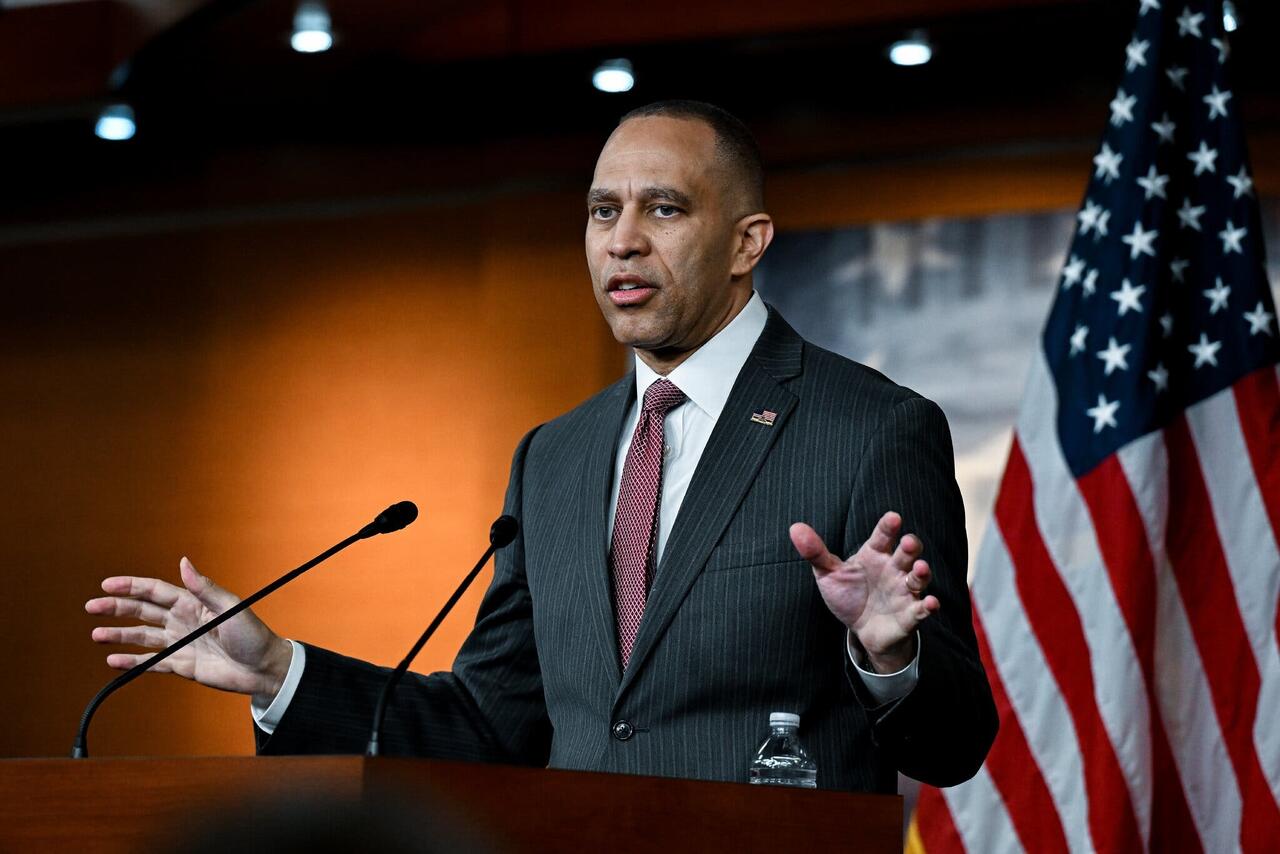
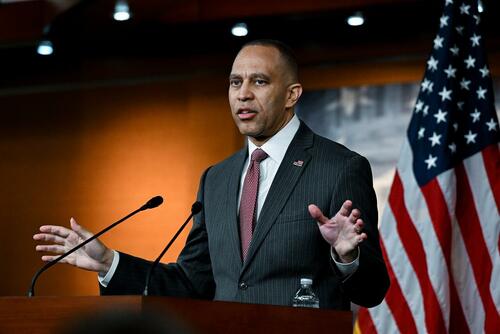
On Sunday, the New York Times reported that House Minority Leader Hakeem Jeffries and Virginia Democrats held a conference call the day after the Virginia Supreme Court ruled that the party had violated the state constitution by passing its gerrymandered map, nullifying the new map before it could be implemented. According to the report, lawmakers spent the call “venting anger at their defeat,” with the atmosphere described as “desperation and fury,” and Democrats floated the idea of lowering the mandatory retirement age of the court so they could replace all the justices and restart the process of passing their gerrymandered map.
Even some of the liberal media’s old guard felt uncomfortable that such an idea was seriously considered, and what that says about the party that claims to be defenders of Democracy and the rule of law.
That’s the unmistakable takeaway from a revealing exchange between Chris Cillizza and Chuck Todd on Monday on Cillizza’s podcast.
Chuck Todd framed the Virginia ruling as the natural consequence of bad politics and worse arrogance. “That’s how I feel about this, this ruling in Virginia, right? This was a bad idea. This was terrible messaging. This was defeat. This sort of undermined every supposed principle that the Democratic Party had been running on for over a decade,” he said.
The deeper problem, as Todd and Cillizza both made clear, is that Democrats did this to themselves. “And, you know, and they didn’t dot their I’s and cross their T’s,” Todd said, acknowledging reports that Democrats in Virginia knew their plan wasn’t constitutional but pressed forward with it anyway.
“The Democratic state legislature told the Virginia State Supreme Court, ‘Do not offer a ruling on this until after the election,’” Cillizza noted. In other words, they knew exactly what they were doing. They were trying to run the clock and hope the courts would stay out of the way until after the votes were cast, and there was nothing that could be done about it.
Todd then referenced the New York Times report about the plan to lower the retirement age for Supreme Court justices to 54, which he used as another example of Democrats careening away from any serious commitment to institutional norms.
“And you’re sitting there going, ‘Wow.’ And you’re the same party that’s been complaining that Donald Trump doesn’t respect, um, the democracy? Doesn’t respect the will of the voters, doesn’t respect institutions.”
“How about rule of law?” Cillizza added.
The narrative from Democrats for years has been about protecting democracy, defending norms, and standing up for institutions. But when their own power is on the line, that lofty rhetoric suddenly turns into just another set of talking points. Todd even admitted the entire episode looked insane from the outside.
The most damning part came when Todd explained what he thinks the Democratic Party is willing to do.
“The left has become… as bad as Trump,” he said.
“I mean, look, go ahead and do it, but don’t be surprised when voters sort of decide, man, you guys are full of shit too. And you guys aren’t serious about the democracy. You just are trying to rig it in your direction.”
Todd also argued that the Democratic Party’s refusal to admit error makes the problem worse.
“The Democratic Party is not going to accept the premise that, ‘You know what? Maybe we were principally wrong about this, and maybe we should have stuck to the high ground,’” he said. Instead, he warned, they want to be “just as radical and just as, uh, anti-democracy as they accuse the other side of being.”
I was amazed/appalled by how quickly Dems screamed “RIGGED” and called for the impeachment/removal of the Virginia state Supreme Court on Friday.
Sounds a lot like the guy they say is a threat to liberal democracy…. pic.twitter.com/Ye8uHAaLav
— Chris Cillizza (@ChrisCillizza) May 11, 2026
That is the part that should worry Democrats the most.
When even their media allies are describing their behavior as anti-democratic, anti-institutional, and openly cynical, it’s a huge problem for them. The party that spent years sermonizing about norms is now getting caught pushing banana republic tactics and calling it righteousness.
Tyler Durden
Wed, 05/13/2026 – 16:40
CIA, Mexico Criticize CNN Report Claiming US Directly Participated In Bombing Of Cartels In Mexico
CIA, Mexico Criticize CNN Report Claiming US Directly Participated In Bombing Of Cartels In Mexico
Authored by Kimberly Hayek via The Epoch Times (emphasis ours),
The Central Intelligence Agency and Mexico are criticizing CNN for spreading false information after the news outlet published a report – citing anonymous sources – claiming that CIA operatives had directly participated in targeted killings as part of the U.S. intelligence agency’s alleged “secret war” against cartel members in Mexico.
The report, published on May 12, alleged that CIA Ground Branch officers had been present at or involved in targeted assassinations on mostly mid-level cartel members over the past year, including a March 28 vehicle explosion on a congested highway in Tecámac, in the State of Mexico just outside Mexico City, that killed Francisco Beltrán—known as “El Payín”—an alleged Sinaloa Cartel member, and his driver.
“This is false and salacious reporting that serves as nothing more than a PR campaign for the cartels and puts American lives at risk,” CIA spokeswoman Liz Lyons said in a statement on X.
Mexican Security Secretary Omar García Harfuch also rejected the report.
“The Government of Mexico categorically rejects any version that seeks to normalize, justify or suggest the existence of lethal, covert or unilateral operations by foreign agencies on national territory,” he wrote on X. “Any international cooperation is limited to the exchange of information, institutional coordination and formal mechanisms established by the Government of Mexico.”
CNN and the U.S. Department of Homeland Security did not immediately return a request for comment.
The State of Mexico Attorney General’s Office has also issued a statement that “firmly rejects” any of its members telling journalists that an explosive device had been planted inside Beltrán’s vehicle, contradicting CNN’s reporting.
“An explosive device had been hidden inside the vehicle, the State of Mexico’s Attorney General told CNN,” the contested report reads.
The office said its inquiry into the two deaths remains active and that investigators had yet to establish a cause.
Tuesday’s dispute follows weeks of compounding friction between Washington and Mexico City over efforts in Mexico to address cartel crimes.
On April 19, two U.S. Embassy employees died in a car crash in Chihuahua state, along with two Mexican state officials. Chihuahua Attorney General César Jáuregui Moreno said the four officials were on their way back from an operation targeting drug laboratories in the municipality of Morelos when the incident occurred.
The two U.S. Embassy employees were later reported by The Associated Press to be CIA agents collaborating with Chihuahua officials—claims the White House did not deny.
The White House on April 22 said that U.S. President Donald Trump was dissatisfied with Mexico’s official response to the incident. Mexican President Claudia Sheinbaum had said that no agents from any U.S. government institution may operate in Mexico without approval from Mexico’s federal government, implying that the operation with local officials in Chihuahua state had not been given the green light by Mexico City.
Also in April, the Department of Justice indicted Sinaloa Governor Rubén Rocha Moya and nine current and former Sinaloa officials on drug trafficking and weapons charges, a development that has further strained the relationship between Washington and Mexico City.
The U.S. Treasury Department separately imposed sanctions on an international narcotics distribution network linked to the Sinaloa Cartel.
Tyler Durden
Wed, 05/13/2026 – 16:20
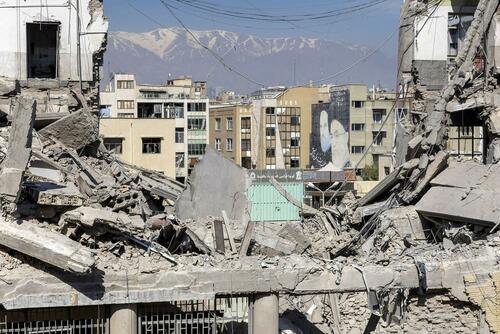
Iran Claims 80% Of Bombed-Out Areas Of Tehran Restored, Amid $270BN War Loss Compensation Demand
Iran Claims 80% Of Bombed-Out Areas Of Tehran Restored, Amid $270BN War Loss Compensation Demand
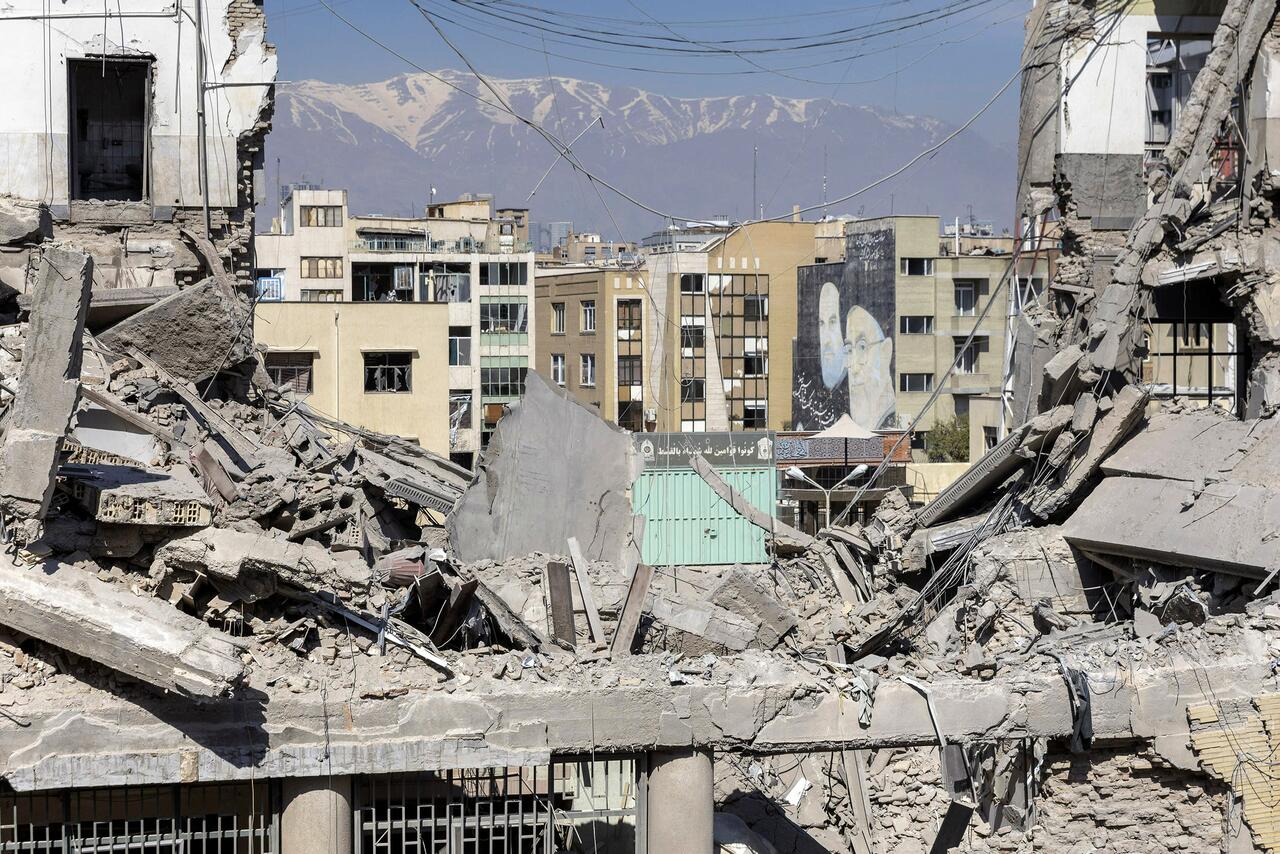
Iran has been seeking to prove its unity and defiance to the world in the aftermath of the 38-days of heavy US-Israeli bombing it endured throughout the Trump-ordered Operation Epic Fury.
Along with fast seeking to rearm and recover its missile capability after the bombardment which heavily targeted above and below-ground missile silos, it is also rapidly rebuilding bombed-out parts of the capital city Tehran.
In what sounds like a surprising and perhaps high estimate, about 80% of war-damaged sites in Iran’s capital have been repaired, the state Islamic Republic of Iran Broadcasting (IRIB) reports.
“More than 60,000 residential and commercial units in Tehran province were hit by American-Zionist attacks during the third imposed war,” Deputy Governor of Tehran Seyyed Kamaleddin Mirjafarian was quoted in the report as saying.
The 80% claim might be met with a lot of scrutiny and doubt, given that many neighborhoods and buildings seemed to suffer damage so immense in scale, that it should take at least months if not years to rebuild.
But there has been some clear evidence that Iranian construction teams and engineers have worked around the clock to repair and replace vital infrastructure, like bridges for example.
The US and Israel had struck bridges and rail lines to cripple Iran’s national transport network. Israel especially adopted attacks against key civilian infrastructure as a battle tactic, in hopes that eventually there would be a groundswell of anti-Tehran anger domestically, leading to government overthrow.
Also, “ports and railway networks, universities and research centers, and several power plants and water desalination plants were directly hit, while a large number of hospitals, schools and civilian homes were also damaged or destroyed,” Al Jazeera describes.
By mid-April, Iran had put a price on the damage, while demanding compensation from Washington:
Iran has also raised the idea of compensation for damages to come through a Strait of Hormuz protocol, which would include a tax on ships passing through the waterway.
An early estimate indicates that Iran has suffered about $270bn in direct and indirect damages since the start of the US-Israel war on February 28, Iranian government spokeswoman Fatemeh Mohajerani said during an interview with Russia’s RIA Novosti news agency, published on Tuesday.
She did not provide further information, such as a breakdown of the damages, but said the issue of compensation was discussed in last week’s negotiations between Tehran and Washington in Pakistan, and will be raised in any potential future talks with the US and mediators.
President Trump himself repeatedly threatening to bomb bridges, power plants, and other infrastructure to send Iran “back to the Stone Age.” He’s reportedly mulling the resumption of full military operations, amid stalled or non-existent peace talks.
Tehran municipality repairs over 40,000 war-damaged apartments free of charge
Gisoo Misha Ahmadi reports from Tehran
Follow Press TV on Telegram: https://t.co/LWoNSpkc2J pic.twitter.com/bsAteHKajf
— Press TV 🔻 (@PressTV) May 7, 2026
While vital infrastructure and even energy sites have indeed in many cases been obliterated, the lights are still on across the country, save for the persisting government-imposed internet blackout. The internet blackout is now approaching 80 days.
Tyler Durden
Wed, 05/13/2026 – 15:45

Jane Street Slashes Bitcoin ETF Holdings, Adds Ether Funds In Q1 2026
Jane Street Slashes Bitcoin ETF Holdings, Adds Ether Funds In Q1 2026
Authored by Helen Partz via CoinTelegraph.com,
Wall Street market maker Jane Street reduced its exposure to Bitcoin exchange-traded funds (ETFs) in the first quarter of 2026 while increasing positions in Ether funds.
Jane Street cut major Bitcoin ETF holdings in Q1 2026, including BlackRock’s iShares Bitcoin Trust (IBIT) and Fidelity Wise Origin Bitcoin Fund (FBTC), according to a 13F filing published Tuesday.
IBIT holdings fell about 71% from Q4 2025 to roughly 5.9 million shares valued at about $225 million, while FBTC dropped about 60% to around 2 million shares worth roughly $115 million.
At the same time, Jane Street increased its exposure to Ether (ETH) ETFs, nearly doubling its position in BlackRock’s iShares Ethereum Trust (ETHA) and sharply raising its stake in Fidelity Ethereum Fund (FETH), adding about $82 million combined across the two products over the quarter.
The move comes amid early signs of institutional Ether ETF buying in early 2026, including increased exposure reported at Wells Fargo. The filing points to a reshuffling of Jane Street’s reportable crypto-linked holdings at quarter-end, though 13F disclosures do not show the market maker’s full trading book or net exposure.
Bitcoin exposure weakens further as Strategy stake falls
Jane Street’s Bitcoin-linked exposure weakened further in Q1 2026 as it reduced its stake in Michael Saylor’s Strategy (MSTR) alongside major ETF cuts.
In Q4 2025, the firm held about 968,000 MSTR shares worth roughly $145.9 million. By Q1 2026, the common stock stake fell to about 210,000 shares valued at roughly $27 million, a decline of about 78% quarter-over-quarter.
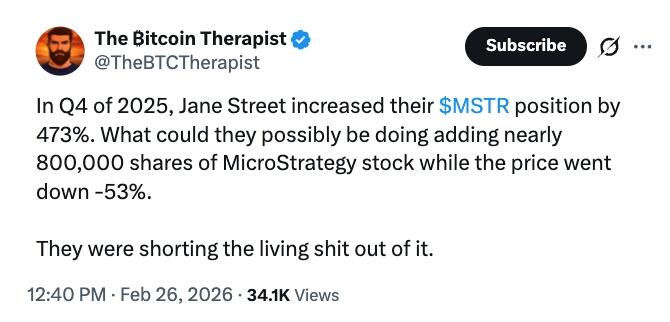
Jane Street increased its Strategy (MSTR) position by 473% in Q4 2025. Source: TheBTCTherapist
Strategy selling followed significant buying in the previous quarter as Jane Street reportedly increased MSTR position by 473% in Q4 2025.
In Q1 2026, the company also trimmed exposure across several Bitcoin mining stocks, including IREN, Cipher Mining, TeraWulf and Core Scientific.
Increased exposure to Coinbase, Galaxy and Riot
Despite broad downside pressure on Bitcoin-related assets, Jane Street increased exposure to several crypto-linked equities over the quarter, suggesting more selective positioning in crypto-related equities rather than a broad exit from the sector.
Jane Street raised its stake in the crypto mining company Riot Platforms (RIOT) to about 7.4 million shares, up from 5 million, increasing its value to roughly $91 million from $63 million.
It also increased its position in Coinbase (COIN) to about 888,000 shares from 778,000, with the value rising to about $155 million from $176 million in the prior quarter.
Galaxy Digital (GLXY) saw the sharpest expansion, jumping to about 1.5 million shares from just around 17,000, lifting its value to roughly $28 million from around $380,000.
Jane Street posted a record $16.1 billion in Q1 trading revenue, according to Reuters, as volatile markets and gains tied to artificial intelligence-related investments boosted financial results.
Tyler Durden
Wed, 05/13/2026 – 15:25
https://www.zerohedge.com/crypto/jane-street-slashes-bitcoin-etf-holdings-adds-ether-funds-q1-2026

GOP Lawmakers Leery Of Trump’s Billion-Dollar Ballroom-Security Package
GOP Lawmakers Leery Of Trump’s Billion-Dollar Ballroom-Security Package
Wary of the terrible election-year optics, some federal Republican legislators are less-than-enthusiastic about approving a request for a billion dollars in security funding relating to President Trump’s White House ballroom project. Some of them shared those feelings with reporters after they received a Tuesday afternoon closed-door briefing by Secret Service Director Sean Curran.
When he first rolled out the 90,000-square-foot ballroom project, Trump repeatedly emphasized that the project would cost $200 million and be funded entirely with private donations. Now the ballroom itself is projected to cost $400 million — still privately-funded — but with another $1 billion in federal funding being poured into security provisions.
“I think the timing and the optics are really bad,” North Carolina Sen. Thom Tillis told reporters Monday. “This time last year, roughly, maybe a little bit before, we were all impressed with the fact that this $400 million building was going to be paid for out of the generosity of donors, and now we’re hearing 2½ times that is necessary for some other aspect of the project.” The ballroom funds are supposed to be part of the ICE and Border Patrol bill that’s considered as a GOP must-have.
In his briefing to legislators, Curran provided an itemization of the big-ticket items comprising that $1 billion request. “He walked through the various categories,” Senate Majority Leader John Thune said. “So it was a good back-and-forth, a good discussion, and obviously we had a lot of questions that were asked by our colleagues, just to get the details and precision as much as possible about how dollars will be used.”
According to the Washington Post, the categories include:
$200 million for “hardening” the party room, from both above and below; finishes include bulletproof glass, and systems to detect chemical weapons and drones
$180 million for a new White House visitor-screening setup
$175 million for training Secret Service agents and improving “protectee security”
$150 million to ward off “emerging threats” to include bioweapons and airborne attacks
$100 million to secure high-profile national events
Following the briefing, Kansas Sen. Roger Marshall, who routinely votes as Trump wishes, was non-committal. “I still got some more questions, and they’re going to send us more information…I’m undecided.” Similarly, Louisiana Sen. John Kennedy, said he has “a lot” of questions of his own, adding that “One of the biggest concerns on our side is adding to the deficit.”
TRUMP: “We have a ballroom that’s under budget. It’s going up right here. I doubled the size of it because we obviously need that.”
REPORTER: “The price has doubled…”
TRUMP: “I doubled the size of it, you dumb person. I doubled the size. You are not a smart person.” pic.twitter.com/iC03NPPEye
— Breaking911 (@Breaking911) May 12, 2026
Others were more candid. “Not happening here,” said Pennsylvania Rep. Brian Fitzpatrick, when asked if the House was likely to approve the funding. Asked if he’d personally vote for it, he gave reporters a blunt “no.” Asked about how the price tag looks to Americans being hammered at the gas pump by the fruits of the Trump-Netanyahu war on Iran, Alaska Sen. Lisa Murkowski replied, “Not good.”
The ballroom project increasingly seems like a midyear election gift from a tone-deaf Trump administration to Democratic candidates across the nation. In a recent poll, Americans oppose it by a lopsided 56%-to-28% margin. More than the cost itself, it’s the juxtaposition of what looks like a vanity project against increasing financial hardships being imposed on everyday Americans by the war on Iran and Trump’s tariffs.
On Tuesday, Trump handed more such campaign fodder to Democrats when — asked if Americans’ financial woes were a motivator for making a peace deal with Iran — Trump said, “Not even a little bit. The only thing that matters when I’m talking about Iran — they can’t have a nuclear weapon. I don’t think about Americans’ financial situation.” Though he was clearly trying to emphasize the (dubious) security narrative behind the war, his failure to express empathy for struggling families turned his remark into a political weapon.
President Trump is asked how much he considers Americans’ financial situation when negotiating with Iran:
“Not even a little bit. The only thing that matters is they can’t have a nuclear weapon. I don’t think about Americans’ financial situation. I don’t think about anybody.” pic.twitter.com/BFxqVtZgQr
— The American Conservative (@amconmag) May 12, 2026
Tyler Durden
Wed, 05/13/2026 – 15:05

Gamma And Momentum: A Recipe For Cheers And Tears
Gamma And Momentum: A Recipe For Cheers And Tears
Authored by Michael Lebowitz via RealInvestmentAdvice.com,
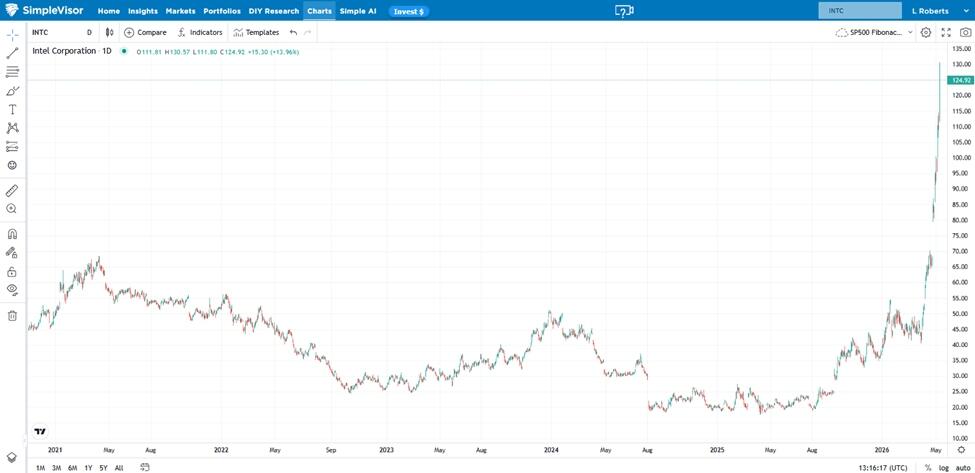
Intel (INTC) shares have risen 90% over the past month and more than 200% since the start of the year. Its competitors, Advanced Micro Devices (AMD) and Micron (MU), are posting similar gains. Many other semiconductor stocks, along with some computer hardware companies, are the market’s latest AI darlings. Momentum and gamma are driving the outperformance, and, in their wake, a supportive narrative is trying to justify it.
The narrative holds that the insatiable infrastructure buildout for AI, including data centers, GPUs/CPUs, networking equipment, and power grids, requires massive capital expenditure from the largest hyperscalers (Microsoft, Google, Amazon, and Meta). The suppliers of these products, including semiconductor and hardware producers, are the most direct beneficiaries.
AI will significantly improve the bottom line for many companies. But investors should be asking whether the stock prices have gotten too far ahead of fundamentals. The answer, in our opinion, is likely yes. As we wrote in Parabolic Semiconductor Rally Is Pricing In 2028 Already:
Here’s the part that should bother bulls the most. SOXX is trading at multiples that already reflect strong 2026 earnings. The current rally has likely already fully priced in 2026 earnings. From here, you are paying for 2027 and 2028 growth in a sector where the cycle has not been repealed. Semiconductors are still cyclical. Always have been. The day the AI capex cycle hiccups, even briefly, is the day this chart breaks.
To fully appreciate the recent astonishing performance, it’s worth looking beyond fundamentals and narratives to better understand how herding, momentum, and option delta and gamma can systematically drive prices higher and eventually lower.
Momentum Creates Momentum
Financial momentum is the tendency for assets that have been rising to continue rising and those that have been falling to continue falling. Often, during a strong momentum phase, the pace of buying or selling increases, resulting in parabolic price gains, as we are witnessing with Intel and its competitors.
When a stock trends higher, investors increasingly notice the bullish momentum and buy it, which pushes the price higher and attracts even more buyers. This type of herding behavior can create a self-reinforcing cycle- buying begets more buying.
When momentum is strong, the pressure on new investors to join the trade or on existing ones to add to their positions is enormous. As these investors focus on the incredible rewards they might receive, they often lose sight of the trade’s fundamental justification. The result is a crowded trade with sometimes breathtaking gains, but ultimately a sharp reversal that strips profits from most participants.
Retail and institutional momentum traders often use call options as a leveraged way to participate in price gains without buying the stock outright. Call options provide investors with limited downside risk and the potential for upside gains that can be multiples of the underlying stock’s price. Call buying can become a momentum accelerant, as we explain next.
What Is Delta
To better appreciate how options, particularly calls, can boost stock prices, which in turn adds momentum and fuels the herding behavior of millions of investors, we need to understand some option basics.
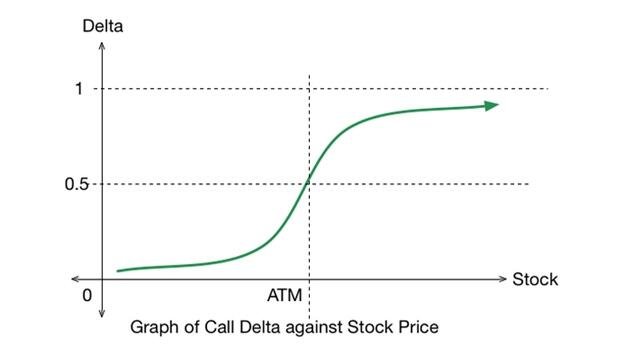
We start with delta. Delta measures how much an option’s price changes for every $1 move in the underlying stock. For instance, a call option with a delta of 0.50 will gain roughly $0.50 in value for every $1.00 increase in the stock price. Importantly, delta changes as the stock price moves. As shown in the hypothetical graph below, delta rises as the option approaches its strike price and falls as it moves below it. The non-linear rate at which delta changes is called gamma.
Delta is affected not only by how far the stock price is from the option’s strike price but also by implied volatility and time to expiration. Other smaller factors include put/call skew, dividends, and interest rates.
Gamma
Gamma quantifies the curvature of delta (the green line in the graph above). It is the rate at which an option’s delta changes for every $1 move in the underlying stock. For example, if a call option has a delta of 0.50 and a gamma of 0.05, a $1 rise in the stock pushes the delta to 0.55, and another $1 gain pushes it to 0.60, and so on. Think of it this way: delta tells you how much the option price will move per change in the stock, while gamma tells you how fast that relationship will change.
Gamma is highest for options closest to expiration. Thus, the recent surge in the number of very short-term and same-day expiry options (0dte) is significantly impacting options brokers, as we will explain.
Delta Hedging Can Drive Momentum
When an investor buys a call option, someone must be selling it to them. Most often, market makers and brokers fill that role. Their financial interest in selling options is to make money regardless of what the option price does, not by taking the opposite position of the options buyer. They try to ensure profits by hedging.
Brokers hedge exposure by buying or selling shares of the underlying stock in proportion to the option’s delta. This process is called delta hedging.
Assume a broker sells an investor a call option with a delta of 0.50. The dealer will buy 50 shares of the stock for each option sold. If the delta suddenly jumps to 0.60, the dealer will buy 10 more shares. If the stock falls and the delta declines, the dealer will sell shares.
In isolation, this is simple hedging management that often has little impact on the markets. But when the options market becomes large enough relative to the stock market, this constant hedging activity itself begins to move prices. As they say, the tail is wagging the dog.
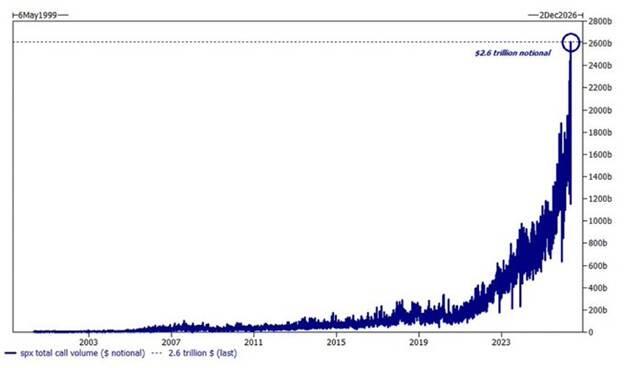
The graph below shows a sharp increase in call option trading over the past few years, resulting in significantly higher hedge-trading volume among option brokers.
Gamma Squeezes
The growing volumes in the options market, along with the popularity of very short-term and even same-day options, are intensifying broker hedge trading. At times, this heightened activity results in what is called a gamma squeeze. This occurs when a surge in call option buying forces hedgers to purchase shares at an accelerating rate, pushing the stock price higher. That higher price, in turn, forces hedgers to buy even more shares, pushing the price higher still. This reflexive loop can have a short-term, tremendous impact on the underlying stock price.
The conditions for a gamma squeeze typically require a few ingredients:
a stock with relatively thin float.
large buildup of near-the-money call options with short expiries.
enough momentum to start the feedback loop.
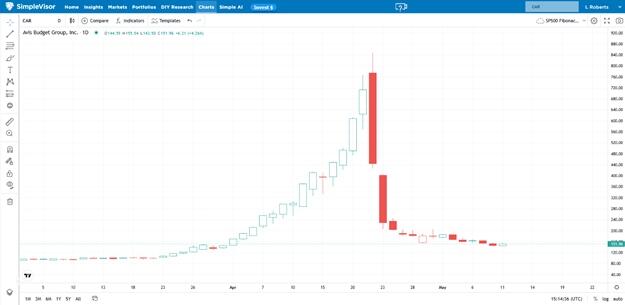
Avis (CAR) was the most recent example. CAR surged from roughly $150 in late March to nearly $850 in a matter of weeks before collapsing back to $150. Unlike semiconductor and hardware stocks, the gamma squeeze in CAR was more pronounced because its float was small and short interest was nearly 90%. That said, call option volumes spiked by roughly 10,000%, contributing to the surge in the stock price.
The Gamma Flip
If a gamma squeeze can set a stock price or market on fire, the gamma flip can pour water on it.
Dealers are never perfectly hedged. Thus, to quantify how their hedging activity might impact the market, it’s useful to know the degree to which they are over- or under-hedged. In market parlance, that is their net gamma position.
When dealers are net short gamma (they have sold more options than they have bought), they are forced to buy stocks when prices rise and sell when prices fall to stay hedged. Thus, when dealers collectively hold short-gamma positions, they have to chase the market; their hedging activities amplify price movements and volatility.
On the other hand, when dealers are net long gamma, the opposite occurs. They buy weakness and sell strength. Accordingly, these hedging activities serve as a natural market stabilizer, dampening volatility.
The gamma flip occurs at the price level where a dealer’s gamma exposure crosses from positive to negative territory, or vice versa. This level is calculated by options analytics firms and is increasingly closely watched by institutional traders. The gamma flip is something of an invisible gravitational boundary in the market.
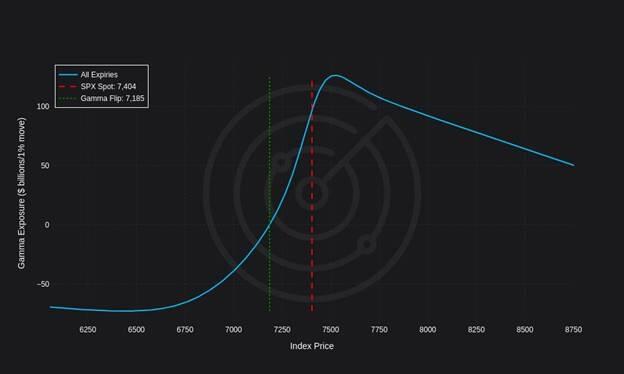
The graph below, courtesy of Radar Options, shows that as of May 11, 2026, the S&P 500 Index is in a long-gamma position, supportive of an uptrend with reduced volatility. If it were to flip negative by falling below 7185, we should expect increased pressure for further downside and higher volatility.
Keep in mind the graph is for the S&P 500. Each individual stock has its own aggregate gamma exposure level, which can differ widely from the market.
Option Extremes Today
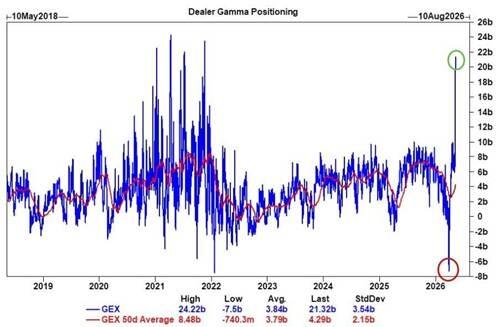
Dealer hedging is dynamic; thus, gamma exposure and flip levels are constantly in flux. The graph below, courtesy of ZeroHedge, shows that the volatility in dealers’ aggregate gamma positioning has been extreme recently. In just a six-week period, gamma exposure flipped from extremely short, which supported the rally from the late March lows, to one of the longest gamma positions on record.
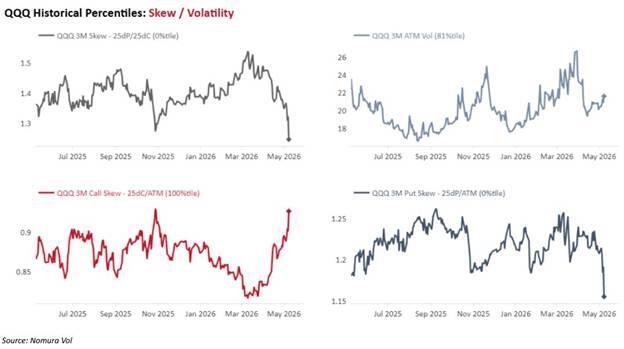
The graphic below shows how extreme the rush into technology call options has been. The bottom-left graph shows that call skew on the Nasdaq (QQQ) is the highest it’s been in over the past year. Call skew measures the extent to which out-of-the-money calls trade at higher implied volatility than at-the-money calls. High skew reflects aggressive demand for upside calls, which drives up premiums on higher call strikes. High call skew is most common in individual momentum stocks and during gamma squeezes, when the options market prices in a higher probability of explosive upside than a normal distribution would suggest.
Bear in mind that the put skew is currently very low, signaling historically low demand for protection.
Summary
Options were traditionally used for risk management purposes. Yet their proliferation and widespread use by traders and gamblers have created a market structure that increasingly results in significant volatility and enormous price changes for entirely non-fundamental reasons. Thus, the risk management tool has become a market risk in and of itself.
As we have witnessed with CAR and are currently seeing with many technology stocks, a stock price can surge when a critical mass of investors generates a momentum signal, drawing in more investors and short-dated call buyers. Options brokers then feed the momentum as they are forced to buy as the stock price rises.
Similarly, as we also saw with CAR and will likely see with some semiconductor and hardware stocks, prices can drop sharply not because of fundamental developments, but simply because momentum gives way, gamma flips, and dealer hedging amplifies a modest decline into something more severe.
Sometimes stocks and markets completely ignore fundamentals and run higher on a self-reflexive loop. During these moments, prices get divorced from fundamentals, and individual stocks and/or markets can become fragile.
Tyler Durden
Wed, 05/13/2026 – 14:45
https://www.zerohedge.com/markets/gamma-and-momentum-recipe-spikes-and-tears

Ex-Con Hacker Twins Fired – Proceed To Wipe Out 96 Government Databases In Minutes
Ex-Con Hacker Twins Fired – Proceed To Wipe Out 96 Government Databases In Minutes
Note to employers: When you discover your twin brother employees are ex-cons who did time for hacking into the US State Department, and go to fire them, make sure you fully disable their access.
February 2025, twin brothers Muneeb and Sohaib Akhter turned a routine job termination into one of the most brazen insider sabotage incidents in recent U.S. government history. Just minutes after being fired from Opexus – a Washington, D.C.-area contractor that provides critical case-management software to more than 45 federal agencies – the brothers allegedly launched a rapid digital assault that deleted approximately 96 government databases containing sensitive FOIA records, investigative files, and taxpayer data.
What made the case especially shocking was the brothers’ prior history: both had served prison time for hacking federal systems a decade earlier.
A Decade-Old Criminal Record
The Akhter brothers, both 34 and from Alexandria, Virginia, had a criminal past that Opexus completely missed – which, given what they do, is not great. In 2015, while working as contractors, they pleaded guilty to conspiracy to commit wire fraud, conspiracy to access protected computers without authorization, and related charges. Their crimes involved hacking into U.S. State Department systems and a private company, stealing personal data on coworkers, acquaintances, and even a federal investigator.
Muneeb received a 39-month prison sentence; Sohaib received 24 months. Both served their time and were released.
And yet…
By 2023-2024, the brothers had landed engineering roles at Opexus (formerly known as AINS), a firm specializing in FedRAMP-certified case-management platforms. Its flagship products – FOIAXpress and the eCASE suite – help agencies process Freedom of Information Act requests, audits, investigations, EEO complaints, and congressional correspondence. Opexus systems host sensitive government data on servers in Ashburn, Virginia.
The company conducted standard background checks covering roughly seven years – which missed the 2015 convictions. Opexus later admitted that “additional diligence should have been applied” and that the individuals responsible for hiring the twins are no longer with the company.
Unbeknownst to Opexus at the time of termination, the brothers had been abusing their access for weeks. Muneeb had collected approximately 5,400 usernames and passwords from the company’s network and built custom scripts to test them against external sites (including Marriott and DocuSign). He successfully logged into accounts and, in some cases, used victims’ airline miles.
On February 1, 2025 – more than two weeks before their firing – Muneeb asked Sohaib for the plaintext password of an individual who had filed a complaint through the EEOC Public Portal. Sohaib ran a database query and provided it; Muneeb then used the credentials to access the complainant’s email without authorization. This incident later became central to Sohaib’s password-trafficking charge.
The Firing and the 56-Minute Rampage
On February 18, 2025, the FDIC flagged Sohaib’s prior conviction during a background check for a potential new role at the FDIC Office of Inspector General. Opexus fired both brothers during a remote Microsoft Teams/HR meeting that ended around 4:50-4:55 p.m.
The offboarding was flawed: Muneeb’s account remained active. ARS Technica has the timeline:
At 4:56 pm, Muneeb accessed a US government database that his company maintained. He “issued commands to prevent other users from connecting or making changes to the database, and then issued a command to delete the database,” the government said.
At 4:58 pm, he wiped out a Department of Homeland Security database using the command “DROP DATABASE dhsproddb.”
At 4:59 pm, he asked an AI tool, “How do i clear system logs from SQL servers after deleting databases?” He later asked, “How do you clear all event and application logs from Microsoft windows server 2012?”
In the space of a single hour, Muneeb deleted around 96 databases with US government information. He downloaded 1,805 files belonging to the EEOC and stashed them on a USB drive, then grabbed federal tax information for at least 450 people.
The brothers discussed the attack in real time. Sohaib observed Muneeb “cleaning out their database backups.” They even queried an AI tool on how to clear SQL server logs and Windows event logs. They later reinstalled the operating systems on their company laptops to destroy evidence.
And What Else Did They Do?
Based on the court documents (Superseding Indictment + Muneeb Akhter’s detailed Statement of Facts from his April 2026 plea deal), the brothers were up to quite a lot of malarkey.
Massive extra data haul (1.2 million lines): Muneeb didn’t just steal ~5,400 usernames/passwords from Opexus. He also possessed a separate file containing ~1.2 million lines of full names, email addresses, phone numbers, physical addresses, and password hashes. This was stored across his personal laptop, Android phone, external hard drive, and cloud accounts.
The credential abuse went on for 10 months after they were fired: The database deletions happened on Feb 18, 2025, but Muneeb kept actively using the stolen credentials from May 2025 all the way until his arrest on December 3, 2025. He wrote custom Python scripts (one literally named marriott_checker.py), ran credential-stuffing attacks on hotels, airlines, and banks, and successfully logged into hundreds of victims’ accounts.
Sophisticated account takeovers with his own domains: He didn’t just log in – he changed victims’ recovery email addresses on airline, hotel, and bank accounts to addresses he controlled, such as [VictimName]@wardensys.com or @wardensystems.com (domains he owned). This let him lock the real owners out and keep using the accounts.
Real-time blackmail brainstorming during the deletion rampage: At ~5:12 p.m. on Feb 18 – while Muneeb was still deleting databases – the brothers literally discussed blackmailing Opexus. Sohaib said something to the effect of: “you shoulda had a kill script, like, blackmailing them for some money…” Muneeb shot it down, replying that it would be obvious proof of guilt. They also argued about whether to contact customers.
“Clean stuff up from the other house”: During the same conversation, Sohaib said: “We also gotta clean stuff up from the other house, man.” This strongly implies they had evidence or stolen data at a second location.
Muneeb fled with a government-issued PIV card: When Muneeb drove to Texas on Feb 24, 2025, he took his personal laptop, phone, and a Personal Identity Verification (PIV) card issued by a U.S. government agency. (PIV cards are the high-security smart cards federal employees/contractors use for system access.)
Other smaller but wild nuggets
A “co-conspirator” (identity not specified in the public docs) wiped both company laptops by reinstalling the OS on Feb 21–22.
Muneeb used stolen American Airlines miles twice: 29,000 miles for a real flight he actually took (SLC → DC on Nov 29, 2025) and 14,500 miles for another ticket he booked but didn’t use.
Muneeb had a separate aggravated identity theft count from August 2022 (pre-Opexus) involving someone’s passport and personal info.
Guns too!
A federal search warrant executed at Sohaib’s Alexandria home on March 12, 2025, uncovered seven firearms (including M1 and M1A rifles, a Glenfield Model 60 .22 rifle, a Ruger .22 pistol, and a Colt .38 Special revolver) plus roughly 378 rounds of .30-caliber ammunition. Under Virginia law at the time, these guns and the ammunition were fully legal for a non-prohibited person to own – no assault-weapon ban, no magazine limits, no restrictions on the specific models. The only prohibition was Sohaib’s status as a convicted felon, which made possession illegal under federal law (18 U.S.C. § 922(g)).
The brothers were arrested on December 3, 2025. Muneeb ultimately pleaded guilty to major charges, including computer fraud and destruction of records. Sohaib went to trial.
On May 7, 2026, a federal jury in Alexandria convicted Sohaib Akhter on three counts: conspiracy to commit computer fraud, password trafficking, and possession of a firearm by a prohibited person. He faces a maximum of 21 years in prison and is scheduled for sentencing on September 9, 2026. Muneeb faces additional charges and potential penalties up to 45 years.
So, whoops…
As an aside, remember when House Democrats let the Awan Brothers go hog wild in their network for 13 years, were fired for suspected unauthorized server access, procurement irregularities, and possible data exfiltration, and were one of them was able to plead guilty to one count of making a false statement on a loan application and sentenced to time served – only to then receive an $850,000 wrongful termination settlement by the five Pakistani-American tech workers involved in the saga? Crazy!
Tyler Durden
Wed, 05/13/2026 – 14:30
Gunfire Erupts Inside Philippine Senate As Former ‘Drug War’ Enforcer Evades International Arrest Warrant
Gunfire Erupts Inside Philippine Senate As Former ‘Drug War’ Enforcer Evades International Arrest Warrant
At least a dozen gunshots rang out inside the Philippine Senate building in Manila earlier on Wednesday as police and marines moved to arrest Senator Ronald “Bato” Dela Rosa on an International Criminal Court warrant for alleged crimes against humanity linked to former President Rodrigo Duterte’s brutal war on drugs, a campaign that left more than 6,000 suspected drug dealers dead in operations.
Reuters reports that it is unclear who fired the burst of shots inside the Senate building, but it occurred as Dela Rosa was taking refuge inside the building amid efforts to arrest the senator on an ICC warrant for alleged crimes against humanity.
BREAKING:
Gunfire erupts inside the Philippine Senate 🇵🇭
A volley of more than a dozen gunshots broke out inside the Senate building during a tense standoff involving Senator Ronald “Bato” dela Rosa.
The former national police chief under Rodrigo Duterte has been holed up in… pic.twitter.com/amR09Xm3vr
— Visegrád 24 (@visegrad24) May 13, 2026
Other media outlets captured the chaotic moments when shots rang out in the Senate building’s hallway.
“About 15 shots were fired, and we were forced to pull back,” Al Jazeera reporter Jamela Alindogan said, adding that security forces then ordered the evacuation of the building.
Gunshots have been heard in the Philippine senate, where Senator Ronald Dela Rosa, who is wanted by the ICC for crimes against humanity, remains holed up to evade arrest.
Military personnel reportedly arrived inside the senate building, some carrying assault rifles. pic.twitter.com/AjL4Yx4f12
— Al Jazeera Breaking News (@AJENews) May 13, 2026
Dela Rosa posted a video on Facebook earlier, anticipating his arrest, and urged citizens to come to the Senate building to block his arrest: “I am appealing to you. I hope you can help me. Do not allow another Filipino to be brought to The Hague.”
On Tuesday, Dela Rosa, a former police chief and top enforcer of former President Rodrigo Duterte’s war on drugs, urged President Ferdinand Marcos Jr. not to allow the ICC to arrest him.
The ICC unsealed its arrest warrant on Monday, accusing Dela Rosa of the same crimes as Duterte, who is awaiting trial in the Netherlands.
Al Jazeera’s Alindogan said that while violent incidents are not unusual in Manila, it was highly unusual for this type of chaotic event to occur in the Senate building, “where there’s supposed to be some sort of civility.”
Tyler Durden
Wed, 05/13/2026 – 13:55
Ugly, Tailing 30Y Auction Makes History With First 5%+ Yield Since The Great Quant Crash Of Aug 2007
Ugly, Tailing 30Y Auction Makes History With First 5%+ Yield Since The Great Quant Crash Of Aug 2007
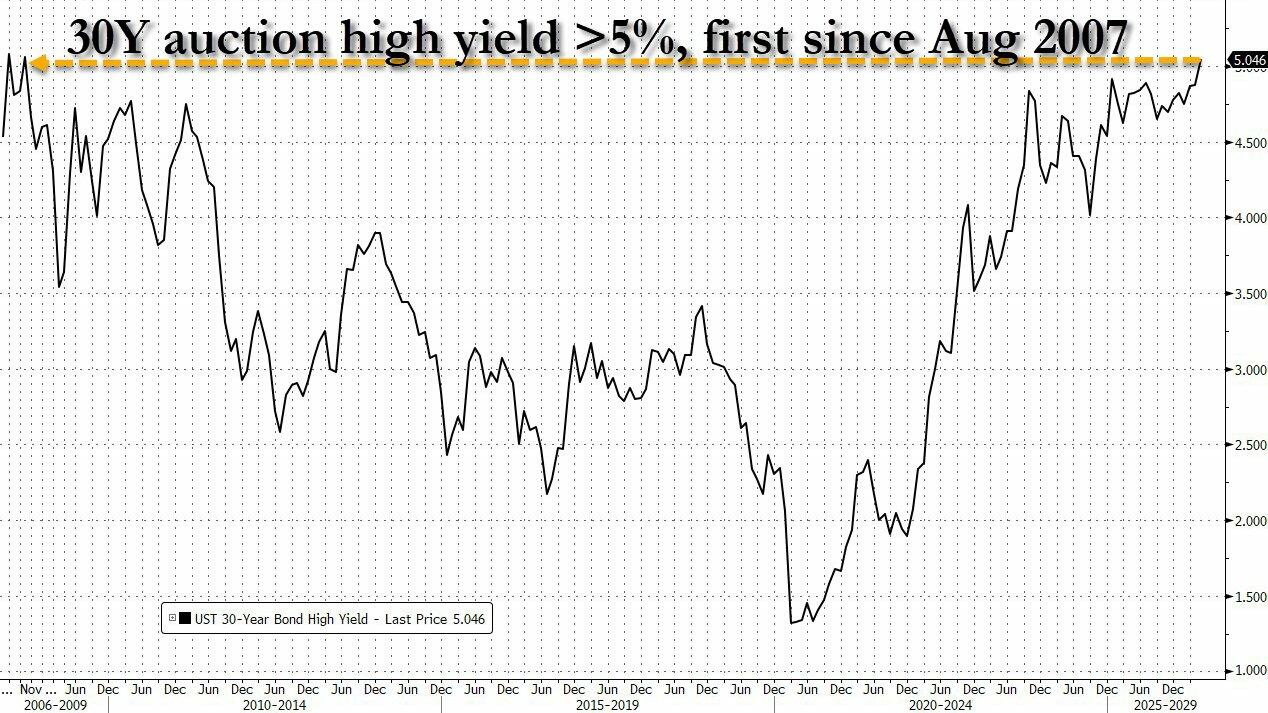
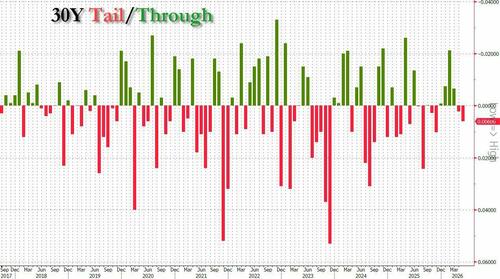
Moments ago, the last refunding auction of the week, the sale of $25BN in 30Y paper, made history: it was the first 30Y auction to print with a high yield above 5%, and a coupon of 5%, since August 2007… which as veteran traders will recall was the month of the historic quant crash which marked the S&P highs at the time and eventually culminated in the global financial crisis.
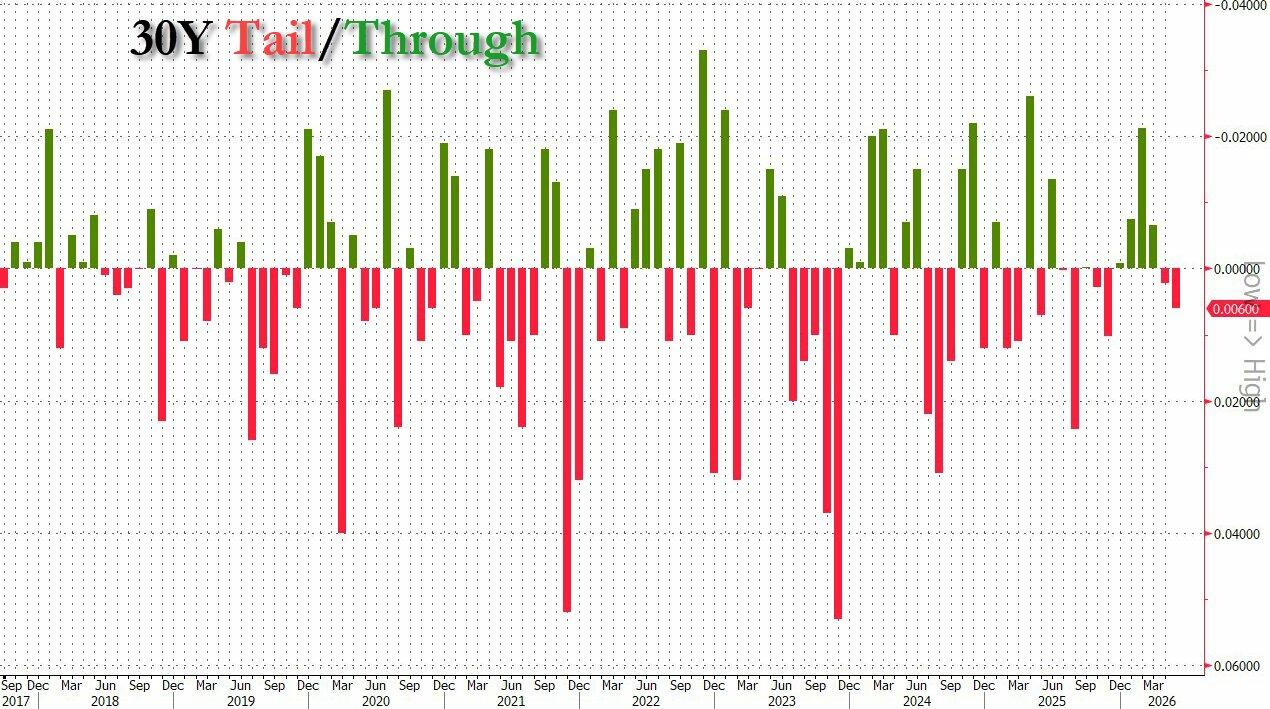
The auction priced at a high yield of 5.046%, up sharply from 4.876% in April, and tailed the 5.041% When Issued by 0.5bps, the second consecutive tail following 4 stop-throughs.
But, as noted above, what is more notable was that this was the first 5% interest rate coupon 30Y auction, and the the first 30Y auction with a high yield above 5% since… August 2007 when surging rates sparked a quant crash. Come to think of it, unlike retail momentum chasers, quants have had a terrible month. How much longer can they last? But we digress…
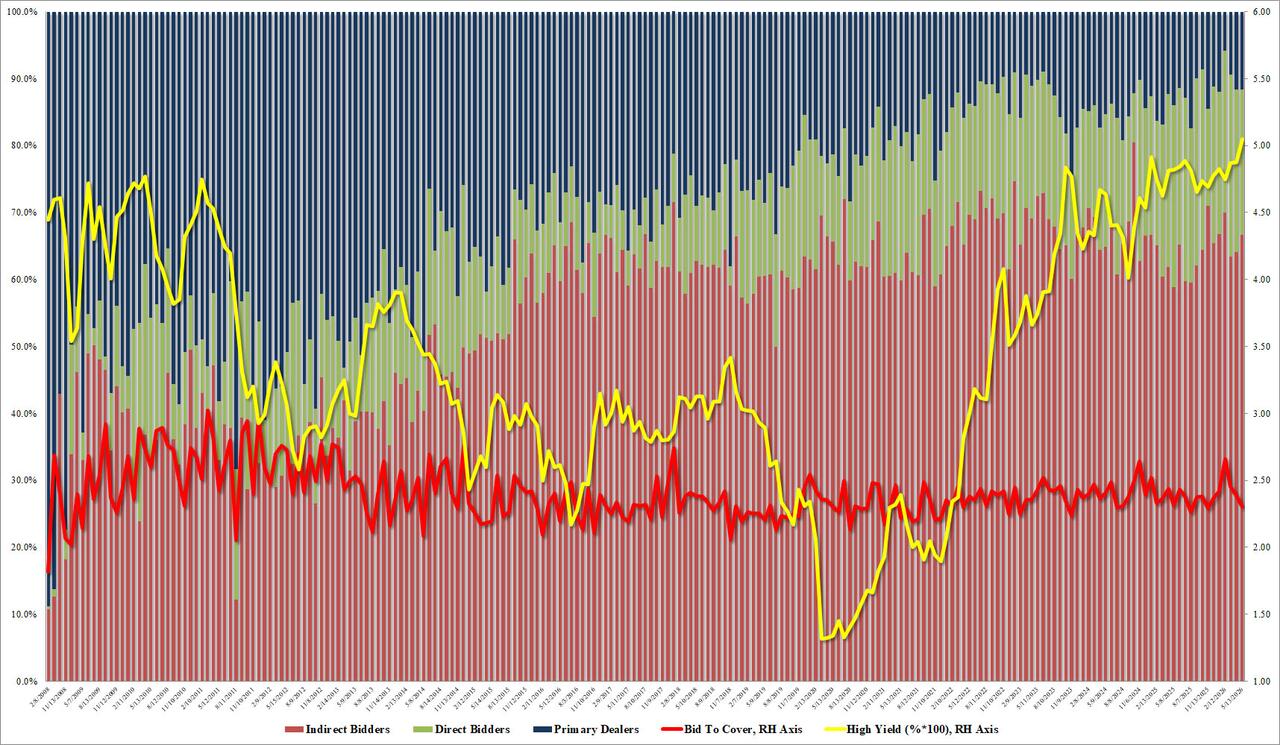
Going back to the auction, the uglyness was all around: the bid to cover was 2.303, down from 2.385, below the 2.43 six auction average and the lowest since Nob 2025.
Internals were not quite as bad, with Indirects taking down 66.6%, up from 64.1% in April and just below the 66.8% recent average. And with Directs awarded 21.74%, Dealers were left with 11.7%.
Overall, this was an ugly, tailing auction, but the question on everyone’s lips is whether today’s quction will – like in August 2007 – be the VaR shock equivalent of a bond auction that pops this particular bubble. For the answer keep a close eye on quants who are suffering badly.
Tyler Durden
Wed, 05/13/2026 – 13:35