Category: News

The Scapegoat: How One Man’s Career Was Ended By MeToo
The Scapegoat: How One Man’s Career Was Ended By MeToo
Authored by Nancy Rommelmann via RealClearInvestigations,
Life on Jan. 9, 2020, was interesting for Joshua Helmer. At 31, he was midway through his second year as CEO of the Erie Art Museum in Pennsylvania.
He had recently secured the loan of a Chuck Close painting from the Philadelphia Museum of Art, and an upcoming sale, including a painting by another famous artist, David Hockney, would help Erie generate funds to buy new works.
And then it was Jan. 10.
“I knew I’d never work again,” Helmer said, recalling his reading of a New York Times article that ran that day.
“He Left a Museum After Women Complained; His Next Job Was Bigger,” was co-bylined by veteran Times reporter Robin Pogrebin and Zachary Small, then a freelancer. The article listed allegations from women against Helmer from his time as assistant director for interpretation at the Philadelphia Museum of Art (PMA), a position he said he resigned from a year-and-a-half earlier.
Nine women told the Times that Helmer made “advances” toward them, and four of these co-workers said they became romantically involved or lived with Helmer both during and after his tenure at PMA. The allegations ranged from the women being made to feel as though Helmer had the power to hold back their promotions, to his yelling at them, insulting their intelligence, or saying things they found unnerving; a woman identified as “a former Philadelphia Eagles cheerleader” told the Times, “I worked in the NFL for five years and no one spoke to me in a way that made me feel that uncomfortable.”
There were no public allegations that Helmer directly pressured any of the women to have sex or engaged in any unwanted sexual behavior. He did allegedly suggest to one woman that she should “get to know him” to help her career, according to the Times.
There was one additional complaint from an Erie Art Museum female intern who provided the Times with a screenshot of a text Helmer sent, asking whether she wanted to have a coffee on the deck of his apartment, to which she replied, “No. Can’t sorry.”
Six years on, the fervor of MeToo has cooled. While some people brought down by MeToo gained a semblance of their previous standing, others, like Helmer, have not. He self-exiled to northern Pennsylvania, took up woodworking, and hasn’t worked again.
At the peak of MeToo, arguing that permanent banishment might be too much was a nonstarter. How could women (and some men) feel safe if those who sexually preyed on them were not shunned in ways that assured they could never prey on anyone else again? There was solidarity in seeing men get their comeuppance, a sense of pride for having the courage to come together with other women and speak up. That campaigns could get overheated, destroying the careers of some men whose actions, while sometimes troubling, might not deserve such harsh punishment, did not at the time seem worth considering. Who cared what happened to guys like Helmer?
“A Weird Day”
The Times did not paint Helmer as a 100% cad. “Women who dated Mr. Helmer said they were attracted to him at first because they found him warm, affectionate and confident,” the authors wrote. While all said the relationships had been consensual, each of Helmer’s accusers eventually felt undervalued, belittled, or suspected they had been retaliated against.
Although the women said they felt emotionally abused by Helmer, he never faced lawsuits stemming from their allegations. And while the Times insinuated some official wrongdoing – writing that “Mr. Helmer resigned for reasons that have not been disclosed” – Helmer told the newspaper he had left of his own accord. That his departure from PMA did not seem clearly connected to the women’s accusations made it all the more curious that the newspaper saw the story as worth running on Page 1 of the Arts section.
Or would have been curious, had it not been January 2020, when MeToo was at full velocity. Hundreds of well-known, powerful figures had and were about to lose their careers (Matt Lauer, Mario Batali, Kevin Spacey); some went to prison for charges as serious as serial rape (Harvey Weinstein, Bill Cosby, Danny Masterson).
Helmer was not accused of monstrous acts, nor was he well-known or powerful. He earned $70,000 a year at PMA. He was not executive-level and, according to a former department coordinator at PMA, did not have the authority to hire, fire, or promote, a detail that might have tempered the implied power imbalance the Times piece was in part predicated on.
Another detail that could have given the Times reporters pause came from the Erie Art Museum board president, who emailed the paper to say that, aside from the declined coffee invitation, “no other allegations had been brought to the board’s attention.” Nevertheless, the consequences for Helmer were immediate.
“The phone’s ringing off the hook nonstop. And that night we had an emergency board meeting,” Helmer said in an interview with RealClearInvestigations. “The board members came into my office, and they were like, ‘There’s just no way forward from this.'”
Without the institutional stamina to fight whatever might be coming their way, Erie accepted Helmer’s resignation on Jan. 13, after which, Helmer recalled, the board president drove him home. “We sat in the driveway, and I was like, ‘Wow, that was a weird day.'”
The weirdness continued. In the two months after Helmer left Erie, the Times ran four more pieces about the saga. Each article was co-bylined by Zachary Small, who had initially looked into Helmer for The Art Newspaper, an influential visual arts outlet where Small was then associate editor for investigations. The Art Newspaper, however, declined to run the Helmer piece because, as the paper’s former editor, Alison Cole, recently told RCI, “The Art Newspaper only runs stories we can verify.”
Symbol of Male Dominance
The Times, on the other hand, evidently saw Helmer as part of a larger story about the male dominance of the museum world.
“This [story] was somewhat informed by a much larger culture of patriarchy at these institutions,” Robin Pogrebin said on the podcast Museum Confidential, four days after the Times ran the story detailing Helmer’s exit from Erie. “I think it’s important to think about this as a referendum on the industry to some extent and how important it is to have more balance in terms of gender.”
If the aftereffects came quickly for Helmer, they also came for Small, who, up until the Helmer piece, had contributed two pieces to the Times. In 2020, Small (who uses they/them pronouns) had 41 bylines in the paper. In 2023, they became a staff writer.
Which might have been the end of the story but for an incident in November 2025, when the then-CEO at the Philadelphia Museum of Art was fired, thus dragging Helmer’s name back onstage.
“I’m like a recurring character in a sitcom or soap opera,” Helmer said. “The [audience] is like, ‘Oh, we thought he was kicked in the head by a horse. Oh, he’s back!’ You make these small cameos. And then to see another piece added on five years later… it’ll never be done.”
The Maw of MeToo
There are many essential reasons to uncover the rot that historically allowed sexual misconduct to be swept away. Two reporters rightly celebrated for their MeToo coverage were Jodi Kantor and Megan Twohey at the Times, whose 2017 expose, “Harvey Weinstein Paid Off Sexual Harassment Accusers for Decades,” won the 2018 Pulitzer Prize for Public Service for detailing the sexual crimes of the powerful head of Miramax Films. This was important work, revealing the power imbalance felt by many women in Weinstein’s orbit, a disparity that could lead to fear – of having one’s career sabotaged and for one’s personal safety – and acquiescing to Weinstein’s demands for sex. It was also careful work. According to two high-level employees at the Times, when the Weinstein expose ran, Kantor and Twohey did not include several accusers whose stories they did not feel could be made watertight.
Three years later, such care at the paper appeared to have slackened. Perhaps the maw that was MeToo needed to be fed. Perhaps the incentives for breaking a big new MeToo story in an arena where there had not been one were too tempting.
“We’ve been wondering, in the museum community, when this would land on this industry,” said Jeff Martin, host of the Museum Confidential episode featuring Pogrebin and Small. Small responded that they had “received an anonymous tip telling me to look into the Philadelphia Museum of Art.” The tip would have been around September 2019, more than a year and a half after Helmer left PMA. Nevertheless, on Nov. 13, Small sent Helmer a 700-word email, with the subject line, URGENT PRESS REQUEST, and giving Helmer 48-hours to respond to 23 detailed questions.
Journalists do not, as a rule, send cold interview requests this demanding, not if they are hoping for a reply. That Small sent it concurrently to several of Helmer’s former colleagues at PMA, as well as to the boards of PMA and Erie, seemed to Helmer very much like a trap.
“I was really quite shocked,” he said.
Fallout Becomes Opportunity
Whether Small intended to throw into turmoil the staff of both museums, that is what happened. On Nov. 14, Marla Shoemaker, then PMA senior curator of education, called a department staff meeting the next day. According to someone at the meeting who took contemporaneous notes, nearly two dozen museum staff showed up. Nancy Brennan, head of Human Resources, opened the meeting by saying, “We are going to address the elephant in the room.”
What elephant? the attendee recalled thinking.
Brennan said the museum could not disclose why Helmer left PMA, but to put to rest speculation, there had never been any claim of sexual harassment during his time there. Brennan and Shoemaker went on to discuss ways to make the staff feel supported, such as a commitment to a strict “no-retaliation policy” for staff who came forward with complaints.
This was apparently insufficient for Adam Rizzo, a museum educator who called Helmer “a sociopath” and demanded he be banned from the museum due to staff still being affected by “the situation,” according to meeting notes. To at least one attendee, Rizzo’s comments about Helmer seemed preloaded. Alicia Parks – the former NFL cheerleader – seconded not wanting Helmer on museum property, a request Shoemaker said she would work on with security.
Other former colleagues were at a loss. They had never felt threatened by Helmer. And what was “the situation” Rizzo referred to?
Since at least May 2019, Rizzo had been trying to rally support to form a union, according to an article in Philadelphia Magazine. Helmer now seemed to play a role in Rizzo’s union strategy. “Welcome” materials sent to prospective members and obtained by RCI called out “Patriarchy, misogyny, racism, ageism and other-isms in institutional culture,” and named Helmer as an example of a “Culture of silencing and enabling.”
A short-lived Twitter account with the handle @artandmuseumtransparency repeatedly posted tweets such as, “We’re getting word that @TheArtNewspaper may be sitting on a major museum MeToo story?? Sitting for more than a month and now planning to publish an altered version, without getting consent from those who came forward or the article’s author??” Rizzo told one meeting attendee he had “emailed the reporter” and was hoping to hear back soon, and later made Instagram posts about PMA needing a union and disparaging Helmer specifically.
It remains unconfirmed whether Rizzo was the anonymous source who got Small interested in Helmer. Reached for comment about the Helmer affair, Rizzo told RCI, “Not interested.”
Meanwhile, at the Erie Art Museum, Helmer did not reply to Small’s lengthy email. He said he forwarded it to Lucia Conti, director of marketing at Erie, who agreed it was best to ignore it. While Helmer could not say if Small wanted to take him down, he considered whether the several women at PMA he’d been romantically involved with, at times concurrently, might have wanted to.
According to Helmer, his most serious relationship had been with Rachel Nicholson, who had lived with him in Philadelphia during part of their time at PMA and moved with him to Erie. Helmer said the relationship did not work out in part because Nicholson learned he had been unfaithful. The former couple had not been in contact for more than a year when he received a text from Nicholson in December 2019, saying she was looking forward to an article about him in the New York Times.
Within a week, Helmer was contacted by Pogrebin, asking to interview him. With Conti in his office, Helmer spoke with the reporter, who, according to notes Conti took at the time, seemed “audibly disappointed” not to be speaking to Helmer alone. Pogrebin asked Helmer about dating PMA staff and stated that doing so was “problematic.” Helmer countered that he had “followed PMA policy.” Pogrebin said several staff members said he “displayed harassing behavior.” Helmer said that he was unaware of such claims and wondered why, after nearly two years away from PMA, the Times was interested in him now. According to Conti’s notes, the Times reporter said it was because “so many women were damaged by your behavior and it involves a large institution.” Pogrebin did not reply to an email from RCI asking for comment.
The conversation lasted less than 15 minutes. When Pogrebin said she would be back in contact with Helmer, Conti assured her that in any future discussions, “the answers to the questions you have asked us today will be the same.”
Celebrating Helmer’s Downfall
There were no future calls. On Jan. 10, the Times ran its first story on Helmer. That same day, a woman Helmer had never met started a petition on Change.org titled, “Stop The Abuse And Predation: Fire Joshua Helmer, Erie Art Museum.” That evening, Nicholson posted an Instagram photo of herself having celebratory drinks with two of the other women in the Times piece who had also dated Helmer, with a caption that read in part, “Overwhelmed by the support and grace that I have received today and throughout this process.” The responses to the photo were full of admiration and heart emojis.
They were not feeling the love at PMA. On Jan. 14, the education department called another meeting. According to notes taken by an attendee, CEO Timothy Rub said he had received two complaints about Helmer’s behavior while he worked at PMA, the details of which he said he could not disclose. “Did we act?” he asked rhetorically. “Yes, on both accounts.” Although neither complaint resulted in discipline, Shoemaker, the curator of education, said the alleged behavior had happened on her watch and apologized for any harm Helmer had done. Rizzo stated he had previously seen “women and interns crying at their desks” and, since the Times article appeared, was “hearing more now online.”
Back in Erie, Helmer braced for further condemnation. In addition to several publications picking up the Times reporting and writing their own versions of the story, Pogrebin and Small published a fifth piece on March 10 rehashing the allegations against Helmer, after which the story either ran out of steam or was replaced by wall-to-wall coverage of the pandemic.
Several former colleagues urged Helmer to counter the accusations, perhaps even file a lawsuit. He declined. He did not reach out to any of his accusers, and never heard from any of them again. “In terms of fighting back. I always felt like, if I hurt you enough that this is what you felt was right, then the pound of flesh is yours,” he would later tell RCI.
Had the pound of flesh been what Helmer’s accusers wanted? Had they been swept up in the enthusiasm of MeToo? Six years on, RCI made contact with all but one of the women named in the article. Parks was asked if she might reveal what Helmer said that had made her “that uncomfortable.” Nicholson was asked about the support she had received. The woman who’d created the Change.org petition – which gathered 3,000 signatures in three days and, the day Helmer resigned from Erie, ran an update titled, “We did it! Helmer has been fired” – was asked why she had felt it important to start the petition. None of the women responded.
Maybe they want to put whatever happened with Helmer behind them. Several had moved on to different museums. At least one had gotten married and become a mother. Perhaps they did not want to revisit a painful chapter in their lives that, by speaking with the Times, had been at least partially relieved.
RCI also emailed Small, asking why they had gone so hard in their initial email to Helmer. They did not respond. A Times spokeswoman did, saying, “We publish what is newsworthy and what we are able to confirm.”
Art World Reckoning
Looking back to 2020, Jeff Martin, the Museum Confidential podcast host and director of communications for the Philbrook Museum in Tulsa, Oklahoma, saw a giant hunger for change, a reckoning on both sex and race, in a museum industry run mostly by white men.
“You could see that many institutions were pushing for more representation,” he told RCI. “If you’re looking to kind of leverage a moment, sometimes you get caught up in it... If you see something that can lift you six inches higher to the top of the fence you’re trying to climb, you’re probably going to step on that thing.”
As for Helmer specifically, Martin had not heard of him before the Times pieces. He did know more about PMA’s recent controversy, having been at a conference of museum professionals in Philadelphia on Nov. 4, 2025, when the firing of PMA CEO Sasha Suda was announced.
“Everybody’s phone starts going off like some weird scene from a movie,” Martin said, a firing at first attributed to disappointment with Suda’s recent changing of the museum’s nickname from PhAM to PhArt – a rebranding people understandably had a field day with – and later to accusations that Suda had given herself unauthorized raises. As the story moved into the courts and was dutifully reported, including in the Times, the character that is Joshua Helmer was called back into action.
“What they’re talking about is not me. But then in the public, it is me,” said Helmer. “They’ve made up Josh Helmer, actually, because there’s no dimensionality to it at all.”
A ‘Zipper Problem’
It was mid-December 2025. Helmer had just turned 37. Tall and lanky, with cropped dark hair, he had the politician’s habit of repeating your name in conversation. In the living room of the home he shares with his partner, a teacher, and her four school-age children, he explained he did not currently have a job, nor had he looked for one in the museum world.
“Honestly, I was done. I knew I was done. ‘Radioactive’ is the term,” he said. He had read the Jon Ronson book, “So You’ve Been Publicly Shamed,” and sensed, from Ronson’s reporting and from what Helmer could see from the many MeToo cases in the news, that neither defending himself nor apologizing would have anything but a negative effect.
“I am struggling sometimes to find what it is I am being accused of,” he said. “I definitely dated a couple of them simultaneously. Not cool. Got that. If I hurt your feelings, you got me. But it turned into this thing of sexual predator, and even when I read that [Times] article, I can’t find it.”
Helmer said he was fortunate to have invested well and thus did not need a job. “I’m a house husband now,” he said, mentioning that he did most of the cooking for the family and grew much of their produce in a massive garden. “I also taught myself how to make wood furniture by hand.”
He’d also had a lot of time to reflect. Having signed a non-disclosure agreement when he left PMA, he could not reveal the reasons for his departure, other than he’d perhaps been overambitious. One of his accusers told the Times he had told her he would one day be the head of the museum, and maybe he had said that. He had started climbing the ladder at PMA at 24 and moved fast.
He also moved fast with women, of whom there was never a shortage. The staff at American museums skews on average 60/40 female, with new interns and grant recipients coming in by the season. During Helmer’s time at PMA, nearly all these new employees were in their 20s and excited to be working at one of the best museums in the country. Mentioning several times that every one of the PMA colleagues he fooled around with was “very interesting, very smart, very cool,” he also seemed tickled at the suggestion that he had a zipper problem.
“I did, I had a zipper problem,” he said. “I had a lot of girlfriends. Lots of girlfriends.”
Still, he did not think his sleeping around was the main driver of the campaign that took him down. “I thought it was about the union,” he said. “They were having trouble drumming up the support they needed. They needed reasons to say, ‘Our workplace isn’t safe.’” The lack of a statement as to why he’d left the museum was perhaps too good a moment to pass up, for a union organizer to rally support, for an eager reporter to further make their bones. Many things can swim into opportunity.
While several of Helmer’s former girlfriends told the Times positive things about him – and in person he seemed effortlessly at ease, someone who could make you feel fully seen when he put you in his high-beams – the lasting picture was of a man who only saw you when it suited him, someone who spoke to a former NFL cheerleader in a way that made her feel very uncomfortable, a woman Helmer says he has no recollection of meeting.
“When this article came out, I called the PMA and was like, ‘Who is Alicia Parks?’” he said. “I’d love to know what I said to her.”
Helmer said he was ready to take “full accountability” for what happened. “I shouldn’t have done what I did… mixing business and personal, dating multiple people at the same time,” he said. Still, he would prefer that anytime his name is Googled, the first hits are not always about his alleged mistreatment of women. “I have been vanquished. I am enjoying my exile in the northwestern corner of Pennsylvania,” he said. “Leave me alone.”
Nevertheless, Helmer said there is one piece of unfinished business. “I just want a retraction that [the Times article] was in a clearly false light in a hundred ways,” he said. “I’ll never go back to my job. I’ll never go back to that life. I just want a retraction, and I’ll hang it in the kitchen.”
The spotless kitchen, which, six years after his last paying gig, he repaired and unwrapped a slab of homemade spinach pasta dough.
“It’s like I’m a Frankenstein, but not a Frankenstein,” he said, rolling the dough with a controlled intensity. “I mean, there are so many times that I had to sit at home and be like, am I a monster?”
Tyler Durden
Fri, 03/20/2026 – 20:35
https://www.zerohedge.com/political/scapegoat-how-one-mans-career-was-ended-metoo

US Asian Ally Rejects Pentagon Request To Land Fighter Jets: More To Come?
US Asian Ally Rejects Pentagon Request To Land Fighter Jets: More To Come?
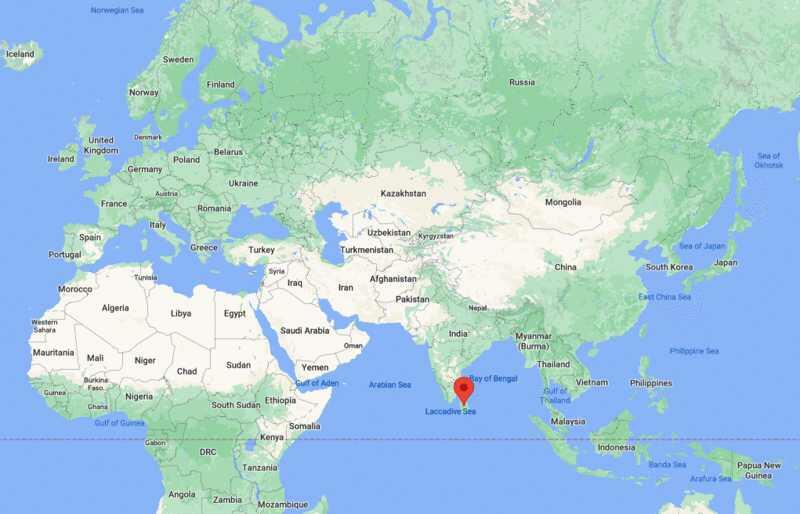
Sri Lanka is a US regional ally, and America remains the small south Asian nation’s largest export market, accounting for nearly $3 billion of the $11.7 billion of goods Sri Lanka exports annually.
But tensions are soaring over the Iran war, and especially in the wake of a US submarine having torpedoed the Iranian warship IRIS Dena just off Sri Lanka’s southern coast earlier this month – killing dozens of sailors and forcing Sri Lankan authorities into a rescue operation that recovered bodies and pulled survivors from the water.
And now, the country’s president Anura Kumara Dissanayake has revealed he previously formally rejected a request from Washington to allow two US fighter jets to land at Mattala International Airport.
According to Al Jazeera, “Speaking in parliament, Dissanayake said Colombo received separate requests on February 26 – one from Iran seeking permission for three naval vessels to make a goodwill visit, and another from the US requesting landing clearance for two fighter aircraft stationed near Djibouti to land at Mattala international airport.”
This was mere days prior to the start of Operation Epic Fury, in the immediate run-up to the US and Israeli bombardment of Iran. “With two requests before us, the decision was clear,” he said, emphasizing the move as part of national neutrality on the Iran issue.
But the president also revealed the government had rejected Iranian request for naval access just days before the war erupted.
“With two requests before us, the decision was clear,” he told parliament, while explaining Sri Lanka’s intent to stay out of the foreign war.
The US State Department has tallied that “U.S. assistance to Sri Lanka has totaled more than $2 billion since Sri Lanka’s independence in 1948.” With all of this past aid, it’s possible the Trump administration will be reassessing.
According to further background from the NY Times:
Under normal circumstances, the American request would not have been unusual. Sri Lanka and the United States have had military ties for decades, and the island nation is strategically important for U.S. goals in the Indo-Pacific region.
Sri Lanka and the United States have cooperated on supply and logistics involving military equipment in the past, said Prasad Kariyawasam, a former secretary of the foreign ministry. U.S. aircraft have used Sri Lankan airports to drop off and pick up war-related equipment several times in the past, “but that’s not if a war is going on,” Mr. Kariyawasam said.
The war stands to get more unpopular internationally, especially as global energy markets get disrupted, raising the possibility that more and more US allies could start closing their aviation hubs and air bases for American military plane landings or usage, or the same with port facilities. In Europe, Spain has already done this.
Tyler Durden
Fri, 03/20/2026 – 20:10

The Super Bowl Top Signal
The Super Bowl Top Signal
Authored by Chris Macintosh via InternationalMan.com,
You’ve likely heard about peaks in markets often coinciding with magazine covers saying the opposite.
Well, this is simply a representation of zeitgeist.
Another representation of zeitgeist is advertising at the Super Bowl. For long-time readers, you may recall our selling Bitcoin way back before it nosedived. We highlighted that at the time there were crypto ads running wild at the Super Bowl. We even had Matt Damon shilling crypto. Remember that? Fun times.
Well, you know what dominated this year’s Super Bowl? AI. It was in fact the single largest concentration of AI advertising in television history. Ain’t that something.
16 tech companies bought Super Bowl ads: OpenAI, Google, Amazon, Meta, Anthropic, Genspark, Base44, Rippling, Ramp — and more.
Tech ad spending is double what it was during the 2022 “Crypto Bowl.”
And here we are again. Just with AI.
2000: The Dot-Com Bowl. 14 internet startups bought Super Bowl ads at $2.2 million per spot. Pets.com spent $1.2 million on that ridiculous but now-famous sock puppet commercial. Ten months later it joined Elvis. The stock went from $11 to zero. Eight of the 11 startups that advertised were bankrupt or sold for cents on the dollar within a year.
2022: The Crypto Bowl. FTX, Coinbase, Crypto.com, and eToro collectively spent $54 million on Super Bowl ads. Nine months later, FTX was bankrupt and Coinbase shares fell 70% within a year. By the time the next Super Bowl rolled around, crypto had zero representation.
So maybe this time is different. Maybe all these AI-related stocks — many of which are unprofitable, just like crypto and dotcoms — defy gravity and continue powering ahead. It is possible. But I would say improbable… despite the market thinking it not only possible but assured. And that is exactly why we have our hedge against a Nasdaq fall safely secured.
When Revolutionary Tech Needs a Marketing Budget
Alphabet is looking to issue a 100-year bond.
The last time this happened was Motorola in 1997 — the last year Motorola was considered a big deal.
At the start of 1997, Motorola was a top-25 market cap and top-25 revenue corporation in America. Never again! The Motorola corporate brand in 1997 was ranked #1 in the US, ahead of Microsoft. In 1998, Nokia overtook Motorola in mobile phones, and after the iPhone it fell out of the consumer eye entirely. Today Motorola is the 232nd-largest market cap with only $11 billion in sales.
Remember when Austria issued a 100-year sovereign bond? That pretty much bottom-ticked the bond market. But wait… there’s more.
Big Tech is dropping $700 billion on AI this year. Their cash flow? Circling the drain.
Amazon’s going into debt. Google’s free cash flow is cratering 90%. And they’re paying influencers $600K each to convince you AI is worth using. Nothing screams “revolutionary technology” quite like needing half a million per creator to sell it.
Then there’s the earnings carnage…
All four giants reported earnings at once, and Wall Street had a meltdown:
Amazon: $200 billion capex (largest in history). Stock: -9%. Free cash flow: -71%.
Google: $185 billion spend (vs. $120 billion expected). Stock: -5%. Free cash flow: headed to $8 billion from $73 billion.
Meta: $135 billion (double last year).
Microsoft: -17% this year, worst in the group.
Combined 2026 spend is projected to hit $700 billion. Morgan Stanley projects Amazon will burn $17 billion in negative free cash flow. BofA says maybe $28 billion. Amazon quietly filed with the SEC about needing to raise debt to keep building. Google already did a $25 billion bond sale. Their long-term debt quadrupled last year. They’re spending everything they have, borrowing more, then spending that too.
Google, Microsoft, OpenAI, Anthropic, and Meta are paying influencers $400K–$600K each to promote AI on Instagram and YouTube. AI platforms spent $1 billion on digital ads in 2025 — up 126%. Google and Microsoft’s AI ad spending: +495% in January alone. Anthropic’s running Super Bowl ads. OpenAI’s flying creators to private events.
When was the last time truly revolutionary tech needed a billion-dollar ad campaign?
Did the iPhone need influencer deals? Did Google Search need Super Bowl ads in 1998? Did email need this? No. People just used them.
You know what does need massive paid promotions? Pharma drugs. Crypto exchanges. Online gambling. MLM schemes. Products where adoption is hype, not utility. And now, apparently, AI.
“This will eliminate your job. Also please use it. Here’s $600K to tell your followers it’s cool.”
They need humans to sell a product designed to replace humans. They need creators to promote tech that makes creators obsolete. They need influencers to build trust in a system that eliminates influencer marketing.
Here’s a question: if $700 billion per year can’t produce a product that sells itself, when exactly does this make money?
$700 billion in spending, cash flow collapsing, stocks tanking, SEC filings about raising capital — and the best growth strategy is paying TikTokers to demo features.
Either AI is about to deliver the greatest economic transformation in human history (and they need influencers to convince you this)… or we’re watching the most expensive corporate Hail Mary ever thrown.
Look, I’ve no doubt that AI has its uses. We use it for research purposes amongst other things, and I think most people are now using it. That isn’t the point. There exists a mismatch between what we’re being told and what is actually happening. There is also a massive mismatch when it comes to the valuations ascribed to the related companies and their actual profitability.
* * *
The point is simple: when hype outruns reality, investors need to step back and look at the bigger forces driving markets. We put together a free PDF report that does exactly that, breaking down the economic, political, and cultural shifts unfolding now, the risks they create for your money and freedom, and how thoughtful investors can stay one step ahead. You can get your free copy here.
Tyler Durden
Fri, 03/20/2026 – 19:45
Murphy: “If The Dollar Starts Sinking, It’s Gonna Be Fast”
Murphy: “If The Dollar Starts Sinking, It’s Gonna Be Fast”
Last night’s debate on “Deficits, War, and Markets” brought together Bob Murphy of the Mises Institute and Bard College professor Randall Wray for a clash between Austrian and MMT worldviews, moderated by the “Macro Tourist” Kevin Muir.
Exploding U.S. deficits, the Fed’s policy path, the geopolitical shock of the Iran war, what it means for stocks, a potential bond market snap to calls for another financial crisis… we covered a lot of ground and here were some highlights for those short on time:
Where are the bond vigilantes?
A bond trader himself, Muir asked Murphy what it would take to see a crisis-level spike in U.S. Treasury yields. Murphy’s core point is that the conditions for a bond market revolt have already been in place for years—and yet the revolt hasn’t come.
“If you had 15 years ago told me this is what the fiscal position is going to be [$39 trillion in debt]… I would say… there’d be this massive [yield] premium,” he said. “I am surprised at how much leeway investors are giving the US federal government.” But the fact that we’ve made it this far without emerging market-esque bond yields should not comfort USD holders.
Global demand for Treasuries may be eroding at the margin, and the dollar-based world order may unravel quicker than it was established. “There’s lots of countries… saying we need to reduce our exposure to the US dollar… they’re just trying to figure out how.,” Murphy said, particularly in reference to Russia where previous American administrations went trigger happy with sanctions and freezing of foreign dollar reserves. Actions that greatly enhance the risk premium of holding dollar-denominated assets if you’re a foreign government or even a foreign national whose country may one day be on the naughty list.
“If the dollar starts sinking, it’s gonna be fast”
— ZeroHedge Debates (@zerohedgeDebate) March 20, 2026
Even the Keynesian thinks a crash is coming…
Self-identifying as a Keynesian economist, Wray nonetheless thinks we can’t maneuver our way out of the coming crash.
Wray’s warning: the system never actually fixed the conditions that led to the last crisis — it consolidated and amplified them. “We wouldn’t have these huge institutions that are… engaged in crazy finance and setting us up for another tremendous financial crash,” he said, if instead after 2008, we’d employed something more akin to Teddy Roosevelt and disintegrated rather than bailed out the big banks.
“The banks all over the country weren’t doing any of the stuff,” Wray argued. “The biggest banks were doing that and got us into trouble.”
“We’re going to have [another crash]… it could be five years… but it’s coming. There’s no doubt at all.”
— ZeroHedge Debates (@zerohedgeDebate) March 20, 2026
Watch the full discussion below or listen on Spotify:
— zerohedge (@zerohedge) March 19, 2026
Tyler Durden
Fri, 03/20/2026 – 19:20
https://www.zerohedge.com/economics/murphy-if-dollar-starts-sinking-its-gonna-be-fast
Qatar Dethroned As ‘LNG King’ As U.S. Seizes Throne, Reshaping Future Of Gas
Qatar Dethroned As ‘LNG King’ As U.S. Seizes Throne, Reshaping Future Of Gas
Submitted by Criterion Research President, James Bevan,
The geopolitical calculus underpinning global LNG supply through the early 2030s has shifted materially. Iranian drone strikes on Qatari LNG trains, delays to key expansion projects, and the indefinite closure of the Strait of Hormuz have created a compounding threat to Qatar’s LNG position that goes well beyond a construction delay. What had been framed as a two-horse race for global LNG market share now looks considerably more one-sided. The beneficiary is clear: U.S. Gulf Coast LNG.
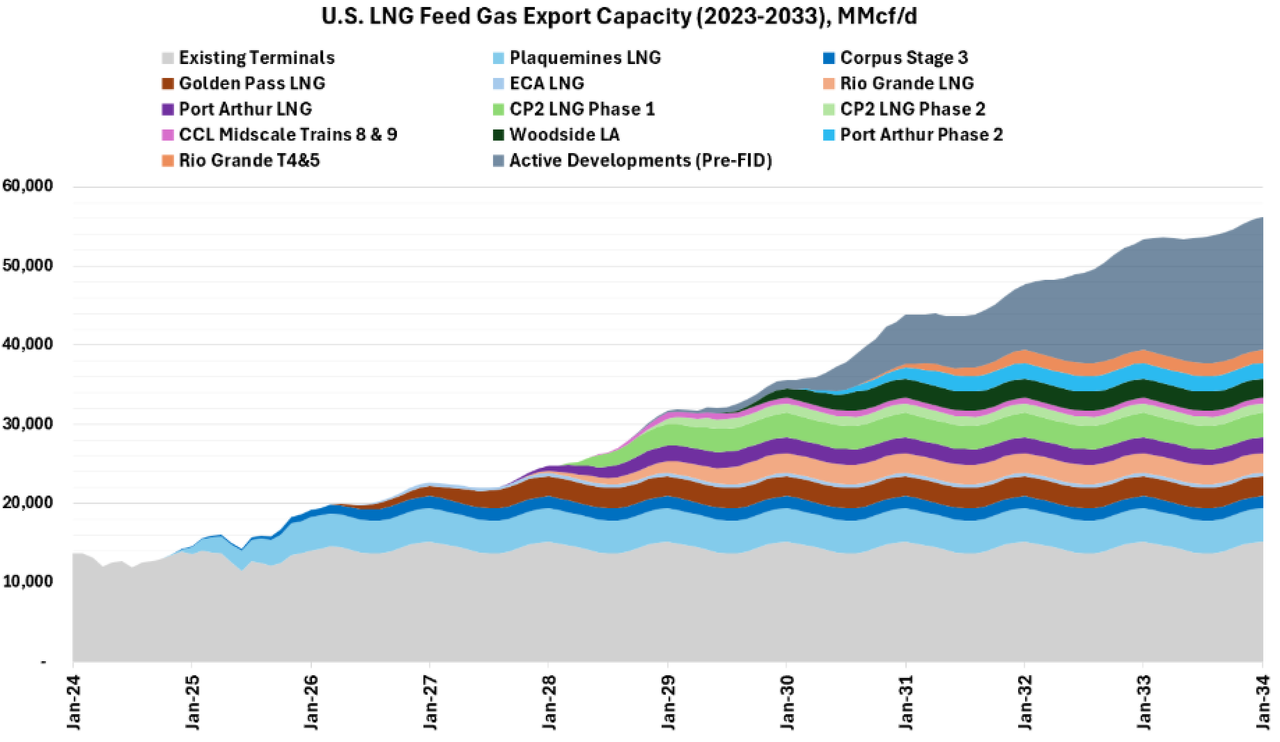
At Criterion Research, our outlook is for US LNG exports to nearly double by 2030, with further upside in the coming decade.
Qatar’s Gap Is Large and Getting Larger
While Qatar’s loss of 12.8 MTPA for 3 to 5 years due to Iranian strikes is a serious blow to Qatar’s 77 MTPA export capacity, it is not a global catastrophe on its own. What is worrying is that Iran has demonstrated the potential for further strikes, which means that even restored capacity cannot be treated as a stable floor. Even if onshore facilities are repaired and the Strait is nominally reopened, LNG tanker operators and their insurers are unlikely to resume normal transits until they have, over time, earned confidence that vessels are not exposed to strikes or mines. That confidence cannot be declared by a government. It has to be proven through sustained safety in a conflict environment with no clear resolution, a process that could take months or years, regardless of the physical state of Qatar’s terminals. Molecules that cannot move to market are effectively stranded, and the Strait of Hormuz shipping constraint is the piece that is hardest to resolve through engineering or diplomacy alone.
Beyond current Qatari volumes being impacted, Qatar’s three-phase North Field expansion program, encompassing NFE, NFS, and North Field West, was designed to lift total liquefaction capacity from 77 MTPA to 142 MTPA by 2030. Global LNG demand was counting on these volumes. All three phases now face indefinite delays, with no official revised timeline and no near-term path to resuming offshore construction. NFE’s first train had already slipped to a 3Q26 start before the suspension, and rumors say it was pushed to 2027 before strikes began.
Taken together, disruption to the existing base and delay of the full expansion program represent a potential swing of well over 100 MTPA relative to what the market had been counting on through the early 2030s. No other supply source can replace that on a compressed timeline.
The U.S. Fills the Void
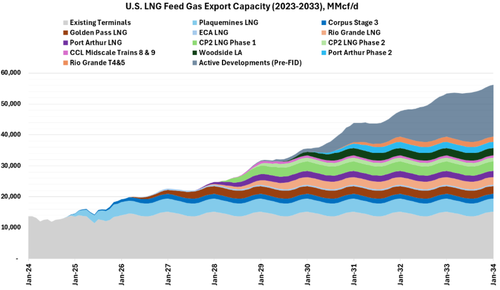
The U.S. project queue was already moving aggressively before Qatar’s situation deteriorated. According to our data at Criterion Research, Golden Pass LNG is in active commissioning, CP2 Phase 1, Port Arthur, and Rio Grande LNG are all on track for first production in 2027, following, and CP2 Phase 2 reached FID. Post-FID US projects alone are expected to reach 39 Bcf/d by 2033. While the US cannot make up for the lost Qatari volumes before 2030, there is a strong pipeline of pre-FID projects for early 2030 and beyond that may now be pushed over the edge by new customer demand replacing Qatari volumes.
The Demand Caveat
The bull case is real but not unconditional. Whether demand materializes at the volumes required to absorb the full U.S. buildout depends heavily on price, and the infrastructure required to convert price-sensitive demand into actual imports remains well behind schedule. Across South Asia and Southeast Asia, the buildout of regasification terminals and downstream gas distribution that was supposed to undergird the bullish demand case for the 2030s has been repeatedly delayed by a combination of high prices, fiscal constraints, and the improving economics of competing renewable alternatives. The regas infrastructure that is not built in the late 2020s cannot absorb volumes in the early 2030s, and that pipeline of delayed or canceled projects represents a real ceiling on how quickly emerging-market demand can respond, even if prices fall to attractive levels. Paradoxically, a supply shock of this magnitude could push prices high enough to further delay that infrastructure buildout, suppressing the very demand growth that would otherwise absorb U.S. volumes. The structural demand from Europe and Northeast Asia, anchored by long-term contracts and supply security mandates, is likely to hold regardless. But the incremental emerging-market demand that was supposed to keep the market balanced through the mid-2030s now appears considerably more uncertain than the pre-conflict consensus assumed.
The Structural Conclusion
Seldom has a supply disruption of this magnitude aligned so cleanly with a competing exporter’s buildout window. The U.S. has a well-financed project pipeline, while its most capable competitor is facing key expansion delays, operational damage, and a shipping constraint that may outlast both. LNG dominance for U.S. LNG looks increasingly certain. Whether that translates into strong project economics across the board depends on which demand pools ultimately clear, and at what price.
Tyler Durden
Fri, 03/20/2026 – 18:55
https://www.zerohedge.com/energy/qatar-dethroned-lng-king-us-seizes-throne-reshaping-future-gas
Milei’s “Miracle” Faces First Cracks As Argentina’s Unemployment Rises
Milei’s “Miracle” Faces First Cracks As Argentina’s Unemployment Rises
Argentina’s much-touted turnaround under Javier Milei may be losing momentum, with fresh labor data pointing to a weakening jobs market, according to Bloomberg.
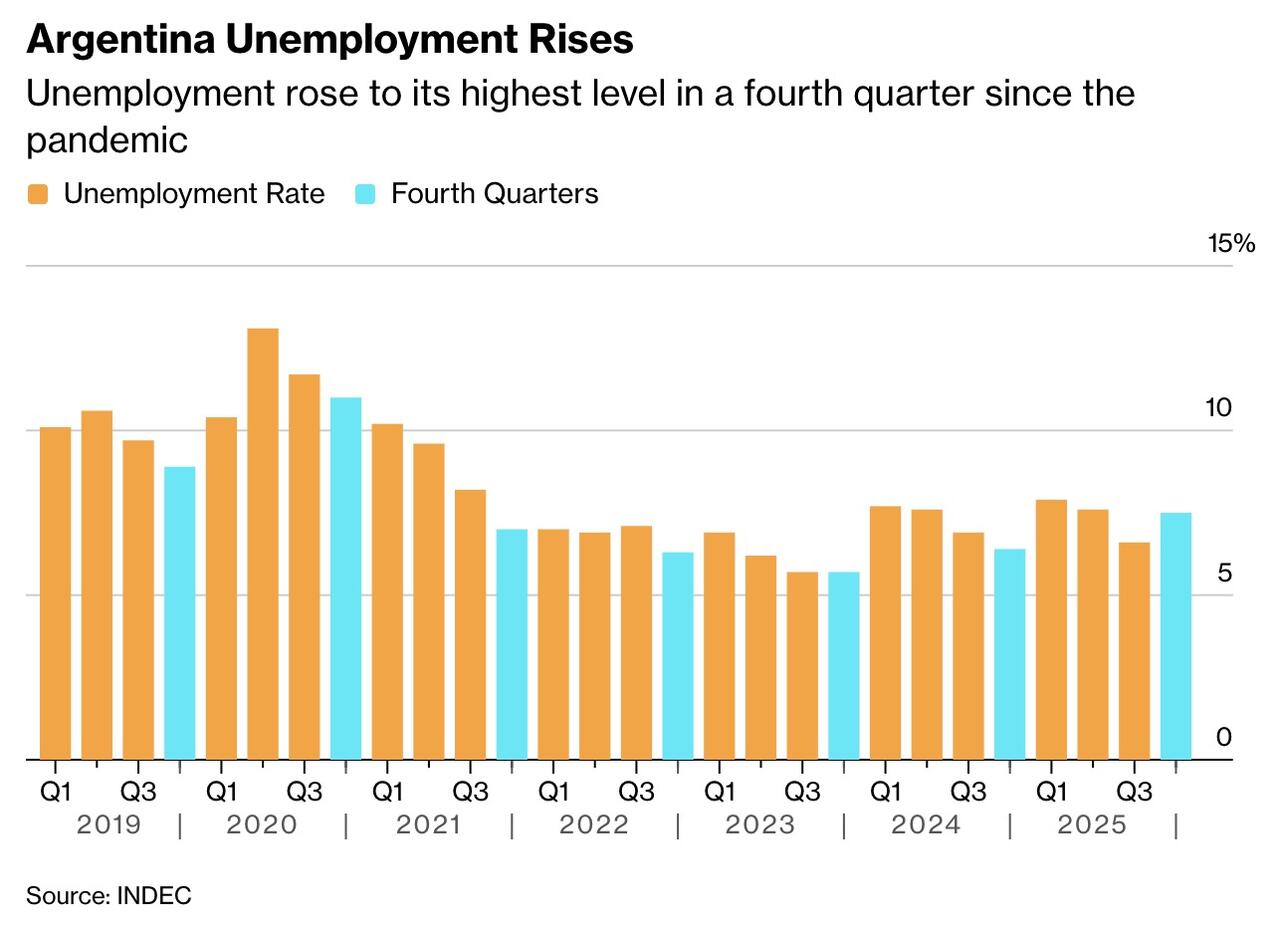
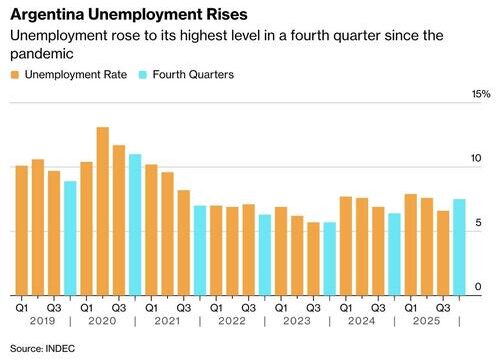
By the end of last year, unemployment had climbed to 7.5%—the highest rate for a fourth quarter since the Covid era—reflecting a deterioration in employment conditions before the government pushed through its landmark labor overhaul.
New figures show that joblessness in the formal sector increased for the first time in three quarters, while the share of workers in informal roles remained largely unchanged at roughly 43% of total employment.
Bloomberg writes that since Milei took office, Argentina’s formal private sector has shed more than 200,000 salaried positions—around 3% of its workforce.
Although the government has also eliminated thousands of public-sector jobs, the overall unemployment rate hasn’t surged as sharply as expected, partly because more people have turned to freelance or informal work to make ends meet.
In February, Milei secured a major political win when Congress approved a scaled-back version of his labor reform, designed to reduce hiring and firing costs and introduce broader flexibility into the labor market. Investors welcomed the move, but economists caution that it is unlikely to deliver immediate job growth.
With economic activity sluggish, consumer demand still weak, and labor-intensive sectors under pressure as the economy opens up, any employment recovery may take time to materialize.
Tyler Durden
Fri, 03/20/2026 – 18:30
https://www.zerohedge.com/markets/mileis-miracle-faces-first-cracks-argentinas-unemployment-rises
Fear Of The Second Wave
Fear Of The Second Wave
Authored by Jeffrey Tucker via The Epoch Times,
This time last year, it seemed like we were just about finished with the terrible inflation of the Biden years that had trimmed at least 25 percent from the purchasing power of the dollar.
The hope has been for a year that the massive increases in money printing over the COVID years were finally done. As some put it, the snake had finally digested the golf ball.
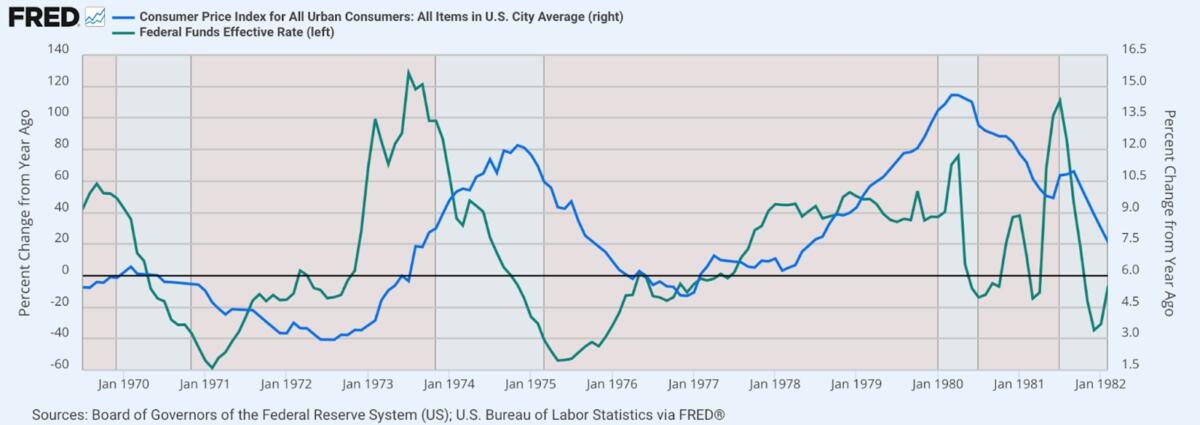
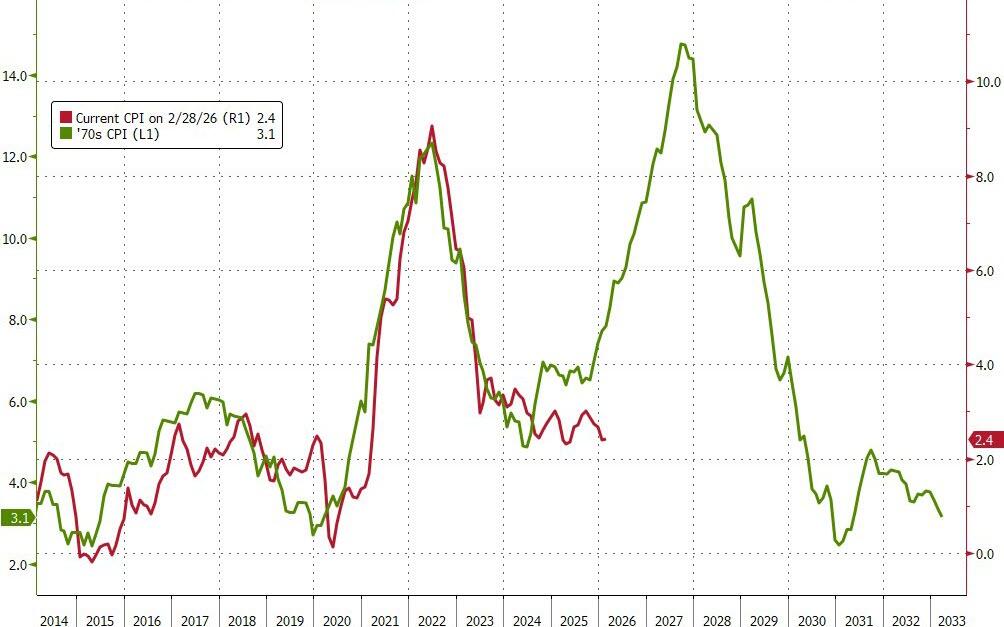
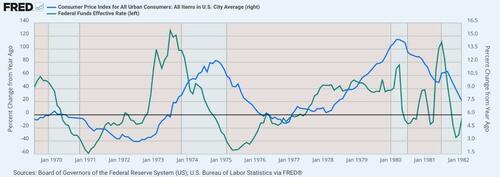
All along we’ve worried that the experience of the 1970s would repeat: three clean waves.
After each, monetary authorities presumed that the problem was over and that life could go on as normal.
Each time, inflation fired back up again, until it culminated in an inflation of the late seventies that changed life in America fundamentally.
After that, two household incomes were more common than not, if only to maintain living standards.
We could only hope that we would not repeat that experience. Indeed, history does not repeat but it does rhyme. Authorities tend to relax in vigilance once a crisis seems to have abated.
The 2021–2024 inflation was devastating for real wages and salaries. Official data reports that they have been mostly flat and then somewhat rising. Maybe, but I personally cannot think of anyone who earned raises that have kept up with inflation over four years. That’s anecdotal, to be sure, but you are welcome to check my intuition against your experience.
We don’t seem to see moves today from the Federal Reserve that would suggest a concerted effort in the direction of easing. Money supply has not taken off and the Fed is holding interest rates rather tight for fear of igniting inflation.
It appears that the existing pricing pressures stem not from monetary sources but supply shocks. Of all the changes in goods prices that could impose the largest shock to the general economy worldwide, oil ranks near the top. Is that happening? Yes. Not only that: price trends were not heading the right way even before the war shock.
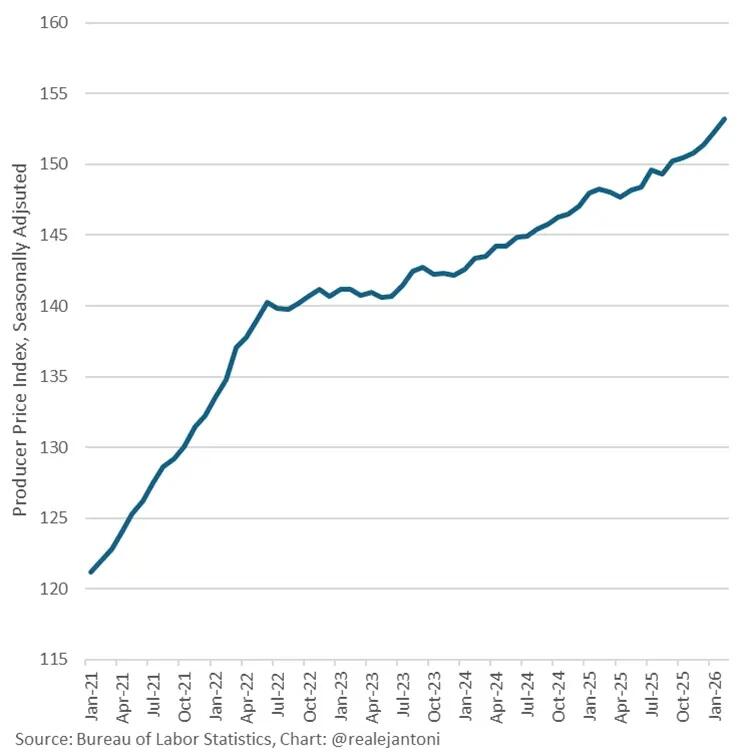
There is really bad news from the Bureau of Labor Statistics. It concerns the Producer Price Index, which registers wholesale prices in a range of goods and services. It is generally more reliable than the index for consumer prices because prices are more uniform and accessible. What the PPI does today shows up in consumer prices in a matter of months, depending.
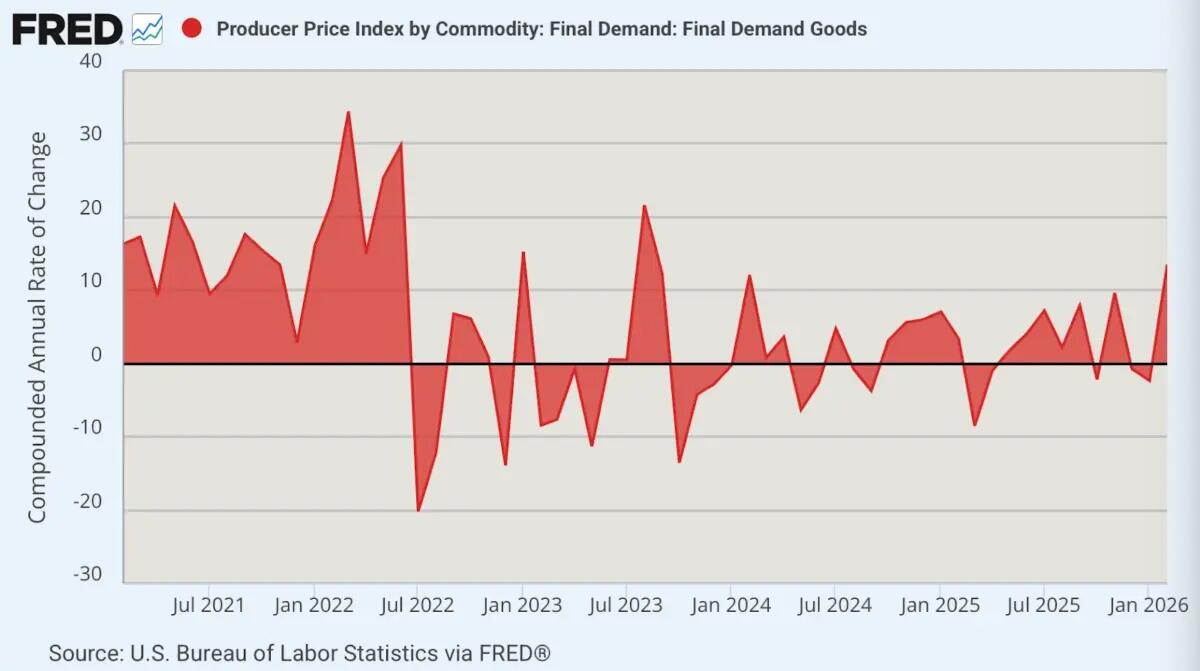
The latest PPI print covering the month of February is sobering. The index for final demand rose 3.4 percent for the 12 months ended in February, the largest 12-month advance since increasing 3.4 percent in February 2025. That is double the forecasted increase. The most eye-popping number concerns prices for final demand goods. They increased 1.1 percent for the month.
Annualize the number and you get an incredible 13.6 percent, the hottest in more than 3 years. This is double-digit, which itself gets us into a strange psychological place. It kicks off panic buying and hoarding.
A longer-term look, again from February before the oil price spikes, shows the worst annual rate of change in goods prices in two years. This will feed into consumer prices through the summer, even if the crisis ends now.
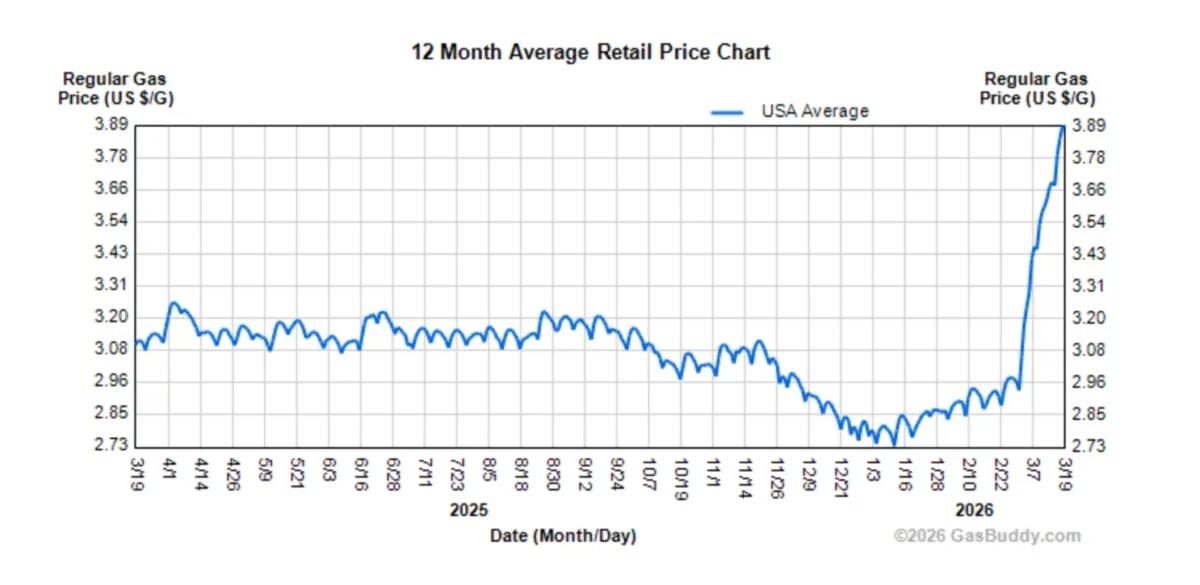
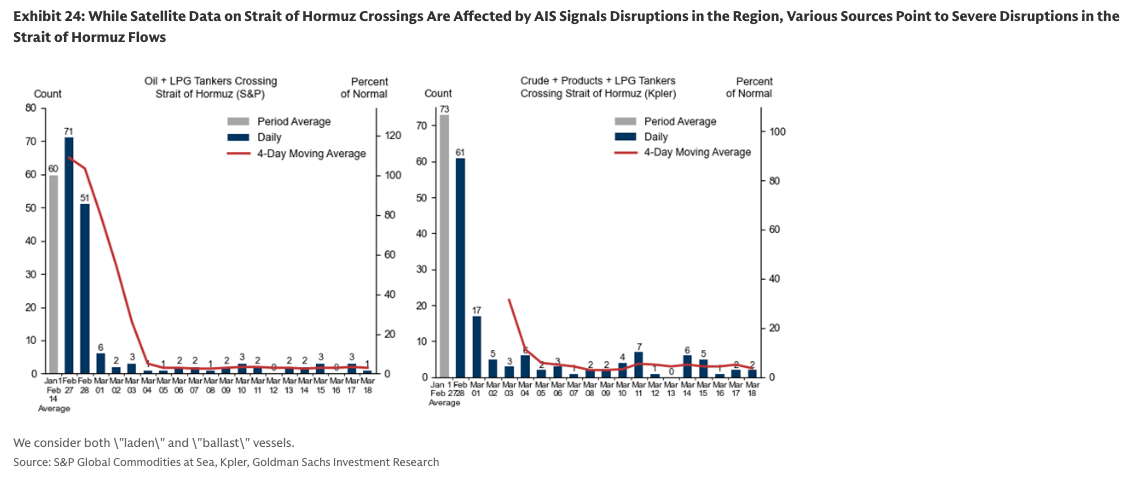
That’s a number roughly equivalent to 1979-level inflation. So far it is only hitting wholesale prices but those are passed on to the retail level. And keep in mind that these February numbers were assembled before the Iran war throttled shipping traffic in the Strait of Hormuz, causing a huge price spike in oil that quickly folded into a gas price increase that you likely know all too well.
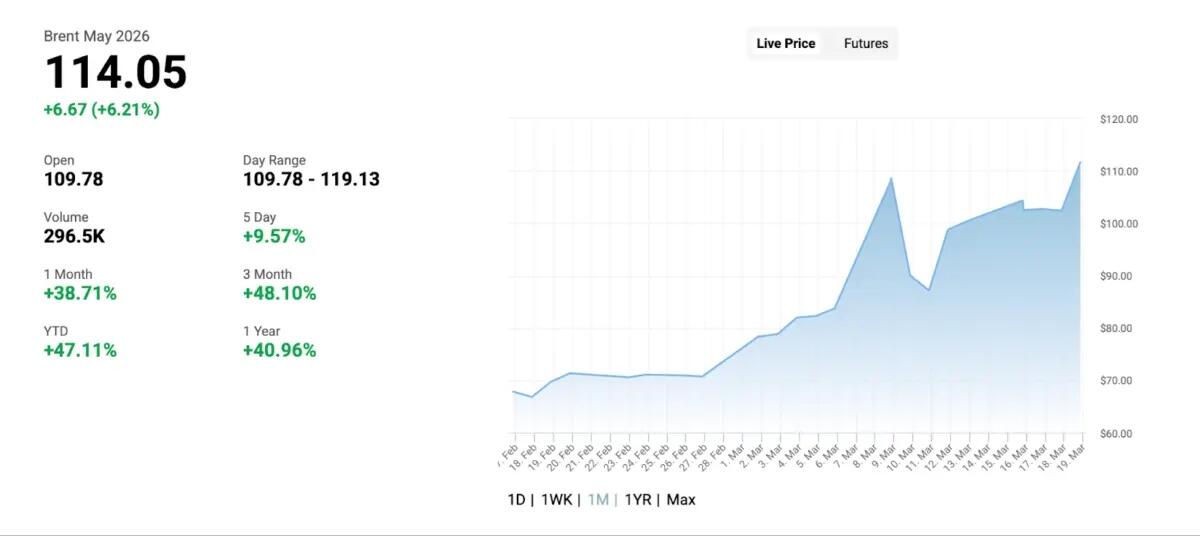
The oil price spike has profoundly affected people the world over. We are looking at nearly a doubling of the price since the war began. And the problem is getting worse, not better.
Gasoline is rising now at a pace not seen in more than 30 years. It also seems to be accelerating. My back of the envelope calculation over the last four years suggests it is rising 2 cents per hour.
This isn’t just about the ways this price affects your driving. It hits every form of transportation from trains to planes to trucks. Tickets are already soaring in price but this also bleeds into goods prices at the stores, especially food. Anything that travels to retail outlets by truck is being hit hard now, as you already see in the rising cost of coffee.
None of these are good signs.
Yes, it could all flip the other direction if the war ends today but it will be months before prices settle down again even under the best of circumstances.
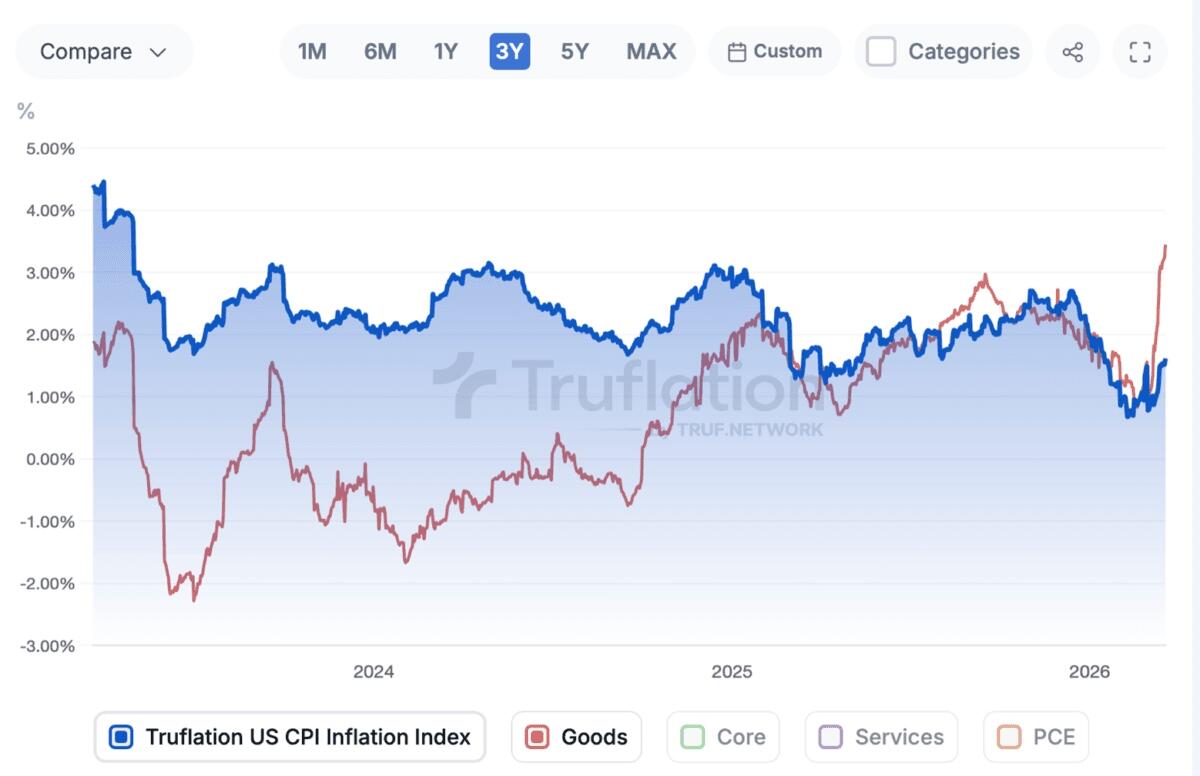
Now let’s turn to real-time numbers as calculated by Truflation. It’s become very apparent that the good trends have already reversed in the other direction. From a low of 0.6 percent, we are now running 1.51 percent. More telling is the real-time number on good inflation. That is running 3.4 percent, the highest in 3 years.
At this point, there is no avoiding the results of the inflation that already exists.
How likely is a full blown energy crisis of the sort we saw in the 1970s? As we should all realize, that crisis was not only one of prices. It was the attempt to keep the price low with forced caps that caused the widespread shortages and gas lines. There is no question that this would happen again should the Trump administration pursue price controls on gasoline.
In 1971, Richard Nixon imposed wage and price controls. He did not want to do that. He never imagined conditions would ever arrive in which he would push that button. But for him, it was a necessary expedient, the least bad of all possible choices. Moreover, he knew that it would not work but believed that the public needed to see him doing something to show that he cared and was acting on the problem. Trump might be drawn into something similar.
One hopes that the Trump administration would not do that. But one cannot know for sure, sadly. It is the nature of any government to panic with falling poll numbers, parabolically rising energy prices, and a profound sense of a loss of control. All these factors are happening right now.
I never watch mainstream media but a couple of days ago, I caught a broadcast on television that had nonstop messaging about gas prices. This is for obvious reasons related to politics but there is also something real going on here. For all the tax and regulatory cuts in the second Trump administration, the inflation pressures threaten to wipe out any and all income gains. Indeed, this inflation puts the entire second term at risk in ways the White House surely understands by now.
Again, the cause of the price increases are a combination of factors but this one, unlike the last one, seems to be pushed by a supply shock rather than monetary factors. In a practical sense, for businesses and consumers, the impact is the same. It means that money buys less and that balance sheets are put under extreme pressure.
I’m sorry for the bad news and I try to avoid apocalypticism. Wishes aside, and regardless of one’s views of this Iran war, the reality is before us and it is undeniable.
We could be seeing a second wave of effective inflation kicking off that will create some serious economic disruption in all directions.
Tyler Durden
Fri, 03/20/2026 – 18:05
EV Demand Surges Across Asia After Energy Shock Sends Consumers Into Panic Mode
EV Demand Surges Across Asia After Energy Shock Sends Consumers Into Panic Mode
One of the biggest takeaways in global energy markets this week is the growing fragmentation. Brent crude in Asia has surged to over $150 a barrel, with demand destruction already emerging, and China and India facing the greatest pressure given their heavy reliance on Gulf crude. Meanwhile, the Trump administration has moved to release barrels from the Strategic Petroleum Reserve to help cap WTI prices below triple digits, with US crude currently trading around $94 a barrel.
And now we have three oil markets: Asia (Oman oil at $167), Brent ($113) and US (WTI $97) https://t.co/uHmMD24E9G pic.twitter.com/41a4BhKOIA
— zerohedge (@zerohedge) March 19, 2026
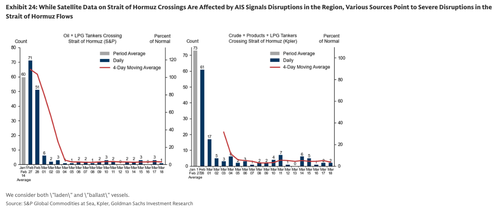
The Iran-driven energy shock is hitting Asia the hardest so far because much of its crude and LNG is imported and shipped through the Strait of Hormuz.
Current status of the Hormuz chokepoint…
“The countries that are exposed to that supply disruption are not so much in Europe, or in the Americas, they’re actually really in the Asia region,” Michael Williamson of the United Nations Economic and Social Commission for Asia and the Pacific told AP News.
The energy shock across Asia has had cascading effects on economic activity throughout the region. One behavioral shift among those who can afford to move away from petrol-powered vehicles has been a surge in activity at Chinese EV maker BYD Motors.
Bloomberg reports that BYD dealerships in the Philippines have already logged a full month’s worth of orders in just two weeks as consumers react to the energy price shock and the cost of filling up gas tanks.
Vietnam’s VinFast automotive company has seen 4x showroom traffic and is selling about 80 EVs per week, about double 2025 levels, following the surge in energy prices. Across Thailand, New Zealand, and Southeast Asia, dealers report sales increases of 20% or more and even inventory shortages.
What’s key here is that a rapid surge in gasoline and diesel prices across Asia has accelerated EV adoption in recent weeks, and if the crisis persists, adoption rates are only set to increase in the weeks and months ahead.
“Higher oil prices always help the transition to electric vehicles,” said Albert Park, chief economist of the Asian Development Bank. “It creates economic incentives to accelerate the green transition.”
Bloomberg Intelligence analyst Joanna Chen noted that one headwind for the EV market has always been “affordability and charging.” She added, “Outside of China, the upfront price of EVs is still generally more expensive than gasoline cars.”
The energy price shock is a welcome sign for the auto industry around the world, which made a terrible bet on EVs over the last year, as increased demand can help offload inventory into fearful consumers who have been forewarned about what may be the largest energy shock to hit the modern economy.
Tyler Durden
Fri, 03/20/2026 – 17:40

What 122 Universal Basic Income Experiments Actually Show
What 122 Universal Basic Income Experiments Actually Show
Authroed by Vance Ginn via the Daily Economy,
Artificial intelligence has become the latest excuse for reviving one of the oldest bad ideas in economic policy: a universal basic income. Recent pieces in Newsweek, the LSE Business Review, and Fortune have all helped push the idea that AI may soon wipe out so many jobs that Washington will need to send everyone a check.
That makes for a catchy headline. It also makes for terrible economics.
The right question is not whether AI will disrupt work. Of course it will. The right question is this: after more than 100 local guaranteed-income experiments, what have we actually learned?
The answer is much less flattering to UBI than its promoters would like.
What 122 UBI-Style Pilots Show
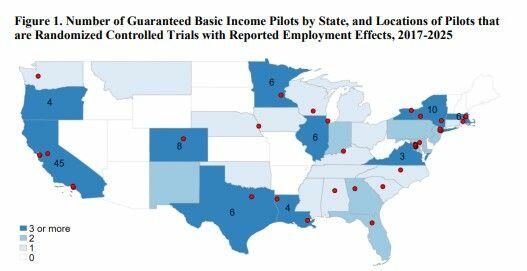
A new AEI working paper by Kevin Corinth and Hannah Mayhew gives the best recent overview of the evidence. Per their study, there were 122 guaranteed basic income pilots across 33 states and the District of Columbia between 2017 and 2025. Those pilots allocated about $481.4 million in transfers to 40,921 recipients, with 61,664 total participants including control groups. The average recipient got about $11,765, the average pilot lasted 18.4 months, and the average monthly payment was $616.
That sounds like a mountain of evidence. It is not.
Of those 122 pilots, only 52 had published outcomes. Only 35 used randomized designs. Only 30 reported employment outcomes. So the case for UBI is not being built on some giant pile of clear, clean evidence. It is being built on a much smaller stack of studies, many of them weak, limited, or badly timed.
And here is the kicker. Among the 30 randomized pilots with published employment results, the average effect was a 0.8 percentage-point increase in employment. UBI fans will rush to wave that around. They should slow down.
AEI shows that the bigger and more credible studies tell a very different story. Among the four pilots with treatment groups of at least 500 participants, which together account for 55 percent of all treatment-group participants, the mean effect on employment was minus 3.2 percentage points. AEI also estimates a mean income elasticity of -0.18, which is consistent with standard labor-supply economics.
In plain English, when people receive more unearned income, work tends to fall at the margin. Shocking, I know. Economics still works.
Credit: American Enterprise Institute
Why the Evidence Is Weaker Than the Hype
The AEI paper is useful not just for what it finds, but for how bluntly it describes the weaknesses in the evidence.
The average treatment group among those 30 studies was just 359 people, and the median was only 151. That is not exactly ironclad evidence for redesigning the American welfare state. Among the 26 pilots for which attrition could be measured, the average attrition rate was 37 percent. That is a giant warning sign. If enough people drop out, the reported results can become badly distorted.
The studies also varied widely in payment size, duration, sample composition, and even how outcomes were measured. The mean annualized payment was $7,177, equal to an average income boost of about 39.5 percent relative to baseline household income in the studies. Some pilots relied heavily on self-reported survey data. Some were conducted during or right after the COVID period — when labor markets, safety-net programs, and personal decisions were anything but normal.
AEI’s conclusion is appropriately cautious: these findings may not generalize to a permanent, universal, nationwide UBI under current or future conditions. That alone should cool off a lot of the AI-fueled policy hysteria.
AI Will Displace Jobs. It Will Also Create Them
None of this means AI will be painless. Some jobs will shrink. Some tasks will disappear. Some workers will need to retrain, relocate, or rethink their careers. That is what happens when productivity rises and technology changes how goods and services are produced. It happened with mechanization, with computers, and with the internet. It will happen with AI.
But displacement is not the same thing as permanent mass unemployment. That leap is where the UBI argument falls apart. Economies are not fixed piles of jobs. They are dynamic systems of discovery, adaptation, and exchange. When costs fall and productivity rises, resources move. Businesses reorganize. Consumer demand changes. New occupations emerge. Old ones evolve. Some disappear. That churn is real, but so is the adaptation.
The answer to technological change is not to pay people for economic resignation. The answer is to make adaptation easier.
UBI Fails the Economics Test
There is a reason Ryan Bourne at Cato has argued that UBI is not the answer if AI comes for your job. It confuses a transition problem with a permanent income problem. Worse, it assumes that writing checks can substitute for the incentives, signals, and institutional conditions that actually create opportunity.
UBI also crashes into the budget constraint. As Max Gulker at The Daily Economy has noted, UBI is often sold through small pilots and vague moral language, but the national arithmetic is ugly. And as Robert Wright in another AIER piece points out, “universal” quickly means sending money to many people who are not poor while piling enormous costs onto taxpayers. (Bear in mind, the national debt is already rapidly approaching $40 trillion.)
That is before getting to the public-choice problem. In theory, UBI supporters sometimes imagine replacing the welfare state with one simple cash transfer. In reality, government programs rarely disappear. Bureaucracies defend themselves. Interest groups protect carveouts. Politicians promise more, not less. So a UBI would likely be stacked on top of much of the current welfare state, not substituted for it. That is not reform. That is fiscal delusion with better branding.
A Better Answer: Remove Barriers to Work
If AI means more labor-market churn, then policy should focus on mobility, flexibility, and self-sufficiency. That means less occupational licensing, lower taxes, lighter regulation, fewer benefit cliffs, less wasteful spending, and more room for entrepreneurship and job creation. The government should stop making it harder for people to pivot.
It also means reforming welfare the right way. My proposal for empowerment accounts is not a UBI. It would be targeted to people already eligible for welfare, not universal. It would include a work requirement for work-capable adults, not detach income from effort. And it would consolidate fragmented programs into a more flexible account that families control directly, reducing bureaucracy and lowering spending over time as more recipients move toward self-sufficiency.
That puts it much closer to the classical liberal insight behind replacing bureaucratic control with direct support, while avoiding the fatal error of turning the entire country into a permanent transfer state. As Art Carden reminds us at The Daily Economy, there is a long intellectual history behind cash-based assistance. But today’s UBI politics are not really about shrinking the state. They are mostly about expanding it because elites fear AI.
Don’t Make Bad Policy Out of Fear
The UBI revival tells us less about AI than it does about politics. New technology arrives, uncertainty rises, and too many policymakers reach for the federal checkbook as if it were a magic wand. It is not.
After 122 local experiments, the case for UBI is still weak. The best evidence does not show a jobs renaissance. The larger studies show employment declines. The broader evidence base is riddled with small sample sizes, high attrition, and limited generalizability. That is a flimsy foundation for a permanent national entitlement.
AI will change work. It will not repeal economics. The best response is not fear-driven universal dependency. It is a freer economy with stronger incentives to work, save, invest, adapt, and prosper.
Tyler Durden
Fri, 03/20/2026 – 17:15
https://www.zerohedge.com/political/what-122-universal-basic-income-experiments-actually-show

Legendary Midwest Fast-Food Icon Spirals Into Bankruptcy
Legendary Midwest Fast-Food Icon Spirals Into Bankruptcy
Another fast-food institution is fighting for its life as Byron’s Kitchen files for Chapter 11 bankruptcy protection amid a brutal wave of restaurant closures and restructurings sweeping the food industry, according to The Street.
The Chicago-based chain, a beloved local staple since 1975 and now marking over 50 years of slinging dogs, officially sought bankruptcy relief on March 16 in the Northern District of Illinois. Owner Mike Payne and the team behind Byron’s Kitchen Incorporated are using the filing to restructure crushing financial obligations while keeping the grills firing at their two remaining locations.
“As of 2025, the company maintains active operations at two primary locations situated at 1701 W. Lawrence Ave and 1017 W. Irving Park Rd,” RK Consulting reported on X.
The chain even recently poured money into upgrades like new indoor heated seating, a clear sign they’re betting on survival rather than surrender.
“Byron’s goes a step further than [the] classic Chicago style hot dog where you have mustard, relish, tomato, onion, pickle, hot peppers, and celery salt,” Payne said of Byron’s. “We take it a few steps further with lettuce, cucumber, and green peppers to the classic ingredients of the Chicago-style hot dog, and that’s how we came up with the Byron’s hot dog. We call it a meal on a bun.”
The filing comes against a grim backdrop of big-name fast-food chains slashing locations left and right this year.
Wendy’s is gearing up to shutter 298–358 U.S. locations in the first half of the year alone after sales slipped, while Pizza Hut plans to close around 250 underperformers. Further more, Papa John’s is targeting roughly 200 locations this year as part of a broader cull.
“Restaurants that exist today may not exist in five years. They’ll be off the map,” bankruptcy attorney Daniel Gielchinsky told Fox 4. Additionally, consumers will “see a lot of restaurants with a decreased footprint. Small restaurants and mom-and-pop restaurants are going under too.”
* * * Click link, buy knife, save dog…
Tyler Durden
Fri, 03/20/2026 – 16:50
https://www.zerohedge.com/economics/legendary-chicago-fast-food-icon-spirals-bankruptcy