Category: News
“Going To Cripple Our Economy”: Small Businesses Sound Alarm Over Record Diesel Price Spike
“Going To Cripple Our Economy”: Small Businesses Sound Alarm Over Record Diesel Price Spike
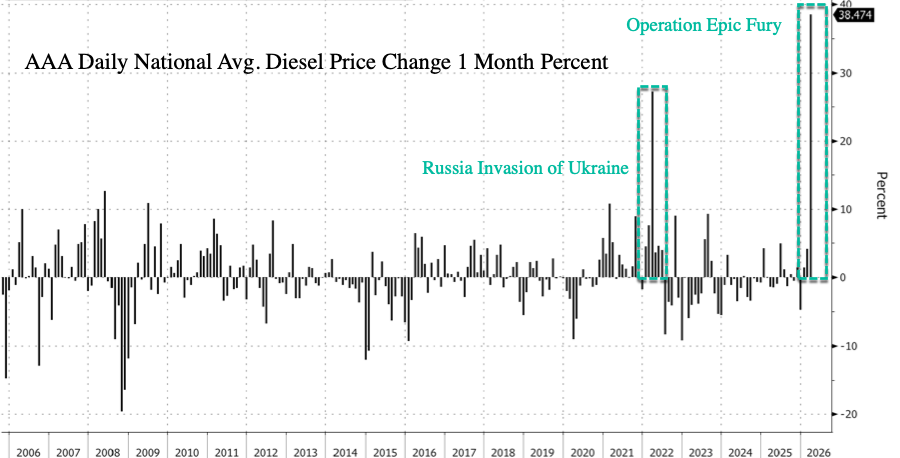
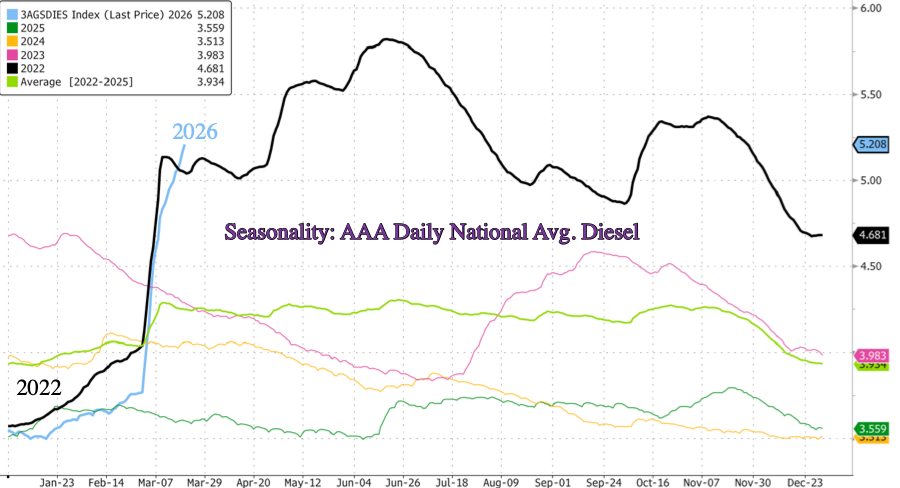
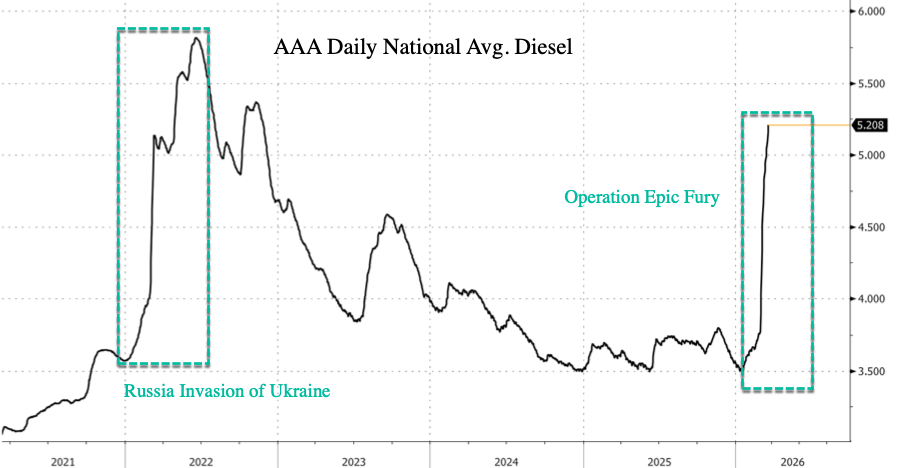
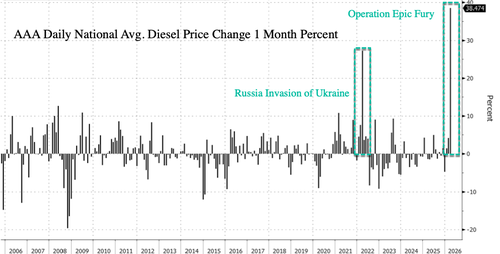
The latest AAA fuel data from across America shows that the national average diesel price at the pump has jumped nearly 40% this month, surpassing the 2022 fuel spike that followed Russia’s invasion of Ukraine.
Surging diesel prices are already generating a shock across trucking, rail, shipping, farm equipment, construction machinery, generators, and much of industrial logistics, given that the fuel powers the core of the economy.
Seasonality: AAA Daily National Avg. Diesel 2022 vs. 2026
Companies now face three difficult choices if they did not lock in fuel prices before the spike: absorb the impact and accept margin compression, add surcharges, or raise prices.
Last week, Rapidan Energy’s Director of Refined Products, Linda Giesecke, told us that, “unlike 2022, the current tightness reflects physical supply disruptions rather than policy risk and trade reshuffling.”
Giesecke warned that if the fuel spike proves prolonged, global economic growth could suffer because of diesel’s close link to industrial production and freight activity.
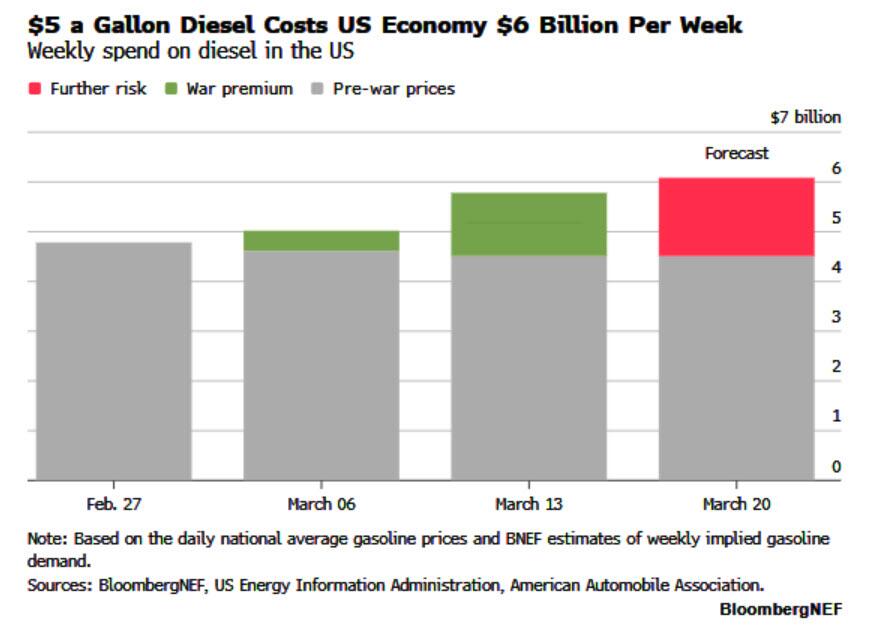
BloombergNEF forecast that $5-per-gallon diesel could inflict a weekly $6 billion or more hit on the US economy because these surging fuel costs hurt truckers, construction firms, and farmers the hardest. With prices at $5.2 as of Friday, that weekly hit is set to rise next week.
Readers are already aware of the dire consequences of spiking diesel prices, as we’ve laid out in recent weeks (see here & here).
Adding more color to the fuel that underpins nearly every stage of production and transport is a Bloomberg report warning that small businesses are sounding the alarm over surging fuel costs.
Here’s one example of a small business being financially crushed by surging fuel costs:
Roger Conner sells firewood for a living, but he might know just as much about another energy source: diesel. The fuel powers every step of the supply chain for his company, RC Conner Enterprises: the megatrucks that carry the logs from suppliers to his facility in Exeter, New Hampshire; the machines that offload and process those logs into kiln-dried residential and restaurant-grade firewood; and the trucks that deliver the finished bundles and cords to customers across New England. In a normal year, Conner spends roughly $6,800 a month on diesel. Now it’s about $11,000. To absorb some of the cost, he’s added a 5% fuel surcharge; when customers saw that, several walked away.
If diesel keeps rising, “we’re going to have to keep going up on our pricing, but we probably won’t have any sales,” says Conner, 50. “This is going to cripple our economy. I don’t think people think about how much the economy rides on diesel fuel.”
Across the trucking industry, fuel costs are the second-largest expense after driver pay for carriers, according to Bob Costello, the American Trucking Associations’ chief economist. He said that even in non-crisis periods, carriers carefully manage fuel consumption because small changes in diesel costs can erode profit margins.
Surging fuel costs are already pushing up freight rates (e.g., barge transport up 27%) across the economy, leading to fuel surcharges from carriers such as UPS, FedEx, and USPS.
Joe Brusuelas, chief economist at tax consulting firm RSM US, told the outlet that a 10% rise in diesel could lift the CPI by .1%, potentially adding .4%, given the nearly 40% spike in diesel prices this month alone.
The Trump administration is doing a delicate balancing act while attempting to neuter IRGC forces while ensuring domestic fuel prices do not spike out of control. The administration has pulled two of what JPMorgan analysts say are six levers to combat triple-digit WTI prices; those two levers pulled so far include an SPR release and a waiver of the Jones Act to ensure that crude flows from emergency stockpiles move more quickly from port to port.
On Friday, President Trump hinted at “winding down” the Iran war, as CENTCOM on Saturday morning announced its biggest move so far to free up the Hormuz chokepoint by degrading IRGC forces with air-delivered munitions. The administration’s current goal is to ensure Hormuz reopens to avert what the IEA head warned last week could be the world’s largest energy shock on record.
Tyler Durden
Sat, 03/21/2026 – 22:45

The Oscars Died Last Weekend…Did Anyone Even Notice?
The Oscars Died Last Weekend…Did Anyone Even Notice?
Submitted by QTR’s Fringe Finance
“Oh, the Oscars was yesterday,” my friend said to me while walking through town. She noticed that a nearby bar had the TV tuned to a replay of the ceremony.
What surprised me was who said it. This is a person who is deeply, spiritually committed to things like what movies are in theaters and new fictional television shows. She loves the arts. She listens to jazz. She goes to see Broadway plays. She watches every prestige movie she can and regularly comments about what media has won what award. She follows celebrity gossip with the focus of a Vatican archivist. Her interests sit precisely at the intersection of everything the Oscars supposedly celebrates and is entrenched in.
And yet she missed the award show entirely.
That, in a nutshell, is the problem. Over the last several years, the Oscars have quietly drifted from being the cultural event, the night when the entire entertainment world stopped to watch, into something closer to an industry banquet that occasionally spills onto television. The ceremony still arrives with the same self-importance it had in the 1990s, but the culture around it has moved on. What used to feel like a shared national moment now feels more like political rally fused with fashion show and a desperate attempt to take 120 second acceptance speeches to prove one’s IQ is not in double digits.
Part of the issue is that the movies the Academy rewards are increasingly invisible to the people watching at home. The ceremony still talks as if the audience has seen every nominee, debated every performance, and formed passionate opinions about the cinematography categories. In reality, most viewers have maybe heard of one of the films, vaguely recognize a second, and accidentally streamed a third while half-watching it on their phone during laundry. When the biggest award of the year goes to a movie the average viewer hasn’t encountered in any meaningful way, the victory lap feels oddly private, like a group of insiders congratulating each other for something the rest of the room didn’t witness.
The show itself doesn’t help. The broadcast has developed an identity crisis in formal wear. Every year producers seem to wrestle with the same question: is the Oscars ceremony supposed to celebrate movies, chase television ratings, or gently lecture the audience about the importance of humanitarian issues? The result is a three-hour spectacle that manages to feel both desperate for attention and slightly resentful that anyone expects it to be entertaining. There are bits that go on too long, music that nobody seems to have asked for, and awkward attempts to manufacture viral moments that land with the energy of a corporate retreat icebreaker.
🔥 50% OFF FOR LIFE: Using this coupon entitles you to 50% off an annual subscription to Fringe Finance for life: Get 50% off forever
Meanwhile, the Oscars no longer function as the center of the film universe the way they once did. For decades the ceremony acted as a kind of cultural referee, the place where the industry gathered to declare what counted as the year’s great movie. That authority has eroded. Today the internet hosts a thousand parallel award ceremonies every day. Critics release their own rankings. Fans debate endlessly on movie apps. TikTok spins up new waves of film discourse every afternoon. Entire YouTube channels are dedicated to explaining why the Academy got it wrong in 1997, 2013, or last year. By the time the envelopes are opened on Oscar night, the real arguments about movies have already happened somewhere else.
What’s rushed in to fill the vacuum is something else: a stage increasingly used for political signaling. Acceptance speeches drift into activist manifestos. Presenters pause the show to deliver moral instruction. Carefully rehearsed moments of “importance” are inserted between categories as if the ceremony itself must justify its existence by proving it stands for something larger than movies. No to war! He’s so brave!
Whether one agrees with the causes or not, the effect is unmistakable. The Oscars used to sell escapism and glamour; now it often feels like a televised faculty meeting with better lighting.
And finally, there’s the simple fact that movies themselves no longer arrive in one shared cultural moment. There was a time when a handful of major releases dominated theaters and almost everyone saw them. People argued about the same performances, quoted the same lines, and had a clear sense of which films defined the year. Now the experience is fractured. Some nominees appear briefly in a few cities before migrating to streaming. Others debut quietly on platforms where they compete with thousands of other titles and an algorithm that would much rather steer you toward a true-crime documentary.
More and more, I find myself noticing how many awards are floating around out there, particularly in worlds that feel increasingly detached from the everyday concerns of the people supposedly watching. Whether it’s Klaus Schwab handing out “Global Citizen” trophies or industry groups inventing new honors for one another, there’s a growing sense of people in rarefied circles applauding themselves in increasingly elaborate ways. The more ceremonial the applause becomes, the harder it is to ignore the gap between the spectacle on stage and the problems occupying the average family at home. When the people giving the awards and the people receiving them all inhabit the same insulated orbit, the whole thing starts to feel less like recognition and more like a closed loop of mutual admiration.
The ceremony still treats itself like a cultural summit, when increasingly it looks like a room full of insiders congratulating one another while the broader audience wanders off to do something else.
The Oscars still behave as if they’re crowning the movie everyone just saw, but like other circle jerks, increasingly the attendees are the only ones who have seen them. More and more, the audience is like my friend, walking past a bar with the ceremony replaying on television, glancing up at the screen for a second, and saying with mild surprise, “Oh right. That was yesterday.”
Now read:
Three Microcap Stocks I’m Watching Very Closely Right Now
The Private Credit Crisis Is Spreading
Why I Have Doubts About The “Next Global Financial Crisis”
Jerome Powell’s Scorched Earth Moment?
The Inevitability of Self-Driving Cars
Fed Should Hold Rates Steady In March
QTR’s Disclaimer: Please read my full legal disclaimer on my About page here. This post represents my opinions only. In addition, please understand I am an idiot and often get things wrong and lose money. I may own or transact in any names mentioned in this piece at any time without warning. Contributor posts and aggregated posts have been hand selected by me, have not been fact checked and are the opinions of their authors. They are either submitted to QTR by their author, reprinted under a Creative Commons license with my best effort to uphold what the license asks, or with the permission of the author.
This is not a recommendation to buy or sell any stocks or securities, just my opinions. I often lose money on positions I trade/invest in. I may add any name mentioned in this article and sell any name mentioned in this piece at any time, without further warning. None of this is a solicitation to buy or sell securities. I may or may not own names I write about and are watching. Sometimes I’m bullish without owning things, sometimes I’m bearish and do own things. Just assume my positions could be exactly the opposite of what you think they are just in case. If I’m long I could quickly be short and vice versa. I won’t update my positions. All positions can change immediately as soon as I publish this, with or without notice and at any point I can be long, short or neutral on any position. You are on your own. Do not make decisions based on my blog. I exist on the fringe. If you see numbers and calculations of any sort, assume they are wrong and double check them. I failed Algebra in 8th grade and topped off my high school math accolades by getting a D- in remedial Calculus my senior year, before becoming an English major in college so I could bullshit my way through things easier.
The publisher does not guarantee the accuracy or completeness of the information provided in this page. These are not the opinions of any of my employers, partners, or associates. I did my best to be honest about my disclosures but can’t guarantee I am right; I write these posts after a couple beers sometimes. I edit after my posts are published because I’m impatient and lazy, so if you see a typo, check back in a half hour. Also, I just straight up get shit wrong a lot. I mention it twice because it’s that important.
Tyler Durden
Sat, 03/21/2026 – 22:10
https://www.zerohedge.com/markets/oscars-died-last-weekenddid-anyone-even-notice
New York City Is Spending $81,000 Per Year On Each Homeless Person
New York City Is Spending $81,000 Per Year On Each Homeless Person
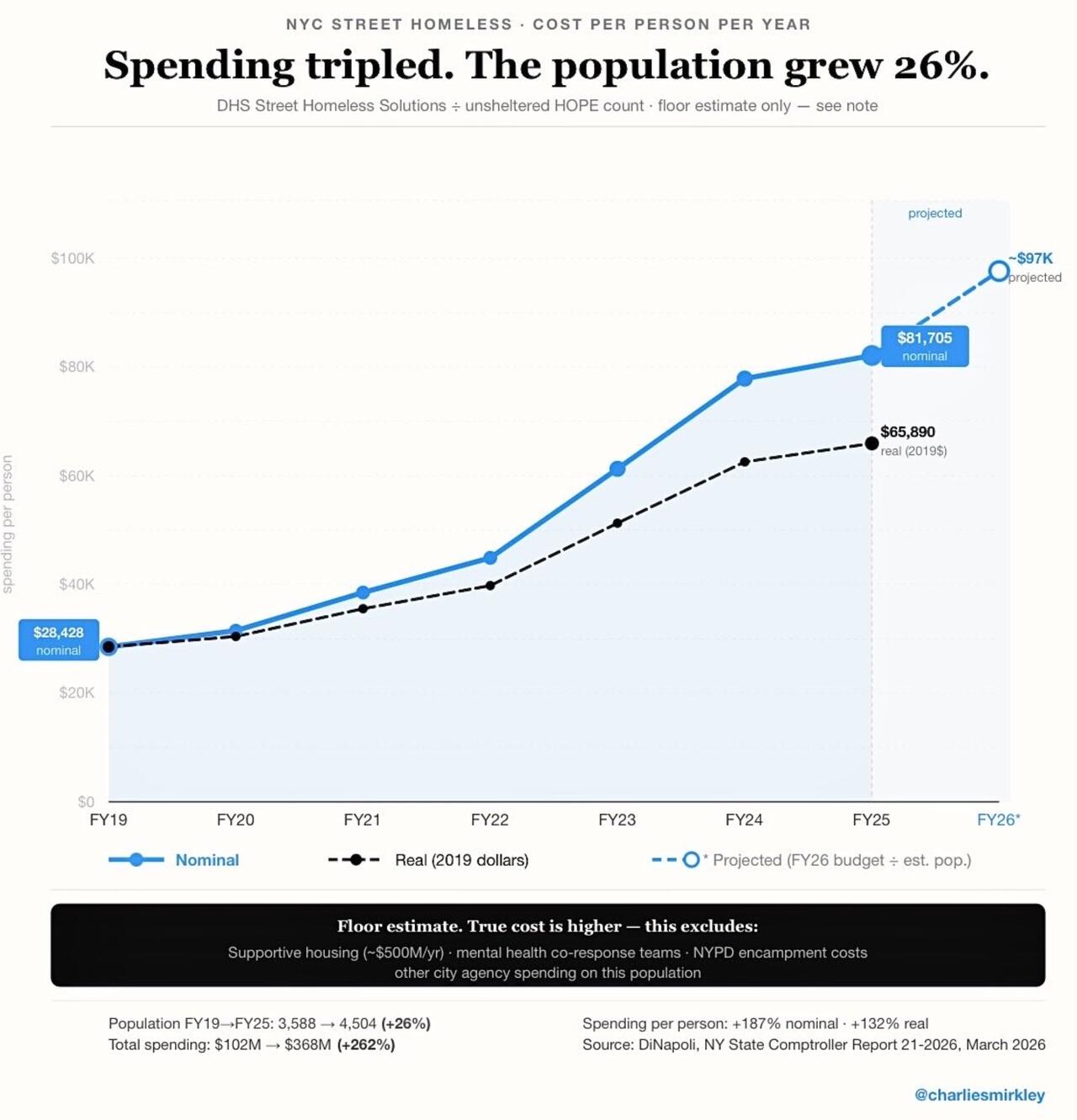
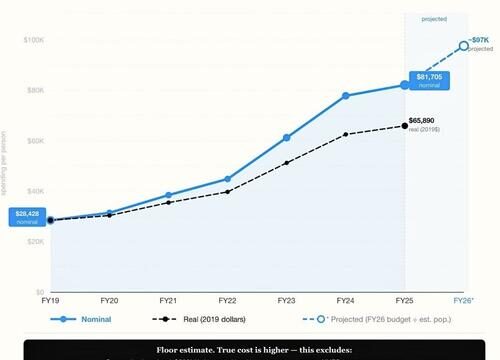
New York City spent about $368 million last year on services for people living on the streets, which equals roughly $81,000 per unsheltered person, according to the NY Post.
Spending through the city’s New York City Department of Homeless Services street outreach programs has increased sharply over the past several years. In 2019, the city spent about $102 million on these services, averaging around $28,000 per unsheltered individual. By the 2025 fiscal year, the average cost had risen to about $81,000 per person, close to the city’s median household income of $81,228.
Unsheltered homeless individuals are those who regularly live outside rather than in shelters or permanent housing. During this same period, the number of people living on the streets grew by 26 percent, rising from 3,588 in 2019 to 4,505 in 2025. However, spending increased far faster than the population itself.
The NY Post writes that the rise in street homelessness has been linked partly to the COVID-19 pandemic and increased migration. Still, the report noted that the reasons spending rose so quickly are not fully clear. One possible factor is the expansion of low-barrier shelters and drop-in centers that provide services such as meals, showers, and temporary sleeping spaces, allowing people to come and go freely. Financial records do not clearly separate how much funding goes to these specific programs.
The report says the city should examine more closely how these funds are being used and whether the programs are successfully moving people into shelters or permanent housing. Spending on street homelessness programs is expected to increase further, reaching about $456 million by fiscal year 2026.
Overall homelessness in New York City has also increased significantly. The city’s total homeless population is now around 140,000 people, about 78 percent higher than in 2019. Officials note that roughly 97 percent of homeless residents receive some type of shelter placement, although the number of people living outside continues to grow.
Some housing advocates argue that filling vacant public and supportive housing units could help move more people off the streets while reducing the high costs associated with short-term shelter programs.
Tyler Durden
Sat, 03/21/2026 – 21:35
https://www.zerohedge.com/markets/new-york-city-spending-81000-year-each-homeless-person
The State Will Always Socialize The Cost Of War
The State Will Always Socialize The Cost Of War
War is often sold to the public as an act of national will: decisive, necessary, and under control. The bill arrives later, in a quieter form. It shows up in insurance markets, shipping rates, emergency guarantees, higher fuel prices, and sudden policy reversals designed to keep the economic damage from spreading too far or too fast. That is what is now happening with the U.S.-Israeli war on Iran. The fighting is not only destroying lives and widening instability. It is also revealing something more familiar about the American state: when private actors no longer want to bear the risk of a war Washington helped ignite, Washington moves to spread that risk across everyone else.
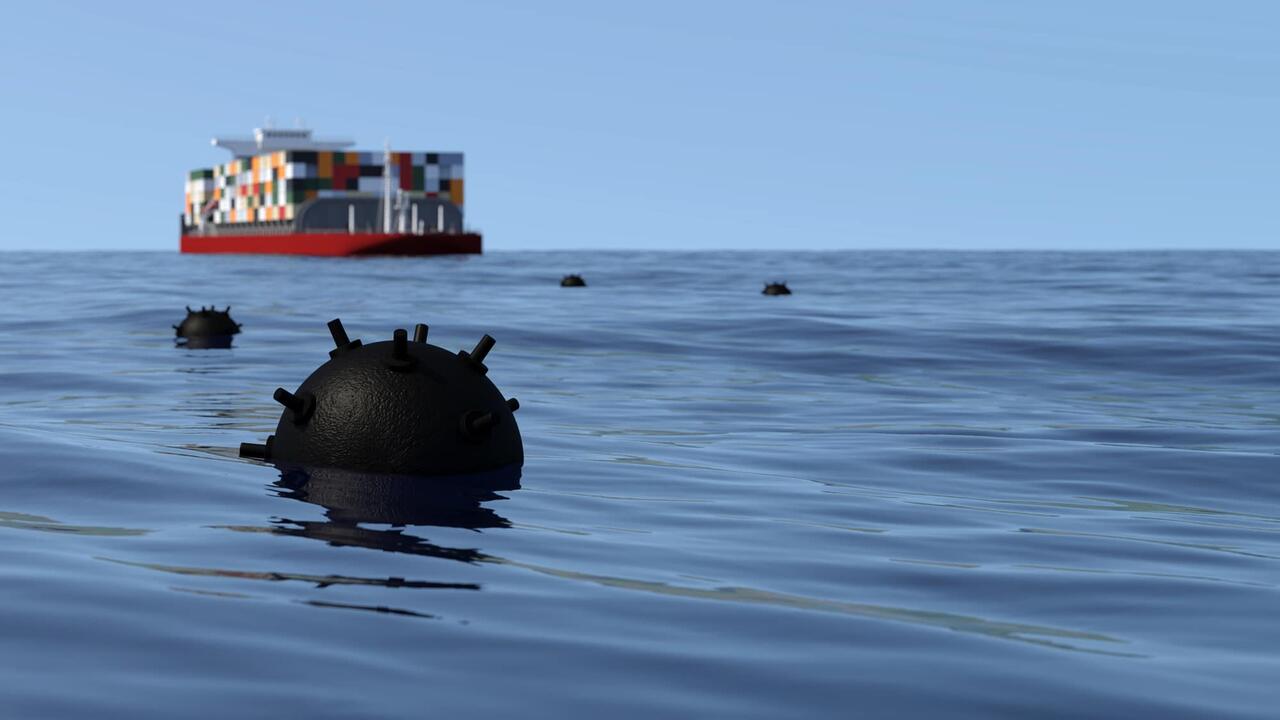
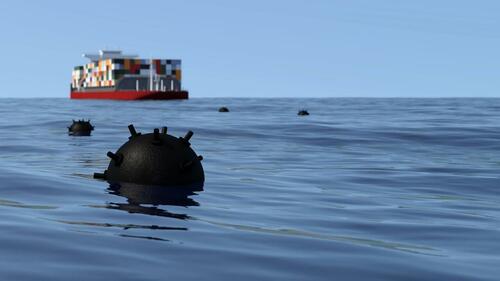
The clearest example came when maritime war-risk premiums in the Gulf surged, in some cases by more than 1000%, as ships and cargoes moved through a combat zone centered on one of the world’s most important energy chokepoints. This is what markets do when governments create danger: they start pricing reality honestly. Insurance underwriters do not care about speeches about resolve or credibility. They care about missiles, mines, damaged hulls, and the odds that a vessel will not make it home intact. Once those odds change, the market does what it is supposed to do. It becomes expensive to move goods through a war.
But the American state does not like that kind of honesty, because honest prices expose the real cost of intervention. So instead of letting war become unaffordable to the people escalating it, Washington stepped in. The U.S. International Development Finance Corporation announced a maritime reinsurance facility covering losses up to roughly $20 billion on a rolling basis, and later named Chubb as the lead insurance partner. In plain English, the government decided that if the private market was no longer willing to carry the full risk of this war, the state would help carry it instead. That is not a side effect of interventionism. It is one of its operating principles. Risk is privatized on the way up, then socialized when the numbers stop working.
The same pattern is visible in energy policy. As the war tightened shipping and pushed oil prices above $100 a barrel, Washington issued a thirty-day waiver allowing purchases of stranded Russian oil at sea to stabilize markets. That move was not just an emergency adjustment. It was an admission. The administration was effectively saying that one war had already become costly enough to require loosening pressure in another theater. A foreign policy that presents itself as hard and disciplined suddenly becomes very flexible when gasoline, shipping, and inflation begin threatening domestic politics. The slogans remain moralistic. The mechanics turn transactional overnight.
This is what statism looks like in practice. It does not simply bomb another country and call it security. It also rearranges the economic landscape at home and abroad so that the political architects of the war do not face the full consequences of their decisions. The cost is pushed outward onto taxpayers who did not authorize the war, consumers who will pay more for energy and goods, and trading systems that now have to absorb new shocks because Washington and Israel chose escalation over restraint. The state does not merely fight. It conscripts logistics, insurance, credit, and public balance sheets into the campaign.
That is why it is misleading to describe this as only a military conflict. It is also an exercise in political risk transfer. The Strait of Hormuz handles around twenty million barrels per day of crude oil and oil products and roughly a quarter of the world’s seaborne oil trade. Any government that helps turn that corridor into a war zone is not just making a strategic decision abroad. It is imposing a hidden tax on ordinary life. It is raising the cost of transport, trade, fuel, insurance, and eventually everything built on those foundations. And when those costs start climbing too fast, the same government asks the public to cushion the blow in the name of stability.
There is a moral evasion built into this arrangement. The public is told to think about war in the language of necessity and strength, while the real economics are handled behind the scenes through emergency waivers, public guarantees, and market interventions. Washington bypasses the discipline that peace would impose. It subsidizes the consequences of its own escalation, then presents the cleanup operation as responsible governance. That is not prudence. It is the imperial version of sending someone else the invoice.
The libertarian objection to this war is not only that it is reckless, unjust, and likely to widen. It is also that the state is once again doing what it does best: converting elite foreign-policy choices into burdens to be carried by everybody else. When insurers retreat, the government steps in. When sanctions collide with energy reality, the rules bend. When war becomes too expensive, the price is redistributed rather than paid by the people who chose it. That is the deeper scandal here. The state is not just waging this war. It is socializing its cost.
Tyler Durden
Sat, 03/21/2026 – 21:00
https://www.zerohedge.com/markets/state-will-always-socialize-cost-war
Iran’s First Use Of ICBMs Raises Serious Questions About Remaining Arsenal
Iran’s First Use Of ICBMs Raises Serious Questions About Remaining Arsenal
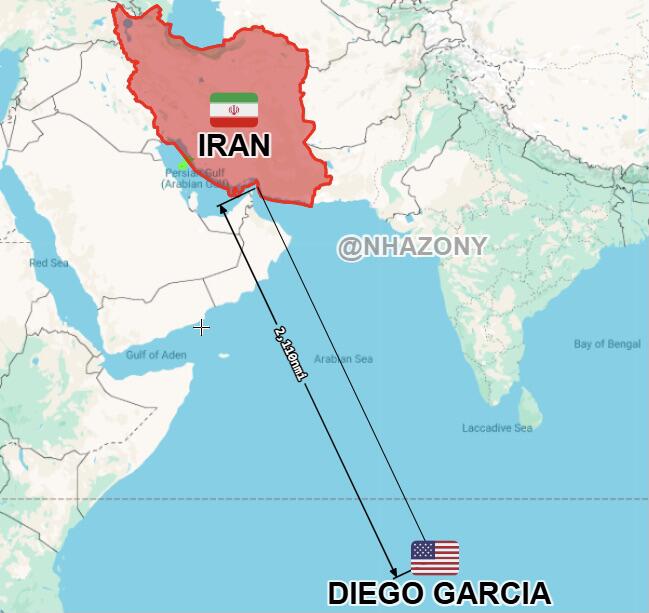
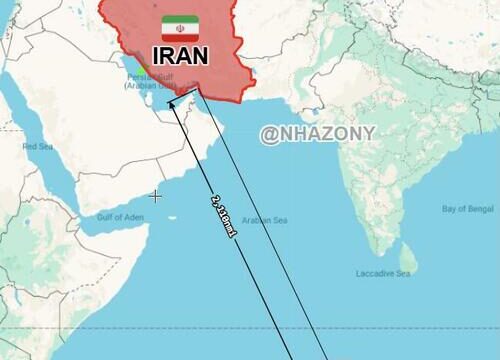
In a startling move that has military experts questioning their assumptions about Iranian capabilities, Iran attempted to hit the joint UK-US base on the Indian Ocean island of Diego Garcia with two intermediate-range ballistic missiles (IRBMs). While US officials assured the Wall Street Journal that the base was unscathed, the Iranian strike aimed at a target roughly 4,000 kilometers from Iran suggests that the range of Iran’s retaliatory capacity could be well beyond previous external estimates and claims made by Iran.
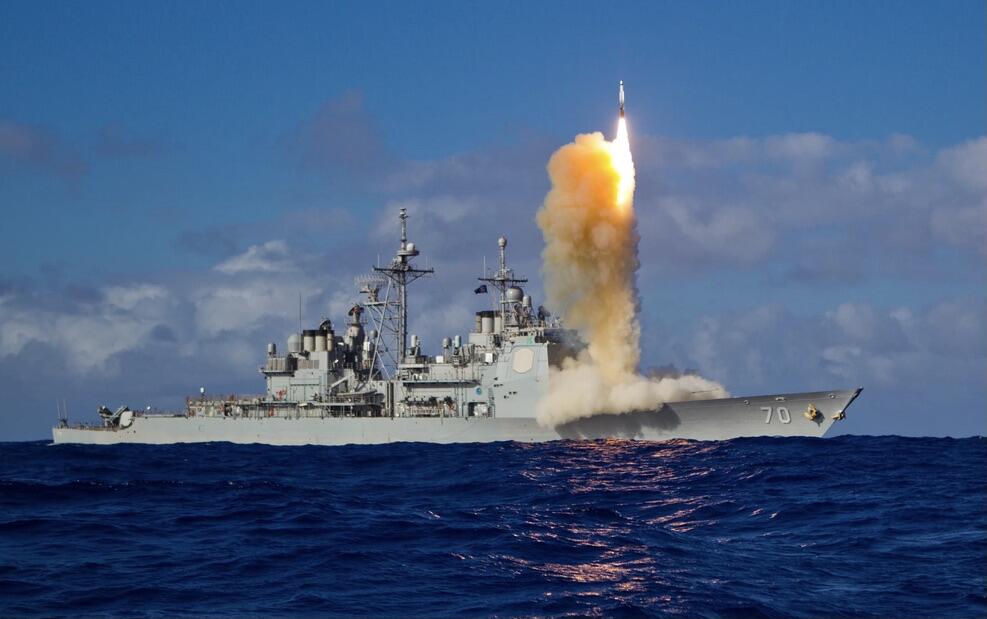
According to two officials who gave the Journal a Friday-night scoop on the story, one missile had a mid-flight malfunction, while the other was engaged by an SM-3 interceptor missile fired from a US Navy vessel. It’s not clear, however, if that interceptor actually hit its target. Nor does the report indicate when the strike was attempted.
While it’s home to a joint base, Diego Garcia is a British Overseas Territory. After the bombs started falling on Iran on Feb. 28, British Prime Minister Keir Starmer initially refused to allow the United States to use Diego Garcia and other UK bases in the campaign against Iran. He soon folded, announcing that the bases could be used for so-called “defensive” operations focused on hitting Iranian missile launchers targeting UK interests. On Friday, the permission was expanded to include supporting strikes on Iranian assets targeting the Strait of Hormuz. Also on Friday, Iran warned that the accommodation of US military maneuvering makes the UK a “participant in aggression,” adding that Iran “reserve[s] our inherent right to defend the country’s sovereignty and independence.”
Last month — three days before US-Israeli surprise attack — Iranian Foreign Minister Abbas Araghchi claimed that Iran had, of its own volition, “deliberately limited” the range of its ballistic missiles to 2,000 kilometers, or 1,243 miles. On the same day, Secretary of State Marco Rubio said Iran was “certainly trying to achieve intercontinental ballistic missiles” and is “headed in the pathway to one day being able to develop weapons that can reach the continental US.”
There’s far more to reaching the ICBM threshold than just packing more propellant into a rocket. Because ICBM warheads spend part of their trajectory traveling in space, they require the engineering of a heat-shielded reentry vehicle, along with more sophisticated guidance technology. Last May, the Defense Intelligence Agency predicted that, if it chose to, Iran could have upwards of 60 ICBMs by 2035. “There’s a huge gap, I think, between where they are now and their ability to have anything that reaches the United States,” Defense Priorities’ Rosemary Kelanic told the Journal.
For now, the bigger question is what kind of ballistic missile technology the Iranians are already packing. The Israeli Alma Research and Education Center had previously pegged Iran’s maximum range at 3,000 kilometers. This apparent debut of Iran’s IRBMs raises wider concerns than just Diego Garcia: If Iran can actually reach that island, it implies Iran could also take shots at targets as far away as Central Europe or Scandinavia.
Bigger story here: implied range of an Iranian IRBM from a launch box in central Iran, with a range of ~4500 km (distance to Diego Garcia).
Theoretically could also target sites into Central Europe. pic.twitter.com/8KCQtsHPQ4
— OSINTtechnical (@Osinttechnical) March 21, 2026
Earlier this month, Iran’s Space Research Center in Tehran was blown up in an Israeli-claimed strike. The IDF said the facility “contained strategic laboratories used for research and development of military satellites for various purposes, including surveillance, targeting, and directing fire toward targets across the Middle East.”
🇮🇷🇮🇱🇺🇸 The Iranian Space Research Centre in western Tehran has been heavily damaged by American Israeli strikes.
The facility is a key hub for Iran’s satellite and intelligence research.
– Al Jazeera pic.twitter.com/i4ZGlWFGlU
— The Daily News (@DailyNewsJustIn) March 15, 2026
Diego Garcia had already been in the ZeroHedge headlines before this new round of warfare on Iran started on Feb 28. President Trump has sounded alarms about the UK losing its grip on the island. Last year, the UK agreed to surrender sovereignty over Diego Garcia and the entire Chagos Archipelago to Mauritius, with the UK then taking out a 99-year lease of Diego Garcia. In January, Trump called the transaction an “act of total weakness,” apparently reneging on his supposed support — Rubio last year said Trump “expressed his support for this monumental achievement.”
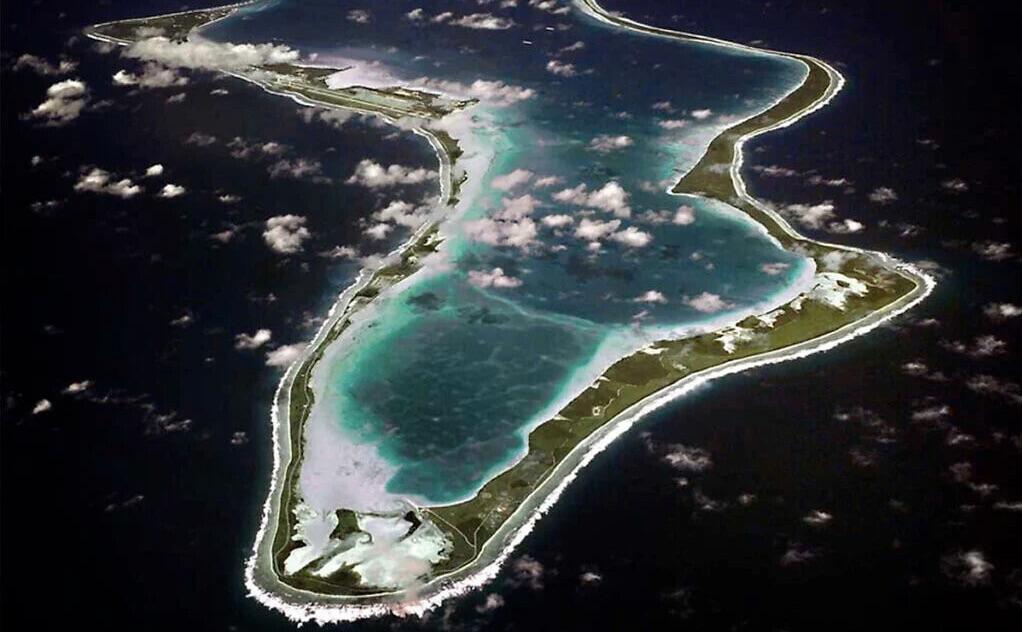
An undated US Navy photo of Diego Garcia, an atoll that has about 10 square miles of dry land
* * * TRY A BAG
Tyler Durden
Sat, 03/21/2026 – 20:25
https://www.zerohedge.com/geopolitical/iran-fires-ballistic-missiles-far-diego-garcia-military-base
On The Hidden Fragility Of Our Energy-Dependent World & The Cascading Consequences Of A Supply-Shock That Money Alone Can’t Fix
On The Hidden Fragility Of Our Energy-Dependent World & The Cascading Consequences Of A Supply-Shock That Money Alone Can’t Fix
Authored by Milan Adams via Preppgroup blog,
For a long time, I accepted the same framework most people in finance operate within—that the global economy is, at its core, a system governed by monetary policy, shaped by interest rates, and stabilized by central banks. It’s an appealing idea because it suggests control. If growth slows, you lower rates. If inflation rises, you tighten conditions. If markets panic, you inject liquidity. There is a sense that someone, somewhere, is ultimately in charge of the system. But the longer I watch what is unfolding now, the more that framework feels incomplete, almost like a simplified map that works in normal conditions but fails the moment reality becomes more physical than financial. What we are seeing today forces a different perspective—one that is much less comfortable—because it suggests that the economy is not primarily a financial construct, but an energy-dependent system, and that everything we consider “economic activity” is simply a byproduct of energy being converted into work, goods, and services.
The disruption in the Strait of Hormuz, now stretching into multiple weeks, is not just another geopolitical event that can be neatly categorized and priced into markets. It is, in practical terms, a restriction on one of the most critical physical flows in the global system. A significant share of the world’s oil and natural gas moves through that corridor, and when that flow is constrained—even partially—the impact is not theoretical. It is immediate at the physical level, even if it is delayed in how it manifests economically. This is where the disconnect begins. Financial markets, by their nature, operate on expectations. They price what participants believe will happen—future resolutions, policy responses, geopolitical outcomes. But the physical world does not operate on expectations. It operates on what is available, here and now. If a portion of energy supply is removed from the system, that energy does not exist for consumption, regardless of how markets choose to price the future.
This distinction between financial perception and physical reality is critical, because it explains why, on the surface, everything can still appear relatively stable. Benchmark prices may not reflect the full severity of the situation, supply chains may continue to function with minor disruptions, and daily life may feel largely unchanged. But beneath that surface, constraints begin to build. Energy markets start to tighten in specific regions. Physical deliveries become more expensive or harder to secure. Refined products begin to diverge from crude benchmarks. None of these signals, on their own, create a sense of crisis. But together, they form a pattern that suggests the system is under strain. And unlike demand-driven shocks, where activity can be restarted once confidence returns, a supply-driven constraint introduces a different kind of pressure—one that cannot be resolved through financial means alone.
The reason this matters is because modern economic thinking is heavily biased toward demand-side explanations. When something goes wrong, the assumption is that consumption has weakened, that credit conditions have tightened, or that confidence has deteriorated. The solution, therefore, is to stimulate demand—lower rates, increase liquidity, encourage spending. This framework has worked repeatedly over the past decades, which reinforces the belief that it is universally applicable. However, it breaks down when the problem is not insufficient demand, but insufficient supply of critical inputs. In such cases, stimulating demand does not resolve the issue; it exacerbates it. If energy is scarce, increasing consumption only intensifies the competition for limited resources, pushing prices higher without increasing availability.
What makes the current situation particularly complex is that it places policymakers in a position where traditional tools become not just ineffective, but contradictory. Inflation driven by supply constraints would normally call for tighter monetary policy, yet slowing production and weakening economic activity would argue for easing conditions. This creates a structural dilemma often described as stagflation, but in practice it feels less like a defined economic state and more like a constraint with no clean exit. There is no policy lever that simultaneously restores growth and reduces inflation when the underlying issue is physical scarcity. This is the point where the limitations of a purely financial understanding of the economy become visible.
Beyond the immediate effects on energy markets, the implications extend into areas that are less visible in the short term but far more consequential over time. Modern industrial systems are deeply dependent on continuous energy input, and when that input becomes constrained, the effects propagate unevenly. High-energy industries are typically the first to adjust, either through reduced output or temporary shutdowns, as governments and operators prioritize essential consumption. This may appear manageable at first, but the system is interconnected in ways that amplify these adjustments. Reduced industrial output affects supply chains, which in turn impacts the availability of intermediate goods, and eventually filters down to consumer products. The process is gradual, which makes it easy to underestimate, but it is cumulative.
Perhaps the most underappreciated aspect of energy constraints is their relationship to food production. Modern agriculture is not simply a function of land and labor; it is an industrial process reliant on fertilizers, machinery, and transportation, all of which are energy-intensive. The production of nitrogen-based fertilizers, for instance, depends heavily on natural gas. When gas supply is disrupted, fertilizer production declines, and the effects are not immediate but delayed. Planting decisions are affected, yields are reduced, and the consequences emerge months later in the form of lower harvests and higher food prices. This lag creates a false sense of stability in the present, even as future constraints are effectively being locked in.
Another layer of complexity arises from the uneven distribution of both resources and vulnerabilities across different regions. Economies that are heavily dependent on imported energy are inherently more exposed to disruptions in global supply, while those with domestic production capacity and resource diversity have a relative advantage. However, this does not imply immunity. Even resource-rich economies operate within a global system, and disruptions elsewhere can feed back through trade, pricing, and financial channels. Moreover, access to resources is not determined solely by availability, but by policy decisions, infrastructure, and distribution mechanisms, all of which can introduce additional constraints.
As the duration of the disruption extends, time itself becomes a critical variable. Short-term interruptions can often be absorbed through inventories, strategic reserves, and temporary adjustments. But as those buffers are depleted, the system becomes increasingly sensitive to continued constraints. Restarting disrupted flows is not instantaneous. Maritime backlogs take time to clear, storage imbalances need to be resolved, and production that has been halted may require significant time and investment to restore. In some cases, the interruption itself causes lasting damage, reducing the efficiency or capacity of the system even after normal operations resume. This creates what could be described as a “lagging deficit,” where the effects of the disruption persist beyond its apparent resolution.
What makes this moment particularly difficult to interpret is that it does not present itself as a clear break from normality. There is no single indicator that signals a transition from stability to crisis. Instead, it unfolds as a gradual divergence between what appears stable and what is becoming constrained. Markets may continue to function, prices may not fully reflect underlying scarcity, and daily life may remain largely unchanged for a period of time. But beneath that surface, the system is adjusting in ways that are not immediately visible, and those adjustments tend to become apparent only after they reach a certain threshold.
The challenge, then, is not simply to predict specific outcomes, but to recognize the nature of the constraint itself. An economy that is limited by financial conditions behaves very differently from one that is limited by physical resources. In the former, policy intervention can often restore equilibrium. In the latter, equilibrium is redefined by what is physically possible. This distinction may seem subtle, but it has profound implications. It suggests that the range of potential outcomes is wider than what most models account for, and that the path back to stability—if it exists—is likely to be more complex and more prolonged than in previous cycles.
At a broader level, this situation forces a reconsideration of how we think about growth, stability, and resilience. For decades, the assumption has been that economic expansion can continue as long as financial conditions are managed effectively. But if growth is ultimately constrained by energy availability, then that assumption becomes conditional rather than absolute. The system can expand only within the limits imposed by its physical inputs, and when those inputs are disrupted, the adjustment is not just financial—it is structural.
None of this necessarily implies an immediate or inevitable collapse. There are still pathways through which the situation could stabilize, whether through geopolitical resolution, reallocation of supply, or demand adjustments. But it does suggest that the risks are asymmetrical. If the disruption is resolved quickly, the system may absorb the shock with manageable consequences. If it persists, the effects compound in ways that are difficult to reverse. And because those effects build gradually before becoming visible, there is a tendency to underestimate them in the early stages.
What stands out most, in the end, is not any single data point or scenario, but the shift in perspective that this moment demands. When the economy is viewed primarily as a financial system, stability appears to depend on policy and market behavior. When it is viewed as an energy-dependent system, stability depends on something more fundamental—the continuous availability of the physical inputs that sustain it. And when those inputs are constrained, even temporarily, the implications extend far beyond what traditional economic frameworks are designed to capture.
If we extend this line of thinking even slightly, it becomes clear that what matters most in the current situation is not just the existence of a disruption, but its duration and the way it interacts with the rigid structures of the global system. Modern supply chains, energy networks, and industrial processes are optimized for efficiency, not resilience. They are designed to function under the assumption of continuity, where inputs arrive on time, in predictable quantities, and at relatively stable prices. When that assumption holds, the system performs remarkably well. But when it breaks—even partially—the system does not adapt smoothly. Instead, it begins to reveal how little slack actually exists within it. Buffers that were assumed to be sufficient turn out to be temporary, and redundancies that were considered unnecessary suddenly become critical.
One of the most important aspects of this dynamic is that the system does not fail all at once. It degrades in layers. At first, the adjustments are subtle and often invisible outside of specific sectors. Energy-intensive industries begin to reduce output, not because demand has disappeared, but because input costs and availability make normal operations unsustainable. This reduction may even appear rational or contained at the macro level, as if the system is efficiently reallocating resources. However, these industries are not isolated. They form the foundation of broader supply chains, and when their output declines, the effects propagate outward. Intermediate goods become less available, production timelines extend, and costs begin to rise across multiple sectors simultaneously. The process is gradual, but it is cumulative, and once it reaches a certain threshold, it becomes self-reinforcing.
What complicates this further is the interaction between physical constraints and financial expectations. Markets tend to price in future normalization, especially in situations where past experience suggests that disruptions are temporary. This creates a scenario in which forward-looking indicators may imply stability even as current conditions deteriorate. The result is a divergence between what is expected and what is actually unfolding. This divergence can persist for some time, particularly if participants believe that policy intervention or geopolitical developments will resolve the issue. However, if those expectations prove overly optimistic, the adjustment in markets can be abrupt, as prices and valuations recalibrate to reflect a reality that has already been developing beneath the surface.
A useful way to understand this is to consider how dependent the global economy is on continuous energy throughput. In periods of steady growth, improvements in efficiency allow output to increase without a proportional rise in energy consumption. This creates the impression that the relationship between energy and growth is flexible. However, in periods of contraction driven by supply constraints, the relationship becomes far more rigid. Certain baseline functions—such as heating, transportation of essential goods, and basic food production—cannot be reduced beyond a certain point without causing systemic disruption. As a result, a relatively modest reduction in total energy supply can lead to disproportionately large effects in non-essential or marginal activities. These activities are not eliminated in a coordinated manner, but rather through a process of cascading adjustments that reflect both economic and physical limitations.
The implications of this become particularly significant when considering the role of time in amplifying these effects. In the early stages of a disruption, inventories and reserves provide a buffer that masks the severity of the underlying constraint. Strategic stockpiles, such as petroleum reserves, can temporarily offset reduced supply, and businesses may rely on existing inventories to maintain operations. However, these buffers are finite, and their depletion introduces a new phase of the adjustment process. As inventories decline, the system becomes increasingly sensitive to ongoing disruptions, and the margin for error narrows. At this point, even small additional constraints can have outsized effects, as there is less capacity to absorb them.
Another critical factor is the behavior of production systems under interruption. Unlike financial systems, which can often be restarted with relative speed once conditions stabilize, physical production systems are subject to more complex dynamics. In the energy sector, for example, shutting down production is not always reversible without cost. Wells that are taken offline may experience pressure changes, reduced flow rates, or mechanical issues that require time and investment to address. Similarly, industrial facilities that halt operations may face challenges in restarting processes, particularly if they depend on continuous input flows or specialized conditions. This means that even after a disruption is resolved, the recovery process may be slower and less complete than expected, creating a persistent gap between pre-disruption capacity and actual output.
When these dynamics are combined with geopolitical uncertainty, the range of potential outcomes expands significantly. The Strait of Hormuz is not merely a transit point; it is a chokepoint that concentrates a substantial portion of global energy flows within a narrow geographic corridor. This concentration introduces a form of systemic risk, as disruptions in that location have global implications. The longer the disruption persists, the more likely it is that secondary effects will emerge, including changes in trade patterns, shifts in pricing structures, and alterations in investment behavior. These effects may not be immediately visible, but they contribute to a gradual reconfiguration of the system.
At the same time, it is important to recognize that responses to scarcity are not purely economic. They are also political and strategic. In an environment where critical resources become constrained, the incentives for cooperation can weaken, particularly if domestic pressures intensify. Governments may prioritize internal stability over external commitments, leading to restrictions on exports, adjustments in allocation policies, or interventions in markets. These actions, while rational from a national perspective, can exacerbate global imbalances, as they reduce the overall availability of resources in international markets. This creates a feedback loop in which scarcity leads to protective measures, which in turn deepen scarcity.
The potential consequences of this dynamic become more pronounced when extended over longer timeframes. A disruption lasting a few weeks may be absorbed with limited structural impact, but one that extends into months begins to affect planning cycles across multiple sectors. In agriculture, for instance, decisions made during planting seasons are based on expectations of input availability and cost. If those expectations are disrupted, the effects are not confined to the present but extend into future harvests. Similarly, in industrial production, investment decisions may be delayed or altered in response to uncertainty, affecting capacity in subsequent periods. Over time, these adjustments accumulate, leading to a measurable impact on overall economic output.
Historical comparisons can provide some context, although they are not perfect analogues. The oil crisis of the 1970s, for example, demonstrated how supply constraints can lead to a combination of high inflation and low growth, fundamentally altering economic trajectories. However, the global system today is more complex, more interconnected, and in many ways more optimized for efficiency than it was at that time. This increased complexity amplifies both the benefits of normal operation and the risks associated with disruption. As a result, while past events can offer insight into potential dynamics, they may underestimate the speed and scale at which effects can propagate in the current environment.
From a financial perspective, this introduces a different kind of risk profile than what is typically encountered in demand-driven downturns. In those scenarios, asset prices often decline in response to reduced earnings and tighter financial conditions, but the underlying capacity of the system remains intact. In a supply-constrained environment, however, the challenge is not just reduced demand, but impaired production capacity. This affects margins, disrupts business models, and introduces uncertainty that is difficult to quantify. Assets that are valued based on long-term growth assumptions become particularly sensitive to changes in discount rates and input costs, while real assets linked to physical resources may perform differently.
At the individual level, the effects of these dynamics are likely to be experienced less through abstract indicators and more through changes in everyday conditions. Prices may rise, availability of certain goods may fluctuate, and services that were previously taken for granted may become less reliable. These changes are often gradual at first, which can make them easy to dismiss or rationalize. However, as they accumulate, they contribute to a broader shift in perception, as individuals adjust their expectations and behavior in response to a changing environment.
Ultimately, the defining characteristic of the current situation is not any single outcome, but the interaction between physical constraints, financial expectations, and human behavior over time. Each of these elements influences the others, creating a system that is dynamic but not necessarily stable. Understanding this interaction requires moving beyond a purely financial framework and recognizing the role of physical inputs in shaping economic possibilities. It also requires acknowledging that adjustments to constraints are rarely smooth or evenly distributed, and that the path from disruption to equilibrium—if such an equilibrium exists—may be more complex than anticipated.
What emerges from this perspective is not a definitive prediction, but a shift in how risk is understood. Instead of focusing solely on probabilities derived from past cycles, it becomes necessary to consider structural limits and the ways in which they can alter the range of possible outcomes. This does not mean that extreme scenarios are inevitable, but it does mean that they cannot be dismissed simply because they fall outside of familiar patterns. In a system that depends fundamentally on continuous energy flow, disruptions to that flow have the potential to reshape the environment in ways that extend beyond traditional economic analysis.
If we attempt to frame what lies ahead, the difficulty is not a lack of possible scenarios, but the fact that each of them depends on variables that are largely outside the scope of traditional economic analysis. Military timelines, geopolitical decisions, insurance constraints in maritime transport, and the simple physics of energy production all play a role in determining outcomes. This makes forecasting inherently uncertain, but it does not make it impossible to outline a range of plausible paths. What becomes clear, however, is that even the more optimistic scenarios involve a degree of disruption that is materially different from what has been experienced in recent economic cycles.
In the most favorable case, the disruption is resolved relatively quickly. A ceasefire is reached, transit through the Strait resumes, and confidence returns to markets. Even under these conditions, the recovery would not be immediate. Maritime traffic would need time to normalize, with vessels clearing backlogs and supply chains rebalancing. Storage imbalances, particularly in regions close to the disruption, would need to be resolved, and production that had been curtailed would require time to ramp back up. The key point here is that even a short interruption creates a lagging effect, where the consequences extend beyond the duration of the event itself. Economic activity might stabilize, but not without a temporary contraction in growth and a period of elevated prices as the system readjusts.
A more realistic scenario, however, involves a disruption lasting several months. In such a case, the effects begin to move beyond temporary dislocation and into structural adjustment. Strategic reserves, which initially provide a buffer, would start to decline meaningfully, reducing the system’s ability to absorb further shocks. Governments, particularly in energy-importing regions, would likely implement measures to manage consumption, ranging from incentives for reduced usage to more direct forms of rationing. Industrial output would be affected more visibly, as high-energy sectors become increasingly difficult to sustain under constrained supply conditions. At the same time, the delayed effects on agriculture would begin to take shape, setting the stage for tighter food markets in subsequent seasons.
From a macroeconomic perspective, this scenario aligns with a contraction in global growth, not driven by a collapse in demand, but by the inability of the system to sustain previous levels of production. This distinction is important, because it changes how the contraction unfolds. Instead of a sharp decline followed by a policy-driven recovery, the adjustment is more prolonged and uneven. Some sectors contract significantly, while others remain relatively stable, creating a fragmented economic landscape. Inflation remains elevated, not because of excess demand, but because of persistent supply constraints. This combination challenges both policymakers and market participants, as it does not fit neatly into the frameworks that have guided decision-making in recent decades.
Extending the timeframe further introduces a set of outcomes that are more difficult to model, but increasingly relevant if the disruption persists. A prolonged restriction on energy flows—measured in six months or more—would likely lead to a more pronounced contraction in global output, as the system adjusts to a lower level of available energy. This adjustment is not simply a matter of reducing consumption; it involves a reconfiguration of economic activity to align with physical limits. Activities that are less energy-efficient or less essential are gradually reduced, while critical functions are preserved as much as possible. However, this process is not centrally coordinated at a global level, and therefore it unfolds through a combination of market forces, policy decisions, and, in some cases, coercive measures.
In such an environment, financial markets would be forced to reprice risk in a more fundamental way. Equity valuations, particularly in sectors dependent on stable input costs and long-term growth assumptions, would come under pressure as margins compress and uncertainty increases. Fixed income markets would face a different challenge, as inflation erodes real returns while higher yields reflect both risk and policy responses. The traditional balance between asset classes, which has relied on predictable relationships between growth, inflation, and interest rates, may become less reliable. In contrast, assets tied more directly to physical resources or essential infrastructure could behave differently, as their value is linked to scarcity rather than purely financial metrics.
What makes this environment particularly challenging for investors and policymakers alike is the asymmetry of outcomes. The upside, in the case of rapid resolution, is a return to conditions that are already well understood and largely priced into expectations. The downside, however, involves a set of structural adjustments that are less familiar and potentially more disruptive. This imbalance creates a situation in which the perceived stability of the present may not fully reflect the range of possible future states. In other words, the system may appear stable not because risks are low, but because they have not yet been fully realized or acknowledged.
At a deeper level, this raises questions about the assumptions that underpin long-term economic thinking. For decades, the dominant narrative has been one of continuous growth, supported by technological progress and managed through financial policy. Energy, while recognized as important, has often been treated as a variable that can be adjusted through markets and innovation. However, when supply constraints become binding, this assumption is challenged. Growth is no longer simply a function of productivity and demand, but of available energy. This does not negate the role of innovation, but it places it within a framework defined by physical limits.
The implications of this shift extend beyond economics into broader considerations of stability and resilience. Systems that are optimized for efficiency tend to perform well under normal conditions, but they are less capable of absorbing shocks. Redundancy, which appears inefficient in stable environments, becomes valuable in times of disruption. The current situation highlights this trade-off in a very direct way. The global economy has been structured to maximize output and minimize cost, often at the expense of resilience. When a critical component of that system is disrupted, the lack of redundancy becomes evident.
At the individual level, these dynamics may not be immediately visible in their full complexity, but they manifest through changes in everyday experience. Prices fluctuate in ways that are not easily explained by familiar narratives, availability of certain goods becomes less predictable, and a general sense of uncertainty begins to influence decision-making. These changes are often gradual, but they contribute to a shift in perception, as individuals begin to question assumptions that previously seemed stable. Over time, this can lead to changes in behavior that reinforce broader economic trends, creating a feedback loop between perception and reality.
What ultimately defines this moment is not a single event or outcome, but the convergence of multiple layers of constraint. Physical limitations in energy supply interact with financial systems that are not designed to account for them, while human behavior responds to both in ways that are not always predictable. The result is a system that is still functioning, but under increasing pressure, with a range of possible trajectories that extend beyond what recent experience might suggest.
In this context, the most important shift may be conceptual rather than predictive. Understanding the economy as an energy-dependent system does not provide precise forecasts, but it changes the way risks are evaluated. It emphasizes the importance of physical flows, highlights the limitations of financial tools, and underscores the role of time in amplifying or mitigating disruptions. It also suggests that stability is not simply a function of policy or market behavior, but of the underlying conditions that make those behaviors possible.
Seen from this perspective, the current situation is less about a temporary disturbance and more about a test of how the system responds to constraint. Whether that test results in adaptation, disruption, or something in between will depend on factors that are still unfolding. But what is already clear is that the assumption of seamless continuity—the idea that the system can always adjust without fundamental change—is being challenged. And once that assumption is questioned, it becomes difficult to view the economy in the same way as before.
Tyler Durden
Sat, 03/21/2026 – 19:50

Phantom Ayatollah? Iran’s New Supreme Leader Has Never Been Seen Since Taking Office
Phantom Ayatollah? Iran’s New Supreme Leader Has Never Been Seen Since Taking Office
Amid widespread reporting that Iran had long ago moved into a emergency wartime decentralized command among autonomously-acting units, serious questions persist as to the role of Supreme Leader Mojtaba Khamenei, who replaced his slain father, longtime leader Ali Khamenei.
What’s clear is that the new, younger Khamenei – who may have been wounded in the early days of US-Israeli strikes, hasn’t been seen in any public way, not even on TV, throughout the war. There have not so much as been official recent images of him circulated.
This has raised obvious questions on the degree to which the Ayatollah is actually running the country and the wartime response, also after national security official Ali Larijani was killed. Larijani had clearly been the interim public face of the Islamic Republic, before his death less than a mere week ago (reportedly on March 17).
In the meantime The Wall Street Journal on Saturday writes that Iran is filling the gap of the Ayatollah’s public absence with AI and voice-overs:
In his first, fiery address to the Iranian nation on March 12, new Supreme Leader Mojtaba Khamenei vowed to “avenge the blood of our martyrs” and to keep the Strait of Hormuz closed. That message of defiance wasn’t delivered by Khamenei himself: It was read out on state television by a female news anchor.
Since then, the mystery surrounding Khamenei’s whereabouts and well-being has only deepened. Khanenei hasn’t appeared in public, nor has the Iranian government issued new images of him or even recordings of his voice.
His 86-year old father did not appear to have been in hiding at all when he was slain by airstrike on the very first day of Operation Epic Fury.
It could be that the younger Khamenei is directing the war from a much more secure and hidden setting, for example a deep underground bunker – or in a remote part of the country. Axios newly reports:
The CIA, Mossad and other intelligence agencies around the world were watching during Nowruz on Friday to see whether Iran’s new supreme leader Mojtaba Khamenei would follow his father’s tradition and give a new year’s address.
The intrigue: When the holiday passed with only a written statement from Mojtaba, the mystery around his physical condition, whereabouts and role in Iran’s war effort deepened.
As for who is really at the helm of the Iranian state, there’s little doubt that the elite IRGC is now largely driving the response.
To some degree, amid ongoing reports of assassinations by aerial bombing of a slew of top military leaders, it doesn’t ultimately matter who precisely is in charge. Iranian institutions have deep benches, in the sense that especially high military officials are replaceable.
The new Ayatollah has not been seen as Netanyahu makes virtual or AI appearances. Both are playing it safe. Targeted assassination is the new name of the game. A terrible world has come into being.
— Poli-tea 🫖 (@MirzaMahan) March 21, 2026
At the same time, Tehran has signaled it is ready for a ‘long war’ – and will keep fighting while imposing a high cost on its attackers. This means it doesn’t have to ‘win’ in a conventional sense, but just has to survive and exact pain.
The WSJ writes, “Three weeks into the war, the Iranian regime is signaling that it believes it is winning and has the power to impose a settlement on Washington that entrenches Tehran’s dominance of Middle East energy resources for decades to come.”
Tyler Durden
Sat, 03/21/2026 – 19:15
Costco Gas Lines Surge As Drivers Hunt For Cheaper Fuel
Costco Gas Lines Surge As Drivers Hunt For Cheaper Fuel
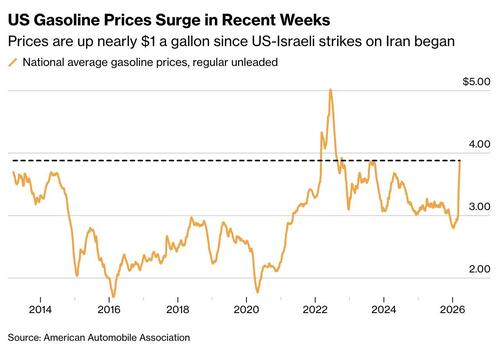
Rising fuel costs tied to the conflict in Iran are forcing many Americans to rethink everyday spending, especially on gas, according to Bloomberg.
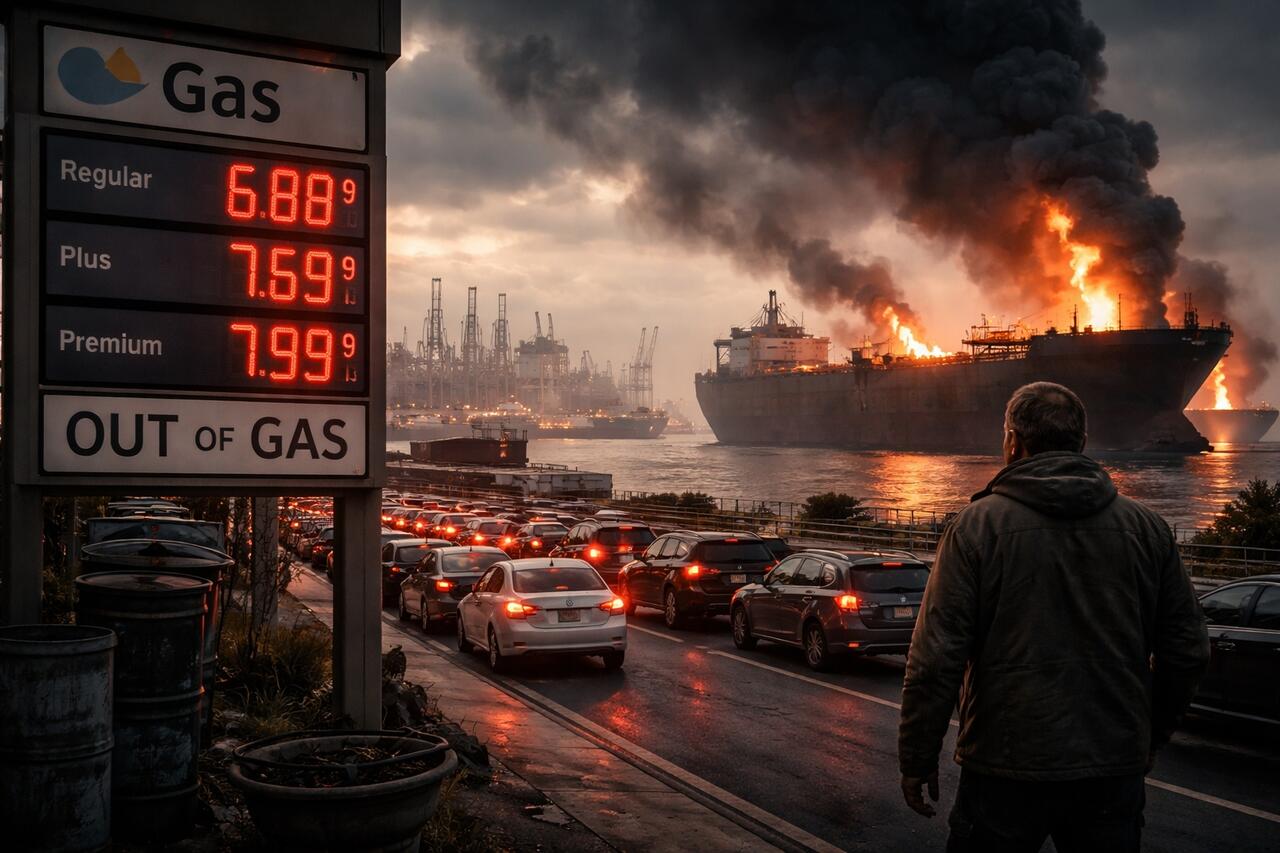
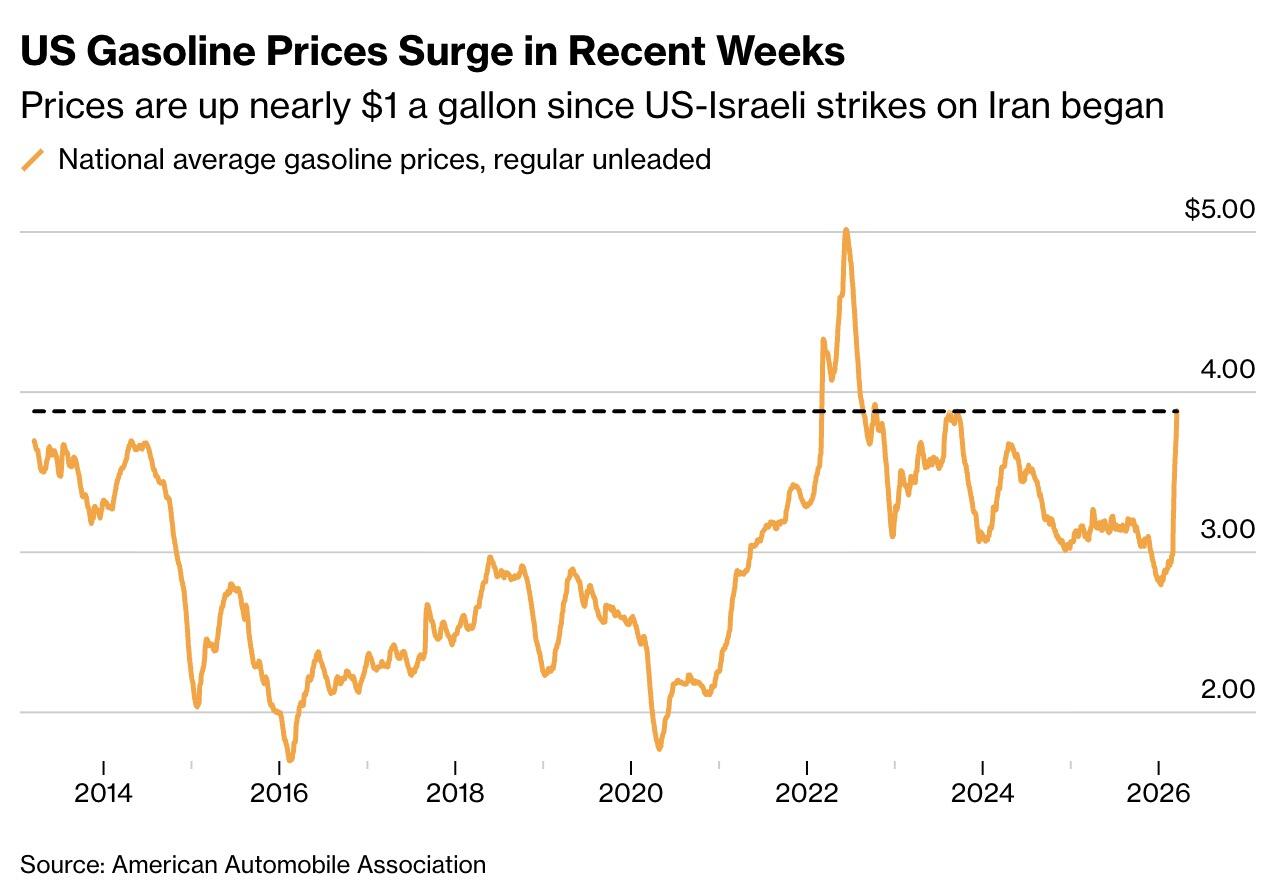
At a Costco near San Antonio, drivers are waiting up to half an hour to fill up, while others are checking apps like GasBuddy or driving farther to save a few cents per gallon. With prices close to $4 nationwide, households are cutting back on dining out, travel, and even groceries.
The broader economic impact will depend on how long prices remain high. Oil has jumped about 45% since the war began, and gasoline futures are up more than 50%, driven by supply disruptions and the shutdown of the Strait of Hormuz. That has pushed pump prices higher across the country, with some states already well above average.
Economists say this kind of spike quickly changes behavior. Gregory Daco pointed to $4 per gallon as a key threshold: “When you go from $3.99 to $4.01… there is a psychological effect.” As prices cross that line, consumers tend to rein in spending elsewhere.
Some are already doing so. A Texas driver quit DoorDash after realizing higher gas costs wiped out her earnings. Others are chasing discounts at warehouse clubs or using grocery reward programs, increasing traffic at retailers like Costco and Sam’s Club. GasBuddy says its monthly users have doubled since the conflict began.
Bloomberg writes that lower- and middle-income households are being hit hardest, since fuel makes up a larger share of their budgets. Families are also seeing costs rise beyond gas, from groceries to basic goods, and are adjusting by cutting extras and planning purchases more carefully.
Even though inflation had been easing, higher energy prices could reverse some of that progress. Federal Reserve Chair Jerome Powell said the ultimate effect is uncertain, noting, “We just don’t know.”
With prices climbing after a period of decline, the issue could also carry political weight ahead of upcoming elections. While officials hope tax refunds and other measures will support growth, economists warn that prolonged high energy costs could further strain consumers.
For many Americans, everyday choices now come down to trade-offs, from driving farther for cheaper fuel to skipping small indulgences at the store.
Tyler Durden
Sat, 03/21/2026 – 18:05
https://www.zerohedge.com/markets/costco-gas-lines-surge-drivers-hunt-cheaper-fuel
Iran Ready To Let Japanese Ships Use Hormuz As Chinese, Indian Tankers Already Allowed Passage
Iran Ready To Let Japanese Ships Use Hormuz As Chinese, Indian Tankers Already Allowed Passage
While Iran’s decision to close the Straits of Hormuz in response to the US-Israeli bombing campaign was understandable, after all it’s the biggest point of leverage the IRGC-controlled nation has left (it is certainly more understandable than bombing all of its Gulf neighbors in the process pushing them from being on the fence to being staunchly anti-Iran), there was always a bit of a glitch in Tehran’s calculus: as we showed the day the war broke out, the biggest clients of Gulf exporting nations by far are China, India, Korea and Japan, namely Asian countries which – with the exception of Japan – are hardly allies of the US. Therefore, the countries that would be hit the hardest were those Pacific rim nations that would buy millions of barrels of oil daily from Gulf countries before the war, and now find that oil indefinitely blocked behind the Strait.
While prices are fungible, the biggest loser from a Hormuz closure in terms of actual physical oil is China which is the main destination of the 13.1mm barrels of oil that passes through the Strait every day https://t.co/FwWVsHiwpZ pic.twitter.com/ozXwXpo2El
— zerohedge (@zerohedge) March 1, 2026
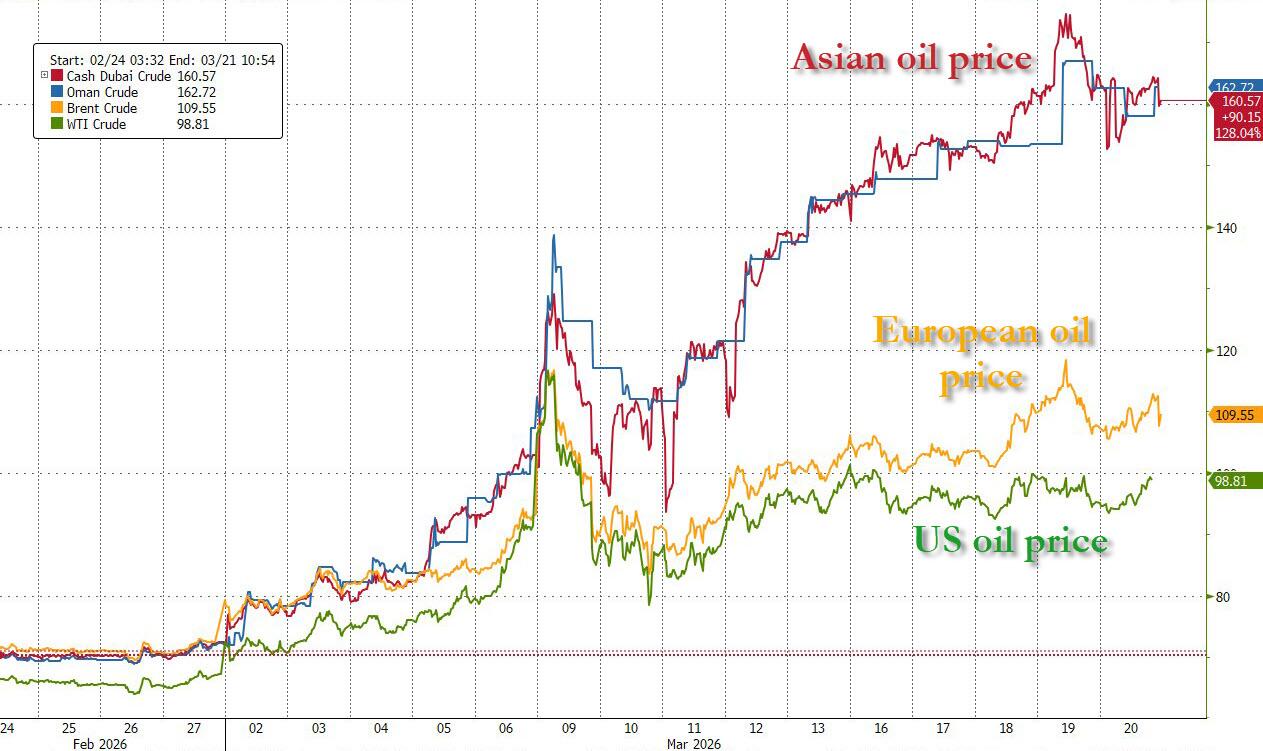
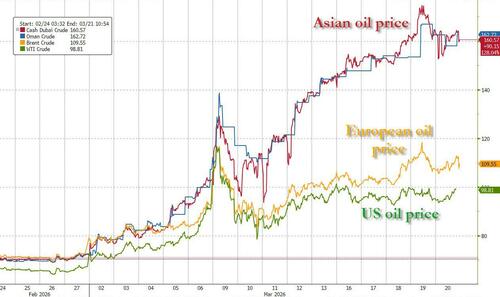
Nowhere has this asymmetric impact been more evident than in the price of Asian-basin grades such as Dubai and Oman, which hit a record $170 on Thursday before retracing modestly to $160, while at the same time Europe-heavy Brent has been trading around $110, and WTI crude which primarily feeds the US is trading just below $100.
As a result, it’s hardly a surprise that while ideologically they may support Iran, Asia’s largest Gulf clients are suddenly finding themselves facing crashing stock markets and a brutal stagflation.
It’s also why while the world’s attention has been focused on the escalating daily attacks in the Gulf, which last week crippled global LNG supplies for years – in the process once again hammering Asian supply chains far more than the US which for years has been swimming in natural gas – there has been a furious backchanneling operation to allow passage for tankers belong to said Asian countries.
To wit, late on Friday, Iranian Foreign Minister Abbas Araghchi said the nation was prepared to facilitate passage for Japanese vessels through the Strait of Hormuz after consultations between the countries’ officials, according to Kyodo News.
“We have not closed the strait. It is open,” Araghchi said in a telephone interview with Kyodo News on Friday. He also stressed that Iran, which was attacked by the United States and Israel in late February, is seeking “not a cease-fire, but a complete, comprehensive and lasting end to the war.”
Araghchi said Iran has not closed the strategic waterway but has imposed restrictions on vessels belonging to countries involved in attacks against Iran, while offering assistance to others amid heightened security concerns. He added that Iran is prepared to ensure safe passage for countries such as Japan if they coordinate with Tehran.
Japan relies on the Middle East for over 90 percent of its crude oil imports, most of which travel through the strait.
Araghchi made the comments in an interview with the Japanese news agency on Friday, Kyodo said. Japan relies heavily on the Middle East for its oil-import needs. The war in Iran prompted the Asian nation to release oil from its reserves this month.
Araghchi, a former ambassador to Japan, has held phone talks with Motegi twice since the attacks on Iran were launched on Feb. 28. The top Iranian diplomat said he had discussed the passage of Japanese ships through the strait with Motegi.
In their most recent conversation earlier in the week, Motegi urged Iran to ensure the safety of all vessels in the strait.
In Tokyo, a Foreign Ministry official said Japan will carefully assess Araghchi’s remarks, adding even if Japanese vessels are able to sail through, the surge in energy prices will remain.
A Japanese government official said that “directly negotiating with the Iranian side” is the “most effective way” to lift the blockade of the strait, while noting the need to avoid provoking the United States.
The potential de-escalation comes as Japan has also been under pressure from US President Donald Trump to help secure the strait. At an in-person meeting with the president earlier this week in Washington, Japanese Prime Minister Sanae Takaichi explained to him the legal limits to Japan’s involvement in such efforts. At the same time, she highlighted areas of agreement, including a pledge to import more oil from the US and to cooperate on missile development.
But it’s not just Japan. In recent days, vessels from countries such as India, Pakistan and Turkey have also passed through the strait.As a reminder, all ships that fly Chinese national flags are free to pass the Strait of Hormuz as Beijing remains Tehran’s only financial lifeline.
In another indication that Iran’s stance on the Hormuz blockade is softening, the Iranian Navy guided an Indian liquefied petroleum gas tanker through the Strait of Hormuz last week, allowing the ship to pass on a pre-approved route following diplomatic engagement by New Delhi, according to a senior officer onboard the vessel.
As Bloomberg reports, the officer asked for anonymity, as the crew of his vessel — one of two Indian ships that made the crossing — were not permitted to talk to the media. His account appears to confirm analysts’ views that Tehran is trying to impose a traffic control system through the strait, permitting safe passage for friendly vessels while leaving others fearful of attack.
Over the past week, several ships have transited via a narrow gap between the Iranian islands of Larak and Qeshm, and tracked close to the Iranian coast.
CONFIRMED – Iran is allowing select vessels transit the SoH after verfication
At least 4 vessels have transited outbound voa the Strait of Hormuz in the past 24hrs with a short diversion via the Larak-Qeshm Channel.
This appears to be a verification process whereby Iran… pic.twitter.com/csriocNo1h
— Martin Kelly (@_MartinKelly_) March 16, 2026
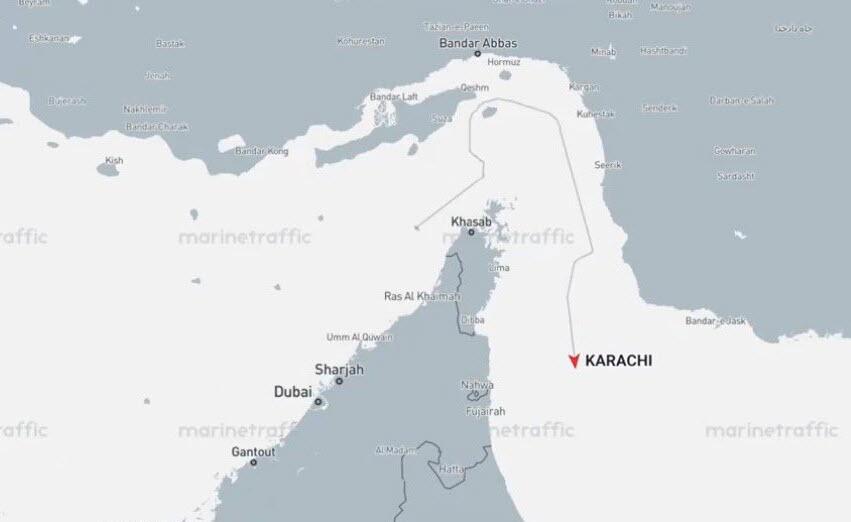
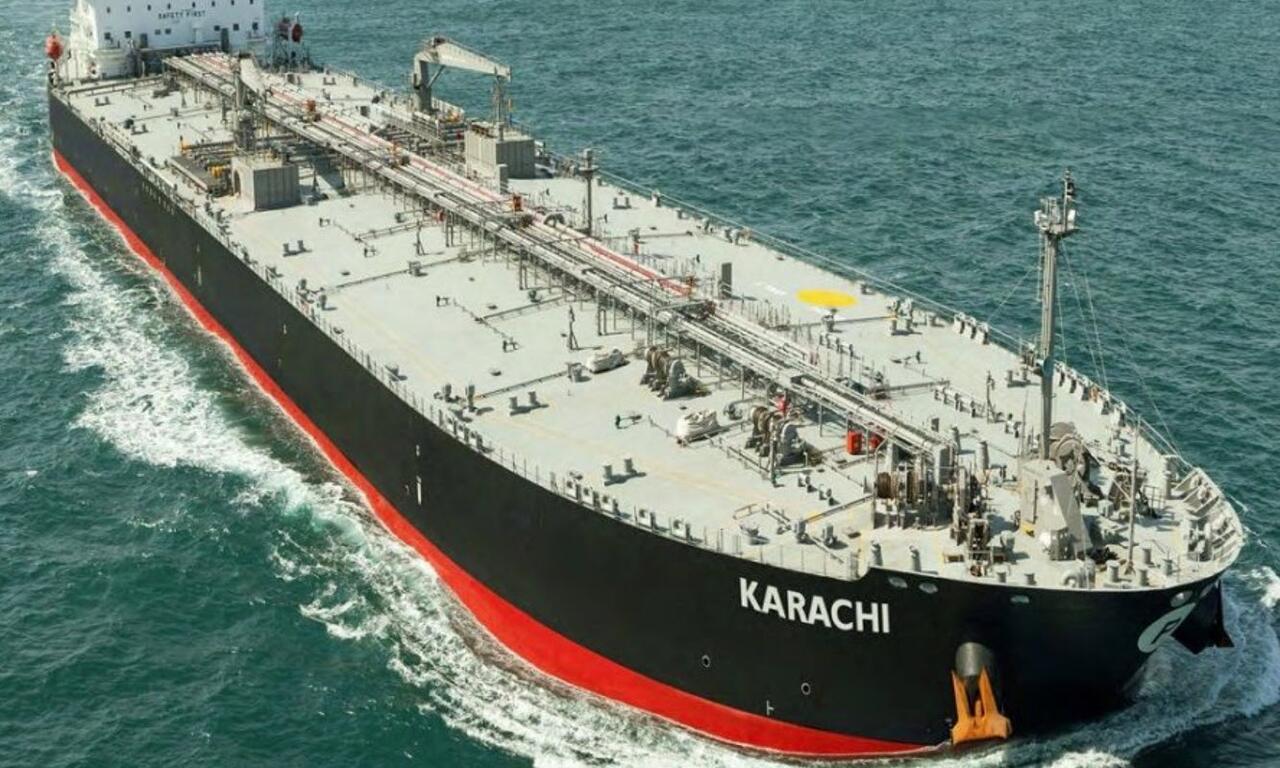
They include two bulk carriers that had called at Iranian ports, and a Pakistani-flagged vessel, the Karachi.
The officer on the Indian LPG ship declined to give specific details of their route. They traveled with their automatic identification system, or AIS, system switched off, according to the officer and AIS data analyzed by Bloomberg, turning it back on after they were safely out into the Gulf of Oman. The officer said the ship was also unable to use GPS, which has been subject to widespread interference since the beginning of the conflict. That meant the crossing took hours longer than usual.
During the crossing, the officer’s ship was in contact with the Iranian navy by radio, he said. The Iranians took details of the ship’s flag, name, origin and destination ports, and the nationality of the crew members – all of whom were Indian – and guided them on an agreed course.
Before they entered the strait last week, sailors onboard the LPG tanker prepared their life rafts, the officer said. They had been anchored in the Persian Gulf for around 10 days when they were told on the morning of Friday March 13 that they had been granted permission to make the transit that night. On the far side of the strait, Indian Navy ships were waiting to escort them, with the national flag flying higher than usual, the officer said. The vessel has since sailed on to India.
Anil Trigunayat, a former Indian ambassador in Jordan and Libya, said that the fact India was able to secure safe passage shows that diplomacy is possible. “Iran also would not want to burn bridges with everyone at this juncture,” he said. “India, if needed, can also play the role of an interlocutor. These factors have collectively led to India getting this window.”
On Saturday, the WSJ reported that Indian Prime Minister Narendra Modi said he reiterated the importance of keeping international shipping lanes open during a call with Iranian President Masoud Pezeshkian. Modi said in a social-media post on Saturday that he condemned attacks on critical infrastructure in the region, which he said threaten stability and disrupt global supply chains. He also “reiterated the importance of safeguarding freedom of navigation and ensuring that shipping lanes remain open and secure,” said the post.
Spoke with President Dr. Masoud Pezeshkian and conveyed Eid and Nowruz greetings. We expressed hope that this festive season brings peace, stability and prosperity to West Asia.
Condemned attacks on critical infrastructure in the region, which threaten regional stability and…
— Narendra Modi (@narendramodi) March 21, 2026
While two India-flagged tankers passed through the Strait about a week ago, India is now negotiating for more ships to be able to cross, Indian maritime government officials have told The Wall Street Journal.
Iran’s threats to ships passing through the strait give the government in Tehran leverage over global energy markets, pushing up prices and creating fears of shortages of oil, natural gas, cooking fuel and fertilizer. Around a fifth of the world’s oil normally passes through the channel. Since the beginning of the war in late February, several ships have been struck by missiles or drones in the strait, at least two seafarers have died, and insurance costs have soared. There have been reports that Iran has mined the waterway.
“It seems that Iran is allowing select vessels to transit Hormuz after verification which takes place during the ships’ transit inside Iranian waters,” said Martin Kelly, head of advisory at EOS Risk Group. “While ships are being allowed to transit, it is mostly only to the benefit of Iran.”
Which is to be expected until some sort of ceasefire deal is reach, or the Iran government capitulates. But even if passage remains limited, recall again that the primary shippers through the Strait are already nations that are viewed as either openly friendly to Iran, such as China, or quasi friendly, such as India and now, Japan. Which means that a significant percentage of the ships that would otherwise be blocked by Iran, can pass through, and the actual limitation to oil and LNG passage is much less than the mainstream media reports.
Tyler Durden
Sat, 03/21/2026 – 16:55
“Complete Other Alias”: Rep. Luna Drops Clinton-Epstein Bombshell
“Complete Other Alias”: Rep. Luna Drops Clinton-Epstein Bombshell
Authored by Steve Watson via modernity.news,
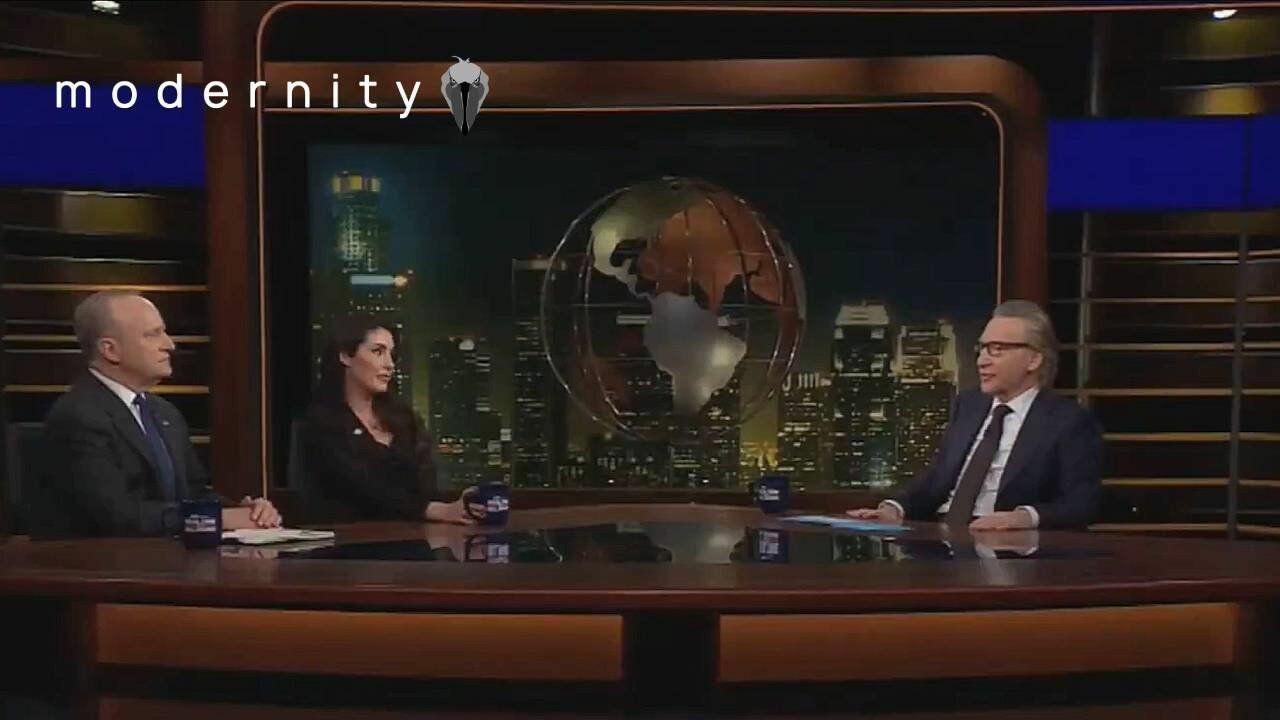
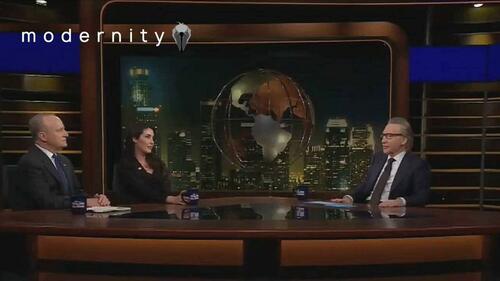
Rep. Anna Paulina Luna appeared on Bill Maher’s show and confirmed what the Epstein document dumps have long hinted at: the former president wasn’t just flying on the Lolita Express — he was operating under an entirely different identity in the files.
This revelation lands as the House Oversight Committee presses forward with its investigation, following the Justice Department’s release of millions of pages under the Epstein Files Transparency Act signed by President Trump. Lawmakers and victims are still pushing for the remaining 2.5 million documents that remain hidden or heavily redacted, according to recent reporting.
Bill Clinton’s connection to Jeffrey Epstein runs deep and documented. The former president flew on Epstein’s private jet multiple times in the early 2000s, often for Clinton Foundation-related trips, and maintained social ties with both Epstein and Ghislaine Maxwell long after red flags emerged. He has repeatedly denied any knowledge of Epstein’s crimes or visits to the island.
👀 Rep. Anna Paulina Luna says documents show Bill Clinton had a “COMPLETE OTHER ALIAS” tied to Jeffrey Epstein.
BILL MAHER: “You have Hillary Clinton come in? This is like three gazillion pages of men behaving badly. And the witness you want is a woman?”
LUNA: “She was issued… pic.twitter.com/v9ZyN1mVfw
— The Vigilant Fox 🦊 (@VigilantFox) March 21, 2026
Via @VigilantFox
Luna laid it out plainly during the interview. When Maher questioned bringing Hillary in, asking, “You have Hillary Clinton come in? This is like three gazillion pages of men behaving badly. And the witness you want is a woman?”
Luna shot back: “She was issued a bipartisan subpoena, meaning the Democrats wanted her in, too. Cause Bill Clinton was all over those logs.”
She continued: “We can get at the whole Jeffrey Epstein ties because I actually talked to Bill Clinton and Hillary Clinton specifically about that, presenting them with the actual document that showed that he had a COMPLETE OTHER ALIAS.”
Maher responded: “You get a lot of information that we don’t all have.”
Luna replied: “I’m happy to come back.”
Maher closed: “We want you. I appreciate it.”
What was Bill Clinton doing with another alias? The question hangs heavy. In the files of a convicted child sex trafficker, a second identity isn’t a coincidence — it’s a red flag screaming for answers.
This isn’t the first time the Clintons have scrambled to contain the Epstein fallout. Bill Clinton’s chief of staff raged after half-naked photos of the former president surfaced in the latest Epstein drop.
Back in 2024, reports also revealed Clinton allegedly threatened Vanity Fair to kill articles about his “good friend” Jeffrey Epstein.
The pattern is clear: suppression, denial, and now — an alias. While the Clintons sat for depositions earlier this year, insisting they saw nothing wrong, Luna’s committee work keeps peeling back layers the deep state hoped would stay buried.
The American people are watching. The files don’t lie, and neither do the subpoenas. Every new detail like this alias proves why the fight for real accountability matters — because when the powerful hide behind fake names in pedophile networks, it’s not just scandal. It’s a warning that the old guard still thinks the rules don’t apply.
Your support is crucial in helping us defeat mass censorship. Please consider donating via Locals or check out our unique merch. Follow us on X @ModernityNews.
Tyler Durden
Sat, 03/21/2026 – 16:20
https://www.zerohedge.com/political/complete-other-alias-rep-luna-drops-clinton-epstein-bombshell