
Category: News

Cook County Jail detainees lean into DePaul University statistics class
While college students were just getting started on their semester studies this fall, five young men were celebrating the successful completion of a DePaul University statistics class held at Cook County Jail. Sugary treats and soda were on hand in the cinder-block classroom at the jail, to celebrate the work of the men in the Department of Corrections beige.
For 15 weeks this summer, Yosef Mendelsohn, senior professional lecturer at DePaul’s College of Computing and Digital Media, taught the data analysis course where, upon completion, the students received four academic credits.
For nearly a decade, DePaul students have learned beside Cook County Jail detainees as part of the Inside-Out Prison Exchange Program, which brings together college faculty outside of prison with students on the inside. But this class was new to the university, adding to its jail programming with a class purely for detainees. Three days a week, Mendelsohn taught the introductory course to participants in the pilot class who needed GEDs, a record of good behavior, and a prerequisite math class to join.
“Why stats?” Mendelsohn said. “I believe it’s so vital … to be able to interpret statements people make to you, and not just take them at face value without thinking critically.”
Mendelsohn wanted to offer a class often considered challenging to many. He wanted to show students who were incarcerated what it takes to understand it. He said every citizen should learn basic statistics. The teaching experience made him reflect on humanity.
“When you talk to these kids … you’re constantly hearing stories about how they’re belittled, underestimated, written off,” Mendelsohn said. “You take being numerate, having a healthy skepticism about facts, and show them they have the tools, the mental capacity to get this stuff … it’s in them and if you can get through this, you can get through almost any course that anyone can throw at you.”
And get through it, they did.
The students earned a certificate and words of encouragement from Mendelsohn and teaching assistant Emma Blair, a senior at DePaul University majoring in community psychology. Blair helmed the study halls and got to know the individuals on the inside. At the ceremony in October, the pair shared their appreciation in getting to know the students — one of whom sometimes dozed off in sessions due to his night job, while another doodled to focus his attention, and another worked ahead because he grabbed concepts quickly.
DePaul University professor Yosef Mendelsohn, right, awards detainee Carlos Martinez, 30, with a certificate of completion during a graduation ceremony for detainees’ full university-level data analysis and statistics course on Oct. 24, 2025, at Cook County Jail in Chicago. (Dominic Di Palermo/Chicago Tribune)
For Everardo Olmos, 29, also known as “Lawlo,” the most difficult lesson in the class was interpreting the data in Z scores — a statistical measurement that describes a value’s relationship to the mean of a group of values.
“I liked math until they decided to throw the alphabet into it,” Olmos said, adding he was always good at math but hated the repetition in it. But with Mendelsohn’s help, his dislike is a bit less pronounced now that he better understands how statistics factor into real life, like running a clothing store business. Films like “Moneyball” and “21” are clearer as is the Monty Hall paradox (of “Let’s Make a Deal” fame) — a probability puzzle where a contestant is given a choice of three doors with a prize.
Allanté Anderson, 38, was always into math in school as a youth, but he never showed his work, so he wouldn’t get credit. “They think you’re cheating if you don’t show the work. You got to show the work the way they tell you to show it,” he said. Now, having taken Mendelsohn’s class, he smiles because he finally understands the greater-than and less-than signs. “That’s one thing I never could get, no matter how many times they told me,” he said.
Roy Molina, 22, was in honors or AP math before his incarceration, so he saw the stats course as a good refresher. He has aspirations to use the credits he’s accumulated inside when he gets out. Molina is interested in architecture, Anderson in criminal law.
“When you come in here, you realize that it could have been anybody in certain circumstances,” Blair said. “It has nothing to do with who somebody is as an individual. It’s their environment.”
With so much material to cover, Mendelsohn knew it would take longer than DePaul’s 10-week quarter system to teach. He lectured for two and a half hours a week across three sessions, amounting to 15 weeks. Students didn’t have the opportunity to study outside of lectures with calculators and pens, or to do research.
Christina Rivers, the Illinois coordinator of the Inside-Out Prison Exchange Program, gave thanks to Mendelsohn and school deans for pioneering the course and setting a standard. As someone who’s been terrified of math since second grade, she’s grateful for instructors like Mendelsohn who demystify the subject.
“Every time I come into these spaces, there’s so much genius in the room — we know this. But so many people on the outside don’t know this,” she said. “Everybody here is so exceptional. I also want to say, you’re not the exception … there’s so many more people in these spaces that are exceptional. St. Vincent de Paul ministered to people in prison. This is the most rewarding way of carrying out the mission.”
DePaul University teaching assistant Emma Blair talks with her students during a graduation ceremony for the university-level data analysis and statistics course on Oct. 24, 2025, at Cook County Jail in Chicago. (Dominic Di Palermo/Chicago Tribune)
Mindy Kalchman, professor emerita at DePaul in mathematics, is a veteran of the Inside-Out Prison Exchange Program. She’s taught her course, Doing Math With Agency, for three years in the jail. Her class was the prerequisite for the statistics class. It focuses on doing math in one’s own way, rather than following the textbook model. She sees Mendelsohn’s statistics course as an extension of hers.
“If you think about doing a problem in your own way, you’re wrong because it’s not what the teacher or textbook told you to do. I saw that lack of agency in doing math as a common barrier to success,” Kalchman said. “The idea was to develop a course where everybody could do it (math) according to what’s meaningful to them. Math is done collaboratively. It’s OK to not get it the first time; mathematicians are always stuck. I was trying to replicate how mathematicians learn to collaborate, to communicate, to ask questions, to be wrong, they learn to be proud of what they know, and they learn that it’s OK to do it how I understand it.”
Mendelsohn is hoping to motivate other faculty to take on projects like this. He’s considering teaching a web design computer science class next. With the statistics class as a model and motivator for students and incarcerated individuals, he’s looking forward to increasing public awareness about those inside —reminding the outside of the untapped potential therein.
“I talk to people on the outside about this and their view of what a jail looks like is so constructed and remedial,” Blair said. “It should be the standard that people are humanized, and that people have access to education … I think education is one of those things that is so tied into restorative justice, because good education is empowerment and teaching yourself that ‘I am capable’ does so much for people, so much more than any type of punishment, in my opinion.”
https://www.chicagotribune.com/2025/11/22/cook-county-jail-detainees-depaul-university/

Biblioracle: Sam Munson weaves a creepy spell in ‘The Sofa’
As much as possible, I try to avoid being scared in the “creeped out” sense.
And yet there’s something undeniably compelling when a story manages to shake your hold on what is and isn’t possible, what is and isn’t real.
“The Sofa,” by Sam Munson, managed to walk this line and really, really creeped me out.
In general, I do not seek out this experience in my reading. Shirley Jackson and Edgar Allen Poe are wonderful writers whose stories I’ve read, and yet even thinking about “The Haunting of Hill House” or “The Tell-Tale Heart” will cause my pulse to tick up.
I had a good childhood friend who had his birthday parties at the local forest preserve. His father excelled at ghost stories and he told one at the culmination of each party, just as dusk was falling. I experience a faint queasiness at the mere memory. More recently, novels like Samanta Schweblin’s “Fever Dream” and Jeff VanderMeer’s “Southern Reach” series had me gripped, ready to believe scary and impossible things are actually happening.
These narratives traffic in what’s known as “the uncanny,” a sense that the ordinary and mysterious are in close proximity to each other, and because of this, your sanity may be in a more tenuous place than you would hope.
“The Sofa” is a masterful example of conjuring this effect. I did not particularly enjoy reading this book because it kept creeping me out, but I couldn’t stop thinking about it.
“The Sofa” is the story of Mr. Montessori, husband to Mrs. Montessori and father to two boys, Josep, a teenager, and a younger boy who is exclusively referred to as his “younger son,” rather than by name.
After a long day at the beach, he and his family slip into the house, not bothering to turn on the lights. In the morning, Montessori is awakened by his younger son, who bids him to come to the living room. He sees that his old comfy couch has been replaced with a very different sofa, “narrow and shallow, high up on tall, yellow legs with volute feet, and covered with a yellow-green striped fabric.”
No one has broken in. It must be a prank, but it is inexplicable and vaguely unsettling. The police say they will be on the lookout for the couch, but at least Montessori has a replacement, right?
Things get stranger over time. The downstairs toilet mysteriously flushes and the sink runs, one of the knobs covered in frost. Montessori has visions of a man in a bowler hat, a figure that appears on a drawing from his younger son that has been on the fridge and that no one in the household will claim to having added. Montessori experiences incredible difficulties trying to get a replacement for the original sofa and haulers contracted to take the new sofa away cannot seem to come through on their promises.
Montessori pursues his one lead, a name on a slip stitched to the yellow-green couch, MEERVERMESSER, always seeming to encounter a man with a “large mole near his mouth that resembled a fly. Bristly, as if iridescent.”
I swear to you, I am creeping myself out just recalling the book. Maybe I am particularly vulnerable to this effect, but through his use of language, repetition, and pacing, Munson weaves a spell.
There are two ways to read this book. One as I did, in bits, putting it down for a breather when the tension is too much. The other is all the way through — it is a slim 134 pages, doable in a sitting — trying to see how much you can take.
John Warner is the author of books including “More Than Words: How to Think About Writing in the Age of AI.” You can find him at biblioracle.com.
Book recommendations from the Biblioracle
John Warner tells you what to read based on the last five books you’ve read.
1. “Great Big Beautiful Life” by Emily Henry
2. “Kill for Me, Kill for You” by Steve Cavanagh
3. “Atmosphere” by Taylor Jenkins Reid
4. “Margo Has Money Troubles” by Rufi Thorpe
5. “All Fours” by Miranda July
— Julie H., Chicago (on behalf of her book club)
Here’s a book I periodically champion because I think it’s great. I also think it will leave the book club plenty to discuss, “Morningside Heights” by Joshua Henkin.
1. “The Caretaker” by Ron Rash
2. “Strangers on a Train” by Patricia Highsmith
3. “Why We Die: The New Science of Aging” by Venki Ramakrishnan
4. “The God of the Woods” by Liz Moore
5. “The Lord of the Flies” by William Golding
— Mark L., Deer Park
One of my favorites from earlier this year that has me still thinking about it feels like a good fit for Mark, “The Passenger Seat” by Vijay Khurana.
1. “The Shoemaker’s Wife” by Adriana Trigiani
2. “Hello Beautiful” by Ann Napolitano
3. “Birnam Wood” by Eleanor Catton
4. “The Great Divide” by Cristina Henriquez
5. “Exhibit” by R.O. Kwon
— Alice R., Highland Park
I hope Alice will connect with the spiky humor and sneaky emotion of Weike Wang’s “Rental House.”
Get a reading from the Biblioracle
Send a list of the last five books you’ve read and your hometown to biblioracle@gmail.com.
https://www.chicagotribune.com/2025/11/22/biblioracle-sam-munson-the-sofa/

Her dad was taken by immigration agents. Now a 12-year-old girl fears she’s lost her only living parent.
The bell rang at Logan Elementary School on Chicago’s Northwest Side and 12-year-old Delila waited outside for her father to pick her up as usual.
She searched the crowd, but she couldn’t find him anywhere. Instead, “I found the landlord’s husband,” the seventh grader said.
The landlord’s husband, along with Delila’s grandfather, broke the news that immigration agents had arrested her dad. Pablo Blancas-Gomez — Delila’s sole parent — had been arrested by federal immigration authorities during a raid earlier that day on Chicago’s North Side.
The girl grew quiet for a second. Then she burst into tears.
Usually she had warned her father about immigration agents before he went to work on construction sites.
“That one day he was taken, that day we didn’t say anything,” Delila said from her new home with her half-sister, Kassandra Ramirez. She looked down toward the table. “Can I get a second chance?” she choked out.
Delila has been living with her sister Kassandra Ramirez since her father, her sole parent, was taken in an immigration raid on Oct. 21, 2025. (E. Jason Wambsgans/Chicago Tribune)
Delila has not seen her father since his Oct. 21 arrest while working on a home improvement project in the West Ridge neighborhood. The 45-year-old remains in custody at a U.S. Immigration and Customs Enforcement facility more than 1,500 miles away in El Paso, Texas. His hearing is scheduled for Dec. 2.
Their separation illustrates a tragic consequence of the Trump administration’s recent immigration crackdown: Children have been left behind after a parent is detained or deported, often without a formal plan for their care or process for reuniting with their mothers and fathers.
Delila’s father has been her primary caretaker since her mom died in 2023. Now her half-sister, Ramirez, has assumed all the responsibilities of a parent overnight. The 32-year-old is still trying to figure out the logistics of caretaking, from balancing school drop-offs and pickups while working a full-time job, to the finances of providing for a child.
“Pablo was taking care of her, that’s her dad,” she said. “That’s something I didn’t plan.”
Immigration experts say the federal government has no comprehensive system to track minors who are separated from their parents upon detention or deportation.
Some of these children have been taken in by relatives or trusted caretakers. Others could end up in foster care.
All undergo the upheaval and trauma of abrupt separation from their primary caregivers.
The result is a new nationwide “family separation crisis,” said Kelly Albinak Kribs of The Young Center for Immigrant Children’s Rights.
“Hundreds, if not thousands, of families are being torn apart,” which will have a long-lasting and rippling effect on children and families, said Kribs, who works with immigrant families involved in the state welfare system in Illinois and across the country.
She drew parallels to the mass family separations during President Donald Trump’s first term spurred by theadministration’s so-called “zero-tolerance” immigration policy, when nearly 5,000 children were forcibly separated from their families by the United States government at the southern border between 2017 and 2021.
Roughly 1,360 of those children still have not been reunited with their parents, according to a December 2024 Human Rights Watch report.
Today, it’s unclear exactly how many minors have been separated from a parent or guardian in the Chicago area and across the country amid the administration’s roving immigration enforcement.
Most recently, U.S. Border Patrol was in North Carolina after pulling back on its Operation Midway Blitz in Chicago, with agents planning to mobilize in New Orleans next, according to reports.
Amid its operations, Department of Homeland Security Assistant Secretary for Public Affairs Tricia McLaughlin said in an email that ICE “does not separate families.”
“Parents are asked if they want to be removed with their children or if they would like ICE (to) place the children with a safe person the parent designates,” she said. “This is consistent with (the) past administration’s immigration enforcement.”
She added that parents in this situation also have the option of self-deportation.
The agency did not say whether it tracked cases of family separations or how many children have been left stranded due to parental detention or deportation.
A July 2025 ICE policy states that when a parent is detained the agency “should, to the extent operationally feasible, facilitate the (detainee’s) efforts to make arrangements” for their minor children.
The directive also says agency’s enforcement actions should not “unnecessarily infringe upon the legal parental guardianship rights and obligations” of parents and legal guardians who are primary caretakers of minors in the United States.
Yet Illinois officials have repeatedly argued that this isn’t the case in practice.
During a September press conference, Gov. JB Pritzker condemned the “aggressive tactics” of federal immigration officials in the Chicago area, including “leaving children stranded after their parents were arrested.”
News reports tell the stories of many minors like Delila who have been kept from their parents due to immigration enforcement, chronicling the stress, fear, mental health strain and anguish such separations can inflict on families.
A CNN report in September found more than 100 U.S. citizen children — ranging from babies to teens — were left parentless after immigration enforcement officials detained their mothers and fathers.
The case of a recently deported 56-year-old widower, single parent and sole caretaker for four U.S. citizen children was highlighted last month in a sweeping federal lawsuit alleging inhumane and unsafe conditions at the ICE holding facility in west suburban Broadview.
“His children, who are already grieving the loss of their mother from earlier this year, now must process the sudden loss of their father,” the lawsuit said.
A Tribune story in June recounted the anguish of a 6-year-old girl whose mother was detained by ICE outside an office in downtown Chicago during what was supposed to be a routine check-in. The child — who was left behind without a guardian or legal path for reunification — couldn’t understand why her mom had suddenly vanished and wasn’t in the audience during her kindergarten graduation.
Camerino Gomez with his partner’s daughter, Gabriela Pindea, 7, outside their home in Chicago on June 11, 2025, after her kindergarten graduation. Gabriela’s mom Wendy was detained by ICE in June. (Antonio Perez/Chicago Tribune)
Now, more immigrant families locally and across the nation are scrambling to find information about temporary guardianship arrangements to transfer custody of their children to a designated person in the case of an emergency like detention or deportation.
Rebekah Rashidfarokhi of Chicago Volunteer Legal Services has been inundated with requests for training or information about short-term guardianship forms.
She used to receive two or three calls about these forms a year. Now she gets two or three calls a day.
“We are getting exponentially larger numbers of calls and requests, more than I can really accommodate,” said Rashidfarokhi, director of guardianship and immigration programs for children.
Delila said she has difficulty sleeping. First she lost her mom. Now she fears she might lose her father as well.
“I lost my best friend,” Delila said. “He’s my dad, but he’s my best friend too.”
Delila is strong, but her dad is everything to her; their father-daughter bond has grown significantly since her mother died two years ago, Ramirez said. Her sister receives support from her teachers at school and has had counseling.
About two days after Blancas-Gomez was arrested, the dad and daughter spoke over the phone.
The call lasted around two minutes.
She asked him where he was; he indicated he was at the ICE facility in Broadview at the time.
Then his voice cracked, she recalled.
“I love you,” he said.
“I love you too,” Delila replied.
‘Second chance’
Delila and her dad used to eat spaghetti covered in his special sauce made of mayo and ketchup.
They would play Pac-Man and go for rides together in his red work truck, Delila recalled.
It was the same vehicle that was left on the side of the road with the key still in the ignition when immigration enforcement took Blancas-Gomez while he was working at home on the day of the raid. At least 12 people were taken in the sweep.
The office of the 40th Ward was notified of immigration enforcement activity in the area. Ald. Andre Vasquez and his chief of staff, Cat Sharp, drove to the site and found the abandoned truck.
Video footage of the scene reviewed by the Tribune showed Blancas-Gomez wearing a black beanie next to his red truck, his hands behind his back.
Pablo Blancas-Gomez was picked up by federal immigration agents Oct. 21, 2025, on Chicago’s North Side. (social media)
“It’s hard to explain unless you’re going through it,” recalled Ramirez, who shared a mother with Delila and has known Blancas-Gomez for many years. “Like in the movies, everything just stops and it just sounds like a buzzing in your ears.”
Department of Homeland Security officials referred to Blancas-Gomez as “a violent criminal illegal alien from Mexico” in the agency’s statement to the Tribune.
“His rap sheet includes multiple arrests for domestic battery, theft, and criminal property damage,” McLaughlin said, adding that Blancas-Gomez had been removed from the United States three times previously before reentering the country a fourth time, which is a felony.
Cook County court records show Blancas-Gomez was charged with domestic violence and criminal property damage in 2019, although the case was dropped shortly afterward. He also was found not guilty in a labor theft case that started in 2015.
The day Blancas-Gomez was taken, at least a dozen people were detained by immigration agents in different locations, Sharp said.
Multiple children have reached out about their parents being taken, she added.
“That piece especially has been the most heartbreaking,” she said. “In some instances, we’ve heard of neighbors just taking in kids temporarily.”
In a perfect world, vulnerable families should preemptively identify a caretaker in case of possible detention or deportation, which can be done by filing a short-term guardianship form, said Rashidfarokhi of Chicago Volunteer Legal Services.
In the absence of that form, children can be taken in by a relative or loved one who cares for them adequately, she said. When no one steps in or the caretaker does not take adequate care of them, the Illinois Department of Children and Family Services might become involved.
“Only when necessary and all other options are explored, the State of Illinois can seek to have a legal guardian appointed to ensure that a youth without an adult caregiver is provided proper care and to consent to legal, medical and educational matters on the youth’s behalf,” states a DCFS brochure on support for families facing immigration challenges.
Onward Neighborhood House is one of many local organizations that have contacted Chicago Volunteer Legal Services for workshops on short-term guardianship forms this year.
Nearly 200 people have attended these workshops or met with case managers since then, said Jonathan Barrera, coordinator at the Illinois Welcoming Center, which is affiliated with Onward Neighborhood House.
Before January, Barrera had never even heard of short-term guardianships. Now he knows of dozens of families that have sought case managers to set one up.
Others have opted to self-deport, taking their children with them to the country they once fled, due to fears of being detained by federal authorities and potentially sent to a maximum security prison in El Salvador, he said.
“That’s how bad the fear is,” Barrera said.
More than 250 Venezuelans expelled from the United States and sent to that prison earlier this year under the Trump administration have endured torture and systematic human rights violations there, according a report released earlier this month by Human Rights Watch and the human rights organization Cristosal.
Long-term consequences
At home on a recent afternoon, Delila watched a video her father sent her before his detainment and giggled at her phone.
“It’s just Pablo being Pablo,” Ramirez said, commenting on the footage Blancas-Gomez had texted his daughter sometime last month.
The video clip is Delila’s last reminder of what life was like when her family was intact.
Now she doesn’t know if her father will ever be able to return to their Chicago home.
“I know my dad’s alive but it still feels like he’s gone,” Ramirez recalled Delila telling her.
Related Articles
US Sen. Ruben Gallego, a Chicago native, denounces immigration raids in return home
Federal gun charges unsealed against man arrested after alleged shots at immigration agents in Little Village
Supreme Court meets to weigh Trump’s birthright citizenship restrictions, blocked by lower courts
Read the ruling: Injunction provides new look at ‘Operation Midway Blitz’
Injunction ruling provides new look at Operation Midway Blitz, from tear gas to agent using ChatGPT to help write report
Blancas-Gomez has been living in the United States for nearly two decades, running his own business as a repairman and mechanic.
He married the mother of Delila and Ramirez, who was a U.S. citizen, and had been working toward obtaining his citizenship, Ramirez said. But when his wife died and he took on sole parenting responsibilities, that process went uncompleted, she said.
Ramirez is trying to be optimistic about the outcome without getting her, and Delila’s, hopes up.
Delila, age 12, has been living with her sister since her father was taken in an immigration raid on Oct. 21, 2025. (E. Jason Wambsgans/Chicago Tribune)
Family separation due to immigration enforcement can take many different forms under the current administration, said Dr. C. Nicholas Cuneo, assistant professor of pediatrics and medicine at the Johns Hopkins University School of Medicine and executive director of HEAL Refugee Health and Asylum Collaborative.
“What I’ve encountered are families who have had one parent who has been detained and I’ve seen the impact that has had on other family members,” he said. “I’ve also seen families who are affected by vulnerable immigration or unstable immigration status — asylum pending even. They are living in fear and that is impacting the child.”
He has also seen cases where a parent wonders if they should send their U.S. citizen children to live in the care of relatives in their home country, to avoid forcible separation.
A family’s planning for emergency detention or deportation becomes even more complicated when children have special health needs or require complex medical care, especially if the primary caregiver is the only person who has the training and knowledge to adequately care for those conditions, he added.
“So the threat of detention for that primary caregiver can have potentially devastating consequences for that child if there’s nobody else who’s been trained or designated as an alternative guardian,” he said.
The ongoing family separation crisis in many ways mirrors the “zero-tolerance” era of the first Trump administration, said Kribs of The Young Center.
Kribs described the “profound and traumatic impact” this policy has had on families.
“Parents and children are living through the same separation today, every day,” though these separations are now unfolding inside the country instead of at the border, Kribs said.
Research shows children who endure family separation as a result of immigration enforcement often suffer from greater depression and anxiety symptoms as well as behavioral problems and difficulty concentrating in school, said Jodi Berger Cardoso, professor at the University of Houston Graduate College of Social Work.
Other factors can compound that trauma including having a parent or caregiver detained in the presence of the child or prior exposure to traumatic events, she said.
Sometimes in order to reunite with deported parents, children are forced to move to another country they’ve never lived in, and there can be negative social and emotional consequences to this upheaval as well, Cardoso said.
“When you expose children to ongoing stress and trauma during critical periods of development like childhood and adolescence, it increases their vulnerability for mental health problems in the present but also across the life cycle,” she said. “So we’re changing trajectories possibly of children’s lives based on the policy decisions we’re making now.”
https://www.chicagotribune.com/2025/11/22/chicago-children-left-behind-immigration/

Illinois National Guard housed at state site as questions about Trump deployment costs grow
Some 300 Illinois National Guard members, activated by the Trump administration as part of the Operation Midway Blitz deportation raids and over the objections of Democratic Gov. JB Pritzker, have spent more than a month housed not at a federal installation but at a state-owned National Guard training site — an arrangement that comes as determining precise costs for the Guard deployments in Illinois and across the nation remains a moving target.
Despite Pritzker’s opposition to the deployments as a whole, he’s allowed the federalized Illinois National Guard troops to be stationed at the Illinois Army National Guard training area in Marseilles, about 75 miles southwest of Chicago.
Republican President Donald Trump activated the troops earlier in the fall to ostensibly assist and protect U.S. Immigration and Customs Enforcement and Border Patrol agents while they carried out immigration raids in the Chicago region. Unlike the Illinois troops, about 200 Texas National Guard troops that Trump federalized and sent to Illinois were stationed at the federal U.S. Army Reserve training center in Elwood near Joliet.
Other than for a single day in October, all of the troops stayed on the sidelines amid numerous court battles and judicial rulings. The troops from Texas left Illinois last week, but the Illinois troops remain at Marseilles, state officials confirmed to the Tribune.
The lack of any substantive work by Guard troops on the streets of Illinois has ramped up criticism that the Trump deployments in Illinois were a waste of money. But determining how much has been spent remains elusive.
In addition to deploying troops to Illinois, Trump also claimed he needed to federalize Guard troops in Los Angeles, Washington, D.C., Portland, Oregon, and Memphis, Tennessee, to assist with immigration raids, crack down on protests or assist in deterring crime. The costs for all those deployments were estimated at about $473 million by the progressive-leaning Institute for Policy Studies, which derived its figures from public records and the news website The Intercept.
Most of that came from spending in L.A. and Washington, but the portion spent for Illinois and Texas Guard member deployments to the Chicago area was estimated to cost $12.8 million — which includes $8.15 million for the 300 Illinois troops from Oct. 4 through Nov. 15 and about $4.66 million for the 200 Texas troops from Oct. 10 through Nov. 15, according to the study.
Citing figures from the Army, Democratic Illinois U.S. Sen. Dick Durbin’s office said the expected operations, maintenance and personnel costs for federalizing all 500 National Guard soldiers in Illinois for a full two months was $19.4 million, which works out to $323,333 per day.
At an unrelated news conference in Chicago on Friday, Durbin said the Trump administration has thrown money away with its National Guard deployments, considering a very small percentage of the people arrested by immigration officers during Operation Midway Blitz had criminal histories.
“Ninety-eight percent of that money was wasted, wasted to create a reign of fear and terror in this Chicago community,” Durbin said. “If you want to help and reduce crime, and we all do, invest in law enforcement that is in the community and effective and it shows results. This moving National Guardsmen from Texas and other states is a waste of money for taxpayers.”
“I don’t want to take anything away from the National Guard. They’re wonderful people. I work with them all the time. And they responded as they were required to do under law,” he said. “But when it came to actual results to justify the money spent, I’m sorry, it just wasn’t there.”
David Harris, who once served as the Illinois National Guard’s adjutant general, questioned the purpose of having state Guard members activated by the federal government.
“The frustrating thing in my mind as the former adjutant general is the fact that they’ve been taken away from their families, they’ve been taken away from their jobs and put in a situation where they’re just sitting and doing routine training operations that really didn’t need to occur,” said Harris, who is now director of the Illinois Department of Revenue. “If I were still the adjutant general, I would generate a bill to send to the federal government, saying ‘you, the federal government, are using one of my state facilities and I need to be reimbursed for the additional expense.’”
Spokespeople for the White House, Pentagon, Texas National Guard and the nonpartisan Congressional Budget Office either did not respond to inquiries about National Guard costs or could not provide any figures.
Pritzker, a chief Trump rival and potential 2028 White House contender, vehemently opposed the deployment of all Guard troops, calling it unnecessary and part of a Trump political stunt to force Guard members to work as essentially police officers.
“I refuse to stay silent about this and let the slow encroachment of our freedoms and liberties continue unabated,” Pritzker said days before the Trump administration formally deployed the Guard in early October. “The state of Illinois and all of us will continue to fight this with everything we have.”
The Marseilles National Guard Training Center in downstate Marseilles, Nov. 20, 2025. (E. Jason Wambsgans/Chicago Tribune)
Pritzker, days later, even helped spearhead a state lawsuit to prevent Guard troops from being deployed onto the streets. Nevertheless, after the Illinois National Guard troops were federalized, the governor allowed them to use the state facility in Marseilles.
In a statement last week, a Pritzker spokesperson said the use of the Marseilles training ground ensured the federalized Illinois troops had enough room to be accommodated, allowed them to stay “close to home,” and provided them access to “appropriate facilities,” which included functioning showers, internet access and a small United Service Organization center for recreational activities.
“Governor Pritzker has always prioritized the wellbeing of Illinois’ soldiers and their families, and has long advocated for President Trump to stop using the brave men and women of our military as political pawns,” Pritzker’s office said in the statement. “These service members may be under federal orders, but they are still Illinoisians, and the Governor is committed to making sure they are treated with dignity.”
The governor’s office added that the use of the Marseilles site and other associated costs, such as meals and lodging, “are either directly paid by the federal government or 100 percent federally reimbursed. The Illinois Army National Guard and U.S. Army North are responsible for coordinating the payment and reimbursement process.”
The Illinois National Guard members were called up after U.S. Defense Secretary Pete Hegseth issued a memo on Oct. 4 announcing their deployment for at least 60 days to protect ICE agents and other federal government personnel “at locations where violent demonstrations” would take place in the Chicago area against the administration’s efforts to deport en masse immigrants in the U.S. without legal permission. The Texas Guard members were called up around the same time but they were deployed for only 41 of those days before being sent home. The Trump administration is still overseeing the federalized Illinois Guard troops.
Despite often tense clashes between federal immigration enforcement officers and protesters, including during regular protests outside an ICE processing facility in west suburban Broadview, the Illinois National Guard members were never deployed to Broadview or the other locations of protests, as they were kept off the streets due to the ongoing legal dispute between the state of Illinois and the Trump administration, which is now before the U.S. Supreme Court.
While the National Guard has at times been called out against the wishes of a governor, such as during the civil rights clashes of the 1960s, this is the first time in history that the National Guard has been called to Illinois against the wishes of its governor, a former commander of the Illinois National Guard said.
The effort to deploy the National Guard with federal immigration agents puts soldiers in a sticky situation, said retired Maj. Gen. Richard Hayes Jr., who commanded the Illinois National Guard under Republican Gov. Bruce Rauner from 2015 to 2019.
“Politics is not a matter for the military,” Hayes said. “Soldiers didn’t sign up to be in the middle of the politics of this, I guarantee you.”
Soldiers love to serve, he said, as when the Guard responded to help victims of Hurricane Katrina. Hayes said Guard members are trained to respond to local disasters such as flooding, foreign deployments for war, and civil disturbances. Most are not trained in law enforcement, he said.
Despite the court order temporarily prohibiting deployment of the National Guard in Illinois, state Guard members continue to serve worldwide, he said. Some 800 soldiers were deployed this fall, carrying out security missions, making infrastructure improvements and handling logistics from the Middle East to Poland and Africa.
At any time, Guard members may be training as snipers, combat medics, safely containing explosive substances, serving on a counterdrug task force, or training with foreign allies, and running a quasi-military camp for at-risk high school-age kids. All this from a force that is more than 80% part time, serving one weekend a month and two weeks a year.
But the deployment of the Texas National Guard in Illinois was another matter.
“I call you up, we ship you to (near) Joliet, you sleep in a construction trailer away from your job and family — that’s not what I would like,” Hayes said.
At a news conference this fall with Pritzker, former Illinois National Guard commander Maj. Gen. William Enyart spoke out against the deployments.
Enyart served some 35 years in the military and led the Guard’s deployment against Mississippi River flooding in 2011 before becoming a one-term Democratic downstate congressman in 2013.
He is also a member of the nonprofit, nonpartisan National Security Leaders for America, which opposed recent National Guard deployments and condemned Trump’s call to use cities as training grounds for troops.
Enyart called it “offensive” for immigration enforcement officers to be dressed and armed like soldiers while arresting detainees, arguing it confuses the public’s distinction between police and the military.
“They signed up to be part-time soldiers, not part-time policemen,” Enyart said of the Guard troops.
Chicago Tribune’s Dan Petrella contributed.

Letters: Chicago’s many neighborhoods beg to be explored
Kudos to freelance journalist Jesse Wright for his Nov. 19 piece (“When it comes to tourism, it’s all about diversity”) encouraging the promotion of tourism throughout Chicago and not just Millennium Park, Navy Pier and the Magnificent Mile!
As a nonnative Illinoisan who settled 50 years ago in the Chicago area in large part because of the city’s many attractions — from parks, museums and restaurants to sports and architecture — in spite of its well-known high taxes and problems with crime and corruption, I have long thought that the perfect yearlong sabbatical would be to spend a few days exploring many of the city’s different neighborhoods.
And if — like most of us — you can’t do that, then at least try a few new neighborhoods a year.
From Dearborn Park to Rogers Park, Chinatown to Greektown, Little Village to Little Italy, and Wrigleyville to Andersonville, the city of Chicago offers some of the most historic, ethnically and culturally diverse, and architecturally interesting, places on the planet.
(Granted, we don’t have the thousand-year-old history of some of the cities in Europe, but we do have the world’s first skyscraper, the site of the world’s first Ferris wheel and the first sustained nuclear reaction, and some of the world’s most famous and distinctive buildings, from art deco urban masterpieces to classic Chicago bungalows. And you don’t need a passport or a plane ticket to see them.)
An architectural river cruise will acquaint visitors and long-term residents alike with some of the sights and much of the history of downtown, but a walk down Clark Street or (as Wright suggests) down Devon Avenue will be just as informational and educational, with the added advantage of being able to get something tasty to eat.
On that note, I need hardly mention that Chicago is one of the world’s great restaurant towns, from hot dogs to fine cuisine, much less its many world-class museums and major league sports teams, each one of which has won at least one league championship in my half decade here.
My constant encouragement to suburban neighbors whose view of the city is only the shootings they see on the news is to come into Chicago and to see it with your own fresh eyes once again.
As the old Life cereal commercial featuring Mikey encouraged: Try it. You’ll like it.
— David Applegate, Huntley
The magic of Alinea
I went to Alinea for the first time one recent night. Now, I’d wager that I enjoy restaurants and a good experience at them more than most. I won’t argue the Michelin star thing, but I’d like to say that the whole experience was magical. The food was delicious and inventive, and the staff was impeccably trained.
It was “food theater” at its finest. To top off the evening, during the “balloon” course, a young man proposed to his lady. She said “yes” in her best helium voice.
Well done, Chef Achatz. Please keep the balloon.
— Kat Linville, Barrington
Too much NIMBYism
Reading the Tribune article about those who are objecting to building a data center in Naperville (“Experts explain impact of data centers,” Nov. 19) reminded me of the BANANA principle: Build absolutely nothing anywhere near anything.
Come on, people. Quit throwing obstacles in front of anything that resembles progress.
— Charles VanDercamp, Chicago
End the ‘war on drugs’
In response to Daniel DePetris’ column (“The death of a mayor brings Mexico’s cartel violence to the fore,” Nov. 11) about the tragic drug cartel murder of the mayor of Uruapan, there is only one way to stop the drug trade — take away the money incentive.
Let’s give the stuff away and use the money spent on interdiction for treatment. Prohibition didn’t work, and neither has the “war on drugs.” Now we have President Donald Trump illegally killing people on boats in the Caribbean and the Pacific.
It is tragic that people get addicted to drugs, but many have gotten addicted to legal drugs. A former New York City police commissioner once said we should have two sets of U.S. currency — one only legal inside the U.S. and the other only legal outside the U.S.
It’s time to think outside the box because what we have been doing hasn’t worked.
— Joanne Zolomij, Evanston
Sailors’ trip back home
I volunteer with the USO at Naval Station Great Lakes. Great Lakes is the largest training center in the Navy. The base essentially shuts down on Dec. 19. This annual event is called “Mass Exodus.” Buses line up to transport sailors to the Milwaukee and Chicago airports.
Many of these young men and women have never been away from home before. They are beyond excited to be with their families and friends for the holidays.
When you see a sailor at the airport traveling before Christmas, thank them for their service. Offer to buy them a Starbucks coffee or just wish them, “Happy holidays.” It will go a long way for both of you!
— Bruce Nathanson, Glenview
Note to readers: As part of our annual Thanksgiving tradition, we’d like to hear from you about what is making you feel thankful this year. (Sincere thoughts only, please.) Email us a letter of no more than 400 words by this Sunday to letters@chicagotribune.com. Be sure to include your full name and your city/town and use the subject line “Thankful.”
Submit a letter, of no more than 400 words, to the editor here or email letters@chicagotribune.com.
https://www.chicagotribune.com/2025/11/22/letters-112225-chicago-neighborhoods-tourism/

The Tribune’s Quotes of the Week quiz for Nov. 22
Thanksgiving is right around the corner, and with it pie-baking, turkey-basting and wishbone-breaking. If you’re still figuring out your plans for Turkey Day, check out our guide for where to get ready-made meals, desserts and the perfect wine pairings to boot. But before you start dreaming about turkeys and pies and football (oh my!), let’s get into the news.
On Tuesday, Congress passed a bill to compel the Justice Department to release its files on Jeffrey Epstein, and on Wednesday night, President Donald Trump signed it. The Justice Department now has 30 days to produce its case files on the convicted sex offender. Plus, Tom Pritzker, the billionaire Hyatt Hotels magnate and cousin of Illinois Gov. JB Pritzker, was repeatedly named in documents released last week by the Epstein estate, including emails between the two men from long after the late financier pleaded guilty to soliciting a minor in 2008.
Democrats and Republicans in Washington also came together to vote on a resolution criticizing U.S. Rep. Jesús “Chuy” García for announcing his retirement at the last minute and clearing the way for his hand-picked successor to take office. Meanwhile at the City Hall-County Building, the Cook County Board swiftly approved its $10.12 billion 2026 budget, while the Chicago City Council’s Finance Committee voted down Mayor Brandon Johnson’s budget — which included a controversial corporate head tax.
A Chicago man is facing a federal terrorism charge for allegedly dousing a 26-year-old woman with gasoline and lighting her on fire in a seemingly unprovoked attack on a Blue Line train Monday night. The 50-year-old man charged in the attack is also suspected to have started a fire at City Hall last Friday and has been ordered detained while awaiting trial. Seeking to quell any concerns about safety on public transit, Mayor Johnson said that the act of violence was not “some sort of trend,” though blamed the criminal justice system, noting the suspect’s long history of felony charges.
Immigration enforcement efforts appear to be somewhat slowing down in Chicago, as Border Patrol moves its agents and operations to other Democratic-run cities such as New Orleans and Charlotte, North Carolina. Still, the courts have been busy working through a slew of cases. A judge dismissed the charges against a woman shot by Border Patrol in Brighton Park, a federal appeals court temporarily halted the release of hundreds of Operation Midway Blitz detainees and a federal judge issued a 233-page written ruling on the use of force by immigration agents in and around Chicago. That ruling, however, was stayed Wednesday by the 7th U.S. Circuit Court of Appeals, which called it “overbroad” and said it improperly targets virtually the entire executive branch.
Pope Leo XIV also spoke out this week against the Trump administration’s immigration crackdown, backing U.S. bishops who condemned the mass deportation of migrants and sharing his concerns about enforcement actions in Chicago with Gov. Pritzker during his visit to Rome. But Pritzker wasn’t the only one granted an audience with the pontiff this week. Justin Ishbia, the future owner of the Chicago White Sox, met with the pope at the Vatican on Wednesday, inviting the world’s most prominent Sox fan to throw out the first pitch at the team’s future ballpark and gifting him an autographed 2005 World Series jersey.
The Chicago Bears also appear to have been blessed by His Holiness. The team won yet another nail-biter this week, with a 48-yard field goal by Cairo Santos as time expired pushing Chicago to a 19-17 victory over the Minnesota Vikings. The Bears are now first in the NFC North with a 7-3 record, but will the team’s spate of lucky, last-minute wins continue? The Bears take on the Pittsburgh Steelers on Sunday at Soldier Field — looking to extend their three-game winning streak and keep their division lead.
In other Chicago sports news, the Blackhawks secured their 10th win of the season Tuesday after Connor Bedard scored his second career hat trick. Unfortunately, the success did not last as the Hawks suffered a heartbreaking loss to the Seattle Kraken on Thursday. The University of Illinois men’s basketball team didn’t fare much better in their game at the United Center. The No. 8 Illini were defeated by No. 11 Alabama 90-86 on Wednesday night.
The quotes team will be taking a break next week for the holiday, but we’ll be back with another quiz in the first week of December. Until then, have a nice Thanksgiving and take care out there!
Without further ado, here’s the Tribune’s Quotes of the Week quiz for Nov. 16 to 22. Missed last week? You can find it here or check out our past editions of Quotes of the Week.
https://www.chicagotribune.com/2025/11/22/quotes-quiz-november-22/
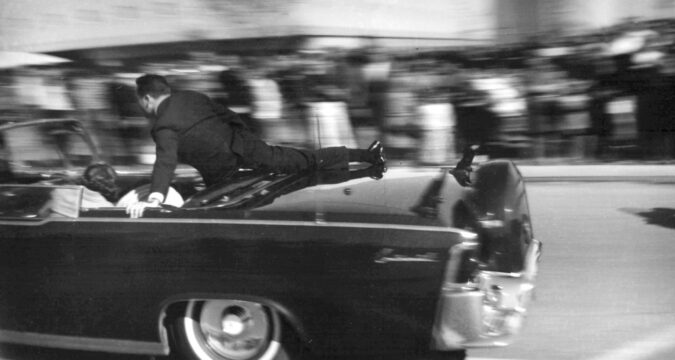
Today in History: John F. Kennedy shot
Today is Saturday, Nov. 22, the 326th day of 2025. There are 39 days left in the year.
Today in history:
On Nov. 22, 1963, John F. Kennedy, the 35th president of the United States, was shot to death during a motorcade in Dallas; Texas Gov. John B. Connally, riding in the same car as Kennedy, was seriously wounded. Suspected gunman Lee Harvey Oswald was arrested. Vice President Lyndon B. Johnson was sworn in as president.
Also on this date:
In 1718, English pirate Edward Teach — better known as “Blackbeard” — was killed during a battle with British naval forces near Ocracoke Island in North Carolina.
In 1935, a flying boat, the China Clipper, took off from Alameda, California, carrying more than 100,000 pieces of mail on the first trans-Pacific airmail flight.
In 1986, 20-year-old Mike Tyson became the youngest heavyweight boxing champion in history, stopping WBC titleholder Trevor Berbick in the second round of their championship bout in Las Vegas.
In 1990, British Prime Minister Margaret Thatcher, having failed to win reelection to the Conservative Party leadership on the first ballot, announced she would resign.
In 2005, Angela Merkel took office as Germany’s first female chancellor.
In 2010, a panicked crush at a festival in the Cambodian capital of Phnom Penh left nearly 350 dead and hundreds injured in what the prime minister called the country’s biggest tragedy since the 1970s reign of terror by the Khmer Rouge.
In 2017, Ratko Mladić, the Bosnian Serb general whose forces carried out the Srebrenica massacre of 1995 — the worst massacre in Europe since World War II — was convicted of genocide and other crimes by the United Nations’ Yugoslav war crimes tribunal and sentenced to life behind bars.
Related Articles
Today in Chicago History: The Max Headroom incident
Today in History: Dick Durbin turns 81
Today in Chicago History: Holy Name Cathedral dedicated
Vintage Chicago Tribune: Remembering the lore of Marshall Field’s State Street store
Today in Chicago History: Simeon basketball star and top prep recruit Ben Wilson fatally shot
In 2022, a Walmart manager pulled out a handgun before a routine employee meeting and began firing wildly in the break room of a company store in Chesapeake, Virginia, killing six people and wounding six others before fatally shooting himself.
Today’s Birthdays: Actor-filmmaker Terry Gilliam is 85. Hockey Hall of Famer Jacques Laperrière is 84. Astronaut Guion Bluford is 83. Tennis Hall of Famer Billie Jean King is 82. Rock musician-actor Steven Van Zandt is 75. Rock musician Tina Weymouth (Talking Heads) is 75. Actor Richard Kind is 69. Actor Jamie Lee Curtis is 67. Actor Mads Mikkelsen is 60. Actor Mark Ruffalo is 57. Tennis Hall of Famer Boris Becker is 58. Actor Scarlett Johansson is 41. Actor Alden Ehrenreich is 36. Actor Dacre Montgomery is 31. Actor Auliʻi Cravalho is 25.
https://www.chicagotribune.com/2025/11/22/today-in-history-john-f-kennedy-shot/

Today in Chicago History: The Max Headroom incident
Here’s a look back at what happened in the Chicago area on Nov. 22, according to the Tribune’s archives.
Is an important event missing from this date? Email us.
Weather records (from the National Weather Service, Chicago)
High temperature: 69 degrees (1913)
Low temperature: 4 degrees (1880)
Precipitation: 1.37 inches (2010)
Snowfall: 2.2 inches (1989)
Notre Dame’s Fighting Irish won the first college football game ever played at Soldier Field on Nov. 22, 1924, but the Tribune noted the defeated Northwestern Wildcats kept the score close. “The wonder team of South Bend, which visits gridirons far and near and leaves nothing but desolation in its path, was forced to entertain the 35,000 fans present with its most cunning tricks to gain a 13 to 6 decision,” Tribune reporter Wallace Abbey wrote. (Chicago Tribune)
1924: The first college football game was played at Municipal Grant Park Stadium (Soldier Field). Notre Dame beat Northwestern 13-6.
1925: The Chicago Bears signed three-time All-American Harold Edward “Red” Grange.
The floor of the Democratic National Convention at the International Amphitheatre on Aug. 27, 1968, in Chicago. (William Kelly/Chicago Tribune)
1934: The International Amphitheatre, a sprawling exposition center at 42nd and Halsted streets in the Canaryville neighborhood, opened. The $1.5 million structure was designed to host the 35th annual International Live Stock Exposition, which was the first event held there.
The building — which hosted the 1968 Democratic National Convention, the Chicago Bulls, the Beatles’ first Chicago show and the Ringling Bros. and Barnum & Bailey Circus — was closed in 1999.
Percy Julian, 48, director of the Glidden Plant Co. in Chicago, works in his laboratory on Aug. 1, 1947. (AP)
1950: Chemist Percy Lavon Julian was only the third African American in the United States to hold a Ph.D. in chemistry. But after his family moved into a spacious house on North East Avenue in Oak Park, they began to get messages from someone who didn’t want them there.
Vintage Chicago Tribune: Inventions and innovations by Black Chicagoans
While the home was being renovated, arsonists broke in, splashed gasoline on the walls and floors of its 15 rooms, then tossed a kerosene torch through a porch window.
Firefighters saved the house. But racism was a daily fact of life for Julian.
The person who wore a Max Headroom mask and hijacked the television signals for WTTW-TV (Ch. 11) and WGN-TV (Ch. 9) on Nov. 22, 1987, has never been identified. (Chicago Tribune)
1987: Viewers watching “Doctor Who” on WTTW-TV experienced one of the oddest things ever to cross Chicago televisions — a 90-second hijacking of the airwaves, featuring a person dressed as TV character Max Headroom. The character swayed back and forth while saying a number of barely audible words.
Among the words that could be heard were “Chuck Swirsky” (a former WGN sportscaster), “TV studio,” “great newspaper” and “but it’s dirty.” “Max” picked up a can of Pepsi (the real Max Headroom advertised Coca-Cola) and threw it away, then picked up another can and threw it away.
The bizarre skit ended with “Max” pulling down his pants and getting paddled with a flyswatter.
Two hours earlier, the “Max” character made an unauthorized 28-second appearance in the middle of a newscast on WGN-TV, but was zapped by an alert engineer before the imposter could do anything offensive.
Television engineers speculated that the stations had been victimized by a practical joker with an expensive transmitter. They said it would take extremely high-powered equipment to squeeze out the microwave signals that carry the programs from the stations’ Northwest Side studios to downtown skyscrapers, where they are retransmitted to television sets throughout the Chicago area.
Some thought the impostor returned a few days later on WMAQ-TV (Ch. 5), but it was a joke perpetrated by sports anchor Mark Giangreco.
Want more vintage Chicago?
Subscribe to the free Vintage Chicago Tribune newsletter, join our Chicagoland history Facebook group, stay current with Today in Chicago History and follow us on Instagram for more from Chicago’s past.
Have an idea for Vintage Chicago Tribune? Share it with Kori Rumore and Marianne Mather at krumore@chicagotribune.com and mmather@chicagotribune.com
https://www.chicagotribune.com/2025/11/22/chicago-history-november-22/

Everything you need to host an amazing holiday dinner
Serve a delicious holiday meal with these helpful products
After gift shopping, preparing a holiday dinner may be the most stressful task of the season. Between decorating the table for a festive celebration and coming up with a tasty menu, there are plenty of details that go into a fabulous Thanksgiving, Christmas, Hanukkah or Kwanzaa dinner. However, if you have the right tools in your kitchen, you’ll be much better prepared for the job.
Whether it’s the right knife for carving the turkey, a food processor for prepping veggies for side dishes, or a convenient mixer for whipping up your favorite desserts, these are our favorite appliances and tools for making cooking holiday dinners a little easier.
Best kitchen appliances and gadgets for holiday cooking
Cuisinart 14-Cup Food Processor
Say goodbye to manually chopping or dicing vegetables for your holiday dinner with this large-capacity food processor. Its 720-watt motor can do more than chop, though; it also works as a blender for soups, dips and more. We also love its extra-large feed tube, which means you don’t need to do any pre-chopping.
Chef’s Choice 15XV EdgeSelect Professional Electric Knife Sharpener
This electric sharpener can help ready your knives for carving turkey, prime rib or your favorite protein. It features a three-stage system that ensures a perfect edge every time. Best of all, it needs just one minute for first-time sharpening and 10 seconds for resharpening.
Lenox 12-Piece Holiday Dinnerware Set
Featuring a classic Christmas design of holly and berries, this dinnerware set adds plenty of festive flair to your holiday table. It provides service for four, including dinner plates, salad plates and mugs. The pieces are made of durable porcelain but also feature 24-karat gold accents for an elegant, decorative touch.
Hamilton Beach 6-Speed Electric Hand Mixer
Whether you need to mix up cookie dough, whip cream or cream butter, this powerful hand mixer can save you precious time in the kitchen. It features six different speeds and an extra burst button for increased power when needed. It also comes with a convenient storage container for its beater and whisk attachments.
BLACK + DECKER 9-inch Electric Carving Knife
Carving your holiday turkey is much easier with this stainless steel electric carving knife. Its serrated blades cut through meat, bread and more quickly and evenly without needing to be sharpened. The blades are removable and dishwasher-safe, too, making cleanup a breeze.
Vovoly 4-Piece Pro Zester and Grater Set
This convenient set contains three graters with different textures for fine, coarse and extra-coarse grating and zesting. It also features a protection slider to keep your fingers safe, making it ideal for handling smaller items, such as garlic. All three graters are made of stainless steel, too, so you don’t have to worry about them rusting.
AUDAMI 2-Pack Heavy-Duty Kitchen Shears
These durable poultry shears are made of high-quality, food-grade stainless steel, so they won’t break when cutting through bones. Their wave-shaped blades are also ideal for removing fish scales and can even handle softer ingredients, such as vegetables and herbs. Cleanup is easy, too, thanks to their dishwasher-safe design.
COSORI Smart 12-in-1 Air Fryer Oven
If you need to free up your full-size oven for side dishes, this air fryer oven is large enough to cook a 5-pound whole chicken or other cut of meat. It has six heating elements and a two-speed fan that circulates heat for quick, even cooking. In addition to air-frying, baking, and roasting, it can broil, toast, dehydrate, slow cook and more.
Alpha Grillers Digital Meat Thermometer
You won’t have to worry about whether you’ve cooked your meat long enough with this easy-to-use instant-read thermometer. It takes just 1 to 2 seconds to register a temperature and has a bright backlight that makes it easy to read. It is also water-resistant, so it can be washed under running water.
This user-friendly salad spinner lets you rinse and dry leafy greens, herbs and fruit with simple one-handed operation. Its nonslip base keeps it in place on your counter, while the spinner bowl is perfect for serving. It is safe to clean on the top rack of the dishwasher, too.
Mueller Handheld Immersion Blender
Blend your favorite recipes in any container you prefer with this powerful immersion blender. It includes a blending shaft for standard blending, a frother for frothing milk and a whisk for whipping butter or cream. Its ergonomic grip and nonslip handle ensure you have total control over mixing, even when using the highest power setting.
This adorable chicken-shaped gadget makes separating eggs a breeze. It is made of ceramic and features smooth interior walls that are unlikely to harbor bacteria. It is also dishwasher- and microwave-safe.
Prices listed reflect time and date of publication and are subject to change.
Check out our Daily Deals for the best products at the best prices and sign up here to receive the BestReviews weekly newsletter full of shopping inspo and sales.
BestReviews spends thousands of hours researching, analyzing and testing products to recommend the best picks for most consumers. BestReviews and its newspaper partners may earn a commission if you purchase a product through one of our links.
Distributed by Tribune Content Agency, LLC.
https://www.chicagotribune.com/2025/11/22/everything-you-need-to-host-an-amazing-holiday-dinner/

La cifra de niños secuestrados en ataque a una escuela en Nigeria supera los 300
Associated Press
ABUYA, Nigeria (AP) — Más de 300 alumnos y 12 maestros fueron secuestrados por hombres armados durante un ataque a la escuela St. Mary, una institución católica, en el estado de Níger, en el centro-norte de Nigeria, dijo el sábado la Asociación Cristiana de Nigeria, que actualizó el conteo anterior de 215 escolares.
La cifra se modificó “después de llevar a cabo un ejercicio de verificación y un censo final,” explicó un comunicado del reverendo Bulus Dauwa Yohanna, presidente de la sección estatal de la CAN, que visitó el centro el viernes.
El secuestro en el centro ubicado en la remota comunidad de Papiri, en el estado de Níger, ocurrió cuatro días después de que 25 escolares fueran capturados en circunstancias similares en la localidad de Maga, en el estado vecino de Kebbi, a 170 kilómetros (106 millas) de distancia.
Ningún grupo se atribuyó por el momento la responsabilidad por los secuestros y las autoridades dijeron que se movilizaron escuadrones tácticos junto con cazadores locales para rescatar a los niños.
___
Esta historia fue traducida del inglés por un editor de AP con la ayuda de una herramienta de inteligencia artificial generativa.


