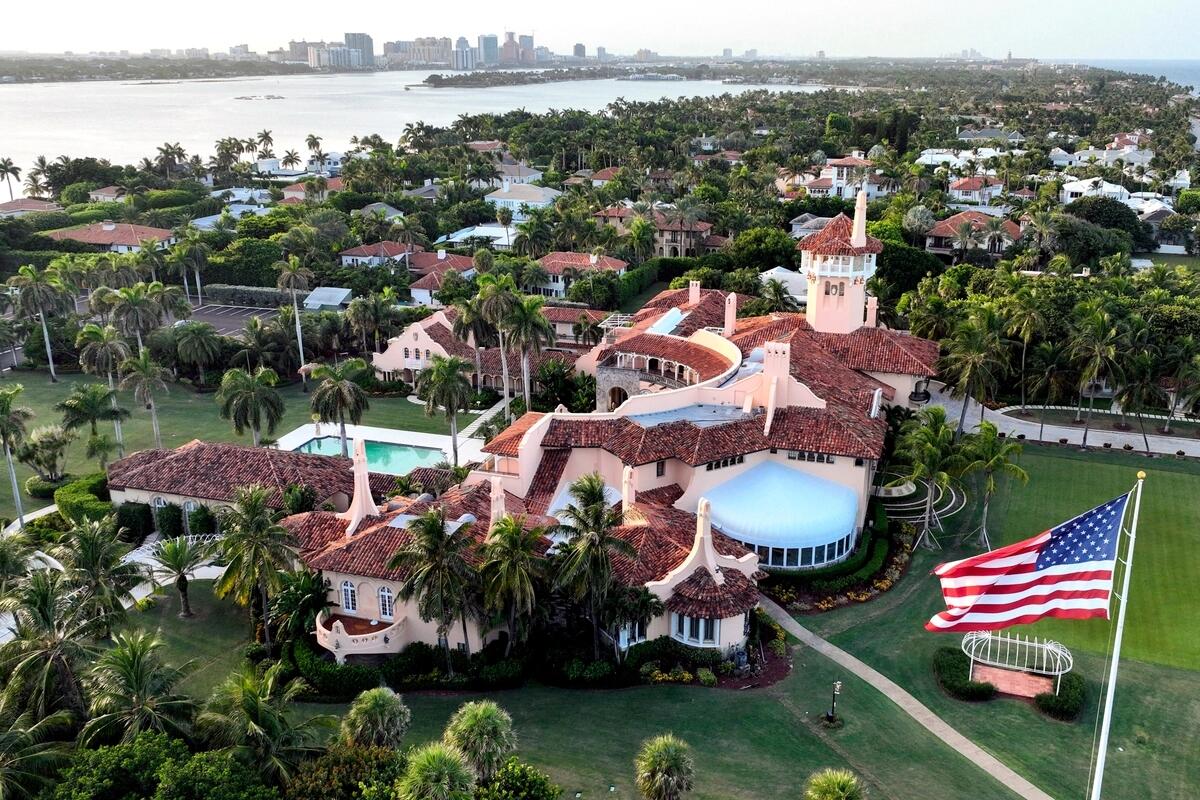
Category: News

An Aspirational Tech Right–Populist Right Alliance
An Aspirational Tech Right–Populist Right Alliance
Authored by Nate Fischer via American Intelligence,
The relationship between the tech right and the populist right is a central question of our day.
After an initial alliance in the lead-up to the 2024 campaign, fissures quickly appeared. The first prominent one was the Christmas H-1B fight. Others followed, both in and out of the administration. In many ways, the divide has been growing — with Bannon leading tech critiques, and Republican politicians like DeSantis staking out tech-skeptical stances. Trump has managed to keep things together, but the future is unclear.
I believe an alliance is necessary both for America’s success and for the right to have the power to dislodge the entrenched establishment left.
The simplest approach would be a pragmatic alliance of necessity — both factions push distinct priorities, and compromise where necessary to form a political coalition.
But I think we should aim for more — for an alliance between the tech right and the populist (or cultural) right that gives each group a crucial, or even heroic, role in a shared vision for America. I believe such a vision can center on (1) an appreciation for the conditions — and the people — that ultimately drive tech-enabled prosperity, and (2) an appreciation for how disruptive technology can structurally favor right-aligned constituencies and address central priorities of the cultural right.
Populists need tech:
The populist right needs tech. It may not need specific tech elites, or even anywhere close to a majority of current Silicon Valley figures, but it needs a positive vision for technology and it needs people who can master technology. Two factors drive this:
First, Americans have always been favorably inclined to technology. I believe if the parties split on technology, the pro-tech party will have a significant structural advantage with the electorate. This inclination is not new: In 1840, Tocqueville noted how Americans happily built ships that would last only a few years because of their enthusiasm for new innovations that would quickly obsolesce them. In the mid-to-late nineteenth century, Americans broadly embraced the power of technologies from the revolver to the railroad to conquer and settle the West. And America’s embrace of technology was certainly apparent in the broad popularity of the tech industry for much of the last half-century. It’s possible a tech-skeptical party can succeed in other countries, but I suspect that in America any party capable of real wins must present a positive vision for the use and mastery of technology.
Second, whether we like it or not, technology will shape the future. This has always been true to varying extents; people and groups who mastered major new technologies usually gained outsized influence, and often came to rule new regimes. In the case of major transitions like the shift to the digital age, the stakes are particularly high. Opposing technologies like AI may be a little like opposing gunpowder in the fifteenth century: many may not have liked its impact on the world, but the world was shaped by those who mastered it.
Tech needs populists:
The tech right also needs populist support. Entrenched legacy leftist interest groups retain tremendous power, and without strong opposition, will simultaneously try to stifle new technologies and squeeze technologists for the money needed to fund their ever-more-bloated programs. Populists represent large factions deeply skeptical of this legacy regime, and are capable of bringing tremendous political energy to any opposing coalition.
A populist right aligns with tech on more than just opposition to legacy elites. Right-leaning Americans are among the only people on earth broadly supportive of the free market policies and rule of law that allow Silicon Valley to thrive. While populism can create tensions with free-market and rule-of-law idealists, the broad populist right goal of cultural preservation includes restoration of the conditions necessary to preserve these norms.
Deeper alignment:
Finally, I believe the tech right and populist right need each other — not just to politically partner against common enemies, but to achieve the technological dynamism technologists pursue, and the restored status and opportunity populists seek.
This symbiosis reflects the particular character of the American people in a time of technological disruption: Americans are uniquely suited to mastering technology.
Americans are good for tech innovators–multiplying the impact of new technologies by acting not just as consumers but as creative and productive users of technology. This is not limited to a few exceptional entrepreneurs in Silicon Valley; rather, millions of Americans in companies across the country have a particular drive (relative to many other cultures globally) to find new sources of leverage and better ways to do things. These are the people who jump on new technologies that can solve such problems, embracing the change this entails. A country of such people is a country ripe for innovations that would find far smaller markets in more conservative or less resourceful societies. This particular character opens the aperture for technological innovation, and plays a key role in America’s technological dynamism.
By the same token, technologists can be good for the American people. While many tech innovations theoretically spread rapidly around the globe, in practice, Americans will often be the biggest beneficiaries of them because of this particular facility with technology–advancing the relative position of the American people in a time of global and cultural competition. This is especially true for core constituencies of the populist right, such as independent executives and skilled physical-world workers, who stand to benefit from technologies like AI – in contrast with core opposing constituencies like bureaucrats, who are ripe for replacement with AI.
Call to action:
Thus, the tech right should champion not just the free markets widely recognized as enabling Silicon Valley’s success, but also the people and culture that make America such a fertile place for technological innovation and development. Practically this means embracing both product and policy decisions that strengthen rather than undermine this culture. This means building products that solve critical problems and serve as platforms for broader productive application, and avoiding products that contribute to vice or addiction. And it means supporting immigration and trade policies that first and foremost strengthen the American people, rather than optimizing for those that serve the most immediate desires of tech companies.
The populist right should embrace technological innovation. This means encouraging Americans at all levels to master new technologies, recognizing the potential of such technologies to advance America’s position versus geopolitical rivals and the position of core populist right constituencies domestically. And it means politically supporting tech leaders who accept their responsibility to the American people – supporting policies that allow continued innovation, and protecting successful innovators from the confiscatory efforts of the left.
The alliance I propose is aspirational: Today, many in Silicon Valley – even many who would see themselves on the right – have little regard for the priorities of the populist or cultural right. And many populists more easily see the immediate threats that social media poses to families and that AI poses to jobs, and they remember with distrust the degree to which tech companies embraced censorship and deplatforming. But I believe the need for political alliance is clear, and the potential alignment toward a shared vision far deeper than many recognize. One of the great opportunities for statesmanship in coming years is the forging of such an alliance.
Tyler Durden
Mon, 03/30/2026 – 18:55
https://www.zerohedge.com/political/aspirational-tech-right-populist-right-alliance

“Surprise” X1.5 Solar Flare Detected Ahead Of NASA’s Rocket Launch To Moon
“Surprise” X1.5 Solar Flare Detected Ahead Of NASA’s Rocket Launch To Moon
Space weather website SolarHam reported Monday morning that a “surprise X1.5 solar flare” was detected on the sun and may impact Earth within the next 48 hours. This comes ahead of NASA’s Artemis II launch on Wednesday and could affect the launch if the solar storm is severe.
“AR 4405 erupted this morning at 03:18 UTC (Mar. 30) with a surprise X1.5 solar flare. This event launched a halo coronal mass ejection (CME) into space, which also appears to have an Earth-directed component,” SolarHam wrote in a space weather update earlier this morning.
A 1.15 X-flare exploded from sunspot 4405, launched a gigantic coronal mass ejection into space which will impact Earth and our surrounding space environment right around April 1st. This is the date set for the launch of Artemis II, a ten day space mission around the Moon by… pic.twitter.com/3cTNRkbsHQ
— Stefan Burns (@StefanBurnsGeo) March 30, 2026
The update continued, “Although the main bulk of plasma is heading to the east, the edge of the CME should pass Earth within the next 48 hours.”
For context, an X1.5 solar flare is large. The standard scale goes A, B, C, M, then X, with each step representing a 10-fold increase in X-ray intensity. That means an X-class flare is the strongest major category.
A strong X-class solar flare can affect GPS, satellites, communications, and power grids, and even cause delays in rocket launches. The size of the disruption depends on whether it is Earth-facing and whether it is accompanied by a coronal mass ejection.
Upcoming this week is NASA’s Artemis II crewed mission atop the Space Launch System rocket. So far, government forecasters are calling for an 80% chance of acceptable weather on launch day. NASA has not provided any update indicating that the current solar storm threat will affect the mission. Artemis II is currently targeted for no earlier than Wednesday, April 1, at 6:24 p.m. EST.
Tyler Durden
Mon, 03/30/2026 – 18:30
https://www.zerohedge.com/weather/surprise-x15-solar-flare-detected-ahead-nasas-rocket-launch-moon
“Surprise” X1.5 Solar Flare Detected Ahead Of NASA’s Rocket Launch To Moon
“Surprise” X1.5 Solar Flare Detected Ahead Of NASA’s Rocket Launch To Moon
Space weather website SolarHam reported Monday morning that a “surprise X1.5 solar flare” was detected on the sun and may impact Earth within the next 48 hours. This comes ahead of NASA’s Artemis II launch on Wednesday and could affect the launch if the solar storm is severe.
“AR 4405 erupted this morning at 03:18 UTC (Mar. 30) with a surprise X1.5 solar flare. This event launched a halo coronal mass ejection (CME) into space, which also appears to have an Earth-directed component,” SolarHam wrote in a space weather update earlier this morning.
A 1.15 X-flare exploded from sunspot 4405, launched a gigantic coronal mass ejection into space which will impact Earth and our surrounding space environment right around April 1st. This is the date set for the launch of Artemis II, a ten day space mission around the Moon by… pic.twitter.com/3cTNRkbsHQ
— Stefan Burns (@StefanBurnsGeo) March 30, 2026
The update continued, “Although the main bulk of plasma is heading to the east, the edge of the CME should pass Earth within the next 48 hours.”
For context, an X1.5 solar flare is large. The standard scale goes A, B, C, M, then X, with each step representing a 10-fold increase in X-ray intensity. That means an X-class flare is the strongest major category.
A strong X-class solar flare can affect GPS, satellites, communications, and power grids, and even cause delays in rocket launches. The size of the disruption depends on whether it is Earth-facing and whether it is accompanied by a coronal mass ejection.
Upcoming this week is NASA’s Artemis II crewed mission atop the Space Launch System rocket. So far, government forecasters are calling for an 80% chance of acceptable weather on launch day. NASA has not provided any update indicating that the current solar storm threat will affect the mission. Artemis II is currently targeted for no earlier than Wednesday, April 1, at 6:24 p.m. EST.
Tyler Durden
Mon, 03/30/2026 – 18:30
https://www.zerohedge.com/weather/surprise-x15-solar-flare-detected-ahead-nasas-rocket-launch-moon

The Assisted Suicide Of Lofty State And Local Taxes
The Assisted Suicide Of Lofty State And Local Taxes
Authored by Rob Arnott via RealClearPolitics,
We get the government we choose to elect, hence the government we deserve. Voting for ever-higher punitive taxes on the rich is arguably a form of civic suicide. Consider that a wealthy New Yorker can get a raise of almost 40% just by moving.
That’s right. If moving eliminates a 14.8% top state and local tax rate, our top-tier taxpayer gets a 36% raise, not a 14.8% raise, by leaving. It’s doubtful if any of our city and state leaders have done this math, but it’s shocking.
Mamdani wants to take the top rate up another 2%, if not by the state then by the city, which would mean that our rich neighbor can get a 42% raise.
Here’s how the math works.
A rich New Yorker pays a maximum state and city income tax of 14.8%, on top of a maximum federal tax of 37%. But there are hidden taxes. Uncapped Medicare and Medicaid taxes push the marginal federal tax to 39.4%. If the income is earned on investments, the Net Investment Income Tax (NIIT, another gift from Obamacare) adds another 3.8%, pushing the top federal tax above 43%.
So, top-tier New York taxpayers may soon pay a marginal tax of 43% to the IRS and 17% to the city and state of New York. The combined 60% marginal tax rates mean they have the privilege of keeping 40 cents of each new dollar they earn. A move to one of the nine states with no income tax allows our taxpayer to keep 57% of every additional dollar of income, instead of 40%. Do the math. That’s a 42% raise.
Forget the argument about “paying their fair share.” “Fair” is an entirely subjective term. Your fair share of someone else’s money might be seen as a ripoff by them, especially if the money is spent less wisely than we might spend our own money. If you are rich and believe you’ve earned your money, will you consider leaving a state for a permanent 40% raise? Of course.
This is hardly a phenomenon unique to New York. California’s headline top rate of 13.3% becomes 14% with the phase-out of deductions. A Silicon Valley billionaire can keep 43% of each new dollar of income. Moving to Dallas or Miami, or Anchorage for the adventuresome, boosts this to 57%, a raise of almost 33%. This doesn’t even count the “please leave now” impetus of a “one-time only” 5% wealth tax on billionaires. Never mind that the fine print on the wealth tax initiative turns a 5% tax into a 50% expropriation for billionaires like the founders of Google, because their 30% voting share at Google, not their 3% equity ownership, is used to determine the tax.
People have called the United States “50 laboratories of democracy.” A state or a city is welcome to impose whatever taxes, regulations, or laws are allowed by its own bylaws or the national Constitution. And citizens are welcome to choose whichever states have taxes, regulations, and laws that they feel best align with their values and beliefs.
Nor is it unique to our various states, with their diverse tax regimes. Taxes drove the Rolling Stones to their own “Exile on Main Street,” relocating to France of all places to escape England’s 90% top tax rate (where a tiny drop to 85% would provide a 50% pay raise). Even Switzerland has divergent tax rates, ranging from 22% in Zug to roughly 40% in Berne, Geneva, and Vaud. Where do the billionaires tend to live? Zug.
Milton Friedman has been credited with the observation that the only thing more mobile than the wealthy is their capital. It is the rich who largely fund government spending, whether that spending is at the federal, state, or local level, and whether that spending is wise or foolish. Instead of a politics of envy, perhaps we should try a politics of gratitude.
Rob Arnott is founding chairman of Research Affiliates, a $160 billion asset management firm based in Newport Beach, CA.
Tyler Durden
Mon, 03/30/2026 – 18:05
https://www.zerohedge.com/political/assisted-suicide-lofty-state-and-local-taxes
The Assisted Suicide Of Lofty State And Local Taxes
The Assisted Suicide Of Lofty State And Local Taxes
Authored by Rob Arnott via RealClearPolitics,
We get the government we choose to elect, hence the government we deserve. Voting for ever-higher punitive taxes on the rich is arguably a form of civic suicide. Consider that a wealthy New Yorker can get a raise of almost 40% just by moving.
That’s right. If moving eliminates a 14.8% top state and local tax rate, our top-tier taxpayer gets a 36% raise, not a 14.8% raise, by leaving. It’s doubtful if any of our city and state leaders have done this math, but it’s shocking.
Mamdani wants to take the top rate up another 2%, if not by the state then by the city, which would mean that our rich neighbor can get a 42% raise.
Here’s how the math works.
A rich New Yorker pays a maximum state and city income tax of 14.8%, on top of a maximum federal tax of 37%. But there are hidden taxes. Uncapped Medicare and Medicaid taxes push the marginal federal tax to 39.4%. If the income is earned on investments, the Net Investment Income Tax (NIIT, another gift from Obamacare) adds another 3.8%, pushing the top federal tax above 43%.
So, top-tier New York taxpayers may soon pay a marginal tax of 43% to the IRS and 17% to the city and state of New York. The combined 60% marginal tax rates mean they have the privilege of keeping 40 cents of each new dollar they earn. A move to one of the nine states with no income tax allows our taxpayer to keep 57% of every additional dollar of income, instead of 40%. Do the math. That’s a 42% raise.
Forget the argument about “paying their fair share.” “Fair” is an entirely subjective term. Your fair share of someone else’s money might be seen as a ripoff by them, especially if the money is spent less wisely than we might spend our own money. If you are rich and believe you’ve earned your money, will you consider leaving a state for a permanent 40% raise? Of course.
This is hardly a phenomenon unique to New York. California’s headline top rate of 13.3% becomes 14% with the phase-out of deductions. A Silicon Valley billionaire can keep 43% of each new dollar of income. Moving to Dallas or Miami, or Anchorage for the adventuresome, boosts this to 57%, a raise of almost 33%. This doesn’t even count the “please leave now” impetus of a “one-time only” 5% wealth tax on billionaires. Never mind that the fine print on the wealth tax initiative turns a 5% tax into a 50% expropriation for billionaires like the founders of Google, because their 30% voting share at Google, not their 3% equity ownership, is used to determine the tax.
People have called the United States “50 laboratories of democracy.” A state or a city is welcome to impose whatever taxes, regulations, or laws are allowed by its own bylaws or the national Constitution. And citizens are welcome to choose whichever states have taxes, regulations, and laws that they feel best align with their values and beliefs.
Nor is it unique to our various states, with their diverse tax regimes. Taxes drove the Rolling Stones to their own “Exile on Main Street,” relocating to France of all places to escape England’s 90% top tax rate (where a tiny drop to 85% would provide a 50% pay raise). Even Switzerland has divergent tax rates, ranging from 22% in Zug to roughly 40% in Berne, Geneva, and Vaud. Where do the billionaires tend to live? Zug.
Milton Friedman has been credited with the observation that the only thing more mobile than the wealthy is their capital. It is the rich who largely fund government spending, whether that spending is at the federal, state, or local level, and whether that spending is wise or foolish. Instead of a politics of envy, perhaps we should try a politics of gratitude.
Rob Arnott is founding chairman of Research Affiliates, a $160 billion asset management firm based in Newport Beach, CA.
Tyler Durden
Mon, 03/30/2026 – 18:05
https://www.zerohedge.com/political/assisted-suicide-lofty-state-and-local-taxes
Gulf LNG Crisis Set To ‘Make Coal Great Again’
Gulf LNG Crisis Set To ‘Make Coal Great Again’
Our weekend wrap on the global energy crisis focused on Asia as ground zero and how the shock will ripple across the world, eventually hitting the US. This is now the second major energy crunch of the decade: first Russia’s invasion of Ukraine, now the U.S.-Iran conflict. However, this one looks a lot more catastrophic.
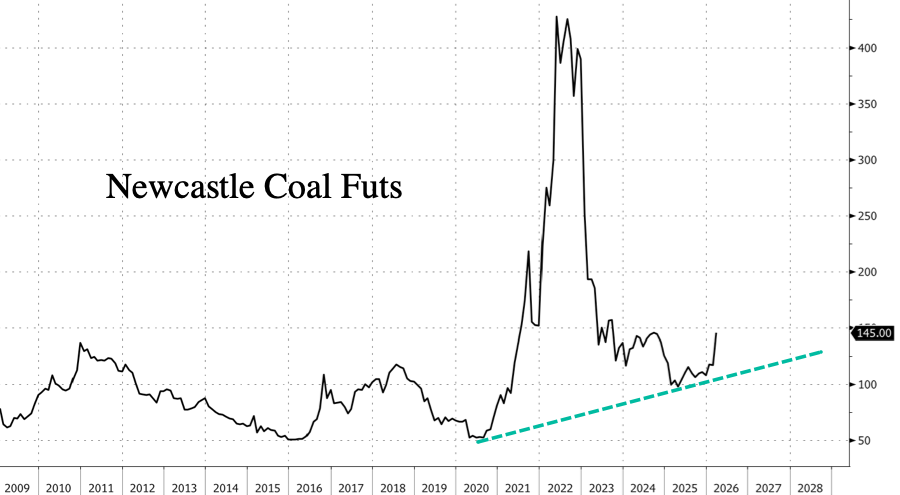
The immediate impact of this energy crunch will be a resurgence of coal, especially across Asia, as power grid operators will be forced to switch to the dirtiest fuel to keep electricity affordable during the crisis.
“We are now seeing a second, very large energy supply shock,” Goldman commodities expert Samantha Dart told Bloomberg.
Dart added, “If you’re sitting in Asia, going through this again, it’s possible you change your strategy long term, rely more on coal for longer, build out your renewables faster, and reduce your exposure to natural gas.”
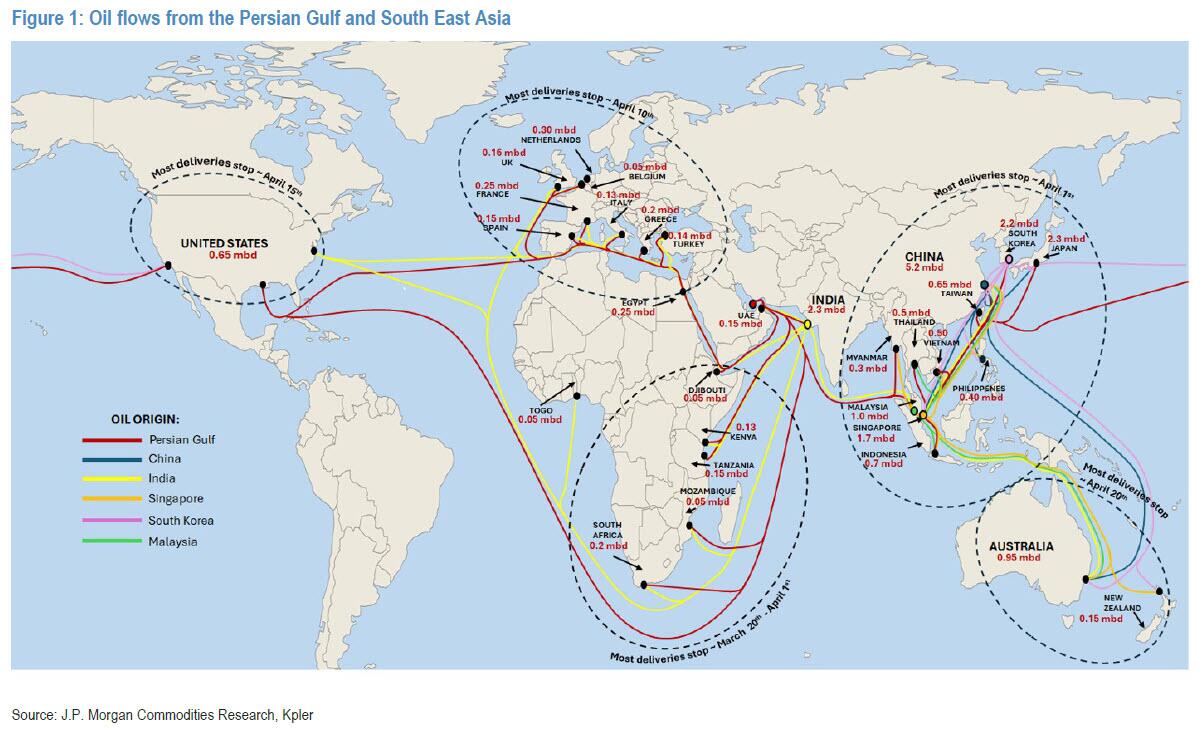
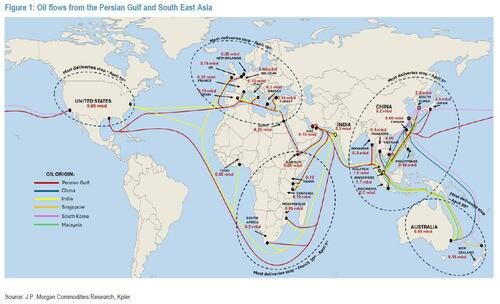
Last week, JPMorgan’s commodity expert showed just how Asia has emerged as ground zero of the global energy crisis. The shock is expected to spread worldwide, hitting Asia first, then Africa and Europe, before eventually reaching the U.S., though the most acute impact there may be concentrated in California.
Bloomberg noted that Japan is already turning back to coal-fired power generation. India and Bangladesh are also running coal plants at higher capacity, while some European countries may soon be forced to burn more coal as disruptions at the Strait of Hormuz and damage to Qatar’s LNG export hub tighten global gas supplies and send prices sharply higher.
Fatih Birol, director of the International Energy Agency, who has warned about the worst energy shock on record, told the outlet that “high energy prices will lead governments, industries, and households to look at other options.” Those options include “at least temporarily, upward pressure on the use of coal both for electricity generation and for the industrial sector,” he said.
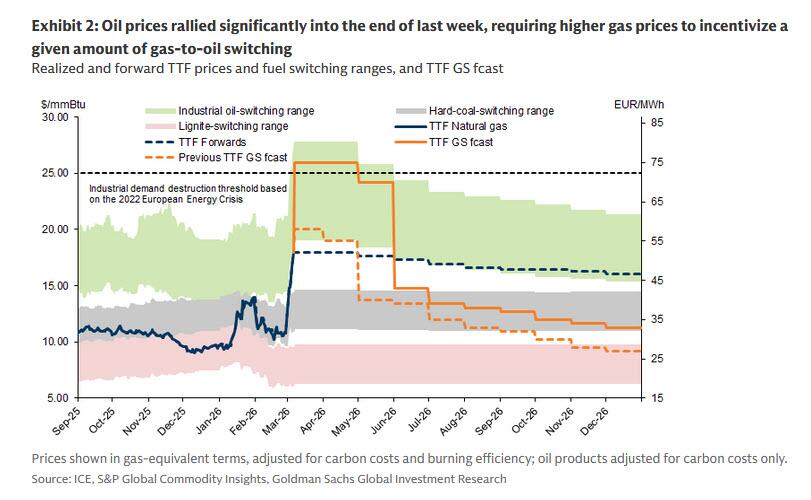
We cited Dart’s note earlier this month that showed natural gas prices across Europe and Asia have jumped so much during the US-Iran conflict that gas and oil to coal switching has already been viewed favorably by power grid operators.
Dart showed the price zones for Europe’s benchmark NatGas, TTF, where fuel switching occurs:
The pink band is the lignite-switching range.
The gray band is the hard-coal-switching range.
The green band is the industrial oil-switching range.
One takeaway is that Asia is likely to be the biggest switcher to coal because it has relied so heavily on Middle Eastern energy and already has large coal fleets. China is somewhat better insulated because it has diversified its energy supplies, as we notedearlier.
Wood Mackenzie coal specialist Tony Knutson also warned that the energy shock is a “bigger disruption than the Russian war” and said countries without sufficient gas buffers to weather the storm will be forced to switch to coal, adding, “I don’t think they have a choice.”
Trump did tell voters during the campaign trail he would ‘make coal great again’ …
Tyler Durden
Mon, 03/30/2026 – 17:40
https://www.zerohedge.com/energy/gulf-lng-crisis-set-make-coal-great-again
Gulf LNG Crisis Set To ‘Make Coal Great Again’
Gulf LNG Crisis Set To ‘Make Coal Great Again’
Our weekend wrap on the global energy crisis focused on Asia as ground zero and how the shock will ripple across the world, eventually hitting the US. This is now the second major energy crunch of the decade: first Russia’s invasion of Ukraine, now the U.S.-Iran conflict. However, this one looks a lot more catastrophic.
The immediate impact of this energy crunch will be a resurgence of coal, especially across Asia, as power grid operators will be forced to switch to the dirtiest fuel to keep electricity affordable during the crisis.
“We are now seeing a second, very large energy supply shock,” Goldman commodities expert Samantha Dart told Bloomberg.
Dart added, “If you’re sitting in Asia, going through this again, it’s possible you change your strategy long term, rely more on coal for longer, build out your renewables faster, and reduce your exposure to natural gas.”
Last week, JPMorgan’s commodity expert showed just how Asia has emerged as ground zero of the global energy crisis. The shock is expected to spread worldwide, hitting Asia first, then Africa and Europe, before eventually reaching the U.S., though the most acute impact there may be concentrated in California.
Bloomberg noted that Japan is already turning back to coal-fired power generation. India and Bangladesh are also running coal plants at higher capacity, while some European countries may soon be forced to burn more coal as disruptions at the Strait of Hormuz and damage to Qatar’s LNG export hub tighten global gas supplies and send prices sharply higher.
Fatih Birol, director of the International Energy Agency, who has warned about the worst energy shock on record, told the outlet that “high energy prices will lead governments, industries, and households to look at other options.” Those options include “at least temporarily, upward pressure on the use of coal both for electricity generation and for the industrial sector,” he said.
We cited Dart’s note earlier this month that showed natural gas prices across Europe and Asia have jumped so much during the US-Iran conflict that gas and oil to coal switching has already been viewed favorably by power grid operators.
Dart showed the price zones for Europe’s benchmark NatGas, TTF, where fuel switching occurs:
The pink band is the lignite-switching range.
The gray band is the hard-coal-switching range.
The green band is the industrial oil-switching range.
One takeaway is that Asia is likely to be the biggest switcher to coal because it has relied so heavily on Middle Eastern energy and already has large coal fleets. China is somewhat better insulated because it has diversified its energy supplies, as we notedearlier.
Wood Mackenzie coal specialist Tony Knutson also warned that the energy shock is a “bigger disruption than the Russian war” and said countries without sufficient gas buffers to weather the storm will be forced to switch to coal, adding, “I don’t think they have a choice.”
Trump did tell voters during the campaign trail he would ‘make coal great again’ …
Tyler Durden
Mon, 03/30/2026 – 17:40
https://www.zerohedge.com/energy/gulf-lng-crisis-set-make-coal-great-again
US Fighter Jets Intercept Civilian Aircraft Flying Near Trump’s Mar-a-Lago
US Fighter Jets Intercept Civilian Aircraft Flying Near Trump’s Mar-a-Lago
Authored by Aldgra Fredly via The Epoch Times,
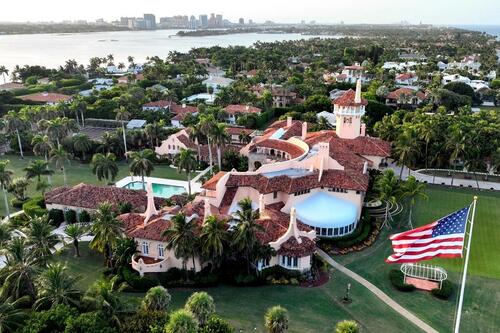
The North American Aerospace Defense Command (NORAD) said F-16 fighter jets intercepted a plane that entered restricted airspace near President Donald Trump’s Mar-a-Lago estate in Palm Beach, Florida, on March 29.
The civilian aircraft entered a temporary flight restriction zone near the estate at about 1:15 p.m. ET, prompting fighter jets to dispense flares in response, which were visible to the public, NORAD said in a press release.
NORAD said the flares were intended to get the pilot’s attention and are designed “with the highest regard for safety, burn out quickly and completely, and pose no danger to people on the ground.”
The fighter jets subsequently escorted the plane safely out of the area, according to NORAD, which oversees the airspace of the United States and Canada.
“The situation was resolved safely,” NORAD wrote in a social media post.
NORAD did not specify where the aircraft originated from or where it was heading. It also remains unclear whether the president was present at the time of the incident.
Temporary flight restrictions are imposed when aviation authorities seek to block off some airspaces for a limited time. These restrictions could be in place because of national security situations, major sporting events, or natural disasters, according to the Federal Aviation Administration (FAA).
NORAD stated that when an intercept happens, pilots of the aircraft must immediately come up on frequency 121.5 or 243.0 and turn their plane around to reverse course until they receive further instructions on one of those frequencies.
“NORAD employs a layered defense network of radars, satellites, and fighter aircraft to identify and respond to potential threats,” it said.
Aircrews are reminded to check with the FAA on restricted airspaces, especially when operating near the National Capitol Region and Mar-a-Lago regions, it added.
Pilots who violate temporary flight restrictions could face sanctions ranging from warnings and fines to suspensions or revocations of their pilot certificates, depending on the circumstances of the violation, according to the FAA.
NORAD reported dozens of similar incidents near Mar-a-Lago last year. In November 2025, NORAD said it had responded to “over 40 tracks of interest” violating temporary flight restrictions near the Palm Beach area since Trump’s return to a second term in January 2025.
On Dec. 21, 2025, F-16 fighter jets responded after a civilian aircraft breached a no-fly zone near Mar-a-Lago, which had been put in place ahead of Trump’s arrival at the estate for his annual Christmas and New Year’s visit.
NORAD said the fighter jets responded by carrying out a “headbutt maneuver,” in which the jet flew directly in front of the plane to get the pilot’s attention.
Tyler Durden
Mon, 03/30/2026 – 17:15

Two Chinese Container Ships That Were Previously Turned Back By Iran, Now Allowed To Transit Hormuz Strait
Two Chinese Container Ships That Were Previously Turned Back By Iran, Now Allowed To Transit Hormuz Strait
On Friday we reported that there was a moment of surprise among vessel trackers, when Iran unexpectedly blocked two container ships owned by China’s Cosco from transiting the Strait of Hormuz.
Two days later, this misunderstanding appears to have been resolved, and on Monday Bloomberg reported that the same two container ships linked to China’s state-owned Cosco Shipping exited the Persian Gulf through the Strait of Hormuz, the first such vessels operated by a major Beijing-backed company to navigate the waterway since the Middle East war broke out.
After aborting an initial transit attempt on Friday, COSCO’s ultra-large container vessels – CSCL Indian Ocean and CSCL Arctic Ocean – have successfully crossed the Strait of Hormuz after beginning their journey eastward from within the Persian Gulf on Monday morning, signalling a potential shift in conditions for commercial shipping.
The ships started their almost 12-hour-long journeys from waters off Dubai. They took a route near Iran’s Larak and Qeshm islands at the narrow opening of the strait, before sailing into waters of the Gulf of Oman.
The ships don’t appear to be carrying any cargo aside from empty container boxes, according to draft readings of how low they sit in the water. They are listed as part of Cosco Shipping Lines’ fleet, which is a subsidiary of Cosco Shipping Corp. Both vessels are currently bound for Port Klang, Malaysia, as they continue their voyage on COSCO’s MEX service, linking the Middle East with the Far East.
The global shipping market has been keenly watching the journeys of these two Cosco ships for signs of how China plans to extract its vessels from the gulf, as it seeks to stem a deepening energy crisis and a plunge in China-to-Middle East trade.
The two vessels, each with the capacity to transport about 19,000 TEUs, were seen taking the same route on Monday. They have been stuck in the Persian Gulf for more than a month since the US and Israel launched the war against Iran.
The successful transit marks the first confirmed crossing by a major container carrier since the start of the conflict.
Cosco Shipping is one of the world’s largest shipowners, with massive containership and tanker fleets operated by its subsidies. Aside from the container ships, Cosco also has at least six crude tankers stuck inside the Gulf since the war began, according to ship-tracking data.
In an early sign of a resumption of Hormuz transits, Cosco Shipping Lines last week informed customers that it would be recommencing bookings for general cargo containers from east Asia to the Middle East, including some located in the gulf. The company owns and operates 453 container ships that have a total capacity of about 2.5 million twenty-foot equivalent containers, or TEUs, as at end January.
Tyler Durden
Mon, 03/30/2026 – 16:50

Springtime For RINOs
Springtime For RINOs
Authored by James Howard Kunstler,
“This sort of derangment is a novel psychopathology in the human species. . . a synthesis of low-IQ feminized brain scramble & neurotic lunacy.”
– JD Haltigan on X
Went to the No Kings assemblies in my town and the next nearby town on Saturday. Mental illness as far as the eye could see. Old folks, too, as far as the eye could see, predominately of the female persuasion: the devouring grandmothers. The Democratic Party has marshalled mental illness as its premier campaign strategy, and lately it is winning bigly around the country as mental illness becomes the go-to cope option for the ragged remnants of Boomerdom.
They believe things that are patently insane, for instance, the latest proposal by Rep. Pramila Jayapal (D-WA) that illegal immigrants deserve reparations on account of being “traumatized” by U.S. immigration enforcement actions.
If it feels like the Democratic Party is at war with our country you are not hallucinating.
It is every bit as much a jihad as the Death to America crowd in Iran has explicitly pushed since 1979.
The president gets no help whatsoever from his own party, as you see in the disgraceful hijinks around the urgent issue of election reform. You know exactly how the election playbook was written: let x-million foreigners into the country illegally, give them (illegally) social security numbers, driver’s licenses, automatic voter registrations, addresses, mail-in ballots. . . and voila! They don’t even have to mail-in their own mail-in ballots. Lawfare ninja Marc Elias will arrange ballot pick-up service. And the cherry on top is that the census must count all the illegal aliens to add new congressional districts for extra seats in Congress.
So, in the face of that, Republican Majority Leader John Thune could not muster enough votes to save the SAVE Act. Or so he said. Looks more like lack a’wanna. Eerie lack a’wanna. On their tours of cable news, the hapless Republican senators, when asked, would not name their colleagues leaning against the SAVE Act. But you know who they are. Mitch McConnell, Murkowski, Tillis, Collins, Capito.
Leader Thune could not even manage to get Homeland Security funded with the prospect of Iranian sleeper cells awakening around the country. He just threw in the towel at three o’clock in the morning on Friday, and sent the whole crew home to meet the Easter Bunny. Chuck Schumer did an end-zone dance. The brokenness of our politics could not be more in your face. As things shape up this grueling springtime, Mr. Trump might have to go Abe Lincoln on these folks. That is, declare some sort of national emergency to save the election and the country.
Of course, the nation is more than a little distracted just now with doings in Iran. The No Kings folk are unabashedly rooting for everything to go wrong there, and not a few conservatives in the public arena are straining to conjure an Iranian victory in their black-pilled deliriums. Many claim they “have no idea” what we are doing there — can it be that hard? — or else they are rabidly exercised over our alliance with Israel in the operation. You know how that goes. Cue Tucker. He’ll explain.
The truth is we are pounding these savage Shia clerics and their Revolutionary Guard myrmidons to the garden of eternal bliss where the seventy-two virgins wait. Whatever remains of Iran’s legit government is bargaining under cover for an off-ramp now. Pakistan mediates. The parties sit in different rooms and pass notes through the mediators in a third room. Iran’s Foreign Minister Abbas Araghchi pretends that he will not negotiate with Mr. Trump’s envoys, Witkoff and Kushner, both Jews, the horror! But that’s sheer fakery.
To avoid humiliation in the process, Iran is still lobbing missiles and drones around the Emirates, Saudi Arabia and Israel, and they will probably keep doing that until the very moment of capitulation. Anyway, in less than a week, Mr. Trump turns the lights off all over Iran, and then they are back in the twelfth century. . . no command communication, no juice for anything, no money, no food, no water, no nothing . . . and a population getting dangerously desperate to make it all go away. . . to return to some dim memory of what normal life once was in an Iran not ruled by psychotic death cultists.
Everybody else is greatly alarmed by the disruption of Persian Gulf oil supplies through Hormuz.
Global finance was already pretty shaky before the hot war commenced, and the economic tail of that dog was not wagging happily.
In America, BlackRock, Morgan Stanley, Apollo Global, and Blue Owl Capital had recently “gated” redemptions — meaning investors can’t get all or part of their money out of plays that are folding on collateral rot. This private equity fiasco has significant contagion potential.
The sudden oil shock makes everything feel a hundred times worse, and pain is already felt, especially in the far east and Australia / New Zealand.
But consider that the Hormuz “blockade” is also a bit of last-ditch capitulation bravado.
It could be a shorter crisis than the alarmists imagine. We see everything that Iran has got from high in the sky, whatever attack boats remain. . . the thermal signatures of rockets going off. . . the bays where the drones emerge.
Mr. Trump might order troops in to the stabilize ports and more than one island. Or perhaps not.
I doubt we’ll know until after Iranian lights go out. If the kinetics conclude, what remains is re-starting the maritime insurance apparatus with or without Lloyd’s of London. Then, tankers start moving again.
Tyler Durden
Mon, 03/30/2026 – 16:25