
Category: News

Letters: PJM must meet this data center moment by offering electricity resources
The board of PJM — a little-known organization that greatly impacts how affordable electricity is for 67 million customers across 13 states — is about to decide whether data centers will pay their fair share.
PJM socializes the cost of serving data centers across all customers, which means everyday people pay big electric bills to cover the wealthiest companies in the world. At a recent briefing hosted by the Citizens Utility Board, or CUB, the Natural Resources Defense Council warned that if nothing is done to manage the estimated 30 gigawatts represented by data centers seeking to connect to the grid, the PJM region could face rolling blackouts and bill spikes averaging $70 a month.
That’s $70 extra — a month. And rolling blackouts.
Ridiculous. But the PJM board can make things right. A recent advisory vote sent it a clear message: You don’t have to choose between affordability and reliability. The comprehensive proposal that won the most votes had the toughest standards. That plan — from the Independent Market Monitor — took a “Bring Your Own Generation,” or BYOG, approach that would prohibit data centers from connecting to the grid without bringing their own new electricity resources to power their facilities. Mandatory BYOG in some form is essential to resolving this crisis.
Without adding new capacity to the grid, data centers will overwhelm existing electricity supplies, and bills will skyrocket.
Armed with vast wealth and power, the data center lobby resists basic requirements such as BYOG. They claim that commonsense protections are anti-business and that all data centers are critical to national security. But that’s nonsense. Making data centers pay their fair share is only right and doesn’t restrict development. Texas has stringent rules yet still attracts a giant number of facilities. And everyone supports national security — but let’s not pretend the Pentagon is sharing servers with Candy Crush.
Amid all this heady talk of power grid policy, it’s easy to lose sight of real people: working families, seniors on fixed incomes, and consumers facing rising costs for food, medicine and rent.
“How are we supposed to live like this?” said William, a ratepayer who experienced a 160% increase in his power bill this summer. Forcing customers to pay higher bills while simultaneously dealing with blackouts is untenable.
The solution is obvious: Data centers must bring their own new electricity supplies. We hope the PJM board puts electric customers such as William — and not data centers — first when it decides in December.
Will the power grid operator meet the moment?
— Sarah Moskowitz, executive director, Citizens Utility Board, Chicago
Why 0ur wetlands matter
The concern for the future of our clean water and flood safety in Illinois rises every day. As a resident of Illinois, I was interested in Adriana Pérez’s recent article on the Emiquon Nature Preserve and its reconnection with the Illinois River as part of a wetlands restoration initiative (“Ambitious plan reconnects river to floodplain,” Oct. 27).
I’ve seen our rivers and wetlands continue to change over the years, especially after how much has been lost. Across Illinois, nearly 90% of wetlands have been destroyed due to development and urban expansion.
Wetlands aren’t just scenic spaces to visit; they naturally filter pollution before it reaches drinking water sources and rivers. Which includes the Illinois River and the Great Lakes system. They act similar to sponges during heavy rain and absorb floodwaters, which protects nearby communities. Wetlands also provide a habitat for a variety of animals, from beavers to turtles.
Emiquon is proof of what’s possible when we invest in restoration for these essential ecosystems. This cause shows that restoration is possible, but it shouldn’t just stop with Emiquon as our only example.
We need a statewide wetlands protection program to ensure the protection of remaining wetlands. I and other Illinoisans who care for the protection of wetlands call on Gov. JB Pritzker and our state legislators to act in creating the wetlands protection program.
— Diana Shimoun, Lincolnwood
Nature’s flood prevention
I am from Brookfield, and throughout my childhood, I’ve been an occasional visitor to Brookfield Zoo. My favorite exhibit to this day is the swamp. I learned how vital wetlands, such as swamps and marshes, are to the entire ecosystem. I also learned that most of Chicago and the surrounding area were built on a swamp.
One day, I saw the consequences of Chicago’s ecological placement. It rained so hard that people were taking out canoes and kayaks and paddling in the streets because the streets had flooded at such a high level. I had to run to grab all the towels in the entire house to put around the walls of my basement to stop all the water from getting in. I remember getting pictures from friends of their fully flooded basements, where the water was up to their ankles.
Around 90% of all wetlands in Illinois are gone. The 10% we have left are in danger of being lost as well.
You may not think that wetlands affect you personally, but they are crucial for the regulation of the ecosystem. And if you are tired of the floods, you should be protecting the wetlands and promoting their cultivation.
The solution? A statewide wetlands protection program can create a system of accountability and mitigation measures that would ensure the preservation of our remaining wetlands. From your home to the environment worldwide, wetlands protect everyone.
That is why I urge readers to join many young Illinoisans like me to call on Gov. JB Pritzker to support a statewide protection program, to protect both the wetlands and our homes.
— Alec Oltrogge, Brookfield
Stop bullying in its tracks
The violent attack on Carshawnda Hatter and her children is heartbreaking and absolutely unacceptable. As a father, I feel this deeply. A family simply walking home from school should never have to fear for their safety. But what happened to the Hatter family near a Far South Side school is more than a single act of violence — it is the predictable result of unchecked bullying that escalates and eventually explodes.
This was not an isolated wrongdoing. It was a warning. Bullying is too often the first step on a path that leads from the classroom to the streets, from intimidation to assault, from fear to tragedy. When we ignore bullying, we allow violence to take root long before the breaking point.
Hatter’s young son has faced ongoing bullying at school. That is where this story begins, and that’s where far too many acts of violence begin. When children are targeted, ignored or left unprotected, it creates a culture where escalating aggression is normalized. Families lose confidence in their schools. Neighborhoods lose their sense of safety. And children begin to believe that no one will step in for them. That is how violence grows.
We cannot reduce violence in our neighborhoods without addressing the bullying that fuels it. Accountability must start before bullying turns into something far more dangerous.
Here are warning signs families should watch for:
Sudden changes in behavior, mood or sleep.
Avoidance of school, buses or social situations.
Unexplained injuries, missing items or damaged belongings.
Falling grades or loss of interest in school.
Expressions of fear, hopelessness or isolation.
Here’s what families can do:
Talk with your child regularly and listen without judgment.
Document troubling behavior or incidents.
Report issues immediately to school leaders or trusted adults.
Seek additional support if responses are slow or inadequate.
Here are organizations offering support:
Buckets Over Bullying: Advocacy, education and legal resources.
StopBullying.gov: Federal tools for families and educators.
Organization for Social Media Safety: Digital safety guidance.
Chicago Public Schools Office of Student Protections and Title IX: Reporting and support for harassment or safety concerns.
Bullying should never be dismissed as harmless or “just kids being kids.” I stand with Hatter and every family who has endured the trauma of bullying and violence. Their experiences demand action.
We must respond with urgency: more community investment, stronger youth intervention programs, better enforcement in schools and closer partnerships with families. Every child deserves protection, every family deserves peace and every neighborhood deserves safety.
— State Rep. La Shawn K. Ford, D-Chicago
Submit a letter, of no more than 400 words, to the editor here or email letters@chicagotribune.com.

Clarence Page: Border Patrol decamps from Chicago to create disorder elsewhere
They’re gone? Really gone?
President Donald Trump’s invasion of Chicago with Border Patrol agents has seemingly fizzled out for now.
Here’s a bit of advice from a longtime political observer: If Trump or his minions at the Department of Homeland Security claim success at anything, check it out.
News of the Border Patrol’s departure broke in much the same way as its arrival, without much explanation or justification. But Border Patrol Cmdr. Gregory Bovino and the agents he commanded in the operation known as Operation Midway Blitz are gone, although some sources say the operation is not over. Bovino and agents may return in the spring.
For now, the general response in Chicago is “good riddance,” but the Border Patrol is merely taking its dangerously aggressive raids to another unfortunate city, Charlotte, North Carolina, as part of Trump’s crusade to deport immigrants in the country without legal permission. Left behind in Chicago are agents of Immigration and Customs Enforcement, also known as ICE, which runs a detention facility in the Chicago suburb of Broadview and maintains a field office downtown.
Chicagoans can take a lot of pride in the help-your-neighbor spirit with which they stood up to Operation Midway Blitz. They weren’t going to stand by as masked federal agents snatched children and families as they made their way to work, school or shopping, or just tried to live their lives. Citizens formed protective patrols, they protested at the ICE detention facility and at courts downtown. In the city and suburbs and small towns where Border Patrol showed up, they stood up and turned out in numbers, sending the message to Trump that subduing Chicago wouldn’t be a layup.
Volunteers flocked to grab whistles and signal when and where Border Patrol or ICE might be in a particular area. Others organized into round-the-clock shifts, offered residents advice on their rights, and otherwise learned peaceful means of protest.
Related Articles
Clarence Page: Jeffrey Epstein case exposes divisions in MAGA unity
Clarence Page: When federal authorities disrupt the peace in the name of preserving it
Clarence Page: Pete Hegseth’s war on ‘woke’ is an assault on American history
Clarence Page: Barack Obama challenges President Donald Trump’s remap power grab
Clarence Page: Pete Hegseth’s new rules for journalists don’t make America safer
Parents organized to guard school entrances, to carpool students to class and work with business owners to protect their customers.
You can hear some of that spirit echoing in Charlotte, in reports that residents there have adopted many of the same protest tactics. Good!
The Department of Homeland Security claimed Midway Blitz was meant to target the “worst of the worst”: murderers, rapists and other violent offenders. However, the Chicago Tribune reported that of 614 people arrested whose identities were made available, only 16 had criminal histories that would present a “high public safety risk.”
More than 3,300 have been arrested so far inthe Chicago area. We may see, as more names get released, whether a higher proportion of violent criminals were netted, but I wouldn’t bet on it.
Yet that has not stopped Trump and Co. from crowing about how the surge of federal agents has curbed crime in Chicago.
“Crime way down in Chicago thanks to President Trump and Secretary (Kristi) Noem’s leadership,” Bovino boasted in a social media post.
But Chicago Mayor Brandon Johnson and Illinois Gov. JB Pritzker pushed back with data arguing crime in the city has been dropping significantly since the COVID-19 pandemic began to wane in 2022.
Between Jan. 1 and Aug. 8, the month before Midway Blitz began, the number of homicides had dropped by nearly 30% and shootings were down 36%, as compared with the same period a year ago, according to city data.
Trump has “shifted from fear-mongering about Chicago to attempting to take credit for our work driving down crime and violence,” Johnson tweeted. “He cannot have it both ways.”
Pritzker used stronger language. “Trump is a liar,” the governor said in a tweet. “He cannot steal credit from our violence prevention and law enforcement efforts that have reduced crime for four years straight — long before his masked agents showed up.”
At least the whole controversy seems to have had a remarkably unifying effect on many Chicagoans. Many residents have rallied across lines of ethnicity and citizenship status, showing a unified desire to help their neighbors.
It’s too bad Trump seems to show less interest in helping the city’s residents solve their local problems than in creating new ones.
Email Clarence Page at cptimee@gmail.com.
Sign up to receive Clarence Page’s column in your inbox each week.
Submit a letter, of no more than 400 words, to the editor here or email letters@chicagotribune.com.
https://www.chicagotribune.com/2025/11/23/column-border-patrol-chicago-midway-blitz-page/

Protect oaks and elms by pruning only in winter
The weather has turned chilly and trees are losing their leaves and entering dormancy. Soon it will be winter, the safe time to prune oak and elm trees.
“These trees should only be pruned during the cold months to protect them from serious disease threats,” said Sharon Yiesla, plant knowledge specialist in the Plant Clinic of The Morton Arboretum in Lisle. That’s because the insects that spread these diseases are not active in winter.
Oak trees are vulnerable to a serious fungal disease called oak wilt. It can kill some species within just a few months by interfering with the transport of water from the roots to the branches and leaves. Branch by branch, the tree dries out and dies.
The fungus is spread by sap-feeding insects that are attracted to open pruning wounds and carry the spores from tree to tree. Having trees pruned when the insects are inactive reduces the risk that oaks will become infected through those wounds.
The period from Oct. 15 to April 1 used to be considered safe, but those dates are less certain now that weather has become increasingly variable in both autumn and spring. “The best bet is to have oaks and elms pruned during the coldest part of the winter, in December, January and February,” Yiesla said.
The tree species in the red oak group — red oak, black oak, Hill’s oak and pin oak — are most susceptible to oak wilt and will die most quickly once infected.
Species in the white oak group, such as white oak, bur oak, English oak and swamp white oak, may survive with the disease for several years while they slowly decline. Meanwhile, the fungus will have formed mats under the bark, full of spores that insects can carry to other oaks. The disease can also spread when roots of neighboring trees become grafted together underground.
The first sign of oak wilt is usually a single branch where all the leaves die back during the growing season. A laboratory analysis is needed to confirm the disease and can be arranged by a trained, certified arborist. “If you see a dying branch on an oak tree, call in an arborist right away to check for oak wilt,” Yiesla said. “Especially for red oaks, time is of the essence.”
Hire an arborist certified by the International Society of Arboriculture, who will have the expertise to spot signs of oak wilt or other diseases.
An infected oak can sometimes be saved if the disease is contained in one branch that can be removed. Once the fungus has spread throughout the tree, there is no cure.
That means prevention is key. “If you need to have an oak pruned to remove damaged branches or improve its structure, have it done in winter,” Yiesla said.
Elms, too, should be pruned only in winter, because the deadly Dutch elm disease is spread by bark beetles that are inactive in cold weather.
If any kind of tree needs to be pruned, winter is generally the best time to do it, she said, because the tree will be dormant and not actively growing. With the branches bare of leaves, a trained arborist will be able to see the tree’s structure and check its health.
Mature trees should only be pruned by certified professionals. “A certified arborist has the training and equipment to do it safely,” Yiesla said. You can find a certified arborist through the websites of the International Society of Arboriculture (treesaregood.org/findanarborist) or the Illinois Arborist Association (illinoisarborist.org).
For tree and plant advice, contact the Plant Clinic at The Morton Arboretum (630-719-2424, mortonarb.org/plant-clinic, or plantclinic@mortonarb.org). Beth Botts is a staff writer at the Arboretum.
https://www.chicagotribune.com/2025/11/23/protect-oaks-elms-pruning-winter/
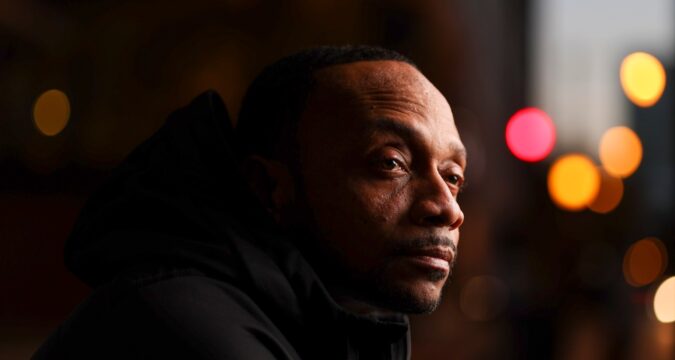
‘You’re going to wish that doesn’t happen to you’
As Gary Ellis lay dying in August 2023, no one at the facility caring for him called his son.
Instead, staffers called Ellis’ court-appointed state guardian, who had recently taken charge of all decisions related to the 69-year-old man’s care. Not until it was too late did Gary Brown learn his father had been at death’s door, Brown told the Tribune.
“When I went there the nurse was like, ‘We’ve been trying to call someone all night but nobody answered the phone,’” Brown said. “All I got was ‘I’m sorry.’ ‘I’m sorry’ didn’t do nothing to help me or my dad.”
The scenario was exactly what Brown feared when he learned, to his surprise, that Northwestern Memorial Hospital had moved to appoint a guardian for his father. The family said Northwestern had been treating the retired CTA bus driver for months, except for a brief stint at a rehabilitation facility, after he suffered a fall in April 2023.
Ellis’ family told the Tribune that by mid-May the hospital began pressuring them to approve a transfer to a nursing facility, saying his insurance coverage had stopped. Brown said he was still trying to navigate his best option when a judge signed off on the temporary guardianship petition, taking away Brown’s ability to decide anything on his father’s behalf.
Putting someone under guardianship has profound consequences, often stripping the individual of the right to make personal, medical and financial decisions for the rest of their lives. Courts, government officials and advocates for adults with disabilities say it should be an option of last resort, used only when people cannot make their own decisions and no less restrictive solution is available.
Gary Brown holds a memorial card honoring his father, Gary Ellis, who died under guardianship after a hospitalization. (Eileen T. Meslar/Chicago Tribune)
Yet Chicago-area hospitals recently initiated hundreds of guardianship petitions in just 18 months, a Tribune investigation has found, sometimes to the dismay of family members or friends who did not want people they loved to be placed under someone else’s control.
In many cases, guardianship eased the way for hospitals to discharge patients to subpar nursing homes, sometimes bypassing family members who disagreed with the hospital’s choice or were slow to make other arrangements.
Many relatives or friends wound up battling on their loved ones’ behalf long after the hospital had solved one of its immediate problems — a patient it wanted to discharge.
Some hospitals moved for guardianship over the objections of patients who later successfully fought to regain their freedom, or in cases where the patient’s rapid subsequent improvement raised questions about the need for such drastic measures.
Coming next: The business of private guardianships.
In cases where patients have little money, hospitals often seek to place them with the publicly funded Office of State Guardian at the hospitals’ expense. But if the patient does have assets, the Tribune found, the hospitals and their hired lawyers almost always recommend a certain private care management organization as guardian. That opens a pipeline to the patient’s life savings, which can be rapidly drained to pay for the care they receive as well as fees charged by the private guardian and the lawyers working on the case.
The consequences of guardianship can be so severe and long-lasting that some hospitals, even those that serve many low-income patients, told the Tribune they try hard to avoid it.
Yet two of the area’s largest and most prestigious medical institutions, the University of Chicago Medical Center and Northwestern Memorial Hospital, had by far the most guardianship cases during the period examined, even in comparison to other big hospitals.
The Tribune identified 369 hospital-initiated adult guardianship petitions filed from January 2023 through June 2024 after combing through thousands of pages of court records in Cook, DuPage, Kane, Lake, McHenry and Will counties. Of these, 68 came from University of Chicago Medical Center and 35 from Northwestern Memorial. By contrast, Rush University Medical Center had six, John H. Stroger Jr. Hospital had five and Loyola University Medical Center had none.
The University of Chicago Medical Center filed 68 guardianship petitions in 18 months, the most by any hospital in the six-county Chicago area. (Eileen T. Meslar/Chicago Tribune)
The University of Chicago Medical Center and Northwestern both did not grant interviews and would not comment on individual cases, sending written general statements instead.
Northwestern called guardianship a “compassionate solution” and a “vital safeguard for individuals who are unable to make decisions for themselves and who lack family, friends or legal representatives acting in the patients’ best interest to advocate on their behalf.” The guardianship process “plays a critical role in protecting vulnerable patients,” said the statement from University of Chicago Medical Center, and the number of guardianship petitions it files “reflects the medical complexity and vulnerability of the patients we serve.”
Each hospital said guardianship is sought in only a fraction of cases — or, for Northwestern, “0.000175%” of the more than 200,000 patients the 11-hospital system discharged in a recent 12-month period.
For Ellis, his ordeal began when he injured his leg after falling on a fire hydrant, according to Brown. His father chose Northwestern Memorial for his treatment, believing it had the best care to offer in the area, Brown said. The injury, plus heart problems, resulted in Ellis moving back and forth between Northwestern and a nursing care facility.
Northwestern Memorial Hospital filed the second-largest number of guardianship petitions. A spokesperson called it a “compassionate solution” for some patients. (Eileen T. Meslar/Chicago Tribune)
Brown said he tried to go to the hospital every day after work, and before the guardianship he said he answered the phone at any time of the day or night when health care workers needed permission to perform procedures for his dad.
After learning of the guardianship petition, Brown sent an anguished, handwritten motion to the judge, pleading to be appointed guardian before the next court date at the end of August 2023. He had been in the process of visiting nursing homes but “didn’t move fast enough” for the hospital, the motion states.
“I don’t want my father passing in guardianship of the state when he has a whole family that loves him,” Brown wrote. “I honestly don’t know how they could say this when he’s had visitors almost every day literally!”
Two weeks later, his father died under guardianship of the state, in a long-term acute care hospital, with none of the people who loved him there to bear witness.
‘They weren’t listening’
In the best-case scenario, a hospital files a guardianship petition because there is no other viable option. Hospitals have a responsibility to discharge their patients safely, and some people who cannot function on their own do not have anyone close who is willing and able to take charge.
But the Tribune found multiple instances where patients had people who said they were willing to step in — or even held power of attorney — but the hospital filed a petition nominating someone else.
For example, when the University of Chicago Medical Center filed a guardianship petition for one patient in 2023 because of her cognitive impairment, the petition stated she had no close family members who were entitled to be notified regarding the guardianship.
But the patient did have a family, including her brother, William Donaldson, who told the Tribune he had been visiting her at the hospital. He said he was disappointed to find that his sister, 76, had been placed under guardianship and discharged to a nursing home.
“They kicked her out of the hospital without telling me,” Donaldson told the Tribune. “I had been going back and forth to the hospital to see her. I called the hospital looking for her and she was gone.”
Donaldson has since gained guardianship of his sister after four months in court with the help of an attorney. Of the situation, he said simply: “It is a nightmare.”
In some cases, as with Gary Brown, a hospital’s decision on guardianship had irrevocable consequences. Families saw the time run out on their loved one’s life before they could regain control.
Kenya Lawrence said she and other family wanted to take her grandmother, Earsline Rose, home with them to the Milwaukee area. Instead, Rose died in a South Side nursing home. (Eileen T. Meslar/Chicago Tribune)
Kenya Lawrence, a granddaughter of the late Earsline Rose, told the Tribune she became aware of the University of Chicago Medical Center’s temporary guardianship petition only after Rose’s family found the paperwork in her hospital room.
Lawrence said she and her siblings showed up at a 2023 court hearing on the petition for Rose, who was 90 years old, and tried unsuccessfully to make the case that the family should be in charge.
“She had no business in the system; she has relatives,” Lawrence said. “I fought tooth and nail; I fought very hard. They weren’t listening to that.”
Rose’s grandchildren had hoped to take the nonagenarian home with them to the Milwaukee area and care for her in her final days. Instead, she was discharged to a poorly rated nursing home in Chicago’s South Shore neighborhood, many miles away. She died there in July 2023, four days after Lawrence formally petitioned a judge to take over as her grandmother’s guardian, records show.
For Rose’s family, the process felt “shady,” frustrating and cruel.
“Everybody’s going to get old,” Lawrence said, “and you’re going to wish that doesn’t happen to you.”
“She had no business in the system; she has relatives,” Kenya Lawrence said of her grandmother, Earsline Rose, shown in an old publication. (Eileen T. Meslar/Chicago Tribune)
Though the University of Chicago Medical Center would not comment on individual cases, it contended in its written statement that “the medical center pursues guardianship … only after exhaustive efforts are made to locate family or close friends.”
Joyce Anderson told the Tribune it came as a surprise when Chicago’s St. Mary of Nazareth Hospital filed a petition naming a private organization as the recommended guardian for her 81-year-old aunt, Betty Robertson, instead of anyone who knew her.
It happened, Anderson said, while she was still working on finding an acceptable facility where her aunt could live after discharge. As she made calls and visited nursing homes, various family members continued visiting the elderly woman at the hospital.
Once guardianship was in place, the hospital sent Robertson to a nursing home that Anderson did not find to be acceptable for someone she loved. Robertson has since died.
“They did not care, that’s the best way for me to put it,” Anderson said of the hospital. “I understand financially, I understand about all of that, but you should have just given us more of a chance to try to find some place.”
Ascension, which owned the hospital at the time, did not answer Tribune questions. Court records show that a nurse had acknowledged that relatives regularly visited the patient but said the family was “nonresponsive” regarding medical decisions.
Derrell Collier said he spent hours at his mother’s bedside after she went into cardiac arrest outside a grocery store at age 69 in early 2023 — mainly at Loyola University Medical Center and then at Kindred Chicago Lakeshore, a long-term acute care hospital that has since closed.
Derrell Collier washes the hands of his mother in October at a Chicago nursing home. A hospital had previously tried to place her under guardianship. (Eileen T. Meslar/Chicago Tribune)
After several months, Collier said, Kindred told him his mother’s insurance would soon cease to cover her stay and the hospital wanted to discharge her. Collier was opposed, and while he was still navigating how to get his mother’s care covered, Kindred’s administration grew impatient and sought the appointment of a public guardian in the fall of 2023, writing in a petition that her “family refuses to participate and consent to discharge planning.”
Collier, who had his mother’s power of attorney for health care, said he showed up for court to argue that he and his brother were very much involved, present and able to act on the wishes his mother had expressed before she fell ill. The hospital withdrew the guardianship petition after Collier found another placement for his mother.
“When you show up every day it’s difficult for them to do certain things, it’s hard to go in front of a judge and say he doesn’t care,” Collier said. “They took me there because of the money. … They were trying to take charge and stick her in any-old-nursing-facility any-old-where.”
A spokesperson for ScionHealth, which operated Kindred Chicago Lakeshore, declined to comment on specific patients. In a written statement, the health system said the “safety, dignity and well-being of our patients are always our highest priorities.”
Nearly a third of patients in the hospital guardianship cases reviewed by the Tribune went to nursing homes that, during the year the guardianship was initiated, had an average one-star rating from the Centers for Medicare and Medicaid Services, the lowest possible. A similar percentage of patients were discharged to nursing homes that were flagged for patient abuse for the majority of the year in which they were placed under guardianship.
“They were trying to take charge and stick her in any-old-nursing-facility any-old-where,” Derrell Collier said of the now-closed hospital that wanted to discharge his mother against his wishes. (Eileen T. Meslar/Chicago Tribune)
In one case, the University of Chicago Medical Center nominated the mother of a 53-year-old patient as guardian in October 2023, only to renege after the mother objected to the poorly reviewed nursing home the hospital had selected for discharge, RYZE on the Avenue.
In the months before the hospital filed its petition, federal regulators had fined that nursing home more than $80,000 after finding the facility had failed to protect residents from physical abuse from other residents, failed to properly care for wounds and left an incontinent patient in soiled clothing for more than two hours.
The hospital nominated a different guardian, and the patient was discharged to the nursing home. She died months later. RYZE did not respond to the Tribune’s requests for comment.
Jim Berchtold, a Nevada attorney and the recent director of Justice in Aging’s guardianship policy program, said that when hospitals are the ones arranging for discharge, the focus is on getting the person out the door.
“They don’t care what level of care they’re receiving, they can say, ‘It was a safe discharge, we’re in the clear,’” said Berchtold, who developed a program to provide legal counsel for adults facing guardianship in his home state of Nevada. They may think: “‘Hopefully … the guardian will step in and transfer them someplace better.’ (They’re) pushing it off to the next person.”
Choosing the ‘nuclear option’
Once a guardianship is in place, it takes time, money and effort to make the case for freedom.
Brian Sivley, a 36-year-old man with physical disabilities, wound up under guardianship after he suffered a fall, was treated at Northwestern Memorial Hospital and didn’t like the hospital’s plan to discharge him to a nursing home. A hospital doctor determined Sivley had an “inability to appreciate the risks of returning home.”
Sivley had lived in a nursing home before, but he’d recently succeeded in living on his own with the help of government services. He wanted to keep his hard-won autonomy.
Northwestern officials filed a petition for temporary guardianship anyway. It would take a year before Sivley, with legal help from the disability advocacy organization Equip for Equality, was able to resume making his own health and living decisions.
The hospital withdrew its petition for a longer-term guardianship arrangement earlier this year after Sivley signed documents giving his power of attorney for health care to a former teacher he had stayed in touch with over the years.
“I don’t know why they took the nuclear option,” Sivley’s attorney, Jin-Ho Chung, said of the hospital. “Like the doctor that we retained said, one might agree or disagree with Mr. Sivley’s choices; that doesn’t mean that he needs a legal guardian.”
“From our experience, it seems that it’s more difficult for individuals to terminate a guardianship than to have one appointed,” said Cristina Headley, another attorney with Equip for Equality who works on the organization’s adult guardianship initiatives.
In a written statement, Sivley told the Tribune he “felt really mad” about the forced guardianship.
“I knew that there were ways I could get rehab at my apartment and it would be covered by my insurance because of prior experiences,” Sivley wrote. “It hurt even more because I had just moved into my first apartment.”
Anita Raymond, a licensed independent social worker who has written about the so-called hospital-to-guardianship pipeline, said hospitals may err in relying on the court’s checks and balances to catch questionable petitions.
“Hospitals may think, ‘We don’t know what else to do. If we’re wrong the court-appointed attorney will fight the petition,’” Raymond said, referring to the guardian ad litem who helps assess what decision is in the person’s best interest. “And then the judge ultimately decides whether to appoint the guardian or not. People presume, ‘It’s OK if I do this even if I’m wrong.’”
But health professionals and other advocates say these judges often don’t have much more information to go on than the medical evaluations coming from the hospital itself, which has a vested interest in the outcome.
Cook County Circuit Judge Daniel Malone, who presides over the probate division, said in an interview that the judges make decisions based on the information in front of them. The standard for finding someone to be disabled — clear and convincing evidence — is high, he said.
“We’re taking people’s rights away from them,” Malone said. “It’s not something any judge here wants to do lightly.”
The medical evaluations provided to the court also are sometimes conducted early in the person’s stay, when they may be at their worst, advocates said.
Andre Daniels, left, brings food to his father, Frank Daniels, at a La Grange Park nursing home this month. Andre Daniels is now his father’s guardian after a fight in court. (Eileen T. Meslar/Chicago Tribune)
Andre Daniels, whose father was placed under temporary guardianship at age 76 in February 2024, said he is bothered by the fact that Frank Daniels was assessed at the beginning of his hospitalization and his ability to make decisions was not meaningfully reevaluated afterward.
“He’s very perceptive, he’s very aware, he still writes everything down,” Daniels said of his father. “How did he get to the stage where he was deemed incapable (when) he is basically capable?”
The younger Daniels said he had been estranged from his father, a trained welder who served in Vietnam as a Marine, before learning about the situation from his brother in October 2024. He then worked with an attorney to take over as guardian earlier this year.
Much of what the elder Daniels has to his name was the result of fighting and advocating for himself, according to his son. In the late 1980s, Daniels won a racial discrimination lawsuit, along with a substantial financial settlement, after complaining about unequal treatment for Black welders in the white-dominated Chicago Pipefitters Local 597 union. His fight had lasting effects, with a federal judge later mandating oversight of the union’s practices.
He is now in a nursing home but wants to return to the multifamily home he owns and lived in with two of his daughters before being treated at University of Chicago Medical Center, Daniels said. He said they are now working toward that goal together.
Frank Daniels, shown holding a list of appointments, is “very perceptive, he’s very aware,” his son said. “How did he get to the stage where he was deemed incapable (when) he is basically capable?” (Eileen T. Meslar/Chicago Tribune)
The Tribune’s review found Black patients were overrepresented in hospital guardianship petitions in diverse Cook County, raising questions of implicit bias in both health systems and the courts related to those patients and their families. While the patient’s race was not always available in court records, at least 39% of the patients were identified as Black, compared with about 22% of the county’s population.
“There are hundreds of decision points, even before the case is filed, about that person, about their capacity, about their behaviors, about the decisions they are making,” said Berchtold, formerly of Justice in Aging. “The people making those decisions are almost inevitably white individuals who know nothing about this person or where that person is coming from.”
Dr. Kahli Zietlow, a geriatrician and clinical associate professor at the University of Michigan who is studying guardianship outcomes, said physicians who see patients in a hospital setting may have no history with the patient, don’t know firsthand how well the person might function at home and may not completely understand the implications of their evaluations.
“Physicians don’t necessarily realize when we write a letter (finding someone incapacitated) … that it can mean forever,” she said.
The Tribune found one case where a man is still under guardianship more than a year after the state guardian itself filed a petition with the court requesting to release him.
Gottlieb Memorial Hospital, which is part of Loyola Medicine, initiated the petition in 2022 for the man in his early 60s because complications related to alcoholism had left him unable to comprehend or communicate much, court records show. He spent about 45 days in the hospital.
But after his discharge to a nursing home, the former patient improved greatly and repeatedly voiced his objection to being under guardianship and living at the facility. A 2024 petition from the state guardian to revoke the guardianship stated “he is completely independent and does not have any major medical issues and does not display any sign of confusion.”
That petition is still pending after the last doctor to evaluate the man requested a second opinion and the second doctor got cold feet about doing the evaluation, telling the man’s guardian she feared the consequences to her license if the man “were to commit a crime.” This month, the guardian reported to the court that another doctor requested additional sessions with the man before issuing a report.
Loyola Medicine said it could not share information about an individual patient but said it is the health system’s policy to ask for court intervention “only after we have exhausted other available options.”
“It’s a tough system,” said Peter Lichtenberg, a national expert in financial capacity assessment and the financial exploitation of older adults. “If somebody who really shouldn’t have lost their rights but doesn’t have the wherewithal to have the legal advocate to get them on their road … it can be a real nightmare.”
Alternatives to guardianship
Stroger is Cook County’s flagship public hospital and aims to “care for everyone” regardless of immigration status or the ability to pay. Around half of the patients in recent years have been Medicaid recipients — meaning many belong to lower-income households.
Yet despite the complications of caring for this population, the hospital brought just five guardianship petitions during the 18-month period the Tribune examined. Two of the cases involved a pair of siblings in their 40s with serious disabilities who had been at Stroger for nearly two years.
Cook County Health’s chief legal officer, Ellie Bane, said in a statement that Stroger strives to preserve patient autonomy and that the hospital works to find alternatives such as powers of attorney or surrogate decision-makers for health care.
“A guardianship for health care decisions is a significant legal decision that requires court approval and can be overly restrictive, and even permanent,” Bane wrote. “Pursuing guardianship when other options exist extends beyond our primary role as a health care provider.”
With his son’s help, Frank Daniels hopes to leave nursing care and return to the multifamily home he owns and lived in with his two daughters. (Eileen T. Meslar/Chicago Tribune)
At St. Bernard Hospital and Health Care Center, a smaller community hospital in Chicago’s Englewood neighborhood, those who oversee case management told the Tribune that even in cases where patients are difficult to discharge, they seek to work with family members or other decision-makers whenever possible. St. Bernard filed just one petition for guardianship between January 2023 and June 2024.
Vivian Moore, who works in the hospital’s wellness management department, said the hospital starts discharge planning the day patients are admitted. She said the hospital does its own investigations to find family members, including researching prior visits and searching for missing persons reports.
“If the patient doesn’t have a preference or is not able to vocalize a preference we want to take into consideration the preference of the family,” Moore said. And when patients disagree with what the hospital thinks is best, St. Bernard also tries to honor that, she said. “We still want to equip them with those options and resources, but we respect their final decision.”
St. Anthony Hospital in Little Village filed just two guardianship petitions in the 18 months the Tribune reviewed. David Evers, the hospital’s assistant general counsel, called it “a last resort … in part because we have a lot of great alternatives under Illinois law that are not permanent, that are less invasive, that give families more input.”
“It does cost you a lot of money and effort to get a guardian appointed, so if there is a family member that wants to be a guardian and is engaged with us, we’re absolutely going to help them do it because it’s in both of our interests,” Evers said.
An Illinois law aimed at reducing guardianship does require health providers to seek out potential surrogate decision-makers for the patient, but that requirement extends only to spouses, parents and children. Contacting adult grandchildren, siblings and close friends is optional.
In four Michigan counties, the Michigan Elder Justice Initiative is operating a pilot program aimed at offering courts and community organizations alternate tools to help solve problems without fully stripping away adults’ rights.
Alison Hirschel, an attorney with the advocacy organization, said that in one county they saw a 42% reduction in guardianship filings in the program’s first year.
“There are lots of reasons that hospitals and nursing homes petition for guardianship that aren’t really about the interests and best needs of the patient,” Hirschel said.
One key component of the Michigan program is educating petitioners about options that are less restrictive than full guardianships.
Derrell Collier washes the feet of his mother during a recent visit to her nursing home. “She took care of everyone in the family,” he said. “I think it’s only right. It’s her turn.” (Eileen T. Meslar/Chicago Tribune)
In Illinois, one such option is limited guardianship, which is specifically tailored to the things a person needs assistance with.
But in the Tribune’s 18-month review, just seven of the hospital-initiated guardianships, or roughly 2%, were limited in nature, allowing the person some control over their life. In at least one situation, the guardian ad litem’s recommendation for a limited guardianship was disregarded.
In that case, a former University of Chicago mathematics professor was hospitalized at the university’s medical campus in fall 2023 after his advanced dementia resulted in a friend and colleague bringing him to the hospital.
After meeting the former professor, the guardian ad litem wrote to the judge that he “uses his intelligence to mask possible dementia and cognitive deficits” but “I do not think the respondent is totally unable to make personal or financial decisions.”
The man consistently objected to needing guardianship but agreed he could use some help managing his financial affairs. Nonetheless, a full guardianship was put into place.
“There really is supposed to be a preference for limited guardianships,” Hirschel said. “One of the reasons that rarely happens or doesn’t happen nearly as often as it should (is) the judges don’t have enough information about what the person can do or can’t do. The judge doesn’t have the information to draft a narrowly tailored order. And also for judges who are really busy, it’s just faster.”
Malone, who presides over Cook County’s probate division, acknowledged to the Tribune that limited guardianships are in the minority. In making those decisions, Malone said, judges have to rely heavily on the reports they receive.
“It’s the doctors that make that decision as to whether the person’s totally disabled or partially disabled,” he said. “The other thing we rely heavily upon is (guardians ad litem); they’re the eyes and ears of the court.”
Other best practices experts cited to improve the guardianship process include bolstering training for physicians who conduct these assessments and doing the assessments in home settings whenever possible.
Gary Brown sits on a South Michigan Avenue bench where his father, Gary Ellis, a former CTA bus driver, liked to sit and watch activity near a bus stop. Brown said his feelings are still raw after his father died under guardianship without loved ones nearby. (Eileen T. Meslar/Chicago Tribune)
Dr. John Halphen, a clinical professor of geriatric medicine at UTHealth Houston, has worked for about two decades with a state-funded program that connects physicians trained in capacity assessments with adult protective services, which now covers the entire state of Texas.
The physicians he works with “don’t have a dog in the fight,” Halphen said; no one involved receives fees or gets paid in a way that is related to the outcome of the assessment.
Obtaining background information about the person is key, Halphen said. His team checks with multiple sources to learn about the adult’s capabilities and uses cognitive screening tests to help assess whether people really understand their circumstances.
“It’s always a balancing act,” said Lichtenberg, the expert on financial assessment. “If you don’t provide protection to people who are incredibly vulnerable, they do get exploited and it’s not pretty.
On the other hand, “if you provide protection when you should be promoting autonomy, it impacts their quality of life and mental health,” he said. “It impacts their physical health too. The stakes are very high for guardianship when it’s a close call.”
‘How can they do that’
For Gary Brown, whose father died under guardianship and without loved ones nearby, feelings remain raw that no one has been held accountable for the way his father’s story ended.
“They really took a lot from me and out of me,” Brown said.
His aunt Sandra Ellis told the Tribune she had been keeping tabs on her brother, including visiting periodically from Georgia, talking to hospital officials and reaching out to confirm her brother’s insurance was still covering his stay.
She said she did not know this was something hospitals could do — ask the state to take control of a person.
“How can they do that and get away with all of that?” Ellis asked. “When he passed away there was not one single family member that he had there with him. And that was so sad.”
Chicago Tribune’s Hope Moses contributed.
ehoerner@chicagotribune.com
cmgutowski@chicagotribune.com
lschencker@chicagotribune.com
https://www.chicagotribune.com/2025/11/23/guardianship-chicago-hospitals/
Today in Chicago History: ‘Christmas Tree Ship’ Rouse Simmons sinks in Lake Michigan
Here’s a look back at what happened in the Chicago area on Nov. 23, according to the Tribune’s archives.
Is an important event missing from this date? Email us.
Weather records (from the National Weather Service, Chicago)
High temperature: 69 degrees (1931)
Low temperature: Minus 1 degree (1950)
Precipitation: 1.55 inches (1983)
Snowfall: 2 inches (1981)
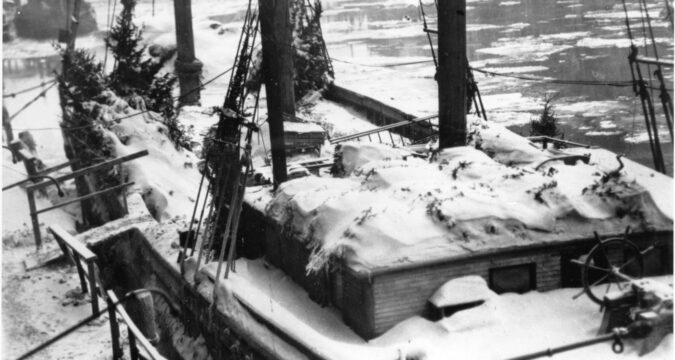
The Rouse Simmons, a ship loaded with a cargo of Christmas trees, sank in 1912. No crew members survived. (Chicago Tribune archive)
1912: The Rouse Simmons, known as the “Christmas Tree Ship,” vanished in a storm on Lake Michigan during its trip from Michigan to Chicago. There were no survivors.
Many of the trees and evergreen wreaths that washed ashore were sold to benefit the families of the 17-member crew.
When the Christmas spirit foundered in Chicago
The wife of its Capt. Herman Schuenemann’s, affectionately called the “Christmas Tree Lady,” continued the family business, according to Tribune archives. She died in 1933. Her daughters carried on for a few more years, but by the end of the decade, the Christmas Tree Ship seemed to fade from the city’s landscape.
A diver found the well-preserved remains of the Rouse Simmons in 1971, resting in about 170-foot deep waters northeast of Two Rivers, Wisconsin.
“Picture of Dorian Gray, 1943/44, by artist Ivan Albright in an exhibit of his work titled “Flesh,” on May 14, 2018. (Antonio Perez/Chicago Tribune)
1945: In her “Looking at Hollywood” column, Hedda Hopper said the Art Institute of Chicago was “having a heck of a time handling the crowds flocking to see (Chicago-area native Ivan Albright’s) painting of Dorian Gray on exhibition there.”
“Picture of Dorian Gray,” based on the Hollywood adaptation of the 1891 novel by Oscar Wilde, is on view in Gallery 263.
Gene Siskel, right, and Roger Ebert speak at an event where Erie Street at McClurg Court is renamed to honor the movie critics on Feb. 1, 1995. Siskel is holding a roll of quarters in which he fed the parking meters along Erie. (Chris Walker/Chicago Tribune)
1975: Dueling movie critics Gene Siskel and Roger Ebert began their decadeslong TV partnership with the show “Opening Soon at a Theater Near You” on WTTW.
Green Bay Packer Charles Martin (94) gets up after slamming Chicago Bears quarterback Jim McMahon to the ground during a game on Nov. 23, 1986, at Soldier Field in Chicago. The play occurred after a Packer interception in the second quarter. Referee Jerry Markbreit (9), who witnessed the act from a few feet away, assessed a 15-yard penalty and ejected Martin. (Edward Wagner/Chicago Tribune)
1986: Midway through the second quarter, Green Bay Packer nose tackle Charles Martin body-slammed Chicago Bears quarterback Jim McMahon to the ground.
Referee Jerry Markbreit reacted quickly by ejecting Martin and penalized him 15 yards for roughing the passer.
McMahon was out for the rest of the season. Martin was suspended for two games without pay — the stiffest penalty assessed until then by NFL Commissioner Pete Rozelle.
Michael Jordan: Top moments and stats in the life and career of the Chicago Bulls and NBA legend
1991: At the free-throw line, Michael Jordan smiled at Denver Nuggets rookie Dikembe Mutombo and told him the shot was for him. Jordan closed his eyes and sunk the free throw. The Chicago Bulls won 107-100.
Former Chicago Bulls star Michael Jordan leaves the Dirksen U.S. Courthouse after a court hearing on Aug. 11, 2015. (Nuccio DiNuzzo/Chicago Tribune)
2015: Michael Jordan reached a settlement with supermarkets Jewel-Osco and Dominick’s over a pair of ads in a 2009 commemorative edition of Sports Illustrated that allegedly contained unauthorized use of his name, according to spokespeople for both sides. Jordan donated the net proceeds of the multimillion-dollar settlement to 23 charities.
Want more vintage Chicago?
Subscribe to the free Vintage Chicago Tribune newsletter, join our Chicagoland history Facebook group, stay current with Today in Chicago History and follow us on Instagram for more from Chicago’s past.
Have an idea for Vintage Chicago Tribune? Share it with Kori Rumore and Marianne Mather at krumore@chicagotribune.com and mmather@chicagotribune.com
https://www.chicagotribune.com/2025/11/23/chicago-history-november-23/

Today in History: Hijacked Ethiopian Airlines ran out of fuel and crashed
Today is Sunday, Nov. 23, the 327th day of 2025. There are 38 days left in the year.
Today in history:
On Nov. 23, 1996, a hijacked Ethiopian Airlines Boeing 767 ran out of fuel and crashed into the Indian Ocean near the Comoro Islands, killing 125 of the 175 people on board, including all three hijackers.
Also on this date:
In 1863, thousands of Union soldiers under Gen. Ulysses S. Grant marched out of Chattanooga, Tennessee, and battled Confederate forces through Nov. 25, forcing their retreat into Georgia in a significant blow to the South in the American Civil War.
In 1939, early in World War II, the British armed merchant cruiser HMS Rawalpindi was on patrol when it was shelled and sunk in an engagement with two German warships southeast of Iceland, leaving more than 200 dead aboard the Rawalpindi and only a few dozen survivors.
In 1963, President Lyndon B. Johnson proclaimed Nov. 25 a day of national mourning following the assassination of President John F. Kennedy.
In 1971, the People’s Republic of China was seated in the United Nations Security Council.
In 1980, an estimated 2,500 to 3,000 people were killed by a series of earthquakes that devastated southern Italy.
In 1984, Boston College quarterback Doug Flutie completed one of the most famous passes in college football history, connecting with Gerald Phelan for a 48-yard touchdown with no time left on the clock as Boston College defeated the Miami Hurricanes 47-45.
In 2005, Ellen Johnson Sirleaf was elected president of Liberia, becoming Africa’s first democratically elected female head of state. She guided her nation through recovery after its exit from a decade-long civil war.
In 2006, former KGB spy Alexander Litvinenko died in London from radiation poisoning after making a deathbed statement blaming Russian President Vladimir Putin.
In 2008, the U.S. government unveiled a bold plan to rescue Citigroup, injecting a fresh $20 billion into the troubled firm as well as guaranteeing hundreds of billions of dollars in risky assets.
In 2011, Yemen’s authoritarian President Ali Abdullah Saleh agreed to step down amid a fierce uprising to oust him after 33 years in power. (After formally ceding power in February 2012, he was killed in 2017 by Houthi rebels who were once his allies.)
Related Articles
Today in History: John F. Kennedy shot
Today in Chicago History: The Max Headroom incident
Today in Chicago History: Holy Name Cathedral dedicated
Today in History: Dick Durbin turns 81
Vintage Chicago Tribune: Remembering the lore of Marshall Field’s State Street store
In 2024, Israeli airstrikes in central Beirut killed at least 20 people and wounded dozens more, the latest strikes in renewed fighting between Israel and Lebanon-based Hezbollah militants. (A U.S.-brokered cease-fire would be reached on Nov. 27, with sporadic violations of that truce for months afterward.)
Today’s Birthdays: Actor Franco Nero (“Django”) is 84. Singer Bruce Hornsby is 71. TV journalist Robin Roberts (“Good Morning America”) is 65. Composer Nicolas Bacri is 64. Poet and author Jennifer Michael Hecht is 60. Olympic gold medal sprinter Asafa Powell is 43. Ice hockey player Nicklas Bäckström is 38. Singer-actor Miley Cyrus is 33.

Serbios bosnios votan para elegir presidente tras destitución del líder separatista
SARAJEVO, Bosnia-Herzegovina (AP) — Los votantes en la parte serbia de Bosnia emitieron sus votos el domingo para elegir a un nuevo presidente después de que el exlíder prorruso Milorad Dodik fuera destituido de su cargo debido a políticas separatistas que estaban alimentando la inestabilidad en la tensa nación balcánica.
Dodik fue destituido en agosto cuando un tribunal bosnio lo condenó por desobedecer las órdenes del Alto Representante internacional para Bosnia, lo sentenció a un año de prisión y le prohibió ocupar cualquier cargo público. Desde entonces, ha pagado una multa para evitar la cárcel y se ha apartado como presidente mientras permanece al frente de su gobernante Partido de los Socialdemócratas Independientes.
La votación anticipada del domingo enfrenta a Sinisa Karan, respaldado por Dodik, contra Branko Blanusa, un profesor universitario que es candidato del opositor Partido Democrático Serbio. Hay cuatro contendientes más pero no se consideran candidatos fuertes.
Blanusa afirmó al emitir su voto en la ciudad noroccidental de Banja Luka que “la campaña electoral transcurrió en un ambiente justo y tolerante”.
“Espero que el día de las elecciones sea igual”, añadió Blanusa, instando a una alta participación entre los 1,2 millones de votantes serbobosnios.
Los serbobosnios están a cargo de aproximadamente la mitad de Bosnia, que se llama Republika Srpska. La otra mitad es administrada conjuntamente por bosnios, que son principalmente musulmanes, y croatas. Las dos entidades están unidas por una administración central.
La compleja estructura política de Bosnia se estableció hace 30 años en un acuerdo de paz mediado por Estados Unidos para poner fin a un sangriento conflicto étnico de 1992-95 que mató a más de 100.000 personas y dejó a millones sin hogar.
La guerra comenzó cuando Bosnia declaró su independencia de Yugoslavia y los serbios del país tomaron las armas para dividir su propio territorio, con la esperanza de unirse a la vecina Serbia. Dodik todavía aboga por la eventual separación de la entidad controlada por los serbios de Bosnia, que ha declarado repetidamente inviable.
Dodik había enfrentado sanciones de Estados Unidos y Gran Bretaña por tales políticas. Sin embargo, Estados Unidos levantó las sanciones el mes pasado después de que Dodik acordara dimitir. También ha chocado repetidamente con el enviado internacional que supervisa la paz, Christian Schmidt, y ha declarado sus decisiones ilegales en Republika Srpska.
Dodik ha participado activamente en la campaña electoral de Karan. Les dijo a los votantes que “permaneceré con ustedes para luchar por nuestros objetivos políticos” y que la “victoria de Karan será mi victoria también”.
___________________________________
Esta historia fue traducida del inglés por un editor de AP con ayuda de una herramienta de inteligencia artificial generativa.

Gifts any beauty or product lover will adore
Find amazing beauty gifts for everyone on your list
If there’s someone on your holiday shopping list who just can’t get enough of new makeup, skin care, hair and bath products, consider yourself lucky. With a wide range of beauty-related gifts available, there are plenty of options to suit every budget, making your holiday shopping a little easier.
If you really want to wow your beauty-obsessed loved ones, though, we’ve got you covered. We’ve found the most exciting beauty and self-care gifts for anyone who lives to try new products and beauty gadgets.
Best gifts for beauty lovers
This powerful hair dryer makes drying and styling much easier, thanks to its lightweight design, which is 20% lighter than Dyson’s previous models. It includes five intelligent attachments that can dry hair quickly, de-tangle, smooth flyaways, focus air precisely, reduce frizz and define curls. Each attachment is preprogrammed with a precise temperature range and speed options, too, to eliminate the guesswork from styling.
This lightweight cream blush blends seamlessly into the skin for a natural flush that even beginners can achieve. It contains vitamin E to help nourish the skin and micro-fine pigments that provide a sheer wash of color. Best of all, it can also be used on the lips.
NuFACE TRINITY + Microcurrent Facial Device Kit
Utilizing microcurrent technology, this at-home treatment device helps tighten and lift the skin for a firmer appearance. It provides both instant and long-term results, sculpting the face and neck and smoothing fine lines and wrinkles. The kit also includes NuFACE’s hydrating gel moisturizer and a firming and brightening cream to help boost your results.
Abib Pink Me UP PDRN 3-Step Glow Kit
This easy-to-use kit is inspired by K-beauty’s glass skin trend, delivering three products that help provide a healthy, glowing complexion. It includes a collagen lip mask to hydrate and smooth, retinal eye patches to reduce puffiness and dark circles and an overnight collagen mask to firm the face. The products are suitable for all skin types.
Sol de Janeiro Brazilian Bum Bum Cream
This award-winning body cream contains caffeine to help visibly tighten the skin and cupuacu butter for intense hydration. It absorbs quickly into the skin, leaving no greasy residue. It also features a heavenly scent with notes of salted caramel, vanilla and pistachio.
ILIA Balmy Tint Hydrating Lip Balm
This vegan, cruelty-free lip balm contains ingredients, including sea succulent, rosehip oil, and shea butter, which hydrate, nourish and soften the lips. It also contains a sheer wash of buildable color, making it perfect for no-makeup makeup days. It is available in eight flattering shades, including a peachy nude and a warm cranberry.
Shark Flex Style Air Styling and Drying System
This versatile and powerful dryer is perfect for all hair types, allowing you to dry and style with a single tool. It measures the heat 1,000 times per second to help prevent heat damage and transforms from dryer to styling wand by simply rotating its head. It includes five styling attachments, including a diffuser to define curls.
Dr. Dennis Gross Pro Facial Steamer
With micro-steam technology, this steamer will make your facial-obsessed friend feel like they just left the spa. It features a compact, lightweight design that makes it easy to store, while its wide nozzle provides full steam coverage to hydrate and detoxify the skin. It also features an automatic shut-off mechanism for added peace of mind.
This multitasking crayon can add color to your eyes, lips and cheeks for a no-fuss makeup routine. It has an extremely hydrating formula with hyaluronic acid and vitamin E, making it perfect for cold, dry winter weather. It is available in five shades and blends effortlessly with fingers, a brush or even a sponge.
Youth To The People Superberry Dream Mask
Dry skin doesn’t stand a chance with a rich, hydrating overnight mask. It contains hyaluronic acid to lock in moisture and plump the skin, while vitamin C and other antioxidants help brighten and fight environmental damage. Best of all, it’s versatile — you can use it as an overnight mask, a night cream or a daily moisturizer.
This convenient travel case makes it easy to take all your favorite makeup, skin care and hair care products on the go. It features two spacious zippered compartments, perfect for holding large makeup palettes, as well as a stainproof lining to prevent spills. It is also made of vegan leather, offering a chic yet durable design.
Infused with potent antiaging ingredients, these eye masks help hydrate the delicate skin under the eyes for a brighter, more rested appearance. They contain caffeine and niacinamide to help reduce puffiness, as well as hyaluronic acid to boost moisture. They are also dermatologist-tested and cruelty-free.
Prices listed reflect time and date of publication and are subject to change.
Check out our Daily Deals for the best products at the best prices and sign up here to receive the BestReviews weekly newsletter full of shopping inspo and sales.
BestReviews spends thousands of hours researching, analyzing and testing products to recommend the best picks for most consumers. BestReviews and its newspaper partners may earn a commission if you purchase a product through one of our links.
Distributed by Tribune Content Agency, LLC.
https://www.chicagotribune.com/2025/11/23/gifts-any-beauty-or-product-lover-will-adore/

Políticos de EEUU ya no son tan esquivos sobre sus ambiciones presidenciales
Por JILL COLVIN
NUEVA YORK (AP) — Hubo un tiempo en que los aspirantes presidenciales disimulaban sus ambiciones, recorriendo el país bajo el pretexto de ayudar a otros candidatos y desviando la atención cuando se les presionaba sobre sus planes evidentes.
No es así para algunos demócratas que consideran postularse en 2028. Sin un líder claro en el partido y con los votantes demócratas ansiosos por pelear, algunos posibles candidatos están siendo mucho más transparentes sobre sus intenciones, dejando de lado las pretensiones mientras intentan ganar la máxima visibilidad en un momento en que la autenticidad es valorada.
“Por supuesto que lo estoy considerando. No lo he descartado”, afirmó recientemente el senador de Nueva Jersey Cory Booke, a Fox News durante un viaje a Nueva Hampshire, un estado de votación temprana, incluso mientras enfatizaba que su enfoque está en 2026, cuando se presentará a la reelección.
“Estaría mintiendo si dijera lo contrario. Simplemente estaría mintiendo y no puedo hacer eso”, expresó el gobernador de California, Gavin Newsom, a CBS cuando se le presionó sobre si considerará postularse después de las elecciones intermedias del próximo año.
Aun así, muchos demócratas siguen siendo cautelosos.
De la docena de posibles candidatos para 2028 con los que Associated Press solicitó entrevistas para discutir la dinámica cambiante, ninguno estuvo inmediatamente disponible. Algunos demócratas desvían las preguntas y dicen que su atención está en otro lugar, incluso mientras hacen campaña para otros en estados de votación temprana.
En el lado republicano, una dinámica completamente diferente se está gestando bajo la superficie. Los posibles candidatos mantienen un perfil bajo ante las expectativas de que el presidente Donald Trump desempeñará un rol decisivo al elegir a su posible sucesor.
Los estrategas de campañas dicen que el enfoque menos reservado de los demócratas tiene sentido dado el campo abierto de 2028 y la gran cantidad de candidatos que compiten por atención. Entre otros que han dicho que están considerando postularse se encuentran el gobernador de Kentucky Andy Beshear, el exalcalde de Chicago Rahm Emanuel, quien también fue jefe de gabinete de la Casa Blanca, y el gobernador de Hawai Josh Green.
“Las viejas reglas ya no se aplican”, declaró Jess O’Connell, una estratega demócrata que asesoró la campaña presidencial de Pete Buttigieg en 2020. Dijo que el cambio era algo bueno para el partido.
“Tienes que estar ahí afuera todos los días luchando y compartiendo tu visión”, comentó. “Y creo que cuanto más tiempo tengan para hablar con la gente en este momento y comunicar sobre cómo satisfacer las necesidades del futuro”, mejor.
Nuevas dinámicas en juego
Alex Conant, un veterano de las campañas presidenciales de los republicanos Marco Rubio, un exsenador de Florida que ahora es secretario de Estado de Trump, y Tim Pawlenty, un exgobernador de Minnesota, indicó que las dinámicas de la emergente primaria demócrata, sin un claro favorito, han cambiado el cálculo para los candidatos.
“Creo que la primaria demócrata va a ser la más larga de nuestra vida. Es difícil recordar un campo tan abierto. Y la base demócrata está tan ansiosa por que alguien enfrente a Trump y recupere la Casa Blanca”, afirmó. “Cuanto más concurrido esté, más importante es comenzar temprano”.
Los candidatos, señaló, también son “inmediatamente más relevantes si podrías ser el próximo presidente”, lo que añade un incentivo para decir en voz alta lo que se piensa en silencio.
Los votantes hoy en día también se sienten desilusionados por el tipo de discurso político que antes era la norma.
“Una de las lecciones de Trump es que la gente quiere autenticidad”, señaló Conant. “Los votantes están rechazando a los candidatos que suenan como políticos, y los trucos retóricos que se usaban durante décadas para evitar responder preguntas ahora solo irritan a los votantes”.
Algunos son esquivos
No todos han adoptado este enfoque.
El gobernador de Illinois, JB Pritzker, fue evasivo en el escenario durante una reciente entrevista con la periodista Kara Swisher, esquivando repetidamente sus preguntas sobre su cronograma esperado.
“Blah, blah”, respondió ella mientras él intentaba cambiar el tema para hablar sobre la fortaleza del banco demócrata.
El gobernador de Pensilvania, Josh Shapiro, ha sido igualmente cauteloso, negándose a reconocer cualquier ambición presidencial o incluso a comprometerse a postularse nuevamente para gobernador, incluso cuando la sombra de 2028 lo sigue a donde quiera que vaya. Pero durante una aparición en el podcast “The Breakfast Club” el mes pasado, mientras reflexionaba sobre el ataque incendiario a su residencia oficial, sonó como alguien que está ansioso por permanecer en la arena.
“Amo el servicio público”, dijo. “No puedes alejarte ahora, con todo lo que está en juego. … Este no es un momento para renunciar”.
Sus percibidas ambiciones nacionales se han convertido en una línea de ataque frecuente para su posible rival republicano para gobernador, la tesorera estatal Stacy Garrity.
“Necesitamos a alguien que esté más interesado en Pensilvania y no en la Avenida Pensilvania”, dijo Garrity recientemente en un programa de radio conservador en Filadelfia.
Existen riesgos para los candidatos
Ese es uno de los riesgos para los candidatos, apuntó Mike DuHaime, un estratega republicano que asesoró las campañas presidenciales de Chris Christie, John McCain, Rudy Giuliani y George W. Bush.
En 2013, señaló, el oponente de Christie en la carrera para gobernador de Nueva Jersey a menudo intentó usar su notoriedad nacional como un tema de campaña en su contra.
Los candidatos, explicó DuHaime, también necesitan encontrar un equilibrio y asegurarse de que no están distrayendo de las elecciones intermedias al desviar dinero o atención de los candidatos que los necesitan.
“Creo que tiene sentido no ser tan evasivo porque la gente lo entiende, pero aún deberían tener cuidado de no ponerse demasiado en el centro del país porque podría salirles el tiro por la culata”, comentó. “Tienen que tener cuidado de que todavía parezcan un poco jugadores de equipo”.
En otros casos, los candidatos genuinamente no han tomado una decisión, y pueden ser atraídos por líderes del partido en estados de votación temprana ansiosos por atraer estrellas en ascenso a sus eventos, dijo DuHaime.
“Es muy intrigante y emocionante para los candidatos y posibles candidatos ser invitados”, afirmó, con algunos decidiendo: “Vamos a experimentarlo, el circo nacional. Seamos parte de eso”.
Junto con consideraciones legales potenciales, O’Connell, la estratega demócrata, también señaló que muchos aspirantes tienen trabajos diarios que necesitan equilibrar. Si bien enfrentarse a Trump ciertamente los pone en el centro de atención, podría tener repercusiones para los electores si el presidente republicano toma represalias, lo que significa que los candidatos deberán elegir sus momentos sabiamente.
“Tienes que cumplir con tus obligaciones con los estados en los que estás”, dijo. “No es tanto que estés jugando un juego, es que creo que hay algunas consideraciones prácticas”.
“Creo que vamos a ver a la gente luchando con eso”, agregó.
También instó a los candidatos a adoptar lo que llamó una “estrategia Beyoncé-Taylor Swift”, refiriéndose a las estrellas del pop que impulsan las economías de las ciudades donde actuaron en sus giras.
“Lo que aconsejaría a cualquiera que quiera ser presidente en 2028”, dijo, “es arremangarse y ayudar”.
___________________________________
Esta historia fue traducida del inglés por un editor de AP con ayuda de una herramienta de inteligencia artificial generativa.
Tribunal hutí en Yemen condena a muerte a 17 acusados de espionaje
Por SAMY MAGDY
EL CAIRO (AP) — Un tribunal controlado por los hutíes en la capital de Yemen condenó a 17 personas por espionaje y las sentenció a muerte en medio de una represión contra el personal local de agencias extranjeras.
El Tribunal Penal Especial en Saná emitió el veredicto el sábado, informó la agencia de noticias SABA controlada por los hutíes.
Las personas condenadas formaban parte de “células de espionaje dentro de una red de espías afiliada a la inteligencia estadounidense, israelí y saudí”, afirmó el tribunal, que dictó una sentencia de muerte por fusilamiento en público.
El tribunal también sentenció a un hombre y una mujer a 10 años de prisión, mientras que otro acusado fue absuelto.
El veredicto del sábado puede ser apelado, dijo Abdulbasit Ghazi, un abogado que representa a algunos de los acusados que fueron condenados.
Los acusados fueron acusados de “espiar con países extranjeros en un estado de enemistad con Yemen durante el período 2024-2025”, informó SABA.
Los fiscales dijeron que los acusados colaboraron con oficiales de inteligencia de Arabia Saudí, Gran Bretaña y Estados Unidos, así como con el servicio de inteligencia Mossad de Israel, informó SABA.
Los acusados proporcionaron “a los enemigos información sobre docenas de ubicaciones y movimientos de los líderes del Estado, así como información sobre los misiles… lo que llevó al ataque de varios sitios militares, de seguridad y civiles, resultando en la muerte de docenas y la destrucción generalizada de infraestructura”, informó SABA.
El veredicto fue el último en una represión de años por parte de los hutíes en las áreas de Yemen bajo su control. Los rebeldes respaldados por Irán han encarcelado a miles de personas durante la guerra civil de Yemen que comenzó en 2014, incluidos miembros del personal de las Naciones Unidas detenidos en junio.
En el transcurso de los últimos dos años, los rebeldes han detenido a docenas de personas en una represión centrada en la ONU y otros que trabajan para grupos de ayuda internacional y embajadas extranjeras. Los rebeldes alegaron repetidamente sin pruebas que eran espías. La ONU niega rotundamente las acusaciones.
Los tribunales en Saná y otras áreas controladas por los hutíes en Yemen anteriormente dieron sentencias severas a aquellos acusados de colaborar con la coalición liderada por Arabia Saudí. En septiembre de 2021, los rebeldes ejecutaron a nueve personas que fueron condenadas por su participación en el asesinato de un alto funcionario hutí, Saleh al-Samad, en un ataque aéreo de la coalición liderada por Arabia Saudí en abril de 2018.
A finales de 2023, los rebeldes comenzaron ataques con misiles y drones contra Israel y contra barcos en el Mar Rojo. Los hutíes han dicho que actúan en solidaridad con los palestinos por la guerra en Gaza. Estados Unidos e Israel lanzaron una campaña aérea y naval contra los hutíes en respuesta. Un ataque israelí a principios de este año mató al primer ministro del gobierno rebelde y a la mayoría de su gabinete.
___________________________________
Esta historia fue traducida del inglés por un editor de AP con ayuda de una herramienta de inteligencia artificial generativa.


