Category: News

US And UK Revolt Forces Basel To Rethink Brutal Crypto Capital Rules For Banks
US And UK Revolt Forces Basel To Rethink Brutal Crypto Capital Rules For Banks
Authored by Ezra Reguerra via CoinTelegraph.com,
Global bank regulators are preparing to revisit their most stringent crypto rules after the United States and the United Kingdom refused to implement them, a move that threatens to unravel the long-standing consensus of the Basel Committee.
In an interview with the Financial Times, Erik Thedéen, the governor of the Swedish central bank and chair of the Basel Committee on Banking Supervision (BCBS), said they may need a “different approach” to the current 1,250% risk weighting for crypto exposures.
According to global law firm White & Case, the application of the 1,250% risk weight means that credit institutions must hold their own funds of at least equal value to the amount of the respective crypto-asset exposure.
Under the existing framework, crypto assets issued on a permissionless blockchain, which includes stablecoins such as USDt and USDC, receive the same 1,250% risk weighting used for the riskiest venture investments.
However, Thedéen acknowledged that the rapid growth of regulated stablecoins has changed the policy landscape.
“What has happened has been fairly dramatic,” Thedéen told the Financial Times, adding that there is a strong increase in stablecoins and that the amount of assets in the system calls for a new approach.
“We need to start analysing. But we need to be fairly quick on it,” Thedéen added, floating questions over stablecoin risks and if there was an argument that could approach the assets in “a different way.”
Explicit resistance from major economies
The resistance felt from major economies is now more explicit. According to the FT report, the US Federal Reserve does not plan to implement the Basel crypto rules as written, with policymakers calling the capital charges unrealistic.
The Bank of England also signaled that it will not apply the framework in its current form. At the same time, the European Union has only partially implemented the 2022 standard, excluding key provisions that cover permissionless blockchains.
Citing anonymous sources, Bloomberg previously reported that the Basel Committee is preparing to revise its 2022 guidance next year to be more favorable to banks participating in crypto markets.
The report said that many banks interpreted the framework as a deterrent to engaging with cryptocurrency or stablecoin services.
The talks reportedly intensified as regulated stablecoins gained traction in the US, supported by US President Donald Trump and the passage of the GENIUS Act, which formally authorized the use of these assets in payments.
Stablecoin boom requires rethink of rules
Thedéen echoed the concerns in the FT report, saying that the increase in stablecoin adoption requires fresh analysis and a potentially more lenient stance.
However, he also said that reaching an agreement may be difficult as regulators are divided on core assumptions about crypto’s risk profile and the role of bank-issued digital assets.
“Going further than that at this point in time is difficult, because I’m the chair and there are so many different views in this committee,” he said
Widening split raises level-playing-field concerns
The divergence in policies creates a competitive imbalance for global banks. If EU banks remain bound by these mandates while the US and the UK operate under more lenient frameworks, the playing field becomes significantly tilted.
This imbalance would influence which jurisdictions can build bank-issued stablecoin products, tokenized deposits or even crypto custody solutions.
Tyler Durden
Thu, 11/20/2025 – 06:30

Israel podría haber cometido crímenes de guerra al expulsar a refugiados de Cisjordania, según HRW
Por JULIA FRANKEL
JERUSALÉN (AP) — Israel podría haber cometido crímenes de guerra y crímenes de lesa humanidad al expulsar por la fuerza a 32.000 palestinos de tres campos de refugiados en Cisjordania a principios de este año durante una operación militar en la zona, afirmó un grupo de derechos humanos el jueves.
Human Rights Watch indicó en un reporte que altos funcionarios israelíes, incluyendo el primer ministro, Benjamin Netanyahu; el ministro de Finanzas, Bezalel Smotrich, y el de Defensa, Israel Katz, deberían ser investigados por crímenes de guerra y procesados si determina que son responsables.
Mientras gran parte del mundo centraba su atención en la guerra entre Israel y Hamás en Gaza, el ejército israelí asaltó campos de refugiados en el norte de Cisjordania y expulsó a decenas de miles de palestinos de sus hogares en enero y febrero. Fue el mayor desplazamiento en el territorio desde que Israel lo capturó en la guerra de los Seis Días en 1967.
Israel dijo que sus tropas permanecerán en algunos campos durante un año. No está claro cuándo podrán regresar los palestinos a esas zonas, o si eso llegará a suceder siquiera. Mientras, miles de ellos viven con familiares o se apiñan en apartamentos de alquiler, mientras que los más pobres se refugian en edificios públicos.
Israel, que bautizó las redadas como “Operación Muro de Hierro”, dijo que eran necesarias para erradicar la insurgencia en pleno repunte de la violencia luego de que el ataque de Hamás sobre el sur de Israel el 7 de octubre de 2023 desató la guerra en Gaza. Pero meses después, miles de palestinos siguen sin poder acceder a sus hogares. Otros han perdido sus casas, demolidas por las fuerzas israelíes.
En su reporte, Human Rights Watch señaló que las autoridades israelíes no ofrecieron ningún motivo que justificase la expulsión de toda la población de los campos para lograr su objetivo militar, y no proporcionaron las razones por las cuales no se ha permitido el regreso de los residentes. El informe apuntó también que el ejército disparó contra quienes intentaron regresar a los campos y que no ofreció refugio ni asistencia humanitaria a los que continúan desplazados.
“Con la atención global centrada en Gaza, las fuerzas israelíes perpetrado cabo crímenes de guerra, crímenes de lesa humanidad y limpieza étnica en Cisjordania que deberían ser investigados y procesados”, dijo Nadia Hardman, investigadora principal de derechos de los refugiados y migrantes en HRW.
Según HRW, durante la operación las tropas “irrumpieron en hogares, saquearon propiedades e interrogaron a residentes” antes de sacarlos de sus hogares.
El grupo dijo que basó su reporte en entrevistas con 31 palestinos desplazados de los campos de refugiados de Tulkarem, Nur Shams y Jenin.
El ejército de Israel no respondió de inmediato una solicitud de comentarios de la AP acerca del informe.
Los campos se asemejan a densos vecindarios marginales urbanos y en ellos viven millones de refugiados y sus descendientes. Se remontan a la guerra de 1948 en torno a la creación de Israel. Unos 700.000 palestinos, la mayoría de la población palestina de entonces, huyeron o fueron expulsados de lo que ahora es Israel durante ese conflicto y no se permitió su regreso, un éxodo que los palestinos llaman nakba, o catástrofe.
Human Rights Watch dijo que su análisis de imágenes satelitales de los campos determinó que más de 850 hogares y edificios habían sido destruidos o gravemente dañados. El ejército israelí dijo a la AP que parte de esos daños se debieron a ataques contra la infraestructura insurgente, mientras que otros se debieron a la necesidad de crear espacio para facilitar los movimientos de las tropas en esas zonas.
El grupo sin ánimo de lucro apuntó que el general de división Avi Bluth —el comandante de mayor rango para Cisjordania—, y el teniente general Eyal Zamir, jefe del ejército israelí, también deberían ser investigados y pidió sanciones contra altos cargos de Israel.
___
Esta historia fue traducida del inglés por un editor de AP con la ayuda de una herramienta de inteligencia artificial generativa.
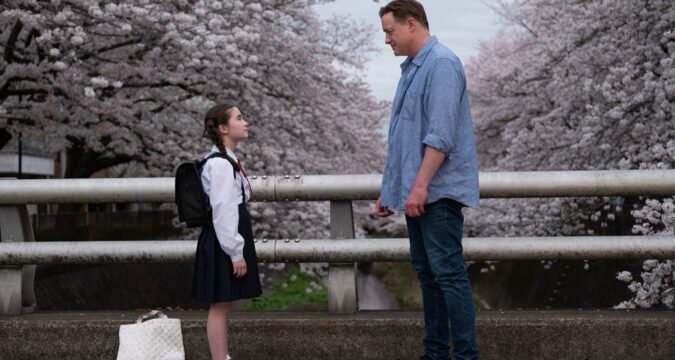
Review: Brendan Fraser connects in affecting ‘Rental Family’
Hikari’s beautifully moving and affably humorous story of human connection, “Rental Family,” kicks off with one funeral and culminates with another, demonstrating the evolution that our protagonist, Philip (Brendan Fraser), goes through during his personal journey between these two events.
The first funeral is a shock. Philip is a struggling actor in Japan, with one massively successful commercial as a toothpaste superhero mascot under his belt. His agent has booked him a gig as “sad American,” a role he can easily play with his looming height, doleful eyes and a heart he wears on his sleeve. Late as usual, he dashes to check in for work, and is shocked to bumble into a somber funeral. He’s even more shocked when the formally dressed corpse starts emotionally reacting to the tearful eulogies.
The scene is a marvel of revelation and reaction from Fraser, and in fact, much of the genius of his performance in “Rental Family” comes from his reactions, especially as he discovers the weird and wonderful new job he’s stumbled into.
In the screenplay by Hikari and Stephen Blahut, Philip finds himself working for Tada (Takehiro Hira), who runs a company called Rental Family, where he and his staff are hired by clients to role-play in various real-world scenarios — the fake funeral, for example, or as a mistress apologizing to a spurned wife, or just for friendship. Philip’s first role is quite complex: he plays a Canadian man getting married to a young Japanese woman in a show wedding for her conservative parents. She’s queer and needs an out in order to be with her partner. Philip, who is earnest and honest to a fault, chafes at the “lie,” but soon realizes that he’s helping someone to live their authentic life, and so he throws himself into the gig.
The Rental Family service is about maintaining the Japanese values of propriety and politeness through performance, and the little (or big) white lies are manipulations to get what the clients want: an apology, companionship, love, admiration, closure.
Philip’s most challenging high-wire act proves to be posing as the long-lost American father of a shrewd and emotionally intelligent young girl, Mia (Shannon Mahina Gorman), in order to secure her school admission. Both Philip and Mia’s mom (Shino Shinozaki), his client, soon realize that it’s much more complicated for Mia than just pretending to be a nuclear family for a school interview.
While playing a daddy, Philip also juggles a role as a journalist profiling an aging, iconic screen actor, Kikuo Hasegawa (Akira Emoto), from whom he learns surprising lessons about life, memory and legacy. He finds himself deeply connecting with his clients, young and old, and learning from both of them, while becoming tangled in their lives.
Empathy pours off Fraser in waves, which is what made his Oscar-winning performance in “The Whale” actually work. Hikari channels that quality to good use in “Rental Family,” but never oversteps. The film is sweet and affecting, but never treacly or overly sentimental. She knows how to balance humor and poignancy; to allow Philip to be a grown man with his own needs and peccadillos and mistakes, though we never question his motivations because of the inherent goodness that radiates off Fraser.
Hikari’s beautiful, naturalistic style also perfectly suits this story. A native of Osaka, the Tokyo that she showcases is one of quotidian everyday life, not the exotic, futuristic, neon city that an outsider might show us. Her Tokyo is one of small, cramped apartments, karaoke bars, public transit, hotels, temples and schools. It’s a world occupied by normal people who sometimes need a little help, a little push, a little assistance to get the things that they want in life. Philip is there to provide that service even though he’s also in need of his own connection to others.
But it’s the stumbles and mishaps along the way that actually help Philip to grow. By the time we get to the second funeral, we see how much he has bloomed in relationship to other people. Fraser has an openness to his expression that’s like a flower unfolding, beaming in the sunlight of recognition and personal fulfillment. As an actor, Fraser’s second act has been a sight to behold, and he is the emotional anchor of this wonderfully life-affirming and quietly resonant film about the importance of being together that announces Hikari as a major talent to watch.
Katie Walsh is a critic for Tribune News Service.
“Rental Family” — 3.5 stars (out of 4)
MPA rating: PG-13 (for thematic elements, some strong language, and suggestive material)
Running time: 1:43
How to watch: In theaters Nov. 21
https://www.chicagotribune.com/2025/11/20/review-rental-family-movie/

CPS culinary students assist in century-old gingerbread tradition at the Drake Hotel
From the basement level of the Drake Hotel, the scent of gingerbread wafts through the air as pots and pans clank and the shoes of busy chefs shuffle across the kitchen floor. At the front of the space stands a 6-foot-tall tiered platform, each level adorned with uniquely decorated miniature gingerbread houses — a more than century-old tradition that Chicago Public School students helped bring to life this season.
On Tuesday morning, North-Grand High School senior Andrea Rodriguez and junior Elijah Colon, along with Roosevelt High School junior Richard Barron, joined pastry chef Robyn Johnson to add the final touches to the towering display. Final touches included the piping of gingerbread cookies reminiscent of the holidays, such as stockings, snowflakes and trees.
This hands-on experience is part of Chicago’s Careers through Culinary Arts Program (C-CAP), which provides public school students nationwide with practical culinary skills. The Chicago chapter serves students at 20 schools in Cook County, most of which are within CPS. Founded in 1990, C-CAP operates in nine cities, including Chicago, and serves roughly 25,000 students across the country.
Since September, students have worked alongside Johnson to bring the historic gingerbread display to life in time for its unveiling. This marks the fifth year that Chicago’s chapter has participated in gingerbread-themed programming.
“What really excites me is that I get to see the things that I worked on,” Rodriguez said. “And everything that everyone here has contributed to the gingerbread house.”
Chef Robyn Johnson, center, watches as CPS high school students in the culinary program ice gingerbread cookies in the kitchen of the Drake Hotel on Nov. 18, 2025. (Eileen T. Meslar/Chicago Tribune)
For Chicago C-CAP director and program alumnus Anthony Riley McPhee, the initiative is personal, as he once wore the black apron. He credits the program with helping him dream beyond his circumstances — a message he shares with every student.
“When I speak to our students, I can say, ‘Hey, this is life changing.”
McPhee went on to become a classically trained chef — a success story that inspires students such as Colon.
“I figured this program would help me have experience in the kitchen,” Colon said. “It helps me see if I actually want to do this.”
Johnson, too, knows the power of full-circle moments. A graduate of Whitney M. Young Magnet High School on the South Side, she attended culinary school and completed her first internship at the Drake — spending 40 hours a week making gingerbread houses. Today, she sees this program as a way to give back to the place and community that shaped her.
“The kids come, they enjoy it, they get excited about it,” Johnson said.“This (program) is very important because they’re getting hands-on instruction and they’re getting it for free.”
North-Grand High School senior Andrea Rodriguez with her iced gingerbread cookies as part of a culinary program in the kitchen of the Drake Hotel on Nov. 18, 2025. (Eileen T. Meslar/Chicago Tribune)
As for Rodriguez, she’s preparing to graduate and head to culinary school. Her advice to future students is simple: Students joining the program won’t regret doing so.
“I really want the next generation that comes in here to take advantage of this opportunity,” Rodriguez said. “I’m glad I got to be part of this.”
The gingerbread house will be unveiled Saturday during the Magnificent Lights Festival at 4 p.m. and remain on display at the Drake throughout the holiday season.
https://www.chicagotribune.com/2025/11/20/cps-culinary-students-gingerbread-drake/

More texts uncovered from Border Patrol agent who bragged about ‘shooting skills’ after wounding woman in Brighton Park
A immigration agent who bragged to colleagues about his marksmanship after shooting a Chicago woman accused of ramming his vehicle sent other text messages that are now in the hands of defense attorneys, marking yet another twist in a controversial case arising from Operation Midway Blitz.
The new messages, which so far have not been revealed publicly, were ordered turned over to lawyers for Marimar Martinez this week by U.S. District Judge Georgia Alexakis, who viewed them in her chambers to determine their relevance, court records show.
The content of the those recently uncovered texts will be among several topics of discussion at a status hearing Thursday for Martinez, who is accused of assaulting federal agents with her vehicle during an immigration enforcement mission Oct. 4.
Prosecutors have said Martinez was part of a convoy of civilians who were following agents when she rammed Border Patrol Agent Charles Exum’s vehicle near 39th Street and Kedzie Avenue, prompting Exum to jump out of his Chevrolet Tahoe and fire five shots, wounding Martinez seven times.
Martinez’s attorneys, meanwhile, argue it was Exum who sideswiped Martinez and that his extreme use of force was completely unjustified. They’ve also alleged evidence tampering, saying Exum was inexplicably allowed to drive the Tahoe more than 1,000 miles back to his home base in Maine, where a Border Patrol mechanic attempted to “wipe off” some of the scuff marks from the crash.
An upcoming evidentiary hearing could feature several witnesses who will testify about the decision to release the vehicle, including Exum’s direct supervisor, the FBI agent who helped process it, and a federal prosecutor working early stages of the case.
This follows a bombshell hearing earlier this month where it was revealed that after the shooting, as news of the incident was making national headlines, Exum texted a group of other agents that he was “up for another round of “f––– around and find out.”
Exum, a 23-year veteran of Border Patrol, also texted the group a link to a news article about the shooting and said, “Read it … I fired 5 shots and she had 7 holes. Put that in your book boys,” according to court records.
In his court testimony Nov. 5, Exum, who is based in Maine, described the circle of fellow agents he chatted with as a sort of support group for “relieving stress.”
“And what did you mean by ‘Read it. 5 shots?’” asked defense attorney Christopher Parente. “Why are you pointing that fact out?”
“I’m a firearms instructor,” Exum answered. “And I take pride in my shooting skills.”
“You take pride in your shooting skills?” Parente clarified.
“That is correct,” Exum said.
Martinez, 30, has pleaded not guilty to a single count of using a dangerous weapon to interfere with federal officers in the course of their official duties. Also charged with the same crime was Anthony Ian Santos Ruiz, 21, who prosecutors say used his SUV to ram the same Border Patrol vehicle. Ruiz also has entered a not guilty plea.
A trial has been set for Feb. 2.
Prosecutors have said Martinez and Ruiz were both in a convoy of cars following agents and that Martinez had been broadcasting the pursuit on Facebook Live, “laying on her horn” and “yelling loudly” at the agents.
After the crash and shooting, Martinez drove off, but paramedics discovered her and her vehicle at a repair shop about a mile away, according to a criminal complaint. She was later taken by ambulance to a local hospital, where she was released after being treated for multiple gunshot wounds.
Ruiz also drove away after the collisions, but law enforcement located him and his vehicle at a gas station about half a block away, the complaint stated.
All three agents were equipped with body cameras, but the camera of only one of the passengers was switched on at the time of the incident, according to the complaint.
The body camera footage has not been released publicly. But Parente said in court he’d viewed it multiple times and that it showed just before the shooting, one of the agents who was a passenger — not Exum — was captured saying, “Do something, bitch,” while his hands were on his assault rifle.
Prosecutors have alleged in court that the actions of both Martinez and Ruiz were “extremely dangerous and extremely reckless,” putting both the officers and potentially innocent bystanders in harm’s way.
In his court testimony this month, Exum defended his actions as within department policy, saying an “offensive vehicle-to-vehicle confrontation with a federal agent typically does not happen in the United States.”
“This incident is so unlike anything that we have trained for, this would almost equate to our counter vehicle assault training, which typically takes place out of country, in cartel controlled areas of Mexico, or combat situations,” Exum testified.
Exum did, however, clarify that what Martinez allegedly did was not a “ramming” in his mind, since it was more of a sideswipe collision.
“Ram to me is more of a head-on maneuver,” Exum said .”So this was side to side. So I would describe it more of, I guess you’d say hit and not rammed.”
Exum was later asked to explain his text to his agent buddies about being ready for “another round of ‘F––– around and find out,’” which was sent just a day after he’d shot Martinez.
Exum said the text meant that “illegal actions have legal consequences.”
“And you’re up for it?” Parente asked.
“That’s my job,” Exum said.
“Your job is to shoot people?” Parente asked.
“No, sir,” Exum responded.
On Thursday, Alexakis is expected to decide on what evidence and testimony will be heard at an upcoming hearing over what happened with Exum’s Tahoe, which the judge had ordered brought back to Chicago on a flatbed truck.
According to prosecutors, the Tahoe remained at the scene of the shooting for several hours as an FBI technician took photographs of the vehicle’s exterior. An FBI special agent then drove the Tahoe to the agency’s Chicago headquarters for processing, where the evidence technician inspected it, took additional photographs “and collected paint samples from the damaged areas,” the filing stated.
The contents of the vehicle’s onboard computer were also downloaded and preserved.
After the processing was completed later that night, Exum was authorized to remove it from the FBI offices, according to the filing. Three days later, the agent drove it downtown to the Dirksen U.S. Courthouse to participate in an interview with prosecutors in the U.S. attorney’s office. After that, his monthlong deployment to Chicago ended and he “began the two-and-a-half-day drive back to his station in Maine” in the Tahoe, according to the filing.
Exum told prosecutors he did not “wash, repair, or alter” the vehicle before arriving at his station in Maine on Oct. 10, according to the filing. The agent’s ranking supervisor then authorized its repair, “understanding that the vehicle had been fully processed by the FBI and that, therefore, there was no further need to preserve the vehicle’s condition as evidence,” the filing stated.
Oct. 14, a Border Patrol mechanic “began to work on the car to put it back into service,” using a brake cleaner on a shop rag to attempt to “wipe the scuff marks,” but used only light pressure and “did not repair any of scratches or dents on the vehicle,” the filing stated.
After receiving word from Chicago about the dispute over the car’s whereabouts, the supervisor at the Maine station ordered that the Tahoe not be serviced any further, the filing stated. On Oct. 23, the vehicle was picked up and transported by flatbed truck to Chicago, where it was inspected by Martinez’s attorneys at the FBI’s Chicago office.
At the hearing Nov. 4, Alexakis said it gave her “great pause” that Exum’s vehicle was treated so differently from the cars driven by Martinez and Ruiz, which have remained in the custody and control of the FBI at all times. She also noted the government’s “story has changed in small ways.”
“And it is entirely possible that none of these differences really matter at the end of the day,” Alexakis said. “But the fact that these discrepancies are popping up cause me to question the narrative that has been put forward and lead me to the conclusion that the only way to get to the bottom of the situation is through a hearing.”
jmeisner@chicagotribune.com
https://www.chicagotribune.com/2025/11/20/more-texts-uncovered-agent-woman-shot/
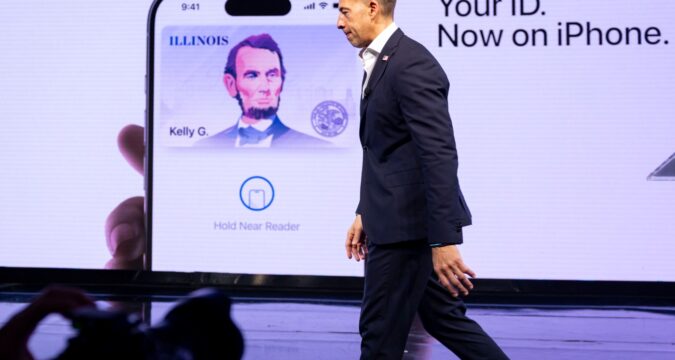
Editorial: Digital Illinois driver’s licenses are here. Except when you are actually driving.
Illinois Secretary of State Alexi Giannoulias stood before cameras Tuesday and declared a historic day.
“For anyone who’s ever left the house without their wallet,” he said, “fumbled for their ID at airport security or wished government services were just a little more modern, today changes everything.”
Giannoulias paused for dramatic effect before delivering the news. “For the first time ever, Illinoisans will be able to add their driver’s licenses or state ID to their Apple Wallet,” he said.
“This is government innovation at its best,” he went on, sounding like he was, oh, maybe running for something. He even went so far as to say that this represented “a new way to think about identity.”
That was a bit much. Certainly, Giannoulias deserves credit for pushing on with the technology that now allows Illinoisans to add their IDs to their phones and the levels of encryption are indeed impressive: the door person at the bar now can see you are over 21 years old without ogling the other information on your license. Better yet, the online ID will update in real time, unlike its physical sibling. You also will be able to use your license at TSA checkpoints at the airport, which is probably where you already store your boarding pass. Most convenient.
In many ways this looks like another nail in the coffin for the wallet, or the purse; a thick one is fast becoming a marker of age, or of Luddism. And another reminder that if and when you leave your phone at home — or God forbid, somewhere else — you are likely to be rendered dysfunctional in our brave new world. Better start carrying an extra battery.
But once prompted with a question, Giannoulias had a big caveat: You cannot use your shiny new digital driver’s license for its originally intended purpose.
Namely, driving.
If you are getting behind the wheel, you still need to pull out the physical license. So you’ll either need to keep it in your glove compartment (not ideal) or still carry that purse or wallet after all.
“That’s not gonna happen for the foreseeable future,” Giannoulias said of a scenario where officers pulls you over for speeding and you just show them your phone. “The legislation that was passed does not allow law enforcement to use it as of now.”
“No other state that has Apple Wallet allows law enforcement to use it,” he added.
That’s not entirely true — it appears that, in some cases, other states are already allowing drivers to use digital IDs during traffic stops.
Regardless, the traffic stop issue is a big caveat and one that we suspect will need more reinforcing.
Some people now are likely to think they can just pull out their phones after a traffic stop and they then will find themselves walking away with a ticket or a demand to head to the police station to show their physical licenses. So consider yourself duly warned.
“Consider it complementary for now,” Giannoulias said of the physical and digital twins, albeit nonidentical.
So the true revolution has yet to be televised. We see no reason why police officers can’t deal with digital licenses; it’s not that different from the TSA use thereof, especially since cops can look up driving and criminal records by way of inputting license numbers into their own databases. When that day comes, you really can leave your driving license in a desk drawer.
Submit a letter, of no more than 400 words, to the editor here or email letters@chicagotribune.com.
Willie Wilson: Illinois politicians party as Black communities fall further behind
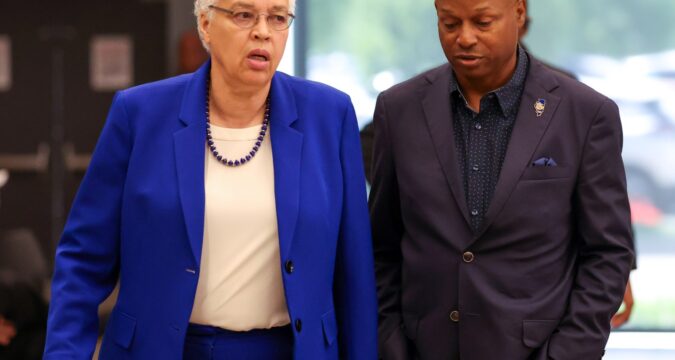
Elected leaders turned out en masse on Nov. 8 for the Chicago Urban League’s annual Golden Fellowship Dinner. The star-studded black-tie event drew Chicago’s elite Black citizens, including Mayor Brandon Johnson, Cook County Board President Toni Preckwinkle, Illinois House Speaker Emanuel “Chris” Welch, Lt. Gov. Juliana Stratton and a host of Black federal and state legislators. Interestingly, they were comfortable having a great time while seemingly oblivious to the figurative fire raging in the Black community.
How can they party as a 2025 State of Black Chicago report released by the Chicago Urban League paints a grim picture of economic progress for Black Chicagoans? As the report notes, the median net worth for Black households in Chicago in 2024 was zero dollars, whereas the median worth for their white counterparts was $210,000.
Perhaps elected leaders do not understand that Black households may be living paycheck to paycheck with no financial savings or assets to fall back on. Black politicians party while their constituents struggle to make ends meet.
As someone who grew up in the Jim Crow era, I am appalled at seeing Black politicians who are more loyal to a political party than their constituents. Prioritizing migrants over Black citizens is an example. This go-along-to-get-along attitude has produced very little tangible progress for the Black community. Too many Black citizens remain plagued by economic despair, poor education opportunities and crime-ridden communities. Where are the profiles of courage among modern-day Black political leaders?
Black leaders promise to fight for their constituents, but in the end, material conditions remain unchanged.
The school-to-prison pipeline will continue as long as politicians support low education standards and block options for children. The Illinois legislature allowed to sunset in 2023 the Invest in Kids tax credit program, which helped thousands of children, including those in low-income Black communities. The following year, an Illinois Policy Institute analysis found that Welch and Senate President Don Harmon each received $600,000 in political contributions from the Illinois Federation of Teachers, which opposed continuing Invest in Kids.
This year’s Illinois Report Card shows that only 17.4% of Black fourth graders and 36.7% of Black eighth graders scored proficient or better in math, compared with 55.4% and 66.6% of white students.
It is unreasonable to expect children to succeed in life if they are denied the opportunity of a proper education, as one-time Supreme Court Chief Justice Earl Warren observed. It must be made available to all on equal terms.
Elected leaders are quick to applaud high graduation rates. However, if children who receive diplomas cannot read or do basic math, the education system has failed. Even worse, such a reality ensures a perpetuation of the school-to-prison-pipeline.
Related Articles
Willie Wilson: Don’t be fooled by Mayor Brandon Johnson’s irresponsible budget proposal
Willie Wilson: Victims of crime are often forgotten by lawmakers
The Black population in Illinois is about 14%, but Black people represent 54% of the prison population in Illinois. How long will Black leaders fail to address this? How long will Black politicians be beholden to white politicians?
In Cook County, property tax bills began hitting mailboxes after being four months late: Black neighborhoods are being hit the hardest with higher bills. According to a report released by Cook County Treasurer Maria Pappas, tax bills rose the highest in West Garfield Park, North Lawndale and Englewood.
Working-class families who have experienced redlining pay the highest costs for mortgages and car and property insurance. They face rising health insurance premiums, coupled with higher costs for groceries and utilities. How do politicians expect working-class families with no net worth to pay those taxes? This is another example of Black politicians being complicit in the fleecing of the Black community through an unfair property tax system.
Black elected leaders have shown little sense of urgency to deal with high crime in communities they represent. The crime is traumatizing everyday people, including senior citizens and children.
I support reparations for the Black community as a way to repair the harm of slavery, segregation, Jim Crow, trauma and disinvestment. My idea for reparations consists of free education, health care and job training, for residents in poor communities.
The following are some suggestions to help Black families:
Gov. JB Pritzker, Johnson, Welch and Harmon must fix the broken education system in Illinois.
Welch and Illinois Black Caucus members must demand equity in contracts for Black business owners through the procurement process.
Pritzker, Welch and Harmon must fix the unfair property system that burdens the working class. Exempt senior citizens from paying property taxes.
Pritzker and the state legislature should pass a reparations bill that includes free education, health care, child care, housing and job training for Black citizens living in poverty.
Black leadership that does not prioritize economic infrastructure, such as schools, banks, construction companies, grocery stores, businesses and skilled trades, will continue to oversee poorer and economically fragile communities.
We celebrate the historic number of Black elected officials, but without any real tangible progress for the Black community, there is no reason to party.
I write this commentary to make those Black leaders comfortable with continuing the status quo uncomfortable.
Willie Wilson is a business owner, philanthropist and former mayoral candidate.
Submit a letter, of no more than 400 words, to the editor here or email letters@chicagotribune.com.
https://www.chicagotribune.com/2025/11/20/opinion-black-wealth-chicago-urban-league/
Liam Stanton: Chicago government should choose planning over panic
Chicagoans plan their lives with care. Families budget months ahead. Small businesses track payroll and inventory long before bills come due. Neighborhood organizations stretch every dollar and every volunteer hour. People in this city plan early, honestly and without needless drama.
City government should meet that same standard. Instead, this year’s budget process has shown a lack of planning, foresight and coordination. As a result, the City Council is being asked to resolve a $1.19 billion deficit on a compressed timeline. At the same time, residents are receiving delayed and higher-than-expected property tax bills from the county due to issues with a technology upgrade. While the two issues are unrelated, they land together for Chicagoans and create a broader impression that government is not managing the basics.
This is not a story about taxes alone. It is a story about management. Across communities and business corridors, we hear the same thing again and again. Chicagoans can deal with difficult choices when they are laid out clearly. What they cannot deal with is being caught off guard. And lately, that has become routine: late information, shifting proposals and decisions made with little time for public or council review. That is no way to run a major American city.
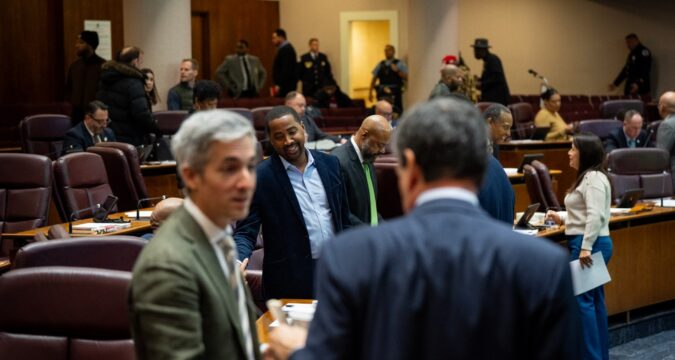
The administration pushed forward a compressed and constantly changing budget process that left the City Council with little time to evaluate, amend or build consensus around major decisions. That lack of early engagement created avoidable pressure and set the stage for the Finance Committee’s overwhelming rejection of the revenue package. When planning breaks down at the top, everything else becomes reactive. And Chicagoans feel the consequences.
City Hall’s fifth floor also had months of data pointing to a historic shortfall. It had the EY analysis. It had internal projections that made this moment avoidable. The City Council did not receive that information early enough to develop alternatives or weigh tradeoffs before the fall calendar closed in. Aldermen are now doing their jobs under difficult conditions, but they should never have been put in this position. Chicago is strongest when the mayor and the council operate as partners. Partnership is impossible when one side receives critical information only after the runway has nearly disappeared.
Several of the administration’s proposals arrived not only late but also out of step with the day-to-day realities of working people. The head tax is the clearest example. It was rewritten multiple times in the span of a week and introduced without clear detail, and it would have swept in midsize employers, restaurants and neighborhood businesses that are already struggling with higher costs. Other ideas, from higher lease taxes to expanded fees and surcharges, would have landed directly on the backs of residents who are stretched thin.
The City Council’s resistance is not dysfunction. It is a sign that aldermen understood these proposals were rushed, disconnected from economic reality and lacked the trust needed to move forward. When ideas arrive this way, the council has no responsible choice other than to slow them down.
Chicago’s governing structure is built for collaboration. We do not have a mayor who rules by decree. We have 50 wards filled with lived experience and neighborhood expertise. That structure only works when the mayor’s office engages early, works transparently and treats aldermen as partners from the start. When that does not happen, decision-making becomes reactive instead of thoughtful. Urgency replaces strategy.
There is a better model. Cities such as Denver and Boston rely on multiyear budgeting that brings financial realities into public view long before the fall. They publish long-range forecasts, host hearings early, and invite residents and businesses into the process while ideas are still forming. These cities still face hard choices, but they face them with planning rather than improvisation.
Chicago can adopt these same habits. The fifth floor can release projections in the spring. Working groups can be tasked with real authority and real information. Aldermen can be included at the beginning instead of the end. Our work has shown how differently discussions unfold when people feel informed early rather than asked to react to decisions that are already halfway decided.
Longer term, Chicago should consider a formal city charter. Most major cities operate with one. A charter would create clear expectations for transparency, timelines and roles. It would give the public a predictable process and give elected officials a reliable structure. It would reduce the improvisation that has defined recent years.
Related Articles
Editorial: Death of Mayor Brandon Johnson’s head tax should lead to negotiations with unions
Kam Buckner: A city charter is the reform Chicago actually needs, not recall powers
As the budget debate continues, the City Council deserves the space to deliberate carefully. They are doing their jobs under compressed conditions they did not create. Chicagoans deserve a process that treats them as stakeholders in the future of their city, not as spectators waiting for the next surprise. When people feel respected and informed, they respond with the steadiness and seriousness that defines Chicago.
Hard choices were always ahead. Surprise never had to be part of it. Chicago can make difficult decisions. We can also make them the right way, with preparation, honesty and the same level of care that Chicagoans show in their own lives.
That is the standard we should expect. And it is the standard the fifth floor must meet.
Liam Stanton is a lifelong Chicagoan, entrepreneur and founder of The Chicago Style Project, a neighborhood advocacy group focused on bold, practical solutions for Chicago’s biggest challenges.
Submit a letter, of no more than 400 words, to the editor here or email letters@chicagotribune.com.
https://www.chicagotribune.com/2025/11/20/opinion-chicago-city-budget-planning-charter/

Lakeview 5-bedroom house with 3 terraces and 4 wet bars: $2.6M
Address: 1446 W. Belle Plaine Ave., Chicago
Listed: Oct. 21, 2025
Price: $2,599,000
Listing agent: Tory Rezin and Bari Mill, Coldwell Banker, 847-414-9944
This Lakeview home has five bedrooms, four full bathrooms, two half-baths and a top floor that functions as a second family room, guest suite or home office. The house has three landscaped terraces and four wet bars across multiple floors. Interior features include mahogany millwork, coffered ceilings, full wood-paneled walls and wide-plank, quarter-sawn oak floors. The living room has a 9-foot, tiered Calacatta Borghini marble fireplace. On the main level, the living and dining area flows into a kitchen with French doors leading to a bluestone patio. The kitchen has a 16-foot Tiffany blue quartzite waterfall island, a La Cornue range and a satin brass hood. The second level has three en suite bedrooms with Juliet balconies, including a primary suite with a walk-in closet and double vanities. A paneled office has a wallpapered ceiling and brass built-ins. The top level has pitched ceilings, a powder room and access to two rooftop terraces. The lower level has a theater room, a recreation area and a bedroom. The house includes a two-car garage with a rooftop deck.
Interior features of this house at 1446 W. Belle Plaine Ave., Chicago, include mahogany millwork, coffered ceilings, full wood-paneled walls and wide-plank, quarter-sawn oak floors. (Dustin Halleck)
Interior features of this house at 1446 W. Belle Plaine Ave., Chicago, include mahogany millwork, coffered ceilings, full wood-paneled walls and wide-plank, quarter-sawn oak floors. (Dustin Halleck)
Interior features of this house at 1446 W. Belle Plaine Ave., Chicago, include mahogany millwork, coffered ceilings, full wood-paneled walls and wide-plank, quarter-sawn oak floors. (Dustin Halleck)
Interior features of this house at 1446 W. Belle Plaine Ave., Chicago, include mahogany millwork, coffered ceilings, full wood-paneled walls and wide-plank, quarter-sawn oak floors. (Dustin Halleck)
Interior features of this house at 1446 W. Belle Plaine Ave., Chicago, include mahogany millwork, coffered ceilings, full wood-paneled walls and wide-plank, quarter-sawn oak floors. (Dustin Halleck)
Interior features of this house at 1446 W. Belle Plaine Ave., Chicago, include mahogany millwork, coffered ceilings, full wood-paneled walls and wide-plank, quarter-sawn oak floors. (Dustin Halleck)
Interior features of this house at 1446 W. Belle Plaine Ave., Chicago, include mahogany millwork, coffered ceilings, full wood-paneled walls and wide-plank, quarter-sawn oak floors. (Dustin Halleck)
Interior features of this house at 1446 W. Belle Plaine Ave., Chicago, include mahogany millwork, coffered ceilings, full wood-paneled walls and wide-plank, quarter-sawn oak floors. (Dustin Halleck)
Interior features of this house at 1446 W. Belle Plaine Ave., Chicago, include mahogany millwork, coffered ceilings, full wood-paneled walls and wide-plank, quarter-sawn oak floors. (Dustin Halleck)
Interior features of this house at 1446 W. Belle Plaine Ave., Chicago, include mahogany millwork, coffered ceilings, full wood-paneled walls and wide-plank, quarter-sawn oak floors. (Dustin Halleck)
Interior features of this house at 1446 W. Belle Plaine Ave., Chicago, include mahogany millwork, coffered ceilings, full wood-paneled walls and wide-plank, quarter-sawn oak floors. (Dustin Halleck)
Some listing photos are “virtually staged,” meaning they have been digitally altered to represent different furnishing or decorating options.
To feature your luxury listing of $1,000,000 or more in Chicago Tribune’s Dream Homes, send listing information and high-res photos to ctc-realestate@chicagotribune.com.
https://www.chicagotribune.com/2025/11/20/dream-home-lakeview-belle-plaine/

What to do in Chicago: Paul McCartney, Magnificent Mile Lights Festival and more to open the holidays
Our picks for events in and around Chicago this weekend.
Magnificent Mile Lights Festival
Mickey Mouse and Minnie Mouse will light up Michigan Avenue, once again, during the Magnificent Mile Grand Tree-Lighting Parade. The day kicks off with family activities and live entertainment, including performers from Cirque de Solieil’s “‘Twas the Night Before” in Pioneer Court. Be sure to warm up before the big event: the parade will feature illuminated floats, balloons, marching bands and, of course, Santa Claus. As the procession makes its way down Michigan Avenue, holiday lights flicker on, before the day wraps up with fireworks over the Chicago River at the DuSable Bridge. It’s one of Chicago’s most magical holiday traditions.
11 a.m.-4 p.m. Nov. 22 in Pioneer Court, 401 N. Michigan Ave., with the Grand Tree-Lighting Parade running from 5:30 p.m.-7:15 p.m. southbound on Michigan Avenue from Oak Street to Wacker Drive; details on the free event at themagnificentmile.com
Christmas Tree Lighting
Millennium Park kicks off its holiday season by lighting up the City of Chicago Christmas Tree. The huge spruce will be illuminated on Nov. 21, followed by a fireworks display. This weekend also marks the opening of the McCormick Tribune Ice Rink and the Millennium Park Holiday Market (Nov. 21-23). Can’t make it, but love a good tree lighting? Greektown also will light up its blue-and-white tree on Nov. 23 as well as its traditional Holiday Karavákia Display — or decorated Christmas boats.
City of Chicago tree: 6 p.m. (pre-show at 5 p.m.) Nov. 21 in Millennium Park, near Michigan Avenue and Washington Street; details on the free event at chicago.gov. Greektown Tree Lighting: 5 p.m. Nov. 23 at Elysian Field, southeast corner of Halsted and Van Buren streets; details on the free event at greektownchicago.org
Paul McCartney
The Beatles legend wraps up his “Got Back” tour in Chicago this weekend with a two-night stand. He’s played 20 nights in 17 cities — at age 83 — and the reviews have been glowing. Go see him while you can.
8 p.m. Nov. 24-25 at United Center, 1901 W. Madison St.; resale tickets from $1,628.70 at unitedcenter.com
Paul McCartney performs at Lollapalooza on July 31, 2015. (Chris Sweda / Chicago Tribune)
El Alfa
Get your dance on this weekend with El Alfa, aka Emanuel Herrera Batista, aka the king of dembow. The Dominican rapper who’s collaborated with Bad Bunny and Cardi B brings his “Ultimo Baile” tour to the Rosemont Theatre. But will this truly be the last dance? The 34-year-old announced earlier this year that he’s retiring from music, following the death of his grandmother. “I could’ve spent more time with her,” he wrote in Spanish on Instagram, “but my work wouldn’t allow it.”
9 p.m. Nov. 21 at Rosemont Theatre, 5400 N. River Road, Rosemont; tickets from $57.98 at rosemont.com
Jeff Arcuri
Stand-up comedian Jeff Arcuri may have left Chicago (he started his career here) but he’s back this weekend with his “(Un)scripted” show. Known for crowd work, Arcuri has appeared on “The Late Show With Stephen Colbert” and Comedy Central’s “Roast Battle.”
7 p.m. and 10 p.m. Nov. 22 and 8 p.m. Nov. 23 at the Chicago Theatre, 175 N. State St.; tickets from $34.85 at msg.com
Juliana Yu rehearses for a Ruth Page School of Dance production of “The Nutcracker,” at the Ruth Page Center for the Arts on the Near North Side, Nov. 16, 2025. (Eileen T. Meslar/Chicago Tribune)
Ruth Page’s “The Nutcracker”
Looking for a more traditional version of “The Nutcracker”? You have several opportunities to catch a version featuring choreography dating back to 1962 by the late Ruth Page, dubbed Chicago’s “grand dame of dance.” For little ones, consider a special one-act version this weekend at the Beverly Arts Center.
1 p.m. and 5 p.m. Nov. 22 at the Beverly Arts Center, 2407 W. 111th St.; 1 p.m. and 5 p.m. Dec. 6 and 3 p.m. Dec. 7 at Governors State University Center for the Performing Arts, 1 University Parkway, University Park; 1 p.m. and 5 p.m. Dec. 13 and 1 p.m. Dec. 14 at Northeastern Illinois University’s Salme Harju Steinberg Fine Arts Center, 3701 W. Bryn Mawr Ave.; and 1 p.m. and 5 p.m. Dec. 20 and 1 p.m. Dec. 22 at College of Lake County’s James Lumber Center for the Performing Arts, 19351 W. Washington St., Grayslake; tickets from $20 at ruthpage.org
“American Prophets: Writers, Religion, and Culture”
See Flannery O’Connor’s rosary and more, as the American Writers Museum opens an exhibit exploring how religion has guided creative expression. “American Prophets” considers the work of “modern-day prophets — poets, rebels, and truth-tellers — (who) invite us to see our culture, and ourselves, through new eyes.” Featuring five, interactive installations, the show runs for about a year.
Through November 2026 at the American Writers Museum, 180 N. Michigan Ave.; tickets from $10 at americanwritersmuseum.org
Top 50 holiday concerts and shows in Chicago, from Cirque du Soleil to ‘Holly Dolly Christmas’
Christkindlmarket
Mug-collectors, take note: Christkindlmarket opens this weekend in Daley Plaza — as well as in Wrigleyville and Aurora. Indulge in glüwein (hot, mulled wine), any number of sausages, pierogi, pretzels, döner kebab and more, as you browse the Christmas ornaments and gift stalls. Check the schedule for special events, including the Dec. 14 “Haus of Krampus,” where you can meet Krampus himself. In Wrigleyville, Christkindlmarket is part of Winterland, which features the an ice rink, a holiday train and (from Nov. 28) visits with Santa.
Through Dec. 24 in Daley Plaza, 50 W. Washington St., and RiverEdge Park, 360 N. Broadway, Aurora; Nov. 23-Dec. 31 at Gallagher Way, 3635 N. Clark St.; details on the free event at christkindlmarket.com and gallagherway.com
ZooLights
Grab your hat and mittens and head to the Lincoln Park Zoo for its beloved, annual holiday light display. This year’s event features a reimagined South Lawn light show, “Zooltide,” as well as the usual Ferris wheel, s’mores and hot chocolate. Select nights feature carolers and ice sculptures. New this year: Flexible ticketing. Pay a little more to go when the whim—or the weather—strikes you.
Through Jan. 4 at Lincoln Park Zoo, 2001 N. Clark St.; tickets from $7.73 at lpzoo.org
People walk through an illuminated archway on the first night of ZooLights at Lincoln Park Zoo on Nov. 15, 2024, in Chicago. (John J. Kim/Chicago Tribune)
Holiday Mercadito
Get a jump on shopping at a Rogers Park craft fair featuring art, jewelry, candles, and much more. Between 10:30 a.m.-2 p.m., get free gift-wrapping for two gifts, courtesy of St. Jerome Church.
10 a.m.-3 p.m. in Grow/Progresando, 7056 N. Clark St.; details on the free event at business.rpba.org
Have something to do around Chicago? Email events to day.chitribevents@gmail.com.
https://www.chicagotribune.com/2025/11/20/what-to-do-chicago-nov-22/