Chicagoans plan their lives with care. Families budget months ahead. Small businesses track payroll and inventory long before bills come due. Neighborhood organizations stretch every dollar and every volunteer hour. People in this city plan early, honestly and without needless drama.
City government should meet that same standard. Instead, this year’s budget process has shown a lack of planning, foresight and coordination. As a result, the City Council is being asked to resolve a $1.19 billion deficit on a compressed timeline. At the same time, residents are receiving delayed and higher-than-expected property tax bills from the county due to issues with a technology upgrade. While the two issues are unrelated, they land together for Chicagoans and create a broader impression that government is not managing the basics.
This is not a story about taxes alone. It is a story about management. Across communities and business corridors, we hear the same thing again and again. Chicagoans can deal with difficult choices when they are laid out clearly. What they cannot deal with is being caught off guard. And lately, that has become routine: late information, shifting proposals and decisions made with little time for public or council review. That is no way to run a major American city.
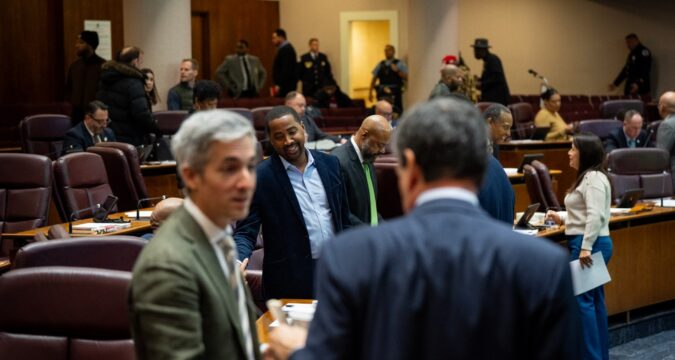
The administration pushed forward a compressed and constantly changing budget process that left the City Council with little time to evaluate, amend or build consensus around major decisions. That lack of early engagement created avoidable pressure and set the stage for the Finance Committee’s overwhelming rejection of the revenue package. When planning breaks down at the top, everything else becomes reactive. And Chicagoans feel the consequences.
City Hall’s fifth floor also had months of data pointing to a historic shortfall. It had the EY analysis. It had internal projections that made this moment avoidable. The City Council did not receive that information early enough to develop alternatives or weigh tradeoffs before the fall calendar closed in. Aldermen are now doing their jobs under difficult conditions, but they should never have been put in this position. Chicago is strongest when the mayor and the council operate as partners. Partnership is impossible when one side receives critical information only after the runway has nearly disappeared.
Several of the administration’s proposals arrived not only late but also out of step with the day-to-day realities of working people. The head tax is the clearest example. It was rewritten multiple times in the span of a week and introduced without clear detail, and it would have swept in midsize employers, restaurants and neighborhood businesses that are already struggling with higher costs. Other ideas, from higher lease taxes to expanded fees and surcharges, would have landed directly on the backs of residents who are stretched thin.
The City Council’s resistance is not dysfunction. It is a sign that aldermen understood these proposals were rushed, disconnected from economic reality and lacked the trust needed to move forward. When ideas arrive this way, the council has no responsible choice other than to slow them down.
Chicago’s governing structure is built for collaboration. We do not have a mayor who rules by decree. We have 50 wards filled with lived experience and neighborhood expertise. That structure only works when the mayor’s office engages early, works transparently and treats aldermen as partners from the start. When that does not happen, decision-making becomes reactive instead of thoughtful. Urgency replaces strategy.
There is a better model. Cities such as Denver and Boston rely on multiyear budgeting that brings financial realities into public view long before the fall. They publish long-range forecasts, host hearings early, and invite residents and businesses into the process while ideas are still forming. These cities still face hard choices, but they face them with planning rather than improvisation.
Chicago can adopt these same habits. The fifth floor can release projections in the spring. Working groups can be tasked with real authority and real information. Aldermen can be included at the beginning instead of the end. Our work has shown how differently discussions unfold when people feel informed early rather than asked to react to decisions that are already halfway decided.
Longer term, Chicago should consider a formal city charter. Most major cities operate with one. A charter would create clear expectations for transparency, timelines and roles. It would give the public a predictable process and give elected officials a reliable structure. It would reduce the improvisation that has defined recent years.
Related Articles
Editorial: Death of Mayor Brandon Johnson’s head tax should lead to negotiations with unions
Kam Buckner: A city charter is the reform Chicago actually needs, not recall powers
As the budget debate continues, the City Council deserves the space to deliberate carefully. They are doing their jobs under compressed conditions they did not create. Chicagoans deserve a process that treats them as stakeholders in the future of their city, not as spectators waiting for the next surprise. When people feel respected and informed, they respond with the steadiness and seriousness that defines Chicago.
Hard choices were always ahead. Surprise never had to be part of it. Chicago can make difficult decisions. We can also make them the right way, with preparation, honesty and the same level of care that Chicagoans show in their own lives.
That is the standard we should expect. And it is the standard the fifth floor must meet.
Liam Stanton is a lifelong Chicagoan, entrepreneur and founder of The Chicago Style Project, a neighborhood advocacy group focused on bold, practical solutions for Chicago’s biggest challenges.
Submit a letter, of no more than 400 words, to the editor here or email letters@chicagotribune.com.
https://www.chicagotribune.com/2025/11/20/opinion-chicago-city-budget-planning-charter/


