Category: News

Column: An exciting movie about the legendary photographer Steve Schapiro
In person and in conversation, Steve Schapiro was not the sort of guy you might imagine hanging around with David Bowie, shooting the breeze with Mia Farrow, walking country roads with Dr. Martin Luther King Jr. or hanging around with New York City heroin addicts.
But that was Schapiro, a lifelong photographer, a great and admired one, and as such a witness to many of the biggest stories and most interesting people of the last half century.
He died three years ago in Chicago, where he had lived for some years, but he comes alive in a new documentary, the appropriately titled “Steve Schapiro: Being Everywhere.”
It is a wonderful film, 72 minutes long, making its local premiere over the weekend at the Gene Siskel Film Center.
Its screenings will be embellished by question and answer sessions with the film’s director, Maura Smith, a filmmaker of such works as “Towing,” with Sue Lyon and Chicago’s own Joe Mantegna. She was, more importantly, married to Schapiro from 1982 until his 2022 death. Her relationship with Schapiro elevates this movie above the usual documentary fare and gives it a rare intimacy, personal punch and offers a delightful portrait of an artist and humanist.
As she says, her aim was “to capture his charm and creativity and, equally important, to show how we can’t always tell how our lives are being shaped — those moments in life that are influencing us but we don’t realize it. It was important to me that Steve’s story was told in his own words.”
It’s quite a story, which began in 1934 in Brooklyn, where he was born and raised and first picked up a camera at a summer camp. As he told me some years ago, “I was nine years old, and I loved clouds and took pictures of them, and then, watching the photos come to life in the dark room, found that there was magic in photography.”
He discovered and was deeply influenced by the work of legendary French street photographer Henri Cartier-Bresson and studied with W. Eugene Smith, a revered American-born photojournalist. After attending Amherst College and graduating from Bard College, Schapiro began his freelance career in the 1960s.
This was what many consider the golden age of photojournalism, with dozens of high-circulation publications ravenous for photos. Schapiro’s work was in most of them, such as Life, Time, Look, Newsweek, Rolling Stone, Vanity Fair, Sports Illustrated, Paris Match and others. It was his portrait of Mia Farrow that was chosen as the cover shot for the first issue of People.
He visited and shot action on 400-some movie sets, from “The Great Gatsby” (where he captured Farrow), to “Midnight Cowboy” (his photo became the film’s poster), “The Godfather,” “Taxi Driver,” “Risky Business” and “Ferris Bueller’s Day Off.” It is a very long list.
He and Bowie bonded over their mutual admiration for silent film star Buster Keaton and worked together over decades. He and actor Chevy Chase became so close that Chase asked the Schapiros to be godparents to his daughter.
Name a movie star, he was with them. Presidents? You bet.
It is easy to get the sense that Schapiro was, as he described himself, “a fly on the wall,” but one who aimed for more. As he says in the film, “It is all about emotion, design and information. If you can get all three of those in a photo, you’re doing OK.”
But it was not all tinseltown denizens. He was there with artist Andy Warhol and his collection of weirdos. He was with writer James Baldwin. He really was everywhere and his story of being at the Lorraine Motel in the wake of Dr. Martin Luther King Jr.’s 1968 assassination will chill you for keeps.
In many of the interview sessions with Schapiro, most filmed in the couple’s stunningly white lakefront apartment here, he is wearing dark glasses. This was no affectation but rather the result of his decades behind the lens. “My left eye has trouble staying open after a lifetime of shooting,” he says matter-of-factly.
That is a high price to pay, but there is no complaint here. Smith has made an affectionate (even loving) portrait of her late husband, her film relatively unburdened, as are some of those talking-head-filled documentaries that remove us from their subjects. Though he is obviously becoming frail due to the cancer that would kill him and the strains of age (he was 87 when he died), he is sharp in his memories and thoughtfully philosophical in measuring his life.
For all his star-studded work — shooting Barbra Streisand, Robert De Niro, Orson Welles, Salvador Dali, Mae West, Satchel Paige, Ray Charles, Frank Sinatra, Ike and Tina Turner (together), Samuel Beckett, Truman Capote, Arthur Miller, Richard Pryor, Sophia Loren and more — Schapiro remained a man committed to social justice and civil rights. As he told me, “There was such an emotional flow to these events that it gave me the chance to do pictures that captured the spirit of an event or a person. Emotions are what really interest me.”
I got to know the Schapiros a bit when he moved here in 2007, after decades in California, telling me, “My wife is from Chicago and has 33 first cousins, and they all live here. This is a great city, a much easier place to live than New York or Los Angeles.”
He seemed to lack any self-promotional genes when we talked in 2014 about a modest exhibition of 20 of his portraits at the then relatively new Ed Paschke Art Center in the Jefferson Park neighborhood.
“Steve Schapiro: Being Everywhere” has been a hit on the film festival circuit, winning awards, gathering praise. Those lucky enough to have known Schapiro will enjoy and even learn a few new things seeing him again. Those who have never heard of him will be amazed and never able to forget him.
rkogan@chicagotribune.com
“Steve Schapiro: Being Everywhere” screens Dec. 5-10 at the Gene Siskel Film Center, 164 N. State St.; www.siskelfilmcenter.org

Editorial: Chicago gets a much-needed tonic from an unlikely source — the Bears
Does Chicago ever need what the Bears are giving the city right now.
Nothing unifies Chicago more than the Bears. Chicagoans disagree with one another on many things — including, of course, their baseball allegiances — but there’s little if any dissent about our football team. Many of us live and die with them, and the rest of us are happier when they’re succeeding and bummed out when they’re not.
So what a gift in this year of extreme discontent in Chicago that the Bears have defied all predictions and gone on a five-game winning streak. Under first-year head coach Ben Johnson, the team’s 9-3 record not only puts it in first place in the highly competitive NFC North but alone atop the entire conference. If the playoffs started today, your Chicago Bears would have the No. 1 seed and would enjoy a bye during the first weekend of playoff action.
Having written the above and pinched ourselves a few times, we’re required at this stage to issue the necessary disclaimer that past results don’t guarantee future performance, as they say on Wall Street. There still are five games left to play including two against the rival Packers, beginning next week in Green Bay. (We were going to use a more unkind word than “rival,” but this is the editorial board, not the corner bar.)
So we think it fitting and proper, particularly after Thanksgiving weekend, to be grateful for meaningful December games for Chicago’s NFL franchise. Before the season started, most fans would have been more than satisfied if you’d told them the Bears even would be in the playoff hunt at this point, much less leading the conference.
Continuing with the thanksgiving theme, it’s all gravy from here, Bears fans.
Sure, if the Bears stumble after reaching the dizzying heights the team is occupying now, we all will be disappointed. But if that happens — and we’re not ruling out more future miracles by any means — Chicago football fans should quickly pivot to remembering the joyful feeling they’re experiencing this week.
Enjoy the remainder of the ride, whatever happens. A hearty thanks to those at Halas Hall, from administration to coaches to (of course) players, who at long last have this NFL cornerstone firmly back in the land of relevance and seemingly headed well beyond.
Did we ever need this.
Submit a letter, of no more than 400 words, to the editor here or email letters@chicagotribune.com.
https://www.chicagotribune.com/2025/12/02/editorial-chicago-bears-nfc-conference-winning/

Hilary G. Conklin: These are the civic lessons that ICE is teaching our children
Although we have replaced our jack-o-lanterns and skeletons with evergreen wreaths and festive lights, the specter of masked Halloween figures continues to haunt our community. In my leafy suburb just outside of Chicago, on Oct. 31, our normally bustling evening of trick-or-treating was eerily quiet. Federal immigration agents’ aggressive and terrifying actions on Halloween meant hundreds of children stayed home, their families too petrified to escort their pint-size dinosaurs and superheroes door to door.
Federal agents’ operations are traumatizing a generation already scarred by COVID-19. Community raids have prompted school lockdowns and nervous texts from high schoolers as helicopters hover above, teaching students troubling lessons about government. Through more than a decade of research examining what teenagers learn from different kinds of civic education, I’ve seen just how deeply young people internalize lessons from moments such as these — often far more than adults expect.
As a former social studies teacher and now professor of education, I am deeply alarmed by the civic lessons our youth are learning. In a political landscape in which teachers are increasingly reluctant to offer even basic instruction about American government, the scenes on the ground are filling the void.
Students are learning that protesters exercising their First Amendment rights will be tear-gassed. They are learning that U.S. citizens will be detained. They are learning that federal agents will operate above the law and that government officials will make false claims about their activities.
When I teach my students — future social studies teachers — about different ways to approach their instruction, I introduce them to one method that scholars call “Lived Civics,” which honors the political knowledge young people hold based on their experiences in communities. Such knowledge often contradicts the idealized lessons about democracy taught in schools. The current moment is offering a stunning set of contradictions for educators to address.
What are the civic lessons a 6-year-old girl will learn about due process after her father, an Uber driver with protected status and a pending asylum case, was whisked off the street in the middle of a shift? What are the civic lessons a 16-year old with Stage 4 cancer will learn about our social contract after her father was detained at a facility known for its inhumane conditions, interrupting her cancer treatments? What are the civic lessons students will learn about the use of force after federal agents pointed guns at unarmed community members, punched a bystander and dragged him across the pavement, and violently forced a woman into a federal vehicle?
As the mother of a teenager now studying civics, I tell my daughter that our democracy has never fully lived up to its promises. But I am terrified that what she is witnessing now — these widening contradictions and cruelties — is the version of government she will be left to accept as her future.
While this is an incredibly difficult moment to be a social studies teacher, we cannot abandon civic instruction. We must help our next generation process what is happening to them and around them, to lay the groundwork for a more hopeful — and democratic — future.
In my research with political scientist Molly Andolina, we’ve seen the kinds of lessons students can learn when they have guided opportunities to make sense of these experiences together. We worked with high school teachers across the Chicago region to lead their students through a range of civic issues.
One case study focused on a 2019 immigration raid in Mississippi and the wide ripple effects it had on the local community. Many students — immigrants themselves — told their classmates about the strong connections they felt to the issue. Other high schoolers said their discussion of this case helped them understand the complexity of the issue, humanize the people involved and deepen their empathy for all the groups affected.
When we talked with new groups of students this fall about the same case, just as Operation Midway Blitz had begun, students reported that these deliberate conversations enabled them to become more informed about what was happening around them and moved them to want to inform others.
To be sure, students should learn how nations create secure borders. They should learn about how Congress makes immigration policy. They should learn about the differing civic values that inform a balanced approach to border policy.
But as immigration enforcement spreads fear to new parts of the country, we all need to decide: What are the lessons about government we want our next generation to learn?
If we allow these actions to stand unchallenged, we will all be haunted by the cobwebs of democracy that remain.
Hilary G. Conklin, Ph.D., is a former social studies teacher. She is now a professor of education at DePaul University in Chicago who studies civic education and teacher preparation.
Submit a letter, of no more than 400 words, to the editor here or email letters@chicagotribune.com.
https://www.chicagotribune.com/2025/12/02/opinion-chicago-immigration-raids-lessons-children/
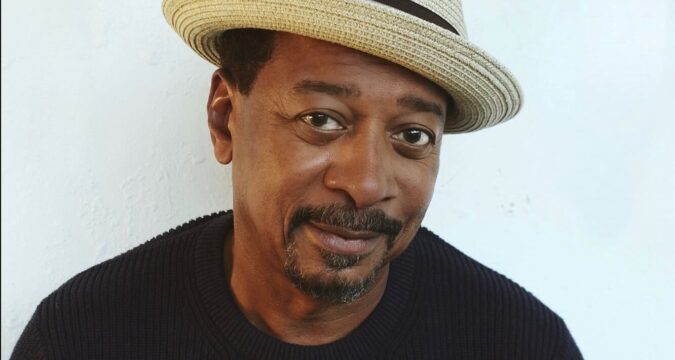
Actor and director Robert Townsend raises funds for West Side nonprofits with pop-up film fest
Chicago native Robert Townsend has done it all. He is all things writer, director, actor, comedian and producer, whose portfolio includes work with entertainment mainstays like Denzel Washington, Ruth Carter, Jenifer Lewis, the Wayans family, Halle Berry, Taye Diggs and Beyoncé in her debut acting role in MTV’s 2001 musical “Carmen: A Hip Hopera.” He was the director of the highest-grossing stand-up concert film of all time, “Eddie Murphy: Raw.” His prolific nature extends not just to films like the satiric “Hollywood Shuffle” and musical drama “The Five Heartbeats,” but television networks like HBO (“Robert Townsend and His Partners in Crime”), Fox (“Townsend Television”) and the WB (“The Parent ‘Hood”).
Townsend, an uncredited extra in 1975 Chicago classics “Cooley High” and “Mahogany,” may have made his mark on the world in Hollywood, but he hasn’t strayed from his roots — he’s directed an episode of the Chicago-based series “Power Book IV: Force” and portrays Emmanuel Adamu, chef Sydney Adamu’s father, in “The Bear.”
Townsend is in Chicago this week to host a pop-up film festival Dec. 6-7 — one that will showcase films significant to him and subsequently raise funds for the Chicago Westside Branch NAACP and The Answer, Inc., the Forest Park-based organization that supports people of color with intellectual or developmental disabilities and their families. Townsend is childhood friends with Karl Brinson, Westside Branch NAACP president, and Debra Vines, CEO and founder of The Answer, Inc.
“I’m excited to come back to Chicago,” Townsend said. “I was seeing all the stuff going on in Chicago, and it really touched my heart. We’re in crazy times right now. Human rights are under attack and I go. ‘I got to go to Chicago and help. I got to do my part.’”
Made possible by Chicago’s Department of Cultural Affairs and Special Events, Columbia College Chicago and Creative Cypher, the film fest will take place at Columbia College Chicago on Saturday and the Chicago Cultural Center on Sunday.
“The Spook Who Sat by the Door” and “The Five Heartbeats” will be shown Saturday, followed by question-and-answer sessions. Sunday’s screenings include “The Meteor Man” and the Townsend-directed episode of “Power Book IV: Force” followed by a Q&A with the cast of the show. Festivities wrap up with a comedy showcase at 7:30 p.m. at The Comedy Bar, 162 E. Superior St.
We spoke with Townsend about his work, life and legacy before his Chicago visit. The interview has been edited for length and clarity.
Q: Fifty years in entertainment. Is there an aspect of your life that you wish people would ask more about?
A: I wear so many different hats. I’m reoccurring on “The Bear.” I’ve been directing “Force” in Chicago, and Lena (Waithe) wants me to come in February and March — I’ll be directing “The Chi.” I was recently doing my one-man show, “Living the Shuffle” in St. Louis … my most personal story, because I get into my childhood — being raised on the West Side of Chicago by a single parent. I lived in K Town. I’m also a tenured professor at USC and I have four wonderful children. I’m living my best life, being an artist and a father. When people ask me questions about my life, it’s kind of a fantasy. Being that kid on the West Side with all these dreams … now I’ve lived all of my dreams plus. Part of coming to Chicago is to let people know you can live your dreams too.
Q: When is “Living The Shuffle” coming to Chicago?
A: I started doing the show years ago, getting ready to take it on the road. Then they said, there’s something in the air called COVID and the world shut down. I finally have gotten back to doing my show. But I stay busy, so it’s like, ‘Can I do it while I’m doing this and that?’ I’m trying to figure it out. Then I’ll bring it to Chicago. When I think about my life, it’s not to be believed. This little Black boy from the West side of Chicago with these big dreams and every step of the way there’s these twists and turns, and he always wins. You’ll laugh a lot, you’ll cry some and then you’ll leave inspired.
Q: Is there a film that you directed or created that speaks more to your legacy?
A: The best is yet to come. God whispers in my ear all the time. He goes: “In 2026, you will be reborn.” I’ve created a lot of work that people love, but I have a deep well of ideas and stories, and I’m just tapping in.
Q: A lot of the work you’ve done has been ahead of its time. What’s percolating for you these days?
A: I don’t talk about my ideas. When you talk about ideas as an artist, you let air out of the balloon. … That’s something I say to young creators all the time: Don’t talk about it. Protect it, cover it, and just develop it quietly. I think that as an artist now in this generation, you keep your ideas close to you and develop them and really take time to nurture them before you talk about them.
Q: Do you find yourself explaining Chicago to people not familiar with the city, giving them the real narrative?
A: When I think about growing up in Chicago, it’s (the film) “Claudine.” In “Claudine,” they lived in the ‘hood, but there was so much love, so much joy. It’s a good, warm feeling. The ‘hood was always glorious and happy. Yeah, you had moments where it’s like “Cooley High,” moments where it’s dangerous and gangster. But then it’s fun and loving; it’s great music, it’s love stories, and there’s the backbone of the community, the church. When I talk about Chicago, I bring the energy of what “Claudine” was and what “Cooley High” was, because there’s a lot of love and a lot of great people.
Q: Being an artist in this moment, how do you maintain being as authentic as possible?
A: In moments like this, you don’t see obstacles, you see opportunities. There’s always a way to pivot. Everything that’s going on right now in the world, as much as we go “oh my god,” I see people marching with signs that want democracy, that believe in justice, that believe in freedom — from the 17-year-old boy to the 93-year-old grandmother. That gives me hope. New voices, new activists, are being born and finding their voice because of tough times.
Q: Skye Townsend from “A Black Lady Sketch Show” is your daughter, correct?
A: Yes, ma’am. When she was a little kid. I would take her to school, and we would play a radio game where some music would come on, and I would do a voice. She would do a voice. When she was little, she would walk the red carpet with me, pull on my coattail, and look up with those little eyes and go, “Daddy, when are they going to talk to me?” We walk the red carpet now, and I look at her, and go, “they’re talking to you now.” I’m beyond proud of her.
Robert Townsend’s Pop-Up Film Festival runs Dec. 6-7 at Columbia College Chicago, the Chicago Cultural Center and The Comedy Bar; tickets and more information at events.eventnoire.com
https://www.chicagotribune.com/2025/12/02/robert-townsend-film-fest/
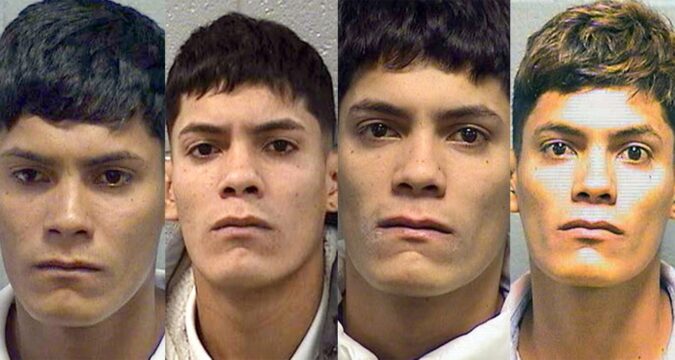
A border crosser. An execution killing. And political theater.
For one day in September, Jose Coronado Meza became the Trump administration’s poster child for why Chicago needed to be flooded with federal agents.
Coronado Meza had been ordered deported. But the Biden administration let him live in Chicago, where he got arrested for murder. Democrats’ “sanctuary” ways had coddled a would-be killer. Or so the argument went.
But a deeper look at the case offers a window into the erratic nature of immigration enforcement — even in eras when administrations tout crackdowns. The case shows how someone like Coronado Meza can slip through the cracks of both Democratic and Republican administrations, once the facts get separated from the bluster and politics.
Democratic policies for sure helped him stay on the streets despite a string of arrests, the Tribune found, such as ignoring a formal request to hold him for immigration agents.
But so did choices made by the Trump administration in its first five months before the killing, including not seeking a warrant that could have forced local cops to hold him.
In an immigration enforcement system that has long struggled to match ambition to reality, Coronado Meza was the kind of person easily lost in the nuance. His rap sheet before the killing listed arrests for an illegal gun and shoplifting, but no convictions. That wouldn’t necessarily prompt agents’ immediate attention in the heat of President Donald Trump’s crackdown. But it wouldn’t necessarily be ignored under a more moderate Biden.
With Operation Midway Blitz having come and gone, Coronado Meza’s case could easily be forgotten amid the military-style raids and roving sweeps, the regular shrieks of protesters’ whistles, and the viral videos of agents using such heavy-handed tactics that one judge said it “shocks the conscience.”
He pleaded not guilty in October and declined to comment through his public defender in a case that’s early into what’s typically a long, under-the-radar journey through the Cook County courts.
At the same time, the Tribune found that Coronado Meza’s path, from a border crosser to an accused killer, illustrates real-life consequences of decades of contrasting priorities from place to place and administration to administration — and how increasingly polarizing views may be exploited for political gain at the risk of public safety.
The detainer debate
According to the Department of Homeland Security, Coronado Meza first crossed the United States border in September 2023. The then-23-year-old had followed a well-traveled path of other Venezuelans fleeing poverty and violence in an increasingly authoritarian country.
But he didn’t stay long. By then, with cities like Chicago already deluged with migrants, tightened border rules under President Joe Biden led to Coronado Meza being immediately deported.
A month later, Coronado Meza crossed the border again. U.S. Immigration and Customs Enforcement agents locked him in a Georgia jail, pending another deportation. It’s unclear why ICE didn’t quickly deport him again. DHS didn’t respond to questions about his case. But by then, strained diplomatic relations had limited deportation flights to Venezuela.
DHS said he was released 5½ months into his stay — in April 2024 — at a time ICE was relieving overcrowding. He got to live in the United States while awaiting deportation.
The Rio Grande near a fence at the U.S.-Mexico border on July 12, 2023, in El Paso, Texas. Jose Coronado Meza first crossed the Texas border near Laredo in September 2023. The then-23-year-old had followed a well-traveled path of other Venezuelans fleeing poverty and violence. (Armando L. Sanchez/Chicago Tribune)
DHS declined to say any more about his immigration case, and ICE isn’t required under law to open its case files. But what happened next can be deduced through raw case data ICE has released to the Deportation Data Project. The data doesn’t list names, but DHS publicized enough details on Coronado Meza’s entry and detention that only one case matches him in the raw data.
Based on those database entries, and a collection of local arrest and jail records obtained by the Tribune, a picture emerges of how Coronado Meza made his way from Georgia to Chicago and — within three months — ended up in Cook County Jail, accused of shoplifting from the JCPenney at Ford City Mall.
In an earlier political era, it could have resulted in him being immediately held for ICE.
That’s because widely used police databases alert ICE to arrests of immigrants on its radar. ICE can then send special requests, called detainers, to ask local cops to hold them until a federal agent can retrieve them. In Barack Obama’s first term as president, with the help of local police and prosecutors, record levels of people were deported using this system.
But that spurred a backlash in places like Chicago, which had long welcomed tens of thousands of largely law-abiding undocumented immigrants who’d built lives in the wide chasm between the nation’s strict immigration laws and what the government actually enforced. Advocates complained the crackdown was too harsh, wasted local resources and actually made the streets more dangerous by scaring remaining immigrants from helping local police stop and solve crime.
So in 2011, under Obama’s first term, Cook County commissioners ordered the jail to ignore ICE detainers — something courts had ruled that local governments could do. And Illinois lawmakers expanded that stance in 2017 to any jail or prison in the state.
That fueled conservatives’ complaints that Illinois lets even undocumented killers back on the streets after serving time, instead of holding them to be deported, in a nation where polling has shown most people support deporting criminals but letting others with jobs stay.
An Immigration and Customs Enforcement official speaks to a busload of immigrants after leaving the Broadview processing facility on their way to O’Hare International Airport to be deported to Mexico on Jan 27, 2009. In Barack Obama’s first term as president, with the help of local police and prosecutors, record levels of people were deported using the detainer system. (Alex Garcia/Chicago Tribune)
So when ICE got pinged on Coronado Meza’s misdemeanor theft arrest in July 2024 — three months after he’d been released from ICE custody — the agency labeled its response as “prosecutorial discretion,” meaning it didn’t issue a detainer.
It used the label again, in December 2024, after being pinged on another arrest of Coronado Meza — accused then of stuffing $1,000 worth of clothes in a suitcase and running from police outside a Kohl’s on Touhy Avenue in Lincolnwood.
His fate was left to the Cook County courts. He was released after five days in jail, after his first shoplifting charge was dropped, while his second case remained pending.
Less than three weeks later, on Jan. 4, he was back in police custody, for a third jail stay. Chicago police said they caught him in the back seat of an SUV with a handgun that had a defaced serial number, and that he admitted was his.
ICE was pinged again on an arrest, but this time as Trump readied to take back the presidency, after promising mass deportations that would get “the criminals out” and “do that fast.”
Worst of worst?
A day into Coronado Meza’s stay on the gun charge — and 15 days before Trump’s second inauguration — ICE’s dataset recorded sending its first detainer for Coronado Meza.
For sure, the detainer was still worthless under Illinois law. But it did show that ICE, even before Trump took over, now believed Coronado Meza needed to be kept off the streets. As the undocumented immigrant sat in the county’s massive Little Village jail complex, Trump was sworn into power Jan. 20, vowing to jump-start deportations and stop “sanctuary and protection for dangerous criminals.”
If the bellicose statements were to be believed, it could again have suggested the end of Coronado Meza’s stay in Chicago.
Phil McGraw, left, known as Dr. Phil, in an image from a video he posted to his X account, walks with “border czar” Tom Homan on Jan. 26, 2025, during an embed with federal immigration agents in Chicago. (Dr. Phil)
After all, Trump immigration officials had often defined criminals as anyone arrested, regardless of whether they’d been convicted. And, within a week of Trump’s second inauguration, new border czar Tom Homan came to town with TV personality “Dr. Phil” McGraw and an alphabet soup of federal law enforcement — from the FBI to ATF — to help launch “enhanced targeted operations.”
The stated goal was to hunt “the worst of the worst” — defined as roughly 300 undocumented immigrants convicted of a crime, from murder to drunken driving. But the on-the-ground reality showed how difficult that could be. Arrest figures could be boosted significantly by detaining anyone undocumented whom agents happened to stumble across, so-called “collateral” arrests that were dissuaded under Biden but embraced under Trump.
And if Trump’s new DHS took over and had made Coronado Meza a priority arrest, he wouldn’t have been hard to find, at least until Feb. 6. That’s when he was released from jail, after both his remaining cases were dropped over what court records say were witness and evidence issues.
ICE could have waited outside the jail gates and arrested him, like they’ve done under Trump in some cases in other sanctuary jurisdictions in Pennsylvania and Maryland. But that ties up agents’ time — tracking court dockets and staking out jail exits — for an agency taking orders from a White House bent on boosting deportation figures. DHS did not respond to questions about what it did, if anything, to look for him — but records show that Coronado Meza left the jail on Feb. 6 for six months of freedom.
During that time, federal agents appeared to target some undocumented immigrants, using tools available even in sanctuary states like Illinois.
While Illinois has tried to make it harder — being one of the rare states to block ICE access to drivers’ license data — federal agents still have datasets of immigrants they’ve encountered, such as through asylum applications and hearing records, and can buy bulk data on everything from utility payments to property records. Agents can use all of it to help track down someone, said Scott Shuchart, a Trump critic who had served in DHS under Obama, Biden and part of Trump’s first administration.
“It’s like, ‘Oh, we know this guy. We know where he was living six months ago. Looks like he moved. Let’s check his sister. Yep, she has a car registered at a new address. Let’s check there. He’s not there. Looks like his brother has moved to a different town.’ They know stuff. People are in the system. They already either have information or tools to get at information.”
‘Numbers game’
Not all immigration violations rise to the level of a federal crime. But some do, such as sneaking across the border to enter, or showing back up after being deported. The latter is a felony, and a crime that DHS said Coronado Meza had committed back in 2023.
To legal experts, that means DHS could have pursued a federal criminal charge, which would have led a federal judge to issue an arrest warrant for him. It could have been the one tool to put him in federal handcuffs before the killing.
The names of those sought on judicial warrants are put into nationwide police databases, checked by cops during interactions as routine as traffic stops. Jails check them too, before releasing detainees. And unlike detainers, sanctuary jurisdictions must honor judicial warrants.
Local police statements and records show that Coronado Meza’s name was run through police databases both before he was released from the county jail Feb. 6 — 2½ weeks after Trump’s inauguration — and during a routine traffic stop on June 19, which was five months into Trump’s presidency, and three days before the killing.
If a federal judicial warrant had been in the system, local agencies would have been forced to hold him and turn him over to federal agents.
But the Tribune could find no record of ICE seeking a criminal arrest warrant for Coronado Meza. And that doesn’t surprise those familiar with the tactics of ICE. They say the agency is historically leery of doing the extra work to get judicial warrants.
“It takes time to go present a case to a judge and get a warrant, right?” said University of Chicago law professor Nicole Hallett, who directs the Immigrants’ Rights Clinic. “And in the past, and even more so now, ICE is playing a numbers game. …They’re just trying to find undocumented immigrants where they can and put them in removal proceedings. And so they’re probably not going to take the time and effort that it requires to go get a judicial warrant in every single case.”
With no federal arrest warrant in the police databases, that meant that Chicago Heights police had no reason to hold Coronado Meza on June 19 — his last-known contact with police before the killing.
Court records show officers stopped him for running a stop sign, then found he lacked a license and had illegal marijuana. He was hauled down to the station, booked and then was released with paperwork on when to show up to court on the latest charges.
A day later, on June 20, ICE’s internal dataset — in the case that matches Coronado Meza’s details — recorded it had been pinged about an arrest but that it didn’t take any action, noting the subject was “not in custody.”
Cook County prosecutors allege that — three days after that stop, and two days after ICE’s notation in its dataset — Coronado Meza and two acquaintances walked into his girlfriend’s third-floor apartment in a South Shore complex, where they confronted a native Venezuelan named Gregori Arias.
The building at 7500 S. South Shore Drive following a large-scale raid by federal agents in 2025. Cook County prosecutors allege that Jose Coronado Meza killed a man on the third floor in June. Three months after the killing, the South Shore complex was raided by federal agents. (Antonio Perez/Chicago Tribune)
Unlike Coronado Meza, Arias’ name didn’t appear in any Chicago arrest logs or Cook County case dockets. An undocumented friend of Arias told the Tribune that Arias had been a kind, cheerful guy working as a barber and Uber driver.
In that apartment June 22, prosecutors allege, one of Coronado Meza’s acquaintances shot Arias in his chest, claiming Arias had done something to get the other acquaintance shot.
According to the charging documents, a wounded Arias cried out for help while denying he’d done anything to get anyone shot. Then Coronado Meza “walked up to the victim, who was lying face up on the ground, pressed his handgun to the left side of the victim’s head and executed him.”
Arias’ friend told the Tribune that he hadn’t seen Arias in months before the homicide but can’t believe his friend deserved to die.
“He was a good person. You never would’ve expected what happened to him to happen to him,” he said.
A press release
Coronado Meza remained free until July 6 when — according to court records — Chicago officers came upon him near sunrise in the middle of a Garfield Park street drinking alcohol and blocking traffic. Officers said they found a loaded 9 mm gun in his pocket and ammunition in his bag.
He was jailed for a fourth time in a year, a county judge deciding he was too much of a risk to release before trial on the new gun charge.
As he sat in jail, Chicago detectives pieced together what had happened in the South Shore apartment, according to prosecutors, leading to him being charged Sept. 9 with murder. That happened to be the same day the Trump administration launched Operation Midway Blitz, vowing again to “target the worst of the worst” in what became one of Chicago’s most controversial law enforcement operations.
In the back-and-forth war for public opinion over Midway Blitz, Coronado Meza’s case played a bit part. After CWB Chicago and then conservative-leaning outlet Breitbart reported on Arias’ killing and Coronado Meza’s arrest, DHS’ press office cited the case of the “sick, depraved criminal alien” as one more time Democrats allowed someone “to roam free on American streets” and commit a violent crime instead of deporting him.
A week later, the South Shore apartment complex where Arias had been killed in June became the scene of arguably the most sensational and controversial raid of the blitz. Agents — some dangling from a helicopter rope or scaling a fence — burst into the long-neglected mid-rise before sunrise to haul out residents inside, immigrants and citizens alike, in a military-style assault quickly celebrated by DHS in a slick social media post.
A person who was present during the September raid shares a video on Oct. 6, 2025, of the event at 7500 S. South Shore Drive in Chicago. (Antonio Perez/Chicago Tribune)
DHS didn’t release lists of who they arrested, nor mention the complex was the scene of the homicide.
Then, as quickly as DHS turned its focus on the case, DHS moved on.
The agency has since not responded to a detailed list of questions sent by the Tribune about the case and DHS’ broader tactics and priorities in hunting people, including the use of judicial arrest warrants. The agency’s only response on the case appears to be its Sept. 22 press release.
In that release, issued 13 days after he was charged with murder, DHS announced it had sent a detainer request to Cook County Jail for Coronado Meza. The agency said it did so “to ensure he is not released into American neighborhoods” while also acknowledging — paradoxically — that “Illinois is a sanctuary state that does not cooperate with ICE.”
DHS Assistant Secretary Tricia McLaughlin vowed in the release that the Trump administration would “not allow sanctuary politicians to put the lives of Americans at risk.”
“]
https://www.chicagotribune.com/2025/12/02/immigrant-murder-detainer-warrant-hunt-politics/
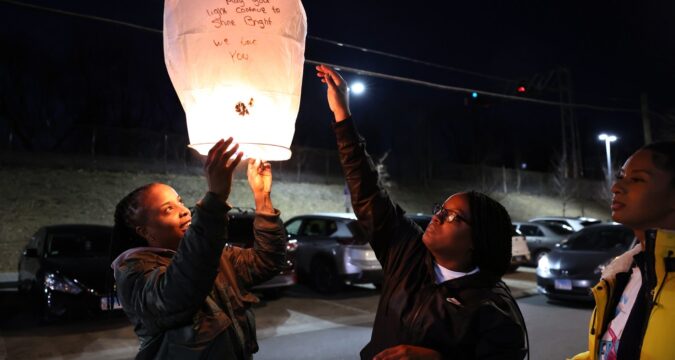
Ald. Silvana Tabares: Government leaders must fix the systems meant to protect women and their children
Last month, the Chicago City Council and the Cook County Board of Commissioners voted unanimously to pass resolutions that initiate the city of Chicago-Cook County Violence Against Women Task Force. I was honored to sponsor the legislation along with my partner in this effort, Cook County Commissioner Donna Miller.
The week of the final vote marked the seven-year anniversary of the tragic mass shooting at Mercy Hospital, where multiple people were killed by a serial domestic abuser. Chicago police Officer Samuel Jimenez, Dr. Tamara O’Neal and Dayna Less were murdered by a madman with a long history of violent behavior and threats toward women. The gunman somehow had a valid firearm owner’s identification card, a concealed carry permit and a government job.
The communication between government systems failed, and those patterns of cases “falling through the cracks” persist today. These failures put the lives of our most vulnerable residents at risk, as well as our first responders, those in our workplaces and all of our communities.
During the recent hearing on the task force, a message was shared from Laterria Smith, mother of Jayden Perkins. Jayden was an 11-year-old who lost his life last year protecting his pregnant mother and unborn sister from her violent abuser.
“I thought I was doing everything right to protect myself and my family. I cried out multiple times to law enforcement to try and help. I was denied an order of protection. I was offered no help at the courthouse, and I left feeling helpless. I was not notified when my abuser was up for parole or when he was released. … The system failed. My son was murdered in his own home, where he was supposed to feel safe trying to protect me,” Smith said.
Perkins was murdered six years after the tragic shootings at Mercy Hospital, yet the systemic failures were still clearly evident.
In Chicago, as overall violent crimes are decreasing, in domestic cases, the number of killings of women and their children has continued to rise, year after year.
According to the National Violent Death Reporting System, as noted recently by the Tribune Editorial Board, Illinois’ per-capita rate of deaths caused by a spouse or intimate partner — 0.49% — exceeded the combined rate of the states of New York and California.
A presentation to the City Council by Chicago77 Charities shared these data points from the Violence Reduction Dashboard and the Office of the Inspector General:
Domestic-related fatal shootings are up 52.9% this year, and all 50 wards have experienced domestic-related violent crimes.
Members of the Chicago Police Department are dispatched on domestic-related 911 calls an average of 335 per day, equating to 26% of all Priority Level 1 calls being domestic-related as of Oct. 31.
Of the victimizations in fatal and nonfatal shootings, 73% are Black and 18% are Hispanic, meaning a combined 91% are minorities.
Over the last few months, I have been hearing from survivors of violence from all ethnicities, cultures, genders and identities. The horrors that they have experienced have only been exacerbated by their struggles — emotionally and financially — trying to navigate the fractured systems. They all share one selfless goal that has driven them to advocate for change: to fix the process for the next person, the next mother and the next child. To stop the suffering.
Now it is time for government leaders to answer their calls for action. Currently, there is not a structure to provide oversight or to mandate data reporting. This is due to the statutory responsibilities and court processes falling on the offices of independently elected officials from all levels of government.
In the vast majority of cases, a victim must be harmed or murdered for an arrest to occur.
Our remarkable Cook County state’s attorney, Eileen O’Neill Burke, and her team have done monumental work to improve prosecutions in domestic cases in the criminal court system. However, assistant state’s attorneys handle criminal cases and are not assigned to the civil court system, where most orders of protection and other domestic cases proceed. CPD also does not have access to records or cases from civil courts, drastically limiting the ability of Superintendent Larry Snelling to offer much assistance.
In fact, the entire Cook County court system is still not subject to the Freedom of Information Act, and most courtrooms do not have court reporters or recordings to provide transcripts. The Illinois State Police manage the database for law enforcement that serves as a repository for orders of protection records, which is also not subject to FOIA. These carve-outs in Illinois law have entirely prevented transparency and accountability.
We can and must do better.
The Violence Against Women Task Force has commenced, which will require government leaders to work together over the next six months to fix the broken systems. The survivors’ voices will continue to be incorporated in every conversation, and their input will save lives.
Together, we will work diligently on identifying solutions to better protect all residents of Chicago and Cook County.
Ald. Silvana Tabares represents Chicago’s 23rd Ward.
Submit a letter, of no more than 400 words, to the editor here or email letters@chicagotribune.com.

4-year-old evacuated from Gaza finds sense of normalcy in Tinley Park while being treated for amputation
A typical late afternoon for 4-year-old Adam is much like a typical late afternoon for any child his age: snacks, “Cocomelon” on YouTube, blocks, jumping off the stairs, resisting a bath.
But unlike most toddlers, Adam lives with a host family thousands of miles away from his hometown in Rafah, in the southern Gaza Strip. His parents were killed, his siblings, too. He also jumps off the stairs with just one leg, not two.
Adam is one of six children temporarily living in the Chicago area after being medically evacuated by Heal Palestine, an organization founded in response to the destruction caused in Gaza by Israel’s response to the Oct. 7, 2023, attacks by militant group Hamas. All of the children are amputees, with most of them staying in the southwest suburbs. Heal Palestine asked the Tribune not to disclose Adam’s full name for security reasons.
Steve Sosebee, the founder of Heal Palestine, who has worked to medically evacuate children from war-torn countries for over 30 years, said his organization helps patients in Gaza who have had an amputation and require specialized care. Heal Palestine also facilitates evacuations to other countries such as Mexico, Spain, Portugal and Italy.
“There’s such a need that it’s not a challenge to identify the patients — the challenge is to place them in care and to get them out,” Sosebee told the Tribune.
The U.S. State Department halted visitor visas to the U.S. in August for individuals from Gaza — including for medical treatment — while it reviewed its visa-issuing procedures. But Heal Palestine made it clear that the program is not for refugee resettlement. After their treatment is complete, these children and any accompanying family members will go to a location in the Middle East yet to be determined, Sosebee said.
When that time comes, it will be a bittersweet goodbye, said Tinley Park resident Tujan Almasri, who has been hosting Adam and his paternal grandmother since they arrived in April. Almasri and her family have grown attached to both visitors.
Adam’s grandma, Alia Fojo, who is now more of a mother figure to Adam, has felt at home in Tinley Park, but the memories of Gaza and a yearning to go back are constant. Fojo said the Gaza she left was a nightmare, but the Gaza she dreams of is home.
“No one is in Rafah anymore. Like you see in the pictures, it’s completely flat — it’s ruined,” Fojo said in Arabic. “We were forced to leave and live in tents … and even though you are in war, you build your own tent with whatever resources you have.”
Sitting in Almasri’s living room, the 54-year-old Fojo said that although it’s been more than a year since Adam’s parents were killed in an Israeli airstrike on July 7, 2024, the image is as clear as if it happened yesterday.
At the time, the families were living in shelter tents, she said. That night, a rocket launched by Israeli forces exploded a few feet away from the tent where Adam and his family were sleeping. Fojo hadn’t been able to sleep that night and heard four rockets drop near her tent, not far from her son Ahmed’s tent, but none went off. The fifth shook her core, she recounted.
Fojo ran outside barefoot, bracing for the worst possible scenario. The car outside Ahmed’s tent was on fire. The tent was clouded in smoke and debris. Fojo’s husband and daughter came out of their tent and all three of them darted toward the flames.
Fojo said she searched for the faces of her son, her daughter-in-law and her three grandkids. She spotted Ahmed on the ground and reached for his arm: “It was detached,” she said. Next to Ahmed was his wife — and in between them was Adam, still wrapped in the bedsheet he was sharing with his parents.
“Adam’s mom was still wearing earrings,” Fojo said. Adam’s siblings, Yusuf, 5, and Nada, 7, were a few steps away — lifeless and still. “They were killed while sleeping,” Fojo said, tears slowly sliding down her sunken cheeks. At that moment, she thought even Adam had died, but “God wanted him to live,” she said.
Following the airstrike, their neighbors — also in tents — ran through the rubble to help, or at least to figure out who was killed. Fojo said her daughter took Adam to a hospital nearby. Adam never saw his parents or his brother and sister again.
While Fojo told the story in Almasri’s Tinley Park home, Adam hopped into the living room and playfully wiped his grandma’s feet with a baby wipe. He did the same to Almasri. “You’re such a goofball,” Almasri said to him, while tucking his right pant leg inside his back left pocket so he wouldn’t trip over it. He laughed and scooted away on one leg.
Adam was fitted for a prosthetic for his right leg in May, about a month after he got here. The terms of the visa require a hospital visit almost immediately after a child arrives in the country. His first appointment was the day after he landed at O’Hare International Airport.
Sosebee said Adam’s prosthetic leg will need to be refitted as he grows, and his physical therapy will continue when he goes back to the Middle East. It’s just not clear when he will leave the U.S. or where he will end up.
But he’s come a long way, Almasri said, noting that it took time for Adam to relearn how to walk, first with a trial plastic leg, and now with a prosthetic designed for a nimble toddler. But because he wears it for six consecutive hours at a local private preschool, he sometimes prefers playing without the added weight once at home.
Almasri enrolled Adam at the same preschool as her daughter Dua, 3. A few days a week, Adam goes to jujitsu classes and swim school, activities that have boosted both his verbal and physical skills. Most days, he also plays with another classmate at the library.
At home, about an hour and a half before their 8 p.m. bedtime, Dua and Adam were playing with a dry-erase board that flips into a chalkboard. The set came with one marker that Adam claimed quickly, though Dua attempted to bargain several times.
“Oh, stop it, Dua!” Adam said in impressive English. Dua quickly ratted him out: “He’s not sharing!”
They have a real sibling-like rivalry, Almasri said, smiling. While waiting for Adam to give her the blue marker, Dua pointed out that “his leg is missing.”
“He’s here to fix it,” she said. Adam, fully immersed in his scribbles, responded to her in Arabic, something about the eraser being his. “He said he loves me,” Dua added.
Adam’s mom’s name was also Dua. “Isn’t that something,” Almasri said.
When the Israeli airstrike hit the family’s tent, Adam was only 2½ years old. He turned 4 this month. Fojo said he does mention Mama Dua and Baba Ahmed every now and then, but the thing he talks about most is that they died. The trauma has become his entire memory of his parents, she said.
He often tells the story of a flame and of losing his leg and how he was in the hospital. Early on, when he was still hospitalized, he’d always ask his grandma where his parents were, having not seen them for months. She’d say, ‘They are with Allah.” Other times, she’d say, “They are in jannah, heaven.” Adam would tell her he wants to go there, too.
The journey to the Chicago area was arduous for both Adam and Fojo, but it’s an opportunity few are given. Medical evacuations from Gaza are not easy to secure, said Sosebee, and there are thousands upon thousands of children waiting to be rescued.
Nisreen Malley, the director of advocacy for Rebuilding Alliance, who started the agency’s task force for medical evacuations, said for a Gazan child to get on the list for a medical evacuation, the patient would need to see a treating physician at a government hospital and the physician would need to give a medical referral, which is extremely difficult to obtain.
“Part of it is that the doctors themselves are starving,” Malley said. “They’re fainting in the middle of procedures … so the idea of ‘OK, I’m going to pause everything to do some paperwork,’ that’s a little bit of an ask.”
‘Constant fear’: Illinois mom of 3 pleads with US government to help her evacuate Gaza
Malley said so far children are the only ones being approved for medical evacuation out of Gaza, and there is a list gathered by the World Health Organization that attempts to keep track of the total number of wounded or critically injured children using a classification system to prioritize who gets evacuated.
According to the WHO, 8,006 patients were evacuated between October 2023 and last month, including 5,550 children. The organization says about 16,500 patients still need medical evacuation from the Gaza Strip.
Malley said it’s a colossal undertaking given the sheer number of children in the war zone, even as a ceasefire in the region reduced the bombing.
The WHO vets companions who would be traveling with a child and begins the process for security approval, which sometimes is secured by organizations like Heal Palestine or Palestine Children’s Relief Fund that have teams on the ground identifying children to evacuate.
But children who aren’t sponsored by such organizations go through the same referral process and go into a WHO database to wait for other countries to accept their evacuation request.
For Adam, Heal Palestine facilitated the process after he was transported by bus from Gaza to Amman, Jordan. Heal Palestine has teams in Gaza, in Massar, Egypt, and in Amman; the teams manage the patients while they await approval to fly out.
U.S.-bound evacuations depend on which hospital accepts a patient’s case. Along with a required hospital acceptance, the patients also need a financial sponsor from a nongovernmental organization. In Adam’s case, this is Heal Palestine. They also need visa approval, often involving the Jordanian government, Malley said.
The process tends to be complex, inefficient and emotionally taxing for the children involved, she said.
While he was still reeling from the pain of losing a leg months earlier, Adam had to travel first from the hospital in Gaza to Amman by bus, a bumpy journey that takes six hours or longer. A few days later, he and his grandmother, along with 11 other families being evacuated by Heal Palestine, were taken to the Jordanian airport. Some, like Adam and Fojo, flew to Chicago and others went to different U.S. cities. The flight was more than 13 hours. Fojo said Adam — anxious and amazed — had endless questions on the plane, but eventually fell asleep.
For Malley, a recent trip she took to the Middle East with UNICEF and other humanitarian organizations was jarring. The groups took U.S. congressional staffers and policymakers to war-torn areas in Gaza to show them the devastation.
“(One presenter) was talking about the impact of different things that are happening to children. And she said: ‘We’ve never done this to children before, so we don’t know what the full impact will be,’” Malley recounted. “That really haunted me. … Because, yes, we don’t know the consequences because humanity has never done this to children before. I don’t know if any of it will fully encompass what these children have had to go through, the things that these children have seen.”
While Adam’s remaining stay in the Chicago area is uncertain due to political and logistical challenges, he will first resettle in Masar, Egypt, where his next steps will be facilitated by one of Heal Palestine’s teams. Sosebee and Malley said evacuated children have so far not been allowed to return to Gaza.
U.S.-bound evacuations are incredibly expensive for organizations like Heal Palestine, which are signing on to sustain a child’s life, Sosebee said.
Although the State Department has stopped issuing visitor visas to Palestinians from Gaza, other countries, such as the United Kingdom, continue to facilitate medical evacuations for critically ill children.
Almasri, whose Palestinian family is from Jerusalem, said she immediately applied to be a sponsor when she learned about the Heal Palestine program from a friend who recently hosted a young girl from Gaza. The process is lengthy, Almasri said, starting first with an interview and then multiple background checks before Heal Palestine matches a family with a child.
“We were very eager to help,” she said. “We feel so helpless — this is the least we could do.”
Almasri and her husband have four kids, including an 8-month-old whom Almasri gave birth to just days before Adam and his grandma arrived.
Now, with five children in the house, Almasri and her husband have taken a divide-and-conquer parenting approach. And they’ve fit Adam right into their system.
“I’ll yell at Adam too, just like I will yell at my own kids, but I feel like people might judge me for it, ‘Like, are you yelling at an amputee?’” Almasri said. “He’s a rascal! The thing is, everyone that sees him is like, ‘Oh, let me give you my soul.’ Yes, of course, but they don’t realize that it actually doesn’t do him any service.”
Almasri said she’s constantly aware that Adam will eventually go back to the Middle East. And it likely won’t be to an environment as nurturing as her home.
“He’s going to go home to roughness. We have to make sure that he is as disciplined, willed and as mentally tough as possible,” she said. “And I think jujitsu is helping, and structure is helping.”
As bedtime inched closer, Almasri started setting the table for dinner — salad with a host of toppings, grilled chicken and macaroni and cheese for the kids. The family started eating even healthier because of Fojo, who prefers vegetables and healthy grains over processed options. Almasri boiled corn on the cob, too, which is Adam’s favorite.
He hopped around the table, sliding in and out of the chair next to Dua. And while nibbling on the corn, Adam was also eating lettuce off Almasri’s plate. She poked back playfully, telling him to get his own.
Although his future is uncertain, Adam’s interactions with his host family offer a glimpse of the normalcy he’s found for now.
“The thought of them leaving us makes me really sad,” Almasri said, “because it feels like I have five children now and (another) mom.”
https://www.chicagotribune.com/2025/12/02/gaza-boy-evacuated-tinley-park/

Letters: The Blue Line attack was horrible. But it does not justify rolling back the Pretrial Fairness Act.
The recent attack on the Blue Line is heartbreaking, and my heart goes out to the victim and her family. As we search for answers, we must resist the urge to use a single, deeply tragic case to drive sweeping rollbacks of the Pretrial Fairness Act — a reform that has been working as intended for thousands of Illinois residents.
Opponents of the reform offer one solution: Prevent an act of violence by incarcerating thousands of legally innocent people, costing them their jobs, homes, stability and future. We tried that approach for decades, and the results were clear: Mass incarceration didn’t make us safer. In fact, it made our communities more fractured and less stable. We saw mothers separated from their children, workers stripped from jobs that kept their families afloat and families pushed into crisis. Horrible tragedies like the Blue Line attack happened even as we locked up thousands of people.
Expanding the carceral state exacerbated, not eliminated, the very harms it claimed to solve. And while we don’t have a crystal ball, it is very likely that the new system, which gives judges more time and information to make release and detention decisions, has prevented tragedies such as this one from happening.
Nothing about this incident suggests that a return to a system that relies on money bond would have prevented it. This theory posited by opponents of money bond criminalizes the poor and quite literally imprisons the vulnerable. In fact, the old system allowed people with means to buy their freedom — sometimes leading to devastating outcomes. But those individualized harms were never enough for critics to question money bond. It is only now, when systematically marginalized people finally have a fairer process, that these tragedies are suddenly treated as justification to undo reform.
Rolling back the Pretrial Fairness Act would not make Illinois safer. It would make communities more susceptible to dehumanizing systems that punish poverty, destabilize families and undermine community safety. What Lawrence Reed’s case truly reveals is a decadeslong failure to support people with serious mental health needs. His 70-plus prior cases tell us far more about gaps in supervision and care than about the Pretrial Fairness Act itself. Turning this incident into political fodder in an attempt to undo the Pretrial Fairness Act is as cynical as it is dangerous.
If legislators want to act, they should invest in treatment, housing and community-based support — not exploit a tragedy to resurrect the failed policies of the past.
— Don Abram and Stephen J. Thurston, Chicago
Human error at fault
Thank you for the editorial “Blue Line horror brings day of reckoning for SAFE-T Act and hapless electronic monitoring in Cook County” (Nov. 25). It is understandable blaming a new law for a horrific crime. But Lawrence Reed’s encounters with the criminal justice system go back 30 years, according to the Tribune’s own reporting on the case. And that is well before the SAFE-T Act was even considered, let alone enacted. We have systems in place that score the flight risk and the danger to society of each defendant. We do not know what transpired in the courtroom during that fateful hearing.
And electronic monitoring is a problem as a program. But the number of detainees on that program have not increased much since the passage of the SAFE-T Act. Yes, the chief judge should have used the sheriff’s officers or the Chicago Police Department to help him with violations of curfew by those on electronic monitoring. That is human error.
Blaming reform for the human errors within the system is not right. The editorial makes it seem as if criminal justice reform is the cause of crime in Cook County. Numbers would tell another story. Crime is down in most categories.
What was left out of this editorial is a symptom of what is left out of most criminal justice issues: getting help for those with mental illness. We have failed as a society on this issue. The SAFE-T Act addresses it, but it takes the stakeholders to enact it.
Reed told the judge that he belonged in jail. That sentence speaks volumes.
— Jan Goldberg, Riverside
Disabled disregarded
Thank you for covering the important issue regarding how people with disabilities are often disregarded by our country’s health care and long-term care systems (“‘You’re going to wish that doesn’t happen to you,’” Nov. 23). I am a 69-year-old woman with a significant disability who has been a disability rights advocate for over 45 years. During those years, I came to learn how disabled people are routinely placed in nursing homes, most often against their choice.
The pipeline from hospitals into nursing homes is wider than the guardianship problem. Many people with disabilities are coerced by hospital staff to go into nursing homes even when we are perfectly capable of living autonomously.
Hospitals emphasize safety and possible risks of residents leaving facilities, but they do not respect people’s right to make choices about where and how to live. Once admitted into a nursing facility, people with disabilities become trapped in institutions with minimal support and resources to get out and live independently or in community-based settings.
Even without a guardian, hospital social workers or discharge planners steer people into long-term care facilities as a default practice. This problem is more than just guardianship; it’s systematic. Our long-term care and health care systems need to steer away from placing people in institutions that do not prioritize people’s individual needs. People with disabilities need to have safer options than just institutionalization.
Community-based services, housing assistance and peer support need to be supported and encouraged. People with disabilities deserve to have the freedom of choice.
I hope only for real policy changes, better oversight of guardianship abuses and protections for people with disabilities who want to return to or stay in their communities.
— Pam Heavens, UCP-Center for Disability Services, Joliet
Leverage for the CTA?
Lester L. Barclay, chairman of the Chicago Transit Board, writes that he is concerned the CTA may have given up too much in the current legislative deal to avert a fiscal cliff (“Transit funding was secured, but the CTA paid a price,” Nov. 21). The CTA got into its current mess on its own and needed the other partners to help set the ship right. But now, before the ink is even dry, there is hand-wringing and maneuvering to try to get better leverage for the CTA.
This kind of thinking will doom this deal in short order.
— Keith Gray, Homer Glen
What theater gives us
Yes, yes and yes to supporting Chicago’s entertainment district (“Chicago’s downtown entertainment district has never been more fragile or essential,” Nov. 28). Yes for the benefit to the city, but live performances also offer great benefits to the audience. It is so different than experiencing it on a screen. Actually being there when the musicians are playing, the singers are singing and the actors are acting … is priceless.
Please take your family; come downtown and see a show. Those memories will stay with you far longer than tangible gifts.
— Susan Stevens, Chicago
No-nonsense curfew
It’s time to enact (and enforce) a no-nonsense downtown Chicago curfew. A 14-year-old boy was shot and killed recently amid a mass Loop gathering. Parents are not keeping watch over their young children and are letting them run wild on the streets. Curfew violators should be held until a relative or guardian comes to claim them and pays a hefty fine for their release.
— Michael Oakes, Chicago
Submit a letter, of no more than 400 words, to the editor here or email letters@chicagotribune.com.
https://www.chicagotribune.com/2025/12/02/letters-120225-blue-line-attack/
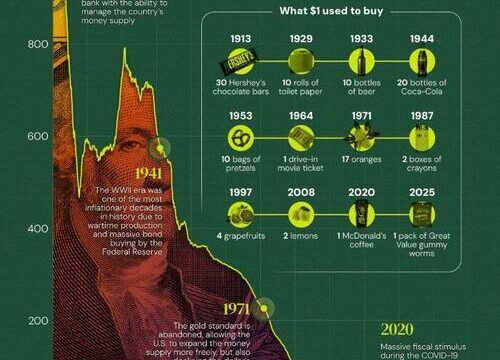
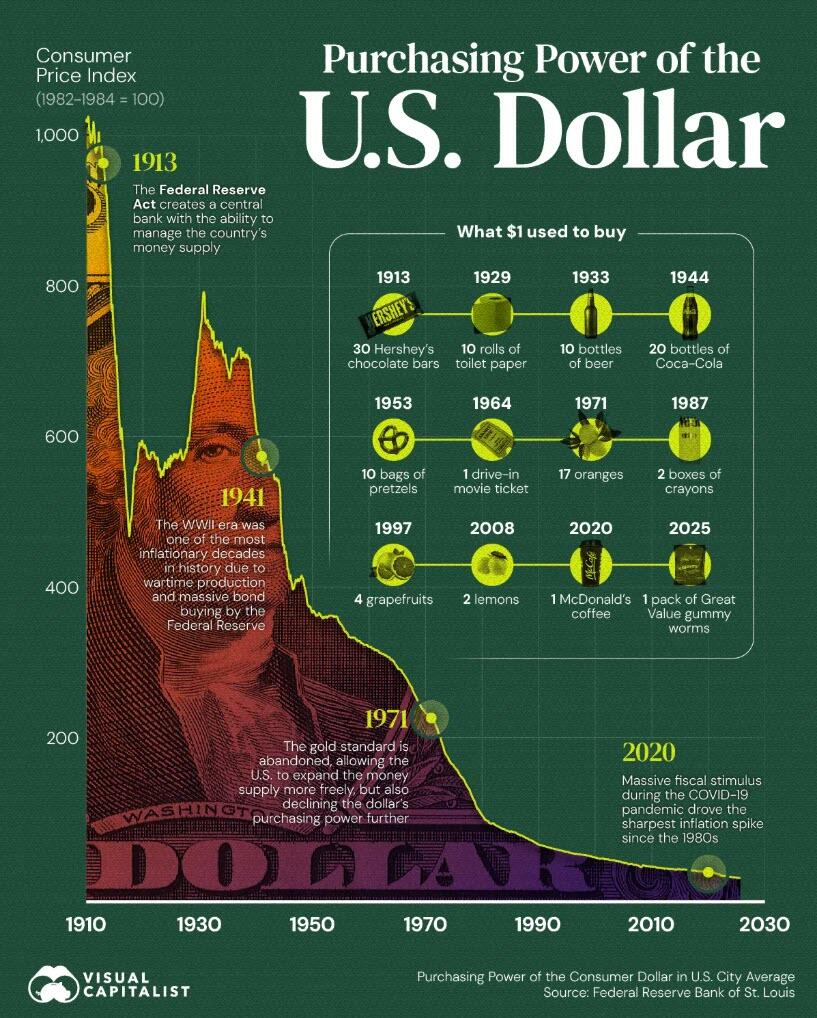
Visualizing The Declining Purchasing Power Of The US Dollar
Visualizing The Declining Purchasing Power Of The US Dollar
The U.S. dollar has steadily lost value over the past century. According to Federal Reserve data, the purchasing power of one dollar today is equal to just a few cents in 1913 (the year the Fed was created).
In this graphic, Visual Capitalist’s Marcus Lu tracks the decline in the purchasing power of the U.S. dollar since the early 1900s, illustrating how inflation has eroded its value.
Data & Discussion
The data for this visualization comes from Federal Reserve Economic Data (FRED). It measures the “Purchasing Power of the Consumer Dollar” across all U.S. city averages, indexed to consumer prices.
The higher the index, the more purchasing power the dollar has. As the index declines, goods and services become relatively more expensive.
Date
Purchasing Power of the Consumer Dollar in U.S. City Average
1913-01-01
1017.8
1914-01-01
994.2
1915-01-01
987.6
1916-01-01
956.2
1917-01-01
855
1918-01-01
715.9
1919-01-01
604.5
1920-01-01
517.7
1921-01-01
524.9
1922-01-01
590.2
1923-01-01
595
1924-01-01
578.8
1925-01-01
577.9
1926-01-01
557.3
1927-01-01
570.1
1928-01-01
578.8
1929-01-01
584.5
1930-01-01
584.5
1931-01-01
628.8
1932-01-01
699.1
1933-01-01
775.4
1934-01-01
755.7
1935-01-01
733.5
1936-01-01
722.8
1937-01-01
709.3
1938-01-01
702.4
1939-01-01
715.9
1940-01-01
717.7
1941-01-01
709.3
1942-01-01
638.1
1943-01-01
591.4
1944-01-01
574.3
1945-01-01
561.4
1946-01-01
549.2
1947-01-01
464.8
1948-01-01
421.4
1949-01-01
415.7
1950-01-01
424.4
1951-01-01
393.2
1952-01-01
377.4
1953-01-01
375
1954-01-01
370.8
1955-01-01
373.5
1956-01-01
372.6
1957-01-01
361.5
1958-01-01
349.3
1959-01-01
344.8
1960-01-01
340.6
1961-01-01
335.2
1962-01-01
332.8
1963-01-01
328.6
1964-01-01
323.2
1965-01-01
319.6
1966-01-01
313.6
1967-01-01
303.5
1968-01-01
293.3
1969-01-01
280.4
1970-01-01
264.3
1971-01-01
251.1
1972-01-01
243
1973-01-01
234.3
1974-01-01
214.3
1975-01-01
191.8
1976-01-01
179.6
1977-01-01
170.6
1978-01-01
159.8
1979-01-01
146.3
1980-01-01
128.4
1981-01-01
114.9
1982-01-01
105.9
1983-01-01
102.1
1984-01-01
98.2
1985-01-01
94.6
1986-01-01
91.3
1987-01-01
89.9
1988-01-01
86.4
1989-01-01
82.6
1990-01-01
78.5
1991-01-01
74.3
1992-01-01
72.4
1993-01-01
70.1
1994-01-01
68.4
1995-01-01
66.5
1996-01-01
64.8
1997-01-01
62.8
1998-01-01
61.9
1999-01-01
60.8
2000-01-01
59.2
2001-01-01
57.1
2002-01-01
56.5
2003-01-01
55
2004-01-01
54
2005-01-01
52.4
2006-01-01
50.4
2007-01-01
49.4
2008-01-01
47.4
2009-01-01
47.4
2010-01-01
46.1
2011-01-01
45.4
2012-01-01
44.1
2013-01-01
43.4
2014-01-01
42.8
2015-01-01
42.8
2016-01-01
42.2
2017-01-01
41.2
2018-01-01
40.3
2019-01-01
39.7
2020-01-01
38.8
2021-01-01
38.2
2022-01-01
35.6
2023-01-01
33.4
2024-01-01
32.4
2025-01-01
31.5
2025-09-01
30.8
Inflationary Eras and Economic Shocks
Major inflationary periods can be identified by looking at the steepest drops in the chart. For example, World War I and World War II strained government finances, leading to massive increases in public spending and money creation, which pushed prices sharply higher.
Similarly, the oil shocks of the 1970s caused energy costs to spike throughout the world, feeding into broad-based inflation. In each case, rising prices significantly eroded the purchasing power of the U.S. dollar.
From Gold Standard to Fiat Currency
Until 1971, the U.S. dollar was backed by gold.
This system was ended by President Nixon because the U.S. was creating more dollars than it had gold to support. Furthermore, foreign countries were increasingly demanding gold in exchange for their dollar reserves.
While ending this system gave policymakers more flexibility to manage the economy, money creation became easier, as shown by this chart of the M2 money supply. M2 comprises the most liquid forms of U.S. money, including physical currency, checking deposits, plus near-liquid assets like small-value time (CD) deposits, retail money-market funds, and other readily convertible savings vehicles.
An expanding money supply can be healthy when it grows in line with factors like population, economic output, and demand for credit, but becomes inflationary when it outpaces real economic growth.
If you enjoyed today’s post, check out Gold Production by Region in 2024 on Voronoi, the new app from Visual Capitalist.
Tyler Durden
Tue, 12/02/2025 – 05:45
https://www.zerohedge.com/precious-metals/visualizing-declining-purchasing-power-us-dollar
Today in History: The dawn of the Atomic Age
Today is Tuesday, Dec. 2, the 336th day of 2025. There are 29 days left in the year.
Today in history:
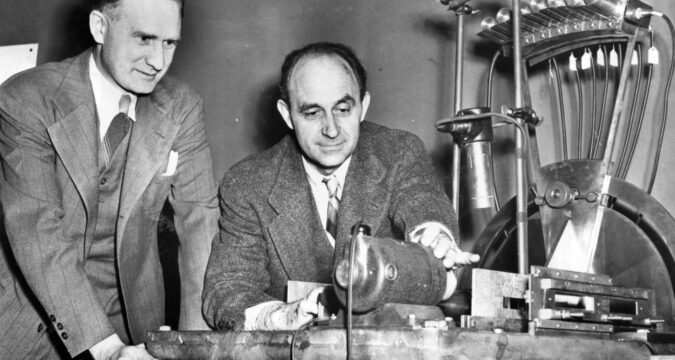
On Dec. 2, 1942, an artificially created, self-sustaining nuclear chain reaction was demonstrated for the first time at the University of Chicago. The experiment led by physicist Enrico Fermi marked the dawn of the Atomic Age.
Vintage Chicago Tribune: The Atomic Age is born at the University of Chicago’s football stadium
Also on this date:
In 1804, Napoleon crowned himself emperor of France in a coronation ceremony at Notre-Dame de Paris cathedral.
In 1823, President James Monroe outlined his doctrine opposing further European expansion or colonialism in the Western Hemisphere. The Monroe Doctrine effectively created separate spheres of influence for the Americans and Europe.
In 1859, militant abolitionist John Brown was hanged for his raid the previous October on Harpers Ferry in hopes of inciting a large-scale slave rebellion. His execution further exacerbated North-South tensions in the run-up to the American Civil War.
In 1954, the U.S. Senate, voting 67-22, passed a resolution condemning Republican Sen. Joseph R. McCarthy of Wisconsin, saying he had “acted contrary to senatorial ethics and tended to bring the Senate into dishonor and disrepute.”
In 1982, in the first operation of its kind, doctors at the University of Utah Medical Center implanted a permanent artificial heart in the chest of Barney Clark, a retired dentist who lived 112 days with the device.
In 1993, Colombian drug lord Pablo Escobar was shot to death by security forces while trying to flee across rooftops in Medellin.
In 2004, Typhoon Nanmadol lashed the Philippines, killing hundreds of people.
In 2015, a couple loyal to the Islamic State group opened fire at a holiday banquet for public employees in San Bernardino, California, killing 14 people and wounding 21 others before dying in a shootout with police.
In 2016, a fire raced through an illegally converted warehouse in Oakland, California, during a dance party, killing 36 people.
Related Articles
Author Roger Day Bain returns to discuss his ‘social history’ of Clarendon Hills
Chicago weather: How our 2025-26 seasonal snowfall compares with previous years
Today in History: Ukrainians voted for independence
Today in Chicago History: Our Lady of the Angels school fire
Long-lost Rubens painting depicting crucifixion sells for $2.7M
In 2020, The U.N. Commission on Narcotic Drugs voted to remove cannabis and cannabis resin from a category of the world’s most dangerous drugs, in a step with potential impacts on the global medical marijuana industry.
Today’s Birthdays: Actor Cathy Lee Crosby is 81. Film director Penelope Spheeris is 80. Author T. Coraghessan Boyle is 77. Actor Dan Butler is 71. Actor Steven Bauer is 69. Actor Lucy Liu is 57. Bassist Nate Mendel (Foo Fighters) is 57. Rapper Treach (Naughty By Nature) is 55. Tennis Hall of Famer Monica Seles is 52. Singer Nelly Furtado is 47. Pop singer Britney Spears is 44. Actor-singer Jana Kramer is 42. Actor Yvonne Orji is 42. Actor Daniela Ruah is 42. NFL quarterback Aaron Rodgers is 42. Actor Alfred Enoch is 37. Pop singer-songwriter Charlie Puth is 34.
https://www.chicagotribune.com/2025/12/02/today-in-history-the-dawn-of-the-atomic-age/