Category: News
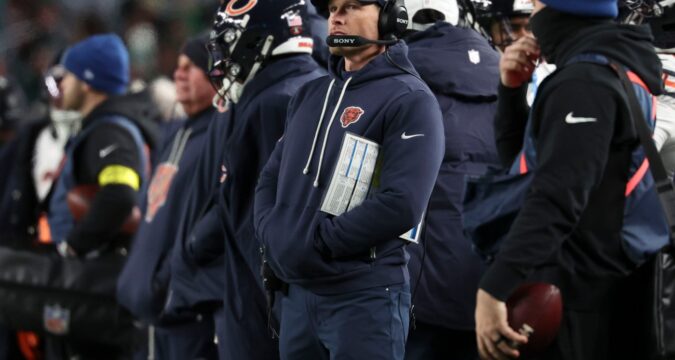
Column: Ben Johnson predicted Chicago Bears will play their best ball in December. 6 reasons he may be right.
It was on the heels of a 31-point beatdown in Detroit that Ben Johnson predicted the Chicago Bears would be playing their best football in December.
He has a heck of a challenge looming — for the Bears to be better than they were in November — with five games remaining and his team atop the NFC at 9-3 entering Sunday’s game against the Green Bay Packers at Lambeau Field.
A thorough dismantling of the defending Super Bowl champion Philadelphia Eagles on Friday at Lincoln Financial Field capped a 5-0 November, the first time the Bears have won five games in a month since November 1959.
The last time the Bears had a perfect November (4-0) was 2018, and over the previous five seasons, it was a month when hope was usually replaced by a look ahead to free agency and the draft — or worse, a regime change. The Bears were 3-17 in November from 2020 through 2024.
Maybe Johnson was confident the pieces were in place for this team to go on a run after an 0-2 beginning. Maybe he was leaning into the belief that, with new systems on both sides of the ball, it was only natural the Bears would be more formidable in December than they were in the 52-21 loss to the Lions and the 27-24 opening loss to the Minnesota Vikings in which they squandered an 11-point lead in the fourth quarter.
Or it’s possible he was hoping to calm an antsy fan base from developing that here-we-go-again feeling.
“It is early in the season,” Johnson said back on Sept. 16. “There are a number of teams that have started the season not the way that they would like to, and yet they bounce back and they find a way to win.
“We’re going to be playing our best football in December. I know that to be certain. We’re just in a race right now to get better in a hurry, and the faster we get there, the wins will start coming and we’ll be just fine.”
The wins indeed have come rapidly — nine in the last 10 games — and now Johnson looks like some sort of football oracle. His belief, though, can be traced back to Day 1 and his introductory news conference, in which he called the roster of a team that lost 10 consecutive games last season “stocked” and “loaded” and declared he was on a mission to “win and win now.”
Perhaps his belief has been transferred to the locker room, with a group of players now certain anything is possible. Now Johnson’s job is to keep those players grounded, as they have been throughout the team’s rise.
“We haven’t accomplished everything yet,” he said. “We’re at nine wins, and this year I think you’re probably going to have to get to 11 to make it into the tournament. That’s what we need to do.
“We’ve got to get there first. We’ve got to find a way to get there, and the only way to do that is find a way to be 1-0 this week.”
Here are six reasons the Bears can achieve their best football in December:
1. The rushing attack and offensive line have been dominant.
Bears right tackle Darnell Wright (58), right guard Jonah Jackson (73), center Drew Dalman (52) and left guard Joe Thuney (62) break from a huddle with quarterback Caleb Williams in the second quarter against the Bengals on Nov. 2, 2025, in Cincinnati. (John J. Kim/Chicago Tribune)
Running games can travel, and the Bears rank second in the league with 153.8 rushing yards per game. Things have really clicked since the Week 5 bye, with the team averaging 179.6 yards per game and 5.4 yards per carry over the last eight games.
The offensive line will be difficult for any remaining opponents to slow down, and that’s the primary reason — beyond the design of the scheme by Johnson and his staff — that the Bears rank eighth in the league in scoring at 26.1 points per game.
Explosive plays — pass plays gaining 20 or more yards and runs of 10-plus yards — come in all forms and they continue to come in bunches. The Bears lead the NFL with 94 explosives through Week 13. They ranked 29th a year ago.
2. Dennis Allen has done a lot more than juggle the lineup because of injuries.
Bears defensive coordinator Dennis Allen celebrates cornerback Nahshon Wright’s fumble recovery in the third quarter Nov. 28, 2025, at Lincoln Financial Field in Philadelphia. (Brian Cassella/Chicago Tribune)
The defensive coordinator has gotten credit for weeks for patching things together in the secondary and more recently at linebacker. His ability to adjust cannot be overstated, but it shouldn’t take away from what he has done schematically on a weekly basis, mixing coverages to fluster quarterbacks like the Eagles’ Jalen Hurts while preventing Saquon Barkley from being a game changer.
A league-high 26 takeaways has been a big story, but, again, that shouldn’t minimize what Allen is doing weekly with his game plans. He’s finding ways to pressure quarterbacks in key situations with a pass rush that has been greater than the sum of its parts, and that’s reflected in the defense’s dominance on third down (36.2%, seventh in the NFL).
3. Quarterback Caleb Williams — and the team — is fourth-quarter tested.
Bears quarterback Caleb Williams celebrates his touchdown throw to Cole Kmet in the fourth quarter against the Eagles on Nov. 28, 2025, at Lincoln Financial Field in Philadelphia. (Brian Cassella/Chicago Tribune)
Five of the nine wins have included fourth-quarter comebacks directed by Williams, and the Bears proved in November that if you leave them with even a little bit of time at the end of the game, they’re poised to capitalize.
Williams seemingly is at his best in these moments with a 139.3 passer rating when trailing with less than four minutes to play. The second-year quarterback doesn’t blink, and the players around him have been locked in. That bodes well with a challenging slate of games ahead.
4. They’re getting healthier.
Bears cornerback Kyler Gordon warms up to face the Eagles on Nov. 28, 2025, at Lincoln Financial Field in Philadelphia. (Brian Cassella/Chicago Tribune)
Cornerbacks Jaylon Johnson and Kyler Gordon returned from long layoffs in Philadelphia. Before the month ends, linebackers T.J. Edwards and Tremaine Edmunds could be back — although it’s worth wondering if Edwards, who has been out since the Nov. 2 win in Cincinnati, had a setback with his hamstring injury after surgery to repair a broken hand.
Johnson and Gordon will need more seasoning to get up to speed, but they provide Allen with frontline options as the Bears face two games against Jordan Love and the Packers in a three-week stretch.
At the same time, the Bears will play some teams that have been hit harder by injuries, including the Packers and San Francisco 49ers.
5. There are so many offensive weapons, an opponent can’t take them all away.
Nine offensive players scored touchdowns in November, and defensive coordinators have a ton to prepare for when facing the Bears. If someone can slow the running game, there are a lot of options in the passing game and Johnson seems to have a knack for scheming guys open.
Through the first seven games, the Bears were 47.8% in the red zone, scoring touchdowns on 11 of 23 trips. In November they were 72.2% (13 of 18). They’re finding ways to finish drives, and Williams has been more comfortable playing in condensed spaces, even if his accuracy (58.1%) remains a pressing issue.
“We’re winning in spite of our passing game, not because of it,” Johnson said. “And none of us are pleased with that right now.”
6. The schedule no longer will be a question.
The Bears won’t have to go undefeated in four December games to make a case they’re better than they were in November. Two games against the Packers, a trip to San Francisco and a game against the vaunted Cleveland Browns defense raises the bar substantially.
They emphatically proved they could handle an eight-win Eagles team, the first signature win of the season. The Bears have two wins over teams currently above .500. For comparison, the Los Angeles Rams (9-3) have six. The Packers present the first challenge, and they know a little something about success at this time of year. Green Bay is 20-4 in December since Matt LaFleur took over in 2019.
If the Bears can win three (or four) games in December, they will be better than they were in November.
If that happens, it will be as Johnson forecasted all along.
https://www.chicagotribune.com/2025/12/02/chicago-bears-ben-johnson-december/
Carter Hart,1 of 5 acquitted players in Hockey Canada case, expected to make NHL return vs. Chicago Blackhawks
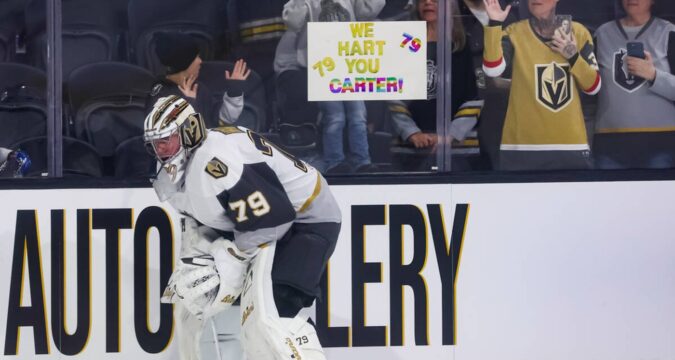
Carter Hart is expected to start in goal for the Vegas Golden Knights on Tuesday night against the Chicago Blackhawks, his first NHL game since the league reinstated him and four other players after their acquittal last summer on sexual assault charges.
Hart’s last NHL start came on Jan. 20, 2024, for the Philadelphia Flyers, shortly before he, Michael McLeod, Alex Formenton, Dillon Dubé and Cal Foote were charged in an alleged incident in 2018 in London, Ontario.
The five members of Canada’s 2018 IIHF World Juniors team were found not guilty in July by an Ontario judge of assaulting a 20-year-old woman in a hotel room during a Hockey Canada gala to celebrate the team’s gold medal in the tournament.
Monday was the first day the players were eligible to play in an NHL game under the league’s reinstatement ruling, and the Golden Knights called up Hart on Sunday from the AHL’s Henderson Silver Knights after a three-game conditioning stint.
Hart is the only one of the five under contract with an NHL team, having signed a two-year, $4 million deal Oct. 24, eight days after joining the Golden Knights on a professional tryout.
Foote, a defenseman, signed an AHL contract Monday with the Chicago Wolves; McLeod signed a three-year deal in October with the KHL’s Avangard Omsk; and Formenton has played for HC Ambri-Piotta in the Swiss Hockey League since 2022. Dubé has not played this season after joining the KHL’s Dinamo Minsk in 2024-25.
The Golden Knights received criticism for their immediate interest in Hart — his tryout began one day after the five players were allowed to sign with NHL teams — and they kicked out and revoked the credentials of Mark Lazerus, a senior NHL writer for The Athletic, for asking a player about the five acquitted players.
Hart spoke to the media after signing his tryout deal and expressed gratitude to play for Vegas and recognized the “long road to get back to this point and get back to playing the game of hockey.”
“I’ve learned a lot, I’ve grown a lot and I’m just excited to move forward,” Hart said. “I’m so excited to get the chance to play in front of (the fans) and for them and get to show the community my true character.”
The Golden Knights said in a statement at the time that they “are aligned with the process and assessment the NHL and NHLPA made in their decision” and “remain committed to the core values that have defined our organization from its inception and expect that our players will continue to meet these standards moving forward.”
Hart went 1-2-0 during his AHL stint with a 3.09 goals-against average, .839 save percentage, and 47 saves. The 27-year-old was a quality goaltender for the Flyers to begin his career with a 96-93-29 record, 2.94 GAA, .906 save percentage and six shutouts.
Flyers goaltender Carter Hart waits for play to resume during a game against the Wild on Jan. 26, 2023, in St. Paul, Minn. (AP Photo/Abbie Parr)
The high-profile case included a lawsuit settlement, reopened investigations by police, parliamentary hearings, an NHL investigation and a mistrial declared by Justice Maria Carroccia in April. The reason for the mistrial wasn’t revealed because of a publication ban, and the initial 14-person jury was dismissed.
Due to the mistrial, Carroccia was left with the verdict, and she ruled that the accuser lacked the credibility needed to justify the charges.
Her detailed reasoning for the acquittal included the complainant’s “tendency to blame others” for inconsistencies in her allegations and that the woman’s claims of being drunk weren’t supported by video evidence at the hotel and bar or the testimony of others.
The NHL had begun an investigation into the incident in 2022, but it was halted when the five players were criminally charged. The league said in a Sept. 11 statement that it expects players to “conduct themselves with the highest level of moral integrity” and, while not found to be criminal, the players’ actions “did not meet that standard.”
“In relying on both our own investigation, and the conclusions reached by Justice Carroccia in her opinion, and the players’ acquittal, the League has determined that the conduct at issue falls woefully short of the standards and values that the League and its Member Clubs expect and demand,” the league said in its statement.
“Each of the players, based on in-person meetings with the League following the verdicts, expressed regret and remorse for his actions. Nevertheless, we believe their conduct requires formal League-imposed discipline.”
The league took into account the 20 months the players already missed and ruled that they had to wait until Oct. 15 to sign an NHL contract and until Dec. 1 to play in an NHL game.
https://www.chicagotribune.com/2025/12/02/chicago-blackhawks-carter-hart-vegas-golden-knights/

Kane County begins to adjust its roadwork plans
Staring down a multimillion-dollar shortfall for months, the Kane County Board recently passed an almost $409 million budget, using about $6 million of its dwindling cash reserves to balance it.
The budget that was ultimately passed, however, includes shrunken allocations for county departments and offices, and shifts in revenue sources.
One of those moves was an almost $7 million cut in funding for transportation in favor of public safety spending, by way of reallocating some of the Regional Transportation Authority sales tax funds the county receives. It was shortly after followed by a hike in the county’s motor fuel tax to replace that lost revenue.
Now, the Kane County Division of Transportation, or KDOT, is determining how it will modify its planned maintenance and roadwork projects, stabilized with funds from the gas tax hike but still anticipating a significant shortfall in the coming years.
The RTA collects a 0.75% tax in Kane and the other collar counties, one-third of which is distributed back to each county for it to spend on transportation and public safety, according to past reporting.
In fiscal year 2024, Kane County received just over $26 million in RTA sales tax funding, almost $20 million of which went toward transportation and the rest to public safety and judicial safety funds, the county’s Finance Director Kathleen Hopkinson has said.
Over the summer, the county board opted to decrease the allocation to transportation by 25%, meaning the funds are evenly split between public safety and transportation expenses. That left KDOT with almost $7 million less than it was anticipating for fiscal year 2026.
So, to replace that lost revenue, the county board in October voted to raise the county’s gas tax from five cents per gallon to eight cents per gallon, a move projected to generate more than $6 million annually once it goes into effect.
When the discussions started about diverting more RTA funds away from transportation, Kane County Deputy Director of Transportation Tom Rickert said it was initially expected to be “a pretty significant cut.” He said it was “pretty concerning,” set to create a $3 million shortfall annually for maintenance projects in upcoming years and scale back or stop altogether about 19 projects.
Now, the gas tax hike is set to fill much of that gap. But not quite yet.
The gas tax increase doesn’t take effect until July 1 because of when it was passed by the county, and the disbursement of that funding wouldn’t be until after that, Rickert noted.
“We still have a gap for next year, because we won’t start seeing those sales tax dollars (until July),” Rickert said. KDOT staff estimated that gap at around $5 million for fiscal year 2026.
In November, a few county board members, in a last-ditch effort, suggested allocating more reserve funds to transportation this year just before the budget was passed, expressing the opinion that KDOT was taking a greater hit from the budget cuts than other areas of the county government. But that idea ultimately failed to gain sufficient traction among the board.
Nevertheless, Rickert said that KDOT is in a better position than it was several months ago, with the additional gas tax revenue set to start coming in soon.
Board member Vern Tepe, who chairs the Transportation Committee, emphasized that the gas tax hike will largely replace the funds lost for transportation in future years.
He said he doesn’t think the funding loss will substantially affect KDOT’s projects, and that, though he stated he was reluctant to institute a new tax, he thinks the gas tax is a better source of funding than the RTA sales tax because the gas tax is locally controlled.
Part of the challenge with funding for transportation is that KDOT’s budget “flexes a lot,” Rickert said, because a significant portion of its budget is dedicated to projects, which vary from year to year.
Most of them are also long-term projects, and thus require funding over multiple years. KDOT has a five-year plan outlining its planned expenses and projects. The projects considered “Transportation Improvement Projects” make up by far the largest share of the annual budget, per the plan.
The department also has a map of its planned projects throughout the county.
Some of those plans will have to be adjusted in light of the current financial situation, Rickert said, to prioritize which projects the department can continue forward with and which ones it can’t.
“The last thing we want to do is start working on a project and … start spending monies and then five, 10 years down the road find out that we don’t have the ability to complete that project,” Rickert said.
KDOT is also reliant on securing grants to help fund its projects, but those typically require the county to put up funds of its own — making those funds harder to get as it receives less revenue from the county, Kane County Director of Transportation Mike Zakosek explained.
“Predictability is part of our challenge, too,” he said.
Zakosek and Rickert explained that they categorize the roadwork projects the department undertakes as primarily dealing with maintenance, safety concerns and increasing capacity on roadways.
Their first priority with projects is always maintenance, Zakosek said, followed by addressing safety concerns and improving areas where there are “hotspots” of crash reports. Capacity projects are typically the lowest priority.
They explained that KDOT typically doesn’t do capacity projects at all anymore because the funds aren’t available, largely for two reasons: increasing construction costs, and the nature of the projects being more complicated as Kane County continues to grow and become more urban. Capacity projects are also typically the most expensive to do, they explained.
“If we have to, maybe, delay the start of a project a little bit or do something, move things around a little bit, but that’s, that’s what we’re actively working on right now,” Zakosek said about the plans going forward.
For example, an expansion project at Randall Road and Highland Avenue in Elgin — slated to cost the county around $1 million — will likely not be pursued beyond doing engineering plans for lack of funds, Rickert and Zakosek explained. The eventual project would entail expanding the number of lanes and turn lanes to allow more cars to travel through the area.
A maintenance project at I-90 and Randall Road, however, would likely be a higher priority, on the other hand.
“We’re not going to be adding any new projects to our program at this point in time,” Rickert explained, “until we can handle the stuff that’s already on the list.”
But funding issues still may be felt down the line.
“We still have funding needs,” Rickert said. “We had the funding needs even before the RTA sales tax was reduced.”
The department is currently projecting an almost $15 million shortfall in fiscal year 2028 just from funding projects already agreed upon and doing needed maintenance.
Regaining some RTA sales tax funds could provide the department with additional cash, as the reallocation of the funds to help balance the 2026 budget was approved only for one year.
But that’s not a given, Zakosek explained, as the department plans projects stretching years into the future.
“We can only deal with what we have, what’s in front of us now,” Zakosek said. “And, right now, that money’s not coming in our direction.”
mmorrow@chicagotribune.com
https://www.chicagotribune.com/2025/12/02/kane-county-begins-to-adjust-its-roadwork-plans/

Chicago basketball report: How the Illini aim to toughen up, and the WNBA avoids a lockout — for now
Illinois’ focus on toughness, the latest in the WNBA labor situation and a Bulls rookie’s injury lead the Chicago basketball report this week.
Every Tuesday, Tribune writers will provide an update on what happened — and what’s ahead — for the Bulls, Sky and local college basketball teams. Want more? Sign up for our Tribune sports newsletter.
Brad Underwood to Illini: ‘Get tougher’
Illinois coach Brad Underwood was glad his team had an eight-day layoff after the 74-61 loss to Connecticut on Friday at Madison Square Garden.
Underwood said his 14th-ranked Illini, who dropped to 6-2 with the loss, desperately needed practice as they “figure out how to win and be tough.” He was ready to drill them on such matters as they prepare to face No. 13 Tennessee on Saturday in Nashville, Tenn. — their fourth ranked opponent this season.
“Make it hard. Stress them. Put demands on them and expectations,” Underwood said of what’s ahead this week in practice. “And get them tired, mentally tired, and (push) them to execute and defend. Not making the same mistakes over and over and over.
“There’s an accountability to that. I’m putting guys on the court that have not been held accountable through practice because we’re playing so many games. We’re just trying to play guys into shape. That’s been the frustrating thing as a coach.”
Against the Huskies, the Illini shot 32% from the field and 21% from 3-point range — including 23% and 13% in the second half. They still managed to cut UConn’s lead to seven late in the game but couldn’t complete the comeback.
“It comes down to toughness, coming out there and doing everything that matters to win the game,” Illinois guard Kylan Boswell said.
WNBA avoids lockout — for now
The WNBA and its players union agreed Sunday to an extension of the current collective bargaining agreement, pushing back a deadline for a new deal to Jan. 9. The extension pushed off concerns of a work stoppage — which could culminate in a lockout or strike — after months of publicly contentious negotiations. But a final agreement is still a long-term project as the sides struggle to make concessions.
According to the Associated Press, one of the league’s latest proposals offered a series of significant changes to the salary and revenue-sharing structure of the CBA, which would have allowed for maximum contracts above $1.1 million and elevated the league minimum from roughly $66,000 to $220,000. The players did not accept this offer and reportedly pushed for a fixed-rate increase to the salary cap to allow compensation to grow with the league.
This is the second extension in the negotiating process after the CBA originally was set to expire Oct. 31. ESPN reported that the league pushed for a 21-day extension, while the players union advocated for a six-week delay before landing on the 40-day agreement. Players aren’t due to report for the 2026 season until late April, but any work stoppage could threaten key offseason mechanisms including the expansion draft, the college draft and free agency.
The Chicago Sky are one team with urgent free-agency needs that could be dictated by both the timeline and results of the CBA negotiations. Only four players — 2025 rookies Hailey Van Lith and Maddie Westbeld and second-year pros Kamilla Cardoso and Angel Reese — are currently under contract with the Sky.
Noa Essengue sidelined with shoulder injury
Bulls forward Noa Essengue warms up before a game against the Pistons on Oct. 22, 2025, at the United Center. (Michael Reaves/Getty Images)
It took long enough for Bulls first-round pick Noa Essengue to make his NBA debut — 16 games, to be exact.
Now Essengue is sidelined indefinitely with a shoulder injury, which he suffered during a Nov. 28 G League game with the Windy City Bulls. Essengue scored 15 points in 31 minutes in that game with nine rebounds and six assists.
The 18-year-old has tallied only six NBA minutes with a steal, a turnover and no points or rebounds. The Bulls haven’t offered a timeline for Essengue’s return — an unfortunate piece of timing as they turn to two-way players such as Lachlan Olbrich and Emanuel Miller to plug holes caused by significant injuries to the frontcourt.
Number of the week: 120
The Bulls on Saturday finally snapped an 11-game streak of allowing opponents to score 120 or more points against their flimsy defense. But the problem persists for a team that has allowed fewer than 120 points only five times in 20 games this season — and fewer than 100 points only once.
This is partially due to a flurry of early season scoring. The NBA median through Sunday was about 118 points per game, a four-point increase from last season’s final median of 114. The Bulls are allowing opponents to score an additional five points above that median while averaging 119.9 points themselves, sixth in the league. The resulting math is relatively straightforward.
Bulls record when a team scores fewer than 120 points: 4-1
Bulls record when a team scores more than 120 points: 5-10
Week ahead: Bulls
Wednesday: vs. Nets, 7 p.m. (CHSN)
Friday: vs. Pacers, 7 p.m. (CHSN)
Sunday: vs. Warriors, 6 p.m. (CHSN)
The Bulls added two games to their schedule after missing the quarterfinals of the NBA Cup for the third consecutive season, winning only one of their four group-stage games. They will travel to play the Charlotte Hornets on Dec. 12 (6 p.m., CHSN) and will host the New Orleans Pelicans on Dec. 14 (6 p.m., CHSN).
That’s two more games against bottom-tier opponents, which should favor the Bulls. But as injury and defensive concerns continue to mount, the Bulls lost to both the Hornets (6-15) and Pelicans (3-18) last week.
Week ahead: Best college basketball games
Wednesday: Northwestern men at Wisconsin, 8 p.m. (BTN)
Thursday: No. 18 Notre Dame women at No. 13 Mississippi, 8 p.m. (ESPN2)
Saturday: No. 14 Illinois men vs. No. 13 Tennessee in Nashville, Tenn., 7 p.m. (ESPN)
Northwestern lost a close one 86-81 to Oklahoma State on Thanksgiving night and will try to rebound against its early Big Ten slate: Wednesday at Wisconsin and Saturday at home against Ohio State (1 p.m., BTN).
The Notre Dame women and Illinois men continue their early season tests against ranked teams. The Illini dropped to 1-2 in those games with the loss to UConn. The Irish are 1-1 against ranked teams.
What we’re reading this morning
Kenny Beecham stays true to his roots in new NBC partnership: ‘Before I was a creator, I was a Bulls fan’
WNBA and players union extend deadline on collective bargaining agreement to Jan. 9
No. 13 Illinois trails wire to wire in a 74-61 loss to No. 5 UConn at Madison Square Garden
Nick Martinelli scores 28, but Northwestern rally falls short vs. Oklahoma State at United Center
Cameron Boozer — Carlos’ son — scores 35 at the United Center in No. 4 Duke’s 80-71 win
Bulls more reliant than ever on their bench to stay above .500: ‘Sustainability — that’s not there’
Quotable
“Initially we were told we were going to play in the first game, and Oklahoma State and I were both very disappointed by television’s decision to move the game where it was. They had to go through it, too, so it’s not an excuse. … At the end of the day, it is what it is and you’ve got to deal with it. Actually, in the NCAA Tournament a lot, teams play late games. That’s how we kind of sold it to our guys. … It’s not an excuse, but obviously it wasn’t an ideal start time.”
— Northwestern coach Chris Collins on the 9:30 p.m. start against Oklahoma State in the CBS Thanksgiving Classic at the United Center. CBS decided No. 4 Duke should get the early slot for its 80-71 win over No. 25 Arkansas.
https://www.chicagotribune.com/2025/12/02/chicago-basketball-report-brad-underwood-noa-essengue/
Another Russian Shadow-Fleet Tanker Hit By Drones
Another Russian Shadow-Fleet Tanker Hit By Drones
A fourth Russia-linked tanker was attacked in less than a week, marking a sharp escalation in strikes on commercial vessels tied to Moscow as the war in Eastern Europe nears its fourth year.
⚡️Photos from the Russian tanker MIDVOLGA-2, which was hit by a drone this morning near the Turkish coast
Preliminary reports suggest the strike was carried out by a fixed-wing drone, likely an FP-1. https://t.co/2k8jTmWGPR pic.twitter.com/bkhdVO7TWh
— NEXTA (@nexta_tv) December 2, 2025
Bloomberg reports that the Midvolga-2, a Russian-flagged tanker hauling sunflower oil from Russia to Georgia, was hit by Ukrainian kamikaze drones about 80 miles off Turkey’s northern coast. Turkish officials said the crew of 13 was unharmed in the attack.
Russian tanker ‘Midvolga 2’ carrying sunflower oil ATTACKED by drones in the Black Sea — Turkish officials
All 13 crew members on board are safe. The ship is reportedly en route to Georgia pic.twitter.com/VegeZT5pvF
— RT (@RT_com) December 2, 2025
The incident is part of Ukraine’s intensifying and broadening attack on Moscow’s oil/gas infrastructure and shadow tanker fleet.
On Sunday, the Russian paper Kommersant reported that the M/T Mersin tanker, hauling Russian oil, was attacked by Ukrainian drones off the west coast of Africa. This marks the first incident of its kind in the region and suggests a further broadening of the battlefield.
Moscow Paper Claims Ukrainian Drones Hit Russia-Linked Oil Tanker Off West Africa
Last week, two Russia-linked tankers were hit by kamikaze drone boats. Here’s our reporting:
Ukraine Releases Footage Of Kamikaze Drone Boats Striking Russian Shadow-Fleet Tankers
Sanctioned Russia-Bound Oil Tanker At Risk Of Sinking After Mine Strike
Ukraine and its Western allies have spent the past several years targeting Russia’s oil and gas infrastructure with kamikaze drones and naval drones in an effort to pressure Moscow’s finances. This campaign, accompanied by sanctions, has yet to collapse Russia financially.
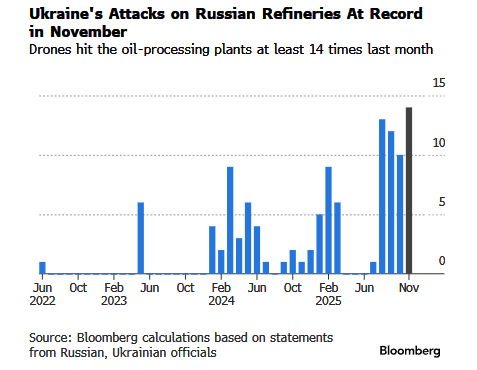
Attacks on Russia’s oil/gas infrastructure jumped to a record last month as the Trump administration rushes to end the four-year war.
With U.S. special envoy Steve Witkoff coming off negotiations with Ukrainian officials this past weekend in Miami and now in Moscow to meet Russian President Vladimir Putin about a possible peace deal, it appears Ukraine is making one final push to inflict maximum damage on Moscow.
Tyler Durden
Tue, 12/02/2025 – 06:55
https://www.zerohedge.com/commodities/another-russian-shadow-fleet-tanker-hit-drones

Crowds gathered to enjoy Lake Forest’s 41st Annual Tree Lighting Holiday Celebration in Market Square
The 41st Annual Lake Forest Tree Lighting Holiday Celebration arrived on Friday, along with winter weather, and crowds in Market Square kept warm with coffee, hot cocoa, and holiday cheer.
“The event, presented by The Friends of Lake Forest Parks and Recreation Foundation, is well-organized and well run — a short burst of magical moments that kick off the holiday season,” Mike Wick, director of Parks and Recreation for the City of Lake Forest, said.
The celebration began at 3 p.m., featuring visits with Santa Claus, caroling with the Lake Forest High School Choristers, performances by the Lake Forest Civic Orchestra, the Lake Forest High School Festival Brass Ensemble, and the Lake Forest Dance Academy, with special treat giveaways and kids’ activities all culminating with the lighting of a 40-foot Norway Spruce in the center of Market Square, donated this year, by the Gray Family of Lake Forest.
This year’s 41st Annual Lake Forest Tree Lighting Holiday Celebration sponsors included Lake Forest Bank and Trust and Fields BMW and The Oaken Bistro, with activity sponsors including Sage Explorers with holiday crafts, and giveaways by The Compass Group, pictured here giving away donuts and hot cider, with the Rotary Club and Left Bank with hot dogs, Starbucks with coffee, the Deer path Inn with hot chocolate and Rosati’s with pizza and more. (Gina Grillo/ for the Pioneer Press)
According to Wick, a tree has historically adorned Market Square during the holidays since 1917, while the holiday tree lighting celebration began in 1984.
“Today the festive tradition has become a point of hometown pride with full participation from community members and local businesses,” Wick said.
Katie Feeney of Lake Forest says their family has plans to participate in many local holiday activities this year.
Caroling with the Lake Forest High School Choristers warmed the crowd during the 41st Annual Lake Forest Tree Lighting Holiday Celebration in historic Market Square on Friday, November 28, 2025. (Gina Grillo/ for the Pioneer Press)
“Starting with today’s tree lighting, we are looking forward to doing all the special seasonal activities in our area — the holiday Lightscape at the Botanic Garden, the Lake Bluff History Museum’s holiday home tour, and much more, Feeney said.
This year’s 41st Annual Lake Forest Tree Lighting Holiday Celebration sponsors included Lake Forest Bank and Trust and Fields BMW and The Oaken Bistro, with activity sponsors including Sage Explorers with holiday crafts, and giveaways by The Compass Group with donuts and hot cider, the Rotary Club and Left Bank with hot dogs, Starbucks with coffee, the Deer path Inn with hot chocolate and Rosati’s with pizza, and more.
Stephanie Farrell of Lake Forest attended on Friday with her family.
“This is our first time attending the Lake Forest Tree lighting, and our first pre-Christmas outing of the season. We definitely came for the free cider and donuts.” Farrell said.
The 41st Annual Lake Forest Tree Lighting Holiday Celebration on Friday, presented by The Friends of Lake Forest Parks and Recreation Foundation, culminated with the lighting of a 40-foot Norway Spruce in the center of Market Square, donated this year by the Gray Family of Lake Forest. (Gina Grillo/ for the Pioneer Press)
Wick says the longevity of the Lake Forest Tree Lighting Celebration is a testament to its success, and it has become a model for holiday gatherings that other communities seek to replicate.
“This festive showcase in Market Square is welcoming and free, offers a chance to get out of the house, walk off the turkey, shop local, and share in the spirit of the season,” Wick said. “Whatever you need that day after Thanksgiving, it checks all the boxes.”
Gina Grillo is a freelancer for Pioneer Press.
https://www.chicagotribune.com/2025/12/02/lake-forests-41st-annual-tree-lighting/
El enviado de EEUU se reunirá con Putin en Moscú mientras Zelenskyy recorre Europa
Associated Press
El enviado especial de Estados Unidos, Steve Witkoff, tenía previsto reunirse con el presidente ruso, Vladímir Putin, en Moscú el martes, llevando al Kremlin un plan de paz en desarrollo que Washington espera pueda poner fin a los casi cuatro años de guerra en Ucrania.
Coincidiendo con el viaje de Witkoff, el presidente ucraniano Volodymyr Zelenskyy fue a Irlanda, continuando sus visitas a países europeos que han ayudado a sostener la lucha de su país contra la invasión de Rusia.
Después de meses de frustración en sus esfuerzos por detener los combates, el presidente de Estados Unidos, Donald Trump, está desplegando funcionarios para ganar tracción para sus propuestas de paz. Jared Kushner, yerno de Trump, se sumará a la reunión entre Putin y Witkoff, dijo a los periodistas el portavoz del Kremlin, Dmitry Peskov. Afirmó que las conversaciones tomarán “todo el tiempo que sea necesario” e involucrarán solo a Witkoff, Kushner y un intérprete del lado estadounidense.
Hasta ahora, las conversaciones han seguido líneas paralelas. El secretario de Estado de Estados Unidos, Marco Rubio, se reunió con funcionarios ucranianos, y ahora Witkoff se dirige a Moscú.
Zelenskyy dijo que se reunió el martes con la delegación ucraniana que regresó de la última ronda de negociaciones con los representantes estadounidenses en Florida. Rubio comentó que esas conversaciones avanzaron, pero agregó que “queda más trabajo por hacer”.
Zelenskyy señaló que las conversaciones en Florida tomaron como referencia un documento que ambas partes redactaron en una reunión anterior en Ginebra. El líder ucraniano añadió que ese documento ahora estaba “finalizado”, aunque no explicó qué significaba eso.
Los diplomáticos ucranianos están trabajando para asegurar que los socios europeos estén “sustancialmente involucrados” en la toma de decisiones, dijo Zelenskyy en la aplicación de mensajería Telegram, y advirtió sobre lo que describió como campañas de desinformación rusas destinadas a influir en las negociaciones.
“La inteligencia ucraniana proporcionará a los socios la información que tenemos sobre las verdaderas intenciones de Rusia y sus intentos de usar los esfuerzos diplomáticos como cobertura para aliviar las sanciones y bloquear decisiones colectivas europeas importantes”, afirmó Zelenskyy.
Zelenskyy se estaba reuniendo con líderes políticos y legisladores en Dublín en su primera visita oficial. Irlanda es oficialmente neutral y no es miembro de la OTAN, pero ha enviado apoyo militar no letal a Ucrania. Más de 100.000 ucranianos se han trasladado a Irlanda desde que Rusia lanzó su guerra el 24 de febrero de 2022.
Aunque las consultas de esta semana podrían avanzar en el proceso, pocos detalles se han hecho públicos. Sigue sin estar claro cómo los enviados van a cerrar la brecha entre las dos partes en diferencias tan básicas como quién conserva qué territorio. Los funcionarios europeos dicen que el camino hacia la paz será largo.
Los líderes europeos, que temen las futuras ambiciones territoriales de Rusia y están tratando de averiguar cómo pueden financiar la lucha de Ucrania más allá de este año, están tratando de hacer oír sus voces después de haber sido en gran medida marginados por Washington. También están trabajando en garantías de seguridad futuras para Ucrania.
El presidente francés, Emmanuel Macron, dijo el lunes que él y Zelenskyy, quien estaba de viaje en París, hablaron por teléfono con Witkoff. También hablaron con líderes de otros ocho países europeos, así como con altos funcionarios de la Unión Europea y el secretario general de la OTAN, Mark Rutte.
Macron afirmó que los próximos días verán “discusiones cruciales” entre funcionarios estadounidenses y socios occidentales. La visita de Zelenskyy a París siguió a la reunión del domingo entre funcionarios ucranianos y estadounidenses, que Rubio describió como productiva.
Los diplomáticos enfrentan un momento difícil tratando de cerrar las diferencias entre Rusia y Ucrania y persuadiéndolos para que lleguen a compromisos. Los obstáculos clave —sobre si Kiev debería ceder territorio a Moscú y cómo garantizar la seguridad futura de Ucrania— parecen no estar resueltos.
Zelenskyy está bajo una presión severa en uno de los períodos más oscuros de la guerra para su país. Además de manejar la presión diplomática, debe encontrar dinero para mantener a Ucrania a flote, abordar un escándalo de corrupción que ha alcanzado los niveles más altos de su gobierno y mantener a raya a Rusia en el campo de batalla.
El Kremlin afirmó tarde el lunes que las fuerzas rusas han capturado la ciudad ucraniana clave de Pokrovsk en la región oriental de Donetsk. Sin embargo, Zelenskyy dijo en París que los combates aún continuaban en Pokrovsk el lunes.
___
Esta historia fue traducida del inglés por un editor de AP con la ayuda de una herramienta de inteligencia artificial generativa.
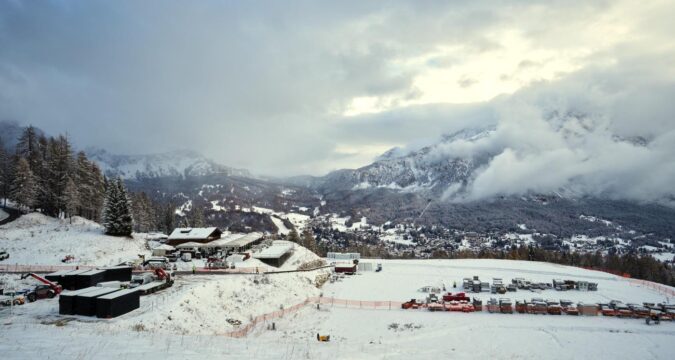
Esquiadores y snowboarders rusos ganan fallo del TAS para intentar clasificar a Juegos de Invierno
Associated Press
LAUSANA, Suiza (AP) — Los esquiadores y snowboarders rusos ganaron el martes un fallo judicial que les da la oportunidad de solicitar competir como atletas neutrales en eventos de clasificación para los Juegos Olímpicos de Invierno de Milán-Cortina, indicó el ministro de deportes ruso, Mikhail Degtyaryov.
Degtyaryov publicó en redes sociales que una apelación de Rusia al Tribunal de Arbitraje Deportivo (TAS) revocó una prohibición general impuesta por la Federación Internacional de Esquí y Snowboard (FIS).
El CAS no ha publicado su fallo, que sería otra victoria legal para los deportistas de invierno de Rusia y Bielorrusia después de casi cuatro años de exclusión de competiciones internacionales durante la guerra en Ucrania.
En octubre, una apelación similar al CAS por parte de los deportistas y la federación rusa de luge falló en contra del veto generalizado basado en sus pasaportes.
Las organizaciones deportivas han excluido a los rusos principalmente por razones de seguridad.
Aun así, habría poco tiempo para que la FIS procese las solicitudes de los atletas para competir con estatus neutral antes de la fecha límite de clasificación del 18 de enero. Los Juegos Olímpicos de Invierno comienzan el 6 de febrero.
El estatus neutral puede ser aprobado en la mayoría de los deportes, siguiendo la indicación del Comité Olímpico Internacional, para atletas que no han apoyado públicamente la invasión militar de Ucrania y no tienen vínculos con agencias militares o de seguridad del estado.
Los deportistas rusos y el personal del equipo también enfrentan desafíos para obtener visas para ingresar a algunos países que albergan eventos de clasificación, como en el circuito de la Copa del Mundo en esquí alpino, esquí de fondo y estilo libre, y snowboard.
___
Esta historia fue traducida del inglés por un editor de AP con la ayuda de una herramienta de inteligencia artificial generativa.
Daniel DePetris: Donald Trump’s peace plan for Gaza is on life support
On Nov. 17, the United Nations Security Council passed a resolution that officially endorsed the U.S. peace plan for Gaza. It was a big moment for President Donald Trump’s administration, which spent months negotiating the ceasefire between Israel and Hamas and weeks lobbying other countries to support the plan’s key tenets: the establishment of a so-called International Stabilization Force designed to provide stability to the battered enclave; the formation of a transitional administration under a Trump-led Board of Peace; the disarmament of Hamas and a massive reconstruction initiative.
“We will seize the opportunity today to end decades of bloodshed and make lasting peace a reality,” U.S. Ambassador to the U.N. Michael Waltz said, beaming after the vote.
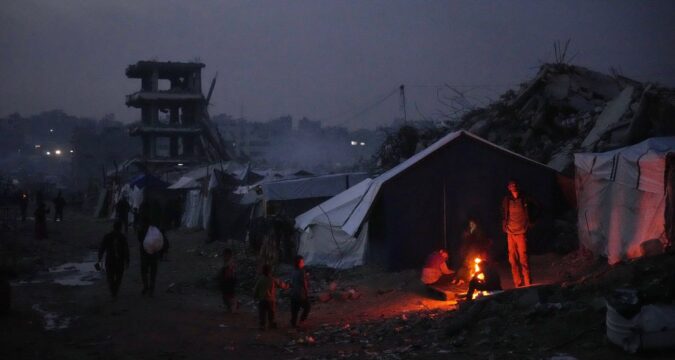
The reality on the ground is far less rosy. Nearly eight weeks after it was agreed to, Trump’s peace plan remains in a moribund state. The best that can be said is that the approximately 2 million Palestinians in Gaza are no longer under bombardment every day and Israeli troops are no longer getting ambushed in the dense confines of Gaza’s major cities. But the lack of progress on other aspects of the plan, including setting up an international policing force meant to pave the way for a full Israeli troop withdrawal from the territory, suggests that Trump’s bombastic claims of peace are misplaced.
Violence, of course, is down from its peak. Earlier in the year, hundreds of people were dying every day. This is no longer the case. The truce and the partial Israeli military pullback to the new locations farther east have minimized the prospects of clashes. The killing, though, hasn’t stopped. Israel and Hamas continue to blame each other for ceasefire violations. During one instance in late October, the death of an Israeli soldier by Palestinian militants prompted Israel to retaliate with a wave of airstrikes that killed 104 people.
Occasional firefights continue to this day; according to Gaza health officials, at least 352 Palestinians have been killed since Trump’s ceasefire plan went into effect. Given that an unknown number of Hamas militants are stuck underground on the Israeli side of the yellow line dividing Israeli and Hamas-controlled territory, the number is bound to go up in the days and weeks ahead.
The hostage release portion of the deal is a bit stuck as well. The 20-point Trump plan mandated the exchange of all Israeli hostages, alive and dead, within 72 hours of the deal’s signing, in return for 250 Palestinian prisoners serving life sentences and 1,700 Palestinians detained during the war. Hamas freed all the living Israeli hostages and most of the deceased, but two of the dead have yet to be recovered. Hamas claims that the severe destruction in Gaza is hampering recovery work.
Meanwhile, Israel is increasingly frustrated with what it perceives to be Hamas stonewalling and is threatening to block Phase 2 of Trump’s plan until those two bodies are returned. The longer this dispute goes on, the less likely Phase 2 will begin and the more likely Trump will see his diplomatic achievement in Gaza go sideways.
The biggest impediment to success remains the complete lack of an actual plan to get to the long-term peace the Trump administration rightly wants to see. There are plenty of generalities but very few details about how to operationalize the meatiest of Trump’s 20 points. Ideally, the United States would have at least a few willing participants to staff the International Stabilization Force, which will be tasked with disarming Hamas, training an independent Palestinian police force and ensuring Gaza is secure enough that Israeli forces can continue on with a withdrawal.
Yet at this time, no country is lining up to staff the force. The Gulf Arab states don’t want to be responsible for occupying an area that Israel demolished, nor do they want to be put in the position of fighting Hamas in the (likely) event it refuses to hand over its weapons.
Azerbaijan has pulled out after expressing initial interest. Jordan and Egypt, which traditionally hold the most influence on the Palestinian question, have restricted their role to training Palestinian police. And Turkey, the one country that was willing to pitch in troops, is unlikely to be involved after Israel issued a veto. In the meantime, Hamas continues to consolidate its authority in the half of Gaza it currently controls.
What about the interim Palestinian administration that’s supposed to take over from Hamas? This isn’t looking particularly promising, either. Composition of the body is a mystery. Although Hamas and the Palestinian Authority have nominated individuals, the fact that Hamas is contributing to the process at all means that Israeli Prime Minister Benjamin Netanyahu is likely to throw up roadblocks.
Indeed, the Trump-led Board of Peace that is tasked with supervising the Palestinian interim administration doesn’t have any members yet. In other words, at present, a nonexistent Board of Peace is overseeing a nonexistent Palestinian administration that may or may not be set up, depending on whether Israel approves.
Finally, as far as reconstruction in Gaza is concerned, there isn’t much to report. Saudi Arabia, the United Arab Emirates, Qatar and the European Union, all of which will be expected to finance much of the rebuilding, aren’t going to throw billions of dollars into the pot as long as there is a risk of the truce collapsing. This scenario isn’t far-fetched: If Hamas continues to refuse disarmament, it’s probably only a matter of time before Israel decides that the ceasefire has outlived its purpose.
Trump deserves credit for getting where we are today. But what’s the value of a deal if it’s not implemented?
Daniel DePetris is a fellow at Defense Priorities and a foreign affairs columnist for the Chicago Tribune.
Submit a letter, of no more than 400 words, to the editor here or email letters@chicagotribune.com.
https://www.chicagotribune.com/2025/12/02/column-donald-trump-gaza-peace-plan-depetris/

Orland Park 6-bedroom Alpine log cabin with fishing pond: $1.2M
Address: 11711 Juanita Drive, Orland Park
Listed: Oct. 2, 2025
Price: $1,199,000
Listing agent: Katie Ramoley, Coldwell Banker, 708-612-1848
This six-bedroom, 3½-bathroom Alpine cabin, built with logs from Montana, sits on 3.8 acres with a 1-acre stocked fishing pond. The first floor has two bedrooms, including a primary suite with views out the back to the pond, a walk-in closet and a bathroom with a walk-in shower and a soaking tub. The living room has cathedral ceilings, full windows with remote-controlled window treatments and a floor-to-ceiling stone fireplace. The kitchen has two-story ceilings, a Sub-Zero refrigerator, Viking appliances, an extra Sub-Zero fridge in the kitchen island, a walk-in pantry and filtered hot and cold water. Off the kitchen is a breakfast area that leads to a sun room with a fireplace. The second floor has two bedrooms and a full bath. The walk-out basement has two more bedrooms, a full bath and an in-law suite with a full kitchen. The home has radiant heat flooring throughout and a heated floor in the 2½-car garage.
The living room of this house at 11711 Juanita Drive, Orland Park, has cathedral ceilings, full windows with remote-controlled window treatments and a floor-to-ceiling stone fireplace. (Mark Gutierrez)
The living room of this house at 11711 Juanita Drive, Orland Park, has cathedral ceilings, full windows with remote-controlled window treatments and a floor-to-ceiling stone fireplace. (Mark Gutierrez)
The living room of this house at 11711 Juanita Drive, Orland Park, has cathedral ceilings, full windows with remote-controlled window treatments and a floor-to-ceiling stone fireplace. (Mark Gutierrez)
The living room of this house at 11711 Juanita Drive, Orland Park, has cathedral ceilings, full windows with remote-controlled window treatments and a floor-to-ceiling stone fireplace. (Mark Gutierrez)
The living room of this house at 11711 Juanita Drive, Orland Park, has cathedral ceilings, full windows with remote-controlled window treatments and a floor-to-ceiling stone fireplace. (Mark Gutierrez)
The living room of this house at 11711 Juanita Drive, Orland Park, has cathedral ceilings, full windows with remote-controlled window treatments and a floor-to-ceiling stone fireplace. (Mark Gutierrez)
The living room of this house at 11711 Juanita Drive, Orland Park, has cathedral ceilings, full windows with remote-controlled window treatments and a floor-to-ceiling stone fireplace. (Mark Gutierrez)
The living room of this house at 11711 Juanita Drive, Orland Park, has cathedral ceilings, full windows with remote-controlled window treatments and a floor-to-ceiling stone fireplace. (Mark Gutierrez)
The living room of this house at 11711 Juanita Drive, Orland Park, has cathedral ceilings, full windows with remote-controlled window treatments and a floor-to-ceiling stone fireplace. (Mark Gutierrez)
Some listing photos are “virtually staged,” meaning they have been digitally altered to represent different furnishing or decorating options.
To feature your luxury listing of $1,000,000 or more in Chicago Tribune’s Dream Homes, send listing information and high-res photos to ctc-realestate@chicagotribune.com.
https://www.chicagotribune.com/2025/12/02/orland-park-dream-home-log-cabin/