Category: News

Menorah lighting, other events planned to celebrate Chanukah in Naperville
The Chabad of Naperville is planning a series of family-friendly public events to celebrate Chanukah.
One of this year’s highlights will be the giant menorah lighting at 6 p.m. Sunday, Dec. 14, at the corner of Jefferson Avenue and Webster Street near Nichols Library in downtown Naperville, a news release said.
The community can enjoy sufganiyot (doughnuts), gelt and latkes and listen to festive music.
Before the lighting ceremony, families can take part in the menorah car parade, which will start at 5 p.m. at the Abrams Center for Jewish Life, 651 Amersale Drive. Participants cars will be adorned with a special menorah will be provided for the parade, the release said. Families will drive together to downtown Naperville for the menorah lighting.
Another lighting of the grand menorah will take place from 4:30 to 6 p.m. Thursday, Dec. 18, at Center Park, Fox Valley Mall, 195 Fox Valley Center Drive, Aurora. The free event also includes Chanukah crafts, live children’s entertainment and doughnuts, the release said.
The Chanukah Festival featuring a hypnosis and magic show, a kosher Chinese dinner and latkes and donuts will be held at 4 p.m. Sunday, Dec. 21, at the Abrams Center for Jewish Life.
Advanced pricing is available through Monday, Dec. 15. To register, go to www.jewishnaperville.com/chanukah2025.
https://www.chicagotribune.com/2025/12/10/menorah-lighting-chanukah-naperville-chabad/

Obamacare Was Not A Failure
Obamacare Was Not A Failure
Authored by Connor O’Keefe via The Mises Institute,
“You have turned, Mr. President, the right of every American to have access to decent healthcare into reality for the first time in American history.”
Those are the words then-Vice President Joe Biden said to President Obama in the East Room of the White House on March 23, 2010, as he prepared to sign the Patient Protection and Affordable Care Act—or Obamacare—into law.
The signing ceremony was jubilant as party leaders celebrated their legislative victory. And across the country, their joy was shared by millions of Obama’s supporters who were convinced that the man they voted for had actually delivered the kind of meaningful reform every politician promises, but few make good on.
Americans listened to Joe Biden proclaim that every American would now have access to decent healthcare. And they listened to Obama recount stories of people he had brought to the ceremony who had gone untreated for various serious medical conditions because they could not afford it, and then suggest that, because of the bill he was about to sign, those stories would be a thing of the past.
I think it’s safe to assume that the Obama supporters who were watching that day would never have imagined that, fifteen years later, Congress would be battling over the extension of several temporary “emergency” subsidies that had had to be put in place to keep Obamacare afloat as healthcare and health insurance costs soared to heights that would have been considered unimaginable to anyone living in 2010.
But here we are.
As Congress fights over not whether but how to extend these covid-era ACA subsidies, it can be tempting to call Obamacare a failure. I mean, how else would you describe an “affordable care” act that made healthcare and health insurance less affordable while requiring a constant influx of new tax dollars to keep it from falling apart?
That’s a reasonable conclusion.
But the problem with it is that it takes the political class at its word and accepts that Obamacare was genuinely meant to make healthcare more affordable and accessible to the American people. It wasn’t.
To understand the true purpose that Obamacare served, you have to first go back and understand why government first intervened in the healthcare market a little over a century ago.
It was not, as the progressive creation myths many of us are taught in school suggest, to protect Americans from maniacal doctors or food and drug companies that were trying to kill them. Nor was it to help Americans afford healthcare—prices back then weren’t anywhere near the absurd levels we see today.
The reason government began intervening in healthcare was because some industry insiders and interest groups recognized that they could achieve and protect a level of market dominance practically unseen up to that point if they stopped merely trying to offer customers more value than their competitors and instead used government power to warp the healthcare industry to their benefit.
That began when a physicians’ interest group maneuvered its way into setting the accreditation standards for American medical schools. That position of influence allowed the group to ban programs that didn’t align with its specific medical philosophy, leading to the forced closure of nearly half the country’s medical schools.
This created an artificial shortage of doctors, which kicked off the affordability crisis that has defined American healthcare ever since.
Of course, the problem was still quite limited in the early days. But as other related industries—especially pharmaceuticals—began falling prey to the same crony dynamic at the heart of the Progressive Era, healthcare quickly began to grow more expensive.
Then, in the middle of the twentieth century, the health insurance industry followed the lead of healthcare providers and pharmaceutical companies and lobbied government officials for rules and regulations that benefited insurance companies’ bottom lines.
That effort culminated in a reworking of the tax code under President Truman. The government made employer-provided health insurance tax-deductible while it continued to tax other forms of employee compensation and other means of paying for care. In other words, the government used the tax code to change how Americans paid for healthcare. It didn’t take long for employer-provided insurance plans to become the dominant arrangement and for health insurance to morph away from actual insurance.
Shortly after that happened, the government significantly ramped up demand for the artificially-constrained supply of medical care with the passage of Medicare and Medicaid, leading to an easily-predictable explosion in the price of healthcare.
And, as fewer and fewer people could afford healthcare at these higher prices, more government assistance was required, which meant more demand, higher prices, more need for government support, and so on.
This was not good for everyday Americans, but it was excellent for healthcare providers and drug companies whose revenues were ballooning as more and more cash poured into the healthcare system.
And it was great for the health “insurance” companies. All the taxes on competing means of payment effectively acted as a subsidy, putting the industry in a strong position to benefit from the mounting crisis because, in addition to facilitating most of the country’s healthcare spending, they helped these providers grow far beyond the typical bounds of insurance.
In a free market, insurance serves as a means to trade risk. It works well for accidents and calamities that are hard to predict individually but relatively easy to predict in bulk, like car accidents, house fires, and unexpected family deaths. But with the government incentivizing people to buy healthcare through insurance plans, those plans began to grow to cover easily-predictable occurrences like annual physicals.
So, zooming out, industry leaders and interest groups joined forces with government officials to use government interventions to create a healthcare system designed to move as much money as possible to healthcare providers, pharmaceutical companies, and the insurance industry. That is, and has always been, the main motivation behind the federal government’s healthcare policy.
But, as with any scheme like this, the party cannot last forever. It only works as long as money keeps coming in. For an important service like healthcare, which most people don’t consider optional, the threshold is pretty high. But there is still a point where premiums grow too high, fewer employers or individual buyers are willing to buy insurance, and the flow of money into the healthcare system starts to falter.
According to the government’s own census data, that tipping point was reached in the early 2000s. For the first time since the scam had really kicked off, the number of people with health insurance began to fall each year. The industry—which had apparently assumed the flow of money would never stop increasing—began to panic.
Something had to be done.
And that something was Obamacare.
Despite all the talk of affordability and access used to sell the bill to the public, the Affordable Care Act is best understood as a ploy by the healthcare industry and the government to keep the party going.
Obamacare required all 50 million uninsured Americans to obtain insurance and greatly expanded what these “insurance” companies covered. Demand for healthcare shot back up, and the vicious cycle started back up again.
As any competent economist was saying before the bill was even passed, ramping demand back up would not make healthcare more “affordable,” it would only raise prices. And that’s exactly what happened.
Of course, as prices rose higher and health “insurance” moved further and further away from actual insurance, it’s made the American people even more dependent on the government for healthcare, which is how we’ve arrived at our current situation where extra, “temporary” subsidies rolled out during an official national emergency need to be made permanent to keep everything going.
So, if you want to take the political establishment at their word, the best you can say is that Obamacare kicked the can down the road and made the healthcare affordability crisis worse in exchange for a bit of temporary relief for some uninsured Americans.
But if you view the ACA within the context of the last century of American healthcare policy, it reversed the faltering demand for healthcare and health insurance, accelerated the racket moving as much money as possible into the industry, and quickly became a new political third rail that the “opposition” party refuses to even consider rolling back.
It’s hard to view that as anything other than a meaningful success.
Tyler Durden
Wed, 12/10/2025 – 13:05
https://www.zerohedge.com/political/obamacare-was-not-failure

Charges formally dismissed after grand jury refused to indict Laugh Factory manager accused of assaulting agents
A federal judge on Wednesday ruled to formally dismiss the case against a Lakeview comedy club manager whom federal authorities had accused of slamming the door on the leg of a Border Patrol agent during an October immigration arrest.
Nathan Griffin, 25, was charged Oct. 27 with assaulting, interfering with or impeding a federal officer after he allegedly shut a car door on a U.S. Customs and Border Protection agent in a scuffle that followed an immigration enforcement arrest near the Laugh Factory, at the intersection of Belmont Avenue and Broadway. A grand jury ultimately refused to indict him.
Prosecutors’ move to drop the case against Griffin is the latest instance in a string of high-profile cases against U.S. citizens caught up in “Operation Midway Blitz” to fall apart only weeks into proceedings.
U.S. District Judge Keri Holleb Hotaling, walking into a 17th floor courtroom of the Dirksen U.S. Courthouse Wednesday morning, asked Assistant U.S. Attorney Jeff Snell about the move to dismiss the charges, filed Dec. 3 in what Hotaling called a “bare bones” motion. Snell said the deadline to return an indictment in the case had already been extended once and the grand jury assigned to the case had not seen fit to indict Griffin.
Federal public defender Akane Tsuruta asked that the dismissal be granted with prejudice, which would prevent the government from taking up the charges later, but Snell said the government has “no intention” of taking another swing at the case. Hotaling ultimately ruled to dismiss the case without prejudice.
Although she had found probable cause to send Griffin’s case to a grand jury, Hotaling said the panel’s no-bill move showed “the system working as it should.”
“Good luck, Mr. Griffin,” she said. “I’m glad that this is now taken care of for you.”
Griffin kept his job at the Laugh Factory throughout the case, as did Marimar Martinez, a 30-year-old day care teacher who was shot five times by Border Patrol Agent Charles Exum during an Oct. 4 confrontation in Brighton Park. Prosecutors dropped felony charges against Martinez in late November, shortly after a series of bombshell text messages surfaced in which Exum bragged about his marksmanship to other agents in a private group chat and lawyers alleged that federal agents had tampered with evidence in the case.
Speaking after the hearing, Griffin said he was “looking forward to moving on from this” and said the process had been difficult. He’d heard that government had moved to drop the charges last week, but hadn’t heard that the grand jury refused to indict him until Wednesday morning.
“There is some vindication in that,” he said. “The fact that they’re not interested in pursuing (the case) further is still very good to hear.”
https://www.chicagotribune.com/2025/12/10/charges-dismissed-comedy-club-manager-agent-assault/

Ogden Dunes drops beach revetment plan; opponents cheer access preservation
After a nearly two-year legal fight, Ogden Dunes officials have dropped plans for a stone revetment along the Lake Michigan shoreline, Save the Dunes Executive Director Betsy Maher said.
The stone revetment would have extended the existing barrier on the tiny town’s eastern side to protect homes from erosion.
Ogden Dunes Town Council President Scott Kingan could not be reached for comment Saturday.
In June 2023, the Conservation Law Center, representing Save the Dunes, challenged the Indiana Department of Natural Resources permit for the project. The DNR didn’t delineate Lake Michigan’s natural ordinary high-water mark, the boundary between private property and public land, the Conservation Law Center argued, so public access to the beach would have been negatively affected.
Former state Sen. Karen Tallian, of Ogden Dunes, had authored a state law to codify a 2018 Supreme Court ruling in a Long Beach case, Gunderson v. State, that also dealt with public access to the beach, Maher noted Friday.
Ogden Dunes Town Council President Scott Kingan gestures while standing along the Lake Michigan shoreline in Ogden Dunes, Indiana, Tuesday, April 29, 2025. Ogden Dunes started constructing a stone revetment wall despite an ongoing legal challenge with Save the Dunes over whether the project violates the public trust. (Andy Lavalley/for the Post-Tribune)
The ruling is literally a landmark; it marks the line between private land and public land.
Maher said Save the Dunes is “thrilled” that Ogden Dunes formally abandoned its proposed project, but the Conservation Law Center and Save the Dunes are weighing options for the future.
“We will continue to pursue all legal avenues to ensure DNR correctly applies the state’s public trust laws and regulations intended to safeguard Lake Michigan for current and future generations of Hoosiers,” Conservation Law Center Executive Director Christian Freitag said in a news release Friday. “Under Indiana law, DNR is tasked with protecting our shared public trust resources, and we intend to make sure the agency does its job.”
The town’s erosion problem is exacerbated by the Port of Indiana, which blocks the natural flow of sand from east to west along Lake Michigan’s southern shore.
Stones put in place to try to halt the erosion of sand along the Lake Michigan shoreline in Ogden Dunes, Indiana, Tuesday, April 29, 2025. Ogden Dunes started constructing a stone revetment wall despite an ongoing legal challenge with Save the Dunes over whether the project violates the public trust. (Andy Lavalley/for the Post-Tribune)
The stone revetment on the town’s eastern side was added when the lake level was high and an emergency was declared. But with the lake level low, Maher said, “now is the time that we can have discussions about both short- and long-term solutions.”
She wants to restore the natural flow of sand, even in a manmade way, protecting access to the beach.
That could include an intake on the east side of the port and an outtake on the west side, allowing the sand and water to flow through. As it is, sand is building up on the port’s east side, Boater’s Beach, and causing the port to require periodic dredging, Maher said.
That sand brought up from dredging is clean sand and could be used to replenish the Ogden Dunes beach, placing the sand offshore and letting the current get its job back. “Dredging is a great way. We get sand where we don’t want it and we put it where we do want it,” she said.
Or maybe an artificial reef or some kind of speed bumps to capture sand along the beach could be added in the lake.
“We just have to fix the core problem,” Maher said. “Step 1 is not destroying the beach before we have a chance to fix the problem.”
“They don’t need rocks; they need sand,” Maher said.
In April, Kingan walked along the beach to show sand is starting to pile up in front of the existing revetment. That barrier wasn’t cheap. It cost $10 million, with each homeowner paying $500,000 to protect their homes. The project, now abandoned, was pegged at $2 million, he said in April.
With the lake level so low, this is a good time to get everyone involved in working on a long-term solution.
Doug Ross is a freelance reporter for the Post-Tribune.
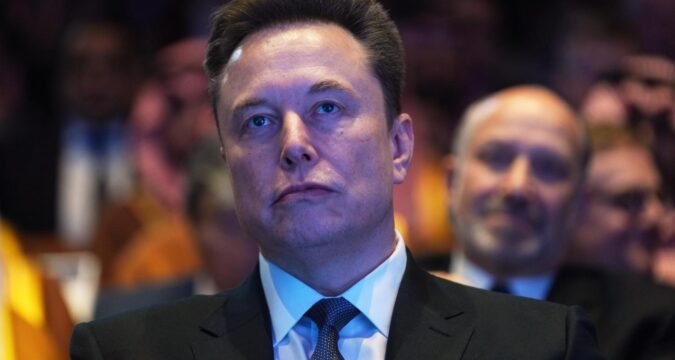
Elon Musk dice que DOGE fue solo “algo exitoso” y que no lo haría de nuevo
BILL BARROW
El multimillonario Elon Musk afirmó que sus esfuerzos al frente del Departamento de Eficiencia Gubernamental fueron solo “algo exitosos” y que no lo volvería a hacer.
“Fuimos un poco exitosos. Fuimos algo exitosos”, declaró Musk en una entrevista amistosa con su asistente e influencer conservadora Katie Miller.
El CEO de Tesla y SpaceX, quien también es dueño de la plataforma de redes sociales X, defendió en términos generales la improvisada agencia del presidente Donald Trump, bajo la cual miles de empleados públicos perdieron sus empleos.
Musk se retiró de la agencia en la primavera antes de que cerrara oficialmente el mes pasado. Sin embargo, Musk lamentó lo difícil que es reformar rápidamente el gobierno federal y reconoció cuánto sufrieron sus negocios debido a su trabajo en DOGE y su falta de popularidad.
Cuando Miller presionó a Musk sobre si lo haría todo de nuevo, él respondió: “No lo creo. … En lugar de hacer DOGE, básicamente, habría construido … trabajado en mis empresas”.
Casi en tono apesadumbrado, Musk agregó: “No habrían estado quemando los autos” —una referencia a las protestas de los consumidores contra Tesla.
Aun así, las cosas ciertamente han mejorado para Musk desde su salida de la administración de Trump. Los accionistas de Tesla aprobaron un paquete de compensación que podría convertir a Musk en el primer billonario del mundo.
Musk estaba hablando como invitado en el “Podcast de Katie Miller”, que Miller, quien está casada con el asesor de Trump Stephen Miller, lanzó después de dejar el empleo gubernamental para trabajar con Musk en el sector privado. Los dos se sentaron en sillas frente a frente para una conversación que duró más de 50 minutos y abarcó temas desde DOGE hasta las opiniones de Musk sobre la IA, las redes sociales, las teorías de conspiración y la moda.
Miller no presionó a Musk sobre el funcionamiento interno de DOGE y la controvertida manera en que se apoderó de agencias federales y sistemas de datos.
Musk atribuyó a la agencia el haber ahorrado hasta 200.000 millones de dólares anuales en “pagos zombis” que, según él, se pueden evitar con mejores sistemas automatizados y codificación para los pagos federales. Pero esa cifra se ve empequeñecida por las ambiciosas promesas de Musk de que una comisión de eficiencia podría realizar ahorros de billones de dólares.
___________________________________
Esta historia fue traducida del inglés por un editor de AP con ayuda de una herramienta de inteligencia artificial generativa.
Familia de periodista en Guatemala pide su liberación tras tres años preso sin juicio ni condena
Por SONIA PÉREZ D.
CIUDAD DE GUATEMALA (AP) — La familia del periodista guatemalteco José Rubén Zamora pidió el miércoles su liberación luego de permanecer más de tres años en prisión preventiva y denunció vicios en el proceso judicial en su contra.
“Mi papá el periodista José Rubén Zamora lleva más de 1.200 días en prisión preventiva…es inocente. Ha enfrentado un proceso espurio lleno de violación a sus derechos, incluida su presunción de inocencia”, dijo su hijo Ramón Zamora en un vídeo difundido a la prensa.
Zamora, quien permanece detenido sin juicio ni condena, es reconocido por haber presidido un medio —El Periódico— que destapó varios casos de corrupción en Guatemala. Ha sido considerado como un símbolo del periodismo de investigación en América Latina.
La fiscalía apresó en julio de 2022 a Zamora, ahora de 69 años, bajo la acusación de lavado de dinero por pedir a un amigo (que lo denunció) que bancarizara unos 38.000 dólares que, según el periodista, eran producto de una donación para El Periódico, del que era presidente y que entonces enfrentaba problemas financieros. Posteriormente la fiscalía le acusó de otros dos delitos en un proceso unificado.
El juez a cargo de la primera causa, Jimi Bremer, sancionado por Estados Unidos por sus resoluciones judiciales, no permitió que Zamora presentara pruebas a su favor.
En junio de 2023 Zamora fue llevado a juicio; la fiscalía había solicitado 40 años de prisión y fue condenado a seis años. En 2024, tras la revisión del proceso, un tribunal anuló la condena —lo cual ha sido ratificado por otras instancias judiciales— y ordenó un nuevo juicio que aún no se realizó.
El hijo de Zamora resaltó que las leyes de Guatemala e internacionales dicen que una persona no puede pasar más de dos años en prisión preventiva y que su padre lleva ya más de tres años detenido.
Agregó que su padre cumple con los requisitos para tener arresto domiciliario, una medida alternativa a la prisión que se le otorgó en octubre de 2024 por el nuevo tribunal que debe revisar el primer caso y por el juez contralor del segundo proceso, pero cinco meses después fue revocada por una sala de apelaciones y enviado de nuevo a prisión.
El hijo de Zamora se quejó de que el proceso judicial lleva más de 30 meses detenido, lo que consideró que es una falta grave que prolonga las violaciones a los derechos de su padre. “El Organismo Judicial tiene el deber de darle libertad condicional, es urgente fijar día y hora para su audiencia”, recalcó.
The Associated Press solicitó al Organismo Judicial una postura al respecto, sin obtener aún respuesta.
La familia de Zamora y organizaciones nacionales e internacionales han denunciado que la fiscalía dirigida por la fiscal general Consuelo Porras ha mantenido un patrón de criminalización contra exoperadores de justicia, abogados, defensores de derechos humanos y periodistas; al menos 100 han salido al exilio.
Porras y varios de sus funcionarios —incluido su secretario general Ángel Pineda y sus fiscales Cinthia Monterroso, Leonor Morales y Rafael Curruchiche — han sido sancionados por más de 40 países que les han prohibido el ingreso a sus territorios por socavar la democracia del país centroamericano, obstaculizar la lucha anticorrupción o presentar procesos judiciales sin fundamento.
Las publicaciones de Zamora denunciaron hechos de corrupción en varios gobiernos. Fue un crítico de la administración del expresidente Alejandro Giammattei (2020-2024), que reeligió en el cargo a la fiscal Porras. La familia responsabiliza a ambos por la situación del periodista.
El Periódico cerró sus puertas en mayo de 2023 luego de la detención del periodista. Bremer, el mismo juez que encarceló a Zamora, ordenó detener a ocho de sus periodistas y columnistas por hacer publicaciones sobre denuncias, procesos disciplinarios y fallos dudosos de jueces y fiscales.
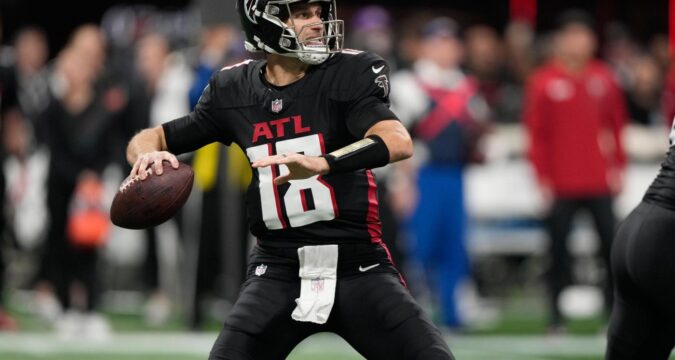
Kirk Cousins y Falcons buscan estropear los planes de Baker Mayfield y Buccaneers
Por ROB MAADDI
TAMPA, Florida, EE.UU. (AP) — Se suponía que los Falcons de Atlanta serían los principales rivales de los Buccaneers de Tampa Bay por el título de la NFC Sur.
En cambio, se han reducido a jugar un papel de aguafiestas.
Kirk Cousins y los Falcons (4-9) visitan a Baker Mayfield y los Buccaneers (7-6) el jueves por la noche con mucho en juego para el equipo local.
Los Bucs se encaminaban a un quinto campeonato de división consecutivo antes de entrar en una mala racha. Regresaron de una semana de descanso con marca de 6-2 y apuntaban a obtener un puesto de cabeza de serie en la segunda mitad.
Pero apenas han lucido como un equipo que siquiera merece estar en los playoffs. Los Bucs perdieron tres juegos consecutivos contra equipos con saldo favorable de victorias y derrotas, apenas lograron vencer a los humildes Cardinals y luego perdieron en casa contra los desastrosos Saints.
Están empatados con Carolina en el primer lugar de la división y jugarán contra los Panthers dos veces en las próximas tres semanas. Primero, tienen que encargarse de un equipo que busca arruinar su temporada.
“Nunca quieres estar en esta posición”, dijo el entrenador de los Falcons, Raheem Morris, sobre ser eliminado de la contienda por los playoffs. “Pero realmente, el trabajo es salir y jugar el papel de aguafiestas ahora mismo”.
Los Buccaneers controlan sus esperanzas de playoffs. Si ganan sus próximos tres juegos, asegurarán la corona de la división antes de un enfrentamiento en la Semana 18 contra los Panthers.
“Es esa mentalidad de playoffs”, dijo Mayfield. “Estamos jugando contra un oponente divisional, no les gustaría nada más que vencernos y arruinar nuestras posibilidades. Así que entras esperando: ‘¿Realmente tienen mucho en juego? Sí, porque están tratando de sacarnos de los playoffs’. Así que esa es la mentalidad”.
El turno de Kirk
Cousins venció a los Buccaneers dos veces la temporada pasada en su primer año con Atlanta. Lanzó para 785 yardas, ocho touchdowns y solo una intercepción. Tuvo 509 yardas por pase contra ellos en una de las victorias. Michael Penix Jr. comenzó en la Semana 1 cuando los Bucs vencieron a Atlanta por 23-20.
Cousins regresó a la alineación después de que Penix sufriera una lesión de rodilla que puso fin a su temporada. El quarteback, que ha sido seleccionado cuatro veces para el Pro Bowl, tiene un récord de 1-3 en cuatro inicios con tres touchdowns, tres intercepciones y un índice de pasador de 76.5.
“No lo considero un mariscal de campo suplente, lo considero un titular, y lo ha sido durante mucho tiempo”, dijo el entrenador de los Bucs, Todd Bowles.
Apreciando a Baker
Mayfield ha tenido dificultades las últimas cuatro semanas mientras lidia con lesiones, incluida una distensión en el hombro izquierdo que lo obligó a perderse la segunda mitad de una derrota ante los Rams el mes pasado. Pero el coordinador defensivo de los Falcons, Jeff Ulbrich, espera ver al hombre que fue candidato a MVP durante la primera mitad de la temporada.
“Es Houdini, sabes, lo ves contra algunas de las mejores líneas defensivas de esta liga, y sientes que está acorralado, capturado, y de repente, no solo sale de las situaciones más imposibles, sino que luego hace una jugada”, dijo Ulbrich. “Así que es simplemente, es tan bueno como he visto en mucho, mucho tiempo, en cuanto al competidor que es, la dureza que demuestra”.
Deteniendo a Bijan
El dinámico corredor de los Falcons, Bijan Robinson, lidera la NFL con 1.683 yardas desde la línea de golpeo. Tiene 1.081 yardas por tierra. Liderados por el tackle nariz Vita Vea, los Bucs son novenos contra la carrera. Sin embargo, permitieron 136 yardas a Jahmyr Gibbs en la Semana 7 y 147 a TreVeyon Henderson en la 10.
El máximo de Robinson en cinco juegos contra Tampa Bay es de 63 yardas. Está promediando 3.nueve yardas por acarreo contra ellos.
___
La escritora de deportes de AP, Maura Carey, contribuyó a este despacho.
___
Deportes AP: https://apnews.com/hub/deportes
Trump Says National Guard Member Who Survived DC Shooting ‘Stood Up Today’
Trump Says National Guard Member Who Survived DC Shooting ‘Stood Up Today’
Authored by Aldgra Fredly via The Epoch Times,
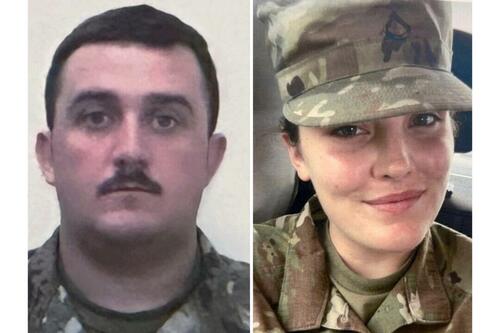
President Donald Trump said on Dec. 9 that West Virginia National Guard member Staff Sgt. Andrew Wolfe, who was critically injured after being shot in Washington last month, has stood up from his bed and is showing signs of recovery.
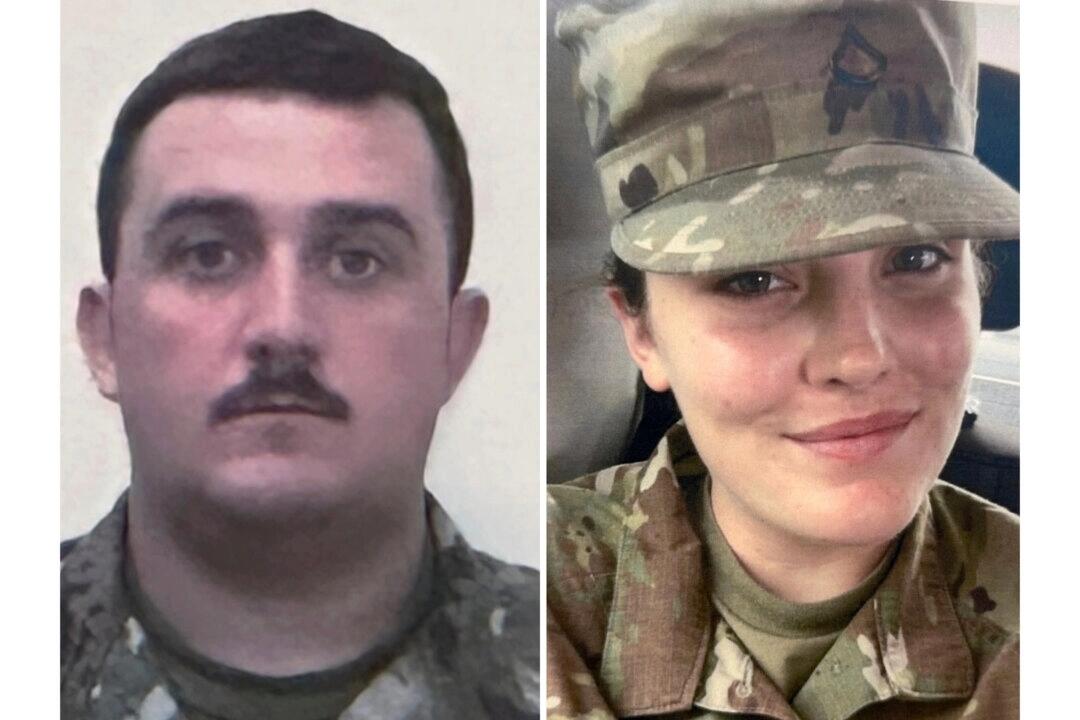
Wolfe and fellow National Guard member Army Spc. Sarah Beckstrom were shot on Nov. 26 in what U.S. authorities say was an ambush near the White House. Beckstrom died of her injuries the following day, while Wolfe was left in critical condition.
Trump gave an update on Wolfe’s condition during a speech at an event in Pennsylvania.
“Today I got a call that he got up from bed. Do you believe that? He got up, he got up,” he said.
The president added that Wolfe has not spoken yet, noting that the National Guard member had been hit in the head during the attack.
“He didn’t speak, he’s not ready for that yet. I mean, he got hit in the head, but he got up and, boy, they’re so happy. It’s amazing,” he said, while commending the hospital staff and the military for their care.
“The love and the affection and the care that they’re given, they can’t even believe what’s happened. But Andrew stood up today, and people can’t believe it.”
West Virginia Gov. Patrick Morrisey said on Dec. 5 that Wolfe’s head wound is slowly improving, and he is beginning to “look more like himself,” quoting Wolfe’s parents.
Wolfe’s family said they expect him to remain in acute care for another two to three weeks as he continues recovering, according to the governor, adding that they have been “optimistic about his progress.”
“We continue to ask all West Virginians and Americans for their prayers! They are making a difference,” Morrisey said.
The suspect, Rahmanullah Lakanwal, 29, was shot during the confrontation.
Trump said in his speech that the U.S. government will seek the death penalty for Lakanwal, calling the attack an “act of terrorism.”
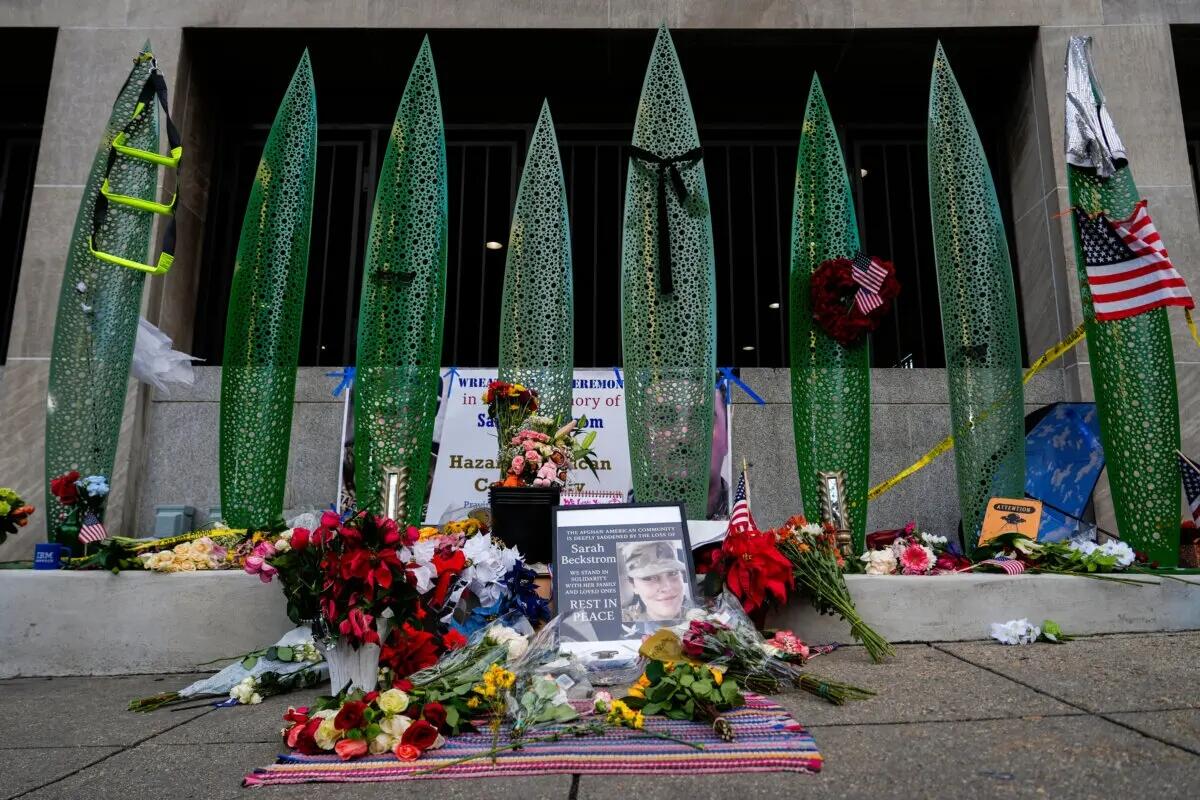
A makeshift memorial for U.S. Army Spc. Sarah Beckstrom and U.S. Air Force Staff Sgt. Andrew Wolfe outside of Farragut West Station, near the site where the two National Guard members were shot, in Washington on Dec. 1, 2025. Julia Demaree Nikhinson/AP Photo
Lakanwal, an Afghan national who once worked with the CIA and entered the United States in September 2021 through a Biden-era resettlement program, has been charged with first-degree murder, two counts of assault with intent to kill while armed, and three counts of possession of a firearm during a crime of violence.
Last week, he pleaded not guilty to murder and assault charges during his first hearing before a judge, appearing remotely by video from a hospital bed.
A court-appointed defense attorney for Lakanwal entered the plea during the virtual court appearance. The attorney pushed for his release, citing his lack of criminal history.
D.C. Superior Court Judge Renee Raymond ordered Lakanwal held without bond. His case is due back in court on Jan. 14.
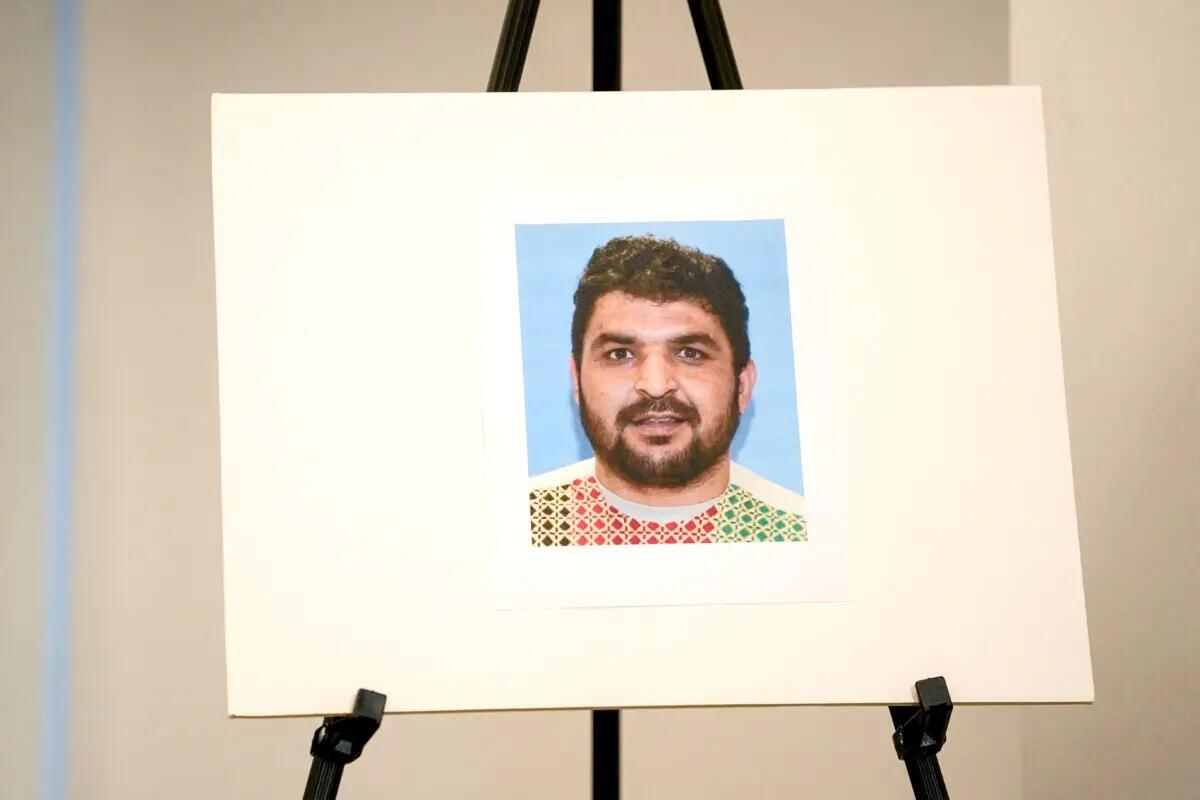
A picture of Rahmanullah Lakanwal, an Afghan national who is the suspect in the shooting of two National Guard members, is displayed at a press conference in Washington on Nov. 27, 2025. Nathan Howard/Reuters
Wolfe and Beckstrom were among the National Guard members assigned to Joint Task Force-D.C., activated in August to support local and federal law enforcement efforts in restoring order in the nation’s capital.
Two lawmakers, Reps. Carol Miller (R-W.Va.) and Riley Moore (R-W.Va.), introduced a resolution to honor the two National Guard members. A similar measure was also introduced in the Senate.
“This resolution sends a clear message that the American people stand with the Beckstrom family, Andrew Wolfe, and the whole West Virginia National Guard community,” Moore said in a Dec. 3 statement. “We grieve this horrific and senseless attack, and continue to pray for these Guardsmen and their families.”
Tyler Durden
Wed, 12/10/2025 – 12:25

Off-duty deputies shot at in front of Mount Sinai
Cook County Sheriff’s Department officials said two off-duty deputies were shot at, but not hit, Wednesday morning while in front of Mount Sinai Hospital.
According to Chicago police, shortly after 3:30 a.m., the two men, ages 28 and 27, were headed north in the 1500 block of South California Boulevard when a silver sedan approached and someone inside opened fire from the passenger side.
No one was injured, but there was damage to the rear passenger door, police said. The sedan fled eastbound from the scene.
No one was in custody for the shooting and detectives were investigating.
https://www.chicagotribune.com/2025/12/10/off-duty-sheriffs-shot-at-mount-sinai/

Islandia boicoteará Eurovisión por la participación de Israel
Associated Press
LONDRES (AP) — La emisora nacional de Islandia anunció el miércoles que no participará el Festival de la Canción de Eurovisión del próximo año debido a la participación de Israel, uniéndose a otros cuatro países en retirarse de la competencia musical pancontinental.
España, Holanda, Irlanda y Eslovenia informaron a la Unión Europea de Radiodifusión (UER) la semana pasada que no participarán en el concurso en Viena en mayo, después de que los organizadores se negaron a expulsar a Israel por su conducta en la guerra contra Hamás en Gaza.
La junta de la emisora islandesa RÚV se reunió el miércoles para tomar una decisión.
La emisora dijo en un comunicado que “dado el debate público en este país, está claro que ni la alegría ni la paz prevalecerán respecto a la participación de RÚV en Eurovisión. Por lo tanto, la conclusión de RÚV es notificar hoy a la UER que RÚV no participará en Eurovisión el próximo año”.
Los boicots arrojan una sombra sobre el futuro de lo que se supone que es una fiesta cultural de buen ánimo, asestando un golpe a los fans, las emisoras y las finanzas del concurso.
El concurso, que cumplirá 70 años en 2026, se ha visto sacudido por la guerra en Gaza durante los últimos dos años, provocando protestas afuera de las sedes y obligando a los organizadores a tomar medidas contra el ondeo de banderas políticas.
La semana pasada, la asamblea general de la UER —un grupo de emisoras públicas de 56 países que organiza el glamuroso evento anual— se reunió para discutir preocupaciones sobre la participación de Israel. Los miembros votaron para adoptar reglas de votación más estrictas en respuesta a las acusaciones de que Israel manipuló el voto a favor de sus concursantes, pero no tomaron medidas para excluir a ninguna emisora de la competencia.
El miércoles era el último día para que las emisoras nacionales anunciaran si planeaban participar.
La UER publicará una lista final de las naciones competidoras antes de Navidad.
_______
Esta historia fue traducida del inglés por un editor de AP con la ayuda de una herramienta de inteligencia artificial generativa.