Category: News
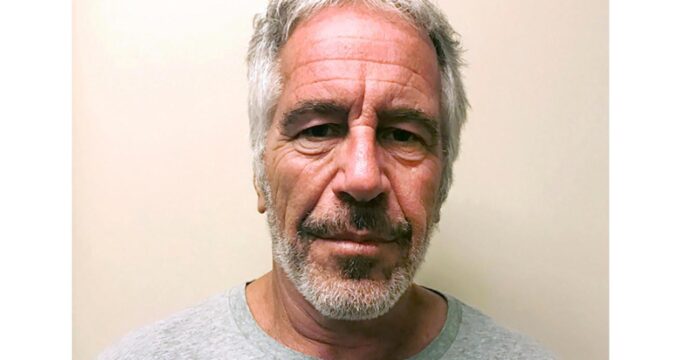
Justice Department can unseal records from Jeffrey Epstein’s 2019 sex trafficking case, judge says
NEW YORK — Secret grand jury transcripts from Jeffrey Epstein’s 2019 sex trafficking case can be made public, a judge ruled on Wednesday, joining two other judges in granting the Justice Department’s requests to unseal material from investigations into the late financier’s sexual abuse.
U.S. District Judge Richard M. Berman reversed his earlier decision to keep the material under wraps, citing a new law that requires the government to open its files on Epstein and his longtime confidant Ghislaine Maxwell. The judge previously cautioned that the 70 or so pages of grand jury materials slated for release are hardly revelatory and “merely a hearsay snippet” of Epstein’s conduct.
On Tuesday, another Manhattan federal judge ordered the release of records from Maxwell’s 2021 sex trafficking case. Last week, a judge in Florida approved the unsealing of transcripts from an abandoned Epstein federal grand jury investigation in the 2000s.
The Justice Department asked the judges to lift secrecy orders in the cases after the Epstein Files Transparency Act, passed by Congress and signed into law by President Donald Trump last month, created a narrow exception to rules that normally keep grand jury proceedings confidential. The law requires that the Justice Department disclose Epstein-related material to the public by Dec. 19.
The court records cleared for release are just a sliver of the government’s trove — a collection of potentially tens of thousands of pages of documents, including FBI notes and reports; transcripts of witness interviews, photographs, videos and other evidence; Epstein’s autopsy report; flight logs and travel records.
While lawyers for Epstein’s estate told Berman in a letter last week that the estate took no position on the Justice Department’s unsealing request, some Epstein victims backed it.
“For far too long, the Epstein survivors and the public have been kept in the dark about the inner-workings of Epstein’s decades-long sex trafficking operation,” said Sigrid McCawley, a lawyer for some victims. “This week’s court rulings are an important step toward accountability to close the vast gap between what is known and unknown.”
Another lawyer, Brad Edwards, said unsealing the records “is good, so long as the victims are protected in the process.” But, he added, “the grand jury receives only the most basic information, so, relatively speaking, these particular materials are insignificant.”
Questions about the government’s Epstein files have dominated the first year of Trump’s second term, with pressure on the Republican president intensifying after he reneged on a campaign promise to release the files. His administration released some material, most of it already public, disappointing critics and some allies.
Berman was matter-of-fact in his ruling on Wednesday, writing that the transparency law “unequivocally intends to make public Epstein grand jury materials and discovery materials” that had previously been covered by secrecy orders. The law “supersedes the otherwise secret grand jury materials,” he wrote.
The judge, who was appointed by President Bill Clinton, a Democrat, implored the Justice Department to carefully follow the law’s privacy provisions to ensure that victims’ names and other identifying information are blacked out. Victim safety and privacy “are paramount,” he wrote.
In court filings, the Justice Department informed Berman that the only witness to testify before the Epstein grand jury was an FBI agent who, the judge noted, “had no direct knowledge of the facts of the case and whose testimony was mostly hearsay.”
The agent testified on two days, on June 18, 2019, and July 2, 2019. The rest of the grand jury presentation consisted of a PowerPoint slideshow and four pages of call logs. The July 2 session ended with grand jurors voting to indict Epstein.
Epstein, a millionaire money manager known for socializing with celebrities, politicians, billionaires and the academic elite, killed himself in jail a month after his 2019 arrest. Maxwell was convicted in 2021 by a federal jury of sex trafficking for helping recruit some of Epstein’s underage victims and participating in some of the abuse. She is serving a 20-year prison sentence.
Maxwell’s lawyer told a judge last week that unsealing records from her case “would create undue prejudice” and could spoil her plans to file a habeas petition, a legal filing seeking to overturn her conviction. The Supreme Court in October declined to hear Maxwell’s appeal.
Maxwell’s grand jury records include testimony from the FBI agent and a New York Police Department detective.
Judge Paul A. Engelmayer sought to temper expectations as he approved their release on Tuesday, writing that the materials “do not identify any person other than Epstein and Maxwell as having had sexual contact with a minor.”
“They do not discuss or identify any client of Epstein’s or Maxwell’s,” wrote Engelmayer, an appointee of President Barack Obama, a Democrat. “They do not reveal any heretofore unknown means or methods of Epstein’s or Maxwell’s crimes.”
https://www.chicagotribune.com/2025/12/10/jeffrey-epstein-records-sex-trafficking/

Judge orders Trump to end California National Guard troop deployment in Los Angeles
The Trump administration must stop deploying the California National Guard in Los Angeles and return control of the troops to the state, a federal judge ordered Wednesday in an emphatic ruling.
U.S. District Judge Charles Breyer in San Francisco granted a preliminary injunction sought by California officials, but also put the decision on hold until Monday, presumably to give the administration a chance to appeal.
In an extraordinary move, President Donald Trump called up more than 4,000 California National Guard troops in June without Gov. Gavin Newsom’s approval to further the Trump administration’s immigration enforcement efforts. The number had dropped to several hundred by late October, but California remained steadfast in its opposition to Trump’s command of the troops.
White House spokeswoman Abigail Jackson suggested in a statement that the administration would appeal Breyer’s ruling, saying it looked forward to “ultimate victory on the issue.”
“President Trump exercised his lawful authority to deploy National Guard troops to support federal officers and assets following violent riots that local leaders like Newscum refused to stop,” she said, using a pejorative moniker Trump has used to refer to the Democratic governor.
California Attorney General Rob Bonta said the ruling was a victory for democracy and the rule of law, and he accused the administration of playing “political games” with the troops.
“But the President is not king,” he said in a statement. “And he cannot federalize the National Guard whenever, wherever, and for however long he wants, without justification.”
Breyer rejected the administration’s arguments that he could not review extensions of a Guard deployment and that it still needed Guard troops in Los Angeles to protect federal personnel and property, saying the first claim was “shocking” and the second one bordered on “misrepresentation.”
“The Founders designed our government to be a system of checks and balances,” added Breyer, a nominee of President Bill Clinton, a Democrat. “Defendants, however, make clear that the only check they want is a blank one.”
The 100 or so California troops that remain in Los Angeles are guarding federal buildings or staying at a nearby base and are not on the streets with immigration enforcement officers, according to U.S. Northern Command.
California argued that conditions in Los Angeles had changed since Trump first deployed the troops following clashes between federal immigration officers and people protesting his stepped-up enforcement of immigration laws. During one demonstration, protesters threw rocks at Border Patrol vehicles. One man later pleaded guilty to throwing a Molotov cocktail.
The Republican administration has extended the deployment until February while also trying to use California Guard members in Portland, Oregon as part of its effort to send the military into Democratic-run cities over the objections of mayors and governors. It also sent some California National Guard troops to Illinois.
In his ruling, Breyer accused the Trump administration of “effectively creating a national police force made up of state troops.”
The idea that risks from demonstrations in the Los Angeles area could not be managed today without the National Guard defied “common sense,” the judge wrote.
“After all, local law enforcement like the LAPD, the LASD, and the California Highway Patrol (“CHP”) have not only been willing to manage the protests, but have capably done so since June,” he wrote.
The June call-up was the first time in decades that a state’s national guard was activated without a request from its governor and marked a significant escalation in the administration’s efforts to carry out its mass deportation policy. The troops were stationed outside a federal detention center in downtown Los Angeles where protesters gathered and later sent on the streets to protect immigration officers as they made arrests.
California sued, arguing that the president was using Guard members as his personal police force in violation of a law limiting the use of the military in domestic affairs. The administration said courts could not second-guess the president’s decision that violence during the protests made it impossible for him to execute U.S. laws with regular forces and reflected a rebellion, or danger of rebellion.
Breyer said in Wednesday’s decision the suggestion there was danger of rebellion was even more “farfetched” when the administration extended the deployment than it was in June.
Breyer initally issued a temporary restraining order that required the administration to return control of the Guard members to California, but an appeals court panel put that decision on hold.
After a trial, Breyer ruled in September that the deployment violated the law.
Other judges have blocked the administration from deploying National Guard troops to Portland, Oregon, and Chicago.
Trump dice que EEUU incautó buque petrolero frente a costa de Venezuela
Por AAMER MADHANI y KONSTANTIN TOROPIN
WASHINGTON (AP) — El presidente Donald Trump dijo el miércoles que Estados Unidos ha incautado un petrolero frente a la costa de Venezuela en medio de crecientes tensiones con el gobierno del presidente venezolano Nicolás Maduro.
Es el esfuerzo más reciente de la administración Trump para aumentar la presión sobre Maduro, quien ha sido acusado de narcoterrorismo en Estados Unidos. Estados Unidos ha lanzado una serie de ataques mortales contra presuntas embarcaciones de contrabando de drogas en el mar Caribe y el Pacífico oriental.
“Acabamos de incautar un petrolero en la costa de Venezuela, un gran petrolero, muy grande, de hecho el más grande jamás incautado”, dijo Trump a los periodistas en la Casa Blanca.
Trump expresó que “otras cosas están sucediendo”, pero no ofreció detalles adicionales, diciendo que hablaría más sobre el tema más adelante.
El decomiso se realizó en un esfuerzo liderado por la Guardia Costera de Estados Unidos y apoyado por la Marina, según un funcionario estadounidense que no estaba autorizado a comentar públicamente y habló bajo condición de anonimato. El funcionario agregó que la incautación se llevó a cabo bajo la ley estadounidense.
Venezuela tiene las mayores reservas probadas de petróleo del mundo y produce alrededor de 1 millón de barriles al día. Excluida de los mercados petroleros globales por las sanciones de Estados Unidos, la empresa estatal de petróleo vende la mayor parte de su producción con un fuerte descuento a refinerías en China.
Las transacciones generalmente involucran una red compleja de intermediarios oscuros, ya que las sanciones ahuyentaron a comerciantes más establecidos. Muchas son empresas fantasma, registradas en jurisdicciones conocidas por su secrecía. Los compradores despliegan “petroleros fantasma” que ocultan su ubicación y transfieren sus valiosos cargamentos en medio del océano antes de llegar a su destino final.
Un día antes, el ejército estadounidense voló un par de aviones de combate sobre el Golfo de Venezuela, en lo que parecía ser lo más cercano que los aviones de guerra habían llegado al espacio aéreo del país sudamericano desde el inicio de la campaña de presión.
Además de los ataques contra presuntas lanchas con drogas, Estados Unidos ha acumulado la mayor presencia militar en la región en décadas. Trump ha dicho que habrá pronto ataques terrestres, pero no ha ofrecido detalles.
Entre las concesiones que Estados Unidos ha hecho a Maduro durante negociaciones pasadas se encuentra la aprobación para que la gigante petrolera Chevron Corp. reanude la extracción y exportación de petróleo venezolano. Las actividades de la corporación en el país sudamericano resultaron en un salvavidas financiero para el gobierno de Maduro.
_______
Esta historia fue traducida del inglés por un editor de AP con la ayuda de una herramienta de inteligencia artificial generativa.

WBEZ loses local programming amid ongoing power outage at Navy Pier studios
Listeners to WBEZ-FM 91.5 may have noticed an abrupt change in the programming schedule Wednesday morning after a power outage shut down operations at the Chicago public radio station’s Navy Pier studios.
The outage occurred around 9:30 a.m. during the “In the Loop” program with Sasha-Ann Simons. The station was able to continue broadcasting its local programming on a backup power system, but the outage also knocked off the heat, forcing the on-air staff to vacate as the temperatures in the studios began to drop.
At about 10 a.m., WBEZ switched to a network feed from the BBC, unable to air the regularly scheduled “Say More” show with Mary Dixon and Patrick Smith.
“We kept things on until we realized we had to leave the studios,” WBEZ spokesperson Victor Lim told the Tribune. “We had to leave the office for safety concerns.”
ComEd was still investigating the ongoing outage as of 2 p.m., with no projection as to when employees would be able to return to the studios to resume local programming, Lim said.
WBEZ, the highly rated NPR station, offers a mix of local and network programming throughout the day. It normally airs NPR syndicated shows such as “Fresh Air,” “Here and Now” and “All Things Considered” in the afternoon, but with regular local news inserts.
BBC was still airing on WBEZ as of 2 p.m., with no local news, Lim said.
WBEZ sent an email to listeners this afternoon about the “disruption” and power outage, thanking them for staying with the station during the temporary switch to BBC programming.
“We’ll keep you updated as soon as we’re back up and running,” the station told listeners via email.
WBEZ and the Chicago Sun-Times are co-owned by Chicago Public Media, after the radio station and newspaper merged under the nonprofit organization in January 2022.
https://www.chicagotribune.com/2025/12/10/wbez-power-outage-navy-pier/

McDonald’s Serves Up Creepy Soulless AI Christmas Ad
McDonald’s Serves Up Creepy Soulless AI Christmas Ad
Authored by Steve Watson via Modernity.news,
McDonald’s in the Netherlands unleashed a Christmas ad that, much like its ‘food’ has left the world gagging on the plastic aftertaste.
The entire spot—talking cookies, uncanny animated characters, and a vibe that screams “please make it stop”—was 100% AI-generated, and viewers are torching it as creepy, lifeless, and the final nail in authentic holiday cheer.
The backlash was instant. “Please make the cookie talk” and “Please make Grammy way less creepy” were among the sarcastic prompts people imagined went into the abomination.
McDonald’s has released an AI-generated Christmas ad
The studio behind it says they ‘hardly slept’ for several weeks while writing AI prompts and refining the shots — ‘AI didn’t make this film. We did’
Comments have been turned off on YouTube pic.twitter.com/Es5ROvI7n2
— Culture Crave 🍿 (@CultureCrave) December 8, 2025
The message of the ad also appears to be, ‘Christmas is annoying, families are annoying, so eat McDonald’s junk food instead.’
AI slop aside, “Christmas sucks because shopping and decorations, go eat cancer in a bun until January” has to be the most Redditarded message I’ve seen in a commercial. https://t.co/pAUOJdVbII
— Mikhail J. Clive – Author 📚🐯 (@Tyras_Mikhail) December 9, 2025
If they were going for creepy, depressing, deeply unfunny, clumsily shot, poorly edited, and inauthentic — nailed it! https://t.co/qH7drYVTJ3
— Richard Roeper (@RichardERoeper) December 8, 2025
It’s joyless, artificial, nauseating, and made by a combo of automation and people who clearly don’t want to be there.
All in all, a perfect representation of what it’s like eating at McDonald’s. https://t.co/wrlTvOv3HX
— Alyssa Hazel, Page Turner (@AlysssaHazel) December 8, 2025
The thing is so bad that they’ve already pulled it offline.
This isn’t McDonald’s first brush with tone-deaf holiday advertising, but weaponizing AI to churn out a joyless, uncanny-valley nightmare takes corporate laziness to a demonic new level.
The reason Coke or McDonald’s are the early adopters for AI ads is because they know we’ll still consume their product even if we hate their marketing. They’re so big that all they care about is you seeing the logo at least once a day to be reminded. The ad content is irrelevant. https://t.co/qoi4vnSWTE
— Alicia Stella (@AliciaStella) December 9, 2025
Contrast this to Chevrolet dropping their “Memory Lane” ad last month and racking up 20 million views by simply showing a real American family, real memories, and zero lectures.
No forced diversity, no algorithms—just a mom, dad, kids, grandkids, and a 1987 Suburban full of authenticity. Dealers saw Suburban inquiries spike. One viral reply nailed it: “This is what happens when you make ads for normal people instead of HR departments.”
McDonald’s, meanwhile, made an ad for nobody.
“Are you sure this will help us sell more burgers?”
— Ian Fisch – Lead Coder on Kingmakers (wishlist!) (@Ian_Fisch) December 8, 2025
The fast-food giant’s AI slop fits perfectly into the growing graveyard of soulless machine “art” we’ve covered here. Just weeks ago we highlighted “Solomon Ray,” the AI-generated gospel phantom that hit No. 1 on Christian charts.
Real artists were furious. Forrest Frank remarked, “At minimum, AI does not have the Holy Spirit inside of it. So I think that’s really weird to be opening up your spirit to something that has no spirit.”
Phil Wickham added, “It’s difficult to envision a future where we look back and think creating AI was a net positive for our world.”
Recall also, Google’s infamous Olympics ad where a father uses Gemini AI to write his daughter’s fan letter to Sydney McLaughlin-Levrone because apparently teaching a child to express herself is too much work.
The internet revolted. Even left-leaning NPR pop-culture editor Linda Holmes called it outright: “This commercial showing somebody having a child use AI to write a fan letter to her hero SUCKS… Who wants an AI-written fan letter??”
Professor Shelly Palmer was blunter: “This is exactly what we do not want anyone to do with AI. Ever.”
Apple also had to apologise for making an ad that suggested real creativity was no longer necessary when you have an iPad to do it for you.
Now we’re at the point where AI is even making the ads, with McDonald’s and Coca Cola doubling down on the exact soul-crushing future everyone keeps rejecting.
The message from actual humans is crystal clear. We want stories that feel lived-in, not algorithmically extruded. We want Christmas ads that warm the heart, not ones that make us instinctively recoil from Grammy’s dead AI eyes.
Chevy proved you can still advertise authentically in 2025. McDonald’s, on the other hand just proved the machine can churn out pure nightmare fuel—and still expect us to smile while we choke it down with a McFlurry.
Merry Christmas. But maybe skip the talking cookie this year.
Your support is crucial in helping us defeat mass censorship. Please consider donating via Locals or check out our unique merch. Follow us on X @ModernityNews.
Tyler Durden
Wed, 12/10/2025 – 15:20
https://www.zerohedge.com/personal-finance/mcdonalds-serves-creepy-soulless-ai-christmas-ad

Afternoon Briefing: Couple donates $11 million to Lurie Children’s Hospital
Good afternoon, Chicago.
A downtown alderman aims to relaunch the Chicago teen curfew debate with what he described as a new and improved version of his previous ordinance that was vetoed by Mayor Brandon Johnson.
Ald. Brian Hopkins, 2nd, told reporters today he will introduce legislation to give Chicago police Superintendent Larry Snelling authority to declare an earlier teen curfew for a specific area with at least 12 hours notice. The mayoral opponent said that’s a necessary tool after a chaotic “teen takeover” outside the Chicago Theatre last month ended with a 14-year-old boy killed and eight other teens wounded in shootings.
Here’s what else is happening today. And remember, for the latest breaking news in Chicago, visit chicagotribune.com/latest-headlines and sign up to get our alerts on all your devices.
Subscribe to more newsletters | Asking Eric | Horoscopes | Puzzles & Games | Today in History
Former President Barack Obama poses with kids from Burke Elementary School at the Bessie Coleman branch of the Chicago Public Library in the Woodlawn neighborhood on Dec. 9, 2025. (E. Jason Wambsgans/Chicago Tribune)
Barack Obama visits Chicago to check on his center’s progress — and makes a surprise school visit
With his namesake center due to open in just over six months, former President Barack Obama is in Chicago this week to see how construction is coming along — plus make a few other stops to promote and preview the multimillion-dollar endeavor, including a surprise visit to a South Side school. Read more here.
More top news stories:
Government agrees to extend temporary restraining order over ICE facility in Broadview
Charges formally dismissed after grand jury refused to indict Laugh Factory manager accused of assaulting agents
1 dead in police shooting on North Side
Dr. Carlos Prada high-fives Kevin Manny, of Aurora, during Manny’s study visit for a clinical trial at Lurie Children’s Hospital, Dec. 9, 2025. Manny was diagnosed with Duchenne muscular dystrophy when he was 7. (Eileen T. Meslar/Chicago Tribune)
Couple donates $11 million to Lurie Children’s Hospital to support work in genetics and rare diseases
The donation from Don and Anne Edwards aims to speed research, treatment and diagnosis for children with rare and genetic disorders. Read more here.
More top business stories:
International fashion boutique Mango opens 2-story location on Chicago’s Magnificent Mile
American Airlines to take over 2 gates at O’Hare from Spirit Airlines, which is working through bankruptcy
Chicago Cubs starting pitcher Shota Imanaga delivers to the Milwaukee Brewers in the first inning of a game at Wrigley Field in Chicago on Aug. 21, 2025. (Chris Sweda/Chicago Tribune)
Chicago Cubs manager Craig Counsell is ‘very optimistic’ Shota Imanaga will get back to his old form
With Shota Imanaga back in the fold, Cubs manager Craig Counsell believes the 32-year-old lefty’s mindset this offseason and into the season will be about getting better and putting himself in a place where he should be. Read more here.
More top sports stories:
Notre Dame’s AD on the CFP’s ‘musical chairs,’ a ‘strained’ relationship with the ACC and opting out of bowls
Chicago Blackhawks assign Sam Rinzel to the AHL’s Rockford IceHogs: ‘Get your swagger with the puck back’
Jeff Tweedy, left, and Kraig Johnson, of Golden Smog, perform at the Vic Theatre in Chicago on Dec. 9, 2025. (Chris Sweda/Chicago Tribune)
Review: Jeff Tweedy and Gary Louris lead a welcoming evening of Golden Smog at Vic Theatre
The show served as a reminder of what live music can feel like when it’s played by a loose, simpatico band — and for no other reasons than having a blast with friends, honoring a few influences and expressing sincerity through well-crafted ballads. Read more here.
More top Eat. Watch. Do. stories:
Original ‘Rent’ star will appear in ‘Follies’ by Porchlight Music Theatre
Today in History: Otis Redding killed in plane crash
Families leave CentroNia at the end of the school day in Washington, Dec. 9, 2025. (Jacquelyn Martin/AP)
President Donald Trump’s crackdown on immigration is taking a toll on child care workers
Immigrant child care workers and preschool teachers, the majority of whom are working and living in the U.S. legally, say they are wracked by anxiety over possible encounters with ICE officials. Read more here.
More top stories from around the world:
Luigi Mangione’s notes to self: ‘Pluck eyebrows,’ ‘Keep momentum, FBI slower overnight’
Democrat wins Miami mayor’s race for the first time in nearly 30 years

One for the Books: In honor of Jane Austen’s 250th birthday, some books she would love
Dec. 16 marks the 250th birthday of the incomparable Jane Austen. While we can’t honor her with a grand ball at Pemberley or a slice of Bath bun birthday cake, we can celebrate the timeless gifts she left us: her sharp wit, unforgettable characters and enduring stories.
Two and a half centuries later, Jane’s legacy still sparkles brighter than a diamond. Which got us thinking, if Miss Austen were alive today, what books might capture her clever heart?
Below, we’ve gathered a few reads we believe would pique her interest (and hopefully not offend her sensibilities). After all, a well-read woman is a force to be reckoned with.
“The Regency Vow” Series by Martha Waters
About the book: “The Regency Vow” series is a witty, charming collection of historical rom-coms set in Regency-era England, where spirited heroines and dashing heroes navigate society’s expectations, personal vows and the unpredictable course of love. Each book centers on a different couple brought together by unusual circumstances and features witty banter, slow-burning romance and a healthy dose of mischief. With nods to Jane Austen and a thoroughly modern sense of humor, the series blends classic romantic tropes with fresh, feminist energy.
Why we chose it: Jane should see the works she’s inspired! This five-book series would easily give her a fresh perspective on the Regency period and the legacy of her own novels.
“Great Big Beautiful Life” by Emily Henry
About the book: In “Great Big Beautiful Life,” Emily Henry follows rival journalists Alice and Hayden as they compete to write the biography of reclusive heiress Margaret Ives. Trapped on a remote island for a month, they uncover Margaret’s secret past while confronting their own ambitions and unexpected chemistry.
Why we chose it: Both Jane Austen and Emily Henry are well-known romance authors, known for their witty writing and deeply emotional moments. We think Jane would love to pick this one up to get a feel for modern-day sensibilities.
“The Murder of Mr. Wickman” by Claudia Gray
About the book: When the infamous Mr. Wickham is found murdered at a summer house party hosted by Emma and Mr. Knightley, nearly every guest, drawn from Jane Austen’s beloved novels, is a suspect. It’s up to Juliet Tilney and Jonathan Darcy, the clever children of Austen’s famous couples, to solve the mystery before the wrong person is punished.
Why we chose it: Jane’s beloved characters are alive and well … mostly! We think she’d be thoroughly charmed to see Emma, Elizabeth and company crossing paths in a clever new way, especially alongside a spirited younger generation keeping the tradition of wit and mischief alive. It’s a series we imagine she’d read with great amusement and a knowing smile.
“The Queen’s Fortune” by Allison Pataki
About the book: “The Queen’s Fortune” follows Désirée Clary, a merchant’s daughter who is briefly engaged to Napoleon before he leaves her for Josephine. As history unfolds, she marries Gen. Bernadotte and eventually becomes Queen of Sweden. Spanning love, ambition and power, the novel traces her remarkable rise from commoner to royalty in the shadow of Napoleon’s empire.
Why we chose it: While Jane was writing her books, Great Britain and France were in the midst of the Napoleonic Wars. This historical fiction novel about Napoleon Bonaparte and his love interest, Desiree, might give Jane a peek into what was going on behind the curtain in France during this time.
Sonali Dev, a Naperville resident, is the author of “The Rajes,” a four-book romantic comedy series, each of which reimagines a Jane Austen classic with a unique cultural twist. (Sonali Dev)
“The Rajes” Series by Sonali Dev
About the book: “The Rajes” is a four-book romantic comedy series featuring the modern, Indian-American Raje family, descendants of Indian royalty, as they navigate life, love and legacy. Each book reimagines a Jane Austen classic with a unique cultural twist, including “Pride, Prejudice and Other Flavors,” “Recipe for Persuasion” and more.
Why we chose it: Imitation is the sincerest form of flattery, and we think Jane would be thoroughly flattered by Sonali Dev’s vibrant, modern reimaginings of her timeless stories. With sharp wit and a fresh cultural lens, “The Rajes” series brings Austen’s beloved themes of love, family and identity into the 21st century. As an added bonus, Dev is a proud Naperville native!
Adult Services Librarian Shannon McGregor contributed to this article.
Ashlee Conour is the marketing specialist at Naperville Public Library.
https://www.chicagotribune.com/2025/12/10/naperville-library-books-jane-austen/

Lake Forest Academy student wins ‘I Voted’ sticker contest: ‘A chance to get our young people excited about our … election process’
Michelle Oum arrived in Lake Forest from her home in Seoul, South Korea, in August to start her freshman year at Lake Forest Academy. On March 17, thousands of people in Lake County will be wearing an “I Voted” sticker she designed.
During an art class, Oum said her teacher told the students about a contest sponsored by Lake County Clerk Anthony Vega to design an “I Voted” sticker voters are given after they cast their ballots in both the March 17 primary and the Nov. 3 general election.
Though she was not intimately familiar with the voting process in Lake County, Illinois or the United States, Oum said it was an opportunity to further her education outside the grounds of her school and learn something about where she plans to spend the next four years.
“Our art teacher said it was a great opportunity for us to make a contribution to the larger community outside of our school,” Oum said. “Elections are a really important part of society. I want to contribute, even though I’m not old enough to vote yet.”
Oum won first place in the high school division and was the overall winner of Vega’s “I Voted” sticker design contest on Dec. 2, crafting a design favored by a majority of the clerk’s office staff out of more than 100 entrants.
“It’s an honor,” Oum said when she learned thousands of people might be wearing a sticker she designed. “It’s really great my design was good enough to add something to the Lake County community.”
Anna Sophia Estanga’s “I Voted” sticker design was the best among Lake County middle schoolers. (Lake County Clerk’s Office)
For her effort, Oum receives a $100 gift card for finishing at the top of the high school division, and another $125 gift card for her overall victory, along with the widespread distribution of her design.
Anna Sophia Estanga, a home-schooled eighth grader from Highland Park, won the competition for middle schoolers, earning a $50 gift card, and Anthony, a third-grade student from Wauconda Grade School whose last name was not immediately available, took top honors among elementary school students. He receives a $25 gift card.
After years of using the same “I Voted” sticker, Vega held a contest ahead of the 2024 elections, allowing young people to design stickers and a winner was chosen. It was also used for the 2025 municipal contests. For 2026, it was time for something new.
“This is a chance to get our young people excited about our democracy and election process before they are old enough to vote,” Vega said. “For adults, it’s a way to support young artists in our communities.”
Open to all Lake County students from kindergarten through high school seniors, Anthony, a third grade student at Wauconda Grade School, had the best design among elementary school students. (Lake County Clerk’s Office)
Once the entries were submitted at the end of October, Vega said the clerk’s office staff reviewed the designs and cast their own votes. There are 52 people working in the clerk’s office, and 35 voted.
Participants had to use the hashtag #Lake County Votes, the words “I Voted” and incorporate red, white and blue into their designs. Beyond those requirements, they were free to let their creativity guide them.
Before Oum began to create her design, she said she did some research to learn more about Lake County. She wanted both local and national symbolism. There is a bald eagle wearing sunglasses, a lighthouse, flowers, a football, an arm pointing upward and the words “vote,” “election” and “democracy.”
“I wanted it to be dynamic,” Oum said, “I wanted to display the symbols of the community we live in. The hand shows the different colors of diversity and how everybody is part of the election.”
Anna Sophia also said she wanted her design to show inclusion. The four hands — two red, one white and one blue — show the word “vote” in American Sign Language, along with the required language and hashtag.
“Everyone can vote,” Anna Sophia said. “I wanted to show that and that’s why the four hands are “vote” in sign language. It’s very important to vote for what you believe in.”
With a sticker chosen for the 2026 elections, Vega said that should he be reelected in November, he will likely do another such contest for the 2028 elections.
https://www.chicagotribune.com/2025/12/10/lake-county-i-voted-sticker-contest/
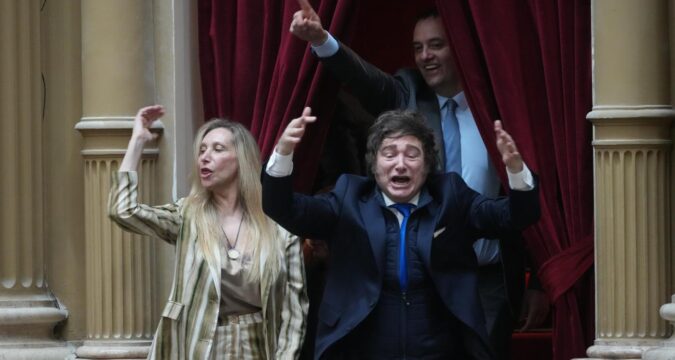
Gobierno argentino impulsa el presupuesto de 2026 en un Congreso más favorable a Milei
Associated Press
BUENOS AIRES (AP) — Con una nueva conformación favorable al presidente Javier Milei, el Congreso argentino arrancó el miércoles el período de sesiones extraordinarias poniendo el foco en el presupuesto de 2026, el primero que sería aprobado durante la gestión que el dirigente ultraliberal comenzó hace dos años.
En medio de las negociaciones para la integración de las distintas comisiones, el período extraordinario se inauguró con el inicio oficial de los mandatos de los nuevos legisladores surgidos de las elecciones de mitad de mandato del 26 de octubre, en las que los argentinos respaldaron la gestión del mandatario de extrema derecha que asumió en diciembre de 2023.
Con 95 diputados, el gobierno logró alcanzar la primera minoría de la cámara baja de 257 miembros, mientras que amplió de 7 a 20 los integrantes de la bancada oficialista de La Libertad Avanza (LLA) en el Senado.
En principio, el período de extraordinarias se extenderá hasta el 30 de diciembre, pero podrá volver a convocarse previo a la apertura del período ordinario el 1 de marzo.
El gobierno aspira a lograr antes de fin de año la aprobación de su primer presupuesto, un instrumento con el que no contó en sus dos primeros años de mandato, ya que Milei gestionó con una prórroga del de 2023, de la anterior gestión del peronista Alberto Fernández (2019-2023), lo que le permitió manejar partidas de forma discrecional.
Al presentar en septiembre el proyecto de presupuesto, Milei ratificó su plan de ajuste aunque anunció relativos aumentos de las partidas para jubilados, discapacitados y los sectores de la salud y la educación, golpeados por su plan de la motosierra.
El texto prevé un aumento del Producto Interno Bruto de 5%, una inflación de 10,1% y un dólar a 1.423 pesos por unidad a diciembre de 2026 (casi la misma cotización actual); en tanto, proyecta un incremento de 10,6% de las exportaciones y de 11% de las importaciones.
El oficialismo demoró el inicio del tratamiento de la llamada ley de leyes hasta el miércoles, para aprovechar su mayor fortaleza al asumir los legisladores electos y definirse la nueva composición de las comisiones claves.
El gobierno pretende obtener la semana próxima la aprobación del dictamen para tratarlo en el pleno de la cámara baja, donde necesita sumar al menos 34 voluntades a su bloque de 95 diputados.
Mientras la prioridad es el presupuesto, parece difícil que den los tiempos para avanzar antes del 30 de diciembre en otros proyectos como el de Compromiso Nacional para la Estabilidad Fiscal y Monetaria.
Además, el gobierno se propone tratar la Ley de Modernización Laboral, la reforma del código penal y cambios al régimen de preservación de glaciares y del ambiente periglacial, cuyos textos aún no fueron enviados al Parlamento.
La influyente dirigente Patricia Bullrich, quien dejó el ministerio de Seguridad para ponerse al frente del bloque libertario en el Senado, quiere apurar los trámites para poder tratar la iniciativa de reforma laboral en el pleno la semana próxima. Es una batalla que no le es ajena, dado que ya había impulsado una flexibilización laboral cuando era ministra de Trabajo del gobierno conservador de Fernando de la Rúa (1999-2001).
Es improbable que lo logre con un texto aún en negociación y resistido por el peronismo —la primera fuerza opositora—sindicatos y centrales obreras. Los ejes de la reforma laboral son reducir las indemnizaciones por despido y los aportes patronales, limitar el derecho a huelga y flexibilizar las negociaciones salariales, entre otros puntos

Geneva residents set to vote in spring on issuing $59.4 million in bonds to help pay for new police station
Geneva residents in March are set to vote on the issuance of $59.4 million in bonds to help pay for the construction of a new police station in the city.
The Geneva City Council unanimously approved placing a referendum question for the bond sale on the spring ballot at a special meeting on Monday.
If the referendum question is approved, the city plans to build a new police station on a city-owned property adjacent to the Public Works site on South Street.
The city had been planning to put a public safety facilities bond referendum question to voters in last April’s election, but the measure was ultimately pulled from the ballot after the city discovered a calculation error that would have doubled the projected property tax payment.
But the City Council has revisited the idea, and now is moving forward with putting the question to voters in the March 17, 2026, primary election.
Geneva’s current police station is located just off the Fox River at 20 Police Plaza. The building previously housed the police department, fire department and Tri-Com Central Dispatch, City Administrator Alex Voigt said previously, but the latter two entities have since gotten their own facilities.
The city adopted a facilities master plan earlier this year, which identified a new police station as a top priority. City staff has previously pointed to issues like a lack of office space, flooding, sewer back-ups and a partial roof collapse at the current police station.
So, Geneva has been weighing the construction of a new, 45,000-square-foot police station on the property next to the Public Works site on South Street.
Issuing $59.4 million in bonds would enable the project to include an indoor firing range and indoor parking for all vehicles at the new police station, officials have said. Voigt has explained that the ballot measure’s language indicates that the money can be spent on public safety, meaning any excess funds could be used on other public safety projects — like Fire Station 2 on the city’s west side, which has also been identified as a priority project for the city.
The city has indicated it would sell the property at 20 Police Plaza once the new police station is completed.
According to the city, the property tax impact the approval of the referendum question would have on an average Geneva household would be about $272 annually. The city created an online calculator on its website at www.geneva.il.us for residents to determine the estimated property tax impact they would see if the referendum question is approved, based on the value of their homes.
At Monday’s City Council meeting, Geneva Finance Director Jennifer Milewski presented the calculator tool, noting that it allows residents to indicate any exemptions they receive to get a sense of the impact the bond referendum would have on their property tax bills.
Ald. Amy Mayer noted that residents should use their property tax bill to find the value of their home rather than looking at estimates online.
And Kent Floros, a partner at law firm Chapman and Cutler, explained that, if approved by voters in the spring, the city would not be able to issue the debt until the summer at the earliest. The city has a five-year period to issue the bonds following approval of the referendum question, and the bonds have a payback period of up to 20 years.
Ald. Dean Kilburg said that the city should look at what bonds other taxing bodies in the community would be retiring soon, to determine what residents’ property tax bills would look like overall.
Ald. Brad Kosirog asked about the funds being used for other public safety projects, not just the police station. Voigt explained that the city would highlight that in its community engagement efforts, but that the police station was indicated as a priority by the community of the projects in the city’s facilities master plan.
The City Council ultimately voted unanimously on Monday to approve putting the question on the March ballot.
Also at Monday’s meeting, the council continued its discussion of putting to voters a question about whether Geneva should move to become a home rule municipality — but that’s not set to be included on the March ballot.
An Illinois municipality with a population of more than 25,000 automatically receives home rule status, according to the state constitution. Communities with a population lower than 25,000 can become home rule units by putting the question to voters.
Geneva’s population currently stands at a little over 21,000, per the most recent available U.S. Census Bureau figures.
Being a home rule municipality allows local governments more flexibility in lawmaking, as the Illinois constitution allows them to essentially exercise any power not specifically limited by the state.
City staff has previously explained that having this authority would allow the city to issue bonds for each of its facility improvement projects separately and over time, instead of having to rely on a single referendum to borrow all of the money upfront. It would also allow them to access new sources of revenue, like business licenses and impact fees on new development, and to have broader powers around economic development, officials have said.
A switch to home rule was previously on the table for the March ballot, and both it and the bond referendum were discussed extensively, but the council ultimately decided on starting with the bond referendum.
However, the city on Monday did give the green light to pursue education efforts on home rule in the community, in preparation for the matter being put to voters in a future election.
Ald. Martha Paschke asked whether these education efforts would overlap with communications to the community about the bond referendum, and Voigt said that education on home rule would start after the bond question, because the city “want(s) to be very clear that they’re two separate and distinct paths.” Voigt also noted that discussing home rule with voters would be a longer process comparatively.
At the meeting, Ald. Mark Reinecke suggested the city amend the language of the resolution on the home rule education efforts to be worded in “a more neutral manner.” The original wording of the measure described educating the public on “the merits of” pursuing home rule.
In response, Paschke said she was “a bit confused about why (the city) would put energy and funding behind an education campaign if we don’t believe there are merits to what we’re putting forward.”
“I don’t want there to be a presumption by our community and our residents that we have decided on the course of action, but, rather, we would like to discuss both the strengths and limitations of home rule and be open to a discussion of our community’s concerns,” Reinecke explained. “Rather than presenting this as, ‘We are here to educate you on a decision that’s already been made.’”
Ald. Anaïs Bowring said she believes what the city is doing is “indicating that (the city thinks) this is a useful avenue to pursue,” and suggested the city not adjust the language.
“I don’t think that merit, to me, indicates the exclusion of all possible downsides,” Bowring said. “But, I will say this, I have yet to find — in all the research that I have done and talking with people — downsides to home rule.”
Mayer suggested that the modification wouldn’t change the meaning of the resolution, and Ald. William Malecki said he didn’t have an issue with the wording change, but said he wanted to ensure that the public knows that the city intends to educate the community on home rule “for the reason of moving Geneva forward, you know, to a better place five years from now, 10 years from now.”
And Ald. Jeff Palmquist pointed to the resolution’s language about the future vote, saying that’s “really what … we’re getting to.”
The language change was ultimately approved, with Bowring and Paschke voting against it.
The measure on the education efforts was also approved, with only Ald. Larry Furnish voting against it. The ballot question on home rule status, per the resolution approved Monday, is set to occur no later than the general election on Nov. 7, 2028.
mmorrow@chicagotribune.com
https://www.chicagotribune.com/2025/12/10/geneva-bond-referendum-march-2026/