
Category: News
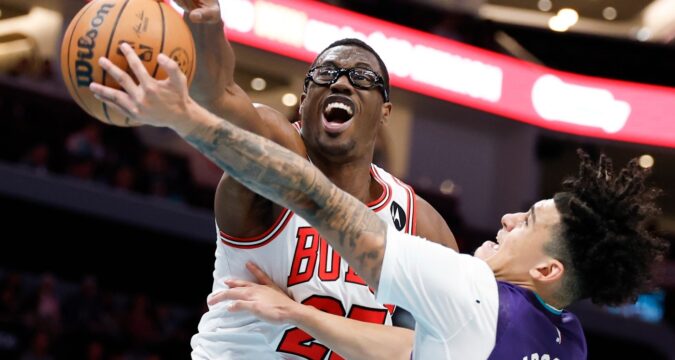
Chicago basketball report: Bulls’ numbers tell a bleak story, and Notre Dame’s teams face key injuries
Team USA is taking on a new look with young stars such as Angel Reese joining the senior team. Local college teams are facing the ups and downs of the season, and the Chicago Bulls face a crucial home-and-away series this weekend.
Every Tuesday, Tribune writers will provide an update on what happened — and what’s ahead — for the Bulls, Sky and local college basketball teams. Want more? Sign up for our Tribune sports newsletter.
Angel Reese joins ‘young and turnt’ Team USA core
Kiki Iriafen guards Angel Reese during the United States Women’s Basketball Team training camp at Duke University on Dec. 12, 2025, in Durham, North Carolina. (Jacob Kupferman/Getty Images)
In her first day of Team USA camp in Durham, N.C., last week, Dallas Wings star Paige Bueckers crafted a new moniker for the next generation of the national team: “young and turnt.”
The “young and turnt” crew includes stars like Bueckers, Cameron Brink, Caitlin Clark and the Sky’s Angel Reese. It’s an apt description for the group of 10 players who earned their first senior team call-up in this weekend’s camp.
Team USA is moving forward under new managing director Sue Bird and coach Kara Lawson. After winning eight consecutive gold medals at the Olympics, the team is greeting a new era without long-standing stars like Diana Taurasi — and that means embracing the future with players like Bueckers, Clark and Reese.
“You must give honors to the players that played before and are continuing to play,” Reese said. “I watched Sue and I watched Kara when they were part of the USA team and being able to walk in their footsteps is something that we don’t take for granted.”
The core of this young group grew up in the Team USA youth development system, winning hardware together at the U-17 and U-19 levels of the FIBA tournaments. But most of these players haven’t been called up for international duty in years; for instance, Reese hasn’t played for Team USA since the 2023 FIBA AmeriCup.
That doesn’t mean the national team hasn’t been a focus for these young stars. Reese set a goal of making the regular rotation for the senior team — and a loftier ambition to be selected for the Olympic roster in 2028. That process began with learning the system and identity that Bird and Lawson plan to instill in the program over the next four years of development.
“I’m really excited to be here,” Reese said. “To be back here, to be on this team is really, really important to me. … I want to represent this country well.”
During Team USA availability, Reese confirmed that she feels fully healed from a back injury that sidelined her in the final weeks of the 2025 season. She will not participate in Unrivaled this year after serving as one of the primary members of the inaugural lineup and plans to spend the majority of the offseason training in Orlando.
Reaching 200
Northwestern head coach Chris Collins watches in the first half against DePaul at Wintrust Arena on Nov. 14, 2025, in Chicago. (John J. Kim/Chicago Tribune)
Northwestern coach Chris Collins said he was so caught up in trying to help the Wildcats improve last week while on a three-game losing streak that he didn’t realize he was nearing 200 wins. Then the announcer informed the crowd at the buzzer Saturday against Jackson State.
“I was like, ‘Man, that’s a lot of games,’” Collins said at his postgame news conference.
The 93-53 win brought Collins’ record to 200-194 since he took his first head coaching job in Evanston in 2013-14. He is second all-time in NU history behind Dutch Lonborg’s 236 wins from 1927-50.
Collins, whose team is 6-4 this season, praised his players and his assistants who believed in him when “I had never coached a game, never called a timeout.” He said he didn’t set out to climb the coaching wins ladder.
“Growing up in this area, the way this program was talked about, my biggest goal was to earn respect,” Collins said. “To earn respect as a place that does things right, that’s competitive, that is one that’s respected within Big Ten circles. … So that’s the thing I’m most proud of.”
Two losses
Notre Dame guard Markus Burton shoots a layup against Kansas guard Tre White on Monday, Nov. 24, 2025, in Las Vegas. (AP Photo/Lucas Peltier)
Both the Notre Dame men’s and women’s teams have lost key players to injury.
The Irish men announced last week that junior guard Markus Burton, who was leading the team with 18.5 points per game, had surgery on his left ankle Wednesday.
“We’re always trying to seek advantages on offense, and that’s one advantage that’s taken away,” coach Micah Shrewsberry told reporters. “Now we just have to do it in a different way. It’s going to test us as coaches. You can’t be cookie-cutter.
“We’re not the Dukes of the world, the Kansases of the world that we’re going to out-talent you no matter who you are. We’re going to have to coach, we’re going to have to scheme, we’re going to have to figure it out. And our guys, we’ve got a bunch of basketball players. We’ve got a bunch of guys who love it. We’ve got a bunch of guys that might end up coaching at some point in time, unfortunately for them. I think they enjoy this kind of process of — how do we win the next game?”
On Thursday, during the No. 20 Irish women’s win over Morehead State, senior guard KK Bransford suffered a knee injury. Bransford was averaging 9.7 points and 5.8 rebounds per game.
Coach Niele Ivey said the injury is not season-ending.
“There’s no timetable, but we’re just really grateful that news was good,” Ivey told reporters.
Number of the week: minus-10.7
New Orleans Pelicans’ Derik Queen dunks over Chicago Bulls’ Nikola Vučević, center, and Kevin Huerter, left, on Sunday, Dec. 14, 2025, in Chicago. (AP Photo/Paul Beaty)
The Bulls are in a rut. That’s been obvious enough in the results of the last three weeks, in which the Bulls lost eight of their nine games. But the numbers tell an even bleaker story. Over the last nine games, the Bulls have ranked dead-last in the league in net rating: minus-10.7.
This is a harsh reflection of this team’s overall ineffectuality on both ends of the ball. The Bulls averaged 111 points of scoring while giving up 121.1 points per game in this nine-game stretch. Opponents averaged 9.8 steals and shot 49.4% from the floor against the Bulls in this period. The Bulls, meanwhile, made only 33% of their 3-point attempts over the last nine games.
Chicago is hopeful that the return of a fleet of injured players — including Jalen Smith, Tre Jones and Kevin Huerter — will offset this recent collapse. But after falling five games below .500, making a return to the middle of the Eastern Conference standings will be an uphill battle.
Week ahead: Bulls
Wednesday: vs. Cavaliers, 7 p.m. (CHSN)
Friday: @ Cavaliers, 6:30 p.m. (CHSN)
Sunday: @ Hawks, 2:30 p.m. (CHSN)
The Bulls take on the Cavaliers in a home-and-away series this weekend that could help Chicago make up serious ground in the Eastern Conference standings. Despite tall expectations due to their prior standing as an Eastern Conference juggernaut, the Cavaliers have struggled to stack wins this season and currently sit in eighth in the conference standings. The Bulls are still four games back from Cleveland due to their recent losing skid — and three other teams (Miami, Philadelphia, Atlanta). Guard Ayo Dosunmu is expected to return to the lineup during this series after missing two games with a thumb sprain.
Week ahead: Best college basketball games
Tuesday: DePaul at No. 22 St. John’s, 6 p.m. (Peacock)
Saturday: Northwestern at Butler, 3 p.m. (Peacock)
Monday: No. 18 Illinois vs. Missouri in St. Louis, 7 p.m. (FS1)
DePaul, which has opened the season 8-3, takes a step up against its first ranked opponent this season when it plays at No. 22 St. John’s (6-3) in its Big East opener.
Illinois (8-3) looks to rebound from its loss to No. 15 Nebraska on a buzzer-beater when it heads to the annual Braggin’ Rights game against Missouri (10-2) in St. Louis.
What we’re reading this morning
Could Nikola Vučević lose his starting job with the struggling Bulls? ‘We all have a part in this.’
Angel Reese will return to the Sky in 2026 as both sides focus on ‘building that relationship’
How a season at Northwestern propelled Pat Spencer from NCAA lacrosse star to an NBA starter
Cassandre Prosper and Malaya Cowles lead No. 19 Notre Dame to a 78-65 win over James Madison
3 takeaways from the Chicago Bulls’ latest loss, including dueling bigs and a quiet night from Matas Buzelis
Buzzer-beater sinks No. 13 Illinois in 83-80 loss to No. 23 Nebraska, which improves to 11-0
Chris Collins picks up his 200th win at Northwestern with Wildcats’ 40-point rout of Jackson State
Caitlin Clark says CBA negotiations are the ‘biggest moment in the history of the WNBA’
The Bulls offense is built on getting to the rim. So why aren’t they able to finish?
Quote of the week
“Mental acuity, mental awareness in transition. How does the best shooter in the Big Ten get a buck-naked 3, three minutes into the game in transition? That’s just five dudes out there who aren’t dialed in. That’s where I’ve got to help them.” — Illinois coach Brad Underwood on his team’s defense in an 83-80 loss to Nebraska, including allowing Pryce Sandfort to score 32 points.

Why the Chicago Bears will make a playoff run — and why they won’t. 5 pressing questions for Week 16.
The Chicago Bears cruised to a 31-3 win Sunday against the Cleveland Browns. Ben Johnson’s team moved to 10-4 on the season and remains in prime position for a playoff spot.
The Bears have three games remaining, starting with Saturday night’s rematch with the Green Bay Packers at Soldier Field. Supremacy in the NFC North once again will be on the line.
Tribune Bears reporters Brad Biggs, Sean Hammond and Phil Thompson tackle this week’s pressing questions.
1. Which was the more impressive play against the Browns: Caleb Williams’ second-half touchdown pass to DJ Moore or Jaylon Johnson’s interception?
Biggs: Oh, boy. Two highlight-reel plays for sure. Williams’ touchdown pass was more impressive because the Johnson interception almost certainly doesn’t happen if Browns wide receiver Jerry Jeudy hadn’t let the football come into his chest. It bounced off Jeudy, and Johnson had his hands where he could then make a sensational play. If Jeudy snatches the ball, it’s a touchdown throw by Shedeur Sanders into a tight window. Williams bought time while on the move and delivered a strike to Moore in the back of the end zone, somehow getting it just over safety Grant Delpit. One of his best throws of the season, no question.
Hammond: I’m going with Williams’ touchdown pass. From our vantage point in the Soldier Field press box, that was an impossible throw. It was somewhat baffling he even decided to throw the ball — although Williams didn’t find it so surprising. Johnson’s interception was a big one and another play that took multiple replays to comprehend. But I think Williams’ throw was better.
Thompson: As impressive as Johnson’s pick was, it has to be the touchdown toss by Williams, which had a completion probability of just 16.1%, according to Next Gen Stats. It took incredible concentration on both ends: Williams for throwing at an awkward angle as he ran toward the sideline, and Moore for blocking out the traffic around him, including a tipped ball by Delpit.
2. How much does Micah Parsons’ injury change the complexion of the NFC North race?
Green Bay Packers’ Micah Parsons reacts after an injury during the second half of an NFL football game against the Denver Broncos Sunday, Dec. 14, 2025, in Denver. (AP Photo/Jack Dempsey)
Biggs: The loss of Parsons to a torn ACL in his left knee not only changes the division race, it affects the entire conference. After Myles Garrett, whom the Bears blocked with a team effort Sunday, Parsons is the most impactful and disruptive defensive lineman in the league. The Packers might have to reimagine how they do a lot of things on defense, a massive challenge for defensive coordinator Jeff Hafley at any point in the season and one that’s magnified with three games remaining in a push to the postseason. With the exception of a quarterback going down for one of the NFC challengers, it’s the single biggest injury that could have happened in the conference.
Hammond: It changes everything. It’s all crystal clear now — the Bears’ opportunity is right now. This isn’t about the future or next year. They can win the division now. The door is open. The Packers are still a dangerous team, but they lost their best defender and one of their primary engines. That’s hard for any team to overcome. The Bears need to win Saturday and probably at least one more game after that because Green Bay finishes with very winnable games against the Baltimore Ravens and Minnesota Vikings.
Thompson: It’s tough to make a case that an injury to one player, other than a quarterback, could have that significant an effect on a playoff race, even one as talented and effective as Parsons. According to NFL Pro, however, Parsons leads the league in pressures (83) and Rashan Gary is the only other Packer to rank in the top 75. The margins in the NFC are razor-thin. Green Bay is clinging to the last playoff spot at No. 7, and its next two opponents — the Bears and Ravens — are playing for high stakes as well. The Detroit Lions are on the outside, waiting for the Packers to slip.
3. What’s your best argument for why this Bears team could make a run in the playoffs?
Chicago Bears quarterback Caleb Williams hands the ball to running back D’Andre Swift during the third quarter against the Cleveland Browns, Sunday, Dec. 14, 2025, at Soldier Field in Chicago. (Dominic Di Palermo/Chicago Tribune)
Biggs: The combination of the offensive line and running game and the fact the Bears don’t beat themselves will make them a tough out in the postseason. The offense ranks second in the league in rushing, and Ben Johnson is one of few young offensive minds who will commit to the ground attack and remain committed to it. It’s well-publicized that the defense leads the league with 30 takeaways. What hasn’t gotten enough attention is the fact the Bears take care of the ball too. They’re tied for the second-fewest turnovers in the league with 10. Remember when penalties were a huge problem and storyline for this team? The Bears have had 43 penalty yards or fewer marked off against them in six of the last seven games.
Hammond: While the Bears have dealt with their share of injuries, overall they’ve been incredibly fortunate in the injury department. Williams hasn’t missed a game. They’ve weathered some injuries in the secondary without too much trouble. All of their top playmakers on offense have been relatively healthy, not to mention the entire offensive line. Beyond that, the Bears running game is built to win in January. That will translate to the playoffs. If the Bears are going to make a run, it will be because that rushing attack keeps the offense in favorable positions.
Thompson: Ironically, it’s the lack of consistency in how they win that makes the best case for them winning. You can’t just say, for example, if you run on them or stop the run, that’s the definitive way of stopping them. Those are conventional means. These Bears are unconventional, winning through takeaways or aerial comebacks or blocked field goals or whatever spin-the-wheel, “find a way” method you can think up.
4. Fill in the blank: If one thing will hold back the Bears from making a run in the playoffs, it will be _________ ?
Browns quarterback Shedeur Sanders runs with the ball during the first quarter against the Bears on Sunday, Dec. 14, 2025, at Soldier Field. (Dominic Di Palermo/Chicago Tribune)
Biggs: Allowing too many big plays on defense. The Bears rank 29th in yards per rush allowed and 27th in yards per pass, and elite quarterbacks they would encounter in the playoffs should have opportunities to hit them for big plays. The pass rush has been below par most of the season, and five sacks against Cleveland shouldn’t be viewed as a sign of things to come considering the Browns were missing four starters on their offensive line.
Hammond: The pass rush. I’m not convinced the Bears have a deep enough stable of pass rushers to consistently disrupt the best of the best quarterbacks, which is typically who you get in the postseason. The Bears defense ranks 28th in pressure rate. If the interceptions run dry on the back end, can this group get to the quarterback consistently? Dennis Allen has done a good job manufacturing pressure with timely blitzes, but that can come back to bite you like it did in Green Bay.
Thompson: Caleb Williams. This is not to let other parts of the team off the hook (the defense’s penchant for allowing explosive plays, for example), but in terms of performance, nothing swings as broadly as Williams’ game, particularly his accuracy. Typically, the deeper you go into the playoffs, the more quarterbacks erase mistakes made by teammates, not the other way around.
5. If the Bears win the division — still a big if — which potential wild-card round matchup should concern them the most: the Seahawks, 49ers or Packers?
The Chicago Bears defense walk off the field after Green Bay Packers wide receiver Christian Watson scored a touchdown in the third quarter at Lambeau Field in Green Bay on Dec. 7, 2025. (Eileen T. Meslar/Chicago Tribune)
Biggs: That’s a tough call between Seattle and Green Bay. The Seahawks have an incredibly stingy defense and an explosive passing game. The Packers have the best quarterback of those three teams with Jordan Love, who’s capable of having a big game on any weekend. Even with all of the injuries, I’ll say the Packers — but that answer could change significantly depending on Saturday night’s outcome.
Hammond: It has to be the Packers, right? If the Bears meet the Packers in the playoffs, all bets are off. Micah Parsons or not, that’s a nerve-wracking matchup for Bears fans. Recent history is certainly not on their side. The Seahawks defense is also scary. The 49ers are a good team, of course, but maybe the least intimidating of the bunch.
Thompson: I know the Packers have had a psychological hold over this city, but the Seahawks are flying under the radar. Even if the Bears host, the Seahawks have the second-best road record (6-1) in the league, losing only to the conference-leading Los Angeles Rams. Seattle’s defense allows the second-fewest points per game (17.3), while the offense is fifth with 28.9 points per game. Their threat has been overshadowed by the Rams’ dominance.
https://www.chicagotribune.com/2025/12/16/chicago-bears-pressing-questions-week-16/

Ford Takes Record $19.5 Billion Charge As EV Bet Implodes, Pivots To Grid Batteries
Ford Takes Record $19.5 Billion Charge As EV Bet Implodes, Pivots To Grid Batteries
Shares of Ford in New York have yet to hit a new high since the debut of the all-electric F-150 Lightning in April 2022. What was pitched as a flagship EV push has since devolved into an epic miscalculation, with the automaker now preparing to take $19.5 billion in charges, mostly in the fourth quarter, as it unwinds and overhauls its electric vehicle strategy.
Ford is overhauling its entire electrification roadmap. The reset includes the cancellation of three future EV programs, the termination of the current F-150 Lightning, and a shift toward new offerings across multiple powertrains, including a future extended-range hybrid vehicle variant of the F-Series.
The pivot also entails a complete restructuring of battery operations, highlighted by the breakup of its partnership with South Korean battery maker SK On. The next chapter of Ford’s strategy is a pivot toward grid-scale energy storage systems.
We’ve explained to readers that lithium prices are on the rise as EV battery makers pivot to energy storage systems:
Grid-Scale Battery Boom Sparks Lithium’s Comeback
Wall Street Eyes Lithium as Battery Storage Demand Poised to Spark New Upcycle
Last year, Ford lost a staggering $5.1 billion in its EV division and expects this year to be even worse. The pivot puts the struggling automaker’s EV division on track for profitability by the end of the decade.
Here are the key highlights of the pivot:
Offers broad choice with gas, hybrids, and EVs: Ford will offer a range of hybrids to complement efficient gas engines. The Universal EV Platform will underpin multiple models. By 2030, about 50% of Ford’s global volume will be hybrids, extended-range EVs, and electric vehicles, versus 17% today.
Fills U.S. plants with affordable new models: New Built Ford Tough pickups will be assembled at BlueOval City in Tennessee, and a new gas and hybrid van will be produced at the Ohio Assembly Plant. Ford plans to hire thousands of new employees in the U.S. in the next few years.
Launches battery energy storage business: Ford will leverage wholly owned plants in Kentucky and Michigan and leading LFP technology to provide solutions for energy infrastructure and growing data center demand. Ford plans to begin shipping BESS systems in 2027 with 20 GWh of annual capacity.
Improves profitability: Actions are expected to drive accretive returns and accelerate margin improvements across Ford Model e, Ford Pro, and Ford Blue. Ford Model e is now expected to reach profitability by 2029, with improvements beginning in 2026.
Rationalizes U.S. EV-related assets and product roadmap: Ford expects to record about $19.5 billion in special items, with the majority in the fourth quarter. The company expects about $5.5 billion in cash effects, with most paid in 2026 and the remainder in 2027.
Raises guidance: The company raised 2025 adjusted EBIT guidance to about $7 billion, citing continued underlying business strength and cost improvements. It reaffirmed adjusted free cash flow guidance, trending toward the high end of the $2 billion to $3 billion range.
Goldman analysts led by Mark Delaney offered clients their first take on the restructuring of Ford’s EV unit:
We believe the realignment and restructuring actions will help improve the P&L as Ford reduces Model e losses and increases production of more profitable Blue and Pro vehicles. Over the longer term, we expect a key debate will center on how these actions impact Ford’s ability to reach Model e profitability, particularly as it increasingly competes with Chinese OEMs outside of China. We think successful execution on the UEV platform and EREV technology, as well as software and digital services, will be key factors. On the ESS business, industry participants have historically seen varied margins, and we believe costs and the company’s ability to deliver a full solution will be important determinants of long-term profitability.
On capital allocation:
We do not expect these charges to affect Ford’s dividend. Recall that Ford’s dividend target is based on 40% to 50% of adjusted free cash flow, and we believe these charges will be excluded from the adjusted FCF calculation. In addition, the company has a strong cash position on the balance sheet, in our view.
Goldman maintained a Neutral rating on the stock, raised EPS estimates to $1.16, $1.65, and $1.80 for 2025, 2026, and 2027, respectively, and lifted its 12-month price target to $14 from $13, based on an unchanged 8x multiple on normalized EPS.
Ford shares have yet to recover since the F-150 EV debuted in April 2022.
In November, we reported that Ford mulled scrapping the EV truck:
Ford Mulls Scrapping F-150 Lightning After Dismal Demand, Mounting Losses
The F-150 EV is shaping up to be America’s first major EV casualty. Henry Ford would likely be turning over in his grave after such a massive miscalculation in chasing the “green” narrative. The question now is whether the board will hold management accountable for drinking the green Kool-Aid.
Tyler Durden
Tue, 12/16/2025 – 06:59

Dos muertos en un ataque a equipo contra la polio en el noroeste de Pakistán
Associated Press
PESHAWAR, Pakistán (AP) — Un policía que escoltaba a un equipo de vacunación contra la polio y un transeúnte murieron el martes en un ataque atribuido a milicianos en el noroeste de Pakistán, según informó la policía.
Ningún trabajador de la campaña de vacunación resultó herido en el ataque en Bajaur, un distrito de la provincia de Khyber Pakhtunkhwa que limita con Afganistán, según el jefe de policía local Samad Khan.
Ningún grupo se atribuyó de inmediato la responsabilidad del ataque, pero es probable que la sospecha recaiga sobre los talibanes paquistaníes y otros grupos armados a los que el gobierno culpa de ataques similares en la región y en otras partes del país.
El tiroteo ocurrió al día siguiente de que Pakistán lanzara una campaña nacional de vacunación de una semana de duración destinada a inmunizar a 45 millones de niños. Según la Organización Mundial de la Salud, Pakistán y Afganistán siguen siendo los únicos dos países donde el contagio natural de la polio no ha sido erradicado.
El primer ministro, Shehbaz Sharif, condenó el ataque en un comunicado y prometió tomar medidas enérgicas contra los responsables.
Pakistán ha reportado 30 casos de polio desde enero, una disminución respecto a los 74 durante el mismo período del año pasado, según un comunicado de la Iniciativa para la Erradicación de la Polio, gestionada por el gobierno.
Pakistán emprende campañas regulares contra la polio a pesar de los ataques a los trabajadores y a la policía asignada a las campañas de vacunación. Los milicianos afirman falsamente que las campañas de vacunación son una conspiración occidental para esterilizar a los niños.
Más de 200 trabajadores de la polio y policías asignados para protegerlos han sido asesinados en Pakistán desde la década de 1990, según funcionarios de salud y seguridad.
___
Esta historia fue traducida del inglés por un editor de AP con la ayuda de una herramienta de inteligencia artificial generativa.
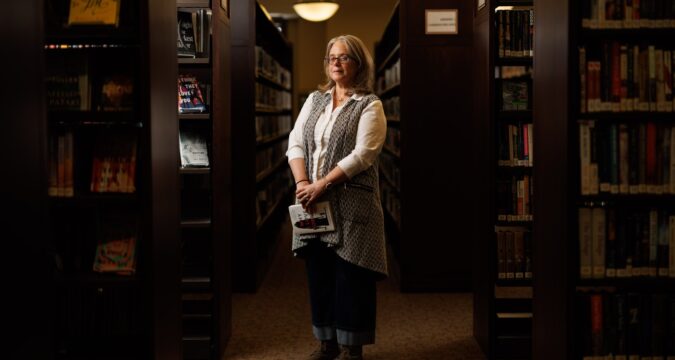
Chicagoan of the Year in Books: If you’re into horror, thank the librarian Becky Spratford
Not a single author in this short appreciation started writing yesterday. Not a single one just fell off the proverbial turnip truck. Daniel Kraus has written almost 30 books in the past couple of decades, a handful with famous collaborators (including Guillermo del Toro and George Romero). Cynthia Pelayo wrote 10 books. Nick Medina wrote three books. Grady Hendrix wrote 15. Christina Henry wrote 14. Rachel Harrison wrote seven. Stephen Graham Jones wrote 31, not including comic books and collaborations.
They share almost nothing in common, except:
No. 1, they are contemporary horror writers — some of the best, and best-selling.
And No. 2, they’ve been championed by Becky Spratford, a Chicago librarian who’s spent her career tirelessly nudging horror literature into the American mainstream. For a long time, unless your name was Stephen King, a writer in this once-damnable niche understood that whatever support they had came from a small audience. Crossovers were rare. Sci-fi — sometimes even fantasy — had won the gene-respectability sweepstakes.
“Now that the spotlight is on horror? Now that readers and booksellers seem aware of how much quality is there? I think of Becky as one of the key reasons,” said Jones, whose recent historical-vampire novel, “The Buffalo Hunter Hunter,” has been on countless lists of the best books of 2025. “She was supporting horror before we had a spotlight, in important ways. She’s out there talking to libraries, approaching readers, saying smart things, so readers can see how much she believes this (genre) is not some weird corner of the world, only for weird people, but a rich place for everyone.”
“To me, Becky is the spark plug, lynchpin, head coach and fairy godmother of horror,” said Kraus, whose latest novel, “Angel Down,” made the New York Times’ top 10 of 2025. The Evanston author’s “Whalefall” is also getting a movie adaptation next year. “Becky’s a hustler in the best of ways, doing the ground work, meeting with the writing groups, being the kind of tastemaker everyone can respect, never claiming the glory.”
Her title is deceptively modest.
Spratford is a reader’s advisory librarian, which means she matches library patrons with the perfect book. It also means she travels the world training librarians on how to serve their readers, revealing a universe of publishing just beyond best-seller lists, espousing small presses, unknown authors and entire sections of the library that readers might assume aren’t for them. About 20 years ago, Spratford, who is now 50, lives in La Grange and worked at the Berwyn Public Library for decades, focused her attention on horror lit.
She grew scarily committed.
She wrote three textbooks on horror. She began reviewing horror novels for various publications, so many that she now has a horror column in Library Journal (a very influential resource when libraries are purchasing new books). In 2016, with Hendrix and novelist JG Faherty, she co-created the annual Summer Scares reading program, which has since been adopted by dozens of libraries, including the Chicago and New York City public library systems. She now sits on the advisory board for the Shirley Jackson Awards, serves as secretary for the Horror Writers Association and has been a jury chair with the Bram Stoker Awards (horror lit’s leading award) for the past 10 years.
A couple of months ago, having cashed in decades of good will within the horror-lit community, she assembled “Why I Love Horror” for Simon & Schuster, an entertaining compilation of new essays by a who’s who of major contemporary horror writers (that also acts as a kind of clandestine guidebook to any newcomer tiptoeing into the genre).
She became a one-woman word-of-mouth campaign.
“I’ve always been drawn to the odd, the slightly askew,” she said. “I grew up in New Jersey, and as a child, my favorite author was Shel Silverstein, but also, being a kid in the 1980s, I didn’t think there was a lot for girls in Stephen King. I found what I was looking for in ‘Flowers in the Attic,’ and on that one small occult shelf in Waldenbooks, and I couldn’t believe how much I loved Shirley Jackson after reading ‘The Lottery.’
“As I got older, I was astonished how much quality there was (in horror lit), but I also couldn’t believe how much everyone was missing by dismissing it out of hand. That’s when I knew I wanted to make a job of it, showing people how much they were missing.
“Plus, my face is unassuming — it doesn’t suggest goth girl.”
Harrison said Spratford uses her everyday appearance and enthusiasm in devilishly clever ways. “She comes at you with this very Shirley Jackson-esque set-up — meaning, she could be your neighbor, or your local librarian. It’s important to have someone like that on the front lines saying ‘This genre is not one thing — it’s not what you think it is.’”
When authors and booksellers and librarians talk about the explosive popularity of horror literature in the past decade, when they mention the fresh voices in the genre and the renaissance of quality that’s happening, when they note the dedicated horror section that Barnes & Noble created, Spratford’s name is often mentioned.
Poking around the scary, horrible, disgusting, excellent cauldron of new horror lit
Pelayo, a lifelong resident of Hermosa whose novels blend Chicago history with Latina influences and local legend, doesn’t like to think of Spratford as a tastemaker. “That suggests gatekeeper to me, and there are plenty of people in this genre doing that, rehashing the same four or five names, usually their friends. Becky is not one of them. She champions diversity like hell, across the board. When she is dealing with libraries, she is always including horror authors from diverse backgrounds — who are some of the best horror writers right now. This can be a very hard game to break into, but because of Becky, people know I exist.”
Ask Spratford why horror literature is in a golden age and she sounds restless, hesitating to repeat the old refrain that anxious times create an anxious culture and that’s why horror is doing so well. That’s part of it, she said, just not remotely all of it.
“Yes, the world is a dumpster fire and people are turning to horror, but let’s not forget here is a genre that is now full of new voices, from all backgrounds, Black, Indigenous, Latino, LGBTQ, and that’s worked to make this incredibly vital reading. I want to take my place in all of it very seriously. But I’m not a tastemaker, I’m more of a gate opener.”
cborrelli@chicagotribune.com

Miles acuden a un zoo de Tokio para ver a los últimos dos pandas en Japón antes de su vuelta a China
Por MARI YAMAGUCHI y AYAKA McGILL
TOKIO (AP) — Miles de personas acudieron al zoológico de Ueno, en Tokio, para visitar por última vez a los populares pandas gemelos que regresarán a China en enero, preocupadas por si llegarán sustitutos a Japón en un momento en que las relaciones entre Tokio y Beijing se han deteriorado.
El gobierno metropolitano de Tokio anunció el lunes que Xiao Xiao y su hermana Lei Lei regresarán a China a finales del próximo mes y que el último día que se les podrá ver será el 25 de enero.
Su devolución dejará a Japón sin pandas por primera vez en más de medio siglo. Las perspectivas de que sean sustituidos no son favorables, ya que los lazos entre los dos países se han deteriorado en las últimas semanas.
Los pandas gigantes son originarios del suroeste de China y están considerados la mascota nacional no oficial. Beijing los presta a otros países como signo de buena voluntad, pero mantiene la propiedad sobre ellos y cualquier cría que tengan.
A Yuki Imai, una fanática de los pandas que viajó desde la vecina prefectura de Kanagawa, le sorprendió la noticia del regreso de los hermanos a su país y decidió visitarlos. “Pensé que debía venir a verlos pronto, mientras aún pudiera”, afirmó.
Muchos hicieron fila durante más de dos horas para ver a los osos apenas un minuto. Kazuhiro Yamamoto contó que acudió con su esposa Hiroko “por última vez”, y que los gemelos podrían regresar antes de lo previsto debido a la tensión entre las dos naciones.
Los animales, de cuatro años, nacieron en los Jardines Zoológicos de Ueno en Tokio en junio de 2021 y se criaron allí, pero son un préstamo de China y deben ser devueltos antes de febrero.
Las relaciones entre Tokio y Beijing empeoraron desde que la primera ministra de Japón, Sanae Takaichi, dijo a principios de noviembre que su ejército podría involucrarse si China impusiera un bloqueo naval u otra acción contra Taiwán, la isla autónoma que reclama como suya.
Desde entonces, China ha restringido el turismo a Japón, y se han cancelado eventos culturales e intercambios entre gobiernos locales.
La disputa se intensificó este mes cuando unas maniobras militares chinas en las que participaba un portaaviones cerca del sur de Japón llevaron a Tokio a desplegar aviones de combate. Las autoridades japonesas protestaron también porque sus aviones habrían sido objeto de repetidos bloqueos de radar, un movimiento visto como un posible preparativo para el lanzamiento de misiles.
Tadashi Nakatani, un calígrafo de 51 años que trabaja en un templo y visita habitualmente la capital desde su ciudad natal, Kamakura, al oeste de Tokio, indicó que las relaciones internacionales pueden afectar la diplomacia de los pandas, pero mantiene la esperanza.
“Cuando las cosas se calmen y la relación se estabilice, espero sinceramente que los pandas vuelvan, y que llegue un día en que todos puedan disfrutar viéndolos de nuevo”, dijo.
China envió el primer par de pandas a Japón en 1972 para celebrar la normalización de las relaciones diplomáticas entre los dos países. Desde entonces, Japón nunca había estado sin pandas.
Miles de visitantes formaron una larga fila en el exterior del zoo el martes por la mañana. Durante el minuto que dura la visita en el recinto de los pandas, los visitantes llamaron a los animales por sus nombres y tomaron fotos o videos mientras la pareja mordisqueaba palos de bambú o paseaba.
A partir de la próxima semana, solo los 4.800 visitantes que hayan reservado con éxito su turno de un minuto a través de internet podrán ver a los queridos gemelos, según el zoológico.
El secretario jefe del gobierno, Minoru Kihara, señaló el lunes que el pueblo japonés ha querido durante mucho tiempo a los pandas y que esperaba que la amistad a través de la diplomacia de los pandas entre los dos países continúe.
“Los intercambios a través de los pandas han contribuido a mejorar la opinión pública entre Japón y China, y esperamos que la relación continúe”, manifestó Kihara, que señaló que varios municipios y zoos han expresado su esperanza de que pronto haya nuevos préstamos.
El conservador de los Jardines Zoológicos de Ueno, Hitoshi Suzuki, dijo, refiriéndose a los pandas gemelos, que criarlos con buena salud fue un desafío, pero “nos dieron muchas alegrías y sorpresas. También trajeron un gran deleite a nuestros visitantes. No tenemos más que palabras de gratitud”.
El zoológico planea promocionar las visitas a otros animales para compensar la ausencia de los pandas, mientras espera su reemplazo. “Mantendremos la zona de los pandas por el momento, para que podamos acomodar posibles nuevas llegadas en cualquier momento”, agregó.
___
Esta historia fue traducida del inglés por un editor de AP con la ayuda de una herramienta de inteligencia artificial generativa.

Chicagoan of the Year in Classical Music: Seth Boustead is the musical dreamer behind CheckOut
The day the CheckOut — a cozy music venue housed in a former 7-Eleven — opened to the public, one would expect founder and proprietor Seth Boustead to be working through nerves, or frantically setting up the space.
Instead, he spent much of that morning and early afternoon down the street, playing piano for a neighborhood block party. Why? Simple, he says: “They asked.”
Boustead takes the CheckOut’s identity as a neighborhood fixture seriously. When the venue opened in September, there was little doubt that Chicago’s close-knit contemporary classical music community would frequent the space. For three decades, Boustead has been both participant and booster in that community, as a composer, host of the radio program-turned-podcast Relevant Tones, and executive director of the nonprofit Access Contemporary Music (ACM), which operates The CheckOut and three neighborhood music schools.
But that demographic alone can’t buoy the CheckOut in a punishing economic landscape for live music, and especially for independent venues. Instead, Boustead has been consciously positioning the venue as an anchor in an otherwise sleepy, noncommercial stretch of Lakeview.
“‘Community’ is such an interesting word, because it can be this massively broad term, like ‘the LGBTQ community,’ ‘Black community,’ or ‘the Gen X community.’ Or, it can be the community of people who live on Warner Avenue, right next to the CheckOut,” he says.
So far, that’s paid off. Boustead has been “overwhelmed” by interest in the venue, with publicly announced bookings stretching well into April. Promisingly, its audiences only occasionally overlap with the core classical-music crowd in the city, as I observed in these pages and at subsequent concerts. The CheckOut has even become an unexpected haven for the city’s cabaret scene, after the sudden closure of Wicker Park venue Davenport’s earlier this year.
“It’s a close-knit community, and it’s absolutely adjacent to classical in so many ways,” Boustead says.
That approachable ethos fuels the Thirsty Ears Festival, which celebrated a milestone 10th edition in August. Also organized by ACM, the Ravenswood tradition applies the street fair format to classical music. Food and beer vendors sling their wares yards away from musicians who could be playing everything from Brahms to Boulez to, well, Boustead. Kids romp and yelp at a family-friendly station nearby.
“I have a real fascination with bringing classical music to new people and watching them go through the opposite of the stages of grief, because most people have this real resistance to it,” Boustead says. “Thirsty Ears really taught me a lot about how to communicate to people who know nothing about classical and to not make any assumptions at all.”
In other words, he wants to reach listeners who were once like him. Boustead, 54, has always worked odd jobs to make ends meet: holding down a paper route, working at McDonalds, delivering sandwiches from a sub shop, unloading merch for WTTW’s old gift shop. He first learned about classical music through a marching band arrangement of Dvořák’s “New World” Symphony at his Missouri high school. He’d started, quit, then resumed piano as a child. But lessons were a lift.
“My mom could not afford it, but she made it happen,” he says. “That’s a lesson I learned from her: The walls you think are blocking you, if you push them, they’re not as solid as you think.”
An apathetic but bright student, he muddled through high school before finding his footing as the only white kid in the music department of Lincoln University, a historically Black university in Jefferson City, Missouri. He eventually transferred to the University of Missouri, declaring a piano performance major.
That is, until he met a student in the composition department. At the time, Boustead was flummoxed. Weren’t all the composers dead?
“He’s looking at me, like, ‘No, man, there’s 30 of us in this department,’” Boustead recounts.
He switched his major, but he didn’t stick around Mizzou much longer. A dazzling weekend trip to Chicago in 1995 convinced him to drop out of school and try his hand as an improvising pianist in the city’s improv comedy scene, with just a semester left of school and almost no money to his name. Boustead has lived here ever since, founding ACM five years later and incorporating it in 2004.
Today, Boustead splits his time between Ravenswood and New York City, where his compositions are still frequently performed. Thirty years on, the thrill of hearing music performed for the first time — whether his own or someone else’s — hasn’t abated.
“It doesn’t matter if it’s John Adams or a composer that barely gets played at all. We’re all chasing that high, every time,” he says.
Hannah Edgar is a freelance critic.
https://www.chicagotribune.com/2025/12/16/chicagoan-year-classical-music-boustead/

Barrington Hills 5-bedroom French Country-inspired home: $2.5M
Address: 166 Buckley Road, Barrington Hills
Listed: Nov. 7, 2025
Price: $2,495,000
Listing agent: John Morrison, @properties Christie’s International Real Estate, 847-409-0297
This five-bedroom French Country-inspired home has five full bathrooms, two half-baths, designer lighting and custom millwork throughout. Out front is a circular drive, and a two-story foyer inside leads to a great room with high ceilings, a gas fireplace and a balcony. The hexagon-shaped dining room has a wood plank ceiling and views of Flint Creek. In the kitchen are custom cabinets, marble counters, an island and a walk-in pantry. The adjacent breakfast room has heated floors and opens to an outdoor deck. On the main level is the primary suite with a spa bathroom, dual walk-in closets, an office space and a screened porch. Another bedroom on the main level is en suite with a private deck. A mudroom with a service entrance and two more bathrooms round out the main level. On the second floor is a balcony overlooking the great room, two bedrooms and another office space with a skylight, plus a rear staircase leading to an in-law suite with a full heated bathroom. The lower level features a recreation room with a fireplace, wet bar, and exercise and game room. This home is completed by direct access to equestrian trails and a three-car heated garage.
This five-bedroom, seven-bathroom home in Barrington Hills recently went on the market for almost $2.5 million. (Paulina Angelaccio Photography)
This five-bedroom, seven-bathroom home in Barrington Hills recently went on the market for almost $2.5 million. (Paulina Angelaccio Photography)
This five-bedroom, seven-bathroom home in Barrington Hills recently went on the market for almost $2.5 million. (Paulina Angelaccio Photography)
This five-bedroom, seven-bathroom home in Barrington Hills recently went on the market for almost $2.5 million. (Paulina Angelaccio Photography)
This five-bedroom, seven-bathroom home in Barrington Hills recently went on the market for almost $2.5 million. (Paulina Angelaccio Photography)
This five-bedroom, seven-bathroom home in Barrington Hills recently went on the market for almost $2.5 million. (Paulina Angelaccio Photography)
This five-bedroom, seven-bathroom home in Barrington Hills recently went on the market for almost $2.5 million. (Paulina Angelaccio Photography)
This five-bedroom, seven-bathroom home in Barrington Hills recently went on the market for almost $2.5 million. (Paulina Angelaccio Photography)
This five-bedroom, seven-bathroom home in Barrington Hills recently went on the market for almost $2.5 million. (Paulina Angelaccio Photography)
This five-bedroom, seven-bathroom home in Barrington Hills recently went on the market for almost $2.5 million. (Paulina Angelaccio Photography)
This five-bedroom, seven-bathroom home in Barrington Hills recently went on the market for almost $2.5 million. (Paulina Angelaccio Photography)
This five-bedroom, seven-bathroom home in Barrington Hills recently went on the market for almost $2.5 million. (Paulina Angelaccio Photography)
This five-bedroom, seven-bathroom home in Barrington Hills recently went on the market for almost $2.5 million. (Paulina Angelaccio Photography)
This five-bedroom, seven-bathroom home in Barrington Hills recently went on the market for almost $2.5 million. (Paulina Angelaccio Photography)
Some listing photos are “virtually staged,” meaning they have been digitally altered to represent different furnishing or decorating options.
To feature your luxury listing of $1,000,000 or more in Chicago Tribune’s Dream Homes, send listing information and high-res photos to ctc-realestate@chicagotribune.com.
https://www.chicagotribune.com/2025/12/16/barrington-hills-buckley-dream-home/

Stuart Loren: Chicago’s economy is stagnant. The mayor’s budget will only make the fiscal storm worse
One of the dumbest things I’ve ever done was setting up camp in Denali National Park in Alaska downstream of a small, peaceful creek on an overcast night. Well, it doesn’t take much imagination to guess what happened when it started raining. By morning, the tranquil creek had transformed into a torrent that ran across the campsite, soaking all our gear. Luckily, I was able to pack up and move on.
Unfortunately, Chicago doesn’t have that luxury. For years, City Hall has lived precariously in the floodplain of structural deficits and swelling long-term pension obligations, assuming the financial weather would hold. But it hasn’t. We are now facing a fiscal storm, and, unlike a camper, the city cannot simply hike to higher ground.
This matters more than ever because capital, businesses and talent have never been more mobile. In an economy with decreasing geographic friction, cities increasingly vie for investment and opportunity. Policies such as the corporate head tax and the expanded cloud services tax threaten to make Chicago’s fiscal problems worse over time by discouraging job creation and economic activity in a city that is already falling behind its peers.
Start with growth. Using the most recent data from the U.S. Bureau of Economic Analysis, Chicago posted the slowest real gross domestic product growth among the 25 largest U.S. metro areas over the past five years. After adjusting for inflation, the city has averaged annual real economic growth below 1%. That is catastrophic. Everything dependent on growth suffers when an economy stagnates — job creation, household income, public finances and city services.
Wages tell the same story. Since 2020, average hourly earnings in Chicago are up about 15%. That sounds respectable until put in context. Nationally, wage growth exceeds 22%, while inflation has risen roughly 25%. In real terms, Chicago workers are about 10% worse off than they were five years ago. That outcome is painful but predictable. Weak growth leads to a weak labor market, and weak labor markets do not compel employers to bid up wages.
Job growth reinforces the point. Employment in Chicago is essentially flat since before the pandemic, compared with more than 5% nationally. An economy that doesn’t add jobs doesn’t create leverage for workers. And it doesn’t generate the organic revenue growth City Hall needs.
Yet despite this stagnation, city spending has surged. Chicago’s corporate fund budget grew by 38% from 2020 to 2025, far outpacing inflation, income growth and nominal GDP. That disconnect is unsustainable.
When expenses rise faster than the economic base supporting them, the gap must be filled somehow — higher taxes or borrowing and one-time gimmicks that defer problems into the future. Indeed, there is a reason Stanford’s Municipal Finance Dashboard ranks Chicago as having the worst fiscal health of any large U.S. city.
Unsurprisingly, credit markets are responding. Chicago’s long-term bond yields now trade close to 170 basis points above AAA municipal benchmarks — three times the spread paid by New York City. Ominously, even Chicago’s A+ and AAA-rated sales tax-secured debt is pricing at levels typically associated with riskier Better Business Bureau-rated credits. In a recent refinancing, investor demand was so weak that Goldman Sachs was left holding $75 million of unsold bonds.
Higher borrowing costs matter. With our long-term rates approaching 6%, every additional basis point paid in interest is money the city cannot spend on schools, services or infrastructure. As budget negotiations drag on, the risk of further credit downgrades and rising rates grows by the day.
To be sure, Mayor Brandon Johnson’s administration is attempting to stabilize our finances. However, his proposed measures risk further compounding our challenges. Rather than confronting the structural weakness underlying our fiscal position, the mayor has framed the budget impasse as a distributional dispute. He is presenting our revenue shortfall as a moral choice, pitting working families against corporations and higher-income residents, while deprioritizing spending restraint and operational reforms.
That framing may be politically convenient, but it misdiagnoses the core issue. Chicago doesn’t suffer from insufficient taxation; it suffers from insufficient growth. The debate worth having is not how to extract more from businesses — which already pay some of the highest local corporate and commercial property tax rates in the country — but how to expand the tax base.
I am sure Johnson and his supporters would argue that public services and school funding must take priority over business concerns. That the public sector will spur the private sector’s revival. But this ignores how cities function. Public services depend on a healthy private sector for funding.
A dynamic business environment benefits the entire city by spurring investment, creating jobs, attracting residents and lifting wages. This naturally broadens the tax base, generating the revenue needed to fund essential city functions. Economic growth is not an alternative to the mayor’s priorities; it is the precondition for achieving them.
Taxpayers are already near their maximum pain threshold between property, income and sales tax levies. And borrowing more at punitive rates is hardly a solution. There is no safe ground to retreat to here other than economic growth. Thus, proposing policies that risk impairing growth is particularly misguided and self-defeating.
In Denali, the lesson was obvious: Move to higher ground before it rains. Chicago lacks that option. It cannot pick up and relocate. It cannot tax its way to safety. The only durable path forward is to strengthen the economic foundation beneath it.
Stuart Loren is a managing director at Fort Sheridan Advisors, where he manages client investment portfolios and is responsible for market and economic analysis. Formerly, Loren was a corporate lawyer in Boston. He lives in Chicago with his family.
Submit a letter, of no more than 400 words, to the editor here or email letters@chicagotribune.com.

Daniel DePetris: Donald Trump is conducting a secret war
Covert operations are nothing new for the United States. Throughout its history, the U.S. has overthrown governments it didn’t like, supported insurgencies to complicate the goals of its adversaries and organized coups to subvert politicians perceived as being hostile to American interests.
The list of examples is long: to name just a few, the 1953 coup in Iran, the 1954 coup in Guatemala, the 1961 Bay of Pigs operation in Cuba and the attempt in 1970 to block Salvador Allende from becoming Chile’s president.
A photo dated April 1961 shows weapons and munitions seized by Cuban forces during the Bay of Pigs invasion. The unsuccessful United States-planned and —funded invasion attempt by armed Cuban exiles hoped to overthrow the government of Fidel Castro and accelerated a rapid deterioration in Cuban-American relations. (Prensa Latina/AFP)
Yet it’s rare when the United States wages a war without providing the American people with basic information. Even the 2003 war in Iraq, rightly maligned as one of the biggest U.S. foreign policy catastrophes in history, was a relatively transparent affair. Public debate about whether to invade Iraq was sparked almost immediately after the 9/11 attacks and continued until the military campaign began in March 2003. Despite the false intelligence, baseless assumptions and disinformation peddled by the George W. Bush administration — the most prominent being that Iraqi dictator Saddam Hussein had a strategic alliance with Osama bin Laden’s al-Qaida and a huge chemical weapons program — there were numerous public hearings in which lawmakers were able to grill U.S. officials. The Bush administration made its case to Congress.
Twenty-two years later, the United States is engaged in another war, this time supposedly against drug traffickers in the Western Hemisphere. Venezuelan dictator Nicolás Maduro has taken Hussein’s place as the reviled dictator. The Trump administration alleges he is the head of a grand conspiracy to flood the United States with cocaine and criminals. Though Trump has yet to give orders to bomb Venezuelan military targets or cocaine transit points on land, preferring to stick with attacking boats and killing its occupants whom the White House claims are trafficking drugs. Still, the build-up of U.S. naval assets off Venezuela’s coast, as well as the beginning of a campaign to seize Venezuelan oil tankers on the high seas, means military escalation is not off the table.
All of this is occurring without the most basic accountability. In fact, Trump hasn’t even bothered to make a coherent case to the American people about why U.S. military action off Venezuela’s coast — and perhaps inside Venezuela — is in our national interest. To the extent Americans have been given any information at all, it generally has been limited to Pentagon-produced videos of boats being blown up and assertions, many unsubstantiated, from Trump about Maduro emptying Venezuela’s prisons and partnering with the Tren de Aragua gang.
According to a CBS poll conducted last month, only 24% of Americans believe the Trump administration has clearly explained its position on military action in Venezuela. To be frank, Trump is lucky to have even this support because there are so many questions, including the legal justification for the ongoing boat strikes, which have killed nearly 90 people over the last three months. The Department of Justice’s Office of Legal Counsel asserts that because the cartels are selling drugs that can kill Americans, they are in effect attacking the United States and are therefore legitimate targets. Those are substantial legal claims without precedent, and the legal memo outlining the theory remains under lock and key somewhere in the executive branch. Senior lawmakers have been briefed on the memo’s contents, yet the Trump administration refuses to release a summary of the legal arguments, let alone the full document. American citizens are the ultimate losers here; their government is waging a war in their name based on a rationale they have to swallow without scrutiny.
In addition, the White House claims that designating cartels and other gangs in Latin America as foreign terrorist organizations provides Trump with the power to target them militarily. That is not at all what the law says: A foreign terrorist organization designation permits the Treasury Department to freeze the group’s assets, and group members can be subjected to hefty fines and a 20-year prison sentence if convicted in a court of law. But that is practically brushed under the carpet as inconsequential. Again, Trump’s basis for making this extra-legal determination is kept out of the public domain. The full list of foreign terrorist organizations in Latin America now ripe for U.S. targeting is treated as a state secret.
Related Articles
Daniel DePetris: The good and the bad in Donald Trump’s national security strategy
Elizabeth Shackelford: Normalizing Russia normalizes the mass abduction of Ukrainian children
Unfortunately, the U.S. strikes on the boats are happening with regularity, and Americans are pretty much in the dark on this as well. The Trump administration argues all of the people on these boats are drug smugglers, but no actual evidence has been disclosed to support this assertion. We’re told the boats are bringing cocaine to the United States, but the White House hasn’t bothered to publicize evidence of this either. The rules of engagement are vague too. For instance, if there are survivors after a U.S. strike, what is the U.S. military supposed to do? It appears the Pentagon is making it up as the campaign goes along. In one case, Adm. Frank “Mitch” Bradley, head of U.S. Special Operations Command, ordered a follow-up strike to kill two people who survived a first attack. In other cases, survivors were rescued survivors and repatriated to their home countries.
The lack of transparency thus far is stunning. The ongoing war against narcotraffickers in the Western Hemisphere is one of the most secret military campaigns the United States has ever conducted.
Daniel DePetris is a fellow at Defense Priorities and a foreign affairs columnist for the Chicago Tribune.
Submit a letter, of no more than 400 words, to the editor here or email letters@chicagotribune.com.





