Category: News

Today in Chicago History: ‘Bearded bandit’ Jeffrey Erickson captured as his wife leads police on 11-mile car chase
Here’s a look back at what happened in the Chicago area on Dec. 16, according to the Tribune’s archives.
Is an important event missing from this date? Email us.
Weather records (from the National Weather Service, Chicago)
High temperature: 66 degrees (2021)
Low temperature: Minus 12 degrees (1951)
Precipitation: 1.67 inches (1921)
Snowfall: 4.8 inches (2008)
1903: Chicago Mayor Carter Harrison revoked the license of the South Loop’s Lone Star Saloon, 527 State St. The proprietor, known for doctoring customers’ drinks and stealing their valuables after they passed out, was Michael Finn, aka Mickey Finn. It’s where the expression “to slip someone a mickey” comes from.
10 things you might not know about Chicago taverns
1929: The Chicago Blackhawks played their first game inside Chicago Stadium, beating the Pittsburgh Pirates 3-1 in front of more than 14,000 fans.
1959: Second City comedy cabaret debuted at 1842 N. Wells St. in Chicago.
Second City and its nerdy University of Chicago roots: How a ‘lost cause’ grew into a comedic giant
The first United Airlines jet plane crosses the new taxi bridge at Chicago’s O’Hare International Airport on Dec. 16, 1966. Auto traffic is shown arriving or departing the terminal on the roadway below. (Mike Rotunno aerial photo)
1966: The airplane taxi bridge over the Kennedy Expressway opened at Chicago’s O’Hare International Airport.
O’Hare International Airport: From farm to global terminal
This improvement allowed the largest jets to access the airport’s gates without the need for a lengthy circular taxi route.
Police and FBI surround a suspected bank robber’s van in Hanover Park on Lake Street, east of Barrington Road on Dec. 16, 1991. (Eduardo Contreras/Chicago Tribune)
1991: Federal authorities arrested con man and former suburban police officer Jeffrey Erickson, 33, of Hanover Park, in Schaumburg. His wife, Jill, 27, fled and after a dramatic 11-mile car chase and shootout with police, was found fatally shot inside the van. The couple had been suspected in the “bearded bandit” bank robberies. Erickson was taken to the Metropolitan Correctional Center.
Vintage Chicago Tribune: Jailbreak!!!
As he was being led from the Dirksen Federal Building on July 20, 1992, Erickson uncuffed his hands with a key, disarmed a guard and fatally shot Deputy U.S. Marshal Roy “Bill” Frakes and court security officer Harry Belluomini, a retired Chicago police officer.
Erickson, mortally wounded in an exchange of gunfire with Belluomini, shot himself in the head a few feet from a rush-hour Loop crowd.
Chicago Bears outside linebackers Khalil Mack (52) and Leonard Floyd (94) sack Green Bay Packers quarterback Aaron Rodgers (12) on Dec. 16, 2018, at Soldier Field. (Chris Sweda/Chicago Tribune)
2018: The Chicago Bears sacked Green Bay Packers quarterback Aaron Rodgers five times on their way to clinching the NFC North for the first time in eight years with a 24-17 win at Soldier Field.
2020: MacKenzie Scott, ex-wife of Amazon’s Jeff Bezos, donated $25 million to United Way of Metro Chicago, the largest donation in the organization’s history at that time.
Want more vintage Chicago?
Subscribe to the free Vintage Chicago Tribune newsletter, join our Chicagoland history Facebook group, stay current with Today in Chicago History and follow us on Instagram for more from Chicago’s past.
Have an idea for Vintage Chicago Tribune? Share it with Kori Rumore and Marianne Mather at krumore@chicagotribune.com and mmather@chicagotribune.com
https://www.chicagotribune.com/2025/12/16/chicago-history-december-16/

Britain’s New Spy Chief Warns Of ‘Aggressive, Expansionist, And Revisionist’ Russia
Britain’s New Spy Chief Warns Of ‘Aggressive, Expansionist, And Revisionist’ Russia
Authored by Tom Ozimek via The Epoch Times,
Britain’s new intelligence chief warned on Dec. 15 that the UK is operating in an era when “the front line is everywhere,” as she set out an assessment of global threats and described Russia as an “aggressive, expansionist, and revisionist” power determined to export instability across Europe and beyond.
Blaise Metreweli, who recently became head of the Secret Intelligence Service—commonly known as MI6—said that Russia’s campaign against Ukraine and its wider hybrid operations pose an acute and enduring danger to Britain and its allies, according to a preview of her first public speech released by the British government.
“The export of chaos is a feature, not a bug in the Russian approach to international engagement, and we should be ready for this to continue until Putin is forced to change his calculus,” Metreweli said.
‘The Front Line Is Everywhere’
Speaking from MI6 headquarters in London, Metreweli said that as Russia and other hostile actors rewrite the rules of conflict through cyber operations, information warfare, and covert sabotage, the global threat environment is becoming increasingly complex and interconnected.
“The front line is everywhere,” she said, warning that the UK faces a new “age of uncertainty.”
Metreweli said Britain’s support for Ukraine will remain firm and that pressure on Moscow will be sustained despite the length and cost of the war.
“Putin should be in no doubt, our support is enduring,” she said. “The pressure we apply on Ukraine’s behalf will be sustained.”
NATO Warns Russia Could Target Allies Next
Her remarks come as European leaders have issued increasingly blunt warnings about Russia’s intentions beyond Ukraine.
NATO Secretary-General Mark Rutte said last week that allied countries could become “Russia’s next target,” saying that Moscow’s willingness to absorb massive losses in Ukraine demonstrated a readiness to confront the wider alliance.
“We need to be crystal clear about the threat,” Rutte said. “We are Russia’s next target, and we are already in harm’s way.”
Rutte called for a rapid rise in defense spending to deter aggression and prevent the kind of wide-scale conflict that past generations experienced.
“Russia has brought war back to Europe, and we must be prepared for the scale of war our grandparents or great-grandparents endured,” he said.
“Imagine it, a conflict reaching every home, every workplace, destruction, mass mobilization, millions displaced, widespread suffering, and extreme losses. It is a terrible thought, but if we deliver on our commitments, this is a tragedy we can prevent.”
In June, NATO allies agreed to raise defense spending targets to 5 percent of gross domestic product by 2035—more than double the current 2 percent benchmark and in line with demands long made by U.S. President Donald Trump.
Sanctions and Diplomacy
Metreweli’s speech also follows a series of British and European actions aimed at countering Russian and Chinese influence operations.
The UK recently sanctioned multiple Russian entities accused of conducting information warfare, as well as two China-based companies linked to what the British government described as “indiscriminate cyber activities” targeting Britain and its allies.
Separately, the European Union on Dec. 15 announced fresh sanctions against individuals and companies supporting Russia’s so-called shadow fleet, which transports oil and generates revenue for the war effort, as part of a broader effort to restrict Moscow’s ability to finance its military operations.
Metreweli’s remarks in London coincided with fresh talks in Berlin on Dec. 15 involving U.S. envoys, Ukrainian President Volodymyr Zelenskyy, and European officials aimed at securing peace and stability in Europe amid pressure from Russia.
U.S. envoy Steve Witkoff and Jared Kushner, Trump’s son-in-law, held talks with Zelenskyy and other delegates on Dec. 14 in Berlin, as part of efforts to bring the Ukraine war to an end.
“Representatives held in-depth discussions regarding the 20-point plan for peace, economic agendas, and more,” Witkoff said in an update on social media. “A lot of progress was made.”
Trump has pressed for a quick end to the nearly four-year war, but a compromise that both Russia and Ukraine would accept has been elusive.
Tyler Durden
Tue, 12/16/2025 – 05:00
Zelenskyy y unos 30 países aprobarán un organismo de compensación por daños en Ucrania
Por MOLLY QUELL
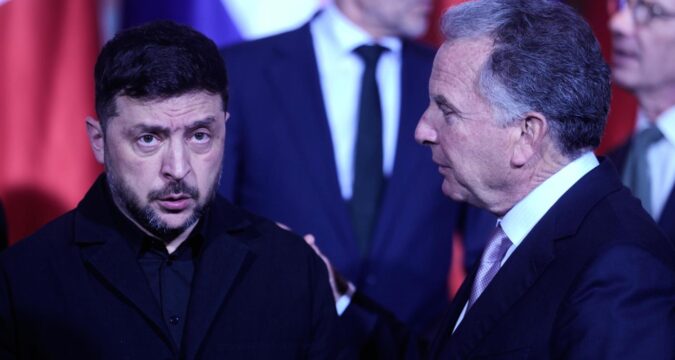
LA HAYA, Holanda (AP) — Se espera que el presidente de Ucrania, Volodymyr Zelenskyy, y unos 30 países más aprueben formalmente el martes los planes para crear un organismo de compensación que pague al país por los daños causados por la invasión rusa, aunque persisten preguntas sobre la procedencia de los fondos.
La aprobación en un acto en la ciudad holandesa de La Haya sigue a las conversaciones de paz en Berlín a las que asistieron Steve Witkoff, enviado especial del presidente de Estados Unidos, Donald Trump; el yerno del líder republicano, Jared Kushner, y el canciller de Alemania, Friedrich Merz. Zelenskyy mostró su disposición a abandonar la candidatura de su país para ingresar a la OTAN a cambio de garantías de seguridad occidentales, pero rechazó la presión de Washington para ceder territorio al Kremlin.
“Estas garantías de seguridad son una oportunidad para evitar otra oleada de agresión rusa”, dijo en respuesta a preguntas de reporteros. “Y esto ya es un compromiso de nuestra parte”.
El Consejo de Europa, la organización de derechos humanos más importante del continente, ha impulsado la creación de la Comisión Internacional de Reclamaciones, que permitirá a los ucranianos pedir compensaciones por “daños, pérdidas o lesiones” causados por la Federación Rusa desde que inició su invasión a gran escala en febrero de 2022.
La comisión evaluará los reclamos presentados en el registro, ya en funcionamiento, que se puso en marcha tras cumbre del Consejo de Europa en Islandia en 2023. “No habrá una paz fiable sin justicia”, dijo Zelenskyy a los líderes que asistían a la reunión en una videoconferencia desde Kiev.
Por el momento, se han presentado alrededor de 80.000 reclamos ante el registro, que tiene su sede en La Haya.
Todavía quedan dudas acerca de dónde obtendrá la entidad los fondos para abonar las reclamaciones. El Consejo de Europa insiste en que Rusia debe asumir el costo, pero no hay una vía clara para obligar a Moscú a pagar. Una propuesta sugiere utilizar parte de las decenas de miles de millones de dólares en activos rusos congelados que se encuentran en Europa.
Veinticinco miembros del Consejo deben firmar para la puesta en marcha de la comisión, pero se espera que más de 30 secunden el organismo, una cifra sin precedentes al inicio de un tratado del Consejo de Europa.
La mayoría son europeos, y la Unión Europea indicó que se unirá, pero México, Japón y Canadá también han enviado delegaciones para la firma.
Muchos de estos países han respaldado además la creación de una nueva corte internacional, también bajo el paraguas del Consejo de Europa, para procesar a altos funcionarios rusos por la invasión a gran escala de Ucrania.
Zelenskyy también tiene previsto dirigirse al parlamento holandés y reunirse con el rey, Willem-Alexander.
___
Esta historia fue traducida del inglés por un editor de AP con la ayuda de una herramienta de inteligencia artificial generativa.
Is China In A Better Position To Win The Rare Earth Mineral War
Is China In A Better Position To Win The Rare Earth Mineral War
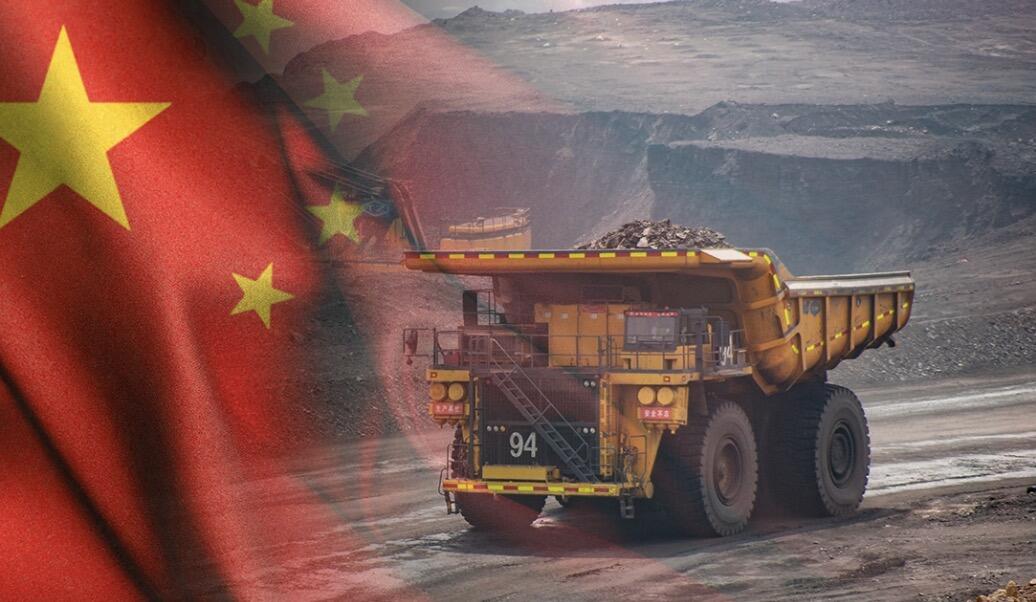
During an October swing through Southeast Asia, US President Donald Trump struck same-day agreements with Malaysia and Thailand to deepen cooperation on critical minerals and rare earths, underscoring Washington’s push to diversify supply chains away from China, according to SCMP.
According to the White House, Trump and Malaysian Prime Minister Anwar Ibrahim agreed to expand collaboration on building and securing critical mineral and rare earth supply chains. Using similar language, Washington said it would also “strengthen cooperation [with Thailand] on critical minerals supply chains development and expansion,” including exploration, extraction and processing.
The back-to-back deals reflect how resource-rich economies have become central battlegrounds in the US-China rivalry over rare earths. Analysts say Beijing currently holds the advantage, having spent decades engaging countries across Southeast Asia, Africa and Latin America. These nations often view China as a “partner that actually builds,” with investment that comes with fewer political conditions than US funding.
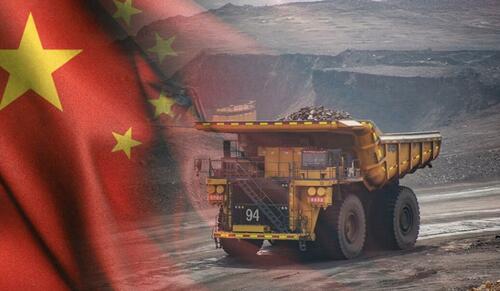
China’s dominance is structural. It mines about 70 per cent of the world’s rare earths and controls roughly 90 per cent of global processing capacity, meaning even minerals extracted elsewhere are often sent to China for refinement. As Marina Zhang of the University of Technology Sydney noted, this long-term engagement has given Beijing a “commanding lead,” particularly in downstream processing.
Enrique Dans of IE Business School said China already controls the “chokepoints that matter,” from separation to magnet manufacturing, allowing it to “lock in long-term offtakes and joint ventures in resource-rich countries.” He contrasted that with a US approach that “tends to arrive with conditions, compliance, and slower money,” adding that many governments see Beijing as the partner that delivers visible projects and jobs quickly.
Sun Chenghao of Tsinghua University said China’s model — combining infrastructure, trade and mineral cooperation — has given it a more positive image in the Global South, while the US is increasingly seen as “aggressive.” Although Washington retains influence, he said “China still holds a relative advantage in the rare earth sector,” especially in emerging resource-rich economies.
SCMP writes that the rivalry is intensifying. Rare earths now sit at the centre of a strategic contest that both powers see as vital to economic security, defence manufacturing and technological leadership — with Southeast Asia, Africa and Latin America likely to remain key theatres in the years ahead.
Tyler Durden
Tue, 12/16/2025 – 04:15
https://www.zerohedge.com/markets/china-better-position-win-rare-earth-mineral-war

Privacy For The Powerful, Surveillance For The Rest: EU’s Proposed Tech Regulation Goes Too Far
Privacy For The Powerful, Surveillance For The Rest: EU’s Proposed Tech Regulation Goes Too Far
Authored by Elen Irazabal Arana and Nikolai G. Wenzel via TheDailyEconomy.org,
Last month, we lamented California’s Frontier AI Act of 2025. The Act favors compliance over risk management, while shielding bureaucrats and lawmakers from responsibility. Mostly, it imposes top-down regulatory norms, instead of letting civil society and industry experts experiment and develop ethical standards from the bottom up.
Perhaps we could dismiss the Act as just another example of California’s interventionist penchant. But some American politicians and regulators are already calling for the Act to be a “template for harmonizing federal and state oversight.” The other source for that template would be the European Union (EU), so it’s worth keeping an eye on the regulations spewed out of Brussels.
The EU is already way ahead of California in imposing troubling, top-down regulation. Indeed, the EU Artificial Intelligence Act of 2024 follows the EU’s overall precautionary principle. As the EU Parliament’s internal think tank explains, “the precautionary principle enables decision-makers to adopt precautionary measures when scientific evidence about an environmental or human health hazard is uncertain and the stakes are high.” The precautionary principle gives immense power to the EU when it comes to regulating in the face of uncertainty — rather than allowing for experimentation with the guardrails of fines and tort law (as in the US). It stifles ethical learning and innovation. Because of the precautionary principle and associated regulation, the EU economy suffers from greater market concentration, higher regulatory compliance costs, and diminished innovation — compared to an environment that allows for experimentation and sensible risk management. It is small wonder that only four of the world’s top 50 tech companies are European.
From Stifled Innovation to Stifled Privacy
Along with the precautionary principle, the second driving force behind EU regulation is the advancement of rights — but cherry-picking from the EU Charter of Fundamental Rights of rights that often conflict with others. For example, the EU’s General Data Protection Regulation (GDPR) of 2016 was imposed with the idea of protecting a fundamental right to personal data protection (this is technically separate from the right to privacy, and gives the EU much more power to intervene — but that is the stuff of academic journals). The GDPR ended up curtailing the right to economic freedom.
This time, fundamental rights are being deployed to justify the EU’s fight against child sexual abuse. We all love fundamental rights, and we all hate child abuse. But, over the years, fundamental rights have been deployed as a blunt and powerful weapon to expand the EU’s regulatory powers. The proposed Child Sex Abuse regulation (CSA) is no exception. What is exceptional, is the extent of the intrusion: the EU is proposing to monitor communications among European citizens, lumping them all together as potential threats rather than as protected speech that enjoys a prima facie right to privacy.
As of 26 November 2025, the EU bureaucratic machine has been negotiating the details of the CSA. In the latest draft, mandatory scanning of private communications has thankfully been removed, at least formally. But there is a catch. Providers of hosting and interpersonal communication services must identify, analyze, and assess how their services might be used for online child sexual abuse, and then take “all reasonable mitigation measures.” Faced with such an open-ended mandate and the threat of liability, many providers may conclude that the safest — and most legally prudent — way to show they have complied with the EU directive is to deploy large-scale scanning of private communications.
The draft CSA insists that mitigation measures should, where possible, be limited to specific parts of the service or specific groups of users. But the incentive structure points in one direction. Widespread monitoring may end up as the only viable option for regulatory compliance. What is presented as voluntary today risks becoming a de facto obligation tomorrow.
In the words of Peter Hummelgaard, the Danish Minister of Justice: “Every year, millions of files are shared that depict the sexual abuse of children. And behind every single image and video, there is a child who has been subjected to the most horrific and terrible abuse. This is completely unacceptable.” No one disputes the gravity or turpitude of the problem. And yet, under this narrative, the telecommunications industry and European citizens are expected to absorb dangerous risk-mitigation measures that are likely to involve lost privacy for citizens and widespread monitoring powers for the state.
The cost, we are told, is nothing compared to the benefit.
After all, who wouldn’t want to fight child sexual abuse? It’s high time to take a deep breath. Child abusers should be punished severely. This does not dispense a free society from respecting other core values.
But, wait. There’s more…
Widespread Monitoring? Well, Not Completely Widespread
Despite the moral imperative of protecting children — a moral imperative so compelling that the EU is willing to violate other core values to advance it — the proposed CSA act introduces a convenient exception. Anything falling under national security, and any electronic communication service that is not publicly available (i.e. available only to elected officials and bureaucrats) would remain entirely untouched. Private chats among citizens require scrutiny — but the conversations of those who claim to protect us are off limits.
As the good minister said, “behind every single image and video there is a child who has been subjected to the most horrific and terrible abuse.” If that is indeed true of every “single image and video,” why would it not also be true of the messages shielded by the CSA’s national security and non-public exceptions? Does the horror somehow dissipate when the users are politicians or bureaucrats? Is the unacceptable suddenly made acceptable when it concerns those who write the rules?
In the EU’s hierarchy of rights, protecting children trumps privacy. But protecting Eurocrats trumps protecting children. In the end, modern technology gives politicians unprecedented opportunities to monitor citizens, while exempting themselves from scrutiny.
There is no chatter yet — that we know of — about imposing similar measures in the US. But, from the wealth tax to AI regulation — and the very origins of the American administrative state — bad ideas from Europe have a nasty way of making their way across the Pond.
Tyler Durden
Tue, 12/16/2025 – 03:30
Brussels Slams Brakes On 2035 Combustion Engine Ban
Brussels Slams Brakes On 2035 Combustion Engine Ban
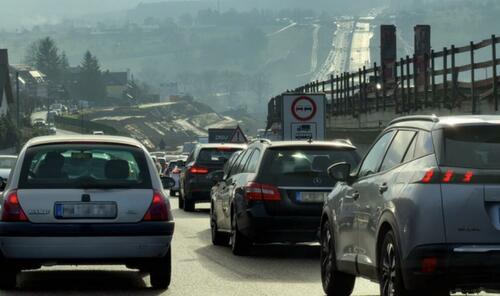
The European Commission is preparing to retreat from its planned 2035 ban on new combustion-engine car sales, yielding to pressure from Germany, Italy and automakers struggling to compete with U.S. and Chinese rivals, according to Reuters. The announcement is expected Tuesday.
EU and industry sources say the ban could be delayed by five years or softened indefinitely, turning a once-firm rule into something more aspirational. The reversal would mark the bloc’s biggest climb-down from its green agenda in the past five years.
“The European Commission will be putting forward a clear proposal to abolish the ban on combustion engines,” said Manfred Weber, head of the European Parliament’s largest political group. “It was a serious industrial policy mistake.”
Traditional automakers such as Volkswagen and Stellantis have lobbied hard for relief, arguing EV demand has fallen short, costs remain high and charging infrastructure is uneven. EU tariffs on Chinese EVs have barely dented the pressure.
“It’s not a sustainable reality today in Europe,” Ford CEO Jim Farley said last week, adding industry needs were “not well balanced” with EU CO2 targets.
EV-focused companies warn the rethink hands China an even bigger advantage in electrification.
“The technology is ready, charging infrastructure is ready, and consumers are ready,” said Polestar CEO Michael Lohscheller. “So what are we waiting for?”
Reuters writes that the 2023 law was meant to force a rapid shift to batteries or fuel cells, with fines for non-compliance. But European carmakers still trail Tesla and Chinese groups like BYD and Geely on scale and cost. Earlier this year, the EU already granted automakers “breathing space” by spreading 2025 compliance over three years.
Manufacturers now want to keep selling combustion engines alongside plug-in hybrids, range-extender EVs and vehicles running on so-called CO2-neutral fuels. Commission President Ursula von der Leyen signaled openness to e-fuels and “advanced biofuels” in October.
“We recommend a multi-technology approach,” said Todd Anderson of Phinia, adding the internal combustion engine will “be around for the rest of the century.”
EV industry players say regulatory backtracking will undermine investment.
“It’s definitely going to have an effect,” said ChargePoint CEO Rick Wilmer.
Automakers also want the 2030 target of a 55% cut in car emissions phased in over several years and the 50% reduction target for vans dropped. Germany wants climate credits for low-carbon steel and other upstream measures.
Environmental groups say the EU should stick to the 2035 deadline, arguing biofuels are scarce, expensive and not truly carbon-neutral.
“Europe needs to stay the course on electric,” said William Todts of T&E. “It’s clear electric is the future.”
Whether Brussels actually stays the course, or keeps rewriting the rules when reality intervenes, remains to be seen.
Tyler Durden
Tue, 12/16/2025 – 02:45
https://www.zerohedge.com/markets/brussels-slams-brakes-2035-combustion-engine-ban

Tras un año de Trump, los líderes de la UE aprenden a convivir con un aliado poco confiable
Por LORNE COOK
BRUSELAS (AP) — A lo largo de 2025, una nueva realidad se ha asentado en Europa. Estados Unidos, durante mucho tiempo su aliado más fuerte, ha debilitado la unidad, las economías, la seguridad e incluso las democracias de la Unión Europea, estableciendo el telón de fondo para una cumbre de la UE esta semana al final de un año excepcionalmente difícil.
Después de congelar indefinidamente la semana pasada los activos rusos en Europa, los líderes de la UE enfrentan una nueva prueba de fuerza en la cumbre del jueves. Ucrania se encuentra en una situación financiera desesperada, y han prometido satisfacer las necesidades económicas y militares de Kiev durante los próximos dos años, probablemente a través de un nuevo préstamo de reparaciones.
“Es un momento crucial para Europa y Ucrania”, advirtió el ministro danés de Exteriores, Lars Løkke Rasmussen, cuyo país ostenta la presidencia rotativa de la UE. “Debemos tomar esta decisión para asegurar la economía ucraniana, pero también para enviar una señal al resto del mundo, que incluirá a la Casa Blanca en Washington, D.C., de que Europa es un jugador geopolítico fuerte”.
Mientras continúa la mayor guerra terrestre del continente en varias décadas, los europeos se han visto puestos a prueba por las amenazas del presidente Donald Trump, su apoyo a la extrema derecha en Europa y su camaradería con el presidente ruso, Vladímir Putin. Al principio respondieron con halagos. Menos en los últimos meses.
Desde enero, mientras los líderes trataban de mantener a Ucrania en la lucha contra su vecino más grande, Trump ha ido cambiando de postura, pareciendo apoyar a Kiev un mes, a Rusia el siguiente. En su mayoría, ha permanecido crítico con Europa, y esa crítica ahora tiene un tono más duro.
Los líderes europeos han trabajado para llenar el vacío y reforzar el apoyo militar a Ucrania, pero reconocen que Estados Unidos es un socio insustituible, y Trump es la única persona con la que Putin podría hablar de paz.
El canciller alemán Friedrich Merz advirtió la semana pasada que “realmente estamos presenciando un momento decisivo ahora y nada es como era antes. Estamos viviendo en un tiempo diferente, y este tiempo requiere respuestas diferentes a las que hemos dado en el pasado”.
Europa comienza a responder
Semanas después de que Trump regresara al cargo en enero, su gobierno señaló que los intereses de seguridad de Estados Unidos están en otro lugar: Europa ahora debe cuidarse a sí misma y a Ucrania, cuyo presidente fue humillado en una reunión en la Casa Blanca en febrero.
Días después, el vicepresidente JD Vance se reunió con un líder de extrema derecha en Alemania, afirmando que la libertad de expresión está en retroceso en Europa, lo que provocó acusaciones de interferencia electoral.
Los argumentos de Vance se desarrollaron este mes en una Estrategia de Seguridad Nacional de Estados Unidos. El texto también atacó la política migratoria de la UE, sugiriendo que Europa enfrenta “la perspectiva de un borrado civilizacional” y podría no ser un socio confiable para Estados Unidos.
Judy Dempsey, del grupo de expertos Carnegie Europe, dijo que “Europa no tiene más remedio que responder”.
“Ahora Europa y el resto del mundo saben la mala opinión que este gobierno de Estados Unidos tiene de ellos y no pueden seguir pretendiendo lo contrario”, afirmó.
Merz ya está hablando con más firmeza. “Nosotros en Europa, y por lo tanto también en Alemania, debemos volvernos mucho más independientes de Estados Unidos en términos de política de seguridad. Esto no es una sorpresa, pero ahora se ha confirmado nuevamente”, expresó.
Planes deficientes y nuevos acuerdos comerciales
Otro documento preocupante para la UE circuló el mes pasado: el plan de 28 puntos del gobierno de Trump para poner fin a la guerra, redactado con Rusia. Contenía antiguas demandas del Kremlin, promesas de oportunidades de negocios rusas y una petición de rehabilitar a Putin en el escenario mundial.
El texto era mayormente inaceptable para Ucrania y sus partidarios europeos. No así para Rusia, que intenta crear una brecha entre Estados Unidos y los aliados. El ministro ruso de Exteriores, Serguéi Lavrov, dijo que Trump es “el único líder occidental” que muestra “una comprensión de las razones que hicieron inevitable la guerra en Ucrania”.
En abril, en el llamado Día de la Liberación, Trump anunció aranceles generalizados en todo el mundo para proteger su seguridad nacional. Dijo que “nuestro país ha sido saqueado, robado, violado y expoliado” por otras naciones, incluidos los aliados de Estados Unidos en la organización de seguridad más grande del mundo, la OTAN.
Trump declaró una emergencia económica. Para julio, él y la UE habían acordado un marco comercial que establecía un arancel del 15% sobre la mayoría de los productos, evitando aranceles de importación mucho más altos.
La respuesta de la UE ha sido buscar acuerdos con otros socios rechazados, notablemente en toda Asia. El bloque comercial más grande del mundo también ha aceptado que los aranceles más altos probablemente sean el mejor precio a pagar por el apoyo continuo de Estados Unidos en Ucrania.
La UE levanta el freno en defensa
Inquietos por la ruptura comercial, los europeos en la OTAN aún aceptaron la demanda de Trump de que inviertan el 5% del PIB en defensa, aunque no está claro si muchos alcanzarán el objetivo para la fecha límite de 2035 cuando han tenido problemas para cumplir el antiguo objetivo del 2%.
Aun así, la UE ha quitado el pie del freno del gasto en defensa y aspira a ser capaz de defenderse contra ataques externos para 2030. Los funcionarios creen que Putin podría ordenar un ataque en otro lugar de Europa en tres a cinco años si Rusia derrota a Ucrania.
En nuevas advertencias esta semana, Blaise Metreweli, la nueva jefe de la agencia de espionaje británica MI6, dijo que la “exportación de caos” de Putin probablemente continuará hasta que “se vea obligado a cambiar su estrategia”. El jefe de las Fuerzas Armadas Británicas, el mariscal jefe del aire Richard Knighton, dijo que el objetivo del líder ruso es “desafiar, limitar, dividir y, en última instancia, destruir la OTAN”.
La cumbre de la UE del jueves, con su enfoque en financiar la economía y el esfuerzo militar de Ucrania durante los próximos dos años, es otro paso en solitario sin Estados Unidos. El presidente del Consejo de la UE, António Costa, quien presidirá la reunión, ha amenazado con mantener a los líderes en la sede de la UE durante días hasta que se llegue a un acuerdo.
___
Esta historia fue traducida del inglés por un editor de AP con la ayuda de una herramienta de inteligencia artificial generativa.
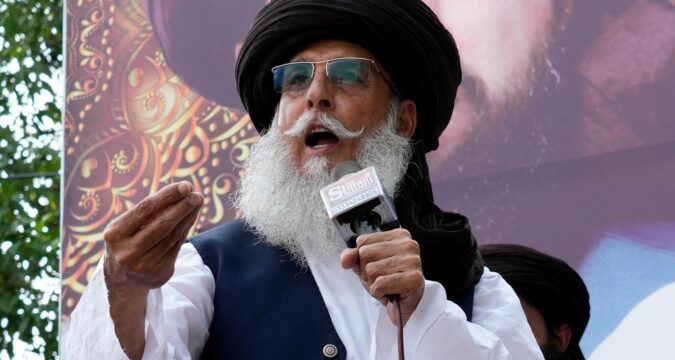
Pakistán condena a clérigo de partido prohibido a 35 años de cárcel por incitar a la violencia
Associated Press
LAHORE, Pakistán (AP) — Una corte antiterrorista de Pakistán condenó a un líder destacado de un partido islamista ilegalizado a 35 años de prisión por incitar a la violencia, más de un año después de que el clérigo pidiera públicamente el asesinato del entonces presidente del Tribunal Supremo, dijeron el martes funcionarios del tribunal y un abogado defensor.
Zaheerul Hassan Shah, líder del proscrito Tehreek-e-Labbaik Pakistán, fue arrestado el año pasado después de que circulara en redes sociales un video en el que ofrecía 10 millones de rupias (36.000 dólares) a quien decapitara al entonces presidente del alto tribunal, Qazi Faez Isa.
Isa fue criticado el año pasado por grupos religiosos radicales después de conceder la libertad bajo fianza a un hombre de la comunidad minoritaria ahmadí en un caso de blasfemia.
La ahmadí es una rama del Islam, pero el parlamento paquistaní declaró a los ahmadíes no musulmanes en 1974. Sus hogares y lugares de culto son atacados frecuentemente por insurgentes suníes, que los consideran herejes.
El abogado defensor Maqsood-ul-Haq y funcionarios del tribunal dijeron que Shah fue condenado el lunes por una corte antiterrorista en la ciudad oriental de Lahore.
La sentencia se dictó menos de dos meses después de que el gobierno de Pakistán prohibió el partido TLP tras choques letales entre sus partidarios y la policía durante una manifestación a favor de Gaza.
Desde esos enfrentamientos, el líder del partido, Saad Rizvi, se encuentra en paradero desconocido.
La policía dice que Rizvi huyó a la Cachemira administrada por Pakistán durante los disturbios, que comenzaron a principios de octubre después de que Rizvi liderara una marcha hacia Islamabad desde Lahore, la capital de la provincia de Punjab.
___
Esta historia fue traducida del inglés por un editor de AP con la ayuda de una herramienta de inteligencia artificial generativa.
Germany’s Municipal Financial Crisis: The Green Transformation Backfires
Germany’s Municipal Financial Crisis: The Green Transformation Backfires
Submitted By Thomas Kolbe
For years, politicians managed to hide the damage caused by the green transformation. Now, deep cracks are appearing in municipal finances amid the severe economic crisis gripping the country. Cities like Stuttgart serve as showcases for the future of the republic.
For a long time, Stuttgart’s city treasurer was more than just a steward of solid numbers. He was regarded as the uncrowned king of fiscal policy in the region—and held a position envied by many colleagues. The robust foundation of the automotive industry and its extensive supplier network funneled generous tax revenues into the city’s coffers for years, particularly from trade taxes.
As recently as 2023, Stuttgart recorded a record 1.6 billion euros in trade tax revenue—a sum that gave the city extraordinary financial leeway. Social projects, infrastructure initiatives, municipal ambitions—the local government could spend freely.
Cracks in the Model Municipality
Then came 2024. Early cracks in Germany’s economic foundation, building up over years, began to appear in Stuttgart as well. By the end of the fiscal year, the city faced a deficit of 6.8 million euros—a first warning that things might be spiraling out of control.
In green-led Baden-Württemberg, officials explained the shortfall with one-off effects and general problems in the German economy—problems they firmly believed could be managed under the state’s green transformation.
Then 2025 arrived—and with it, shock. Trade tax revenues collapsed, expected to bring only around 850 million euros into the city’s coffers for the year. The supplementary budget shows Stuttgart now faces a deficit of 890 million euros—a fiscal hammer blow, reflecting the massive collapse of Germany’s core industries, including automotive, machinery, and chemicals.
The Moment of Truth
The picture is the same across the country. For 2025, the German County Association forecasts a cumulative municipal deficit of around 35 billion euros—a historic figure unseen since World War II, and notably, for Germany, once considered a model of fiscal prudence.
The moment of truth has arrived. Ideologues have run their course. What follows are retreating maneuvers, frantic repair attempts, and the reflex to stabilize past policies artificially with ever-larger debt programs. The house of cards is stacked higher before it inevitably collapses.
Recent experiences with Berlin’s debt policies allow a fairly precise prediction of what comes next. Parts of the so-called “special fund”—new federal debt taken on outside the regular budget—will likely be repackaged into municipal aid packages to plug ever-growing budget holes.
If municipal finances worsen, the next escalation stage is already prepared: a consolidation of debt across the states, accompanied by the issuance of so-called special bonds. Initially through the federal states, guaranteed by the federal government, possibly involving the KfW Bank, labeled as infrastructure investments. Political imagination knows almost no bounds—at least until the bond market puts its foot down and abruptly ends the spree.
Germany has become, as a result of prolonged, fatal political mismanagement, a fiscal parasite. The attempt to pull tomorrow’s purchasing power into the present through debt is fundamentally flawed. It generates growing mountains of debt, forces higher levies, and gradually erodes citizens’ purchasing power through rising inflation.
Predictable Reaction
Many municipalities respond predictably. Across the board, trade tax rates are being drastically increased. The Rhineland-Palatinate capital of Mainz, for example, raised its rate from 310 to 440 percent—a significant burden for local businesses.
Other municipalities, like Wörth with a 65-point increase or Bad Dürkheim with 45 points, illustrate the strategy: higher levies amid declining economic performance—a death spiral for the local economy and, in the medium term, for tax revenue itself.
At the same time, massive austerity programs are being implemented. Germany faces a redefinition of public services. Municipally run, loss-making swimming pools, sports facilities, and recreational centers are now on the chopping block. Put simply: after years of delay, the manic cult of green transformation is now presenting its bill.
And it comes unexpectedly high for many, because people believed the promises of green central planners, who claimed that the complex, finely tuned network of domestic industry could be replaced by a centrally planned green fantasy. A historic error and a regression into the disastrous world of socialist feasibility illusions.
The Green Dream Is Being Lied Into Existence
A quick glance at state-funded media is enough to see how politics and state-aligned outlets attempt to deceive the public about the true state of the German economy. Single, typically heavily subsidized green projects are celebrated, while the real world suffers—with around 24,000 corporate insolvencies and hundreds of thousands of job losses this year alone.
During prime-time broadcasts, this dramatic decline is systematically overshadowed by other topics. The media effort by the green power complex to maintain the illusion of a climate-socialist Elysium reaches grotesque extremes.
Ironically, we see the same process on a geopolitical level, with attempts to turn the Russian central bank’s assets at Euroclear into a system of credit collateral. Essentially, everyone is bankrupt, and the EU staggers in panic mode toward a geopolitical catastrophe.
Every new deficit—whether at the federal level, in social funds, or in municipalities—fails to precisely measure a country’s loss of prosperity, which now reflexively flees into a debt crisis. In Berlin, officials seriously believe they can offset declining economic output with money printing. But as the saying goes: if wealth could be printed, one could also award degrees without merit.
Germany is now attempting to do both simultaneously. In the end, the country will experience its green miracle.
Tyler Durden
Tue, 12/16/2025 – 02:00
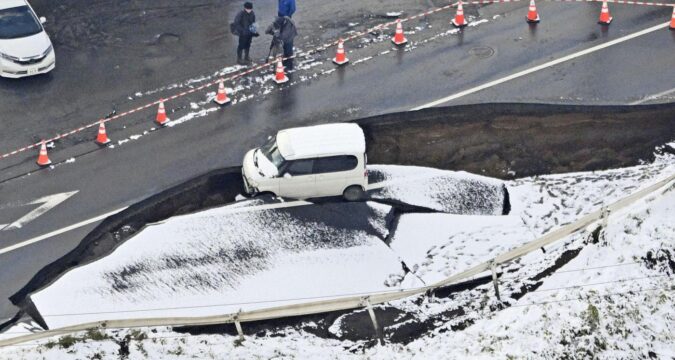
Japón levanta alerta por megaterremoto pero pide precaución tras sismo de magnitud 7,5
Por MARI YAMAGUCHI
TOKIO (AP) — Japón levantó el martes una advertencia de sismo de gran magnitud en la costa noreste del país, una semana después de un terremoto de magnitud 7,5 que remeció el norte del país, lo que según las autoridades incrementaba el riesgo de que se produjese uno más potente más tarde.
El final de la alerta supone que los residentes en la zona ya no están obligados a dormir con ropa de calle, cascos, zapatos y bolsas de emergencia junto a la cama por si se registra un temblor de magnitud 8 o superior.
En una conferencia de prensa conjunta, funcionarios de la Agencia Meteorológica de Japón y la Oficina del Gobierno indicaron que la probabilidad de un sismo de gran magnitud ha disminuido un poco, pero el final del aviso no significa que el riesgo haya desaparecido e instaron a los residentes a mantener niveles adecuados de vigilancia y preparación.
La agencia emitió la llamada advertencia de megaterremoto el lunes pasado después de que el temblor de 7,5 sacudió la costa este de Aomori, la prefectura más al norte de la isla principal, Honshu, y justo al sur de la isla norteña de Hokkaido, lo que provocó daños leves en la región.
Más de 40 personas resultaron heridas, en su mayoría de carácter leve, y docenas de hogares registraron daños, según la Agencia de Manejo de Incendios y Desastres. Se emitieron alertas y avisos de tsunami y se registraron olas de hasta 70 centímetros (27 pulgadas) en partes de la región, pero no se reportaron daños por tsunami.
De acuerdo con las autoridades, las municipalidades y los residentes reaccionaron con calma al aviso y no hubo escenas de pánico.
En el verano de 2024, cuando Japón emitió por primera vez un aviso de megaterremoto de Nankai para la mitad sur de su costa del Pacífico, la ambigüedad de la alerta provocó compras compulsivas de alimentos de emergencia, cancelaciones de eventos y cierres de negocios.
El mecanismo para emitir advertencias para el área de Hokkaido-Sanriku se implantó en 2022 a consecuencia del desastre de 2011, cuando un terremoto de magnitud 9,0 y un posterior tsunami devastaron la costa noreste de Japón.
___
Esta historia fue traducida del inglés por un editor de AP con la ayuda de una herramienta de inteligencia artificial generativa.