Category: News

Bernstein Says Bitcoin Market Already Priced In Quantum Risk
Bernstein Says Bitcoin Market Already Priced In Quantum Risk
Authored by Zoltan Vardai via CoinTelegraph.com,
Bernstein said Monday that Bitcoin’s selloff has already priced in much of the market’s fear around quantum computing, arguing that the threat is real but still manageable rather than an immediate existential risk.
Bitcoin’s (BTC) near 50% drawdown from its $126,198 all-time high in October 2025 is proof that the market has “priced in” several risks tied to a quantum breakthrough, partly thanks to technological progress on zero-knowledge privacy and quantum-proof cryptography that “counterbalance” the AI and quantum acceleration, Bernstein said in a Monday note shared with Cointelegraph.
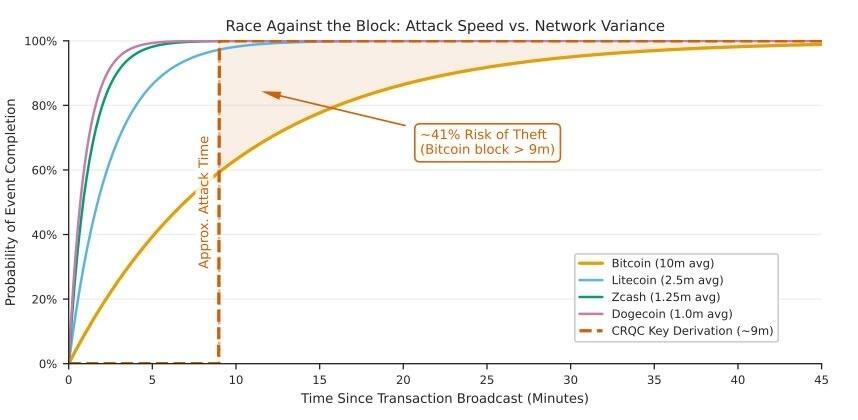
The note lands two weeks after Google researchers said future quantum computers could break the elliptic-curve cryptography used across many blockchains with fewer than 500,000 physical qubits in some architectures, reviving debate over how quickly Bitcoin needs a post-quantum upgrade path. This research suggested a quantum computer could crack a Bitcoin private key in nine minutes, in a theoretical scenario, which is less than Bitcoin’s 10-minute block production time.
However, Bernstein said Bitcoin core developers have “adequate time” to determine a post-quantum path. Last week, Bernstein predicted that Bitcoin has about three to five years to prepare for a post-quantum security upgrade, Cointelegraph reported on Wednesday.
Graph showing the risk that an on-spend quantum attack that takes 9 minutes to derive a private key succeeds against Bitcoin. Source: Google Quantum AI
Institutions will play constructive role in quantum-proofing Bitcoin
Bernstein said large institutional holders, including exchange-traded fund (ETF) issuers and corporate treasury buyers such as Strategy, are likely to play a constructive role in any eventual consensus on a post-quantum upgrade.
“We expect institutional partners with now billions at stake to play a constructive role in building consensus on the post-quantum path.”
The note also highlighted the recently introduced BIP-360 proposal and added that slower consensus from Bitcoin developers is seen as responsible behavior when it comes to a $1.5 trillion asset.
BIP-360 is a draft Bitcoin Improvement Proposal that proposes a Pay-to-Merkle-Root output type designed to reduce long-exposure quantum risk by removing Taproot’s key-path vulnerability, though it does not itself add post-quantum digital signatures.
Bernstein said BIP-360 could be implemented as a soft fork for exposed Bitcoin addresses, but added that this would still leave around 8% of the BTC supply in inactive addresses vulnerable to future quantum breakthroughs.
Quantum-proofing Bitcoin is a social issue, not technical
The real challenge of quantum-proofing Bitcoin lies in the societal adoption element of the new standards, not the technical development, according to Arthur Breitman, co-founder of Tezos blockchain.
“The coding work could be done this afternoon,” but Bitcoin holders would still need to migrate to this new standard, Breitman told Cointelegraph during an interview at EthCC 2026.
“If Bitcoin needed to migrate in the next month, they could do it from a technical perspective […] but they can’t get everyone to migrate their key in a month, Breitman said. “It’s going to take years for people to properly migrate their keys,” he added.
Arthur Breitman, co-founder of Tezos, interview at EthCC 2026. Source: Cointelegraph
Asset manager Grayscale’s head of research, Zach Pandl, shared a similar view in a research report last Monday. He said Bitcoin’s quantum-proofing challenges are “more social than technical,” provided that its UTXO model does not have native smart contracts and that some address types are not quantum vulnerable.
However, he warned that the community needs to find consensus on how to quantum-proof wallets where the private key has been lost or is otherwise inaccessible.
Tyler Durden
Mon, 04/13/2026 – 13:40
https://www.zerohedge.com/crypto/bernstein-says-bitcoin-market-already-priced-quantum-risk

US Property Taxes Rose 3 Percent On Average In 2025, Outpacing Inflation
US Property Taxes Rose 3 Percent On Average In 2025, Outpacing Inflation
Authored by Rob Sabo via The Epoch Times (emphasis ours),
Property taxes are rising across the United States and, on average, have outpaced inflation.
Homeowners in 2025 paid a total of $396.8 billion in property taxes on more than 89.6 million single-family homes, a 3.7 percent increase from 2024, an April 9 report by real estate property data provider ATTOM states.
The average single-family home paid $4,427 in taxes, up by 3 percent from 2024, driven by a higher effective tax rate, according to the report.
The ATTOM report analyzed tax data collected from assessment offices, combined with estimated market values of single-family homes. The estimated home value of $494,231 for 2025 was down by 1.7 percent year-over-year, ATTOM noted, following a significant spike in 2024.
Nationally, the effective tax rate on single-family residences in 2025 was 0.9 percent, up slightly from the prior year and the highest since 2020, when it stood at 1.1 percent, ATTOM’s researchers wrote.
The tax growth rate is higher than the Bureau of Labor Statistics’ (BLS) inflation rate, which stayed below 3 percent for most of 2025. Inflation rose to 3.3 percent in March, up by nearly a full percentage point from the start of the year, driven by higher energy and fuel costs.
Property taxes—a primary source of revenue for local governments and municipalities—have spiked largely because of a run-up in housing prices over the past five years, the nonprofit Tax Foundation stated.
In the final quarter of 2019, the median sales price of homes sold in the United States was $327,100, the Federal Reserve Bank of St. Louis reported. By the end of 2025, that figure had jumped by 24 percent to $405,300.
Homeowners can pay significantly more in property taxes as their home values increase due to higher assessed values, the Tax Foundation noted.
However, ATTOM CEO Rob Barber said property taxes in 2025 demonstrate that tax bills reflect more than just home values.
“Even with a slight dip in prices, higher tax bills combined with declining home values led to an increase in effective tax rates, underscoring the role of local government costs and shifting tax policies. Regional disparities persist, with the Northeast and Midwest continuing to see the highest burdens,” Barber said.
More than 50 percent of metropolitan areas with populations of more than 1 million residents saw their property tax bills for single-family homes rise more than 3 percent in 2025, ATTOM stated.
In the Northwest, the combination of high property tax rates and escalating home values led to some of the highest average tax bills in the country. Average tax bills in New Jersey were $10,499, followed by Connecticut at $8,901 and New Hampshire at $8,174.
Conversely, average tax bills were lowest in West Virginia at $1,081. Residents of Alabama paid an average of $1,284 in property taxes, while residents of Arkansas paid $1,387, ATTOM researchers wrote.
At the county level, Westchester County, New York, had the highest average property tax in 2025 at $18,386, followed by Marin County, California, at $16,745 and Bergen County, New Jersey, at $14,443.
Average tax calculations were derived by dividing the total amount of property taxes paid by residents of a particular county by the number of single-family residences in that area, ATTOM noted.
Tyler Durden
Mon, 04/13/2026 – 13:00
Buried For 7 Years: Declassified Transcripts Blow Up Trump Impeachment Story
Buried For 7 Years: Declassified Transcripts Blow Up Trump Impeachment Story
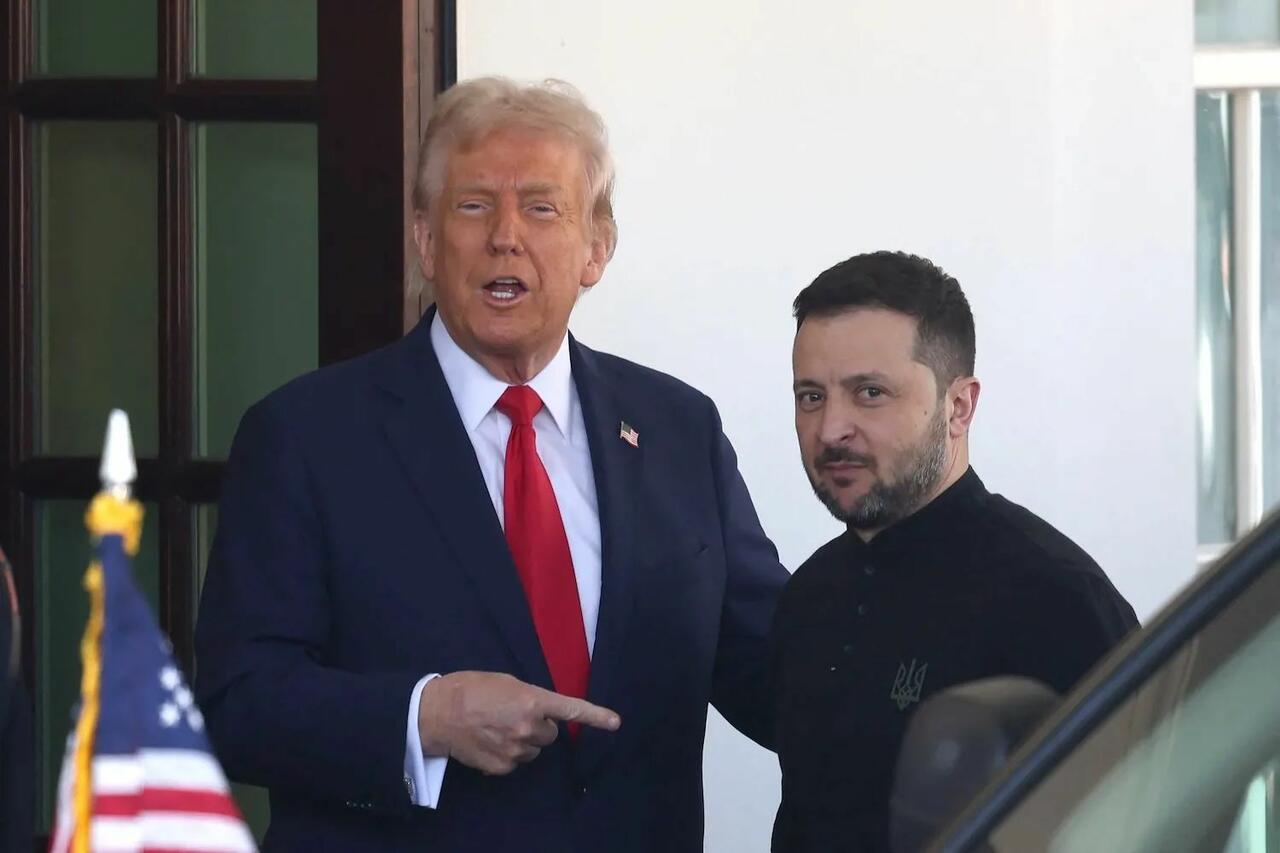
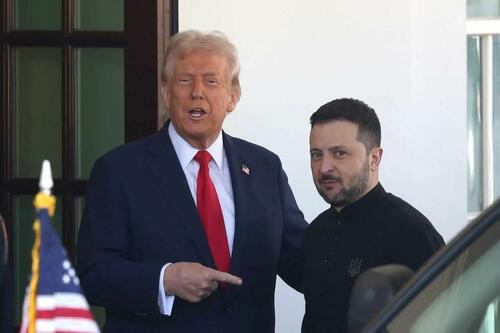
In a long-awaited release that sent ripples through Washington on Monday, the House Permanent Select Committee on Intelligence (HPSCI) has declassified closed-door 2019 transcripts from briefings with then-Intelligence Community Inspector General (ICIG) Michael Atkinson. The documents, withheld from the public for over seven years, reveal critical details about the anonymous “whistleblower” whose complaint about President Trump’s phone call with Ukrainian President Volodymyr Zelensky triggered Trump’s first impeachment – details that directly contradict the narrative of a neutral, non-partisan civil servant acting in good faith.
The revelations come via investigative reporter Catherine Herridge, who broke the story on X with direct screenshots from the transcripts and statements from key officials involved in the declassification.
What the Transcripts Reveal
According to the newly public records:
The whistleblower was a registered Democrat who disclosed having a “prior professional relationship with one of the Democratic Presidential candidates” for the 2020 election (widely understood in context to reference then-former Vice President Joe Biden, given the whistleblower’s known Ukraine policy background).
Despite this, ICIG Atkinson told Congress in a 2019 briefing: “I did not find the complainant (whistleblower) was biased.” He relied almost exclusively on the whistleblower’s own self-disclosure.
The whistleblower had met with staff from the House Permanent Select Committee on Intelligence (HPSCI) – then chaired by Rep. Adam Schiff (D-CA) – before filing the official complaint with the ICIG on August 12, 2019.
Timeline: Trump’s July 25, 2019, phone call with Ukrainian President Volodymyr Zelenskyy occurred just 18 days before the complaint was filed. During that window, the whistleblower had undisclosed contacts with Schiff’s committee.
On the official “urgent concern” disclosure form, the whistleblower did not check the box acknowledging contact with congressional intelligence committees. When pressed by then-Rep. John Ratcliffe (R-TX, now CIA Director), Atkinson confirmed: “The whistleblower did not disclose to you that he or she had contact with HPSCI?” Atkinson replied: “The answer to that is yes. The answer to that is yes.”
These details are laid out verbatim in the declassified pages Herridge posted, complete with highlighted exchanges from the October 2019 closed-door session.
NEW RECORDS VIA @DNIGabbard @RepRickCrawford ATKINSON TRANSCRIPTS
– First Trump Impeachment + Whistleblower Motive
Whistleblower met with Democrats on House Intelligence Committee (then led by Adam Schiff) BEFORE reporting his allegations to the Intelligence Community… pic.twitter.com/x7A1IxHLLO
— Catherine Herridge (@C__Herridge) April 13, 2026
The 2019 Backdrop – and Why It Was Hidden
The complaint alleged that Trump pressured Zelenskyy during the July 25 call to investigate the Bidens in exchange for military aid – a claim that became the cornerstone of the House Democrats’ impeachment inquiry launched in September 2019. Trump was impeached by the House in December 2019 on charges of abuse of power and obstruction of Congress, only to be acquitted by the Senate in February 2020.
🚨 HOLY SMOKES. DNI Tulsi Gabbard just declassified bombshell files that prove the nexus of Donald Trump’s impeachment scam in 2019 came from an ADMITTED leftist and liar
These files were HIDDEN from the public until now.
The so-called “whistleblower” APOLOGIZED for accusing… pic.twitter.com/gGxdSYOtH8
— Eric Daugherty (@EricLDaugh) April 13, 2026
At the time, the whistleblower was portrayed across much of the mainstream media and by Democratic leaders as an impartial career intelligence official. The new transcripts show that key questions about political affiliation, potential conflicts of interest, and coordination with Congress were raised behind closed doors – but never fully disclosed to the public.
House Intelligence Committee Chairman Rep. Rick Crawford (R-AR) stated upon the release:
“There have been many questions and concerns about these Atkinson transcripts, which have been withheld from the American public for far too long. I hope that the release of these transcripts allows the American people to make their own determinations about their content. Thank you to Director Gabbard and her team for moving these so quickly through the declassification process.”
The process began with a HPSCI vote in late March 2026 to unseal the transcripts, followed by rapid declassification under Director of National Intelligence Tulsi Gabbard.
In short, we now have official, on-the-record confirmation of long-standing Republican concerns that the impeachment process was politicized from the outset. They show an ICIG who accepted the whistleblower’s self-assessment of impartiality at face value, even after learning of partisan ties and unreported congressional contacts – facts that were blacked out or minimized in earlier public handling of the case.
Tyler Durden
Mon, 04/13/2026 – 12:40
Mapping The Hormuz Blockade: At Least 15 US Navy Ships Are In Place
Mapping The Hormuz Blockade: At Least 15 US Navy Ships Are In Place
President Trump is once again engaged in a high risk bet in hopes that Iran will buckle to US demands after failed initial truce talks in Pakistan. The blockade now in effect as of Monday seeks to starve Iran of $200 million in daily oil revenues.
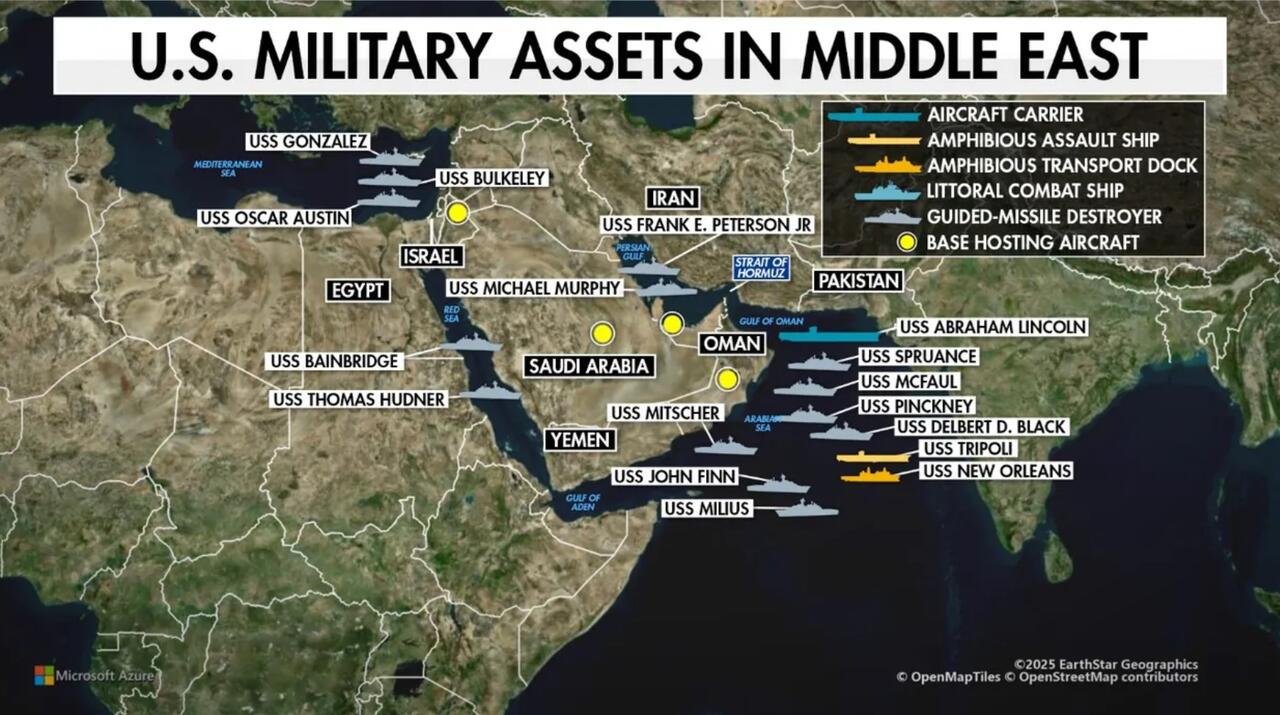
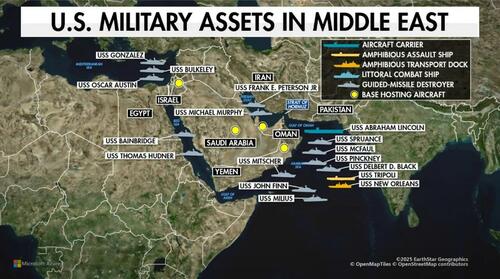
The Wall Street Journal has newly detailed that more 15 American warships are now in place to support the operation, in the Gulf of Oman and the Arabian Sea. The report further specified that “An advisory to mariners from U.K. Maritime Trade Operations, which is affiliated with Britain’s Royal Navy, said maritime-access restrictions were being enforced for Iranian ports and coastal areas along the Persian Gulf, Gulf of Oman and parts of the Arabian Sea.”
Fox News has at the same time issued a map which purports to identify 17 total naval ships deployed in the blockade area as a Monday morning. They are listed in the map and infographic below: The location of US ships around Iran as of Monday.
“Any vessel entering or departing the blockaded area without authorization is subject to interception, diversion, and capture,” a notification from US Central Command (CENTCOM) has said.
As for the advisory from the UK Maritime Trade Operations, it has warned that ships should be prepared to encounter the US blockade, and any vessels in the area must “maintain heightened situational awareness” pending more specific guidance is to follow.
It lays out that additional guidance for mariners regarding “how these measures will be applied in practice, including routing, verification and authorized transit producers, are in development”.
“These access restrictions apply without distinction to vessels of any flag engaging with Iranian ports, oil terminals, or coastal facilities,” UKMTO said of the threatened blockade.
It added: “Further clarification is expected to be provided through subsequent advisories as information becomes available.”
In the meantime Gulf states are still calling on Iran to stop using the Strait of Hormuz as leverage and as a bargaining chip. The latest Gulf leader to speak out is Qatari Prime Minister Sheikh Mohammed bin Abdulrahman bin Jassmin Al-Thani.
He announced that he said he spoke with his Iranian counterpart on the issue on Monday. “Sheikh Mohammed emphasized the need for all parties to respond positively to ongoing mediation efforts, calling for dialogue and peaceful means to address the root causes of the crisis and reach a sustainable agreement that prevents renewed escalation,” the Qatari PM’s office said in a statement.
“He also underlined the importance of keeping maritime routes open and ensuring freedom of navigation, warning against using them as a bargaining chip,” the statement continued.
“His Excellency further cautioned that any disruption to shipping lanes could have serious consequences for countries in the region, as well as for global energy and food supplies, with wider implications for international peace and security,” it added.
USS Abraham Lincoln SPOTTED near Gulf of Oman — BBC
Satellite images from Saturday show aircraft carrier positioned about 200km south of the Iranian coast
Earlier, Reuters reported that US blockade would be enforced in Gulf of Oman and Arabian Sea, east of the Strait of Hormuz pic.twitter.com/2CxCzQku53
— RT (@RT_com) April 13, 2026
Soon after the blockade having taken effect, Trump issued a Truth Social message warning that if any of Iran’s ships – which he says at this point are merely small ‘fast attack ships’ – come “anywhere close to our blockade, they will be immediately eliminated.” He described this will be “the same system of kill that we use against the drug dealers” – in reference to the Caribbean and prior Venezuela operations.
Tyler Durden
Mon, 04/13/2026 – 12:20
https://www.zerohedge.com/geopolitical/mapping-hormuz-blockade-least-15-us-navy-ships-are-place

Federal Court Strikes Down 158-Year-Old Home Distilling Ban
Federal Court Strikes Down 158-Year-Old Home Distilling Ban
Authored by Kimberly Hayek via The Epoch Times (emphasis ours),
A federal appeals court on April 10 declared a nearly 158-year-old ban on home distilling to be unconstitutional, ruling that the ban was an unnecessary and improper means for Congress to exercise its power to tax.
Writing for a three-judge panel in McNutt v. U.S. Department of Justice, Judge Edith Hollan Jones of the U.S. Court of Appeals for the Fifth Circuit found that the ban actually reduced tax revenue by preventing distilling in the first place, the opposite of its stated intent.
The court ruled in favor of the nonprofit Hobby Distillers Association and four of its 1,300 members, who argued that people should be free to distill spirits at home, whether as a hobby or for personal consumption—including, for instance, to create an apple pie vodka recipe one of the plaintiffs created.
The ban was part of a law passed during Reconstruction in July 1868. It imposed excise taxes on distilled spirits but also made it illegal for a person to use “any still, boiler, or other vessel for purpose of distilling” when the still was located, among other places, “in any dwelling-house” or “in any shed, yard, or enclosure connected with any dwelling-house.”
The case began in December 2023 when the Competitive Enterprise Institute, a libertarian think tank, filed suit on behalf of the Hobby Distillers Association and four individuals against the Treasury Department’s Alcohol and Tobacco Tax and Trade Bureau and the Department of Justice.
The hobby group argued that the government’s regulatory reach could not extend to activities within a person’s home.
The face of the case was Scott McNutt, a New Jersey resident and former U.S. Coast Guard engineer.
McNutt received an unsolicited letter from the Alcohol and Tobacco Tax and Trade Bureau warning him of potential civil and criminal liability after the agency learned that he may have purchased materials that could be used to distill spirits.
Under federal law, distilling in one’s home or backyard could result in a $10,000 fine and five years in prison. By contrast, home brewing of beer for personal use has been federally legal since 1978.
In July 2024, Judge Mark T. Pittman of the U.S. District Court for the Northern District of Texas sided with the plaintiffs, issuing a permanent injunction and declaring the relevant provisions of the Internal Revenue Code unconstitutional.
Competitive Enterprise Institute attorney Dan Greenberg called it “a victory for personal freedoms and for federalism,” adding in a statement at the time that the decision “reminds us that, as Americans, we live under a government of limited powers.”
The government appealed in August 2024.
The Buckeye Institute in Ohio pursued a similar challenge on behalf of John Ream, a former Boeing engineer and home-brewing hobbyist who wanted to try distilling small quantities of alcohol at home for his own personal consumption.
Buckeye attorney Andrew Grossman warned that under the government’s broad theory of federal power, “Congress could regulate or even ban the most mundane domestic activities—including home cooking, baking, gardening, and occasionally babysitting neighbor kids.”
West Virginia has already passed a law allowing households of two or more people to produce up to 10 gallons of spirits a year for personal consumption, independent of the federal ban. Most other states maintain their own restrictions.
Tyler Durden
Mon, 04/13/2026 – 11:40
https://www.zerohedge.com/political/federal-court-strikes-down-158-year-old-home-distilling-ban
Taiwan Helium Imports Rapidly Shift From Qatar To U.S. As Global Energy Flows Are Rewired
Taiwan Helium Imports Rapidly Shift From Qatar To U.S. As Global Energy Flows Are Rewired
We’ve been tracking the global rewiring of energy flows from the start, including identifying who stands to emerge as the net beneficiary of the U.S.-Iran conflict and the resulting disruption across the Gulf theater. Early in the conflict, we cited energy research firm Criterion, which noted that Qatar had been dethroned as the “LNG king” as the U.S. seized the throne, reshaping the future of global gas markets.
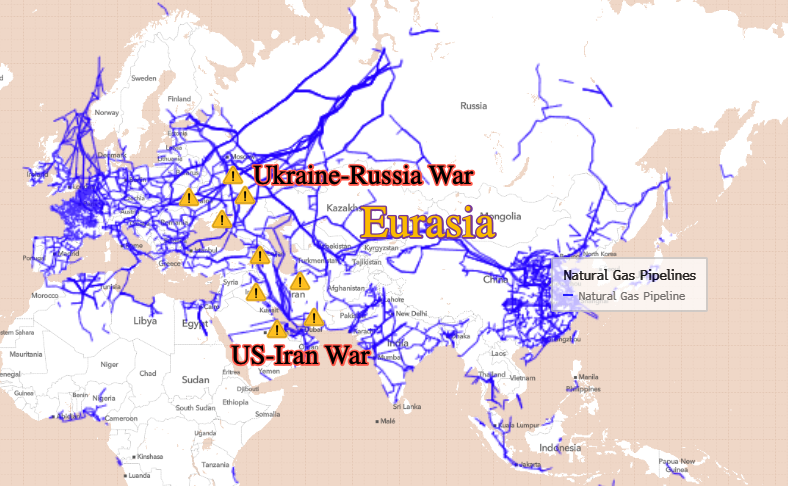
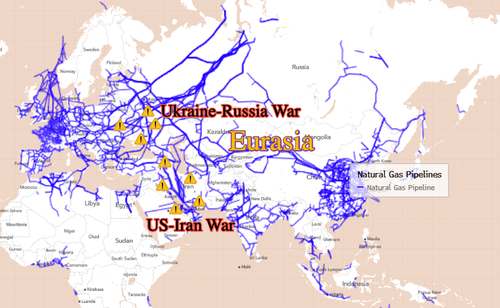
None of this should come as a surprise. Eurasian energy flows have been rewired over the last four years, first by the Russia-Ukraine war and now by the U.S.-Iran conflict. Nord Stream was an early turning point in that structural shift, and the latest Gulf disruptions have only accelerated it.
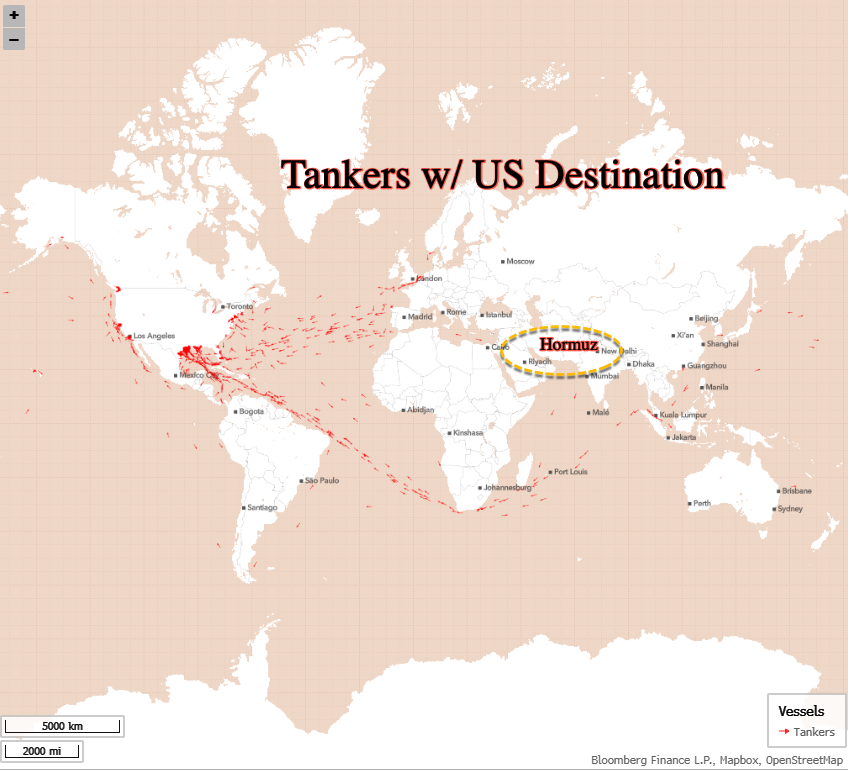
What had been obvious to energy analysts for weeks finally broke into the mainstream over the weekend, with even Fox News plastering charts showing the U.S. has become the world’s emergency gas station.
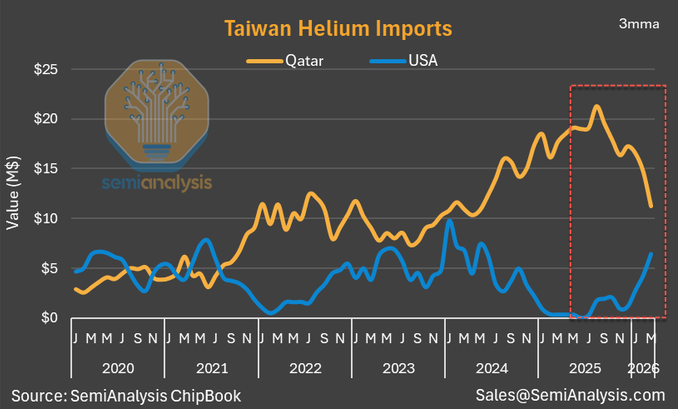
The next chart, shared by independent research firm SemiAnalysis, shows yet another rewiring of global energy flows, this time in Taiwan’s helium sourcing, which was previously dominated by shipments from Qatar; this trend has quickly reversed, with U.S. helium shipments ramping up.
Key points of the SemiAnalysis chart showing the structural shift in Taiwan’s helium sourcing:
Qatar dominated – until recently:
From 2020 through most of 2024, Taiwan’s helium imports were heavily dominated by Qatar (orange line)
Volumes ramped in just a few short years, peaking above $20M/month in 2025
That reflects Qatar’s long-standing role as a low-cost, large-scale helium supplier.
Sudden reversal:
Qatar volumes are sharply rolling over in 2026
It’s not demand-driven, given AI chip production elevated – it’s linked to supply disruption or geopolitical risk and uncertainty in the Mideast, forcing Taiwanese buyers to source from more secure areas
US exporters stepping in:
U.S. helium (blue line) was volatile and secondary for years
But by 2026, a clear rebound in U.S. exports to Taiwan
What this all means is that, with Qatar’s energy flows disrupted by war-related damage that could take years to fix, the U.S. is stepping in as a swing supplier, given that ExxonMobil’s LaBarge facility in Wyoming accounts for about 20% of the world’s supply.
Latest note:
Wyoming’s Helium Empire Ascends As Qatar Gas Goes Flat
Helium is critical for Taiwan because it sits at the center of the global semiconductor manufacturing chain. The gas is vital for cooling advanced chipmaking machines that produce chips for iPhones and computers.
The rewiring of global energy flows toward the U.S. comes down to one thing: the Trump administration is trying to reestablish strategic leverage after years of watching that advantage erode under Obama and Biden as China expanded its power.
Tyler Durden
Mon, 04/13/2026 – 11:20

US Allies Loudly Reject Trump’s Scheme To Blockade Hormuz: ‘Not Getting Dragged In’
US Allies Loudly Reject Trump’s Scheme To Blockade Hormuz: ‘Not Getting Dragged In’
The United Kingdom and several other countries rejected Washington’s plan to impose a blockade on Iranian ports and target ships transiting the Strait of Hormuz, which has gone into effect Monday.
Prime Minister Keir Starmer made clear his stance that “we are not supporting the blockade” in a fresh interview with BBC Radio. He emphasized that the UK is not “getting dragged in” to the US-Israeli war against Iran, but still stated that it’s “vital that we get the strait open and fully open.”
As fully expected Spain’s government also condemned the US move, with the country’s Defense Minister Margarita Robles having said, “It’s just another episode in this downward spiral we’ve slipped into,” adding that Trump and Netanyahu “want to impose rules on the international community, which is illogical.”
Earlier we reported that France is working with the UK on a conference to organize a “strictly defensive” and “peaceful” mission to reopen the Strait of Hormuz.
President Emmanuel Macron said, “As regards the Strait of Hormuz, in the coming days, together with the UK, we will organize a conference with those countries prepared to contribute alongside us to a peaceful multinational mission aimed at restoring freedom of navigation in the strait.” He added, “This strictly defensive mission, separate from the warring parties to the conflict, is intended to be deployed as soon as circumstances permit.”
Still, Paris has rejected a US request to join a military coalition to forcibly reopen the strait, essentially paralleling Britain’s position.
At the same time Germany has not weighed in strongly one way or the other. A German government statement has said that “The US military’s announcement did not mention a blockade of the Strait of Hormuz, but rather a blockade of Iranian ports – that is a different approach.”
Meanwhile, Turkey has strongly opposed the blockade and called for renewed diplomacy, while China too is warning against escalation and urged stability.
US Central Command (CENTCOM) announced it would begin a blockade “of all maritime traffic entering and exiting” Iranian ports starting at 10:00am Eastern Time on Monday.
Will the United Kingdom send warships through the Strait of Hormuz by April 30, 2026?
Yes 9% · No 92%
View full market & trade on Polymarket
It added, “The blockade will be enforced impartially against vessels of all nations entering or departing Iranian ports and coastal areas, including all Iranian ports on the Arabian Gulf and Gulf of Oman. CENTCOM forces will not impede freedom of navigation for vessels transiting the Strait of Hormuz to and from non-Iranian ports.”
Tyler Durden
Mon, 04/13/2026 – 10:45
Key Events This Week: PPI, Industrial Production, Q1 Earnings, Iran War
Key Events This Week: PPI, Industrial Production, Q1 Earnings, Iran War
When it comes to the week ahead, clearly the Iran conflict will be the main focus, but there are a few other things to look out on the calendar.
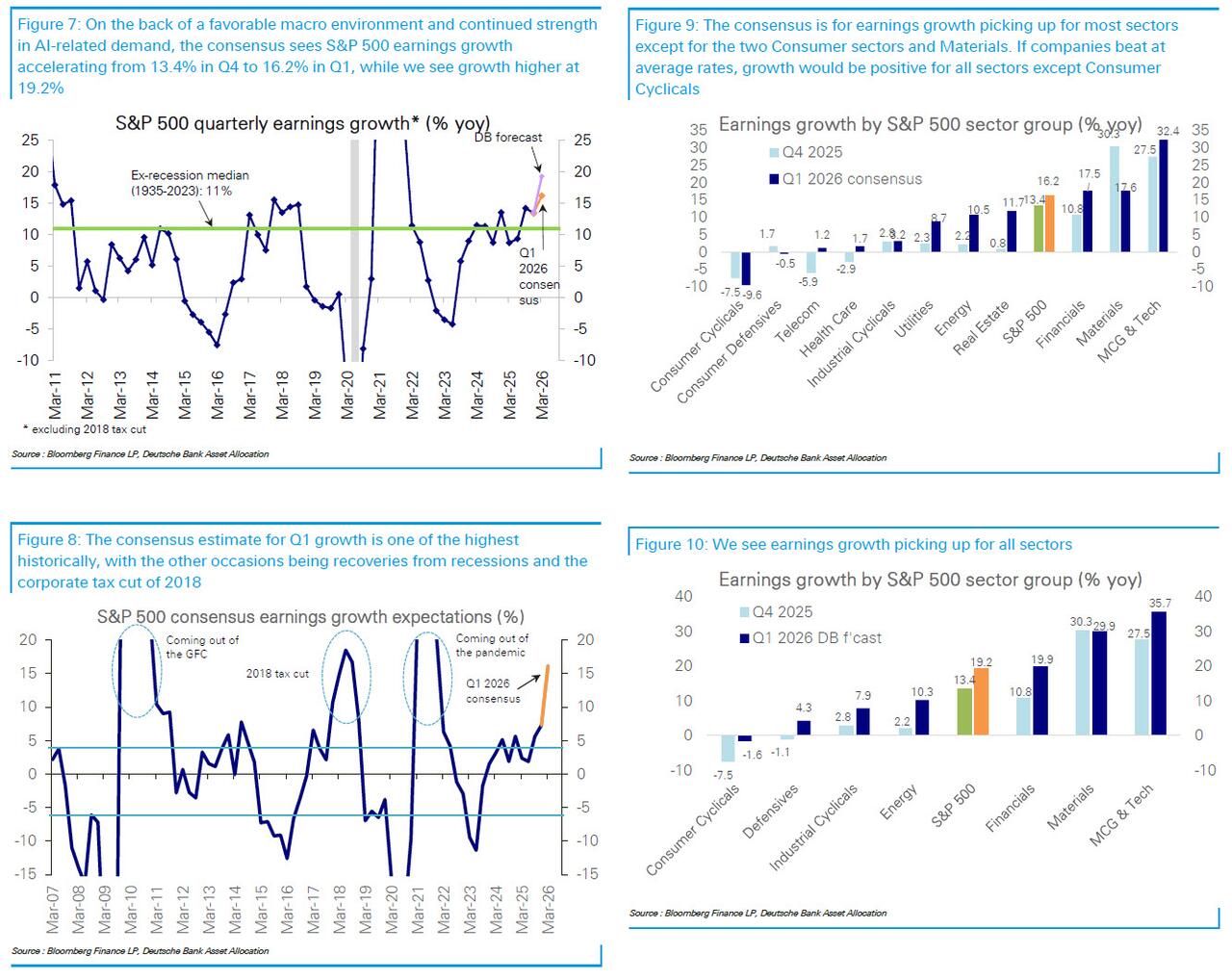
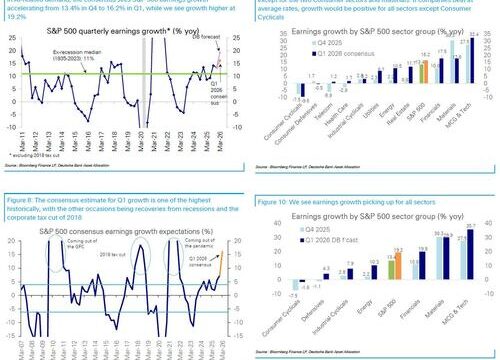
First, the Q1 earnings season will start to kick off, with this week’s releases including several US financials. DB’s equity strategists have a full preview, and they argue that the bottom up-analyst consensus for S&P 500 earnings growth accelerating into the mid-teens (16%) is justified by a favorable macro environment (full preview here). They expect growth to come in even stronger at 19%, with growth broadening across sectors, albeit clearly led by megacap growth and tech, along with the financials. In terms of this week’s releases, we’ll hear from Goldman Sachs today, BlackRock, JPMorgan and Citigroup on Tuesday, Bank of America and Morgan Stanley on Wednesday, and Netflix on Thursday.
Otherwise, we have a few more data releases this week that will give us a fuller picture of how the global economy performed in Q1.
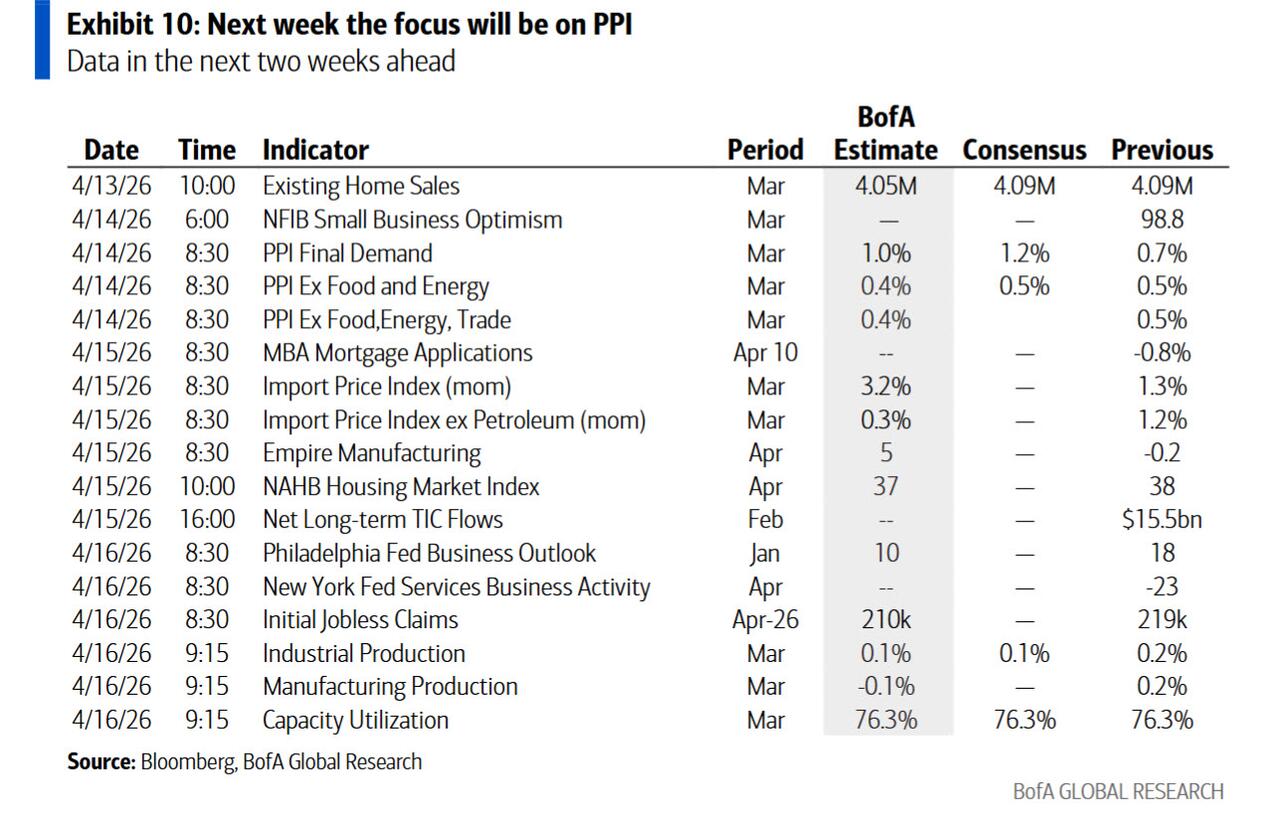
In the US, this week’s highlights include the PPI inflation reading, and economists expect there to be strong gains, echoing the uptick in the CPI last Friday. So for headline PPI, DB is looking for a monthly print of +1.0%, which would be the strongest since March 2022. And as ever, the focus will be on those components of the PPI that feed into core PCE, which is closely followed by the Fed.
A key highlight will be China’s Q1 GDP growth, with DB’s economists expecting that to come in at +4.6% on a year-on-year basis.
On the policy side, the focus will be on Washington DC, as the Spring Meetings of the IMF and World Bank are taking place over this week. So we’ll be hearing from a lot of officials around those events, including ECB President Lagarde and BoE Governor Bailey. Moreover, we’ll also get the IMF’s latest World Economic Outlook tomorrow, and this week will be the last chance to hear from Federal Reserve officials, as their blackout period ahead of the April meeting begins on Saturday.
Courtesy of DB, here is a day-by-day calendar of events
Monday April 13
Data: US March existing home sales, Canada February building permits
Central banks: Fed’s Miran speaks, ECB’s Guindos speaks, BoJ’s Ueda speaks
Earnings: Goldman Sachs
Other: The Spring meetings of the IMF and World Bank, through April 18
Tuesday April 14
Data: US March PPI, NFIB small business optimism, China March trade balance, Japan February capacity utilisation
Central banks: Fed’s Goolsbee, Barr, Paulson, Collins and Barkin speak, ECB’s Lagarde, Lane and Makhlouf speak, BoE’s Bailey, Mann and Greene speak
Earnings: JPMorgan Chase, Johnson & Johnson, Wells Fargo, Citigroup, Blackrock
Other: IMF’s World Economic Outlook
Wednesday April 15
Data: US April Empire manufacturing index, NAHB housing market index, March import price index, export price index, February total net TIC flows, Japan February core machine orders, Italy February general government debt, Canada February manufacturing sales
Central banks: Fed’s Beige Book, Fed’s Bowman and Barr speak, ECB’s Escriva, Schnabel and Villeroy speak, BoE’s Bailey speaks
Earnings: ASML, Bank of America, Morgan Stanley
Thursday April 16
Data: US April New York Fed services business activity, Philadelphia Fed business outlook, March industrial production, capacity utilisation, initial jobless claims, China Q1 GDP, March retail sales, industrial production, home prices, investment, UK February monthly GDP, Canada March existing home sales, Australia March labour force survey
Central banks: ECB’s account of the March meeting, Fed’s Williams and Miran speak, ECB’s Schnabel, Kazaks, Rehn, Kocher, Radev, Villeroy and Lane speaks, BoE’s Taylor speaks
Earnings: TSMC, Netflix, PepsiCo, Abbott Laboratories, Charles Schwab, Bank of New York Mellon, Tesco
Friday April 17
Data: Italy February trade balance, current account balance, ECB February current account, Eurozone February trade balance, Canada March housing starts, February international securities transactions
Central banks: Fed’s Barkin and Waller speak
Earnings: Ericsson
Finally, looking at just the US, the key economic data releases this week are the PPI on Tuesday and the industrial production report on Thursday. There are several speaking engagements by Fed officials this week, including events with Governor Miran on Monday, Governor Barr on Tuesday, New York Fed President Williams on Thursday, and Governor Waller on Friday.
Monday, April 13
10:00 AM Existing home sales, March (GS -1.5%, consensus -0.8%, last +1.7%)
06:20 PM Fed Governor Miran speaks: Fed Governor Stephen Miran will participate in a moderated conversation at the Symposium on Building the Financial System of the 21st Century in Washington DC. Q&A is expected. On March 30, Miran said, “I think that [the funds rate] could be about a point easier, gradually done over the course of a year.”
Tuesday, April 14
08:30 AM PPI final demand, March (GS +1.0%, consensus +1.1%, last +0.7%); PPI ex-food and energy, March (GS +0.4%, consensus +0.5%, last +0.5%); PPI ex-food, energy, and trade, March (GS +0.4%, consensus +0.4%, last +0.5%):
12:15 PM Chicago Fed President Goolsbee (FOMC non-voter) speaks: Chicago Fed President Austan Goolsbee will speak at the Semafor World Economy Summit in Washington DC. Q&A is expected. On April 3, Goolsbee said, “Before the war, before we got the oil shock, I’d been on the optimistic side on rates. I believed rates could come down even multiple times in 2026, [but the energy shock] complicates that picture for me. If we’re truly not going to see any improvement in inflation, to me that starts pushing these decisions off to 2027 at the earliest.”
12:45 PM Fed Governor Barr speaks: Fed Governor Michael Barr will speak on rural economic development at the Strengthening America’s Economy through Rural Investment forum in Washington DC. Speech text is expected. On March 26, Barr said, “Given the considerable uncertainty about the potential effects of developments in the Middle East on our economy, as well as the other factors I mentioned, it makes sense to take some time to assess conditions.” He added, “Our current policy stance puts us in a good place to hold steady while we evaluate incoming data, the evolving forecast, and the balance of risks.”
01:00 PM Fed Governor Barr, Richmond Fed President Barkin (FOMC non-voter), Boston Fed President Collins (FOMC non-voter), and Philadelphia Fed President Paulson (FOMC voter) speak: Fed Governor Michael Barr will moderate a fireside chat on strengthening America’s economy through rural investment with Richmond Fed President Tom Barkin, Boston Fed President Susan Collins, and Philadelphia Fed President Anna Paulson in Washington DC. On March 27, Barkin said, “With risks to both the labor market and inflation, and the outlook foggy, it felt prudent to hold rates and await more clarity on how we should be leaning to best support the economy going forward.” On the same day, Paulson said, “If inflation were at the 2% target, I would feel more comfortable being patient, keeping monetary policy on hold and waiting to see if a hypothetical growth surge puts upward pressure on inflation. But if inflation is above 2 percent and has been for some time, I would be more cautious… I would be inclined to weight the possibility of overheating more heavily in determining appropriate policy.”
Wednesday, April 15
08:30 AM Import price index, March (consensus +2.2%, last +1.3%): Export price index, March (consensus 1.7%, last +1.5%)
08:30 AM Fed Governor Barr speaks: Fed Governor Michael Barr will participate in a conversation on consumer compliance supervision and regulation at the National Community Reinvestment Coalition Just Economy Conference in Washington DC.
01:45 PM Fed Vice Chair for Supervision Bowman speaks: Fed Vice Chair for Supervision Michelle Bowman will participate in a conversation on banking regulation at the Institute of International Finance Global Outlook Forum in Washington DC.
02:00 PM Fed releases Beige book, April meeting period: The Fed’s Beige Book is a summary of regional economic anecdotes from the 12 Federal Reserve districts. The Beige Book for the March FOMC meeting period noted that overall economic activity increased at a slight to moderate pace in seven of the twelve Federal Reserve Districts, with two Districts reporting no change and three reporting a modest decline. In this month’s Beige Book, we will look for anecdotes related to how firms are responding to the conflict in the Middle East, the evolution of labor demand, and firms’ expectations of activity growth for the remainder of the year.
Thursday, April 16
08:30 AM Initial jobless claims, week ended April 11 (GS 215k, consensus 214k, last 219k): Continuing jobless claims, week ended April 4 (consensus 1,805k, last 1,794k)
08:30 AM Philadelphia Fed manufacturing index, April (GS 10.0, consensus 10.0, last 18.1): 08:35 AM New York Fed President Williams (FOMC voter) speaks: New York Fed President John Williams will give keynote remarks at the Federal Home Loan Bank of New York. Speech text and Q&A are expected. On March 30, Williams said, “The conflict in the Middle East could result in a large supply shock with pronounced effects that simultaneously raises inflation.” He added, “This is an unusual set of circumstances, but the current stance of monetary policy is well positioned to balance the risks to our maximum employment and price stability goals.”
09:15 AM Industrial production, March (GS flat, consensus +0.1%, last +0.2%): Manufacturing production, March (GS flat, consensus +0.1%, last +0.2%); Capacity utilization, March (GS 76.3%, consensus 76.3%, last 76.3%): We estimate industrial production was unchanged in March, reflecting strong natural gas production but weak auto production. We estimate capacity utilization was unchanged at 76.3%.
10:35 AM Fed Governor Miran speaks: Fed Governor Stephen Miran will participate in a conversation on global macroeconomics at the Washington Economic Festival in Washington DC.
Friday, April 17
There are no major data releases scheduled.
12:15 PM Richmond Fed President Barkin (FOMC non-voter) speaks: Richmond Fed President Tom Barkin will speak on the economic outlook at the Citadel Directors Institute in Charleston, SC. Q&A is expected.
02:00 PM Fed Governor Waller speaks: Fed Governor Christopher Waller will deliver the David Kaserman Memorial Lecture on the economic outlook at Auburn University. Speech text and Q&A are expected. On March 20, Waller said, “If things go reasonably well and the labor market continues to be weak, I would start advocating again for cutting the policy rate later this year.”
Soruce: DB, Goldman
Tyler Durden
Mon, 04/13/2026 – 10:35
https://www.zerohedge.com/economics/key-events-week-ppi-industrial-production-q1-earnings-iran-war

Master And Commander-In-Chief
Master And Commander-In-Chief
By Benjamin Picton, senior market strategist at Rabobank
April – 2026. The IRGC is master of the Strait of Hormuz. Only the American fleet stands before them. Oceans are now battlefields.
Financial markets are back in a risk-off mood today following news over the weekend that US-Iran peace talks ended without agreement and a statement by CENTCOM that the United States will be initiating its own blockade of the Strait of Hormuz from today. President Trump took to Truth Social to say that he has instructed US forces to “interdict” every vessel in international waters that had paid a toll to Iran, while also threatening that any Iranian who fires upon US or peaceful vessels will be “blown to hell”.
10-year bond yields in Australia and New Zealand have leapt 6-7bps in early trade, Asian equities have opened mostly lower, US equity futures are pointing toward losses of around 1%, and front-month Brent crude futures are up by almost 8% to $102.69/bbl. Brent crude for immediate delivery closed down almost $6 at $125.88/bbl on Friday, but is sure to jump today as the market contemplates the loss of Iranian export volumes and a potential re-start of the war.
The US Dollar spot index is trading firmer this morning and both the CAD and NOK are holding up comparatively well as markets again countenance higher-for-longer energy prices. The Euro is 0.32% lower early in the Asian session despite news over the weekend that Peter Magyar’s comparatively pro-EU Tisza party has comprehensively defeated incumbent Viktor Orban’s Fidesz party – securing a two-thirds majority in the 199 seat parliament.
While moves on the Bloomberg screen this morning are not particularly suggestive of massive dislocations underway, the implications of the weekend’s events are potentially much more serious than the price action is letting on.
RaboResearch’s Global Strategist Michael Every writes:
When Trump first threatened Greenland, we argued Europe’s inability to resist such a US advance underlined its decline since 1956’s Suez Crisis, at US hands, first revealed that European powers were no longer ‘Great’. The Greenland episode made the EU look like the Egypt of 1956.
When this Iran War loomed, we asked if the US was still the same Power as in 1956 or had also slid to become like then UK/France, with markets (or countries) able to force it into retreat. We underlined repeatedly that this outcome, which some wrongly saw as a market-friendly TACO, would open a Pandora’s Box for western assets as the foundation of US hegemony on which they are built crumbles.
For that reason, we argued the US would continue to escalate to try to deescalate on its terms, especially as the recent ceasefire had left Iran in control of its enriched uranium and control of the Strait of Hormuz – an intolerable situation. Indeed, we also made clear that things would get worse, geopolitically, before they got better – which naturally risked that we just went ‘off the cliff’ instead.
On Saturday, the collapse in peace talks over the nuclear, Hormuz, and Iran proxy issues revealed that the gulf between the parties to negotiation is as wide as the Persian Gulf through which very little energy, fertiliser, sulphur, or helium is currently flowing.
In response, and in addition to the 50% tariff announced last week against states arming Iran, Trump announced renewed sanctions vs Iranian oil at sea and against any country paying a toll to Iran to get energy. He also played his ‘trump’ card of a US naval blockade of Hormuz to take effect from 10am EST today. Having sent two Arleigh Burke destroyers through the Strait over the weekend, the US will now begin actions to clear any marine mines, thereby removing a key obstacle to the resumption of commercial shipping that Iran claims it has no capacity to remove itself.
The US blockade isn’t aimed at stopping GCC energy and goods flowing, which they aren’t anyway, but will stop Iran exporting energy, or importing food, industrial parts, or weaponry by sea. The economic impact will be enormous, and in around 13 days, Iranian oil storage will be full, forcing well shut-ins and risking permanent supply-side damage. The political goal is clear: force the Iranian regime faction negotiating with the US to destroy those which oppose the US peace deal; and/or incentivise the Iranian population to rise up against the regime again.
Yet the loss of another 2m Iranian barrels of oil a day is a huge blow to the world economy. In that, the US geopolitical goals are: (1) to get reluctant allies to step up and help reopen Hormuz by force; and (2) to force China to step in and help lean on Tehran to submit. (Recall our 2026 financial markets outlook in October 2025, ‘Who has the cards?’, argued the US ace in this realpolitik poker was to use its global military reach to disrupt upstream commodity supply chains heading to rivals and take control of energy – a hand it already played early in 2026 in Venezuela.)
On one hand, US escalation might work. Yet unless Iran were to crumble quickly, the prospect is of an even deeper global energy crisis ahead first. Indeed, de-mining Hormuz, to say nothing of dealing with drone and missile attacks, could take many weeks (faster with allies like Japan, for instance) when the energy damage being done already risks becoming exponential daily.
Yet Iran can also escalate. If they force a ship through the blockade or fire at the US, the current ceasefire breaks down and war is back. Moreover, despite reticence to act so far, the Iran-proxy Houthis could block the key Bab-el-Mandeb chokepoint and perhaps the entire Red Sea. That would risk stripping out another 7m barrels a day of Saudi oil flows, making everything exponentially worse.
Moreover, other parties can escalate. US allies could walk away from Trump at an even higher economic and geopolitical price (on the latter, the US approach is clearly, ‘To the winner the spoils, to the spoilers, no wins). China could use economic coercion on US supply chains; or send an oil tanker through Hormuz, thereby risking blowing up US-China relations or forcing the US to ‘blink’ on the blockade; and some sources allege, it is sending military aid, which USTR Greer has said would make the upcoming Xi-Trump talks aimed at trade detente more difficult.
As such, the US Hormuz blockade is short term bullish for energy prices, bearish for world growth and, at worst, risks questions moving from ‘1956?’ to ‘1962?’, which is when we saw the US-USSR Cuban Missile Crisis. Again any TACO from there would merely take us back to 1956, which is not anywhere a rules-based order in reality underpinned by US military power arguably needs to be. Our base case Hormuz scenario (an end to hostilities by mid April and slow re-opening of the Strait thereafter) is hanging on by its finger nails for now, but may soon need to be revised in a more bearish direction.
Ironically, in the weekend’s Hungarian election result Brussels and EU capitals may see parallels to 1956’s Hungarian Uprising. Magyar’s defeat of Orban potentially removes a major internal obstacle to EU efforts to deal with the conflux of geopolitical and geoeconomic crises plaguing it. That said, Magyar is hardly a Eurocrat. Like Orban, he too is socially conservative, anti-immigration, and sceptical of Ukraine. Further EU-Budapest tensions may yet lie ahead, while Czechia and Slovakia are still Orban-esque in their own right.
Prior to jetting off to Islamabad for the Iran negotiations, US Vice President Vance had been in Hungary to support Orban’s campaign for re-election. The election outcome also shows – once again – that a muscular ‘America First’ message doesn’t sell well outside of the US. That doesn’t mean the policy stops: it just risks more global fragmentation. Allies are already souring on US links and – in some cases (Canada and Spain, for example) – contemplating deeper engagement with the US main strategic rival: China.
Tyler Durden
Mon, 04/13/2026 – 10:20
https://www.zerohedge.com/markets/master-and-commander-chief
Existing US Home Sales Plunged In March, Despite Falling Mortgage Rates
Existing US Home Sales Plunged In March, Despite Falling Mortgage Rates
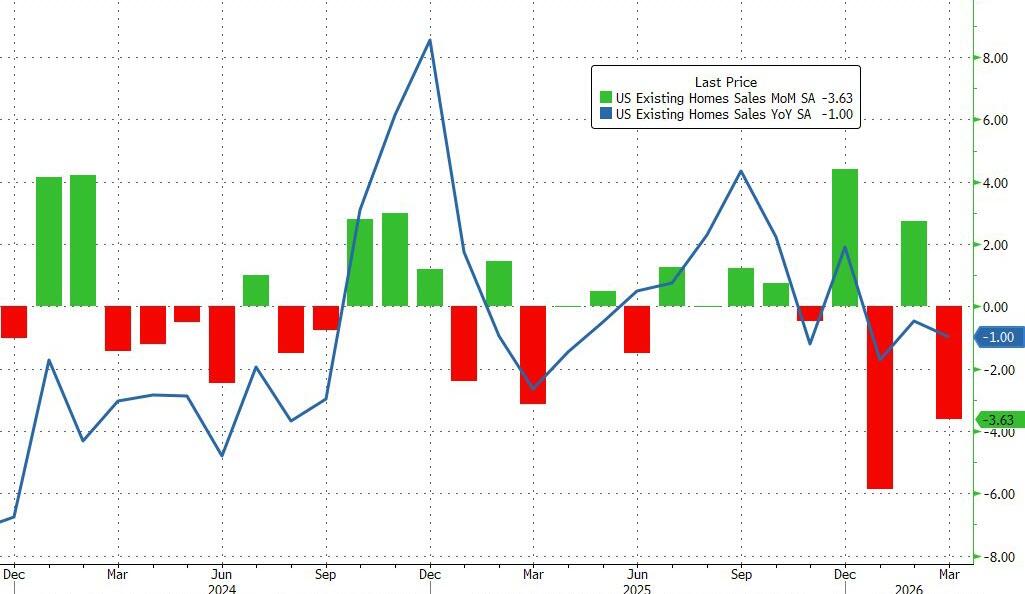
Affordability-aiding lower mortgage rates battled a sentiment-sapping surge in geopolitical panic in March, with analysts expecting the latter to outweigh the former with a modest 0.7% MoM decline (after January’s plunged – weather? – and February’s modest rebound).
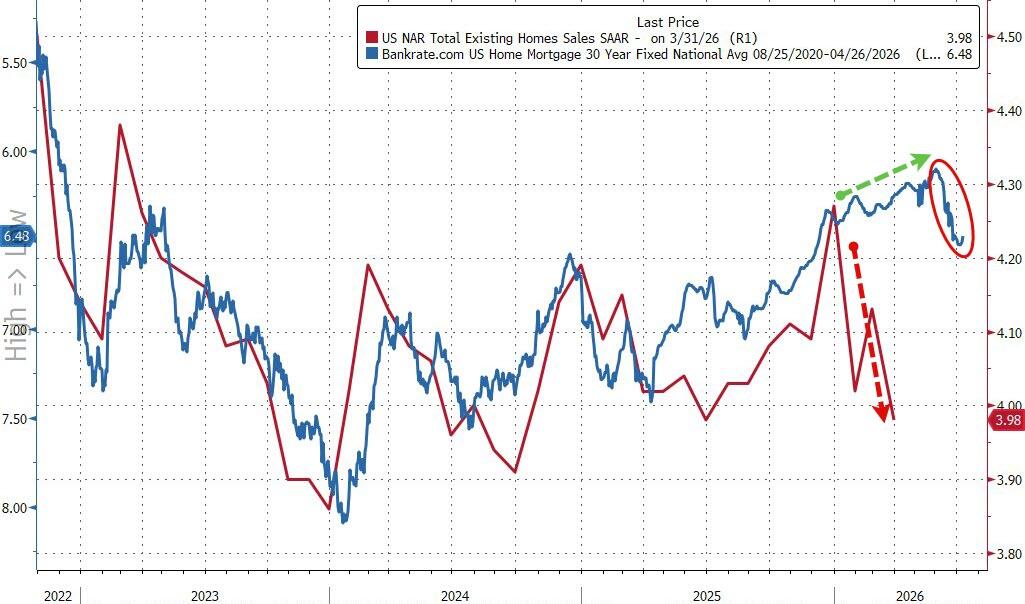
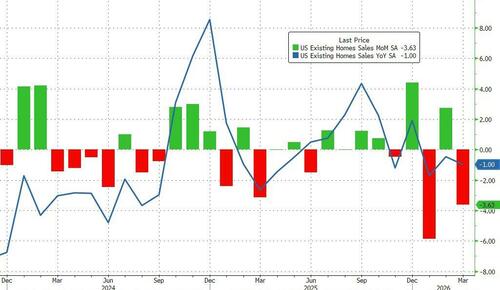
The analysts under-estimated the fear from war-mongering as existing home sales plunged 3.6% MoM (down bigly from an upwardly revised 2.7% MoM jump in Feb). That is the second biggest drop in existing home sales since Nov 2022…
Source: Bloomberg
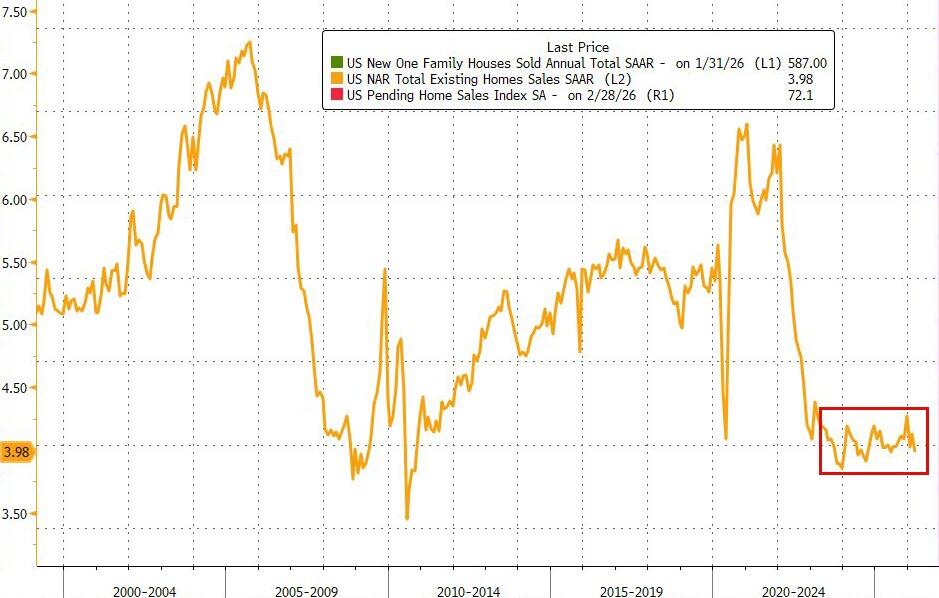
That dragged Existing Home Sale SAAR back below 4 million homes (3.98m to be exact), near the lowest level since Lehman…
Source: Bloomberg
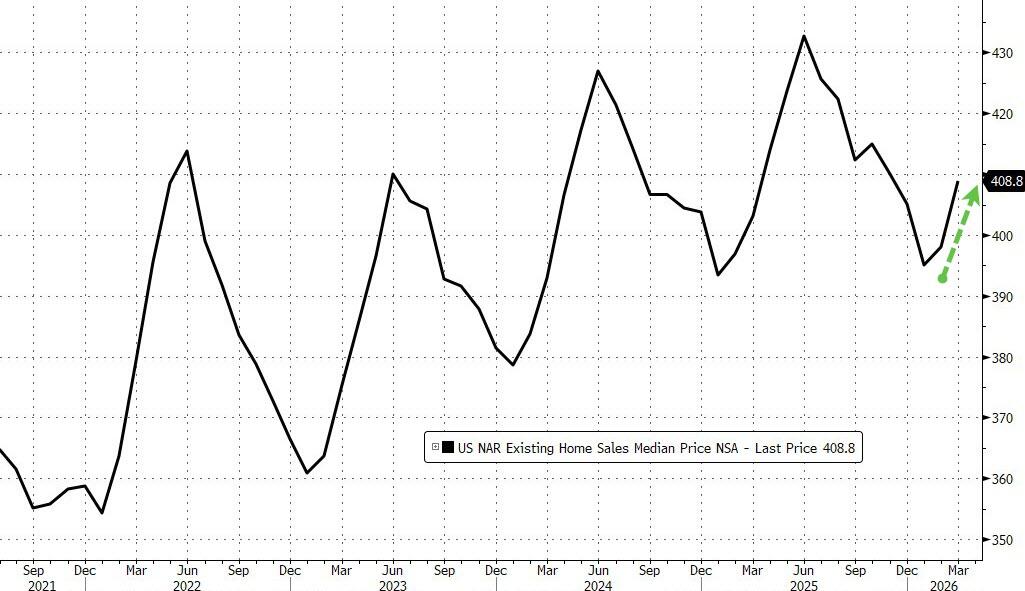
The NAR report showed the median selling price rose 1.4% from a year earlier in March, to $408,800.
Source: Bloomberg
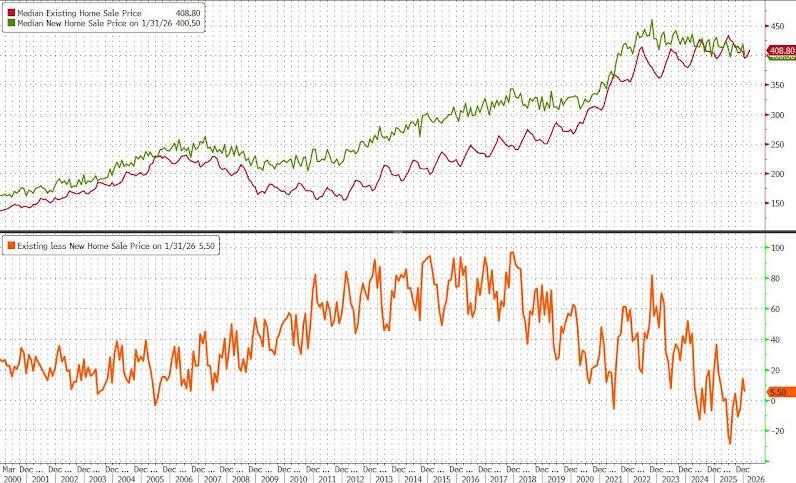
Pushing Existing (Used) House prices back above New House Prices…
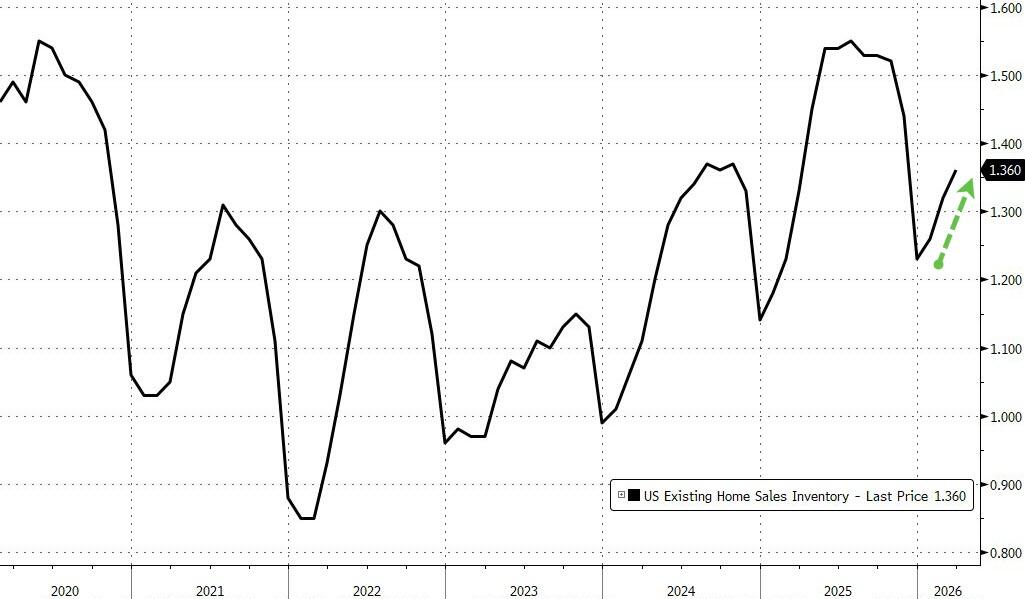
The inventory of previously owned homes edged up to a four-month high but remains historically depressed.
Source: Bloomberg
Contract signings declined across all regions, according to the NAR.
Sales in the Northeast slid to the lowest on record in data going back to 1999, while those in the Midwest matched the weakest pace since 2011.
The NAR also slashed its 2026 existing-home sales forecast to 4%, from 14% previously.
“Mortgage rates have been rising, and that has led us to trim our home sales outlook for the year,” NAR Chief Economist Lawrence Yun said in a statement.
It appears home sales front-ran the rise in mortgage rates since the war began.
Tyler Durden
Mon, 04/13/2026 – 10:09