Category: News
First Humanoid Robot With Embodied Intelligence For High-Risk Jobs Enters Service
First Humanoid Robot With Embodied Intelligence For High-Risk Jobs Enters Service
Authored by Mriogakshi Dixit via Interesting Engineering,
In the dizzying heights of a chemical storage facility, a new kind of worker is punching in. China has reportedly deployed its first “embodied” intelligent humanoid robot designed for high-risk industrial operations.
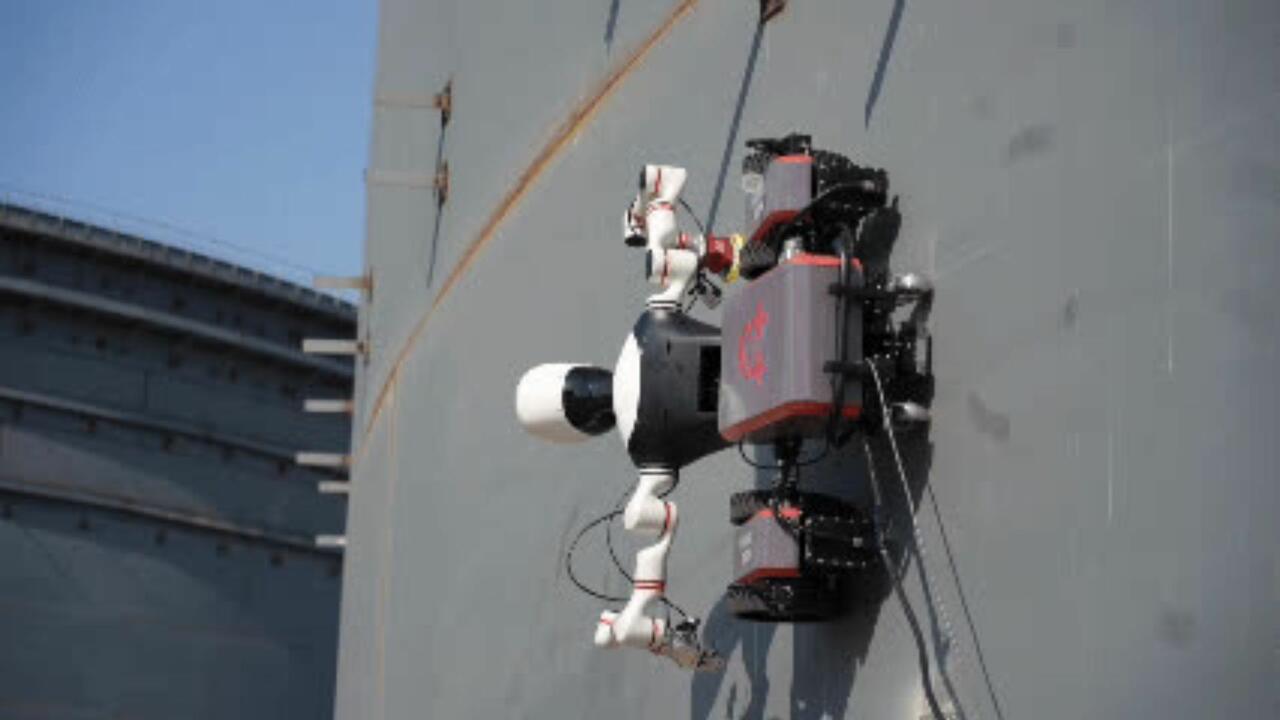
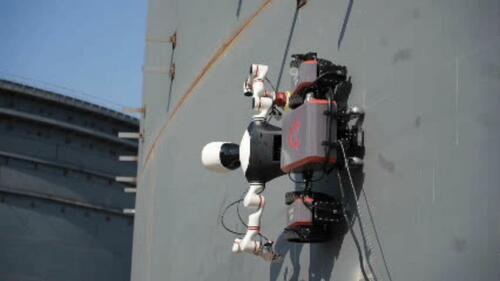
Embodied AI robot can be seen working on the wall of a large chemical storage tank in testing.CCTV PLus
This isn’t just a fixed machine; it’s a 90-kg (198-pound) robot that can climb walls and work where humans can’t.
Interestingly, the multi-purpose system is intended to replace human workers in hazardous conditions, such as chemical storage tank construction.
According to reports, this machine uses a magnetic chassis to stick to walls, allowing its humanoid upper body to operate on any metal surface.
The robot could be used to execute core industrial tasks, including precision welding, rust remediation, and routine inspections.
15 degrees of freedom
Compared with earlier wall-climbing robots that were limited to a single repetitive function, this new system is said to be a multitasker.
It moves beyond basic cleaning or inspection by leveraging advanced AI to adapt to its environment and handle a wide range of complex industrial tasks.
With 15 degrees of freedom and dual arms, the robot mimics human flexibility to safely multitask on scaffolds, performing precision tasks such as simultaneous welding and grinding.
According to CGTN, this physical agility is driven by a massive AI brain trained on 100,000 hours of data, enabling it to navigate complex environments with ease.
This “embodied intelligence” allows the robotic machine to perceive its surroundings, adapt to complex real-world scenarios, and improve its performance through ongoing experience.
Moreover, it uses a tethered cable system to eliminate the power limitations that usually hold mobile units back.
This constant supply of energy allows for nonstop, 24/7 operation, ensuring the machine stays productive without the downtime required for recharging.
Built for the danger zone
Tested at a large chemical storage site, the 90-kilogram robot uses a wheeled, magnetic chassis to move steadily across vertical metal surfaces.
Its powerful electromagnetic adhesion enables it to perform complex operations while supporting additional weight, ensuring it remains mobile and secure even on steep walls.
In the future, entire fleets of these robots could maintain shipyards and refineries. It could lead to a new era where heavy infrastructure can essentially take care of itself.
Prior to this, China reached another milestone by integrating an embodied intelligent robot into SAIC Motor’s electric vehicle division’s mass production line.
The humanoid robot, known as “Nengzai No. 1,” has officially joined the battery assembly line for the Buick Electra E7 at SAIC Motor.
This move is a major step for the Shanghai-based carmaker as it starts combining smart, human-like robots with its regular factory machines.
China’s dominance in the humanoid sector is backed by massive state support, with over 140 companies focused specifically on humanoids and $26 billion in dedicated investment.
Even Elon Musk has acknowledged China’s lead in this “priority industry,” which benefits from extensive supply chains and government subsidies.
By 2050, the global market for these robots could reach $7.5 trillion, and China is positioning itself to lead that charge by deploying humanoids in factories and private homes.
Tyler Durden
Tue, 04/14/2026 – 07:20

Irish Patriots Are Fighting Back
Irish Patriots Are Fighting Back
Authored by J.B. Shurk via American Thinker,
So you say you want a revolution? Well, take a look at what’s happening in Ireland right now. Tens of thousands of farmers, truckers, and other fed-up “normies” are taking to the streets of Dublin to protest fuel taxes, mass immigration, and poverty-inducing “climate change” policies. For the most part, corporate news propagandists in both Europe and North America are intentionally ignoring the combustible situation. Just when I had begun to think that all the “fighting Irish” had moved to America, the Old Country has started to show signs of life. Perhaps there are still a few irascible pugilists willing to bash heads and take on the globalist empire after all.
Speaking of irascible pugilists, Irish slugger Conor McGregor issued a bit of an ultimatum to the ruling class after the government mobilized the military and sent tanks to intimidate the protesters: “One wrong move by government here, and you will see, at the very least, 250k Irish people descend on the capital in a blink. They must step down, there is no other way.” Declaring war against ordinary Irishmen isn’t a good look for an Irish Deep State that can’t be bothered to guard its borders from hordes of invading foreigners. While McGregor and his compatriots are out feeding protesters in the streets, the Irish government is hiking taxes on those who can least afford to pay them. “One wrong move” could spark a revolution.
Perhaps that’s why — after an initial show of force — Ireland’s globalist government appears to be trying to settle things down. Reports on the ground say that police officers have remained friendly with protesters. Some have suggested that Irish authorities are wary of following in the footsteps of Canada’s former prime minister, Justin Trudeau, when he exercised martial law powers to seize the bank accounts of and jail “Freedom Convoy” truckers protesting coercive COVID “vaccination” mandates. On the other hand, a lot of the Irish protesters have also described a sense that many of the law enforcement officers patrolling the streets appear to be on their side. If that’s the case, then Ireland’s political class may be worried about the effectiveness of siccing the military on a broadly-backed citizen uprising.
Although few people saw the present brouhaha coming, Ireland makes a natural “ground zero” in the war between Big Government globalists (aka, the “international rules-based order” club of World Economic Forum totalitarians) and ordinary citizens willing to defend their nation’s sovereignty and their own personal freedoms. For two decades, the globalists have been taking over Ireland and stripping it for parts. As a country that once took pride in its meaningful traditions, customs, family loyalties, and Catholic heritage, Ireland has been one of the globalists’ favorite targets for conquest. If the “multicultural” atheists could convert Ireland into another globalist outpost devoid of religious or civilizational allegiances, they knew that they would collect a valuable scalp in their war against the West. Sadly, the globalists have been largely successful. By transforming a conservative, staunchly pro-life, Catholic nation into a “woke” re-education zone embracing abortion, “trans” surgeries for children, open borders, Islamic supremacy, and the fetishization of “diversity,” the World Economic Forum’s “Borg” hive mind gutted one of the most culturally rich nations on the planet and mounted Ireland’s head on globalism’s wall of slaughtered states.
Two months ago, free speech defenders Lorcán Price and Graham Linehan testified before the House Judiciary Committee concerning the mass censorship operation being run through the expanding Big Tech enclave in Dublin. There are over 32,000 NGOs in Ireland receiving billions of dollars in U.S. and E.U. grants meant to help shape public opinion. These organizations — one for every 155 Irishmen — represent the “information warfare” army that supports Europe’s globalist policies. Over 70% of Irish legislation is copy-and-pasted from bureaucratic edicts originating in the European Union. These laws include special incentives for illegal immigrants who arrive on Ireland’s shores. They also include “hate speech” laws that have been used to criminally prosecute Irish citizens who object to foreigners raping and murdering their children. The NGO-E.U. takeover of the Irish political system this century has drastically reshaped the country.
Once Christian Ireland now has constitutional protections for gay “marriage” and abortion up to a baby’s birth. Two years ago, Ireland’s globalist cabal nearly succeeded in removing all mentions of “women” from the national constitution, as well as nearly redefining “family” as a “durable relationship.” The Irish government continues to attack Ireland’s Catholic history, going so far as to depict Catholic saints as pagan goddesses in shameless acts of historical revisionism. Globalists continue to rename historic institutions due to ludicrous accusations that Irish clergymen and scholars had ties to slavery and “white supremacy.” As Irish writer Roger Berkeley sorrowfully observes, “Ireland shows what happens when elites, bureaucracies, and ideology override national identity.”
Wherever they conquer, modern globalists prefer to implement blunt-force “divide and conquer” tactics that pit parts of society against each other. Women versus men. Young people versus families. “Green energy” fanatics versus small businesses. Islamic supremacists versus Christians. “Multiculturalism” versus Western civilization. Non-whites versus whites. Globalists succeed wherever they are able to stir up so much domestic strife that nobody pays attention to the cultural, economic, and political agendas being enforced upon the invaded countries. After targeting Ireland for destruction and subverting its traditional culture, globalists appeared to have taken over the island for good.
However, when an outside force conquers a nation, there’s always an inherent risk that forced subjugation sparks a rebellion. When those being gradually enslaved begin to believe that they have nothing else to lose, the ruling class has real problems. Despite the corporate news media’s best attempts to cover up what is going on in Ireland, the current protests against “climate change” taxes and mass immigration suggest that the natives are growing restless. What happens next isn’t entirely clear.
What is clear is that ordinary people in nations across the West are becoming aware of the information war that has long been waged against them. For decades, they have been conditioned to believe false things: “Diversity is our strength.” “Islam is a religion of peace.” “Trans-women are real women.” “Sex is a social construct.” “Man-made climate change is killing the planet.” “New taxes will save the planet.” “Christianity is hate speech.” “Hate speech is a violent crime.” “Free speech requires government-moderated censorship.” “National sovereignty is fascist.” “Families promote white supremacy.” “Merit is white supremacy.” “Math, home ownership, mowed lawns, and punctuality are all forms of white supremacy.” “Equal rights require ‘Diversity, Inclusion, and Equity.’” “Unelected bureaucrats protect democracy.” “NATO must protect non-NATO Ukraine.” Et cetera ad infinitum.
Perhaps globalism’s lies have become too numerous for the average Westerner to ignore. Or perhaps globalists’ hubris has grown too grating for the average Westerner to tolerate. Either way, there is a growing movement of people dedicated to defending Western civilization from the pernicious cancer of godless, multicultural, “woke,” and totalitarian globalism. Because globalists control the corporate news media, these people are disparaged as “populists.” In truth, they are Western citizens committed to national self-determination, the preservation of individual rights, and protections for personal liberty.
Globalists call the will of the people “populism” and the will of bureaucrats “democracy.” But when enough people decide to fight back against the bureaucrats, the spirit of revolution hangs in the air. Perhaps that’s what we’re seeing right now in Ireland — a fresh reminder of Thomas Jefferson’s observation that no “country can preserve its liberties” if its “rulers are not warned from time to time that their people preserve the spirit of resistance.” After all, the “tree of liberty must be refreshed … with the blood of patriots and tyrants. It is its natural manure.”
Tyler Durden
Tue, 04/14/2026 – 06:30
https://www.zerohedge.com/political/irish-patriots-are-fighting-back
Latest Global Sportswear Supply Chain Read-Through Remains Bearish
Latest Global Sportswear Supply Chain Read-Through Remains Bearish
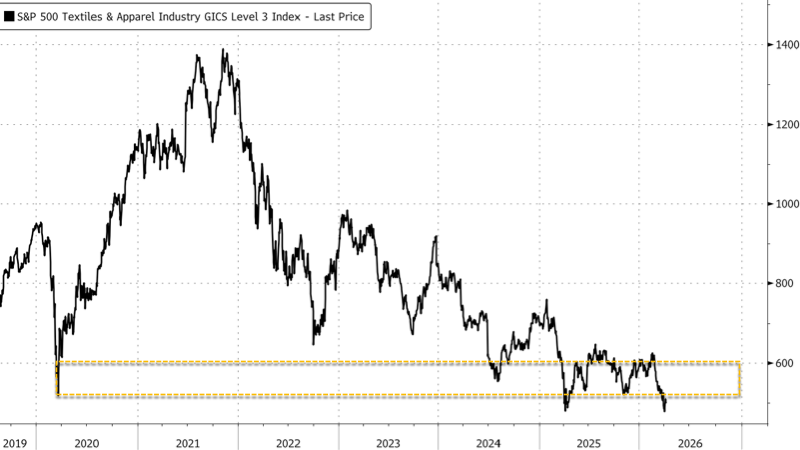
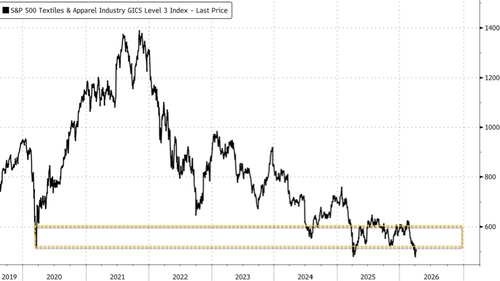
The S&P 500 Textiles, Apparel & Luxury Goods sub-industry index (S5TEXA Index), which includes names such as Nike, Lululemon, Deckers Outdoor, Ralph Lauren, and others, is down 15% year-to-date and roughly 65% from its late 2021 peak. With the index now hovering around Covid-era lows, Goldman analysts have published their latest read on textiles, apparel, and footwear, which explains why sentiment across the global industry remains so bleak.
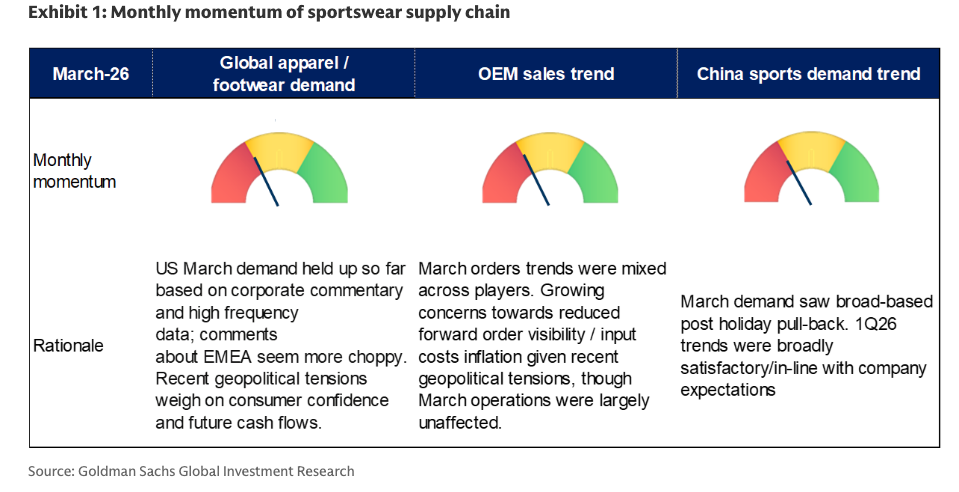
Analysts led by Michelle Cheng reported that major Asian sportswear OEM March orders were mixed, with Eclat outperforming peers, while Makalot and Yue Yuen delivered in-line first-quarter results despite holiday-related pressure in Indonesia. Feng Tay continued to report year-on-year declines in orders, and Huali reported muted first-quarter orders.
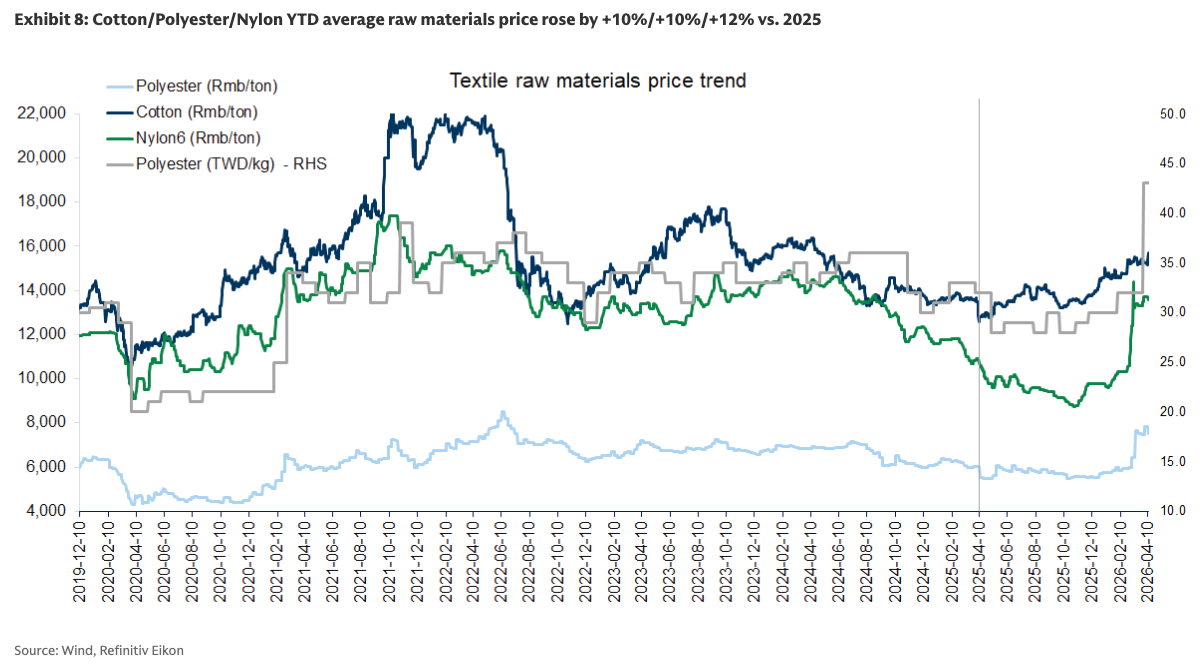
Cheng said the latest earnings season and outlook for apparel this year appear mixed. She noted that geopolitical tensions are beginning to cloud demand and ordering patterns, while higher raw material costs could increasingly pressure OEM margins in the second half of the year if input prices remain elevated.
She said competitiveness among brands may also limit suppliers’ ability to pass those costs through, particularly if brands push part of the burden back onto manufacturers. Nike’s slower-than-expected reset is another major headwind for the industry.
“Most players said March orders were unaffected; but select players have noted lower forward order visibility from brands due to rising costs and concerns over demand,” the analyst said.
She said that on the demand side, US conditions in March appeared resilient, based on commentary from Levi Strauss, PVH, and Nike, as well as high-frequency data – likely because the energy shock has yet to fully hit household budgets. Europe, the Middle East, and Africa were more uneven, she said, adding that sentiment across developed markets deteriorated after the outbreak of the US-Iran conflict.
Cheng said, “Sentiment worsened across developed markets following the start of the Iran war, but we will watch for data post the recent two-week ceasefire. At a brand level, we see negative read-across from Nike but positive from Fast Retailing.”
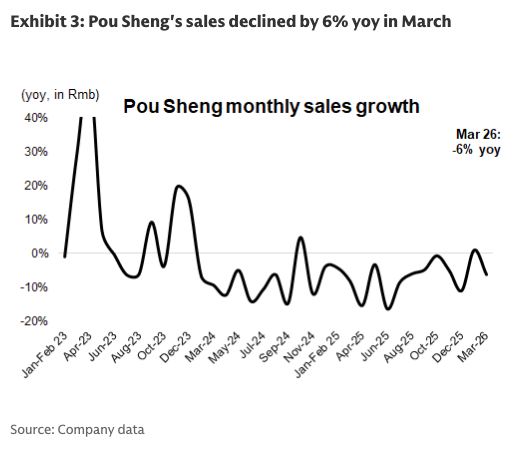
She pointed to Pou Sheng International, a major Chinese sportswear retailer for Nike, Adidas, PUMA, and Converse, whose March sales fell 6% from a year earlier, reflecting a typical post-holiday slowdown. First-quarter revenue declined 1%, which was broadly in line with expectations.
As of March 26, the latest read of sportswear supply chains is largely bearish:
As for when the S5TEXA Index will finally bottom, that likely depends on a reversal in consumer sentiment. President Trump suggested on Sunday that elevated gasoline prices could persist through the second half of the year, reinforcing the risk that pressure on household budgets may continue into the summer.
Professional subscribers can read the full “Asia Pacific Textile, Apparel & Footwear” note here at our new Marketdesk.ai portal
Tyler Durden
Tue, 04/14/2026 – 05:45
https://www.zerohedge.com/markets/latest-global-sportswear-supply-chain-read-through-remains-bearish

ECB Backs Tokenized EU Capital Markets (With Strict Guardrails)
ECB Backs Tokenized EU Capital Markets (With Strict Guardrails)
Authored by Christina Comben via CoinTelegraph.com,
The European Central Bank (ECB) set out a cautious path toward tokenizing Europe’s capital markets, saying the technology can deliver efficiency gains only if it remains anchored to central bank money, infrastructures remain interoperable, and regulation is “robust and supportive.”
In its latest Macroprudential Bulletin published on Monday, the ECB said distributed ledger technology (DLT) could help deepen the European Union’s savings and investments union, but warned that benefits will depend on interoperable infrastructure and policymakers keeping pace with new risks.
The central bank’s stance highlights a push to modernize market plumbing in the bloc without loosening control over settlement or financial stability.
The ECB said that tokenization and DLT are “moving from concept to early-scale deployment,” but the benefits will “only be realised safely if European policy action keeps pace.”
ECB maps conditions for tokenized capital markets
One article in the Bulletin lays out how tokenized assets could rewire the issuance-to-settlement chain, cutting operational frictions and potentially improving secondary market liquidity. By moving securities and cash onto compatible ledgers and automating corporate actions, the authors argue, tokenization could streamline processes that today rely on multiple intermediaries and legacy systems.
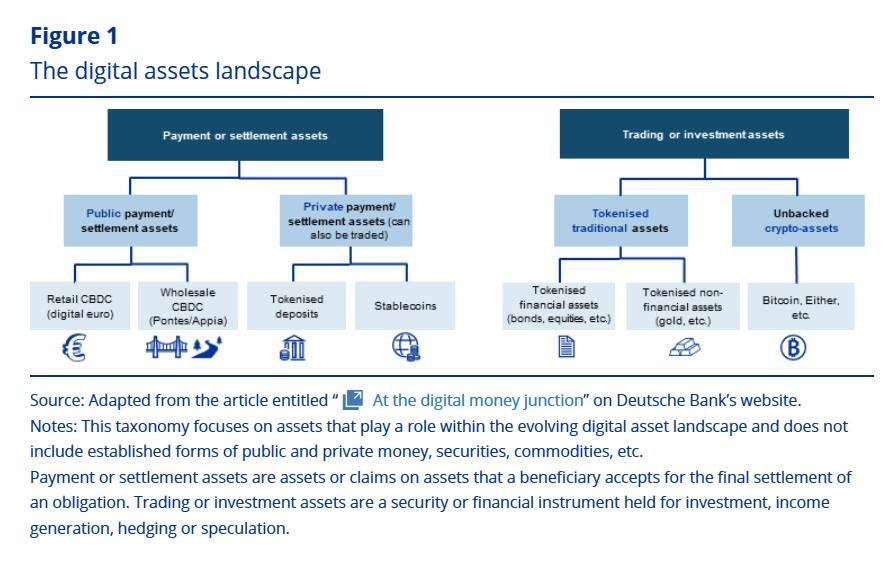
Digital assets landscape. Source: ECB
The analysis underlines, however, that efficiency gains hinge on avoiding a patchwork of incompatible platforms and ensuring that central bank money, not just commercial bank money or privately issued tokens, can be used for settlement in tokenized markets.
A further piece drills into the nascent market for tokenized bonds, finding early evidence that they can already lower borrowing costs and tighten bid-ask spreads compared with traditional formats.
The authors attribute this partly to operational efficiencies and partly to improved transparency and programmability around settlement and collateral management. Still, they frame these benefits as tentative and conditional, cautioning that technology, legal and liquidity risks remain and that policymakers will need to monitor whether advantages persist once tokenization scales beyond flagship deals and highly selected issuers.
Tokenized MMFs and euro stablecoins under the microscope
The Bulletin also takes a hard look at tokenized money market funds and euro-denominated stablecoins, treating them as parallel experiments in onchain cash-like instruments.
One article stresses that tokenized money market funds (MMFs) largely replicate familiar liquidity and run risks but layer on new operational vulnerabilities, raising questions about how they would behave under stress alongside stablecoins.
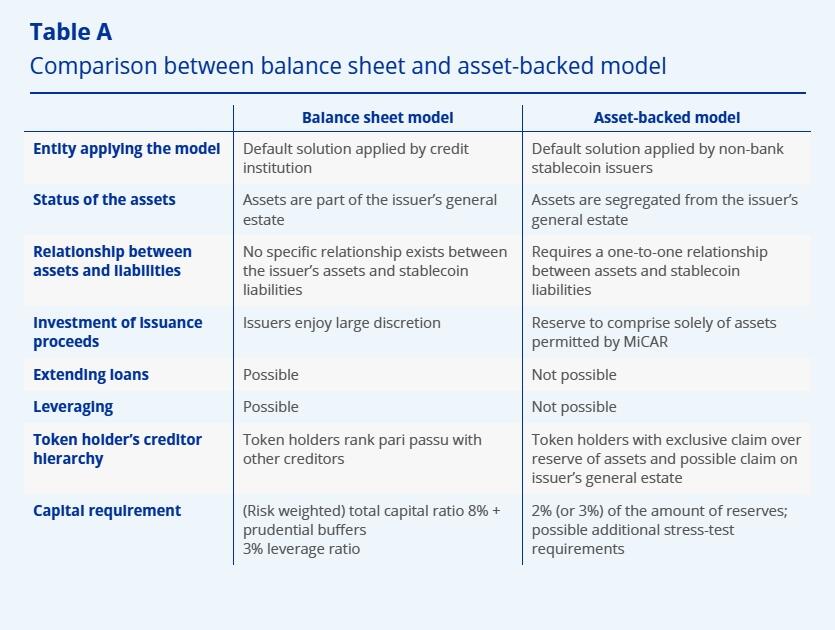
Comparison between balance sheet and asset-backed model. Source: ECB
Another argues that Markets in Crypto-Assets Regulation (MiCA) compliant euro stablecoins could reshape demand for sovereign bonds and act either as a liquidity buffer in turbulent markets or a new channel of bank contagion, depending on how issuers meet deposit and reserve requirements.
Across the five pieces in the Bulletin, the ECB’s stance is clear: Tokenization can support its vision of an integrated capital market, but only if policy, prudential rules and central bank infrastructure evolve in lockstep.
Cointelegraph reached out to the ECB for comment, but had not received a response by publication.
Tyler Durden
Tue, 04/14/2026 – 05:00
https://www.zerohedge.com/crypto/ecb-backs-tokenized-eu-capital-markets-strict-guardrails

From Fiestas To Ferraris, Britain’s Fuel Shock Has Rich And Poor Stealing Petrol
From Fiestas To Ferraris, Britain’s Fuel Shock Has Rich And Poor Stealing Petrol
Across the U.K., motorists face record-breaking fuel costs at the gas pump as the Gulf energy shock ripples around the world. One of the clearest second-order effects now emerging is a surge in petrol station thefts, spanning from organized crime gangs to even drivers in exotic cars simply filling up and driving off.
British newspaper The Times cited new data from 500 UK filling stations showing that the daily value of stolen fuel jumped 27% from February to March. The spike coincided with the start of the U.S.-Iran conflict, which sent energy prices sharply higher. This means around £1.2 million worth of fuel is now being stolen every week across Britain.
What stands out in the report is that folks stealing fuel are not just desperate working poor folks or criminal gangs, but in fact, some petrol station owners report that even drivers of Ferraris and Mercedes are filling up and zooming off without paying.
Research firm Forecourt Eye, which helps petrol stations detect, track, and recover unpaid fuel bills, said that current theft levels across the UK have exceeded those of the early days after Russia invaded Ukraine in 2022.
Michelle Henchoz, managing director of Forecourt Eye, said:
With someone taking fuel you think that you’d have a vision of what they look like but they aren’t what you think. They are driving supercars.
One came up yesterday and the car was a Mercedes AMG GT and they did a drive-off at one of our petrol stations. I checked online what the value of the car was. It was beautiful. I was thinking, how can they drive off? The fuel energy crisis in 2022 wasn’t as bad.
What we’re seeing is not just more fuel theft, but a different kind of behaviour that shows a clear increase in first-time offenders and in people who aren’t attempting to flee, but instead are declaring they cannot pay.
Henchoz noted:
The data suggests this may reflect growing financial pressure, with more drivers filling full tanks rather than taking small amounts. Career criminals continue to do it but now ordinary people do it too because they can’t cover the cost of fuel.
Goran Raven, who runs a petrol station in Essex, told the outlet that fuel thefts are noticeable and alarming:
You’ll see everything from a crappy Fiesta going to a Ferrari. It really depends. The people who do it are brazen. They don’t worry about covering up their faces, they will even wave at cashiers.
On one occasion we had an Aston Martin and Ferrari drive off within 30 seconds here. It was just short of £300 for two cars.
I’m sure there are people on the breadline who are desperate, that must be the case, but I reckon that would be single-digit percentage of people committing these crimes out there.
The energy shock is taking longer to materialize in the U.S. because of robust domestic energy supplies and President Trump’s continued push for “drill, baby, drill.” While there are no indications that fuel theft is surging at gas stations across the country, there are early signs that consumers are starting to look at EVs again, given that the national average price for regular 87-octane gasoline is trending above the politically sensitive $4-per-gallon line.
Tyler Durden
Tue, 04/14/2026 – 04:15

Jury Trials Are Vital To The Constitutional Order
Jury Trials Are Vital To The Constitutional Order
Authored by David Thunder via ‘The Freedom Blog’ substack,
The Labour-led British government is currently attempting to hollow out an ancient pillar of English constitutionalism, trial by jury.
Under their planned reforms, trial by jury would survive in England and Wales for certain types of crimes, but its use would be significantly curtailed. For example, according to a government press release issued earlier this month, new “Swift Courts” will assign cases “with a likely sentence of three years or less” to be heard by “a Judge alone.”
The campaign against jury trials, one of the most free-spirited and universally lauded institutions bequeathed to us by the common law tradition, would be baffling in a healthy constitutional regime. But sadly, it is predictable enough in a regime whose political leaders have developed the habit of tinkering with civil liberties as though they were trimming their lawn.
Being an ancient institution that evolved gradually over a millennium, a significant restriction of jury trials would have unpredictable effects on the justice system. We simply do not know with any confidence how, in the long run, such a move would alter the incentives of prosecutors, change the pattern of convictions for different crimes, or alter public perceptions of the justice system.
What we do know is that it would constitute a dangerous and completely unnecessary constitutional experiment, eroding one of the most time-honoured bulwarks of civil liberty. Furthermore, it is worth noting that according to an analysis published by the Free Speech Union, drawing on Ministry of Justice data, overall acquittal rates are much higher with juries than with magistrates’ courts (21.6% vs. 11.4%), and this difference also holds specifically for speech-related offences (27.6% vs. 15.9%). Assuming these figures are accurate, citizens will likely be much more vulnerable to prosecution and conviction if the use of jury trials is thrown out or significantly eroded.
Trial by jury has been lauded by generations of learned and respected scholars of law and democracy as a cornerstone of a free society. Alexis de Tocqueville, whose 1835-40 volume Democracy in America offers one of the most incisive of reflections on the pros and cons of modern democracy, opined that “the jury… is the most energetic means of making the people rule, [and] is also the most effective means of teaching it how to rule well.”
An eminent 17th-century English jurist, Sir Edward Coke, insisted that no Englishman could be lawfully condemned “but by the lawful judgment of his peers.” The esteemed 18th-century legal commentator, Sir William Blackstone, likewise described trial by jury as “the glory of the English law” and “the most transcendent privilege which any subject can enjoy,” emphasising its role as a shield between the individual and arbitrary power.
Budding constitutional reformers would do well to pay heed to Lord Patrick Devlin’s warning that “the first object of any tyrant… would be to make Parliament utterly subservient to his will; and the next to overthrow or diminish trial by jury, for it is the lamp that shows that freedom lives.”
If marginal gains in the duration of trials are deemed an adequate justification for tinkering with this bastion of the legal order, then we might as well just go ahead and subject the whole constitutional order to an “efficiency” test: if we can shave a few days or weeks off this or that legal procedure, then why not engage in a bit of constitutional engineering?
But this is a cheap and shallow argument. To begin with, we should not be so sure of our own understanding of the mechanics of such a complex and evolved order, nor should we be so confident that we can predict the short- and long-term impact of our well-intentioned meddling.
Equally importantly, those who bring a revolutionary pick-axe to the constitutional edifice destabilise public expectations about the basic “rules of the game.” In doing so, they open the door to political opportunists who would happily overturn the rules and conventions that keep citizens free in order to advance their own careers or curry favour with party bosses or the fickle tides of public opinion.
These constitution-wreckers have bought into a reckless form of positivism that views the legal system as the handiwork of each new generation of human lawgivers rather than as a hallowed constitutional inheritance, and conceives the legislator as an ambitious constitutional reformer, ever poised to introduce “enlightened” reforms in the longstanding customs of liberty, whether in the name of “efficiency” “progress,” “social justice,” or some other ostensibly noble end. While the seeds of positivism and its contempt for the common law have been in place for centuries, its bitter fruits are now on full display.
The outcome of happy-go-lucky constitutional engineering is that citizens are perpetually vulnerable to political fanaticism. And not just any old fanaticism, but the sort that dismantles or radically alters fundamental constitutional rights such as privacy, freedom of speech, or the right to be tried before one’s peers.
Sadly, the move against jury trials is not an anomaly. Rather, it reflects a growing trend among modern governments and legislators – not only in the United Kingdom, but in many other places – to assert their own authority over the constitutional order in exaggerated and destructive ways.
Instead of recognising that they are standing on the shoulders of giants and acting as humble stewards of an ancient tradition of ordered liberty, whose inner workings have evolved gradually over countless generations, legislators and government ministers have gotten it into their heads that they are can stand majestically above the constitutional order and remake it at will, as one might re-arrange one’s bedroom.
Unfortunately, the citizenry of Western societies, or at least a large portion of it, is in a state of moral stupor and has become complacent about the risks of governmental tyranny. Many are no longer well equipped to distinguish between the arbitrary utterances of a legislator and the longstanding rules of humanity and decency.
The idolisation of positive law and the downgrading of the customary liberties of Western societies came to a head during the pandemic: people were happy to go along with laws that made life hell for their unvaccinated neighbours, just because they were unvaccinated; large segments of the public acquiesced in, or actively supported, these measures, looking on approvingly while police suppressed public protests in the name of “public health”; and people reported their neighbours for the “offense” of having social gatherings in their homes.
Legal systems are meant to set us free, by providing a framework of public order and reaonable expectations within which we can get on with our lives. But they can only do this if they are beholden to a higher law, of the sort that is discovered rather than made by human fiat.
This is the sort of law that binds the King and cannot be unmade by the King, as the Magna Carta famously recognises.
Only if citizens believe passionately in a moral code superior to the say-so of legislators and politicians can they find a firm foothold for resisting egregiously unjust and tyrannical laws. But belief in a morality that transcends the will of the legislator is not easy in a culture saturated with moral relativism. We need to recover our confidence in a higher moral law, if we are to reverse the current drift toward legal and political authoritarianism.
Tyler Durden
Tue, 04/14/2026 – 03:30
https://www.zerohedge.com/political/jury-trials-are-vital-constitutional-order
France Plans €10 Billion Push To Cut Reliance On Gas and Oil
France Plans €10 Billion Push To Cut Reliance On Gas and Oil
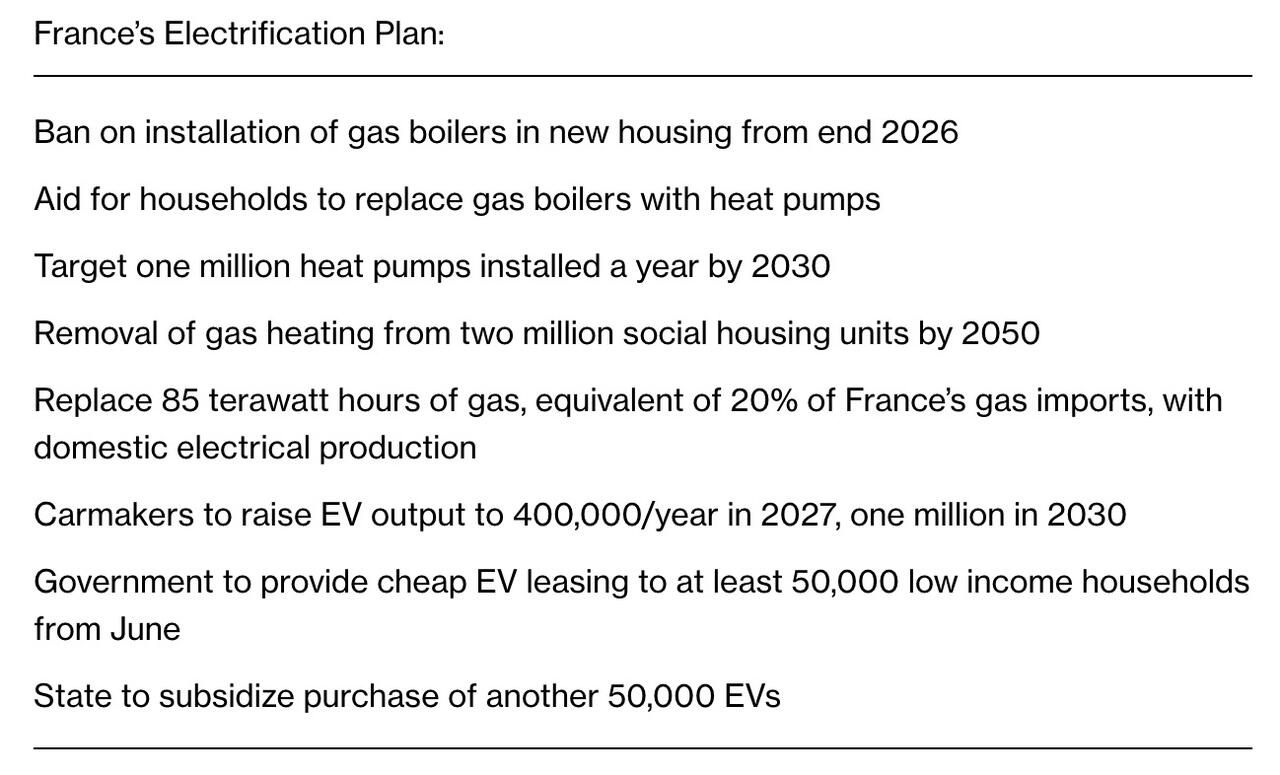
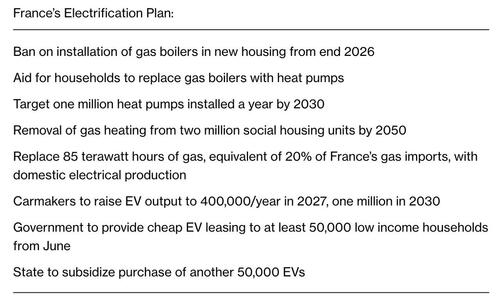
France is shifting its response to rising fuel costs away from short-term relief and toward long-term electrification, according to Prime Minister Sébastien Lecornu. Instead of expanding fuel subsidies after oil prices spiked due to the Iran conflict, the government plans to redirect funding into helping households and businesses transition to electric energy, according to Bloomberg.
Under the plan, annual support for electrification will nearly double to €10 billion by 2030, up from €5.5 billion today. The increase will come from reallocating existing spending and cutting the state’s own energy use, with funds aimed at technologies like electric vehicles and heat pumps to replace gas-based systems. Lecornu emphasized that the support would be targeted at those most in need while staying consistent with France’s deficit-reduction goals.
Bloomberg writes that the government is prioritizing structural change over temporary fixes, a stance Lecornu made clear by saying, “This means refusing measures that are too generous, too costly, that too often create windfall effects and sometimes rents, without resolving fundamental problems.” His comments reflect a deliberate move away from broad subsidies toward more focused, long-term investments.
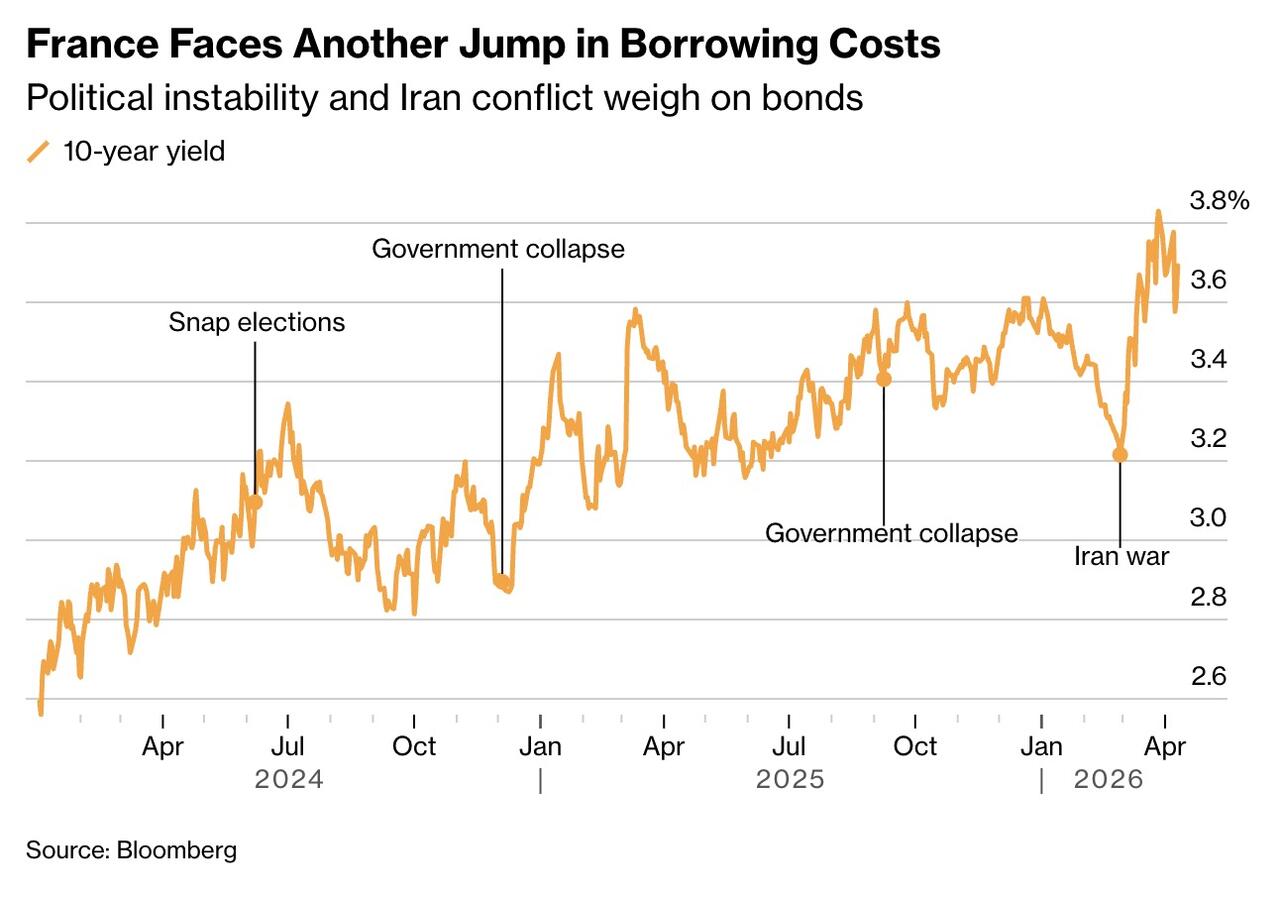
This marks a notable departure from 2022, when France spent tens of billions of euros cushioning consumers from energy shocks. Those measures contributed to the largest budget deficit in the eurozone and, combined with political instability, made it harder to restore fiscal balance. Rising borrowing costs have since added further pressure, with officials warning that higher bond yields linked to geopolitical tensions could increase debt servicing costs by billions.
While the government had considered additional aid for workers dependent on cars, those plans were paused after a temporary drop in oil prices following a ceasefire involving Iran. Lecornu signaled that flexibility remains, stating that further action could still be taken if fuel prices rise again and begin to significantly impact vulnerable workers.
Tyler Durden
Tue, 04/14/2026 – 02:45
https://www.zerohedge.com/markets/france-plans-eu10-billion-push-cut-reliance-gas-and-oil

Rapes In Germany Soar To Nearly 14,000 Cases In 2025, Migrants Vastly Overrepresented
Rapes In Germany Soar To Nearly 14,000 Cases In 2025, Migrants Vastly Overrepresented
German police statistics for 2025 reveal that the number of reported rapes in Germany has reached its highest level in several years.reaching approximately 13,920 cases under the specific legal paragraphs.
What is driving this explosive number of rapes?
According to a number of experts and foreigners and people with a migration background are one of the primary perpetrators of such acts.
This represents an increase of 9 percent compared to the previous year and continues a long-term upward trend. In 2018, there were 8,106 such cases, showing an increase, an increase of 71.72 percent.
“Sexualized violence against women is a serious problem in Germany. Rape is a horrific crime and a particularly serious form of sexual violence,” said Federal Justice Minister Stefanie Hubig (SPD) to Welt, which obtained the data.
Hesse’s Interior Minister Roman Poseck (CDU) said that while most perpetrators of rape have German citizenship, “the truth is that perpetrators with a migration background are overrepresented.”
🇩🇪🚨 “I can no longer go out alone. I need a bodyguard.”
A German woman is sexually harassed in Bad Dürrenberg.
“This happens to me so often. I have contact with people like that every day when I go out.”
“Really, there was a time when you could even go out at night.” pic.twitter.com/ahz4kAkQcn
— Remix News & Views (@RMXnews) September 21, 2025
While the exact percentage of migrants involved in rape has not yet been disclosed, as the official federal Interior Minsitry data will not be available until April 15, previous years have revealed the outsized role of migrants in such cases.
In 2024, approximately 41 percent of suspects for crimes against sexual self-determination, which includes rape, were non-German nationals.
🇩🇪🔴This German teen was one of nearly 600 German women who were sexually assaulted in just one night, on New Year’s Eve in 2015/16.
The role of North Africans and Middle Eastern men in the sexual assaults and rapes was not reported by authorities until pressure built days… https://t.co/Jbhh8GkCdr pic.twitter.com/68FRFNWdw1
— Remix News & Views (@RMXnews) April 6, 2026
A specific sub-category in German statistics refers to “Zuwanderer,” covering asylum seekers, refugees, and those with tolerated stay. In 2024, around 15 to 18 percent of rape suspects fell into this category, despite them making up roughly 2 to 3 percent of the total population.
“Among the immigrants are people who are characterized by a completely wrong understanding of roles and who therefore disregard women’s rights of self-determination,” said Poseck.
Individual states have begun publishing their 2025 findings, which confirm the trend cited by Welt. In North Rhine-Westphalia, Interior Minister Herbert Reul recently reported that sexual offenses in the state rose by 5.2 percent in 2025. The proportion of non-German suspects in violent crime and sexual offenses remains disproportionately high, reaching nearly 50 percent in some violent crime categories.
Similar briefings from Bavaria and Hesse indicated that non-German suspects are overrepresented by a factor of roughly three to four relative to their share of the population in the serious sexual offense category.
Tyler Durden
Tue, 04/14/2026 – 02:00
US-Sanctioned Tanker Signaling Chinese Ownerships Test Trump Blockade With Hormuz Crossing
US-Sanctioned Tanker Signaling Chinese Ownerships Test Trump Blockade With Hormuz Crossing
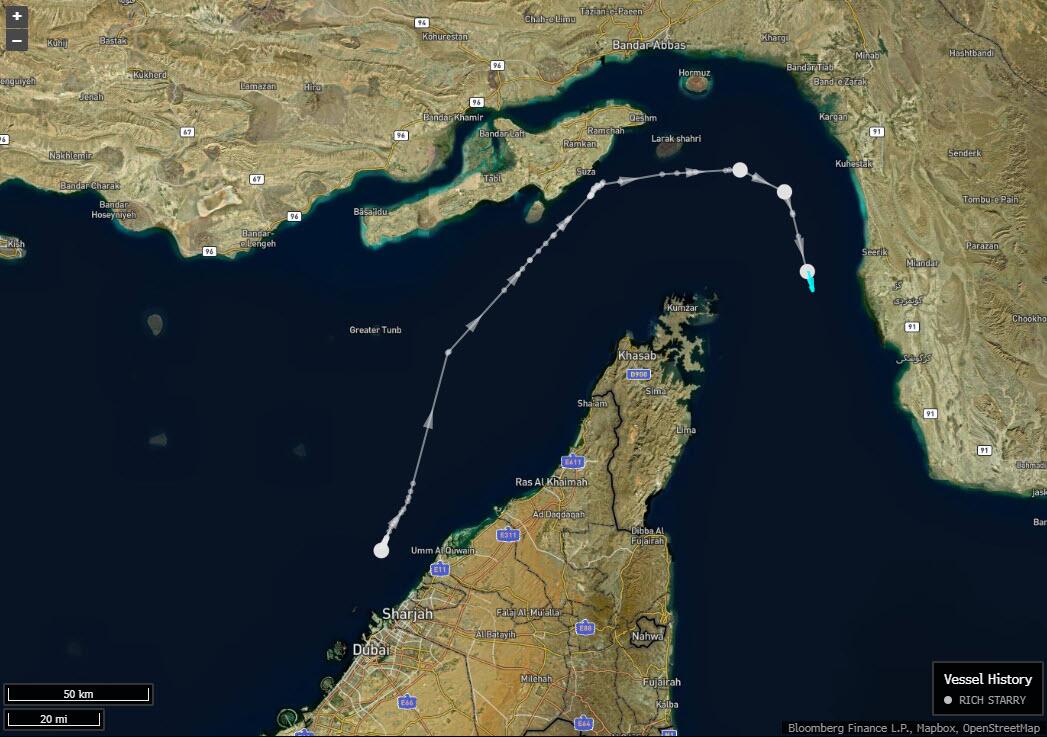
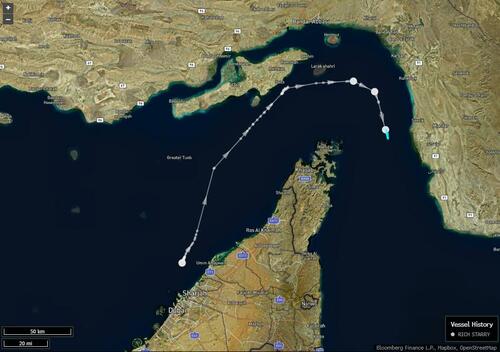
Following news that two tankers, one of which indicated China as its destination, had turned around earlier in the day after the Trump blockade of the Straits of Hormuz had kicked in, one of them – a tanker linked to China – is making its way through the Strait of Hormuz, testing President Trump’s naval blockade, Bloomberg reported.
Rich Starry, a 188-meter medium-range tanker earlier known as Full Star, was blacklisted by Washington in 2023 for helping Tehran evade energy sanctions. It was not clear on this occasion whether it visited Iranian ports before its transit, or is carrying cargo.
This exit from the Persian Gulf is a second attempt for the carrier in less than 24 hours. Just as the blockade came into effect, the Rich Starry was making its way into the narrow waterway near Iran’s Qeshm Island and turned back, as reported earlier, only to restart its exit just hours later, broadcasting that it has a Chinese owner and crew. While this is a safety mechanism frequently used by vessels not to attract Iran’s attention, it will now test US resolve to challenge vessels tied to the world’s largest oil importer.
Rich Starry is owned by Full Star Shipping Ltd., which shares the same contact details as Shanghai Xuanrun Shpg. Co. Ltd., maritime database Equasis shows. A call made to Shanghai Xuanrun did not get through, while the company didn’t immediately respond to an emailed request for comment. The Shanghai-based entity is also sanctioned by the State Department.
Another tanker, the Elpis, headed into the Gulf of Oman via the strait just as the blockade began. Ship-tracking platforms Kpler and Vortexa indicate that Elpis had docked at an Iranian port in the gulf before attempting to pass through Hormuz. Elpis’s owner is Chartchemical SA that uses its manager, IMS Ltd.’s contact details. A call made to Malaysia-based IMS failed to connect. IMS did not immediately respond to an emailed request for comment.
No vessels with their transponders on have been seen sailing into the Persian Gulf since the blockade came into effect.
The global shipping community and energy traders have been on edge since Trump announced a naval blockade of Iran beginning on Monday at 10 a.m. New York time, leaving them scrambling to understand the fine print. Most of those reached by Bloomberg across the Middle East and Asia said they would pause moves until the detail of the US blockade, which is meant to restrict Iran’s capacity to sell its oil to China, was clear.
According to unconfirmed reports earlier on Monday, China’s Defense Minister Dong Jun reportedly sent a message to the Trump administration and the U.S. Navy emphasizing Beijing’s intent to continue operating in the Strait of Hormuz and uphold its agreements with Iran. “Our ships are moving in and out of the waters of the Strait of Hormuz. We have trade and energy agreements with Iran. We will respect and honor those agreements and expect others not to interfere in our affairs” adding that “Iran controls the Strait of Hormuz and it is open for us.”
Whether this was true or not, we are about to find out what happens when an “Iran-friendly” ship tried to penetrate Trump’s blockade which according to the WSJ counted more than 15 ships – including an aircraft carrier, multiple guided-missile destroyers, an amphibious assault ship and several other warships in the Middle East – in place to support the blockade. These ships have the ability to launch helicopters that support boarding operations, and some are capable of marshalling commercial vessels to specific areas to hold them in place.
Tyler Durden
Mon, 04/13/2026 – 23:28
How Iran’s Mosaic Doctrine Is Fracturing
How Iran’s Mosaic Doctrine Is Fracturing
Authored by Zineb Riboua via Beyond the Ideological,
Following President Trump’s announcement of a cease-fire, US Central Command (CENTCOM) commander Admiral Brad Cooper stated: “Iran has suffered a generational military defeat.”
Tehran’s response has been a single counterargument: the Islamic Republic still stands.
That argument mistakes the question. The survival of the Islamic Republic is not in dispute. What is in dispute is whether the surviving entity retains the capacity to direct the forces operating in its name.
Iran developed its mosaic military doctrine by drawing direct lessons from Saddam Hussein’s collapse in just twenty-six days. After the 2003 invasion of Iraq, Iranian Brigadier General Mohammad Ali Jafari reorganized the Islamic Revolutionary Guard Corps (IRGC) in 2008 into thirty-one provincial commands, each with its own weapons stockpiles, logistics chains and pre-delegated authority.
Asymmetric warfare is the recourse of states that cannot prevail conventionally. Dispersion and concealment are the tools of a military that has already conceded the conventional battlefield.
Israel, operating alongside the United States in Operation Epic Fury, mastered asymmetric tactics and turned Iran’s own doctrine against it, employing intelligence penetration, targeted eliminations and network disruption with superior precision.
The clearest demonstration came before the operation began.
In July 2024, Israel assassinated Hamas political leader Ismail Haniyeh inside a Revolutionary Guard guesthouse in Tehran. Iran’s security services must now operate under the assumption that they do not know the extent of the compromise — and that uncertainty is the most debilitating condition an intelligence service can face.
Operation Epic Fury then pushed that penetration to its extreme.
The killing of Supreme Leader Ali Khamenei, the elimination of hundreds of senior IRGC commanders and the degradation of the Quds Force’s extraterritorial capacity together constituted a decapitation campaign of unprecedented precision.
More importantly, fractures between Iran’s political leadership and its military have already surfaced publicly. On March 7, 2026, President Masoud Pezeshkian issued a televised apology to Arab Gulf states for missile and drone strikes conducted during the conflict, pledging that further attacks would cease.
That a sitting president apologized for his own military’s actions within minutes of their execution illustrates precisely what pre-delegated authority has produced: a military that the political leadership must answer for rather than control.
Three vulnerabilities now compound one another.
The first is the mosaic doctrine’s foundational limitation under sustained pressure.
The doctrine solved the problem that Saddam could not, preventing decapitation from producing immediate collapse. It never solved attrition. The mosaic delays the timeline of dissolution but leaves the dissolution itself intact.
The cease-fire arrived at a moment of Iranian weakness, and the pressure that produced that weakness remains available to Washington. The Islamic Republic knows that each day the cease-fire holds, it does so on terms that Washington can revise.
The second vulnerability is structural.
The mosaic doctrine distributed resilience horizontally across provincial land commands, but the IRGC’s functional branches — its navy, air force, missile corps and cyber and intelligence directorates — each represent a distinct accumulation of “tiles” with separate supply chains and command structures.
The United States has dismantled these branches sequentially rather than simultaneously, degrading each functional pillar while removing leadership at the center.
The result is a system weakening from two directions at once: horizontal provincial networks loses coherence as the vertical command spine collapses, and neither compensates for the deterioration of the other.
The third vulnerability is financial, and the most immediately exposing. The IRGC’s ability to sustain operations and evade sanctions has depended on Hezbollah and the broader proxy network to move money and provide the transactional infrastructure linking the center to the periphery. That system has been degraded.
Iran’s shadow fleet — the network of vessels moving sanctioned oil through falsified documentation and ship-to-ship transfers — has faced intensified US interdiction. China-linked front companies that provided financial cover to the IRGC have been sanctioned in successive rounds by the US Treasury.
On March 31, dozens of money changers linked to the IRGC were arrested across the United Arab Emirates following the escalation of Gulf tensions after Iranian strikes, severing one of the regime’s most critical cash arteries. A network that cannot pay its operators does not remain in a network for long.
Washington enters the cease-fire holding all the cards: military dominance, financial strangulation and a regional architecture that has isolated Tehran from the Arab world it once sought to mobilize.
Iran’s response has been to threaten the Strait of Hormuz, the final lever a regime reaches for when it has exhausted all others. That threat is a measure of desperation, not strength.
The operation has not concluded, but the conditions for Iranian defeat are in place.
The entity that emerges from what comes next will bear little resemblance to the Islamic Republic that launched its doctrine of resistance four decades ago. What remains depends entirely on whether Tehran meets Trump’s terms.
Tyler Durden
Mon, 04/13/2026 – 23:25
https://www.zerohedge.com/geopolitical/how-irans-mosaic-doctrine-fracturing