
Category: News
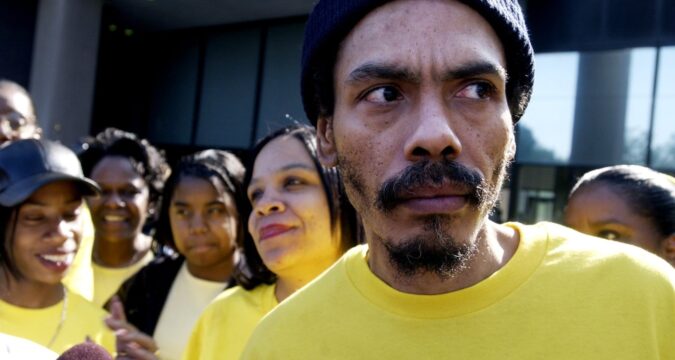
‘Still imprisoned in his mind.’ Illinois exonerees struggle without support after wrongful convictions.
Paul Terry walked out of prison more than 20 years ago after DNA evidence cleared him of a crime he was convicted of as a teenager. He was free, but the life he lost has never returned.
Now 67, Terry rarely speaks. He spends much of his time confining himself to his bedroom inside a South Side home he shares with his family, still grappling with mental health issues he developed behind bars.
“It has been devastating to see my brother the way he is, because when he went to prison, he wasn’t like that,” said his eldest sister, Doris Johnson, 84. “His mind is still incarcerated.”
Terry’s struggle is a stark example of a problem Illinois has yet to confront meaningfully: what happens to people after the state’s judicial system admits it wrongfully took their freedom.
For the better part of a decade, Illinois led the nation in annual exonerations until it was surpassed by Texas in 2024, according to the National Registry of Exonerations. Yet Illinois offers little in terms of a comprehensive system to help exonerees recapture their lives — medically, psychologically or practically — after release.
There are post-release government resources for people exiting prison, but none tailored to the extraordinary circumstances of the exonerated — wronged by the legal system, in many cases over decades, and then suddenly put on the street with no preparation or plan for facing the outside world.
And with state compensation rates well below the national average, many are struggling, exonerees and experts said.
Terry was 17 when police first arrested him in the 1976 rape and killing of 9-year-old Lisa Cabassa. He spent more than a quarter-century behind bars before DNA evidence excluded him as a perpetrator, and he was exonerated in 2003. Today, his sisters say, their family is aging and ill-equipped to meet his needs.
Terry did receive $2.7 million in a settlement with the city of Chicago, which one of his attorneys at the time described as enough money to take care of his psychological needs for the rest of his life. But even with that money and support from his family, he hasn’t sought the psychological help his family says he desperately needs.
“You’re on your own,” said Brian Beals, who two years ago was freed from prison after being exonerated and who now works at the organization Restore Justice. “Stepping into a whole alien landscape.”
From her home in Chicago on Dec 5, 2025, Pamela Hawkins speaks about her brother, Paul Terry, who was exonerated and released in 2003, after spending decades in prison. Paul Terry, who now lives with his sister and her family, developed mental illnesses in prison and has not been well since. Paul Terry received a $2 million settlement, but has not sought the care he needs. (Antonio Perez/Chicago Tribune)
Terry appeared only briefly on a freezing day last month, when the Tribune visited him and his family in their tidy home, which he shares with his twin sister, Pamela Hawkins, and her husband. Terry’s hair was cut short — one of his remaining regular activities is visiting the barbershop, his family said. His posture was slumped and he held a cigarette.
He nodded politely but didn’t engage in conversation before heading back upstairs to his room, where he paced intermittently. He was dressed for visitors, but he had no words to greet them.
Some nights, he paces for hours, Hawkins said, and many mornings, he makes coffee in his room, as he would in prison.
Lives upended at 17
The Tribune covered Terry and his co-defendant, Michael Evans, extensively as they pursued exoneration and in the immediate aftermath.
In their case, a sole eyewitness tied the teenagers to the abduction. Lisa had been strangled and sexually assaulted.
One of the prosecutors, Thomas Breen, who later became a leading defense attorney, expressed misgivings about the case in the 1990s, prompting a reopening and reexamination.
A Tribune investigation later uncovered additional evidence suggesting Evans and Terry were wrongly convicted. The victim’s parents told the paper that crucial testimony from Lisa’s mother was changed to fit the account of the key witness, which also had been changed.
Then, in 2003, Terry and Evans were exonerated after DNA evidence excluded them from the crime. No one has since been charged with Lisa’s killing.
In 2004, a Tribune profile of Terry and Evans noted that recovery from prison had been slow. For Terry, it now appears it never really came.
That story also noted that those who are exonerated don’t even have the social services associated with parole. That hasn’t changed, either.
Paul Terry, pardoned by Gov. Rod Blagojevich, sits in a sister’s living room in University Park on Jan. 6, 2005. (Abel Uribe/Chicago Tribune)
Evans declined to comment for this story through his sister, Ann Evans. He put it bluntly in the 2004 article when asked what he planned to tell a university conference about what happens to exonerees.
“I can tell you what happens,” he told a reporter then. “Nothing. There’s no apology and no job.”
The remark proved prescient. In 2006, a federal jury rejected Evans’ $60 million lawsuit after he opted for a trial rather than a settlement with the city, as Terry did. Evans’ total compensation for 27 years in prison was $160,000.
An uneasy exit
The day Terry left prison was the best of his family’s lives. His family dressed him in a yellow T-shirt to match the rest of the family, who color coordinated as a symbol of welcoming Terry back home.
That feeling faded quickly.
Paul Terry has his first post-prison cigarette lit by his twin sister, Pamela Hawkins, at their mother’s Marquette Avenue home in Chicago on May 23, 2003. Terry and Michael Evans were released that day after 27 years behind bars. (Scott Strazzante/Chicago Tribune)
One of Terry’s seven sisters, Beverly Brown, had died while he was in prison, apparently from a self-inflicted gunshot wound, according to Johnson and a news report at the time, after she was suspected of killing her husband and two children.
But his family withheld the information at their mother’s request, fearing how Terry would process it inside prison. When he finally learned the truth, he said nothing. He hasn’t spoken about it since. He also hasn’t discussed his time in prison, Johnson and Hawkins said.
Johnson said she initially took Terry to support organizations for people who had been released from prison, but found there wasn’t any specific care for exonerees.
Resources available to anyone leaving prison are available to exonerees, including guides to benefits and social services for post-release life produced by the Education Justice Project at the University of Illinois, and restorative justice circles at the Precious Blood Ministry of Reconciliation on the South Side, experts said.
But some of the programming that Beals now coordinates for others returning from prison wasn’t available to him as an exoneree, he said.
For example, resources distributed to people in their last year of prison for IDs, digital literacy and job access don’t necessarily make it to exonerees, because there’s so much uncertainty about when those people will leave prison, he said.
“You miss that window,” Beals said.
In addition, Beals said, people exonerated and immediately released are effectively homeless unless family takes them in. Many also struggle with deep mistrust of institutions — and of people — after years in the system.
“In cases of immediate release, particularly when an individual’s release date is unknown, (the Illinois Department of Corrections) may not have the opportunity to assist with certain re-entry resources, including applications for Medicaid, SNAP, a State ID, or a Social Security card prior to release,” IDOC spokesperson Naomi Puzzello said in an email.
“These programs are essential in preparing individuals leaving custody,” Puzzello said. “However, in the case of exonerees, IDOC does not set the timing of release and may therefore be limited in its ability to assist.”
Reentry is core to the mission of IDOC, Puzzello said, noting that IDOC “collaborates with other state agencies to facilitate enrollment in critical post-release benefit programs.”
The Illinois Department of Human Services in a statement noted that it offers a mental health program for people leaving prison in the months immediately before and after release, as well as housing for individuals with certain behavioral health concerns.
“IDHS is committed to ensuring that individuals returning from incarceration, whether through exoneration or after completing their sentences, are supported with dignity and connected to essential resources,” a department spokesperson said.
‘The damage is done’
Jon Eldan, an attorney and executive director of the national nonprofit that works with exonerees, After Innocence, said the public “understandably assumes” anyone found to have been improperly incarcerated for decades eventually receives large payouts and moves on with their lives. But most exonerees get little or nothing, he said
Illinois’ state compensation is among the lowest of the roughly 40 states in the country that have such a program, he said, and efforts to increase it haven’t been enacted in part because it would be “massively more expensive” than in some other states.
“For us, there are just a few states that are real outliers, and one is Illinois,” Eldan said.
Legislators have introduced a bill to raise compensation for exonerees based on the number of years they were wrongly incarcerated, and it passed without opposition in the House last year but hasn’t received a vote in the Senate.
Democratic state Sen. Elgie Sims, who introduced the legislation to raise and remove a cap on state compensation for people who have been exonerated, on Friday said he’s actively working on it with advocates, the legislature and Gov. JB Pritzker’s administration. As a top budget negotiator, he’s looking at the costs and how many people could be included, he said.
“We’ve got to recognize that there are individuals who are out there who have been wrongfully convicted. We’ve got to make amends for that,” Sims said.
Paul Terry is interviewed inside Dixon Correctional Center on Dec. 5, 2002. (Terrence Antonio James/Chicago Tribune)
Successful lawsuits or settlements aren’t guaranteed either, as the bar for showing the state’s wrongdoing is high. A conviction based on a bad witness without tampering of evidence or a suggestive lineup could leave an exoneree with no one to sue, Eldan said.
Dealing with the burden of having to explain their situation to employers and others — and the challenge of financial planning for potential compensation — also poses a difficulty, he said.
The city’s $2.7 million settlement that went to Terry’s estate was supposed to take care of him. And to be sure, some years since the exoneration have been better than others, Terry’s family said. For a few years, Terry took medication from a psychiatrist and would talk more regularly with his family. He was well enough to sometimes participate in programming for people with mental health issues and go on outings downtown.
But the medication wasn’t enough to help him process what happened, his family said. Years passed, and he didn’t make progress on his mental health.
Eventually, he stopped taking it because he didn’t like how the side effects made him feel. Since then, in the past three or four years, his life receded, his family said.
Terry has his settlement money and loved ones who want to help him use it to make his life better — much more than many people who leave prison. But his family repeatedly emphasized that any amount isn’t enough, with Terry’s seemingly deep psychological issues going well beyond what they can fix.
“Money don’t touch what my brother and family is going through,” Hawkins said. “He’s been out 20-some years. And what has that money done for him? Absolutely nothing.”
Beals, of Restore Justice, noted that families are not only called upon to support their loved ones throughout their time in prison but also, when they’re reunited, must still carry the burden of helping them reacclimate to life outside.
James “Jimmy” Soto and his cousin bear the unfortunate distinction of being the longest wrongly incarcerated people in Illinois. Soto, who is now pursuing a legal career after four decades in prison, is in some ways the poster child for exonerees who can take their life back.
But he’s also a fierce advocate for changing the prison system, in part because he’s seen up close the mental damage it’s wrought on inmates.
Soto himself didn’t formally get help for his mental health until about four or five months after he left prison in December 2023, he said.
“It’s a struggle almost every day to try to fit in,” even when people think “you have it together,” he said.
Like Beals, he found no specific mental health services and said most resources are not geared to exonerees.
“It’s usually abrupt,” Soto said of the time when exonerees are released from custody. “We don’t really know, so we don’t go to the same prerelease services that the IDOC provides, which would involve seeing a mental health professional.”
Instead, when Soto was released, he said, he was handed $25 for a ride home and sent on his way.
Soto’s federal lawsuit is pending, and he’s withholding his state compensation in hopes that future legislation will increase the amount he could receive.
“It could never give us the psychological freedom,” he said. “Because we will forever be tethered to our carceral experience.”
The solutions to Terry’s exact situation aren’t clear. He has money, but his family can’t force him to use it to process his trauma. The state and nonprofits offer online packets and lists of resources, but his family said that after decades they would need more direct guidance to find a compatible therapist who has expertise in exonerees or incarceration.
“After 27 years, the damage is done,” Hawkins said, her voice sharp. “Where is the responsibility of the state?”
TV, groceries and a family in pain
While Terry sometimes seems nervous or angry, Johnson said, his family stressed that he’s still kindhearted, and in some ways warm: Even when he’s refusing the psychological care his family thinks he needs, he doesn’t lash out, they said.
Still, the family reported that his regular activities are limited to going to the grocery store, barbershop or Walmart, and occasionally cooking at home.
Recently, Terry has been watching TV, but only shows that were on before he went to prison in 1976, the ones he used to watch as a kid.
“He’s stuck there,” Hawkins said. “He’s stuck there.”
A few weeks ago, she and Terry were looking through photos when they came across one of him when he was incarcerated.
“He stopped, and he looked at the picture, and he just stared at it,” Hawkins said.
Rather than addressing it out loud, she said, he just began mumbling to himself, as he sometimes does.
Through Hawkins, Terry declined to comment for this story or be photographed at home.
As Paul’s twin, Hawkins knows what her brother’s life could have been. She can almost see it. After more than 40 minutes discussing her brother’s case, she broke down when describing what might have been lost: independence, a family of his own and a high school degree.
“I didn’t want to go there,” Hawkins said, her voice cracking. “But it still hurts me. It hurts me to see him still imprisoned in his mind. I see it every single day. I’m living with this, and it hurts. It hurts.”
https://www.chicagotribune.com/2026/01/04/illinois-exonerees-wrongful-convictions/

Christine Ledbetter: President Donald Trump’s self-aggrandizing transformation of the Kennedy Center
President Donald Trump wasn’t joking when he welcomed guests to the live “Trump-Kennedy Center Honors” on Dec. 7, a comment that was cut in the televised version Dec. 23. Shortly after the original event, the president’s hand-picked board voted to rename the center. Guess who got top billing?
Signage was erected on the facade the day after the vote to read: The Donald J. Trump and the John F. Kennedy Memorial Center for the Performing Arts.
To understand how the Kennedy Center came to be bullied into submission, let’s recap Trump’s relationship with it.
During his first term, several honorees suggested they would boycott the 2017 White House reception after Trump defended white supremacist marches in Charlottesville, Virginia. In response, the Trumps skipped the honors all four years to avoid “political distraction.”
During his second term, he roared back with revenge. He fired the center’s top leadership; dismantled its bipartisan board and anointed a new one of loyalists; named a former envoy as president; and installed himself as chairman.
Over 100 staff members have been fired or resigned, departments dismantled and programming curtailed. As a result, ticket sales plummeted, and top touring acts withdrew.
Demonstrators, including Nadine Siler, of Waldorf, Maryland, dressed in a pink frog costume, hold up signs at a designated protest point Dec. 20, 2025, in Washington in front of the John F. Kennedy Memorial Center for the Performing Arts, a day after a Trump-appointed board voted to add President Donald Trump’s name to the Kennedy Center. (Julia Demaree Nikhinson/AP)
Trump personally oversaw the honors, including replacing the iconic medallions, trimmed with a rainbow ribbon for 47 years, with a solid blue one. He chose the honorees instead of a selection process involving artists, board members and center officials. He also hosted the 48th annual Kennedy Center Honors ceremony — the first president to do so.
He claimed he didn’t have much time to prepare. Certainly he has been busy deflecting the fallout over Jeffrey Epstein’s crimes and building a $300 million ballroom where the East Wing once stood. He found congressional money for a $257 million renovation for the Kennedy Center, while ending arts funding across the nation.
Stars strolling the red carpet weren’t A-listers of years past. Instead, the grand entrance was strewn with Fox News personalities, members of his administration and others who should have had name tags to be recognized.
The “unbelievable talent” for the 2025 honors were George Strait, Kiss, Sylvester Stallone, Gloria Gaynor and Michael Crawford.
Departing from tradition, there was no nominee from the fine arts — no dancers, composers, classical musicians or opera stars.
Nashville luminaries came, but Hollywood stayed home.
Country stars Miranda Lambert, Vince Gill and Brooks & Dunn saluted Strait. Presenters for the other nominees were Kurt Russell for Stallone, Kelsey Grammer for Crawford, Elle King for Gaynor and Garth Brooks for Kiss.
The show was bloated, as usual, but without tour de force performances such as when Aretha Franklin sang “A Natural Woman” for Carole King or Heart performed Led Zeppelin’s “Stairway to Heaven.” There were no presenters for the mourned Rob Reiner, who had honored both Norman Lear and Billy Crystal, and whose death the president spitefully said resulted from the director’s anti-Trump activism.
Trump, however, was everywhere: opening the show with his customary ineloquence and introducing the segments by prerecorded remarks. He reappeared on stage before Cheap Trick’s forgettable finale of “Rock and Roll All Nite.”
The event was co-opted as a starring vehicle for the president with acolytes as co-stars. And while Trump had predicted his hosting would be the highest-rated honors ever done, it was the lowest, according to Nielsen’s preliminary data.
Once a behemoth of culture and a refuge from politics, the center now endorses a narrow vision of art and espouses a MAGA agenda.
President Donald Trump delivers remarks as honorees, Gene Simmons of Kiss, from left, actor Sylvester Stallone, Peter Criss of Kiss, actor Michael Crawford and country star George Strait look on during the medal presentation ceremony for the 2025 Kennedy Center Honorees in the Oval Office of the White House on Dec. 6, 2025. (Aaron Schwartz/Getty)
The Kennedy Center has never been a performing arts venue only. Founded in 1971, it serves as a living memorial to a slain president who supported the arts. Programming reflected the country’s diversity and was dedicated to bringing culture to all Americans.
Until now. Since the takeover, it has sponsored a NewsNation Town Hall, U.S.-Saudi Investment Forum, a prayer vigil for right-wing activist Charlie Kirk and the World Cup draw. It will also host the premiere of “Melania,” a documentary about the first lady.
Trump stamping his name on buildings is not new. But the proliferation of his branding on government entities shows a brazen vigor at self-promotion. Commemorative Trump coins are planned for the 250th anniversary of Declaration of Independence. The Institute of Peace was renamed the Donald J. Trump Institute of Peace, ironic given lethal — and probably illegal — strikes in the Caribbean, as well as attacks in Syria and threats to take over Greenland. Up next are Trump-class battleships.
Democratic U.S. Rep. Joyce Beatty is suing Trump, and U.S. Rep. April McClain Delaney is introducing legislation to prohibit the name change. Trump, however, is impervious to legal restraints.
The Kennedy family and arts groups such as Hands off the Arts, American Guild of Musical Artists and Actors’ Equity Association condemn the renaming.
“Adding your name to a memorial already named in honor of a great man doesn’t make you a great man,” said Maria Shriver, a Kennedy niece.
Another niece, Kerry Kennedy, looks ahead. “Three years and one month from today, I’m going to grab a pickax and pull those letters off that building, but I’m going to need help holding the ladder. Are you in?”
Meanwhile, Trump has “joked” about giving himself an honors award. Given recent history, it’s probably not a joke — just another stake in the heart of the once-great national arts center.
Christine Ledbetter is a former senior arts editor at The Washington Post who lives in Illinois, where she writes about culture and politics.
Submit a letter, of no more than 400 words, to the editor here or email letters@chicagotribune.com.
https://www.chicagotribune.com/2026/01/04/opinion-donald-trump-kennedy-center-name/

These runners are exploring every inch of Chicago, one foot at a time
Joabe Barbosa hates running. But he loves to explore.
Since August 2024, the Roosevelt University graduate student has been chipping away at an ambitious, if a little unwieldy, personal feat: to become the first person to run every single one of the city’s streets.
What began as a means for Barbosa to get his muscles moving following an injury has since grown into a year-plus pursuit, spurred on by the 25-year-old’s inclination to get to know more of the city after moving to the area more than three years ago.
As of the year’s end, Barbosa had just over 79% of Chicago’s more than 4,000 miles of street covered. He plans to finish by the spring, then eventually move on to other cities and repeat the venture on a new maze of streets.
“Some people travel by plane,” he said. “I travel by foot.”
He isn’t the only one. For years, from coast to coast, “run-every-streeters” have been taking on their version of the challenge, turning their metropolitan areas into bona fide treadmills. In 2018, a man ran every street in San Francisco over a span of 46 days. A couple years ago, another runner spent the better part of 12 months jogging every street in Manhattan, a 750-mile endeavor.
There are several apps and websites out there that allow urban explorers to track where and how far they’ve gone, and how they measure up against one another. One popular tracker, CityStrides, shows that in Chicago alone, some 50 runners have more than 10% of the city covered.
Barbosa leads the pack
Born in Brazil and raised in England, Barbosa came to the United States for college after earning a sports scholarship to a small school in Kentucky, then later moved to Chicago in 2022 to pursue his doctorate in clinical psychology at Roosevelt.
Barbosa was never a runner growing up, instead pouring his athleticism into soccer. But a March 2024 mountaineering accident caused Barbosa to change course just over a year ago. Barbosa traveled to New Hampshire to summit Mount Washington, a peak notorious for its unpredictable and often brutal weather conditions. Barbosa started his ascent mid-morning and reached the top late afternoon — but by then, it was starting to get dark.
Losing light as the high altitude winds picked up, Barbosa, who candidly noted he wasn’t adequately prepared for the grueling trek, knew he had to get down as fast as possible.
However, on his way down, he fell and hit his head, breaking his teeth and nose, while the cold left him hypothermic. He had to call 911 for help and was rescued, then spent three days in a local hospital.
It took months to recover and while Barbosa wasn’t at risk of losing extremities, doctors did tell him that he had to get his blood flowing to avoid long-term damage, he recalled. While a lifelong athlete, soccer was too high-impact after the accident, so Barbosa turned to running.
The catch: running is far from Barbosa’s favorite form of exercise.
“There are some people that go crazy for running, they love the runner’s high,” he said. “They go every day or every week to the Lakefront Trail, do the same thing over and over again. And I’m like, that’s not me.”
But he does like to expand his horizons. He started to use running as a means to explore new neighborhoods and the more he ran, he questioned just how much ground he was covering. Barbosa found an app to track his progress and when he saw there was a leaderboard of others doing the same, with the top contender hovering at about 55% of the city completed at the time, he thought, “‘I wonder if I can beat him?’” He’s been gaining traction since, both in mileage — and followers.
While taking on the challenge for himself, Barbosa has also taken to documenting his street crusade online, posting videos about the experience and live footage from his runs on social media. In mid-August, in one of his first videos of the venture, Barbosa filmed himself running through the Parkway Gardens housing complex, the notoriously high-crime strip of South King Drive known as “O Block” on a Friday night. The post garnered thousands of likes and hundreds of comments, which ran the gamut from critique to praise.
Joabe Barbosa records video while running with his friend, Matthew Plese, in Chicago’s Bucktown neighborhood, Dec. 21, 2025. (Armando L. Sanchez/Chicago Tribune)
Barbosa said he welcomes the response, positive or negative. His videos often show him running late at night (a function of being too busy during the day with work and school to get a run in, Barbosa explained). He’s even started to up the challenge’s ante with encouragement from his online audience. In December, at the suggestion of one commenter, he wore just a short-sleeve shirt and shorts for a night run through the snow.
“It was brutal,” Barbosa said.
With the newfangled following, Barbosa also found himself embracing an unplanned goal of showing off Chicago, especially neighborhoods not often highlighted in the media. He said he’s challenged his own perceptions of the city since opting to run anywhere and everywhere and hopes he can help others do the same.
Barbosa said he’s found Chicago “extremely safe,” despite the Trump administration holding the city out to be a national punching bag on violent crime. Chicago just logged its fourth consecutive year of declining gun violence.
Last week, Barbosa posted a video to Instagram captioned, “Why Chicago is the Greatest City in the World.” Mayor Brandon Johnson reposted it.
Barbosa didn’t expect his runs to resonate so widely, but now that he’s started, he wants to keep going as long as he can, even when he has Chicago down in the books. After Chicago, once he earns his degree, he wants to take on Las Vegas, followed by Los Angeles and possibly New York.
Meanwhile, though Barbosa may be the first, other Chicagoans are on their way to completing their own maps of the city.
Joabe Barbosa, right, and Matthew Plese run in Chicago’s Bucktown neighborhood, Dec. 21, 2025. (Armando L. Sanchez/Chicago Tribune)
Matthew Plese, per CityStrides, has about 27% of the city logged. The 37-year-old West Town resident began tracking his progress as part of marathon training.
Distance running since 2020 and a repeat marathoner, Plese in 2024 realized he’d often run the same routes over and over, so he decided to step out of his regular routine and run somewhere different. He hasn’t stopped.
Jogging every street in Chicago has been a goal of Victor Gutwein’s long before Barbosa started making headlines. Running since he was a middle schooler, Gutwein said, for him, the aspiration was born out of his love of maps.
He began filling out the streets in and around his South Shore neighborhood in 2021 and as of today, has about 44% of Chicago completed. His ideal pace, he said, is running 10% of the city a year, noting that’s about as fast as he can go with work and a family of four kids.
Though he’s hit his own stride, Gutwein is keenly aware of the small contingent of runners pursuing the same feat. He’s even started a group, called the Chicago Completionist Club, of run-every-streeters across the city in the hopes of connecting with like-minded runners, for camaraderie and some friendly competition.
They’ve gone a few runs together this year, Barbosa and Plese included.
“We (had to) get a couple runs in before Joabe finishes this thing,” he said.

Kane County modifying its dial-a-ride system, hoping to streamline process and expand access
Changes are underway to Kane County’s Ride in Kane program that are meant to streamline how the program is administered and ensure equal access to all eligible residents throughout the county.
As of Jan. 1, residents looking to register for the program will do so directly through the Pace suburban bus service, with the county providing customer service and support to users. The changes also expand where and for what purposes some individuals can request rides.
Ride in Kane — a public paratransit service that provides curb to curb bus or taxi service to people 65 and older and those with disabilities — has operated in the county since 2008. Ride in Kane also offers transportation for veterans to Veterans Affairs clinics and the Veterans Treatment Court.
The rides are done by reservation and are offered 24 hours a day, seven days a week. Rides cost $5 for the first 10 miles, and $2 for each additional mile over 10 miles, according to the Kane County Division of Transportation. There is no charge for rides for veterans.
Ride in Kane has almost 10,000 registered riders, and provides around 5,000 rides each month, according to the county. It averages around 44 new registered users monthly.
Until now, the program has been administered by more than 18 community sponsors, according to the county. Eligible county residents registered with the sponsor, often a township or city, which Brygette Lopez — who works in the county and serves as the main point of contact for Ride in Kane — said ultimately got “out of hand.”
Under the changes, registration will be done by Pace, essentially eliminating the community sponsors from the process, according to Heidi Files, Kane County Division of Transportation’s chief of Planning and Programming.
Pace will continue to operate the dial-a-ride program itself, according to a news release from the county, but will now manage the single rider registration system and centralized call center.
This will create “a more consistent experience for riders,” a Pace spokesperson wrote in an email to The Beacon-News. The agency worked with Kane County as it moved towards this centralized structure, the spokesperson said.
The county will serve as the main point of contact for residents with questions about the program, according to Files.
In addition to there previously being no single place for county residents to sign up for these services, different community sponsors enforced different restrictions under the previous iteration of the program — on things like mileage or approved types of destinations, Lopez and Files explained.
Now, all eligible Kane County residents will be able to call a ride for work, medical purposes, shopping and social purposes, according to the county staff. And, they said, all eligible residents will now be able to take trips anywhere within the county — or anywhere within a municipality that is partially within Kane County.
Files noted that, currently, the largest number of requests for rides are in Elgin and Aurora, whose sponsor is the Association for Individual Development, which has regulations that are the same as those the county is adopting — meaning there may not be a significant increase in the number of rides requested going forward. However, some riders will see less restrictions on how they can use the service.
“It’s really the smaller, more rural areas that haven’t been allowed to travel (using Ride in Kane) for shopping or school or other (purposes),” Files said.
The rationale for the change is, therefore, twofold: streamlining the operations of the program, and standardizing access to the ride services across the county.
“All residents that are eligible receive the same access and service level,” Files said of the changes to the program. “And then the sponsors are relieved of some of the local oversight and it’s a lot easier to administer the program.”
Current Ride in Kane users will not see major changes, Lopez and Files emphasized. They don’t have to re-register, and their service will remain the same — unless they live in an area that had more restrictions on how the rides could be used, in which case their access would be expanded.
As for funding, Ride in Kane was previously covered half by federal funds coming from the RTA, and the other half by both Pace and the community sponsors, according to county staff. But that changed in 2025, so that Pace now covers half of the costs, eliminating the community sponsors’ need to chip in.
The county will continue to handle grants for the Ride in Kane program, according to Files — requesting the grant funds from the RTA and ultimately paying Pace for operating the service.
The new set-up will mean less invoicing work for the county, but it also might mean the county gets more calls from riders, Files noted.
And Pace, for its part, in October approved a 2026 budget that fully funds its regional ADA paratransit program as it currently operates, the Pace spokesperson said, after a transit funding bill was passed by state lawmakers following months of uncertainty about a looming fiscal cliff. Pace had not been slated to cut service this coming year, but had warned that, without more money, it would have to do so in future years.
To register for Ride in Kane, seniors and those with disabilities must first contact the RTA to obtain a Reduced Fare or Free Fare permit and provide their permit number when they register, per the county. Veterans must provide their Veterans Health Care ID number.
Individuals looking to register for the services will now call Pace at 866-727-6842 — the same number riders use to schedule a ride.
As for scheduling a ride, reservation hours are between 6 a.m. and 6 p.m. Monday through Friday, and between 8 a.m. and 5 p.m. on Saturday and Sunday. Trips can be reserved up to seven days in advance, but advance notice is required and same-day reservations are not guaranteed.
mmorrow@chicagotribune.com

Editorial: The deadly Swiss fire tragedy at Le Constellation should be a reminder to put the phone down
Pics or it didn’t happen, as they say, meaning if you don’t capture a moment in photos or video and then share it online, what’s the point?
We’ve written extensively on the growing societal obsession with phones and social media, specifically in regard to young people, pointing to both the short- and long-term harms this problem causes. Anxiety, depression, learning loss, isolation.
But on New Year’s Eve, a tragedy in Switzerland forced a harder look at what happens when danger and distraction collide.
A fire tore through the crowded Le Constellation bar in the Swiss ski resort town of Crans-Montana in the early hours of Jan. 1. The BBC reported that many victims were very young, between 15 and 25 years old. The authorities say that about 40 have died and more than 100 people are injured, with many being treated for severe burns. Officials are frantically trying to connect loved ones with news. One eyewitness said, “People came out burned, their clothes were burned, stuck to them. They were in a terrible state.”
Beatrice Pilloud, the Valais attorney general, said investigators are examining possible causes and have ruled nothing out. As of writing, officials believe the fire likely started by sparklers attached to Champagne bottles. Photos show someone sitting on another person’s shoulders hoisting a Champagne bottle with a sparkler attached up to the sound-insulating foam on the ceiling.
A number of problems have been flagged in this story. For one, investigators are looking into ceiling materials in the basement bar where the blaze broke out, trying to determine how the fire engulfed partygoers so quickly. Officials said it likely was a “flashover” — a phenomenon where flammable gases lead fire to spread almost instantaneously in an enclosed space. Witnesses described to CNN the narrow staircase that led to the basement, making it difficult to escape. Officials said an emergency exit also was available, yet fire and smoke made it difficult, if not impossible, to see and access.
But what stands out most in our minds is that videos show some people continuing to film as the situation worsened, an unsettling reminder of how the urge to document can compete with the urge to act.
For much of human history, people have partied, frequently in bars. This is not the first such event to end in tragedy. The Cocoanut Grove nightclub fire that took place in Boston in 1942 killed nearly 500 people, leading to sweeping reforms in fire safety standards nationwide. In Brazil, the 2013 fire at Kiss nightclub caused by people setting off fireworks that ignited flammable soundproofing foam, killing more than 200 people, leading to fire safety reforms in that country as well. And even now in Chicago, we are all aware of the infamous Iroquois Theatre fire, which killed about 600 people early in the 20th century and led to greatly improved safety regulations. As at Le Constellation, these tragedies involved unsafe conditions and evacuation complications.
What feels different this time is how clearly phones are woven into the unfolding of the disaster.
Someone captured the very moment the fire started. In one photo, it’s clear that the foam had caught fire. Video taken in real time shows the fire growing stronger, as some try to stop it from spreading and others panic. Some video footage shows people standing close to the flames and recording it with their phones. Outside, people recorded footage of victims desperately trying to get out.
We don’t know for sure whether filming meaningfully delayed anyone’s escape. But we do know that phones can distort judgment in moments when seconds matter. The modern reflex to document first and react later can be deadly when instinct and speed matter most.
It appears much went wrong to contribute to this horrific fire, failing the young customers. A large crowd consuming alcohol while lighting sparklers in a confined space would not seem to be a recipe for safety.
An investigation is underway and the officials in charge appear very competent. No parent should have to ring in the new year with such a loss.
Still, whatever the findings, we think this horrible tragedy already carries with it a message for young people: When danger erupts, put the phone down.
Don’t film. Flee.
Submit a letter, of no more than 400 words, to the editor here or email letters@chicagotribune.com.
https://www.chicagotribune.com/2026/01/04/switzerland-fire-crans-montana-le-constellaton-ski-resort/

ER doctor: I’ve been the ‘doctor on board’ during an in-flight emergency. Airlines need better medical kits.
Every holiday season, millions of Americans hop on a plane to visit friends and family. Most people are anxious about flight delays and cancellations, but as an emergency room physician, there’s one announcement I dread the most: “Is there a doctor on board?” My reluctance isn’t due to any potential inconvenience or legal liability, but rather the fear of facing a sick passenger without the basic equipment or medications needed to help them.
In-flight medical emergencies are rare but happen more often than you might think. In contrast to a prior study that estimated they happen on approximately 1 per 604 flights, recently published analysis of data collected from 84 airlines found that medical emergencies were reported in 1 out of every 212 flights. For context, the the Federal Aviation Administration handles about 44,000 flights daily. That works out to roughly 70 to 200 medical emergencies a day over U.S. skies.
Here’s how those in-flight emergencies can play out: Flight attendants, who are trained in CPR and first aid skills, are the first to respond to an unwell passenger. They might radio a ground team that includes an on-call physician, who can guide treatment and advise whether the flight should be diverted. If a patient’s condition is more serious, crew members have discretion to request assistance from medical professionals who are passengers.
On both occasions I volunteered, I was traveling on long-haul international flights and assumed there was at least one other physician on board who would step forward. Well, I assumed wrong. One of those flights was ultimately diverted just before we left American airspace so the passenger could be transported to a hospital.
A few takeaways from those experiences: Heartbeats, unlike a crying infant, can’t be heard over a plane’s engine; starting an intravenous line is especially tricky when you’re hurtling through the sky at 500 mph; and we desperately need the FAA to expand its requirements for emergency medical kits.
The medical kits I used contained minimal supplies such as a stethoscope, manual blood pressure cuff, IV catheters, vials of epinephrine and lidocaine to treat cardiac arrest, and defibrillator. I was surprised at how bare-bones they were. It made more sense after I learned that the FAA hasn’t updated its basic requirements for emergency medical kits since 2004.
In 2024, Congress passed its reauthorization of the FAA. The bill directs the agency to review the costs and benefits of adding new medications and equipment to emergency medical kits, including whether their contents can adequately treat opioid overdose and anaphylaxis, a life-threatening allergic reaction. Hopefully the FAA is working on new regulations, but the agency hasn’t provided any indication that they’ll be arriving soon.
If the FAA moves forward with changing medical kits as suggested in the reauthorization bill, airlines will be required to carry naloxone to reverse opioid overdose and epinephrine in the appropriate dosage and route for anaphylaxis. (Current guidelines call for epinephrine in the concentration used to treat cardiac arrest; to dilute it to the correct dosage for anaphylaxis requires a medical professional making on-the-fly calculations.)
While these additions would be welcome, other basic equipment and medications should be included as the bare minimum. I don’t expect airplanes to act like makeshift ERs or flying ambulances, but a few simple, evidence-based provisions can make a major difference for unwell passengers. Here are a few items on my wish list, many of which are backed by the American Medical Association:
Pulse oximeter to measure oxygen.
Glucometer to measure blood sugar.
Automated blood pressure cuff.
Pediatric airway equipment.
Benzodiazepine that can be injected into the muscle to treat prolonged seizures.
Naloxone nasal spray for opioid overdose.
Epinephrine auto-injectors for anaphylaxis, in adult and pediatric dosages.
Oral glucose gel and glucagon for treatment of low blood sugar.
Several U.S. airlines already carry some of these items on board, including Southwest Airlines and Delta, though the exact contents of airlines’ medical kits are not readily shared online by every carrier. Official statements from several major American carriers about their medical kits have been vague. This leaves good Samaritan medical providers wondering what awaits them inside each bag. Improving transparency and standards for medical kits not only benefits passengers, but may also help prevent unplanned flight diversions, which can cost airlines $70,000 to $230,000.
While in-flight medical emergencies may be infrequent, the FAA’s mission is to prioritize safety even in the rarest of situations. Expanding the basic requirements for airline’s emergency medical supplies ensures standardization and improves passenger safety. For safe travels, it’s time for the FAA to heed Congress and update its policies for in-flight medical kits.
Dr. Tushara Surapaneni is a board-certified emergency medicine physician and public voices fellow of The OpEd Project.
Submit a letter, of no more than 400 words, to the editor here or email letters@chicagotribune.com.
https://www.chicagotribune.com/2026/01/04/opinion-in-flight-emergencies-medical-kits/

Today in Chicago History: Fox’s WFLD-Ch. 32 begins broadcasting
Here’s a look back at what happened in the Chicago area on Jan. 4, according to the Tribune’s archives.
Is an important event missing from this date? Email us.
Front page flashback: Jan. 5, 2017
Six reputed leaders of the Hobos street gang were convicted of racketeering conspiracy charges on Jan. 4, 2017. A federal jury found the gang carried out a total of eight murders over the course of a decade. (Chicago Tribune)
Reputed leader Gregory “Bowlegs” Chester of the Hobos, a Chicago super gang, and alleged lieutenants Paris Poe, Arnold Council, Gabriel Bush, Derrick Vaughn and William Ford were convicted on racketeering conspiracy charges.
Weather records (from the National Weather Service, Chicago)
High temperature: 64 degrees (1997)
Low temperature: Minus 14 degrees (1884)
Precipitation: 1.2 inches (1993)
Snowfall: 5.6 inches (2004)
Before the Chicago Bears played in the NFL’s fourth All-Star game on Jan. 4, 1942, head coach George Halas told his team: “It looks like this is your real test. This is the worst gridiron you’ve had to play on and it’s up to you to show your greatness, in spite of the conditions.” Despite the muddy playing field, the Bears scored five touchdowns on their way to a 35-24 victory. (Chicago Tribune)
1942: The Chicago Bears — who won the 1941 championship — defeated a team of NFL All-Stars 35-24 on a “dreary, chilly afternoon” at the Polo Grounds in New York City. It was the Bears’ 19th victory in 20 games. The game raised more than $51,000 (or more than $1 million in today’s dollars) for the Naval Relief Society.
Journalist Mike Flannery of WFLD-Ch. 32 at Chicago’s Fox studio newsroom on June 19, 2023. (Antonio Perez/Chicago Tribune)
1966: Field Enterprises, then publisher of the Chicago Sun-Times and the Chicago Daily News, launched WFLD-Ch. 32.
“We plan to be a station of selectivity,” said station director Sterling C. “Red” Quinlan. “We’ll be big in sports. We intend to show Chicagoans how the city works, how it is actually governed, what goes on behind the scenes. We mean to keep an eye on the town and jump into civic issues. We are not locked into anything and we’ll give all sorts of things a try.”
Chicago Bears Coach Neill Armstrong, the 11th man to direct the team in the club’s 58-year history, huddles with the players during his first practice on April 28, 1978. (Walter Kale/Chicago Tribune)
1982: Chicago Bears coach Neill Armstrong was fired after a 6-10 record during the 1981 season.
https://www.chicagotribune.com/2024/12/02/chicago-bears-head-coaches-history/
Armstrong, who previously coached Edmonton in the Canadian Football League, made just one playoff appearance as Bears coach.
Who topped Halas’ list for the team’s next head coach? Mike Ditka.
Michael Jordan: Top moments and stats in the life and career of the Chicago Bulls and NBA legend
2002: Washington Wizards forward Michael Jordan became the fourth player in NBA history to score 30,000 career points when he hit a free throw in the second quarter of an 89-83 win against his old team — the Chicago Bulls. Jordan joined Kareem Abdul-Jabbar, Karl Malone and Wilt Chamberlain.
Ryne Sandberg, clutching his Hall of Fame plaque, waves to the Cooperstown, New York, crowd on July 31, 2005. (Phil Velasquez/Chicago Tribune)
2005: Chicago Cubs second baseman Ryne Sandberg was elected to the Baseball Hall of Fame.
Sandberg was inducted on July 31, 2005, and delivered a stirring speech that criticized the products of the steroid era.
“When did it become OK for someone to hit home runs and forget how to play the rest of the game?” he asked.
Vintage Chicago Tribune: Remembering Ryne Sandberg, the Chicago Cubs Hall of Famer
Sandberg spoke about playing the game “right because that’s what you’re supposed to do” and said if his election into the Hall validates anything it’s that “learning how to bunt, hit-and-run and turning two is more important than knowing where to find the little red light (on) the dugout camera.”
Want more vintage Chicago?
Subscribe to the free Vintage Chicago Tribune newsletter, join our Chicagoland history Facebook group and follow us on Instagram for more from Chicago’s past.
Have an idea for Vintage Chicago Tribune? Share it with Kori Rumore and Marianne Mather at krumore@chicagotribune.com and mmather@chicagotribune.com
https://www.chicagotribune.com/2026/01/04/january-4-chicago-history/

Today in History: Burj Khalifa opens
Today is Sunday, Jan. 4, the fourth day of 2026. There are 361 days left in the year.
Today in history:
On Jan. 4, 2010, the Burj Khalifa, the tallest structure in the world at 2,717 feet tall, opened in Dubai, United Arab Emirates.
Also on this date:
In 1853, New Yorker Solomon Northup regained his freedom after being kidnapped in Washington, D.C., and forced into slavery in 1841; he would later tell his story in his memoir, “Twelve Years a Slave.”
In 1896, Utah was admitted as the 45th U.S. state after The Church of Jesus Christ of Latter-day Saints officially ended the practice of polygamy.
In 1948, Burma (now known as Myanmar) marked its independence from Great Britain.
In 1965, President Lyndon B. Johnson delivered his State of the Union address in which he outlined the goals of his “Great Society” initiative.
In 1974, President Richard Nixon refused to hand over tape recordings and documents subpoenaed by the Senate Watergate Committee.
In 1999, Europe’s new currency, the euro, got off to a strong start on its first trading day, rising against the dollar on world currency markets.
In 2006, Israeli Prime Minister Ariel Sharon suffered a significant stroke; his official powers were transferred to his deputy, Ehud Olmert. (Sharon remained in a coma until his death in January 2014.)
Related Articles
Today in Chicago History: Feds charge longtime Ald. Edward Burke with extortion
Today in History: Elizabeth Holmes convicted
Today in Chicago History: Oprah Winfrey debuts on ‘AM Chicago’
Today in History: ‘Yorkshire Ripper’ captured
Vintage Chicago Tribune: Our favorite picks from the archives in 2025
In 2007, Nancy Pelosi was elected the first female speaker of the House as Democrats took control of Congress.
Today’s Birthdays: Actor Dyan Cannon is 89. Guitarist John McLaughlin is 84. Author-historian Doris Kearns Goodwin is 83. Country singer Patty Loveless is 69. Singer Michael Stipe (R.E.M.) is 66. Actor Julia Ormond is 61. NFL running back Derrick Henry is 32. Singer-actor Coco Jones is 28. NBA center Victor Wembanyama is 22.
https://www.chicagotribune.com/2026/01/04/today-in-history-burj-khalifa-opens/
Asking Eric: Why should I go to my 50th high school reunion?
Dear Eric: Why should I go to my 50th high school reunion? I received a phone call from a former classmate who wouldn’t give me the time of day when we were in school together. “You need to go!” No, thank you.
The cost is outrageous. Plus, most of the people I would like to see are either not going or are deceased.
During my high school years, I was not treated well by some of the students. I definitely did not like my high school years. If I wasn’t bullied, I definitely wouldn’t have been absent so many days. I would have had better grades and maybe a six-figure income.
So, once again, is there a reason to go?
– No Way to a Reunion
Dear Reunion: Nope!
There are some things that are unresolved from your time in high school years. But it’s unlikely that you’ll find the resolution you seek at a reunion because that’s not what reunions are for, generally. Moreover, you don’t want to go. In the grand scheme of things, not wanting to do something is a perfectly fine reason not to do it. Yes, your 50th high school reunion only happens once. But if it’s going to do you more harm than good, emotionally or economically, once is one time too many.
Dear Eric: I recently learned that I have a fatal disease, although there may be some treatments to lessen my symptoms for a while.
I don’t want to tell my family anything about my plight until January, so as not to spoil their holidays.
I want to tell my two adult children but allow them to decide when to tell their children (my grandchildren). Or is it better for me to tell them all together?
What is the best thing to do?
– Family News
Dear News: The simple (perhaps too simple) answer is to do whatever you need to feel cared for and supported. It’s very thoughtful of you to think of how this news will impact your loved ones, but you don’t have to carry this weight for a second longer than you want to. Your loved ones would surely do anything in their power to make this moment easier for you, so hold that idea in your mind as you decide when and how to deliver the news.
A less simple but more practical answer is that you should consider telling your children first. They’re going to have different questions than their children will and the conversation you have with them will work differently than a group conversation. You may find that you’ll need to manage the grandchildren’s feelings and responses more, as might your children. Whereas in a conversation with just the adults, you may find you all have capacity to feel however you feel and hold each other. This also allows your children time to process first, which then better prepares them to talk with their kids.
No matter what you decide, please remember that this diagnosis isn’t your plight alone. This is something that is happening to you, but it’s also happening to your family. In moments when it feels too complicated, scary, or overwhelming, know that you’re not alone and you don’t have to hold back what you’re feeling.
Dear Eric: How does a person respond when invited for dinner at someone’s home who has cats and dogs?
I am not a person who hates them. I get offended and heartbroken when they are mistreated. But I do take offense when people have them in the kitchen jumping and walking on tables where people are preparing and eating.
My closest friends do not have pets, but I have others who do, and I would love to share a meal with them but not at their home.
How should I respond to this? I don’t want to offend them or ruin a relationship. I just prefer not to have animal hair in my food.
– No Pets at the Party
Dear Party: You may be making too broad a generalization about pet owners. There are plenty of people who have pets that don’t get on the counter (I hope those St. Bernard owners are discouraging it, if for no other reasons than structural integrity). And there are others who keep their pet-friendly home so spotless you could eat off said counter and never find a hair. Every home is different.
Related Articles
Asking Eric: Can I take their leftovers?
Asking Eric: Should I send gift cards instead of gifts?
Asking Eric: People think I am incapable of taking care of my home
Asking Eric: I stopped inviting her
How to build an emergency fund, pay off debt and make a plan for your money in 2026
If you’ve had personal experience with someone whose home didn’t make you comfortable, it’s fine to decline by telling them you’re not a pet person and you’d prefer that they come to you or that you eat out together. This allows you to bow out without obfuscating the truth. Frankly, you can decline joining someone for dinner for no reason at all.
(Send questions to R. Eric Thomas at eric@askingeric.com or P.O. Box 22474, Philadelphia, PA 19110. Follow him on Instagram and sign up for his weekly newsletter at rericthomas.com.)

Photos: Charlotte Hornets 112, Chicago Bulls 99
Photos from the Chicago Bulls’ 112-99 loss to the Charlotte Hornets on Jan. 3, 2026, at the United Center.
Bulls center Nikola Vučević (9) walks off the court after a 112-99 loss to the Hornets on Jan. 3, 2026, at the United Center. (Chris Sweda/Chicago Tribune)
Bulls forward Matas Buzelis (14) walks off the court after a loss to the Hornets on Jan. 3, 2026, at the United Center. (Chris Sweda/Chicago Tribune)
Bulls center Nikola Vučević argues with a referee in the second half against the Hornets on Jan. 3, 2026, at the United Center. (Chris Sweda/Chicago Tribune)
Bulls forward Matas Buzelis (14) drives on the Hornets’ Kon Knueppel in the second half Jan. 3, 2026, at the United Center. (Chris Sweda/Chicago Tribune)
Bulls center Nikola Vučević (9) puts up a shot over Hornets forward Miles Bridges in the second half Jan. 3, 2026, at the United Center. (Chris Sweda/Chicago Tribune)
Bulls forward Julian Phillips fights for a rebound with Hornets guards Josh Green (10) and Sion James in the second half Jan. 3, 2026, at the United Center. (Chris Sweda/Chicago Tribune)
Bulls guard Tre Jones (30) has his layup attempt blocked by Hornets guard Josh Green, right, in the second half Jan. 3, 2026, at the United Center. (Chris Sweda/Chicago Tribune)
Hornets forward Brandon Miller shoots over Bulls forward Matas Buzelis in the second half Jan. 3, 2026, at the United Center. (Chris Sweda/Chicago Tribune)
Bulls guard/forward Kevin Huerter (13) argues with a referee in the second half against the Hornets on Jan. 3, 2026, at the United Center. (Chris Sweda/Chicago Tribune)
Bulls forward Isaac Okoro as Okoro grabs a rebound over the Hornets’ Kon Knueppel in the second half Jan. 3, 2026, at the United Center. (Chris Sweda/Chicago Tribune)
Bulls forward Matas Buzelis (14) walks on back to the bench during a timeout in the second half against the Hornets on Jan. 3, 2026, at the United Center. (Chris Sweda/Chicago Tribune)
Hornets forward Miles Bridges (0) scores while being fouled in the second half against Bulls guard Tre Jones (30) and forward Dalen Terry on Jan. 3, 2026, at the United Center. (Chris Sweda/Chicago Tribune)
Hornets forward Brandon Miller (24) and Bulls forward Patrick Williams battle for a loose ball in the second half Jan. 3, 2026, at the United Center. (Chris Sweda/Chicago Tribune)
Hornets forward Brandon Miller celebrates after hitting a 3-pointer in the second half against the Bulls on Jan. 3, 2026, at the United Center. (Chris Sweda/Chicago Tribune)
Bulls guard Ayo Dosunmu (11) hits a shot at the first-quarter buzzer against the Hornets on Jan. 3, 2026, at the United Center. (Chris Sweda/Chicago Tribune)
Hornets forward Miles Bridges (0) drives against Bulls center Nikola Vučević in the first half Jan. 3, 2026, at the United Center. (Chris Sweda/Chicago Tribune)
Bulls guard Tre Jones (30) drives against Hornets guard Lamelo Ball in the second half Jan. 3, 2026, at the United Center. (Chris Sweda/Chicago Tribune)
The Hornets’ Kon Knueppel (7) drives to the basket in the first half against the Bulls on Jan. 3, 2026, at the United Center. (Chris Sweda/Chicago Tribune)
Hornets guard Lamelo Ball (1) drives around Bulls forward Isaac Okoro in the first half Jan. 3, 2026, at the United Center. (Chris Sweda/Chicago Tribune)
Bulls center Nikola Vučević (9) tries to score from nearly full court to end the third quarter against the Hornets on Jan. 3, 2026, at the United Center. (Chris Sweda/Chicago Tribune)
Bulls center Nikola Vučević (9) lies on the ground as he passes the ball past Hornets guard Josh Green in the second half Jan. 3, 2026, at the United Center. (Chris Sweda/Chicago Tribune)
Bulls forward Julian Phillips and Hornets guard Collin Sexton battle for a loose ball in the second half Jan. 3, 2026, at the United Center. (Chris Sweda/Chicago Tribune)
Hornets forward Miles Bridges (0) celebrates after hitting a 3-pointer in the second half against the Bulls on Jan. 3, 2026, at the United Center. (Chris Sweda/Chicago Tribune)
Hornets guard Sion James (4) tries to pass the ball past Bulls forward Matas Buzelis (14) and Kevin Huerter in the second half Jan. 3, 2026, at the United Center. (Chris Sweda/Chicago Tribune)
Bulls coach Billy Donovan argues with a referee in the second half against the Hornets on Jan. 3, 2026, at the United Center. (Chris Sweda/Chicago Tribune)
Bulls forward Matas Buzelis (14) drives against the Hornets’ Kon Knueppel in the second half on Jan. 3, 2026, at the United Center. (Chris Sweda/Chicago Tribune)
Bulls forward Matas Buzelis (14) dunks on Hornets guard/forward Kon Knueppel in the first half Jan. 3, 2026, at the United Center. (Chris Sweda/Chicago Tribune)
Bulls forward Matas Buzelis (14) dunks on Hornets guard/forward Kon Knueppel in the first half Jan. 3, 2026, at the United Center. (Chris Sweda/Chicago Tribune)
Bulls forward Patrick Williams (44) tries to block a layup attempt from Hornets forward Miles Bridges in the first half Jan. 3, 2026, at the United Center. (Chris Sweda/Chicago Tribune)
Bulls guard Ayo Dosunmu (11) tries to intercept a pass from Hornets guard/forward Kon Knueppel as Knueppel falls out of bounds in the first half Jan. 3, 2026, at the United Center. (Chris Sweda/Chicago Tribune)
Hornets guard Lamelo Ball (1) and Bulls guard/forward Kevin Huerter battle for a rebound in the first half Jan. 3, 2026, at the United Center. (Chris Sweda/Chicago Tribune)
Hornets forward Miles Bridges (0) drives against the Bulls’ Jalen Smith in the first half on Jan. 3, 2026, at the United Center. (Chris Sweda/Chicago Tribune)
Bulls forward Matas Buzelis (14) drives on Hornets guard Collin Sexton in the first half Jan. 3, 2026, at the United Center. (Chris Sweda/Chicago Tribune)
Fans react before Benny the Bull throws T-shirts into the crowd in the first half of a Bulls-Hornets game Jan. 3, 2026, at the United Center. (Chris Sweda/Chicago Tribune)
https://www.chicagotribune.com/2026/01/03/photos-chicago-bulls-charlotte-hornets-united-center/


