Category: News

Operation Absolute Resolve: Why Trump Went Off Script And Why It Will Not Matter
Operation Absolute Resolve: Why Trump Went Off Script And Why It Will Not Matter
It can fairly be said that the most precarious jobs in the world are those of a golf ball collector at a driving range, a mascot at a Chuck E. Cheese, and a Trump Administration lawyer.
That was evident at the press conference yesterday as President Donald Trump blew apart the carefully constructed narrative presented earlier for the seizure of Venezuelan President Nicolás Maduro and his wife, Cilia Flores.
Some of us had written that Trump had a winning legal argument by focusing on the operation as the seizure of two indicted individuals in reliance on past judicial rulings, including the decisions in the case of former Panamanian dictator Manuel Noriega.
Secretary of State Marco Rubio and General Dan Caine stayed on script and reinforced this narrative. Both repeatedly noted that this was an operation intended to bring two individuals to justice and that law enforcement personnel were part of the extraction team to place them into legal custody. Rubio was, again, particularly effective in emphasizing that Maduro was not the head of state but a criminal dictator who took control after losing democratic elections.
However, while noting the purpose of the capture, President Trump proceeded to declare that the United States would engage in nation-building to achieve lasting regime change. He stated that they would be running Venezuela to ensure a friendly government and the repayment of seized U.S. property dating back to the government of Hugo Chávez.
This city is full of self-proclaimed Trump whisperers who rarely score above random selection in their predictions. However, there are certain pronounced elements in Trump’s approach to such matters. First, he is the most transparent president in my lifetime with prolonged (at times excruciatingly long) press conferences and a brutal frankness about his motivations. Second, he is unabashedly and undeniably transactional in most of his dealings. He is not ashamed to state what he wants the country to get out of the deal.
In Venezuela, he wants a stable partner, and he wants oil.
Chávez and Maduro had implemented moronic socialist policies that reduced one of the most prosperous nations to an economic basket case. They brought in Cuban security thugs to help keep the population under repressive conditions, as a third fled to the United States and other countries.
After an extraordinary operation to capture Maduro, Trump was faced with socialist Maduro allies on every level of the government. He is not willing to allow those same regressive elements to reassert themselves.
The problem is that, if the purpose was regime change, this attack was an act of war, which is why Rubio struggled to bring the presser back to the law enforcement purpose. I have long criticized the erosion of the war declaration powers of Congress, including my representation of members of Congress in opposition to Obama’s Libyan war effort.
The fact, however, is that we lost that case. Trump knows that. Courts have routinely dismissed challenges to undeclared military offensives against other nations. In fairness to Trump, most Democrats were as quiet as church mice when Obama and Hillary Clinton attacked Libya’s capital and military sites to achieve regime change without any authorization from Congress. They were also silent when Obama vaporized an American under this “kill list” policy without even a criminal charge. So please spare me the outrage now.
My strong preferences for congressional authorization and consultation are immaterial. The question I am asked as a legal analyst is whether this operation would be viewed as lawful. The answer remains yes.
The courts have previously upheld the authority of presidents to seize individuals abroad, including the purported heads of state. This case is actually stronger in many respects than the one involving Noriega. Maduro will now make the same failed arguments that Noriega raised. He should lose those challenges under existing precedent. If courts apply the same standards to Trump (which is often an uncertain proposition), Trump will win on the right to seize Maduro and bring him to justice.
But then, how about the other rationales rattled off at Mar-A-Lago? In my view, it will not matter. Here is why.
The immediate purpose and result of the operation was to capture Maduro and to bring him to face his indictment in New York. That is Noriega 2.0.
The Administration put him into custody at the time of extraction with law enforcement personnel and handed him over to the Justice Department for prosecution.
The Trump Administration can then argue that it had to deal with the aftermath of that operation and would not simply leave the country without a leader or stable government.
Trump emphasized that “We’re going to run the country until such time as we can do a safe, proper and judicious transition.”
I still do not like the import of those statements. Venezuelans must be in charge of their own country and our role, if any, must be to help them establish a democratic and stable government. Trump added that “We can’t take a chance that somebody else takes over Venezuela that doesn’t have the good of the Venezuelan people in mind.”
The devil is in the details. Venezuelans must decide who has their best interests in mind, not the United States.
However, returning to the legal elements, I do not see how a court could free Maduro simply because it disapproves of nation-building. Presidents have engaged in such policies for years. The aftermath of the operation is distinct from its immediate purpose.
Trump can argue that, absent countervailing action from Congress, he has the authority under Article II of the Constitution to lay the foundation for a constitutional and economic revival in Venezuela.
He will leave it to his lawyers to make that case. It is not the case that some of us preferred, but it is the case that he wants to be made. He is not someone who can be scripted. It is his script and he is still likely to prevail in holding Maduro and his wife for trial.
Tyler Durden
Sun, 01/04/2026 – 15:10

How cocaine and corruption led to the indictment of Venezuelan President Nicolás Maduro
NEW YORK — A newly unsealed U.S. Justice Department indictment accuses captured Venezuelan President Nicolás Maduro of running a “corrupt, illegitimate government” fueled by an extensive drug-trafficking operation that flooded the U.S. with thousands of tons of cocaine.
The arrest of Maduro and his wife, Cilia Flores, in a stunning military operation early Saturday in Venezuela sets the stage for a major test for U.S. prosecutors as they seek to secure a conviction in a Manhattan courtroom against the longtime leader of the oil-rich South American nation.
Attorney General Pam Bondi said in a post on X that Maduro and Flores “will soon face the full wrath of American justice on American soil in American courts.”
Here’s a look at the accusations against Maduro and the charges he faces:
Drug and weapons charges
Maduro is charged alongside his wife, his son and three others. Maduro is indicted on four counts: narco-terrorism conspiracy, cocaine importation conspiracy, possession of machine guns and destructive devices and conspiracy to possess machine guns and destructive devices.
Maduro is facing the same charges as in an earlier indictment brought against him in Manhattan federal court in 2020, during the first Trump presidency. The new indictment unsealed Saturday, which adds charges against Flores, was filed under seal in the Southern District of New York just before Christmas.
It was not immediately clear when Maduro and Flores would make their first appearance at the courthouse in Manhattan. A video posted Saturday night on social media by a White House account showed Maduro, smiling, as he was escorted through a U.S. Drug Enforcement Administration office in New York by two federal agents grasping his arms. He was expected to be detained while awaiting trial at a federal jail in Brooklyn.
‘Cocaine-fueled corruption’ flourished
The indictment accuses Maduro of partnering with “some of the most violent and prolific drug traffickers and narco-terrorists in the world” to allow for the shipment of thousands of tons of cocaine into the U.S.
Authorities allege powerful and violent drug-trafficking organizations, such as the Sinaloa Cartel and Tren de Aragua gang, worked directly with the Venezuelan government and then sent profits to high-ranking officials who helped and protected them in exchange.
But a U.S. intelligence assessment published in April, which drew on input from the 18 agencies that comprise the intelligence community, found no coordination between Tren de Aragua and the Venezuelan government.
Maduro allowed “cocaine-fueled corruption to flourish for his own benefit, for the benefit of members of his ruling regime, and for the benefit of his family members,” the indictment alleges.
U.S. authorities allege that Maduro and his family “provided law enforcement cover and logistical support” to cartels moving drugs throughout the region, resulting in as much as 250 tons of cocaine trafficked through Venezuela annually by 2020, according to the indictment.
Drugs were moved on go-fast vessels, fishing boats and container ships or on planes from clandestine airstrips, the indictment says.
“This cycle of narcotics-based corruption lines the pockets of Venezuelan officials and their families while also benefiting violent narco-terrorists who operate with impunity on Venezuelan soil and who help produce, protect, and transport tons of cocaine to the United States,” the indictment says.
Successive U.S. administrations have warned about Venezuela’s role as a transit point for cocaine and a haven for criminal gangs, terrorist groups and drug-smuggling leftist rebels from neighboring Colombia. While reliable data is hard to ascertain, the vast majority of cocaine departs South America from Colombia and Ecuador, making its way northward through the eastern Pacific Ocean, not the Caribbean.
Allegations of kidnappings and murders ordered
The U.S. accuses Maduro and his wife of ordering kidnappings, beatings and murders “against those who owed them drug money or otherwise undermined their drug trafficking operation.” That includes the killing of a local drug boss in Caracas, according to the indictment.
Maduro’s wife is also accused of accepting hundreds of thousands of dollars in bribes in 2007 to arrange a meeting between “a large-scale drug trafficker” and the director of Venezuela’s National Anti-Drug Office. In a corrupt deal, the drug trafficker then agreed to pay a monthly bribe to the director of the anti-drug office as well as about $100,000 for each cocaine-carrying flight “to ensure the flight’s safe passage.” Some of that money then went to Maduro’s wife, the indictment says.
Nephews of Maduro’s wife were heard during recorded meetings with confidential U.S. government sources in 2015 agreeing to send “multi-hundred-kilogram cocaine shipments” from Maduro’s “presidential hanger” at a Venezuelan airport. The nephews during the recorded meetings explained “that they were at ‘war’ with the United States,” the indictment alleges. They were both sentenced in 2017 to 18 years in prison for conspiring to send tons of cocaine into the U.S. before being released in 2022 as part of a prisoner swap in exchange for seven imprisoned Americans.
Rubio calls operation a ‘law enforcement function’
During a news conference, Secretary of State Marco Rubio and Dan Caine, the chairman of the Joint Chiefs of Staff, cast the military raid that captured Maduro and his wife as an action carried out on behalf of the Department of Justice. Caine said the operation was made “at the request of the Justice Department.”
Rubio, as he responded to a question about whether Congress had been notified, said the U.S. raid to get the couple was “basically a law enforcement function,” adding that it was an instance in which the “Department of War supported the Department of Justice.” He called Maduro “a fugitive of American justice with a $50 million reward” over his head.
Richer reported from Washington. Associated Press writer Joshua Goodman in Miami contributed to this report.
https://www.chicagotribune.com/2026/01/04/cocaine-corruption-indictment-maduro/

US intervention in Venezuela could test Donald Trump’s ability to hold GOP together in an election year
WASHINGTON — President Donald Trump’s military intervention in Venezuela will pose a fresh test of his ability to hold together a restive Republican coalition during a challenging election year that could be defined by domestic concerns like health care and affordability.
While most Republicans lined up behind the president in the immediate aftermath of the stunning U.S. mission to capture Venezuelan leader Nicolás Maduro and bring him to New York to face criminal charges, there were signs of unease across the spectrum within the party. In particular, Trump’s comments about the U.S. positioning itself to “run” Venezuela have raised concerns that he is abandoning the “America First” philosophy that has long distinguished him from more traditional Republicans and helped fuel his political rise.
“This is the same Washington playbook that we are so sick and tired of that doesn’t serve the American people, but actually serves the big corporations, the banks and the oil executives,” said Rep. Marjorie Taylor Greene of Georgia, a former Trump ally who is resigning on Monday, in an interview with NBC’s “Meet the Press” on Sunday.
Those concerns were shared by some who are not associated with the party’s far-right flank.
Rep. Brian Fitzpatrick of Pennsylvania, a moderate who is one of the most vulnerable Republicans in the November midterms, said in a statement that “the only country that the United States of America should be ‘running’ is the United States of America.”
Those comments reflect the sensitive dynamics between Trump and his fellow Republicans at the outset of an election year in which their party risks losing control of Congress. While the president’s dominance remains undisputed, the ironclad grip that he has held over the party has faced unusual challenges in recent months. Blocs of Republicans have banded together to pressure Trump to release the Jeffrey Epstein files. Others have been vocal in encouraging Trump to take concerns about affordability more seriously.
Trump’s aggressive vision of U.S. dominance
Few issues are as central to Trump’s political brand as ensuring that the U.S. does not get entangled in seemingly endless foreign conflicts at the expense of domestic goals. During a 2016 Republican presidential debate, for instance, he described the war in Iraq as a “big, fat mistake.”
But on Saturday, Trump said he was “not afraid of boots on the ground” in Venezuela if that was deemed necessary, and he framed his actions as prioritizing the safety and security of Americans. He articulated an aggressive vision of U.S. dominance in the Western Hemisphere, and he told reporters it was important to “surround ourselves with good neighbors.”
However, much like the Iraq War, a president’s early confidence after a dramatic military action can sometimes meet more sobering realities that drain domestic political support.
In Venezuela, U.S. troops could be placed in harm’s way again as Trump warns that more military operations may be in the works. An ongoing conflict could worsen the hemisphere’s refugee crisis, something the White House has tried to tamp down with stricter border controls. In addition, there are questions about how much cooperation the U.S. will receive from officials still in Venezuela or how easily the country’s oil reserves could be tapped to fulfill Trump’s goal of extracting more energy with Maduro out of the picture.
Trump’s comments this weekend about revitalizing the oil industry in Venezuela are in line with some of the earliest critiques he made of the handling of the Iraq War. During a 2013 speech before the Conservative Political Action Conference, Trump said the U.S. should “take” oil from Iraq and “pay ourselves back.”
Frustration with the handling of the Iraq War contributed to major gains for Democrats in the 2006 election and helped create the conditions for Barack Obama to be elected to the presidency two years later. Given the baggage surrounding those wars, Trump allies insist that the actions this weekend in Venezuela are different.
“Venezuela looks nothing like Libya,” Secretary of State Marco Rubio said on “Meet the Press. “It looks nothing like Iraq. It looks nothing like Afghanistan. It looks nothing like the Middle East other than the Iranian agents that are running through there plotting against America, okay?”
Senate Intelligence Committee Chairman Tom Cotton argued that the 1989 ouster of Manuel Noriega in Panama is a better comparison.
“That was a successful operation,” Cotton said on CNN’s “State of the Union.” “I believe, in the long run, this will be too.”
Still, amid some of the pushback about the U.S. taking expansive responsibility for managing Venezuela, Rubio suggested a more limited role. He said that Washington would not handle day-to-day governance of the South American country other than enforcing an existing “oil quarantine” on Venezuela.
There’s not much organized GOP opposition to the strikes
It is not clear that any forceful, organized opposition to Trump’s Venezuela policy is emerging within the GOP. Instead, many lawmakers appear to be giving the Republican administration some room and, at most, offer some warnings.
Sen. Susan Collins of Maine, who faces a potentially challenging reelection campaign this year, called Maduro a “narco-terrorist and international drug trafficker” who should stand trial even, as she said “Congress should have been informed about the operation earlier and needs to be involved as this situation evolves.”
Even Sen. Rand Paul of Kentucky, who often criticizes military interventions, did not specifically oppose Trump’s actions. He wrote on social media that “time will tell if regime change in Venezuela is successful without significant monetary or human cost.”
Many Democrats denounced Trump’s actions in Venezuela and the Democratic National Committee quickly sought to raise money by blasting “another unconstitutional war from Trump.”
Rep. Alexandria Ocasio Cortez, D-N.Y., rejected the administration’s argument that it was combating drug crimes, saying on X that the White House is instead focused on “oil and regime change” while seeking to “to distract from Epstein + skyrocketing healthcare costs.” Former Transportation Secretary Pete Buttigieg said the strike was part of an “old and obvious pattern” where an “unpopular president — failing on the economy and losing his grip on power at home — decides to launch a war for regime change abroad.”
AP Diplomatic Writer Matthew Lee contributed to this report.
https://www.chicagotribune.com/2026/01/04/us-intervention-venezuela-trumps-gop-election/

Bongino Makes Resignation From FBI Official
Bongino Makes Resignation From FBI Official
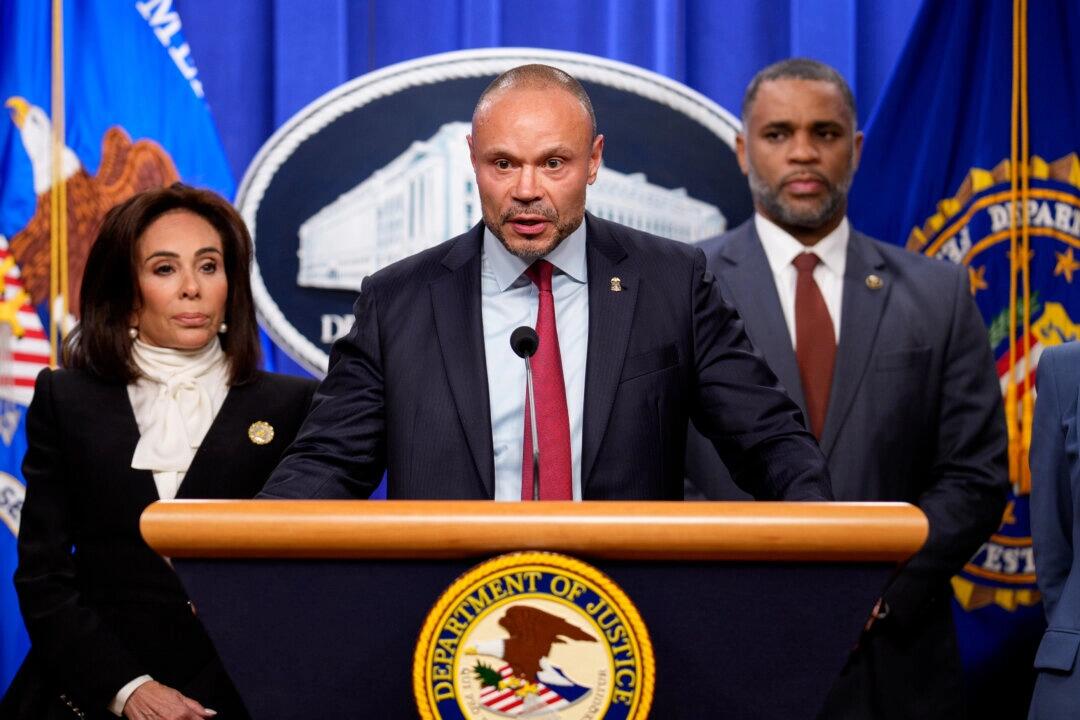
FBI Deputy Director Dan Bongino officially resigned from the bureau on Saturday, hours after President Donald Trump confirmed that Venezuelan leader Nicolás Maduro had been taken into US custody.
Responding to a post on X, Bongino praised Maduro’s capture, saying it was “a busy last day on the job.”
“Tomorrow I return to civilian life. It’s been an incredible year thanks to the leadership and decisiveness of President Trump.”
Bongino said that it was “an honor of a lifetime” to work beside FBI Director Kash Patel, adding “See you on the other side.”
It was a busy last day on the job. This will be my last post on this account.
Tomorrow I return to civilian life. It’s been an incredible year thanks to the leadership and decisiveness of President Trump.
It was the honor of a lifetime to work with Director Patel, and to serve… https://t.co/ETUqiYXvLH
— Dan Bongino (@FBIDDBongino) January 4, 2026
Bongino announced in mid-December that he would be leaving the FBI in January.
In response President Trump told reporters at Joint Base Andrews in Maryland on Dec. 17 that Bongino had done a “great job,” but “I think he wants to go back to his show,” referring to Bongino’s podcast.
Patel also confirmed Bongino’s retirement announcement on X Saturday night – after having previously calling him “the best partner I could’ve asked for in helping restore this FBI.”
“He not only completed his mission—he far exceeded it. We will miss him but I’m thankful he accepted the call to serve.”
Dan is the best partner I could’ve asked for in helping restore this FBI. He brought critical reforms to make the organization more efficient, led the successful Summer Heat op, served as the people’s voice for transparency, and delivered major breakthroughs in long unsolved… https://t.co/o8wZOUnojP
— FBI Director Kash Patel (@FBIDirectorKash) December 17, 2025
As the Epoch Times notes further, Bongino highlighted some statistics of the FBI’s operations over the past year in a post on Dec. 30, 2025, noting the bureau had made more than 50,000 arrests—including more than 30,000 that were for violent crimes—had seized more than 2,000 kilograms (4,400 pounds) of fentanyl, and increased arrests for “Nihilistic Violent Extremism” by 490 percent.
The United States also saw a significant drop in the national murder rate over the past year, and the FBI located more than 6,000 child victims, an increase of 22 percent, Bongino added.
Bongino’s tenure at the FBI also saw some infighting with the Department of Justice, the bureau’s parent agency, over its handling of the Jeffrey Epstein files after Bongino had spent considerable time on his podcast demanding answers about the now-deceased sex offender and his 2019 death, which was officially ruled a suicide.
Bongino wrote a post on X in late July 2025 that said the FBI was “committed to stamping out public corruption and the political weaponization of both law enforcement and intelligence operations,” but that what he learned conducting investigations “into these aforementioned matters, has shocked me down to my core.”
“We cannot run a Republic like this. I’ll never be the same after learning what I’ve learned,” Bongino said at the time, but did not elaborate.
Earlier that month, Trump had dismissed reports of friction between Bongino and others at the FBI and Justice Department over the release of the Epstein files, telling reporters on Air Force One that Bongino’s a “very good guy” and that “he’s in good shape.”
Tyler Durden
Sun, 01/04/2026 – 14:35
https://www.zerohedge.com/markets/bonginos-makes-resignation-fbi-official

Indiana legislators file quirky bills from state sandwich to ads on school buses
Indiana legislators have been filing bills for the 2026 legislative session, which begins again Monday, and some of the bills have a lighthearted goal.
The 2026 session convened for the first two weeks of December as the House and Senate discussed and voted on a bill to address mid-census redistricting as President Donald Trump and his administration pressured Republican-led states to do last year.
Mid-census redistricting passed the House 57-41, but it ultimately failed after the Senate voted 31-19 against the bill.
When the legislature reconvenes after the holidays Monday, legislators will focus on bills, excluding the budget, in a shorter session cycle.
State Sen. Jean Leising filed Senate Bill 58 that requires school corporations, charter schools and state-accredited nonpublic elementary schools to include print handwriting, cursive handwriting and spelling in their curriculum.
A 2023 statewide survey found that 91% of private schools taught cursive writing, while only 52% of public schools taught it. A study, first published in 2020 through the Wiley Library, found that writing letters by hand helps students read better, according to a news release Leising issued announcing the bills she filed.
In previous sessions, Leising, R-Oldenburg, has filed 14 bills to require cursive in the classroom. In 2023, she had a bill, Senate Enrolled Act 72, which required a study and report on whether schools taught cursive or not, according to her spokesman Elijah Roberson.
“Many constituents have told me that not only are their children not being taught to use paper and pencil to write in cursive or print, they have also told me many schools no longer teach spelling,” Leising said in the release. “It is important that our students learn these vital skills. Writing allows students to understand how letters work together to form words and is the key foundation for learning to read.”
State Sen. Shelli Yoder authored Senate Bill 117 that would exempt feminine hygiene products from sales tax as of July 1. If passed, the law would expire January 1, 2029, according to the bill.
Yoder, D-Bloomington, said in a statement that the state has taxed “a basic health necessity” women and girls need to purchase.
“Senate Bill 117 simply says that period products are not a luxury, and they should not be treated like one at the checkout counter,” Yoder said. “This bill costs the state nothing new. What it does is end an inequitable tax that is collected almost exclusively from women for roughly 30 years of their lives.”
Over the years, Indiana has been able to subsidize data centers, corporate incentives and casinos, Yoder said. The same fiscal benefit should be extended to women and girls, she said.
“Senate Bill 117 is about fairness, affordability and recognizing that essential health products should never be a revenue source on the backs of women and girls,” Yoder said.
Breaded tenderloin is up for consideration as Indiana’s state sandwich in the 2026 legislative session. (Chicago Tribune file photo)
State Sen. Andy Zay filed Senate Bill 21 that designates the breaded tenderloin sandwich as the official state sandwich of Indiana.
Zay, R-Huntington, did not respond to requests for comment. He filed a similar bill in the 2023 legislative session.
In a statement from 2023, Zay said he filed the bill because Nick’s Kitchen, a restaurant in his district, is home to the first Hoosier breaded pork tenderloin and has been serving the sandwich since 1908.
“I was born and raised in Huntington, and Nick’s Kitchen has been a staple in our community,” Zay said. “Having the home of the breaded pork tenderloin located in Senate District 17, it was an obvious decision to author a bill to make it the official state sandwich.”
Jean Anne Bailey, the former owner, said in 2023 she was pleased to see the bill proposed.
“It’s quite an honor,” Bailey said. “Indiana has enjoyed the breaded pork tenderloin for more than 100 years because of Nick’s hard work. He used to push around a cart and serve the residents of Huntington before officially opening an establishment.”
State Sen. Brett Clark authored Senate Bill 23 that would allow the alcohol and tobacco commission to issue a permit, with certain limitations and requirements, for the sale of alcoholic beverages on the grounds of a county fair.
The permit could be issued if the grounds of the county fair are owned by a local board and the board requests the permit. The permit would only be valid for the scheduled date of the county fair, and multiple alcohol vendors could receive the permit to sell throughout the grounds, according to the bill.
Clark, R-Avon, said in a statement that he filed the bill after it was requested by his fairgrounds director. If passed, the bill would put county fairs in a similar position to the State Fair, “which has seen increased flexibility and revenue after rule changes over the years,” he said.
“Senate Bill 23 is about local control and home rule – giving counties the same discretion to decide what works for them. If a county doesn’t want to do it, they don’t have to. It simply puts local fairs on equal footing and lets each community make its own choice,” Clark said.
A bill under consideration in Indiana’s 2026 legislative session would allow counties to decide whether to serve alcohol at county fairs. (Mark Black / for the Beacon-News)
State Sens. Mike Bohacek, R-Michiana Shores, and Liz Brown, R-Fort Wayne, authored Senate Bill 129, which would require social media operators to restrict minors’ social media viewing without parental consent.
The rule would apply to those younger than 16 years old, and it would allow the attorney general to take action against operators that fail to implement a parental consent method and issue a civil investigative demand if necessary.
“Indiana has the opportunity to stand up for children’s innocence and empower parents with Senate Bill 129,” Brown said in a statement. “By requiring social media sites to verify parental consent for minors, parents will have more direct involvement in their children’s online use. We know America’s teens are suffering under the negative effects of social media platforms as evidenced in high rates of depression and suicide. SB 129 seeks to protect the health, safety and well-being of Hoosier children.”
Bohacek introduced the bill during last year’s session, he told the Post-Tribune, but it didn’t get a House committee hearing. He’s optimistic that it will pass out of the Senate this year, but he doesn’t know about the House.
Other states have debated the constitutionality of these restrictions, Bohacek said, but those issues have been resolved.
Bohacek believes the legislation is important for all parents, he said, because if unsupervised, children can see “pretty sophisticated content” online.
“If you’ve got kids, especially kids in high school, this turns into a situation,” Bohacek said. “I’ve had parents contact me as well and say that bullying leaves the classroom and comes home with their child because of social media.”
State Rep. Cindy Ledbetter, R-Newburgh, authored House Bill 1059, which would allow school corporations to display commercial advertising on school buses.
If passed, no more than two advertisements would be allowed on the rear quarter panels, and they cannot be taller than 36 inches or longer than 90 inches, including borders and framing. Advertisements also must consist of black lettering on a white background and cannot cover structural or sheet metal damage or alteration, according to the bill’s details.
Tobacco, alcohol, political campaigns, gambling and sexually explicit advertisements are not allowed.
School corporations will charge for the advertisements, according to the bill, and the corporation’s governing body will determine what’s appropriate.
“House Bill 1059 gives school districts the ability to sell commercial advertising space on their school buses as long as they adopt policies prohibiting inappropriate advertisements,” Ledbetter said in a statement. “This is an innovative opportunity that other states have used to improve their schools, letting them use existing resources as a new revenue stream.”
State Sen. Dan Dernulc, R-Highland, introduced Senate Bill 89, which would not allow the alcohol and tobacco commission to issue more than three new three-way permits to Schererville.
Dernulc did not respond to a request for comment about the legislation.
A three-way permit allows a business to sell beer, wine and spirits, according to Indiana code. According to the bill, the applicant for a permit must be a proprietor, owner or lessee of a restaurant in an economic development or redevelopment area. The cost of an initial permit is $40,000.
State Rep. David Abbott, R-Rome City, authored House Bill 1062, which would put restrictions on wakeboarding and wake surfing on public freshwater lakes.
According to the bill, people can’t operate a motorboat and wakeboard or wake surf on public freshwater lakes between sunset and sunrise. Violators could receive a Class C infraction or Class C misdemeanor, the bill says.
Abbott created the bill because the sports have grown in popularity in the last 10 years, he said, and the public has safety concerns. At night, boats cannot go faster than 10 miles per hour, Abbott said, but wake surfing consistently stays at that speed.
“They go out at night because it’s fun, and there’s less boats out there,” Abbott said. “But what happens is constituents call me because they were in the water swimming or just sitting on a pontoon, and they almost get run over by a wake surfer.”
Multiple constituents have called Abbott because the waves will get so large that they nearly capsize their boats.
Abbott has introduced this legislation for about seven years, he said, and he’s more optimistic about its chances to pass this session.
“I’m starting to see other legislators coming around after they maybe weren’t sure that this was an issue that warranted legislation,” Abbott said. “People sometimes aren’t aware of the rules when they’re on the lake, and they need to be reminded.”
akukulka@post-trib.com, mwilkins@chicagotribune.com

Why MSCI’s Upcoming Decision On Bitcoin Treasury Companies Matters
Why MSCI’s Upcoming Decision On Bitcoin Treasury Companies Matters
Authored by Juan Galt via BitcoinMagazine.com,
In a move that could shape corporate Bitcoin adoption, index provider MSCI is set to decide whether to exclude companies holding significant Bitcoin reserves from its global benchmarks. The outcome, due January 15, may influence billions in forced selling and set precedents for how Wall Street views Bitcoin as a treasury asset.
MSCI Inc., a New York-based publicly traded company listed on the NYSE with a market capitalization of $43.76 billion and a stock price of $565.68 as of January 2, is a key player in the investment world. It curates over 246,000 equity indexes daily, with more than $18.3 trillion in assets under management benchmarked to them. These indices serve as blueprints for funds and portfolios, helping investors gain exposure to specific market segments.
Unlike the NASDAQ, which operates as both a stock exchange where companies list and trade and a composite index tracking those listings, MSCI focuses solely on index creation. The S&P 500, managed by S&P Dow Jones Indices, is similarly an index but targets the 500 largest U.S. companies by market cap. MSCI’s offerings, such as the MSCI World Index covering developed markets, provide broader global and thematic coverage, influencing trillions in investment decisions.
The issue began on October 10, 2025, when MSCI issued a consultation proposal to exclude companies with 50% or more of their assets in digital assets like Bitcoin or other cryptocurrencies from its Global Investable Market Indexes.
The rationale: such firms operate more like funds than traditional businesses.
The proposal named 39 companies, including Bitcoin holders like Strategy and Metaplanet. The announcement triggered an immediate market reaction, with Bitcoin experiencing a sharp intraday plunge of roughly $12,000 on the same day, marking the start of a broader price correction.
Broader awareness grew in late November 2025, when JPMorgan analysts highlighted the risks in a report, estimating $2.8 billion in outflows from Strategy alone and up to $8.8 billion if other index providers followed suit.
This may have amplified selling pressure on affected stocks and contributed to Bitcoin’s ongoing pullback amid a broader market downturn.
Estimates of total forced selling, if implemented, range from $10 billion to $15 billion over a year, per Bitcoin for Corporations (BFC) analysis.
The consultation period, open for stakeholder feedback, closed on December 31, 2025. BFC, a coalition accelerating corporate Bitcoin adoption, mobilized quickly. They launched a website detailing the proposal’s flaws, including a technical appendix outlining potential market impacts. BFC drafted a letter opposing the change, gathering over 1,500 signatures in two weeks and delivering it to MSCI on December 30. Eight of the 39 affected companies are BFC members.
After initial outreach, BFC held a call with MSCI’s head of research and leadership.
“We had a very constructive conversation,” said George Mekhail, BFC’s executive director.
“I think they were very much still in a listening and learning posture. I think a lot of this just really has to do with a lack of education and understanding of Bitcoin itself, as well as these Bitcoin treasury companies and the significance of their operating businesses.”
Mekhail noted the proposal appeared driven by genuine analytical concerns rather than malice, triggered by Metaplanet’s recent preferred share issuance, not Strategy’s larger holdings. A key gap: MSCI made no distinction between Bitcoin and other cryptocurrencies, treating all digital assets alike. This has fostered temporary alignment between Bitcoin advocates and the broader crypto sector in opposition, highlighting an ongoing education gap between the Bitcoin industry and Wall Street institutions.
Next, MSCI announces its decision on January 15, 2026. If approved, exclusions take effect February 1.
Mekhail outlined three scenarios:
implementation (worst case, forcing sales),
a delay for further review (most likely, per his assessment),
or full withdrawal (best case).
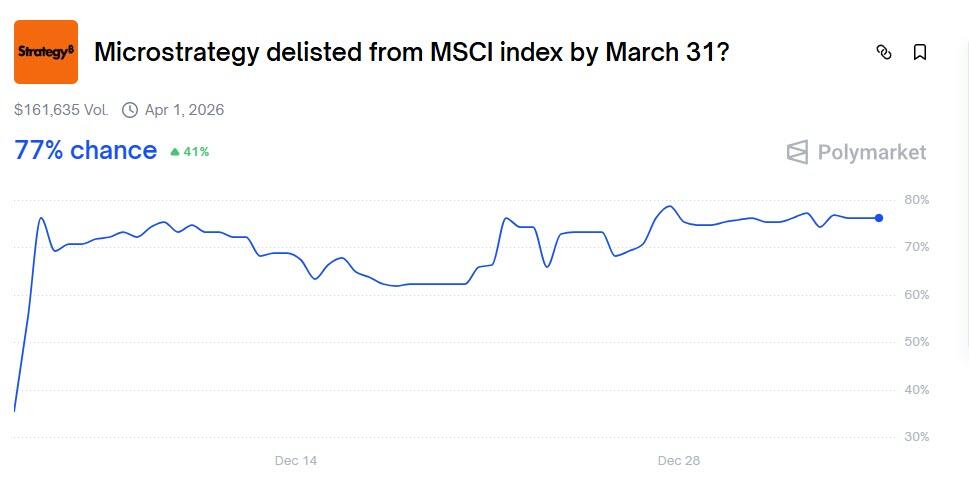
Polymarket bettors currently give a 77% chance of Strategy’s delisting from MSCI by March 31.
Most financial fallout would hit Strategy, which holds the vast majority of affected Bitcoin treasuries. Founder Michael Saylor’s firm has engaged MSCI directly, issuing its own letter and working behind the scenes. Other opposition includes letters from Strive Asset Management and investor Bill Miller.
Industry pushback has been robust and visible, with no major groups publicly supporting the proposal. This asymmetry underscores Bitcoin’s organized, motivated constituency versus dispersed critics, echoing dynamics in recent political shifts like the 2024 U.S. election.
A withdrawal would boost corporate Bitcoin strategies; implementation could deter treasuries. As Mekhail put it, “The most bullish outcome is that they take it to heart and they withdraw the proposal.”
The decision tests Wall Street’s adaptation to Bitcoin’s role in balance sheets.
Tyler Durden
Sun, 01/04/2026 – 14:00
https://www.zerohedge.com/crypto/why-mscis-upcoming-decision-bitcoin-treasury-companies-matters

Can Matas Buzelis take the reins as the primary playmaker for the injury-depleted Chicago Bulls?
It’s often only a split second that separates Matas Buzelis from pure brilliance.
The moment occurs well before he leaves the ground. Or whips around his defender in a bold pirouette. Or scoops the ball behind his back and low to the ground like a yo-yo on a string.
For Buzelis, the make-or-break millisecond before any highlight happens behind the 3-point arc, far from the basket, when the second-year forward discards hesitancy and makes a decision: Let’s go for it.
In Friday’s win over the Orlando Magic, that moment of truth was visible on the court.
It was midway through the second quarter. Jalen Smith tipped a defensive rebound just beyond the 3-point arc, where Buzelis could gather and go. For a moment, he ran at almost a casual pace, head up, perusing the options as Jalen Suggs retreated to assume the defensive responsibility on the two-on-one break.
As Buzelis reached the Bulls’ 3-point line, his decision snapped into focus.
No more dribbles. Pick up the ball parallel to the free-throw line. Plant his feet just inside the paint. Elevate. Pull the ball back like a weapon, ready for the downward blow. Accept everything that comes after — the blow to the face as Suggs flailed at the ball, the roar from the United Center as the ball crushed through the rim, the feigned disbelief of his teammates on the bench who have seen this all too many times before.
“That might be the dunk of the year.”
Matas Buzelis makes his case for slam of the season! https://t.co/bODetJUvLO pic.twitter.com/5OpMnFAMjh
— NBA (@NBA) January 3, 2026
“I don’t know,” Buzelis said, shaking his head with a grin after the win. “I just did it.”
That game represented a template for Buzelis, who logged 21 points, nine rebounds and seven assists. He crashed the boards, continued to pepper in 3-point shots despite a slow start in the first half and operated as the crucial first blow in a one-two punch in the pick-and-roll with center Nikola Vučević.
The dunk was just a little extra gravy on top.
It’s hard to define the most “complete” game of any player’s career. But Buzelis’ performance Friday easily earns that designation — mostly because, for the first time in his brief tenure with the team, the Bulls needed Buzelis.
Photos: Chicago Bulls 121, Orlando Magic 114
That was somewhat true at the start of this season. With most of last year’s roster returning, the front office and coaching staff were open about how Buzelis’ growth would define how much this team could grow and compete in 2025-26.
It wasn’t meant to put pressure on Buzelis — it’s a simple fact. If Buzelis has a breakout season, the Bulls could rise above their current potential. If he stays quiet, it’s likely more of the same.
But with Josh Giddey and Coby White sidelined by injuries, the Bulls are looking to Buzelis for inspiration.
Over the last three games without both starting guards, Buzelis averaged 19 points, 7.7 rebounds and four assists. He shot 24% from 3-point range in that span — a significant dip from his 33.9% season average — as the Bulls went 2-1 without their leading sources of points and assists.
Bulls forward Matas Buzelis celebrates a 121-114 win over the Magic on Friday, Jan. 2, 2026, at the United Center. (John J. Kim/Chicago Tribune)
This is a step up from Buzelis’ typical output. But is it enough?
“Consistency” is one of Buzelis’ most-used words this season. He seeks routine and ritual in every aspect of his daily life as he works to build the habits of a professional athlete. He’s quick to point out his struggles to stamp statement performances in back-to-back games, a sticking point as he nears the halfway point of his second season.
Buzelis doesn’t want to force things. That might seem incongruous with the lofty goals he eagerly shared in training camp. He wants to win Most Improved Player and end up on one of the All-Defensive teams this season. But he also doesn’t want to stray from the growth process the Bulls coaching staff set out for him.
This is a rarity — and one the Bulls should cherish. This is a 21-year-old with eye-popping skills, who could dunk better than any of his teammates (well, Zach LaVine might have argued that one) from the moment he set foot in the NBA. But Buzelis still is trying to do things the right way. He doesn’t want to show off. He wants to be great.
Photos: Charlotte Hornets 112, Chicago Bulls 99
At times, this intentionality has been vexing. Fans gripe about the dynamic between Buzelis and coach Billy Donovan, who still isn’t afraid to pull the forward back to the bench after coverage mistakes or all-too-frequent fouls. And Buzelis can be hesitant, taking only five shots in a Dec. 27 loss to the Milwaukee Bucks.
It’s true that Buzelis needs to learn to take the reins. His diligence and selflessness will be assets throughout his career. His coachability is a strength. But the Bulls need to be able to set him loose on an opponent at will — and he still hasn’t shown he has the capacity to take over a game for more than a quarter at a time.
That’s understandable. Buzelis is young. Such offensive dominance requires a keen understanding of the game in addition to physical gifts and playmaking. The only way to teach Buzelis how to command these moments is to allow him to play through them. While injuries have devastated the Bulls this season, they also have offered Buzelis more minutes as the primary playmaker.
Bulls forward Matas Buzelis stands on the court in the second half against the Hornets on Saturday, Jan. 3, 2026, at the United Center. (Chris Sweda/Chicago Tribune)
There’s no rush. The Bulls are hovering around .500, sitting on the middle rung of the Eastern Conference that they can’t surpass without the full force of their roster. The front office has no serious expectations for this team to compete deep into the playoffs.
But for this season to be any sort of long-term success for the Bulls, Buzelis must keep building his identity as a No. 1 option on the court — one split-second decision at a time.
https://www.chicagotribune.com/2026/01/04/chicago-bulls-can-matas-buzelis-take-over/

Democrats Claim Maduro Capture Is A ‘Distraction’
Democrats Claim Maduro Capture Is A ‘Distraction’
Democrats immediately denounced President Trump’s operation that resulted in the capture of Venezuelan socialist dictator Nicolás Maduro, calling it an illegal war despite broad precedent supporting the commander-in-chief’s authority to conduct such missions without congressional approval.
Even former Vice President Kamala Harris has chimed in.
“Donald Trump’s actions in Venezuela do not make America safer, stronger, or more affordable,” Harris claimed in a post on X. “That Maduro is a brutal, illegitimate dictator does not change the fact that this action was both unlawful and unwise. We’ve seen this movie before. Wars for regime change or oil that are sold as strength but turn into chaos, and American families pay the price.”
Other Democrats claimed that the operation to capture Maduro was a “distraction.”
During an appearance on MSNOW on Saturday, Rep. Marilyn Strickland (D-Wash.) suggested the timing of Maduro’s capture served primarily as a distraction from issues Democrats plan to spotlight when Congress reconvenes, namely the upcoming anniversary of the Capitol riot on January 6, and the Epstein files.
“I think it was mentioned by one of your earlier speakers that Donald Trump is transactional, what he wants is access to those oil reserves,” Strickland said.
“At the same time, this is also a big distraction. Look at the timing of this. We go back in session on Tuesday. We are going to talk about the Affordable Care Act premiums. We’re going to talk about January 6, the Epstein files, the economy, all those things that are so important to the American people, and, what a coincidence, this happens.“
She also drew a comparison between Maduro and Trump regarding election integrity.
“It also is not a surprise of the timing. We’re going back to Congress next week… and we’ll be talking about January 6, which is kind of ironic here, because…Maduro, he actually did steal two elections. And Donald Trump tried to do that on January 6, but he failed,” Strickland said.
Strickland wasn’t the only one pushing the “distraction” angle.
“It’s not about drugs. If it was, Trump wouldn’t have pardoned one of the largest narco traffickers in the world last month. It’s about oil and regime change,” Rep. Alexandria Ocasio-Cortez (D-N.Y.) claimed.
And they need a trial now to pretend that it isn’t. Especially to distract from Epstein + skyrocketing healthcare costs,” she wrote.
However, these accusations ignored a glaring contradiction.
The Trump administration carried out an operation targeting a leader the Biden-Harris administration actively sought to apprehend.
Secretary of State Antony Blinken announced on January 10, 2025, mere days before Joe Biden and Kamala Harris left office, that the State Department would increase the reward to $25 million for Maduro.
“In solidarity with the Venezuelan people, the U.S. Government and our partners around the world are taking action today,” Blinken announced in a statement on January 10, 2025.
“The Department of State is increasing the reward offers to up to $25 million each for information leading to the arrests and/or convictions of Nicolás Maduro and Maduro’s Minister of Interior Diosdado Cabello. The Department of State is also adding a new reward offer of up to $15 million for Maduro’s Defense Minister Vladimir Padrino López. These three reward offers stem from criminal narcotrafficking indictments announced in March 2020.”
Biden’s outgoing administration framed the increased reward as part of coordinated international pressure on the illegitimate Maduro regime.
It appears that the only distraction going on here is from the Democrats, who don’t want the public to realize that Trump succeeded where Biden-Harris failed.
Tyler Durden
Sun, 01/04/2026 – 13:25
https://www.zerohedge.com/political/democrats-claim-maduro-capture-distraction

Business news: MLK events and new firefighters graduate
PNW sets MLK Day events
Purdue University Northwest has scheduled celebrations of the Rev. Martin Luther King Jr.’s life and legacy through free programming on Jan. 15 and Jan. 19 at the Hammond and Westville campuses, according to a release.
PNW’s Jan. 15 MLK Day celebration runs from 12:30-2 p.m. in Alumni Hall of the Student Union and Library Building on the Hammond campus, 2200 169th St., Hammond. The keynote speaker will be Shontrai Irving, PNW alumnus and clinical professor of Business Law at PNW. PNW’s Jan. 19 MLK Day celebration, which will coincide with the federal holiday, runs from 7:45-9:30 a.m. The program takes place in the Great Hall Events and Conference Center inside the James B. Dworkin Student Services and Activities Complex on PNW’s Westville branch campus, 1401 S. U.S. 421, Westville. Michigan City native Kiahna W. Davis, CEO of Indianapolis-based Mind Your Business Accounting and Business
Consulting, will deliver the keynote address.
Event and registration information can be found at pnw.edu/mlk-celebration.
Eleven new MAAC Foundation firefighting graduates are shown at the First Responder Training Campus in Valparaiso. (Photo provided by MAAC Foundation)
MAAC Foundation graduates 11 new firefighters
In partnership with the Northwest Indiana District 1 Firefighter Training Council, the MAAC Foundation recently graduated 11 new firefighters at the MAAC Foundation First Responder Training Campus in Valparaiso.
The graduates completed an 11-week training program that included instruction in fire suppression, hazmat operations and technical rescue, along with other vital firefighting skills, a release said.
New graduates include: Nathan Brandt, Portage; Robert Cloyd, Michigan City; Tyler Martin, Michigan City; Ryan Mattel, Portage; Austin Nickos, Ogden Dunes; Edwin Schmidt, Michigan City; Ruben Silvas, Whiting; Larz Stanford, Michigan City; Pedro Valerio, Whiting; Noah Villarreal, Portage; and Caitlin Wilcox, Liberty Township.
$239K awarded in NIPSCO holiday program
A group of Northern Indiana organizations and municipalities were awarded donations this season in NIPSCO’s 13th annual Hope for the Holidays campaign.
With grant support from the NiSource Charitable Foundation, NIPSCO donated $239,425 to 23 organizations across NIPSCO’s service area, according to its website. Additionally, employees contributed more than 800 new toys to be distributed to seven local Toys for Tots chapters.
Among those receiving donations were Family Promise of Porter County, Hobart Food Pantry, North Township Trustee’s Office, Trinity Church, City of Gary, Greater Hammond Community Services and Salvation Army LaPorte County.
Donations from the Hope for the Holidays campaign were presented to a range of organizations committed to providing food security, sustaining families and housing services, the website said. For more information, visit NIPSCO.com/GivingBack.
Dr. Andrew Martin, a bariatric and general surgeon with Northwest Health, will hold a free seminar on Jan. 19 that will explore weight-loss surgery options, compare bariatric surgery with GLP-1 medications and explain how both approaches may complement each other. (Photo provided by Northwest Health)
Northwest Health discusses weight-loss options
Dr. Andrew Martin, a bariatric and general surgeon with Northwest Health, will hold a free seminar that will explore weight-loss surgery options, compare bariatric surgery with GLP-1 medications and explain how both approaches may complement each other.
The event, “Bariatric Surgery & Long-Term Health: What You Need to Know in the GLP-1 Era,” will take place from 5:30-6:30 p.m., Jan. 19 at Northwest Health – Porter, Community Room, 85 E. U.S. 6, Valparaiso, according to a release.
The seminar will also explore how bariatric surgery works and whether it’s right for you, the health benefits beyond weight loss and how bariatric surgery can resolve many medical conditions and concerns and recovery timelines, lifestyle changes and success strategies.
The event is part of the Northwest Health HealthyU series, a community program that provides free seminars on various health and wellness topics. To register, visit NWHinfo.com/WeightLoss.
PNW earns national recognition for cybersecurity education
For the third consecutive year, Purdue University Northwest has received the International Council of Electronic Commerce Consults’ Academia Circle of Excellence Award in recognition of its cybersecurity program.
Since 2019, PNW’s College of Technology has partnered with the EC-Council in offering two of the council’s accredited certifications, Certified Ethical Hacker and Computer Hacking Forensic Investigator, within program curricula, a release said. PNW undergraduate students pursuing bachelor’s degrees in Cybersecurity and Computer Information
Technology can earn the Certified Ethical Hacker certificate through their plans of study, while working professionals can complete both certificates through the PNW Center for Cybersecurity’s Cybersecurity Workforce Certification Training. More information can be found at pnw.edu/cybersecurity.
https://www.chicagotribune.com/2026/01/04/business-news-mlk-events-and-new-firefighters-graduate/

OPEC+ Reaffirms Output Pause As Eight Producers Cite Market Stability
OPEC+ Reaffirms Output Pause As Eight Producers Cite Market Stability
Authored by Tom Kool via OilPrice.com,
OPEC+ confirmed on Sunday that it will keep oil production steady through the first quarter of 2026, as eight key producers reaffirmed their commitment to market stability amid a steady global economic outlook and what they described as healthy oil market fundamentals.
Saudi Arabia, Russia, Iraq, the United Arab Emirates, Kuwait, Kazakhstan, Algeria, and Oman met virtually on January 4 to review global market conditions and outlook.
The group reiterated its decision, first announced on November 2, 2025, to pause planned production increases in February and March 2026, citing seasonal demand patterns.
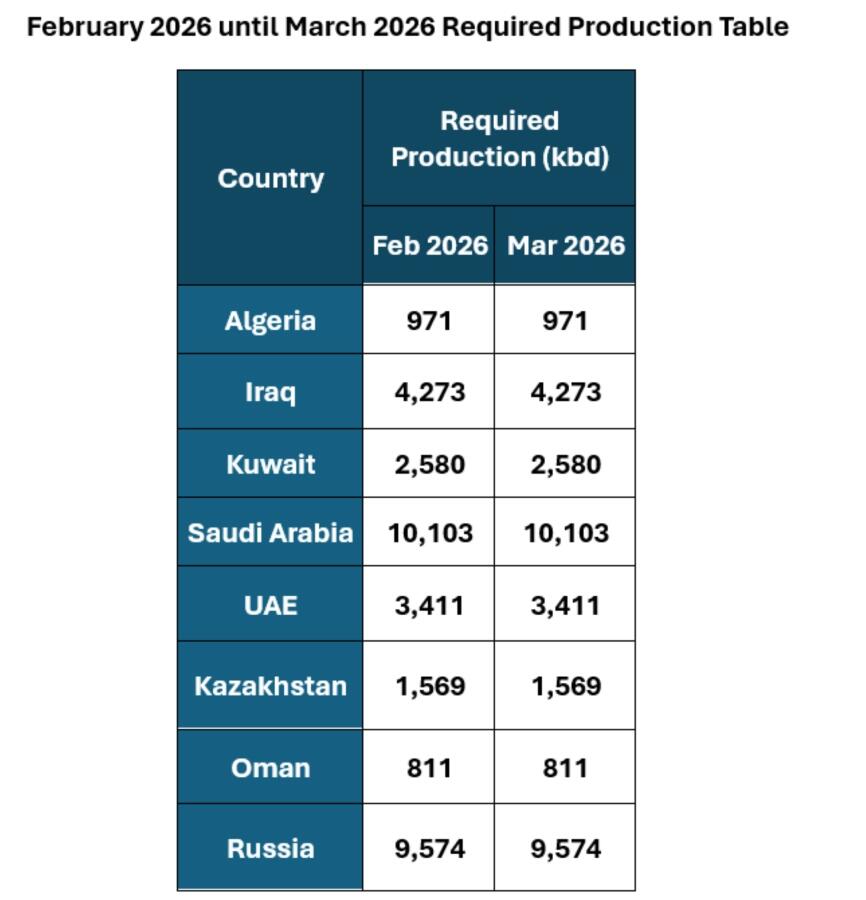
Following the meeting, OPEC+ produced the following production table for February 2026:
In a joint statement, the eight producers said current market conditions remain supportive, pointing to relatively low global inventories as a sign that the oil market is well balanced despite last year’s sharp decline in crude prices.
Oil prices fell more than 18% in 2025, the steepest annual drop since the pandemic, as supply growth outpaced demand and concerns over a growing glut mounted.
The group also emphasized that the previously announced 1.65 million barrels per day of voluntary production cuts could be returned to the market either in part or in full, depending on evolving market conditions, and only in a gradual manner.
The producers stressed that flexibility remains central to their strategy, including the option to extend or reverse additional voluntary adjustments, such as the 2.2 million barrels per day of cuts announced in November 2023.
OPEC+ further reiterated its collective commitment to full conformity with the Declaration of Cooperation. The producers confirmed that any overproduction since January 2024 will be fully compensated, with compliance and compensation to be monitored by the Joint Ministerial Monitoring Committee (JMMC).
Despite heightened geopolitical tensions – including strains between Saudi Arabia and the UAE over Yemen and uncertainty surrounding Venezuela following the U.S. capture of President Nicolas Maduro – delegates said these developments did not alter the group’s near-term policy stance.
“In an environment this fragile, OPEC+ is choosing caution, preserving flexibility rather than introducing new uncertainty into an already volatile market,” said Jorge Leon, an analyst at consultant Rystad Energy AS.
“The political transition in Venezuela adds another major layer of uncertainty.”
Caracas may hold the world’s biggest oil reserves, but years of under – investment, mismanagement and international isolation have diminished the country to a fraction of its former standing.
But, bear in mind that…
When you hear that Venezuela has the world’s largest proven oil reserves, remember that ~2/3 of that comes from the Chavez and Maduro governments using generous assumptions to reclassify large volumes of lower utility, heavy crude as recoverable. https://t.co/SSA7u8Ovjy pic.twitter.com/JG1VrIUqTo
— Dr. Robert Rohde (@RARohde) January 4, 2026
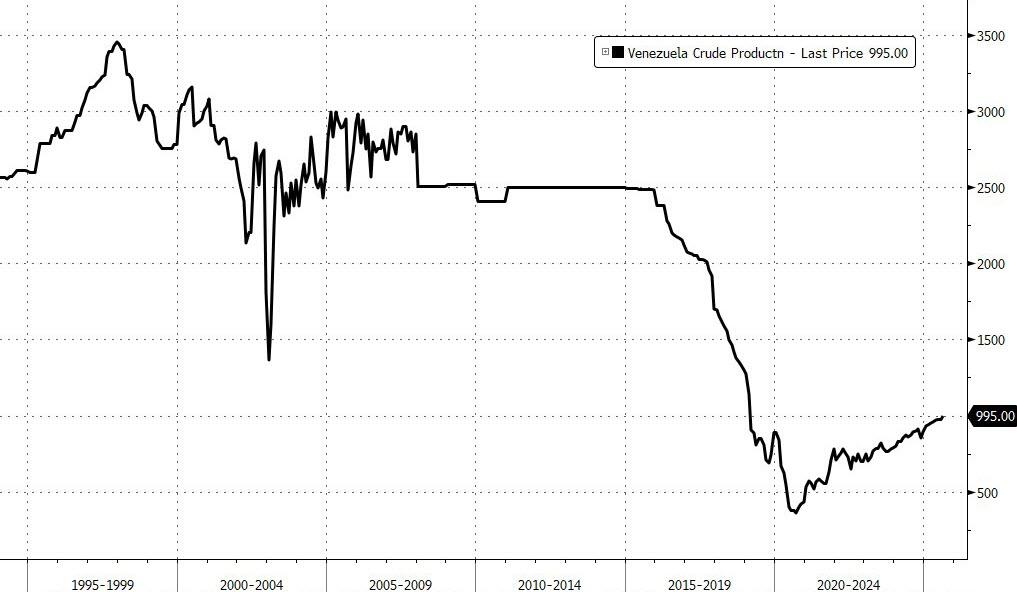
Venezuela currently pumps about one million barrels of oil a day, roughly a third of what it produced a decade ago and under 1% of global supplies.
Washington’s recent seizure and pursuit of tankers while it pressured Maduro’s regime helped curb output in the country’s critical Orinoco Belt by 25%.
Production could rise by about 150,000 barrels a day within a few months if sanctions are lifted, but getting back to 2 million barrels a day or higher would require “massive reforms” and large investments from international oil companies, according to consultants at Kpler.
The eight OPEC+ countries agreed to continue holding monthly meetings to assess market conditions, compliance levels, and compensation progress. Their next meeting is scheduled for February 1, 2026.
Tyler Durden
Sun, 01/04/2026 – 12:50
https://www.zerohedge.com/energy/opec-reaffirms-output-pause-eight-producers-cite-market-stability