Category: News

The Misinformation Inquisition: How Censorship Shields Approved Narratives From Scrutiny
The Misinformation Inquisition: How Censorship Shields Approved Narratives From Scrutiny
Authored by Tilak Doshi via Substack,
As the year drew to a close, the guardians of climate orthodoxy once again unleashed their ritualistic howls of indignation at the actions of the Trump administration. Last week’s op-ed in The Guardian, Bob Ward and Michael Mann—attack dogs of the alarmist establishment—likened the US government’s decision to dismantle the National Center for Atmospheric Research (NCAR) to tyranny, “paid for” by fossil fuel interests. Their op-ed opens with the astonishing claim that the Soviet dictator Joseph Stalin “would have understood and even appreciated” Trump’s actions.
They accuse President Trump of suppressing climate science, evoking the spectre of Lysenkoism, that infamous episode where ideology trumped empirical inquiry under Stalin’s regime. The irony is exquisite even if lost on its progenitors. Here are two figures who have spent their careers calling for the cancelling of dissenters, now projecting their own sins onto a political leader intent on liberating science from ideological captivity.
An Orwellian Malignancy
This latest salvo is no aberration but a symptom of a deeper malaise. The climate alarmist narrative, much like its twin in the COVID-19 hysteria, relies on a censorship complex that brands any deviation as “misinformation.” Ward, a fixture in the environmental NGO circuit, has long specialized in ad hominem attacks on respected academics like Richard Lindzen and Richard Tol, dismissing their peer-reviewed critiques as heresy. Mann, infamous for his “hockey stick” graph that conveniently erased historical climate variability to fabricate a crisis, has faced courtroom rebukes for his litigious zeal. In his defamation suits, judges have accused him and his legal team of misleading tactics, underscoring the fraudulence of his claims. Yet, in the pages of The Guardian—that reliable echo chamber for green ideologues—the pair inverts reality, portraying Trump’s defunding of activist institutions as censorship, when it is precisely the opposite.
Consider the economic and institutional realities underpinning this charade. NCAR, after over five decades, has devolved into a taxpayer-funded propaganda mill, churning out models that predict apocalyptic futures while ignoring the stubborn facts of atmospheric physics and human adaptation. The Trump administration’s move to shutter it aligns with a broader push to restore scientific integrity, as outlined in the president’s “Gold Standard Science“ executive order. This directive mandates transparency in federally funded research, ensuring that models and data are replicable and free from the biases that plague alarmist projections. Far from Stalinist suppression, this is a reclamation of science from the clutches of unelected bureaucrats and their NGO allies, who funnel billions into “climate education” grants that invariably promote one-sided advocacy. NOAA, for instance, routinely awarded multimillion-dollar sums to nonprofits peddling green dogma, all under the guise of environmental stewardship.
The parallels with the COVID-19 debacle are striking, revealing how the misinformation label serves as a blunt instrument for silencing debate across scientific domains. Just as climate skeptics are tarred as “deniers,” COVID dissenters were branded spreaders of falsehoods. Stanford’s Jay Bhattacharya, a leading epidemiologist, recently highlighted this hubris in a post on X: the notion that a cabal of bureaucrats and activist scientists can infallibly discern truth from error on complex matters is not just arrogant—it’s delusional. Bhattacharya himself endured censorship orchestrated by Anthony Fauci who among others in the medical establishment pressured social media platforms to throttle views challenging lockdowns and vaccine mandates.
Across the Atlantic, the European Union’s censorship regime under European Commission president Ursula von der Leyen exemplifies this technocratic overreach. The unelected Eurocrat boasts of safeguarding free speech against “harmful and illegal activities” online with its Digital Services Act. It aims to restrict media platforms which host “disinformation” and critical views on mass immigration, the Ukraine conflict, or the ruinous costs of the green agenda in Europe.
In a rant that would impress Orwell, Ms. Von der Leyen speaks about how “pre-bunking” is preferable to “de-bunking” alleged untruths and where alleged “misinformation” is a virus:
“…we need to build up societal immunity around information manipulation, because research has shown that pre-bunking is much more successful than debunking. Pre-bunking is basically the opposite of debunking. In short, prevention is preferable to cure. Perhaps if you think of information manipulation as a virus—instead of treating an infection once it has taken hold, that is debunking—it’s much better to vaccinate so that the body is inoculated.”
Where have we heard that vaccination/inoculation story before? Perhaps we should not digress into Ms. Von der Leyen’s missing SMS phone messages which sealed the EU’s deal for 1.8 billion doses of corona “vaccine” costing €35 billion negotiated with Pfizer CEO Albert Bourla.
In New Zealand, former Prime Minister Jacinda Ardern went further, declaring government sources the sole arbiters of COVID truth, effectively criminalizing legitimate critiques from sceptical doctors and scientists upholding their Hippocratic oath. This Orwellian stance—where state-approved narratives are sacrosanct—mirrors the climate arena, where questioning net-zero fantasies invites professional ruin.
The Trumpian Pushback
The EU’s Digital Services Act plans to coerce social media giants into suppressing content that challenges Brussels’ orthodoxies, leading to a chilling effect on open discourse throughout the world. Earlier in the month, the European Commission fined Elon Musk’s X $140 million for “failing to comply” with regulations. But it is now a Trumpian world which frustrates Eurocrats to no end. America’s commitment to First Amendment principles clashes with Europe’s slide into regulatory authoritarianism. The US house judiciary committee describes the digital regulations as censorship which is “largely one-sided, almost uniformly targeting political conservatives.”
The US Secretary of State Marco Rubio shot back last week:
“For far too long, ideologues in Europe have led organized efforts to coerce American platforms to punish American viewpoints they oppose. The Trump Administration will no longer tolerate these egregious acts of extraterritorial censorship. Today, @StateDept will take steps to bar leading figures of the global censorship-industrial complex from entering the United States. We stand ready and willing to expand this list if others do not reverse course.”
The U.S. state department’s sanctions on NGO leaders and a former EU official involved in these efforts underscore the geopolitical rift. Under Secretary Sarah Rogers detailed the individuals and the reasons why they have been barred. On the US state ban list are Imran Ahmed (Centre for Countering Digital Hate), Josephine Ballon and Anna-Lena von Hodenberg (HateAid), Thierry Breton (former EU Commissioner) as well as Clare Melford (Global Disinformation Index).
Let’s go through each of these censors.
Thierry Breton was a key architect of the Digital Services Act. In August 2024, as European Commissioner for Internal Markets and Digital Services, he issued a letter to threaten Elon Musk ahead of his live stream interview with candidate Trump who was campaigning for his second term. The hubris of an EU functionary to warn Mr. Musk that his platform could be charged for amplifying harmful content in the EU can only be described as bizarre.
Undersecretary Rogers accused the UK citizen Imran Ahmed of collaborating “with the Biden Administration’s effort to weaponize the government against U.S. citizens” in a social media post on December 23rd, writing that his organization published the “infamous ‘disinformation dozen’ report” that spurred a campaign to de-platform those questioning the safety of COVID-19 vaccines including the current Department of Health and Human Services Secretary Robert F. Kennedy Jr. .
“Leaked documents from CCDH show the organization listed ‘kill Musk’s Twitter,’ and ’trigger EU and UK regulatory action’ as priorities…The organization supports the UK’s Online Safety Act and EU’s Digital Services Act to expand censorship in Europe and around the world.”
It is interesting and not coincidental that Imran Ahmed’s CCDH was founded by Morgan Sweeny, Kier Starmer’s chief adviser. Clare Melford is the founder of the Global Disinformation Index, another British NGO that vigorously pursues anti-“hate-speech” activism, in fact hunting down anyone who has views different from the official dogma on climate change or so-called anti-vaxxers
Anna Lena von Hodenberg is the leader and founder of Hate Aid, a German NGO founded after the 2017 German federal elections to counter conservative groups such as the AfD. Ms. Anna and her NGO is an official “trusted flagger” under the EU’s digital services act. Clare Melford. Ahmed is the CEO of The Center for Countering Digital Hate, and Melford is the founder of the Global Disinformation Index, both two entities extremely active in anti-“hate-speech” activism, in fact hunting down anyone who has views different from the official dogma on climate change or so-called anti-vaxxers,
Morally Bankruptcy of the Eurocrats
Von der Leyen’s pronouncements on “inoculated information” ring hollow amid Europe’s deindustrialization, where energy policies driven by climate ideology have shuttered factories, spiked power prices, and eroded competitiveness. Germany’s Energiewende, once hailed as a model, now stands as a cautionary tale of economic self-harm, with manufacturing output shares plummeting and GDP growth stagnating.
At the heart of this EU-led censorship complex lies a modern Lysenkoism, where ideology masquerades as science. Today’s climate Lysenkoists similarly dismiss empirical inconveniences: satellite data showing no acceleration in sea-level rise, historical records of globally warmer periods like the Medieval Warm Period, or the economic models demonstrating that net-zero targets would cost trillions while yielding negligible climate benefits. But Eurocrats will condemn as “misinformation” self-evident arguments that cheap, reliable energy is the bedrock of human welfare. Witness Asia’s ascent, where coal, oil and gas have fueled GDP growth rates averaging 7% over decades, slashing poverty from 60% to under 5% in regions like East Asia.
The institutional incentives behind climate alarmism are pernicious. Multilateral agencies like the IMF and World Bank, alongside green lobbies, perpetuate myths of “fossil fuel subsidies“ that distort markets, penalizing hydrocarbons while subsidizing intermittent renewables to the tune of $1.3 trillion annually globally. In Africa, the push for “renewable leapfrogging“ ignores the continent’s dire need for baseload power, condemning millions to energy poverty under the banner of climate justice. Western elites, insulated from the consequences, preach degrowth while developing nations in BRICS+ reject such masochism, opting for pragmatic energy mixes that prioritize growth over virtue-signaling.
The contradictions of the censors of “misinformation” are glaring: alarmists decry “misinformation” while propagating doomsday scenarios that fail to materialize—recall the 50 years of apocalyptic predictions. Europe’s precipitous industrial decline exposes the folly of subordinating energy policies to ideology. In the U.S., the virtue signalling ESG investment drive — pushed by BlackRock’s Larry Fink among others — which funnelled trillions into underperforming green assets, is unravelling as returns lag and lawsuits mount over fiduciary breaches.
A New Year’s Gift
Yet, there is cause for optimism in this twilight of technocratic hubris. President Trump’s re-election signals a pivot toward evidence-based policy, unshackling science from the misinformation inquisition. By defunding activist enclaves like NCAR and enforcing transparency via executive order, the administration paves the way for genuine inquiry. Imagine a world where debates on climate sensitivity, the role of solar cycles, or the costs of adaptation are conducted openly, without fear of cancellation.
As Jay Bhattarcharya reminds us, free speech and replication as the standard of truth are necessary conditions for science to flourish. We need rational argument and data, not the censorship of state-defined “misinformation”. The US state department censoring the censors is good news as the New Year beckons.
Tyler Durden
Sat, 01/03/2026 – 23:20

Visualizing All Of The World’s Oil Reserves By Country
Visualizing All Of The World’s Oil Reserves By Country
Oil remains one of the most strategically important resources in the global economy. It powers transportation systems, underpins industrial activity, and continues to shape geopolitics and trade flows. While renewable energy is growing, oil still plays a dominant role in meeting global energy needs.
This visualization, via Visual Capitalist’s Bruno Venditti, ranks countries by the size of their proven oil reserves at the end of 2024.
The data for this graphic comes from OPEC’s Annual Statistical Bulletin 2025. Figures represent proven oil reserves as of year-end 2024 and are measured in billions of barrels. The data includes conventional crude oil as well as oil sands.
Four Countries Dominate Global Oil Reserves
Global oil reserves are highly concentrated.
Venezuela ranks first with an estimated 303 billion barrels of oil reserves. However, turning this vast resource base into economic and geopolitical power has proven difficult, as ongoing U.S. sanctions and the recent seizure of Venezuelan oil shipments under the Trump administration continue to limit the Maduro government’s ability to export crude and fully monetize its reserves.
Saudi Arabia follows the South American country with 267 billion barrels. Iran, Canada, and Iraq round out the top five.
Rank
Country
2024 (Billion Barrels)
1
Venezuela
303,221
2
Saudi Arabia
267,200
3
Iran
208,600
4
Canada
163,000
5
Iraq
145,019
6
United Arab Emirates
113,000
7
Kuwait
101,500
8
Russia
80,000
9
Libya
48,363
10
United States
45,014
11
Nigeria
37,280
12
Kazakhstan
30,000
13
China
28,182
14
Qatar
25,244
15
Brazil
15,894
16
Algeria
12,200
17
Ecuador
8,273
18
Azerbaijan
7,000
19
Norway
6,912
20
Mexico
5,136
21
Sudan
5,000
22
India
4,981
23
Oman
4,971
24
Vietnam
4,400
25
Egypt
3,300
26
Argentina
2,999
27
Malaysia
2,700
28
Angola
2,550
29
Indonesia
2,410
30
Colombia
2,019
31
Gabon
2,000
32
Congo
1,811
33
Australia
1,803
34
United Kingdom
1,500
35
Brunei
1,100
36
Equatorial Guinea
1,100
37
Turkmenistan
600
38
Uzbekistan
594
39
Ukraine
395
40
Denmark
365
41
Belarus
198
42
Chile
150
The Role of OPEC and the Middle East
Many of the world’s largest oil reserves are held by OPEC members, particularly in the Middle East. Saudi Arabia, Iran, Iraq, Kuwait, and the United Arab Emirates anchor the region’s dominance.
These countries benefit from low extraction costs and large, easily accessible reserves. As a result, Middle Eastern producers are expected to remain critical suppliers even as global demand growth slows.
Oil Sands and Non-OPEC Producers
Canada stands out among non-OPEC countries, ranking fourth globally with 163 billion barrels of reserves. The majority of Canada’s reserves come from oil sands, which are more expensive and carbon-intensive to extract. Russia and the United States also rank among the top 10.
Taken together, the data highlights how unevenly oil resources are distributed and why oil-rich nations continue to have significant economic and geopolitical power.
If you enjoyed today’s post, check out Charted: Global Grid Investment by Country (2020–2027F) on Voronoi, the new app from Visual Capitalist.
Tyler Durden
Sat, 01/03/2026 – 22:45
https://www.zerohedge.com/energy/visualizing-all-worlds-oil-reserves-country

Murder charges filed in Ford Heights shooting from July
A 31-year-old Chicago man is being held pending trial in the Cook County Jail, charged with first-degree murder stemming from a July shooting in Ford Heights that killed two people and injured others.
Detrion Anderson was arrested Jan. 1, after a warrant was issued in November. He is due to appear again in court Jan. 21.
The shooting took place about 3:15 a.m. July 5 in the 1400 block of Regent Lane. Michael Agee, 30, of Lynwood, and Raqwan Dixon, 30, of Hammond, were found with gunshot wounds and taken to Franciscan St. Margaret Health in Dyer, Indiana, where they were later pronounced dead, according to the Cook County sheriff’s office.
Autopsies revealed Dixon died of a single gunshot wound and Agee of multiple gunshot wounds, prosecutors said.
A third gunshot victim, 31, declined treatment at the scene and got his own ride to a hospital, police said.
After the shooting, prosecutors said a car driven from the scene was tracked using Flock Cameras as it left Ford Heights via Route 30 and Interstate 394, and recorded by other cameras nine times as it journeyed to Chicago.
Registration data from the vehicle as well as tracking data from a phone led police to Anderson, prosecutors said.
https://www.chicagotribune.com/2026/01/03/murder-charges-filed-in-ford-heights-shooting-from-july/

Chicago Bulls go cold in 3rd quarter and lose to Charlotte Hornets 112-99 to finish homestand at 3-3
Miles Bridges had 26 points and 14 rebounds, helping the Charlotte Hornets beat the Chicago Bulls 112-99 on Saturday night at the United Center.
Brandon Miller scored 22 points for the Hornets, and Kon Knueppel finished with 18. LaMelo Ball added 17 points and seven assists.
The Hornets had lost three straight and five of seven. They improved to 5-2 on the second day of back-to-back games.
Nikola Vučević had 28 points, eight assists and seven rebounds and Matas Buzelis scored 17 for the Bulls, who had won two in a row and seven of nine.
The Bulls closed out a 3-3 homestand after they beat the Magic 121-114 on Friday night.
The Hornets trailed by 15 before moving in front with a big third quarter, outscoring the Bulls 32-17 in the period. Miller made three of the Hornets’ seven 3-pointers in the third, and the Bulls shot 21.7% (5-for-23) from the field in the quarter.
Miller’s 3 made it 82-73 with 49.3 seconds left, but Ayo Dosunmu’s driving layup trimmed the Bulls’ deficit to seven going into the fourth. Dosunmu finished with 16 points off the bench.
The Hornets pulled away with a 10-0 run in the final quarter. Miller capped the decisive stretch with a fadeaway jumper that made it 105-87 with 4:01 left.
The Hornets outrebounded the Bulls 52-43 while playing with a depleted frontcourt. Moussa Diabate (wrist), Ryan Kalkbrenner (elbow), Mason Plumlee (groin surgery), Grant Williams (knee surgery) and Tidjane Salaun (ankle soreness) were sidelined by injuries.
Bulls guards Josh Giddey (left hamstring) and Coby White (right calf) each missed their third consecutive game after they suffered injuries in a loss to the Minnesota Timberwolves on Monday night. Jalen Smith left in the third quarter after a collision with Ball, and the Bulls said he was being evaluated for a concussion.
The Bulls had a 58-50 lead at the break. Dosunmu scored 14 points in the first half on 6-for-7 shooting, including a half-court buzzer-beater at the end of the first quarter.
Up next
Bulls: At Boston Celtics on Monday night.
Hornets: At Oklahoma City Thunder on Monday night.
https://www.chicagotribune.com/2026/01/03/chicago-bulls-charlotte-hornets-loss/

Nick Foligno’s shootout goal gives Chicago Blackhawks successive wins for 1st time since mid-November
WASHINGTON — Nick Foligno scored in the sixth round of a shootout to give the Chicago Blackhawks a 3-2 victory over the Washington Capitals on Saturday night.
The Capitals fell to 0-5 in shootouts this season. Sonny Milano gave them a brief lead when he scored in the fifth round, but former Capitals forward André Burakovsky tied it for the Hawks. Then Jakob Chychrun failed to score for the Capitals and Foligno ended it.
Ryan Donato and Teuvo Teräväinen scored for the Hawks in regulation, and Dylan Strome and Ryan Leonard scored for the Capitals. Leonard tied it with 8:42 left in the third period.
The Capitals lost forward Tom Wilson, who was picked earlier in the week for Canada’s Olympic team, in the first period to an apparent leg injury. They also were without forward Aliaksei Protas because of a lower-body injury.
The Hawks have won back-to-back games for the first time since mid-November. The Capitals earned points in 13 of 14 games from Nov. 15 through Dec. 11 but are just 3-6-2 since.
This was the teams’ first meeting since April 4, when Alex Ovechkin scored twice to tie Wayne Gretzky’s all-time goals record of 894.
Donato opened the scoring after just 73 seconds in the first period when he tipped in a shot by Ilya Mikheyev. Strome answered when he put away a rebound off a shot by Ethen Frank.
Teräväinen flipped the puck over sprawling goalie Logan Thompson on a second-period power play for a 2-1 lead.
https://www.chicagotribune.com/2026/01/03/chicago-blackhawks-washington-capitals-nick-foligno/

4,400 Starlink Satellites To Move To Lower Orbit
4,400 Starlink Satellites To Move To Lower Orbit
Authored by Jill McLaughlin via The Epoch Times,
SpaceX will move about 4,400 Starlink satellites to a lower orbit this year to better control risks and improve safety, the company announced Friday.
Michael Nicholls, vice president of Starlink engineering, posted the news on X, saying the adjustment would increase space safety in several ways.
Elon Musk’s Starlink system contributes more than 9,000 satellites to an increasingly crowded Earth orbit. Of those in the Starlink system, only two are not functioning, according to Nicholls.
Nicholls also noted that the atmospheric changes brought on by solar activity can affect satellite operations. An active sun causes a thicker atmosphere, which can bring spacecraft down faster.
Low solar activity, such as during the solar minimum after 2030, can have an opposite effect.
The number of debris objects and planned satellite constellations at the lower orbit—below 500 kilometers from Earth—is smaller, which reduces the likelihood of collision, Nicholls stated.
If a satellite does fail in orbit, Starlink wants to remove it as quickly as possible, improving the safety of the rest of the satellite constellation, Nicholls said.
Starlink also announced Thursday it had lost contact with one of its satellites and that it would work with NASA to monitor it.
“On December 17, Starlink experienced an anomaly on satellite 35956, resulting in loss of communications with the vehicle at 418 km,” Starlink posted on X.
The satellite was largely intact, tumbling, and is expected to reenter the Earth’s atmosphere within weeks. It poses no risk to the orbiting Space Station or its crew, the company stated.
“As the world’s largest satellite constellation operator, we are deeply committed to space safety. We take these events seriously,” the post said.
Starlink has seen explosive growth in the past five years, expanding into a global internet provider with millions of subscribers and challenging traditional satellite and terrestrial broadband internet providers.
The company connected more than 4.6 million users, according to its 2024 year-end report.
In five years, SpaceX has activated internet for more than 2.8 billion people around the world, including in some of the most remote parts of the planet, according to the report.
The U.S. Air Force is also conducting research to consider integrating Starlink into its Ghostrider gunships or heavy-lift cargo planes. Air Force Special Operations Command published a notice Tuesday requesting information on Starlink and its military version, Starshield.
Tyler Durden
Sat, 01/03/2026 – 22:10
https://www.zerohedge.com/technology/4400-starlink-satellites-move-lower-orbit

Providence athletes provide new year fun for special needs children
While most people count down to Jan. 1, Hayley Carroll counts down to Jan. 2.
Carroll, an 8-year-old from New Lenox who is on the autistic spectrum, can’t wait for the second day of the new year to attend the Providence Catholic Super Celtics Special Needs Coed camp.
The fourth running of the camp took place Friday and Saturday mornings in the Providence gymnasiums and dozens of special needs children from ages 5 to 15 took part.
Carroll couldn’t wait.
“We talk about it for weeks,” said Liz Carroll, Hayley’s mother. “Every day, she checked the calendar to see how many days until basketball camp. She loves basketball.”
At 4-foot-8, Hayley is tall for her age, and after the Super Celtics camp she will try to make her debut with the LincolnWay Area Special Recreation Association team with the hopes of playing in the Illinois Special Olympics event in June in Normal.
“She is working on her passing and dribbling,” Liz said. “I’ve been practicing with her. This is her favorite activity to do.”
Liz said the Super Celtic camp has been great for Hayley, who can’t voice her needs but is physically able to show it.
“Everyone here is very patient with her,” Liz said.
Ashlynn Zwiercan, 8, of Homer Glen made her second appearance at the camp. She has cerebral palsy and is in a wheelchair but that didn’t stop her from having fun thanks in part to her event “buddy,” sophomore Kennady Kotowski. The Celtics basketball players are designated buddies for each camper.
Hayley Carroll, 8, of New Lenox, studies a red star as her camp buddy, Landrie Callahan, looks on at the Super Celtics Special Needs Coed Camp. (Jeff Vorva/for the Daily Southtown)
Zwiercan’s mother, 82nd District state Rep. Nicole La Ha, graduated from Providence in 1999.
“It’s really cool to see that they offer something like this,” La Ha said. “It’s special for me as a parent to come back here.
“Her brother (Cristiano) plays travel baseball and she always wants to do sports. This is a perfect opportunity for her to get involved.”
La Ha lauded the inclusion aspect of the camp and that’s high praise coming from her. She wrote a children’s book, “My Sister is Just Like You and Me,” which highlights the importance of inclusion.
Maddux Boone, 7, of Tinley Park is a three-year veteran of the camp.
Maddux Boone, 7, of Tinley Park, hugs a basketball rolled to him by Providence’s Luke Rost Friday at the Super Celtics Special Needs Coed Camp. (Jeff Vorva/for the Daily Southtown)
His grandmother, Debbie Boone, has brought him each time. She said that Maddux has speech delay and has a hard time expressing himself verbally. He shows his happiness via stimming — physical movements.
Debbie said there is plenty of stimming after the Super Celtics camps.
“Maddux loves basketball,” Debbie said. “Here, he is able to be who he is without any judgement.”
His buddy on Friday was senior boys basketball and soccer player Luke Rost.
Helping people is nothing new for Rost. In 2022, he earned Eagle Scout status. He did the heavy lifting and planning of a garden honoring veterans and service men and women at St. Julie Billiart Catholic Church in Tinley Park. It included a 30-foot flagpole.
Like Boone, this was Rost’s second camp and he said it is a great experience.
“It was a lot better than I thought it would be,” Rost said. “I learned so much. I learned that you should treat people the way you would want people to treat you.”
Campers and their buddies gather around Providence girls assistant basketball coach Jenny Maziur Friday at the Super Celtics camp. (Jeff Vorva/for the Daily Southtown)
Senior girls basketball player Landrie Callahan participated in her first camp. The transfer from Morris High School is not new, however, to helping those with special needs.
She was a referee at Special Olympic basketball games in Morris.
“I’ve done it for three years and it’s been awesome,” Callahan said, “They’ve had really good teams with players from all ages. It’s so fun to watch them dunk because you never expect it.”
It’s been a wild school year in athletics at the New Lenox school. The football team took second in the state in Class 5A and third in the state in Class 3A in girls volleyball this fall.
The basketball team, coached by Eileen Copenhaver, is off to a red-hot start. Assistant coach Jenny Maziur, who has a special needs son, came up with the idea for the camp four years ago.
So, Friday was pretty busy. All morning the team worked the camp. After lunch, they headed to Glenbard West for an afternoon game at the Grow the Game showcase.
The Celtics dropped a 54-49 decision to Wisconsin power Notre Dame Academy, 54-49, to fall to 16-2.
The next morning, they were up bright and early for the second round of the Super Celtics camp.
It was a busy weekend, but Maziur wasn’t complaining.
“Watching our boys players and our players interact with these children is so special in my eyes,” she said. “Not only do we like the smiles on the campers’ faces but we love the smiles on our players’ faces as well.”
Jeff Vorva is a freelance reporter with the Daily Southtown.
https://www.chicagotribune.com/2026/01/03/providence-athletes-special-needs-camp/

David Mirković and Kylan Boswell help No. 20 Illinois beat Penn State 73-65 at Philly’s Palestra
PHILADELPHIA — David Mirković had 13 points and 10 rebounds and Kylan Boswell scored 18 points to lead No. 20 Illinois to a 73-65 win over Penn State on Saturday night at the Palestra.
Keaton Wagler scored 16 points and Zvonimir Ivišić added five blocked shots for the Illini (11-3, 2-1 Big Ten) in the first of a 12-day stretch in which they play three of four conference opponents on the road.
Kayden Mingo scored 16 points for Penn State, which is trying to end a two-year run of missing the NCAA Tournament. The Nittany Lions (9-5, 0-3) tried to pull off the win with the long ball but missed 30 of 38 3-point attempts and had every small run derailed by wildly off-target shots.
Penn State enjoyed plenty of success over the last 10 years in Big Ten games at the Palestra, the nearly 100-year-old gym on the campus of the University of Pennsylvania where players from Wilt Chamberlain to LeBron James have played. The Nittany Lions beat a tough Michigan State team in 2017 and defeated No. 23 Iowa in 2020.
Penn State at least kept it close in a game in which they were 16½-point betting underdogs, according to BetMGM online sportsbook.
Nittany Lions fans who filled the bulk of the Palestra bleachers roared when Tibor Mirtič made a layup that made it 57-49 and briefly put the threat of an upset within reach. Mingo hit a late 3 that made it 73-63.
The Ilini, who already lost one conference game to Nebraska this season, rolled to their fifth win in six games and fourth straight overall on the road, in large part due to a decisive edge on the boards (48-37) and at the free-throw line. Illinois shot 23-for-28 from the line. Penn State was 9-for-14.
Up next
Illinois: Hosts Rutgers on Thursday.
Penn State: Hosts No. 2 Michigan on Tuesday.
https://www.chicagotribune.com/2026/01/03/illinois-penn-state-big-ten/
Winter Energy Bills Surge, Leaving American Families Struggling
Winter Energy Bills Surge, Leaving American Families Struggling
As December BGE bills arrive after a cold winter, many Harford County residents say soaring energy costs are leaving them frightened and overwhelmed, according to Fox Baltimore.
Jenny, who lives in a 1,000-square-foot home and keeps her thermostat in the mid-60s, is facing a bill of about $400 despite working full time and spending most of the day out of the house.
“The fear of being turned off, especially with it being you some mornings in the teens, the being fearful,” Jenny said. “Can I afford groceries this month, or do I pay this BGE bill and go to food pantries?”
“Nothing in my life has actually changed. I still work full time. I’m out of the house all day working, and I just think that these rates are outrageous,” she added.
Across town, Teresa Stepp received a bill exceeding $1,200.
“Everybody uses more gas and electric for heat in the winter that is not uncommon. It is the norm, so with that being said, still it seems excessive,” Stepp said.
BGE reports that for the 30-day period ending Dec. 21, 2025, electric heating customers used 11% more energy than last year, while gas customers used 13% more, driven by colder weather. Higher distribution rates, rising supply costs across the PJM region, state-driven fees, and limited in-state energy generation—Maryland now imports about 40% of its power—have also pushed bills higher.
“What do you pick and choose? I have to have car insurance. I have to get to work. It’s just a lot. It’s very stressful,” Jenny said.
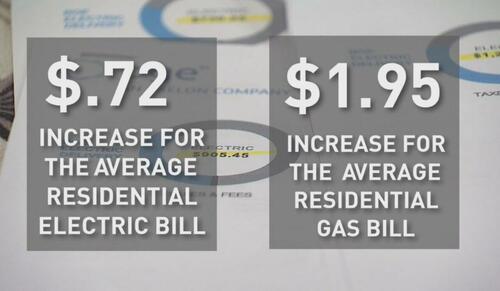
Fox Baltimore writes that recent rate changes add further pressure. A new increase raises the average residential electric bill by $1.07 per month and gas by $2.65. Beginning in February, an additional PSC-approved increase adds 72 cents for electric customers and $1.95 for gas customers each month through 2027.
While lawmakers approved limited relief last year, residents say it falls short.
“And then they say, “Okay, well, we’re going to give you a bit of a rebate,”” Stepp said. “It was $40, so the impact is I have medical bills, and those are astronomical. My husband had a stroke last year. We’re still bailing out of that. The food bills have tripled. The cost of my car registration has tripled.”
“My message is, you’re forcing us to leave,” she added.
“You are forcing people that have been native to Maryland, that the people that have paid their way, paved the way as a part of the economy for years and years that you’re saying we can no longer afford to live here. I can’t.”
A BGE spokesperson said the company is working to balance affordability with the need to provide safe electric and gas service and noted customers can seek payment assistance at BGE.com/billhelp.
“Please make changes, the governor, BGE, whomever, please change this immediately, because it’s affecting all of us,” Jenny said. “It’s not okay,”
Tyler Durden
Sat, 01/03/2026 – 21:35

Made-In-USA Cars Granted Trump Tax Break In IRS Deduction Guidance
Made-In-USA Cars Granted Trump Tax Break In IRS Deduction Guidance
Authored by Naveen Athrappully via The Epoch Times (emphasis ours),
The Internal Revenue Service (IRS) and the Department of the Treasury issued guidance on Wednesday regarding the deduction for car loan interest payments made by taxpayers.
A statement from the IRS said that the One Big Beautiful Bill Act, signed into law by President Donald Trump in July, includes a provision regarding auto loan interest paid by car owners.
The provision allows owners who bought vehicles with final assembly in the United States to deduct up to $10,000 in car loan interest from their taxable income for 2025 through 2028.
The deduction applies to interest paid on vehicle loans incurred after Dec. 31, 2024, for the purchase of new, made-in-America vehicles, the IRS said. The tax benefits apply to taxpayers who take the standard deduction and to those who itemize deductions.
The newly issued guidance provides clarity on the eligibility criteria for such deductions, including qualifying loans, the amount of interest paid, and whether the vehicle is bought for personal use.
For instance, the guidance states that in addition to requiring the final assembly of vehicles to be in the United States, a vehicle must meet other conditions to be eligible for interest deductions, such as a gross vehicle weight rating of less than 14,000 pounds, and that the original use of the vehicle must have commenced with the taxpayer.
For determining whether final assembly occurred in the United States, a buyer can check the vehicle identification number at the National Highway Traffic Safety Administration website.
As for the $10,000 max deduction limit, it only applies to federal tax returns, the guidance clarified. “If two taxpayers have a Federal income tax return filing status of married filing separately, the $10,000 limitation would apply separately to each taxpayer’s return.”
If the modified adjusted gross income of a taxpayer for a year exceeds $100,000, the deduction limit decreases by $200 for every $1,000 in extra income. For married taxpayers filing a joint return, the cuts in deductions start once income exceeds $200,000.
The guidance clarified that while eligibility for loan interest deduction requires that the vehicle be used for personal purposes, there is no insistence that a vehicle be purchased “exclusively” for personal use.
“Requiring taxpayers to make a determination regarding the exact amount of expected personal use and non-personal use is not administrable and may result in a considerable burden to taxpayers, ” the guidance said.
Regarding deceased owners, some estates, formed to hold a deceased owner’s property for their heirs, may purchase new vehicles. These estates qualify for the loan interest deduction, the guidance said, adding that certain trusts, like qualified funeral trusts, may never be eligible.
Tariffs and Vehicle Sales
In a July 15 post, the Institute on Taxation and Economic Policy had suggested that the One Big Beautiful Bill Act’s car loan interest deduction would not completely offset the higher auto prices triggered by the Trump administration’s tariffs on these items.
The administration had instituted 25 percent tariffs on auto imports in April, followed by 25 percent tariffs in May on the import of auto parts in a bid to protect American manufacturing and counter the unfair trade practices of its trading partners. The rates have been adjusted for certain nations based on trade negotiations.
“The deduction would offset only 36 to 43 percent of tariff-induced price increases for working-class families while buyers with higher incomes could see offsets ranging up to 85 percent,” the institute said.
“On a $40,000 vehicle, the net price increase would range from $201 to $879 for eligible claimants and would be $1,363 for car buyers ineligible for the deduction.”
However, recent estimates show no decline in car sales in the country despite the implementation of higher tariffs.
According to a Dec. 17 post by industry expert Cox Automotive, new vehicle sales are expected to close 2025 up 1.8 percent year-over-year per estimates from Kelly Blue Book. New vehicle sales for the year are estimated to be 16.3 million, making 2025 the “best sales year since 2019,” it said.
Tyler Durden
Sat, 01/03/2026 – 21:00