Category: News
Kamala Harris returning to Chicago for MLK breakfast
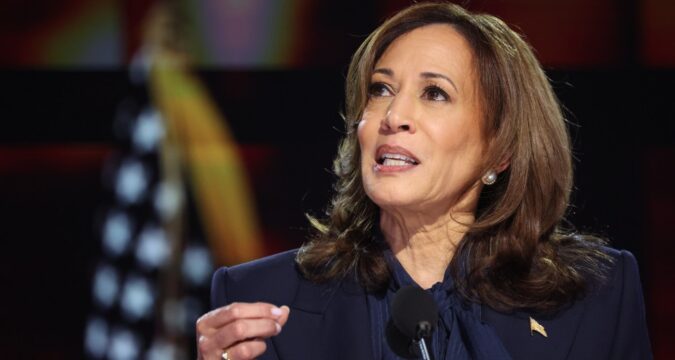
Former Vice President Kamala Harris will return to Chicago on Friday for this year’s Martin Luther King Jr. Interfaith Breakfast, Mayor Brandon Johnson announced.
Harris, the Democratic nominee for president in 2024, will deliver the keynote address at the annual event honoring the civil rights icon. It will be her latest visit after stopping in Chicago in October as part of her book tour after losing the election to President Donald Trump.
“The Vice President could be anywhere, and the fact that she chose to come to our city and lift up the work we are doing to defend our democracy means a lot to the people of Chicago,” Johnson said in a statement. “Vice President Harris is a trailblazer and a staunch defender of the freedoms and rights of everyday Americans. We are honored to host her and look forward to a historic MLK Interfaith Breakfast this year.”
The theme of this year’s breakfast — a 40-year tradition in Chicago, started under Mayor Harold Washington — is “Defending Our Democracy, Protecting Our Rights.”
Harris’s visit comes as she mulls another run for president in 2028 amid the backdrop of internal party wrangling over what direction Democrats should take in fighting back against Trump’s attacks on Democratic cities like Chicago. Besides the former vice president, however, are other potential presidential hopefuls, including Illinoisans Gov. JB Pritzker and former Mayor Rahm Emanuel.
Harris made an appearance at the city’s Auditorium Theatre in October to promote “107 Days,” her memoir on running for president under a shortened timeline after former President Joe Biden dropped out. Before that, Harris arrived in Chicago in August 2024 for the Democratic National Convention, a blockbuster event that was seen as a major boost to the city’s national brand.
https://www.chicagotribune.com/2026/01/15/kamala-harris-chicago-mlk-breakfast/

“What Will They Do?! Nuke the US?”: Russia Mocks Emasculated Europe As Trump Eyes Greenland
“What Will They Do?! Nuke the US?”: Russia Mocks Emasculated Europe As Trump Eyes Greenland
Russian officials have been quick to seize on President Trump’s renewed efforts in seeking a way ahead to take control of Greenland, accusing the West of “militarizing” the Arctic while also mocking Europe’s ability to defend the strategically important, mineral-rich island.
Trump had on Wednesday even suggested the large island is “vital” to his proposed Golden Dome air and missile defense system. The same day, European countries made clear they would bolster their forces on the territory which is a possession of Denmark.
France, Sweden, Germany and Norway have confirmed they would deploy military personnel to Greenland, as Copenhagen tries to convince the White House to join a permanent NATO mission on the island as an alternative to taking it over.
Germany’s Defense Ministry has agreed that a European NATO mission is needed to bolster security “in light of Russian and Chinese threats in the Arctic.”
This has angered Moscow, which expressed “serious concern” and charged the West with “militarizing” Greenland, and that Europe is ready to seize the moment “solely to advance an anti-Russian and anti-Chinese agenda.”
“NATO has embarked on a course of accelerated militarization of the Arctic, increasing its military presence there under the fabricated pretext of a growing threat from Moscow and Beijing,” the Russian embassy in Belgium said late Wednesday.
It added that European officials were already discussing plans to encircle the island and deploy a large-scale collective landing force, accusing them of invoking “mythical threats that they themselves have created.” Meanwhile, ‘big talk’ from Von der Leyen…
VON DER LEYEN: GREENLAND CAN COUNT ON EU
Russia’s Foreign Ministry has further made clear the Kremlin believes the Arctic should remain “a region of peace, dialogue and equal cooperation.”
It’s interesting that Kremlin officials are focusing their harsh rhetoric and condemnations on Europe and not the Trump White House, and the reasons are clear. Moscow is trying to improve its bilateral relations with Washington, and to have Trump’s ear related to the Ukraine war and crisis.
The Gallic cock has crowed that, if the sovereignty of Denmark is affected, the consequences would be unprecedented. Ooh, what they will do?! Kidnap POTUS? Nuke the US? Course not. They’ll just shit their pants and give up Greenland. And that’d would be a great European precedent
— Dmitry Medvedev (@MedvedevRussiaE) January 14, 2026
Foreign Ministry spokeswoman Maria Zakharova further mocked the Europeans by saying “Let them look at what they said about Crimea… It would be very useful for them to fire themselves up over Greenland.”
“Why not focus all efforts on Greenland now?” she said. And then she invoked the Iran crisis: “Don’t you think the situation in Iran has become a ‘convenient excuse’ for EU officials to divert public attention from the fact that an island is being taken away from them – without a referendum?”
Security Council Deputy Chairman Dmitry Medvedev took the jokes further, writing on social media “According to unverified information, a sudden referendum may take place” – and followed by saying Greenland, with a population of about 55,000, could become Russia’s “90th federal subject.”
The foreign ministers of Denmark and Greenland nervously lit up a cigarette after the meeting with Vance and Rubio.
Earlier, they planned to convince the US to abandon its claims to Greenland.
They failed. pic.twitter.com/L1TOBDr1bj
— Chay Bowes (@BowesChay) January 15, 2026
He then mocked Europe’s total inability to defend the island, asking: “What [will they] do?! … Nuke the U.S.?”
“They’ll just shit their pants and give up Greenland. And that would be a great European precedent,” he wrote on X on Wednesday.
Tyler Durden
Thu, 01/15/2026 – 11:25
Civiles huyen a pie al tiempo que ofensiva militar siria se avecina al este de Alepo
Por GHAITH ALSAYED y OMAR ALBAM
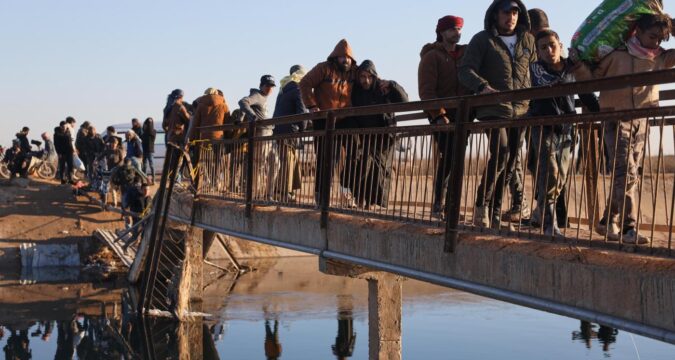
HAMIMA, Siria (AP) — Un grupo de civiles abandonó una zona disputada al este de Alepo el jueves tras recibir una advertencia del ejército sirio para evacuar antes de una anticipada ofensiva militar del gobierno contra las fuerzas lideradas por los kurdos.
Funcionarios del gobierno y algunos residentes dijeron que las Fuerzas Democráticas Sirias (FDS) lideradas por los kurdos impidieron que la gente saliera de la zona a través del corredor designado por el ejército a lo largo de la carretera principal que conduce al oeste desde la ciudad de Maskana a través de Deir Hafer hasta la población de Hamima.
Un funcionario de las FDS negó los reportes de que estaban bloqueando la evacuación.
En Hamima, ambulancias y funcionarios del gobierno se reunieron desde temprano en la mañana esperando recibir a los evacuados y trasladarlos a refugios, pero llegaron pocos.
Farhat Khorto, miembro de la oficina ejecutiva de la Gobernación de Alepo que estaba esperando allí, afirmó que había “casi doscientos vehículos civiles y cientos de personas que querían salir” del área de Deir Hafer, pero que fueron impedidos por las FDS. Agregó que las FDS estaban advirtiendo a los residentes que podrían enfrentar “operaciones de francotiradores o explosivos ocultos” a lo largo de esa ruta.
Algunas familias señalaron que salieron de la zona de evacuación tomando caminos secundarios o recorriendo parte de la distancia a pie.
“Intentamos salir esta mañana, pero las FDS nos lo impidieron. Así que salimos a pie… caminamos unos siete a ocho kilómetros hasta que llegamos a la carretera principal, y allí la defensa civil nos recogió y la situación mejoró a partir de entonces”, dijo Saleh al-Othman, quien dijo que huyó de Deir Hafer con más de 50 familiares.
Yasser al-Hasno, también de Deir Hafer, relató que él y su familia huyeron por caminos secundarios porque las rutas principales estaban cerradas y finalmente cruzaron un pequeño río a pie para salir de la zona de evacuación.
Farhad Shami, portavoz de las FDS, indicó que las acusaciones de que el grupo había impedido que los civiles salieran eran “infundadas”. Sugirió que los bombardeos del gobierno estaban disuadiendo a los residentes de moverse.
Prevén una ofensiva del gobierno
El anuncio del ejército sirio el miércoles por la noche —que decía que los civiles podrían evacuar a través del “corredor humanitario” de 9:00 de la mañana a 5:00 de la tarde el jueves— parecía señalar planes para una ofensiva contra las FDS en el área al este de Alepo. Ya ha habido intercambios limitados de fuego entre ambas partes.
El ejército sirio instó a las FDS y otros grupos armados a retirarse al otro lado del río Éufrates, al este de la zona disputada. Las FDS controlan grandes extensiones del noreste de Siria al este del río.
Las tensiones en el área de Deir Hafer surgen luego de varios días de intensos enfrentamientos ocurridos la semana pasada en la ciudad de Alepo que terminaron con la evacuación de combatientes kurdos y las fuerzas del gobierno tomando el control de tres barrios disputados.
Los combates estallaron en un momento en que las negociaciones se han estancado entre Damasco y las FDS sobre un acuerdo logrado en marzo pasado para integrar sus fuerzas y para que el gobierno central tome el control de instituciones, incluidos los cruces fronterizos y los campos petroleros en el noreste.
Algunas de las facciones que componen el nuevo ejército sirio, que se formó tras la caída del expresidente Bashar Assad en una ofensiva rebelde en diciembre de 2024, fueron anteriormente grupos insurgentes respaldados por Turquía que tienen una larga historia de enfrentamientos con las fuerzas kurdas.
Durante años, las FDS han sido el principal socio de Estados Unidos en Siria en la lucha contra el grupo Estado Islámico, pero Turquía considera a las FDS una organización terrorista debido a su asociación con insurgentes separatistas kurdos en Turquía.
A pesar del apoyo prolongado de Estados Unidos a las FDS, el gobierno del presidente Donald Trump también ha desarrollado estrechos lazos con el gobierno del presidente interino sirio Ahmad al-Sharaa y hasta ahora ha evitado tomar partido públicamente en los enfrentamientos en Alepo.
En una conferencia de prensa el jueves, Ilham Ahmed, jefa de Relaciones Exteriores de la administración liderada por los kurdos y afiliada a las FDS en el noreste de Siria, dijo que los funcionarios de las FDS estaban en contacto con Estados Unidos y Turquía y habían presentado varias iniciativas para la desescalada. Añadió que las afirmaciones de Damasco de que las FDS no habían implementado el acuerdo de marzo eran falsas.
——
El periodista de The Associated Press Hogir Al Abdo contribuyó a este despacho desde Qamishli, Siria. ___
Esta historia fue traducida del inglés por un editor de AP con ayuda de una herramienta de inteligencia artificial generativa.
México quiere reforzar la resolución de controversias dentro del T-MEC ante medidas “intempestivas”
Associated Press
CIUDAD DE MÉXICO (AP) — Reforzar y agilizar el sistema de resolución de controversias del tratado de libre comercio norteamericano, el T-MEC, es una de las prioridades de México en el actual proceso de su revisión porque así se reducirán los márgenes de incertidumbre ante “decisiones intempestivas”, dijo el jueves el secretario de Economía, Marcelo Ebrard, en clara referencia a la política arancelaria estadounidense.
Ebrard recordó que eso no anulará la posibilidad de que se puedan imponer aranceles, pero abriría “una forma expedita de solución”, y en condiciones de igualdad, ante medidas que alguno de los países considere que violan el tratado. “La otra vía es que hagas una negociación de cada tema, en donde siempre estás en desventaja”, afirmó.
Los comentarios del funcionario durante la conferencia presidencial matutina llegaron días después de que el presidente estadounidense Donald Trump volviera a criticar el T-MEC al considerarlo “irrelevante” y un asunto en el que él no está interesado. “No necesitamos sus productos”, dijo en referencia a México y Canadá.
Ambos países son firmes defensores del tratado firmado durante la primera administración del republicano, pero que ha sido dilapidado durante el primer año de su segunda administración debido a la agresiva política arancelaria estadounidense que ha impactado en todo el comercio mundial.
Actualmente, mientras continúan las fuertes exigencias en materia de lucha contra los cárteles, México intenta que Estados Unidos ajuste a la baja algunos de los aranceles ya impuestos, como los de la industria automotriz que, según celebró Ebrard, sigue interesada en producir en territorio mexicano. El miércoles, General Motors anunció en un comunicado una inversión de 1.000 millones de dólares en los próximos dos años en su manufactura en México.
El gobierno de Claudia Sheinbaum trabaja a la vez para que se mantengan los acuerdos realizados por los países fuera del texto básico del T-MEC y que afectan, por ejemplo, a la industria del acero, y para que haya paridad en las exigencias laborales y medioambientales incluidas en el tratado.
“En pocas palabras, ¿a nosotros qué nos gustaría? Que se consolide, se fortalezca lo que hoy tenemos en el tratado, porque ha funcionado”, afirmó Ebrard.
El proceso de revisión del tratado, que comenzó con consultas entre los tres países a finales de 2025, deberá concluir el 1 de julio, que será cuando se presente “qué puntos cada país propuso, qué puntos aceptan y cómo queda” el acuerdo, dijo el secretario. México tendrá listo un documento con su postura la última semana de enero.
Según el funcionario, los contactos con Estados Unidos son semanales y se está “avanzando bien”. “Estamos trabajando conforme a lo previsto”.
México está presentando todos los datos posibles para demostrar a Washington que el tratado “no solo es estratégico, sino indispensable” también para ese país. “México es el cliente número uno de los Estados Unidos y el dos (es) Canadá. Si tú sumas lo que México y Canadá le compran a Estados Unidos es la inmensa mayoría de sus exportaciones”, subrayó Ebrard.

Everybody Drink!
Everybody Drink!
By Michael Every of Rabobank
Key data yesterday pointed directly to the tensions we should all have at back of mind. While the US Beige Book was, well, ‘beige’, China saw a trade surplus for 2025 of $1.2trn, the size of the Dutch economy, and up 20% y-o-y. If that pile grows at the same pace ahead then by 2030 it will be $3.0trn, around the size of the French economy. By 2035, it will be the German plus Italian economies. If you can’t see why isn’t sustainable, you’re in the wrong business. If you can’t plot out the ways this can be addressed, and the problems arising from doing so, the same holds true.
On which, Politico reports ‘EU foreign policy chief Kallas privately told lawmakers that the state of the world means it might be a “good moment” to start drinking. She’s late to the party, but by all means: when I mention geopolitics/geoeconomics/contentious politics, everybody drinks!
In Ukraine –remember them?– President Zelensky declared a state of emergency in the energy sector as the crisis there worsens following Russian attacks targeting its power supply.
There remains a “fundamental disagreement” over Greenland following crunch talks in the US. The Danish foreign minister says they “Did not convince Trump to back off,” while Trump has reiterated that Europe cannot defend the territory, mocking the recent step up in military commitments there. While Denmark has done more than ‘adding another dog sled’, Germany did just send **13** soldiers, and France say it will open a consulate, not a military base.
In the vein of European realpolitik being more politic than real, European Commission President von der Leyen said the EU will become a “military powerhouse.” The rest of the world isn’t trembling in its boots and markets aren’t blinking – which tells you that this isn’t happening as needed. After all, it would require political union – as Brussels just refused to confirm that Greenland is covered by the EU defense clause(!) However big a crisis Greenland is, US-EU war is not going to happen; and if a NATO split does, markets will need to start drinking like sailors.
As a vol-au-vent to nibble on with your tipple, the US just indefinitely halted immigrant visa processing for 75 countries.
The true (toxic) cocktail is Iran. Trump says he’s received assurances “killing in Iran is stopping,” rather public hangings have been stopped, but declined to rule out military action. His options are limited by so much of the US Navy being in the Caribbean –a “military powerhouse” is VERY expensive– but the USS Abraham Lincoln Carrier Strike Group has been redirected to the Middle East from Asia; US troops were evacuated from Middle East bases – but may now be returning; armed Kurdish groups tried to cross into Iran from Iraq, which Turkish intelligence allegedly tipped Iran off about; European officials tip US military intervention in Iran may begin imminently; the Saudis denied the US the use of their airspace for any attack; Western embassies in Iran are closing; and an Israeli order for its public to stay near bomb shelters reportedly may soon go out, as the UK and US tell their citizens not to travel there as well as Iran.
This is as the US will announce the launch of phase two of its Gaza plan and its new technocratic government, following the signing of the Trump Route for International Peace and Prosperity (TRIPP) accord that places it in the heart of the Caucuses, right next to Iran and Russia. Everybody drink! But Europe should note it’s not being invited to any of these parties.
Dozens of ships are anchored outside Iran’s ports. Nobody knows when or how this ends. We may just have seen an off-ramp, with reported fears in the White House that the US can’t repeat its success with Maduro, and could either see casualties or get sucked into a new Afghanistan. On the other hand, this could be a head fake, as we saw in June last year, as other reports have it that the president wants to make a “definitive” strike, not a token one.
Given the current backdrop is potentially existential to the Iranian regime, the kind of actions one would normally dismiss out of hand as self-harm cannot be ruled out, i.e., mining the Strait of Hormuz or even attacks on Israel, or Saudi Arabia despite its hands-off stance. If markets only note geopolitical crises when they impact on supply chains, that fat tail risk could be present here.
In geoeconomics, the US approved the sale of Nvidia’s advanced AI chips to China – a major U-turn; and then China’s customs agents were told that those chips are not permitted, claims Reuters. Meanwhile, the US set a new 25% tariff on some chips as part of the Nvidia deal that isn’t actually a deal for China.
The US also made an initial $500m Venezuelan oil deal, with some proceeds headed to a Qatari bank, as China is reportedly looking for assurances over the billions in loans it’s made to Venezuela.
Canada’s Globe and Mail argues that ‘Rebuilding relations with China is a gamble Mark Carney has to take’, and the government said talks on reducing canola tariffs “have been fruitful.” Yet the PM is walking a tightrope: if he moves too close to China, the US will respond via economic statecraft; and if he stays too close to the US, China can do the same. As the Toronto Sun puts it: ‘Trump doesn’t want Canada building cars – and China wants total domination.’ In realpolitik terms, what does vaunted sovereignty then mean? The answer should be as obvious there as it is in Greenland and Iran.
Meanwhile, the FT explains, ‘Why the world has started stockpiling food again.’
In US domestic politics, Trump is to end federal funding to sanctuary cities and states from February, two Republicans flipped, defeating a Congressional war powers resolution that would have limited the president’s room for manoeuvre in Venezuela, and the FBI searched a Washington Post reporter’s home and devices.
In Australia, the US State Department criticised PM Albanese’s rushed new hate speech bill as “deeply perverse”, the latest in a series of interventions with allies if their policies differ from the goals in the US National Security Strategy. The Aussie opposition called the bill “unsalvageable.”
In the UK, 27 councils, 21 of which are Labour run, said they can’t hold elections this year, the police refused to sack a chief constable for using fake AI evidence to ban Israeli fans from attending a football game, and a far-right Dutch activist was denied entry to the country.
In Japan, a snap election date is close to being set, with PM Takaichi riding a wave of popularity over her tough stance on China, as a government panel proposed a “mandatory integration program” for foreign residents, showing a hard line on that front too.
This backdrop is sobering for many. Yet few will currently be sober if they’ve been following their ‘drink!’ instructions.
Tyler Durden
Thu, 01/15/2026 – 11:05

It’s ‘gold or bust’ for US men’s hockey at the Winter Olympics. The Americans are confident too.
Burned in Zach Werenski’s memory is the first U.S. practice at the 4 Nations Face-Off last February.
“You look around and see the skill,” Werenski said. “I was like, ‘This is fast.’ It’s wave after wave, player after player.”
US men’s hockey picks a 4 Nations-heavy roster for Milan Olympics, including ex-Blackhawk Seth Jones
He and his countrymen fell short at that tournament, which was designed to be an appetizer of sorts for the return of NHL players to the Olympics. Over the summer, when the country’s best gathered again for an orientation camp ahead of next month’s Games in Milan, USA Hockey general manager Bill Guerin told them that nothing but gold would suffice.
“I love it,” winger Matt Boldy said. “You shouldn’t be doing anything unless you’re trying to be the best at it.”
The U.S. has not won a so-called “best-on-best” international competition at the adult level in three decades dating to the 1996 World Cup of Hockey. It has not won men’s gold at the Olympics since the 1980 “Miracle on Ice” team.
The overflowing talent and the winning pedigree of the players going to Italy make Guerin’s expectation as realistic as ever.
“Everyone knows we have the team,” top defenseman Quinn Hughes said. “I don’t think anyone would be surprised if we won, so I think that that should be our goal. It’s kind of gold or bust, just like it is for Canada.”
The U.S. lost to Canada in the final at 4 Nations, in the semifinals at the 2014 Olympics in Sochi and in the gold medal game at the 2010 Games in Vancouver. The neighbor to the north is set to have four of the best players in the world on its roster with Connor McDavid, Nathan MacKinnon, Cale Makar and two-time Olympic champion Sidney Crosby together for the first time.
American talent adds up, too, from a stacked blue line led by Hughes, Werenski, Charlie McAvoy and Jaccob Slavin and a forward corps featuring Jack Eichel, Auston Matthews and brothers Matthew and Brady Tkachuk to elite goaltenders Connor Hellebuyck and Jake Oettinger. NHL standouts Dylan Larkin and Jack Hughes are expected to be depth contributors.
“It’s not just having a good team on paper,” Guerin said. “It’s actually getting it done.”
The U.S. has gotten it done at other levels for many years now, winning four of the past eight world junior championships (for players under age 20) and a handful of under-18 titles over the past decade-plus.
“It starts at that age,” defenseman Noah Hanifin said. “The younger generation, you start to see it kind of develop and grow, and I think winning those tournaments is really showing how many strides USA Hockey has taken.”
Strides in coaching have also helped. Two-time Stanley Cup-winning coach Mike Sullivan is back in charge after being behind the bench at 4 Nations, when his team showed flashes of dominance and came one goal away from winning it all.
Werenski, who last spring helped the U.S. win the world championship for the first time since 1933, knows it would be foolish to overlook teams like Czechia, Switzerland, Slovakia and Germany. But he agrees with Guerin that such a strong showing in games against Canada, Sweden and Finland in a meaningful tournament will carry over to Milan.
“Those are three teams and they’re great measuring sticks on where you’re at, and I just really like the way we played and how hard we played and how close we were,” Werenski said. “That tournament gave us a lot of confidence still in terms of knowing that we can beat anyone on any given night.”
Related Articles
Snoop Dogg’s NBA analyst role underscores why his on-air presence and global appeal keeps growing
US snowboarder Chloe Kim says she’s ‘good to go’ for the Olympics despite a torn labrum in her shoulder
Jim Hartung, who helped lead US men’s gymnastics team to 1984 Olympic gold, dies at 65
Entering his 4th Olympics, Oak Park speedskater Emery Lehman nears the finish line
‘She’s been at every game’: Chicago Bears’ Jonathan Owens celebrating ‘special’ season with wife Simone Biles
The U.S. plays against Latvia on Feb. 12, Denmark on Feb. 14 and Germany on Feb. 15 before, barring upsets, moving into the single-elimination quarterfinals Feb. 18. There is not much time to acclimate after they arrive Feb. 8.
Guerin brought back the vast majority of players from 4 Nations because he liked the chemistry of the group, and that did not just materialize over a couple of weeks in Montreal and Boston. This generation of Americans grew up playing together, many at the U.S. National Team Development Program, and at tournaments worldwide along the way.
“In a weird way, everyone’s just buddies,” Werenski said. “We’re all just good friends and good hockey players and I think that’s what really helps us.”
Friendship won’t by itself overcome a multigoal deficit or crack a hot goalie threatening medal contenders at the Olympics. But players think setting the standard at gold is the right place to start because the U.S. has been building for this for a long time.
“The biggest thing we need to do now is just get over the hump of winning at the biggest stage,” Jack Hughes said. “Winning the Olympics, that’d be massive and completely put us over the hump. And that’s the expectation.”
https://www.chicagotribune.com/2026/01/15/olympics-us-mens-hockey-gold/
EEUU sanciona a funcionarios iraníes acusados de reprimir protestas
Por FATIMA HUSSEIN
WASHINGTON (AP) — Estados Unidos está imponiendo una nueva ronda de sanciones contra funcionarios iraníes acusados de reprimir las protestas contra el régimen teocrático de Irán.
Incluido en las sanciones del jueves está el secretario del Consejo Supremo de Seguridad Nacional, a quien el Departamento del Tesoro acusa de ser uno de los primeros funcionarios en llamar a la violencia contra los manifestantes.
La Oficina de Control de Activos Extranjeros del Departamento del Tesoro también designó a 18 personas y empresas acusadas de participar en el lavado de dinero proveniente de las ventas de petróleo iraní a mercados extranjeros como parte de una red bancaria oculta de instituciones financieras iraníes sancionadas, como el Bank Melli y el Shahr Bank.
La banca oculta se refiere a actividades e instituciones financieras que actúan como bancos pero operan fuera de las regulaciones del sistema bancario tradicional.
El secretario del Tesoro, Scott Bessent, afirmó que Estados Unidos “apoya firmemente al pueblo iraní en su llamado por la libertad y la justicia” y que el Tesoro “utilizará todas las herramientas para apuntar a aquellos detrás de la opresión tiránica del régimen sobre los derechos humanos”.
Entre otras cosas, las sanciones niegan a las personas y empresas el acceso a cualquier propiedad o activos financieros que posean en Estados Unidos y evitan que las empresas y ciudadanos estadounidenses hagan negocios con ellos. Sin embargo, son en gran medida simbólicas, ya que muchos de ellos no tienen fondos en instituciones norteamericanas.
Las manifestaciones en Irán comenzaron el 28 de diciembre por el colapso de la moneda rial iraní, ya que la economía del país ha sido presionada por sanciones internacionales impuestas en parte por su programa nuclear.
___________________________________
Esta historia fue traducida del inglés por un editor de AP con ayuda de una herramienta de inteligencia artificial generativa.
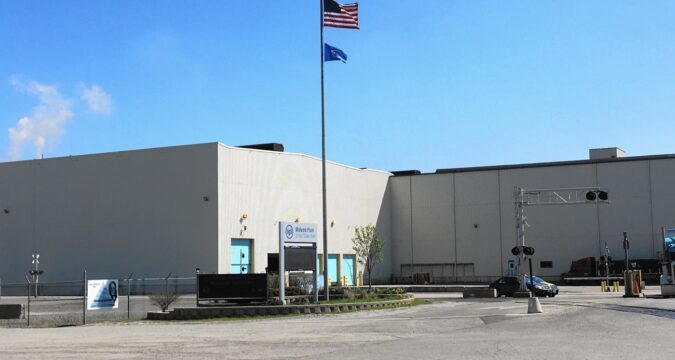
Environmental groups file petitions against U.S. Steel, BP permits
Multiple Northwest Indiana environmental groups have filed petitions against air permit renewals for a region steel plant and oil refinery, saying they’re inadequate.
According to the Environmental Law and Policy Center, a Jan. 2 petition was filed for a permit renewal at BP’s Whiting refinery, and another petition was filed on Dec. 23, 2025, for a renewal at U.S. Steel’s Midwest Plant in Portage. The petitions, which were sent to the U.S. Environmental Protection Agency, claim that the permits don’t include basic provisions of the Clean Air Act, “including clear and enforceable monitoring, testing and recordkeeping requirements sufficient to assure compliance with all applicable requirements.”
BP Whiting Refinery, Tuesday, Jan. 28, 2025. (E. Jason Wambsgans/Chicago Tribune)
The Indiana Department of Environmental Management issued the permits. IDEM did not respond to a request for comment.
“IDEM needs to do better and ensure that BP Whiting and U.S. Steel Midwest Plant are operating in a way that is not only economically lucrative but also protective of human health,” Kerri Gefeke, associate attorney at the Environmental Law and Policy Center, said in a news release. “IDEM can do that by simply ensuring that the permits it issues follow the law and include the necessary monitoring provisions to ensure that these plants — and similar facilities — are not polluting more than what’s allowable in their permits.”
The Environmental Law and Policy Center, Northern Lake County Environmental Partnership, Gary Advocates for Responsible Development and Just Transition Northwest Indiana were part of both filed petitions. Save the Dunes joined the BP petition.
“With these permit renewals, once again, corporate interests are being placed above the health of Northwest Indiana communities,” said Lisa Vallee, organizing director for Just Transition Northwest Indiana. “We have been carrying the weight of these decisions for decades, and our health outcomes prove it. With air quality among the worst in the nation, those of us who live in the region face higher rates of cancer, cardiovascular disease and asthma.”
According to the petition, the community groups believe that the U.S. Steel permit renewal has multiple issues, including failing to include requirements that ensure compliance with emission limits and federal regulations. The petition asks the EPA to reject the Midwest Plant permit renewal.
As part of the rejection, the petition asks the EPA to require IDEM revise the permit renewal to meet compliance with emission limits and federal regulations.
“IDEM should never have issued these permit renewals, which lack the basic protections of the Clean Air Act,” Vallee said. “The U.S. EPA should do what is right and object. Our communities deserve to be safeguarded, and we will continue to advocate for a better future for all Hoosiers.”
A spokesperson for U.S. Steel responded to the petition in a statement.
“U.S. Steel is pleased with the renewal of our operating permit for Midwest,” the statement said. “This is a standard permit renewal which occurs every five years. There are no increases in emissions limits or new equipment in the permit. We are proud of the more than 4,000 men and women who put safety and environmental compliance first, and we value the Northwest Indiana community where we live and work.”
In the BP petition, the groups say the refinery’s permit fails to include a particulate matter emissions limit that is required by Indiana’s federally-approved State Implementation Plan. The petition asks the EPA to require IDEM to revise the permit.
A BP spokesperson also responded to the petition in a statement.
“BP is committed to safe and compliant operations at the Whiting Refinery,” the statement said. “We will continue working every day to keep this commitment and to ensure the refinery remains an important part of Northwest Indiana for years to come.”
Gefeke, in a news release, said numerous studies have shown the area has some of the highest rates of air pollution nationwide, including high asthma and cancer rates.
The American Lung Association, in April 2025, announced that Hoosiers are breathing some of the nation’s most polluted air, according to Post-Tribune archives. The organization gave Lake County failing grades in three categories: ozone pollution, 24-hour particle pollution and annual particle pollution. Porter County only received a passing grade for annual particle pollution.
Ozone and particle pollution can cause premature death and other health effects, including asthma attacks, heart attacks, strokes, preterm birth and impaired cognitive function, according to the American Lung Association. Particle pollution can also cause lung cancer, according to the organization.
The American Lung Association found that, in 2020, Indiana had a lung cancer rate of 72.5 per 100,000 people, with Lake County as one of the state’s counties with the highest cancer mortality rates. A 2016 report from the JAMA Network also found Gary as one of the five U.S. cities with the lowest life expectancy at one point.
“U.S. EPA should object to these permits because they’re inconsistent with the Clean Air Act and the region’s Hoosiers should not feel like they are living in a sacrifice zone,” Gefeke said.

East Aurora se prepara para lo que vendrá después de la operación de control de inmigración que tuvo lugar en las instalaciones escolares en otoño
Era por la mañana, probablemente durante la segunda o tercera hora de clase, recuerda Nelson Granadillo, cuando le informaron de que había agentes federales fuera de su edificio. El director de la escuela secundaria Simmons, situada en la zona este de Aurora, estaba reunido con un profesor cuando recibió la noticia.
“No me lo creía,” declaró Granadillo al diario The Beacon-News sobre aquel día a principios de Noviembre.
Recuerda haber caminado hacia la puerta principal y haber visto unas cuantas furgonetas, con personas vestidas con chalecos protectores, que parecían estar realizando un arresto. Una madre de uno de sus alumnos —que había acudido al edificio para una reunión, según explicó— corrió hacia la puerta y la escuela la dejó entrar.
Este es el segundo año de Granadillo en el Distrito Escolar de East Aurora y su primer año como director de Simmons. Antes de esto, había trabajado durante años en el Distrito Escolar U-46.
“Es una de esas cosas en la vida que uno dice: ‘Nunca me pasaría a mí,’” recordó Granadillo sobre la situación en la que se encontró. “Teníamos protocolos del distrito para (estas) situaciones. … Siempre estamos preparados, yo estoy preparado para lo peor. Pero (pensaba) que nunca nos pasaría a nosotros.”
La escuela activó un protocolo de confinamiento, explicó Granadillo, impidiendo que los alumnos salieran del aula. Se llamó a los responsables del distrito, algunos de los cuales acudieron a la escuela poco después. Según los funcionarios del distrito, dos personas que habían estado en el coche con el padre que entró corriendo fueron detenidas.
Bob Halverson llegó un poco más tarde. El superintendente del distrito y otros líderes del distrito recibieron una llamada sobre una situación que estaba ocurriendo en Simmons y acudieron a la escuela.
“El niño salió del aula para saludar a su madre en el pasillo y, literalmente, se derrumbó por el agotamiento y por todo lo que estaba pasando,” recordó Halverson sobre aquel día. Según Halverson, el padre del niño había sido detenido recientemente por agentes federales.
Halverson y otro líder del distrito finalmente llevaron a la madre, al estudiante, a su hermana menor y a su primo a casa, y de camino compraron comida en McDonald’s para todos.
“Eso fue lo que me convenció de que teníamos que hacer más en ese momento,” dijo Halverson. “Ese día fue el que más me marcó.”
El incidente ocurrido en Simmons el 5 de Noviembre atrajo la atención de las redes sociales, con comentarios y vídeos al respecto circulando por Facebook.
El Departamento de Seguridad Nacional de los Estados Unidos no respondió a la solicitud de The Beacon-News de comentar el incidente ocurrido en Simmons.
La supuesta acción federal en materia de inmigración se produjo aproximadamente dos meses después de que la administración del presidente Donald Trump iniciara una campaña de represión migratoria en Chicago, denominada Operación Midway Blitz. Miles de personas fueron detenidas en Chicago y sus suburbios, la mayoría de las cuales no tenían antecedentes penales conocidos, y el miedo y la incertidumbre se han extendido al trabajo, la escuela, las celebraciones de Halloween y otros ámbitos.
Y, dado que este incidente en Aurora —y otros similares en toda el área metropolitana de Chicago— se produjo en los últimos meses, un semestre inusual en el Distrito Escolar 131 de East Aurora ha llevado al distrito a examinar sus procedimientos y adaptarse a circunstancias inesperadas, especialmente porque sigue sin estar claro qué le depara el futuro a Chicago en el marco de la campaña federal contra la inmigración ilegal del Gobierno de Trump.
En East Aurora, un incidente ocurrido en una escuela primaria casi dos semanas antes, el sábado 25 de octubre, había suscitado cierta preocupación en el distrito. Dos manifestantes fueron detenidos frente a la escuela primaria Allen tras ser interceptados por agentes federales, lo que llevó a la junta escolar del distrito a aprobar, pocos días después, una medida que prohibía las acciones federales de control de la inmigración en sus instalaciones.
Pero los preparativos dentro del distrito llevaban mucho más tiempo en marcha, según ha declarado Halverson.
En una reunión del consejo escolar celebrada en noviembre, describió cómo el distrito había estado anticipando la llegada de las medidas restrictivas en materia de inmigración a sus escuelas. East Aurora había estado revisando sus procedimientos para visitantes, asegurándose de que los estudiantes tuvieran contactos de emergencia actualizados y compartiendo recursos sobre ‘Conoce tus derechos’ con la comunidad escolar.
“Sin duda, han sido tiempos difíciles para nuestra comunidad,” dijo Halverson en esa reunión. “Y estamos ahí para apoyar a nuestros estudiantes y a nuestros padres.”
Justo antes de que comenzaran las vacaciones de invierno, los administradores del distrito y los representantes de los edificios se reunieron para una sesión de formación sobre cómo manejar las actividades federales de control de la inmigración.
“Esto no es política,” dijo Halverson durante la capacitación, “pero nuestros hijos tienen derecho a venir al colegio y estar seguros todos los días.”
Citando la continua incertidumbre sobre el aumento de las medidas federales de control de la inmigración en la zona, Halverson dijo que estaba “agradecido” de que el distrito “hubiera tenido la previsión de seguir adelante con este proceso.”
“Si hubiéramos hecho una pausa y dijéramos: ‘Oigan, hemos oído que no van a volver (hasta) marzo,’ no estaríamos preparados,” dijo Halverson.
En la reunión, el personal del Sindicato de Maestros de Chicago presentó parte de la información que han obtenido de las actividades de control en las escuelas de Chicago.
Vinay Espinosa-Ravi, miembro del personal de la CTU, por ejemplo, describió qué tipo de información se debe documentar en el lugar de una posible detención, advirtió contra la interferencia en las acciones de control migratorio y desaconsejó publicar la información documentada en las redes sociales, recomendando en su lugar informar de la actividad a la Coalición de Illinois por los Derechos de los Inmigrantes y Refugiados o a las autoridades distritales competentes.
La organizadora de la CTU, Linda Perales, repasó los detalles de una orden judicial válida y cómo suelen ser las placas y los vehículos de los agentes federales.
El superintendente adjunto de Liderazgo y Aprendizaje, Jonathan Simpson, dijo que los administradores del distrito de East Aurora han colaborado con la salida diaria de los alumnos a la luz de los incidentes ocurridos en las instalaciones del distrito. Tras el incidente de Simmons, pasaron a estar presentes a la llegada de los alumnos por la mañana, dijo Halverson.
Otros miembros del personal tienen la oportunidad de ayudar a proporcionar “rutas seguras,” dijo Halverson, aunque enfatizó que hacerlo no es obligatorio. De cara al futuro, el distrito tiene previsto que los miembros del personal voluntarios actúen como puntos de contacto en sus respectivos edificios si se produce otra situación similar en una escuela.
“Ya hemos visto a muchos de nuestros empleados hacer estas cosas de forma natural para ayudar cuando se han producido esas crisis,” dijo Halverson.
La adaptación del distrito a las circunstancias ha sido gradual, según Becky Roireau, presidenta del sindicato de profesores East Aurora Council AFT Local 604.
“Con cada evento, hemos mejorado un poco más en nuestra capacidad de respuesta, en la recepción de comentarios y en la elaboración de un plan,” declaró a The Beacon-News en Diciembre.
La idea de la formación en Diciembre, dijo, era que los responsables de las escuelas del distrito pudieran recopilar la información y compartirla con los empleados de sus respectivos centros.
“Sea cual sea el nivel al que llegue, lo que queríamos era aprovechar este momento de calma para prepararnos, para no limitarnos a reaccionar,” afirmó Roireau.
La asistencia es otro tema que el distrito planea abordar, según Halverson y Simpson. La asistencia semanal ha tenido una tendencia varios puntos porcentuales más baja que el año pasado, a pesar de que las tasas de asistencia habían comenzado considerablemente más altas al inicio del semestre.
“Creo que estábamos estableciendo un estándar realmente bueno para nuestro personal y nuestros estudiantes, en el que intentábamos conseguir realmente ese sentido de pertenencia, así que creo que ese salto inicial se debió en parte a eso,” declaró Halverson a The Beacon-News. “Y luego, si lo miras (el descenso en la asistencia del distrito), esa línea temporal coincide justo con el momento en que la aplicación de la ley por parte del ICE… se volvió realmente estricta.”
Simpson añadió que la asistencia también disminuyó el año pasado, cuando el presidente Trump asumió el cargo.
En cuanto a los estudiantes de secundaria y bachillerato, Simpson dijo que el distrito está observando que algunos hermanos mayores se quedan en casa para ayudar a cuidar a sus hermanos menores en estos días.
“Están asumiendo responsabilidades más propias de adultos,” dijo. “Y eso también les está sacando de la escuela. Entonces, ¿cómo podemos conectarlos con los recursos que tenemos? Porque sabemos que queremos que los niños vayan a la escuela, y además es el lugar más seguro para ellos.”
A partir de enero, Halverson indicó que los directivos de cada escuela continuarán capacitando a su personal sobre la información presentada en la formación de diciembre y sobre los protocolos establecidos por el distrito. El plan consiste en que cada escuela forme un grupo de voluntarios entre su personal para que brinden apoyo en caso de que se reporten actividades de las autoridades federales de inmigración en sus instalaciones.
Y parte de lo que hará el distrito para responder es lo que siempre hace: enseñar a sus alumnos e intentar protegerlos.
Tras el incidente ocurrido en noviembre en Simmons, Granadillo, el director de la escuela, dijo que la escuela había tenido “un día bastante normal… en lo que respecta a la enseñanza y el aprendizaje.”
“Todo el estrés y todo lo demás estaba ocurriendo en la oficina principal,” dijo.
Sin embargo, el incidente planteó la cuestión de cuánto se debía contar a los alumnos sobre una situación como esta. Una de las aulas tenía vistas al incidente, dijo Granadillo.
Al día siguiente, recordó, la escuela se dedicó a arreglar algunas persianas de las ventanas que no funcionaban bien.
“Solo protejo a los alumnos… de lo que está pasando fuera,” dijo Granadillo sobre su enfoque a la hora de activar protocolos y supervisar su escuela. “Solo me aseguro de que no sepan lo que está pasando.”
Traducción por José Luis Sánchez Pando/TCA
https://www.chicagotribune.com/2026/01/15/east-aurora-se-prepara-inmigracion/

‘Banks Have Been Meddling’: Crypto Industry Split Over CLARITY Act As Coinbase Says ‘No’
‘Banks Have Been Meddling’: Crypto Industry Split Over CLARITY Act As Coinbase Says ‘No’
A division appears to be forming among crypto industry executives regarding the market structure bill, with crypto giants such as Coinbase pulling support, but others stating that any regulation is better than none.
“Crypto builders need clear rules of the road,” said Chris Dixon, managing partner at a16z Crypto on Thursday.
He added that over the past five years, Republicans, Democrats, and the Trump Administration “have worked closely with members across the crypto industry to protect decentralization, support developers, and give entrepreneurs a fair shot … at its core, this bill does that.”
As CoinTelegraph reports, the comments are about the controversial market structure bill, or CLARITY Act, which was due for a Senate markup this week but has been delayed by the Senate Banking Committee today.
“It’s not perfect, and changes are needed before it becomes law. But now is the time to move the CLARITY Act forward if we want the US to remain the best place in the world to build the future of crypto,” said Dixon.
Coin Center executive director, Peter Van Valkenburgh, was also positive, stating on Thursday that “we’re optimistic about where the current market structure draft stands.”
However, as Micah Zimmerman reports for Bitcoin Magazine, Coinbase CEO Brian Armstrong said the exchange cannot support the Senate Banking Committee’s latest draft of the CLARITY Act, warning that the bill, as written, would leave the U.S. crypto industry worse off than the current regulatory status quo.
In a post on X, Armstrong cited several concerns, including what he described as a de facto ban on tokenized equities, new restrictions on decentralized finance that could grant the government broad access to users’ financial data, and provisions that weaken the Commodity Futures Trading Commission while expanding the Securities and Exchange Commission’s authority.
“After reviewing the Senate Banking draft text over the last 48hrs, Coinbase unfortunately can’t support the bill as written,” Armstrong posted.
He also criticized draft amendments that would eliminate rewards on stablecoins, arguing they would allow banks to suppress emerging competitors.
“We’d rather have no bill than a bad bill,” Armstrong said on X, adding that Coinbase would continue pushing for a framework that treats crypto on a level playing field with traditional financial services.
“There are too many issues, including a de facto ban on tokenized equities, DeFi prohibitions, giving the government unlimited access to your financial records, and removing your right to privacy, erosion of the CFTC’s authority, stifling innovation, and making it subservient to the SEC, [and] draft amendments that would kill rewards on stablecoins, allowing banks to ban their competition.”
BREAKING: Coinbase CEO Brian Armstrong says Coinbase “can’t support” the crypto market structure legislation as currently written 👀
“We’d rather have no bill than a bad bill.” pic.twitter.com/3BCgWw0kM9
— Bitcoin Magazine (@BitcoinMagazine) January 14, 2026
Venture capitalist Tim Draper was also in support of the Coinbase chief executive, stating:
“Brian Armstrong makes sense here. The current Senate compromise is worse than no bill at all. Sounds like the banks have been meddling.”
The comments come a day before the Senate Banking Committee is expected to mark up the CLARITY Act on Thursday, January 15.
The legislation is trying to clarify U.S. digital asset market structure by defining categories such as digital commodities, investment contracts, and payment stablecoins, while dividing oversight between the SEC and CFTC.
Coinbase’ issues with stablecoin rewards
Stablecoin rewards have emerged as a flashpoint in negotiations. Coinbase had reportedly warned lawmakers it may withdraw support for the bill if it restricts yield programs tied to stablecoins like USD Coin.
Coinbase shares in interest income generated from USDC reserves and uses part of that revenue to offer incentives to users, including rewards of roughly 3.5% for Coinbase One customers.
Stablecoin-related revenue may have reached $1.3 billion in 2025, making the issue central to Coinbase’s business model.
Banking groups argue that yield-bearing stablecoins could draw deposits away from traditional banks, while crypto firms counter that banning rewards would stifle innovation and push users toward offshore platforms.
“I’m actually quite optimistic that we will get to the right outcome with continued effort,” Armstrong later posted on X. “We will keep showing up and working with everyone to get there.”
Michael Saylor, executive chairman of Strategy, retweeted Armstrong’s post, showing his own support with the decision.
Bitcoin shrugs off the controversy
Speaking to Cointelegraph, OKX Singapore CEO Gracie Lin said that Bitcoin’s latest rally “reminds us that markets often start pricing outcomes before policymakers conclude their debates.”
“We’re seeing Bitcoin responding to renewed ETF demand, improving liquidity, and growing optimism that the Digital Asset Market Clarity Act could bring a more stable framework to U.S. digital asset markets,” she added.
“From here, the focus is on three things: how CLARITY evolves through the Senate’s Banking Committee, how resilient spot ETF flows prove to be, and whether the late‑January Fed meeting keeps financial conditions supportive – or triggers a sharp reset.”
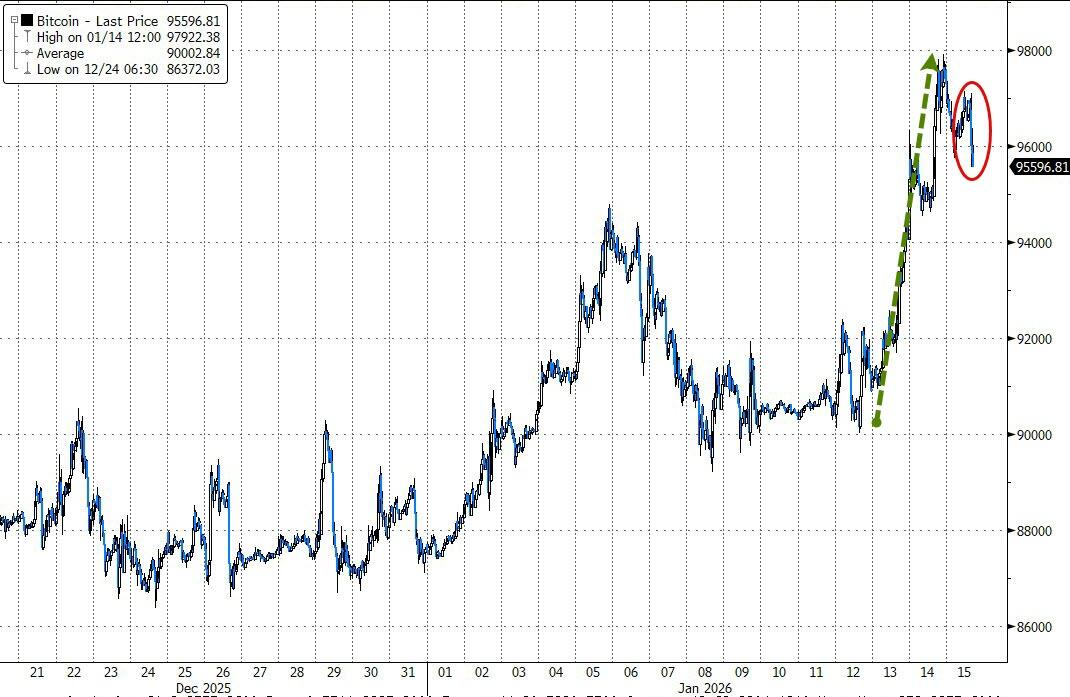
Bitcoin (BTC) neared $98,000 in early trading Thursday before pulling back as the key digital asset legislation hit a roadblock late Wednesday.
Wall Street broker Benchmark views a delay of the Senate Banking Committee’s crypto market structure bill as a potentially constructive pause rather than a setback.
“While the delay may at first appear as cause for concern among those desiring the clarity that the legislation would enable, it may ultimately be constructive, in our view, as it will provide the committees with breathing room so they can work through fundamental policy disagreements on issues such as stablecoin yield,” analyst Mark Palmer said in a Thursday report.
U.S. lawmakers delayed a key procedural step toward comprehensive crypto regulation late Wednesday by postponing planned a markup of the Senate’s digital asset market structure bill as negotiations intensify over stablecoin yield and tokenized securities.
Tyler Durden
Thu, 01/15/2026 – 10:50