Category: News

The Grid Is Warning Pennsylvania
The Grid Is Warning Pennsylvania
Authored by William desRosiers via American Greatness,
If anyone still doubts how serious the power situation unraveling in Pennsylvania has become, the warning signs are no longer abstract. PJM Interconnection, the regional transmission organization that coordinates wholesale electricity across all or parts of 13 states, including Pennsylvania, and the District of Columbia, made the problem unmistakably clear in its most recent capacity auction.
According to PJM’s own executive summary, the auction ended more than 6,623 megawatts (MW) below what PJM says it needed to keep the lights on safely, leaving far less backup power than recommended. To put that into perspective, that’s the amount needed to keep the lights on for roughly 6.6 million homes. Even more concerning, PJM noted only 774 megawatts of new generation cleared the auction, an extremely small amount relative to accelerating demand. Lastly, capacity prices hit the price cap, a clear signal of scarcity rather than healthy supply.
Under PJM’s own tariff, a shortfall of this magnitude triggers a formal investigation. Continued shortfalls could lead to a Reliability Backstop Auction, an emergency procurement mechanism that often results in higher costs with little immediate new infrastructure to show for it.
To be fair, PJM is set to release a revised load forecast this month, and the shortfall may narrow. Even if it does, that is not something to celebrate. The underlying problem remains unchanged: new power is not getting built fast enough.
Unsurprisingly, this has sparked a growing debate over who is to blame.
Some point squarely at PJM and its interconnection backlog. Others argue that Pennsylvania’s long-standing reputation as a difficult place to build, driven by permitting complexity, regulatory uncertainty, and tax policy, is equally responsible. At the same time, restrictive policies in states such as Maryland and New Jersey have weakened baseload power and deterred new generation, exporting reliability risk across the PJM footprint. Taken together, these dynamics have produced a regional market where new investment increasingly flows toward states offering clearer rules, faster timelines, and greater certainty.
Need more proof? Under PJM’s most recent Reliability Resource Initiative (RRI), Pennsylvania accounted for just 342 megawatts of proposed new or expanded natural-gas capacity. By comparison, Ohio accounted for 3,363 megawatts, Virginia for 3,320 megawatts, and Kentucky for 786 megawatts. Pennsylvania barely edged out New Jersey in this category, a state that has signaled little appetite for new natural-gas generation.
This lack of clear direction even has electric utilities, largely removed from power generation since Pennsylvania restructured and deregulated its electricity markets more than two decades ago, lobbying to re-enter generation in the name of reliability.
So, what can Pennsylvania learn from Texas?
Texas faced a similar looming power crunch and chose a different path. Over the past year, it committed nearly $1 billion through a generation loan and completion bonus program to accelerate dispatchable power. Multiple natural gas plants, some exceeding 1,000 megawatts, are already capitalizing on this. Texas reduced risk, shortened timelines, and sent a clear signal that reliability matters and the state is willing to act.
Before ending deregulation, let’s try to make targeted adjustments that support private investment.
Take state Sen. Gene Yaw’s proposal, SB 1106, for example.
This legislation would update Pennsylvania’s Local Resource Manufacturing (EDGE) Tax Credit to include baseload power generation that interconnects with the regional transmission system and contributes to grid reliability. Crucially, it doesn’t overhaul the current market to put the state in the business of picking winners and losers. Private companies would still decide what to build based on market demand.
SB 1106 is not a silver bullet. It is not as generous or sweeping as Texas’s program. But it is practical. It builds on an existing incentive rather than inventing a new one, reflecting a reality long understood in Harrisburg.
Pennsylvania’s track record supports this approach. The Commonwealth has successfully deployed tax credit programs for decades. The Neighborhood Assistance Program (NAP) and Education Improvement Tax Credit (EITC) have driven hundreds of millions of dollars in private investment into communities, workforce development, and education. The ethane tax credit helped land Shell’s petrochemical cracker plant in western Pennsylvania, one of the largest private investments in state history. These programs work because they align public goals with private capital.
It is also important to clarify what tax credits are and are not. They are not grants. They require upfront investment, strict compliance, and performance. In the case of power generation, that means the plant must be online, interconnected, and consuming Pennsylvania natural gas.
That resource advantage matters. Pennsylvania sits atop one of the world’s largest natural gas supplies. The fuel is here. The workforce is here. The opportunity to site multiple new power plants is real if policy stops getting in the way.
To the Commonwealth’s credit, policymakers did get something right this year. By ending Pennsylvania’s participation in the Regional Greenhouse Gas Initiative (RGGI) through the budget process, lawmakers sent a clear signal that affordability and grid reliability are priorities. That decision matters. Senate Bill 1106 is the logical next step to ensure Pennsylvania can attract a new generation and strengthen its energy position.
Tyler Durden
Thu, 01/15/2026 – 12:25
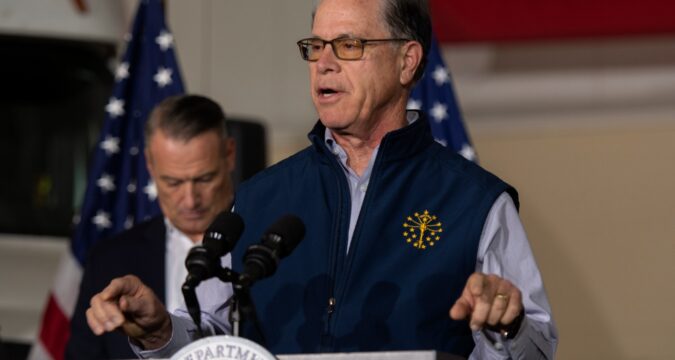
Gov. Mike Braun said Indiana ‘working hard’ to secure Chicago Bears stadium
Indiana Gov. Mike Braun addressed the Chicago Bears potentially moving to Northwest Indiana during his 2026 State of the State address, but kept any specifics close to the vest.
While touting businesses coming to Northwest Indiana and the state’s “strong business environment,” Braun said “it’s not surprising that another organization has noticed that Indiana is open for business, the Chicago Bears.”
“We are working hard to bring the Chicago Bears to the Hoosier state so they can really see what a great place is to have a business. We’ll work hard to do it. Let’s get it across the finish line,” Braun said.
Bears President and CEO Kevin Warren and Chairman George McCaskey took NFL Commissioner Roger Goodell on a tour of the Arlington Heights site the team owns, and two sites in northwest Indiana, including one near Wolf Lake in Hammond, the Chicago Tribune reported.
The tour took place Saturday before the Bears’ epic come-from-behind victory over the archrival Packers. The visit is significant because the National Football League may loan $200 million or more for the stadium project, if it is approved by league owners, the Tribune reported.
Northwest Indiana received a few more shout-outs in the state of the state address, like the growth of U.S. Steel and the expansion of the Whiting Refinery, Braun said.
While discussing data centers, Braun highlighted Amazon building a $15 billion data center in northwest Indiana. Amazon will “pay for every cent for their new power needs, and then some.,” Braun said.
Braun said AI will be a part of the future of the workforce, but that data centers “can’t stick Hoosiers with the power bill.”
“Companies that want big power in Indiana should pay their own way,” Braun said, highlighting Amazon in northwest Indiana. “If other companies will follow this model, we’ll lead the country in the AI race and Hoosiers’ electric rates won’t go up – they’ll go down.”
Braun claimed that Indiana’s Gross Domestic Product is growing faster than the national rate, double the rates of Illinois and Ohio, triple the rate of Kentucky and six times the rate of Michigan, but recent data from the U.S. Bureau of Economic Analysis doesn’t bear out those numbers. In the first half of 2025, U.S. GDP grew 3.8%, while Indiana’s was 3.1%, Illinois’ was 4.9%, Ohio’s 3.9%, Kentucky’s 4.6% and Michigan’s 3.6%.
“The time is now, and the place is Indiana and the state of our state is strong,” Braun said.
Braun said affordability is his priority after former President Joe Biden’s administration “unleashed inflation that’s still making it hard for families to get by.”
To address affordability, Braun said the key is to create new jobs and higher wages. Average hourly earnings for Hoosiers rose more than 4% last year, and wages have grown faster than the national average, he said.
In 2024, Indiana spent about $46,000 to bring a job to the state, but now the state spends $15,000 per job, Braun said. The average wage for those jobs has increased 10%, or an increase of $7,500 a year, he said.
To address utility rates, Braun said he appointed Abby Gray to be the state’s official consumer advocate to fight for Hoosiers “to hold the line on utility price hikes.” When she received a request for a rate increase, Gray responded with a request for a rate decrease, he said.
Braun said he supports House Bill 1002, electric utility affordability, authored by State Rep. Alaina Shonkwiler, R-Noblesville, because it will “hold investor-owned utility companies accountable to provide affordable energy before they can increase their profit margin.”
Further, Braun said he appointed three “rate-payer conscious” members to the Indiana Utility Regulatory Commission.
Braun touted Senate Enrolled Act 1, which he signed into law last year, that he said will save taxpayers $1.5 billion over the next 3 years.
Senate Enrolled Act 1 established a new property tax system by saving two-thirds of taxpayers up to $300 on their 2025 property tax bill while local governments will lose $1.4 billion through 2028.
“It ensures local governments have resources for essential services, and Hoosier homeowners can keep more of their money in their pocket,” Braun said.
But, many Hoosiers can’t afford to own a home “because we aren’t building enough and unnecessary regulations are driving up costs,” Braun said.
Braun said he supports House Bill 1001, authored by State Rep. Doug Miller, R-Elkhart, because it would “get government out of the way” and make it easier to buy a home in Indiana.
Health care is “too darn expensive,” Braun said, and he’d like to see the state address the costs through wellness and prevention not expensive remediation.
“It’s the biggest part of our economy. It shouldn’t cost us that much. We need to do something about it,” Braun said.
Braun highlighted State Senator Justin Busch, R-Fort Wayne, and State Reps. Martin Carbaugh, R-Fort Wayne, and Julie McGuire, R-Indianapolis, for proposing bills that would keep Hoosiers “out of crushing medical debt.”
To further address affordability, Braun said the state decreased its budget with most agencies operating with 10% cuts.
“The projected budget shortfall last year has been neutralized, and next year’s revenue forecast shows strong growth across the board,” Braun said.
Jabbing at Minnesota, Braun said while “some states are in the news for billions in Medicare and Medicaid fraud,” Indiana saved $465 million this year.
“Indiana is making Medicaid responsible and sustainable for those who need it most,” Braun said. “For Medicaid recipients who can work, work requirements foster self-sufficiency and build a foundation for a better life.”
Last session, the legislature passed a bill that established work requirements for Medicaid. This session, State Sen. Chris Garten, R-Charlestown, filed Senate Bill 1 “which codifies several of the actions we’ve taken already and positions us to lead the nation,” Braun said.
The 24-page bill will end the state’s participation in the use of expanded categorical eligibility within the federal Supplemental Nutrition Assistance Program, set gross income standards and countable resources for SNAP eligibility, and establish immigration eligibility requirements for SNAP.
If a SNAP applicant’s immigration status can’t be verified, the applicant’s information will be “immediately referred to the U.S. Department of Homeland Security for investigation and potential deportation proceedings,” Garten said in a release.
This year, SNAP recipients won’t be able to use the benefit for sugary drinks and candy but rather “real food” Braun said.
“We’re continuing to deliver high-quality essential services that Hoosiers rely on, while you keep more of your money — because it’s not ours, it’s yours,” Braun said.
Addressing education, Braun said every public state university has frozen tuition and mandatory fees for the next two years. Braun also said his administration took action ban transgender athletes from collegiate sports.
Braun touted that after “decades of trying” Indiana has Universal School Choice.
“Competition and choice are good things. We’ve always funded public education to the best amount as well, and we’ll continue to do so,” Braun said. “This fall, every Hoosier parent will have the opportunity to choose the school that best fits their child’s needs.”
During last year’s budget cycle, Braun said the state fully funded K through 12 education and increased teacher salaries by $5,000.
“Everything we did was based around one simple principle: Parents are in charge of their own kids’ education,” Braun said.
Braun said he supports Senate Bill 78, authored by State Sen. Jeff Raatz, R-Richmond, that would prohibit students from using a cell phone during the school day and “gives parents veto power over their kids and social media.”
“That’s a decision for you to make as parents, not Big Tech,” Braun said.
In the next budget session, Braun said he’d like to focus on making child care “more affordable and available.”
Braun thanked Indiana’s Secretary of Education Katie Jenner for her leadership in improving education for students.
Braun also thanked a 9-year-old boy from Shoals, Indiana, who asked Braun if school could be delayed on Tuesday morning so he could stay up late and watch Indiana University play in the national championship game on Monday night.
“I’ll leave it up to each school district to decide, but I think that sounds like a hell of a good idea,” Braun said.
Braun also highlighted the work of the Indiana State Police, which has worked to “Crack down on drug trafficking” on Indiana highways. In 2025, ISP seized over 1,300 pounds of cocaine from bulk shipments and 84 pounds of heroin and fentanyl.
In a single traffic stop last week, the Indiana State Police seized over 300 pounds of cocaine, with an estimated street value of $7 million, Braun said.
In the last year, overdose deaths dropped more than 60% from 1,610 in 2024 to 562 in 2025, Braun said.
“That’s hundreds of Hoosier lives saved,” Braun said.
Braun said he supports Senate Bill 3, authored by State Sen. Eric Koch, R-Bedford, which would allow for ballot language for a constitutional amendment concerning bail, and Senate Bill 2, authored by State Sen. Aaron Freeman, R-Indianapolis, which would make offenses other than murder not bailable under certain conditions.
Last year, the State Police launched Operation Guardian Angel, with the mission of saving children from abuse, which has resulted in 48 arrests.
Braun said he supports House Bill 1303, authored by State Rep. Wendy McNamara, R-Evansville, which would help police arrest child predators.
Indiana Senate Democratic Leader Shelli Yoder, D-Bloomington, said Braun’s agenda mirrors long-standing Democratic priorities from addressing medical debt, housing costs and utility bills.
“Affordability is not a slogan. It is a test of how leadership serves the people,” Yoder said. “If policies were working, Hoosiers would feel it. Right now, they don’t.”
Yoder said Senate Enrolled Act 1 has reduced revenues for local governments.
“SEA 1 cut funding that cities and towns rely on for police, firefighters and emergency medical response. No matter how it’s framed, that undermined public safety,’ Yoder said. “After 22 years of Republican control, Indiana is in an affordability crisis.”
Indiana Democratic Party Chairwoman Karen Tallian, a former state senator, said while Braun made a “rosy assessment of the state’s economy, Braun didn’t mention hurting small businesses and failing road infrastructure. Braun didn’t acknowledge that Senate Enrolled Act 1 will cut funds for local governments, she said.
“Braun and the Republican legislature continue to drive our economy off the cliff,” Tallian said. From my position in the Senate, I watched years of failed Republican policies on so many counts: road funding, worker rights, health care and more.” Each ‘fix’ required a subsequent ‘fix.’ They are responsible for every mistake.”
Senate President Pro Tem Rodric Bray, R-Martinsville, said he was pleased to hear Braun highlight Indiana’s economic growth, educational freedom and responsible government.
“My caucus is proud to be collaborating with the governor and House Representatives on these and other issues that matter to Hoosiers, and we look forward to another strong year for Indiana in 2026,” Bray said.
House Speaker Todd Huston, R-Fishers, said he was pleased to hear Braun talk about the state’s “strong progress and positive momentum.”
“House Republicans are laser focused on continuing this momentum while addressing affordability. We look forward to continuing to work together on legislation this year to make it more affordable to own a home, reduce energy costs and get government out of the way to unleash opportunities for Hoosiers,” Huston said.

In sudden reversal, Trump administration restores millions in mental health grants for Illinois after day of confusion
The Trump administration has backtracked on a plan to pull millions of dollars in grants for mental health and substance use disorder services from Illinois state agencies and nonprofits — a headspinning reversal that came after a day of shock and confusion for providers across the state.
The federal government will no longer terminate the grants, an administration official confirmed Thursday morning. The news followed a difficult day for many nonprofit organizations, the leaders of whom woke to letters Wednesday from the federal Substance Abuse and Mental Health Services Administration saying their funding was terminated as of Jan. 13.
The initial letters said that the administration was “terminating some of its awards, in order to better prioritize agency resources.”
Illinois state agencies stood to lose nearly $6 million that goes toward behavioral health and suicide prevention, the agencies said in a joint news release Wednesday night. In the release Gov. JB Pritzker called the terminations “nothing short of abject cruelty.”
State agencies did not immediately respond to a request for comment Thursday morning on the reversal.
Illinois nonprofit groups also reported Wednesday that they stood to lose millions of dollars that supported services for people struggling with homelessness, substance use disorders and that go toward training programs related to mental health.
Dr. Dan Lustig, CEO and president of Haymarket Center, said Thursday morning he was “stunned and excited” that the grants had been restored. But he said the episode has created “a level of uncertainty and fear.”
Haymarket Center, which serves people with substance use disorders in Illinois, had stood to lose about $1.8 million a year, which goes toward helping people who are homeless with housing, employment and behavioral and physical health treatments.
“Really? We’re going to yank funding and then 24 hours later replace it?” Lustig said. “I’m excited it’s restored, but there was a lot of scrambling yesterday and a lot of stress on staff yesterday that was uncalled for. … People’s lives depend on this.”
Nationally, nearly $2 billion in grants across the country may have been affected, estimated Jonah Cunningham, president and CEO of the National Association of County Behavioral Health and Developmental Disability Directors.
Dr. David H. Aizuss, chair of the board of trustees for the Chicago-based American Medical Association, said in a statement Thursday morning he was “pleased” to see the grants restored.
“The broad-based, bipartisan push to restore this funding, combined with massive grassroots support, speaks to the immense impact of these programs and their vital role in ensuring access to care for patients in need,” Aizuss said.
More to come.
https://www.chicagotribune.com/2026/01/15/mental-health-grants-trump-reversal/

Trump presenta lineamientos de plan de salud que quiere que el Congreso considere
Por MICHELLE L. PRICE y ALI SWENSON
WASHINGTON (AP) — El presidente Donald Trump anunció el jueves los lineamientos de un plan de salud que quiere que el Congreso aborde, ya que los republicanos han enfrentado una creciente presión para abordar el aumento de los costos de salud y el incremento en las primas de seguros después de que los legisladores permitieran que expiraran los subsidios.
La Casa Blanca dijo que el plan de Trump codificaría sus esfuerzos para reducir los precios de los medicamentos al vincularlos con el precio más bajo pagado por otros países.
El pilar de su propuesta es enviar dinero directamente a los estadounidenses para cuentas de ahorro de modo que puedan evitar al gobierno federal y manejar el seguro por su cuenta. Los demócratas han rechazado la idea como un sustituto insuficiente para cubrir los altos costos de la atención médica.
“El gobierno le va a pagar el dinero directamente a usted”, declaró Trump en un video grabado que la Casa Blanca publicó para anunciar el plan. “El dinero le llega a usted y usted luego toma el dinero y compra su propia atención médica”.
No estaba claro si algún legislador en el Congreso estaba trabajando para presentar el plan.
La idea refleja una propuesta que se discutió entre senadores republicanos el año pasado. Los demócratas han rechazado en gran medida esta idea, diciendo que las cuentas no serían suficientes para cubrir los costos para la mayoría de los consumidores.
Los créditos fiscales mejorados que ayudaron a reducir el costo del seguro para la gran mayoría de los inscritos en la Ley de Cuidado de Salud Asequible expiraron a finales de 2025, a pesar de que los demócratas habían forzado un cierre del gobierno de 43 días por el tema.
El senador republicano Bernie Moreno ha estado liderando un grupo bipartidista de 12 senadores que intenta idear un compromiso que extendería esos subsidios por dos años mientras se añaden nuevos límites sobre quién puede recibirlos. Esa propuesta crearía la opción, en el segundo año, de una cuenta de ahorro que Trump y los republicanos prefieren.
Trump indicó que su plan buscará reducir las primas financiando completamente las reducciones de costos compartidos (RCC), un tipo de ayuda financiera que los aseguradores dan a los inscritos de bajos ingresos en “Obamacare” en planes de nivel plata, o de nivel medio.
Desde 2014 hasta 2017, el gobierno federal reembolsó a las compañías de seguros por los RCC. En 2017, la primera administración de Trump dejó de hacer esos pagos. Para compensar el dinero perdido, las compañías de seguros aumentaron las primas para los planes de nivel plata. Eso terminó aumentando la asistencia financiera que muchos inscritos recibieron para ayudarles a pagar las primas.
Como resultado, los analistas de salud dicen que, si bien restaurar el dinero para los RCC probablemente reduciría las primas de nivel plata, como dice Trump, podría tener el efecto no deseado de aumentar las primas netas de muchas personas en los planes de nivel bronce y oro.
___________________________________
Esta historia fue traducida del inglés por un editor de AP con ayuda de una herramienta de inteligencia artificial generativa.
Operativo policial logra captura de jefe criminal de Ecuador que operaba desde el sur de Colombia
Associated Press
QUITO (AP) — Un operativo policial conjunto que se ejecutó hasta la madrugada del jueves logró la captura de un jefe criminal de Ecuador que operaba desde el sur de Colombia y otras 15 personas. Todos ellos han sido señalados de tráfico de armas, narcotráfico y sicariato, informaron las autoridades.
El ministro ecuatoriano del Interior, John Reimberg, identificó al líder delincuencial como Jean Carlos Bravo Marcillo, alias “Quevedo”, quien dijo que tiene vínculos con la guerrilla colombiana Ejército de Liberación Nacional (ELN). El operativo se cumplió tras seis meses de investigaciones, acotó.
Destacó que al igual que en el sur de Colombia, se ejecutaron acciones policiales con 200 efectivos en nueve ciudades ecuatorianas que desarticularon parte de la estructura de la banda denominada “Choneros AK 47”.
Alias “Quevedo”, de nacionalidad ecuatoriana, es señalado por las autoridades como el “cabecilla principal” de una organización dedicada al tráfico de drogas y armamento desde Colombia y de comandar una célula de sicarios responsable, según el ministro, de más de 20 asesinatos ocurridos en la provincia de Los Ríos, centro de la región tropical de Ecuador.
El prontuario de Bravo Marcillo incluye causas por tenencia y porte de armas, robo y tráfico ilícito de drogas, según el portal de consultas judiciales de Ecuador.
Reimberg aseguró que Bravo Marcillo “trabajaba allá (en Colombia) y, a través del ELN, conseguía el armamento y la droga que enviaba de forma irregular a Ecuador”. “Suministraba el armamento para todos los ataques que estaban haciendo en esa provincia”, agregó.
En las próximas horas se espera la entrega de Bravo Marcillo por parte de las autoridades colombianas.
Durante el operativo que continúa en desarrollo se intervino además en tres centros carcelarios, donde se ha “neutralizado” a tres líderes “que tienen el control financiero y logístico” de la célula y que instruían desde las prisiones los sicariatos y otros crímenes, agregó el ministro del Interior.
Entre los al menos 21 homicidios a los que se ha vinculado a los detenidos está una masacre en Babahoyo con cinco muertos, el de un entrenador de fútbol de un equipo de segunda división y un ataque armado en un velorio, dijo Reimberg.
La Fiscalía de Ecuador indicó que los detenidos son investigados por delincuencia organizada con fines de extorsión, tráfico de drogas y otros delitos. Entre los indicios recabados constan armas de fuego, alimentadoras, terminales móviles y drogas, indicó en un reporte en X.
Según las autoridades los “Choneros AK47” operan en las provincias costeras de Los Ríos, Manabí y Guayas, en lo que es parte de la ruta del Pacífico usada para el trasiego de droga hacia Estados Unidos, Centroamérica y Europa. Constan en la lista de organizaciones declaradas como “terroristas” por parte del gobierno de Daniel Noboa en enero de 2024, cuando también decretó el conflicto armado interno en medio de una ola de violencia que azota al país andino desde hace cinco años.
Ecuador cerró 2025 como el año más violento de su historia con más de 9.000 homicidios. La cifra supera las 7.063 muertes violentas registradas en 2024 e inclusive el récord de 2023 con 8.248.

Chesterton High student speaks out about racism at his school: ‘I hope for change’
Julian Blevins had reached a point where he was tired of hearing racial slurs, so he posted on social media about his experience at Chesterton High School.
“I love Chesterton High School, I really do. But I’ve been called the N-word multiple times since coming here in seventh grade. It’s 2026, the 21st century. This shouldn’t still be happening,” Julian wrote.
The posting by the 16-year-old sophomore triggered an avalanche of responses.
Chesterton Town Council President Erin Collins, D-2nd, spoke at Monday’s Town Council meeting about recent events involving allegations of racism. She didn’t mention names in her statement because minors were involved, but later acknowledged she was referring to Julian’s post. She also said a number of constituents expressed concerns about the issue raised.
“There’s no place for racism, hate speech or threats in our community. And especially not in spaces that are meant to be safe for children. Words matter and when harmful behavior is minimized or left unchallenged, it grows,” Collins said.
On Friday, Jan. 9, Chesterton High School Principal Brent Martinson emailed a letter to parents and students that responded to the social media post.
“Chesterton High School does not tolerate harassment of students for any reasons, including race,” Martinson said. He then detailed how the school thoroughly investigated the complaint — he didn’t name Julian — spoken of in the social media post.
Julian Blevins, a student at Chesterton High School, speaks about a suspension letter he was given for “disrespect” connected to his response to a racist letter he received last month, on Wednesday, Jan. 14. (Kyle Telechan/for the Post-Tribune)
In a statement to the Post-Tribune, Duneland Superintendent Chip Pettit said, “The Duneland School Corporation cannot comment on specific student issues but does not — and will not — tolerate harassment and discrimination in any context. Any complaints of discrimination or harassment are handled consistently with Board policy and applicable state and federal law.”
But Natalie Cole, Julian’s mother, said she also has had enough. She said that she met with Martinson, the high school principal, on more than one occasion and exchanged emails with the assistant superintendent and superintendent, noting the district needed to do more to address the issue of racism.
“Their responses came off as basically like, why are you complaining? We’re handling the issue.” Cole said.
So, this week, Cole took the next step and filed a complaint against Chesterton High School with the federal Office for Civil Rights, a division of the U.S. Department of Education.
In her complaint, Cole said she had first contacted the school district in October 2024.
“As of 2026, my son continues to experience a school environment where hate speech and racial hostility persist. These incidents are not isolated but represent a pattern of racial harassment that has gone unremedied despite repeated notice to the district,” her complaint states.
Pettit didn’t respond to an email regarding Cole’s complaint filed with the Office for Civil Rights.
Cole said the main point for her is that the Duneland School Corporation should get more serious about addressing the issue.
The incident that brought the situation to a head occurred on Dec. 11, when Julian received a two-day suspension for disrespecting a teacher.
Julian likes to make TikTok videos, and he had the idea of writing a letter to Santa Claus.
The letter he wrote was placed in his backpack pocket. While Julian was making a presentation before the English class about how Martin Luther King Jr. stood for justice, someone removed the letter from his backpack.
Later in the day, Julian said a male student came up to him and handed him the letter that had been taken from his backpack. On the back, there was a “reply from Santa” full of racial slurs. Julian posted a picture of the letter along with his social media post.
One line stated: “I see that you would like some shoes but I unfortunately don’t give black people presents because they are always stealing or destroying shoes.”
Julian said he also didn’t like how the end of the letter stated, “I know where you live,” and listed his real address. Julian said he only shares his address with his closest friends.
After Julian spoke with his criminal justice teacher, he filed a complaint with an assistant principal, who promised to investigate the matter.
The next day in English class, the teacher overheard Julian talking about the letter. She then had Julian accompany her to the assistant principal’s office.
Julian said he told his teacher that the assistant principal already was investigating the matter.
In the suspension letter, provided by Julian’s mother, the teacher states that Julian blamed her “for allowing the actions of another student to take place” because it occurred in her classroom, though the teacher knew nothing about it.
Julian said that he never blamed the teacher.
Principal Martinson, in his letter to parents, said school officials conducted several interviews with students and staff members, and analyzed recorded video footage and physical evidence. School officials also consulted with Chesterton Police officers who work as school resource officers.
“As a result of the investigation, appropriate disciplinary consequences were assigned. Any future allegations will be investigated and addressed in alignment with school rules,” Martinson said.
Natalie Cole speaks about a racist letter her son, Chesterton High School student Julian Blevins, received in school last month and the response of school officials to the event, on Wednesday, Jan. 14. 2026. (Kyle Telechan/for the Post-Tribune)
But Cole said, “I truly feel that he got in trouble because he said something.”
Julian said he doesn’t know for sure if it was determined who wrote the slur-filled letter. He said school officials didn’t tell him. Friends told him that a student received a suspension of four or five days.
After returning from winter break, Julian said that someone he didn’t even know came up to him in school and called him the N-word. That prompted him to turn to social media.
“The same word I’ve heard in the halls, the same word that gets brushed off like it’s nothing. People call me derogatory names and act like I’m supposed to take it. The excuse is always, ‘Other people say it.’ But are those ‘other people’ me?” Julian wrote in his social media post.
Council President Collins, in her statement Monday, noted that people must acknowledge there are parts of Northwest Indiana’s history that “caused harm and exclusion and those effects do not simply disappear on their own.”
Chesterton was once known as a “sundown” town, where, not by law, but by practice, Black people were not welcome after nightfall, said Serena Ard, curator of the Westchester Township Museum.
“Chesterton never had much of a racially diverse population until Bethlehem Steel came in,” Ard said. The mill started in 1964 and is now operated as Cleveland Cliffs in Burns Harbor.
Chesterton and the neighboring town of Porter in the Duneland School Corporation have predominantly white populations. Chesterton is 88.9% white, while Porter is 84.9%. Only 1.5% of Chesterton’s population is Black, while Porter’s Black population is 1.2%, according to 2024 U.S. Census data.
Julian is a member of Chesterton’s track team, specializing in the 100- and 200-meter races and the long jump. He said those who know him would tell you he is “one of the funniest and kindest people” around. But he said he will also stand up for what he believes in.
“If I feel a way about something, I am going to let you know whether you like it or not,” Julian said.
Julian said a motivation for speaking up is that he wants his eighth-grade brother to have a better experience at Chesterton High School. He said he knows from history that people who start things may not see them to completion.
“I hope for change. With this, I hope to start a little bit of something.”
Jim Woods is a freelance reporter for the Post-Tribune.
https://www.chicagotribune.com/2026/01/15/chesterton-student-speaks-out-about-racism/

Waukegan eyeing program to better prepare students for high school
A select group of students in Waukegan Community Unit School District 60’s five middle schools may have the opportunity to become exposed to college and career prospects rather than waiting until high school, when it is a regular part of the program.
Amanda Nault, the district’s assistant director of teaching and learning, said a program named Earth Angels from the Atlanta area-based Retnuh Agency is under consideration as a pilot program for 100 district middle school students and their parents.
“They’ll learn about post-secondary education — both two- and four-year colleges — trade schools and the military,” Nault said Wednesday. “They’ll learn about scholarships and grants. There will be field trips for students and the parents.”
Members of the District 60 Board of Education got their first glimpse of Earth Angels during a meeting of the Student Achievement Committee on Tuesday at the Education Service Center in Waukegan to evaluate the program.
A vote is scheduled for 7 p.m. on Jan. 27 during the next regularly scheduled meeting.
Evonda Fulton, the district’s college and career readiness coordinator, said at the meeting that students will learn from people in the community and beyond who are experts in their field. They may be local, but look at the world beyond their locale.
“These people think globally, and we want our students to experience that and see a homegrown person who has experienced that,” Fulton said. “We want to bring post-secondary college and career readiness for our kids to see people who look like them and came from this community.”
Along with putting students on a college and career path sooner, Destani Boyd, a college and career readiness manager for the district, said the pilot program will help students to get a better idea of what to expect when they get to high school, as well as meet peers who will be there.
“It gives them a little bit of background, a little bit of leeway once they get to high school,” Boyd said. “It shows them what a conference is like, what a seminar looks like. It shows them what kinds of choices they’ll be presented with, and what kind of doors can be opened.”
Board member Carolina Fabian said she likes the idea of the program, but has concerns that it might just last half a year, not be renewed and the students never receive the full benefit of the plan. She wants to see a three-year contract so sixth graders finish it when they complete eighth grade.
“It’s supposed to be a three-year program to track a student, and then we’re not tracking them,” Fabian said. “I don’t want to do just a half year of it and then scrap it with our kids expecting and waiting to do it the following years.”
Fulton said she began negotiating with Retnuh over the summer, and she was finally able to secure a contract for the second half of the 2025-2026 term. She plans to continue negotiating so she can eventually bring a three-year pact to the board.
Board member Christine Lensing said she, too, would prefer a three-year contract so the cohort starting it now finishes it at the end of their eighth-grade year. She believes the value of what the students will get in the next five months outweighs the continuity.
Lensing said she likes the inclusion of parents in the program along with their children. She is pleased that young people will get to know peers who will become their high school classmates, making the transition there smoother. She is troubled by them starting so soon, but blames reality,
“We’re in that world,” Lensing said. “We need to expose them to a variety of different options, especially when we’re looking at a workforce that’s going to be going up against AI, where they’re going to be eliminating certain jobs.
“We want to provide them with opportunities that they can implant in their minds, see what’s available and start working toward it,” she said.
https://www.chicagotribune.com/2026/01/15/waukegan-school-board-2/

Trump Takes Fresh Swipe At Zelensky, Says Problem Is Not Putin
Trump Takes Fresh Swipe At Zelensky, Says Problem Is Not Putin
In what by now, nearly four years into the Ukraine war, seems a biannual exercise, President Trump has taken another swipe at President Volodymyr Zelensky, this time blaming him for holding up the potential peace deal with Russia.
The European allies have said the opposite, accusing Moscow of having no real interest in achieving ceasefire. But in a fresh interview given to Reuters from the Oval Office, Trump said it remains Putin who is more eager and willing, with Zelensky more reticent. “I think he’s ready to make a deal,” Trump said of the Russian leader, before turning to the other warring side: “I think Ukraine is less ready to make a deal.”
Asked directly why US-led negotiations have thus far proved elusive, Trump responded simply and bluntly: “Zelensky.”
In re-presenting the this section of the interview on the question of the so far failed deal, Reuters reviews, “Trump’s comments suggested renewed frustration with the Ukrainian leader. The two presidents have long had a volatile relationship, though their interactions seem to have improved over Trump’s first year back in office.”
“At times, Trump has been more willing to accept Putin’s assurances at face value than the leaders of some U.S. allies, frustrating Kyiv, European capitals and U.S. lawmakers, including some Republicans,” the report continues.
One big ask from Trump which Zelensky seems to be dragging his feet on is elections. Trump has mocked Ukraine for no longer being a “democracy” given the long canceled presidential elections under martial law. Ukrainian parliament has responded by setting up a special committee to examine the issue.
Elections seem a prospect far away given Zelensky as added demands like Russia agreeing to a temporary ceasefire while a vote process proceeds. Kiev also wants international backers to pledge protection and support for such a vote.
There’s also the big question of territorial concessions. The US has been pushing a major compromise in the Donbass, but Zelensky has still insisted he won’t given up territory. Instead he’s open to a “freeze” of the frontlines, but no political recognition of the Russian Federation’s annexed territories.
Zelensky last month in London while huddling with the so-called ‘coalition of the willing’ European leaders definitively ruled out that his country will agree to cede land as part of a peace deal.
Trump and Zelensky could soon meet again, per the interview:
Asked if he would meet Zelenskiy at the World Economic Forum in Davos, Switzerland, next week, Trump said he would but implied no plans were set.
“I would – if he’s there,” Trump said. “I’m going to be there.”
Asked why he believed Zelenskiy was holding back on negotiations, Trump did not elaborate, saying only: “I just think he’s, you know, having a hard time getting there.”
Meanwhile, there is speculation that Zelensky’s hands are effectively tied by his own hard right-wing Ukrainian militias and elements of the military. If he gives up territory for the sake of peace, groups like Azov or Right Sector will want a word…
Zelensky is probably in trouble the moment he comes out of office, and is probably going to be out of office in the first election after a peace deal
Source: The Telegraph
https://t.co/tKzBmMYUr9
— Paul Abbott SDP 🏴 🇬🇧 (@EndeavoursWake) January 15, 2026
Trump has lately appeared to be more willing to wash his hands of American involvement in the conflict. However, it remains anything but clear whether this will translate into halting US intelligence assistance to Ukrainian forces, or whether US arms and funds will be halted or at least significantly throttled.
Tyler Durden
Thu, 01/15/2026 – 12:05
https://www.zerohedge.com/geopolitical/trump-takes-fresh-swipe-zelensky-says-problem-not-putin

Gary residents express concerns with wet processing system proposal
The Gary Common Council will soon vote on an ordinance that would allow a wet processing system in the city, and some residents are concerned.
“I don’t know this process well, so I can’t speak on whether this is a good process or a bad process,” said Gary resident Jennifer Rudderham at Tuesday’s council planning and development committee meeting. “But I am just speaking in terms of how we approach development in the city..”
The committee looked at an ordinance that would give Reconstruct Aggregates, Inc. a special use permit for the facility on 4900-5200 E. 15th Ave. in Gary. The proposal received a favorable recommendation from the Gary Board of Zoning Appeals at a Nov. 13, 2025, public hearing.
The Gary Common Council has the final say on the permit.
Rudderham, who is also a member of Gary Advocates for Responsible Development, said the roads in the proposed area are “torn up,” and she’s worried about more trucks in the area.
“I think we really need to think about if we’re adding potentially 100 more trucks a day riding on these streets, who’s paying for the repairs for these roads?” Rudderham said.
According to the ordinance, the wet processing system would use water-based machinery to clean and sort soils, and remove dust and other materials. The recycled soils will be reused for local construction, which can reduce landfill waste, truck traffic and dependence on rural quarries.
The system would be allowed to run from 6 a.m. to 6 p.m. Monday through Saturday. Operators would have to obtain permits from the Indiana Department of Environmental Management and U.S. Environmental Protection Agency, and they would have to submit a formal drainage and runoff control plan to the city engineer.
The site is currently zoned at M1-1 limited manufacturing, in which wet processing is not considered as a permitted use. The permit would allow the system, which the ordinance also says aligns with the Gary comprehensive plan’s light industrial land use designation.
“It’s a relatively new process in this country,” said Scott Yahne, Reconstruct Aggregates’ attorney. “We’re washing the dirt, we’re cleaning it, and then the clean sand gets sold for use in construction activities. … It’s a valuable building product.”
Residents have expressed concerns with trucks in the area, Yahne said, but the facility operators plan to not drive trucks on city streets. On Tuesday, Gary resident and GARD President Dorreen Carey also expressed concerns with truck traffic in the area.
“It adds up,” Carey said. “Our garbage trucks are going to be taking the city garbage to the transfer station that’s right across the street from this area, so there’s going to be a tremendous amount of congestion there.”
A traffic study could help residents better understand the number of trucks that will be in the area, Carey said.
Council President Linda Barnes Caldwell, D-5th, asked how often trucks would drive to the facility. Yahne said it’s difficult to estimate, but the facility can process 100 to 250 tons per hour, which he believes equates to between five and 10 trucks per hour.
“There’s an access road that services businesses that come off (Interstate) 65,” Yahne said. “We are cognizant and concerned about our neighbors.”
The facility also should not emit dust, Yahne said, because it’s a wet processing system. He also doesn’t expect noise to be an issue for neighbors.
“This is not a noisy process, and it will be lower than the decibels produced by the toll road,” Yahne said. “We think we’re in a good location, and we’re properly zoned, except this process isn’t described in your zoning ordinance because when it was developed, this process didn’t exist.”
Rudderham is also concerned that the facility will be near a residential area and about soil contaminants. She believes council members should question if that would be a potential danger for workers.
Carolyn McCrady, another Gary resident and GARD member, said she’s concerned that the facility will bring soil from other industrial areas and residents won’t know what’s in it.
“There could be asbestos, lead, all kinds of chemicals,” McCrady said. “We can’t even grow our gardens in Gary or in other areas because the soil is contaminated. … There’s been very little talk about the condition of the soil when it comes in, and I think that’s really important because we don’t know what they’re doing to cleanse it.”

What to do in Chicago: Celebrating MLK weekend, plus Armnhmr and a return for ‘Uncanny Attic’
Our picks for events in and around Chicago this weekend, beginning with eight events for Martin Luther King Jr. Day.
Rainbow Push Coalition
Rainbow Push Coalition’s Commemoration Weekend weaves together service, learning, fellowship and interfaith worship across four events, including an annual breakfast Monday at the Fairmont Chicago (200 N. Columbus Drive).
Jan. 17-19 in various Chicago locations; some free, some ticketed, details at rainbowpush.org
Commemorative Day at Chicago History Museum
Collaboraction Theatre’s staged reading of “Lawndale King,” a new play about King’s time living in North Lawndale, will be joined by a talk by University of Chicago Illinois associate professor of history Elizabeth Todd-Breland, a sing-along, printmaking, button-making and Poems While You Wait.
10 a.m.-4 p.m. Jan. 19 at the Chicago History Museum, 1601 N. Clark St.; admission free for Illinois residents, details at chicagohistory.org
“We Are One: Celebrating Beloved Community”
A Monday celebration at the DuSable Black History Museum will bring people together to prepare donations for Wendell Phillips High School. The event will also include music, dance, and a screening of “Selma.”
10 a.m.-4:30 p.m. Jan. 19 at the DuSable Black History Museum and Education Center, 740 E. 56th Place; details at dusablemuseum.org and free reservations at eventbrite.com
“MLK Day 2026: Chaos or Community”
This day-long event at Hyde Park Art Center features opportunities to meditate, make art, see poetry and music performances, and view a short documentary film about incarceration, re-entry and healing.
11 a.m.-4 p.m. Jan. 19 at Hyde Park Art Center, 5020 S. Cornell Ave.; free, details at hydeparkart.org
“King Day: Building Our Future”
The Art Institute’s program wraps together family-friendly art-making, stories and songs inspired by King’s speech “What Is Your Life’s Blueprint?”
11 a.m.-3 p.m. Jan. 19 at the Ryan Learning Center in the Art Institute of Chicago’s Modern Wing, 159 E. Monroe St.; admission free for Illinois residents, details at artic.edu
“Open Heart: MLK Tribute Concert”
The annual concert by Chicago Sinfonietta will feature Kathyn Bostic’s “The Supremes at Earl’s All-You-Can-Eat”; Joel Thompson’s “breath/burn: an elegy” for Breonna Taylor; Antonín Dvořák’s Symphony No. 9, “From the New World”; and a performance of “We Shall Overcome” by the Apostolic Church of God Praise Team.
4 p.m. Jan. 18 at Wentz Concert Hall, 171 E. Chicago Ave., Naperville, and 4 p.m. Jan. 19 at The Auditorium Theatre, 50 E. Ida B. Wells Drive; details and tickets at chicagosinfonietta.org
Story Jam
Story Jam’s MLK Day Celebration showcases diverse voices offering personal narratives, including Mama Edie Armstrong, Charlie Garrido, Nestor Gomez and more. Proceeds from the show benefit organizations working with immigrant groups and Chicago families.
7 p.m. Jan. 19 at Space, 1243 Chicago Ave., Evanston; tickets $23.87 at ticketweb.com
“The Martin Luther King, Jr., Community Celebration Concert”
Music Institute of Chicago’s annual concert will be held for the 23rd year, this time featuring a collaboration with Hearing in Color, a Chicago organization that focuses on music from historically excluded communities. Jonathan Bailey Holland will deliver a keynote address; he is the dean of Northwestern University’s Bienen School of Music and composer of “The Bridge,” an opera chronicling King’s years in Boston and framed by the journey to Selma, Alabama.
3 p.m. Jan. 18 at Nichols Concert Hall, 1490 Chicago Ave., Evanston; free, details at musicinst.org
5 concerts across 5 genres for your MLK weekend
Brian Regan
Catch Brian Regan’s low-key observational humor at the Chicago Theatre this weekend. Long a fixture on late-night television, Regan’s latest comedy special was his 2021 Netflix show, “On the Rocks.”
8 p.m. Jan. 17 at the Chicago Theatre, 175 N. State St.; tickets from $52.95 at msg.com
“In America’s Embrace: Celebrating Immigrant Composers”
Chicago Opera Theater performs the music of Irving Berlin, Igor Stravinsky, André Previn, Kurt Weill, Aleksandra Vrebalov and more in a program honoring artists who arrived as refugees in America. Laurie Rogers will serve as music director and pianist.
3 p.m. Jan. 18 at Studebaker Theater, 410 S. Michigan Ave.; tickets from $27.50 at chicagooperatheater.org
Joseph Abella of Armnhmr performs at City National Grove of Anaheim on March 26, 2021, in Anaheim, California. (Rich Fury/Getty Images)
Armnhmr
Need more lasers in your life? EDM duo Joseph Chung and Joseph Abella play the Salt Shed a month after dropping their latest single, “You Broke My Heart.”
8 p.m. Jan. 16 at the Salt Shed, 1357 N. Elston Ave.; tickets from $49.59 at saltshedchicago.com
“The Uncanny Attic: Chapters E-H”
Following on last year’s “Chapters A-D,” Steppenwolf’s LookOut Series showcasing local artists brings back this “beautifully gruesome production” for a second installment. An absurdist dark comedy inspired by Edward Gorey, the show incorporates puppetry, clowning, dance, music, song and animation along with “an unhealthy dose of death.”
7:30 p.m. Jan. 16 and 3 p.m. and 7:30 p.m. Jan. 17 at Steppenwolf Theatre, 1650 N. Halsted St.; tickets from $33 at steppenwolf.org
“The Uncanny Attic” returns with new chapters as part of Steppenwolf’s LookOut Series. (Jess Genito)
Metal Movie Night
Speaking of unhealthy doses of death and absurdist dark comedy, Thalia Hall is hosting a “Dead of Winter Double Feature.” Watch Dan O’Bannon’s “The Return of the Living Dead” (1985) and Sam Raimi’s “Army of Darkness” (1993) back to back. No, they aren’t part of the same film franchise … Living Dead, Evil Dead … and let’s not even bring George Romero into this. But they’re cinematic kindred spirits of sorts. Metal Vinyl Weekend sets the scene with a DJ set at 7 p.m.
8 p.m. Jan. 16 at Thalia Hall, 1807 S. Allport St.; tickets from $23.15 at ticketweb.com
Pilates at the Auditorium Theatre
Feel the burn under the grand arches of The Auditorium Theatre’s Dress Circle. Lauren Moreno leads a one-hour pilates mat class followed by a prosecco toast and healthy bites, a yoga pop-up boutique, and a guided tour of the theater.
9 a.m. Jan. 17 at the Auditorium Theatre, 50 E. Ida B. Wells Drive; tickets from $80.10 at auditoriumtheatre.org
Have something to do around Chicago? Email events to day.chitribevents@gmail.com.
https://www.chicagotribune.com/2026/01/15/what-to-do-chicago-jan-17/