Category: News

Five Bitcoin Narratives Analysts Are Watching Beyond Price
Five Bitcoin Narratives Analysts Are Watching Beyond Price
Authored by Bradley Peak via CoinTelegraph.com,
Key takeaways
ETF flows reveal real institutional demand beyond short-term price moves.
Bitcoin treasury stocks can turn BTC exposure into an equity risk shaped by index rules.
Low fees are reviving questions about how Bitcoin may pay for its long-term security.
Scaling now means choosing between Lightning, L2 designs and protocol upgrades.
Everyone’s watching Bitcoin’s price, but in 2026, it’s often not the most informative signal.
That’s why it helps to understand what analysts look at when the chart isn’t explaining why the market is moving or where it may move next.
The focus shifts to factors that can quietly reshape Bitcoin’s demand, liquidity and long-term narrative: Who’s buying through exchange-traded funds (ETFs), how “Bitcoin treasury” stocks are treated by indexes, whether miners are earning enough to secure the network, what scaling actually looks like today and how regulation is shaping mainstream access.
Here are five Bitcoin narratives worth watching beyond price in 2026.
1. Reading institutional demand through ETFs
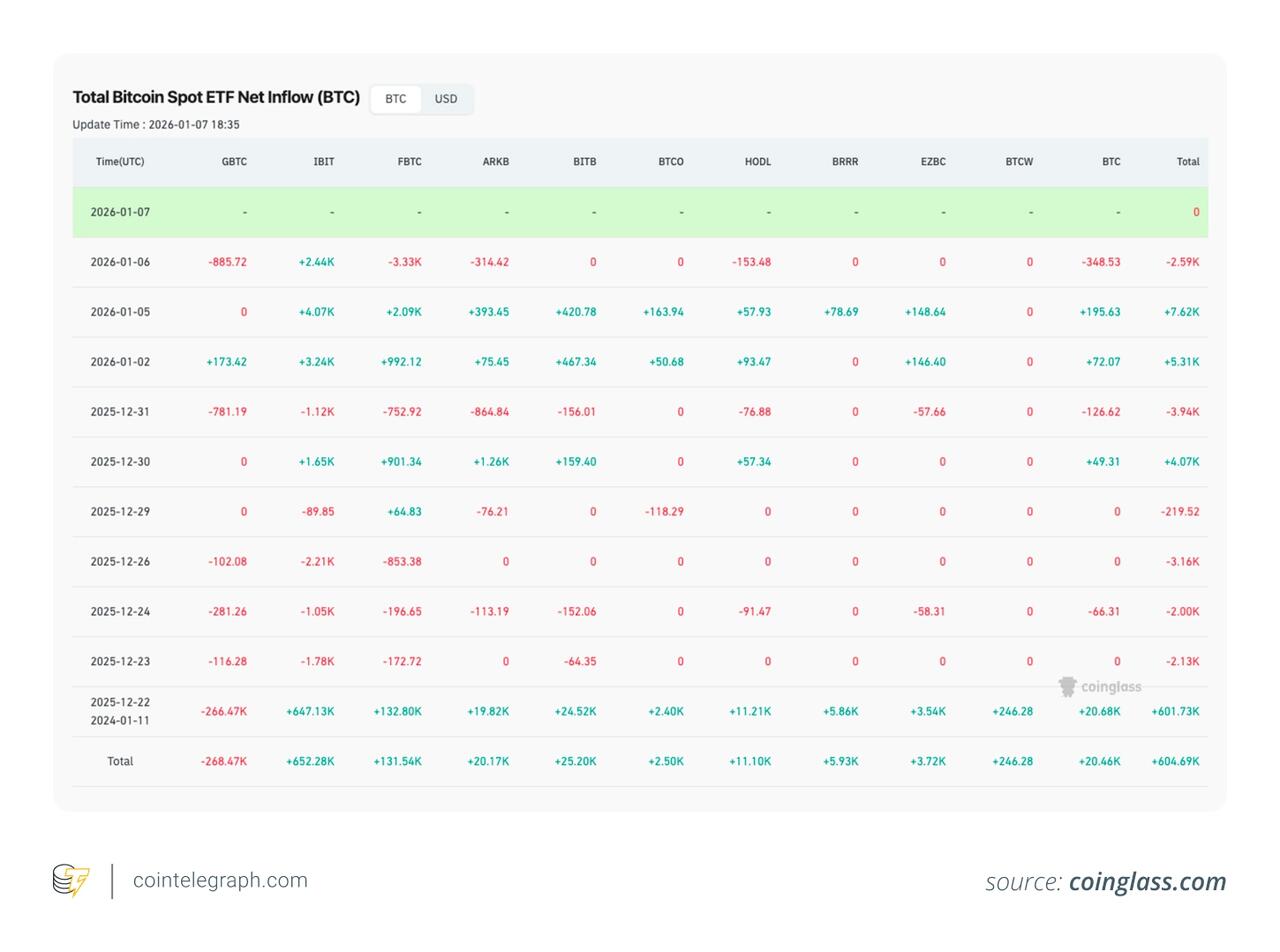
ETF flows may be one of the clearest institutional signals of demand because they reflect real allocation decisions by wealth platforms, registered investment advisors (RIAs) and discretionary desks, not just leverage bouncing around on crypto exchanges.
This idea comes straight from mainstream market reporting and flow data. Reuters framed Bitcoin’s mid-2025 breakout as being “fuelled by strong flows into Bitcoin ETFs” and said the rally looked “more stable and lasting” than earlier, speculation-heavy runs.
Reuters also quoted Aether Holdings’ Nicolas Lin on why this matters for the longer term: “It’s the start of crypto becoming a permanent fixture in diversified portfolios.”
The flip side is also worth noting. Bloomberg highlighted how quickly sentiment can turn when the ETF pipeline reverses, with investors “yanking nearly $1 billion” in a single session, one of the largest daily outflows on record for the group.
2. BTC as equity products
A growing group of public companies is effectively saying this: Instead of buying Bitcoin directly, buy our stock, and we will hold the BTC on the balance sheet for you.
Naturally, Strategy has been the poster child since 2020. The 2026 narrative, however, is that these types of products are moving into the crosshairs of index providers.
Reuters describes these “digital asset treasury companies” (DATCOs) as companies that “began holding crypto tokens such as Bitcoin and ether as their main treasury assets,” giving investors “a proxy for direct exposure.” The problem is straightforward: If a company is mostly a pile of BTC in a corporate shell, is it an operating business or something closer to an investment vehicle?
That question became a real market risk in early January 2026, when MSCI backed off a plan that could have pushed some of these firms out of major indexes. MSCI said investors were concerned that some DATCOs “share characteristics with investment funds” and that separating true operating companies from “companies that hold non-operating assets… rather than for investment purposes requires further research.”
Barron’s noted that JPMorgan estimated potential selling pressure could have reached about $2.8 billion if MSCI had gone ahead and more if other index providers followed.
Reuters quoted Clear Street’s Owen Lau, who called MSCI’s delay the removal of a “material near-term technical risk” for these stocks that act as “proxies for Bitcoin/crypto exposure.”
Mike O’Rourke of JonesTrading was blunter. Exclusion may simply be “postponed until later in the year.”
If ETF flows are the clean spot-demand story, treasury stocks are the messier cousin. They can amplify Bitcoin through equity mechanics, index rules and balance-sheet optics, even when the BTC chart looks boring.
3. The security budget question is back
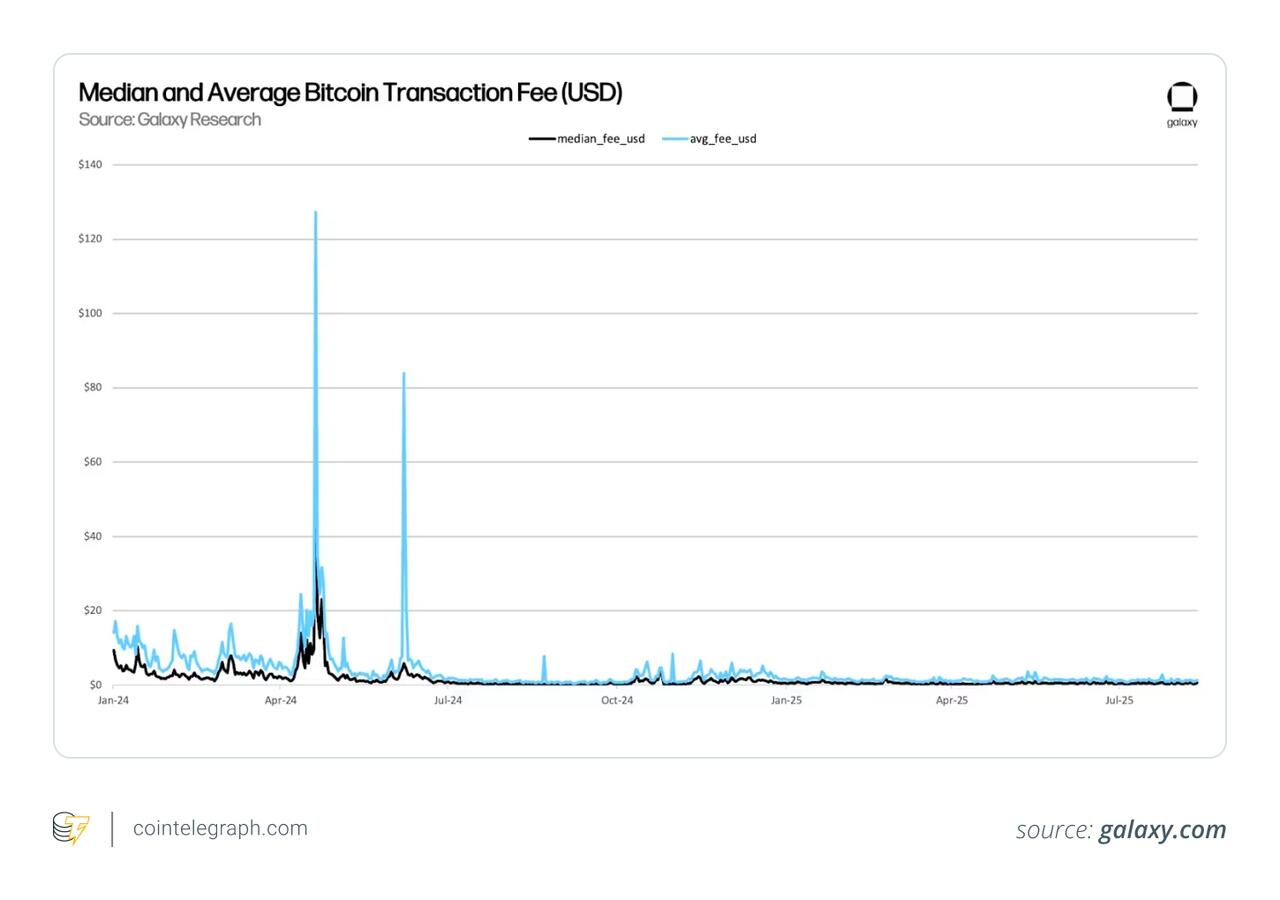
After the 2024 halving, it has become more apparent that Bitcoin’s long-term security story is increasingly linked to transaction fees.
Galaxy put it plainly, “Bitcoin fee pressure has collapsed.” It estimated that “as of August 2025, ~15% of daily blocks are ‘free blocks,’” with the mempool often being empty.
That’s great for users who want cheap transfers. For cryptocurrency miners, it reopens the big question: What pays for security as the subsidy keeps shrinking?
CoinShares made the same point from the mining side, saying transaction fees “have fallen to historic lows,” sitting at “less than 1% of total block rewards” during parts of 2025.
By early January 2026, JPMorgan-linked reporting flagged real stress. Monthly average hashrate fell 3% in December, while “daily block reward revenue” dropped 7% month-on-month and 32% year-on-year, reaching “the lowest on record.”
VanEck also described “a tough structural squeeze” for miners as subsidy cuts collide with rising competition.
With this in mind, analysts are increasingly watching the fee share of miner revenue, hash price and profitability, and whether onchain demand can return without relying on a hype cycle to push fees higher.
4. Lightning, Bitcoin L2s and upgrade politics
Analysts are now watching the full stack when it comes to scaling.
First, Lightning Network remains a primary payments-focused layer, and capacity is rising again. In mid-December 2025, Lightning capacity was reported at a new high of 5,637 BTC. More important than the headline number is who is adding liquidity. Amboss framed it this way: “It’s not just one company … it’s across the board.”
Second, the “Bitcoin L2 / BTCFi” push is receiving institutional research attention. Galaxy counts Bitcoin L2 projects rising “over sevenfold from 10 to 75” since 2021 and argues that meaningful BTC liquidity could move into layer-2 (L2) environments over time. It estimates that “over $47bn of BTC could be bridged into Bitcoin L2s by 2030.” Whether that happens remains the central debate.
Third, Bitcoin’s upgrade debate is back on the table as L2 builders push for better base-layer primitives. OP_CAT “was disabled in 2010” and is now “frequently proposed… using a soft fork.”
Galaxy’s view is that proposals such as OP_CAT and OP_CTV matter because they could support features like “trustless bridges” and “improvements to the Lightning Network.” Ecosystem commentary is now putting timelines on these ideas. Hiro says there is “a good chance” of a covenant-related soft fork “as early as 2026.”
In short, analysts are watching three things: Lightning capacity and liquidity trends, whether Bitcoin L2s attract real BTC rather than incentive-driven capital and whether the soft-fork conversation turns into an actual activation plan.
5. Regulation is deciding who gets access
In 2026, regulation will increasingly shape who gets access to Bitcoin, through which products and on what terms.
In the US, a change in tone is visible at the top. A federal executive order states, “It is the policy of the United States to establish a Strategic Bitcoin Reserve.”
It also says that government BTC in that reserve “shall not be sold.” This language frames Bitcoin as a strategic asset in policy terms.
Stablecoin rules are also key because they shape the infrastructure around crypto markets.
A legal breakdown of the GENIUS Act calls it “the first major crypto legislation” in the United States and noted that it creates licensing requirements for payment stablecoin issuers.
Meanwhile, large asset managers are already warning about second-order effects. Amundi’s chief investment officer said mass stablecoin uptake could turn them into “quasi-banks” and “potentially destabilise the global payment system.”
In the EU, Markets in Crypto-Assets (MiCA) acts as a portcullis. Regulators said, “Only firms authorised … are allowed to provide crypto-asset services in the EU,” with a transition window in some countries running until July 1, 2026.
When it comes to regulation, it is important to watch authorization lists and deadlines in the EU, enforcement posture and whether “strategic reserve” language turns into durable policy in the US.
Where to look when the chart goes quiet
Bitcoin in 2026 appears less driven by hype cycles alone. Instead, attention is shifting to a few pipes and pressure points:
ETF flows show who is allocating and how sticky that demand might be.
Treasury-heavy public companies reveal how Bitcoin exposure is being repackaged for equity markets and how index rules can suddenly matter as much as onchain data.
The security budget debate reminds us that network health depends on incentives.
Scaling discussions have moved from abstract arguments to concrete trade-offs between Lightning, L2 designs and protocol upgrades.
Regulation now determines which doors are open and which stay shut for mainstream capital.
None of these forces moves in a straight line, and none shows up cleanly on a price chart. Taken together, they explain why Bitcoin can look quiet on the surface while something important is changing underneath. For analysts, that is where the data increasingly lives.
Tyler Durden
Thu, 01/15/2026 – 15:00
https://www.zerohedge.com/crypto/five-bitcoin-narratives-analysts-are-watching-beyond-price
The U.S. is pressing Mexico to allow US forces to fight cartels
MEXICO CITY — The United States is intensifying pressure on Mexico to allow U.S. military forces to conduct joint operations to dismantle fentanyl labs inside the country, according to U.S. officials.
The push comes as President Donald Trump presses on the Mexican government to grant the United States a larger role in the battle against drug cartels that produce fentanyl and smuggle it into the United States.
The proposal was first raised early last year and then largely dropped, officials said. But the request was renewed after U.S. forces captured President Nicolás Maduro of Venezuela on Jan. 3 and has involved the highest levels of government, including the White House, according to multiple officials.
U.S. officials want U.S. forces — either Special Operations troops or CIA officers — to accompany Mexican soldiers on raids on suspected fentanyl labs, according to U.S. officials who spoke on condition of anonymity to discuss sensitive diplomatic issues and military planning. Such joint operations would be a significant expansion of the United States’ role in Mexico, and one that the Mexican government has so far adamantly opposed.
The country’s president, Claudia Sheinbaum, has repeatedly said that the two nations would work together to fight the cartels but that her government rejected the proposal of sending U.S. troops across the border.
Trump “generally insists on the participation of U.S. forces,” she said in a news conference shortly after speaking with Trump on the phone Monday morning. “We always say that it is not necessary,” she said, adding, “he was receptive, listened, gave his opinion, and we agreed to continue working” together.
The White House declined to comment. But last week, Trump told Fox News that more needed to be done in Mexico to counter the drug cartels.
“We’ve knocked out 97% of the drugs coming in by water, and we are going to start now hitting land, with regard to the cartels,” he said, specifically those in Mexico.
Instead of joint operations, Mexican officials offered counter proposals this month, including increased information sharing and for the United States to play a greater role inside command centers, according to a person familiar with the matter. U.S. advisers are already in Mexican military command posts, according to U.S., officials, sharing intelligence to help Mexican forces in their antidrug operations.
Mexican officials are under pressure to reach an agreement, as some U.S. officials would like to see the U.S. military or CIA conduct drone strikes against suspected drug labs, a violation of Mexican sovereignty that would significantly weaken the government.
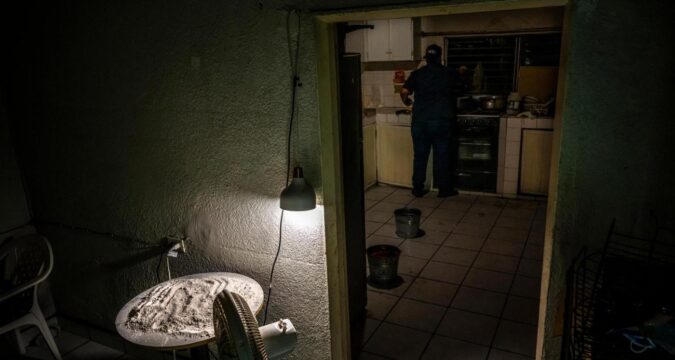
But fentanyl labs are notoriously difficult to find and destroy, U.S. officials say, and Washington is still developing tools to trace the drug as it is being produced. The labs emit less chemical traces than meth labs — which can be detected by drones — and are often cooked in urban areas with the rudimentary tools found in a family kitchen, according to current and former officials. Meth and cocaine labs, however, need much larger spaces, making them easier to detect.
Under the Biden administration, the CIA began carrying out secret drone flights over Mexico to identify possible locations of fentanyl labs, an operation that has expanded since Trump took office.
The drones are used both to find labs and track precursor chemicals as they arrive in Mexican seaports and then transported to their destinations, according to a U.S. official briefed on the operation.
That intelligence is currently handed off to Mexican military units, many of which have been trained by U.S. Special Operations forces. Mexican troops then plan and execute the raids to take out the labs.
Under Washington’s new proposal, U.S. forces would participate in the raids with Mexican forces in the lead, commanding the mission and making key decisions, according to people familiar with the talks, including U.S. officials. But U.S. forces would be in support, providing intelligence and advice to front-line Mexican troops.
Asked about the planning for Mexico, the Defense Department said in a statement that it “stands ready to execute the orders of the commander in chief at any time and in any place.”
A spokesperson for the CIA declined to comment.
The success of this month’s Venezuela raid seems to have emboldened the Trump administration. Soon after that operation, Trump said regime change in Cuba was next and resurrected demands that Washington take control of Greenland.
While Washington has focused on Maduro and Venezuela as a main source of the drugs smuggled into the United States, the South American country in fact plays a minor role in the illicit trade. The majority of drugs smuggled into the United States come through the 2,000-mile border it shares with Mexico.
Fentanyl is also responsible for the bulk of overdose deaths in the United States, and is by far the most dangerous street drug.
Last year, the White House designated fentanyl as a “weapon of mass destruction” and several Mexican cartels as foreign terrorist organizations.
The Trump administration started pushing for U.S. forces inside Mexico shortly after coming to power last year, but Mexican officials have consistently rejected those proposals, demanding that Washington respect their sovereignty.
“We have highly trained army units and special forces,” Mexico’s security chief, Omar García Harfuch, said in an interview last month. “What would they be needed for?” he added, referring to U.S. forces. “What we need is information.”
(STORY CAN END HERE. OPTIONAL MATERIAL FOLLOWS.)
U.S. troops operating inside Mexico is a particularly fraught issue, considering the shared history — the United States has invaded Mexico nearly a dozen times and launched several land grabs that included Texas and California.
That deep distrust has gradually diminished over the last three decades, with Mexico working more closely with U.S. forces and sharing more intelligence, particularly with agents from the Drug Enforcement Administration. Harfuch said that fewer than several hundred U.S. security personnel are in Mexico, and that all are unarmed and all are approved by Mexican officials.
DEA agents in Mexico mostly build cases with Mexican forces, and are barred from participating in antidrug ground operations. But former U.S. officials who have worked with Mexican forces say that if Trump pushes too far that cooperation could break down.
Sheinbaum is in a precarious situation. If she accepts Washington’s demands for joint operations with U.S. forces, she could see a revolt within her own political party, a leftist organization that harbors deep suspicion of the United States.
But if the Trump administration decides to launch a unilateral military strike inside Mexico without the Mexican leader’s knowledge, she could rapidly lose support within her ruling party and among Mexican voters.
The proposal for joint operations also runs up against recent Mexican laws that restrict foreign troops on Mexican soil, including a constitutional amendment passed last year.
Soon after the attack in Venezuela, the Mexican Senate delayed its Jan. 5 vote to allow U.S. Navy special forces into Mexico for joint training exercises beginning later this month. The senate is required under the country’s constitution to grant approval for the entry of foreign troops.
Sheinbaum, who had originally requested the entry of the U.S. troops, denied last week that the delay was related to the Venezuela attack, saying it was because the Senate was not yet in session, but a Mexican senator said the postponement was indeed because of the U.S. action.
Sheinbaum has tapped Harfuch to go harder on the cartels since coming to power in late 2024. Since then, Mexico has deployed hundreds of forces to the state of Sinaloa to counter the Sinaloa Cartel, the world’s largest distributor of fentanyl, leading to high-profile arrests and a splintering and weakening of the drug organization.
The government says it is arresting cartel members and destroying drug labs at nearly four times the rate of the previous government.
“We’re not saying the problem is solved,” Harfuch said. But, he added, “what we’re doing is hitting the criminal structure at the bottom, in the middle and at the top.”
This article originally appeared in The New York Times.
Bally’s Chicago pushes back opening to 2027, seeks 12-month extension on temporary casino
Bally’s Chicago may not be opening its new permanent casino this year after all.
With its already extended temporary license to operate at Medinah Temple set to expire in September and construction of the new casino complex racing the clock, state Rep. Kam Buckner introduced a bill Thursday to add up to another 12 months to the temporary license.
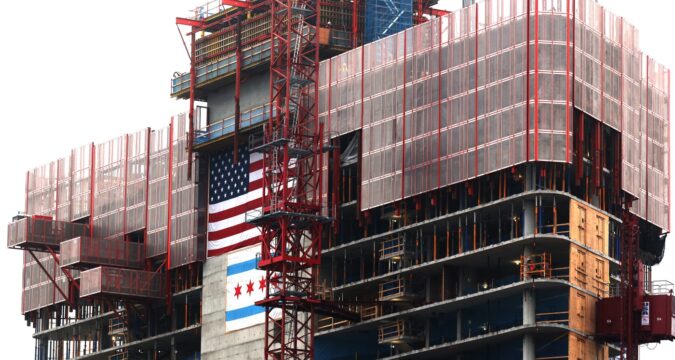
That would give Bally’s Chicago until September 2027 to open its new $1.7 billion casino, hotel and entertainment complex rising up on the 30-acre former site of the Tribune’s Freedom Center printing plant in River West.
“Bally’s Chicago remains fully committed to the construction of its permanent casino and entertainment destination and will continue operating at Medinah Temple in accordance with all regulatory requirements during the extension period,” Christopher Jewett, senior vice president of corporate development for Bally’s, said in a statement. “The adjusted timeline allows for Bally’s Chicago to operate the temporary casino inside of Medinah Temple through September 2027, if needed.”
Bally’s Chicago said as recently as last week the target launch for the permanent casino, which has been pushed back several times, was the fourth quarter of 2026. That timing would still have required a legislative extension of the temporary license, according to the Illinois Gaming Board.
The temporary casino at Medinah Temple in River North opened its doors in September 2023, with revenue falling short of projections. Last year, Bally’s ranked fifth in the state and was roughly flat with nearly $125 million in adjusted gross receipts and 1.3 million visitors, according to Gaming Board data.
The Bally’s Chicago temporary casino at Medinah Temple, Jan. 6, 2026. (Armando L. Sanchez/Chicago Tribune)
The three-year temporary license — two years plus a previous 12-month extension — was set to expire in September.
The proposed legislation by Buckner, whose 26th ward includes Medinah Temple, would extend the temporary license by an additional 6 months, with an option for two three-month extensions while construction of the permanent Bally’s Chicago facility is completed.
Selected by the city in 2022, Rhode Island-based Bally’s is building an entertainment complex that includes an exhibition hall, a 500-room hotel, a 3,000-seat theater, 10 restaurants and 4,000 gaming positions, making it the state’s largest casino.
The construction of the permanent casino has been delayed by everything from a Freedom Center demolition stoppage by the city in December 2024 after a debris spill in the Chicago River to an Illinois Gaming Board-imposed work stoppage in May 2025 over the use of an unauthorized waste hauler with alleged ties to organized crime.
In 2024, Bally’s had to relocate the 34-story hotel tower, which is beginning to rise up over the Ohio feeder ramp, to the south of the casino after it was determined that driving caissons into the ground might damage municipal water management infrastructure pipes along the Chicago River.
But Bally’s had been targeting a September 2026 opening — in line with the expiration of the extended temporary casino license — for several years. The launch date got pushed back to the fourth quarter of 2026 last year, and now may extend until September 2027 through the new legislation.
Getting into the larger permanent facility is a priority for both Bally’s and the city to meet ambitious shared revenue goals.
While Bally’s was flat, new facilities led a boom in casino revenue last year in Illinois. The state’s 17 casinos generated more than $1.9 billion in adjusted gross receipts in 2025, a 15% year-over-year gain, while admissions were up nearly 20% to more than 15.5 million visitors, according to data published by the Illinois Gaming Board.
New casinos at Wind Creek Chicago Southland, Hard Rock Rockford and a new land-based Hollywood Casino Joliet all contributed to the robust gains. The planned opening of Hollywood Casino Aurora’s new $360 million land-based facility remains on target for the first half of 2026.
Meanwhile in Waukegan, the permanent $500 million American Place Casino, delayed by a lawsuit, the governmental approval process and financing issues, is expected to finally break ground in the first quarter, according to casino owner Full House Resorts.
American Place, which ranked sixth last year with nearly $122 million in adjusted gross receipts, has been operating out of a temporary facility on an extended three-year license since February 2023. Granted an additional 18-month legislative extension because of the litigation, American Place is planning to open the permanent casino by the August 2027 expiration of the temporary license.
That puts the permanent Waukegan casino a month ahead of the new target launch for the permanent Bally’s Chicago complex.
rchannick@chicagotribune.com
https://www.chicagotribune.com/2026/01/15/ballys-chicago-temporary-casino/
Vintage Chicago Tribune: How Chicago expressways and other major roads got their names
For people moving to Illinois, getting familiar with Chicago’s expressways — which are referred to by name instead of number — can be confusing.
Many of these names are easily recognizable, but others can be more obscure.
Here’s a look back at what expressways and major roads in and around the city were originally called, and when their names were changed.
William Edens Expressway (I-94, U.S. 41)
Charles Casey, Col. William Edens, William Erickson, Maj. George Quinlan and Dan Ryan wield scissors to cut a ribbon opening the new Edens Expressway in the snow at the Caldwell Avenue overpass on Dec. 20, 1951. (Louis Paus/Chicago Tribune)
Boundaries: West Park Avenue in Highland Park south to the Kennedy Expressway near Montrose.
Originally called: Skokie Highway/Edens Parkway or Super-Highway
When the new six-lane highway was dedicated at the North Caldwell Avenue/West Peterson Avenue overpass on Dec. 20, 1951, the namesake of “the first fully completed route in the county superhighway program” was in attendance. Col. William Edens — who celebrated his 88th birthday one month prior — was one of five men who attended the ribbon-cutting ceremony held during a snowstorm. A former banker, Edens is credited with taking Illinois out of the mud by promoting the state’s first highway bond issue in 1918, as president of the Illinois Highway Improvement Association.
Initially extending from the Lake-Cook county line to Foster and Cicero avenues in Chicago, the Edens replaced Skokie Road and Cicero Avenue as the main routes to Milwaukee.
John F. Kennedy Expressway (I-90, I-94, I-190)
Standing beside Mayor Richard J. Daley, left, President John F. Kennedy shakes hands with Fire Commissioner Robert Quinn upon arriving at O’Hare International Airport on April 28, 1961. The president and his party made a fast trip into Chicago by way of the Northwest Expressway, renamed a few years later for Kennedy after he was assassinated. (Luigi Mendicino/Chicago Tribune)
Boundaries: The Circle Interchange — where the Kennedy, Dan Ryan and Eisenhower expressways meet — northwest to O’Hare International Airport.
Originally called: Northwest Expressway
Tribune reporter Hal Foust had an early look in October 1960 at the completed 16-mile highway, which stretched from the Congress (now Dwight D. Eisenhower) Expressway to O’Hare International Airport.
Foust called it, “a superhighway so modern, so elaborate in special features that it makes Congress Expressway, under construction for 15 years, look outmoded. The Northwest improvement represents more than a decade of advancement in highway engineering.”
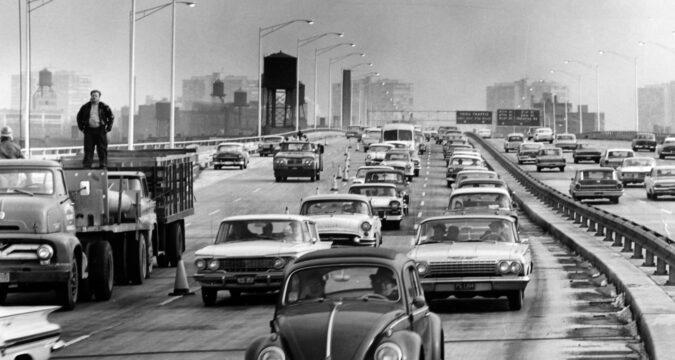
The Northwest Expressway cost more than a quarter billion dollars. It was expected to cut driving times from the Loop to O’Hare from an hour to 25 minutes (under the posted 45-mph speed limit) when it was dedicated Nov. 5, 1960.
City Council voted Nov. 29, 1963, to rename the expressway in honor of President John F. Kennedy — one week after he was assassinated.
Dwight D. Eisenhower Expressway (I-290, Illinois 110, Illinois 53)
President Dwight D. Eisenhower started a trip from Glenview to Evanston to give a speech before a crowd of thousands in Deering Meadow at Northwestern University in August 1954. (Chicago Tribune historical photo)
Boundaries: Named section of “the Ike” runs from the Circle Interchange to Illinois Highway 83 at the border of Addison and Elmhurst.
Originally called: Congress Expressway
Five miles — from Ashland Avenue to Laramie Avenue — of the $150 million superhighway project was opened to drivers Dec. 15, 1955. It marked a decade of construction and “a half century of dreaming — back to the 1907 plan for Chicago by the late Daniel H. Burnham,” Foust reported. (The full 15 miles was dedicated on Oct. 12, 1960.)
But the celebration was kept brief.
“I have heard talk about Congress Street for 30 years,” Cook County Board President Dan Ryan told the crowd. “That’s enough talk. Let’s drive it.”
On Jan. 10, 1964, seven miles of the expressway was unanimously renamed by City Council in honor of President Dwight D. Eisenhower. Eisenhower signed into law the first Federal-Aid Highway Act of 1956, which called for an interstate highway network to join cities across the country.
Daniel B. Ryan Expressway (I-90, I-94)
The ribbon-cutting scene as a three-mile section of the Dan Ryan Expressway was opened Dec. 12, 1961. Wielding scissors are Mayor Richard J. Daley, Dan Ryan III, Marcy Ryan, Gov. Otto Kerner, John J. Duffy, County Board President; William Mortimer, county highway Superintendent; and County Commissioner Seymour Simon. Mrs. Dan Ryan stands with her two grandchildren. (Jack Mulcahy/Chicago Tribune)
Boundaries: Circle Interchange south to where Interstate Highway 57 and the Bishop Ford split.
Originally called: South Expressway
Snow flurries, strong winds and a shivering crowd marked the Dec. 12, 1961, opening of the first three-mile section of the $300-million expressway.
The superhighway is named in honor of Dan Ryan Jr., who was Cook County Board of Commissioners president and member for more than 33 years. He died of a heart attack eight months before the expressway opened. Ryan’s wife, Ruby, served out his term on the board and was among the commissioners who voted Nov. 28, 1961, to approve the name change.
Robert Kingery Expressway (I-80, I-94, U.S. 6)
Robert Kingery, of Winnetka, was the secretary and general manager of the Chicago Regional Planning Association. Editors note: this historic print shows some hand painting. (Chicago Tribune archive)
Boundaries: Indiana state line west to Illinois Highway 394, Interstate Highway 294 and the Bishop Ford Freeway.
Originally called: Tri-State Expressway/Highway
The governors of Illinois and Indiana were on hand Dec. 13, 1951, to dedicate the superhighway that connected to the Calumet Expressway (now Bishop Louis Henry Ford Freeway). It was originally designed as a bypass around the city.
The route was renamed in 1953 for the late Robert Kingery, who as general manager of the Chicago Regional Planning Association promoted the route as early as 1926. Just prior to his death in November 1951, Kingery had also been appointed chairman of the newly created Chicago Regional Port District.
Jane Addams Memorial Tollway (I-39 toll, I-90 toll, U.S. 51 toll)
Jane Addams, circa 1914. (Library of Congress)
Boundaries: From the Interstate 90 intersection with I-294 to the Wisconsin border.
Originally called: Northwest Tollway
Barriers were lifted on 76 miles of Illinois tollways — including the Northwest Tollway — on Aug. 20, 1958. The initial cost per car was 2 cents (or about 22 cents in today’s dollars). Illinois Gov. William Stratton marked the occasion near Elgin by watching a historical pageant of ox-drawn wagons. It was a reminder that the Northwest Tollway followed a territorial route.
Vintage Chicago Tribune: Nobel Prize winners with Chicago connections
The Illinois Toll Highway Authority voted Sept. 7, 2007, to rename the Northwest Tollway in honor of Jane Addams. Even those who recognize her name think of Addams simply as the founder of Hull House in Chicago in 1889 and the caretaker of the urban poor. They might not be aware of her highly unpopular international crusade for peace during World War I, which earned her the Nobel Peace Prize in 1931.
The first stretch of Chicago-area interstate to be named for a woman, it takes motorists near Addams’ hometown of Cedarville, Illinois, and Rockford, where she studied at what is now Rockford College.
Adlai E. Stevenson II Expressway (I-55)
President Harry S. Truman, left, and Gov. Adlai Stevenson II at the Democratic National Convention on July 26, 1952, at the International Amphitheatre in Chicago. (Chicago Tribune historical photo)
Boundaries: Named section runs from Lake Shore Drive to County Line Road in Burr Ridge, the Cook County border with DuPage County.
Originally called: Southwest Expressway
Chicago’s third major expressway to open in four years was dedicated Oct. 24, 1964. As with the Kennedy and Dan Ryan expressways, the Southwest required financial cooperation from federal, state, county and city governments. The result: “A marvel in engineering,” said Rex Whitton, federal highway administrator.
There were so many politicians who wanted to speak at the event — which was held a month before the election — the ceremonies lasted all day.
“In essence it was a Democratic holiday, with officeholders stressing accomplishments under that party,” Tribune reporter Hal Foust wrote.
City Council approved the name change to the Stevenson Expressway Sept. 1, 1965 — less than two months after the former Illinois governor, presidential candidate and ambassador to the United Nations died of a heart attack in London.
Bishop Louis Henry Ford Freeway (I-94, Illinois 394)
Bishop Louis Henry Ford in front of his South Side church, St. Paul Church of God in Christ, at 4528 S. Wabash Ave. on April 11, 1990. (George Thompson/Chicago Tribune)
Boundaries: Dan Ryan Expressway south to the Kingery Expressway, where Illinois Highway 394 and I-294 meet.
Originally called: Calumet Expressway
The first segment opened in early 1950, but a bigger chunk was completed and opened with the Tri-State Expressway in late 1951.
State lawmakers renamed the Calumet on May 23, 1996, in honor of Bishop Henry Louis Ford. It is the only Chicago-area expressway that includes a person’s title. The longtime South Side clergyman led the 8.5-million member Church of God in Christ before his death in 1995.
Ronald Reagan Memorial Tollway (I-88 toll, Illinois 56 toll, Illinois 110)
Tampico, Illinois, shown Oct. 2, 1980, is the birthplace of Ronald Reagan. (Carl Hugare/Chicago Tribune)
Boundaries: Toll portion of Interstate Highway 88, which runs from I-294 west to Sterling in northwestern Illinois.
Originally called: East-West Tollway
The westward extension of the Congress Expressway at Mannheim Road to U.S. Highway 30 west of Aurora was opened Nov. 21, 1958.
“It is now possible to drive 35.5 miles of continuous expressway, tollway and freeway from Maywood’s 1st Avenue to west of Aurora,” Tribune reporter Foust wrote.
East-West Tollway was renamed June 14, 2004, in honor of the 40th president, Ronald Reagan at the request of then-Gov. Rod Blagojevich. Reagan was born in Tampico, Illinois, and the toll road passes just south of Reagan’s childhood home in Dixon. The name change came days after Reagan’s death.
Melvin Amstutz Expressway (Illinois 137)
Melvin Amstutz, the Lake County highway superintendent, circa 1950. Editors note: this historic print shows hand painting of the background. (Chicago Tribune archive)
Boundaries: A 1.3-mile strip from 24th Street to Buckley Road that replaced Sheridan Road at the south end of North Chicago; and Genesee Street in Waukegan to 2.8 miles past downtown north to Greenwood Avenue.
Originally called: Lakefront Expressway/Highway, Amstutz Highway
Melvin Amstutz was the longtime Lake County superintendent of highways who advocated for more and better highways to meet the demand of the area’s rising population.
In 1955, Amstutz proposed an abandoned Chicago North Shore Line and Milwaukee Railroad line be converted into a four-lane highway from Wilmette to Waukegan to relieve projected congestion on Sheridan and Green Bay roads. Eleven years later, Lake County bought a 13-mile chunk of property for $1 million (or $10 million in today’s dollars). Amstutz died in 1970, which prompted the Lake County Board of Commissioners to name the project in his honor.
To many, the expressway is known as the “road to nowhere.” Estimates to complete its 2.7-mile missing link between Waukegan and North Chicago could top more than $100 million.
But Hollywood embraces the stretch of pavement, which can be closed without causing any real disruption in traffic. The Amstutz has been featured anonymously in “The Blues Brothers” (1980); “Planes, Trains and Automobiles” with Steve Martin and John Candy (1987); “Ordinary People” with Mary Tyler Moore (1980); and in a scene from “Groundhog Day” that was filmed in March 1992. “The Fugitive” and “Southside with You” also used the road for filming.
Frank Borman Expressway (I-80/94)
Apollo 8 astronauts James Lovell, from left, command module pilot; William Anders, lunar module pilot; and Frank Borman, commander, stand in front of a mission simulator prior to a training exercise for their scheduled six-day lunar orbital mission at the Kennedy Space Center in Florida on Dec. 18, 1968. (AP)
Boundaries: From the Indiana state line to the intersection with the I-90 toll road.
Originally called: Tri-State Expressway
Astronaut Frank Borman, a Gary native, was feted locally after he commanded the Gemini 7 mission in 1966, and again in 1969 after the Apollo 8 mission — in which he, Jim Lovell and William Anders became the first people to orbit the moon.
A resolution was adopted in January 1969 to rename the part of the Tri-State Expressway that travels through Lake County, Indiana in honor of Borman.
Jane Byrne Interchange
Jane Byrne and supporters, along with her campaign manager Don Rose, in glasses on left, exult in her upset victory over Mayor Michael Bilandic on Feb. 27, 1979, in the Democratic mayoral primary in Chicago. (Anne Cusack/Chicago Tribune)
Boundaries: Where the Ryan, Kennedy and Eisenhower expressways meet.
Originally called: Circle Interchange
Chicago’s first female mayor, Jane Byrne was elected in 1979 and was mayor through 1983. She was appointed commissioner of consumer sales in 1969 by Mayor Richard J. Daley. She was later fired by Mayor Michael Bilandic in 1977, whom she later defeated in the mayoral primary.
The interchange was renamed for Byrne in 2014. A nine-year renovation was finished in late 2022.
Jean Baptiste Point DuSable Lake Shore Drive (U.S. 41)
A statue of Jean Baptiste Point DuSable, a Haitian-born trader dubbed the “founder of Chicago,” sits on Michigan Avenue at the Chicago River, Oct. 18, 2009. (Brian Cassella/Chicago Tribune)
Boundaries: From the intersection of Sheridan Road and Hollywood Avenue south along the lakefront to Ewing Avenue.
Originally called: Lake Shore Drive
Though not much is known about him, Jean Baptiste Point DuSable was the city’s first permanent non-native settler. He moved here in the late 1700s, married a Potawatomi woman named Kittihawa and had two children, Susanne and Jean. The family settled near the Chicago River, where DuSable built a home, and later, a trading post, with a mill, a bake house and a barn, among other small buildings.
On May 7, 1800, DuSable sold his properties in Chicago. Soon after, he moved to St. Charles, Mo., where he lived until he died in 1818.
In 1993, then-Ald. Toni Preckwinkle sponsored a proposal within a City Council committee to rename Lake Shore Drive for DuSable. It was defeated in an 8-2 vote. Aldermen revisited the idea in late 2020, and voted 33-15 on June 25, 2021, to rename it Jean Baptiste Point DuSable Lake Shore Drive.
Ida B. Wells Drive
Ida B. Wells in 1893 in Chicago. (Chicago Tribune archive)
Boundaries: From Grant Park west to the entrance to the Eisenhower Expressway
Originally called: Congress Parkway
Also known by her married name, Ida B. Wells-Barnett was an iconic investigative journalist who crusaded against the lynching of Black men, pushed for women’s right to vote and started numerous organizations that aimed to improve the economic and social status of African-Americans. She was born into slavery in Mississippi, but went on to be a schoolteacher and created the first kindergarten for Black children.
Wells-Barnett settled in Bronzeville in 1894 after her life was threatened, and she developed a reputation as a fearless activist and political strategist. She died in 1931.
Chicago City Council voted July 25, 2018, to rename Congress Parkway to Ida B. Wells Drive. Elected officials, dignitaries, activists and great-granddaughter Michelle Duster gathered at the Harold Washington Library to officially celebrate on Feb. 11, 2019.
Wells-Barnett’s image was unveiled on a quarter in February 2025 by the U.S. Mint.
Want more vintage Chicago?
Become a Tribune subscriber: It’s just $1 for a 1-year digital subscription.
Thanks for reading!
Subscribe to the free Vintage Chicago Tribune newsletter, join our Chicagoland history Facebook group, stay current with Today in Chicago History and follow us on Instagram for more from Chicago’s past.
Have an idea for Vintage Chicago Tribune? Share it with Kori Rumore at krumore@chicagotribune.com.
https://www.chicagotribune.com/2026/01/15/vintage-chicago-tribune-expressways-roads-names/

Halal Fest moving to College of DuPage this year due to Naperville parking issue
Despite a record turnout in Naperville, Chicagoland Halal Fest will be held at College of DuPage in Glen Ellyn this year because not enough parking is available.
The event made its debut in Naperville in 2023 and showcases the diverse Muslim culture through food, performances and local artisans and businesses. Last year it drew about 22,000 people, 30 food vendors and more than 60 business vendors, said Shafeek Abubaker, president of the Illinois Muslim Chamber of Commerce, which organizes the fest.
For the past three years it’s been held at Naperville’s Frontier Park, but a new location was sought when they learned the Neuqua Valley High School lot they use for parking would be under construction, Abubaker said.
“What we have been told is for the next three years, the construction is going to be happening and the parking lot will not be available at all,” he said.
Lot construction started last year, but the fest remained doable because some spaces were still available for use. With the entire lot now being closed, the parking situation became too complicated, Abubaker said.
Halal Fest aims to showcase the diverse array of ethnicities and cultures within the Muslim community. Last year the event drew about 22,000 people, 30 food vendors and more than 60 business vendors, organizers said. (Illinois Muslim Chamber of Commerce)
“We wanted to keep it within Naperville, if at all possible. But unfortunately we don’t have many options,” said Abubaker, who lives in Naperville. “The locations are very limited, and one thing which we are very particular about is not to create trouble for our neighbors and make sure that it is convenient for everyone.”
Organizers looked at multiple alternative locations, including RiverEdge Park in Aurora and the DuPage County fairgrounds in Wheaton, before settling on College of DuPage, which has ample parking, a rental fee similar to Frontier Park’s, and an ability to accommodate thousands of people on an accessible site.
Another positive about the location is it will allow the event to have longer hours: noon to 11 p.m. Saturday, Aug. 8, and noon to 10 p.m. Sunday, Aug. 9.
“It has been a challenge because (with) Naperville, we have a city regulation to close the event at a certain time. It has always been a challenge to get the people out at that specific time,” Abubaker said. “People come from far, they reach here late and they may have trouble finding parking spots. And by the time they come in, we are forcing them to go.”
The extended hours also will better accommodate those who prefer events later in the evening. As a bonus, Abubaker hopes the new location should attract more college students and young people.
But hosting the event away from Naperville also brings its challenges. Abubaker said funding from the city’s Special Events and Community Arts (SECA) program was critical to Halal Fest in the past. Last year, it received $56,800 from the city for an event that costs about $200,000 to hold, he said.
VADA, a Viriginia-based band known for its Qawwali music, performs at the Chicagoland Halal Fest at Naperville’s Frontier Park on Aug. 2, 2025. (Illinois Muslim Chamber of Commerce)
To fill the financial gap this year, they are hoping to find more sponsors, Abubaker said. If they return to Naperville in future years, which is possible, organizers will likely apply for SECA funding again, he said.
Details on what Halal Fest this year will offer, including entertainment and food, is still being decided, he added. The goal is not necessarily to increase the number of vendors but to find a balance between quality and quantity.
“We don’t believe in adding vendors just for the sake of adding vendors and making it the largest event in that sense,” Abubaker said. “We want to make sure that we bring in quality vendors, diverse vendors, vendors who sell products which may not be available at other events or stores.”
The fest’s ultimate mission is to promote diversity and community as the event grows, he said.
“When we started the Halal Fest, we were looking to host an event which does two things: One, within the Muslim community there is a lot of diversity, so highlighting the diversity and bringing the community together,” he said. “Second is actually bringing the larger community (together) and creating an environment where everybody can get to know each other.”
That’s something he thinks Halal Fest has achieved in its first three years, Abubaker said. Last year, at least 25% of attendees did not identify as Muslim, he said, and some traveled from places like Indiana and Wisconsin to attend.
“We want to make this the largest Muslim celebration happening in the Midwest,” he said. “I think it is already there, and we want to continue to build on it.”
cstein@chicagotribune.com
https://www.chicagotribune.com/2026/01/15/halal-fest-college-dupage-naperville-moving/
El 10% de los miembros de la Cámara de Representantes de EEUU no buscarán la reelección, según AP
Por MAYA SWEEDLER, EUNICE ESOMONU, HYOJIN YOO, SIMRAN PARWANI y PABLO BARRIA URENDA
WASHINGTON (AP) — Parece que se está convirtiendo en un éxodo.
Decenas de miembros de la Cámara de Representantes de Estados Unidos han anunciado que no se postularán para la reelección, poniendo un número récord de escaños en juego en año de elecciones intermedias.
Unos están buscando otros cargos, mientras que otros se retiran después de décadas de servicio. Unos pocos se están yendo en lugar de postularse en distritos desconocidos después de que los líderes de sus estados redibujaron los límites durante una inusual oleada de redistribución de distritos legislativos.
Más del 10% de los titulares planean irse, lo cual es el porcentaje más alto en este punto del calendario, al menos desde la administración del expresidente Barack Obama, según un análisis de The Associated Press sobre las salidas en la Cámara de Representantes desde 2013.
Hasta el miércoles, 47 legisladores actuales —21 demócratas y 26 republicanos— habían anunciado que se retirarían de la Cámara de Representantes después de este año. Ese total no incluye a los nueve que renunciaron o murieron en este período y cuyos escaños se llenarán antes de las elecciones generales de noviembre.
Los miembros del Congreso actual han anunciado sus planes de irse mucho antes que en años anteriores. En la primera mitad de 2025, 15 congresistas anunciaron que planeaban dejar la Cámara de Representantes. En la década anterior, un promedio de nueve anunció que se iba en los primeros seis meses de un período.
Estos anuncios anticipados de que se van han llegado mientras el presidente Donald Trump y el liderazgo republicano intentan preservar una estrecha mayoría en la cámara baja. Por lo general, el partido del presidente pierde escaños en el Congreso en las elecciones de mitad de período. En años recientes, eso ha significado que más miembros del partido en el poder se han dirigido a la salida. Este año, unos pocos más republicanos que demócratas han anunciado que se van.
Tres factores han contribuido al aumento de retiros este año.
Otros cargos son más atractivos
El primero es que un gran número de escaños en el Senado y oficinas de gobernadores están abiertos o están competidos. Once senadores han anunciado que dejarán sus escaños al final del período, ya sea para buscar otro cargo o para retirarse. Y 36 estados tienen elecciones para gobernador este año, 15 de los cuales tienen titulares con límite de mandato.
En total, 27 —la mayoría de los miembros de la Cámara de Representantes que se retiran— dijeron que buscarían otro cargo. Catorce dijeron que buscarían escaños en el Senado, y 12 anunciaron campañas para gobernador. Algunos han abandonado esas contiendas desde entonces.
El Congreso ha envejecido
El segundo es sistémico: un importante número de legisladores ancianos se está retirando porque el Congreso en sí se está avejentando. A medida que la población nacional envejece y las tendencias de largo plazo han hecho que los titulares tengan más probabilidades de ser reelegidos, el Congreso se ha vuelto constantemente más viejo, especialmente en este siglo.
A partir del 1 de enero, el promedio de edad de todos los miembros votantes del 119º Congreso es de poco menos de 59 años. En la Cámara de Representantes el promedio de edad es de 57 años y en el Senado de casi 65, ambos ligeramente por debajo de los máximos históricos alcanzados en el 118º Congreso. En contraste, de 1919 a 1999, la edad promedio de un senador nunca superó los 60 años, y el representante 55.
Ese cambio de edad es especialmente evidente entre los legisladores que se retiran. Entre todos los legisladores que se van después del 119º Congreso —incluidos aquellos que se postulan para otros cargos— la edad promedio de los senadores se retiran es de más de 68 años, y de 57 para los representantes. Cuando se limita a políticos que no buscan otros cargos, ambos grupos son aún mayores: la edad promedio de los senadores es de más de 70 años, y de 67 para los miembros de la Cámara de Representantes que ya se jubilan. Hasta esta semana, cuatro de los diez miembros más antiguos del Congreso se retiran después de este período.
La redistribución de distritos sacude los mapas legislativos
El tercer factor es único para 2026. Seis estados han adoptado nuevos mapas congresionales desde la última elección general, y hay más considerando la redistribución en respuesta al deseo de Trump de redibujar líneas que fueran más favorables al Partido Republicano.
Legisladores salientes en estados que van desde California hasta Texas han sido asignados a distritos fusionados o han optado por no postularse en nuevas versiones de sus distritos que son mucho menos favorables.
Solo un pequeño número de representantes —dos en Texas— han citado específicamente la redistribución de distritos como la razón de su partida. Pero a medida que más estados finalizan sus líneas distritales legislativas, otros podrían encontrarse compitiendo contra colegas o considerando irse.
Metodología
Los datos actuales de jubilación del Congreso y la composición partidista provienen de la Galería de Prensa de la Cámara de Representantes. Los datos históricos de jubilación hasta el 113º Congreso (2013-2015) se compilaron a partir de versiones anteriores de esa página web, accedidas a través del Archivo de Internet.
La Galería de Prensa distingue entre miembros que se retiran y aquellos que mueren en el cargo o renuncian. Los miembros que murieron en el cargo y la mayoría de los miembros que renunciaron durante sus mandatos están excluidos.
Los representantes que anunciaron su jubilación, pero renunciaron en ese período se clasifican como “renunciados” y, por lo tanto, están excluidos. Esto incluye, por ejemplo, a exrepresentantes como Adam Schiff, demócrata de California, y Kelly Armstrong, republicano de Dakota del Norte, que se retiraron para buscar otros cargos y renunciaron varias semanas antes de que su mandato final terminara oficialmente.
Cinco representantes se clasifican como “retirados” porque anunciaron jubilaciones durante su mandato final, pero renunciaron tres días antes de que ese mandato expirara oficialmente: Candice Miller, republicana de Michigan, en el 114º; Michelle Lujan Grisham, demócrata de Nuevo México, en el 115º; Mike Doyle, demócrata de Pensilvania, y G.K. Butterfield, demócrata de Carolina del Norte, en el 117º; y Jeff Jackson, demócrata Carolina del Norte, en el 118º.
Las fechas de anuncio se recopilaron manualmente, basadas en informes de noticias y comunicados de prensa oficiales. Los representantes que anunciaron planes para postularse a otro cargo se registran como aspirantes para ese cargo, aunque luego se retiren de esa contienda.
______
Leah Askarinam en Washington contribuyó a este informe.
______
Esta historia fue traducida del inglés por un editor de AP con la ayuda de una herramienta de inteligencia artificial generativa.
$500 Billion… US-Taiwan Agree Huge Chip Trade Deal
$500 Billion… US-Taiwan Agree Huge Chip Trade Deal
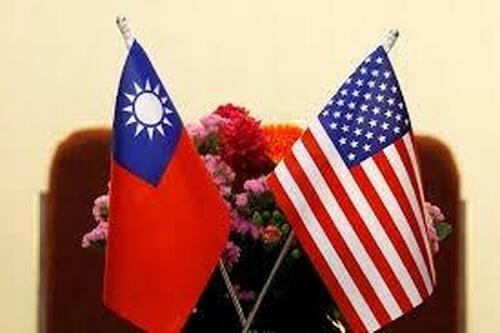
Confirming what we previewed on Tuesday, the US and Taiwan agreed to a long-sought trade agreement that would lower tariffs on goods from the self-governed island to 15% and see Taiwanese semiconductor companies increase financing for American operations by $500 billion.
While the details are a little murky, duties on Taiwanese shipments would fall from the previous 20% rate – putting them on par with Japan and South Korea, which reached their own agreements last year.
And, as Bloomberg reports, Taiwan’s technology industry would also commit to making at least $250 billion in direct investments to expand advanced semiconductor, energy and artificial intelligence operations in the US.
In addition, Taiwan agreed to provide an additional $250 billion in credit guarantees for further investment in the American semiconductor supply chain.
A White House statement outlining the deal did not specifically mention Taiwan Semiconductor Manufacturing, but the arrangement has clear implications for the company, which is the world’s top producer of AI chips.
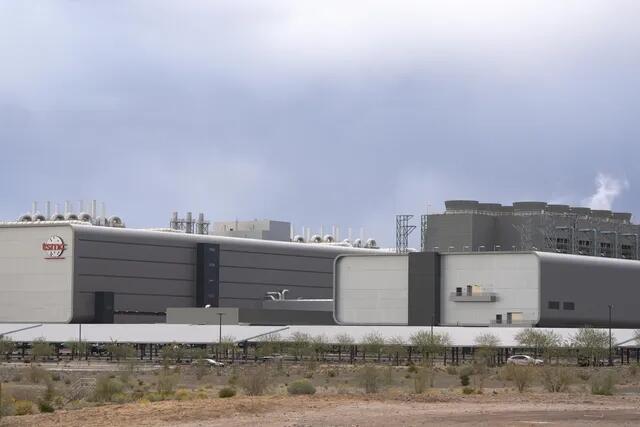
Bloomberg reported earlier this week that the accord would call for TSMC to build at least four more chip manufacturing plants in Arizona, adding to the six factories and two advanced packaging facilities it has already promised to open there.
The agreement was announced shortly after a delegation of top Taiwanese officials visited Washington to finalize the deal with President Trump’s representatives.
Taiwanese President Lai Ching-te had indicated he supported Trump’s goal of reindustrializing the US but said American land, electricity and workforce policy reforms were needed so projects could move ahead.
Tyler Durden
Thu, 01/15/2026 – 14:20
https://www.zerohedge.com/geopolitical/500-billion-us-taiwan-agree-huge-trade-deal
CPS short thousands of applications for local school councils less than a week before deadline
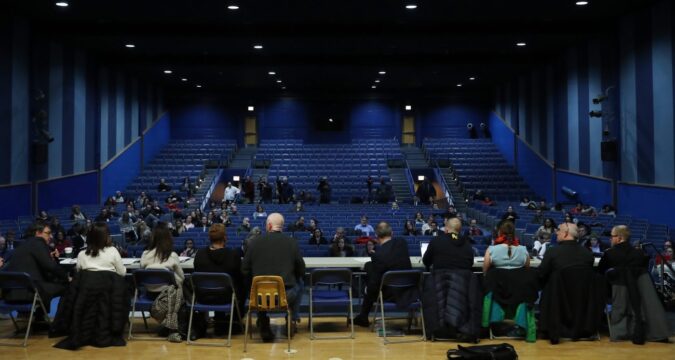
Chicago Public Schools has received less than half of the thousands of applications it needs for Local School Council positions before Tuesday’s deadline.
The district had received 2,350 applications for 6,123 vacant positions as of Wednesday afternoon, according to a CPS spokesperson. There are currently 478 schools with available seats.
Local School Councils, or LSCs, act like mini school boards at each district-run school. The elected members oversee school budgets, approve academic plans and select and evaluate principals. This year’s election is slated for March 18.
“Whatever your connection to CPS, we need your voice,” district CEO Macquline King said at a Chicago Board of Education meeting Wednesday. “LSCs play a critical role in the success of our district, and are a great opportunity for students, parents, staff and community members to get more involved in their school and communities.”
Few other large school districts in the country have such a decentralized approach to school governance. State lawmakers created LSCs in 1988 to shift decision-making power back to local communities and families.
A traditional council has at least 12 seats: the principal, six parents, two community representatives, two teachers, one non-teaching staff member and up to three students. Representatives are elected to two-year terms, except for students, who serve for one year. Students must be in sixth-grade to run.
In recent years, CPS has struggled to recruit applicants: Currently, only 78 of 511 councils are completely filled, according to the LSC members map. During the first elections more than three decades ago, 17,256 Chicagoans ran for positions.
Council participation is key to school success, said Cassie Creswell, executive director of nonprofit Illinois Families for Public Schools. She noted that LSCs need to reach a quorum to vote at meetings, which are typically held monthly.
“They have a really important impact on school culture,” said Creswell, who is also a former LSC member at Kenwood High School. “It’s so important that we have this grassroots form of democratic governance, and sustain it, and preserve it, and empower it.”
Community organizer Natasha Dunn called LSC “an opportunity for change,” particularly in Black and brown communities, she said.
“It allows for regular citizens who are concerned about education to get involved,” said Dunn, a South Shore resident. “You get to have a voice on curriculum, on dress codes and programs and services that students need.”
Dunn previously served on councils at O’Keefe Elementary School and King College Prep, where representatives voted to install a new principal. “Parent engagement was really key,” she said. “We made a change we needed to make.”
To apply, candidates must complete a nomination form available on the district’s website. No experience or formal education is required. The final deadline is Tuesday at 3 p.m. Anyone in Chicago can vote in a school’s election in March, so long as they live within the school’s attendance boundary or voting district.
https://www.chicagotribune.com/2026/01/15/cps-local-school-council-applications/
Homer Glen moves forward on $3.9 million veterans memorial
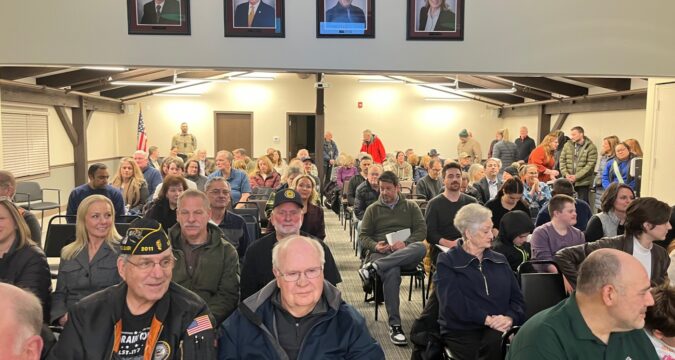
Homer Glen plans to seek bids in April for a veterans memorial, decorative water fountain and pavilion to be built in Heritage Park, its large destination park behind Village Hall.
The project, which will be built on about 2 acres of the 103-acre park, 14240 W. 151st St., will include a pillar and flagpoles dedicated to each branch of the Armed Forces, a prominently-displayed U.S. flag, a flag recognizing prisoners of war and those missing in action, a memorial to fallen soldiers and a battlecross statue honoring those who gave their lives in combat, said Kevin Clark, principal with The Lakota Group.
Other features include a memorial wall, brass donor plaques, decorative concrete, benches, ornamental trees and landscaping with a red, white and blue motif, Clark said.
“It’s a place of honor. It’s a place of remembrance. It’s a place where the community can come together and celebrate the people who have been in the armed services, the armed forces,” he said.
Local veterans offered significant input to the design of the memorial, Mayor Christina Neitzke-Troike told the Village Board Wednesday night.
“This is exactly what they wanted,” she said. “They didn’t want something dreary. They wanted something that families could come and enjoy and celebrate and remember them by.”
Neitzke-Troike said her request is a very large U.S. flag.
“I’d like to see it really big and really proud,” she said.
The landscaping will be a critical component to the memorial, Clark said.
“We don’t want it to be stark,” he said. “We don’t want it to feel lifeless. We want this to have an energy and a life that changes seasonally.”
Homer Glen elected officials applaud veteran and resident Lou Zemke after designating Heritage Circle with the honorary street name, Zemke Way. (Michelle Mullins/for the Daily Southtown)
A nearby pavilion house about 100 guests. The pavilion area will include picnic tables and restrooms.
A water feature with a variety of spray jets will incorporate lights in the nozzles that can change colors, Clark said.
“To me, the park space should be about surprise and delight,” Clark said.
The water feature will use well water, and not the village’s pricy private water supplier, Neitzke-Troike said.
The village plans to seek bids on the project in April and could break ground as early as May, Clark said. The majority of construction is expected to be completed by the end of the year, with some additional landscaping that could be planted in 2027, Clark said.
Kevin Clark, principal with The Lakota Group, describes the planned veterans memorial to the Homer Glen Village Board during Wednesday’s meeting. (Michelle Mullins/for the Daily Southtown).
The cost is projected at $3.9 million, but village officials would look at ways to make it as affordable as possible without sacrificing quality.
“(Heritage Park) is our crown jewel, and we will make sure we are doing it right,” village engineer Brett Westcott said.
The village hired The Lakota Group in 2024 to update the master plan for Heritage Park, which once was a golf course.
Completing the veterans memorial is a top priority for village officials, Neitzke-Troike said.
Honoring Lou Zemke
Village trustees also voted Wednesday to give Heritage Circle the honorary street name Zemke Way, after resident Lou Zemke, an Army veteran who established the Homer Glen PFC Michael Olivieri American Legion Post in 2011.
Lou Zemke’s son, Bill, thanks village officials Wednesday on behalf of his father, 90, for the honorary street sign that bears his name. (Michelle Mullins/for the Daily Southtown)
“What stands out most is (Zemke’s) steady commitment and his unwavering belief that the sacrifices made by our military members should never be forgotten,” Trustee Rose Reynders said. “Lou is not someone who seeks recognition. He is someone who sees a need, steps forward and gets to work.”
Reynders, who chairs the village’s Parks and Recreation Committee, said Zemke was a guiding force in planning the veterans memorial.
“And that memorial will stand as a lasting reminder of courage, sacrifice and dedication,” Reynders said. “It will also reflect the kind of person Lou is. Someone focused on legacy, not for himself, but for those who served and those we’ve lost.”
Zemke’s son, Bill, spoke on behalf of his 90-year-old father, thanking the village for the honor.
A full house gathered Wednesday to show its support for Zemke as well as a Homer Glen business Dunkin Donuts/Baskin Robbins, 14135 S. Bell Road, which received the mayor’s Inclusive Impact Award for going above and beyond helping special education students from Hadley Middle School.
Chase Bank approval
The Village Board also voted Wednesday to approve plans to convert a vacant Chili’s restaurant into a Chase Bank, after rejecting the proposal last fall.
Chase Bank wants to move from inside Jewel in the Homer Town Square shopping plaza and renovate the former Chili’s, 14025 S. Bell Road, which closed December 2024.
Chili’s Grill and Bar, 14025 S. Bell Road, Homer Glen, closed its doors in December 2024. (Michelle Mullins/for the Daily Southtown)
Some trustees said they preferred another restaurant to take Chili’s space when denying the project in September.
Representatives for Chili’s made a few modifications to their proposal and reapplied for a permit.
Village trustees said while they don’t believe the former Chili’s is the best use for the bank, they do not want to see a vacant building and want to support the expansion of an existing business.
“I would rather be an ally to a business looking to expand in Homer Glen rather than an adversary,” Trustee Mike Lepore said.
Jon Krissoff, market director of real estate for Chase Bank, said the Jewel branch offered limited services, and a new, larger bank would better serve the community.
“Chase has been a staple in our community for many, many years,” Reynders said. “I think this is going to be a great opportunity for them to be able to provide more service to the customers they have in Homer Glen and actually increase some of their customers.”
Michelle Mullins is a freelance reporter for the Daily Southtown.
https://www.chicagotribune.com/2026/01/15/homer-glen-3-9-million-veterans-memorial/

Photos: Chicago Cubs introduce newly signed third baseman Alex Bregman
The Chicago Cubs officially introduced newly signed third baseman Alex Bregman on Jan. 15, 2026.
The Chicago Cubs, with team president Jed Hoyer at right, and agent Scott Boras at left, introduce recently signed third baseman Alex Bregman at a press conference at Cubs offices, Thursday, Jan. 15, 2026. (E. Jason Wambsgans/Chicago Tribune)
The Chicago Cubs introduce recently signed third baseman Alex Bregman at a press conference at Cubs offices, Thursday, Jan. 15, 2026. (E. Jason Wambsgans/Chicago Tribune)
Chicago Cubs president Jed Hoyer during a at press conference to introduce recently signed third baseman Alex Bregman, Thursday, Jan. 15, 2026. (E. Jason Wambsgans/Chicago Tribune)
Sports agent Scott Boras speaks during a press conference to introduce recently signed Chicago Cubs third baseman Alex Bregman at Cubs offices, Thursday, Jan. 15, 2026. (E. Jason Wambsgans/Chicago Tribune)
Chicago Cubs president Jed Hoyer welcomes recently signed third baseman Alex Bregman during a press conference at Cubs offices, Thursday, Jan. 15, 2026. (E. Jason Wambsgans/Chicago Tribune)
The Chicago Cubs introduce recently signed third baseman Alex Bregman during a press conference at Cubs offices, Thursday, Jan. 15, 2026. (E. Jason Wambsgans/Chicago Tribune)
Chicago Cubs president Jed Hoyer welcomes recently signed third baseman Alex Bregman as agent Scott Boras looks on, during a press conference at Cubs offices, Thursday, Jan. 15, 2026. (E. Jason Wambsgans/Chicago Tribune)
Chicago Cubs owner Tom Ricketts watches a press conference to introduce recently signed third baseman Alex Bregman at Cubs offices, Thursday, Jan. 15, 2026. (E. Jason Wambsgans/Chicago Tribune)
The Chicago Cubs, with team president Jed Hoyer at right, and agent Scott Boras at left, introduce recently signed third baseman Alex Bregman at a press conference at Cubs offices, Thursday, Jan. 15, 2026. (E. Jason Wambsgans/Chicago Tribune)
https://www.chicagotribune.com/2026/01/15/photos-chicago-cubs-alex-bregman/