Category: News
Rare Space Station Evacuation Sends SpaceX Crew Dragon Streaking Over California
Rare Space Station Evacuation Sends SpaceX Crew Dragon Streaking Over California
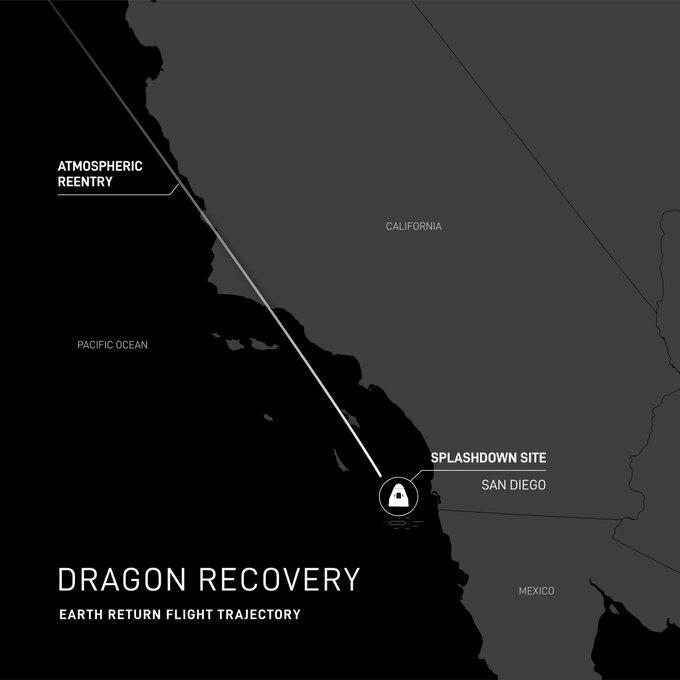
Central Californians got a rare overnight spectacle as a SpaceX Crew Dragon capsule streaked across the sky during its de-orbit burn, ahead of a splashdown off the coast of San Diego.
Amazing @SpaceX @NASA pic.twitter.com/IzxTvd2CXN
— Nick Shelly (@NShelly) January 15, 2026
Video from my roof of @SpaceX Dragon streaking across the sky over LA tonight. Inside this 10,000 degree plasma cocoon traveling at 8 km/sec are four amazing humans. Welcome home @NASA Crew-11! 🇺🇸 pic.twitter.com/XoxkyaFppK
— Jon Edwards (@edwards345) January 15, 2026
SpaceX Dragon re entering! The speed was absolutely insane! Shot from Fresno area central Ca pic.twitter.com/pe9SHYLMVA
— ⚡️Dezmond Oliver⚡️ (@dezmondOliver) January 15, 2026
The SpaceX Crew Dragon capsule carried Mike Fincke, Zena Cardman, Kimiya Yui, and Oleg Platonov and splashed down in the Pacific Ocean off San Diego at 0341 EST, about 10.5 hours after undocking from the International Space Station.
The astronauts returned one month early after one of the astronauts experienced a medical issue. This marked the first time in ISS history – or about three decades of operation – that a mission was shortened due to astronaut health.
NASA has not identified either the astronaut or the medical issue, but it was severe enough that a spacewalk by two of its astronauts was canceled last week.
“It is not an emergency de-orbit, even though we always retain that capability, and NASA and our partners train for that routinely,” NASA Administrator Jared Isaacman told reporters last week. Instead, he added, the mission team decided to bring Crew-11 home early because “the capability to diagnose and treat this properly does not live on the International Space Station.”
Dragon’s four main parachutes have deployed pic.twitter.com/PAr3laJGN5
— SpaceX (@SpaceX) January 15, 2026
Welcome home.
Tyler Durden
Thu, 01/15/2026 – 13:40

Elgin council OKs Hindu temple, townhomes being built at Route 20, Galt Boulevard
Plans to build a Hindu temple and nearly three dozen townhomes on Route 20 at Galt Boulevard were approved by the Elgin City Council Wednesday night despite objections from neighbors concerned about increased traffic.
Umiya Mataji Sastha Chicago Midwest’s mixed-use development calls for an 86,000-square-foot temple no higher than 90 feet, 33 townhouses in five buildings and an 8-acre private recreation area.
Plans for the 34-acre property at 890 Galt Blvd. were approved with a 6-3 vote after the council received no recommendation from the city’s Planning and Zoning Commission, which was divided in its support for the project.
Council members Steve Thoren, Diana Alfaro and Dustin Good voted against the request, with Alfaro citing the property’s single entrance and exit and Thoren concurring with residents on traffic concerns.
“I did go over there. I drove it,” Thoren said. “I tried to envision the traffic issues at those intersections. I’m hearing that IDOT even states it’s a ‘delicate infrastructure,’ which was more than obvious to me. It’s already a problem area for traffic. And I am not one to help a traffic problem get worse.”
Mayor Dave Kaptain countered that the only way the Illinois Department of Transportation will fix a road or intersection is if a problem exists, not in anticipation of problems from future development.
IDOT has been working on a plan for road improvements along Route 20 for a several years but nothing has been finalized. Kaptain said the agency has discussed creating a barrier on Route 20 that would restrict intersection turns and change the flow of traffic in the area.
Kaptain said it was his belief that the temple’s prayer schedule will not generate a lot of additional traffic.
“There’s a small window of time where traffic control will be needed,” he said, noting that the temple has agreed to hire off-duty police officers to help at those times. “It’s an obligation of the city of Elgin and IDOT to mitigate these problems. We’ll do that.”
Overhead view of the 34-acre site at Route 20 and Galt Boulevard in Elgin on which Umiya Mataji Sastha is to build a Hindu temple and 33 townhouses. (Umiya Mataji Sastha)
Umiya Mataji Sastha scaled back its plans from when the project was first reviewed by the Planning and Zoning Commission in June. Originally, there was to be a 231,000-square-foot temple with a maximum height of 125 feet, a recreation center, a four-story, multifamily building with 81 units, and 38 townhomes in six buildings.
Temple representatives listened to neighbors’ concerns and made changes, said Peter Bazos, Umiya Mataji Sastha’s attorney.
“This should speak volumes as to the character of this petition and allay any concerns,” Bazos said. “The approval of this project will be a great credit to the city and truly demonstrate what a welcoming city Elgin is.”
More than 20 speakers, a majority of whom live in the neighboring Oak Ridge and Sherwood Oaks subdivisions, spoke against the proposal. An opposition petition signed by 220 people was presented to the city.
Lorne Iverson said his home looks out onto the Lambert Lane/Route 20 intersection, where he has seen numerous accidents, both night and day.
“IDOT previously has declared this is a dangerous intersection,” Iverson said. “Today I’d like to ask you to consider this with the temple proposal. To make things safer, we need to address the intersection before we do additional developments.”
He understands it’s IDOT’s jurisdiction and decision to make, but “in my opinion, it’s kind of common sense,” he said.
Jessica Astrung said her neighborhood was prepared for a general industrial project, which is what the site had been zoned, but not for a development that will draw hundreds of people.
IDOT had already described Route 20 near the project site as a “delicate infrastructure,” and that was before the development was proposed, Astrung said.
Additionally, the Illinois Department of Natural Resources and U.S. Army Corps of Engineers have identified the northwest corner of the property as wetlands, she said.
“Your taxpaying constituents don’t want this development built in this location,” and it has nothing to do with religion, Astrung said.
Even with the council’s approval, Umiya Mataji Sastha needs to clear one more hurdle before construction can start. A 1967 consent decree limiting land uses will need to be lifted or vacated by a Cook County judge. If that happens, Umiya Mataji Sastha will need city approval for a final subdivision plat.
Gloria Casas is a freelance reporter for The Courier-News.
https://www.chicagotribune.com/2026/01/15/hindu-temple-elgin-council-approved/

Former DePaul players alleged to have fixed 3 Big East games in 20-person basketball gambling indictment
Two former DePaul men’s basketball players were among 20 people indicted Wednesday in a gambling and game-fixing scandal that spans multiple teams.
Former Blue Demons guard Jalen Terry and forward Da’Sean Nelson are accused of fixing the first halves of games by underperforming in Big East games in February and March 2024. Forward Micawber “Mac” Etienne also is named in the indictment, which says he is charged elsewhere. A fourth DePaul player, named only as “Person #6,” also was alleged to have been involved.
The indictment lists a Feb. 24 game against Georgetown, a March 2 game against Butler and a March 5 game against St. John’s as games that potentially were affected. DePaul lost all of those games, part of its record 39-game Big East regular-season losing streak.
The games in the indictment were played after DePaul fired coach Tony Stubblefield in January 2024. Matt Brady, currently an assistant coach at Boston University, was the interim coach.
The Blue Demons hired former Ohio State coach Chris Holtmann shortly after DePaul’s season ended in March 2024.
DePaul said in a statement Thursday that it was “deeply disappointed that former student-athletes were named in the indictment for alleged gambling activities during the 2023-2024 men’s basketball season.”
The department noted that no current student-athletes were members of that team.
Fifteen of the 20 people charged Wednesday in federal court in Philadelphia played NCAA Division I basketball as recently as the 2024-25 season. The other five were characterized as a group of fixers.
Prosecutors allege those fixers, who included former Chicago Bulls guard Antonio Blakeney, got Etienne to agree to the scheme in February 2024 and recruit fellow players.
The four players were alleged to have taken bribes, including $40,000 in cash for both the Georgetown and St. John’s games, to underperform in the first halves so that DePaul wouldn’t cover the spread.
At halftime of the game against Georgetown, which was favored by 2½ points in the first half, DePaul trailed 41-28. According to the indictment, a fixer texted Etienne in the middle of the game: “l love Jalen terry he perfected his job … Sh*t Nelson snapped too.”
Terry was scoreless in the first half of that game and scored 16 points in the second half. Georgetown won 77-76.
At least $123,789 in bets were placed at various sportsbooks for Butler to cover the 6½-point first-half spread on March 2, 2024. The wagers also included parlays with other games alleged to have been fixed. Butler led DePaul 45-27 at halftime and won 82-63.
The indictment alleges that during the St. John’s game, a fixer texted Etienne that one of his teammates was playing too well. Etienne texted back during the game “that the DePaul players involved in the scheme were keeping the ball away from that player and preventing him from scoring,” according to the indictment.
DePaul guard Jalen Terry advances the ball against Loyola on Dec. 4, 2021, at Wintrust Arena. (John J. Kim/Chicago Tribune)
Terry and Nelson transferred to Eastern Michigan after the 2023-24 season amid the coaching change. Etienne transferred to LaSalle.
DePaul said in its statement that “the university has a longstanding commitment to educating our athletics community about the dangers and consequences of sports gambling.”
It noted that the school participates in wagering monitoring through Integrity Compliance 360 and a gambling education program with EPIC Risk Management.
“We will continue to evaluate and strengthen our education, monitoring and compliance efforts to protect the integrity of competition and the well-being of our student-athletes,” the university said.
Blakeney, who played in 76 games for the Bulls from 2017-19, was not named as a defendant. But he is named in the indictment, first as having been recruited to fix games in the Chinese Basketball Association and then as having recruited college athletes to help fix NCAA games.
https://www.chicagotribune.com/2026/01/15/depaul-basketball-gambling-indictment/

Kane County Board OKs 3% raises for non-union department employees
The Kane County Board on Tuesday approved 3% raises for non-union employees in the county’s various departments and for non-union employees working in the County Board office.
The 3% pay hike applies to all non-union employees working in county departments, including but not limited to department heads and Animal Control employees, officials have said. Employees whose pay is set by a collective bargaining agreement, statute, ordinance or employment contract will not be included, nor will employees who have been working in the county for less than 90 days.
On Tuesday, the board also approved a separate measure granting 3% raises for non-union employees working in the County Board office. That includes a total of seven employees — four directly within the County Board office and three who oversee the spending of the county’s American Rescue Plan Act, or ARPA, funds.
The raises are effective as of Dec. 7, 2025, which was the start of the first pay period after the beginning of the county’s 2026 fiscal year.
To cover the additional costs from the raises for department employees, the county is going to be using the fund balance reserves of each fund. The nearly $300,000 that would otherwise have been taken out of the county’s general fund will instead be accounted for by expense reductions.
The $27,450 in additional costs to pay for the Animal Control raises will be covered by reducing expenses, officials have said. The Animal Control Department is primarily funded by fees, rather than through the general fund.
The raises in the Kane County Board office will be accounted for via expense reductions within the general fund — the bulk of it coming from what had been budgeted for the county’s strategic plan, which the board opted not to fund in the 2026 fiscal year and for which the county’s contract is set to expire in February.
mmorrow@chicagotribune.com
https://www.chicagotribune.com/2026/01/15/kane-county-raises-department-employees-2/
Demócratas de Wisconsin esperan triunfos en 2026 y cambiar el rumbo del estado
Por SCOTT BAUER
MADISON, Wisconsin, EE.UU. (AP) — Al hablar con cualquier demócrata de Wisconsin sobre sus esperanzas para 2026, no pasará mucho tiempo antes de que surja la palabra con T.
No, no es Trump.
Es trifecta.
Los demócratas piensan que las nuevas fronteras de distrito en el Senado y la Asamblea Legislativa, ordenadas por la Corte Suprema del estado, controlada por liberales, así como una contienda abierta por la gubernatura y un ciclo electoral intermedio favorable este año, pueden permitirles recuperar el control total de la legislatura estatal por primera vez en 16 años.
Eso sería un cambio drástico en un estado en disputa perenne que sirvió como un punto focal para el movimiento conservador de la nación en la década de 2010, cuando Wisconsin redujo impuestos, disminuyó el poder de los sindicatos y comenzó a exigir a los votantes que mostraran una identificación en las urnas.
Los republicanos reconocen que los demócratas tienen una clara oportunidad de tomar el control, lo que les permitiría expandir Medicaid, aumentar la financiación para las escuelas públicas y restaurar la negociación colectiva para los trabajadores públicos.
“Es un momento difícil en la política nacional”, comentó a The Associated Press la líder de la minoría de la Asamblea, Greta Neubauer, “pero tenemos esperanzas sobre el futuro y hemos trabajado durante muchos años para estar en una posición donde una trifecta demócrata sea posible en Wisconsin y nuestro estado pueda ir en una nueva dirección”.
Wisconsin tuvo una vez una “Revolución de los Cheeseheads”
Los republicanos solidificaron el control político en el estado en 2010, cuando obtuvieron mayorías en la Asamblea Legislativa estatal y Scott Walker fue elegido gobernador.
El ascenso comenzó lo que se conoció como la “Revolución de los Cheeseheads”, cuando Reince Priebus lideró el Comité Nacional Republicano de 2011 a 2017 y Paul Ryan convirtiéndose en presidente de la Cámara de Representantes de Estados Unidos de 2015 a 2019. Ambos son nativos de Wisconsin.
Walker defendió políticas conservadoras en el estado, ayudado por mapas legislativos estatales que inclinaban el campo de juego a favor de los republicanos. Fue visto brevemente como favorito para ser el candidato presidencial del partido, pero se retiró de la contienda antes de las votaciones primarias, mientras Donald Trump se abría camino hacia la nominación de 2016.
Ahora, los republicanos podrían ver cómo se desmorona su trabajo.
“Si hay una trifecta demócrata, los republicanos de Wisconsin deben prepararse para que desaparezca todo tipo de cosas por las que lucharon durante décadas ”, dijo Brian Reisinger, quien trabajó en una de las campañas de Walker.
Los candidatos demócratas para la gubernatura son optimistas sobre las posibilidades de su partido.
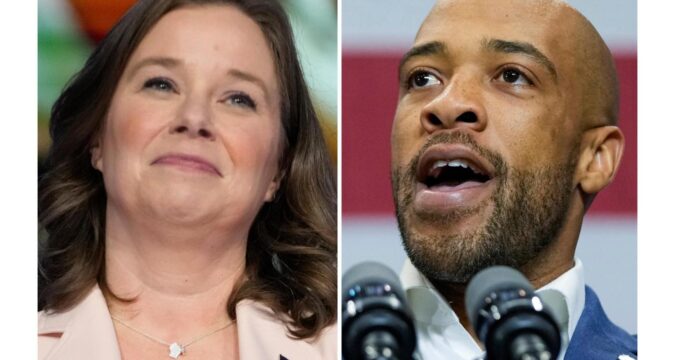
”¡Consigamos por fin una trifecta azul en Wisconsin en 2026!” dijo en diciembre, en una solicitud de recaudación de fondos, Mandela Barnes, uno de los principales candidatos demócratas y ex vicegobernador y candidato al Senado de Estados Unidos en 2022.
La actual vicegobernadora Sara Rodriguez, otra candidata destacada, expresó un sentimiento similar en una publicación en redes sociales.
“Wisconsin tiene una verdadera oportunidad de una trifecta demócrata el próximo año”, publicó en X. “Vamos a ganarla”.
Los demócratas buscan recuperarse tras la victoria de Trump
Wisconsin sigue siendo un estado ferozmente en disputa, y Trump ganó allí en 2016 y 2024. Sin embargo, los demócratas esperan que un fuerte desempeño este año les dé un impulso previo a la contienda presidencial de 2028. El mandato del senador republicano Ron Johnson también termina ese año.
Reisinger, quien también ha trabajado para Johnson, comentó: “la realidad es que el electorado seguirá estando dividido equitativamente durante mucho tiempo”. Actualmente, el gobernador Tony Evers es demócrata, pero los republicanos tienen mayoría en la Asamblea y el Senado.
Los liberales también expresan preocupaciones sobre recuperar la Asamblea Legislativa estatal.
“Muchos de los ingredientes para el éxito están ahí, pero no hay garantías”, dijo la estratega Melissa Baldauff, quien anteriormente trabajó para Evers. “No será solo que la naturaleza de las cosas se alinee para que este sea un buen año para los demócratas. Eso no garantiza nada. Se necesita mucho trabajo duro, se necesitan buenos candidatos”.
La recaudación de fondos arroja luz sobre la carrera abierta a la gubernatura
Los liberales ya han ganado una mayoría en la Corte Suprema de Wisconsin y buscan aumentar su control en la elección de abril. En otro signo del impulso demócrata, la candidata liberal informó esta semana haber recaudado diez veces más que su oponente respaldado por los republicanos.
La contienda de noviembre para la gubernatura está abierta por primera vez desde 2010 después de que Evers decidiera no buscar un tercer mandato. Los demócratas nunca han ocupado la oficina del gobernador de Wisconsin por más de ocho años consecutivos.
El abarrotado campo del lado demócrata incluye a Barnes y Rodriguez, además de dos legisladores actuales, el principal funcionario electo del condado de Milwaukee, el exdirector de desarrollo económico del estado y el exjefe de gabinete de Evers.
Barnes, quien perdió la contienda al Senado de 2020 ante el senador republicano Ron Johnson por poco menos de 27.000 votos, es visto por muchos como el favorito.
Rodriguez, la primera candidata en entrar en la contienda en julio, informó el jueves que recaudó 650.000 dólares para el año. Se esperaba que Barnes informara sus totales de recaudación de fondos el jueves por la tarde.
El presunto favorito republicano, el representante Tom Tiffany, un firme partidario de Trump, dijo que ha recaudado más de 2 millones de dólares desde que entró en la contienda en septiembre.
Se enfrenta a Josh Schoemann, el ejecutivo del condado de Washington, en las primarias republicanas. Schoemann, que es mucho menos conocido y tiene una base de apoyo más pequeña que Tiffany, recaudó 1 millón de dólares el año pasado.
Los demócratas esperan dar vuelta a la Asamblea Legislativa
La elección de noviembre es la primera en la que todos los escaños legislativos están bajo líneas de distrito en los nuevos mapas ordenados por la Corte Suprema del estado para reemplazar los más favorables a los republicanos.
Los demócratas necesitan ganar dos escaños en el Senado y cinco en la Asamblea para tomar la mayoría.
El presidente republicano de la Asamblea Legislativa, Robin Vos, cuyo trabajo es reclutar y apoyar candidatos para mantener la mayoría, expresó su confianza aun si es un año en el que hay “viento en contra”. También culpó a los demócratas por pasar demasiado tiempo enfocados en el “anti-Trumpismo” y no en lo que harían si fueran elegidos.
“Sus temas se centran en luchar contra lo que Donald Trump está cumpliendo”, afirmó.
El activista liberal de Wisconsin de larga data, Scot Ross, animó a los demócratas a presentar un plan para “un cambio real y sustancial que entusiasme a la gente”.
“La trifecta no es una estrategia y no es un mensaje”, dijo. “Me encanta que los demócratas de Wisconsin quieran hablar agresivamente sobre obtener poder, pero la gente tiene que creer que usarán ese poder realmente para mejorar sus vidas”.
___
Esta historia fue traducida del inglés por un editor de AP con la ayuda de una herramienta de inteligencia artificial generativa.

Clayton Kershaw isn’t quite done pitching — he’ll play for the US in the World Baseball Classic
CARY, N.C. — Clayton Kershaw isn’t done pitching just yet, agreeing Thursday to join the U.S. team for this year’s World Baseball Classic.
The left-hander, who turns 38 two days after the March 17 WBC championship game, announced in September that he was retiring at the end of the season, his 18th in a stellar career for the Los Angeles Dodgers. He won his third World Series title and finished 223-96 with a 2.53 ERA and 3,052 strikeouts.
The three-time National League Cy Young Award winner wanted to pitch for the U.S. in the 2023 WBC but was prevented because of insurance issues at a time he had a one-year, $20 million contract with the Dodgers.
He joins a U.S. pitching staff that includes right-handers David Bednar, Clay Holmes, Griffin Jax, Nolan McLean, Mason Miller, Joe Ryan, Paul Skenes and Logan Webb and left-handers Tarik Skubal and Gabe Speier.
The American roster also includes catchers Cal Raleigh and Will Smith; infielders Ernie Clement, Gunnar Henderson, Brice Turang and Bobby Witt Jr.; outfielders Byron Buxton, Corbin Carroll, Pete Crow-Armstrong and Aaron Judge; and designated hitter Kyle Schwarber.
The U.S., which lost the 2023 championship game to Japan, opens play March 6 against Brazil in Houston, part of a group that also includes Britain, Italy and Mexico.
https://www.chicagotribune.com/2026/01/15/clayton-kershaw-world-baseball-classic/

Democrats Introduce NOPE Act As Both Parties Claim Politically Motivated Prosecution
Democrats Introduce NOPE Act As Both Parties Claim Politically Motivated Prosecution
Authored by Chase Smith via The Epoch Times,
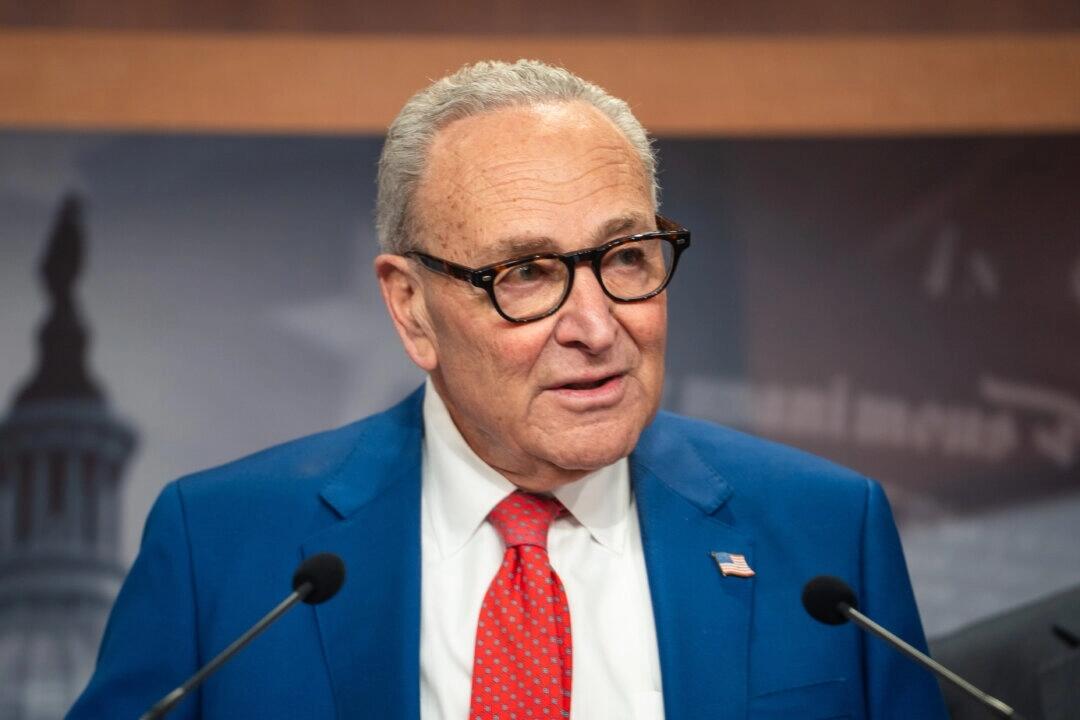
Senate Minority Leader Chuck Schumer (D-N.Y.), Sen. Chris Murphy (D-Conn.), and Rep. Jason Crow (D-Colo.) on Jan. 14 introduced the No Political Enemies Act, or the NOPE Act, a bill they said would protect Americans and organizations from politically motivated federal investigations, prosecutions, and enforcement actions.
In a Wednesday press call announcing the legislation, Murphy said it was necessary because, in his view, the Trump administration is trying to use federal power to punish critics.
“This is a White House that is out of control, seeking to use the Department of Justice to try to censure and censor American citizens … to try to make those who tell the truth pay a grave price.”
The White House responded to the criticism and introduction of the bill in an emailed statement to The Epoch Times.
“The Biden Administration repeatedly weaponized the Department of Justice against their political enemies, including using the Department of Justice to spy on GOP lawmakers—all while the media looked the other way,” said White House spokeswoman Abigail Jackson. “The Trump Administration is restoring integrity to our justice system and holding criminals accountable.”
Jackson’s statement referenced past FBI activity that Republicans have described as politically motivated, and their efforts to remedy it. Rep. Elise Stefanik (R-N.Y.) said in December that a provision in the annual defense policy bill would include language requiring the FBI to inform federal candidates if it opens a counterintelligence probe that involves them.
Stefanik framed the provision as a response to “illegal weaponization of the deep state,” pointing to “Arctic Frost,” an FBI-related probe tied to challenges to the 2020 election that she said included Trump and eight Republican senators among those investigated.
Stefanik also cited the FBI’s earlier “Crossfire Hurricane” investigation of Trump’s 2016 campaign and its alleged links to Russia.
Murphy and other speakers on the Wednesday call pointed to recent developments involving Federal Reserve Chair Jerome Powell.
Murphy said there were “revelations in the last few days that the president is threatening to throw in jail the chairman of the Federal Reserve, [Jerome] Powell, simply because of a policy disagreement between the president and the chairman over interest rates.
“But, of course, we have already seen how this administration has gone after the Attorney General of New York, the former director of the FBI, and members of the United States Senate, with threatened criminal charges. This isn’t what happens in a healthy democracy. This is what happens in a totalitarian state,” he said.
Schumer made a similar argument about the Powell investigation in floor remarks earlier Wednesday.
“Launching a criminal investigation to coerce the Federal Reserve is a dangerous crossing of the Rubicon,” Schumer said. The Fed “must always operate free of coercion,” he said, warning that “when there’s chaos in the Fed, interest rates go up,” and that could raise borrowing costs for housing, car loans, and credit cards.
Also on the call was Justin Vail, counsel for Protect Democracy, which helped draft the legislation.
“For years, members of each political party have accused presidents of the opposing party of improperly weaponizing government,“ Vail said. ”Well, now is the time for Congress to act in a bipartisan fashion … and ensure that no president, Democrat or Republican, can use the government to punish people or organizations for what they say or believe.”
Some Republicans have also criticized the Justice Department’s probe involving Powell.
Sen. Lisa Murkowski (R-Alaska) said she spoke with Powell on Jan. 12 and called the investigation “an attempt at coercion,” while Sen. Thom Tillis (R-N.C.) said on X on Jan. 11 that the probe raised fresh concerns about the Fed’s independence.
Meanwhile, the Trump administration and federal prosecutors have defended the inquiry as a response to the Fed’s handling of questions about renovation cost overruns and Powell’s June testimony.
U.S. attorney Jeanine Pirro said on X on Jan. 13 that outreach to the Fed was “ignored, necessitating the use of legal process—which is not a threat.”
“The word ‘indictment’ has come out of Mr. Powell’s mouth, no one else’s,” she said.
Pirro said her office “makes decisions based on the merits—nothing more and nothing less,” while Trump told reporters on Jan. 13 that Powell was “billions of dollars over budget” and “so, he either is incompetent, or he is crooked. I don’t know what he is, but he certainly doesn’t do a very good job.”
On the other side, Trump and his allies have argued for years that investigations and cases involving him amount to politically motivated “lawfare.”
Trump pleaded not guilty in the federal special counsel cases and said the prosecutions were “politically motivated attempts to harm his reelection campaign.”
In a separate civil legal fight in New York, a spokesman for Trump’s legal team called the E. Jean Carroll litigation and others “Witch Hunts” and said the president would keep “winning against Liberal Lawfare,” after Trump recently asked the Supreme Court to take up his defamation case.
Former special counsel Jack Smith has rejected the claim that his prosecutions were political. In a deposition transcript and video released by the House Judiciary Committee, Smith said the “decision to bring charges against President Trump was mine,” and said the basis for nine of the charges “rests entirely with President Trump and his actions, as alleged in the 10 indictments returned by grand juries in two different districts.”
What the NOPE Act Would Do
The NOPE Act would establish a prohibition on certain executive branch officials initiating or directing an investigative, regulatory, or enforcement action that is “substantially motivated by” a person’s “protected speech or participation,” according to the bill text. The bill defines “protected speech or participation” as “all constitutionally protected speech,” including criticism and dissent.
The legislation would create an affirmative defense that defendants could raise in federal criminal prosecutions or civil enforcement actions when they argue that protected speech was a motivating factor. If a covered person presents “substantial evidence” of political motivation, the bill says a court would order expedited discovery related to government motivations, with procedures for reviewing privileged materials.
The government would then bear the burden of proving by “clear and convincing evidence” that legitimate grounds unrelated to protected speech justified the action and that it was not substantially motivated by protected speech.
The bill directs courts to dismiss the claim or provide appropriate relief if the government does not meet that burden.
The bill also would allow a person to bring a civil action seeking an injunction against a covered federal official and agency when a covered government action is alleged to be substantially motivated by protected speech.
It would create a civil damages action against a covered federal official who “knowingly initiated or directed” a covered government action substantially motivated by protected speech, when constitutional rights are violated in connection with that action. The bill restricts indemnification by the United States in those cases unless certain conditions are met.
Separately, the bill would allow courts to order the United States to pay reasonable attorneys’ fees and costs in certain proceedings tied to covered actions or claims. The bill would also amend the Anti-Deficiency Act to bar obligating or spending federal funds for covered actions or claims substantially motivated by protected speech, and it would allow a civil action for injunctive or equitable relief for alleged violations.
Crow said on the press call that legislation like this was needed to create “a bulwark against this runaway presidency.”
“None of us will back down and be cowed and intimidated,” he added.
Murphy noted in the call that it would be hard to get buy-in from his GOP colleagues in both chambers, adding, “But we have no chance at trying to build a bipartisan coalition around saving our democracy if we don’t even offer these new ideas.”
Tyler Durden
Thu, 01/15/2026 – 13:00
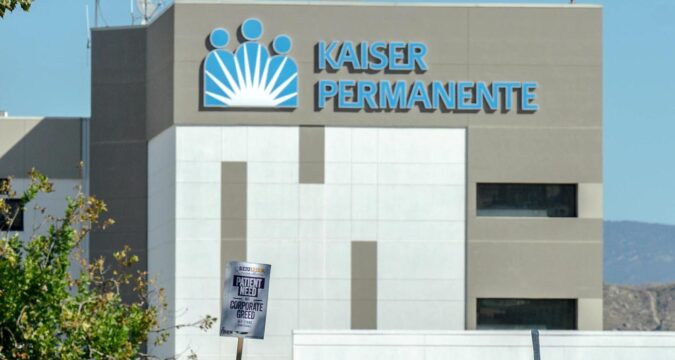
Afiliados de Kaiser pagarán $556 millones para resolver demanda por fraude a Medicare
SAN FRANCISCO (AP) — Las entidades afiliadas de Kaiser Permanente pagarán 556 millones de dólares para resolver una demanda según la cual el gigante de la atención médica cometió fraude a Medicare y presionó a los médicos para que incluyeran diagnósticos incorrectos en los registros para recibir reembolsos más altos, anunciaron los fiscales federales.
El acuerdo anunciado el miércoles se produjo más de cuatro años después de que el Departamento de Justicia presentara la demanda legal en San Francisco, que consolidó las acusaciones hechas en seis denuncias de informantes.
Las afiliadas en el acuerdo incluyen Kaiser Foundation Health Plan; Kaiser Foundation Health Plan of Colorado; The Permanente Medical Group; Southern California Permanente Medical Group; y Colorado Permanente Medical Group P.C.
Kaiser, con sede en Oakland, California, es un consorcio de entidades que juntas forman uno de los planes de atención médica sin fines de lucro más grandes de Estados Unidos, con más de 12 millones de miembros y docenas de centros médicos.
La demanda alega que las entidades de Kaiser manipularon el sistema del Plan de Ventaja de Medicare, también conocido como el programa de Medicare Parte C, que ofrece a los beneficiarios la opción de inscribirse en planes de seguro de atención administrada.
Los fiscales sostienen que Kaiser “presionó a sus médicos para que crearan adendas a los registros médicos”, a menudo meses o más de un año después de una consulta inicial con un afiliado, porque los diagnósticos más graves para los beneficiarios generalmente resultan en pagos más grandes al plan.
“Más de la mitad de los beneficiarios de Medicare de nuestra nación están inscritos en planes de Medicare Advantage, y el gobierno espera que quienes participan en el programa proporcionen información veraz y precisa”, declaró el fiscal Brett A. Shumate en un comunicado el miércoles.
Kaiser no respondió a los mensajes que buscaban comentarios sobre el acuerdo. Cuando se anunció la demanda, Kaiser defendió sus prácticas y calificó las acusaciones de decepcionantes.
___________________________________
Esta historia fue traducida del inglés por un editor de AP con ayuda de una herramienta de inteligencia artificial generativa.

US Forces Seize Sixth Tanker In Western Hemisphere As Trump Targets Dark Fleet
US Forces Seize Sixth Tanker In Western Hemisphere As Trump Targets Dark Fleet
President Trump’s race to secure the Western Hemisphere, in a foreign policy move called gunboat diplomacy, off the coast of Venezuela to dismantle and disrupt a dark-fleet tanker network, has now resulted in a sixth oil tanker being seized by U.S. forces in the Caribbean.
The Wall Street Journal reports that the dark-fleet tanker was seized in the U.S. Southern Command Area of Responsibility, covering Central and South America and the Caribbean.
News details are emerging.
Through #OpSouthernSpear, the Department of War is unwavering in its mission to crush illicit activity in the Western Hemisphere in partnership with @USCG through @DHSgov and @TheJusticeDept.
In another pre-dawn action, Marines and Sailors from Joint Task Force Southern Spear,… pic.twitter.com/brxO9xXUu3
— U.S. Southern Command (@Southcom) January 15, 2026
“The cargo-empty US-sanctioned Aframax tanker VERONICA (9256860) was last seen in Venezuela on 2026-01-03 as she departed Amuay. She has directly exported Iranian oil 10 times, as well as received Iranian oil 5x via STS and Venezuelan 2x. This lady’s shady career began in 2020,” Tanker Trackers wrote on X.
The tanker crackdown targets the dark fleet that transports sanctioned Venezuelan oil to Asia, especially to China. That oil revenue once fueled the Maduro regime, which has been dismantled in recent weeks after Nicolás Maduro was captured by U.S. Delta Force operators and flown to New York to face federal charges in the Southern District of New York. He is currently being held in a federal detention center in Brooklyn while awaiting trial.
Shipping analytics provider Kpler says Trump’s gunboat diplomacy has significantly affected Venezuela’s oil exports. Just this month alone, crude loadings have plunged to about half of normal levels. The only tankers able to make port calls are one bound for the U.S. and those transporting oil to Venezuelan refineries.
“The dark-fleet model with Venezuela, for now, has been broken because there are no cargoes,” Michelle Wiese Bockmann, a maritime-intelligence analyst at Windward, told WSJ.
Bockmann said, “Whether or not the dark fleet will be able to resume shipping to China, given that the U.S. is working with PdVSA, the Venezuelan state oil company, to control what’s going in and out of the country, it is quite possible that dark fleet tonnage will no longer call there.”
Latest on Venezuela’s oil industry:
“Uninvestable”: Trump’s $100 Billion Venezuela Gamble Meets Oil Industry Reality
Happening Today: Trump Meeting With US Oil Execs From Exxon, Shell, Others, To Discuss Venezuela
Trump May Freeze Exxon Out Of Venezuela After CEO Darren Woods Called It “Uninvestable”
The era of the ‘Donroe Doctrine‘ is underway.
Tyler Durden
Thu, 01/15/2026 – 12:40
Plantas desalinizadoras submarinas, una alternativa para la producción de agua dulce
Por ANNIKA HAMMERSCHLAG
CARLSBAD, California, EE.UU. (AP) — A unos 6 kilómetros (4 millas) de la costa del sur de California, una empresa cree poder resolver uno de los mayores problemas de la desalinización al trasladar la tecnología bajo la superficie del océano.
La planta Water Farm 1, que OceanWell planea construir, utilizaría la presión natural del océano para impulsar la ósmosis inversa, un proceso que hace pasar el agua de mar a través de membranas para filtrar la sal y las impurezas, y producir casi 225 millones de litros (60 millones de galones) de agua dulce al día. La desalinización consume mucha energía, y las plantas de todo el mundo producen entre 500 y 850 millones de toneladas de emisiones de carbono anualmente, acercándose a los cerca de 880 millones de toneladas emitidas por toda la industria de la aviación.
OceanWell afirma que su enfoque en el mar profundo, a 400 metros (1.300 pies) por debajo de la superficie del agua, reduciría el uso de energía en aproximadamente un 40% en comparación con las plantas convencionales, al tiempo que aborda los otros importantes problemas ambientales que aquejan a la desalinización tradicional: la salmuera altamente concentrada que se descarga de nuevo en el océano, donde puede dañar los hábitats del fondo marino, como los arrecifes de coral, y los sistemas de captación que atrapan y matan larvas de peces, plancton y otros organismos que forman la base de la cadena alimentaria marina.
“El futuro del agua dulce del mundo vendrá del océano”, afirmó Robert Bergstrom, CEO de OceanWell. “Y no vamos a pedirle al océano que pague por ello”.
Se trata de una ambiciosa promesa, en un momento en que el mundo necesita alternativas desesperadamente. A medida que el cambio climático intensifica las sequías, altera los patrones de lluvia y alimenta los incendios forestales, cada vez más regiones recurren al mar para obtener agua potable. Para muchos países, particularmente en el árido Oriente Medio, distintas partes de África y naciones insulares del Pacífico, la desalinización no es opcional: simplemente no hay suficiente agua dulce para satisfacer la demanda. Actualmente operan más de 20.000 plantas en todo el mundo, y la industria se ha expandido a un ritmo anual de aproximadamente 7% desde 2010.
“Con el aumento de la aridez y los problemas del cambio climático, la desalinización se volverá cada vez más prevalente como una tecnología clave a nivel global”, afirmó Peiying Hong, profesor de ciencia e ingeniería ambiental de la Universidad de Ciencia y Tecnología Rey Abdullah de Arabia Saudí.
Pero los científicos advierten que, a medida que la desalinización se expande, el daño acumulativo a los ecosistemas costeros, muchos de los cuales están ya bajo presión por el calentamiento de las aguas y la contaminación, podría intensificarse.
Búsqueda de soluciones
Algunas empresas alimentan plantas con energía renovable, mientras que otras desarrollan tecnologías de membranas más eficientes para reducir el consumo de energía. Otras más trasladan la tecnología completamente bajo el agua. Flocean, con sede en Noruega, y Waterise, con sede en Holanda, han probado sistemas de desalinización submarina y trabajan para desplegarlos comercialmente. Más allá del sur de California, OceanWell ha firmado un acuerdo para probar su sistema en Niza, Francia, otra región que enfrenta sequías e incendios forestales cada vez más intensos, a partir de este año.
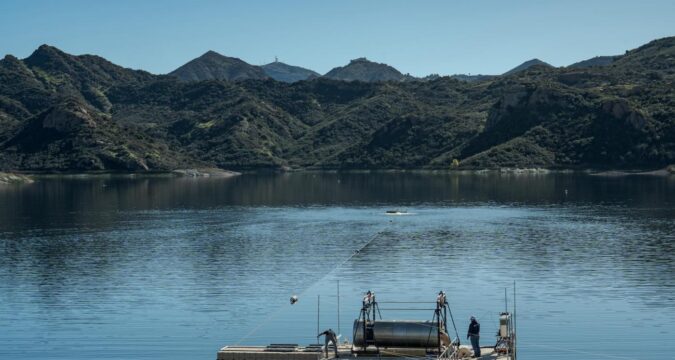
Por ahora, su tecnología sigue en desarrollo. Un prototipo único opera en el embalse de Las Vírgenes, donde el distrito local de agua se ha asociado con la empresa con la esperanza de diversificar su suministro de agua. Si tiene éxito, las cápsulas de ósmosis inversa flotarían sobre el fondo del mar en la bahía de Santa Mónica, ancladas con una huella mínima de concreto, mientras que una tubería submarina transportaría agua dulce a la costa. El sistema usaría pantallas diseñadas para mantener fuera incluso el plancton microscópico y produciría una descarga de salmuera menos concentrada.
Gregory Pierce, director del Grupo de Recursos Hídricos de la Universidad de California en Los Ángeles, dijo que la desalinización en el mar profundo parece prometedora desde un punto de vista ambiental y técnico, pero la verdadera prueba será el costo.
“Es casi siempre mucho más alto de lo que proyectas” con nuevas tecnologías, expresó. “Así que, en mi opinión, eso será lo que determine el éxito o el fracaso de la tecnología”.
El embalse de Las Vírgenes da servicio a unos 70.000 residentes en el oeste del condado de Los Ángeles. Casi toda el agua se origina en la Sierra Nevada del norte y se bombea unos 640 kilómetros (400 millas) sobre las montañas Tehachapi, un viaje que requiere enormes cantidades de energía. En los años de baja precipitación y escasa capa de nieve en la Sierra, el embalse y las comunidades que sirve se ven afectados.
El dilema de la desalinización en California
A unos 160 kilómetros (100 millas) por la costa, la Planta de Desalinización de Carlsbad se ha convertido en un punto focal en el debate del estado sobre las compensaciones ambientales de la desalinización.
La planta entró en funcionamiento en 2015, siendo la instalación de desalinización de agua de mar más grande de América del Norte. Capaz de producir hasta 204 millones de litros (54 millones de galones) de agua potable diariamente, suministra aproximadamente el 10% del agua del condado de San Diego, suficiente para abastecer aproximadamente 400.000 hogares.
En el sur de California, las sequías e incendios forestales cada vez más intensos han revelado el precario suministro de agua de la región. La expansión agrícola y el crecimiento de la población han agotado las reservas locales de agua subterránea, haciendo que las ciudades dependan del agua importada. San Diego importa aproximadamente el 90% de su suministro del río Colorado y del norte de California, fuentes que están bajo una tensión cada vez mayor debida al cambio climático. La desalinización se presentó como una solución: una fuente local de agua potable a prueba de sequías extraída del Océano Pacífico.
Pero los grupos ambientalistas argumentan que la captación de agua de mar y la descarga de salmuera de la planta representan riesgos para la vida marina, mientras que sus altas demandas de energía encarecen las facturas de agua y empeoran el cambio climático. Antes de que la planta entrara en funcionamiento, las organizaciones ambientales presentaron más de una docena de impugnaciones legales y disputas regulatorias. La mayoría fueron desestimadas, pero algunas generaron cambios en el diseño y los permisos del proyecto.
“Absorbe una cantidad tremenda de agua, y con ella, de vida marina”, señaló Patrick McDonough, abogado senior de San Diego Coastkeeper, que ha participado en múltiples impugnaciones legales al proyecto. “No solo hablamos de peces, tortugas, aves, sino de larvas y esporas, ecosistemas enteros”.
En una orden emitida en 2009 por la Junta Regional de Control de Calidad del Agua se estimó que la planta atraparía unos 4,5 kilogramos (10 libras) de peces diariamente y se ordenó compensar ese impacto restaurando humedales en otros lugares. Diecisiete años después, esa restauración sigue incompleta. Y en un estudio de 2019 se encontró que la descarga de salmuera de la planta eleva la salinidad en alta mar por encima de los niveles permitidos, aunque no se detectaron cambios biológicos significativos, probablemente porque el sitio ya había sido alterado de forma importante por décadas de actividad industrial de una central eléctrica vecina.
Esos impactos son especialmente agudos en California, donde aproximadamente el 95% de los humedales costeros se han perdido, en gran medida debido al desarrollo, haciendo que las lagunas restantes se conviertan en hábitats vitales para peces y aves migratorias.
“Cuando empezamos a interferir con estas lagunas y humedales costeros muy críticos y lamentablemente escasos, ello puede tener un tremendo impacto en el océano”, afirmó McDonough.
Michelle Peters, directora ejecutiva de Channelside Water Resources, empresa propietaria de la planta, dijo que la instalación utiliza dispositivos de exclusión de organismos grandes y pantallas de un milímetro para minimizar la captación de vida marina, aunque reconoció que algunas especies más pequeñas aún pueden pasar.
La planta diluye su descarga de salmuera con agua de mar adicional antes de liberarla de nuevo en el océano, y años de monitoreo han mostrado que no hay impactos medibles en la vida marina circundante, afirmó.
Peters dijo que la planta de Carlsbad ha reducido significativamente su consumo de energía a través de mejoras en la eficiencia y opera bajo un plan destinado a que la instalación logre la neutralidad en carbono.
Muchos expertos dicen que el reciclaje y la conservación del agua deberían ser la prioridad, señalando que la purificación de aguas residuales generalmente utiliza mucha menos energía que la desalinización de agua de mar y puede reducir sustancialmente el impacto en la vida marina. Las Vírgenes lleva a cabo un proyecto de reutilización de aguas residuales junto con su asociación de desalinización.
“Lo que buscamos es un suministro de agua en el que podamos confiar cuando la Madre Naturaleza no lo proporcione”, afirmó Pedersen de Las Vírgenes. “Desarrollar nuevas fuentes de agua local es realmente una medida crítica para estar más preparados para la sequía y el clima”.
___
The Associated Press recibe apoyo de la Walton Family Foundation para la cobertura de políticas de agua y medio ambiente. La AP es la única responsable de todo el contenido.
___
Esta historia fue traducida del inglés por un editor de AP con la ayuda de una herramienta de inteligencia artificial generativa.