Category: News
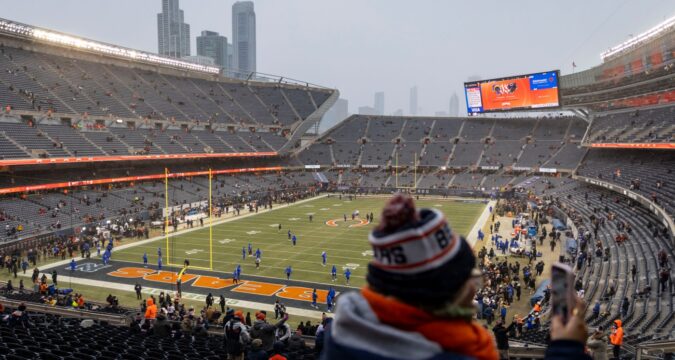
Letters: Why not allow the public to own shares in the new Bears stadium?
We have gotten to a point where it seems that money is the only factor in many corporate decisions. I just read that the Bears organization is worth more than $8 billion. How about letting the Bears do a joint project with the people of Illinois and let the stadium be owned by the people? The Green Bay Packers are publicly owned.
People in Illinois want the Bears to stay in Illinois. So why not offer a compromise that the Bears can certainly afford? I’m sure a lot of Illinoisans would put up their hard-earned money to make that happen.
I think Virginia McCaskey would be happy.
— Christine Hanslik, Warrenville
Transparency needed
For almost two decades, Chicagoans have been paying for the disastrous parking meter deal to the “private” company Chicago Parking Meters LLC. Apparently, that payment will continue for decades to come. Who are the owners/shareholders of CPM? How can public property be sold without the public knowing who bought it?
Who are the individuals who are profiting from the sale of Chicago’s parking meters? Are they living among us or have they moved to warmer locations? Don’t Chicagoans have the right to know whose retirement they’re paying for?
— Marilyn Kelly, Chicago
Mayor showed character
Chicagoans and others may disagree on many issues with Mayor Brandon Johnson, but he saved Chicago in one regard. Instead of saying no to the budget he did not like, he allowed it to pass. He would rather have a budget he does not like than have no budget for the city, thereby letting the city be the victim of some sort of paralysis.
— Michael M. Kazanjian, Chicago
Give patients a break
Isn’t it enough that families have to pay high tolls, parking fees and food costs when their loved ones are cared for in the Illinois Medical District in Chicago? Now there’s talk of adding another 1.5% tax to downtown hotel bills.
Regardless of the other arguments for and against this extra tax overall, give the already-challenged patients and families a break.
— Lori Miller Reszel, Libertyville
License plate readers
As a police district councilor and executive director of a youth-focused nonprofit in Englewood, I spend a lot of time thinking about what contributes to safe communities.
My nonprofit, Mr. Dad’s Father’s Club, works to engage fathers in their children’s lives through literacy and mentorship. We’ve witnessed the power of early intervention — catching kids early, building trust and helping them chart a positive course. Our work starts with prevention, not punishment.
That same principle should guide how we think about public safety technology such as license plate readers, or LPRs.
There has been a lot of noise about LPRs in recent months. From my perspective, LPRs are an essential public safety tool, similar to a security camera in a corner store. They capture still images of vehicles that pass by, the same as what anyone could see from the side of the road. They don’t follow people or monitor continuous movement.
But what they absolutely do is help solve crimes faster. The images captured by LPRs are put into a database for officers to access, often as their first point of reference in an investigation. Through this data, officers in Chicago have confiscated weapons, brought drug traffickers to justice, captured violent criminals, solved hit-and-run cases and more. LPRs are effective in solving crime, which in turn makes them effective in deterring and preventing future crime.
Concerns about privacy and security are understandable, and strong guardrails are essential. Most agencies have stringent data protection and retention policies, and Illinois law prohibits the sharing of LPR data with federal agencies. Continued accountability and transparency from local agencies in how their LPR data is used, stored and retained will be key in building more support.
It’s a challenging time right now, both for law enforcement and the communities they serve. Distrust is at record levels. But we cannot afford to waiver in our support for tools that are making our streets safer. Violent crime was down double digits last year in Chicago. What we’re doing is working, and we must stay the course.
License plate readers are a practical, commonsense tool that helps law enforcement respond faster and, ultimately, frees up officers to focus on community engagement and prevention. If we want safer neighborhoods, we should invest in both people and the tools that help protect them.
— Joseph Williams, police district councilor, Chicago
Protect worshippers
As a Chicago resident and member of our local Jewish community, I urge the passage of the bipartisan Pray Safe Act so all faith-based communities can be secure and stay safe before another tragedy strikes.
Keeping our faith-based institutions and houses of worship secure is more important now than ever before. In 2024, the Anti-Defamation League documented more than 9,350 hate-related incidents; 335 were aimed at our Jewish community right here in Illinois. As the city reported, anti-Jewish hate crimes increased by 58% over 2023.
No matter how or to whom you pray, all Americans have a right to do so safely, and our congressional leaders have an obligation to make our houses of worship as safe as possible so we don’t have to worry about when and where the next attack will come.
I call upon U.S. Sens. Tammy Duckworth and Dick Durbin to support the bipartisan Pray Safe Act so we can all gather in our communities and pray without fear.
— Greg Stewart, Chicago
Officers’ mental health
As we enter 2026, I want to speak directly to police officers, supervisors and leaders from lived experience, not theory.
Law enforcement has normalized exhaustion, emotional suppression and suffering in silence. That mindset is costing careers, families and lives. This year calls for honest resolutions that actually keep officers alive and well.
To police officers: Needing care is not weakness. I killed someone in the line of duty, and after years of pushing through trauma, stress and critical incidents, I learned the cost of waiting too long. Make your mental and physical health a priority. Check in after critical incidents, talk to someone you trust and use professional resources without shame. Mental health care preserves careers and lives.
To supervisors: You shape the culture every day. Pay attention to changes in your officers and intervene early. Normalize mental health conversations and model healthy leadership by taking time off, setting boundaries and seeking help when needed. What you tolerate becomes culture.
To police leaders: Wellness is not optional; i’s operational. Healthy officers make better decisions and build stronger community trust. Departments must stop abandoning officers when they struggle and start supporting recovery and accommodation. Leadership is measured by action, not policy.
My resolution for 2026: End the silence, end the stigma and change the culture. Taking care of the officer strengthens the badge and saves lives.
Let 2026 be the year we stop equating toughness with suffering alone and start protecting our own with the same urgency we protect the public.
— Capt. Adam A. Meyers,Hartford Township Police Department, Hartford, Wisconsin
Pace paratransit trips
Three years ago, I stopped driving. I am a senior using a cane, and I applied for and was approved by Pace. This service has allowed me to be independent as I can shop, see doctors, eat out and visit friends as I did when I drove. The Pace drivers on both the buses and taxis are very patient, courteous and helpful. One driver helped me bring my shopping cart into the house. I was able to meet many of the drivers, and they remembered me.
This is a wonderful service that Illinois offers and should be continued and given more money since some of the ride options were curtailed recently.
— Judy Arkes, Chicago
Submit a letter, of no more than 400 words, to the editor here or email letters@chicagotribune.com.
https://www.chicagotribune.com/2026/01/23/letters-012326-bears-stadium/
Review: ‘Clika’ can’t find the cinematic beat
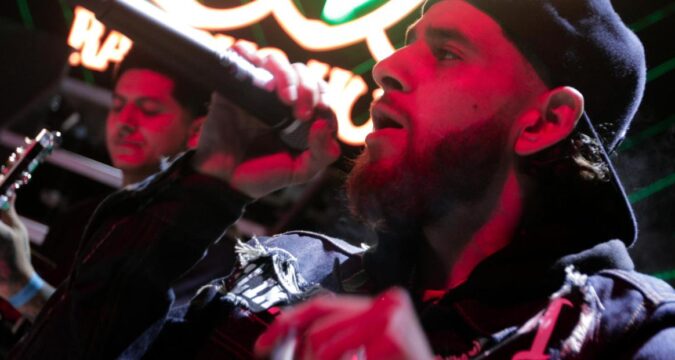
The title of Michael Greene’s coming-of-age music film “Clika” refers to the slang word for “clique” in the terminology of the corridos tumbados musical genre, or trap corridos, a distinctly American evolution of the Mexican storytelling ballads. This blending of musical cultures takes the narrative quality of traditional corridos and incorporates rap and hip hop styling, as well as uniquely modern Mexican American stories, as pioneered in large part by groups like Herencia de Patrones, a band out of Yuba City, California. Frontman JayDee makes his acting debut in “Clika,” a film based in part on his own life story.
The film’s producer is musica Mexicana record exec Jimmy Humilde, CEO of the Rancho Humilde label, and his intent with the project is to prove Mexican American stories worthy of the big-screen treatment. It’s a noble endeavor, and an important one in this moment. If Humilde and Greene get anything right with “Clika,” it’s asserting the importance of these stories in film, as Latino representation in cinema is often woefully lacking.
It also introduces JayDee and his music to a wider and more mainstream audience. With a unique vocal styling and sound that is all his own, he will be a true discovery for some viewers, and an exciting screen debut for his already established fans.
That’s the good news about “Clika.” The bad news is that they probably should have made a documentary or a concert film to tell JayDee’s story instead. Toward the end of “Clika” we get a few clips of real concert footage, as JayDee’s character Chito finally finds the musical success he’s dreamed of, and it’s so much more compelling than the hackneyed gangster tale they’ve reverse-engineered into JayDee’s life story.
The problems with “Clika” fundamentally come down to script issues. Written by Greene, Humilde and Sean Sullivan McBride (cinematographer and producer Ski-ter Jones also has a “story by” credit), the film is a grab bag of clichés we’ve seen before, with an over-reliance on dialogue and voice-over narration that exposes the inexperienced actors. The film tells without showing, the emotional stakes aren’t legible, and the characters tell the audience what to think and how to feel without setting up the foundation or allowing us to get there ourselves. Some plot points make very little sense.
It’s a standard hardscrabble coming-of-age story — kid from a small town with big dreams wants to escape a life of farm work (JayDee did pick peaches in Yuba City like Chito does) and pursue his goals. When his Tio Alfredo (Cristian E. Gutierrez) learns Chito’s mom (Nana Ponceleon) has fallen behind on the mortgage, he enlists his nephew for interstate marijuana deliveries to make the money to pay off the bank, and the young man gets too caught up in the fast life, rising to a point that will always include a fall. The message that he ultimately takes away is that there are no shortcuts to success.
The script is filled with tired tropes and doesn’t set up JayDee in a way that showcases his natural presence or way with words. Comedian and podcaster DoKnow, who plays his friend and producer Blunt, is the only performer whose natural ease and charisma in front of the camera translates, and he’s only given fairly corny and dated material, like ogling a sexy fellow peach-picker (Paola Villalobos) who is presented with her hair blowing in slow-mo like it’s an ‘80s college sex comedy, and not a gritty rags to riches tale.
There is a way that this could have been done better, utilizing visual storytelling, establishing atmosphere and a sense of place that could have given a sense of the music, its large appeal and the circumstances that shaped it, while also allowing JayDee to shine in his own way. As it stands, he seems out of his depth here.
Corridos are about storytelling, and the innovation of trap corridos is incorporating new stories and sounds into traditional music. It’s a shame that “Clika” then feels so stale, cinematically, not matching the skill or style of its subject. Representationally, “Clika” is an important and worthy film. Cinematically, it unfortunately can’t find the beat.
Katie Walsh is a critic for Tribune News Service.
“Clika” — 1 star (out of 4)
MPA rating: R (for drug content, language throughout, and sexual material)
Running time: 1:22
How to watch: In theaters Jan. 23
https://www.chicagotribune.com/2026/01/23/movie-review-clika-cant-find-the-cinematic-beat/
Pegah Banihashemi: The violence in Iran has been stark. The nation faces a dangerous historic passage.
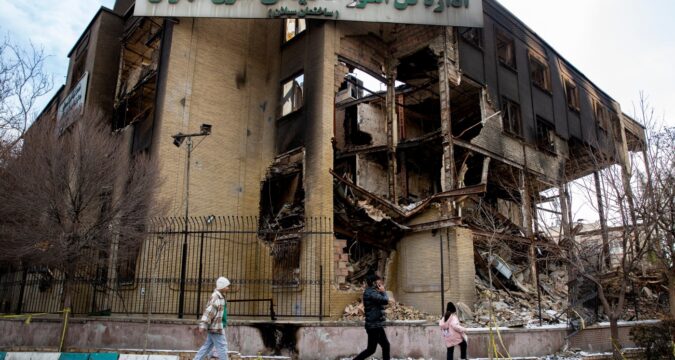
As Iran’s internet and communications blackout enters its third week, reports from inside the country point to a catastrophe far larger than many initially feared. Thousands of protesters have been shot, and more than 25,000 people are being held in detention centers run by the Islamic Republic. According to The Sunday Times, over 700 protesters across Iran have been blinded as a result of gunfire and crowd-control weapons.
The Iran Human Rights organization has reported that prison doctors have been barred from treating injured detainees, allowing some to die from their wounds. Other accounts describe protesters who, after being shot, lay motionless among corpses for days out of fear that any sign of life would result in a final, fatal bullet. For Iranians living abroad, every day begins with the same dread: If the internet were suddenly restored, what scenes would come to light? The scale of the tragedy, many fear, will be far worse than imagined.
One relative from the religious city of Mashhad described how, during the height of the protests, municipal water trucks arrived daily to wash blood from the streets. But while the streets may be cleaned, the lives lost and the parents left grieving cannot be washed away.
Iranian law, on paper, tells a very different story. The country’s criminal code explicitly guarantees detainees access to legal counsel, and the Islamic Republic’s constitution recognizes peaceful, unarmed protest as a basic citizen right. These provisions are routinely invoked by the regime to reassure the international community that Iran possesses an independent judiciary operating under the principle of separation of powers, comparable to legal systems elsewhere.
In practice, however, the law is consistently interpreted in favor of the system. Judiciary Chief Gholamhossein Mohseni-Ejei recently declared that “our real work has only just begun,” as courts barred lawyers from representing detainees and emphasized severe punishments for protesters labeled “rioters” and “agitators.”
Days before the protests escalated, several figures close to the regime wrote on X that Iran was “approaching the God of the 1980s” — a chilling reference for Iranians. The phrase evokes memories of the mass executions of political prisoners during that decade, culminating in the 1988 prison massacres, for which no official has ever been held accountable.
President Donald Trump has claimed that Iran has revoked the death sentences of 800 prisoners. Yet families have contacted the BBC stating that their children have been explicitly informed they have received death sentences. Elaheh Mohammadi, a journalist previously imprisoned during the “Woman, Life, Freedom” movement, described the atmosphere succinctly: “The city smells of death. I have never seen people this stunned. The country is in mourning. People only have the strength to cry.”
Against this backdrop, Trump has emphasized the need to deliver assistance to the Iranian people — a message many Iranians say they heard clearly during the peak of the protests. Meanwhile, U.S. naval forces and military equipment are being positioned closer to Iran. At the same time, the Iranian regime has warned that any attack on Supreme Leader Ayatollah Ali Khamenei would be met with the harshest retaliation, prompting Gulf states to quietly urge restraint and warn against setting the entire region ablaze.
No one can yet say with certainty whether the Middle East is approaching a full-scale war or whether a diplomatic solution is being pursued behind closed doors between Iranian and Western officials. What is clear is that, despite decades of activity by exile groups — ranging from the People’s Mojahedin Organization to various ethnic movements — none command broad legitimacy or popularity inside Iran.
One figure, however, stands apart: Reza Pahlavi. During the current protests, demonstrators repeatedly chanted his name, along with that of his late father, Mohammad Reza Shah, and openly called for the return of the Pahlavi monarchy. Pahlavi, who left Iran as a teenager, has long been regarded as a prominent opposition figure. In recent months, many Iranians have increasingly looked to him in practice, not merely symbolically.
Pahlavi has stated that he seeks to act as a transitional leader — returning to Iran to facilitate a national referendum and oversee a democratic transition. He is supported by advisers who function as political “kingmakers,” shaping strategy and messaging. While these figures are not universally popular among other opposition groups — leading some to question whether Pahlavi can be fully trusted — others argue that, in the absence of any functioning parties or organizations inside Iran, he represents the only viable figure capable of guiding the country through a transitional phase.
Through decades of maximum pressure, repression and systematic delegitimization of domestic political activists, Khamenei has effectively erased most internal opposition figures from public life. Apart from individuals such as Nobel Peace Prize laureate Narges Mohammadi and reformist politician Mostafa Tajzadeh — both currently imprisoned — few recognizable domestic leaders remain. Neither commands broad popular support, though it remains impossible to accurately measure internal opposition strength until genuine political space exists.
Nevertheless, if Khamenei were to exit the political stage, the most difficult phase would only then begin. A society that has lived for decades under dictatorship, with little opportunity to practice democratic governance, and that has been severely weakened by economic hardship resulting from sanctions and systemic corruption, would suddenly be required to embrace dialogue, tolerance and mutual recognition. This transition will not be easy.
Yet there remains a source of cautious hope: Iran’s rich cultural heritage, the ethical capital of its society and a long-standing tradition of solidarity and empathy that has repeatedly surfaced in moments of national crisis. It may ultimately be this cultural and moral reservoir that enables Iranians to navigate this historic passage and lay the foundations for a more just and humane political order.
Pegah Banihashemi, a native of Iran, is a legal scholar and journalist in Chicago whose work focuses on human rights, constitutional and international law, and Middle East politics.
Submit a letter, of no more than 400 words, to the editor here or email letters@chicagotribune.com.
https://www.chicagotribune.com/2026/01/23/opinion-iran-protests-democracy/
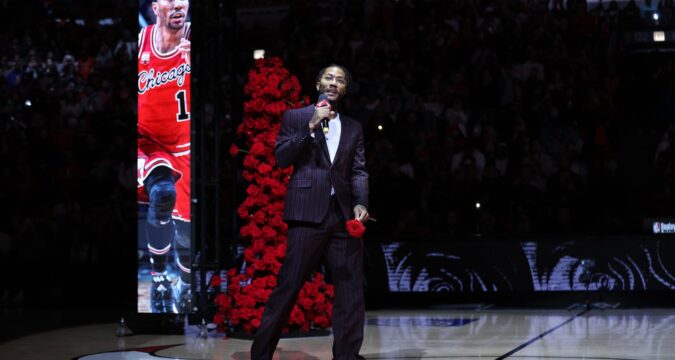
Michael Reinsdorf: Thank you, Derrick Rose, one of Chicago’s own
If you want to understand Chicago, just look at Derrick Rose.
He’s from the South Side, and he carried himself with the toughness, humility and resilience this city is known for. He brought that mindset to every court he stepped on, letting his play do the talking. Even at the height of his career, when he was as electric and explosive as anyone in the game, he carried himself with a quiet confidence that lifted his teammates and made the city proud.
And while many remember Derrick’s MVP trophy, his record-setting rookie playoff game against Boston in 2009 and the two-handed dunk over the Phoenix Suns’ Goran Dragić in 2010, when I think about Derrick, I think about his character. on the court, as a teammate, and in the way he handled hardship.
During the 2011-12 season, before the knee injury that would ultimately change the course of his career, Derrick missed time with a few minor injuries. I remember having lunch with him during that stretch. Instead of frustration, he talked about it as a positive. He said his teammates were learning how to win without him and that when he came back, the team would be stronger because of it. What struck me was how naturally he viewed the game through the lens of his teammates, the trust he had in them and how instinctively he put the “we” ahead of the “me.”
I saw that same perspective during the Eastern Conference finals in Miami. After a tough loss, I was in the bowels of the arena following the press conference when Derrick turned to a family member and asked where his mom was and if she was OK. In a moment filled with frustration and disappointment, his first instinct wasn’t about basketball. It was about family. That moment stayed with me, because it revealed what mattered most to him, even when things were hardest.
Derrick’s story isn’t a straight line of highlights. It’s a Chicago story. Growing up in Englewood, fighting through injuries, and continuing to show up with belief and resolve, he kept going. That kind of perseverance connects a city, whether you’re from the North or South Side, the city or the suburbs. He connected fans around the world not just to the Bulls but to Chicago itself.
One last thing stays with me. In my conversations with Derrick over the years, it was clear that he never wanted to be defined only by basketball. Even when he was young, he talked about himself first as a father and about wanting to build a full, meaningful life beyond the game, whenever that time came.
We don’t take jersey retirements lightly at the Chicago Bulls. Each one is an enduring statement about who we are and whose impact on our organization and our city is undeniable. When people walk into the United Center and look up, they see the names that tell the story of Chicago basketball and Chicago character. Derrick belongs there.
And while fans loved him, what stayed with me most was how his teammates felt. In recent years, when I spoke with former teammates, there was a shared sense that hanging his jersey was simply the right thing to do. Hearing that told me everything I needed to know. Derrick was, and still is, loved. Not just for what he did, but for who he is.
On Saturday, Derrick joins Michael Jordan, Bob Love, Scottie Pippen and Jerry Sloan. His number belongs in the rafters not only because of what he accomplished but also because of the responsibility he carried and who he is.
Humble. Tough. Generous. A teammate. A son. A father. A Chicagoan.
Derrick, this honor reflects the player you were, but even more, the person you’ve always been. Thank you.
Michael Reinsdorf is president and chief operating officer of the Chicago Bulls.
Submit a letter, of no more than 400 words, to the editor here or email letters@chicagotribune.com.
https://www.chicagotribune.com/2026/01/23/opinion-chicago-bulls-derrick-rose-jersey-retirement/
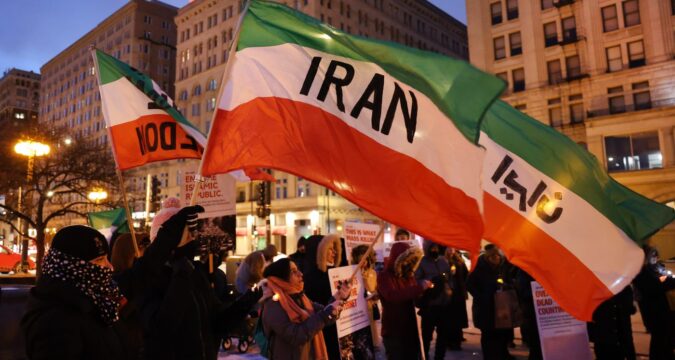
Iranians in Chicago still struggle to communicate with loved ones in Iran after deadly protests
The first question Mina Rajaei asks her family when she is able to reach them back home in Iran is: “How many of us are killed?”
It’s the grim reality for Rajaei, a computer science student at Northern Illinois University, and others in Chicago’s Iranian community who are facing uncertainty about their loved ones after deadly, anti-government protests erupted in late December.
Since then, it’s been nearly impossible to contact those in Iran after a communications blackout, Iranians in Chicago say. People in the U.S. are unable to call into Iran, though people there may call out, they said. Even so, the calls are usually brief and vague out of fear the government is monitoring them.
“We actually don’t know what’s happening to our family,” said Rajaei, 30, of Iran, who attended a rally last Saturday in Chicago against the Iranian government’s crackdown. “Whether my brother is alive or not.”
Since then she has spoken to her mother for a brief two minutes and knows her brother is unharmed.
Rajaei is one of about 9,000 Iranians in Chicago stuck in a communications blackout and feeling helpless as the crackdown in Iran continues. She joined about 60 people gathered in downtown’s Congress Plaza on Saturday night at the rally organized by Chicago4Iran.
Despite the freezing cold and fears of immigration enforcement, they marched toward Federal Plaza with roses and electric candles as organizers passed out hand warmers and hugs. Many are looking West for help despite a history of failed interventions in the Middle East, and new travel restrictions from the U.S. on Iran.
In late December, thousands of protesters in Iran took to the streets against the government of Supreme leader Ayatollah Ali Khamenei and worsening economic conditions. More than 4,000 were killed, the U.S.-based Human Rights Activists News Agency said, and communications services including internet, phone and text services were shut down by authorities on Jan. 8, although some communications have been restored.
On social media, President Donald Trump expressed his support for protesters in Iran telling them that help would be “on its way.”
“Iranian Patriots, KEEP PROTESTING – TAKE OVER YOUR INSTITUTIONS!!!” he posted on Truth Social on Jan. 13. “They will pay a big price. I have cancelled all meetings with Iranian Officials until the senseless killing of protesters STOPS. HELP IS ON ITS WAY.”
Yet Iranians and nationals from 18 other countries remain largely banned from travel to the U.S. since an updated June policy took effect. On Jan. 14 the State Department announced it would suspend the processing of immigrant visas for citizens of 75 countries including Iran, furthering travel restrictions.
Rajaei came to Chicago four years ago fleeing Iranian government censorship that affected her everyday life. As an English student in Iran she could not express her views freely because they could be considered anti-Islam, she said.
In 2022, she got her master’s degree in English studies at NIU and is pursuing a second master’s in computer science. She dreams of seeing her brother and parents at her upcoming graduation this year. But the travel ban has made it impossible: She cannot travel to Iran and her parents cannot travel to the U.S, she said.
“If I leave the country for my visa, I cannot come back,” Rajaei said.
Mina Rajaei, a graduate student at Northern Illinois University, on Jan. 21, 2026. Rajaei has had two calls with her mother in Iran lasting two minutes each since the internet blackout there. (Chris Sweda/Chicago Tribune)
Before coming to the United States, she attended protests in Iran to advocate for greater freedom. Now she rallies from the relative safety of the U.S., but she does not know how long that will last after graduating.
“I don’t even know whether I am welcome to stay here anymore,” she said.
Immigrant advocacy groups have denounced the June travel ban as discriminatory against Muslim-majority and African countries. In June, the National Immigrant Justice Center called the ban a “cruel and racist proclamation.”
NIJC Policy Director Azadeh Erfani said the Trump administration’s travel ban on Iran and other immigration policies have made it harder for Iranians to obtain protection in the U.S. or reunite with family.
“The reality is the travel ban is layered on top of other bans,” Erfani said, referencing earlier restrictions on border crossings.
She is also worried about Iranians possibly getting deported. “The U.S. is so focused on getting them out of here,” she said.
Last year, the Trump administration deported a plane full of Iranian citizens. As of September, around 300 Iranians were in detention and about 2,500 faced the threat of deportation from the U.S., The New York Times reported.
At last weekend’s rally was Farzad Ahmadpour, who left Iran 20 years ago but still remembers the bazaar in his hometown of Rasht where he used to buy vegetables. It’s now destroyed, he said. The 57-year-old said he constantly checks his phone for news of his family in Iran including his father who has cancer. He barely sleeps, he said. As of last Saturday, it had been more than a week since he was able to check in on his father.
“I cannot pick up the phone and ask them: Are you doing OK? Are you alive?” he said.
People rally in downtown Chicago on Jan. 17, 2026, to protest the Iranian government’s killing of protesters amid a crackdown on unrest there. (Chris Sweda/Chicago Tribune)
Ahmadpour called for an end to the repressive regime in Iran even if it meant a U.S. intervention.
“We are desperate,” he said.
Chicago4Iran co-founder Sepideh Sanie, 35, said she wakes up in the morning and “cannot breathe.” She has struggled to speak with her family and other loved ones in Iran.
In 1979 the country witnessed an Islamic revolution that overthrew the Shah of Iran and replaced the monarchy with a theocratic government. Iran’s Supreme Leader Khamenei, 86, has been in power for the last 37 years leading a largely repressive regime.
People have been calling for change. In 2022, the “Woman, Life, Freedom” movement gained international attention when 22-year-old Mahsa Amini died after being arrested by Iran’s so-called morality police for improperly wearing her hijab, sparking large-scale protests. Now the protests seem to be geared toward a systemic change of the current regime.
“It’s complex and really spread out this time,” said Kaveh Ehsani, associate professor of international studies at DePaul University. “It seems like protesters are objecting to the very existence of the Islamic Republic.”
Many Iranians in Chicago also say they are fed up with the government there.
“People want regime change,” said Chicago4Iran co-founder Tirdad Kiamanesh, noting decades of economic mismanagement, human rights violations and political repression. “They are incompetent to run the country.”
The interior of a mosque damaged during protests is seen during a tour for international news media in Tehran, Iran, on Jan. 21, 2026. (Arash Khamooshi/The New York Times)
Yet should the regime come to an end, Ehsani wonders what it will be replaced by and if the new regime may be worse. He wonders if a U.S. intervention could bring more strife to the country, like in the case of Iraq. He considers the possibility of a civil war.
“You can’t just say let’s kick out these people and everything will be fine and dandy,” he said, noting the U.S. intervention in Iraq that helped prop up militant groups like Islamic State. “It won’t be. If anything it would be a lot more disastrous.”
Ahmed Rehab, executive director of the Chicago office of the Council on American-Islamic Relations, said he had little trust in the U.S. government’s hand in Iranian affairs and called the travel ban on Iran and other countries a “debilitating” punishment for ordinary people.
Dena Delpazir, a civil engineer from Iran who was at the rally last weekend, said that her biggest fear is when the internet comes back on.
“We’re gonna hear all the names and we’re gonna see all the faces,” Delpazir said of the people who were killed. “I bet a lot of my friends, they won’t be here anymore.”
At the height of the protests in Iran, Sanie’s friend in Iran was able to send her a voice message. From her home in Chicago, Sanie could hear the gunshots through the phone and anxiously texted him back asking if he was safe, she said.
The message still shows as unread.
“We have not heard from him,” she said.
https://www.chicagotribune.com/2026/01/23/iran-chicago-protests/
Heidi Stevens: As federal agents target citizens, where are the folks who cried ‘tyranny’ over pandemic restrictions?
In the earliest days of the COVID-19 pandemic, when a vaccine hadn’t been discovered and people were dying by the thousands each day and social distancing seemed our best bet, but also, potentially, our great unraveling, I remember searching hard — and finding — signs of unity.
Signs that we had it in us to come together to protect what’s vulnerable and precious — our health, our safety, our humanity.
I was writing daily about people who died from the virus. About families left shattered by the virus. About people making incredible, odds-defying recoveries from the virus. I met and was awed by Chris Ward, a father of three who survived the Sept. 11 World Trade Center attack, non-Hodgkin’s follicular lymphoma caused by the toxins that filled the New York City air that day, and a COVID-19 infection that took up residence in his body and wouldn’t leave for months.
I was doing this, like so many of us, while my children were sequestered in their bedrooms doing school online, missing the laughter and rituals and friend drama and serendipity that take place in hallways and cafeterias and team practices. My daughter’s eighth-grade graduation was a car parade.
It was hard to know how it would all shape and wound and define us long term. But I remember taking some solace in how thoughtful and intentional so many people were being in their attempts to weigh the (sometimes competing) factors at hand and then minimize and mitigate the damage to all of them.
I interviewed school administrators, health care workers, small business owners, teachers. I joined Zooms where my kids’ principal patiently explained NASA-level spreadsheets of schedules and scenarios.
When a vaccine was finally approved, I profiled a 14-year-old who devoted his free time to connecting senior citizens to available appointments. Whole groups of vaccine hunters sprang up in communities around the country, helping vulnerable folks access safety and hope.
So many people were trying their best. Truly, valiantly, humanely trying their best. That felt unifying.
And always there were voices warning that it was too much. That masks and lockdowns and capacity restrictions and remote learning and vaccine mandates were overkill. Government overreach. Dr. Anthony Fauci was bombarded with death threats. Anti-lockdown protests filled state capitals. A society that requires vaccine paperwork is a society on a slippery descent into fascism, we were warned. I was warned, repeatedly.
The word “tyranny” was thrown around a lot.
I’m thinking about this a lot lately.
Because now we have armed, masked federal agents going door to door in our communities, pulling people over in our streets, rounding people up in our neighborhoods, demanding their paperwork.
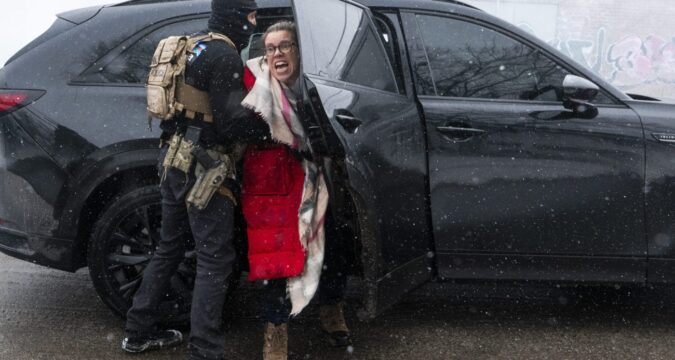
In St. Paul, Minnesota, federal immigration agents bashed open a door and detained U.S. citizen ChonglLy “Scott” Thao at gunpoint without a warrant, as his 4-year-old grandson watched in tears.
Agents handcuffed him and led him outside in subfreezing conditions in his underwear and Crocs, a blanket wrapped around his shoulders.
“Thao said agents drove him ‘to the middle of nowhere’ and made him get out of the car in the frigid weather so they could photograph him,” the Associated Press reported. “He said he feared they would beat him. He was asked for his ID, which agents earlier prevented him from retrieving.”
Eventually, agents realized Thao was a U.S. citizen with no criminal record and brought him home more than an hour later.
“There they made him show his ID,” the AP reported, “and then left without apologizing for detaining him or breaking his door.”
In nearby Brooklyn Park, a suburb of Minneapolis, police chief Mark Bruley told reporters his off-duty police officers are repeatedly being targeted and harassed by federal agents.
“Bruley said one off-duty officer was recently stopped by Immigration and Customs Enforcement agents who ‘demanded her paperwork,’ despite her being a U.S. citizen,” The Independent reported. “The agents also had their guns drawn during the incident, he said.”
Hundreds of U.S. citizens have been detained and held by immigration agents, according to a ProPublica investigation.
“Americans have been dragged, tackled, beaten, tased and shot by immigration agents,” ProPublica reported. “They’ve had their necks kneeled on. They’ve been held outside in the rain while in their underwear. At least three citizens were pregnant when agents detained them. One of those women had already had the door of her home blown off while Department of Homeland Security Secretary Kristi Noem watched. About two dozen Americans have said they were held for more than a day without being able to phone lawyers or loved ones.”
And I’m wondering how all of this sits with the folks who viewed vaccine mandates as government overreach. Who accused educators and epidemiologists and public health experts of stripping away our freedom and personal liberties. Who couldn’t abide mask mandates. Who viewed guidance as tyranny.
Because I’m having a hard time reconciling it all. I’m having a hard time understanding why the leaders who cried the loudest about government overreach during a pandemic are now endorsing government-sanctioned violence — against their own people. I’m having a hard time understanding why the voters and the political party propping up these leaders aren’t screaming “tyranny” now.
I guess I’m back to searching hard for signs of unity. For signs that we have it in us to come together and protect what’s vulnerable and precious: our health, our safety, our humanity.
I’m not giving up. But it’s getting harder to find them.
Join the Heidi Stevens Balancing Act Facebook group, where she continues the conversation around her columns and hosts occasional live chats.
Twitter @heidistevens13
https://www.chicagotribune.com/2026/01/23/heidi-stevens-federal-agents-tyranny/
Editorial: A bloody winter day underscores Mayor Brandon Johnson’s terrible ShotSpotter decision
Sunday was a day of uncommon excitement in Chicago. The Bears, coming off a thrilling victory against the Green Bay Packers, were preparing to play a second postseason game at Soldier Field for a chance at the NFC championship.
But in Woodlawn on the city’s South Side, in the predawn hours, a body lay silent in an alley.
Kiara Jenkins, a 36-year-old mother of five, was found on Sunday afternoon near her home in the 6400 block of South Drexel Avenue. She had been shot to death. The details were agonizing. A longtime member of the Mt. Bethlehem Missionary Baptist Church in Woodlawn, Jenkins was on her way to the church when she was shot, according to ABC-7 reporting.
Police estimate the shooting occurred shortly after 4:30 a.m. There’s now a $10,000 reward available from Cook County Crime Stoppers for information leading to an arrest.
Here’s where the narrative gets more tragic. Her body wasn’t discovered until 2:44 p.m., some 10 hours after the time of the attack, according to Chicago police. There had been a call of shots in the area near to the time police believe Jenkins was shot, but the caller hadn’t seen anything and responding officers didn’t locate her, according to crime website CWB Chicago.
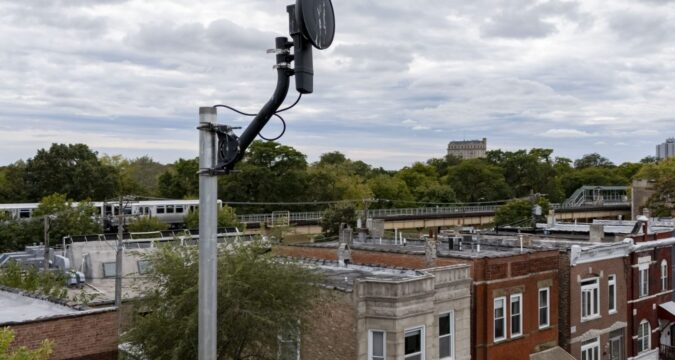
This would have been an instance where ShotSpotter gunshot-detection technology, which was deployed in this neighborhood until September 2024, could have helped pinpoint the location of her body. At the time, it was dark. It doesn’t surprise us that responding police didn’t find her.
Since Mayor Brandon Johnson insisted over the objections of a majority of City Council members on ending ShotSpotter in Chicago in September 2024, CWB has tracked instances in which shootings occurred in parts of the city previously covered by the technology and emergency response was delayed due to the lack of a 911 call or information from a caller that was vague. Jenkins was the 72nd such case reported by the outlet, with two additional cases occurring later on Sunday.
The day itself, in which seven Chicagoans were shot to death, was one of the bloodiest winter days in Chicago in ages. The Tribune reported that Sunday was just the fourth January day since 1991 in which at least seven homicides happened in Chicago.
The bloodshed was a harsh reminder that gun violence in Chicago remains at unacceptably high levels despite a substantial decrease in homicides last year.
So, once again we decry the lack of a gunshot-detection system in Chicago’s most violent neighborhoods. Johnson pledged to find an alternative to ShotSpotter itself that could provide the same function. But that was well over a year ago, and the procurement process has crawled ever since.
A Johnson spokesperson tells us the administration has “finished the testing of applicants and (is) now in the review process to determine next steps.”
That doesn’t sound to us like a new gunshot-detection system will be in place anytime soon. Will the administration have a vendor before the next mayoral election a little over a year from now? We wouldn’t bet on it. But it should.
If and when it happens, it will be too late for Kiara Jenkins and more than 70 other victims who might well have seen a more timely response had ShotSpotter been continued.
The debate over ShotSpotter’s utility, as we’ve discussed more than once before, long ago transitioned from an argument over whether the technology helps prevent crime or catch criminals to one over whether it gives first responders more precise and timely information on fired shots to enable fast medical attention to victims. For gunshot victims, time is of the essence and can mean the difference between death or survival.
The University of Chicago Crime Lab in 2024, just days before the mayor sent ShotSpotter packing, offered a compelling op-ed in our pages outlining a data analysis making a highly persuasive case that ShotSpotter’s continuation would save dozens of lives each year. Certainly, not every one of those victims who have died in the months since would have been saved with ShotSpotter. But, based on the Crime Lab’s work, some surely would have survived.
One of the imponderables of Johnson’s ideologically based decision to pull the plug on ShotSpotter is that the people being harmed by the loss of the technology overwhelmingly live in neighborhoods and are part of communities that the mayor considers his political base.
For all the progress made in getting violent crime rates down in 2025, the city of Chicago remains unacceptably unsafe, particularly in too many neighborhoods on the South and West sides.
We don’t know if Kiara Jenkins could have been saved. She was shot in the abdomen and legs, according to police. We do know, though, that if she had a possibility of survival with a timely emergency response, ShotSpotter could well have provided that chance.
Submit a letter, of no more than 400 words, to the editor here or email letters@chicagotribune.com.
Declining enrollment in Chicago Public Schools could lead to crisis if unchecked, report says
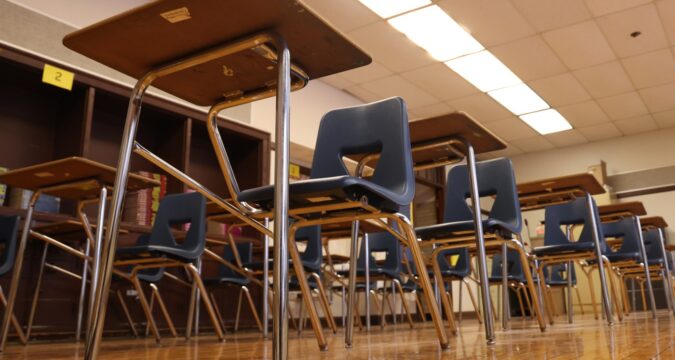
Continued enrollment declines at Chicago Public Schools could escalate into a “crisis” that would significantly affect the city’s public education system in the years ahead, according to a new report from Kids First Chicago.
CPS’ current enrollment is more than 316,000 students — a near 28% decrease of more than 122,000 students since 2002-2003.
This change reflects a broader district-wide pattern driven by several factors, including a drop in birth rates over the past decade and a smaller population of school-aged children living in Chicago, according to data compiled by the local education nonprofit.
The district’s diminished student roster isn’t the crux of the problem, according to Hal Woods, chief policy officer at Kids First Chicago. “What makes this a crisis is the lack of a serious plan for how to adapt to it. That leaves students in smaller schools with fewer opportunities and no clear path forward,” he said.
His concerns underscore a crucial shift in the district over the past few years.
A decade ago, 3 out of 4 students attending school in Chicago were enrolled in CPS.
However, between 2014 and 2023, the number of school-aged children living in the city plunged by roughly 15% — or about 80,000 children — the report highlighted. Subsequently, the number of school-aged children attending CPS slid nearly 5% — or 18,000 fewer students — by 2023, the most recent data available.
And there’s more.
In 2005, the city recorded more than 45,000 live births. But by 2023, the number of live births in Chicago had dropped nearly 41% to about 26,800, the report said. Fewer births mean fewer students are entering and matriculating through CPS, affecting early grade levels.
As for how this affects early education, fewer students entering kindergarten means smaller cohorts will reshape the district from the bottom up, experts say.
The effect is already evident in the district’s earliest grades. CPS enrolled 20,000 kindergarteners this school year — 27% fewer than a decade ago. Grades K-5 used to account for half of all CPS students in 2015, now down to 42% in the current year.
The arrival of nearly 9,000 migrant students in recent years helped to offset short-term enrollment decreases, but has since leveled off, the report said.
Black and Latino enrollment also down
Enrollment among Latino and Black students has declined across the district this school year, according to the report.
In 2015-16, Latino and Black students accounted for 85% of CPS enrollment. But Latino student enrollment, which previously exceeded 153,000, has decreased by nearly 7,000, while Black student enrollment has dropped by about 2,900.
Even with enrollment declines, the two groups still account for the majority of the district’s enrollment at 81% for this school year.
Meanwhile, other student populations, such as white, Asian and multiracial students, have seen modest increases.
According to the report, 1 in 4 CPS students is an “English Learner,” whose first language is not English. But after two years of growth, EL enrollment has waned.
Between 2023 and 2025, enrollment reached a 10-year high of more than 88,000 students but has since decreased by 2.9% to just over 86,000 students.
More than 227,000 students are also considered economically disadvantaged — about 7 in 10 students.
West and South Side schools see drop in enrollment
Enrollment trends in recent years have been uneven across the district. Schools in West and South Side neighborhoods have been disproportionately affected by plummeting enrollment. Yet, enrollment in North and Central Side neighborhoods has remained comparatively stable.
The steepest decline occurred on the city’s Southwest Side in the McKinley Park network of 29 elementary schools, according to Kids First Chicago. Since the 2015-16 school year, the network has lost nearly 7,000 students.
CPS is divided into 18 geographically distinct “networks,” each receiving customized administrative support from district leadership. Thirteen of the networks are composed of elementary (K-8) schools. The remaining networks are composed of traditional and alternative learning high schools.
Other networks also faced major declines, including the Belmont Cragin-Austin network of elementary schools on the city’s West Side, which lost 6,000 students during the same period.
In some cases, these elementary school networks have lost over one-third of their student population, according to the report.
By contrast, networks on the North Side, such as Ravenswood, Near North-Loop-Chinatown and Logan Square-Lincoln Park each lost only a few thousand over the same period.
A network can lose students for various reasons, including enrollment in private schools or homeschooling.
“The steepest losses are concentrated on the South and West sides, where many neighborhoods have experienced sustained population decline for years, while much of the North Side has seen far smaller drops or relative stability,” Woods said. “When fewer children live in a community, schools in that community feel it first.”
Declining enrollment also makes schools more expensive to operate because fixed costs remain even as student enrollment falls, the report said.
While smaller schools can offer a close-knit community, the report highlighted they may struggle to provide a full range of programs, such as advanced placement courses, foreign languages and sports.
“As schools get smaller and smaller, it can become more difficult to provide the full level of culture and opportunity you would want to,” Nelson Gerew, an education expert at The Chicago Public Education Fund, told the Tribune.
In high-poverty districts like CPS, schools may be forced to cut arts programs, electives, extracurriculars or reduce counseling, library and mental health staff.
Kids First Chicago concluded its report by urging stakeholders to get involved to avoid negative outcomes, such as reduced opportunities for students.
“Ultimately, these trends should compel everyone who cares about Chicago’s students — from educators and policymakers to families and funders — to better understand the demographic focus driving smaller schools and what those shifts mean for the students learning inside them,” the organization wrote.
https://www.chicagotribune.com/2026/01/23/declining-enrollment-chicago-public-schools/
Charlie Stanton: The Chicago Bears’ unforgettable season taught us to believe
Ten years ago, I taught kindergarten in South Chicago. At the start of class every day, one of my 32 students would pick a cheer — a sort of collective pump-up moment before breaking out into reading groups. The class favorite? “Good. Better. Best.”
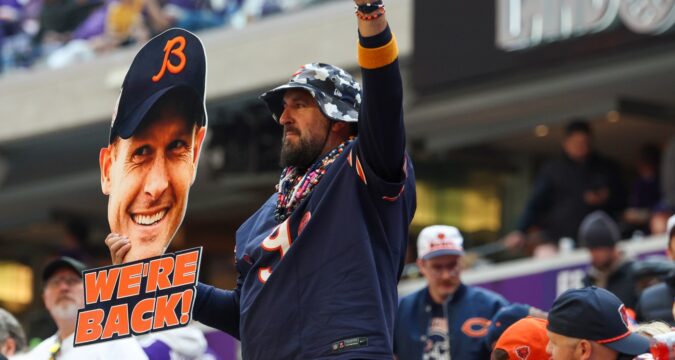
You see, long before Bears head coach Ben Johnson’s post-game videos captivated a nation, “Good. Better. Best.” was an elementary school bop — a true anthem that ambitious charter schools turned into regular programming. Indeed, at times, the educational reform movement took a bit too much inspiration from the U.S. military.
But I have to say, the cheers worked. The shared positive reinforcement and drive to improve powered 5-year-olds to believe in themselves, learn to read and treat others with kindness. Over the past year, I was heartened to see those same words ignite a team and a city to believe again.
If we could draft human emotions, my first pick is ready: belief. It’s infectious and intoxicating. You know in it your head but deeper in your heart. It’s a rare feeling in life — and an even rarer feeling as a Bears fan.
For decades, we’ve been so conditioned to reject hope and expect that which we know so well: losing, pain and watching Devin Hester highlights when we’re sad. After the first two games this season, the narrative was already back: same old Bears.
But messages matter, and for once — thanks to Johnson — we had one that was bigger than football. Johnson is a perfectionist, the type of control freak who holds the whole class late because one kid forgot a pencil. His eyes burn through our televisions. When he speaks, he offers a master class in communications: the art of being real while offering a true vision for a better tomorrow.
Johnson was able to weather the early losses because he told us what we saw and also was able to articulate where the team was going: too many penalties for a squad brimming with potential; a quarterback who flashed brilliance but wasn’t putting it all together; and a man who took responsibility for his own actions. For once, we weren’t being told the economy was great when everyone was having a hard time.
Then the Bears beat Dallas — Caleb Williams’ first great game. They followed it up with a game-winning drive and Josh Blackwell field goal block to win in Las Vegas — a game we as fans had watched over and over again for years (but with a sad ending). Then the miracles multiplied.
The unlikely wins just kept happening. Jake Moody’s game-winning field goal in Washington; the Colston Loveland touchdown in Cincinnati; the Caleb tiptoe against New York; the post-Thanksgiving tush push-forced-fumble against Philly; the DJ Moore walk-off against Green Bay.
After each of those wins, we watched the team celebrate with Johnson. But this time, we as fans got the same message as the team. Good. Better. Best. To paraphrase: “Keep working hard, keep improving, keep believing. This team is special. This city is special. You are special.”
Turns out when you hear that message every week, and the messenger means it, your Sundays and Mondays and life in general feel so much better. Johnson’s effectiveness is that his message resonates not just with his team — but with everyone in a city and country where belief has been chastened; where the most powerful make us feel powerless; where heartbreak and inhumanity lurk in too many places. He asks us to believe in a team, in a city, in each other.
When we believe, good things happen. We put foam cheese graters on our heads. We paint our nails orange and blue to be like Williams. We reach out, as I did, to my Whitney Young High School friends scattered across the Bay Area to manically catch up as we watch the Bears mount a historic playoff comeback against the Packers. We gather the next week for another exorcism: Williams’ 50-yard pass off his back foot in the final minute to Cole Kmet, coolly catching the dreams of an entire city like a center fielder on a July afternoon.
Bears tight end Cole Kmet catches the tying touchdown on fourth down in the final seconds of the fourth quarter in front of Rams safety Quentin Lake (37) in an NFC divisional playoff game Jan. 18, 2026, at Soldier Field. (Brian Cassella/Chicago Tribune)
The Bears lost that game. It was heartbreaking. But maybe we left that game and this season slightly better people: with changed minds, coming to terms with a previously impossible belief in a team we thought we knew so well.
In a world that feels a bit broken right now, belief is a gift. To believe in the Bears is to believe the broken can be corrected. As we continue into 2026, may we hold on to that feeling on the lakefront and far, far beyond.
Charlie Stanton is a speechwriter based in Berkeley, California, and a proud Chicago native.
Submit a letter, of no more than 400 words, to the editor here or email letters@chicagotribune.com.
https://www.chicagotribune.com/2026/01/23/opinion-chicago-bears-season-caleb-williams/
Davos Elites Scammed By Fake VIP Passes To Exclusive USA House Venue
Davos Elites Scammed By Fake VIP Passes To Exclusive USA House Venue
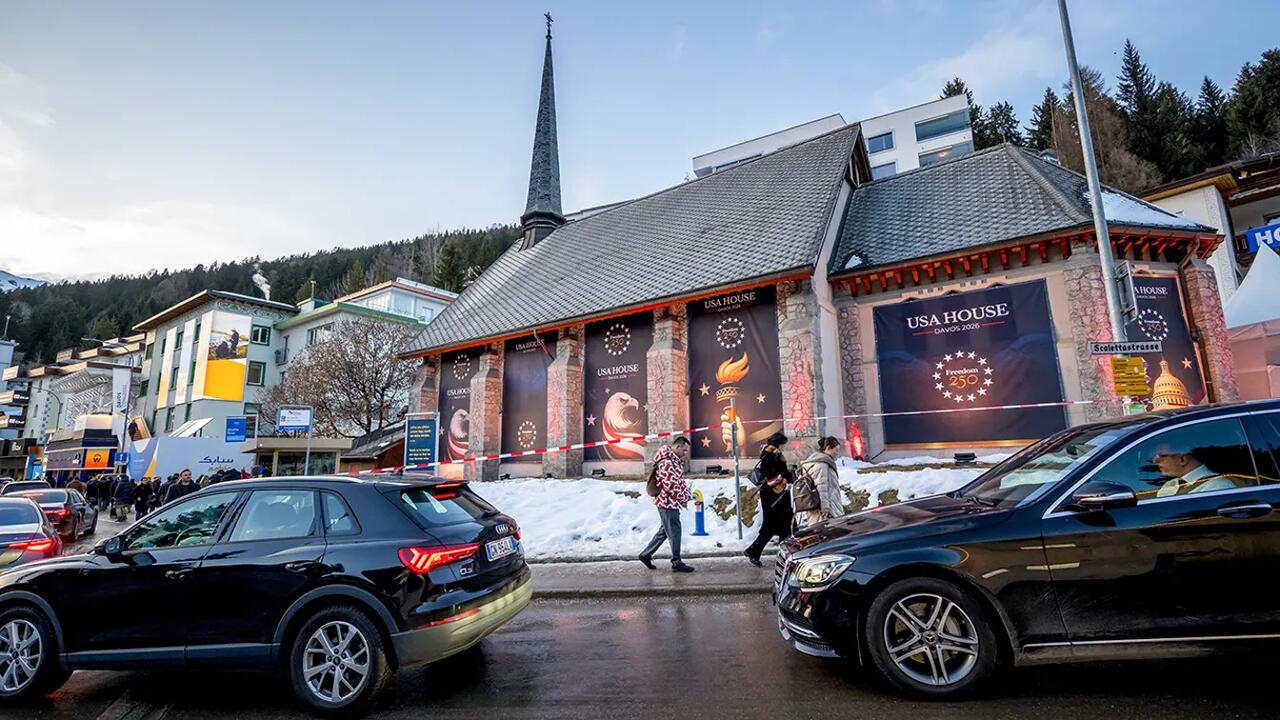
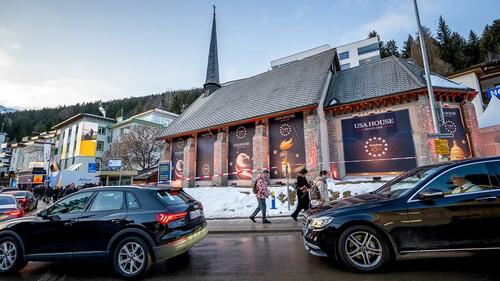
The Trump administration’s primary venue at the World Economic Forum in Davos, known as USA House, issued a pointed warning on its website Tuesday after reports surfaced that some high-profile attendees had been duped by scalpers peddling counterfeit VIP access packages, Fox Business reports.
“Caveat billionaires,” the notice began dryly, “It has been brought to our attention that again this year external parties are selling ‘VIP access to USA House’ and other Stromback Global venues in Davos.”
Organizers said that USA House and Stromback Global maintain no partnerships with third-party resellers and will deny entry to anyone holding such bogus credentials.
The statement added a touch of literary flair:
“The volume of inbound queries this year suggests that these fake VIP passes may be the fastest-selling fiction about Davos since Thomas Mann’s Magic Mountain.”
The statement closed with sympathies for the victims of the apparent swindle.
USA House, a public-private initiative debuting this year to highlight American innovation on the global stage, centers its programming on the nation’s 250th anniversary and themes of opportunity, collaboration, and democratic values.
Access to elite World Economic Forum badges can run into the tens of thousands of dollars – up to $35,000 for top-tier entry, according to prior reporting – plus substantial annual membership fees that reach into the seven figures for the most influential participants, according to Fox Business.
Tyler Durden
Fri, 01/23/2026 – 05:45
https://www.zerohedge.com/political/davos-elites-scammed-fake-vip-passes-exclusive-usa-house-venue