Sunday was a day of uncommon excitement in Chicago. The Bears, coming off a thrilling victory against the Green Bay Packers, were preparing to play a second postseason game at Soldier Field for a chance at the NFC championship.
But in Woodlawn on the city’s South Side, in the predawn hours, a body lay silent in an alley.
Kiara Jenkins, a 36-year-old mother of five, was found on Sunday afternoon near her home in the 6400 block of South Drexel Avenue. She had been shot to death. The details were agonizing. A longtime member of the Mt. Bethlehem Missionary Baptist Church in Woodlawn, Jenkins was on her way to the church when she was shot, according to ABC-7 reporting.
Police estimate the shooting occurred shortly after 4:30 a.m. There’s now a $10,000 reward available from Cook County Crime Stoppers for information leading to an arrest.
Here’s where the narrative gets more tragic. Her body wasn’t discovered until 2:44 p.m., some 10 hours after the time of the attack, according to Chicago police. There had been a call of shots in the area near to the time police believe Jenkins was shot, but the caller hadn’t seen anything and responding officers didn’t locate her, according to crime website CWB Chicago.
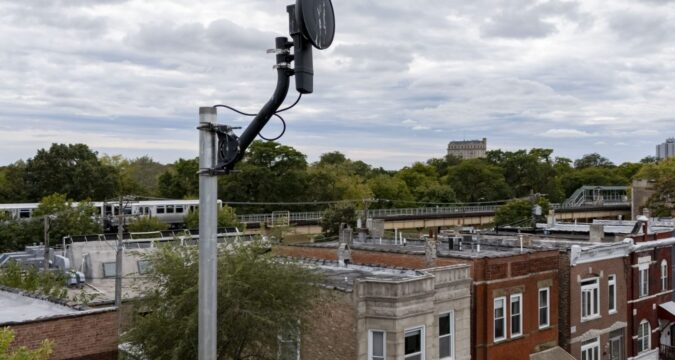
This would have been an instance where ShotSpotter gunshot-detection technology, which was deployed in this neighborhood until September 2024, could have helped pinpoint the location of her body. At the time, it was dark. It doesn’t surprise us that responding police didn’t find her.
Since Mayor Brandon Johnson insisted over the objections of a majority of City Council members on ending ShotSpotter in Chicago in September 2024, CWB has tracked instances in which shootings occurred in parts of the city previously covered by the technology and emergency response was delayed due to the lack of a 911 call or information from a caller that was vague. Jenkins was the 72nd such case reported by the outlet, with two additional cases occurring later on Sunday.
The day itself, in which seven Chicagoans were shot to death, was one of the bloodiest winter days in Chicago in ages. The Tribune reported that Sunday was just the fourth January day since 1991 in which at least seven homicides happened in Chicago.
The bloodshed was a harsh reminder that gun violence in Chicago remains at unacceptably high levels despite a substantial decrease in homicides last year.
So, once again we decry the lack of a gunshot-detection system in Chicago’s most violent neighborhoods. Johnson pledged to find an alternative to ShotSpotter itself that could provide the same function. But that was well over a year ago, and the procurement process has crawled ever since.
A Johnson spokesperson tells us the administration has “finished the testing of applicants and (is) now in the review process to determine next steps.”
That doesn’t sound to us like a new gunshot-detection system will be in place anytime soon. Will the administration have a vendor before the next mayoral election a little over a year from now? We wouldn’t bet on it. But it should.
If and when it happens, it will be too late for Kiara Jenkins and more than 70 other victims who might well have seen a more timely response had ShotSpotter been continued.
The debate over ShotSpotter’s utility, as we’ve discussed more than once before, long ago transitioned from an argument over whether the technology helps prevent crime or catch criminals to one over whether it gives first responders more precise and timely information on fired shots to enable fast medical attention to victims. For gunshot victims, time is of the essence and can mean the difference between death or survival.
The University of Chicago Crime Lab in 2024, just days before the mayor sent ShotSpotter packing, offered a compelling op-ed in our pages outlining a data analysis making a highly persuasive case that ShotSpotter’s continuation would save dozens of lives each year. Certainly, not every one of those victims who have died in the months since would have been saved with ShotSpotter. But, based on the Crime Lab’s work, some surely would have survived.
One of the imponderables of Johnson’s ideologically based decision to pull the plug on ShotSpotter is that the people being harmed by the loss of the technology overwhelmingly live in neighborhoods and are part of communities that the mayor considers his political base.
For all the progress made in getting violent crime rates down in 2025, the city of Chicago remains unacceptably unsafe, particularly in too many neighborhoods on the South and West sides.
We don’t know if Kiara Jenkins could have been saved. She was shot in the abdomen and legs, according to police. We do know, though, that if she had a possibility of survival with a timely emergency response, ShotSpotter could well have provided that chance.
Submit a letter, of no more than 400 words, to the editor here or email letters@chicagotribune.com.


