Category: News

Column: North Point Marina lease was terminated in April
While state officials say they are scrambling to find a management firm to operate North Point Marina this boating season, they certainly had plenty of time to find one. Since April of last year, it appears.
In a letter to Natalie Phelps Finnie, director of the Illinois Department of Natural Resources, dated April 10, 2025, James Frye, vice president of governmental relations for Suntex Marinas, spelled out that the company was seeking to mutually end its state lease at North Point in Winthrop Harbor. The pleasure-boat marina, with some 1,500 boat slips, is the largest on the Great Lakes.
“Due to the poor financial performance of the marina, we have determined that it is no longer feasible for us to continue occupying and operating the premises,” Frye states in the company’s “formal request” to bail on the contract. “Given the current circumstances, I believe it would be beneficial for us to discuss the potential terms for termination.”
The letter, with copies to four other IDNR officials, also indicates preliminary talks about terminating the North Point lease were held well in advance of the April letter. Indeed, Frye wrote: “In our discussions with IDNR staff, we have suggested that the best way forward is for the IDNR to secure a new third-party manager.”
On April 25, 2025, folks with the IDNR’s Concession and Lease Management office signed off on the contract termination, “effective no later than the 31st day of October 2025”. This means the contract with Suntex ended several months before the IDNR notified area elected officials that it was seeking a new marina operator.
Seems like communication is the key here, as Winthrop Harbor officials have complained of “minimal communication” with those at IDNR. Area lawmakers, too, seem to be caught off guard by the turn of events and the increasing possibility that North Point will not be ready for slip holders for the marina’s summer boating season, which should kick off May 1.
Dallas-based Suntex is the largest marina operator on the globe, having management contracts with some 90 marinas on both coasts and everywhere in between. So far, IDNR officials have not released information as to where the process stands to secure a new operator of the marina, which has been a fixture of the Fresh Coast since 1989.
Boaters, along with Winthrop Harbor officials, are concerned this coming season may be lost without a third-party management team in place. Winthrop Harbor is hoping for an opening in order to save some 150 jobs at the marina.
On LinkedIn, David Alarcon, Winthrop Harbor village manager, wrote: “The Village of Winthrop Harbor is addressing recent developments at North Point Marina. We are collaborating with state representatives to ensure smooth operations and safeguard local jobs. Your support is vital as we work towards a successful 2026 boating season in Winthrop Harbor.”
Boaters who have used North Point as their homeport are irate over the possibility of a lost season, pointing out the state needs to inject funding into the marina’s needs. They complain that some of the slips are in rough shape; the fishing pier needs to be rebuilt, and, importantly, the marina entrance needs to be dredged of accumulated amounts of sand. Securing a costly dredging permit from the U.S. Army Corps of Engineers could take an estimated six months.
It took the state several years to realize that facilities at Illinois Beach State Park, which anchors the Lake Michigan shoreline from the far North Side of Waukegan north to Winthrop Harbor, needed an influx of investment. That occurred with the completion in fall 2024 of a $73 million shoreline stabilization project, which included hauling some 35,000 truckloads of sand into three sections of the park, one of the state’s most-visited natural recreational areas.
Granted, worries over a marina being open during the summer season and used by sailors who can afford pricey pleasure boats and slip fees certainly is a first-world problem. But it’s not like the state doesn’t have funding for recreational pursuits.
The IDNR announced on Jan. 14 that three Lake County parkland projects were given grant funding through the Open Space Land Acquisition and Development program: the Lake County Forest Preserve District, $600,000 for accessibility site improvements at Lake Carina Forest Preserve in Gurnee; $600,000 for phase two work at South Park in Lake Forest; and $573,000 to Waukegan for a dune and beach access plan along the city’s Lake Michigan shoreline.
More than funding, though, is needed transparency by IDNR functionaries with marina boaters and Winthrop Harbor officials. Both want answers about the North Point season before the snow melts.
Charles Selle is a former News-Sun reporter, political editor and editor.
sellenews@gmail.com
X @sellenews
https://www.chicagotribune.com/2026/01/26/charles-selle-column-north-point/
‘Signal-Gate’: Anti-ICE ‘Insurgency Command’ Chat Was Highly Organized
‘Signal-Gate’: Anti-ICE ‘Insurgency Command’ Chat Was Highly Organized
What appears to be unfolding in Minneapolis, particularly following the emergence of “Signal-Gate” on Sunday via citizen journalists on X, extends well beyond any conventional protest activity. The evidence so far suggests coordinated pressure campaigns against federal agents exhibiting characteristics of a low-level insurgency, with direction, tasking, and information flow routed through encrypted messaging apps, implying an organized command-and-control structure functioning as a shadow revolutionary force.
What’s more, former Tim Walz campaign adviser Amanda Koehler, as well as Minneapolis City Council Member Aurin Chhowdhry, have allegedly been identified as a key figures in the now-leaked Signal group chat.
🇺🇸 Aurin Chowdhry, a Minneapolis City Council member, has been linked to the top of an Anti-ICE Signal group chat.
This revelation is fueling calls for a major investigation into her and other city officials allegedly involved.
Source: @TheSCIF https://t.co/P8SCTFtIAI pic.twitter.com/IhwgGDGAR7
— Mario Nawfal (@MarioNawfal) January 26, 2026
Koehler has gone dark, deleting social media accounts and making her website private.
Amanda Koehler’s Instagram is no longer active🤣 pic.twitter.com/2kZXrzISVZ
— Politikal Kat-Tales (@PolitiKatTales) January 26, 2026
The group even had a ‘Signal Chat Guide’ advising anti-ICE protesters:
The Signal chat was exposed by journalist Cam Higby, who published a bombshell report on Sunday after infiltrating multiple groups across Minneapolis with the stated aim of tracking federal agents and impeding, assaulting, or obstructing their operations. The report sparked a wildfire across X overnight.
🧵🚨 MINNEAPOLIS SIGNAL INFILTRATED
I have infiltrated organizational signal groups all around Minneapolis with the sole intention of tracking down federal agents and impeding/assaulting/and obstructing them.
BUCKLE UP ALL WILL BE REVEALED
Each area of the city has a signal… pic.twitter.com/ATSHlCucWv
— Cam Higby 🇺🇸 (@camhigby) January 24, 2026
Higby’s reporting unleashed a rapid mobilization of citizen journalists, including accounts such as 0HOUR1, who began mapping what appears to be an organized command-and-control network of left-wing activists behind the groups.
What do we have on these signal chats
-Government officials
-Anarchists
-Antifa
-Gang members
-Journalists
Coordinating and attacking ICE AGENTS across the country.
This my friends is Organized Crime not Protesting.
RICO
— 0HOUR1 (@0hour1) January 25, 2026
Higby suggested that left-wing activist networks are leveraging local residents as force multipliers in coordinated pressure campaigns against federal agents, forming pressure campaigns that one military analyst characterized as “What’s unfolding in Minneapolis right now isn’t ‘protest.” It’s low-level insurgency infrastructure, built by people who’ve clearly studied the playbook.”
NGO expert Asra Q. Nomani at Fox News reported late Sunday:
The encrypted Signal messages obtained by Fox News Digital in real time show that anti-ICE “rapid responders” were actively tracking, broadcasting and summoning “backup” around federal agents outside Glam Doll Donuts on Nicollet Avenue, where the shooting happened. Local “rapid responders” made at least 26 entries into a database called “MN ICE Plates” in the critical hours before and after the killing, documenting the license plate numbers and details of alleged ICE vehicles they claimed to see around Nicollet Avenue.
This highly organized Signal group even managed to track journalist James O’Keefe, as well as quickly obtain his cellphone number, and threatened the journalist with violence…
They tracked James O’Keefe’s license plate in MN, texted him about it, and threatened his life.
These Leftists have access to state license plate databases and are weaponizing them to commit vigilante violence.
This is organized domestic terrorism. https://t.co/NlPsiyaIbd
— DC_Draino (@DC_Draino) January 25, 2026
Besides tracking and deploying anti-ICE pressure campaigns against federal agents like guerrilla-style warfare tactics through the messaging app, the group was also building a list of federal vehicle license plates stored in a database, 0HOUR1 revealed this on Sunday.
They have illegally captured 5000 plates in the Signal Group.
😂😂😂😂😂
Some admins connected directly to Tim Walz
Ohh boy thats a huge NO NO NO pic.twitter.com/p8TLBWBeO0
— 0HOUR1 (@0hour1) January 25, 2026
What was a Reuters reporter doing in the group?
The Reuters reporters were out there tracking every day. To be fair, I was as well. But I was tacking insurrectionists, not ICE.
— Cam Higby 🇺🇸 (@camhigby) January 25, 2026
By late Sunday afternoon, after Higby published the Signal chats on X and citizen journalists flooded the groups, exposing highly organized internal targeting plans, the revolutionaries appeared to panic.
“We’re all fucked!”
Rioter signal chat was exposed for all their internal plans targetting ICE agents (names, threats, illegal acts).
Now they panic, talk about fleeing the state, or country. pic.twitter.com/9q7vijVuRC
— Grummz (@Grummz) January 26, 2026
Fleeing to Cuba? And we’ll revisit this possible reason shortly.
🚨💬 INSURRECTIONISTS FLEEING THE STATE/COUNTRY:
A tipster, @bitchuneedsoap messaged some of the people in one of the MN insurrectionist signal chats.
The user indicated that he/she intends to flee the state because “WE’RE IN SO MUCH TROUBLE”
“We’re all fucked” Skye said… pic.twitter.com/Jk5CHmd7Vy
— Cam Higby 🇺🇸 (@camhigby) January 25, 2026
First, Eric Schwalm, a retired U.S. Army Special Forces Green Beret who held the rank of Chief Warrant Officer 4, offered his assessment of events unfolding in Minneapolis.
Schwalm described the command-and-control dynamics operating within left-wing activist Signal groups as a form of “low-level insurgency infrastructure,” noting it appears to be created by individuals who have clearly studied and internalized the insurgency playbook.
Schwalm continued:
As a former Special Forces Warrant Officer with multiple rotations running counterinsurgency ops—both hunting insurgents and trying to separate them from sympathetic populations—I’ve seen organized resistance up close. From Anbar to Helmand, the pattern is familiar: spotters, cutouts, dead drops (or modern equivalents), disciplined comms, role specialization, and a willingness to absorb casualties while bleeding the stronger force slowly.
What’s unfolding in Minneapolis right now isn’t “protest.” It’s low-level insurgency infrastructure, built by people who’ve clearly studied the playbook.
Signal groups at 1,000-member cap per zone. Dedicated roles: mobile chasers, plate checkers logging vehicle data into shared databases, 24/7 dispatch nodes vectoring assets, SALUTE-style reporting (Size, Activity, Location, Unit, Time, Equipment) on suspected federal vehicles. Daily chat rotations and timed deletions to frustrate forensic recovery. Vetting processes for new joiners. Mutual aid from sympathetic locals (teachers providing cover, possible PD tip-offs on license plate lookups). Home-base coordination points. Rapid escalation from observation to physical obstruction—or worse.
This isn’t spontaneous outrage. This is C2 (command and control) with redundancy, OPSEC hygiene, and task organization that would make a SF team sergeant nod in recognition. Replace “ICE agents” with “occupying coalition forces” and the structure maps almost 1:1 to early-stage urban cells we hunted in the mid-2000s.
The most sobering part? It’s domestic. Funded, trained (somewhere), and directed by people who live in the same country they’re trying to paralyze law enforcement in. When your own citizens build and operate this level of parallel intelligence and rapid-response network against federal officers—complete with doxxing, vehicle pursuits, and harassment that’s already turned lethal—you’re no longer dealing with civil disobedience. You’re facing a distributed resistance that’s learned the lessons of successful insurgencies: stay below the kinetic threshold most of the time, force over-reaction when possible, maintain popular support through narrative, and never present a single center of gravity.
I spent years training partner forces to dismantle exactly this kind of apparatus. Now pieces of it are standing up in American cities, enabled by elements of local government and civil society. That should keep every thinking American awake at night.
Not because I want escalation. But because history shows these things don’t de-escalate on their own once the infrastructure exists and the cadre believe they’re winning the information war.
We either recognize what we’re actually looking at—or we pretend it’s still just “activism” until the structures harden and spread.
Your call, America. But from where I sit, this isn’t January 2026 politics anymore. It’s phase one of something we’ve spent decades trying to keep off our own soil.
As a former Special Forces Warrant Officer with multiple rotations running counterinsurgency ops—both hunting insurgents and trying to separate them from sympathetic populations—I’ve seen organized resistance up close. From Anbar to Helmand, the pattern is familiar: spotters,…
— Eric Schwalm (@Schwalm5132) January 25, 2026
Meanwhile, they’re back at it…
🚨💬 SIGNAL GATE:
They’re back at it. Here are screenshots from moments ago pic.twitter.com/432zgN3KZR
— Cam Higby 🇺🇸 (@camhigby) January 26, 2026
Well, well, well …
The Signal groups use Sign Up genius.
Their terms of service prohibit usage for illegal activities. @libsoftiktok can we get a campaign going? pic.twitter.com/DTw20DMIHK
— DataRepublican (small r) (@DataRepublican) January 26, 2026
The key informational gap citizen journalists face is who exactly is providing the organizational know-how required to coordinate these operations across Minneapolis via encrypted messaging platforms. There are reports that Antifa, government officials, gang members, journalists, and others were in the group, but the structure observed is well-disciplined, scalable, and purpose-built to disrupt federal deportation operations. We’ve told readers that Minneapolis has been a testbed for revolution, with tactics likely to be deployed across sanctuary cities nationwide.
This suggests involvement by socialist or Marxist-aligned NGOs, raising another question about the origin of their training. One plausible origin is Cuba, as outlined in earlier reporting:
Is There A “Cuba Connection” Behind The Radicalization Of America’s Nonprofit Left
And this:
Growing List Of Democratic Billionaire Kings & Queens Funnel Millions Into Terror-Tied Nonprofits
DataRepublican writes, “SIGNALGATE Donor List Available for Download; Politicians and Foreign Leadership Confirmed?”
🚨💵 BREAKING: SIGNALGATE DONORS LIST AVAILABLE FOR DOWNLOAD; POLITICIANS + FOREIGN LEADERSHIP CONFIRMED?
In one of the files revealed by @camhigby , a resources file directs people with money to a website, Stand with Minnesota, which in turns directs donors to a campaign ran by… pic.twitter.com/5CDhWxRKhk
— DataRepublican (small r) (@DataRepublican) January 26, 2026
If this movement is assessed as a communist revolutionary effort, and if the seasoned special forces expert is viewing it as more of a “low-level insurgency”, then the current characterization as a civil rights protest or democratic activism is a misdiagnosis of the actual threat – one that we’ve labeled is a color-revolution-style operation being waged from the left-wing NGO sphere against President Trump.
The big question is why mainstream Democratic leaders have remained largely silent as left-wing revolutionaries operate within their party under the guise of “democracy” or whatever the most trending cause is. The mobilizing narrative has shifted repeatedly, from George Floyd to pro-Palestinian activism, and now to anti-ICE. Just wait until spring; the revolutionaries want chaos – and Democrats are completely fine with this.
Remember what retired Lt. Gen. Michael Flynn stated in late November:
General Flynn Calls For National Address From Trump On Color Revolution Threat
Maybe it’s time…
Tyler Durden
Mon, 01/26/2026 – 12:30

Investigan caída de avión en Maine que mató a siete personas
Por PATRICK WHITTLE y HOLLY RAMER
PORTLAND, Maine, EE.UU. (AP) — La Administración Federal de Aviación informa que siete personas murieron y un miembro de la tripulación sobrevivió con heridas graves cuando un jet privado de negocios se estrelló en una tormenta de nieve en el Aeropuerto Internacional de Bangor, en Maine.
El Bombardier Challenger 600, que transportaba a ocho personas, se estrelló al despegar alrededor de las 7:45 de la tarde el domingo por la noche, mientras Nueva Inglaterra y gran parte del país lidiaban con una enorme tormenta invernal. El aeropuerto, ubicado a unos 320 kilómetros (unas 200 millas) al norte de Boston, cerró después del accidente. La nevada era intensa en ese momento en muchas otras partes del país, pero la acumulación apenas había comenzado en Bangor y otros aviones habían despegado sin problema.
El jet estaba registrado a nombre de una corporación que comparte la misma dirección en Houston, Texas, que el bufete de abogados de lesiones personales Arnold and Itkin Trial Lawyers, y uno de los socios fundadores del bufete figura como el agente registrado de la empresa propietaria del avión.
La Administración Federal de Aviación y la Junta Nacional de Seguridad en el Transporte (NTSB) están investigando. La NTSB indicó que la información preliminar muestra que el avión se estrelló al despegar y experimentó un incendio posterior al accidente, pero que no haría más declaraciones hasta que los investigadores lleguen en uno o dos días.
Añadió que no está autorizada parta divulgar información sobre las víctimas y que dicha información es manejada por las autoridades locales. Pero el director del aeropuerto, José Saavedra, se negó a comentar, diciendo en una conferencia de prensa el lunes que estaba “esperando orientación y apoyo de las agencias federales”.
Una grabación de audio de los controladores de tráfico aéreo incluye a alguien diciendo “Avión boca abajo. Tenemos un avión de pasajeros boca abajo”, aproximadamente 45 segundos después de que un avión fuera autorizado para despegar. Los cuerpos de rescate llegaron menos de un minuto después, dijo Saavedra.
El Aeropuerto Internacional de Bangor ofrece vuelos directos a ciudades como Orlando, Florida, Washington, D.C., y Charlotte, Carolina del Norte. Se cerró poco después del accidente y permanecerá cerrado al menos hasta el mediodía del miércoles.
El accidente ocurrió mientras Nueva Inglaterra y gran parte del país lidiaban con una masiva tormenta invernal. Bangor había experimentado una nevada constante el domingo, aunque los aviones estaban aterrizando y despegando alrededor del momento del accidente, apuntó Saavedra.
El Servicio Meteorológico Nacional en Caribou, Maine, sostuvo que el aeropuerto recibió casi 25 centímetros (10 pulgadas) de nieve en total, aunque la nevada apenas comenzaba en el momento del accidente. Aproximadamente 0,25 centímetros (una décima de pulgada) de nieve cayó entre la medianoche y las 7 p.m. del domingo, y la nevada era ligera pero constante en ese momento, dijo el servicio.
“Tenemos equipos en el lugar que responden a tormentas meteorológicas de manera regular”, señaló Saavedra. “Es normal para nosotros responder a eventos climáticos”.
Durante el fin de semana, la vasta tormenta arrojó aguanieve, lluvia helada y nieve en gran parte de la mitad oriental de Estados Unidos, paralizando parte del tráfico rodado y aéreo y dejando sin electricidad a cientos de miles de hogares y negocios en el sureste.
El tráfico aéreo comercial también se vio gravemente interrumpido en gran parte de Estados Unidos. Unos 12.000 vuelos fueron cancelados el domingo y casi 20.000 fueron demorados, según el rastreador de vuelos flightaware.com. Los aeropuertos en Filadelfia, Washington, Baltimore, Carolina del Norte, Nueva York y Nueva Jersey estuvieron entre los afectados.
El Bombardier Challenger 600 es un jet de negocios de fuselaje ancho configurado para entre nueve y 11 pasajeros. Fue lanzado en 1980 como el primer jet privado con una “cabina para caminar” y sigue siendo una opción popular de chárter, según aircharterservice.com.
El aeropuerto en Bangor es, con mucho, la ciudad más grande en las regiones norte y este de Maine. Su acuerdo de uso conjunto con la Guardia Nacional Aérea de Maine significa que “las pistas están listas llueva o truene, o nieve”, dice el sitio web del aeropuerto, bajo la frase: “Un poco de nieve no nos asusta”.
___________________________________
El corresponsal Josh Funk contribuyó con esta nota desde Omaha, Nebraska.
___________________________________
Esta historia fue traducida del inglés por un editor de AP con ayuda de una herramienta de inteligencia artificial generativa.
https://www.chicagotribune.com/2026/01/26/investigan-cada-de-avin-en-maine-que-mat-a-siete-personas/

Porter County deputy injured during snowstorm crash response
A deputy with the Porter County Sheriff’s Department is in stable condition after being struck by a vehicle Sunday afternoon while responding to a snowstorm-related crash, according to a release.
Sgt. Joshua Crayne, who joined the department in 2017, was transported by ambulance to a regional hospital after being injured, according to a release from Sgt. Ben McFalls, public information officer for the sheriff’s department.
Around 2 p.m. Sunday, Crayne was investigating a slide-off on Ind. 49 south of U.S. 6 when he was struck by a vehicle, according to McFalls.
The Liberty Township Volunteer Fire Department assisted at the scene and, according to a release from that department, Crayne sustained serious injuries and was transported to a trauma center.
Ind. 49 was closed for several hours to allow the Indiana State Police Crash Reconstruction Team to investigate the scene, according to the Liberty Township release.
“Sheriff (Jeff) Balon appreciated all Agencies that assisted during this incident and is thankful to God that Sgt. Crayne is doing as well as he is,” McFalls said in his release.
The crash is under investigation by Indiana State Police.
https://www.chicagotribune.com/2026/01/26/porter-county-deputy-injured-snowstorm-crash/

What We Are Experiencing Is Not De-Dollarisation But De-Fiatization
What We Are Experiencing Is Not De-Dollarisation But De-Fiatization
By Benjamin Picton, Senior Market Strategist At Rabobank
J.P. Morgan once famously remarked that “gold is money, everything else is credit.” That dictum was apparently forgotten during the 1980s & 1990s as gold’s share of central bank reserves steadily declined and gold prices – for most of that period – did the same.
That period was the most recent era of high financialization, where Hollywood movies like Wall Street, Trading Places, Barbarians at the Gate and even Pretty Woman glorified the swashbuckling lifestyle of financiers. It was also the era of the leveraged buyout, the rise of the MBA, the retail day-trader speculating in the dotcom boom and the germination of the idea (in the Anglosphere, at least) that you too can get rich through landlording – effectively transforming housing from a consumption good to a financial asset. This was also the era of the imperialism of the US Treasury Bond.
With the benefit of hindsight, it is reasonably clear from the data that this period ended with the popping of the dotcom bubble, but the final eulogy was not read until the financial crisis of 2008 when the excesses of high financialization were truly laid bare. This imbued the arguments of non-market economies like China that American system was decadent and sclerotic – and that the their system was superior – with apparent credibility. Along with military misadventure in the Middle East this constituted a heavy blow for the soft power and prestige of the United States.
While it is typical to think of the financial crisis is an epochal ending, gold’s share of central bank reserves hit its nadir around the year 2000. That was also the approximate highwater mark for US Treasury bonds’ share of global reserve assets. Many Western central banks – the last sellers of scale – had recently offloaded their holdings at low, low prices in the late 1990s having been taken in by fashionable ideas that gold was a “barbarous relic” and that the creation of the fiat monetary system and floating exchange rates in 1971 made holding gold a quaint anachronism.
Fast forward to today and gold is now trading well above $5000/oz. Silver is trading well above $100/oz. The financial has given way to the material and the fashionable narrative is now ‘sell America’ and de-Dollarisation. Dollar assets’ share of total central bank reserves has been in slow decline for years, but some commentators are now pronouncing the death of the Dollar system as Donald Trump’s abrasive style of foreign policy offends traditional allies. In seeming support of the sell America narrative, the Bloomberg Dollar spot index is down 1.14% year to date.
However, on the other side of the ledger we continue to see strong demand at US Treasury auctions and SWIFT data shows that the use of the US Dollar in international payments is actually increasing, mostly at the expense of the Euro. The Chinese Renminbi has seen a modest rise in its use in payments, but small declines in its already low share of central bank reserves. Even the increased use in payments is exaggerated somewhat by transactions between mainland China and Hong Kong. At only 3-4% of total payments versus more than 50% for the Dollar, it would seem to us that the demise of the Dollar in favor of other currencies is much exaggerated.
Speaking to the media at Davos, hedge fund manager Ray Dalio argued that what we are experiencing is not de-Dollarisation, but de-fiatization. That is, flight from fiat currencies in favor of real assets or – as J.P. Morgan might have advised – real money in the form of gold and silver. Ray pointed out that “in a war-like environment” countries don’t want to hold each other’s debt for fear of sanctions (Russia presents a cautionary example), while other investors don’t want to hold financial claims for fear of debasement through deficit spending by national governments and debt monetization – quantitative easing – by central banks. Under this scenario, it is rational to hold neutral money with no counterparty risk, no risk of debasement and less scope for the imposition of capital controls. The last sellers of scale (central banks) became the first buyers of scale in 2024 and 2025, but the trade has broadened out to other buyers.
The debasement of fiat currencies is now easy to spot. Aside from gold and silver regularly re-setting all-time highs the Bloomberg commodity index has surged to sit at its highest level since mid-2022. Brent crude prices have risen for the last five weeks straight and Henry Hub natural gas prices have surged more than 65% year-to-date. These types of moves signal a scarcity of the material relative to the financial. Consequently, long yields have remained elevated (or surged, in the case of Japan) and the Reserve Bank of Australia – who took the ‘gently, gently’ approach on fighting inflation – may soon become the first G10 currency-issuing central bank (aside from Japan) forced to hike rates. The AUD has recently been surging in anticipation.
As Dalio explained to Bloomberg, the flipside of a trade imbalance is a capital imbalance. This is because the capital account is – by definition – the inverse of the current account (which includes the trade balance) in the balance of payments. With the USA running record current account deficits in early 2025, it’s a matter of mathematics that foreign investors have to buy US Treasuries for that deficit to be financed. For the US to make progress on reducing its trade deficit (as it has recently), it must also make progress on reducing its capital account surplus. That means fewer Dollars for the rest of the world who – as detailed above – rely on Dollars to conduct trade.
This is the Triffin Dilemma, which also describes why China – with its immense and growing trade surplus – cannot supplant the Dollar’s global role with the CNY. How are you going to get CNY into the hands of other countries unless China runs a trade deficit? Logically – though its appeal as a store of value may be diminishing – the Dollar must remain the global reserve currency because there is no viable alternative. Central governments will not return to a gold standard for the same reason the last vestiges of the gold standard were abandoned in the first place: it would constrain governments’ freedom to engage in deficit spending and create inflation.
Very clearly the world is erecting new barriers to the free movement of goods. With the US embracing a re-invigorated Monroe Doctrine under its new National Security Strategy, it now views the economic affairs of its neighbours in the Western Hemisphere as issues of interest for the United States. This is obvious in the case of Venezuela, and also in the case of the Panama Canal, and was again highlighted over the weekend when President Trump threatened to impose 100% tariffs on all Canadian goods if Canada were to do a trade deal with China.
Canadian PM Carney became the darling of Davos by delivering a speech articulating the changes in the world order and attempting to rally middle powers to band together and stand against great power coercion. Carney was delivering jabs at the United States, but the credibility of his message may have been diminished somewhat by his actions in signing an agreement with China to reduce Canada’s 100% tariff on Chinese EVs in exchange for a reduction in Chinese tariffs on Canadian canola and seafood products.
Speaking to ABC’s This Week, Treasury Secretary Scott Bessent explained the tariff threat by making it clear that Canada’s deal was not acceptable from the perspective of the USA. “We have a highly integrated market with Canada… Goods can cross the border six times during the manufacturing process. And we can’t let Canada become an opening that the Chinese pour their cheap goods into the U.S.”
For now, the geostrategic competition between China and the United States continues to be prosecuted as a trade war but investors may do well to heed Dalio’s warning that punishment in the form of a global capital war is on the horizon. For details on how one part of that might look, see our thoughts on US Dollar stablecoins here.
Tyler Durden
Mon, 01/26/2026 – 12:10
https://www.zerohedge.com/markets/what-we-are-experiencing-not-de-dollarisation-de-fiatization
Column: Director to speak at local high schools as documentary on Lane Bryant shootings hits theaters
Can a movie solve a crime?
The Lane Bryant store is now gone, the shopping center on the far west side of Tinley Park has blossomed and life in the southwest suburb now known as an entertainment mecca goes on.
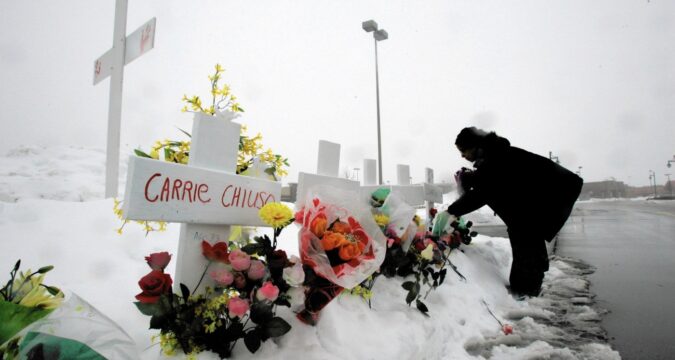
But many still wonder, who killed Rhoda McFarland, 42; Connie Woolfolk, 37; Carrie Hudek Chiuso, 33; Sarah Szafranski, 22; and Jennifer Bishop, 34?
All five women were shot and killed on a February morning in 2008 by a still unknown gunman. A sixth woman, a store employee, also was shot but survived her wounds.
It has been 18 years since the women were ambushed inside the Brookside Marketplace shop on a freezing Saturday morning.
Yet the case remains as cold as the day of the killings.
Charlie Minn aims to heat things up.
The filmmaker and former producer for “America’s Most Wanted” said, “This is a big one — five women killed and the case is still unsolved. Where’s the outrage?”
Minn is hoping his newest documentary, “The Tinley Park 5,” will not only spark renewed interest in the murders but lead to answers.
Police remove the bodies of five women killed in a shooting Feb. 2, 2008, at the Lane Bryant store at Brookside Marketplace shopping center in Tinley Park. (Scott Strazzante/Chicago Tribune)
The film opens in theaters on Feb. 13. Ticket sales are underway at AMC theaters in Crestwood, New Lenox and in Chicago’s River East neighborhood. More information is available at www.thetinley5.com.
Through interviews, a re-enactment and a review of the case, Minn hopes that “someone who knows something” will come forward and solve the mystery.
At 10:45 a.m. Feb. 2, 2008, six women were ushered into the back of the store where they were brutalized, Minn said.
The store manager, McFarland, as well as an employee and four customers were taken to a back room. While the manager quietly placed a call to 911, each of them were shot.
Only the employee survived. She helped police develop a sketch of the suspect, which, along with the 911 recording, remains on the Tinley Park police website at www.tinleypark.org.
Tinley Park Police Department released this 3-D image of the man suspected of killing five women at a Lane Bryant store the morning of Feb. 2, 2008. Police said the suspect is a man between 6-feet and 6-feet, 2-inches tall with a husky build and broad shoulders. (Tinley Park Police Department)
Although Tinley Park police did not assist in the making of the film, Minn did interview victim’s relatives, a former Lane Bryant employee who knew the lone survivor, a criminology professor and paramedics who were on the scene at the time. He also secured licensed footage of the parking lot at the time of the manhunt.
“It adds to the tone and atmosphere,” he said.
At a shop in Kankakee, Minn staged a reenactment.
“It’s brutal because that’s the way it was described,” he said.
During the 40-minute ordeal, he said, the women were restrained and underwear was placed over their heads. One woman, he said, was sexually assaulted. Another suffered bruising.
“It was intense,” Minn said.
He thinks the search for the killer should be the same.
“Right now, everything is too calm, too dormant, everything has faded into oblivion. Why should it take an outside filmmaker to come into the city to make some noise,” Minn said.
“We need more chatter, more activism, awareness and anger,” he said.
In addition to promoting his newest foray into unsolved murders, Minn will talk about the film with students on Thursday at Andrew High School and University of Illinois Chicago, and at 10 a.m. on Feb. 2, the anniversary of the killings, at Tinley Park High School.
“Of all the films I’ve made, this one is probably the most confusing,” he said.
Filmmaker Charlie Minn, seen in a shot taken for his documentary on the unsolved Lane Bryant murder case in Tinley Park, said he hopes the movie will spark new interest and leads in the cold case. (Charlie Minn)
Minn’s other films include “77 Minutes,” about the San Ysidro McDonald’s mass murder, “Robb-Ed,” an interview with survivors of the Uvalde school shooting, “49 Pulses,” detailing the Orlando nightclub shooting, and a documentary about a case that has eerie similarities to Lane Bryant. “Nightmare in Las Cruces” relives the horror of a Saturday morning massacre at a bowling alley in New Mexico.
“It’s kind of bizarre how it mirrors Lane Bryant,” Minn said. “Both happened on a Saturday morning in early February. Same number of deaths. One survivor. There were no cameras inside. And both cases remain unsolved.”
Chicago is a big city with a lot of problems, Minn said. This case, he said, has almost become “just another crime that’s unsolved.”
But the women who were brutalized, and the community, deserve better. The truth, he said, needs to come out.
Donna Vickroy is an award-winning reporter, editor and columnist who worked for the Daily Southtown for 38 years. She can be reached at donnavickroy4@gmail.com.
https://www.chicagotribune.com/2026/01/26/documentary-lane-bryant-shootings-theaters/
Trump Hails “Very Good Call” With Walz As He Sends “Tough But Fair” Tom Homan To Minnesota
Trump Hails “Very Good Call” With Walz As He Sends “Tough But Fair” Tom Homan To Minnesota
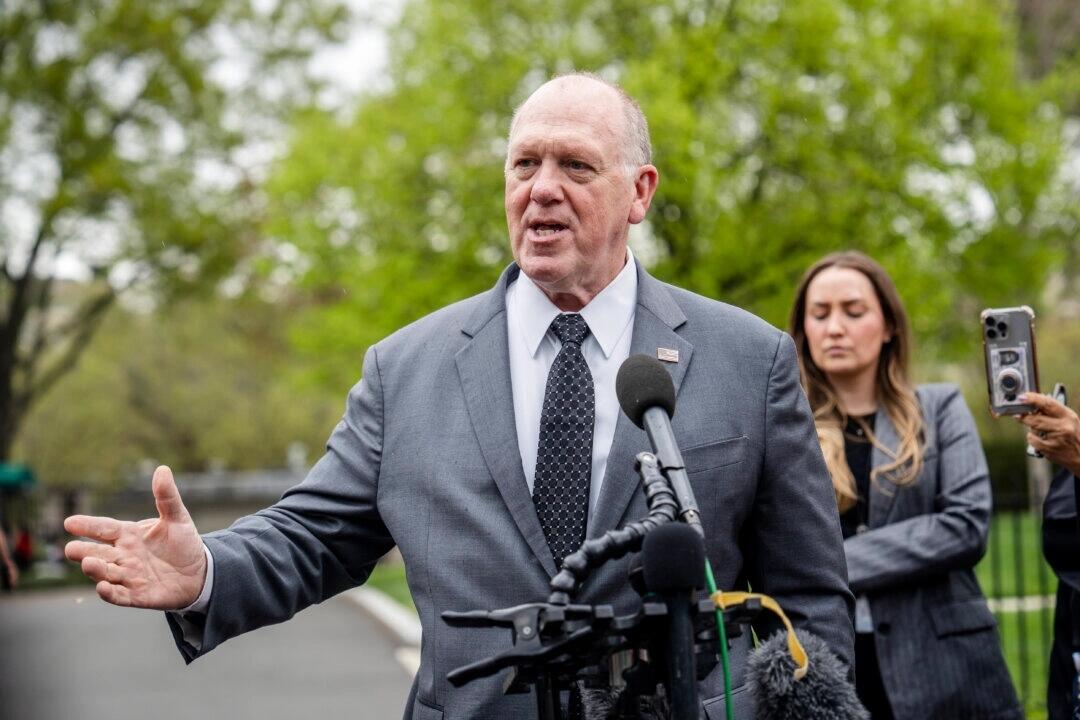
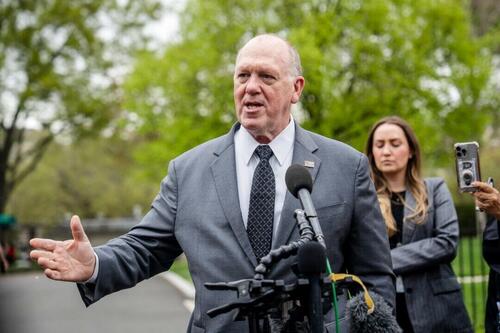
President Trump announced on Jan. 26 that he is sending border czar Tom Homan to Minnesota in the wake of the shooting of an anti-immigration enforcement protester by a federal agent.
The president said in a morning Truth Social post that Homan would be going to Minnesota on Monday evening, noting that though Homan hasn’t been involved in operations there, he knows many officials in the state.
“Tom is tough but fair, and will report directly to me,” Trump wrote.
White House press secretary Karoline Leavitt confirmed in a post on Monday that Homan would be investigating fraud in Minnesota, building on a multi-agency effort that was launched several weeks ago amid reports of fraudulent activity targeting federal and state entitlement programs.
The border czar, she added, would also be managing Immigration and Customs Enforcement (ICE) operations in Minnesota to target illegal immigrants.
“In addition, Tom will coordinate with those leading investigations into the massive, widespread fraud that has resulted in billions of taxpayer dollars being stolen from law-abiding citizens in Minnesota,” Leavitt wrote on X.
As Jack Phillips reports for The Epoch Times, the Trump administration has launched its most ambitious immigration operation to date in Minneapolis, sparking weeks of protests by residents and resulting in two shooting deaths.
A Border Patrol agent on Saturday fired in self-defense after a man, identified later as Alex Pretti, approached with a handgun and violently resisted attempts to disarm him, according to the Department of Homeland Security (DHS).
It followed the Jan. 7 fatal shooting of U.S citizen Renee Good during a separate immigration operation.
Democratic congressional lawmakers have warned that in the wake of the Pretti shooting, they could shut down the federal government at the end of January if Republicans do not pass a package without DHS funding.
“Senate Democrats will not allow the current DHS funding bill to move forward,” Senate Minority Leader Chuck Schumer (D-N.Y.) said in a statement on Sunday before he criticized the Trump administration.
“People should be safe from abuse by their own government. Senate Republicans must work with Democrats to advance the other five funding bills while we work to rewrite the DHS bill.”
In posts over the weekend and in his Truth Social comment Monday, Trump has shown no sign of backing down amid the protests. On Monday, he suggested that the operation was critical.
Trump wrote that “a major investigation is going on with respect to the massive 20 Billion Dollar. … Welfare Fraud that has taken place in Minnesota, and is at least partially responsible for the violent organized protests going on in the streets.”
Trump said Sunday that the operation in Minnesota was a key part of why he won in 2024 and signaled that Democratic politicians were to blame.
“Tragically, two American Citizens have lost their lives as a result of this Democrat ensued chaos,” the president said.
This morning, ‘diplomacy’ appears to be taking place as President Trump said in a Truth Social post that Governor Tim Walz called him with the request to work together with respect to Minnesota.
“It was a very good call, and we, actually, seemed to be on a similar wavelength,” Trump said.
“I told Governor Walz that I would have Tom Homan call him, and that what we are looking for are any and all Criminals that they have in their possession. The Governor, very respectfully, understood that, and I will be speaking to him in the near future.
He was happy that Tom Homan was going to Minnesota, and so am I! We have had such tremendous SUCCESS in Washington, D.C., Memphis, Tennessee, and New Orleans, Louisiana, and virtually every other place that we have “touched” and, even in Minnesota, Crime is way down, but both Governor Walz and I want to make it better!”
We will just have to see if the manufacture crisis ebbs after this… and just how Walz will respond to Trump’s statement.
Tyler Durden
Mon, 01/26/2026 – 11:55

Equipos de F1 prueban en privado sus nuevos modelos de 2026 ante temores de fallos técnicos
Por JAMES ELLINGWORTH
Diez monoplazas nuevos, cinco días, sin aficionados.
La Fórmula 1 inició el lunes una nueva era con el público y los medios excluidos de su sesión de pruebas privadas en España.
Es difícil imaginar un contraste mayor con la lujosa fiesta de lanzamiento del año pasado que involucró a 16.000 aficionados y caras famosas en Londres.
Mercedes fue uno de los primeros equipos que rodó en pista el lunes, según informó la F1, junto con Alpine y Audi, que participó en su primer evento oficial desde que se quitó el nombre de Sauber.
La F1 tiene 11 equipos este año. Cadillac hace su debut, pero solamente 10 estarán en España debido a los retrasos de Williams para tener listo su nuevo modelo.
No habrá cobertura televisiva, excepto breves clips del propio canal de la F1, ni resultados oficiales de la prueba de cinco días esta semana, por lo que será difícil evaluar quién lleva la delantera con las nuevas regulaciones. La segunda prueba en Bahréin el próximo mes es cuando el enfoque cambiará al rendimiento.
Puertas cerradas
Entonces, ¿por qué F1 impide que los aficionados vean los nuevos autos en la pista?
La F1 originalmente se refirió al evento de esta semana como una “prueba privada”, pero ahora lo llama el “Barcelona Shakedown”, un término que generalmente se usa para carreras de corta distancia para verificar la fiabilidad básica, no el tipo de pruebas extendidas de varios días en España.
Ese cambio refleja preocupaciones de que algunos diseños completamente nuevos podrían no ser lo suficientemente fiables como para causar una buena primera impresión.
Bahréin tiene un acuerdo de larga duración para realizar pruebas de pretemporada y su clima cálido es más representativo de las carreras reales. Degradar Barcelona puede concentrar más atención en Bahréin, que tiene la primera cobertura televisiva en vivo de los autos haciendo vueltas cronometradas.
Algunos equipos, como Ferrari, han revelado sus diseños para 2026 y les han dado un breve tiempo en pista utilizando exenciones para eventos promocionales con distancia limitada, pero planean cambios importantes antes de la primera carrera en Australia en marzo.
El campeón defensor McLaren fue inusual por señalar que su diseño de Barcelona estará cerca de la especificación de carrera. McLaren se saltará la sesión del lunes “para dar el mayor tiempo posible al desarrollo del auto”, afirmó el jefe del equipo Andrea Stella la semana pasada.
Otros, incluidos Red Bull, hasta ahora solo habían mostrado nuevos trabajos de pintura en coches de imitación, haciendo que las primeras carreras en Barcelona sean una etapa especialmente crucial en el desarrollo.
¿Qué puede salir mal?
Los equipos pueden correr tres de los cinco días en España, dándoles tiempo para solucionar problemas sin perder terreno, por lo que el inicio retrasado de McLaren no es un contratiempo.
Con motores completamente nuevos, sistemas de baterías y coches más pequeños y ligeros, la fiabilidad es una preocupación mayor de lo que ha sido en años.
La última vez que las reglas cambiaron tanto, la primera prueba de pretemporada fue un desastre.
Los autos se averiaron con frecuencia el primer día de pruebas en el remoto circuito de Jerez en 2014 mientras los equipos se adaptaban a los nuevos motores híbridos turboalimentados V6, y Lewis Hamilton encalló su Mercedes en una trampa de grava. Los problemas finalmente se resolvieron a lo largo de la temporada y Hamilton terminó el año como campeón.
Sin embargo, la F1 se ha convertido en un deporte muy diferente en los 12 años desde entonces. La serie de Netflix “Drive To Survive” atrajo a una nueva oleada de aficionados acostumbrados a transmisiones detalladas y contenido de redes sociales con acceso total.
___
Deportes AP: https://apnews.com/hub/deportes

EEUU invierte en compañía de tierras raras, trata de reducir dependencia de China
Por MICHELLE CHAPMAN
Estados Unidos está tomando una participación minoritaria en una empresa minera de tierras raras en Oklahoma, la última inversión gubernamental en el sector mientras busca minimizar su dependencia de las importaciones de un material utilizado en teléfonos inteligentes, robótica, vehículos eléctricos y muchos otros productos de alta tecnología.
China procesa más del 90% de los minerales críticos del mundo y ha utilizado su dominio en el mercado para ganar ventaja en la guerra comercial con Washington.
USA Rare Earth anunció el lunes que el Departamento de Comercio está invirtiendo 1.600 millones de dólares en la empresa para avanzar en el trabajo de una mina en Texas y construir una instalación de fabricación de imanes en Oklahoma.
Las acciones de USA Rare Earth subieron más del 13% antes de que abrieran los mercados en Estados Unidos.
El acuerdo con el programa CHIPS del Departamento de Comercio incluye 277 millones de dólares en financiación federal propuesta y un préstamo senior garantizado de 1.300 millones de dólares. El Departamento de Comercio recibirá 16,1 millones de acciones ordinarias a cambio, así como derechos para comprar 17,6 millones más.
“El proyecto de minerales críticos pesados de USA Rare Earth es esencial para restaurar la independencia de minerales críticos de Estados Unidos”, declaró el secretario de Comercio, Howard Lutnick, en un comunicado. “Esta inversión asegura que nuestras cadenas de suministro sean resilientes y ya no dependan de naciones extranjeras”.
La administración Trump está intensificando los esfuerzos para desarrollar la industria nacional de minerales críticos para romper el control que China tiene sobre la cadena de suministro global.
Empresarios, analistas y legisladores han advertido durante años que la dependencia de Estados Unidos de China para minerales críticos —una lista de 50 minerales que incluye 17 elementos de tierras raras muy buscados— es una vulnerabilidad de seguridad nacional.
Los intentos del presidente Donald Trump de adquirir Groenlandia son parte de ese impulso.
USA Rare Earth, con sede en Stillwater, Oklahoma, es el tercer operador estadounidense en el que la administración Trump ha invertido en los últimos meses.
El Pentágono invirtió 400 millones de dólares en el productor de tierras raras MP Materials. Le otorgó a la empresa estadounidense un préstamo de 150 millones de dólares en agosto.
La administración Trump y los inversores privados anunciaron en noviembre una asociación con las startups de tierras raras Vulcan Elements y ReElement Technologies. El acuerdo de 1.400 millones de dólares busca aumentar el acceso a materiales y tecnología que son cruciales para producir una variedad de bienes de alta tecnología y equipos militares.
El presupuesto aprobado por el gobierno incluye 2.000 millones de dólares para que el Pentágono aumente sus reservas de minerales críticos y 5.000 millones más hasta 2029 para invertir en esas cadenas de suministro.
Entre 2020 y 2024, el Pentágono dijo que había otorgado más de 439 millones de dólares para establecer cadenas de suministro de tierras raras nacionales.
A principios de este mes, un grupo bipartidista de legisladores propuso crear una nueva agencia con 2.500 millones de dólares para impulsar la producción de tierras raras y otros minerales críticos.
___________________________________
Esta historia fue traducida del inglés por un editor de AP con ayuda de una herramienta de inteligencia artificial generativa.
Israel recovers the last hostage’s remains in Gaza as ceasefire moves into tricky new phase
JERUSALEM — Israel said Monday it had recovered the remains of the last hostage in Gaza, closing a painful chapter for the country and clearing the way for the next and more challenging phase of its ceasefire with Hamas.
The next step is likely to be the reopening of Gaza’s border with Egypt, enabling Palestinians to move in both directions and more aid to enter the territory devastated by two years of war. The ceasefire’s second phase also calls for deploying an international security force, disarming Hamas, pulling back Israeli soldiers and rebuilding Gaza.
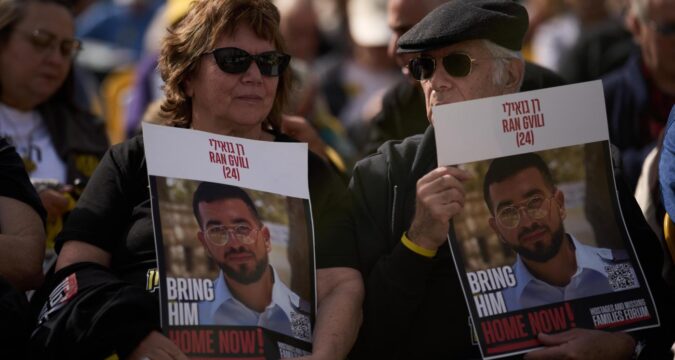
The remains of police officer Ran Gvili were found in a cemetery in northern Gaza.
Prime Minister Benjamin Netanyahu called it “an incredible achievement” for Israel and its soldiers. He said Gvili, who was killed during the Hamas-led attack on Oct. 7, 2023, that sparked the war, was among the first to be taken into Gaza.
“There are no more hostages in Gaza,” Netanyahu said Monday while addressing the Israeli parliament. “We have completed this mission, as I promised, and we will complete the other missions we have set.”
The return of all remaining hostages, living or dead, had been a key part of the Gaza ceasefire’s first phase. Gvili’s family had urged Israel’s government not to enter the second phase until his remains were recovered and returned.
Hamas said it now has committed to all terms of the ceasefire’s first phase.
Netanyahu’s office said Sunday that once the search for Gvili was finished, Israel would open the Rafah crossing between Gaza and Egypt, which Palestinians see as their lifeline to the world. It has been largely shut since May 2024, except for a short period early last year.
The ceasefire’s next phase will confront thornier issues, including transitioning to a new governance structure in Gaza and disarming Hamas, which has ruled the territory for nearly two decades.
“The next phase is disarming Hamas and demilitarizing the Gaza Strip. The next phase is not reconstruction,” Netanyahu said.
Palestinians react to recovery of last hostage’s remains
Palestinians in Gaza were optimistic that opening the Rafah crossing will allow travel to and from the enclave along with the evacuation of people needing medical care.
“We hope this will close off Israel’s pretexts and open the crossing,” said Abdel-Rahman Radwan, a Gaza City resident whose mother is a cancer patient and requires treatment outside Gaza.
Ahmed Ruqab, a father who lives with his family of six in a tent in the Nuseirat refugee camp, called for mediators and the U.S. to pressure Israel to allow more aid and caravans into Gaza.
“We need to turn this page and restart,” he said over the phone.
Israel and Hamas had been under pressure from the U.S. and other ceasefire mediators to move into the second phase of the truce that took effect on Oct. 10.
Gvili’s relatives last week repeated calls for Israel’s government and U.S. President Donald Trump to ensure the release of his remains. White House press secretary Karoline Leavitt in a social media post called Monday’s development “incredible news,” adding “President Trump made this possible.”
“Most thought of it as an impossible thing to do,” Trump posted.
Israel had repeatedly accused Hamas of dragging its feet in the recovery of Gvili’s remains. Hamas said it had provided all the information it had, accusing Israel of obstructing the efforts.
Gvili’s remains were found right along the “yellow line” dividing Gaza just on the Israeli side, according to a military official, speaking anonymously under army protocol.
The October 2023 attack on Israel that launched the war killed about 1,200 people and saw 251 taken hostage. Gvili, a 24-year-old police officer known affectionately as “Rani,” was killed while fighting Hamas.
Before Gvili’s remains were recovered, 20 living hostages and the remains of 27 others had been returned to Israel since the ceasefire, most recently in early December. Israel in exchange has released the bodies of hundreds Palestinians to Gaza.
In a symbolic act, Israeli President Isaac Herzog on Monday removed a yellow pin worn by many Israeli citizens and public figures since the early months of the war to show solidarity with the hostages and their families.
Hundreds of Palestinians killed in Gaza since the ceasefire
Palestinians in Gaza who spoke to The Associated Press in recent weeks questioned whether moving into phase two of the ceasefire will improve conditions on the ground, pointing to ongoing bloodshed and challenges securing basic necessities.
Israeli forces on Monday fatally shot two people in Gaza, according to hospitals that received the bodies. One man was close to the area where the military was searching for Gvili, according to Shifa Hospital.
Israel’s offensive has killed more than 71,400 Palestinians since 2023, according to Gaza’s Health Ministry — with more than 480 Palestinians killed by Israeli fire since the latest ceasefire began. The ministry, which is part of the Hamas-led government, maintains detailed casualty records that are seen as generally reliable by U.N. agencies and independent experts.
Israel’s top court considers petition to open Gaza for international journalists
The Foreign Press Association on Monday asked Israel’s Supreme Court to allow journalists to enter Gaza freely and independently.
The FPA, which represents dozens of global news organizations, has been fighting for more than two years for independent media access to Gaza. Israel has barred reporters from entering Gaza independently since the 2023 attacks by Hamas, saying entry could put journalists and soldiers at risk.
The army has offered journalists brief visits under strict military supervision.
FPA lawyers told the three judge panel that the restrictions are not justified and that with aid workers moving in and out of Gaza, journalists should be allowed in. They also said the tightly controlled embeds with the military are no substitute for independent access. The judges are expected to rule soon.
Magdy reported from Cairo. Associated Press reporters Josef Federman, Natalie Melzer and Melanie Lidman in Jerusalem contributed to this report.
https://www.chicagotribune.com/2026/01/26/israel-hostages-gaza-ceasefire/