Category: News

CIA-Backed AQ-Linked Syrian Leader Watching Dance Performance To Missy Elliott Song Goes Viral
CIA-Backed AQ-Linked Syrian Leader Watching Dance Performance To Missy Elliott Song Goes Viral
A video of interim Syrian President Ahmed al-Sharaa (previously, Abu Mohammad al-Julani) watching a dance performance to Missy Elliott’s Work It has gone viral, sparking a mix of amusement and confusion on social media.
The performance took place on Monday at the recently reopened al-Feyhaa Sports Hall in Damascus, which Sharaa had inaugurated earlier that day before a Syria-Lebanon basketball match later that evening.
The game marks the first time Syria and Lebanon have played against each other since the fall of Bashar al-Assad in December 2024.
Ahead of the game, a group of dancers took to the stage, performing a dance routine to Work It, a song containing sexually explicit lyrics, by US rapper Missy “Misdemeanor” Elliott. Other performances reportedly included Rihanna’s Rudeboy and Gwen Stefani’s Hollaback Girl.
The Syrian leader is seen sitting in the audience with a deadpan expression on his face.
In light of Sharaa’s background as a former militant and member of al-Qaeda, his attendance at a performance of a western song, featuring sexually explicit lyrics, stunned many social media users.
“The ISIS president of Syria Al-Sharaa vibing to @MissyElliott is not something I was ready to see this year”, one person commented on X.
After Sharaa’s Islamist group, Hay’at Tahrir al-Sham, seized Damascus on December 8, 2024, ousting longtime ruler Assad, Sharaa became Syria’s interim president and rapidly transformed from a militant into a statesman.
The concept of a former terrorist Leader publicly jamming to “Work It” by Missy Elliott pic.twitter.com/i7Y7nXvVl3
— Moh (@Daimohnds) April 21, 2026
“Never thought I’d mention al-Sharaa and Missy Elliot in the same sentence, but then here we are. Not touching the lyrics (I doubt Sharaa knows what Missy E is singing about)… but damn, what a “flip it and reverse it” moment!”, another person posted on X, in response to the video.
Shortly after celebrating his victory in December 2024, Sharaa warmly began embracing world leaders he once eschewed and appeared in western media outlets, where he spoke of Syria’s “diversity as a strength” and of “unifying the country”.
He also promised to pursue former government personnel and loyalists implicated in war crimes, trimmed his beard and lost his turban and thobe for a suit and tie.
The ISIS president of Syria Al-Sharaa vibing to @MissyElliott is not something I was ready to see this year. https://t.co/y19UVH3Bup
— Joel Jenkins (@boganintel) April 22, 2026
His attendance at the performance was seen by many online as a further sign of his departure from his past, albeit with raised eyebrows, given the swiftness of his transformation.
“Al Qaeda is dead and Missy Elliott is alive!” one user posted on X.
While Syria’s transitional administration has initiated economic reforms, including public-sector employee reductions, tax system reforms, and the reopening of border crossings, several people have questioned the sustainability of Sharaa’s transformation and pointed out that the Syrian leader has, to date, not publicly apologized for past actions.
His transition from head chopper to Missy Elliott fan has to be one of the most remarkable transformation stories ever. Yet we have heard virtually zero explanation as to his change, nor any apologies for his past actions
— Sheriff Detmer (@SheriffDetmer) April 21, 2026
“His transition from head chopper to Missy Elliott fan has to be one of the most remarkable transformation stories ever. Yet we have heard virtually zero explanation as to his change, nor any apologies for his past actions,” a social media user commented on X.
* * *
Tyler Durden
Thu, 04/23/2026 – 18:40

PIMCO Privately Lends Over $10 Billion To Dollar-Strapped Gulf States
PIMCO Privately Lends Over $10 Billion To Dollar-Strapped Gulf States
Just days after the UAE hinted at a growing dollar shortage in the Gulf nation by requesting swap lines with the Fed, Bloomberg reports that as Iran’s struggling neighbors scramble to build cash buffers to deal with any potential economic fallout from the Iran war, one large buyer has stepped in: the world’s largest bond manager, Pacific Investment Management Co.
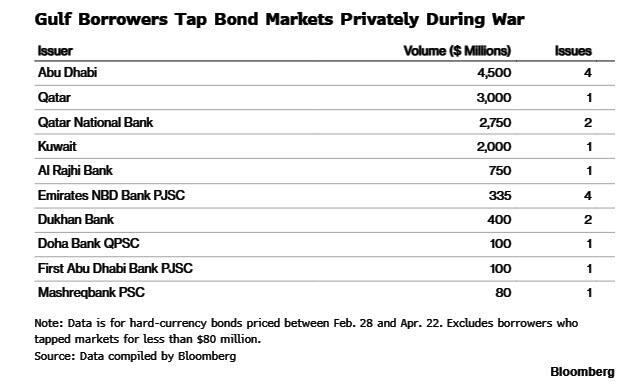
Since the start of the Iran war, Pimco has lent more than $10 billion to state-backed and government borrowers in the Gulf via so-called private placements. The $2.27 trillion asset manager has been a significant buyer of privately placed bonds issued by the governments of Abu Dhabi, Qatar and Kuwait, as well as by Qatar National Bank. Pimco also participated alongside other investors in several placements that boosted the size of existing Abu Dhabi bonds by a combined $2.5 billion.
In total, regional borrowers raised $13.8 billion from Feb. 28 to April 23, in privately placed bonds denominated in hard currency, according to data compiled by Bloomberg, with Pimco accounting for a majority of that lending.
Private placements offer trade-offs for issuers rushing to get to market: they can be more expensive than public debt (and thus soffer higher returns for buyers such as Pimco). In return, sellers are able to borrow faster, with more privacy and greater flexibility on deal terms.
The coupon on Qatar’s privately placed bond was 4.8%. That was about 0.3% higher than implied by the yield curve for the country’s public traded bonds, according to Bloomberg calculations. The actual yield for bondholders depends on the price at which they bought it from the issuer, which wasn’t disclosed.
“Not all countries have the option of borrowing at reasonable interest rates at a time of geopolitical uncertainty. It’s notable that the three Gulf nations with the strongest balance sheets are the ones tapping the market,” said Ziad Daoud, chief emerging markets economist at Bloomberg Economics. “And they’re resorting to private borrowing instead of public issuance. The latter probably requires more disclosure and higher transparency.”
To Pimco, which has been invested heavily in emerging market bonds, the Gulf scramble to find buyers for its bonds has been a boon. The Newport Beach-based fund opened an office in Dubai last year, joining a rush of investment companies seeking to deepen their presence in a region flush with sovereign wealth. Pimco said this move built on over 20 years of managing assets for investors in the Middle East.
Pimco intends to hold the bonds over the long term, a Bloomberg source said. Earlier this month, Pimco – which is rapidly emerging as a lender of last resort – bought all of a $400 million bond issued by a Blue Owl Capital, in an important vote of confidence for the private credit specialist.
Gulf bond markets have been among the busiest globally in recent years, with regional borrowers selling about $50 billion of public debt in the first two months of this year. But those markets have effectively shut since the conflict began.
Before a ceasefire between the US and Iran was agreed in early April, Gulf Arab states contended with thousands of missiles and drones over several weeks, intercepting the vast majority. The effective closure of the Strait of Hormuz disrupted energy exports — a key source of government revenue — prompting the International Monetary Fund to cut growth forecasts across the region.
Over the weekend, the WSJ reported that the UAE informally inquired about a currency swap, if the economic and financial impact of the war worsens. The Emirati ambassador to Washington signaled the country had no need for external financing, and Bloomberg Economics’ Daoud described the inquiry as “a call for confidence, not a call for help.”
US Treasury Secretary Scott Bessent said Wednesday that many Persian Gulf allies had requested foreign exchange swap lines with the US, a day after President Donald Trump said an arrangement with the UAE is under consideration.
Tyler Durden
Thu, 04/23/2026 – 18:15

Air Force Extends Use Of Iran Attack Plane A-10 ‘Warthog’ To 2030
Air Force Extends Use Of Iran Attack Plane A-10 ‘Warthog’ To 2030
Authored by Victoria Friedman via The Epoch Times,
The U.S. Air Force said on April 20 that it would extend the life of the A-10 Thunderbolt II attack aircraft—commonly referred to as the “Warthog”—for another four years beyond its previously stated retirement deadline of 2026.
Air Force Secretary Troy Meink wrote on X that following consultation with Secretary of War Pete Hegseth, the Air Force “will EXTEND the A-10 ‘Warthog’ platform to 2030,” adding that this decision “preserves combat power as the Defense Industrial Base works to increase combat aircraft production.”
The A-10 is being deployed in operations in Iran, according to U.S. Central Command (CENTCOM), which said in a March 25 post on X that it had been used to strike Iranian naval vessels during Operation Epic Fury.
Chairman of the Joint Chiefs of Staff Gen. Dan Caine previously revealed at a March 19 Pentagon news conference that the craft was “now in the fight across the southern flank and is hunting and killing fast-attack watercraft in the Strait of Hormuz.”
According to an Air Force fact sheet, the Warthog was the first Air Force aircraft designed specifically to provide air support for ground forces. It can fly near combat areas for extended periods of time, and be used as an attack aircraft against ground targets, “including tanks and other armored vehicles.”
Former F-16 Thunderbird fighter pilot Ryan Bodenheimer, who runs the YouTube channel “Max Afterburner,” described A-10 in a March 15 video as “America’s flying tank.” He said it could be used to take down Shahed drones, as well as some of the fast-attack boats Iran still had in service at the time.
The Warthog is resilient, able to survive hits from armor-piercing and high-explosive projectiles up to 23mm, according to the Air Force.
However, they’re not invulnerable. On April 3, a pilot ejected from an A-10 after it was hit, with Iranian forces taking credit. The pilot parachuted to safety in Kuwait before the Warthog crashed.
Attempts to Retire the A-10
Some in the Air Force said that the A-10, which first flew in 1976, is too old, too slow, and too expensive to maintain, prompting calls for its retirement to free up funds to develop modern defense solutions such as hypersonic weapons. But those opposed to the retirement say that cutting the fleet before there is a suitable replacement could leave ground troops without adequate air support.
In 2021, then-President Joe Biden wanted to retire dozens of the aircraft to free up resources for modernization, but Sen. Mark Kelly (D-Ariz.)—in whose state many of the craft are based—pushed back and secured language in defense legislation that blocked retirements.
Kelly argued that the aircraft should not be taken out of commission until a replacement is available.
That same year, Air Force Lt. Gen. David Nahom told a House of Representatives hearing that if the number of A-10s is not reduced, the Air Force will face a shortage of mechanics for newer planes.
An A-10 Thunderbolt II undergoes pre-flight inspections at Davis-Monthan Air Force Base in Arizona on March 23, 2006. U.S. Air Force photo by Airman 1st Class Jesse Shipps
The Warthog has some enthusiastic defenders outside the Pentagon.
Defense analyst Mike Fredenburg wrote in a March 24 opinion piece in The Epoch Times: “Despite Air Force claims that the A-10 has no place on the modern battlefield, a claim it has been making for decades, the A-10 is once again using its unmatched versatility and loitering capability to destroy fast-attack watercraft, drones, and enemy positions.
“And for the role it is performing in Operation Epic Fury, the Warthog is vastly superior to any F-35, F-15, F-16, or B-2, or even the most advanced drone in the U.S. arsenal.”
Tyler Durden
Thu, 04/23/2026 – 17:50
https://www.zerohedge.com/military/air-force-extends-use-iran-attack-plane-10-warthog-2030

Texas Instruments Jumps Most Since Dot-Com On Upgraded Outlook; Goldman Sees Analog Recovery
Texas Instruments Jumps Most Since Dot-Com On Upgraded Outlook; Goldman Sees Analog Recovery
Shares of Texas Instruments jumped the most since the Dot-Com bubble era after the chipmaker issued a stronger-than-expected second-quarter forecast, signaling that demand is rebounding across industrial markets and data centers. Goldman analysts told clients the guidance suggests the “analog recovery is continuing.”
Revenue guidance of $5 billion to $5.4 billion and profit guidance of $1.77 to $2.05 a share both came in well above the Bloomberg Consensus estimate of estimate $4.85 billion, while first-quarter results also beat expectations.
Here’s a snapshot of first-quarter results (courtesy of Bloomberg):
EPS $1.68 vs. $1.28 y/y, estimate $1.38
Revenue $4.83 billion, +19% y/y, estimate $4.53 billion
Analog revenue $3.92 billion, +22% y/y, estimate $3.68 billion
Embedded processing revenue $723 million, +12% y/y, estimate $683 million
Other revenue $178 million, -16% y/y, estimate $168.7 million
Operating profit $1.81 billion, +37% y/y, estimate $1.54 billion
Capital expenditure $676.0 million, -40% y/y, estimate $689.9 millio
Free cash flow $1.40 billion, estimate $1.2 billion
R&D expenses $510 million, -1.4% y/y, estimate $530.7 million
Cash and cash equivalents $3.55 billion, +28% y/y, estimate $3.25 billion
CEO Haviv Ilan told analysts on an earlier call that the resurgence in demand for industrial components was broad-based across all geographies and segments. He added that while the company’s revenue remains below its previous peak, that’s only spurring optimism that upside momentum will continue.
“There is a lot of room to grow,” Ilan said. “I saw it across all sectors in industrial.”
Institutional commentary from Goldman analyst James Schneider had some very positive takeaways from earnings:
Key stock takeaways: We expect the stock to trade higher following a quarter and guidance that came in well above the Street. We believe expectations were somewhat elevated given management’s constructive commentary at recent conferences, and based on our conversations we believe most investors were positioned more constructively ahead of the quarter.
We see the strong recovery in the industrial end market as a particularly encouraging read-across for the sector. Although we continue to see a recovery across the analog sector (including for TI), we believe peers have managed their inventory levels far more proactively — and hence we believe gross margins are likely to recover much faster for peers (along with significant upward earnings revisions) than for TI.
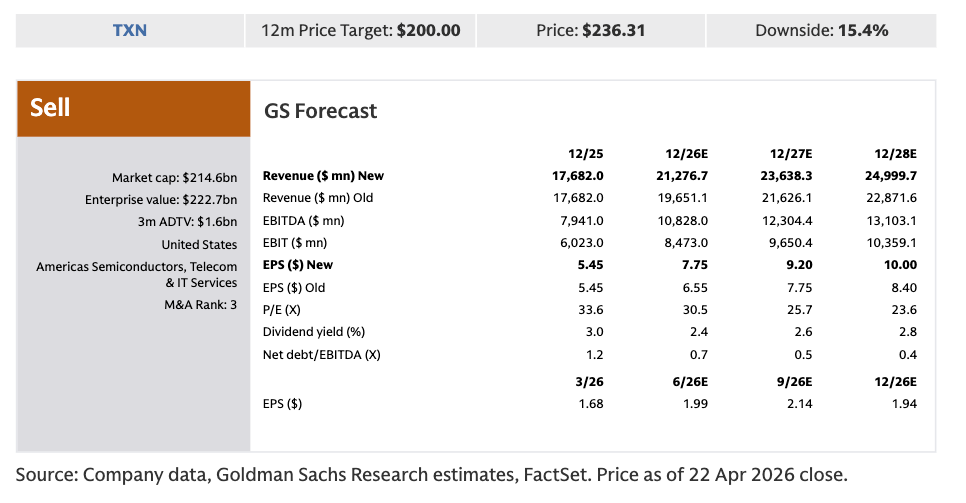
We continue to have a preference for peers (including Microchip, NXP, and Analog Devices) who are likely to see greater upward earnings revisions in the near term, and we retain our relative Sell rating on TXN given the ongoing gross margin headwinds we expect in the coming quarters.
Schneider continued:
Read-through to our coverage: We expect a positive initial reaction for the analog group, with the most direct read-across for MCHP (Buy) and ADI (Buy) given their relatively high industrial exposures.
He raised Goldman’s 12-month price target to $200 from the previous $175 and maintained a “sell” rating:
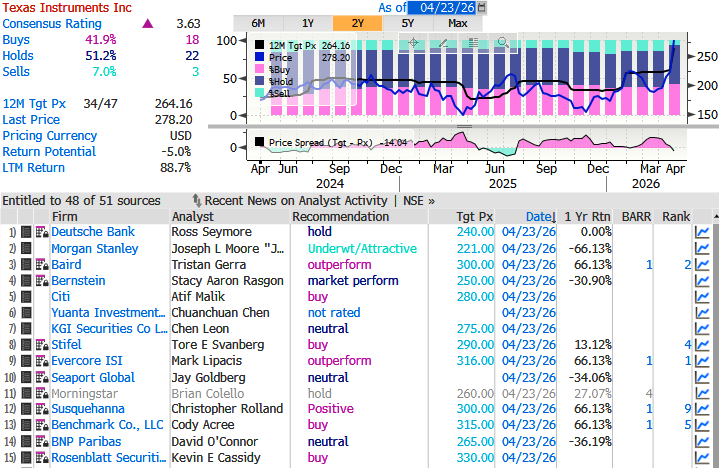
Here’s what other institutional desks are saying:
Barclays (raised to equal-weight from underweight, PT to $250 from $175)
Upgrade reflects multiple quarters of growth in the company’s Industrial business
While a lot seems baked into the stock, “Industrial exposure is the place to be in Analog today”
BofA Global Research (raised to buy from neutral, PT to $320 from $235)
Upgrades rating after solid 1Q earnings on “industrial strength, data center power content, and US-based manufacturing”
“Pricing has not been a factor, but could offer incremental good news in 2H which we conservatively model below seasonal trends”
Truist Securities (hold, PT $225)
The results show broad-based upside, including “strong cash flow performance”
“Capital allocation was constructive for equity”
The outlook is better than expected
Bloomberg Intelligence
“Texas Instruments’ 1Q results and 2Q outlook significantly beat consensus, solidifying a robust and broad recovery across its industrial markets, likely aided by new data-center sales”
Evercore ISI (outperform, PT to $316 from $270)
The results were better than expected, while the outlook is “above seasonal”
Citi (buy, PT to $280 from $235)
The results are strong, while the outlook is “well above seasonal”
Bloomberg Consensus Breakdown:
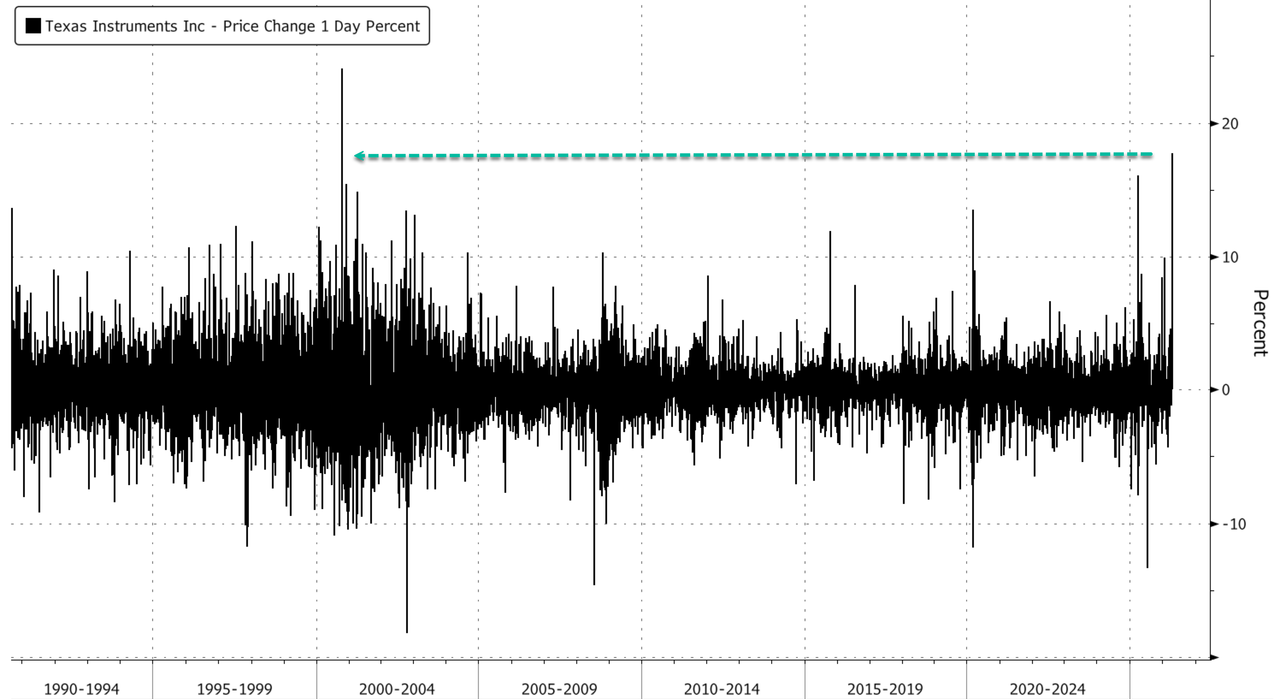
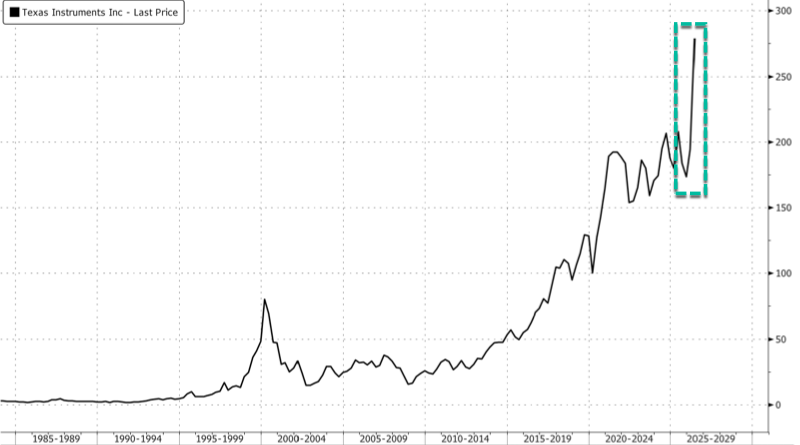
Traders rewarded Texas Instruments for its upgraded earnings outlook with buying panic mania on Thursday.
Shares in late-afternoon trading were up nearly 20%, the largest intraday move since the 24% gain on October 19, 2000.
Shares are in bluesky breakout territory:
Professional subscribers can read Goldman’s TI takeaway here at our new Marketdesk.ai portal
Tyler Durden
Thu, 04/23/2026 – 17:25

12 AGs Petition Court To Defend Trump’s Executive Order On Citizenship Verification In Elections
12 AGs Petition Court To Defend Trump’s Executive Order On Citizenship Verification In Elections
Authored by Janice Hisle via The Epoch Times,
Attorneys general from a dozen states on April 20 asked to intervene in two lawsuits that oppose President Donald Trump’s executive order on citizenship verification and other election integrity efforts.
The coalition of attorneys general filed motions in Massachusetts and the District of Columbia, expressing support for the president’s March 31 executive order, titled “Ensuring Citizenship Verification and Integrity in Federal Elections.”
After Trump issued the order, “left-leaning activists and progressive states” immediately challenged it, Missouri Attorney General Catherine Hanaway’s office said in a news release, “claiming it represents a federal intrusion on state authority over elections.”
She characterized Trump’s actions as “common-sense election integrity measures” in a statement and resolved to “defend every lawful step that promotes accurate [voter] rolls, secure absentee processes, and transparent administration.”
The president also issued a broader order in March 2025, titled “Preserving and Protecting the Integrity of American Elections.”
Both election-related orders have spawned numerous courtroom battles.
On April 17, a federal judge in Rhode Island became at least the fifth to rule against the Trump’ administration’s voter-roll-collection attempts. Some states agreed to turn over the requested data, but the Trump administration sued 30 states and the District of Columbia for refusing to do so.
Trump’s 2026 order requires federal agencies to compile a state citizenship list to assist state election officials in confirming which people are U.S. citizens, over 18, and residents of the state—all mandatory to be eligible to vote.
The order also instructs the U.S. Postal Service to improve security of mail-in ballots, using means such as barcodes that allow tracking of official election mail.
“Missouri and the other states are fighting for access to these resources and to work alongside the federal government in guarding the integrity of American elections,” Hanaway wrote.
Attorneys general who joined Hanaway’s coalition hail from Alabama, Florida, Indiana, Kansas, Louisiana, Montana, Nebraska, Oklahoma, South Carolina, South Dakota, and Texas.
Commerce Secretary Howard Lutnick (L) and President Donald Trump before signing an executive order on election integrity in the Oval Office on March 31, 2026. Brendan Smialowski/AFP via Getty Images
The Washington lawsuit against Trump, filed on April 1 by the Democratic Senatorial Campaign Committee and other Democrats, frames Trump’s order as another attempt to “rewrite election rules for his own perceived partisan advantage.”
The lawsuit also calls provisions of Trump’s order “convoluted and confusing,” adding, “What is clear is that it dramatically restricts the ability of Americans to vote by mail, impinging on traditional state authority.”
In a separate action filed in the District of Columbia court on April 21, a grassroots organization, Common Cause, is asking a judge to stop what it calls “an illegal and unprecedented quest to stockpile millions of Americans’ confidential voter data.”
Common Cause requested the court to “hold unlawful, stay, vacate, and set aside” the national Voter Registration Nationalization Policy and to prohibit the Justice Department from “unlawful disclosure and use” of voter data.
The Massachusetts lawsuit, filed April 2, alleges that Trump’s order “violates the constitutional separation of powers because the president doesn’t have authority to set election rules. Only the states and Congress may do so,” a news release from the Brennan Center for Justice says.
The Brennan Center’s attorneys worked with lawyers from other groups to file the federal complaint on behalf of the lead plaintiff, the League of Women Voters of Massachusetts, and additional organizations.
Tyler Durden
Thu, 04/23/2026 – 17:00
Intel Shares Soar On Strong AI-Fueled Outlook, Surpassing August 2000 Peak
Intel Shares Soar On Strong AI-Fueled Outlook, Surpassing August 2000 Peak
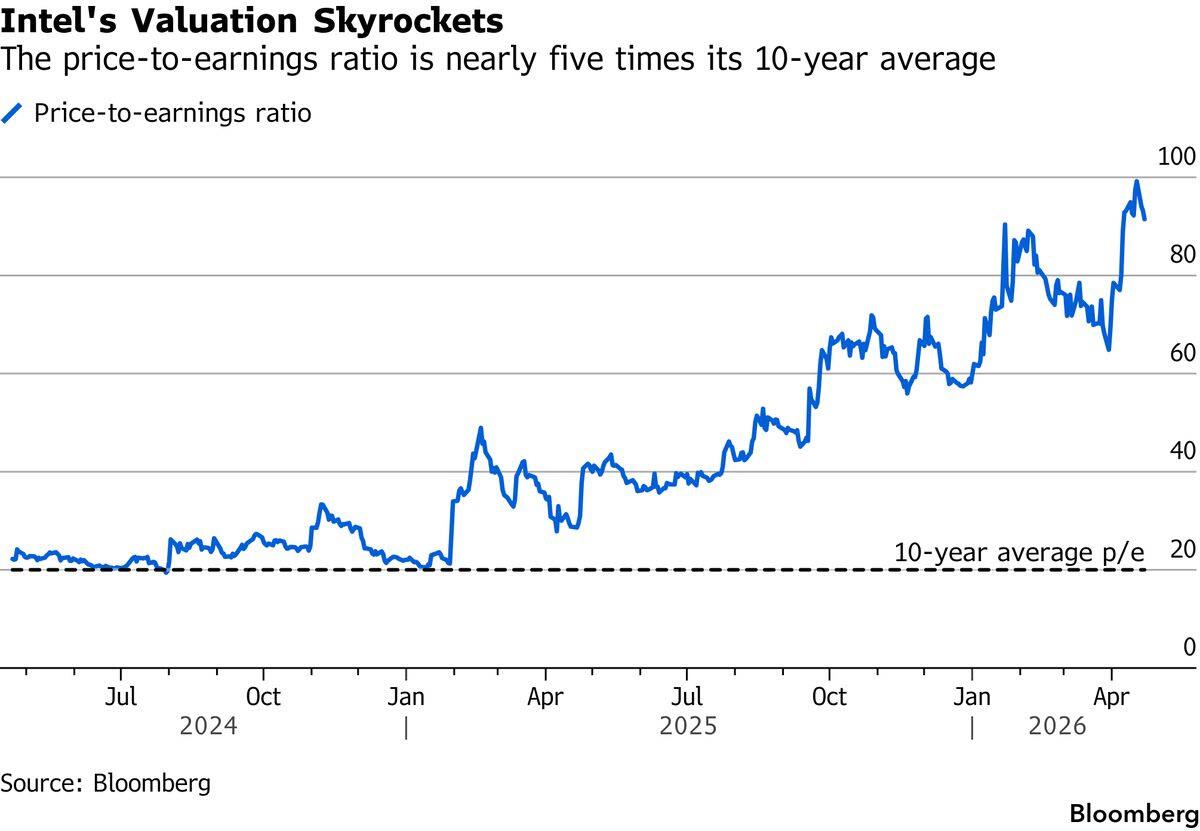
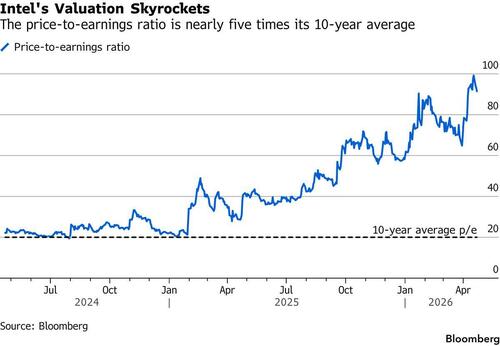
Chipmaker Intel, which less than a year ago was trading like a distressed company, and required a capital infusion from the US government, and earlier today hit a 90x forward PE…
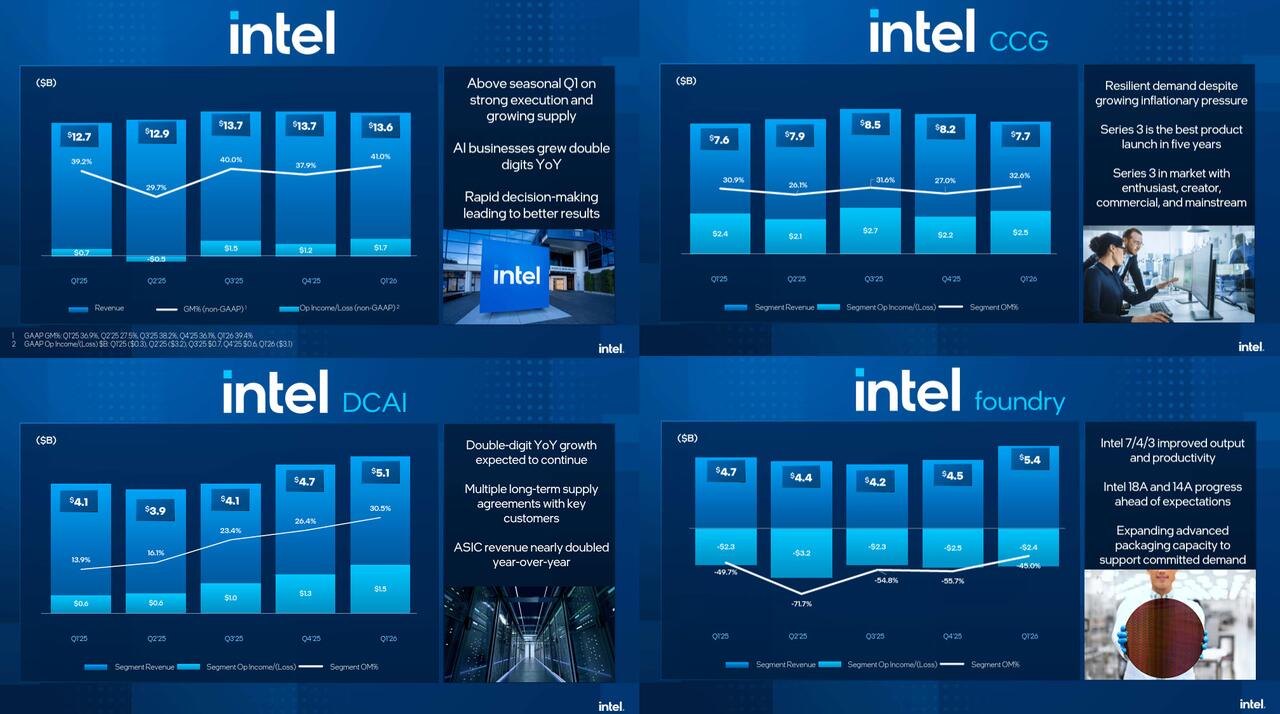
… soared after hours after giving a strong sales forecast for the current period, signaling that the recently struggling chipmaker is finally beginning to benefit from the giant build-out of artificial intelligence infrastructure. But before we get there, here is a quick look at what the company reported for the first quarter:
Adjusted EPS 29c vs. 13c y/y, beating estimate 1.0c
Revenue $13.58 billion, +7.2% y/y, beating estimates of $12.36 billion
Intel Products revenue $12.78 billion, +8.7% y/y, beating estimate $11.53 billion
Client Computing revenue $7.73 billion, +1.3% y/y, beating estimate $7.1 billion
Datacenter & AI revenue $5.05 billion, +22% y/y, beating estimate $4.41 billion
Intel Foundry revenue $5.42 billion, +16% y/y, beating estimate $4.81 billion
All Other revenue $628 million, -33% y/y, beating estimate $605.3 million
Intersegment eliminations revenue -$5.25 billion, -12% y/y
R&D expenses $3.38 billion, -7.3% y/y, beating estimate $3.18 billion
Adjusted gross margin 41% vs. 39.2% y/y, beating estimates of 34.5%
Adjusted operating income $1.67 billion vs. $690 million y/y, beating estimate $386.2 million
Adjusted operating margin 12.3% vs. 5.4% y/y, beating estimate 3.08%
The Intel Foundry Services division – the company’s factory unit – generated revenue of $5.4 billion, up 16%. That unit currently relies almost exclusively on Intel product divisions for orders, though it is seeking outside customers. Its PC chip division had revenue of $7.7 billion, and the data center unit posted sales of $5.1 billion. All of those totals topped Wall Street estimates. Gross margin was 41% on an adjusted basis. When Intel was at the height of its powers, it regularly reported margins north of 60%. It predicted a margin of 39% in the current period.
Commenting on the results, CFO David Zinsner said that “we remain focused on maximizing our factory network to improve available supply and meet our customers’ needs throughout the year.“
CEO Lip-Bu Tan chimed in: “The next wave of AI will bring intelligence closer to the end user, moving from foundational models to inference to agentic. This shift is significantly increasing the need for Intel’s CPUs and wafer and advanced packaging offerings.”
While Q1 results were solid, especially at the data center level, it was the Q2 forecast that caught the market’s attention:
Revenue will be $13.8 billion to $14.8 billion in the quarter ending in June, beating estimates of $13 billion.
Adjusted EPS will be about 20 cents a share, also beating estimates of 9 cents.
Margin is projected to rise to 39.0%,
The upbeat outlook suggests that CEO Lip-Bu Tan is making progress on a challenging comeback plan. After lining up major investments in Intel last year which helped to strengthen the company’s balance sheet – Thursday’s results suggest he’s now delivering on a promise to improve its operations.
The earnings report shows that the need for data center chips to power the massive AI expansion is lifting demand for Intel’s flagship Xeon server processors. That type of generalist semiconductor is a renewed focus for companies trying to turn their AI software into services that bring in revenue.
In an interview with Bloomberg, Tan said Intel delivered a “solid result” that was ahead of its projections. He expects the strong demand for processors used in AI systems to expand and said the company is “laser-focused” on increasing output from Intel’s factories, which still can’t produce enough to fill all its orders.
“There is huge demand,” Tan said. “We are working very hard with our team to make sure we deliver, that we meet that demand but we are still short because the demand keeps increasing from the customers.
And, as Bloomberg notes, for now Intel has also been able to navigate another challenge the PC industry is facing: memory-chip shortages.
To be sure, the company has a long way to go to restore its former chip-industry glory. Its annual revenue of $53 billion last year was roughly $25 billion shy of the company’s peak revenue, achieved in 2021, when the stock was far lower. Wall Street projects 3% growth in 2026.
Red-hot demand for server products has lured memory suppliers into concentrating on the high-speed processors for those machines. That’s cut into production of standard products used in phones and personal computers, meaning fewer of those mass-market devices are being built and the prices are going up.
In addition to making progress on production, Tan has restored Intel’s balance sheet via outside investments – to the point where the company bought back part of a factory in Ireland that it had been forced to sell to raise cash. That purchase was seen as a sign of future confidence by investors. Adding to the optimism, Tesla CEO Elon Musk said Wednesday that he will use Intel technology as part of his effort to build an in-house chip manufacturing plant. Tan declined to provide further details on the relationship.
Finally, Intel said it would spend more than originally budgeted on capex, according to CFO Dave Zinsner. The company has plenty of factory space and will add more machines to fill it out, he said. Capital expenditures will now be about flat from where they were last year. Intel had earlier said it planned to reduce its outlay.
In response to the strong earnings and guidance, Intel shares rose 14% in extended trading. The stock had gained 81% this year before the results were released, closing at $66.78. This has now pushed the company’s fwd PE well above 100x.
With the 14% surge after hours, Intel stock has finally surpassed its dot com bubble high of $74.88 hit in August of 2000.
As Shay Boloor writes, “all it took was a CPU shortage, AI agents, SpaceX + TSLA terafabs and a bit of help from the U.S. government + NVDA.”
Tyler Durden
Thu, 04/23/2026 – 16:46

Israel Waiting For US Greenlight To Renew Iran War: New ‘Targets Marked’, Says Katz
Israel Waiting For US Greenlight To Renew Iran War: New ‘Targets Marked’, Says Katz
It should come as no surprise that the Netanyahu government is not happy with this current lull in the Iran war, as Trump’s initially declared 3-5 day ceasefire extension has become more of an indefinite truce, with the Hormuz Strait blockade still on.
Israel is now preparing for the possibility of a return to fighting, the country’s media is on Thursday reporting. Israel’s leadership has consistently stated that it wants to see regime change or else total government and societal collapse, saying that only then would Iran never more be a ‘threat to Israel.
Fresh remarks by Israeli Defense Minister Israel Katz have made clear that “Israel is prepared to renew the war against Iran. The IDF is prepared for both defense and offense, and the targets are marked.”
But tellingly, he admitted a big obstacle stands in the way before the go ahead for a renewed bombing campaign can be given.
“We are waiting for the green light from the U.S., first and foremost, to complete the elimination of the Khamenei dynasty and to return Iran to the dark and stone ages by destroying Iran’s major energy and power facilities,” Katz said.
“This time, our strikes will be different and more deadly, and will deliver further devastating blows to the most painful places, which will shake and collapse the regime’s foundations,” he added.
Currently, the only place where Israeli forces are still actively engaged in combat related to the Iran conflict is in Lebanon. Technically a 10-day ceasefire, which is hanging by a thread, is still on.
But there has been ongoing fighting and shelling targeting Hezbollah in the south, and the last days have seen it grow more intense, per local reports.
Meanwhile Prime Minister Netanyahu is expected to chair security consultations on Thursday evening, against backdrop of growing difficulties in the US-Iran talks, which appear to have been effectively frozen for the time being.
Israel says it is “prepared for any scenario” and is without doubt intensifying its intelligence-gathering and military preparedness, which includes the urgent restocking of its dwindled interceptor and missile arsenal.
Israel Defense Minister Katz:
Israel is prepared to renew the war against Iran. Waiting on a U.S. green light. pic.twitter.com/MTGFSAe5wh
— Open Source Intel (@Osint613) April 23, 2026
Al Arabiya, citing Israel Channel 13 is reporting that there’s general anticipation in Israel that the war could resume “by the end of the week.”
Tyler Durden
Thu, 04/23/2026 – 16:40

Euthanasia Is Now 6% Of All Deaths In The Netherlands
Euthanasia Is Now 6% Of All Deaths In The Netherlands
Euthanasia is now responsible for 6 percent of all deaths in the Netherlands, and this figure is increasing every year.
According to a report by the regional euthanasia review committee (RTE), cited by the news portal Hirado, 10,341 people died by euthanasia in 2025, and while three-quarters of the applicants were over 70 years old, one case involved someone between the age of 12 and 18.
The number of those choosing to die by euthanasia due to mental illnesses decreased by almost a fifth (174 cases), but more than 85 percent suffered from physical diseases such as cancer, nervous system disorders, and lung or cardiovascular diseases.
There were 499 cases of euthanasia performed on patients with dementia, and the RTE investigated 11 cases where the patient was no longer competent. In addition, 475 cases involved the co-existence of multiple age-related illnesses, and 278 cases involved “other reasons.”
Pro-life advocates have argued that these “other reasons” often include selfish human interests, such as family members pressuring or emotionally manipulating an older relative to go through with euthanasia in order to obtain inheritance faster. In these cases, euthanasia is often carried out even when, according to supporters, it could not be justified.
Another seven cases involved doctors who did not fully comply with the required standards of care, and these are under investigation.
Just recently in Spain, a 25-year-old woman, Noelia Castillo Ramos, ended her life, despite her parents waging a two-year legal battle, fighting until the last minute for their daughter’s life. Although a ruling by the Constitutional Court in Madrid states that euthanasia cannot be used in cases where the source of suffering is mental illness, since “the state has the duty to protect these individuals from the risk of suicide,” Castillo Ramos was nevertheless was allowed to go through with euthanasia.
According to the Christian Lawyers organization, which represented the woman’s parents at various levels during the legal battle, “this case highlights the failure of the euthanasia law, since it facilitates suicide without the individual having received prior mental health treatment,” meaning that they would have had a chance to recover and live a full and happy life.
Spain’s Catholic bishops warned that “euthanasia and assisted suicide are not medical acts, but deliberate interruptions of the bond of care, and represent a social defeat when presented as a response to human suffering.”
In Castillo’s specific case, they added, “we are not dealing with a fatal illness, but with deep wounds that cry out for attention, treatment and hope.” Their call was also significant because it could help prevent further cases that lead to the taking of innocent lives.
The Spanish bishops also reminded society that “the dignity of the human person does not depend on their state of health, their subjective perception of life or their degree of autonomy,” but rather “is an intrinsic value that must be recognized, protected and helped in all circumstances.” For this reason, the response to human suffering “can never be to cause death, but rather to offer closeness, accompaniment, appropriate care and comprehensive support.”
“When life hurts, the answer is not to shorten the path, but to walk it together. Only in this way can we build a truly just society, where no one feels alone or excluded,” they concluded.
A group of Dutch experts in the field of child psychiatry recently called attention to the need to be particularly careful when it comes to cases of young people under the age of 25 requesting euthanasia due to psychological suffering. Their research suggests that the decision-making abilities of members of this age group can be influenced by brain development and a number of external influences.
According to the professors cited, the condition of those under the age of 25 is less likely to be considered permanent than that of those older than them. In addition, they are more exposed to social pressure and online influences, which can cause significant damage and lead them to make a compulsive and short-sighted decision.
Tyler Durden
Thu, 04/23/2026 – 16:20
https://www.zerohedge.com/medical/euthanasia-now-6-all-deaths-netherlands

“Gone In 60 Seconds”: Feds Uncover DC-Area International Car Theft Ring
“Gone In 60 Seconds”: Feds Uncover DC-Area International Car Theft Ring
Authored by Jill McLaughlin via The Epoch Times,
Federal authorities in the Washington area have uncovered an alleged international vehicle theft ring involving six people suspected of stealing cars and shipping them to Africa, where they are sold for top dollar.
Six people were charged on April 22 in connection with their roles in the alleged scheme.
A 15-count federal indictment was unsealed in U.S. District Court for the District of Columbia, charging the defendants with conspiracy to steal at least 20 vehicles in the Washington metropolitan area and Pennsylvania.
The cars are transported over state lines and sold to buyers in the United States and the African nation of Ghana, according to the U.S. Attorney’s Office in Washington.
The indictment follows a year-long investigation into an alleged auto-theft ring in the District of Columbia area that involved vehicles stolen using electronic devices that allowed thieves to reprogram cars to accept blank key fobs, prosecutors said.
“They don’t need keys, and they don’t need hot wiring—no smashed windows, no drama—just a sleek electronic device called an ‘Autel’ and under a minute the car’s brain is rewritten,” U.S. Attorney Jeanine Pirro said during a press conference on April 22.
“The car is gone in 60 seconds.”
An Autel device can be used to erase a vehicle’s records and reprogram its keys. Law enforcement is continuing to investigate the case, Pirro said.
The auto theft ring could involve more than 100 vehicles in the District of Columbia and more than 30 vehicles in Prince George’s County, Maryland.
Police officers working on the case executed a search warrant on April 21 at an automobile storage facility in Decatur, Georgia, locating several of the missing vehicles, prosecutors said.
The suspects are Jacob Hernandez, 29, of Los Angeles; Dustin Wetzel, 23, of Woodbridge, Virginia; James Young, 23, of Hyattsville, Maryland; Khobe David, 24, of Upper Marlboro, Maryland; and Chance Clark, 25, of Waldorf, Maryland.
Another defendant remains at large and is considered a fugitive. Prosecutors did not release the name of that defendant, whose indictment remained sealed.
According to the indictment, the stolen vehicles—mostly newer Honda Civics and CRVs, and Acura TLXs and RDXs—were first taken to be “cooled off” in storage locations in southeast Washington. Theeves allegedly disguised the cars by swapping license plates and obscuring the vehicle identification numbers (VINs), according to prosecutors.
Before shipping the stolen cars, the conspirators allegedly disabled the GPS and Bluetooth systems to deter detection.
A car transporter in Maryland was loaded with several of the recovered vehicles from an alleged international auto-theft ring that federal authorities say was connected to six people in the Washington metropolitan area. U.S. DOJ
“This isn’t joyriding,” Pirro said. “These are high-end vehicles loaded on transport carriers headed to ports in Savannah [Georgia] and Baltimore, Maryland.”
The stolen cars were then loaded onto shipping containers labeled as furniture to avoid more scrutiny and sent to Africa, where they were able to get “top dollar,” Pirro said.
Tyler Durden
Thu, 04/23/2026 – 15:20

Beyond Cookies – How To Stop The Invisible Browser Fingerprint That Tracks You Everywhere
Beyond Cookies – How To Stop The Invisible Browser Fingerprint That Tracks You Everywhere
For years, the privacy advice was simple: clear your cookies, use incognito mode, or click “Reject All” on those annoying consent banners. That advice is now outdated.
A groundbreaking study published last year has delivered the first peer-reviewed proof that the $600 billion online advertising industry has moved on from cookies. The new tracking method is called browser fingerprinting, and it works even if you never log in, never accept cookies, and have legally opted out under privacy laws.
Researchers from Texas A&M University and Johns Hopkins University built a tool named FPTrace to measure exactly how this works in the wild. They simulated real user sessions, systematically altered browser fingerprints, and watched what happened to the ads being served and the bids advertisers placed in real time. The results were clear: when the fingerprint changed, the price advertisers were willing to pay to target that “user” changed with it. Tracking signals dropped. The system was actively using the fingerprint to follow people across sessions and sites.
And crucially, this happened even in tests where cookies were fully deleted and users were in “opt-out” mode under GDPR and CCPA rules. The law’s exit door for cookies does not cover fingerprinting.
How Browser Fingerprinting Works (No Permission Required)
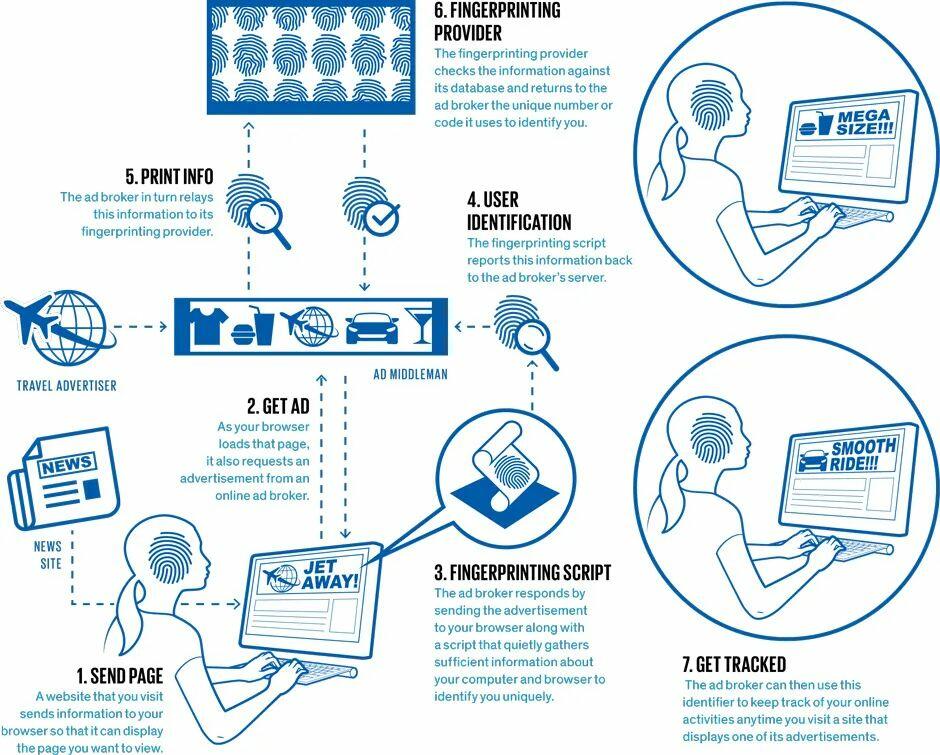
Every time your browser loads a page, it leaks dozens of tiny, seemingly harmless signals:
Screen resolution and color depth
Installed fonts
GPU model and graphics capabilities
Audio processing signatures
Browser version, plugins, and language settings
Time zone
Canvas rendering differences (how it draws hidden shapes)
Whether you run an ad blocker
Even battery level in some cases
Alone, each detail is common. Combined, they create a unique “fingerprint” that can identify your device with startling precision. No cookies. No login. No pop-up asking for consent. Just loading the page is enough.
Studies have long shown how pervasive this is. Princeton’s Web Transparency Project and related research have repeatedly found fingerprinting scripts running on a significant share of popular websites.
Princeton researchers tested the top 10,000 websites.
Fingerprinting scripts on 88% of them.
The EFF tested browsers directly.
83% had a fingerprint unique enough to track with no cookies at all.
You do not have to visit a shady site.
You just have to open a browser.
— AI Highlight (@AIHighlight) April 21, 2026
The Electronic Frontier Foundation’s long-running Cover Your Tracks test (formerly Panopticlick) has demonstrated that a large majority of browsers produce fingerprints unique enough to track users without any cookies at all—historically around 83% or higher in large samples.
Why This Matters Now
Cookies are dying. Google has been phasing out third-party cookies in Chrome, and Apple has aggressively blocked them in Safari for years. Advertisers needed a replacement that users cannot easily clear, block, or reset. Browser fingerprinting is that replacement: it is invisible, persistent, and rebuilds itself if your setup changes slightly.
The result? Targeted ads that follow you across devices and sessions, even when you think you’ve gone “private.” And because it operates below the surface of most privacy laws, the protections many people rely on simply don’t apply.
What Actually Works to Protect Yourself
Most people get privacy wrong by making their setup more unique (rare browsers + 30 extensions = the most identifiable fingerprint on the internet). True anonymity comes from uniformity, not obscurity.
Here are the proven defenses, ranked by effectiveness:
1. Choose the right browser (the single biggest decision)
Tor Browser – The gold standard. It forces every user to share the exact same fingerprint. Anonymity through uniformity.
Brave – Excellent middle ground for everyday use. It randomizes canvas, WebGL, audio, and other fingerprintable surfaces every session.
Firefox (with strict settings) – Strong out of the box and highly customizable. Avoid Chrome for privacy-sensitive activity; it offers no native fingerprint resistance.
2. Add the right extensions (Firefox or Brave only)
uBlock Origin – Blocks fingerprinting scripts before they can run. (Note: Chrome’s Manifest V3 severely limited the full version; Firefox is required for maximum protection.)
CanvasBlocker – Randomizes your canvas output whenever a site tries to read it.
3. Flip one powerful Firefox setting Type about:config in the address bar → search for privacy.resistFingerprinting → set it to true. This standardizes canvas, timezone, fonts, and other outputs so you blend in with everyone else. Takes 30 seconds and makes a measurable difference.
Bottom line: Clearing cookies no longer protects you. The advertising industry has quietly built a more resilient tracking system that operates in the shadows of your browser.
Tyler Durden
Thu, 04/23/2026 – 15:00